Category: Parliament

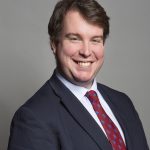
  • Valerie Vaz – 2020 Speech on Proceedings in Parliament

    Valerie Vaz – 2020 Speech on Proceedings in Parliament

    Below is the text of the speech made by Valerie Vaz, the Labour MP for Walsall South, in the House of Commons on 2 June 2020.

    I thank the Leader of the House for moving the motion. I note that the amendments in my name and those of other Members were not selected, so I speak in support of the amendments in the name of the Chair of the Procedure Committee and the other Select Committee Chairs. I thank them for their deliberations and their timely reports, which have helped to inform the debate.

    I do not know whether the Leader of the House is living in another universe, but the pandemic is still going on, and it is still very serious. The Government chose not to renew the temporary orders on 21 May. Those orders enabled every Member, wherever they are and whatever their responsibilities, to take part on an equal basis in all the proceedings of the House—and it worked.

    I know that the Leader of the House likes to say that we need to get back to work here, but I want to pay tribute to all my colleagues on both sides of the House who have worked incredibly hard and to their staff, who have ensured that we can deal with double the casework on behalf of our constituents. We are at work, so will he please stop peddling the myth that we only work when we are physically here? Please stop it.

    Where is the evidence? The Leader of the House said in the House on 20 May in response to the urgent question that there was a risk assessment, yet his article for PoliticsHome said that it was “being” done. Which is it? Has he inadvertently misled the House? If so, will he publish it for everyone to see?

    The Leader of the House will know that BAME staff are found in lower-paid and operational roles, where they cannot work from home. They are most at risk. Half the catering staff who have returned today are from the BAME community. Where is the risk assessment for them? He will know that the report on covid and BAME people has now been published, and we are twice as much at risk of dying from this disease. Science advisers are adamant: we are not over the virus. This is a dangerous moment.

    The Leader of the House talks about scrutiny, but Mr Speaker has always made it clear that Ministers and shadow Ministers are here in the Chamber. Hon. Members have done a fantastic job of holding Ministers to account, whether here in the Chamber or up there on the screens, so it is not about seeing the whites of Ministers’ eyes—we cannot do that from the Back Benches anyway—it is about the responses we get from them. Will he please look at whether Ministers can reply to the written questions to which hon. Members say they have not received responses?

    Let us turn to voting. House staff made a great effort to ensure a secure system for voting, and it worked: we had 15 minutes, we were told when to vote, we were told when we had already voted. I do not know whether the Leader of the House has done an assessment of how long it will take for us to queue all the way back to Westminster Hall, but I wonder if that is a good use of Members’ time, whether it is 650, 400 or 300 of us. It is easy for the Front Benchers—we go first—but what about the rest of our colleagues? There has been some talk about the possibility of hybrid voting. I hope we can do that.

    There is a fundamental flaw in the Leader of the House’s argument. Can he guarantee that Members and House staff will be safe? Parliament may be covid-19 secure, but there is movement, and the rate of infection is different in different parts of the country. We are all moving around; we could be silent spreaders. His proposal is also discriminatory. The Equality and Human Rights Commission has said so. If someone is able-bodied, they must come in—they have to ignore Government advice about shielding and the R factor and come in—and if, for whatever reason, someone is following the Government guidelines and cannot be here, they effectively lose their vote. A Member who pairs is not recorded as having voted. Members on maternity leave have faced torrents of abuse for not having voted, which is why we moved to proxy voting, and that is happening now. One of the Leader of the House’s own colleagues, the hon. Member for Stroud (Siobhan Baillie), is facing exactly the same thing—we congratulate her on the birth of her baby. Members are being put in an invidious position, having been told by the Government they are at risk, and now being told by the Leader of the House that they must come in or lose their vote.

    In conclusion, the Government have not lifted all the restrictions and the pandemic is still here. It is not right, just or fair to all Members. Members rightly demand parity. This is staggeringly arrogant from the Leader of the House. It is the same as when he said he thought the first Prorogation was lawful. He wants to demand and instruct; right hon. and hon. Members want to co-operate, discuss and agree a way forward that treats us all the same and is fair to everyone. Scientific advisers say this is a dangerous moment. The Leader of the House has shown that he just does not care.

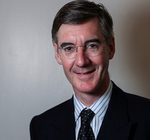
  • Jacob Rees-Mogg – 2020 Statement on Proceedings in Parliament

    Jacob Rees-Mogg – 2020 Statement on Proceedings in Parliament

    Below is the text of the statement made by Jacob Rees-Mogg, the Leader of the House of Commons, on 2 June 2020.

    I beg to move,

    That the resolution of the House of 21 April (Proceedings during the pandemic) be rescinded and the following orders be made and have effect until 7 July 2020:

    (1) That the following order have effect in place of Standing Order No. 38 (Procedure on divisions):

    (a) If the opinion of the Speaker or the chair as to the decision on a question is challenged, the Speaker or the chair shall declare that a division shall be held.

    (b) Divisions shall be conducted under arrangements made by the Speaker provided that:

    (i) Members may only participate physically within the Parliamentary estate; and

    (ii) the arrangements adhere to the guidance issued by Public Health England.

    (2) Standing Order No. 40 (Division unnecessarily claimed) shall not apply.

    (3) In Standing Order No. 41A (Deferred divisions):

    (a) At the end of paragraph (5)(a), insert “, provided that (i) Members may only participate physically within the Parliamentary estate; and (ii) the arrangements adhere to the guidance issued by Public Health England”.

    (b) In paragraph (5)(b) delete “two and a half hours” and insert “at least two and a half hours”.

    (c) In paragraph (5)(c) delete “after the expiry of the period mentioned in subparagraph (b) above”.

    (4) The Speaker or chair may limit the number of Members present in the Chamber at any one time and Standing Orders Nos. 7 (Seats not to be taken before prayers) and 8 (Seats secured at prayers) shall not apply.

    (5) Standing Orders Nos. 83J to 83X (Certification according to territorial application etc) shall not apply.

    The rationale for returning to physical proceedings is a straightforward one. Parliament is the assembly of the nation. The public expect it to deliver on the mandate provided by last year’s general election, and they expect it to conduct the kind of effective scrutiny that puts Ministers under real pressure. Neither expectation can be fully realised while we are not sitting physically. That is why we are returning to work safely at the first opportunity in order fully to conduct the essential business not possible from our homes. This assessment is based on the facts. The stopgap of a hybrid Parliament was a necessary compromise during the peak of the virus, but, by not being here, the House has not worked effectively on behalf of constituents. Legislating is a key function of Parliament, yet there has been no ability for legislative Committees to meet since 23 March. This means that, for 10 weeks, there has been no detailed line-by-line consideration of Bills that will affect people’s lives. I remind Members that, in the week commencing Monday 11 May, we had no debates on secondary legislation, no Public Bill Committees, and no Delegated Legislation Committees. There was significantly less time for debate—just 216 minutes of debate on primary legislation compared with the example of 648 minutes in a normal sitting week—and far less flexibility to ensure proper scrutiny of the Government.

    I should also like to remind Members that much of the business under the hybrid proceedings was deliberately arranged to be non-contentious. The time limits on scrutiny and substantive proceedings were also heavily restricted. This was to facilitate the smooth running of what was always a technically challenging arrangement. What was acceptable for a few short weeks would have proved unsustainable if we had allowed the hybrid proceedings to continue. This House plays an invaluable role in holding the Government to account and debating legislation, which can only properly be fulfilled when Members are here in person.

    Chris Bryant (Rhondda) (Lab)

    Will the right hon. Gentleman allow?

    Mr Rees-Mogg

    I was just about to talk about Members intervening time and again, so it is the perfect time for me to give way to the hon. Gentleman.

    Chris Bryant

    The Leader of the House will know, because he is an historian, that one of the ancient liberties of all Members of Parliament has been to attend.

    Such a liberty has been asserted even when the Crown has wanted to arrest people. The House has insisted that people should be allowed to attend, but at the moment, by law, there are many MPs who are banned from attending Parliament because they are shielding either themselves or others in their household. How can it possibly be right to exclude those people? How can it be a Conservative motion to exclude those MPs and thereby disenfranchise their communities?

    Mr Rees-Mogg

    Nobody is banned from attending Parliament by law. The ancient right of MPs, which dates back to 1340, entitles Members to attend. However, I accept that, for some Members with particular health conditions, it is very difficult to attend—

    Chris Bryant

    They are not allowed to attend.

    Mr Rees-Mogg

    No law exists that stops Members from attending Parliament.

    Chris Elmore (Ogmore) (Lab) rose—

    Mr Rees-Mogg

    I give way to the hon. Gentleman.

    Chris Elmore

    I am extremely grateful to the Leader of the House for giving way. Yesterday, in the public proceedings of the Procedure Committee, the question was asked directly of the Clerk, and the Clerk confirmed that Members are bound by the law outside of the particular Act to which the Leader of the House is referring. If, for example, a county, a part of the United Kingdom, or a nation was put into lockdown, the Member of Parliament would have to abide by that law, unless they were specifically exempt within that law—

    Madam Deputy Speaker (Dame Eleanor Laing)

    Order. We might have gone back to having interventions, but that does not mean that we can have long interventions.

    Mr Rees-Mogg

    The ancient right to attend Parliament goes back to 1340, and, as the hon. Member for Rhondda (Chris Bryant) pointed out, this is something that has been used against the Crown in the past. It is a most important and long-standing right. There must always be an exemption for Members to attend Parliament. What I was going on to elaborate is that I will be bringing forward, as I promised on 20 May, a motion tomorrow to allow Members who, on medical grounds, are unable to attend to continue to appear for scrutiny—questions, urgent questions and statements—remotely. That will be brought forward tomorrow, as I promised on 20 May when we discussed these matters in response to an urgent question.

    Mr Peter Bone (Wellingborough) (Con)

    As usual, the Leader of the House is making a strong statement, but on this particular point on voting, surely, as this is a recall of Parliament, every Member should have the right to vote today on whether to accept the new proceedings. Why, therefore, is today’s vote not being done remotely?

    Mr Rees-Mogg

    My hon. Friend is right. Every Member does have the right to vote. Members accepted that these measures would be temporary—that they would continue until they expired. One has to deal with these matters in good faith. It was put to Members, some of whom were very reluctant to accept remote voting, to agree to it on the basis that it was temporary. It expired, and therefore we come back automatically, without any motion, to physical voting.

    Andrew Griffith (Arundel and South Downs) (Con)

    Does my right hon. Friend agree with me that today there are low-paid clinical staff working in the NHS who are free of the surcharge as a result of this House having its voice heard? Does he therefore understand my incomprehension that Opposition Members want to continue with this “Coke Zero” Parliament for one more day, when we could resume our job of holding the Government to account?

    Mr Rees-Mogg

    My hon. Friend puts it extremely well. Lots of people are going back to work, and we have a role, as leaders within the country and within the community, to do that.

    Jim Shannon (Strangford) (DUP)

    Will the Leader of the House outline his intention with regard to ensuring that minority parties such as mine, the Democratic Unionist party, are able to speak directly from their constituency through the present system in this House on matters such as the upcoming debate on abortion? I would like to assume that at least some Northern Ireland MPs will be able to speak on this Northern Ireland legislation in Committee, as I understand it will be, ever mindful that this week the Northern Ireland Assembly will deliberate on this matter. Ministers, right hon. and hon. Members of this House want the Northern Ireland Assembly to make the decision, but if it has to be made in Committee here, it is important that we have an opportunity to have Northern Ireland MPs on that legislative Committee.

    Mr Rees-Mogg

    That is not really a point for today’s debate. I completely accept what the hon. Gentleman says about representation on Committees for minority parties, but that is really a matter for business questions rather than today’s debate. I might add that the voice of Strangford is always heard in this House, and that is our good fortune as Members of Parliament.

    Just before the hon. Member for Rhondda intervened, I was talking about having Members intervening, and we have seen in the past few minutes how that enhances, develops and evolves the debate. It ensures that Ministers are held to account, and allows the debating of amendments clause by clause in the Chamber, so that constituents’ views can be represented to Ministers; then to vote physically ensures that we are here, coming together as a single Parliament.

    Ian Paisley (North Antrim) (DUP)

    The Leader of the House is, of course, a strong advocate of the Union. He must appreciate that at the present time it is incredibly difficult and not at all straightforward for Members from Ulster to get here to the British mainland. As a result, I wonder whether he accepts that the social distancing queueing arrangements that are now to be trialled actually defeat to some degree the purpose of our having those debates, because they will eat so much into parliamentary time that we are eager to use for debate and cut and thrust.

    Mr Rees-Mogg

    The temporary measures that are to be used will mean that voting takes a little bit longer than using the ordinary Division Lobbies. That is true, but it will depend to some extent on how many Divisions right hon. and hon. Members demand—[Hon. Members: “Oh!”] I note a certain amount of caterwauling in the background, but I point out that a Division is not demanded on every item that comes before this House. If it were, the Budget resolutions would take a day to be passed. That is a perfectly routine matter. Members decide what they wish to vote on, and you, Madam Deputy Speaker, asked if notice could be given beforehand. Of course we will look for faster ways of providing for Divisions to take place.

    Why should Divisions be physical? Why is it important for votes to be physical? It is because we are coming here together as a single Parliament and voting on things that have a major effect on people’s lives. Every piece of legislation affects people’s lives one way or another. We should not vote quietly and secretly. Some people tweeted that they were doing it while going for a walk and things like that. Is that really the way to be voting on laws?

    Mr Alistair Carmichael (Orkney and Shetland) (LD)

    The principle in this House is that votes follow voices. The Leader of the House is telling us that tomorrow he will bring a motion to allow those who are medically not able to be here to have a voice. Why should they not have a vote to follow that voice?

    Mr Rees-Mogg

    The vote following the voice is the tradition that if you shout one way, you then cannot vote the other way. That is all that means in terms of that tradition. It means that if you shout “Aye”—

    Several hon. Members rose—

    Mr Rees-Mogg

    I will just explain this point and then of course I will give way. The votes follow the voice, in that if you have shouted “Aye”, you must not then vote No. You are allowed to move a motion and then vote against it, as long as you do not shout in favour of it. The hon. Member for Rhondda may be looking quizzical, but he might remember that the former leader of the Labour party—of Her Majesty’s Opposition—did exactly that within the past couple of years. This is a fairly routine procedure.

    Peter Kyle (Hove) (Lab)

    What we have seen from the Leader of the House’s performance today so far is the characteristic we have seen from the Government since the start: bending the rules to fit their own purposes. Anybody watching this debate impartially will now be confused about what this means for their own behaviour. He has said that tomorrow people can enter these debates virtually. If they have a medical reason not to be here but they can be here virtually, can he say precisely what is preventing their being able to vote virtually as well?

    Mr Rees-Mogg

    There are well-established procedures for people who cannot be here being paired, so that their opinion and that of their constituents has exactly the same effect as if they vote in person. The votes through pairing balance out, so the decision of the House remains identical.

    Patrick Grady (Glasgow North) (SNP)

    I assure the Leader of the House that right now there are lots of voices of Scottish National party Members he cannot hear because they are not in this Chamber and they will not be happy at all at the disenfranchisement of their constituents through what he is proposing. The Procedure Committee makes it clear that people should not have to disclose their medical condition in order to be able to participate in this House. What he is doing is embodying what people have seen as the practice of this Government in recent weeks: it is one rule for them and one rule for lots of other people.

    Mr Rees-Mogg

    The hon. Gentleman says that lots of SNP Members will not be happy. I have a nasty feeling that that is often the state of SNP Members, and I wish them every happiness. It is important that people follow the rules, and we are following the rules, because we said that people ought to go back to work if they cannot work effectively from home and that is exactly the position we are in.

    Jim Shannon

    Let me provide Members with an example. Flights for us from Northern Ireland to here are restricted. Two weeks ago, there were three flights out on a Monday but that was then reduced to two, and on other days there are no flights. Can Members have notice of when there will be debates in this House and when there will be votes in this House, because it is important that we are here to participate and actively vote when we can, and we need to know this in advance so that we can get a plane? The only plane over here for us yesterday left early in the morning, and that is to get us here for today.

    Mr Rees-Mogg

    Now that we are back to normal sitting hours, we will be sitting on Monday to Thursday with the usual sitting hours. A recess is scheduled, but I would not like to confirm that that date will be set in stone. It is at the end of July, so there will be plenty of notice if there is any change to it. We will have our normal sittings on Monday to Thursday. We are getting back to work. It is becoming business as normal.

    The temporary Standing Orders for remote voting were only ever temporary, and I do not think they would have been agreed had the scheme been put in place for longer; many people have always been opposed to remote voting, and we got a consensus for a brief period. I do not believe I would be acting in good faith if I were to extend it beyond the time that people understood when it was first introduced. It is important that we treat decisions of the House with the importance and accord that they deserve, and the decision was to do this on a temporary basis.

    Peter Kyle rose—

    Madam Deputy Speaker (Dame Eleanor Laing)

    Order. Before the hon. Gentleman makes another intervention, I should say that most people will not get to speak if there are lots of interventions. I will, however, allow him to make this one.

    Peter Kyle

    I am grateful, Madam Deputy Speaker, and this will be the last time. When the right hon. Gentleman introduced the motion that delivered the virtual Parliament—the hybrid Parliament—did he know then how long the coronavirus crisis would last?

    Mr Rees-Mogg

    I am not a prophet, so I would not dream of predicting those sorts of things.

    I have taken lots of interventions. In some ways I think this is a beneficial; it partly illustrates my argument about why Parliament needs to get back, and I appreciate that in a short debate interventions are sometimes just as useful for Members to be able to get in as getting half a minute at the end. If there are interventions, I will, by the leave of the House, carry on taking them.

    Every Division is important, and I would underline that. We should be confident that we are all individually doing the right thing and voting openly under the eyes of others; voting while enjoying a sunny walk or watching television does democracy an injustice. The solemn decisions we take together affect the lives of millions of people in this country. We ask Members to vote in person for a reason: because it is the heart of what Parliament is about.

    It remains essential that our work in this House is carried out in line with Public Health England advice. The Palace of Westminster we have returned to today is greatly changed from early March. The House authorities have carried out a risk assessment of the parliamentary estate to ensure it is a covid-19 secure workplace, in line with PHE guidance. Both its staff and its leadership, including particularly Mr Speaker, should be thanked and congratulated for the rapid progress that has been made.

    I understand the concerns of some hon. and right hon. Members about returning physically. Many Members have already passed on their views, but I want to make it clear to all those in the House, and those who are not here but are listening and maybe shielding at home, that I am always available to discuss and hear their concerns, and I will as far as possible—which is why I will be bringing forward the motion tomorrow—do what I can to help. It will be tabled today for approval tomorrow. Anyone who feels that they are required to shield because of age or medical circumstances should not feel under pressure to attend Parliament, and pairing and other mechanisms will be in place informally to facilitate this.

    Graham Stringer (Blackley and Broughton) (Lab)

    I agree with the Leader of the House about the nature of debate and response and making a decision at the end of that debate, but what argues against that is the practice of pairing, where the decision is taken before the debate. Many hon. Members want their constituents to know where they stand on issues. Why do we not put the pairing records on the record? [Interruption.]

    Mr Rees-Mogg

    I hear mutterings around the Chamber saying that that is a good idea. Unfortunately, neither the Chief Whip from the hon. Gentleman’s side or from my side is in the Chamber at the moment, and I think it might be useful to consult them before I make an off-the-cuff suggestion, but I can assure the hon. Gentleman, who is a wise and experienced parliamentarian, that I will pass his views on to the Chief Whip. Perhaps he would be so kind as to do the same to his own Chief Whip, and perhaps there could be a meeting of minds in that area.

    I have been working with the House authorities to see how MPs with underlying health conditions who have been told to shield or are receiving specific Government advice about their health may be able to continue to contribute to proceedings in this House. I mentioned this on 20 May and reconfirm that I will table a further motion later today on some virtual participation by hon. Members. As it happens, for this motion I have used some of the language in the amendment tabled by the shadow Leader of the House, to whom I give my thanks, and other Opposition Members to ensure that such participation is available for Members unable to attend Westminster for medical and public health reasons related to the pandemic.

    Turning to the motion itself, it may help if I briefly set out the Government’s approach. Today’s motion is the necessary paving step that gives the House the opportunity to signal how it wishes to conduct proceedings in the coming weeks. In response, I hope the House authorities will be able to complete the work already undertaken over the Whitsun recess, and I hope that hon. and right hon. Members will also find the explanatory note published alongside the motion helpful.

    The motion updates the House’s procedures relating to Divisions and attendance in the Chamber to ensure compliance with social distancing restrictions. These temporary changes to Standing Orders will be in force until 7 July 2020. The motion rescinds the resolution of 21 April, which provided an overarching framework for the temporary Standing Orders relating to hybrid proceedings. This resolution is no longer needed as the Standing Orders have now lapsed and we are returning to physical proceedings.

    Paragraphs (1) to (3) of motion 2 set out an approach to Divisions. If agreed by the House, Division arrangements will be set out by the Speaker and will adhere to Public Health England guidance—and I wonder if I may, through you, Madam Deputy Speaker, congratulate Mr Speaker on the work he has done to ensure and test a system for voting that meets the requirements of PHE; he has invested a lot of time in it to make sure that we have a system that will operate.

    Mr William Wragg (Hazel Grove) (Con)

    On this rather vexed issue of voting, could further consideration perhaps be given to the use of deferred Divisions? I understand the argument about consequential votes, but that could be dealt with quite simply by allowing them to drop away, and we would avoid any scenes that might bring us into a certain degree of disrepute.

    Mr Rees-Mogg

    I am grateful to my hon. Friend for the points that he has made. I assure him that the Government will listen carefully to any ideas that come forth from the Procedure Committee and from hon. Members in relation to how things can be improved and made more fluid in these difficult circumstances.

    The Government wish to ensure that the House continues to function in line with Public Health England advice. Paragraph (4) therefore ensures that the Speaker may limit the number of Members present in the Chamber at any given time, and disapplies the Standing Orders relating to the prayer card system. The Standing Order will be discontinued in order that the flow of Members in and out of the Chamber can be managed, but I reassure Members that Prayers themselves will take place at the start of each sitting day. Finally, paragraph (5) disapplies Standing Orders relating to English votes procedures, as double majority voting is likely to be incompatible with the arrangements for socially distanced Divisions.

    Let me now turn to the amendments tabled by the Opposition parties and the Procedure Committee. I reiterate my gratitude to the Procedure Committee—particularly my right hon. Friend the Member for Staffordshire Moorlands (Karen Bradley)—for its and her swift work, and welcome continuing discussions with that prestigious Committee. I used to be on it, which is why I think particularly highly of it; it is one of the most interesting Select Committees in the House.

    I hope that my commitment to bring forward tomorrow a Government motion to allow some participation in hybrid proceedings for those who are shielding demonstrates my commitment to ensuring safe participation for as many Members as possible, and that those amendments which seek to require some hybrid participation can be withdrawn on that basis.

    I have already set out the case against remote voting, but let me address the argument made by some Members that if a Member is not able to vote, they will be entirely disenfranchised. I do not accept that. There are many other ways in which MPs represent their constituents in Parliament, including through tabling written questions, writing correspondence, tabling amendments and attending hearings of Select Committees, which will continue. Select Committees can continue to meet remotely under the resolution that I brought forward in March and will continue to carry out their important work with Members participating from around the country. It is worth noting that the Liaison Committee very successfully quizzed the Prime Minister in this way, so scrutiny carries on in other ways too.

    I know that there has been concern about the operation of evidence sessions for Public Bill Committees. I hope that the House will welcome the fact that some specific witnesses to the Domestic Abuse Bill have been told that they will be able to give evidence remotely on Thursday, should they wish to. I was keen to ensure that this was possible. Some had assumed that it was not, but this concern turns out to be misplaced. The House has confirmed that under existing rules, witnesses can indeed give evidence remotely to Public Bill Committees in the same way that they have long been able to with Select Committees. It can therefore happen with no changes to the Standing Orders.

    I ask that the House agrees the motion today and considers the further motion that I will bring forward tomorrow. I have no doubt that the Procedure Committee will continue to keep our ways of working under review, and I welcome that. For my part, I very happily commit to continuing to do the same, in order that we can ensure that the House can continue to go about its business effectively and safely.

    Kevin Brennan (Cardiff West) (Lab)

    I apologise for not being here right at the beginning of the right hon. Gentleman’s remarks, but I did not know whether I would be able to get into the Chamber. If proxy voting is acceptable for somebody on maternity leave in principle, why is proxy voting not acceptable for somebody who is shielding in this extraordinary crisis?

    Mr Rees-Mogg

    The Procedure Committee is currently holding an inquiry into proxy voting and whether it is suitable to be extended. I am aware that the hon. Gentleman is asking me this question, but obviously this is a matter for consultation with the Procedure Committee. The drawback of proxy voting immediately is that the temporary system that we will be having will take longer anyway, and that would be particularly complicated by proxy voting. But is it a solution that is ruled out full time? No, I would say that it is not.

    It is important to emphasise that, with the hybrid Parliament, the commitments the Government made to the voters in December were clogged up. The Domestic Abuse Bill was not making progress—no Bill Committees were sitting—nor were the Fire Safety Bill, the Northern Ireland legacy Bill, the Fisheries Bill, the Trade Bill or the counter-terrorism Bill. What we do in this House is important and that we do it at a reasonable and efficient pace matters, and to do that we need to be here physically. I know, I understand and I sympathise that those Members who are shielding face difficult times. They are following advice that may prevent them from being here to vote, and that is difficult for them.

    Liz Saville Roberts (Dwyfor Meirionnydd) (PC)

    Could the right hon. Gentleman therefore confirm to me that the constituents of those MPs who have to shield are worth less and it is expected that they will be less well represented by this place?

    Mr Rees-Mogg

    I think the right hon. Lady makes entirely the wrong point. Parliament meets to represent the nation as a whole. We come here together not as ambassadors representing various powers; we come here as a United Kingdom Parliament. That is the nation—the United Kingdom—that we come here to represent, and we come here together. As a collective, we are a single United Kingdom Parliament and a strong legislative body that represents the whole people of the United Kingdom, and we each participate in that in our different ways on a daily basis.

    Ian Paisley

    The Leader of the House is absolutely correct on that point, but where it falls down is when Members are obstructed from actually getting here because there are not sufficient flights to bring Members to the House. That is where it falls down from Northern Ireland’s point of view. Will steps be taken, through the Government, with the airports and the airlines to ensure that Members from Northern Ireland can get here? Frankly, the issue of shielding, as far as I am aware, does not affect the eight Members who attend from Northern Ireland.

    Mr Rees-Mogg

    I am glad to see the hon. Gentleman in his place, and I absolutely appreciate that it is harder for some Members to get here than for others. I am very glad to see the Westminster leader of the SNP in his place, because his constituency is particularly far away from Westminster. I think he had a 16-hour journey to get here, and I think it shows a proper commitment to our parliamentary democracy that he is here. [Interruption.] Perhaps he is a secret Unionist, but it is a pleasure to see him here because we bring a Parliament together to have debate on the matters that are of concern to our constituents, and I absolutely accept that it is more difficult for some than for others.

    Justin Madders (Ellesmere Port and Neston) (Lab)

    Does the Leader of the House accept that we should be an exemplar of best practice, and when we are deliberately excluding people from portions of their responsibilities because of their disabilities we are in no position to tell employers who breach equalities legislation that they are in the wrong?

    Mr Rees-Mogg

    I have obviously looked at the equalities considerations in relation to this, and the Government and Parliament are completely in accordance with them, because it is necessary for us to meet here physically to do our business. That is in line with the Government’s guidelines. Which Bill does the hon. Gentleman not want us to have? Does he want to give up on the Domestic Abuse Bill? Does he want to give up on the Fire Safety Bill or the Northern Ireland legacy Bill? Are we going to get these Bills through?

    Steve Brine (Winchester) (Con)

    To introduce another subject, does the Leader of the House have a view about call lists during statements and urgent questions? Right now, it seems to me that they prioritise those who sit browsing MemberHub 24 hours a day, which I have to confess is not for me, to submit a request in a short window to be part of an urgent question or statement, as opposed to being here and persisting to catch the Chair’s eye.

    Mr Rees-Mogg

    I think the system of catching Mr Speaker’s eye is a preferable system, but needs must, because we can have only 50 Members in the Chamber at any one point. However, this is a temporary expedient, and some of the other courtesies and normalities are being suspended.

    Ian Blackford (Ross, Skye and Lochaber) (SNP)

    The Leader of the House just said that this was a temporary expedient, and that is absolutely right; we are living through a crisis. Difficulties have been expressed by our friends from Northern Ireland, myself—from Skye—and the right hon. Member for Orkney and Shetland (Mr Carmichael), and we should put that in the context of our having been able to participate over the course of the last few weeks and get on with our job of representing our constituents, when our mailbags have never been fuller. The likes of myself and the right hon. Gentleman are now having to give up 30 hours to get here and go back—what a waste of time when we could be acting professionally, staying at home, doing our job and questioning the Government remotely.

    Mr Rees-Mogg

    The problem is that we are not doing our full job. We are doing an important part of our job in dealing with constituents’ inquiries, but we are not doing the important job of legislating—of getting through the business that the Government committed to deliver in the general election. The right hon. Member for Walsall South (Valerie Vaz) says—[Interruption.] Don’t worry, I am saving up the hon. Gentleman. The right hon. Lady says that we are getting it done, but I remind her what I said at the beginning of the debate: we have had 216 minutes of debate on primary legislation compared with 640 minutes in a normal sitting week. We have been running at a third of normal legislative capacity. The job of Parliament is to deliver for the British people, and I ask again which Bill the hon. Lady would wish to sacrifice.

    Chris Bryant

    The Leader of the House has a very high Stuart understanding of what Parliament is here to do, which is, it seems to me, to do the Government’s bidding and legislate in the way that they want. But even the Stuarts, when King Charles II returned, in the Cavalier Parliament—of which the Leader of the House would have no doubt been a proud Member—insisted in the Treason and Seditious Practices Act that no MP should ever be denied

    “their just ancient freedom and privilege in debating any matters or business which shall be propounded or debated”.

    Even the Stuarts thought that there should not be anything put in our way in terms of participating. Why will he not just allow us to have remote voting until the summer recess?

    Madam Deputy Speaker (Dame Eleanor Laing)

    Order. Just before the Lord President answers the intervention, I am also concerned about the rights of as many Members as possible to participate this afternoon. Several Members have intervened more than once. Let us have a bit of restraint.

    Mr Rees-Mogg

    Sometimes the hon. Member for Rhondda makes the point for me more eloquently than I could have made it myself: there is an absolute right of Members to attend Parliament. It is a most antique right. It predates the Stuarts and, as I keep on saying, it goes back to 1340. Members may attend if they wish to.

    Ruth Cadbury (Brentford and Isleworth) (Lab)

    Has the Lord President done an estimation of the number of additional Members who will be kept away from this place if, after today, one of the people in this Palace tests positive? Therefore, any one of us—maybe all of us—may have to stay away for up to two weeks. Has he done that calculation and does he have a plan for what happens in that instance?

    Mr Rees-Mogg

    Well, the answer to that is: look around—if you seek a monument, look around. We are sitting six feet away from each other so that we are socially distanced, and therefore, if one right hon. or hon. Member has the coronavirus, in the track-and-tracing process we would not be notifying them about the people that we are sitting six feet away from. That is the whole point of social distancing. If we look on the floor, we see it says, “Please wait here until the person in front has moved forward”, and that goes back and back at six feet intervals all the way through, so that this can be done on a socially distanced basis, in line with Public Health England guidelines. I am very grateful to the hon. Lady for pointing out how well the House service has done in setting this out in a way that can continue to ensure that Members may turn up.

    Let me continue my conclusion. There are many things that make the lives of MPs difficult, and I am not trying to pretend that this is not the case, but we none the less have a duty to the country and voters to fulfil both our collective constitutional function and our individual roles. The collective of Parliament requires that we return physically so we can allow proper redress of grievance, hold the Government to account, deliver on the mandate provided at the election and pass the important Bills that I have listed. I have no doubt that there will be some teething problems with the voting system today. It may be some time until—

    Liz Saville Roberts rose—

    Mr Rees-Mogg

    How can I refuse the leader of the Welsh nationalists?

    Liz Saville Roberts

    The Leader of the House said earlier that witnesses giving evidence to the Domestic Abuse Bill Committee could attend from afar. I have contacted the witness I invited, who told me that he could not attend from afar because he could not contribute through video, which he takes as discriminating against people who have to travel to London because he cannot stay in a hotel here. I would like the Leader of the House to be clear on what the situation is.

    Mr Rees-Mogg

    The House authorities have made possible virtual participation in the Bill Committee’s proceedings, and it is up to individual witnesses whether they wish to take that up or not. That was always available under the ordinary systems used for some time by Select Committees. It applied to Public Bill Committees as well.

    As I was saying, I do expect some teething problems with the voting system today, and it will be some time before our proceedings are fully restored, but in the meantime we must act to minimise the disruption.

    Chris Bryant

    Have you ever been to Alton Towers?

    Mr Rees-Mogg

    Indeed I have—I took my sister Annunziata there many years ago. [Interruption.] Anyway, enough of my reminiscences. It is important that we protect, preserve and prioritise our parliamentary democracy. It has to continue, regardless of the disease that is afflicting the nation.

    Mr Bone

    On a point of order, Madam Deputy Speaker. I know that it is unparliamentary for someone to filibuster, but when there is a 90-minute debate and it has taken this long—

    Madam Deputy Speaker (Dame Eleanor Laing)

    Order. I thank the hon. Gentleman, but I do not need his point of order. I have been trying to move the debate forward, but Members are so excited at being back here and being allowed to intervene that they are doing it far too often. No more interventions.

    Mr Rees-Mogg

    The interventions prove my point: we need interventions to make Parliament work properly. We need proper debate. We need to be back. We need to have a proper, full-blooded democracy, and that is what we are getting.

  • Queen Victoria – 1873 Queen’s Speech

    Queen Victoria – 1873 Queen’s Speech

    Below is the text of the Queen’s Speech given in the House of Lords on 6 February 1873. It was spoken by the Lord Chancellor on behalf of HM Queen Victoria.

    My Lords, and Gentlemen,

    I GREET you cordially on your reassembling for the discharge of your momentous duties.

    I have the satisfaction of maintaining relations of friendship with Foreign Powers throughout the world.

    You were informed when I last addressed you that steps had been taken to prepare the way for dealing more effectually with the Slave Trade on the East Coast of Africa. I have now despatched an Envoy to Zanzibar, furnished with such instructions as appear to me best adapted for the attainment of the object in view. He has recently reached the place of his destination, and has entered into communication with the Sultan.

    My ally the German Emperor, who had undertaken to pronounce judgment as Arbiter on the line of Water-boundary so long in dispute under the terms of the Treaty of 1846, has decided, in conformity with the contention of the Government of the United States, that the Haro Channel presents the line most in accordance with the true interpretation of that Treaty.

    I have thought it the course most befitting the spirit of international friendship and the dignity of the country to give immediate execution to the award by withdrawing promptly from my partial occupation of the Island of San Juan.

    The proceedings before the Tribunal of Arbitration at Geneva, which I was enabled to prosecute in consequence of the exclusion of the Indirect Claims preferred on behalf of the Government of the United States, terminated in an award which in part ​ established and in part repelled the claims allowed to be relevant. You will in due course be asked to provide for the payment of the sum coming due to the United States under this award.

    My acknowledgments are due to the German Emperor, and likewise to the Tribunal at Geneva, for the pains and care bestowed by them on the peaceful adjustment of controversies such as could not but impede the full prevalence of national goodwill in a case where it was especially to be cherished.

    In further prosecution of a well understood and established policy, I have concluded a Treaty for the Extradition of Criminals with my ally the King of the Belgians.

    The Government of France has, during the recess, renewed its communications with my Government for the purpose of concluding a Commercial Treaty to replace that of 1860, which is about to expire. In prosecuting these communications I have kept in view the double object of an equitable regard to existing circumstances, and of securing a general provision more permanent in its character, and resting on a reciprocal and equal basis, for the commercial and maritime transactions of the two countries. I hope to be enabled within a short period to announce to you the final result.

    It has been for some years felt by the Governments of Russia and the United Kingdom respectively, that it would be conducive to the tranquillity of Central Asia if the two Governments should arrive at an identity of view regarding the line which describes the northern frontier of the dominions ​ of Afghanistan. Accordingly a correspondence has passed, of which this is the main subject. Its tenour, no less than its object, will, I trust, be approved by the public opinion of both nations.

    Papers will be laid before you with relation to the awards delivered under the Treaty of Washington, to the commercial negotiations with France, and to the northern frontier of the dominions of Afghanistan.

    Gentlemen of the House of Commons,

    The estimates of the coming financial year will be presented to you. They have been framed with a view to the efficiency and moderation of our establishments, under circumstances of inconvenience entailed by variations of an exceptional nature in the prices of some important commodities.

    My Lords, and Gentlemen,

    Although the harvest has been to some extent deficient, the condition of the three Kingdoms with reference to Trade and Commerce, to the sufficiency of the Revenue for meeting the public charge, to the decrease of pauperism, and to the relative amount of ordinary crime, may be pronounced generally satisfactory.

    A measure will be submitted to you on an early day for settling the question of University Education in Ireland. It will have for its object the advancement of learning in that portion of my dominions, and will be framed with a careful regard to the rights of conscience.

    You will find ample occupation in dealing with other legislative subjects ​ of importance, which, for the most part, have already been under your notice in various forms and at different periods. Among these your attention will speedily be asked to the formation of a Supreme Court of Judicature, including provision for the trial of Appeals.

    Among the measures which will be brought before you, there will also be proposals for facilitating the Transfer of Land, and for the amendment of our system of Local Taxation, of certain provisions of the Education Act of 1870, and of the General Acts regulating Railways and Canals; together with various other Bills for the improvement of the Law.

    I earnestly commend your deliberations to the guidance and favour of Almighty God.

  • Queen Victoria – 1872 Queen’s Speech

    Queen Victoria – 1872 Queen’s Speech

    Below is the text of the Queen’s Speech given in the House of Lords on 2 February 1872. It was spoken by the Lord Chancellor on behalf of HM Queen Victoria.

    My Lords, and Gentlemen,

    I avail myself of the opportunity afforded by your re-assembling for the discharge of your momentous duties to renew the expression of my thankfulness to the Almighty for the deliverance of my dear son the Prince of Wales from the most imminent danger, and of my lively recollection of the profound and universal sympathy shown by my loyal people during the period of anxiety and trial.

    I propose that on Tuesday the 27th instant, conformably to the good and becoming usage of former days, the blessing thus received shall be acknowledged on behalf of the nation by a Thanksgiving in the Metropolitan Cathedral. At this celebration it is my desire and hope to be present.

    Directions have been given to provide the necessary accommodation for the Members of the two Houses of Parliament.

    The assurances of friendship, which I receive from Foreign Powers, continue to be in all respects satisfactory. I need hardly assure you that my endeavours will at all times be steadily directed to the maintenance of these friendly relations.

    The Slave Trade, and practices scarcely to be distinguished from Slave Trading, still pursued in more than one quarter of the world, continue to attract the attention of my Government. In the South Sea Islands the name of the British Empire is even now dishonoured by the connexion of some of my subjects with these nefarious practices; and in one of them the murder of an exemplary Prelate has cast fresh light upon some of their baleful consequences. A Bill will be ​ presented to you for the purpose of facilitating the trial of offences of this class in Australasia; and endeavours will be made to increase, in other forms, the means of counteraction.

    Various communications have passed between my Government and the Government of France on the subject of the Commercial Treaty concluded in 1860. From a divergence in the views respectively entertained in relation to the value of Protective Laws, this correspondence has not brought about any agreement to modify that important Convention. On both sides, however, there has been uniformly declared an earnest desire that nothing shall occur to impair the cordiality which has long prevailed between the two nations.

    Papers relating to these subjects will be laid before you.

    The Arbitrators appointed pursuant to the Treaty of Washington, for the purpose of amicably settling certain claims known as the “Alabama” claims, have held their first meeting at Geneva.

    Cases have been laid before the Arbitrators on behalf of each party to the Treaty. In the Case so submitted on behalf of the United States large claims have been included which are understood on my part not to be within the province of the Arbitrators. On this subject I have caused a friendly communication to be made to the Government of the United States.

    The Emperor of Germany has undertaken to arbitrate on the San Juan Water Boundary; and the Cases of the two Governments have been presented to His Imperial Majesty.

    ​The Commission at Washington has been appointed, and is in session. The provisions of the Treaty which require the consent of the Parliament of Canada await its assembling.

    Turning to domestic affairs, I have to apprise you that, with very few exceptions, Ireland has been free from serious crime. Trade in that part of the United Kingdom is active, and the advance of agricultural industry is remarkable.

    I am able also to congratulate you, so far as present experience allows a judgment to be passed, upon the perceptible diminution of the number both of the graver crimes, and of habitual criminals, in Great Britain.

    Gentlemen of the House of Commons,

    The principal Estimates for the coming year have been prepared. They will at once be laid before you; and I trust that you will find them suitable to the circumstances of the country.

    The state of the Revenue affords favourable indications of the demand for employment and the general condition of the people; indications which are corroborated by a decline of pauperism not inconsiderable.

    My Lords, and Gentlemen,

    Your attention will be invited to several measures of acknowledged national interest. Among these there will be Bills for the improvement of Public Education in Scotland, for the regulation of Mines, for the amendment of what is known as the Licensing system, and in relation to the Superior Courts of Justice and Appeal.

    In particular, a Bill, having for its main object the establishment of ​ Secret Voting, together with a measure relating to corrupt practices at Parliamentary Elections, will be immediately presented to you.

    Several measures of administrative improvement for Ireland will also be laid before you.

    There will likewise be laid before you Legislative Provisions founded on the Report of the Sanitary Commission.

    You, my Lords and Gentlemen, will, I am confident, again apply your well-known assiduity to that work of legislation which, from the increasing-exigencies of modern society, still seems to grow upon your hands. And I shall continue to rely, under Divine Providence, alike on the loyalty of my people, and on your energy and wisdom, to sustain the constant efforts of the Crown to discharge the duties, to uphold the rights, and to defend the honour of the Empire.

  • Queen Victoria – 1871 Queen’s Speech

    Queen Victoria – 1871 Queen’s Speech

    Below is the text of the Queen’s Speech given in the House of Lords on 9 February 1871. It was spoken by the Lord Chancellor on behalf of HM Queen Victoria.

    My Lords, and Gentlemen,

    AT an epoch of such moment to the future fortunes of Europe, I am especially desirous to avail myself of your counsels.

    The war which broke out, in the month of July, between France and Germany, has raged, until within the last few days, with unintermitted and ​ likewise with unexampled force: and its ravages may be renewed, after but a few days more, unless moderation and forethought, prevailing over all impediments, shall sway the councils of both the parties, whose well-being is so vitally concerned.

    At the time when you separated, I promised a constant attention to the subject of neutral obligations; and I undertook to use my best endeavours to prevent the enlargement of the area of the war, and to contribute, if opportunity should offer, to the restoration of an early and honourable peace.

    In accordance with the first of these declarations, I have maintained the rights and strictly discharged the duties of neutrality.

    The sphere of the war has not been extended beyond the two countries originally engaged.

    Cherishing with care the cordiality of my relations with each belligerent, I have forborne from whatever might have been construed as gratuitous or unwarranted interference between parties, neither of whom had shown a readiness to propose terms of accommodation such as to bear promise of acceptance by the other.

    I have been enabled, on more than one occasion, to contribute towards placing the Representatives of the two contending countries in confidential communication: but, until famine compelled the surrender of Paris, no further result had been obtained.

    The Armistice now being employed for the Convocation of an Assembly in France, has brought about a pause in the constant accumulation, on both sides, of human suffering; and ​ has rekindled the hope of a complete accommodation. I pray that this suspension may result in a Peace compatible, for the two great and brave nations involved, with security and with honour, and likely therefore to command the approval of Europe, and to give reasonable hopes of a long duration.

    It has been with concern that I have found myself unable to accredit My Ambassador in a formal manner to the Government of Defence, which has subsisted in France since the revolution of September; but neither the harmony nor the efficiency of the correspondence of the two States has been in the smallest degree impaired.

    The King of Prussia has accepted the title of Emperor of Germany at the instance of the chief authorities of the nation.

    I have offered My congratulations on an event, which bears testimony to the solidity and independence of Germany, and which, I trust, may be found conducive to the stability of the European system.

    I have endeavoured, in correspondence with other Powers of Europe, to uphold the sanctity of Treaties, and to remove any misapprehension as to the binding character of their obligations.

    It was agreed by the Powers, which had been parties to the Treaty of 1856, that a Conference should meet in London. This Conference has now been for some time engaged in its labours; and I confidently trust that the result of its deliberations will be to uphold both the principles of public right and the general policy of the Treaty, and, at the same time, by the revision of some of its conditions ​ in a fair and conciliatory spirit, to exhibit a cordial co-operation among the Powers with regard to the Levant.

    I greatly regret that my earnest efforts have failed to procure the presence at the Conference of any Representative of France, which was one of the chief parties to the Treaty of 1856, and which must ever be regarded as a principal and indispensable Member of the great Commonwealth of Europe.

    At different times, several questions of importance have arisen, which are not yet adjusted, and which materially affect the relations between the United States and the territories and people of British North America. One of them in particular, which concerns the Fisheries, calls for early settlement; lest the possible indiscretion of individuals should impair the neighbourly understanding, which it is on all grounds so desirable to cherish and maintain. I have therefore engaged in amicable communications with the President of the United States. In order to determine the most convenient mode of treatment for these matters, I have suggested the appointment of a joint Commission; and I have agreed to a proposal of the President, that this Commission shall be authorized at the same time, and in the same manner, to resume the consideration of the American claims growing out of the circumstances of the late war. This arrangement will, by common consent, include all claims for compensation which have been, or may be made by each Government, or by its citizens, upon the other.

    The establishment of a Prince of the House of Savoy on the Throne of Spain, by the free choice of the popularly-elected representatives of the ​ Spanish nation, will, I trust, insure for a country which has passed with so much temperance and self-control through a prolonged and trying crisis, the blessings of a stable Government.

    I am unhappily not able to state that the inquiry which was instituted by the Government of Greece into the history of the shocking murders perpetrated during the last spring at Dilessi has reached a termination answerable in all respects to My just expectations, but I shall not desist from My endeavours to secure the complete attainment of the objects of the inquiry. Some valuable results, however, have in the meantime been obtained, for the exposure and the repression of a lawless and corrupting system, which has too long afflicted the Greek Peninsula.

    The anxiety which the massacre at Tien-tsin on the 21st of June last called forth has happily been dispelled; and while it will be My earnest endeavour to provide for the security of My Subjects and their trade in those remote quarters, I count on your concurrence in the policy that I have adopted of recognizing the Chinese Government as entitled to be dealt with in its relations with this country in a conciliatory and forbearing spirit.

    The Parliamentary recess has been one of anxious interest in regard to foreign affairs. But I rejoice to acquaint you that my relations are, as heretofore, those of friendship and good understanding with the Sovereigns and States of the civilized world.

    Papers illustrative of the conduct of My Government in relation to the several matters, on which I have now summarily touched, will be duly laid before you.

    ​In turning to domestic affairs, I have first to inform you that I have approved of a marriage between my daughter Princess Louise and the Marquis of Lorne, and I have declared my consent to this union in Council.

    Gentlemen of the House of Commons,

    The revenue of the country flourishes, and the condition of trade and industry may, though with partial drawbacks, be declared satisfactory.

    The estimates for the coming year will be promptly laid before you.

    My Lords, and Gentlemen,

    The lessons of military experience afforded by the present war have been numerous and important.

    The time appears appropriate for turning such lessons to account by efforts more decisive than heretofore at practical improvement. In attempting this you will not fail to bear in mind the special features in the position of this country, so favourable to the freedom and security of the people, and if the changes from a less to a more effective and elastic system of defensive military preparation shall be found to involve, at least for a time, an increase of various charges, your prudence and patriotism will not grudge the cost, as long as you are satisfied that the end is important, and the means judicious. No time will be lost in laying before you a Bill for the better regulation of the army and the auxiliary land forces of the Crown, and I hardly need commend it to your anxious and impartial consideration.

    I trust that the powerful interest at present attaching to affairs abroad, and to military questions, will not greatly abate the energy with which ​ you have heretofore applied yourselves to the work of general improvement in our domestic legislation.

    I commend anew to your attention several measures on subjects which I desired to be brought before you during the last Session of Parliament, but which the time remaining at your disposal, after you had dealt with the principal subjects of the year, was not found sufficient to carry to a final issue.

    I refer especially to the Bills on Religious Tests in the Universities of Oxford and Cambridge, on Ecclesiastical Titles, on the Disabilities of Trade Combinations, on the Courts of Justice and Appeal, on the Adjustment of Local Burdens, and on the Licensing of Houses for the Sale of Intoxicating Liquors.

    The inquiry made by a Committee of the Commons House being now complete, a measure will be placed before you on an early day for the establishment of Secret Voting.

    A proposal is anxiously expected in Scotland for the adjustment of the question of primary education. With reference to the training of the young in schools on a national scale and basis, that portion of the country has especial claims on the favourable consideration of Parliament: and I trust the year may not pass by without your having disposed of this question by the enactment of a just and effective law.

    The condition of Ireland with reference to agrarian crime has, in general, afforded a gratifying contrast with the state of that island in the preceding winter; but there have been painful though very partial exceptions.

    ​To secure the best results for the great measures of the two last Sessions which have so recently passed into operation, and which involve such direct and pressing claims upon the attention of all classes of the community, a period of calm is to be desired; and I have thought it wise to refrain from suggesting to you at the present juncture the discussion of any political question likely to become the subject of new and serious controversy in that country.

    The burdens devolving upon you as the great Council of the nation, and of this ancient and extended Empire, are, and must long continue to be, weighty. But you labour for a country whose laws and institutions have stood the test of time, and whose people, earnestly attached to them, and desiring their continuance, will unite with their Sovereign in invoking upon all your designs the favour and aid of the Most High.

  • Queen Victoria – 1870 Queen’s Speech

    Queen Victoria – 1870 Queen’s Speech

    Below is the text of the Queen’s Speech given in the House of Lords on 8 February 1870. It was spoken by the Lord Chancellor on behalf of HM Queen Victoria.

    My Lords, and Gentlemen,

    WE have it in command from Her Majesty again to invite you to resume your arduous duties, and to express the regret of Her Majesty that recent indisposition has prevented Her from meeting you in person, as had been Her intention, at a period of remarkable public interest.

    The friendly sentiments which are entertained in all quarters towards this country, and which Her Majesty cordially reciprocates, the growing disposition to resort to the good offices of allies in cases of international difference, and the conciliatory spirit in which several such cases have recently been treated and determined, encourage Her Majesty’s confidence in the continued maintenance of the general tranquillity.

    Papers will be laid before you with reference to recent occurrences in New Zealand.

    Gentlemen of the House of Commons,

    The Estimates for the services of the approaching financial year are in a forward state of preparation. Framed with a view in the first place to the effective maintenance of the Public Establishments, they will impose a diminished charge upon the subjects of Her Majesty.

    The condition of the Revenue has answered to the expectations which were formed during the past Session.

    Her Majesty trusts that you will be disposed to carry to its completion the inquiry which you last year instituted into the mode of conducting Parliamentary and Municipal Elections, and thus to prepare the materials of useful and early legislation.

    ​My Lords, and Gentlemen,

    It will be proposed to you to amend the laws respecting the occupation and acquisition of land in Ireland, in a manner adapted to the peculiar circumstances of that country, and calculated, as Her Majesty believes, to bring about improved relations between the several classes concerned in Irish agriculture, which collectively constitute the great bulk of the people. These provisions when matured by your impartiality and wisdom, as Her Majesty trusts, will tend to inspire among persons with whom such sentiments may still be wanting, that steady confidence in the law and that desire to render assistance in its effective administration which mark Her subjects in general; and thus will aid in consolidating the fabric of the Empire.

    We are further directed by Her Majesty to state that many other subjects of public importance appear to demand your care; and among these especially to inform you that a Bill has been prepared for the enlargement, on a comprehensive scale, of the means of National Education.

    In fulfilment of an engagement to the Government of the United States a Bill will be proposed to you for the purpose of defining the status of subjects or citizens of foreign countries who may desire naturalization, and of aiding them in the attainment of that object.

    You will further be invited to consider Bills, prepared in compliance with the Report of the Commission on Courts of Judicature, for the improvement of the constitution and procedure of the Superior Tribunals of both original and appellate Jurisdiction.

    ​The question of religious tests in the Universities and Colleges of Oxford and Cambridge has been under discussion for many years. Her Majesty recommends such a legislative settlement of this question as may contribute to extend the usefulness of these great institutions and to heighten the respect with which they are Justly regarded.

    Bills have been prepared for extending the incidence of rating, and for placing the collection of the large sums locally raised for various purposes on a simple and uniform footing.

    Her Majesty has likewise to recommend that you should undertake the amendment of the laws which regulate the grant of licences for the sale of fermented and spirituous liquors.

    Measures will also be brought under our consideration for facilitating the transfer of land, for regulating the succession to real property in case of intestacy, for amending the laws as to the disabilities of members of Trade Combinations, and for both consolidating and improving the body of statutes which relate to merchant shipping.

    While commending to you these weighty matters of legislation, Her Majesty commands us to add that the recent extension of agrarian crime in several parts of Ireland, with its train of accompanying evils, has filled Her Majesty with painful concern.

    The Executive Government has employed freely the means at its command for the prevention of outrage, and a partial improvement may be observed; but although the number of offences, within this class of crime, has been by no means so great as at some former periods, the indisposition ​ to give evidence in aid of the administration of justice has been alike remarkable and injurious.

    For the removal of such evils Her Majesty places Her main reliance on the permanent operation of wise and necessary changes in the law. Yet She will not hesitate to recommend to you the adoption of special provisions, should such a policy appear during the course of the Session to be required by the paramount interest of peace and order.

    Upon these and all other subjects Her Majesty devoutly prays that your labours may be constantly attended by the blessing of Almighty God.

  • Keir Starmer – 2020 Statement on Equal Pay

    Keir Starmer – 2020 Statement on Equal Pay

    Below is the text of the statement made by Keir Starmer, the Leader of the Opposition, on 29 May 2020.

    The Equal Pay Act was a historic achievement that showed the impact Labour can make in power.

    But half a century later, progress is stalling. Coronavirus threatens to set us back years in the fight for pay equality.

    We must come out of this pandemic with the commitment to build a better future. That means strengthening the Equal Pay Act and monitoring how this crisis is impacting on women.

  • Wendy Chamberlain – 2020 Speech on Constitutional Law

    Wendy Chamberlain – 2020 Speech on Constitutional Law

    Below is the text of the speech made by Wendy Chamberlain, the Liberal Democrat MP for North East Fife, in the House of Commons on 19 May 2020.

    I and my Liberal Democrat colleagues welcome this legislation, which will finally allow police restitution orders to be brought forward in Scotland. As other Members have said, this is long overdue.

    As other Members have explained, restitution orders will make a fine payable if somebody is convicted of abusing or assaulting a police officer. The fines will finance an expansion of the support that officers receive, by helping to finance specialist non-NHS support for injured police officers. Today’s debate relates to the fact that Westminster approval is required to permit such restitution orders to be claimed from benefits payable. This is unequivocally a positive step forward for police officers and adds to the victim surcharge, which was finally introduced last year.

    It is a sad fact that many police officers are injured on duty, and assaults on police officers are often the cause of those injuries. Members will know that I come from a family of police officers; I, my father and my husband have all served, and I have other family members currently serving in Police Scotland. All of us were assaulted during our police careers. My husband was knocked unconscious during the policing of a football match. My father was head-butted by a prisoner in the police cells and required stitches.

    My own most vivid memory is from early in my police career—within months of leaving initial training at the police college in Tulliallan in fact. It relates to attending a call about a report of a domestic dispute in a high-rise block of flats in Edinburgh. On arrival at the landing in question, my tutor and I could hear a loud argument and decided to call for additional officers to make their way to support us in case they were required. I am glad we did so. The door was answered by a man who, after telling us where to go, was then attacked by his girlfriend, but from behind with a knife. A toddler was visible at the back of the flat hallway. My colleague managed to baton the knife from the women’s grasp, and in anger both of them then turned on us, and a violent struggle ensued.​

    Luckily for us, colleagues came quickly, and both people were arrested. The man, in particular, struggled violently throughout the arrest and attempted to spit at all the officers, claiming that he was HIV-positive. It then transpired that he had been responsible for an assault and robbery nearby earlier that evening. Other than bruising, my colleague and I were unharmed, but it was a salutary lesson to me in being prepared for any eventuality and in being responsive to events.

    Police officers, like other key workers during the current covid-19 pandemic, are leaving their homes and families every day to carry out vital work and without knowing what that day will bring them. Restitution orders are not simply about a financial penalty for those who assault officers in the course of their duties, but about showing police officers that the work they do for us on behalf of society is valued. Now more than ever, we are relying on the police, who are doing a very difficult job in strange times. They are enforcing new emergency laws and keeping us safe from coronavirus, alongside tackling other types of crime. Other crimes, such as domestic abuse, are now more difficult to prevent and detect, and the police are therefore working on more innovative ways to encourage reporting of offending.

    I pay tribute to my former colleagues in the Police Service for doing so much to get us through this crisis. I welcome the positive impact that the restitution orders will have on support for police officers. However—I do not believe that this is politicising; it is asking legitimate questions—while the end result of restitution orders is indeed positive, I am incredibly disappointed that these measures are being introduced far later than was ever envisaged. It is a matter of regret that this order is being brought forward nearly seven years after it was initially announced by the Scottish Government. The Victims and Witnesses (Scotland) Act 2014 was passed by the Scottish Parliament in 2013 and received Royal Assent in January 2014. The legislation was brought forward by the then Cabinet Secretary for Justice in Scotland, now the hon. Member for East Lothian (Kenny MacAskill), who has already spoken in the debate. The measures were welcomed at the time by the Scottish Police Federation, yet for a very long time two of the flagship features of the Act were missing.

    All that was needed was a minor statutory instrument to be passed in the UK Parliament—in other words, what we are debating today—but for whatever reason the Scottish Government have chosen not to bring plans forward to make these features operational until this time.

    The victim surcharge was finally established last year and now, almost seven years on, restitution orders are being brought before this Parliament. This is a flagship policy of the Scottish Government, yet, despite legislating, police officers are still waiting for support. There is clearly an unanswered question about why this has taken such a huge amount of time. As I mentioned, this proposal won the backing of the Scottish Parliament in the days of the tenure of the hon. Member for East Lothian (Kenny MacAskill) as the Scottish Cabinet Secretary for Justice. At that time, Police Scotland, the amalgamation of the previous eight Scottish forces, was just a few months old. Sir Stephen House was the chief constable and Vic Emery chair of the SPA. Since then, we have had another two Justice Secretaries in Scotland, two more chief constables and three more SPA chairs.​

    Clearly, these have been challenging times, and I note the turmoil of the SPA in particular. When the most recent chair, Susan Deacon, resigned in 2019, she stated that governance and accountability arrangements for the police service in Scotland were fundamentally flawed. A permanent replacement for the role of chair has yet to be appointed. But that does not excuse the extraordinary length of this delay. Someone who was undertaking their initial training at the Scottish Police College when the then Justice Secretary was championing the scheme and heard the promises made will now be in the seventh year of their police service.

    There are huge questions to be answered by the Scottish Government as to why this delay has occurred. Indeed, my Scottish Liberal Democrat colleagues at Holyrood have been asking this question consistently since the Victims and Witnesses (Scotland) Act 2014 was passed. Each time they were assured that preparatory work was ongoing. It gives a sense of an idea, very laudable, but with no thought or plan on how best to implement it and no real impetus to prioritise it, despite the complexities that other Members have referred to. I hope that the passing of this legislation will be swiftly followed by the introduction of the scheme.

    Where will the money raised by the orders go to exactly? At the time, the then Justice Secretary said the Police Benevolent Fund as well as the Scottish police treatment centre, Auchterarder, which has previously benefited members of my own family—yes, I did contribute to it myself financially—were going to benefit. Is that still the case? How much are restitution orders estimated to raise every year, so that we can establish potentially how much money the police support services have missed out on over the past six years?

    As other Members have referred to, there were more than 1,600 assaults on police officers between April and June 2019, a five-year high. These orders might go some way to acting as a deterrent, so we have to ask: how many officers would have benefited from additional special support if restitution orders had been in place? There has been a human cost, sadly, to this delay, but this is about not just individual officers, but the public as well. How many officers have been forced to retire due to ill health as a consequence of an assault on duty? We are losing good people from the police service. How can we quantify the effect of this lack of prioritisation on police wellbeing and morale? These are questions that I wholly expect my Scottish Parliament colleagues to be pressing the Scottish Government on.

    The significance of the support that the orders will provide to injured police officers has been overshadowed, sadly, by the seven-year wait for the scheme. I hope the Minister will agree that it is imperative that the Scottish Government now implement the restitution orders as quickly as possible. I thank all Members for their positive contributions and say that police officers cannot afford to wait any longer.

  • Christine Jardine – 2020 Speech on Constitutional Law

    Christine Jardine – 2020 Speech on Constitutional Law

    Below is the text of the speech made by Christine Jardine, the Liberal Democrat MP for Edinburgh West, in the House of Commons on 19 May 2020.

    It is delightful to take part in this debate on something that, as has already been alluded to, may not appear as important or groundbreaking as some of the legislation we discuss but is vital to the everyday lives of our constituents. Let me take the opportunity to welcome back to the Front Bench the hon. Member for Edinburgh South (Ian Murray) and associate myself with his remarks about Scottish football—although perhaps the less said about the most recent decisions, the better for us all.

    It is also an honour to follow the hon. Member for East Lothian (Kenny MacAskill), who, as he said, introduced the Victims and Witnesses (Scotland) Bill to the Scottish Parliament. I, together with my Liberal Democrat colleagues, welcome the opportunity to enable the Act to be fully enacted through this order. It was fascinating to hear the hon. Gentleman’s account of the genesis of the Bill, which is now coming to fruition no less than seven years after he introduced it at Holyrood.

    None of us dispute that, currently, Police Scotland, in common with police and other emergency services up and down this country, is working in extremely challenging circumstances. It has to balance its daily responsibilities of maintaining order with its extended role of protecting the public in the context of the pandemic. Police Scotland deftly responds to its emergency powers and protects the public by ensuring that we observe lockdown and social distancing, but, as the Minister mentioned, that has come at a price, with no fewer than 100 direct coronavirus-related attacks on our police service.

    Until recently, safe working was something which many of us were lucky enough to be able to take for granted. But the police service as a profession never can, and its daily routine is not without significant risk of abuse or assault. In fact, over the past five years in Scotland, while we have been coming to this point with the Bill, there has been a gradual but sustained increase in the number of reported assaults on police officers. More than 3,000 police officers were assaulted—that is an average of almost 20 a day— between March and September last year. To assault a police office is of course already a crime under Scots law, but, as we have heard, this legislation allows for restitution orders to finally be brought forward into law. For those convicted of impeding or assaulting a police officer, a court will be able to impose this new financial penalty. This significant step ensures that police officers who are victims of crime receive support for their individual needs so that they continue their duty serving and protecting the public. It is perhaps fitting that this week is Mental Health Awareness Week as many victims of crime—police officers and others—suffer mental health issues as a consequence.

    Victims of crime engage with support services whose funding will come as a direct result of restitution orders, something whose day has finally arrived in Parliament. ​That perhaps brings me to a slight difference of opinion with colleagues I am following in this debate. Like many others, I am extremely disappointed that it has taken so long for this legislation to reach this point—the length of delay by the Scottish Government in what was a flagship policy for the SNP. It went through the parliamentary process as the Victims and Witnesses (Scotland) Bill in 2013 and was given Royal Assent in 2014.

    Police restitution orders which require this change were a vital part of that legislation, and just in case there is any doubt, this delay has not been in any way, shape or form the fault of the UK Government or Parliament. It is, however, reassuring that we can, at this final stage of the Bill, work together to make sure that our police officers in Scotland receive the restitution they deserve. I hope that none of us will use this as a political opportunity either to bash or to congratulate the Scottish Government. It is simply a fact that we have now come—finally—to the point where restitution orders can be put in place. I will take great pleasure in supporting this order.

  • Kenny MacAskill – 2020 Speech on Constitutional Law

    Kenny MacAskill – 2020 Speech on Constitutional Law

    Below is the text of the speech made by Kenny MacAskill, the SNP MP for East Lothian, in the House of Commons on 19 May 2020.

    The right hon. Member for Dumfriesshire, Clydesdale and Tweeddale (David Mundell) has pre-empted some of the comments that I was going to make. This legislation does go back to my time in office in a different Chamber—indeed, in a different lifetime. It has taken a considerable period of time for it to come through, and I do not know the reason for that. The right hon. Member was correct to say that the situation is likewise with the victim surcharge. However, I think we all know that in dealing with subordinate legislation—with very technical not only cross-border, but multi-departmental legislation—the devil is in the detail.

    I have no doubt that Ministers, especially those involved in drafting the legislation, would have found it very complex, as they would have had to engage across multiple jurisdictions and agencies, including the Department for Work and Pensions, never mind the police authorities and everything else. But we are where we are, and it is to be welcomed. It is rather regrettable that this matter should have been slightly politicised by the right hon. Member, as it should be welcomed and perhaps even considered south of the border.​

    It may be appropriate for me to mention the genesis of this legislation. The Minister pointed out some of the dreadful treatment experienced by officers during this time of crisis. As others have said, that should not be a matter of routine. It can never be accepted that it is just part of the job. No one’s job—a prison officer, a police officer, somebody working in the health service, or someone working in any other public or private sector organisation—should mean that they routinely have to put up with abuse and violence. It is simply unacceptable.

    That said, we are aware that the police are required to go to incidents and deal with people who can be threatening and violent, and on occasions they do suffer injuries. Ultimately, it has to be for the court to decide on the sentence to impose, and it is appropriate that it has as many options available to it as possible. It can deal with such behaviour with imprisonment, which will often be the case for very serious offences, but it can also issue a fine or compensation order.

    There is one other area that comes to mind, and that is the ability for police officers to receive treatment. The real genesis of this legislation came from a visit to the police treatment centre that is supported and sustained by individual officers. I believe that almost every officer in Scotland contributes voluntarily from their income to the upholding of the centre. There is one in Auchterarder, of which many Scottish Members may be aware. I understand that there is also one south of the border in Harrogate. Police officers can go to these centres to get treatment: to get them fit and well, to try to get them back to work, and to get their life on as even a course as possible. As I said, the centre is paid for by police contributions, and the cost is not insignificant. I do not think that a huge amount of public funds—if any—are put into it, because it is run on a charitable basis.

    The service at the centre is professional. There are treatments available that may be available in some towns or communities, but certainly not to the same level of expertise. Indeed, hearing about my visit to the centre would put the Minister in mind of a football team, because it has professional support staff such as osteopaths and other experts, and it has its own swimming pool. Officers come to the centre in Scotland not just from Scotland but from south of the border. It is sometimes easier for officers from south of the border to get taken there or to access it, depending on where they are based in the north of England.

    In summary, that is why we are here. This measure is not meant to take away from the right of a court to impose a prison sentence, a fine or a compensation order, but it is an opportunity for the court to impose a restitution order that would see some benefit. It would not simply—I do not mean to be disparaging in any way—be a penalty fine that might go into the public coffers, but one which can tangibly be put to use for the police service, and that can go to the benefit of the individual officer and of those more widely, because it will be used, in the main, to support the police treatment centres north of the border for officers from Scotland or elsewhere.

    As I said, although it has taken a long time, we welcome this measure. It should not be routine, but officers who are injured are entitled to receive the best possible service. They cannot and should not always have to do so by going to their own private physiotherapist or whatever; they should be able to obtain it as part of ​the service. They currently do so through their pay packet. This measure can provide some alleviation of that and further support for it. I simply ask the Minister to consider whether, as well as ensuring that we have the relevant restitution order, other support can come from Governments north and, indeed, south of the border to support not just the institution in Auchterarder but the one in Harrogate, Yorkshire.