Category: Northern Ireland

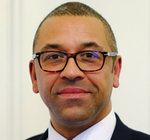
  • James Cleverly – 2021 Statement on the Report on Victim Compensation for Gaddafi-sponsored IRA terrorism

    James Cleverly – 2021 Statement on the Report on Victim Compensation for Gaddafi-sponsored IRA terrorism

    The statement made by James Cleverly, the Minister for the Middle East and North Africa, in the House of Commons on 23 March 2021.

    In March 2019, the then Foreign Secretary, my right hon. Friend the Member for South West Surrey (Jeremy Hunt) appointed Mr William Shawcross as his special representative on UK victims of Gaddafi-sponsored IRA terrorism. Mr Shawcross was commissioned to write an internal scoping report on the subject of compensation for UK victims of Gaddafi-sponsored IRA terrorism. Mr Shawcross submitted his report in March 2020.

    The Government thank Mr Shawcross for his report. Since it was commissioned as an internal scoping report, to provide internal advice to Ministers, and draws on private and confidential conversations held by Mr Shawcross, the Government will not be publishing the report.

    These important issues have needed careful and thorough consideration across Government given the complexity and sensitivity of the issues raised.

    The UK Government reiterate their profound sympathy for UK victims of Gaddafi-sponsored IRA terrorism and indeed for all victims of the Troubles. We recognise the pain and suffering of victims of violent crime, including terrorism, and provide publicly funded support and compensation schemes for those affected.

    The UK Government are clear that the primary responsibility for the actions of the IRA lies with the IRA. Nevertheless, the Gaddafi regime’s support for the IRA was extensive. It is widely documented in the public domain. It involved money, weapons, explosives and training from the 1970s onwards. It helped fuel the Troubles in Northern Ireland and enhanced the IRA’s ability to carry out attacks in Northern Ireland and Great Britain.

    The responsibility for providing compensation specifically for the actions of the Gaddafi regime lies with the Libyan state. The Government have therefore repeatedly urged the Libyan authorities, including at the highest levels of the Libyan Government, to engage with UK victims and their representatives, and to address their claims for compensation.

    However, there are clear practical difficulties in obtaining compensation from Libya for Gaddafi-sponsored IRA terrorism. The conflict, political instability and economic instability that have prevailed in Libya for most of the last 10 years since the fall of the Gaddafi regime present particular challenges.

    Mr Shawcross has considered these issues, including the difficulties of defining UK victims of Gaddafi-sponsored IRA terrorism given the extensive nature of Libyan support for the IRA, and the range of proposals for providing compensation to victims. The Government have reflected fully on these issues. The Government’s considered view is that an additional, UK-funded mechanism for providing compensation to victims of the Troubles would not provide accountability for the specific role of the Gaddafi regime in supporting the IRA.

    Mr Shawcross also considered whether compensation for UK victims should be funded from Libyan frozen assets in the UK. Under international law, when assets are frozen, they continue to belong to the designated individual or entity. Frozen assets may not be seized by the UK Government.

    In implementing financial sanctions, the UK is obliged to comply with the relevant United Nations obligations. UN Security Council resolution 2009 (2011) states that the aim of the Libya financial sanctions regime is

    “to ensure that assets frozen pursuant to resolutions 1970 (2011) and 1973 (2011) shall as soon as possible be made available to and for the benefit of the people of Libya”.

    There is also no legal basis for the UK to refuse the release of frozen assets once conditions for delisting or unfreezing those assets set out in UN Security Council resolution 2009 of 2011 are met.

    Therefore, regrettably, the UK has no legal basis to seize frozen Libyan assets or to refuse the release of frozen assets. The Government cannot lawfully use Libyan assets frozen in the UK to provide compensation to victims.

    The UK Government have also considered whether they should provide compensation to victims from public funds, which it may subsequently recoup from Libya. The responsibility for providing compensation specifically for the actions of the Gaddafi regime is the direct responsibility of the Libyan state. It is not therefore for the UK Government to divert UK public funds specifically for this particular purpose.

    Victims of violent crime, including terrorism, occurring in Great Britain can access the criminal injuries compensation scheme, funded by the UK Government, subject to eligibility criteria and time limits. Bereaved family members can access bereavement and funeral payments. In Northern Ireland, victims have access to the Northern Ireland criminal injuries compensation scheme. The Troubles permanent disablement scheme, to be delivered by the Northern Ireland Executive, will provide acknowledgement payments to people living with permanent physical or psychological disablement resulting from being injured in Troubles-related incidents. Details of when the scheme will be open for applications, and how people can apply, will be published by the Northern Ireland Executive.

    The UK will continue to press the Libyan authorities to address the Libyan state’s historic responsibility for the Gaddafi regime’s support for the IRA.

  • Louise Haigh – 2021 Comments on the Prime Minister and the Northern Ireland Protocol

    Louise Haigh – 2021 Comments on the Prime Minister and the Northern Ireland Protocol

    The comments made by Louise Haigh, the Shadow Secretary of State for Northern Ireland, on 4 March 2021.

    Northern Ireland faces real challenges as a result of the Prime Minister’s deal, but they must be addressed through political leadership.

    The Prime Minister must take personal responsibility for finding lasting solutions that lower tension and make the protocol work. Unilaterally undermining his own agreement has only provoked further instability.

    He should show leadership and hold urgent talks with all parties to the protocol, and Northern Ireland’s political parties, to ensure the voice of all communities is being heard loud and clear.

    The Belfast/Good Friday Agreement is the basis on which communities have lived in peace for two decades. It has endured because cooperation is the only way – that must be the focus.

  • Louise Haigh – 2021 Comments on the Northern Ireland Protocol

    Louise Haigh – 2021 Comments on the Northern Ireland Protocol

    The comments made by Louise Haigh, the Shadow Northern Ireland Secretary, on 3 March 2021.

    The Prime Minister personally negotiated checks down the Irish Sea, and those checks have been known in detail for many months.

    It is the Government’s staggering lack of preparation that has left Northern Ireland so exposed.

    This is the deal the Prime Minister demanded – he should show some responsibility, and find the lasting solutions with the EU that remain the only way to give businesses the certainty they are crying out for.

    Today’s unilateral action will do nothing to solve those long-term challenges facing Northern Ireland.

  • Brandon Lewis – 2021 Comments on Investment in Northern Ireland

    Brandon Lewis – 2021 Comments on Investment in Northern Ireland

    The comments made by Brandon Lewis, the Secretary of State for Northern Ireland, on 24 February 2021.

    I am absolutely delighted to sign the Heads of Terms for the Derry/Londonderry and Strabane City Deal. The UK Government has committed £105 million of capital funding to support and encourage economic development across the region, creating jobs, boosting opportunity and encouraging further inward investment.

    Today’s announcement is part of the UK Government’s commitment to developing and delivering a comprehensive and ambitious set of City Deals across Northern Ireland and delivering a stronger economy that works for everyone.

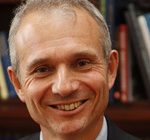
  • David Lidington – 2006 Speech on a New Direction for Northern Ireland

    David Lidington – 2006 Speech on a New Direction for Northern Ireland

    The speech made by David Lidington on 12 October 2006.

    It’s been a good year for our party in Northern Ireland. Our membership is growing and we have regained our toehold in local government.

    We are the only political party that contests elections in every part of the United Kingdom.

    I look forward to the day when we can welcome to our conference not just Conservative councillors, but Conservative Assembly members and Conservative Members of Parliament from Northern Ireland as well.

    Northern Ireland is changing.

    Not everything’s good. Sectarian tensions run deep. Paramilitary groups still use intimidation to exert social control.

    But while serious problems remain, most people in Northern Ireland can at last lead their lives in the normal way that all of us here take for granted.

    The face of Belfast and other cities has been transformed, not by bombs, but by new shops, hotels, offices and homes.

    Even in places like Crossmaglen, for the first time in decades, the police can patrol on foot without routine Army support.

    Politicians of all parties can claim some credit for making this possible.

    But let us never forget, that the peace Northern Ireland has today was won through the courage and endurance of the Royal Ulster Constabulary and our Armed Forces. We shall always remember their bravery and we shall honour the sacrifice that they made.

    And of course the victims of terrorism will carry physical and mental scars for the rest of their lives. We have a duty to speak out for them.

    That’s why we opposed Labour’s amnesty for ‘on the run’ terrorists. It was unjust. It betrayed victims and their families and I am glad that we helped force the Government to abandon its plan.

    Whatever their religion or national identity, people in Northern Ireland have the same everyday hopes and aspirations as the rest of us. They want a prosperous economy, good schools, better health services, decent homes, effective policing.

    As Conservatives, we support the Union. And we also believe in trusting the people.

    An Assembly and stronger local councils would make politics more accessible and more accountable than it can ever be under Direct Rule.

    Giving politicians in Northern Ireland responsibility for practical decisions about jobs, local taxes and public services will force a welcome change in the content of political debate.

    That’s why I support devolution and why I hope that the current talks succeed.

    But devolution and power-sharing will only work if all parties play by the same democratic rules.

    In a democratic society, there is no place for paramilitary gangs. I don’t care whether they call themselves “republican” or “loyalist”; they should go out of business, permanently and completely.

    The tiny loyalist parties are too small to qualify for ministerial office under devolution. But Sinn Fein is different. Sinn Fein is now the second-biggest party in Northern Ireland.

    Its leaders say that they are now committed to pursue their political objectives by exclusively democratic and peaceful means. Certainly, the decommissioning of weapons and the clear statement that the IRA’s so-called ‘armed struggle’ is finally over were events of historic importance. The police and the army believe that there has indeed been a fundamental change in republican strategy.

    But after all that has happened in the last 40 years, we are justified in looking for clear evidence that this change is both permanent and irreversible.

    That means two things in particular.

    First, IRA involvement in crime has to stop for good.

    Second, republicans should support the police and the courts. A power-sharing Executive simply isn’t going to work unless every minister in it is committed to uphold the rule of law.

    Let’s hear Sinn Fein’s leaders ask their supporters to give evidence to help convict the killers of Robert McCartney and give justice to other victims of crime.

    That’s the way to encourage trust.

    Northern Ireland today can look towards a better future. But there are still huge challenges.

    Northern Ireland is over-governed, its economy lags way behind the Irish Republic, with some inner city areas blighted by long-term unemployment and deprivation.

    We need a new direction: smaller government; harnessing the energy of social enterprise and the voluntary sector to tackle poverty and rebuild broken communities; freeing business to create new jobs and investment.

    And Northern Ireland needs a fairer system of local taxation than the tax on homes that Labour is now imposing.

    Health spending is higher than the UK average. Yet the quality of treatment and the standards of public health can be amongst the worst. There’s too much waste and red tape, too little responsibility given to professionals at the sharp end. We need a new direction. People in Northern Ireland deserve better from the NHS than they get now.

    School results in Northern Ireland are better than in the rest of the country. But too many children from deprived areas still leave school unable to read or write. Vocational education and training aren’t good enough for the needs of a modern economy.

    We need to put that right – and can do so while keeping Ulster’s grammar schools. Those schools are successful and they have the support of the overwhelming majority of the people of Northern Ireland.

    Labour’s ban on academic selection is both vindictive and undemocratic. We were right to oppose them and we shall continue our campaign.

    Let me finish with this thought.

    As David reminded us on Sunday, politicians, governments don’t have all the answers. But we Conservatives pride ourselves on being a national party: one that speaks for men and women of every race, faith or social background.

    Let’s draw on that tradition to help the people, all the people of Northern Ireland to put the bitterness of the past behind them and build a shared future based on justice, reconciliation and trust.


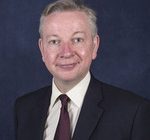
  • Michael Gove – 2021 Statement on the Northern Ireland Protocol

    Michael Gove – 2021 Statement on the Northern Ireland Protocol

    The statement made by Michael Gove, the Chancellor of the Duchy of Lancaster, in the House of Commons on 2 February 2021.

    I am grateful to the hon. Member for Sheffield, Heeley (Louise Haigh) for the chance to update the House on recent developments on the Northern Ireland protocol.

    On Friday afternoon, the European Commission, without prior consultation, published a regulation to enable restrictions on the export of vaccines from the EU. That regulation also invoked article 16 of the Northern Ireland protocol, barring the free movement of medicines from Ireland into Northern Ireland.

    It is important to be clear about what was proposed: not only plans to stop vaccines being delivered through legally binding contracts, at the height of a pandemic, but critically, a unilateral suspension of the painstakingly designed and carefully negotiated provisions of the protocol, which the EU has always maintained was critical to safeguarding the gains of the Northern Ireland peace process.

    Article 16 exists for good reasons, but it is meant to be invoked only after notification and only after all other options are exhausted, and in the interests of the people of Northern Ireland. None of those conditions was met. Worse still, neither the UK Government, representing the people of Northern Ireland, nor the Irish Government, an EU member, were informed. The Commission’s move has provoked anger and concern across all the parties and throughout civil society in Northern Ireland, as well as international condemnation.

    Following the reaction, the Commission did withdraw its invocation of article 16 and subsequently clarified, in conversations with my right hon. Friend the Prime Minister, that it would not interfere with vaccine supplies to Great Britain and Northern Ireland. I am grateful to the Prime Minister for his robust and sensitive intervention, and also to the Taoiseach, the Northern Ireland Executive and Vice-President Maroš Šefčovič for moving quickly to resolve the situation on Friday evening, but trust has been eroded, damage has been done and urgent action is therefore needed.

    Peace, progress and strong community relations in Northern Ireland have been hard won, but in recent days we have seen an increase in community tension and, as was reported last night, port staff in Belfast and Larne have been kept away from work following concerns for their safety. The decision was taken by Northern Ireland’s Agriculture Minister, Edwin Poots, and the local council. My right hon. Friend the Northern Ireland Secretary is engaging closely with the police and authorities on this issue, and of course, the safety and security of staff are the absolute priority.

    I would like to take this opportunity to thank Edwin Poots for his dedicated work. He is, coincidentally, stepping down from his post for health reasons this week, and I am sure all of us in the House would want to send him every good wish.

    Fixing problems on the ground now requires us all to work calmly. The EU needs to work with us, at speed and with determination, to resolve a series of outstanding issues with the protocol. I am grateful to Vice-President Šefčovič for his understanding of the need to make progress to see these problems resolved and to ensure that the protocol does what it was designed to do: avoid disruption to everyday lives while protecting Northern Ireland’s place in the UK internal market and our customs territory.

    I am also grateful to the First Minister of Northern Ireland and her Executive colleagues for their close working with the UK Government and their shared determination to resolve these issues. We will work over coming days to fix the difficulties on the ground, preserve the gains of the Belfast/Good Friday agreement and, of course, uphold Northern Ireland’s place as an integral part of our United Kingdom.

  • Louise Haigh – 2021 Comments on Reversal of EU Decision on Article 16

    Louise Haigh – 2021 Comments on Reversal of EU Decision on Article 16

    The comments made by Louise Haigh, the Shadow Secretary of State for Northern Ireland, on 29 January 2021.

    The European Union are right to have stepped back from their decision. This profound misjudgement has caused unnecessary damage and set back efforts to make the Protocol work. The European Union – and all those interested in stability in Northern Ireland – now have a responsibility to redouble their efforts to make the Protocol work.

  • Michael Gove – 2021 Speech on the Northern Ireland Protocol

    Michael Gove – 2021 Speech on the Northern Ireland Protocol

    The speech made by Michael Gove, the Chancellor of the Duchy of Lancaster and the Minister for the Cabinet Office, in the House of Commons on 13 January 2021.

    I am grateful for the chance to update the House on the operation of the Northern Ireland protocol. The protocol exists to recognise Northern Ireland’s unique position as the only part of our United Kingdom to have a land border with the EU. It was designed to ensure that no customs infrastructure is needed between Northern Ireland and the Irish Republic, while protecting unfettered access for Northern Ireland’s businesses to the rest of the UK market and the gains of the peace process and, of course, respecting Northern Ireland’s position as an absolutely integral part of the United Kingdom.

    As with any new trading arrangement, the protocol undoubtedly generates challenges as well as providing solutions. The Government are committed to addressing those challenges by providing pragmatic solutions to any problems that arise and working with the Northern Ireland Executive in the interests of all the people of Northern Ireland.

    UK Government Ministers are in daily contact with Ministers in the Executive, and with businesses in Northern Ireland and Great Britain, to ensure the effective operation of the protocol. Inevitably, the impact of covid and the steps taken by the French Government at their border have affected retail businesses across the United Kingdom, but it is important to stress that freight volumes into Northern Ireland’s ports are at normal levels for this time of year. There have been no significant queues, and supermarkets are now generally reporting healthy deliveries of supplies into Northern Ireland.

    None the less, the new processes that the protocol asks of businesses that are moving goods from Great Britain to Northern Ireland require the Government to do more. We are working with companies across Great Britain to help them understand the new requirements for moving goods, and the extensive Government support includes the trader support service, to which more than 25,000 businesses are now signed up, yet we know that still more needs to be done.

    That is why we are stepping up direct engagement with suppliers to ensure they have access to the realtime guidance they need, and we are also working closely with industry to address specific problems of moving mixed food loads from Great Britain to Northern Ireland through the process known as groupage. In the coming days, the Government will issue new guidance on the practical mitigations that have been developed with industry to enable this important practice to continue and to support hauliers and suppliers.

    We also recognise that a number of hauliers have been affected by significant issues at Dublin port. We welcome the easements that have been introduced by the Irish Government, but movements via Dublin are substantially lower than normal, so we have to intensify our engagement with the Irish authorities.

    More broadly, the grace periods for supermarkets and their suppliers are now working well, but we are already planning for the streamlined replacements that will follow. A dedicated team within DEFRA, working with the Cabinet Office, is also in touch with the industry to promote readiness, supported by new specific Government funding.

    Ultimately, the future of the protocol is in the hands of Northern Ireland’s people, and its renewal is a question of democratic consent. The responsibility of this Government is to ensure that it operates in an effective, legal and pragmatic way, and that is the spirit in which we approach its implementation.

  • Ian Paisley – 2021 Speech on Global Britain

    Ian Paisley – 2021 Speech on Global Britain

    The speech made by Ian Paisley, the DUP MP for North Antrim, in the House of Commons on 11 January 2021.

    I am all for global Britain, but I am more for global UK. I want to make sure that Northern Ireland gets its fair share of the action. I know that the Minister is doing his best to ensure that Northern Ireland is kept at the top of the agenda, and that is essential.

    I welcome the comments earlier from the right hon. Member for Maidenhead (Mrs May). There is absolutely no doubt that in the first 11 days of this year, the protocol that has been inflicted on Northern Ireland’s trade has been a complete and unmitigated disaster. That is not the fault of Brexit, but it is the fault of those who tried to frustrate Brexit. I hope the Government will urgently invoke article 16 and remove the pernicious clauses of the protocol that are damaging trade.

    Let me give an example. At the weekend, I had to field a call from my constituent who was moving home from Essex to Broughshane in my constituency. When she got her white van to Cairnryan, she was told that she required an export and customs declaration form—to move home from one part of the United Kingdom to the other! I was furious. That van had to turn and go back to Essex and she had to enter the boat at Cairnryan as a foot passenger to get to her home. It is utterly and totally disgraceful. If that is how we are treating citizens of global Britain, I am outraged and appalled that that is how citizens are being treated. Let us fix that, which we can do by invoking article 16, and let us fix it now, because the longer we delay, the more we will damage trade.

    I had another constituent on the phone today who imports personal protective equipment that is made in Britain—in Yorkshire—and when it got to the Cairnryan ferry terminal it was turned back. It was coming in to help frontline workers in Northern Ireland but it was turned back. That is another disgrace. It has to cease, and the quicker that happens, the better.

    I can tell the House one thing: I do not hear any Scots nationalists tonight demanding that they have this special protocol. The protocol has been a disaster for Northern Ireland and we are only on day 11. I hope that the Government fix it very quickly. Let us sort out our internal UK trade—sort out the friction that exists—and then we can get on with ensuring that we really can be a world player in the future of our market.

    I wish to put one other item on the agenda: it is essential that we seize the opportunity to be the world leader in hydrogen technology. This country is right at the cusp of that. We missed the battery opportunity; we can be the leaders in hydrogen technology. Let us use every opportunity to make sure we have hydrogen cities, hydrogen power, hydrogen opportunities and hydrogen jobs in the United Kingdom.

  • Louise Haigh – 2020 Comments on Northern Ireland Protocol

    Louise Haigh – 2020 Comments on Northern Ireland Protocol

    The comments made by Louise Haigh, the Shadow Secretary of State for Northern Ireland, on 8 December 2020.

    This is a welcome step forward, after months of crippling uncertainty for Northern Ireland. An agreement, not reckless threats, has always been the responsible way forward. Huge challenges remain to implement the Protocol by January 1st, and the Government must now work flat out to help businesses prepare, deliver the much-needed detail, and ensure the new arrangements impact as little as possible on Northern Ireland.