Category: Northern/Central England

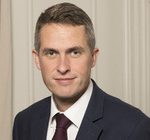
  • Gavin Williamson – 2010 Maiden Speech in the House of Commons

    Gavin Williamson – 2010 Maiden Speech in the House of Commons

    The maiden speech made by Gavin Williamson, the Conservative MP for South Staffordshire, in the House of Commons on 8 June 2010.

    It is a great honour to be called and to follow so many fantastic maiden speeches: when the bar is set so high, it is often easier to duck under it. It is a great honour to serve South Staffordshire. It is traditional for hon. Members to pay tribute to their predecessors, and that is easier for some than it is for others.

    It is easy for me to pay tribute not only to my predecessors for previous constituencies, such as Cannock and Brierley Hill—for example, Sir Fergus Montgomery and Jennie Lee, who were great parliamentarians—but to my immediate predecessor, Sir Patrick Cormack, a great parliamentarian whom we all greatly admire. Sir Patrick believed in and fought passionately for his constituency and constituents, but he also believed passionately in this House—in its traditions and its importance in our national life. He also believed in the importance of a strong House of Commons in holding the Government to account and ensuring good government. Those principles were close to Sir Patrick’s heart and will be close to mine.

    Over the weeks following my selection, Sir Patrick and I became good and close friends. We enjoyed spending a great amount of time campaigning together, and although our styles were sometimes a little different, that made it all the more enjoyable. I remember campaigning in the former mining village of Great Wyrley, where many constituents rushed up to Sir Patrick to wish him well in his retirement and thank him for the work he had done for them. They shook his hand and said, “Mr McCormack, Mr McCormack.” After about the 10th person had done so, I said to Sir Patrick, “Don’t you ever correct them?” He said, “Dear boy, after 40 years, it hardly seems worth bothering, don’t you think?” It is an honour to step into Sir Patrick’s very large shoes, but I hope that, over the years, I will gain some of his panache and style, which graced this Chamber, and that I will be an asset not only to the people of South Staffordshire but to this House.

    South Staffordshire is one of those constituencies about which so many people say, “Where is it? Which town is in it?” People probably travel through it many times when they go up the M6 or up the west coast main line. It is a beautiful constituency that does not have a single major town, but is built up around many small, and some large, villages scattered across the South Staffordshire countryside. Many of those villages were born out of the industrial revolution and coal mining traditions, and have settled in some of the most beautiful, pretty and gentle English countryside that one can imagine.

    The people are straight talkers, which, as a Yorkshireman, is comforting to know. As a straight talker myself, it is nice to have it blunt from others. South Staffordshire is a beautiful constituency that is criss-crossed by many canals and beautiful fields. However, it has its problems and issues. In South Staffordshire, compared with the national average, twice as many people work in manufacturing. That is important to me, because I have worked in manufacturing since I left university. I think it is fair to say that I am one of the few potters who sit in the House today. It is that experience of manufacturing that I hope to bring to the House, because far too often Governments of all colours have believed that we can build a strong, stable and vibrant economy on the twin pillars of financial services and coffee-shop economics. I have a great deal of respect for anyone who works in coffee shops and I even grudgingly admit that we might need bankers, but we cannot have a vibrant British economy without a strong and vibrant manufacturing sector.

    Far too often, young people who go into manufacturing or engineering are seen as taking a second-class career, whereas we reward and sing the praises of people who go into accountancy, the law or public relations. We do not sing enough the praises of our designers, engineers and manufacturers. We need to change that ethos and have a similar one to that of Germany or Japan. We will have a truly vibrant economy only when we recreate the Victorian spirit of ingenuity and inventiveness that made Britain such a vibrant country, as I am sure it will be again.

    I truly welcome the Prime Minister’s comments about the importance of manufacturing and I hope that the Treasury team listen well to his comments and do not spend all their time listening to bankers. They should also listen to manufacturers, because we often have a lot more common sense than bankers. I hope I can play my part in representing South Staffordshire and the people of a beautiful and lovely constituency, and that I can ensure their voices are heard loud and clear in this Chamber.

  • Louise Haigh – 2022 Comments on Rail in the North

    Louise Haigh – 2022 Comments on Rail in the North

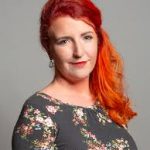
    The comments made by Louise Haigh, the Shadow Secretary of State for Transport, on Twitter on 4 November 2022.

    60 times the Tories promised to level up the North with the rail infrastructure we need to grow our economy. While they break their promises, Labour will build the Elizabeth Line for the North we deserve.

  • Suella Braverman – 2022 Statement on the Manchester Arena Inquiry Report

    Suella Braverman – 2022 Statement on the Manchester Arena Inquiry Report

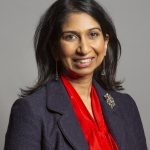
    The statement made by Suella Braverman, the Home Secretary, in the House of Commons on 3 November 2022.

    Today the Manchester Arena inquiry has published volume 2 of its report, which has been laid before the House. The report can be found at www.manchesterarenainquiry.org.uk and on gov.uk. The third and final volume of the inquiry’s report will be published at a later date.

    This report relates to the emergency response into the Manchester Arena attack. I am grateful for the strength and courage of the victims’ families and the survivors, and the engagement of all those who have shared their experiences to ensure the inquiry can deliver its vital work. I am grateful too for the bravery of the emergency services who responded to the attack.

    Steps have already been taken to implement learning from the attack to improve joint working between the emergency services when responding to terrorist attacks. The Government will review this report and consider where further improvements can be made and will respond to its content in due course.

    I would also like to thank Sir John Saunders for his continued and considerable efforts in ensuring that the inquiry is a success and that lessons are learned for the future from this tragic attack.

  • Kemi Badenoch – 2022 Speech at Green Trade and Investment Expo

    Kemi Badenoch – 2022 Speech at Green Trade and Investment Expo

    The speech made by Kemi Badenoch, the Secretary of State for International Trade, in Gateshead on 1 November 2022.

    Welcome to the Green Trade and Investment Expo.

    Let’s talk about Blyth. Blyth is a coastal town 16 miles from here. Coal mining was its lifeblood.

    But when Blyth’s last colliery closed three decades ago, around 1,700 jobs disappeared. Some people thought that the town would be left behind.

    It is true that the past years have been difficult and challenges still exist.

    Yesterday I took some of you to see how the town is becoming one of the country’s most important bases for clean energy.

    It’s home to the Offshore Renewable Energy Catapult, where the biggest turbine blades in the world are put through their paces.

    Another company called JDR is transforming the site of Blyth’s old coal fired power station into a next generation offshore cable factory.

    So, a town once powered by coal is now powered by wind. And all this is creating hundreds of jobs.

    Blyth illustrates the promise of the clean energy revolution.

    And the Government want to see this story of opportunity, growth and revitalised communities replicated across the UK, because at the end of he day what we are about is helping people live better lives.

    That’s where my department comes in. We believe that green trade and investment will be the future-proofing force that will help us create a better tomorrow, and I’ll give you three reasons why:

    First, we know that growing our green industries is crucial to reaching net zero.

    Some people raise awareness of climate change by throwing soup at paintings in museums or gluing themselves to the road. That’s not really my style.

    We in this room know that we can only tackle climate change by using free trade and investment to accelerate green technological progress. And we must do this in a way that does not impoverish the UK.

    Second, to protect our energy security we need to grow our own industries.

    Russia’s invasion of Ukraine has made it quite clear that relying on authoritarian regimes can make it tougher to heat our homes.

    Our trade relationships will help secure our energy supply. But it’s long-term investment in nuclear and renewables that will reduce our dependence on fossil fuels and keep down consumer costs.

    And third, as we are seeing in Blyth, green trade and investment acts as a future-proof by creating those jobs of tomorrow.

    The jobs that will drive economic growth and keep communities alive.

    And this economic angle is the subject I want to focus on today.

    Like many governments around the world, we’re dealing with low growth. We need to find our way through it. Because we owe it to our children and grandchildren to build a better, more prosperous future.

    A lot of this growth will come from the ideas being developed by green industries. We know firms that innovate, expand faster than those that don’t.  And the UK is quickly becoming the green creativity capital of the world.

    Let me give you some examples:

    Imagine being suspended on ropes 40 metres above the North Sea, balanced on wind turbine blade. That’s not just nerve-wracking, it’s also risky. But until recently that was the only way for wind power firms to identify and fix a technical fault.

    That’s now changing after an engineer called Chris Cieslak first designed a robot in his garage.

    His invention, BladeBUG, means a person no longer always has to climb onto the blade to identify a fault. And in some cases, BladeBUG can fix the fault too. This improves safety and boosts efficiency by keeping turbines turning.   That’s an idea that could not only benefit our own wind energy industry but those of other countries too.

    Steamology is a company developing zero-emission hydrogen steam engines from its workshop in Salisbury. An innovation that will prevent rail and lorry operators having to scrap valuable existing vehicles if they decarbonise – saving them money and avoiding waste.

    And it’s becoming safer for people to work in our offshore energy industry, thanks to innovations from Zelim, a company based in Edinburgh.

    When someone falls into the sea, every second counts, and Zelim’s AI-powered technology spots and tracks people in the water, and then its unmanned boat rescues them.

    All these businesses have been supported by our Offshore Renewable Energy Catapult in Blyth.

    There are so many other brilliant ideas like ones you’ve just heard about.

    The challenge now is how to capitalise on them.

    And we’ll do that through attracting the investment that will get these innovations off the ground and help businesses to export. Because this is a virtuous circle: Innovation needs investment to flourish, investment leads to exports, exports create growth and new jobs, and more innovation.

    And if we get our strategy right, the impact could be transformational on places like Blyth and the rest of the country.

    Our analysis shows that by the end of this decade, our green industries could create up to £170 billion of export sales.

    And according to figures from the Office for National Statistics, by 2050 we could generate 1.4 million green jobs across the UK. That’s one for every person in Birmingham.

    As the Prime Minister said last week, green jobs are the jobs of the future.

    But if we get our strategy wrong, we risk being left on the backfoot as other countries seize the advantage.

    So we need to act now and act fast. Here’s how:

    First, we’re focused on building our green industrial base.

    Right now, we’re creating a pipeline of brilliant opportunities for investors. In our British Energy Security and Net Zero Strategies we set out plans to drive £100 billion worth of private sector investment into green industries, including offshore wind by 2030.

    As you’ve already heard this morning, we’ve given ourselves an ambition of up to 50GW of offshore wind capacity by that same date – more than enough to power every home in the UK.

    Those of you who visited Teesside yesterday will see how we’re supporting development of technology like carbon capture and storage, as well as low-carbon hydrogen. And we’re doing some pioneering work in nuclear.

    But it’s not enough to create these opportunities, we need to tell investors about them too.

    So last year we launched our Investment Atlas, which showcases all the UK has to offer…

    From supporting North East Scotland to becoming a global centre for low carbon hydrogen, to building an electric vehicle charging network powered by solar energy.

    We’re bringing together people, businesses and ideas at events like this and at the Global Investment Summit we held last year.

    The Office of Investment, run by my department, has also helped to land billions of investment in clean technology.

    It’s also recently supported the Qatar Investment Authority to inject £85 million into Rolls Royce’s Small Modular Nuclear Reactors – each of which could power a city the size of Leeds.

    And the UK’s Freeports, which I know are of particular interest to many of you here today, are fast becoming hubs for trade, investment and innovation.

    We’re also building a pro ambition, pro enterprise environment in this country – a place where businesses can thrive and enjoy the stability and certainty for which we’re known around the world.

    With every idea, with every ambitious plan and with every transformed town, we are proving to global investors that the path to a green and prosperous future starts here in the UK.

    I’m proud that my department is helping the world wake up to that message.

    In just two years, DIT has helped to secure nearly £20 billion of green investment globally, creating 11,300 jobs.

    And businesses here today, from Spain to South Korea, like SeAH Wind, JDR, Smulders and Siemens Gamesa, are among those backing Britain and changing lives.

    Apart from growing our green industrial base, we also want to grow our exports.

    There are some fantastic businesses in this room that are already selling to the world, and I know there are more who want to join them.

    One of my biggest priorities as Secretary of State is to help you do that, so my department has set itself a goal of accelerating towards a trillion pounds worth of exports a year earlier than forecast.

    We know that many businesses that could export don’t, so our Export Strategy sets out our roadmap for getting you there.

    We’re also very aware that firms need money to grow. And my colleagues at UK Export Finance will help you get the loans and guarantees you need.

    Outside this building you’ll see the first hydrogen-powered double decker bus in the world, manufactured by Wrightbus, a company from Ballymena in Northern Ireland.

    Thanks to a guarantee from UK Export Finance, Wrightbus has been able to access a £26 million facility from Barclays bank.

    This will mean it can export its vehicles around the world, while supporting green jobs at home. And I was very impressed when I spoke to the team today – I hope to see more of this around the country.

    So we’re sitting at what was two centuries ago the epicentre of the industrial revolution.

    Just a mile from here Robert and George Stephenson built some of the world’s first locomotives from their workshop on South Street – the SpaceX of the 1820s. I hear it’s now a gig venue for those of you who like that sort of thing – it’s not really me, but what you will see here today is that the talent for finding innovative solutions is very much alive and kicking in the North East as it was then, and not just the North East, but the UK.

    So, I hope the investors among you will learn what this country’s green industries have to offer. And the businesses will discover how my department can open new markets for you. I look forward to working with you all.

    Thank you.

  • Nick Fletcher – 2022 Speech on Doncaster Sheffield Airport

    Nick Fletcher – 2022 Speech on Doncaster Sheffield Airport

    The speech made by Nick Fletcher, the Conservative MP for Don Valley, in the House of Commons on 24 October 2022.

    On 13 July this year, Peel shocked my constituency with the announcement of the potential closure of Doncaster Sheffield Airport. This is the reason for the debate. Let me tell the House the story. I shall start with the place, then the stakeholders, how we got here, where we are now, questions for this House, and, finally, one last glimmer of hope.

    Doncaster Sheffield Airport was originally RAF Finninglay. I remember going there as a very young boy. I was in the back of a Ford Escort, sat between two older brothers, with my legs sticking to black vinyl seats. It was not a pleasant journey, but, oh, what I saw when I got there: I saw Concorde for the first time, the Red Arrows, Harrier Jump Jets lifting vertically from the ground and then bowing in front of us before roaring off into the distance, and I heard the deafening sound of the Vulcan—what wonderful memories.

    Sadly, Finninglay closed in 1996, but, to the joy of the people of Doncaster and beyond, the airport reopened in 2005 as Doncaster Sheffield Robin Hood Airport—a silly name, but that is for another day. I was fortunate to fly from there the second day after it opened. It was a wonderful place, and Members can see why it is now so dear to me and my constituents.

    I have briefly talked about the place. I want now to talk about the stakeholders. We have the employees who are to lose their jobs, the businesses that will no doubt have to move, and the public who love our airport. We have Peel, the landowners and operators of Doncaster Sheffield Airport, the combined authority and its elected mayors, past and present, Doncaster Council and its mayor, central Government and me.

    Let us talk about the people first. The airport has won many awards. It is a great building in a great place with a great car park, but it is the people who make it. The friends of Doncaster Sheffield Airport, the staff of DSA, the contractors who make it all work, and the firefighters and security who keep all safe. Then there are the businesses on site and in the hangars nearby: 2Excel and the Yorkshire Aero Club to name just a couple; Tui and its staff; and the public from across the region. All of these have been amazing and have kept me going through their continued work to keep the airport open in tough times. Tens of thousands of people have signed petitions—a Facebook page of 15,000 people. They are great people, all wanting to save the airport. To all of them, I say thank you.

    Now let me talk of the two key players: Peel and the combined authority. Peel is a huge landowner across our country. Board members include: John Whittaker; Steve Underwood; and Robert Hough. Peel owned Sheffield Airport. It closed that and built houses on it. It also owned Teesside Airport, and would no doubt have closed it had it not been saved by Mayor Ben Houchen. Peel has a precedent for doing that.

    Oliver Coppard is Mayor of our combined authority and has been in position since May this year. Before this, it was the hon. Member for Barnsley Central (Dan Jarvis). Oliver has devolved powers and moneys. Let me explain what that means. When people are asked whether they want more powers locally, they will say yes every time—why would they not? And that is what has happened here.

    In 2018, under the leadership of the hon. Member for Barnsley Central, South Yorkshire became a combined authority with an elected Mayor. That means that powers move from central Government—this place—to the combined authority now led by Oliver. Our Mayor has powers over economic growth, education, infrastructure and transport. He also has a substantial amount of money that he can use to drive growth. This is gainshare money and is set out as £30 million a year for 30 years— a total of £900 million. He can borrow against this, too. Peel and our Mayor are the key players.

    Doncaster Council is the local authority in which the airport sits. It has compulsory purchase powers and obviously deals with planning. The council is led by an elected Mayor, too.

    Where do the Government sit? If these powers are devolved, there are only so many levers that they can use. The use of the Civil Contingencies Act 2004 has been raised by Members. I, too, have written to the Secretary of State on this issue. The Act states that if there is a disruption to a service that could cause potential loss or injury to human life, the Act could be used. Why is this so relevant at Doncaster Sheffield Airport? For those who do not know, our airport has companies on site that offer coastguard and oil spill services for central Government. We also have the National Police Air Service operating from a specialist-built facility—good people doing good things across our nation.

    When I read about the Civil Contingencies Act, I too believed it was a way forward. Sadly, at least at present, it appears not to be. I spoke to the company that offers those services and, although there may be disruption to its business operation, it can still offer the services. Is that argument dead? Maybe not, but it does not appear to be as fruitful as first thought. Perhaps the Minister can advise us.

    So what can the Government do? They can use the weight of their office and the Department to press for combined authorities and companies to do the right thing. I thank Baroness Vere and my hon. Friend the Member for Witney (Robert Courts) for their help and support. As the Prime Minister at the time said, we must do all we can to protect DSA, and I believe they have done much. Some may wish they could do more, and so do I—but that, I am afraid, is devolution. For them to do more, we would need to return powers to Government. Maybe that is the real answer.

    Finally, there is me, a Back-Bench MP. Let me tell the House what I have done. Well, no, let us just say: much. This debate is not about me. It is a debate about saving Doncaster Sheffield Airport, and any other regional airport in the future. We have spoken of the site and we have spoken of the stakeholders. The question is how we got here.

    It must be said that, as much as Peel has annoyed me, more than most over the past three months, it has at least put its money where its mouth is in the past. Many people believe that the Great Yorkshire Way, a wonderful road connecting the M18 directly to Doncaster Sheffield Airport, was paid for by the taxpayer, but no—much of the £60 million project was private investment, £11 million of it from Peel itself. As much as I would like to haul Peel over the coals at this stage, I cannot.

    The sad fact is that Peel sought financial support from the combined authority for approximately three years, in the form of an equity share worth £20 million and then, reluctantly, in the form of a loan. For three years, I have been informed, Peel was led a merry dance by the combined authority, which provided a catalogue of excuses and delays without clear process. I have been led to believe that first, it claimed there was no money, despite devolution; secondly, it failed to grasp state aid issues and made no effort to lobby on them and finally, environmental concerns were given as the reason why the £20 million loan was not even put to the leaders of the combined authority in March this year.

    Dan Jarvis (Barnsley Central) (Lab)

    We are all here to support the hon. Gentleman and we want to engage in a constructive debate, but I must say that what he has been told is not the case. If I am fortunate enough to catch your eye, Mr Deputy Speaker, I will clearly articulate what the mayoral combined authority did for Doncaster Sheffield Airport and to support Peel over the period when I was the Mayor. I completely understand why the hon. Gentleman makes that point, but I can assure him, as I can assure all hon. Members, that in the period from 2018 to the point of the mayoral election we worked incredibly hard to support Peel and to work with the airport. If I get the chance later on I will be very clear about precisely what we did.

    Nick Fletcher

    I will come on to that, because I want a public inquiry to get to the truth of this matter, but I will cover that in my speech.

    The combined authority appears never to have properly embraced Doncaster Sheffield Airport as its own airport, and to have badly underestimated the economic loss to the region. It was complacent with Peel and favoured investment closer to its own patch in Sheffield.

    This region has failed to behave sensibly under devolution, continuing to act in silos rather than devising and implementing a cohesive economic plan. The economic loss could be simply catastrophic. I asked Peel whether, if the £20 million had been made available this April, we would be in this position. Peel said no. Let me just leave that there for the House: if the £20 million had been made available, Doncaster Sheffield Airport would not be closing. The combined authority may disagree, but the fact remains that the £20 million never appeared and Peel has said it is the fault of the combined authority. That is why I want a public inquiry. If that is not the truth, then what is? A public inquiry will find out.

    Dan Jarvis

    The hon. Gentleman is being generous with his time. In April 2022, DSA indicated that it did not wish to continue developing the loan proposal at that time. It is hard not to conclude that what he has been told, although I think he is presenting it in good faith, is not the case.

    May I put one point to the hon. Gentleman? He has raised concerns about devolution, both today and previously, referring to the powers and the money vested in the Mayor. For the sake of clarity, it would be helpful if he could say precisely what powers—he has mentioned the gain share—and precisely what money he thinks the current South Yorkshire Mayor should be deploying in support of Doncaster Sheffield airport. What powers and what money?

    Nick Fletcher

    Maybe we need to sit down with the Mayor of Teesside and see how he worked it out, because I have been told that he has exactly the same powers as Mayor Oliver Coppard and that Mayor Oliver Coppard has twice as much money as he does, yet he has bought an airport and he is moving forward with it.

    Regarding the fact that DSA said it did not want the loan in April, this is why I want a public inquiry. I have been very careful about what I am saying, although I know I can say what I choose in this House, because I am telling the hon. Member what I have been led to believe. I want a public inquiry so that the people of Doncaster and South Yorkshire can get to the bottom of this question. If what I am saying is true, it is a disgrace.

    Mr Clive Betts (Sheffield South East) (Lab)

    The hon. Gentleman was just asked a direct question. It does not need a public inquiry to work out what the factual position is. Will he say very clearly what powers he thinks the Mayor has to go in and intervene with Peel, which clearly does not want to engage and does not want to sell?

    Nick Fletcher

    Exactly the same again: Peel did not want to sell to Ben Houchen, but it did sell to Ben Houchen. It is no good sitting there and saying it did not—it did. Oliver Coppard has twice the money and exactly the same powers, and his job is economic growth for the area. Ben Houchen bought an airport off Peel that Peel never necessarily wanted to sell.

    I will make some progress. The next question is where we are now. The combined authority failed to set up a mayoral development corporation and Doncaster Metropolitan Borough Council failed to start a compulsory purchase order. They both say they cannot, but it is the threat that counts in a business deal. That is why I have championed the Civil Contingencies Act; it may not be viable, but it is the threat that counts.

    I have tried to work collegially on this and, to be fair, in week 10, on the Friday before the announcement was to be made, the combined authority came up with a deal to cover Peel’s losses for 13 months. Although that is not a Ben Houchen deal, at least it was something. Peel would not lose any money, it would get the local council, the combined authority and the Government on-side, and it would get me off its back. If, 13 months from now, no buyer had been found and the airport was still making a loss, at least Peel would have tried; local jobs would have been saved during a cost of living crisis, the airport would have supported the local economy through this period and businesses on site would have had time to get their contingency plans in good shape. But no—Peel still says no.

    There is something Peel is not telling me, and again, a public inquiry is needed. Why would Peel want to annoy local and central Government, its customers, its staff, the local people and me, when it could have its losses covered, and still say no? There is something Peel is not telling me, so a public inquiry is needed.

    In the last week of the initial six-week consultation, the combined authority’s big idea was to put the airport on the market. These are the people in charge of economic growth for South Yorkshire. Five weeks after I, a Back-Bench MP, had written to Virgin Atlantic, British Airways, Ryanair and numerous other airlines, our devolved authority in charge of economic growth went to the market.

    I really cannot get my breath, but it is day 45 of this saga, and the combined authority is only just going to the market with our airport. I have tried to be collegial throughout my time dealing with this matter, to show a united front against Peel, but it has been harder than anyone can imagine—not being allowed to join meetings and, when I am, having to sit and listen every to reason why things cannot be done rather than reasons why they can.

    Finally, we have three consortia around the table with Peel. Those talks went on through last week, but as yet I have heard no more. There is little time; people are about to lose their jobs. I have to ask whether we would have stood a better chance if the combined authority had gone to the market in week one instead of week five. I am sure we would.

    Miriam Cates (Penistone and Stocksbridge) (Con)

    Thank you for being so generous with your time. As a fellow South Yorkshire MP, can I just say how grateful I am—I know that many of us in the House are—for the tireless work that you have done championing the airport?

    Madam Deputy Speaker (Dame Eleanor Laing)

    Order. The hon. Lady must say, “The work he has done.”

    Miriam Cates

    Apologies, Madam Deputy Speaker. I am grateful for the work that my hon. Friend has done, on behalf of the people of South Yorkshire, trying to rescue the airport. Does he believe that the local authorities and the combined authority have underestimated its economic and social value? If so, why does he think that is?

    Nick Fletcher

    Yes, massively. The important word in “combined authority” is “combined”—it is Doncaster, Rotherham, Barnsley and Sheffield coming together. I do not think the combined authority leaders, past and present, have told the leaders of those councils how important the airport is for the growth of the entire area and beyond. They have not sold it. They should have sold it; if they had, we would not be losing our airport. As I said, we need a public inquiry to find out the reasons for that, but I am afraid the silo working that I spoke about earlier is typical of Labour councils up and down the country.

    Dan Jarvis

    I am grateful to the hon. Member for giving way. He said a moment ago that the current Mayor has twice the money that Mayor Ben Houchen has in Tees Valley. I would be grateful to hear the facts that underpin that, and I am sure the House would be most illuminated, because that is not my understanding. Let me also return to the crucial point about powers. What powers does the hon. Member think are invested in the Mayor that he is not using?

    Nick Fletcher

    On the money, the South Yorkshire Mayor has £30 million per year for 30 years. That is £900 million. Ben Houchen, the Mayor for Teesside, has £15 million a year for 30 years. That is £450 million. I believe we are two years behind where we should be because Doncaster and Barnsley councils wanted to create a Yorkshire-wide mayoralty. Nevertheless, we are where we are.

    With regard to powers, I say again that we have powers to set up mayoral development areas, we have compulsory purchase powers, we have community asset powers—we have all these different levers but, unfortunately, none of them has been used.

    Alexander Stafford (Rother Valley) (Con)

    I am intrigued by those powers, and I think where the power lies is the nub of the issue. We have all seen the great success of Mayor Ben Houchen in Tees Valley, but why is that not happening in South Yorkshire? My hon. Friend talks about compulsory purchase powers. Is he saying that if the Mayor wanted to, he could—perhaps with Doncaster Council—buy the airport to save it, similarly to what Ben Houchen did, but that he has chosen not to do so?

    Nick Fletcher

    The compulsory purchase powers sit with the local authority, and it could have used them. The argument will be that, to use compulsory purchase powers, it is necessary to go through a series of phases first: compulsory purchase has to be the last resort. I understand that, but the threat of its use would have made Peel sit down at the table far sooner, and we may have stood a chance of saving the airport. Using compulsory purchase orders when the airport has closed and been asset-stripped by its owners is not going to help anyone. We are where we are. As I said a moment ago, we have consortia around the table. Let us hope that things change in the next few days.

    I could speak for another hour, but I know my time is limited. I want to leave the House with three questions. First, what can this place do to stop this happening again? Should we make all airports community assets? Should any sale or closure of an airport have to be agreed by the local Mayor or the Secretary of State? Should any operator have to give a notice period of, say, two to five years? I do not know, but something must be done.

    Secondly, before any more devolution can take place, can it please be explained properly to the electorate what that means? I believe it has been a disaster for South Yorkshire so far. People really need to know what they are signing up for and voting for.

    Thirdly, can we have a public inquiry? I need the people of Doncaster to know what has happened. It is important. They really need to know where to put their cross the next time they vote.

    Jason McCartney (Colne Valley) (Con)

    I thank my hon. Friend for securing this important debate. Before he winds up his excellent speech, in which he has clearly laid out the issues, the work that he has been doing to solve them, and some solutions, may I just say that my West Yorkshire constituents have lobbied me too? This is a regional airport that they use, so on their behalf I say to my hon. Friend, “More power to your elbow.” I congratulate him on everything that he has been doing to campaign for this important regional airport.

    Nick Fletcher

    I thank my hon. Friend. That just proves that the airport is used by people from all across the north of England and is such a fantastic asset.

    Peel has been stubborn—I believe desperately so—and its board, mainly John Whittaker and Robert Hough, will have to live with what it is trying to do and what its legacy will be. I am told that John Whittaker is a good man, and he can stop this at the click of his fingers. The question is, will he do the right thing? I hope so.

    However, Peel is a business, and businesses make profit. Although I do not believe that greed is good, Peel is doing what businesses are supposed to do: making money. Sadly, I believe our elected Mayors have not done what they are supposed to do. They have been left wanting—absent at first, then slow and, in the words of local business leaders, chaotic. They have shown no vision and are championing our airport only now, when it is probably too late.

    Just look at the difference between our Mayor’s social media account and Ben Houchen’s. Our South Yorkshire Mayor is tweeting childish memes when the people he represents—the people who voted for him—are losing their jobs and South Yorkshire is losing its future, while Ben Houchen’s social media is littered with success stories of investment, jobs and giving the next generation an inspiring future.

    If we lose our airport, Peel will need to be held accountable, but the combined authority should be dissolved. It is not working, and it is not working for Doncaster. Our combined authority Mayor is buying trams for Sheffield while Doncaster gets second-hand buses and a closed airport. It is simply not good enough. And where is our Doncaster Mayor? Nowhere to be seen.

    Alexander Stafford

    If, as is reported, Peel is planning to sell the site or get rid of it for houses to be built on it, who exactly would benefit from the council tax on those houses? Would the South Yorkshire Mayor and Doncaster Council get money directly from the rate payers who bought those houses? Does my hon. Friend think there is anything weird about that way of doing things?

    Nick Fletcher

    My hon. Friend makes his point; as I say, I hope that those sorts of things will come out as part of the public inquiry.

    I have said throughout our campaign that we must keep the faith. I am so saddened. I know that we cannot keep an airport open because people are fond of it, but Doncaster people really are fond of the airport, and I am too. I therefore want to try to end on a note of optimism that we still have a glimmer of hope. The consortia and Peel are still in the room and the combined authority offer is still on the table. I want them to know that if they save our airport, I will be their champion, and so will the good people of Doncaster.

    It is a great airport and I know that, with the right owner and the right support, it would be viable. I therefore ask Peel one last time to do the right thing, reverse this ridiculous decision, accept the combined authority’s offer, give the sale the time it needs and let us turn Doncaster into the aerotropolis its founder, John Whittaker, once dreamed of.

  • Gavin Newlands – 2022 Speech on Doncaster Sheffield Airport

    Gavin Newlands – 2022 Speech on Doncaster Sheffield Airport

    The speech made by Gavin Newlands, the SNP spokesperson for transport, in the House of Commons on 24 October 2022.

    I warned many times, while the attention was disproportionately on the Heathrows and the Gatwicks of the world, about how the perilous position of regional airports—their recovery from covid has been far slower—was being ignored. The closure of Doncaster Sheffield is a blow to vital regional connectivity. What is—and, indeed where is—the Government’s strategy for regional connectivity? Regional connectivity is not just about flights to London, which the current public service obligation legislation solely supports, and such flights are always the first to go when slots are needed for more lucrative routes. Direct regional links with European and global destinations have to be the priority.

    I have also said many times that retail is a much higher proportion of regional airports’ revenues, but we have seen VAT-free shopping at the point of sale abolished. It was to be replaced by a less generous VAT reclaim scheme, but that has also been abandoned. I ask that this issue is looked at again. At the very least the Government must look at arrivals duty-free, which has cross-party support. Will they do so?

    Finally, what plans does the Minister or her colleagues have to meet people from the regional airports, including Glasgow in my constituency, to find out and act on what they need, rather than what Greater London wants?

    Katherine Fletcher

    The hon. Gentleman may be able to guess from my accent that London is not always at the forefront of my mind when making decisions. As he well knows, Doncaster airport does not have any domestic internal flights, and airlines will set those up primarily from the perspective of commerciality. I agree with him about the importance of regional connectivity. On how communities can best work together to engage with what airports want and how regional connectivity work, I refer him to models mentioned previously in which other airports have a mixture of private and local engagement that really grounds operations within them. On the position on VAT, I am afraid that I will have to write to him rather than commit a snafu at the Dispatch Box.

  • Louise Haigh – 2022 Speech on Doncaster Sheffield Airport

    Louise Haigh – 2022 Speech on Doncaster Sheffield Airport

    The speech made by Louise Haigh, the Shadow Transport Secretary, in the House of Commons on 24 October 2022.

    I like the Minister very much and I wish her well in her ministerial duties, but she is not the aviation Minister; the Secretary of State should be here to answer this urgent question. A critical regional airport is days away from closure and she cannot be bothered to turn up. What message does it send to the people of South Yorkshire, 125,000 of whom signed a petition to keep the airport open, that she will not attend the Chamber and cannot even attend meetings with South Yorkshire MPs and leaders to discuss how we can protect Doncaster Sheffield airport? The Government have repeatedly refused to meet the Mayor of South Yorkshire and other regional leaders to discuss what options are open. It is truly a slap in the face to the hundreds of people whose jobs currently hang in the balance.

    When the right hon. Member for South West Norfolk (Elizabeth Truss)—the Prime Minister for the next few hours at least—came to Yorkshire, she gave a commitment on behalf of the Government to protect Doncaster Sheffield airport. That commitment must outlast her Government, not least because this airport is of strategic significance: it has one of the longest runways in Britain, it is the base for the National Police Air Service, and it is a home to national coastguard operations.

    Thanks to the leadership of the Mayor of South Yorkshire, credible investors have been identified, but it is obvious that the Peel Group never had any intention of negotiating in good faith, so it is not an option for Doncaster Council or the Mayor to purchase shares in the airport, given that the Peel Group is refusing to sell. It is willing to let the airport close, to let infrastructure be degraded and to remove any chance of its being reopened in future.

    The case for action from the Government is crystal clear. The use of emergency powers under the Civil Contingencies Act is the only possible measure to keep the airport running. Potential investors have made it clear that the Secretary of State’s refusal to use those powers is creating far greater uncertainty and instability, and is making purchase at any point in future even more unlikely. Can the Minister outline precisely why the Secretary of State has refused to consider the use of the Act? That decision is political, so it is beholden on her to explain to the people of South Yorkshire why she refuses to use it. If she continues to refuse, will the Minister lay out what powers exist anywhere else that could keep the airport running?

    As we await the third Prime Minister in seven weeks, there is less than a week left to save the airport. If the Government do not take the action that the people of South Yorkshire desperately need them to take, the people will conclude that this is final proof that the Tories’ levelling-up agenda is dead.

    Katherine Fletcher

    The message to the people of South Yorkshire is that they have an incredibly strong local champion in my hon. Friend the Member for Don Valley (Nick Fletcher), who has been working tirelessly to make it happen from day one. The previous aviation Minister, my hon. Friend the Member for Witney (Robert Courts), who is present, has already met the combined authority. The hon. Lady asks where the power lies; it lies with the Labour mayoral combined authority—the local council. [Interruption.] Well, let me address the Civil Contingencies Act: it was introduced by the Blair Government. When the Minister brought it to the House, it was envisioned that it would be used in only the most serious circumstances and

    “would be used rarely, if ever”.—[Official Report, 19 January 2004; Vol. 416, c. 1109.]

    No Government have used it in 18 years. The Opposition—[Interruption.] The Labour party bringing in a law that was not serious; that would astonish me! What you are doing is trying to find a piece of politicking, instead of sitting down—[Interruption.] Sorry, it is my first go, Madam Deputy Speaker. You are—[Hon. Members: “You’re doing it again!”] The hon. Lady will forgive me, as it is my first go. [Interruption.] What we need is for the Peel Group to sit down with the commercial people, and that is what it promised to do when it sat down with the aviation Minister on 19 October.

  • Katherine Fletcher – 2022 Statement on Doncaster Sheffield Airport

    Katherine Fletcher – 2022 Statement on Doncaster Sheffield Airport

    The statement made by Katherine Fletcher, the Parliamentary Under-Secretary of State at the Department for Transport, in the House of Commons on 24 October 2022.

    Following the strategic review of the airport announced in July this year, the Government are incredibly disappointed that Peel Group has taken the difficult decision to announce the potential closure of Doncaster Sheffield airport. While it was a commercial decision made by the owners of the airport, I fully appreciate the impact it has had not only on passengers who use the airport, including the constituents represented by many hon. Members in the South Yorkshire region, but on those businesses, organisations and people who work at the airport and within the supply chain.

    As I know from growing up underneath the flightpath of Manchester airport, regional airports are key in serving our local communities, supporting thousands of jobs in the regions and acting as a key gateway to international opportunities. That is why during the pandemic the Government supported airports through schemes such as the airport and ground operations support scheme, through which Doncaster Sheffield airport was able to access grant funding.

    I need to be clear that, while the UK Government support airports, they do not own or operate them. However, devolved Administrations, local and combined authorities are frequently shareholders in airports that serve their communities, as is the case with Manchester Airports Group, Birmingham airport, London Luton airport and, most recently, Teesside International. The UK aviation market operates predominantly in the private sector. Airports invest in their infrastructure to attract airlines and passengers. We will continue to support all parties to seek a commercial or local solution.

    Since the announcement by Peel Group on the airport’s future on 13 July, the Government have been actively working with local stakeholders to encourage a future for aviation at the site. My hon. Friend the Member for Don Valley (Nick Fletcher) and the Department for Transport have met Peel, and I understand that the South Yorkshire Mayoral Combined Authority and Doncaster Council have been working during the review to explore options for a locally led solution. The local authorities have now written to Peel Group to pass on the details of those who are interested in potential options to invest in the airport, and I understand that Peel has begun to engage with those parties.

    The aviation Minister, Baroness Vere, met Peel on 19 October and strongly encouraged it to look seriously at any commercial interest. She has also been proactively encouraging Peel Group to strongly consider the local and combined authorities’ offers of bridging support if it requires extra time to take forward any discussions with investors.

    The Government remain engaged and we look forward to seeing further progress. The House has today highlighted the importance of Doncaster, and I will convey the strength of feeling among Members present to Baroness Vere as she continues her work. I call on Peel Group to continue to work with stakeholders to find a commercial solution or to minimise the impact of its review of the airport.

    Stephanie Peacock

    Doncaster Sheffield airport is an important regional economic asset with thousands of jobs dependent on it. Despite Peel Group’s announcement of its closure, local leaders have made every effort to work with the group and press the Government to secure the airport’s future. The South Yorkshire Mayor made Peel Group an offer of public money to keep the airport running, and local leaders have helped to find three potential investors who are seriously interested in keeping the airport operational, but those efforts have met resistance at every turn. Having already run the airport down, Peel Group is still refusing to confirm whether it is willing to suspend its closure, or whether it is even in a position to sell Doncaster Sheffield Airport Ltd.

    Meanwhile, the Secretary of State, who could not even be bothered to turn up today, will not engage with interested parties and is refusing to invoke powers such as those in the Civil Contingencies Act 2004 to protect the airport. She refused three times on the Floor of the House to meet local leaders and is yet to respond to a petition signed by more than 125,000 people, despite assurances from the outgoing Prime Minister that the Secretary of State would address the issue “immediately” and “protect the airport”. Actions speak louder than words. Having created a climate of uncertainty, neither Peel Group nor the Government are using the powers and influence they have to explore every option to ensure the airport’s future. That is not good enough—for workers, for businesses, or for all of us who rely on the emergency services stationed at the airport.

    I thank Doncaster Council, the South Yorkshire Mayor, my right hon. Friends the Members for Doncaster Central (Dame Rosie Winterton) and for Doncaster North (Edward Miliband), and my hon. Friend the Member for Sheffield, Heeley (Louise Haigh). Local leaders want the Government to work with us rather than taking a hands-off approach. Potential investors in the airport need certainty in the next 24 hours. It is imperative that Ministers step up, take action and use their powers to do everything they can to save Doncaster Sheffield airport.

    Katherine Fletcher

    The hon. Lady speaks with passion and partisanship in not mentioning my hon. Friend the Member for Don Valley (Nick Fletcher). I think she is a little late to the party; even a cursory glance at my hon. Friend’s social media feed will show that he is on day 105 of his campaign to save Doncaster airport. He has met a series of different parties, and it is slightly beneath the hon. Lady not to recognise his efforts to protect his local community.

    Baroness Vere, the aviation Minister, met Peel on 19 October, and it assures her that it is open to meeting potential investors. The Secretary of State has met Peel twice. The implication that we are not doing everything to find a solution for regional airports, which we recognise are incredibly important, is not correct.

    I am sure that the Civil Contingencies Act will come up in other questions, so let me allude to it briefly. The Civil Contingencies Act is for absolute emergencies only. Even one of the operators at the airport has written to the Prime Minister to explain that it can still find contingency efforts elsewhere, so the threshold for the last Labour Government’s legislation has nowhere near been met.

  • Tim Farron – 2022 Comments on Government’s Emergency Statement

    Tim Farron – 2022 Comments on Government’s Emergency Statement

    The comments made by Tim Farron, the Liberal Democrat MP for Westmorland and Lonsdale, on 17 October 2022.

    Let’s be clear: this emergency statement is not in response to an external crisis, a war, a pandemic or global energy prices – it’s in response to the ongoing crisis in the Conservative Government.

    It also speaks volume about the Conservatives’ total disregard for rural communities like ours in Cumbria, that one of the only things that hasn’t been axed from the mini budget is the cut in stamp duty – a measure which will fuel excessive second home ownership and the Airbnb boom that is turning our communities into ghost towns and ejecting local families.

    This chaos cannot be allowed to go on for any longer – it’s time for a General Election.

  • Eddie Izzard – 2022 Comments on Standing for Labour in Sheffield Central

    Eddie Izzard – 2022 Comments on Standing for Labour in Sheffield Central

    The comments made by Eddie Izzard on Twitter on 11 October 2022.

    Labour ideals of fairness and equality have been at the core of my life. I’m standing to be the next Labour MP for Sheffield Central to support the city that has supported me.

    Please join me, in taking on this great challenge.

    eddieizzard.uk/

    For Sheffield. For Labour.