Category: News Story

  • NEWS STORY : Transport Secretary Heidi Alexander Outlines Vision for Inclusive UK Transport System

    NEWS STORY : Transport Secretary Heidi Alexander Outlines Vision for Inclusive UK Transport System

    STORY

    In a keynote address at the National Railway Museum in York, Transport Secretary Heidi Alexander presented her vision for a more inclusive and connected UK transport system. Drawing from personal experiences in Swindon, a town emblematic of car-centric development, Alexander emphasised the need to shift towards transport networks that prioritise people over vehicles.

    Alexander recounted how Swindon’s urban planning, dominated by out-of-town shopping centres and limited public transport, influenced her understanding of mobility challenges. She highlighted that such environments restrict choices, particularly for those without access to cars, underscoring the importance of designing transport systems that serve all community members.

    While the speech did not introduce new policies, it set the tone for a transport strategy focused on inclusivity, accessibility, and community connectivity. Alexander’s narrative suggests a forthcoming emphasis on integrating various modes of transport to create seamless journeys, especially for under-served populations.This address aligns with the government’s broader initiative to develop an Integrated National Transport Strategy, aiming to empower local leaders and enhance regional transport networks.

  • NEWS STORY : UK Government Moves Toward Nationalising Steel Industry in Historic Intervention

    NEWS STORY : UK Government Moves Toward Nationalising Steel Industry in Historic Intervention

    STORY

    In a bold and unprecedented move, the UK government is set to begin the process of nationalising parts of the country’s beleaguered steel industry, as fears grow over mass job losses and the collapse of domestic steel production.

    Ministers are expected to unveil emergency legislation this weekend granting the government powers to intervene directly in strategically vital steel firms, including British Steel and Tata Steel’s operations in the UK. The plan would give ministers the ability to take temporary control of assets, inject public funding, and ensure production continuity in regions heavily dependent on steelmaking.

    The decision follows mounting pressure from trade unions, Labour backbenchers, and local leaders, particularly in industrial heartlands like Scunthorpe and Port Talbot, where thousands of steelworkers face redundancy due to the planned closure of blast furnaces and the shift toward electric arc furnace technology.

    ‘A Matter of National Interest’

    Announcing the move, Business Secretary Jonathan Reynolds told reporters: “Steel is not just a symbol of our industrial heritage—it is a cornerstone of our future. From defence and infrastructure to the green transition, we cannot afford to lose sovereign capacity in steel production. The government is acting decisively in the national interest.”

    The proposed intervention would mark the UK’s most significant act of nationalisation since the bailout of the banking sector in 2008, and the first re-entry of the state into steel ownership since British Steel was privatised in 1988.

    Under the legislation—dubbed the Steel Industry (Special Measures) Bill—the government would gain temporary ownership rights over sites deemed economically or strategically vital, with compensation mechanisms for current owners. The move is expected to focus initially on preserving production at British Steel’s Scunthorpe site, which is facing imminent shutdown.

    Backlash and Support

    The proposal has already stirred fierce debate. Business leaders warn it could send the wrong signal to investors, while union leaders have welcomed the plan as a necessary step to protect livelihoods and national resilience.

    Unite the Union’s General Secretary Sharon Graham called the move “long overdue,” adding: “The market has failed. The government is right to step in. You cannot build a green economy or a serious industrial strategy without a steel industry.”

    The Conservative opposition has accused the Labour government of returning to “1970s-style economics.” Shadow Business Secretary Kemi Badenoch said the decision was “ideologically driven” and risked “saddling taxpayers with costly liabilities for failing companies.”

    Why Now?

    The nationalisation proposal comes amid a perfect storm for the industry. Rising energy prices, global overcapacity, and the reimposition of US tariffs on British steel have all contributed to financial instability. Meanwhile, the transition to green steel has raised urgent questions about investment, competitiveness, and employment.

    Tata Steel’s move to shut its blast furnaces in Port Talbot and replace them with cleaner electric arc furnaces has left 2,800 workers facing redundancy. British Steel, owned by Chinese firm Jingye, is reportedly losing nearly £700,000 per day.

    Government sources insist the nationalisation plan is “temporary and targeted,” with a long-term strategy still focused on delivering a modern, decarbonised steel sector through public-private partnerships.

    Looking Ahead

    The Steel Industry Bill will be debated in Parliament over the coming week, with a fast-tracked schedule to avoid production halts. If passed, the first sites could come under public control as early as next month.

    With steel at the centre of defence supply chains, infrastructure plans, and the green transition, ministers are expected to argue that keeping it in UK hands is not just a question of economics—but of sovereignty.

    As one senior government official put it: “You can’t build a clean energy future on foreign steel. Not if you’re serious about reindustrialisation.”

    The stakes are high, but so is the symbolism. After decades of managed decline and global retreat, the state is stepping back into the furnace.

  • NEWS STORY : Trump Humiliated by Another Tariff U-Turn as US Reverses Course on Electronics Levies

    NEWS STORY : Trump Humiliated by Another Tariff U-Turn as US Reverses Course on Electronics Levies

    STORY

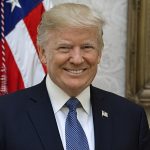
    In yet another dramatic reversal, the Trump administration has scrapped plans to impose sweeping tariffs on smartphones, laptops, and other electronic goods—just days after championing them as a cornerstone of his “America First 2.0” trade crusade. The decision, which blindsided Republican allies and delighted global markets, marks the second major tariff climb-down in as many weeks and has been widely described in Washington and abroad as a political embarrassment for former President Donald Trump, who is eyeing a return to the White House in November.

    The now-abandoned tariffs, announced with typical fanfare during a campaign rally in Michigan, were intended to target Asian tech manufacturing hubs, including South Korea, Vietnam, and China. Trump claimed they would protect American jobs and “punish countries who cheat,” but the announcement triggered immediate backlash from US tech giants, Wall Street, and international trade partners. The proposed levies, which would have added up to 25% on imports of phones, tablets, and household electronics, were labelled “economic lunacy” by industry groups, with Apple and Samsung warning of price hikes and supply chain chaos in the run-up to Christmas.

    Facing pressure from the tech industry, consumer advocacy groups, and even Republican governors concerned about inflation, Trump’s trade team issued a late-night statement on Friday confirming the tariffs would no longer go ahead. The statement cited “a re-evaluation of market dynamics” and “ongoing stakeholder consultations”—Washington code for “this went down like a lead balloon.”

    Critics were quick to pounce on the retreat.

    “This is a humiliation for Trump,” said Democratic Senator Maria Campbell. “You can’t play strongman one day and wave the white flag the next. It shows the chaos and incoherence of his entire trade agenda.”

    Even some Republicans expressed frustration at the backpedal. “If we want to lead, we need clarity—not chaos,” said Senator Rick Burns, a long-time proponent of tough trade policies. “This does nothing for credibility.”

    Across the Atlantic, European officials greeted the U-turn with a mix of relief and amusement. One senior UK trade official quipped, “It’s becoming hard to keep up. One day it’s a tariff war, the next day it’s a group hug. We’re just trying not to get caught in the crossfire.”

    The White House has remained tight-lipped, with aides reportedly scrambling to contain the fallout. Sources close to the Trump campaign admitted privately that the proposal was “poorly timed” and “politically damaging.”

    This latest U-turn follows hot on the heels of Trump’s embarrassing reversal on steel and car part tariffs—also scrapped after diplomatic uproar and pressure from American manufacturers.

    Observers now question whether Trump’s “tough on trade” posture has any remaining credibility. “The pattern is clear,” said Dr. Lena Alvarez, an international trade analyst. “Bluster, backlash, backtrack.”

    As Trump prepares for upcoming televised debates and eyes a second presidency, critics are warning voters to expect more volatility—and more headlines like this.

  • NEWS STORY : St George’s Day Festival Returns to Trafalgar Square with Music, Dance and Family Fun

    NEWS STORY : St George’s Day Festival Returns to Trafalgar Square with Music, Dance and Family Fun

    STORY

    The Mayor of London, Sadiq Khan, has announced the return of the capital’s St George’s Day Festival to Trafalgar Square on Monday, April 21. Running from 12:00 PM to 6:00 PM, the free, family-friendly event will celebrate England’s rich heritage through live music, dance, and interactive workshops. Hosted by singer-songwriter Harley Moon Kemp, the festival will feature performances by The Nigel Grice Jazz Collective, the English Folk Dance and Song Society, singer-songwriter Matilda Garcia, dance company Bird and Gang, spoken word artist Palacio de Poetas, the West End Kids, and harmony group Vocal Shack. Attendees can also enjoy traditional Morris dancing from the Belles of London City and meet the famous Pearly Kings and Queens.

    Throughout the afternoon, St George and his Dragon will be roaming across the Square, adding to the festive atmosphere. A variety of food and drink stalls will be available, and the day will conclude with a ceilidh led by Cut A Shine, a troupe of traditional musicians and dancers. Mayor Sadiq Khan expressed his enthusiasm for the event, stating, “I’m delighted that our St George’s Day celebrations return to Trafalgar Square this month. Londoners and visitors can enjoy an afternoon of free, family-friendly entertainment in the heart of our capital. It’s an event that brings our communities together and showcases all that’s brilliant about England, as we build a better London for everyone.”

  • NEWS STORY : UK Parliament Recalled to Debate Emergency Nationalisation of British Steel

    NEWS STORY : UK Parliament Recalled to Debate Emergency Nationalisation of British Steel

    STORY

    In a rare move, the UK Parliament will be recalled from its Easter recess on Saturday, April 12, to debate emergency legislation aimed at safeguarding the future of British Steel. The decision underscores the urgency of addressing the potential closure of the company’s Scunthorpe plant, which employs approximately 3,000 workers.The Government plans to introduce the Steel Industry (Special Measures) Bill, granting ministers the authority to intervene directly in steel companies operating in England. This legislation is designed to prevent the shutdown of British Steel’s blast furnaces in Scunthorpe, a move that could have significant economic and strategic implications for the UK.

    British Steel, owned by China’s Jingye Group since 2020, has been facing severe financial challenges, reportedly losing around £700,000 daily. The company’s difficulties have been exacerbated by high energy costs and recent 25% tariffs imposed by the United States on all steel imports.​ The recall of Parliament for this debate marks the 35th such instance since 1948, highlighting the critical nature of the situation.​ The House of Commons will convene at 11 a.m., followed by the House of Lords at noon, to deliberate on the proposed legislation.

  • NEWS STORY : Rishi Sunak’s Resignation Honours Spark Debate Over Political Patronage

    NEWS STORY : Rishi Sunak’s Resignation Honours Spark Debate Over Political Patronage

    STORY

    In his final act as Prime Minister, Rishi Sunak has awarded a series of peerages and honours to political allies and public figures, igniting a debate over the use of the honours system for political patronage. The list, published on 11 April 2025, includes the elevation of several former Conservative cabinet ministers to the House of Lords and the conferral of knighthoods to prominent figures.​

    Key Appointments to the House of Lords

    Among the most notable peerages is that of Michael Gove, the former Levelling Up Secretary and long-serving Conservative politician. Gove, who retired as an MP at the last general election, has held multiple cabinet positions under various prime ministers and remains an influential figure within the party.

    Other appointments to the House of Lords include:

    • Mark Harper, former Transport Secretary

    • Simon Hart, former Chief Whip

    • Alister Jack, former Scottish Secretary

    • Victoria Prentis, former Attorney General

    • Stephen Massey, former Conservative Party Chairman

    • Eleanor Shawcross, former No. 10 Policy Head

    Additionally, Amanda Spielman, former HM Chief Inspector of Education, Children’s Services and Skills, has been nominated for a life peerage, recognising her contributions to education and public service.

    Knighthoods and Other Honours

    The honours list also includes knighthoods for several senior politicians:

    • Jeremy Hunt, former Chancellor of the Exchequer

    • James Cleverly, former Foreign and Home Secretary

    • Grant Shapps, former Defence Secretary

    Notably, England cricket legend Jimmy Anderson and filmmaker Matthew Vaughn have also been knighted for their contributions to sports and the arts, respectively.

    Criticism and Calls for Reform

    The honours have drawn criticism from opposition parties and political commentators, who argue that the list rewards political loyalty over merit. Liberal Democrat Deputy Leader Daisy Cooper described the appointments as a “parade of political flunkies,” suggesting that the honours system is being used to benefit political allies rather than recognise genuine public service.

    Labour leader Keir Starmer has previously advocated for reforming the House of Lords, proposing measures such as introducing a retirement age and ending hereditary peerages to modernise the institution.

    The Honours System and Its Implications

    The British honours system allows outgoing prime ministers to recommend individuals for peerages and other honours, a tradition that has often been criticised for promoting political patronage. Life peerages grant individuals the right to sit in the House of Lords, contributing to the legislative process and influencing national policy.

  • NEWS STORY : OSCE States Condemn Georgia’s Human Rights Decline, Urge Democratic Reforms

    NEWS STORY : OSCE States Condemn Georgia’s Human Rights Decline, Urge Democratic Reforms

    STORY

    A coalition of 35 OSCE participating states, including the United Kingdom, Germany, France, and the United States, has expressed deep concern over the deteriorating human rights situation in Georgia. In a joint statement delivered at the OSCE Permanent Council in Vienna, the group criticised the Georgian government’s recent actions that undermine democratic principles and civil liberties.

    The statement highlighted three primary areas of concern:

    • Legislative Restrictions on Civil Society: The introduction of the Foreign Agents Registration Act mandates that individuals and organisations receiving foreign funding register as “foreign agents,” imposing financial sanctions and criminal penalties for non-compliance. The OSCE Office for Democratic Institutions and Human Rights (ODIHR) has warned that this law could severely limit the activities of civil society organisations and human rights defenders.

    • Targeting of Independent Media: The Georgian government has been accused of suppressing independent media outlets, thereby restricting freedom of expression and access to unbiased information.

    • Lack of Accountability for Excessive Use of Force: Reports indicate that law enforcement agencies have employed excessive force against peaceful protesters, with instances of indiscriminate violence by unidentified groups. Concerns have also been raised about unnecessarily long pre-trial detention periods and the reported ill-treatment of detainees.

    The coalition called on the Georgian government to cease the use of repressive tactics, release individuals detained for peacefully exercising their rights, and hold accountable those responsible for unlawful use of force. They urged Georgia to engage in inclusive dialogue with political parties, civil society, and OSCE institutions to address these issues.  While reaffirming their support for Georgia’s sovereignty and territorial integrity, the OSCE states emphasised the importance of adhering to democratic values and human rights commitments. They encouraged Georgia to return to the path of European integration, reflecting the aspirations of the majority of its citizens.

  • NEWS STORY : UK and Allies Condemn Russia and Belarus Over Media Crackdown at OSCE Meeting

    NEWS STORY : UK and Allies Condemn Russia and Belarus Over Media Crackdown at OSCE Meeting

    STORY

    The United Kingdom, alongside 14 other nations, issued a joint statement at the Organization for Security and Co-operation in Europe (OSCE) Permanent Council, expressing deep concern over escalating threats to media freedom, particularly in Russia and Belarus. Delivered by Lithuanian Ambassador Vaidotas Verba on behalf of the informal Group of Friends on Safety of Journalists—which includes countries such as Canada, France, Germany, and the UK—the statement underscored the indispensable role of media freedom in ensuring genuine security. It highlighted the alarming conditions journalists face across the OSCE region, including physical and online violence, legal harassment, arbitrary detention, enforced disappearances, and even death.

    The coalition specifically condemned Russia’s ongoing war against Ukraine, citing data from Reporters Without Borders that nearly 150 journalists have been victims of Russian abuses since the invasion began. This includes 13 journalists killed, 47 injured, and 19 Ukrainian journalists currently detained by Russian forces, many arrested in temporarily occupied Ukrainian territories. In Russia and Belarus, the statement noted a systematic crackdown on independent media, resulting in the closure of nearly all independent media organisations and creating an information space largely controlled by the state. The coalition called on both nations to release all detained journalists and to cease actions that suppress independent journalism. The group reaffirmed its support for the autonomous mandate of the OSCE Representative on Freedom of the Media, emphasising the importance of monitoring media developments, providing early warnings on violations, and promoting compliance with OSCE commitments.

  • NEWS STORY : UK and Germany Lead $580 Million Military Aid Package to Bolster Ukraine’s Defense

    NEWS STORY : UK and Germany Lead $580 Million Military Aid Package to Bolster Ukraine’s Defense

    STORY

    The United Kingdom and Germany have jointly announced a substantial military aid package totalling £450 million ($580 million) to support Ukraine’s ongoing defence against Russian aggression. This announcement was made during the 27th Ukraine Defence Contact Group meeting held at NATO headquarters in Brussels, co-chaired by UK Defence Secretary John Healey and German Defence Minister Boris Pistorius.

    Key Components of the Aid Package:

    • £350 Million from the UK: Drawn from the UK’s record £4.5 billion military support fund for Ukraine in 2025.

    • £160 Million for Equipment Repairs: Allocated to repair and maintain vehicles and equipment previously supplied to Ukraine, facilitating rapid redeployment to the front lines.

    • Advanced Weaponry: Funding for radar systems, anti-tank mines, and hundreds of thousands of drones, including high-manoeuvrability first-person view (FPV) drones capable of precision strikes.

    The package also includes contributions from Norway through the UK-led International Fund for Ukraine, emphasising a collaborative European effort to reinforce Ukraine’s military capabilities.

    Defence Secretary Healey highlighted the dual benefit of the aid, stating that it not only strengthens Ukraine’s defence but also supports UK and Ukrainian industries through joint procurement and maintenance initiatives. This significant commitment comes amid a shifting geopolitical landscape, with European nations assuming greater leadership roles in supporting Ukraine as the United States adjusts its strategic focus.

  • NEWS STORY : UK and Japan Pledge Closer Cooperation on Trade and Defence

    NEWS STORY : UK and Japan Pledge Closer Cooperation on Trade and Defence

    STORY

    On 10 April 2025, British Prime Minister Keir Starmer and Japanese Prime Minister Shigeru Ishiba held a phone call to discuss strengthening bilateral ties, focusing on trade, defence, and global security.Both leaders emphasised the importance of a pragmatic approach to international trade, agreeing that trade wars are detrimental to global economic stability. They committed to working together to lower trade barriers, both bilaterally and through multilateral frameworks like the Comprehensive and Progressive Agreement for Trans-Pacific Partnership (CPTPP), aiming to accelerate economic growth.

    In the realm of defence and security, Starmer and Ishiba welcomed progress on the Global Combat Air Programme (GCAP), reaffirming their commitment to developing the next generation of fighter jets. They also discussed enhancing cooperation to address regional and global security challenges. Prime Minister Starmer extended his best wishes for the upcoming Osaka Expo, highlighting the UK’s pavilion focused on innovation as a testament to the strong UK-Japan relationship. Additionally, he thanked Prime Minister Ishiba for Japan’s support for the Coalition of the Willing in support of Ukraine.