Category: Maiden Speech

  • Kemi Badenoch – 2017 Maiden Speech in the House of Commons

    Kemi Badenoch – 2017 Maiden Speech in the House of Commons

    The maiden speech made by Kemi Badenoch, the Conservative MP for Saffron Walden, in the House of Commons on 19 July 2017.

    It is with humility and excitement that I make my maiden speech representing the constituency of Saffron Walden, the jewel of Essex. I am honoured to serve the people of this beautiful constituency and hope I can repay the faith they have placed in me.

    I am also burdened by the weight of expectation. You see, Madam Deputy Speaker, Saffron Walden has not had a maiden speech since Rab Butler’s in 1929. He held three of the great offices of state, but I am most proud that, as a Conservative Minister, he introduced the Education Act 1944, which gave every British child a statutory right to free secondary education.

    I also pay tribute to my most recent predecessor, the right hon. Sir Alan Haselhurst, who served Saffron Walden with distinction for 40 years. He is well known to many of us here as a former Deputy Speaker and one of the kindest Members to grace this House—the ultimate gentleman. He is much loved in the constituency, and I am forever grateful to him for being a brilliant mentor and helping every day of the campaign, come rain or shine. I am still bowled over whenever I remember that Sir Alan became a Member of Parliament 10 years before I was born. It has been a joy to follow in his footsteps—except when we were out delivering leaflets and I found myself consistently outrun by an 80-year-old man.

    Like you, Madam Deputy Speaker, I am proud to be an Essex girl. Saffron Walden is a great place and was judged the best rural place to live by no less than the Daily Mail. After seven years of Conservative-led Government, unemployment is at an all-time low of 0.7%, and 99% of children go to a good or outstanding primary or secondary school. We also boast the UK’s oldest land college in Writtle.

    The constituency covers rural Chelmsford and the major settlements of Thaxted, Great Dunmow and the medieval market town of Saffron Walden itself. It was called Saffron Walden because of its large saffron crop. The spice was worth its weight in gold and was used in medicine, in perfume and even as an aphrodisiac. Like the saffron crocus, I am not a native of the great county of Essex—I come from more exotic climes. While I may not have all the attributes of this versatile flower, I hope that I will equally take root in the area, bring prosperity to the local people and add some colour and spice to this Chamber.

    Much has changed since then, but more change is needed—change to the rickety network on which mobile phones operate, change to the inadequate broadband service that has left parts of the constituency with little access to the outside world, and change to the railway line that has become synonymous with being late for work. We cannot claim to offer opportunities to rural areas if basic infrastructure is not provided. My constituents are more likely to get to Spain faster than London, because we have Stansted, the country’s fourth-largest airport. It has brought jobs—and noise—and growth to the area on a huge scale, and has cemented my constituency’s position as the epicentre of business, travel and wealth in Essex.

    I am often inexplicably confused with a member of the Labour party—I cannot think why. I am a Conservative. To all intents and purposes, I am a first-generation immigrant. I was born in Wimbledon, but I grew up in Nigeria. I chose to make the United Kingdom my home. Growing up in Nigeria I saw real poverty—I experienced it, including living without electricity and doing my homework by candlelight, because the state electricity board could not provide power, and fetching water in heavy, rusty buckets from a borehole a mile away, because the nationalised water company could not get water out of the taps. Unlike many colleagues born since 1980, I was unlucky enough to live under socialist policies. It is not something I would wish on anyone, and it is just one of the reasons why I am a Conservative. I believe that the state should provide social security, but it must also provide a means for people to lift themselves out of poverty.

    As a woman of African origin, I also believe that there is a lot that Africa can teach us. Sound money is not just a catchy phrase. The lesson of Zimbabwe is salient for us today. Money cannot be printed and redistribution cannot be successful without first creating wealth. Edmund Burke said that society is a contract between the dead, the living and those yet to be born. I say to colleagues who are wavering on tackling the debt and the deficit, “Hold your nerve.” This is part of that contract that we owe to our descendants. To leave our children carrying the burdens of our debt and excesses is morally wrong.

    I believe in free markets and free trade. But there is more to conservatism than economic liberalism—there is respect for the rule of law; personal responsibility; freedom of speech and of association; and opportunity through meritocracy. Those freedoms are being subtly eroded in an era when emotion and feeling are prized above reason and logic. It is those freedoms that I will seek to defend during my time in this House.

    There are few countries in the world where you can go in one generation from immigrant to parliamentarian. Michael Howard spoke of the British dream—people choosing this country because of its tolerance and its opportunity. It is a land where a girl from Nigeria can move, aged 16, be accepted as British and have the great honour of representing Saffron Walden.

    There are some in this country, and this Chamber, who seek to denigrate the traditions of this Parliament, portraying this House as a bastion of privilege and class, that “reeks of the establishment”, as someone said. It is no coincidence that those who seek to undermine the institutions of this island—Parliament, monarchy, Church and family—also propagate a world view that sees Britain, and the values we hold dear, as a force for bad in the world. Growing up in Nigeria, the view was rather different. The UK was a beacon, a shining light, a promise of a better life.

    Often we hear the radical reformer John Bright misquoted as saying that the House of Commons is the mother of all Parliaments. What he actually said was that this country is the mother of all Parliaments. Our political institutions may not always be held in high esteem, but I believe that politics is a mirror held up to society. Yes, it can sometimes be unedifying. Yes, we see human weakness on display. But it also embodies much that is great in our country. When I walk down these corridors and stand in this Chamber, once graced by my heroes, Winston Churchill, Airey Neave and Margaret Thatcher, I am filled with nothing but awe, respect and pride for all that it stands for.

    As Woody Allen said about sex, “If it’s not messy, you’re not doing it right.” The same is true of democracy. It is not always predictable; its results are not always elegant; it can throw up results that no one expected—but we adjust. The British Parliament always has adjusted, and that is why it is the oldest in the world: it takes its lead from the British people.

    We live in difficult times and face historic challenges. People are rightly concerned about what Brexit will mean for the country, for their jobs and for their families. But I do not believe that winter is coming. I believe that the vote for Brexit was the greatest ever vote of confidence in the project of the United Kingdom: that vision of a global Britain to which the Minister referred. It is a project that, as a young African girl, I dreamed about becoming part of. As a British woman, I now have the great honour of delivering that project for my constituents in the greatest Parliament on earth.

  • Simon Kirby – 2010 Maiden Speech in the House of Commons

    Simon Kirby – 2010 Maiden Speech in the House of Commons

    The maiden speech made by Simon Kirby, the then Conservative MP for Brighton Kemptown, in the House of Commons on 3 June 2010.

    I shall be brief, in the hope that I might catch your eye again in the near future, Mr. Deputy Speaker.

    I am delighted to rise to speak today as the new Member for Brighton, Kemptown, the sixth in the 60 years that the seat has existed. Brighton, Kemptown, as we know, is very close to Europe, and I have to tell the House that in 1514 the French invaded the town of Brighton at the time and razed it to the ground. I am not surprised that even 500 years later, many of my constituents are still suspicious of our relationship with Europe.

    Tradition dictates that I should thank my predecessor, Des Turner of the Labour party. For 13 years, he was the MP for Brighton, Kemptown, and I have to say that he did a good job. He worked hard and was an excellent constituency MP. In this House, his experience as a scientist was put very much to use, and I hope, as a mathematician, that I might follow him in that regard.

    I should also like to pay tribute to his predecessor—not Dennis Hobden, who was the first Labour MP in Sussex, having won by seven votes, nor David James, the man who pursued the Loch Ness monster, but Sir Andrew Bowden, the MP for Brighton, Kemptown, from 1970 to 1997, a friend of mine and an excellent constituency MP.

    Let me tell hon. Members about Brighton, Kemptown. It is without doubt one of the best seaside destinations not only in this country, but in Europe. It attracts 8 million visitors and many conferences. Many of us in this House will have enjoyed the hospitality that Brighton has to offer. The constituency runs from the Palace pier to Peacehaven, and from Moulsecoomb to the marina. It is, in my opinion, the best part of Brighton and Hove city, and the best part of East Sussex. Whitehawk has had human inhabitants for thousands of years. My hon. Friend the Member for Wyre Forest (Mark Garnier) mentioned the Domesday Book; Brighton appears in it, and there is a fantastic Norman church in the village of Ovingdean. I have mentioned the French invaders, so we will move on.

    Brighton has a large lesbian, gay, bisexual, and transgender community, and I am proud and honoured to have the opportunity to represent it and the constituency in Parliament. It has a race course and the leafy suburbs of Woodingdean, Rottingdean, Saltdean, Telscombe Cliffs, and Peacehaven. It has older people and younger people. It has two universities. It has a hospital—designed, incidentally, by Charles Barry, the architect of the building in which we stand. It has a grade II listed lido in Saltdean, and one of the largest marinas in Europe, which I very much hope will remain a marina.

    I am honoured, humbled and privileged to represent Brighton, Kemptown. It is an exciting, diverse and happening place, and I hope to do my very best.

  • Liz Truss – 2010 Maiden Speech in the House of Commons

    Liz Truss – 2010 Maiden Speech in the House of Commons

    The maiden speech made by Liz Truss, the Conservative MP for South West Norfolk, in the House of Commons on 8 June 2022.

    Thank you for calling me, Mr Deputy Speaker, and may I congratulate the hon. Member for South Down (Ms Ritchie) on her passionate advocacy of the economic development of her constituency? I also congratulate my hon. Friend the Member for East Hampshire (Damian Hinds) on his advocacy of the importance of education programmes.

    I am very grateful to be called in today’s economy debate, as I believe that addressing the deficit and powering economic growth are the two most important things that this Government can do. I believe that South West Norfolk, and Norfolk as a whole, have a lot to offer in helping us to achieve those objectives.

    The people of South West Norfolk are not afraid of hard work. Indeed, we are a forward-looking and self-reliant county. We are part of the east of England, which is one of the three regions in the country that puts more in the tax pot than it takes out of it. To carry on being a net contributor, however, we need to make sure that we have the necessary infrastructure and skills in our county, and that is what I am going to talk about today.

    My predecessor, Christopher Fraser, worked hard on those issues—to secure further funding for the A11 and to protect Swaffham community hospital. He spoke out frequently on the issue of flood defences, which are important for members of our community, some of whom can use their road for only 200-odd days in the year because at other times it is closed due to flooding.

    South West Norfolk is famous for some strong characters. Thomas Paine was born in Thetford—a man who started off revolutions on two continents. Boudicca was reputed to have had her base in Thetford as well. She led an uprising against the Romans. Sadly, when she left the county of Norfolk and moved on she was strategically outmanoeuvred at the battle of Watling street. That is not a fault that afflicted one of my other predecessors Gillian Shephard, now Baroness Shephard, who successfully steered many reforms through this House as a Minister for Agriculture and as Secretary of State for Education and Employment.

    Agriculture is a huge part of the economy in South West Norfolk. We have the world’s biggest sugar factory in Wissington; we also have some amazing arable production and pig production, and we are still enjoying the bounty of the asparagus crop. I have just been enjoying asparagus in the Tea Room and I hope that it was Norfolk asparagus. If it was not, I will certainly be working to make sure that it is in future. Agriculture faces problems, not least the Rural Payments Agency, which I want to work to reform, particularly the mapping exercise, which has caused many farmers in South West Norfolk utter consternation.

    We have two other key market towns in South West Norfolk—Swaffham and Downham Market. I do not know whether hon. Members have heard of the pedlar of Swaffham. He came to London to look for treasure, but he found out that the treasure was in Swaffham all along. I can tell the House that there is much more treasure to be unearthed in Swaffham—its tourism industry and its energy industry. Downham Market is another fine town that used to boast orchards. It is still a centre for agriculture, and now has a number of commuters living in the constituency, who travel to Cambridge, Kings Lynn and London. I shall be wanting to make their lives easier by seeking improvements to that train line.

    The constituency stretches from the fens to the brecks and right down to the Suffolk border. In all those areas various business are tucked away. We have innovative businesses producing fuel from cooking oil, high-tech lasers and airport scanning equipment. It is amazing the things one finds. All those businesses tell me the same thing. They are frustrated with dealing with too many Government agencies, a plethora of initiatives, and too much red tape. They also want action on the creaking infrastructure in Norfolk and say that we need more specialist skills. That is why, together with my Norfolk colleagues, I shall be fighting for dualling of the A11 from the fiveways roundabout to Thetford.

    I notice that my right hon. Friend the Chancellor mentioned earlier that he wanted to put money where there was a high-level economic return. I can tell the Minister that there is a benefit-cost ratio of 19 for this project, so it is of high value. It will unlock more growth in Norfolk. We also want to see a successful conclusion to the train franchise agreements, and of course broadband rolled out across the county.

    The other thing that I will be pushing for is an overhaul of our qualifications system. Like everywhere else in the country, the economy of South West Norfolk has changed. With increased automation, we now have more highly skilled jobs. A typical farm now employs an eighth of the employees that it did 40 years ago, but those employees are in highly technically skilled and business management roles. We need to ensure that we educate people for those jobs. That is why I want to look to our great universities to lead on academic qualifications. I have previously called for maths and science to move from geek to chic. Never has this been more important, and I will be pressing for that.

    I also want to see employers lead in on-the-job skills, because people get a passion for work and a sense of craftsmanship from watching someone who cares about it doing the job. I will be fighting for that to make sure that those people, not bureaucrats, are in charge of setting our qualifications.

    Thank you so much for giving me the opportunity to make my maiden speech today. I am truly grateful. I know that we have the right policies and that the will is there among those on our Front Bench. We can make not just Norfolk a powerhouse but the whole of Britain a powerhouse for the future of our economy

  • Richard Foord – 2022 Maiden Speech in the House of Commons

    Richard Foord – 2022 Maiden Speech in the House of Commons

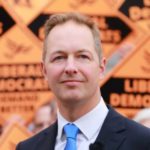
    The maiden speech made by Richard Foord, the Liberal Democrat MP for Tiverton and Honiton, in the House of Commons on 6 July 2022.

    Thank you, Mr Speaker, for calling me to speak.

    In the past, I worked with the conflict, stability and security fund, so I know how important it is that international development funding of the sort that we are discussing is used well by the UK.

    I must admit that, in this new job of mine, I am still learning my way around the maze of corridors, anterooms and stairways—only once so far have I ended up in the scullery. The Tiverton and Honiton constituency, which I am fortunate to represent, is made up of several other significant towns—Axminster, Seaton, Cullompton and Colyton, which brands itself a rebel town—and nearly 100 villages. It stretches from the fringes of Exmoor at Bampton to the Jurassic coast at Branscombe. I look forward to hosting you, Mr Speaker, in Honiton, where we will get to go to Allhallows Museum and see the Honiton lace that your ceremonial robe is made of.

    I pay tribute to two of my predecessors as MP for the part of Devon that I will do my very best to represent. One was an MP who took up office in 2010, and the other first came to this place as MP for Tiverton in 1835; they are Neil Parish and Lord Palmerston. In his maiden speech made over a decade ago, Neil Parish said that he wanted to see fairer funding for schools. I know that he tried in earnest to seek that additional schools funding, but we are still waiting for action on that. I think here specifically about Tiverton High School. After the by-election, I was pleased to see the former Secretary of State for Education tweet that he had heard local concerns about that school. Now that he is Chancellor of the Exchequer, he should know that my constituents are still looking for action rather than tweets.

    Neil Parish was a strong voice for farmers not just in Devon, but across the country. He led a rebellion of Conservative MPs on the Government’s Agriculture Bill and aimed to prohibit the import of food produced to lower animal health standards and lower welfare standards than those that we use in the UK. Farmers in Devon and elsewhere are struggling to deal with the rising price of fuel, feed and fertiliser. I pledge to continue to work with bodies such as the National Farmers Union to stand up for farmers and ensure that they have a champion here in Westminster.

    Every time I walk up the staircase to my office here, I find myself eyeballed by a bust of the former Foreign Secretary and former Prime Minister, Lord Palmerston. Palmerston was the MP for Tiverton for 30 years, and he went on a journey—one recently experienced by a few of my constituents at last month’s by-election. He started out a Conservative but later became a Liberal. I honestly think that is what we are hearing across the country: a groundswell of opinion from people who feel taken for granted. Just yesterday, we saw two senior members of the Cabinet quit, citing a lack of integrity, and I think that it is time for those remaining members of the Cabinet to heed the message from voters in Tiverton and Honiton at our by-election last month and show the Prime Minister the door.

    Lord Palmerston was also Prime Minister, at the end of the Crimean war. He spoke about Russian foreign policy in this place 160 years ago:

    “The policy and practice of the Russian Government in regard to Turkey and Persia has always been to push forward its encroachments as fast and as far as the apathy or want of firmness of other Governments would allow it to go but always to stop and retire when it has met with decided resistance.”

    I am much less fatalistic about Russia’s expansionist ways. With a different leader at a different time, I do not suppose that Russia would be bound to invade its neighbour. But the UK is right to support Ukraine for many reasons. For me, the most important relates to the way Ukraine gave up its status as a country in possession of nuclear weapons, in part because of the assurances it received at the time from countries, including the UK, as part of the Budapest memorandum. Under the memorandum, we offered assurances to Ukraine in relation to its security. While they were not security guarantees, I see the support the UK is showing Ukraine as consistent with what we pledged back in 1994.

    I suggest that the UK should show the same solidarity and ability to work with European neighbours that Britain showed during the Crimean war. Liberal democracy must be defended and preserved, regardless of who Palmerston’s latest successor might be.

  • Ben Wallace – 2005 Maiden Speech in the House of Commons

    Ben Wallace – 2005 Maiden Speech in the House of Commons

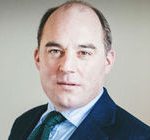
    The maiden speech made by Ben Wallace, the Conservative MP for Lancaster and Wyre, in the House of Commons on 24 May 2005.

    I am delighted to follow the hon. Member for Swansea, East (Mrs. James), whom I congratulate on her succinct speech.

    This is my maiden speech. Yesterday, while I was waiting all day to be called, it struck me that a maiden speech is a bit like a first bungee jump, leap from an aeroplane or chance to walk a girl home—while one is waiting, one does not know whether one will get one’s chance; while one is waiting for the chance, one is not sure whether one has done the right thing.

    It is an honour to speak as the new Conservative Member for Lancaster and Wyre and to represent my constituents in this House. I pay tribute to my predecessor, Hilton Dawson, who represented the people of Lancaster and Wyre for the past eight years. He was a friendly and approachable constituency MP who always managed to get out and about, and, more often than not, he put the people before his party or his politics. He worked tirelessly for the rights of children at home and abroad and always did his best to better their welfare. I wish him well in the cause to which he has returned since leaving this House, and I will always support him in the community if he needs me to.

    Geographically, Lancaster and Wyre is sandwiched between Preston and the Lake district. It is bordered on the west by Morecambe bay and on the east by the Yorkshire dales. The constituency is steeped in Jacobean and mediaeval history; indeed, the seat of the Duchy of Lancaster has been there since the 14th century. The city of Lancaster was also the first city in England to welcome the young pretender on his march south in 1744–45, so it was no surprise that, as a Member of the Scottish Parliament, I always received a warm welcome from the city. To this day, the constituency has strong links north as well as south, and I look forward to doing my best to represent the north in this House in the south.

    The constituency also has ancient history. The town of Garstang has been a market town for the past 800 years and it historically prided itself on its rural economy and trade. Now, it prides itself on being Britain’s first fair trade town, and I look forward to supporting that and increasing what is on offer to the people. The settlements of Poulton-Le-Fylde and Thornton have been in existence for nearly a millennium.

    The rich history of the constituency is reflected in the two local regiments: the King’s Own Border Regiment, which recruits from around Lancaster, and the Queen’s Lancashire Regiment, which recruits in Preston. They are well-recruited regiments with a first-class history in serving the Crown. It is a great shame that the Government, under their proposed umbrella for reform, are due to abolish those two proud regiments. It may be of note that the commanding officer of the Queen’s Lancashire Regiment is perhaps due to stand trial for action in Iraq. It is a scandal that the country does not stand by the soldiers that have been sent to Iraq on Government business. As an ex-serving officer, I would say that if our senior officers are to stand trial, perhaps some people from other Benches in this House should face a similar fate.

    I wanted to speak yesterday in the home affairs debate, because I wanted to point out that a major factor in the history of Lancaster and Wyre has been law and order, in which it has a great tradition. Lancaster castle is the oldest and longest continually running prison in Europe. It has housed debtors, executed witches and deported thieves. Poulton-Le-Fylde boasts some of the best examples of antique stocks and whipping posts. That is a bit too tough on crime and the causes of crime nowadays, but it shows the great theme in my constituency for upholding law and order.

    On a more positive note, there are good examples in the education sector, from first-class primary schools, such as St. Hilda’s and Carlton, to Garstang high school and Lancaster university. They all turn out first-class students, and the challenge for economic development in the constituency is to provide jobs for those skilled people to enter the labour market. In manufacturing, British Aerospace is south of my constituency and Glasson Grain is in it. Both struggle with fierce overseas competition and it is hoped that the Government will do more to help the manufacturing sector.

    During the general election, I campaigned on three main issues. The first was cracking down on crime, especially youth crime and antisocial behaviour, which now blights all streets across the country. I wanted to campaign also for local communities to have more of a say in planning so that, as so often happens, their decisions are not overruled from the centre. Thirdly—and more appropriate to this debate—I campaigned for better access to national health service dentists. A recent survey found that only 30 per cent. of dentists in Lancaster and Wyre would take NHS patients. If all the investment is going in at the top, why can people not get access to dentists? That surely shows that there is a flaw in the plan somewhere.

    It is appropriate in this debate for me to speak to the Conservative amendment, because my constituents are not concerned about who delivers their health care, but who commissions it. They want access to a GP out of hours, an NHS dentist and health visitors, and they also want their primary care dictated predominantly by their needs instead of being anticipated by the centre and targets.

    I want to thank the electorate of Lancaster and Wyre for sending me here, and I shall try to do my best over the next four or five years to represent their needs. I want also to thank my association, which obviously backed me; otherwise, I would not be standing here.

    I came here because I believe in defending, not denying people’s liberties. I came here because many of the constituents whom I represent live on the edge of the means test. They are not eligible for any of the benefits, but are eligible to be taxed. They do not have the cushion to absorb such measures as tuition fees or higher council tax. I came here because my constituents deserve good government, not big government. During the next few years, I shall do my best for them and for the party.

  • Peter Bottomley – 1975 Maiden Speech in the House of Commons

    Peter Bottomley – 1975 Maiden Speech in the House of Commons

    The maiden speech made by Peter Bottomley, the then Conservative MP for Woolwich West, in the House of Commons on 21 July 1975.

    I am sorry that I cannot say I have come here having defeated someone who put forward at the Woolwich, West by-election a policy such as we see in the third amendment on the Order Paper today, However, I prefer to leave most of the comments of the hon. Member for Liverpool, Walton (Mr. Heffer) for others to answer, because I wish to start on a note of agreement among everyone.

    I wish to say to the Prime Minister, in whose private office my predecessor worked, to Bill Hamling’s close friends, to his family and to all hon. Members on both sides of the House, as well as to all those on both sides of the political fence in West Woolwich, that I regard it as a great privilege to follow in this place someone who was so well loved and respected both in the House and in the country.

    I hope that in my first speech I shall not have to compete with someone who 10½years ago was interrupted a dozen times—or by a dozen people in the same interruption—having brought it upon himself, perhaps, by referring to you, Mr. Speaker, in a previous capacity. However, having won a record election, and having voted twice for the Government on my first day here—I suppose that I must regard that as a mark of distinction, if not of incompetence—and having discovered myself in the same Lobby with the hon. Member for Bolsover (Mr. Skinner) on my second day, I cannot imagine that anything that will happen in the remainder of this Parliament will greatly surprise me.

    I represent a very sensible place, sensible not only because the electorate elected me but sensible also because they had Bill Hamling as their Member before me. It is an area where people take their political duties seriously. They have a high turn-out at local government elections. They are generally well served by their council, of either political complexion. Incidentally, I think that it is likely to change again fairly soon.

    Woolwich, West is an area where most people are desperately concerned, as they showed by their behaviour last month, about the future of our country. They are worried about their children’s education. They are concerned about our Armed Services, because it is a place where the military and the Military Academy hold a high place in their hearts and in their employment. I believe that most of my constituents are concerned also that the lesson of the referendum and the lesson of their by-election are taken more to heart beyond the confines of Westminster than has been the case so far.

    On another occasion I hope to be able to raise such matters as the question of the Rochester Way and the future of Colfe’s Grammar School, but today I shall direct myself to the White Paper “The Attack on Inflation”. The White Paper modestly does not acknowledge the influence of the Government party during 3½ years in opposition and 17 months in Government. Neither does it acknowledge that it was the Labour Party which pulled the trigger of inflation several times over and the trigger of unemployment. One cannot entirely blame the Government for that, since it was the Liberal voters who gave them the gun when they could not make a firm choice between our two major political parties in February last year.

    Over the past five years—I am broadening the time span deliberately—we have seen a redistribution of incomes and of spending, partly from those who save to put something by for their old age to those who spend as they go, and I cannot believe that anyone would regard that as desirable. We have seen a redistribution of income and spending from individuals to local authorities and to the central Government. This has reached a point now when, deliberately or otherwise, families are discouraged, or in some cases virtually forbidden, from spending the marginal increase in pounds in their pocket on things which matter most to them.

    In housing, for example, we see that people cannot make the small jump from £5 a week on rent to £7 in order to get a better home for themselves, and certainly not to £17 or £25 for a private mortgage. In education, people cannot move from paying a small cost—or nothing, because it comes through local authority expenditure—to £15 a week for a private school. Moreover, we see that our direct grant schools are likely soon to suffer even more. Anyone who is really interested in the use of resources and who believes in Samuel Brittan’s theories of participation without politics ought to realise that, instead of getting rid of our direct grant secondary schools, we should be working towards direct grant primary schools, upon which most people’s initial concern for their children’s education centres and which set the foundations of all education. Much the same applies also to medicine.

    Over the past five years—this topic was not mentioned by the hon. Member for Walton, and neither was it touched on by the Chancellor of the Exchequer—there has been a redistribution of income from families with children to households with all income earners, whether just one adult or three or four. I have not been able to gather information from the Central Statistical Office, and neither do I have such information as the hon. Gentleman had in terms of the proportion of gross national product going to people earning wages and salaries, but, according to my coarse arithmetic, £2,500 million a year has been redistributed away from people with children and has been given to people at work without family responsibilities.

    It is difficult to be precise about these figures because the Government do not have them, so one is working to some extent in the dark, and I acknowledge the help of the valuable work done by my hon. Friend the Member for Kensington (Sir B. Rhys Williams), who managed to get some figures out of the Secretary of State for Prices and Consumer Protection.

    Paragraphs 33 and 34 of the White Paper talk of family budgets and food subsidies, but they do nothing to acknowledge that transfer of £2,500 million. There are hon. Members on the Government side who share my concern for people with children, but we have not yet heard that concern expressed in the debate, partly because the debate so far has been taken up by hon. Members like me who are almost strangers here themselves or by those who put down amendments which ignore the influence of five years’ inflation on families with children.

    The £6 flat-limit increase will again redistribute more resources away from families with children. It was said during my election campaign that I was in favour of motherhood and against inflation. Indeed I am. I am concerned also about industrial relations and conditions at work. But it must be emphasised that half our population—14 million children and 13.5 million parents—are, apparently, totally ignored by the House most of the time, and I think it suitable, therefore, to concentrate most of my speech on them.

    The Government cannot find time for a proper debate on the Finer proposals for one-parent families, whose circumstances are even worse than those of two-parent families, which are bad enough. They cannot find time for a proper debate, and they also tell us that they cannot find the money to implement more of the Finer proposals. Yet the White Paper implies that the public sector will find £1,500 million for up to £6 increases for 5 million people, and the way they seem to be approaching the matter is that that £1,500 million will be balanced by £4,500 million in the private sector, making £6,000 million in all—over £.100 for every man, woman and child in the country. This will inevitably have its repercussions in terms of unemployment and price increases. Yet the Government tell us that we cannot instead have that £100 a year for an interim family allowance for the first child. Would it not be better to introduce a £2 a week interim allowance and hold back on adults, in view of the way in which our society has been treating families and children over the past five years?

    I wish to put to the authors of the White Paper a few short questions, and I am willing to wait until tomorrow evening for the answers. During their discussions with the TUC—apparently the principal body to be consulted—how far did the Government consider representations about the position of the family? Under this Government, there has been a massive transfer of resources from children to adults—or, as it was well put a week or so ago in the debate on the Child Benefit Bill, from the butcher to the betting shop, vividly illustrating that if it is not in the mother’s purse one cannot be sure where the money is spent. Again, according to my coarse arithmetic we have a Government prepared to allow this same redistribution to continue under their White Paper proposals.

    These are important issues, especially when we have a Government who apparently cannot contemplate even a six-month limited pay freeze for people at work but who are prepared to announce a 24-month pay freeze for mothers at home. During the Report stage of the Child Benefit Bill we were told that it was impossible to do anything more for familly allowances, or to bring family allowances and child tax allowances together before April 1977, and we could not be sure that it would happen even then. Certainly we were not told whether the total benefit would be higher or would be the same as the existing value of benefits.

    Thus, 7 million mothers are told that there is no more for them for 24 months —I am referring here to the period April 1975 to April 1977—yet in the first three months of this period there has been a 10 per cent. price increase. They are 10 per cent. worse off already.

    The monthly price increases have dropped from 4 per cent. to 2 per cent. and we are told that they are to come down to 1 per cent., but even supposing that over the next 21 months they rise by only 1 per cent. a month, and adding on the 10 per cent. by which these people are already worse off, the result is that they are 31 per cent. worse off. But this is the only pay freeze, the only total income restraint that the Government are willing to put forward—a 30 per cent. reduction for those who have children. This is a 30 per cent. reduction while we wait for the child tax credit scheme or the child endowment scheme, apparently delayed by high alumina cement in Newcastle.

    If the House of Commons allows the Government to get away with this, we shall not be doing our job, not always the job of governing but of controlling the Government—although it is a great pleasure to be sent here to arrange the income tax of other people. If the Government care about families, they ought not to listen only to the political voice of organised labour, which is considered by many not to be the voice of the people, but rather the result of an inexpert ventriloquist manipulating ever more reluctant dummies. I speak as a dummy myself who, as a member of a trade union, has not attended any debate in four years, although I go to my branch meetings regularly, where the subject has been the social contract or the referendum. Yet we are all aware that the view of the people is supposed to come, according to Labour Members, from the leaders of the trade union movement. That view is also held by many commentators in the newspapers too.

    I have two leading trade union leaders living in Eltham, which shows what a good area I represent. Whenever a trade union leader says that he will not allow a drop in his members’ living standards —and we know that our living standards have to come down—if attention is paid to him it must mean that others must suffer an even greater drop, and they include workers without a job—and there are more and more of those—and pensioners who do not have a union, and the 14 million children who have no votes in parliamentary elections or in electing delegates to the TUC.

    To change the subject slightly, I should like to refer to the £6 limit. I want to know whether the Government have considered not just having a £6 overall limit for 12 months but whether they are willing to consider paying some attention to what has happened to any particular group of workers over the past 17 months. It seems particularly relevant to what people get over the next 12 months to know whether they have had 30 per cent. or 10 per cent. over the last 17 months.

    I want to put forward one or two simple suggestions to accompany the White Paper. If the Government are in touch with the economic facts of life and if they wish to undo the damage that has been done by politicians through the ages, I hope that their publicity machine—and that includes Ministers as well as the people they hire to put advertisements and editorials in the newspapers—will start talking openly about the unemployment and inflationary implications of their present proposals and the unemployment and inflationary consequences of their previous proposals. We could then see what has been the effect of the last 17 months and judge what will be the effect of the next 12 months, or the effect of the four years before the Government came in if hon. Members want to take a longer period.

    I hope that both in office and in Opposition right hon. Gentlemen on the Government side will explain the economic facts of life to their most Marxist and flat-earth supporters. By this I mean that if the terms of trade move against us or if the price of oil moves against us, no amount of price increases or pay increases will compensate for our becoming worse off. The present round of inflation was set off by external price increases. If as politicians we face the economic facts of life, we shall avoid trying to pour water uphill when we are in Opposition and accepting that it will dribble down our necks when we are in Government, and we shall find that we have a more sophisticated electorate who will take politicians more seriously.

    It is important that we all accept that unions have a proper job to do in representing people at work, not in providing management and not in providing politicians. If that happened, we should have to have another set of unions, one to represent people at work and another lot to provide politicians to represent the people in the House of Commons. When my constituents want to put forward their political views and ideas, they do so through me and I do not see why two of them should be privileged in being represented also through the TUC, or why the unions should be able to influence the Government when they move away from dealing with the terms and conditions of employment into subjects such as the level of defence spending and other issues about which my constituents in Eltham feel very strongly.

    It is even more important for Government supporters and certainly for members of the Government themselves to repeat the frequently forgotten first law of economics—that whether one is dealing in fantasies or goods and services, one cannot consume or benefit by anything until it has been produced. In the last year we have been paying ourselves increases 20 times greater than the increase in production, and that makes one wonder whether universal education for two generations has had the desired effect on this country, certainly on this country’s politicians.

    I should like to touch on three subjects to which I hope to be able to return but which are now relevant to the White Paper. The first is that we must look more and more at the value we are getting for our resources. A small example is that of education in primary schools. All primary schools in London have the same staff-pupil ratio and the same resources, but in some schools the standards are so good that if a child’s name is not put down at the age of three he will not be able to get a place, while at other schools a child can simply walk in at the age of five. In education debates hon. Members do not talk about the education system becoming more responsive to the expressed wishes of parents, and they do not ask why some teachers manage to get better results with limited resources. When there are cash limits, we need to look at the value obtained as well as at the level of money allocated.

    The second topic is housing. When local authorities are restricted in the amount they can lend on mortgage or to the improving of homes, is it not perfectly obvious to everyone that this is a chance to provide massive opportunities for the sale of council homes so that people can, if they wish, pay out of their own pockets and thereby leave more money in the local authority’s pocket or the Government’s pocket, so that they may buy their own home and not find when they retire, as they do under the present system, that they are condemned to pay the same rent in retirement as when they were in work, although left with only 20 per cent. or 40 per cent. of their working income, which means that they probably have to live on supplementary benefit? This seems a good opportunity both to combat inflation and to make people better off.

    Thirdly, the Government should make a gesture by declaring a 5 per cent. cutback in the amount of office space used by the Government, 5 per cent. a year for the next five years. This would completely change the investment outlook of those who look after investment funds and insurance funds. The consequential adjustment of investment decisions combined with a belated recognition of the value of profits would lead to more investment in manufacturing industry, which is what this country needs.

    Last of all I come to a problem which faces the politically uncommitted—I have met many of them over the last months —which is shared by many Christians, people who want to take a responsible interest in politics and who feel that they cannot opt out of an imperfect system, but who find it impossible to identify wholly with one set of political prejudices, beliefs or principles. We can all unite in the belief that we have to defend community life from the totalitarian view, which provides repression for every expression of the human spirit. Fascism was defeated in part because of a debate held 35 years ago. Marxism has equal dangers—Eastern Europe is a bleak proof of that. Out of power it attempts every ruse and every act of social violence to poison the unity and freedom of our community life.

    I have found in a previous debate some comfort during this battle against inflation and those who directly or indirectly support it. It comes from reading the words of a previous Labour leader. Instead of quoting, I shall merely refer to them. Hon. Members will find the reference in column 1094 of Hansard for 7th May 1940.


  • Paulette Hamilton – 2022 Maiden Speech in the House of Commons

    Paulette Hamilton – 2022 Maiden Speech in the House of Commons

    The speech made by Paulette Hamilton, the Labour MP for Birmingham Erdington, in the House of Commons on 16 May 2022.

    Today I stand, Madam Deputy Speaker, to thank you for giving me the opportunity to make my maiden speech. It is an honour to follow the hon. Member for Thurrock (Jackie Doyle-Price).

    I can only say how proud I am to be a Brummie today. I am overwhelmed but privileged to be standing here today in this great institution. Being elected to Parliament is not a right, it is an honour, and it is an even greater honour knowing that your community voted for you to be here. When I was elected on 4 March, people found it difficult to understand that I was the first female to be elected for the Erdington constituency. They were even more shocked to learn that I was the first person of African and Caribbean descent to be elected as a Member of Parliament in Birmingham. I hope the constituency shares my pride in knowing that they have made history.

    In saying that, I cannot go any further without talking about the late, great Jack Dromey MP. Jack was elected in May 2010 and worked relentlessly to serve our community. He said in Parliament, and often within the constituency, in his speeches:

    “Erdington may be rich in talent, but it is one of the poorest constituencies in the country.”—[Official Report, 15 September 2021; Vol. 700, c. 984.]

    Until his death he worked to support his constituency, in so many ways. Any job lost in the area was a personal blow to Jack. The many tributes that have been made to him in this place and in the community show how much he is deeply missed.

    I grew up in Handsworth, in the neighbouring constituency of Perry Barr, but Erdington is a place I have called home for 35 years. Over 103,000 people live in the constituency, and we have a diverse community: 26% are BME people, and over 69% are under the age of 45. Some families, sadly, have not worked for three generations. It is important to get those people back to work. We need to invest, instil confidence, give opportunity and build aspirations into our young people.

    I am looking forward to being involved in debates relating to people living with mental health issues. Serving as the mental health champion for Birmingham City Council, the first ever to be elected, I have seen at first hand the increase in the number of people living with mental health issues, and the massive increase, since the pandemic, in the number of young people living with severe and enduring mental illnesses. The funding in this area has been cut, and it does need to be increased, as mental health services are struggling to access adequate in-patient beds when they are needed.

    In Erdington, the community has also seen an alarming increase in the number of houses in multiple occupation. We have the second highest number in the city. My constituency needs to see an urgent change in legislation to ensure that poor, unscrupulous landlords are punished, fined and removed from the market if they fail to comply with the rules that are designed to protect residents.

    These are just some of the many issues that I will be raising on behalf of my constituency, as I heard about them time and time again while out campaigning.

    My children were born in Erdington—some of them are up in the Public Gallery—and they went to Erdington schools, of which we have over 40 in my constituency. I have 40 schools to visit, and I promise I will be visiting all of them. I know I will feel at home when I do, because arriving in Parliament after a by-election has truly made me feel like the new girl at school.

    My husband opened his first shop on the Slade Road in the late 1980s, in an area where the high street was dying, so as a family we were acutely aware of the difficulties that other small businesses were experiencing back then. At the same time, I trained as a nurse and worked at the local health centre in Warren Farm Road, Kingstanding, for several years. My career in the health service lasted for over 25 years, and it has truly shaped my political career.

    As I have already noted, Erdington is a very diverse part of Birmingham, with a wonderful strong community and neighbourhood spirit, and people who work very hard and look out for each other. One day you could be celebrating Eid in Stockland Green, or Vaisakhi in the local gurdwara; on another, you could be working with our strong Irish or African-Caribbean community to celebrate the Good Friday walk along the high street. Our manufacturing history is well known, but sadly too many of our workplaces have closed. It is vital that new business comes into the constituency, so it is important that through the levelling-up fund we are given funding to develop our high streets, particularly Erdington High Street.

    The Erdington constituency can look quite dark and lacking in green space when you drive through it. That is because of roads like the Gravelly Hill interchange, which I am sure everyone here knows as spaghetti junction. If you look more closely, however, under spaghetti junction—as the hon. Member for Birmingham, Northfield (Gary Sambrook) will confirm—you can walk along some of the most beautiful canal walkways in the country. We are also fortunate to have many lovely parks such as Pype Hayes Park and Rookery Park, Short Heath Playing Fields, and the beautiful 13-acre site owned by Erdington Rugby Club. I would also like to mention the stunning bowling facility in the constituency run by the Erdington Court Bowls Club. The Brookvale lakes and Witton Lodge lakes, where residents take part in a duckling watch to ensure that we preserve the natural beauty of this area, are truly incredible. Alongside that is the amazing eco-hub run by an organisation called the Witton Lodge Community Association.

    When I won this election, my husband looked on and said, “Well done. Now the work starts.” How right he was. After receiving more than 2,000 emails plus sacks of mail in my first month, I am under no illusions that the role of an MP is many things to many people. We are here to help, guide, advise, support and represent our constituents.

    I want to thank the people of Birmingham, Erdington for putting their faith and trust in me. It is an amazing privilege to be here. My promise to you is that I will work tirelessly on your behalf, both in this place and in the community. Thank you, Madam Deputy Speaker.

  • James Heappey – 2015 Maiden Speech in the House of Commons

    James Heappey – 2015 Maiden Speech in the House of Commons

    The maiden speech made by James Heappey, the Conservative MP for Wells, in the House of Commons on 1 June 2015.

    I am grateful for the opportunity to speak in this House for the first time. The world around us is changing quickly; new threats emerge as readily as new opportunities. Therefore, for the sake of our security, our standing in the world and the good of our economy, it is important that we seek to shape the world around us, rather than waiting to be shaped by it. We must be proud of, and seek to maintain, the fact that Britain is a global power. That is about not only our ability to project military power across the globe, but the role we play in the UN, NATO, the Commonwealth and the EU. It is about maintaining our place as a global centre for business and trade. It is about recognising that British culture and values reach far further and carry more influence than even the largest military ever could.

    Before entering politics I served our country in the Army, first in the Royal Gloucestershire, Berkshire and Wiltshire Regiment, and then in The Rifles. In that time I had the great privilege of serving alongside men and women from all parts of this United Kingdom, and indeed the Commonwealth, both here in the UK and overseas in Basra, Kabul and Sangin. Those who serve our country in the Royal Navy, Army and Air Force accept an unlimited liability. If the Government and this House ask them to deploy, they will. On land, at sea and in the air, we can have confidence that our forces will punch well above their weight, because I have seen at first hand just how courageous, determined and selfless our soldiers, sailors and airmen are.

    However, we owe those men and women the certainty that we will always support them and their families, both at home and overseas. Since the last strategic defence and security review, the threats facing our country have become much more complex. If Britain is to meet those threats, we must be clear in our intent to fund defence properly. We simply cannot ask our forces, regular and reserve, to meet all those threats without resourcing them to do so. Therefore, as we progress towards the SDSR, we must understand that any further cuts in defence must mean a cut to our strategic ambition as a nation. I hope that neither is needed.

    As this is my first time speaking in the House, I would like to pay tribute to my predecessor, Tessa Munt. Ms Munt was a committed supporter of our community in Somerset. Over a long and difficult campaign in a marginal seat there has been much on which we have disagreed, but it is important to note at this first opportunity the hard work of Tessa Munt and her dedicated staff.

    It is an incredible honour to stand here as the Member of Parliament for Wells, and I would like to thank my constituents for sending me here to speak on their behalf. Mine is a constituency that contributes greatly to Britain’s standing in the world. The city of Wells is England’s smallest city, but with the most complete ecclesiastical estate in Europe it is a major tourist attraction and the backdrop to many television programmes and films. In Street is the global headquarters of Clarks Shoes, a brand recognised around the globe and enjoying growth in new markets, while in Chilcompton is the fashion icon Mulberry. Shepton Mallet is the capital of cider production in this country. Only this weekend, the Royal Bath and West show hosted, once again, the largest cider competition on the planet. In Highbridge, Burnham-on-Sea, Berrow and Brean, we welcome well over 1 million tourists a year who come to stay on the magnificent Somerset coast and to journey inland to the Mendips area of outstanding natural beauty. Our local farmers produce the best milk money can buy; we just need to make sure that they are paid what it is worth. Glastonbury hosts the best music festival on earth. Cheddar is famed for its gorge and for lending its name to the world’s most popular cheese.

    I am so proud to represent such a beautiful and varied part of the world, but while there is much to celebrate, so is there much to do. The Prime Minister has called Her Majesty’s speech a one-nation programme that will benefit all in our country. I am delighted about that, because for too long rural areas have not received the same investment as our large towns and cities. Our market towns and villages struggle with poor road connections, very limited access to the rail network, weak phone signals, and achingly slow broadband. To unlock the incredible potential for economic growth in rural communities, we must improve that infrastructure. The investment by this Government in broadband has already brought formidable results. Village by village, fibre-optic connections are being made and life is speeding up. However, the final 5% of the superfast broadband roll-out is disproportionately concentrated in constituencies like mine, and so I urge the Government to push on with that final phase as soon as possible. Within that final few per cent. will be some of Britain’s most isolated communities; we simply cannot leave them behind.

  • Louise Haigh – 2015 Maiden Speech in the House of Commons

    Louise Haigh – 2015 Maiden Speech in the House of Commons

    The maiden speech made by Louise Haigh, the Labour MP for Sheffield Heeley, in the House of Commons on 4 June 2015.

    Thank you, Madam Deputy Speaker, for allowing me the opportunity to make my maiden speech. I, too, congratulate you on your re-election.

    It is a great pleasure to speak after so many distinguished colleagues who have done their constituents proud in this debate. I am incredibly proud to be the youngest Labour MP serving in the House of Commons. It is often claimed that young people are apathetic or disengaged, but the young people I campaigned with and for in this election were far from apathetic. They were angry and felt let down because they thought that they did not have a voice. Young people have been under-represented in this Chamber for too long, but it is clear that that is changing on both sides of the House. It is a great honour to be part of the most diverse Parliament ever.

    As the fourth Labour Member to represent Sheffield Heeley, it is also a great privilege to succeed Meg Munn, who served in this House for 14 years. She was renowned for her assiduous promotion of women’s issues, particularly in the science, technology, engineering and maths industries, and for building on her extensive experience as a social worker before entering this House to highlight child protection issues and improved rights for young carers. These are her very proud legacy.

    Like Meg, I was born and raised in Sheffield, the very heart of God’s own county, a city renowned for its industrial heritage and now the greenest city in the UK, with more trees per person than any other city in Europe.

    My constituency boasts a number of beautiful parklands, from Graves Park past Heeley City Farm and Heeley development trust to Richmond and Norfolk parks, all of which not only provide precious and much-loved green space but are important community hubs, providing childcare and family activities as well as adult education and training opportunities.

    Colleagues may know that, like Rome, Sheffield is built on seven hills, which means that areas of my constituency command spectacular views of the rest of Sheffield and the surrounding Peak district. However, it also means that the inequality that scars our great city can be viewed in sharp relief. Young people who live at the top of hills in Gleadless Valley and Arbourthorne can look down on the two world-leading universities that we host—universities that they have been priced out of. They can look down on the dwindling industrial bases that their parents and grandparents would have been proud to work in, but which no longer create the jobs they desperately need. And they can look across to the west of Sheffield, where a baby girl can expect to live almost 10 years longer than another born and living her life about four miles away, by virtue of nothing more than her socioeconomic circumstances and the area she was born into. Our duty to our constituents is one that we share in all parts of the House, and the inequality that scars Sheffield, like so much of our nation, is something that I know we will all aspire to eradicate.

    Before I entered this place, I worked in the City of London, and that experience motivated me to run for Parliament. I know from my time there that it makes a valuable contribution to our economy, but I also know that the culture and attitudes inherent there have been unaffected by the events of the last eight years. The culture of excessive pay, short-termism and cavalier risk-taking was demonstrated only last week with yet another case of LIBOR fixing. While our constituents remain worse off as a continued result of the financial crisis, again I know that this is something we will all aspire to solve.

    It was disappointing, therefore, to hear very little in the Gracious Address on how we can reform the financial system. Given that the consequences of the weak recovery will be familiar to all of us—low wages, poor productivity and insecure work—it is incumbent on us all to address the reasons why our financial system is not providing the long-term investment that we need in cities like Sheffield. Being literally the greenest city in the UK is not enough; this must be at the heart of our industrial strategy and economic policy. If we are to secure a sustainable economy that delivers benefits for all, we must transform the way our economy works, incentivising investment in green, productive industries and penalising those short-term industries and practices that have done our economy and society such harm.

    But, Madam Deputy Speaker, we in Sheffield Heeley have waited too long for change. My predecessor’s predecessor, Bill Michie, in his maiden speech in 1983—four years before I was born—spoke about the plight of the long-term unemployed, the young people out of work, the educational inequalities and the lack of investment in my constituency. Those problems pervade to this day. Change for the very vulnerable, the low paid and all working people is long overdue and we face a very clear choice in this Parliament—to continue down the same economic path that has entrenched inequality and embedded vested interests or to stand for a system that will protect the vulnerable, reward working people and create a fairer society so that my successor does not have to repeat the same tired list of issues in another generation’s time.

  • Anna Firth – 2022 Maiden Speech in the House of Commons

    Anna Firth – 2022 Maiden Speech in the House of Commons

    The maiden speech made in the House of Commons by Anna Firth, the Conservative MP for Southend West, on 10 May 2022.

    Thank you, Madam Deputy Speaker, for giving me the opportunity to make my maiden speech. It is a privilege to follow the right hon. Member for Kingston and Surbiton (Ed Davey). I hope the eloquence with which he made his speech is infectious. It is also a pleasure and a privilege to speak in the same debate as the Father of the House, my hon. Friend the Member for Worthing West (Sir Peter Bottomley). He is sadly not here, but I had hoped to tell him that he sets a fine example and that I am looking forward to addressing this place in 2070.

    It is the honour of my life to be the first MP to be elected for the new city of Southend—[Hon. Members: “Hear, hear.”] Yet I will never forget that the circumstances that brought me here are truly horrific. Sir David was, and remains, a legend across the whole of Essex. An outstanding MP for Basildon for 14 years and for Southend West for a further 24, quite simply, Sir David embodied all that is good about our parliamentary democracy. He had a gift for building bridges across this House, and I think everybody here misses his decency, his kindness, his smile and his wicked sense of humour.

    Here in Westminster, it is already obvious to me how easily one could become disconnected from normal life and from the constituents we serve. Yet in nearly 40 years as an MP, that never happened to Sir David. He always remained absolutely dedicated to the people he represented. From his successful private Member’s Bill on fuel poverty—still relevant today—to eliminating cruel tethering, Sir David championed causes close to his residents’ hearts: animal welfare, the incredible Music Man Project, endometriosis and, of course, making Southend a city.

    There are others I would like to mention. The life of an MP is clearly demanding, but there are rewards and recognition that go with that. One group of people, however, share many of the pressures of our journey, but little of the recognition. So I want to pay tribute to Lady Amess and her five children. No one—I repeat, no one—has paid a higher price for our democracy than they have. As we continue on with our lives, theirs have been shattered forever. The dignity, love and spirit of reconciliation that they have shown has been an inspiration to me, and I know the whole House would wish to join me in telling them that their sacrifice and their contribution to our democracy will also never be forgotten. I would also like to pay tribute to the other mainstream parties, which chose not to contest the by-election, proving once again that attacks on our democracy will only ever bring us closer together.

    Southend West is a wonderful constituency, containing award-winning beaches, the earliest recorded woodland in Essex, an international airport, nationally important wetlands and the beautiful town of Leigh-on-Sea, where I was born and love living. Arrive from London by road, turn right towards the sea and there spread out before you is, in my opinion, the most captivating view in the south-east. It is the view that Admiral Blake would have seen in 1652 when he bought the crippled English fleet back from the Anglo-Dutch war to Old Leigh for refitting. Spurning instructions to go to Medway, Blake knew then what we all know now: the only way is Essex. Two months later, Blake left Old Leigh with the biggest and best equipped fleet the nation had ever set to sea.

    There is much more: delicious shellfish and cockles are still fished daily in my constituency; and our picturesque high streets sport a wealth of independent businesses, including the internationally renowned Rossi’s ice cream and the best fried doughnuts in the country. It is no wonder that The Times recently announced Leigh-on-Sea as one of the best places to live in the country, proclaiming it:

    “fresh air and funkiness in buckets and spades”.

    We also have a very proud tradition of sea bathing in Southend West. Indeed, we have had the largest collection of historic swimwear in the country. Changing facilities, however, have always been controversial. Historic reports from the 1900s detail men not queuing for bathing machines, choosing instead to rummage around in Mackintoshes to get changed. Men who performed this “indecent act” were fined five shillings, with the last man prosecuted in the 1950s. In court, he was told, “Surely it is time to give it up”. Purportedly, he replied to the judge that if he did not mind, he would, “Stick it out for a little longer.”

    There is, of course, much more to Southend West than our beautiful seafront. Containing internationally significant heritage sites such as the Saxon “Prittlewell Prince” burial, a stunning medieval monastery, the 17th-century London shipwreck, Chalkwell’s famous rose garden and the Palace theatre, which previews many west end shows, Southend is absolutely worthy of being the UK city of culture in 2029.

    Fay Jones

    Here we go!

    Anna Firth

    My hon. Friend may think that calls for Southend to be a city have finished, but I can tell her that they have only just begun.

    What makes Southend truly special is its people; they are positive, talented, hard-working and entrepreneurial, and I am so proud to represent them. Give a Southender a lemon and you will not just get lemonade; you will get limoncello, because Southend West is home to Tapp’d, an international cocktail success story, started in the founder’s kitchen during lockdown.

    As a Conservative, I believe in equality of opportunity. After wartime service, my grandfather worked for Southend general post office for over 25 years. My grandmother was a dinner lady. Above all, they valued education. My mother, Dr Margaret Garrett, went to Westcliff High School for Girls. That was the making of my mother and of my family. I am delighted that they are here today, including my wonderful husband, Edward, and my son, Piers.

    That is why championing Southend West’s great schools, including our world-beating grammar schools, is so important to me. It is also why I welcome this Queen’s Speech, with its commitment to turbo-charging school standards and school attendance, and to a register to ensure that we do not have invisible children in the system and that we have greater safeguarding and fairer funding. Ensuring that every child in our country receives a quality education is the only way to achieve true equality of opportunity for all.

    That must apply to healthcare, too, which is why I also welcome this Government’s commitment to the NHS. Every 45 minutes a man dies of prostate cancer in this country, including my own father 18 months ago. His treatment by the NHS was exemplary, but there are now new and better ways to treat prostate cancer, particularly earlier screening. That is why I will be a loud voice for the brilliant Southend charity Prost8 and its ground-breaking work in this area.

    As Disraeli once said:

    “You could not have a softer climate nor sunnier skies”

    than at Southend. I cannot hope to replace my predecessor, but I can promise to work hard every day to make the new city of Southend a beacon of enterprise, unity, kindness and opportunity.