Category: London

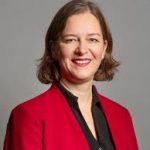
  • Fleur Anderson – 2022 Speech on the Expansion of the Ultra Low Emission Zone

    Fleur Anderson – 2022 Speech on the Expansion of the Ultra Low Emission Zone

    The speech made by Fleur Anderson, the Labour MP for Putney, in the House of Commons on 20 December 2022.

    It is a pleasure to serve under your chairship, Mr Hosie, and to speak in this debate secured by the hon. Member for Dartford (Gareth Johnson).

    I very much welcome the debate, because air quality is one of the biggest issues faced by my residents in Putney. They hope that the extended ULEZ policy will have a significant impact on children’s lives and on small businesses, which complain to me about pollution on Putney High Street—one of the most polluted high streets in the country. However, that pollution is coming down as a result of the Mayor’s policies.

    I thank the Putney Society, Putney Pollution Busters, Mums for Lungs, the London Sustainability Exchange, King’s College London and Clean Air in London for all their campaigning and for speaking up for residents in Putney, in Dartford, and across and outside London, who know that air quality is a silent killer. The hon. Member for Dartford, too, called it a silent killer, with air blowing pollution from London to his constituency, so I am surprised he does not welcome the Mayor’s actions to reduce that pollution and to instead have cleaner air for us all, especially our children.

    Yesterday, the Government finally brought out their air quality targets under the Environment Act 2021. I have been calling for those targets for years, but they are not good enough. First, they just aim not to have toxic air by 2040, which is a whole 18 years away. Someone born now will potentially not see the results until they become an adult. Secondly, we cannot start to meet the Government’s targets without the ULEZ. It is needed, so I hope to hear support from the Minister for actions that will meet the Government’s air quality targets.

    Outer London is disproportionately affected by this issue, because there are more older people, who are particularly affected by the damaging effects of air pollution. The UK has the worst death rate for lung conditions, and that simply cannot be ignored—we cannot hope that it will all go away in any other way than by us taking action. Recent analysis by Asthma + Lung UK has shown that the UK has the worst death rate for lung conditions—higher than anywhere else in western Europe. In total, around 600,000 people have a lung condition in Greater London, and 60% of them live in outer London and do not currently live inside the ULEZ. I hear again and again of people who say that they or their children did not used to have asthma but that they do now. We can see the effects. If we could see the air pollution on our streets, we would know it for the killer that it is.

    Toxic air is shortening the lives of our constituents. Every year, up to 36,000 people in the UK die prematurely as a result of toxic air, and 4,000 of those deaths occur in London alone. In Dartford, the equivalent of 66 deaths per year are attributable to long-term exposure to particulate air pollution. But it is not only about deaths; it is also about people who are hospitalised or who live with debilitating conditions.

    Gareth Johnson

    If the hon. Lady feels that the Mayor of London is expanding the ULEZ to tackle pollution across the south-east, does she think it is simply a coincidence that he is due to make hundreds of millions of pounds out of it, or does she think it is actually motivated by money?

    Fleur Anderson

    I thank the hon. Member for his question. What is the Mayor spending the money on? He is spending it on local transport. Every single penny raised by the ULEZ is being spent on local transport, which is exactly what we need. That is the way we are going to overcome the toxic air that is killing our constituents.

    Elliot Colburn (Carshalton and Wallington) (Con)

    Could the hon. Lady outline where the new public transport infrastructure is? What exactly are the improvements that the Mayor is apparently giving us?

    Fleur Anderson

    I am not here to talk about local infrastructure, but we have to invest in the local public transport infrastructure so that we can overcome this problem. I had to give up my car—it was a diesel car— when the first ULEZ came in, and I do not have a car now. I rely entirely on public transport, but it has to be improved. How will we get the money to do that? The expansion of the ULEZ is one way to get that money. I hope to hear from the Government how they will fund public transport in London, if that is the key factor that we need.

    Nearly 10 years after Ella Adoo-Kissi-Debrah became the first person to have air pollution recorded as a cause of death, people in Dartford and London are still breathing toxic air. Poor communities and black, Asian and minority ethnic communities—those who are least likely to have a car—are the worst affected by air pollution. We have to take action.

    In Wandsworth, the borough where my constituents live, 129 deaths a year are attributable to the effects of toxic air. That is such a shocking figure. Knowing that I was taking my children to school and exposing them to toxic air every day really worries me, and it worries all my constituents too. Currently the ULEZ goes through Putney, but it is not a wall—the world has not ended, life has carried on and travel has continued. It is not the hard-and-fast border it is being portrayed as.

    Expanding the ULEZ will reduce NOx emissions by 10%, and PM2.5 exhaust emissions by nearly 16%, and prevent 27,000 tonnes of CO2 emissions from being released. It will lead to a nearly 10% reduction in NOx emissions from cars in outer London, on top of the 30% reduction in road transport NOx emissions that is already expected from the current ULEZ and the tighter low-emission zone standards. It works, and it should continue. We need to have this action.

    I welcome the news from the Mayor of London that, as part of the ULEZ expansion, he is introducing a scrappage scheme to support residents on lower incomes, as well as businesses and charities. It is the biggest scrappage scheme yet, at £110 million, and it will help those in Putney and every other area who are on low incomes and who need support to replace or retrofit their cars. I am pleased that the Mayor has also introduced new grace periods for disabled people, allowing them more time to adapt to change.

    Dr Cameron

    Will the hon. Member give way?

    Fleur Anderson

    I do not have enough time to give way— sorry.

    I understand the concerns raised about the impact on small and microbusinesses. I met the Federation of Small Businesses this week to discuss its concerns about the ULEZ. It welcomes the move towards greening businesses and a more sustainable future, because it makes clear business sense. We cannot simply do nothing. However, the FSB is concerned about the impact of the ULEZ on microbusinesses—those businesses with under 10 employees. I have two brothers-in-law who are plumbers, so I have heard their concerns as well. [Interruption.] They are very useful.

    I know that this is a tough time for small businesses, so I join the FSB in urging the Government to support the ULEZ and to provide additional funding, on top of the Mayor’s £110 million scrappage scheme, so that it can support microbusinesses to change their vans, instead of stopping them coming into London. I also join the FSB in calling for small businesses to be given extra time to comply—up to September 2024—and for us to consider a way for small businesses to pay their charge into a special fund that they can put towards purchasing a ULEZ-compliant vehicle.

    This announcement will ensure that the most vulnerable in our communities are looked after and give them the support they need as the ULEZ expands. So I will end by asking whether the Minister supports the Government’s air quality targets, the ULEZ itself and small businesses. If so, will he support them further by topping up the Mayor’s scrappage scheme? Also, does he support a new clean air Act, because the time has surely come for one. Are there plans to introduce one?

    In conclusion, I welcome the ULEZ and this action to clean up our air for our planet, our health and especially our children’s health.

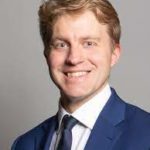
  • Ben Spencer – 2022 Speech on the Expansion of the Ultra Low Emission Zone

    Ben Spencer – 2022 Speech on the Expansion of the Ultra Low Emission Zone

    The speech made by Ben Spencer, the Conservative MP for Runnymede and Weybridge, in the House of Commons on 20 December 2022.

    I thank my hon. Friend the Member for Dartford (Gareth Johnson) for securing this important debate. Conservative Members have been campaigning assiduously on this issue, in particular my hon. Friend the Member for Orpington (Gareth Bacon), who has been leading on it for some time. The ULEZ will have a profoundly negative impact on many of our constituents. Hon. Members should be under no illusion: the ULEZ is about revenue generation on the back of poor financial management. This is a London tax, put forward by the Labour Mayor of London, and it hits the poorest, who cannot afford to update their vehicles. In Runnymede and Weybridge, families and businesses will suffer the most.

    I put out a local petition, and there was an overwhelming response against the ULEZ. That is interesting in itself, but what perhaps gives more power to the arguments against it is the individual comments that people made in response to the petition. People explained that they cannot afford to update their car, because they do not have enough money. Public sector workers, who need to go into London to work, said that the ULEZ will have a serious impact on their ability to continue to do that sort of job. Businesses felt that it would make them go under. People living with disabilities need to use their cars to travel around, and that is a particularly substantial issue at the moment because, yet again, the lift at Weybridge station is broken—sadly, I have had to campaign too often to get it repaired. People are therefore forced into using cars to get to and from London.

    Sadiq Khan says that the ULEZ is about air quality. If it really was about air quality, why does he use such a blunt tool to deal with the issue, as opposed to focusing on the areas with the most acute air quality problems, which are along trunk roads? Why the blanket approach rather than a targeted approach? If he really wants to improve air quality, why does he not push even faster car scrappage? Why does he not invest more in the bus fleet conversion to electricity and hydrogen vehicles? Why does he not listen to industry?

    Earlier this year, I was at an event hosted by Octopus Electric Vehicles in Weybridge, which was looking at the transition to electric vehicles. There were lots of representatives from all sorts of businesses and innovators, and they said that the key policy to drive forward the uptake of electric vehicles is the zero emission vehicle mandate. They welcomed the Government’s incredible position in terms of bringing it forward, but they said that if we want to really push things, we need a more ambitious ZEV mandate. Why is Sadiq Khan not talking about practical, proper solutions to air quality, rather than pressing his attack on, in essence, the poorest?

    I will finish with this: the ULEZ is a London tax to prop up a failing administration. My constituents should not have to pay the price for Sadiq Khan’s failings.

  • Geraint Davies – 2022 Speech on the Expansion of the Ultra Low Emission Zone

    Geraint Davies – 2022 Speech on the Expansion of the Ultra Low Emission Zone

    The speech made by Geraint Davies, the Labour MP for Swansea West, in Westminster Hall, the House of Commons, on 20 December 2022.

    I rise as chair of the all-party parliamentary group on air pollution —I am of course the Member of Parliament for Swansea West, but I was formerly the leader of Croydon Council and an MP for Croydon—to support the ultra low emission zone. I am horrified to see so many outer London Conservatives gambling with people’s lives for their own political survival. We are 70 years on from the great London smog, yet 4,000 people in London are dying prematurely, 11 every day, from air pollution. As leader of Croydon Council, I introduced the Tramlink, 26 km of light rail. When I was in Croydon, I had to regularly take my oldest daughter to Mayday Hospital with asthma attacks because of air pollution. Now, in Swansea, my children have not had to go to hospital.

    Gareth Bacon (Orpington) (Con)

    Is the hon. Gentleman familiar with the report produced by Jacobs entitled “ULEZ Scheme Integrated Impact Assessment”? If he is, how does he square his comments about Conservative Members from outer London not caring about people dying of air pollution with statements in that report such as this?

    “The Proposed Scheme is estimated to have a minor (NO2) to negligible (PM2.5) beneficial impact on exposure to air pollution and achieving WHO Interim Targets across Greater London.”

    Geraint Davies

    I am glad the hon. Gentleman mentioned that, because the expectation is that the expansion of the ULEZ will reduce PM2.5 in outer London by 16%. He should know, but I am sure he does not, that studies at Harvard University and a Max Planck Institute found that covid deaths increased by between 8% and 12% when there was a marginal increase in air pollution from PM2.5—an increase much less significant than the fall that I mentioned. That is particularly relevant to poorer, more polluted areas and more diverse communities. We are talking here about life and death.

    We know from studies done that there will be a massive reduction in PM2.5 and Nox as a result of the expansion. Indeed, there will be a major contribution towards mitigating climate change. The scheme already reduces carbon dioxide emissions by 12,300 tonnes; an expanded one will reduce it by 27,000 tonnes. We will be saving lives and saving the planet. The truth is that if we do not act, we will end up with 550,000 more people unnecessarily getting pollution-related diseases in the next 30 years, at an estimated cost of £10.4 billion. We should move forward on this. People who are neutral, such as the chief medical officer Chris Whitty, who has just released a report on air pollution, very much commend what Sadiq Khan is doing to save lives, as does the United Nations.

    As a result of the ULEZ, there are 21,000 fewer vehicles in inner London and 67,000 fewer non-compliant ones—the latter figure is three times the former—so there are fewer vehicles overall. The scheme affects only 15% of vehicles—the most polluting—and £110 million has been set aside for scrappage schemes to enable conversion. The other thing to bear in mind is that the Government a year ago passed the Environment Act 2021. I wanted them to use COP26 to enforce World Health Organisation air quality standards, but instead, a year on, the Government are saying, “Why do we not try to get PM2.5 at 10 micrograms per cubic metre by 2040?”, as opposed to 2030, which was the previous deadline. The limit prescribed by the World Health Organisation is 5 micrograms, which Europe will achieve by 2030. We could achieve that here—this is a condition of doing so—with ultra low emission zones. Instead, the Conservative position is, “No, we will not bother with that. We will play politics with this, and continue to have 3,600 children every year in London going into hospital with asthma”, as my daughter did. That is unnecessary—and despicable, because it is avoidable.

    Paul Scully

    The hon. Gentleman talks about playing politics, but it is the Mayor who has gone against his consultation. He says that Londoners are in favour of the ULEZ because they talk about air quality. Every Londoner would be concerned about air quality, but this is about the consultation that he refused to accept. The hon. Gentleman talked about trams in Croydon. It would be far better to pay for the tram extension in Sutton; that would be cheaper than what the Mayor is doing, and it would improve air quality by ensuring that people made fewer car journeys—and he would be taking residents with him.

    Geraint Davies

    I am pleased to hear that the hon. Gentleman supports trams. I very much agree that we should move forward with trams across London and elsewhere. As an aside, the tram system cost us £200 million at the time. It was a public-private scheme with £100 million of private money and £100 million of public. We could get 1,000 of those schemes and integrated transport across Britain for the cost of HS2, but that is controversial and off the point.

    We should certainly take people with us; the YouGov poll shows that people support the extension of the ULEZ by a ratio of 2:1. It is very easy to go round knocking on people’s doors and saying, “Do you agree with Sadiq Khan’s attempt to tax you more in this despicable way?”, but if we do a neutral, objective study through YouGov, we find that people support it by 2:1.

    Gareth Bacon

    Will the hon. Gentleman give way?

    Geraint Davies

    Yes, I will. The hon. Gentleman can carry on with more of his science.

    Gareth Bacon

    Is the hon. Gentleman aware that the figures quoted by Conservative Members come from the Mayor’s own consultation, in which 66% of people said, “No, don’t do this”? That was despite being asked a load of leading questions about air quality. Despite that, it delivered a two-thirds opposition. That was not people knocking on doors; that was the Mayor’s own consultation.

    Geraint Davies

    So that we are clear about how these consultations work, the Mayor, a devolved Administration or whatever puts out a consultation that says, “Tell us what you think”, and then groups of people campaign around it. They put in their submission and await the outcome. YouGov takes a representative sample; it found that people are in favour by 2:1. That is the answer. The hon. Gentleman should read up on how these things work, rather than spouting off about how they do not.

    In a nutshell, we are talking about ensuring better public health, and ensuring that we reach World Health Organisation standards in time. This is a critical part of moving forward, because London is a sort of death spot in terms of pollution. If we do not get London right, we cannot move together as a nation. We will end up with these ridiculously unambitious targets of 10 micrograms by 2040, instead of 5 micrograms by 2030. I very much agree with what the Mayor has done; best of luck to him.

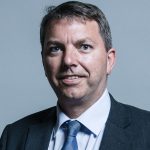
  • Gareth Johnson – 2022 Speech on the Expansion of the Ultra Low Emission Zone

    Gareth Johnson – 2022 Speech on the Expansion of the Ultra Low Emission Zone

    The speech made by Gareth Johnson, the Conservative MP for Dartford, in Westminster Hall, the House of Commons, on 20 December 2022.

    I beg to move,

    That this House has considered the expansion of the Ultra Low Emission Zone.

    I am pleased to have secured this debate on one of the biggest issues affecting my constituency right now. It affects not just Dartford, but areas right across London and the neighbouring counties. It is, of course, Sadiq Khan’s extension of the ultra low emission zone. The decision by the Labour Mayor of London to extend that scheme to cover the whole of London will be catastrophic for my constituency, which neighbours London. The border is not neat; it straddles roads such as Maiden Lane and sits at the end of roads such as The Coppice, Bowmans Road and Stonehill Woods Park. Although their residents are in Kent, they have to enter London just to get out of their road—just to live. They have no choice but to enter London.

    Currently, the border with London is fairly frictionless. Thousands of times a day, people drive across that border, often without even knowing it. That is good for London, and good for Kent and other counties bordering London, but now Sadiq Khan is building a financial wall between London and the rest of the country. A small business, particularly in outer London, that relies on customers travelling to it will be crucified by this form of taxation. The line that has been used by those desperately trying to defend the Mayor is that the scheme will not affect many people, but one in seven cars is already affected. Given that the Mayor ignored his own consultation on this scheme and did not include the expansion in his manifesto, as sure as night follows day, he will increase the number of vehicles that will have to pay—all to sort out the financial mess he has got his administration into.

    Paul Scully (Sutton and Cheam) (Con)

    The Mayor’s own consultation shows that 28,000 vehicles will be affected in the London Borough of Sutton alone. As my hon. Friend rightly says, it is small business people—those who can least afford to replace their car—who will be affected.

    Gareth Johnson

    My hon. Friend makes a pertinent point. I think I am right in saying that almost two thirds of the respondents to that consultation, and an even higher proportion of those who responded from outer London and the home counties, opposed the expansion. That consultation, frankly, was a sham; the Mayor’s decision does not reflect what people have told him.

    As I say, this is all about trying to sort out Sadiq Khan’s financial mess. Well, Dartfordians should not have to pick up the bill for his financial incompetence. Everyone will be impacted by the expansion of ULEZ, whether directly as a motorist or business, or indirectly by the damaging impact that scheme will have on the local economy.

    Dr Lisa Cameron (East Kilbride, Strathaven and Lesmahagow) (SNP)

    I thank the hon. Member for bringing this important debate to the House. As chair of the all-party parliamentary group for disability, I have been contacted by a number of people who have mobility cars who do not have to pay, but also by those who do have to pay. They are extremely concerned about the financial impact of this decision, given the cost of living crisis. Does he agree that there should be some kind of overall exemption for people who have disabilities, and who require mobility cars to access the public services that we all should be able to access?

    Gareth Johnson

    The hon. Lady makes an incredibly important and good point. Of course, people rely on their motor vehicles; some have no choice whatsoever. If public transport does not go the way that they are going, they have to use their motor vehicle, and she is absolutely right to highlight the impact that this decision will have on disabled people.

    As far as exemptions are concerned, I would argue that everybody should be exempt. I do not think anybody should have to pay this charge, because of its nature and the impact it will have on so many people—on everybody around London. It is not just those who own vehicles that breach the ULEZ guidelines who will be affected; it is everybody.

    Seema Malhotra (Feltham and Heston) (Lab/Co-op)

    I thank the hon. Member for securing the debate. I have also had representations, and heard my constituents’ concerns, about costs and the transition to green vehicles, but there is another side to this. I am sure he will agree that this is also about air quality, which we need to tackle in London. Has he read that the Mayor has decided to introduce two new temporary exemptions, from January 2023 to October 2027? Those grace periods will apply for those on disabled benefits and with wheelchair-accessible vehicles. Any way we move forward must be inclusive. There are still questions to be answered, including from my constituents.

    Gareth Johnson

    The hon. Lady raises an important point about the impact on disabled people. I would reiterate what I said to the SNP spokesperson, the hon. Member for East Kilbride, Strathaven and Lesmahagow (Dr Cameron).

    I believe that the constituency of the hon. Member for Feltham and Heston (Seema Malhotra) covers Heathrow airport. This will have a big impact on her constituency; it will stop people accessing that airport and make them go to other airports instead, so I would argue that the expansion has a big impact, and has unintended consequences for many people and businesses.

    The Mayor is relying on not just the £12.50 per day charge, but the penalty charges for non-compliance, which make him even more money. The RAC believes that in the first eight months after the expansion of the ULEZ to the south circular, 1.6 million penalty notices were issued. This expansion will be to the whole of London; I shudder to think how many penalty notices will be issued.

    We can see why the expansion is so financially and politically attractive to the Mayor of London. Those who must pay his seven-days-a-week charge to enter London cannot and do not vote for him. We are not Londoners in Kent; this is quite literally taxation without representation or accountability. The two areas hit hardest by the expansion are the counties bordering London, which cannot vote for the Mayor, and outer London, which the Mayor does not care about because it is not where the bulk of his votes come from.

    The Mayor says that he will bring in a scrappage scheme for the poorest people, so that they can change their car. He is not doing that for those living in Dartford or anywhere else outside London, so the poorest will be hit the hardest. They will be unable to change their car or enter London to go to work, shop or pick up the kids from school. How will key workers get to London to support the health service, the police or other emergency workers there? Many of those key workers own cars that will be charged if they enter London, yet they keep vital services in London going. The supermarket ASDA has contacted me because it is concerned about the impact that the extension would have on its depot workers. It estimates that over half of those workers have vehicles that would be subject to the charge.

    The scheme currently goes out to the south circular. We already see people parking just outside the ULEZ before continuing their journey using another form of transport. That is an understandable way of avoiding the charge, yet this practice could turn large parts of west Dartford and Joyden’s Wood—and areas all around London—into a car park. What justification does the Mayor give for his decision? He says that it is to reduce pollution. If he really wanted to reduce pollution in London he would ban the vehicles, but he does not want to ban them; he wants to make money out of them.

    The expansion of the ULEZ has nothing to do with pollution. The worst pollution in London is in central London, not outer London. Of course, the expansion could not take place without the Mayor changing his transport strategy. He has changed it—with the votes of the Labour and Liberal Democrat Assembly members, and with only the Conservatives opposing. He held a consultation, which we have spoken about, on the ULEZ expansion and more than 60% of respondents opposed the idea, so what did he do? He just ignored them. What was the point of that consultation exercise?

    His Majesty’s Government have stated on numerous occasions that they do not have the power to stop this expansion. Can my hon. Friend the Minister confirm, when he responds to this debate, whether that is the case? What advice has he sought on it? It seems that outer London boroughs can refuse to allow their land to be used for the camera infrastructure needed. Can he give his view on whether councils can refuse to allow their land to be used in that way, as it seems to me that that may be possible?

    The ULEZ expansion will have a significant impact on the poorest in society. It will price people out of going to work, going shopping or otherwise going about their daily life. It will place a financial wall around London and take away people’s freedom of movement. It is aimed at those who cannot vote the Mayor out of office and those who do not vote for him. It is the most debilitating, unfair, undemocratic form of taxation this country has ever seen, and it is a window on the soul of the Mayor of London.

  • Sadiq Khan – 2022 Statement on London Fire Brigade Being Moved Into Special Measures

    Sadiq Khan – 2022 Statement on London Fire Brigade Being Moved Into Special Measures

    The statement made by Sadiq Khan, the Mayor of London, on 14 December 2022.

    I welcome the additional scrutiny and support the HMICFRS will provide to the deep-rooted cultural reform that has already started within the London Fire Brigade. I have long been clear that wide-ranging changes are urgently needed within the Brigade and that’s why I appointed Andy Roe as a reforming Commissioner to transform the Brigade inside and out and fully supported the Commissioner in commissioning the recent Cultural Review.

    The Commissioner and I both agree that all of the review’s recommendations and findings must be acted upon with urgency and conviction to rebuild public trust and the confidence of LFB staff and firefighters who have been failed for far too long.

    Huge changes to policies, procedures and equipment mean that the Brigade are now better prepared, organised and equipped to fight fires and keep all Londoners safe. A new independent service has now been set up to investigate complaints and London Fire Brigade will be the first service in the country to issue body-worn cameras to their crews, both to protect them but also to ensure public safety and reassurance, as part of a landmark pilot.

    These changes were necessary and will help improve standards and rebuild public confidence but I have always been clear that despite the progress, there is still much more to do. That’s why I will continue to support and hold the Fire Commissioner to account on delivering a Brigade that is trusted to serve and protect London, fit for the challenges of modern firefighting, and a workplace where Londoners of all backgrounds can thrive.

  • Florence Eshalomi – 2022 Speech on the Independent Cultural Review of London Fire Brigade

    Florence Eshalomi – 2022 Speech on the Independent Cultural Review of London Fire Brigade

    The speech made by Florence Eshalomi, the Labour MP for Vauxhall, in the House of Commons on 28 November 2022.

    Florence Eshalomi (Vauxhall) (Lab/Co-op)

    Confidence in our emergency services is built on trust—trust that they will be there for people in their moment of need and do everything possible to help them, and trust that no matter what they look like or who they are, they will be treated with respect. Sadly, this report brings that trust into question. In moments such as this, my Vauxhall constituents will need confidence in their emergency services, yet when they hear the shocking reports about the fire brigade, soon after revelations about the police, they might question whether there is a wider cultural problem in our services. I salute the 2,000 firefighters who came forward, but recent scandals in the police and fire service reveal the importance of having a strong whistleblowing procedure. Will the Minister say from the Dispatch Box whether he will commission a national review of standards and culture to ensure that no one is afraid to come forward to raise this abuse?

    Chris Philp

    The hon. Lady is right to say that constituents, regardless of their background, should be able to have full confidence in the service, and that is why I think the Commissioner of the London Fire Brigade rightly said that he will implement all 23 recommendations to deliver that. It is worth saying on that point that on a daily basis firefighters across the country put their lives at risk to keep us safe. While being appalled by this report and absolutely determined to make sure there is substantial change, we should keep in mind at the same time that firefighters are putting their lives at risk daily. In terms of her question about whistleblowing, that is something we can take away and consider. Whistleblowing should be available. Firefighters from all backgrounds should be able to raise issues when they encounter them, and it is vital to make sure that those channels exist, so that is something I will take away.

  • Diana Johnson – 2022 Speech on the Independent Cultural Review of London Fire Brigade

    Diana Johnson – 2022 Speech on the Independent Cultural Review of London Fire Brigade

    The speech made by Diana Johnson, the Chair of the Home Affairs Select Committee, in the House of Commons on 28 November 2022.

    This report is a catalogue of shameful and appalling behaviour. In April 2020, the National Fire Chiefs Council committed to publishing an annual report on equality, diversity and inclusion. When the Home Affairs Committee questioned the chair of the National Fire Chiefs Council earlier this year, he told us that he did not know whether the report had been published. When we questioned the chair again earlier this month, the annual report still had not been published. The NFCC does not plan to publish it until April 2023, and it is not sure whether it will publish another. Does the Minister agree that this as yet unfulfilled commitment and the equivocal statement relating to its work to promote equality, diversity and inclusion are concerning? The leadership and commitment from the top of organisations such as the National Fire Chiefs Council is critical to rooting out the sexism and racism evidenced in this review.

    Chris Philp

    I agree with the Select Committee Chair that this is a vitally important issue. We expect leadership from the entire fire system, including the chair of the National Fire Chiefs Council. She mentioned the question of report publication, and I think she said it intended to publish in April 2023. I am happy to take that away and raise it with the NFCC. I am sure she probably expressed a view in the Committee that it should be published sooner.

    Dame Diana Johnson indicated assent.

    Chris Philp

    The right hon. Lady is nodding, so I am happy to raise that point again and see whether publication can be expedited.

  • Sarah Jones – 2022 Speech on the Independent Cultural Review of London Fire Brigade

    Sarah Jones – 2022 Speech on the Independent Cultural Review of London Fire Brigade

    The speech made by Sarah Jones, the Labour MP for Croydon Central, in the House of Commons on 27 November 2022.

    Here we have an urgent question on shocking standards in the fire service, and we have a statement later on appalling conditions in Manston. The Home Secretary is not here for either of those—why not? Where is she?

    The report is grim: firefighters huddled around a screen watching porn; putting bacon in the sandwich of a Muslim colleague; and hanging a noose around the locker of a black co-worker—a pack mentality and systematic failure to stamp it out. Some 2,000 firefighters in London have told their story, thanks in large part to Linda Francois, the mother of Jaden, who tragically lost his own life. She campaigned for this report, and we welcome the immediate action that Andy Roe, the commissioner, is taking.

    However, these shocking findings are not news to anyone. The Government have been put on notice time and again about cultural failings in our fire service. In 2015, an independent review in Essex found dangerous and pervasive bullying; in 2018, the inspectorate found failings in culture, values and the grievance process; in 2019 the inspectorate warned of an unchecked, toxic culture in many services; and in 2021, it found that change was urgently needed.

    What was the Government’s response? It was a haemorrhaging of the budget on training, ignoring the warnings from the inspectorate and playing politics with our fire service. We have repeatedly said that when it comes to police failures we have had enough of the Home Office sitting back and leaving things to individual forces. Will the Minister immediately commission a fundamental review of national standards and culture in our fire service? Will he agree, now, to publishing national statistics on misconduct and will he today commit to national professional standards?

    There were 11,000 fires across London alone last year. Our brave firefighters run into danger every day. We must expect the best from all of them and stamp out this culture of misogyny and racism. The Government must end their complacency and act.

    Chris Philp

    I assure the hon. Lady that there is not any complacency. She should be aware—I am sure she is—of the White Paper published just a few months ago setting out a range of measures to tackle shocking cultural issues such as those we have heard discussed this afternoon.

    The hon. Lady asked about national standards. As I said in my opening comments, the Fire Standards Board is in the process of publishing a number of standards that will be publicly available and that we will expect fire services to abide by. Those, of course, will be inspected against. She asked about issues outside the London Fire Brigade. I agree that those need attention, and we will be discussing with His Majesty’s inspectorate of constabulary and fire and rescue services what work it can do to look at behavioural and cultural issues such as these across the whole country.

    Obviously, we will respond to the White Paper consultation shortly. In the meantime, we will of course be working with Commissioner Andy Roe, who I spoke to on Friday, about the issue. As the report relates to London, I will also be in touch with the Mayor of London, Sadiq Khan, who of course has responsibility for oversight of the London Fire Brigade.

  • Dawn Butler – 2022 Speech on the Independent Cultural Review of London Fire Brigade

    Dawn Butler – 2022 Speech on the Independent Cultural Review of London Fire Brigade

    The speech made by Dawn Butler, the Labour MP for Brent Central, in the House of Commons on 28 November 2022.

    Nazir Afzal has found institutional misogyny, racism and discrimination in the fire service. His report is based on the testimony of 2,000 members and contains 23 recommendations, including the introduction of body-worn video by firefighters, an historic review of complaints about racism, misogyny and bullying, and secure facilities for all women.

    As the Minister said, the report comes after the death of Jaden Francois-Esprit, a trainee at Wembley fire station, in my constituency in the London Borough of Brent. Two years ago, Jaden took his own life, aged just 21. My condolences go out to his family and friends. Jaden was teased about every little thing, even the Caribbean food he brought in for lunch, and he made 16 requests to be transferred to another station. Nazir Afzal’s report said:

    “Jaden’s position was not unique. We have spoken to others that are equally isolated and harbouring suicidal thoughts.”

    I know some Government Members will accuse the report of being too woke or promoting wokery, but let me highlight some of the incidents. Female firefighters were found to have been groped and beaten, and had their helmets filled with urine and their clothes violated with semen. Some male firefighters who visited women’s homes for safety visits would go through drawers looking for underwear and sex toys. A black firefighter had a noose put on his locker, and a Muslim firefighter had bacon and sausages stuffed in his pockets and a terrorist hotline sign posted on his locker. If being more woke will stop this behaviour, then I think we are not woke enough.

    As the chair of London Labour MPs, I spoke to London fire commissioner Andy Roe, and he is determined to sack every single firefighter who is misogynistic, racist or homophobic at work, and that sends a strong message. I need to know what strong message the Government will send. We cannot bring back Jaden, whose life was lost, but the Government can make sure that other young people, who are starting out on their career in the London Fire Brigade, are not met with the same experience, but with consideration and acceptance by a service that is alert and awake to bullying and discrimination.

    The Government must lead the call for change and tackle structural and systemic discrimination in all our old institutions, and understand that being woke is a good thing. That would be a fitting legacy to Jaden.

    Chris Philp

    I completely agree with the hon. Lady that the behaviour and the incidents that she just enumerated that were uncovered by the report are completely unacceptable. They have no place in any modern public service, whether that is the fire service or anywhere else. I am sure the whole House will join her and me in condemning that sort of behaviour unreservedly.

    I spoke to London fire commissioner Andy Roe on Friday to set out my strong feelings that this behaviour is totally unacceptable and needs to completely end. As the hon. Lady said, he has committed to implementing all 23 of the report’s recommendations, including, importantly, outsourcing the complaints service, so that complaints are dealt with externally to the London Fire Brigade, and going back and looking again at all the complaints made over the last five years, to make sure they have been properly investigated—clearly, in many cases they have not been. He committed to ensuring that anyone found guilty of the sort of behaviour that she outlined from the report will be removed from their position. As I say, the behaviour that has been uncovered is totally unacceptable, and I am sure the whole House will join in condemning it.

  • Chris Philp – 2022 Statement on the Independent Cultural Review of London Fire Brigade

    Chris Philp – 2022 Statement on the Independent Cultural Review of London Fire Brigade

    The statement made by Chris Philp, the Minister for Crime, Policing and Fire, in the House of Commons on 28 November 2022.

    Let me start by thanking the hon. Member for Brent Central (Dawn Butler) for her question. The report written by Nazir Afzal OBE makes for deeply troubling reading. The behaviour uncovered is totally unacceptable. The London fire commissioner, Andy Roe, commissioned this review due to his significant concerns about the culture in his own service. The review also followed the tragic suicide of Jaden Matthew Francois-Esprit, a trainee firefighter. I know that colleagues will share my sadness and shock at the testimony of those who shared their experiences, as outlined in the review. I pay tribute to them for their courage.

    I wish to assure the House that the Government have taken, and continue to drive, action in this area. Through the introduction of the independent inspection of fire and rescue services, we have highlighted issues with the culture in the fire service, and it is clear that these are not confined to the London Fire Brigade. That is why we published the fire reform White Paper in May, which set out proposals to reform the way that fire services support and value their people. At the heart of the White Paper are plans to improve culture and professionalism, and put ethics at the heart of the service.

    Furthermore, the Government have funded a number of important change programmes in the fire sector. We have supported the creation of a new code of ethics for fire and rescue services, setting out clear national expectations for standards of behaviour. The fire standards board, which the Home Office funds, has produced a fire standards code to support the code of ethics, as well as a specific safeguarding standard, supported by guidance from the National Fire Chiefs Council. It will shortly publish new fire standards on leadership, addressing issues such as those raised by this deeply disturbing report.

    I welcome the fact that the London fire commissioner has committed to addressing and implementing all 23 recommendations in full and note that the National Fire Chiefs Council has also committed to considering the report carefully. Through the White Paper and otherwise, the Government will continue to press to eliminate the appalling behaviour that this shocking report uncovered.