Category: London

  • Gordon Brown – 2003 Speech at the Future Wealth of Nations Conference

    Gordon Brown – 2003 Speech at the Future Wealth of Nations Conference

    The speech made by Gordon Brown, the then Chancellor of the Exchequer, at Canary Wharf in London on 4 March 2003.

    It is a great pleasure to be here in Tower Hamlets today and to congratulate all of you – your MP, councillors, businessmen and women, local community organisations – on your success in the last six years since the New Deal was created of reducing unemployment in this area from over 6,700 unemployed to 4700 – a cut of nearly 30 per cent.

    With youth unemployment down from over 900 to 300 – a cut of over 65 per cent.

    If only one person had found a job that would be good…but you have working together, found jobs for nearly 2,000.

    And I know you are and should be particularly proud not just of what you are achieving in employment now, but in education for the future where you’ve seen the greatest increase in educational achievement of any borough in the country – and I’d like to add my congratulations to pupils, parents, teachers and everyone involved on this great success. In particular I want to thank all the headteachers here today for the dedication you show and the difference you make to the lives of the children in this borough.

    I am delighted to be here this morning and I’d like to begin by thanking Oona for organising today’s conference.

    Over the last 6 years as Member of Parliament for Bethnal Green and Bow, Oona has made a real difference to the lives of people here in the East End, fighting their corner when there are problems, celebrating their successes and working hard to highlight the real opportunities this area offers.

    Oona’s reputation both in Parliament and across government for speaking up on behalf of her constituents is renowned.

    And if she lobbies businesses in Canary Wharf as hard as she lobbies me in the Treasury, many of you here today have my sympathy!

    Oona is a tireless advocate for her constituents, and today is testament to the hard work she has put in to broker partnerships between business, the voluntary sector and local people.

    Because we know that many problems once addressed only by the state gaining more power can be solved today only by the state giving much of its power back to the people. The Government is determined to do more to build, strengthen and extend the links between the public, private and voluntary sectors – and we can already see the results of these partnerships here in Tower Hamlets:

    The local Employment Zone and Action Team – equipping people with the skills they need to move into the jobs that are available both in the City and beyond
    The East London Health Action Zone where business men and women act as mentors to local GPs
    The Ocean Estate and Weavers and Spitalfields Sure Start projects providing access to health, education and childcare services for nearly 2,500 under 4s

    The New Deal for Communities and local Neighbourhood Renewal Strategies which are helping turn round your poorest neighbourhoods
    And the “Idea Store” which is combining a traditional library with an innovative new learning centre and computer facilities.
    All these projects showing how, for the first time, public services can not only involve private, voluntary and charitable organisations, but can be run through and by them – not implementing a standardised central plan, but reflecting the needs of local communities and families.

    The private sector is already playing a key role in many of these projects and it is a privilege to be here to recognise the contribution that many of the companies represented here today, as well as many others, are making not just to the strength of the British economy but also to the strength and vitality of British society – as your support for community regeneration, employee volunteering, mentoring and so many other initiatives in our community shows.

    And as you expand and advance an enterprising economy in our country you hold the key to our economic prosperity.

    But you are here today because you believe that business also has a responsibility to play a role not just in the traditional marketplaces of our country but in the real life neighbourhoods and communities in which you find your employees and your customers.

    And that is what this conference is all about – how corporate self interest and corporate social responsibility are not irreconcilable opposites but can move forward in unison.

    And what is fascinating as you survey the changes over recent decades – as global communication and global competition has intensified – is the progress that has been made as our shared understanding of corporate social responsibility has developed and deepened.

    An initiative that began by focusing primarily on businesses giving money away is now widened to include issues of how companies make money.

    And in this modern era, issues of staff morale and motivation, brand loyalty and reputational risk, and environmental sustainability are now also widely recognised as key drivers of competitive advantage.

    So as corporate social responsibility has come to mean not just charity or philanthropy but also greater transparency, environmental care and direct engagement in communities – we have seen British companies lead the world in the advancement of corporate social responsibility as it has moved from the margins to the mainstream, from the arena of charity to the arena of corporate strategy.

    Corporate social responsibility broadening all the time into a belief that economic, social and environmental objectives can be pursued together and in harmony.

    It is a recognition that trust is critical to success; that reputation management is essential; that a brand must enjoy people’s confidence.

    It is a recognition that when business loses trust and then legitimacy – either through lack of transparency or social engagement or corporate irresponsibility, whether it be Enron or Worldcom – it is at its most vulnerable.

    And it is a recognition that social responsibility is no longer an optional extra but a necessity; not a part of the business of a company but at its heart; not a sideshow but a centrepiece; not incidental but integral to what you do — a smart strategy for modern business.

    And businesses up and down the country are already demonstrating that they understand that corporate self interest and corporate social responsibility – the good economy and the good society – advance together:

    Businesses making its equipment available to the disabled, developing new technologies in doing so as they give special help to a vulnerable group

    Companies setting up in deprived areas, recruiting the local unemployed and at one and the same time creating profitable local enterprises and bringing the out of work back into work

    Firms sending trainee workers to help out in local charitable or community organisations helping poor communities and gaining training opportunities for their employees

    Banks providing basic accounts for people previously financially excluded and thereby tapping new markets and creating a culture of saving amongst low income families.

    And so many of you here today are already making a huge contribution.

    But now is the time to look at what more can be done, to scale up your activities, share best practice, and make even more of a difference.

    And with a new understanding of the changing role of business in the community, governments are also challenged to leave behind the old ideas that see the achievement of a more dynamic market economy and a fair society as somehow mutually exclusive.

    For fifty years Britain was bedevilled by the sterile and self defeating argument that there was a fundamental choice to be made between promoting a dynamic economy and creating a fairer society. That enterprise is bought only at the cost of fairness and fairness only at the price of enterprise.

    But whether it is by tapping the potential of all through equality of educational opportunity, or through recognizing, our responsibilities to the environment for the next generation, or through companies engaging in the community in which they operate, people now see that enterprise and fairness can advance together. And I believe the challenge in our generation is to build a consensus in our country that stretches from the poorest to the richest community, from left to right of the political spectrum, that instead of enterprise at the cost of fairness or fairness at the cost of enterprise, Britain can lead the way in showing the world that enterprise and fairness move forward together.

    And all this demands that government too must change the way we do things and, in changing our ways, face up to our responsibilities.

    That is why we will continue to make the tax system the best in the world for encouraging individual and corporate giving, including extending the 10 per cent supplement on payroll giving donations until 2004.

    Why we are working with business and the voluntary sector to develop a package of measures to encourage more employees to give both time and money to charity through the “Corporate Challenge”.

    And why in high unemployment communities like Tower Hamlets we are now working together for economic renewal – creating new incentives to promote greater business activity.

    In the last six years the number of businesses in Tower Hamlets has risen from 6,800 to 8,700 – an increase of nearly 2,000 businesses in this area alone – but we can still do more.

    If in the best off neighbourhoods there are 50 small businesses creating jobs but in the poorest areas only 4 or 5, then there are less jobs, reduced income for services, and yet because of unemployment more social problems that public services need to fund. So we are agreed that one of the best anti poverty, pro jobs programmes is to encourage more businesses to start up and grow especially in areas of greatest poverty.

    I believe we should see inner-city areas not as no-go areas for business or simply “problem” areas but as areas of opportunity: new markets where businesses can thrive because of the competitive advantages they often offer – with strategic locations, untapped resources, a high density of local purchasing power and the potential of their workforce.

    So to remove the barriers preventing firms from starting up and growing in our most deprived communities, we have designated 2000 new enterprise areas – 18 of these in Tower Hamlets – where we encourage economic activity by cutting the cost of starting up, investing, employing, training, managing the payroll.

    And with the new Community Investment Tax Credit giving new incentives for business investment in those areas – and new charity guidelines now defining economic regeneration as eligible for charitable status – I hope that working together we can bring investment, jobs and prosperity to areas that prosperity has by-passed.

    But if we are to have the deeper and wider entrepreneurial culture we want, we need not just greater incentives for business activity in deprived areas but more businesses to become involved in our schools and colleges – one of the key themes of today’s conference.

    Currently only 30 per cent – and in many areas as few as 15 per cent – of young people gain any experience of enterprise.

    And it is crucial that we act now to equip our children with the enterprising skills and experience to go out into this fast changing world, whatever career paths they choose.

    In Britain we have many world class businesses but productivity growth still lags behind many of our competitors and the number of business start ups remains low with half the proportion of people in the UK actively considering starting a new business compared to the United States.

    Whereas enterprise in the US is seen as an exciting career option for young people, it doesn’t appear so glamorous in the UK and I want to turn this perception around.

    I want every young person to hear about, and experience, the world of business; every college to be aware of the opportunities in business, even to start a business; and every teacher to be able to communicate the virtues of business and enterprise.

    I want businessmen and women going into schools helping to provide enterprise activities; I want every student to have a quality experience of enterprise and contact with business before they leave school; I want every community to see business leaders as role models for their children.

    Our ambition is to raise the aspirations of all our children and then show how these aspirations can be realised.

    That is why the government is implementing the recommendations of the Review of Enterprise and Education led by Howard Davies – investing £75 million over the next three years so that, by 2006, all pupils will have at least 5 days of enterprise education before leaving school.

    But we simply cannot make progress without the active involvement of the business community itself.

    There are already many examples of City and Canary Wharf companies that have established trailblazing partnerships with schools in Tower Hamlets – sending employees into schools to provide classroom support, giving pupils the opportunity to undertake work experience or visit factories and operational sites, being mentors and career counsellors to young people or serving as business governors.

    Later this morning Mulberry School will be highlighting their partnership with the Bank of America but I could equally mention the contributions of Unilever, Merrill Lynch, Morgan Stanley, Lehman Brothers, to name just a few.

    When I was at school the world of education was far too remote from the world of business but thanks to the activities of many of the companies here today, this is changing for the better.

    But I believe that we can still do more and so I am urging all of you here today to forge links and partnerships with schools and colleges in Tower Hamlets and beyond.

    In this way every business in the country will be helping to forge the new enterprise culture that we want to see, tapping the immense skill and entrepreneurial talent that exists in Britain to the benefit of us all – corporate social responsibility not just about “doing the right thing” but a core part of improving our competitive edge.

    Now we have many demands on our resources and energies as a government.

    And I make no apology for saying we will spend what it takes to prevent the proliferation of chemical and biological weapons by states that defy the international community and to advance the cause of disarmament. Last year I set aside one billion pounds to be drawn upon by the ministry of defence for security and military preparations, if and when it became necessary. Last month I set aside an additional £750 million. Our armed forces do an outstanding job for Britain and today I make clear our gratitude for the work that they do and my resolve to ensure our armed forces are properly supported for whatever lies ahead. The international community must not stand by whilst a regime that proliferates weapons of mass destruction defies more than a decade of international agreements.

    But while we discharge our international responsibilities we will also discharge our domestic responsibilities.

    And my duty is to those areas and communities of this country which for too long had suffered high unemployment and high levels of deprivation who will have the resources through the new deal and our community regeneration budgets that are necessary. It is around regeneration and how we deliver it that this conference will discuss and debate today. And I believe with its breadth of participation from business and the community this conference shows there is a will to work together to create a Britain where just as employment is open to all, enterprise is open to all – a Britain with a creative, innovative and enterprising economy in every area of our country.

    Just as Britain works best when Britain works together so – as Oona’s initiative shows – Tower Hamlets works best when Tower Hamlets works together.

  • Sadiq Khan – 2022 Statement Following Death of Second Person in Brixton

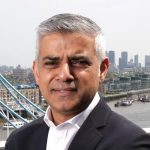
    Sadiq Khan – 2022 Statement Following Death of Second Person in Brixton

    The statement made by Sadiq Khan, the Mayor of London, on 19 December 2022.

    I am devastated by the death of Gaby Hutchinson, the second life to tragically be lost following the appalling events on Thursday night in Brixton.

    On behalf of all Londoners, I would like to extend my heartfelt condolences to his family and loved ones at this extremely difficult time.

    Gaby, like Rebecca Ikumelo, had his whole life ahead of him and had every right to come home safe and well after his shift, working at Brixton Academy.

    My thoughts remain with everyone affected by this dreadful incident. The urgent investigation into what happened continues and I urge anyone with information or footage from the incident to submit this to investigators via the public portal that has been set up by the police. You can also submit information and footage to police anonymously via Crimestoppers online or by calling 0800-555-111.

    City Hall are in close contact with the venue and authorities across London about working to ensure nothing like this happens again and I won’t rest until we have the answers all those impacted by the tragic Brixton incident need and deserve.

  • Sadiq Khan – 2022 Statement on Zara Aleena

    Sadiq Khan – 2022 Statement on Zara Aleena

    The statement made by Sadiq Khan, the Mayor of London, on 14 December 2022.

    Can I begin by expressing my deepest sympathies to Zara’s loved ones, by paying tribute to their strength and resolve, and by thanking her family for asking me to make this statement today.

    They have suffered a trauma no one should ever be forced to endure.

    How many of us can say that we too would’ve carried ourselves with the same grace and dignity in the face of such unbearable pain?

    Today, yet another violent man has been sentenced for the horrific killing of yet another innocent woman.

    Zara Aleena’s future was stolen by someone with no regard for her life or the laws of our land she spent her days working to uphold.

    We don’t know what motivated this terrible and senseless act of violence, but we know the cost:

    A young, bright woman’s hopes will never be realised.

    Her family and friends’ lives forever altered.

    And more and more women feeling less safe as they go about their daily lives.

    Zara’s loss is a tragedy in every sense.

    For her family, friends and community who are left bereft.

    And for our city, which is deprived of a talented and dedicated public servant.

    I’m acutely aware of the question being asked across our city right now…

    after Bibaa and Nicole…

    after Sarah…

    after Sabina…

    after Zara…

    and after the many other women whose lives have been brutally cut short at the hands of men…

    when is this going to end?

    There is an epidemic of violence against women and girls.

    In the UK, a man kills a woman every three days.

    As Mayor, I’m determined to break this sickening cycle of violence, condemnation and inaction.

    Because women don’t just deserve to be safe – they have the right to be safe.

    We’ve made tackling violence against women and girls a priority in London, with new initiatives and investment.

    But I know it isn’t enough… we wouldn’t be here if it was.

    Our city – and our society – must change.

    And I’m determined to work with partners to do everything we can to lead the way.

    My promise to Zara’s loved ones, to women and to all Londoners is that as Mayor, City Hall stands with you.

    And we will not rest until our city becomes a place where no woman or girl ever fears for their safety in their home or on our streets.

    Thank you.

  • Richard Holden – 2022 Speech on the Expansion of the Ultra Low Emission Zone

    Richard Holden – 2022 Speech on the Expansion of the Ultra Low Emission Zone

    The speech made by Richard Holden, the Parliamentary Under-Secretary of State for Transport, in Westminster Hall, the House of Commons, on 20 December 2022.

    It is a pleasure to serve under your chairmanship, Mr Hosie. I congratulate my hon. Friend the Member for Dartford (Gareth Johnson) on securing the debate. On ultra low emissions, we heard quite a few emissions from the hon. Member for Wythenshawe and Sale East (Mike Kane), but I am not sure that any of them were really relevant to the broader debate. He seemed to praise the Mayor of Greater Manchester for what he is up to. The Mayor stopped his ULEZ. I not sure that the Leader of the Opposition and the hon. Member for Wythenshawe and Sale East are on the same page regarding the Mayor of Greater Manchester, given the Leader of the Opposition’s recent jokes at the Mayor’s expense.

    The need to tackle air pollution is something on which I hope that Members on both sides of the House—and indeed the Government and the Mayor of London—agree, to answer the question from the hon. Member for Putney (Fleur Anderson). Air pollution is a big environmental risk to human health, and the Government are determined to tackle it. As my hon. Friend the Member for Old Bexley and Sidcup (Mr French) said, that is why we have invested more than £800 million to tackle air pollution in 64 local council areas. Much more can be done, although we can be proud that air pollution has reduced significantly since 2010, with emissions of particulate matter down by 18% and nitrogen oxides down by 44%, to their lowest level since records began.

    As my hon. Friend the Member for Orpington (Gareth Bacon) made very clear in a tour de force speech, ULEZ will have only a minor or negligible impact, as the Jacobs report has said. My hon. Friend the Member for Runnymede and Weybridge (Dr Spencer) put forward various sensible solutions. My hon. Friend the Member for Ruislip, Northwood and Pinner (David Simmonds) also reflected some of the issues, particularly around accessibility of public transport. As my hon. Friend the Member for Dartford said, the expansion to the London boundary was not in the Mayor’s manifesto—a point reflected by my hon. Friends the Members for Sutton and Cheam (Paul Scully), for Orpington, and for Watford (Dean Russell). It was against the Mayor’s manifesto and against his own consultation. Those are not political points, as some Opposition Members would like to suggest; they are facts, eloquently put forward by hon. Members.

    David Simmonds

    I commend the Minister on the work that he has been doing on buses. Does he agree that the fact that the Labour group in Hillingdon Council supports the Conservatives’ campaign against ULEZ is evidence that this is not a matter of party politics but one of people putting their constituents and residents first?

    Mr Holden

    I thank my hon. Friend for that point. It was interesting to hear from the hon. Member for Feltham and Heston (Seema Malhotra), who is not in the Chamber at the moment. She seemed to be on a slightly different page from some of the other Labour Whips’ remarks from the other hon. Members present.

    Many hon. Members have spoken clearly and eloquently about the anger that their constituents feel about what is going on. I hope that the Mayor, the Labour party in London, the Lib Dems and the Greens hear that too. The Mayor of London, however, needs no agreement from the Government to pursue his proposed expansion of ULEZ. He is doing so using powers granted to him under section 295 and schedule 23 of the Greater London Authority Act 1999 to implement any road schemes that charge users within greater London. He has previously used those powers to introduce the congestion charge, the low emission zone, and the current ultra low emission zone. While he has notified my Department of his intention, he is not obliged to consult us. As hon. Members will also be aware, the Department for Transport will not provide any of the £250 million that the scheme needs in order to be set up.

    I thank my hon. Friends the Members for Sevenoaks (Laura Trott), for Mid Sussex (Mims Davies) and for Bromley and Chislehurst (Sir Robert Neill), my right hon. Friends the Members for Bexleyheath and Crayford (Sir David Evennett) and for Epsom and Ewell (Chris Grayling), and other hon. Members from across the south-east of England who have also made representations to me on this matter, and who met with me recently. Sadly, the Government do not have the power to veto the Mayor’s decision. There has been some suggestion that the Secretary of State has powers under section 143 of the GLA Act to block the measure.

    Geraint Davies

    The Minister will know that it is the 10-year anniversary of the death of Ella Kissi-Debrah, who was the first person to have air pollution listed as the cause of death on her death certificate. Will he support the Clean Air (Human Rights) Bill that went through the Lords completely, with the support of Conservatives, and its ambition to introduce World Health Organisation air quality standards, ideally by 2030?

    Mr Holden

    As I have said to the hon. Gentleman, we have already made substantial progress in that area. On the specifics of any legislation, I will write to him.

    I have been advised by my officials in the strongest terms that section 143 of the GLA Act is focused on correcting inconsistencies between national policy and the Mayor’s transport strategy. It is not intended to be used to block specific measures that the Mayor would like to introduce under the devolution settlement.

    Hon. Members raised two specific issues about councils and their land and about council consent and the environment. I will write to Members on those issues, as well as the other issues that they raised with me recently. In fact, I will write to Members across the House in the coming days.

    I understand the concerns of hon. Members. Estimates show that approximately 160,000 cars and 42,000 vans that use London’s roads would be liable for the £12.50 ULEZ charge on an average day—approximately 8% of cars and 18% of journeys. But it is not just about the charge of around £1 million a day, as hon. Members have said. It is also about the fines, as my hon. Friend the Member for Dartford said.

    In spite of the hundreds of millions of pounds that it is proposed will be raised annually, the Mayor has announced a new £110 million pound scrappage scheme to help certain Londoners prepare for expansion. The scheme will launch at the end of next month, but it will be open only to certain residents and to Londoners, not those from outside London who are affected and travel in every day, including 50% of people who work in blue light services. They will not be touched by that scheme at all. Moreover, it will only be for those on specific benefits, including universal credit. There will be no help at all for the majority of Londoners affected, with many small and medium-sized businesses, as my hon. Friend the Member for Sutton and Cheam said, left to bear that heavy burden alone.

    As the hon. Member for Putney quoted from the FSB report, I will cite it as well. For businesses that do not currently comply with the zone, 25% said that they will immediately pass any increase on to customers directly, creating further inflationary pressure, and 18% of firms—almost one in five—said that they would close their business. That is from a Federation of Small Businesses press release today.

    Fleur Anderson

    The Federation of Small Businesses has asked the Government to deal with this by topping up the scrappage scheme. Will the Minister consider topping up the scrappage scheme to help more people, as he has outlined?

    Mr Holden

    It is interesting that the Labour party would like the Government to fund that out of general taxation. I suggest that the Mayor of London should look at that. If it is his policy, he should seek to fund it.

    Mike Kane

    No leadership!

    Mr Holden

    There is certainly no leadership from the Mayor of London, as we can see from all the hon. Members here, and there is certainly no leadership from the Lib Dems, who were too scared to turn up to this debate. I think the hon. Gentleman and I can agree on that.

    My hon. Friend the Member for Carshalton and Wallington made a really important point about grace periods, because the exemptions are very limited. Points were also made by the hon. Members for East Kilbride, Strathaven and Lesmahagow (Dr Cameron) and for Feltham and Heston (Seema Malhotra), and by my hon. Friend the Member for Watford (Dean Russell), who spoke passionately about charities. Grace periods will be extended for disabled and disabled passenger vehicles as well as wheelchair-accessible private hire vehicles. Those categories will be exempt only until October 2027. Minibuses used for community transport, the charities my hon. Friend spoke about, will be exempt only until October 2025. Some of those charities are in outer London and many work across the south-east—they will not even be able to apply for the scrappage scheme.

    In addition, NHS patients may be eligible to claim back under the Mayor’s plans, but only if they are clinically assessed as too ill to travel to an appointment on public transport. It is not about whether the transport is available, but about whether they are too ill to travel on it. My hon. Friend the Member for Ruislip, Northwood and Pinner made the really good point that it is not available at all in many parts of outer London. As he said, the choice just is not there for many of his constituents, and it is not there for many other Members’ constituents, either.

    Currently, emergency vehicles are exempt from ULEZ and LEZ charges. However, the sunset period lasts only until October 2023, which is months away. Has an assessment been made of the impact on London services, including the ambulance service, the Metropolitan Police Service and the fire service? It will be interesting to see that, if there is one. There will also be an impact on the council tax bills of Londoners.

    Several Members, including my hon. Friend the Member for Dartford, asked questions about the Mayor’s authority. Specifically, they are concerned that the Mayor may apply ULEZ charges to motor vehicles that are current under the scheme today, such as compliant petrol, diesel and hybrid vehicles.

    Geraint Davies

    Will the Minister give way?

    Mr Holden

    I am sorry, but I will make further progress.

    I reassure Members that if that were to occur, the Government would explore what more could be done and consider whether the Mayor was using his authority properly and fairly, without detriment to even more people. It is clear that the Mayor is prepared to go well beyond any pledges or manifesto he was elected on in order to pursue his own objectives.

    The hon. Member for Wythenshawe and Sale East made an interesting point about there being no Government support for TfL or transport. He needs to look at the amount of support that the Government provide to the Labour Mayor of London. We understand that the pressure on Transport for London has been huge. Before covid, 70% of TfL’s revenue came from passenger fares, but passenger journeys reduced by as much as 95%. Fare income has recovered, but it is still less than nine tenths of what it was previously.

    The TfL long-term funding settlement of 30 August provided TfL with £1.2 billion until the end of March 2024. That takes total Government funding of TfL to more than £6 billion since the beginning of the pandemic, or £650 for every Londoner. What has the Mayor done with the money? The £1.2 billion matches the Mayor’s own pre-pandemic spending. It will ensure that London’s transport network remains protected against potential lost revenue and the uncertainty of post-pandemic demand. Furthermore, it will enable the delivery of a number of projects set to revolutionise travel across London, including supporting £3.6 billion-worth of critical infrastructure projects, which will benefit not just London but the wider economy.

    The Government have supported and helped passengers to benefit from major upgrades to our world-class transport network, including the Elizabeth line, which opened recently. The settlement also requires the Mayor and TfL to control their operating costs and to continue to progress initiatives to modernise, reform and become more efficient. We have been clear that the Mayor needs to put TfL on to a financially sustainable footing. In no way, however, does that require ULEZ expansion. That is clear. Taxpayers across the UK have had to support TfL continually. It is imperative that they get a fair deal.

    The purpose of devolution is that decisions are taken by elected local politicians, not in this House or in Whitehall. Labour, the Lib Dems and the Greens need to know that political decisions have political consequences, and that there are political solutions to them. Were I the Mayor of London, I would not be going down the path he has chosen—but I am not. If Londoners do not like the decisions that he has taken, they will have the opportunity to have their say in 2024. In their local elections, I am sure that hon. Members will make it clear about the Mayor of London’s policies.

    I thank my hon. Friend the Member for Dartmouth for bringing this matter to the attention of the Government. I thank hon. Members from all across the south-east for their ongoing work, and I will continue to use my role in Government to work with them. As I said, in the coming days I will write to all hon. Members across London and the south-east on the important questions asked not only in the debate, but in other recent meetings and by Members who have approached me. I also assure Members that, across Government, we will continue to ensure that the Mayor of London is held accountable for his decisions in our capital city.

    Gareth Johnson

    Briefly, I thank all hon. Members for their contributions to what has been a productive and constructive debate. I am grateful to the Minister for his efforts in challenging this whole policy of the London Mayor. No one disputes the fact that we need clean air. In Dartford, we have very poor air. Frankly, however, that is a mask used by the Mayor of London to increase taxation. It is about raising money. It just so happens that it raises hundreds of millions of pounds for him. And it just so happens that he has a black hole in his finances and wants to bring in a broader charge, taxing every motor vehicle. This is about money and not about pollution.

    I feel sick to my stomach that people who cannot vote out the Mayor of London—such as Dartfordians—cannot do a thing about this. That is not right or fair. The whole thing should be stopped, but I hear what the Minister says about his inability to do so. It is the most unfair situation that I can recall ever being put into.

  • Mike Kane – 2022 Speech on the Expansion of the Ultra Low Emission Zone

    Mike Kane – 2022 Speech on the Expansion of the Ultra Low Emission Zone

    The speech made by Mike Kane, the Labour MP for Wythenshawe and Sale East, in Westminster Hall, the House of Commons, on 20 December 2022.

    It is a pleasure to serve under your chairmanship, Mr Hosie. I, too, congratulate the hon. Member for Dartford (Gareth Johnson) on securing the debate.

    I am going to scrap my speech for a second. One of the great honours of living in London for part of the week is understanding how absolutely fantastic the public transport system is. If you try to get back to Manchester today on an Avanti train, Godspeed to you all. If you have tried to get across the Pennines over the last few months, Godspeed to you all. I have had the great honour in my nearly nine years as an MP to spend one day a month walking in London. I have done the London loop, so unfortunately I have walked through most of the places represented by the hon. Members present, including Orpington, Petts Wood, Ruislip, Wallington and Watford. What a beautiful place London is. I am still astonished by the quality of the public transport system, which is second to none on this planet and the envy of everybody outside this great conurbation.

    Every year, 4,000 Londoners die prematurely due to poisonous air, and the greatest number of deaths are in outer London boroughs, with 11 Londoners dying prematurely every day. Air pollution is quite simply a matter of life and death; it makes our communities sick. Despite the Government’s promise that there would be no weakening of environmental targets post Brexit, it seems that they are refusing to match the EU standards, setting a weaker target while sentencing our children and communities to an unnecessary 10 years of toxic air.

    The challenge is threefold: we must tackle toxic air pollution, we must deal with the climate emergency, and we must deal with traffic congestion. I was at the Sutton Ecology Centre at the weekend, and I saw just how congested the A232 is and the problems there.

    Elliot Colburn

    Is the hon. Gentleman aware that the A232 is only congested because the Mayor of London has scrapped the A232 review that he promised to do?

    Mike Kane

    The A232 is actually congested because there are too many vehicles on it—that is what congestion is. London is a beautiful town, so I do not know why we allow it to happen. It is incredible to me.

    The Government’s own watchdog, the Office for Environmental Protection, says that the Government have failed to announce new targets, as they should have done under the Environment Act 2021, and that the new Government air quality targets are too weak and will condemn another generation to poor air.

    We know that around 85% of vehicles driving in outer London already meet the pollution standards. Mayor Khan has introduced the biggest scrappage scheme yet: £110 million in support for Londoners on low incomes, disabled Londoners, micro-businesses and charities to scrap or retrofit their non-compliant vehicles. He has extended the exemption period for them and for community transport. As the hon. Member for Orpington (Gareth Bacon) said, the scheme was devised under the last Mayor of London, but it has taken Mayor Khan to implement it.

    As was already pointed out, the Mayor also announced plans to add an extra 1 million kilometres to the bus network—much of that in outer London. Again, that requires leadership and support from central Government. The Government’s clean air fund excludes applications from London boroughs and the Greater London Authority. London’s share would amount to around £42 million, which would have gone a long way to expanding or supporting the Mayor’s £110 million scrappage fund.

    I am a Greater Manchester MP. We have had problems. There are nitrogen dioxide sewers—controlled by Highways England—going through my constituency. If those roads were factories, they would have been shut down. They are simply not acceptable in this day and age. Local authorities were given a legal direction to clean up the air by 2024, and like Birmingham, Bradford and Portsmouth, they had to act, but Ministers have comprehensively failed to provide the necessary funding. Ministers need to help families and small businesses switch to electric vehicles, and they must take action to expand charging infrastructure. Plumbers who use their vans for work are being priced out of this revolution. I commend my hon. Friend the Member for Putney (Fleur Anderson) for having two brothers who are plumbers—wouldn’t we all want that?

    This week, we learned that instead of charging ahead, the Government are slipping back on the charging infrastructure strategy. Rapid charging fund trials have been delayed, changes to planning rules have been kicked into the long grass, and take-up of the on-street charging scheme is anaemic. Labour’s plan for green growth will drive jobs, tackle the cost of living and help to clean up toxic air. There will be help for families with the cost of switching to electric vehicles, and we will provide the action we need to tackle toxic air. Britain is the only country in the developed world where private bus operators set routes and fares with no say from the public. That is not the case in London, but it is for bus services outside London. I was delighted to see the work that Andy Burnham has done as Mayor of Greater Manchester in setting the £2 fares, which the Government are now copying.

    I thank my hon. Friend the Member for Putney, who spoke eloquently about the problems of Putney High Street, which is one of the most polluted places in the country. As somebody who rides a bike to Richmond Park occasionally, I have to go and experience it. I also thank my hon. Friend the Member for Swansea West (Geraint Davies); he is in charge of his facts, and gave powerful personal testimony about asthma and his children.

    Let me say this to Conservative Members, genuinely and from the bottom of my heart: where there are low-traffic neighbourhoods, and where cars are tackled, electoral popularity rises. Tackling air pollution is electorally popular. I look at the percentage chances of Conservative Members winning their seats in the next election. In Dartford, they have a 64% chance of losing. The hon. Member for Runnymede and Weybridge (Dr Spencer) has a 57% chance of losing. The hon. Member for Ruislip, Northwood and Pinner (David Simmonds) has a 64% chance of losing. No wonder the hon. Member for Carshalton and Wallington (Elliot Colburn) is going on about the Lib Dems—they have a 52% chance of winning that seat.

    Stewart Hosie (in the Chair)

    Order. That is jolly interesting, but the topic is the ultra low emission zone.

    Mike Kane

    I can hear the Risographs of activists in London churning out leaflets about their Members of Parliament who do not want to support clean air. That is a clear divide, and I urge Members to get on the right side of it.

  • Dean Russell – 2022 Speech on the Expansion of the Ultra Low Emission Zone

    Dean Russell – 2022 Speech on the Expansion of the Ultra Low Emission Zone

    The speech made by Dean Russell, the Conservative MP for Watford, in Westminster Hall, the House of Commons, on 20 December 2022.

    Unlike the buses, I will be on time. I pay tribute to my hon. Friend the Member for Dartford (Gareth Johnson) for calling this really important debate.

    I hope that the Mayor has been watching the debate to hear the forensic take-down of the reasons behind the policy. It has been quite powerful hearing colleagues speak about the actual facts behind this, because it is a really important debate that will affect constituents who cannot vote for the Mayor. This is about fairness and democracy. It is unfair that situations such as this will hit my constituents in the pocket and perhaps stop them from going to work, shopping or picking up their kids from school; charging them when they have no ability to stop that happening feels utterly wrong.

    I recommend that anyone who wants to know the facts behind this should watch the forensic take-down that my hon. Friend the Member for Orpington (Gareth Bacon) presented earlier. I do not think that I will be able to match the detail that he gave, but some of his key points related to the fact that even the Mayor’s consultation said that this should not go ahead. Some of the feedback from respondents that I have read includes the point that the scheme penalises workers—correct. It comes at a time of increased cost of living; that is the case, sadly, as we are living in difficult times. This is about the affordability of daily charges, and it would be to the detriment of the local economy in London and to those who want to travel near London to places such as Watford in my constituency.

    One of the key elements here is voting. Liberal Democrat and Labour Greater London Authority members voted for this, and my constituents did not have a say; again, that is completely wrong. This is ultimately putting an invisible wall around London. Some of my constituents probably will not even realise that they have gone through that invisible wall, and will be charged and impacted by something that they may not have known was coming in. As was stated earlier, this is happening in a very short period of time; it is a matter of months. There is no long consultation or period of time when people can prepare for this or buy a new car. Hon. Members have made the point that it is not easy to just go out and buy a car; the people who think that that is one of the solutions are really speaking nonsense, because the people on the lowest incomes are those who will probably be hit the hardest.

    There are some legacy issues in Watford. For a long time there has been an argument about a Metropolitan line extension to Watford, and I understand that it was TfL and Sadiq Khan who stopped that from happening. If he really cares about people using public transport he would have helped to put in the additional funding, which was already being organised by Hertfordshire County Council and other organisations, to ensure that the line would be extended, but that did not happen. The argument is now that we should not use our cars, and that seems utterly wrong.

    As I said earlier, my constituents have commented on this issue. In my intervention, I mentioned a charity that transports emergency blood and breastmilk to premature babies, and urgent medical samples—24 hours a day, 365 days a year. Its volunteers use their own cars and time, without compensation. Many of those vehicles may not be compliant, and the charity wrote to me to share its response to the proposed ULEZ expansion. It wrote to TfL, which said that it would not discount or exempt the emergency medical transport charity, citing the importance of air quality. I am sorry, but that does not seem fair or right. I get that there might be legacy situations across the country with similar schemes, but this is a new scheme. It seems utterly wrong that TfL cannot build an exemption into a brand new scheme.

    I want to talk about the new technologies coming through. I met representatives of a business in my constituency that does carbon cleaning for engines, and they showed that they can massively reduce the amount of carbon coming out of cars and reduce emissions quite extensively. I have seen nothing in the consultation and the plans for expanding the ULEZ that will allow people to use new technology and new systems, or even to start looking at ways to get exemptions so that they could keep their cars but automatically reduce the emissions.

    I join Conservative colleagues in saying that this is not a political point; this is about hard-working people who just want to live their lives. Extending the ULEZ, which will affect places outside London—I am not a London MP—seems wrong. Measures need to be taken to stop it happening, but we have no way to do that. I would like the Minister to tell us whether there are ways for us to take this issue to the Government in order to say, “Can we say to the Mayor that this is wrong?”. We need a longer period of time to bring in the expanded ULEZ, but ultimately we need to try to stop it, because it is not going to deliver the supposedly clean air that will be used as the platform for this. Actually, it is just going to cost hard-working people more money at a time of difficulty.

  • Elliot Colburn – 2022 Speech on the Expansion of the Ultra Low Emission Zone

    Elliot Colburn – 2022 Speech on the Expansion of the Ultra Low Emission Zone

    The speech made by Elliot Colburn, the Conservative MP for Carshalton and Wallington, in Westminster Hall, the House of Commons, on 20 December 2022.

    It is a pleasure to serve under your chairmanship, Mr Hosie. I congratulate my hon. Friend the Member for Dartford (Gareth Johnson) on securing the debate, because much of what he and other colleagues have said so far about the impact that this scheme is going to have on their constituents certainly rings true for Carshalton and Wallington.

    I note that not a single Liberal Democrat has turned up to the debate. Given that the Lib Dems voted for this policy in the Greater London Assembly, actually lamented that it took Labour so long to implement its policy and two Lib Dem boroughs have passed motions to support it, including Sutton, I am surprised that none of them could be bothered to come and defend it, but there we go.

    I do not want to repeat what has been said about the ULEZ so far, but I want to highlight the severe impact this change will have on people in Carshalton and Wallington. As the Minister for London, my hon. Friend the Member for Sutton and Cheam (Paul Scully), who is no longer in his place, pointed out, 30% or 30,000 vehicles in the London Borough of Sutton are non-compliant, according to TfL’s own data. That is 30,000 people whose livelihoods will be impacted by this change in a matter of months, as the Mayor has given people next to no time to prepare for it.

    As has been said already, this change will hit the poorest Londoners hardest. What many will not be aware of, and will be shocked to hear, is that there are no exemptions in this ULEZ expansion to support small businesses, charities, keyworkers or the elderly, and there is very little in place to support disabled people. These are people who rely on their cars.

    Sutton has a public transport accessibility level of just 2, because we have no tram, no tube network, no London Overground and no Crossrail. We have a few National Rail services to central London, which are currently being reduced due to Govia Thameslink Railway’s timetable changes, and a limited bus network. We have also seen this Mayor of London cut the Tramlink extension from Croydon to Sutton, despite the money already being in place when he took office, and we have had no investment or improvement in our bus network.

    The question a lot of my constituents are asking is: “What can I do?” They cannot afford £12.50 a day. They cannot afford an annual fee of £4,500, or even the £3,000 that is the more conservative estimate for those who do not use their car every day. My hon. Friend the Member for Old Bexley and Sidcup (Mr French) has already outlined that the scrappage scheme lauded as the apparent solution does not, in reality, even touch the sides. Back in May, even Sadiq Khan himself said that the scrappage scheme would need something like £180 million to cover everyone who would be affected, and even that was probably an underestimate. Furthermore, the scheme is open to those who were rejected last time, and two thirds of people were rejected last time. It is a system that will only breed more disappointment and discontent, with more people missing out.

    The scrappage scheme is not the answer, but what is the Mayor’s answer, and what is Labour’s answer? I can tell hon. Members, because they were asked in the London Assembly. My London Assembly Member, Neil Garrett, asked the Mayor of London, “What should I tell my constituents if they can’t afford this charge?” The answer, not from the Mayor, but from a Labour Assembly Member was, almost word for word, “Well, a new car that is compliant is only about £3,000. Just go and buy one.” That is the political equivalent of Paris Hilton wearing a t-shirt saying “Stop being poor”.

    That is the answer people are getting from the Labour party, backed up by the Liberal Democrats and the Greens, who are all saying the same thing: “If you can’t afford it, tough. You are going to have to live with it, or give up your car, give up your job and move out of London. You are not welcome here.”

    I commend the work that is being done by Conservative-run boroughs in outer London, including Bromley, Bexley, Croydon, Harrow and Hillingdon, to do everything they possibly can, but I would like the Minister to feel the anger from our constituents and the huge impact that this change will have, not just on individuals, but on businesses and charities, and on the most vulnerable who live in outer London, and outside London.

    As my hon. Friend the Member for Dartford set out very eloquently, this is taxation without representation for many people living on the outskirts of London. I represent a constituency that borders Surrey. The border between my constituency and Surrey is a small country lane, which leads from the lavender fields into Woodmansterne—this is not somewhere with huge trunk roads and traffic coming in and out of London. Yet the people who live on the other half of Carshalton Road have no say in who the Mayor is and cannot do anything about this policy.

    I strongly urge the Minister to take this away. I would be grateful to hear what advice he has received about the Government’s powers in this respect, and I ask him to join us in urging the Mayor of London to scrap this policy. It will hit the poorest Londoners and our constituents the hardest, and it will do little to nothing to tackle air quality; as we heard so eloquently from my hon. Friend the Member for Orpington (Gareth Bacon), the Mayor’s own impact assessment says that it has nothing to do with air quality. The policy has no public support and he does not have a mandate for it in his manifesto.

    In reality, if this is not about air quality what is it about? We have already heard that it is about money, but it is about much more than that. TfL has already employed people to work on a road user charging scheme. Once these cameras are in place, be in no doubt that the Mayor of London is keen to expand the ultra low emission zone to be a road user charging scheme instead; he will expand the eligibility of the number of cars that are captured by it.

    The ultimate goal for this Mayor—he has been quite open about this in his own consultation documents—is to have a policy whereby every single Londoner is charged every single time they use their car, regardless of how new or old it is. That is what he wants, and the camera network for ULEZ is the first step towards that. We need to stop it and he needs to rethink; otherwise, we will see a massive amount of problems coming from our constituents who cannot pay this unaffordable charge.

  • Louie French – 2022 Speech on the Expansion of the Ultra Low Emission Zone

    Louie French – 2022 Speech on the Expansion of the Ultra Low Emission Zone

    The speech made by Louie French, the Conservative MP for Old Bexley and Sidcup, in Westminster Hall, the House of Commons, on 20 December 2022.

    I thank my hon. Friend the Member for Dartford (Gareth Johnson), who is also my constituency neighbour, for securing the debate.

    It has been said:

    “As Sadiq Khan shows in London, Labour in power delivers.”

    Those are not my words; they are the words of the Leader of the Opposition from April this year. They feel very appropriate, given today’s debate on ULEZ—and because it is pantomime season, after all. My hon. Friend the Member for Orpington (Gareth Bacon) just pointed out some highlights from the Mayor’s time in power; he mentioned Crossrail, and the Mayor’s record on the Metropolitan police and the London Fire Brigade.

    I will stick to the subject of ULEZ, Mr Hosie, as you have asked. It is the last outrageous tax raid on drivers in outer London. We have had the Mayor’s share of council tax increase by 43% since he entered office, and it is expected to rise to above £400 next year. The ULEZ rise—a tax rise—on drivers in outer London and the neighbouring counties will hammer families, small businesses and emergency service workers with bills of around £4,500 a year to drive. I am not sure that even the champagne socialists of north London could afford that bill. If that shows what Labour in power delivers, then this really is the nightmare before Christmas for the British public.

    As we have heard from hon. Members already, the ULEZ expansion was overwhelmingly opposed by the public, despite the consultation clearly being skewed to try to give TfL and the Mayor the answers they were looking for. It has also raised a number of serious issues and questions, including the process and powers being used by the Mayor to push it through, which I hope the Minister will look closely at. First, there are questions about whether the Mayor has the mandate to do this, given that it was not in his manifesto, and the impact of the expansion will also be felt outside the Greater London boundaries. That is alongside the fact that local authorities have a statutory duty over air quality, and several boroughs are opposed to the policy. Secondly, as highlighted already, the proposals were overwhelmingly rejected in the consultation by around 70% to 80% of people in outer London.

    It is clear to see why people are so furious about the decision, especially with the current cost of living challenges. In Bexley alone, the area I am proud to serve, around 30,000 vehicles will be directly impacted, hammering businesses, families and key workers with the bill of £12.50 a day, or £4,500 a year. By introducing the charge in August, it gives people hardly any time to switch vehicles. Barely a day goes by without a constituent stopping me in the street and highlighting how ULEZ will impact them. They include pensioners who rarely drive, but need their car to go shopping or to hospital appointments, families who need to drop off their kids to different schools each morning before going to work, tradesman who need their vans for their tools and to get to jobs, and shops on the boundary, which fear that customers will stop coming into Greater London from the likes of Dartford because of the ULEZ charge.

    Geraint Davies

    Does the hon. Gentleman support the investment in the extra 1 million km of bus network in outer London and the investment of £110 million in scrappage to get rid of 15% of more polluting cars, or not?

    Mr French

    I will happily answer the hon. Member’s question, because our buses in outer London have actually been cut—if he checks Bexley’s record, he will see that our bus routes have been cut. I will come on to the scrappage scheme later, to cover the exact point that the hon. Member is trying to make.

    Alongside the clearly negative impact of the ULEZ expansion on businesses and hard-working families in my area, it is also important to highlight that over 50% of blue light workers in London live outside the capital, and 90% of care workers nationally use their own cars for work. That expansion will create many knock-on issues for the emergency services in the likes of Bexley, including—as we have heard—the doubling of charges for those working nights, an issue that was also highlighted in The Daily Telegraph a few weeks ago. It will also negatively impact patients, with my local hospital, Queen Mary’s Hospital Sidcup, sharing a number of services and nurses with the likes of Dartford. These are all issues that I do not believe have been properly thought through, as the Mayor desperately seeks to fill the black hole in TfL’s finances that he has created.

    Bexley does not have the underground, and like many other London boroughs it does not have the same transport options and connectivity as central London, so it is extremely unfair that the Mayor of London is proposing plans for ULEZ expansion. In recent years, as I have said, we have also seen our bus and other services cut by the Mayor of London, and there is nothing in his so-called reinvestment plans that will help areas such as Bexley and in the south-east. The scrappage scheme announced by the Mayor does not even come close to matching demand, or addressing the costs and practical issues associated with buying a new vehicle, and the fact that he is forecast to spend double that amount—roughly £250 million of taxpayers’ money—to install cameras to fine people again highlights how this policy is designed to raise money, rather than improve air quality.

    That point is supported by the fact that the Mayor’s own independent impact report on the policy highlighted a negligible impact on improving air quality in outer London areas such as mine, which are very different from central London and have already seen an improvement in air quality. For example, in its consultation response to the Mayor, Bexley council highlighted that air quality has been improving already, and that Bexley was one of 11 boroughs that recorded no population exceeding air quality thresholds. The Government have also brought forward their plans and investment to improve air quality, with £880 million of support for local authorities to take immediate steps to reduce nitrogen dioxide, and £2 billion of investment in cycling and walking over the course of this Parliament—the largest ever boost for active travel.

    If the Mayor of London wants to help tackle air pollution rather than raise money, further investment should be made to support people with the transition to electric vehicles, including the installation of more electric vehicle charging points and leading by example with TfL’s own bus fleet. With traffic having been highlighted as one of the main causes of air pollution, there also needs to be a review of the impact of the Mayor’s road closures on increasing traffic and, potentially, emissions across London, closures that have again—by coincidence, I am sure—raised millions in fines for Labour councils in the capital. Dare I even mention the Silvertown tunnel, which will likely encourage more vehicles to drive through south-east and east London, and appears to be completely inconsistent with the Mayor’s so-called championing of air quality?

    I again urge the Minister to do everything in his and the Government’s power to stop this disastrous ULEZ policy, which will hammer families, businesses and the emergency services in Bexley, Greater London and neighbouring counties. As I and other colleagues have highlighted today, the impact of ULEZ will go much further than the boundaries of London, and—once the cameras are installed—will likely lead to further taxes on drivers that I believe will be inconsistent with national transport policy. As such, I ask the Minister and the Government to please review the situation urgently, and if the Mayor of London is listening, I call on him to stop the virtue signalling and worrying about his book sales and to put hard-working Londoners first by U-turning on this tax raid on drivers in Greater London. If he does not, it is clearly time for this failing son of a bus driver to get off at the next stop, before calls for the Mayor to get scrapped get even louder.

  • Gareth Bacon – 2022 Speech on the Expansion of the Ultra Low Emission Zone

    Gareth Bacon – 2022 Speech on the Expansion of the Ultra Low Emission Zone

    The speech made by Gareth Bacon, the Conservative MP for Orpington, in Westminster Hall, the House of Commons, on 20 December 2022.

    It is a pleasure to serve under your chairmanship, Mr Hosie. I, too, thank my hon. Friend the Member for Dartford (Gareth Johnson) for securing this important debate. I also thank my hon. Friend the Member for Runnymede and Weybridge (Dr Spencer), who was right that I have taken a deep interest in the ultra low emission zone expansion for some time, and that is because there are a number of big problems with the policy.

    The first problem is that Sadiq Khan does not have a mandate for this policy. He claims that ULEZ expansion is essential to tackle air pollution, and we heard his briefing being faithfully read out by the hon. Members for Swansea West (Geraint Davies) and for Putney (Fleur Anderson). Given that the Mayor was re-elected to City Hall only last year, we would imagine that this policy featured prominently in his manifesto, but it did not. He went to the polls on a 100-page manifesto, and one paragraph on page 55 mentioned the ultra low emission zone, but it pertained specifically to the extension to the north and south circular in October 2021, which he had already announced. There was no mention whatever of expanding the boundary to the outer part of Greater London.

    When the Mayor decided in May this year to push ahead with that expansion, the Evening Standard article that covered the announcement said:

    “On Friday morning, Sadiq Khan insisted that he would not press ahead with the plans if the public overwhelmingly rejected them during the public consultation.

    He said: ‘It’s a genuine consultation—as were the previous two consultations in relation to the central London Ultra-Low Emission Zone and the expansion. I hope Londoners who care about the health of their families will respond.’”

    They did, in large numbers, but the Mayor initially refused to release the results of that consultation. Eventually, after public pressure, the results were released on 25 November. They revealed that 60% of respondents opposed Sadiq Khan’s ULEZ expansion to outer London. That figure increases to 68% when we include the organised responses that the hon. Member for Swansea West mentioned; 70% of outer London residents oppose the expansion and 80% of those who work in outer London were also opposed.

    This policy has no mandate and no public support. It turns out that it is not about air quality, either, contrary to the propaganda read out by Opposition Members, which comes directly from the briefing sent by the Mayor of London. The document I quoted earlier is not a hatchet job, but the Mayor’s own integrated impact assessment. I gave one example, but there are many, of where it uses phrases like “negligible to minor” in terms of the impact that the expansion would have on air quality.

    There is no mandate, there is no public support and it is not really about air quality, because the impact is negligible. So why is the Mayor of London so interested in ULEZ expansion, and why is he rushing it? The answer is as old as time: it is about money. This is a cash grab, pure and simple. According to Transport for London’s own figures, it expects the £12.50 charge to hit 160,000 cars and 42,000 vans per day. In monetary terms, that is about £2.5 million per day—a big cash injection into the Mayor’s coffers.

    There is a question about timing. When the inner and outer ULEZs were introduced, people had years to prepare. In this case, we have nine months. The average family cannot save up to buy a car that quickly, especially when household bills are rising, and we know that they are. Small businesses and charities may be forced to replace one vehicle or even a fleet that they had banked on being able to use for many years to come.

    Who will be hit? The Mayor of London does not seem to understand who will pick up the bill for his policies. It is not wealthy Londoners—it is ordinary working people, on the poorer end of the socioeconomic spectrum, who are less likely to be able to upgrade their car, and more likely to own an older vehicle. There is a myth that Mayor Khan attempts to spread around that low-income Londoners do not own cars, or drive in Greater London. That is categorically false. What is more, he knows it. The “Travel in London” report produced by TfL in 2019 shows that, by its own analysis, 50% of outer London households earning as little as £10,000 own a car. Car ownership rockets to in excess of 70% for those earning upwards of £20,000. According to TfL’s impact assessment, low-income Londoners are more likely to own non-compliant vehicles. The ULEZ expansion is not a tax on wealthy drivers, but on poorer people who simply cannot afford to buy a new vehicle.

    In my constituency, we do not have tubes or trams. We have trains that go into central London and we have private vehicles. Some 83% of Orpington households own a car, meaning that a great number of my constituents could be liable to pay the charge. As we heard from my hon. Friend the Member for Ruislip, Northwood and Pinner (David Simmonds), many of my constituents use their car every day to go to work, to the shops and to visit family and friends. Under the Mayor’s plan, they face a potentially disastrous annual bill of £4,500.

    Other Members have spoken about the impact on public services. More than half of Greater London’s police officers and firefighters and around a fifth of the workers in my local NHS trust come into Greater London from outside. Those who work in outer London and those who work in shift work are especially reliant on their cars. Someone on a night shift faces a double whammy of a £12.50 charge driving to work, and a £12.50 charge after midnight when they drive home. It could cost them £25 per shift to go and do their work.

    The ULEZ expansion will also impact on businesses in outer London. Many people drive in from Kent to shop in Petts Wood in my constituency. TfL estimates that 8% have non-compliant vehicles. Rather than paying £12.50 a time, many will simply choose to shop and visit elsewhere, depriving London’s high streets of customers.

    Many drivers, both in London and those who travel from outside to work, shop or visit outer boroughs, are unaware that they may face an even higher bill. We heard from my hon. Friend the Member for Dartford about the increase in the level of fines—up to £180. The Mayor has just hiked the fine from £130 to £160, and will go further from January next year, raising it to £180. If a driver crosses into Greater London, perhaps unaware of the boundary or unaware of the existence of the charge or that their vehicle is not compliant, they will unknowingly rack up a cripplingly high bill. Potentially as many as 12,000 cars and vans a day may be hit by a fine.

    The RAC estimates that Transport for London could raise £260 million a year by imposing those penalties. To put that into context, Churchill Insurance estimated that the total parking fines raised by every council in the country combined would come to £250 million—£10 million lower than Transport for London would make with those penalties in the first year. TfL could in fact earn significantly more than that, because if not all drivers pay within 14 days—reducing the penalty from £180 to £90—that could raise £390 million every year.

    The Mayor of London has not been a success in office. The Metropolitan police and the London Fire Brigade are both in special measures. Violent crime has reached record highs, and it has not abated. He is not on target to deliver enough affordable homes, despite what he boasted about as being the largest settlement from central Government on record. Crossrail was years late and billions of pounds over budget, with billions more lost in fares that were never raised.

    Stewart Hosie (in the Chair)

    Order. I am sure that the hon. Gentleman is about to get back on to low emission zones.

    Gareth Bacon

    Indeed I am. The point I am trying to make is that Sadiq Khan is looking for something he can point to and claim as his. Leaving aside the fact that the ultra low emission zone was not even his idea—it was conceived and the preparatory work was done under my right hon. Friend the Member for Uxbridge and South Ruislip (Boris Johnson)—the Mayor has adopted it as his big idea. The expansion of the ultra low emission zone to outer London has no mandate or popular support. It will do almost nothing for air quality, it will be economically damaging and it will hit the poorest hardest—damaging not just those who live in outer London but millions who live outside Greater London. It is an appalling and unjust policy and it should be scrapped.

  • David Simmonds – 2022 Speech on the Expansion of the Ultra Low Emission Zone

    David Simmonds – 2022 Speech on the Expansion of the Ultra Low Emission Zone

    The speech made by David Simmonds, the Conservative MP for Ruislip, Northwood and Pinner, in the House of Commons on 20 December 2022.

    It is a pleasure to serve under your chairmanship today, Mr Hosie. I join colleagues in commending my hon. Friend the Member for Dartford (Gareth Johnson) on securing this debate.

    Like most Conservative Members of Parliament in Westminster Hall today, my surgery has been inundated with constituents who tell a very consistent story: that they are dependent on their vehicles, mainly due to ill health or the need to support disabled family members in accessing medical care. They have older vehicles, which have often been extremely well maintained, and which they have had for many years, but the prohibitive cost of change now means that face a really serious negative impact on their quality of life and that of their dependants. As my constituency has the highest per capita vehicle ownership in London, we might expect to see many people like that coming forward.

    Around 70% of Londoners do not own a car so, understandably, the Mayor of London has seen the ULEZ expansion as something that will not negatively impact on a great many constituents of his in central London. However, for those of us in the suburbs—my constituency essentially consists of eight villages, one of which has no access to a tube or train station and only very limited access to buses—dependency on cars and other private vehicles is much higher.

    When we look at a map of London, and particularly at the north-west, we see routes such as Hill End Road in Harefield, which is barely the width of a car, but which is one of the routes that takes people out of our capital and into the surrounding counties, as well as Park Lane, Dene Road and Eastbury Road in Northwood, and the A4008 in Hatch End. All of these roads change from being in Greater London to being outside Greater London partway along, so people who depend on a car— particularly if they are disabled or in ill health—to come and shop in their local high street, access their GP practice or get to their local public transport network will have to pay £12.50 every time they do any of those things, simply to go about their daily lives. What is iniquitous about this is that they do not have a choice.

    My wife lived in Westminster when I first knew her, so I completely understand that, in many parts of central London, there is a very high density of access to the bus network and other kinds of public transport, such as trains and tubes, but out in the suburbs that is simply not the case.

    Dr Cameron

    I thank the hon. Member for speaking about the most vulnerable people. Does he agree that it is particularly difficult for people with disabilities because not all rates of disability living allowance, child disability payment or personal independence payment are exempt from the scheme? Many people will still be adversely impacted, even from 2023. They are contacting me, as chair of the all-party parliamentary group for disability, and asking that more be done to support their particular needs.

    David Simmonds

    That is an incredibly important point, which my constituents have made to me. There are those who may have a blue badge because they have a serious health condition that requires them to attend regular medical treatment, but who are not registered disabled or covered by the exemptions that the scheme envisages.

    Dean Russell (Watford) (Con)

    I will mention this in my speech, so I hope you will forgive the duplication, Mr Hosie, but I was contacted by a charity that transports emergency blood, breast milk for premature babies, and urgent medical samples. It contacted the Mayor of London about whether it would be able to get an exemption, or even a discount, and it was told no. Does my hon. Friend agree that that seems morally wrong?

    David Simmonds

    That is characteristic of the Mayor’s response to the representations he has received: he simply does not want to take them into account.

    Some constituents may be temporarily resident in my constituency—for example, because they are awaiting heart and lung transplants at Harefield Hospital. They are required to attend the hospital at short notice when a donor’s heart and lungs, or one or the other of those things, becomes available. That also has a significant impact. Again, the Mayor of London seems to have very little interest in that.

    Those of us who have been interested in air quality for a long time recognise that, particularly in outer west London, the big source of pollution is Heathrow airport. This measure does nothing whatever to address the single biggest source of air pollution. It is very much a case of a Mayor pursuing the thing that makes money for the mayoral budget, rather than the thing that would actually improve air quality. There are no measures to improve local authority powers to tackle engine idling. There is nothing that addresses the impact of pollution coming from the M25 or from Heathrow airport, which are the things causing the significant air pollution that affects my constituents.

    As this policy makes progress, we need to recognise that local authority powers under the Environment Act 1995, through which the Mayor is seeking to introduce this measure, should require there to be consent from local authorities. In that way, we can ensure that the people who are legally responsible—the local authorities—have a say on whether such measures will tackle the actual sources of air pollution in their area, as opposed to simply talking about them and raising money for an inner London zone 1 Mayor who clearly does not pay attention to the needs of his suburban constituents.