Category: International Development

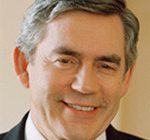
  • Gordon Brown – 2021 Comments on Aid Cuts

    Gordon Brown – 2021 Comments on Aid Cuts

    The comments made by Gordon Brown, the former Prime Minister, on 7 June 2021.

    It’s a life-and-death issue, we’re actually deciding who lives and who dies, particularly at this point where if we withdraw the money for vaccination it’s the equivalent of pulling away the needle from a kid or from an adult who is sick who needs the vaccination, a 90% cut, for example, in support for polio vaccination.

    There has been an all-party consensus, all parties, for 25 years that we need 0.7%, we need to play our role in the world by being one of the leaders in aid and, really, this is not the right time to pull things away because basically this is when the poorest countries need help most.

  • Preet Gill – 2021 Comments on International Aid Cuts

    Preet Gill – 2021 Comments on International Aid Cuts

    The comments made by Preet Gill, the Shadow International Development Secretary, on 3 June 2021.

    The Government’s decision to cut the aid budget in the middle of a pandemic risks lives.

    The Foreign Secretary has failed to conduct impact assessments on the cuts, and slashed everything from aid to the world’s worst humanitarian crisis in Yemen to programmes tracking new Covid variants.

    As the only G7 country to cut aid in the middle of a pandemic, the UK’s credibility as a leader on the greatest global challenges has been undermined.

    Ahead of hosting the G7, the Conservative Government should take this opportunity to stop its retreat from the world stage, do the right thing and reinstate our commitment to 0.7%.

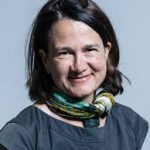
  • Catherine West – 2021 Speech on Global Corruption

    Catherine West – 2021 Speech on Global Corruption

    The speech made by Catherine West, the Labour MP for Hornsey and Wood Green, in the House of Commons on 25 May 2021.

    It is a pleasure to serve under your chairmanship, Ms Fovargue.

    On behalf of the Labour Benches, I strongly welcome the new sanctions regime. It has been clear for many years that corruption needs to be relentlessly tackled as part of our wider foreign policy armoury. In fact, we have had a number of questions for the Foreign Secretary about when anti-corruption would be introduced as a heading in the sanctions regulations, so it is very pleasing that it is now there. I appreciate all the hard work that officers in the Foreign, Commonwealth and Development Office have done to focus on the fraudulent activity of global operators. It is really good to see that we are tackling this.

    Obviously when the Minister wrote his speech he probably did not realise that there would be an example of air piracy over the weekend, but I thought I would reflect on the terrible situation in Belarus, because it behoves us to respond in a way that reflects our concerns about a corrupt, Kremlin-backed financial system based mainly around energy. We know, for example, that Belarusian companies such as a subsidiary of the state oil company are active in the UK. Indeed, my hon. Friend the Member for Wigan (Lisa Nandy) wrote to the Foreign Secretary overnight about the subsidiary BNK UK, which is the UK arm of the Belarusian state oil company. We would like to know how the UK Government will stop the Belarusian Government using the London stock exchange to raise finance and sustain Lukashenko’s grip on power.

    We would also like the FCDO to examine the evidence for further sanctions against individuals. One whom we have named is Mikhail Gutseriev, who is known to have acted fraudulently and has stolen from his own people. We would like to see him specifically looked at. I know that the Minister will probably not be able to give an answer today, because that is not how developing sanctions works—there is an element of stealth and evidence gathering to it—but we must eliminate any possibility of those linked to the Lukashenko making money in the UK. We know that there are fewer Belarusian entities sanctioned now than in 2012. Only seven entities are currently designated, compared with 32 under EU sanctions in 2012. In the space of 12 months this dangerous regime has stolen an election, employed brutal repression against its own people and hijacked a civilian airliner, so I would very much welcome a response to that point from the Minister when he winds up.

    I also want to put on record my thanks to the late Sergei Magnitsky, the lawyer who questioned fraudulent activity in Russia and lost his life in prison due to violence, and to his friend Bill Browder for his ongoing work. He has worked across European nations, the USA and the UK, but is based here in the UK and is constantly putting forward suggestions for what the Government can do better—which is always a positive when it is in one’s policy area as an Opposition spokesperson.

    One of the things that Bill Browder has suggested needs to looked at is whether our crime fighting organisations are fully resourced. For example, I know from a Foreign Affairs Committee trip to Colombia—where we have concerns about corruption relating to the drug trade and about its impact here in the UK—that at that point the National Crime Agency was facing cuts to its service. I also know that the Serious Fraud Office needs more resource and more legal powers to bring more successful cases—it has not had a good record of late. All those bits of the puzzle need to be in place to bring these crooks to justice.

    Without the tireless work of people on the ground and our very effective non-governmental organisations—which understand corruption and the way it plagues rogue states such as Belarus, robbing people of opportunities and fuelling crime and illicit practices across the globe—the individuals maintaining those practices would remain in the dark, which we must not allow. The work of NGOs, like that of many whistleblowers, has uncovered appalling wrongdoing, so it is vital that their work is recognised.

    I am also pleased that the regulations contain provisions for the sharing of information and the creation of criminal offences. Corruption is undoubtedly a crime and should be treated as such, but the most effective way to tackle it is the free sharing of information where required. We cannot and should not treat this as a siloed issue. There should be a Government-wide commitment to tackling the corruption that washes up on our shores and pollutes our financial institutions.

    The Minister has been an MP for longer than me and will remember Mr Cameron’s commitment to tackling corruption over five years ago. What is his view of the status of the anti-corruption tsar in the Houses of Parliament? I remember that individual having much more of a profile, so perhaps the Minister could update me on who it is, the work he is carrying out, where he reports to, and so on, because it is important that we keep up this questioning and important that the individual tasked with looking at anti-corruption has a sightline into the work we are discussing today, so that it can be as joined-up as possible.

    When the Intelligence and Security Committee met last year, it described London’s economy and financial centres as the London laundromat. I hope that today, and through the work of the anti-corruption tsar, we can do away with that epithet, which as a London MP I object to. Sadly, however, because of the way that corruption presents itself in a place such as London, the people at the top seem to have all this money—and can even, I hear, purchase expensive properties with a suitcase full of cash. This kind of thing has to stop. We must seek greater equality; there is nothing worse than that feeling. The rich list that came out this week showed 23 new billionaires, yet we have 4.3 million children living in poverty in this country. We must do much more at the very top level to get rid of this problem.

    Before I wrap up, I want to press the Minister on a few questions for clarity and reassurance, starting first with a quick update on the work of the anti-corruption tsar in the Houses of Parliament and the transparency of the formation and operation of our sanctions regime. What does he envisage for the quarterly reporting, to ensure that MPs, civil society and the private sector can play a role in designating individuals? Do the Government intend to open a formal channel for Parliament or other NGO actors to put forward information, or will he commit to regularly reporting to Parliament? Or does he believe that that is a function of the anti-corruption lead, who is not a member of the Government? Or, does he believe there is a role for the Foreign Affairs Committee?

    As I have indicated, these sanctions are welcome and have our support, but they are still not as expansive as those of some of our closest allies. I personally appreciate the fact that the US regime is very linked with the work of both the Department of the Treasury and parliamentarians there. In any given year, Congressmen and women can bring cases against specific individuals and the US Government have to respond, which is quite a good, grassroots-up way of doing these sorts of things.

    Will the Minister confirm that the sanctions will be reviewed to bring us in line with the US? Will he also say what work has been done on the ground? This money is like a stream of water—when we close one door, it will just go somewhere else—so obviously we want to work closely with the US, which has a large economy where money could also be laundered. What diplomatic efforts will be brought to bear across the European economies? We need a solid commitment to ensure that law enforcement agencies and those tasked with investigating corruption and human rights have the resources and backing to do so.

    As a champion of the overseas territories, the Minister will be aware that the open register process will finally complete in, I believe, 2023. However, I hope he can give me his assurance of that now. This has been a very long process—Mr Cameron announced it at least six years ago—so will the Minister update me on that?

    Finally, as my Labour colleagues and I have said repeatedly, if the Government are really serious about confronting corruption, their tough words must be backed up with actions. We know that the bulk of the money coming out of Russia, Belarus, Ukraine and those parts of the world is still laundered through the UK. These sanctions are welcome and should mark the start of cleaning up this mess, but we must ask again: will the Government look again at the recommendations of the Russia report, a number of which remain outstanding?

    The Russia report was delivered on the last sitting day of Parliament at the end of July last year and covered things such as golden visas, an arrangement whereby wealthy individuals can apply for a specific visa to give them entry and UK citizenship, which then allows them to donate to political parties. For example, Mr Temerko, who has donated £1 million to the Conservative party over the years, is a UK citizen but still has his business interests over there. We need an assurance that there is not still some kind of remote control arrangement between that part of the world and our economy. The Russia report recommended that golden visas be brought to an end or reviewed, so I hope the Minister can update me on that.

    Ms Fovargue, I have gone rather around the globe in this debate, but we do not get many chances to ask such questions in a free-ranging way, and I am sure that the Minister will write back to me and the Committee about whatever he cannot answer today. I thank the Committee for its patience and look forward very much to monitoring the progress of these sanctions.
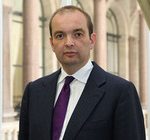
  • James Duddridge – 2021 Statement on Global Corruption

    James Duddridge – 2021 Statement on Global Corruption

    The statement made by James Duddridge, the Parliamentary Under-Secretary of State for Foreign, Commonwealth and Development Affairs, in the House of Commons on 25 May 2021.

    I beg to move,

    That the Committee has considered the Global Anti-Corruption Sanctions Regulations 2021 (S.I. 2021, No. 488).

    It is a pleasure to serve under your chairmanship, Ms Fovargue. On 26 April, the Government laid the Global Anti-Corruption Sanctions Regulations 2021, under the powers in the Sanctions and Anti-Money Laundering Act 2018. Corruption is one of the key drivers in undermining human rights, democracy, development and the rule of law around the world. It also undermines global prosperity, which reduces taxation that could have gone to fund public services. Corruption also undermines our national security and fuels conflict, and serious and organised crime.

    The new sanctions regime is a significant step forward in the UK’s leadership in combatting corruption. It will enable us to impose asset freezes and travel bans on individuals and organisations involved in corruption around the world, and will help to prevent people from using the United Kingdom as a haven for dirty money. It covers all forms of corruption, bribery and misappropriation across the globe. The regulations also enable us to target those who facilitate, profit from, conceal, transfer or launder the proceeds of serious corruption. These sanctions will not only affect those named but should send a clear message to those around the world that corruption is unacceptable. The UK will not tolerate it and we will not receive the proceeds of corruption coming into our country.

    As with all UK sanctions, we adhere to rigorous due process to ensure that the rights of individuals are respected. This means that those designated under the sanctions regime will be able to request that a Minister review the decision, and if they are still in disagreement, they will also be able to apply to challenge the decision in a court of law here in the United Kingdom.

    The Government have made immediate use of this tool, and on 26 April we sanctioned 22 individuals from six countries for their involvement in serious corruption. All the names are published online in the UK’s sanction list for these regulations, and each designation is underpinned by evidence, as required by the 2018 Act. They include 14 individuals who were involved in the diversion of $230 million of Russian state property through a fraudulent tax refund scheme uncovered by the auditor Sergei Magnitsky, which was one of the largest frauds in Russian history. We will also impose sanctions on Ajay Gupta, Atul Gupta and Rajesh Gupta, along with Salim Essa, who were involved in long-standing corruption cases in the South African economy. We have also designated a Sudanese businessman and individuals across Latin America, in particular those involved in misappropriation of funds and soliciting bribes to fund major trafficking organisations.

    The steps that we have taken to expand our sanctions framework will cover corruption as well as human rights and will give the UK powers similar to those in the so-called Magnitsky framework in the US and Canada. They will enable us to work even more closely in a co-ordinated way with likeminded partners. I therefore commend the regulations to the Committee.

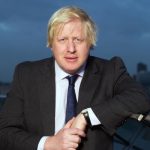
  • Boris Johnson – 2021 Comments on Support for India

    Boris Johnson – 2021 Comments on Support for India

    The comments made by Boris Johnson, the Prime Minister, on 3 May 2021.

    The terrible images we have seen in India in recent weeks are all the more powerful because of the close and enduring connection between the people of the UK and India.

    I am deeply moved by the surge of support the British people have provided to the people of India and am pleased the UK Government has been able to play our part in providing life-saving assistance.

    The UK will always be there for India in its time of need.

  • Anna McMorrin – 2021 Comments on the Total LNG Gas Pipeline in Mozambique

    Anna McMorrin – 2021 Comments on the Total LNG Gas Pipeline in Mozambique

    The comments made by Anna McMorrin, the Shadow Minister for International Development, on 26 April 2021.

    The risks with this project were clear from day one. The decision to invest was short-sighted, contradicted environmental, humanitarian and security warnings in the government’s own impact assessment, and has risked UK taxpayers money.

    The Conservative Government have serious questions to answer over how much and what protections are in place around the public money already committed.

    The government must use this indefinite pause wisely – instead of continuing to lock low-income and climate vulnerable countries into a new generation of fossil fuel reliance, the UK must seize the opportunity to fully withdraw support from the project, align with new fossil fuel policy, and invest in green and sustainable development and transition.

  • Preet Gill – 2021 Comments on Foreign Aid

    Preet Gill – 2021 Comments on Foreign Aid

    The comments made by Preet Gill, the Shadow Secretary of State for International Development, on 26 April 2021.

    Last week the Foreign Secretary exposed his fear of scrutiny by trying to sneak out a written statement on his callous aid cuts

    Today, having been forced to come to face up to his decisions by the right honourable member for Sutton Coldfield, he has once again evaded scrutiny and hidden behind one of his ministers instead.

    Make no mistake, slashing humanitarian support in the middle of a global pandemic is callous and incredibly short-sighted.

    People will lose their lives as a result of the cuts and we will all be less safe.

    As the only G7 nation to cut aid, it is a retreat from our moral duty and will weaken our position on the world stage.

    The statement last week was light on detail so can the minster tell us whether ambassadors have been informed of their allocated budgets and the date when all FCDO country office budgets for 2021 will be made public?

    Can he tell us whether impact assessments for each country will be conducted and when they will be forthcoming?

    Can he explain the Foreign Secretary’s comments that “no one is going hungry because we haven’t signed cheques” given that 16-million Yemenis and 12 million Syrian people are on the brink of famine and how he thinks the respective 60 per cent and 30 per cent cuts in aid will impact on people in those countries?

    The impact of the cuts on his government’s own stated priorities are stark:

    From education which has been cut by 40 per cent.

    To health programmes like the IRC’s ‘Saving Lives in Sierra Leone’ which has helped over three million people and now been cut by 60 per cent.

    In a year when Britain will be hosting the G7 and COP26 this is a shameful act and part of a pattern of retreat from the world stage by this Conservative government

    So, rather than continuing to treat parliament with contempt, will he commit to putting these cuts to a vote at the earliest opportunity?

  • Anna McMorrin – 2021 Comments on Prime Minister and US Climate Leaders’ Summit

    Anna McMorrin – 2021 Comments on Prime Minister and US Climate Leaders’ Summit

    The comments made by Anna McMorrin, the Shadow Minister for International Development, on 22 April 2021.

    The Prime Minister’s statement highlights the gulf between his government’s climate rhetoric and delivery.

    Stripping away vital aid funding as well as continued funding of fossil fuel projects overseas despite his government’s new policy shows talk is cheap. This Government’s hypocrisy must end.

    This Earth Day world leaders must listen and learn from climate vulnerable communities everywhere and ensure they are at the heart of decision-making and mobilise the finance to advance progress. Taking real climate action will mean greater health, prosperity and security for all home and aboard, from East Africa to East Yorkshire.

  • Preet Gill – 2021 Comments on UK Aid

    Preet Gill – 2021 Comments on UK Aid

    The comments made by Preet Gill, the Shadow International Development Secretary, on 21 April 2021.

    Slashing humanitarian support in the middle of a global pandemic is callous and incredibly shortsighted.

    As the only G7 nation to cut aid, this is a retreat from our moral duty and people will lose their lives as a result.

    Sneaking out aid cuts with a written statement rather than facing parliament in person shows the cowardice of this Conservative government which continues to fail to take responsibility for their actions.

    Parliament has made it clear that it does not support the aid cuts and Britain must not turn its back on the world’s poorest. The Prime Minister must put the cuts to a vote at the earliest opportunity.

  • Preet Gill – 2021 Comments on UK’s Aid Spend

    Preet Gill – 2021 Comments on UK’s Aid Spend

    The comments made by Preet Gill, the Shadow Secretary of State for International Development, on 8 April 2021.

    In the middle of a global pandemic, this callous Conservative government chose to slash hundreds of millions of pounds of life saving humanitarian assistance.

    As the only G7 nation to cut aid, this is a retreat from our moral duty and people will lose their lives as a result.

    Parliament has made clear that it does not support cutting support for the poorest and most vulnerable people in the world and the Prime Minister must reverse his decision or put it to a vote at the earliest opportunity.