Category: International Development

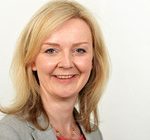
  • Liz Truss – 2022 Statement on Support for Low Income Countries

    Liz Truss – 2022 Statement on Support for Low Income Countries

    The statement made by Liz Truss, the Foreign Secretary, on 22 April 2022.

    The UK and our partners have secured the largest ever World Bank financial commitment to low income countries around the world.

    It will provide $170bn over the next 15 months with $50bn delivered by the end of June, supporting countries faced with economic hardship as a result of Russia’s invasion of Ukraine.

    Russia’s bombardment across Ukraine has brought exports from the world’s breadbasket almost entirely to a halt, leading to steep price rises and jeopardising livelihoods across the globe.

    Through this support we are standing together with the most vulnerable countries in the face of Russian barbarism. The UK has led by stepping up our support through the World Bank, including nearly $1bn in loan guarantees so the Bank can lend more to Ukraine without taking resources away from rest of world.

    Despite Russia’s refusal to take responsibility for its actions, the UK and World Bank partners this week have delivered for the people of Ukraine and for the wider world.

  • Liz Truss – 2022 Comments on Afghanistan Humanitarian Crisis Conference

    Liz Truss – 2022 Comments on Afghanistan Humanitarian Crisis Conference

    The comments made by Liz Truss, the Foreign Secretary, on 15 February 2022.

    The conference is a critical moment for the international community to step up support in an effort to stop the growing humanitarian crisis in Afghanistan. The scale of need is unparalleled, and consequences of inaction will be devastating.

    The UK is determined to lead the global effort. We will bring international allies together to raise vital aid to deliver food, shelter and health services, protect women and girls and support stability in the region.

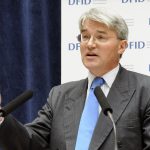
  • Andrew Mitchell – 2022 Speech on Holocaust Memorial Day

    Andrew Mitchell – 2022 Speech on Holocaust Memorial Day

    The speech made by Andrew Mitchell, the Conservative MP for Sutton Coldfield, in the House of Commons on 27 January 2022.

    It is a great pleasure to follow the hon. Member for Leeds North West (Alex Sobel), who shared with the House such powerful and important emotional experiences. We respect him greatly for having had the courage to do that today.

    I draw the House’s attention to my interests, as set out in the register, and congratulate my right hon. Friend the Member for Newark (Robert Jenrick) on launching this important debate for the House of Commons and the country so eloquently today. I echo the comments he made about our very good friend, the right hon. Member for Barking (Dame Margaret Hodge), who sadly cannot be with us today but with whom I have worked extremely closely for many years on issues of economic crime and dirty money. Any cause that she supports and to which she brings her formidable powers is one worthy of the House’s greatest attention.

    Every year, we convene in this Chamber and in venues around the country to proclaim, “Never again”—never again will we stay silent in the face of hatred, never again will we stand by as people are murdered because of who they are, never again will a holocaust be allowed to happen. Yet, around the world, these things are happening again and again. My right hon. and gallant Friend the Member for Beckenham (Bob Stewart), with very direct experience, once again impressed the House hugely with his knowledge and understanding of these things, but the words of his mother—that we have a duty in our generation, a duty that cannot be shirked—were particularly powerful.

    We have shamefully borne witness to genocides in Bosnia. I have stood among the gravestones at Srebrenica, not many hundreds of miles from here, in Europe, marvelling at what took place there. I have stood in Darfur and heard testimony and witness, particularly from women, about the brutality of what George Bush, the President of the United States, described as a genocide. We have seen these things in Burma too, and in Rwanda, where in 1994 nearly 1 million people, predominantly Tutsis, were murdered by their Hutu neighbours over 90 days.

    I would like to focus my comments on Rwanda and the genocide there because the UK now has a connection to it, although it is not widely known. Once the killing stopped, those allegedly responsible for these appalling events fled far and wide, some to neighbouring countries, others to Europe, North America and Canada. I regret to say that, in the UK today, five people suspected of taking part in the genocide are living freely among us.

    Over the years, many countries, such as Sweden and Canada, which initially harboured the suspects, went on to extradite them to Rwanda to face trial in the gacaca courts. Other countries, notably Germany, prosecuted the suspects in their own domestic courts. Britain has done neither, even though, extraordinarily, the arrest warrants were issued as long ago as 2006. In 2015 and 2017, a British district judge and our own High Court ruled that, even though the evidence was compelling, none of the suspects could be sent back to Rwanda, because such action could breach their human rights. While I did not agree with that assessment, given that Rwanda had long abolished the death penalty and constructed a justice system that was considered progressive, I had faith that Britain would none the less deliver justice by placing the suspects on trial here. This country has comprehensive legislation that allows for the prosecution of suspects accused of war crimes, irrespective of their nationality or the countries in which the crimes took place. With no statute of limitations, there is no legitimate reason why justice should not be expedited. I was a Member of this House when that legislation was passed.

    Bob Stewart

    I thank my right hon. and very good Friend for making that point. I have given evidence in four war crimes trials in the International Criminal Tribunal for the Former Yugoslavia. I also formed an organisation in 2000 to chase war criminals—it did not last long, but we tried. May I entirely endorse the last comments my right hon. Friend made, about us in this country chasing war criminals until they die?

    Mr Mitchell

    I am very grateful to my right hon. Friend for what he has said.

    As to the circumstances I described, we are, alas, still waiting. Last March, a group of senior Members of Parliament and peers, including no fewer than three former distinguished Law Officers, decided it was time to act. Firm in the belief that the UK should be no safe haven for war criminals, we set up the all-party parliamentary group on war crimes, with the sole purpose of seeing what could be done to accelerate the investigations and legal proceedings. I have the honour of co-chairing this group with Lord Jon Mendelsohn, former secretary of the original war crimes group, which was instrumental in passing the legislation to which I referred. That legislation is available, and is relevant to the Rwanda case I mentioned. In the last 10 days, we have sent a letter to the Home Secretary, and copied it to the Director of Public Prosecutions, the Mayor of London, the Attorney General and the Lord Chancellor, because we want a specific, proper response, with dates and details of the legal process that must now take place in respect of the people concerned.

    The job of the new war crimes group is not to presuppose the guilt or innocence of the suspects. We simply want to ensure that due process is followed, and that justice, already excessively long delayed, is not denied. After all, it would be wrong to have these serious allegations hanging over the five suspects for 16 years if they turn out to be untrue. The apparent inertia—the lack of grip, concern or urgency—shames us all.

    I would like to say that the APPG has made progress in getting answers to the questions that we have posed to the investigating authorities, but alas, the answer is a flat no. One of the problems that we have identified is that the UK’s former dedicated war crimes unit, set up in the 1990s to investigate suspected Nazi criminals, no longer exists. In its absence, there is a sub-group operating under the auspices of SO15, the Met police’s counter-terrorism command. That group has neither the budget nor the manpower to bring the matter to a conclusion; and aside from that, terrorism and war crimes are two quite separate things, each requiring its own specialised skillset.

    Germany’s war crimes unit is able to draw on the full panoply of state support. Only a few weeks ago, we heard that a Syrian war criminal was tried and convicted in a German court under the principle of universal jurisdiction. That arrest took place only in 2019, yet Britain is struggling to complete a process that started 16 years ago. The main problem is that we simply do not have the resolve or the political will demonstrated by other countries to ensure the availability of necessary resources. Denmark does; the Netherlands do; and clearly Germany does. Why are we so far behind?

    Britain has the rule of law and accountability—values that we should cherish, uphold and promote at all times. The situation is inexcusable. We must demonstrate the same sense of resolve and urgency when it comes to Rwanda as we rightly did with regard to suspected Nazi war criminals. Failure to do so would send the very dangerous and damaging message that the UK could become a refuge for war criminals. We may not always have the power to prevent atrocities, but if we truly care about the victims of genocide, the least we can do is offer the survivors justice. The souls of those murdered in the Rwandan genocide cry out for justice, but from Britain they hear only a deafening silence.

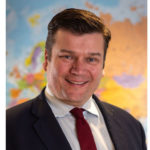
  • James Heappey – 2022 Comments on Aid to Tonga

    James Heappey – 2022 Comments on Aid to Tonga

    The comments made by James Heappey, the Armed Forces Minister, on 26 January 2022.

    Responding to humanitarian crises across the globe is a core part our of Armed Forces’ daily business. The crew and company of HMS Spey have demonstrated that this week by delivering this vital aid.

    The UK is a long-standing partner of the Pacific Islands and having the ship deployed in the Indo-Pacific meant that we could be there for Tonga in their hour of need, as the Island begins to rebuild their homes and communities.

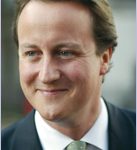
  • David Cameron – 2006 Speech on Fighting Global Poverty

    David Cameron – 2006 Speech on Fighting Global Poverty

    The speech made by David Cameron, the then Leader of the Opposition, in Oxford on 29 June 2006.

    For too long, politics in this country treated global poverty as a secondary issue.

    Conservatives used to regard it as a significant, but second-order subject.

    Labour have helped to raise its significance, and we should all acknowledge the personal commitment and leadership of Tony Blair and Gordon Brown in doing so.

    Along with the vital role played by campaigning organisations and the many thousands of individuals who rallied to the banner of Make Poverty History…

    …this has helped create something of which everyone in Britain can be incredibly proud.

    Last year, this country led the way in beginning, finally, to make poverty history.

    We should never forget the international leadership Britain has shown.

    Not just our politicians but our NGOs, large and small, and our anti-poverty campaigners.

    People have often been ahead of the politicians – as we saw with the incredible generosity of the response to the Tsunami.

    Earlier this week, the Prime Minister spoke about where we are, one year on from Gleneagles.

    And today, Bob Geldof and DATA will give us their assessment of how far the promises made have been honoured.

    Clearly we have seen some real progress.

    Britain has taken the lead.

    But where are the other G8 countries?

    The spirit of Gleneagles 2005 was not meant to be British pushing and cajoling other developed nations into line.

    It was supposed to be about a shared commitment to a better world.

    But world trade talks remain deadlocked, in large part because of the short-sighted protectionism by rich countries.

    If you take out money for Iraq and Nigerian debt cancellation, aid from Germany and France actually fell between 2004 and 2005.

    And despite some real progress, too many politicians in Africa continue to put their own interests before those of their people.

    Making Poverty History is a task for which we all must share responsibility.

    Britain is doing a lot; now other governments must meet the challenge.

    We should do justice to the progress made last year by strengthening those early faltering steps.

    By going further, and faster.

    And by resolving that whatever the ups and downs of our domestic politics, Britain will seek always to be in the lead in the great struggle to rid the world of poverty.

    Today I want to explain how.

    To make a Conservative contribution to the debate.

    But first I want to talk about why.

    A MORAL IMPERATIVE

    For my generation, global poverty is one of the central challenges of our time.

    I came into politics to help make our country a better place to live.

    But I don’t believe it is either morally acceptable or politically sensible to limit our ambitions to improving the well-being of our citizens.

    As I learn more and more about the issues that affect our country, our continent and our world, I recognise with increasing clarity the need to take a global view.

    It is why one of the principal aims set out in Built to Last, the Conservative Party’s new statement of aims and values, is to do all we can, alongside the many others who share our aims, to fight global poverty.

    The prominence that we’re giving to the challenge of global poverty is right for our times and right for this time in history.

    In the 19th century, we witnessed the great economic struggle between the rise of industrialisation and the decline of the agrarian society.

    In the twentieth century, we saw that great ideological battle between left and right.

    And the fundamental challenge for the twenty-first century will, I believe, be a moral one: how can we bring the rich world and the poor world closer together?

    I describe it as a moral challenge because that, for me, is first and foremost what it is.

    It is morally unacceptable for billions of people to live in dire and degrading poverty when we now know the secret of wealth creation.

    ENLIGHTENED SELF-INTEREST

    But it’s not just a question of values, rights and morality.

    It is also a question of hard-headed political and economic reality.

    It is, frankly, a question of enlightened self-interest.

    The world is smaller that ever before.

    With the rise in mass migration, the revolution in communications technology, and the transformation in our understanding of the planet’s environment…

    …we are truly one world.

    Every night, hundreds of Africans arrive on Europe’s southern shores.

    They don’t want to leave their homes.

    But when poverty forces mass migration on a scale never seen before, we must recognise that tackling poverty is not just a moral imperative.

    It is a security imperative; an immigration imperative; an imperative we cannot ignore if we want stronger, more cohesive communities in all our countries.

    CONSERVATIVE COMMITMENT

    So for all these reasons, I am passionately committed to producing a comprehensive, ambitious policy programme on international development.

    That is why I established the Globalisation and Global Poverty Policy Group.

    Chaired by Peter Lilley, advised by Bob Geldof, its members include a range of talented, internationally-respected experts like James Rubin and Will Day of the UN.

    I look forward to its report next summer.

    Many of you here today will know Andrew Mitchell, Shadow International Development Secretary, who has immersed himself in these issues over the past year.

    And I also welcome the establishment of the Conservative Human Rights Commission which will focus on regimes that violate the rights of their citizens.

    There is now an emerging cross-party consensus on the importance of issues like fair trade, aid effectiveness, debt relief, conflict resolution and disease prevention.

    This is great news.

    I’ve never believed that politics should be about creating artificial points of difference or fake dividing lines.

    The more that we can work together in politics, the better the outcomes for society – whether at home or abroad.

    But I do believe that my Party can make a distinctive contribution to the poverty debate.

    And I do believe we have a role in questioning and probing the Government on its approach – as we have done on the need for interim targets for AIDS treatment.

    So today I’d like to outline some of the key aspects of that contribution…

    To set out our commitment and our priorities.

    And to put these in the context of a clear vision, based on our instinctive values.

    VISION AND VALUES

    As Conservatives, our values are clear.

    We believe in trusting people – that the more you trust people, the stronger they and society become.

    And we believe in sharing responsibility – that we’re all in this together: government, business, civic society, families and individuals.

    These values teach us that free markets are necessary for the creation of wealth.

    But that’s not the same as the elimination of poverty.

    We used to say that a rising economic tide lifts all boats.

    Well that obviously isn’t true.

    In recent years, the greatest global economic expansion in the history of mankind has lifted billions out of poverty.

    We should celebrate that as a success for open markets and free trade.

    But billions are still left behind.

    To eliminate poverty, economic liberalism – free markets and free trade – are not enough.

    They are necessary, but not sufficient.

    So our modern Conservative vision must combine economic liberalism, to remove the barriers that hold prosperity back…

    …with economic empowerment, to remove the shackles that lock poverty in.

    Economic empowerment means enabling people and countries to move from poverty and dependency to prosperity and sustainability.

    It means fixing the broken rungs on the ladder from poverty to wealth.

    And it means focusing first on the triple tragedies that stand in the way of poor countries getting richer: disease, disaster and conflict.

    DISEASE

    Tackling killer diseases such as HIV/AIDS, malaria, and TB should be our first priority.

    The burden of diseases falls disproportionately upon the poor.

    They are more susceptible to infection.

    And they lack the funds to get treatment.

    As well as ruining individual lives, diseases lower productivity and undermine national development.

    Jeffrey Sachs has estimated that malaria slows economic growth in Africa by up to 1.3% each year.

    Anti-disease interventions can be amazingly cost-effective.

    For relatively small sums, our support can lead to an immediate and profound improvement in millions of lives.

    DISASTER

    It is also the poor who suffer the most, and soonest, from natural disasters.

    Countries like Bangladesh could be catastrophically affected by rising sea levels.

    Desertification can contribute to conflict, as we have seen in Darfur.

    A part of Conservatism is the instinct to conserve.

    Another part is an understanding of our duty to future generations.

    That’s why Conservatives have an instinctive understanding of environmental sustainability.

    We grasp the importance of handing our planet on in a better condition than we found it, and that’s why I have put the environment at the heart of our political strategy.

    And it’s why we see climate change and environmental sustainability as a critical component of international development policy.

    CONFLICT

    Deadly diseases and natural disasters are bad enough, but man’s inhumanity to man is in some ways even worse.

    In Darfur, as Andrew Mitchell and William Hague saw for themselves when they went there recently, there are two million people living in camps, victims of conflict and state-sponsored ethnic cleansing.

    The people of Darfur need a UN force with the mandate and capacity to protect them, and I want to see more effective, targeted sanctions on the Government of Sudan.

    In Northern Uganda we have seen appalling atrocities committed and abject levels of poverty in the displaced peoples’ camps which contain over a million and a half people.

    The British Government, along with the international community, should put pressure on the Ugandan Government to ensure that the International Criminal Court’s arrest warrants for the leaders of the murderous Lord’s Resistance Army are carried out.

    IATT

    Uncontrolled arms sales help to fuel brutal and destabilising conflicts like those in Darfur and Northern Uganda.

    So there is a vital need to ensure that the global arms trade is governed by firm, consistent and fair rules.

    That is why I support the principle of an International Arms Trade Treaty.

    It will take a lot of work to firm up and secure international agreement on the details of such a Treaty.

    But doing so must be a key objective ahead of the UN General Assembly meeting this summer.

    AID

    When we consider the tragedies of disease, disaster and conflict, we must surely see the short-termism of those who argue, still, that aid has no place in international development.

    That we should leave it all to free markets and free trade.

    I believe that effective aid is essential for economic empowerment, and that is why a Conservative government would spend more on aid.

    We will work towards achieving the target of spending 0.7% of national income on aid by 2013.

    And every year between now and then, we should look to see if it is desirable, and possible, to go further and faster.

    We should also be proud of the Department for International Development’s achievements today.

    I want to build on its success, and cement DfID’s reputation as the leading national aid agency.

    My vision is for a strengthened Department for International Development, delivering better results and saving more lives.

    That’s why an incoming Conservative government will keep DfID as an independent department.

    And we will maintain the Government’s approach on tied aid.

    I’m delighted that in 2000 we gave up the misguided policy of tying aid to the use of contractors from the country that is supplying it.

    And I’m dismayed that other governments, such as the Americans and Germans, persist in using aid as a tool for subsidising their domestic industries.

    But I believe we can be more innovative still in our approach.

    One idea we will investigate, based on our belief in trusting people – and our instinctive dislike of top-down solutions – is aid vouchers.

    Aid vouchers, put directly in the hands of poor communities, would be redeemable for development services of any kind with an aid agency or supplier of their choice.

    The vouchers could be converted into cash by the aid agencies.

    For the first time, poor people themselves would be the masters, and aid agencies would have a direct and clear incentive to deliver effective services.

    Such an innovation would help show us what the poor really want – and who is most effective in meeting their needs.

    There has been a growth in aid policy in direct budget support.

    This makes sense in some cases, but our role, in Opposition, is to question and probe how well it is working – and to learn from experience.

    But our goal, of course, is to work towards a situation where countries no longer need aid.

    That’s what we mean by economic empowerment.

    And to achieve it, we need not only to remove the shackles of disease, disaster and conflict that lock poverty in.

    We need to remove the barriers that hold prosperity back.

    TRADE

    Chief amongst these is trade.

    I want us to move beyond the sterile debate about free trade or fair trade.

    Let’s focus on what people in the poorest communities want and need: real trade, that’s both free and fair.

    It’s a simple bargain: we sell to them what they legitimately need and want, and we buy from them what they can produce, on terms that are fair.

    But we cannot hope to persuade poor countries of the benefits of progressively opening their economies if we, the developed countries, are not prepared to open our markets unilaterally to them.

    So the EU should further reform its Common Agricultural Policy, by abolishing all remaining production linked subsidies, scrapping import tariffs and removing all export subsidies.

    And, as I said to the Prime Minister in the House of Commons yesterday, we must recognise that the EU is not moving fast enough – we must be prepared to take the bold first step to unlock vital trade talk

    We should press for inventive measures to encourage trade between poor countries, where tariffs are highest.

    And we should press for the immediate abolition of so-called ‘killer tariffs’ – the shocking tariffs that some governments levy on imports of anti-malarial bednets and vital medicines.

    INSTITUTIONAL CHANGE

    But as well as tearing down the trade barriers that hold developing countries back, we must also help tear down the institutional barriers that stand in the way of progress and development.

    Here too, I believe that Conservatives have something important to add to the debate.

    We believe in trusting people, and in sharing responsibility.

    So we reject the old-fashioned, top-down approaches that impose identikit solutions which go against the grain of local cultures and traditions.

    And we understand that making poverty history is not something that rich countries can just ‘deliver’ for poor countries.

    We’re all in this together, and we all have our part to play.

    So of course it’s right that democratic governments in Africa and elsewhere should be given the policy space to develop in ways that make sense for them.

    But equally, we have a responsibility to share the lessons of our own development.

    Those lessons are clear and we should never be frightened to talk about them.

    FREEDOM

    First, freedom and prosperity go hand in hand.

    As Amartya Sen has shown, democratic countries with a free press are less prone to suffer from major famines.

    It is in closed societies, where leaders are insulated from scrutiny, feedback and criticism, that situations are likely to spiral out of control.

    Countries in the past like China under Mao and the Soviet Union under Stalin…

    …and countries in the present like North Korea, Zimbabwe, and Burma.

    THE RULE OF LAW

    The second lesson is that the rule of law and prosperity go hand in hand.

    Corruption is a scourge that eats away at growth and development.

    As ever, the poor are hardest hit.

    We should be inspired by the heroic example of John Githongo, who had the courage to blow the whistle on corruption in Kenya

    We have many levers at our disposal – not least our aid and our diplomatic influence – to help foster development in the poorer parts of the world.

    I want to encourage states and polities in the developing world which have a vested interest in the development of their countries, rather than in servicing their networks of clients and patrons for private gain.

    So we should champion and reward good governance.

    PROPERTY RIGHTS

    The third lesson, as economists from Adam Smith to Hernando de Soto have taught us, is that property rights and prosperity go hand in hand.

    The poor in developing countries are often denied rights to their land, undermining their ability to use it as collateral to support the investment that drives development.

    In November last year, I proposed establishing a Property Rights Fund to help formalise and entrench property rights in the developing world.

    GOLDEN THREAD

    There is a golden thread that links freedom, good government, the rule of law, property rights and civil society – and helps create the conditions for the economic empowerment of the poor.

    This must be central to our approach.

    It will help make poorer countries attractive to invest in.

    It will help remove the barriers that hold prosperity back.

    And it will help build good societies, as well as rich societies.

    CONCLUSION

    No one should underplay the scale of the challenges we face.

    More than 1.2 billion people – one in every five of the world’s population – still live in extreme poverty.

    Most countries in Africa are off-track to meet the Millennium Development Goals.

    We need to help developing nations alleviate immense human suffering and set the stage for self-sustaining growth.

    But I am convinced that with the right attitude and the right solutions we can win.

    Africa’s economy grew by almost 5% last year.

    The poor are not victims, permanently trapped in poverty.

    They are hard workers, creative entrepreneurs, potential customers and trading partners.

    As C K Prahalad put it, there’s a fortune at the bottom of the pyramid.

    With unprecedented speed, millions have escaped poverty in China and South Asia.

    With mobile phones and other modern technologies, developing countries can leapfrog decades of development.

    They don’t need to re-invent the wheel, computer, or mobile phone.

    They need economic empowerment, to remove the shackles that lock poverty in; and economic liberalism, to remove the barriers that hold prosperity back.

    The seeds of the wealth of nations can – and have – been sown around the world.

    With our help, they can spread yet further.

    This is the challenge for our new politics

    Organisations like Oxfam, with its dedicated staff and volunteers, embody the spirit we need.

    I want us to work together to help achieve our shared objectives.

    It’s a personal priority for me.

    I know it is for you.

    And together we can help make the world a better place.
  • Vicky Ford – 2021 Comments on UK Aid in Chad

    Vicky Ford – 2021 Comments on UK Aid in Chad

    The comments made by Vicky Ford, the UK Minister for Africa, on 29 November 2021.

    We have ensured money recovered from corrupt deals has gone into providing life-saving support to more than 150,000 vulnerable people in Chad. Working with our partners around the world, the UK will always stand against corruption.

  • Preet Gill – 2021 Comments on the Government’s Afghanistan Aid Announcement

    Preet Gill – 2021 Comments on the Government’s Afghanistan Aid Announcement

    The comments made by Preet Gill, the Shadow Secretary of State for International Development on 3 September 2021.

    While this latest U-turn to return to 2019 levels for Afghanistan is welcome, the savage cuts already imposed by this government on the Afghan people have caused untold damage.

    Afghanistan was already facing a humanitarian crisis with 18 million people needing humanitarian assistance earlier this year when Dominic Raab decided to unnecessarily slash life-saving aid to programmes without any due diligence or care.

    Labour has consistently called for the Government to reverse the aid cuts and warned of the dangers of retreating from the world stage.

  • Preet Gill – 2021 Comments on a Sustainable World

    Preet Gill – 2021 Comments on a Sustainable World

    The comments made by Preet Gill, the Shadow Secretary of State for International Development, on 19 July 2021.

    Even before the pandemic, the challenges facing our world were vast and complex with the climate crisis, environmental destruction, and poverty and inequality, making all of us less safe.

    The Government has had the opportunity of leading the world as hosts of the G7 and COP26 to get the necessary cooperation for a global plan. Instead they shut down a world leading development department, shunting development into the Foreign Office without a plan and have cut the aid budget without any impact assessments or clear objectives.

    The challenges ahead of us require international cooperation. Labour will work with governments and communities in low income and climate vulnerable countries, to tackle the global challenges facing us all, support countries so that all people flourish and thrive in a sustainable way, making the world a safer place.

  • Christian Matheson – 2021 Speech on Foreign Aid Cuts

    Christian Matheson – 2021 Speech on Foreign Aid Cuts

    The speech made by Christian Matheson, the Labour MP for the City of Chester, in the House of Commons on 13 July 2021.

    The Prime Minister told the House earlier that there was common ground in the House. I think he is right, but I suspect, having listened to contributions from the Conservative Benches, that he is not standing on that common ground. I pay tribute to the right hon. Member for Sutton Coldfield (Mr Mitchell) for the courage that he and other Conservative Members have shown in standing up for this issue consistently, and also standing up for their manifesto, along with the rest of us. The Government have a good story to tell on this issue if they wanted to—on Gavi, for example, and on their support for education for women and girls. I wonder why they do not want to tell this story to the country. I think it is because too many of them are ashamed of it and because, as the right hon. Gentleman said, they are playing to a gallery but playing to the wrong gallery. It is a dangerous game that they are playing.

    The proposals before the House today are myopic and mean-minded. They are mean-minded because we can see that this is a trick—a fiscal trap. We were promised a straight up-and-down vote but we were not given one; instead we were given this little twisting mechanism. It is mean-minded, too, because, as we have heard, it will cost lives to make these cuts, and because they are already a cut to what would have been a smaller cake anyway. The money had already gone down and to cut it further is simply mean. With any of these programmes we cannot simply turn the taps on, then off and then back on again. The damage that will be done to British overseas aid programmes will carry on long after we restore the 0.7%, if, under this proposed mechanism, we ever do restore it.

    This cut will set programmes back. It will set research and development back, including for my constituents. I have a constituent who works in water purification and another who works in localised energy matters. These cuts will have an effect overseas, but let us be clear: they will have effects in this country as well, in terms of innovation and our ability to take technologies across the world. They will have effects in areas such as the polio eradication programme. As my right hon. Friend the Member for Leeds Central (Hilary Benn) has said, cuts of 95% will set that programme back. The cut is myopic, for the reasons already set out by my right hon. and learned Friend the Leader of the Opposition and the hon. Member for Tonbridge and Malling (Tom Tugendhat): it will damage British soft power, with the British Council telling me that it will lose 15% to 20% of staff and will be unable to carry out programmes in the countries where we need to be influencing; and it will affect our strategic position, as the Leader of the Opposition has said.

    Overseas aid is a moral issue, but if we cannot look at it like that, let us be clear: our adversaries, Russia and China, and our enemies, al-Qaeda and Islamic State, will fill the gap if we do not, and this will simply make matters worse in the long run. This is a short-sighted, short-termist cut. It is mean-minded. I pay tribute to the right hon. Member for Sutton Coldfield for his leadership, and I will not be accepting this motion tonight.

  • Greg Clark – 2021 Speech on Foreign Aid Cuts

    Greg Clark – 2021 Speech on Foreign Aid Cuts

    The speech made by Greg Clark, the Conservative MP for Tunbridge Wells, in the House of Commons on 13 July 2021.

    I am glad to see the Chancellor in his place; I have a couple of specific questions for him on science policy.

    First, in the context of this debate, I am very proud of our leadership and our contribution to supporting people right across the world. I voted enthusiastically for the Act of Parliament that brought the 0.7% commitment into law. I pay tribute to my right hon. Friend the Member for Sutton Coldfield (Mr Mitchell) for his work on that Act, but, in so doing, he will know that it specifically anticipated circumstances in which, temporarily, the 0.7% target may not be met, including

    “any substantial change in gross national income”

    and/or

    “fiscal circumstances…in particular, the likely impact of…the target on taxation, public spending and public borrowing”.

    It is hard not to consider that the circumstances that we are experiencing fall plumb into line with what the framers of the legislation and those who supported it had in mind.

    Mr Mitchell

    I was involved in the drafting of the Act and I do not believe that that is what we intended with those clauses. Has my right hon. Friend noticed that the Governor of the Bank of England has said that the economy will have been restored to pre-covid levels by next month? Does he not think that that is a very significant indicator of why we should not be doing what the Government would like us to do today?

    Greg Clark

    I am grateful to my right hon. Friend. I quite agree that that is an encouraging assessment, not least for the prospects of our returning to the 0.7%.

    I studied very carefully the Hansard transcripts of the debate, and some of the criticism was that the criteria might be insufficiently precise, so the innovation of establishing in advance and giving to the Office for Budget Responsibility the trigger for the return is a sensible course. Indeed, this mirrors, more or less, the fiscal rules that were once called the fiscal mandate that were in place at the time that the Act was originally adopted. I want the target back, and I hope, as the Governor does, that that will be sooner rather than later, and that the Chancellor will be able to confirm that it is his firm intention, as I think is clear from what he said in the written statement.

    My questions on science are twofold. First, the science budget is, very importantly, increasing from about £9 billion a year in 2017 to £22 billion a year from 2024-25. That includes, as it always has done, official development assistance. Will the Chancellor specifically reiterate the commitment to achieving that £22 billion by 2024-25? Secondly, will he reassure me on a report I read that the 0.5% limit on ODA could somehow prevent us from engaging in international scientific research projects that we were perfectly willing to fund because they are excellent and are justified as part of the budget that is rising to £22 billion? We all know that science is inherently international. The best science is global and the best teams are often international teams, so it would be a great concern if the 0.5% target would in any way be a cap on international collaboration. Knowing my right hon. Friend the Chancellor’s commitment to science and technology, I cannot believe that that is his intention. His commitment to the £22 billion budget and his reassurance that the target will not be a cap will be very important in establishing that the science aspect can continue, and that this is, in effect, the removal of a ring-fence rather than a limitation on international scientific research.