Category: International Development

  • Liam Byrne – 2022 Speech on a Strategy for International Development

    Liam Byrne – 2022 Speech on a Strategy for International Development

    The speech made by Liam Byrne, the Labour MP for Birmingham Hodge Hill, in the House of Commons on 6 July 2022.

    Let me declare my interest, at the outset of this debate, as the chair of the international parliamentary network on the World Bank and the International Monetary Fund. I congratulate the Chair of the Select Committee, my hon. Friend the Member for Rotherham (Sarah Champion), on bringing this debate to the House. Her timing, as ever, is impeccable. All of us here in this Chamber are watching the disintegration of the Government in real time, so in a way this debate is important because it is taking place at a hyphen moment between an Administration that are biting the dust and the construction of the new Administration that will no doubt take shape over the days and weeks to come. Like everyone who has spoken in this debate, I very much hope that the new Administration will look hard at the arguments we have made today and seek to reverse the appalling policy, the appalling cut and the appalling breach of trust represented by the slash in our aid budget.

    I want to supply three thoughts for today’s debate. The first is that at the heart of it is the simple truth that when the world needed us to step up, we stepped back. We stepped away from our obligations, we stepped away from our duties and we stepped away from our promises. Those promises were enshrined when we signed up to SDG2 and made a commitment to end hunger. Not only has breaking our promise to help to supply the finance for that destroyed trust in our country around the world, but people will die this year as a result of that broken promise.

    Many people here today have said that that decision could not have come at a worse time. The right hon. Member for Sutton Coldfield (Mr Mitchell) was among those who made that point, and he is absolutely right. We now have a crisis of food, fragility and finance that means that 200 million people around the world are facing a food emergency. We know that 60% of workers are still not earning what they did before the covid crisis, but we now have millions of people living almost in famine conditions and 200 million people who will face famine later this year unless things change. Things will change over the course of this year, but they will change for the worse.

    Just a week or two ago, I was with the Foreign Affairs Committee in New York and we were privileged to see the NATO Secretary-General. He is fighting tooth and nail for the deal to try to get tens of millions of tonnes of grain out of Ukraine and Russia and, crucially, tens of millions of tonnes of fertiliser out of Russia. If we fail in that task, the spike in food prices that we have seen over the last year will get worse. Even more seriously, if we do not get the fertiliser out in the next few months, we will jeopardise not just the wheat harvest for next year but the rice harvest for next year. We will begin to see up to 1 billion people face a food crisis if we do not make progress on that deal. People were already in a bad position because of covid, and they are in a bad position because of inflation, but it has now deteriorated substantially because of the crisis in Ukraine.

    Governments around the world are out of headroom on taking the fiscal measures needed to alleviate this coming crisis. More and more developing countries now denominate their debt in dollars rather than domestic currency, which means they are super-exposed to rising interest rates in the United States. Average interest rates on lower-income debt are up by about 77 basis points this year, and we now know that something like 12 countries around the world are already on the brink of debt distress. We already see unrest in some countries in Africa, and we see the consequences of the debt crisis in Sri Lanka. Things will become far worse this year unless we get our act together.

    Of course, the problem is most acute in countries that are fragile and where there is violence. Frankly, countries and agencies such as Russia and the Wagner Group are already perpetrating barbaric human rights abuses in Mali, Libya, Syria and another 18 countries around the world. This crisis of food fragility and finance will not sort itself out, which is precisely why this is such an appalling time for the Government to make their aid cut.

    My second point is a particular interest of mine, which is that the Government’s negligence is all the worse because they are not using the new tools they have been given. Last year, under Kristalina Georgieva’s leadership of the International Monetary Fund, the global community took the collective decision to mint $650 billion-worth of special drawing rights. Overwhelmingly because of the quota system, those special drawing rights go to richer countries like us. In fact, the special drawing rights coming to G7 countries total about $196 billion, which is about a third of the special drawing rights that have been issued.

    Where are those special drawing rights? Where is the deployment of that resource to tackle this crisis of food fragility and finance? Right now, those SDRs are gathering dust in the vaults of central banks and treasuries around the world. They are just sitting there. We have failed to mobilise that resource in the way we promised when we signed off on the commitment to issue the special drawing rights in the first place.

    The UK is a big shareholder that helped to found the International Monetary Fund, so we have been given £19 billion of special drawing rights. We have made commitments to share back about 20%. Why is 20% the magic number? We have just been given £19 billion. This is a slightly technical issue, but our SDRs go into something called the exchange equalisation account, which was set up in 1979 and underpins currency stability in this country. It has been restocked with £74 billion over the last 10 years to a level that the Treasury deems to be capital adequate, about £154 billion or $185 billion in total.

    We have restocked the exchange equalisation account and then, from left field, comes another £19 billion that we did not forecast and that we do not need because we have already restocked the account. Why have we suddenly decided to share just 20% of it? There is no logic for that percentage.

    The Government have so much grip on this topic that, when I asked the Foreign Secretary at last week’s Foreign Affairs Committee how much had actually come in through the special drawing rights, she did not know. She literally did not know that Her Majesty’s Government had just been handed £19 billion, which is twice the aid budget. I then prosecuted the argument and asked, “What is your target for sharing? How much are we supposed to share back?” She answered, “I don’t know.” I asked the Prime Minister the same question this week, and he did not know either. They could perhaps be forgiven if the numbers were not so big and if the crisis were not so serious, but this is absolutely crazy. We have a global crisis and the Government are simply not in control. They do not have a grip on sharing back and rechannelling some of the biggest assets and resources available to us.

    The point about multilateralism, which my right hon. Friend the Member for Leeds Central (Hilary Benn) and my hon. Friend the Member for Rotherham (Sarah Champion) mentioned, is fundamental. Last week’s G7 communiqué made a very clear statement that G7 leaders want to step up the mobilisation of $100 billion, but the truth is that, of the G7 countries, we have made a commitment, Japan has made a commitment and the French have made a commitment. Congress has blocked the President of the United States sharing $21 billion, and we do not yet have information from the IMF on the others—I checked yesterday. So we are miles away from mobilising the $100 billion that was promised at the G7, and people are going to starve this year unless we get a grip. So my call on the Government today is to give us a good explanation for why we should not be sharing three quarters of the special drawing rights we have been given; why we are not leading a global effort to get to that $100 billion target; and why we are not insisting on more flexibility, such as giving the SDRs to multilateral development banks, such as the African Development Bank, which could be making such an impact on the ground. We need to be saying to the IMF that countries do not need to participate in a conditionality programme with the IMF in order to receive some of this money. I discussed that with the Secretary-General of the UN and we both agree on it. We are not going to lead the mobilisation of this effort if the politicians in charge at the helm are, frankly, in such a shambolic state. So my message to the Minister and the new Administration is: please get a grip of this enormous new resource that we have been given.

    My final point is, in part, inspired by what my neighbour the right hon. Member for Sutton Coldfield (Mr Mitchell) said about China. For some years now, we have been having a debate in this country and among our allies about the influence of China and this vexed, significant issue of debt diplomacy. If we look at the countries that did not support the UN resolution on Russia, we see that, on average, they owe five times more debt to China than the countries that supported the resolution. As for whether that is a coincidence, you be the judge. The point is that the debt in many of these countries is about to fall over and the G20 common framework process, which we have held up as the great saviour of debt sustainability, has been so successful that precisely zero countries have engaged in it. So it ain’t working and we need a different approach. We could be restructuring developing country debt using IMF and World Bank resources. The World Bank has just committed $170 billion to an emergency programme that we could be using to restructure the debt of vulnerable countries around the world—right now we are simply not doing that. If we do not want to live in a world where China is the lender of last resort to countries around the world, let us use the Bretton Woods institutions that we set up in 1944 to avoid that dilemma.

    In the midst of a big war, in 1941, the Atlantic charter was signed, and its story is extraordinary. Our Prime Minister at the time, Mr Churchill, was on the other side of the Atlantic with President Roosevelt and the draft of the charter was sent to Downing Street. Clement Attlee was in the Chair and he convened the Cabinet at two o’clock in the morning in order to review the draft and make one vital change. He added article 5, which said that one of our war aims would be that the victors would

    “desire to bring about the fullest collaboration between all nations in the economic field with the object of securing, for all, improved labor standards, economic advancement, and social security”.

    Three years later, at Bretton Woods, President Roosevelt, welcomed delegates from 44 countries from around the world with these words:

    “the economic health of every country is a proper matter of concern to all its neighbors, near and distant.”

    As we begin to think about what the new world looks like, those are wise words to guide us.

  • Pauline Latham – 2022 Speech on a Strategy for International Development

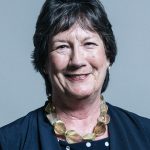
    Pauline Latham – 2022 Speech on a Strategy for International Development

    The speech made by Pauline Latham, the Conservative MP for Mid Derbyshire, in the House of Commons on 6 July 2022.

    It is a pleasure to follow the right hon. Member for Leeds Central (Hilary Benn), who is always an entertaining and informative speaker. When I first came to this place in 2010, I was elected to the International Development Committee, which I have served on ever since. I believe that the Committee has done very good work over those years and I am sure that it will continue to do that good work, as it still exists, about which there was some doubt when DFID was taken over by the Foreign Office. It is really important that the International Development Committee exists, because Members who sit on the Foreign Affairs Committee have little interest in the money that is spent on the poorest of the poor. The scrutiny of the International Development Committee is needed to ensure that the money is being spent as well as it possibly can be. I am horrified by what my right hon. Friend the Member for Sutton Coldfield (Mr Mitchell) said about the money that is still being spent in China. There seems to be no sense in that, so I hope that the Minister will address the point in her closing remarks.

    I am a bit disappointed, because this is an important debate but there are few Members in the Chamber. That is quite surprising, because there are now quite a lot of Back Benchers; one would think that a few more might come and join us. However, I am very pleased to speak in the debate and glad that we have a whole debate to focus specifically on the FCDO’s international aid work. It was of significant concern to me and others, including the Chair of our Committee, the hon. Member for Rotherham (Sarah Champion), when the two Departments “merged”—that was what it was called, but actually I think it was a takeover. We were told that there would not be sufficient focus on the international development angle, so the scrutiny of this House is very welcome.

    It would be impossible to discuss the departmental estimates for international development without mentioning our 0.7% spending target, a subject that my right hon. Friend the Member for Sutton Coldfield covered extensively. The target was long campaigned for by many hon. Members, including me, and I am deeply disappointed that it has been reduced to 0.5% by the Government. I understand why, but we are talking about the poorest of the poor, who need our help. Obviously, the economy has been hit by the pandemic, but as the right hon. Member for Leeds Central said, the same pandemic has caused terrible strife all around the world, not just here in the United Kingdom. As a result of the cut, some of the people who most need our assistance will no longer receive it. The sustainable development goals, which we have signed up to, say that we should be helping the poorest of the poor—and there are so many people in the world who are incredibly poor.

    My right hon. Friend the Member for Sutton Coldfield mentioned that the Chancellor had said that we would go back to 0.7% in two years. My right hon. Friend himself believes that we should make it 0.6% next year and 0.7% the year after. There is logic in that, but I think that he was referring to the previous Chancellor, the right hon. Member for Richmond (Yorks) (Rishi Sunak). We do not know what the current Chancellor wants, so our Committee needs to press him by inviting the Foreign Secretary before us and asking her what will happen. It is important that we, and the people we are trying to help, know what we will be doing.

    Matt Rodda (Reading East) (Lab)

    The hon. Lady is making an excellent speech about very important matters. As she says, there are a significant number of very poor people in the world and we have a duty to support them. Will she address the issue of the Government mis-badging some forms of spending, for example by counting defence spending or other departmental spending towards the aid target? That seems to me to be a mistake and to be unfair on the very poorest people in the world.

    Mrs Latham

    That is a very important point that our Select Committee absolutely needs to scrutinise, because it would be illegal to badge that spending wrongly. We have a duty to ensure that our taxpayers know that our spending is transparent and in the right place. It is really important that we do not mis-badge it, because otherwise we will lose the trust of a lot of countries around the world.

    As the right hon. Member for Leeds Central said, we know that there will be more and more migration because of climate change. People are not going to stay in a country that is drought-ridden. They cannot feed their cattle. They cannot be the nomads they were before, going off to find fresh pastures and then coming back in a circle, as the nomadic tribes in Kenya used to do. People cannot do that if they have no food for their cattle. For that important reason we need to tackle climate change, but I fear that the reduction to 0.5% means we will have less opportunity to do so, and that means there will be more migration. Indeed, I believe there will be more and more migration, not just for drought and climate change reasons but for reasons of conflict. So many people are fleeing their countries, either because of civil war or because of attempts to annihilate certain populations. They have to escape, because that is the general public’s normal response to terrifying situations.

    However, I do not intend to focus on the overall aid budget in my short speech. Instead, I want to comment briefly on the important issue of neglected tropical diseases, including malaria. They are called neglected tropical diseases because people forget about them. A couple of weeks ago, I, too, was in Rwanda for the Kigali summit, which aimed to tackle the problems of malaria and neglected tropical diseases, and which was a very successful event. Governments, the private sector and philanthropists all pledged to help to accelerate the global fight to beat these deadly diseases, with commitments made at the summit totalling more than $4 billion.

    However, there is much more to be done. In 2020 alone, an estimated 627,000 people died of malaria—a staggering number. More than 1.7 billion people required treatment and care for neglected tropical diseases over the course of that year. Often, the impact of covid-19 was to disrupt community care and preventive programmes, meaning that the number of people receiving treatment for NTDs fell by 33% in 2020. There is a simple and cheap cure for many of these diseases, and we must not lose sight of that.

    While I was in Rwanda, I attended a programme run by the UK-funded National Institute for Health and Care Research about podoconiosis, a neglected tropical disease that causes dreadful pain and suffering, generally among farmers and those who spend a lot of time in contact with irritant soils without wearing shoes. The microbe gets into their bodies and causes them terrible problems. NTDs such as podoconiosis are widespread in huge parts of the world, and funds for research and prevention are needed not only from a humanitarian and ethical perspective, but from an economic one. For those people’s communities and families, these diseases can lead to long-term poverty, hunger and starvation because they can prevent people from working. For example, podoconiosis patients lose 45% of their productive working days to the disease. Research on treatment and prevention can keep people economically active, and able to maintain their lifestyles and their jobs.

    Investment in tackling NTDs—that is just one small example—and malaria has huge positive knock-on effects throughout the local economy. The UK funding is providing real benefit for podoconiosis patients through research into treatment options, genetic research, education and more, enabling sufferers to live healthier, happier and more productive lives. I urge the Minister to consider people who suffer from the disease, because it is horrendous.

    The UK has a strong legacy of investment in the elimination and control of NTDs—it is supporting the Rwandan Government’s ambition to eliminate podoconiosis by 2024—and it is critical that we maintain that legacy. This is an example of the UK helping the world’s poorest to live happy, healthy, economically active lives. That helps the economy and the education of women and girls, giving them the good future that many do not have at the moment. That programme in Rwanda has been funded, but others have been hit by the international development funding cuts. For example, the Ascend programme countries still need support to reach their elimination goals.

    I encourage the Minister to consider the forthcoming year’s spending and to invest as much as we can in NTDs, and in particular in preventing malaria. That is doable; we can eliminate malaria, and it is so important that we contribute significantly to that. The shift in spending under the international development strategy away from multilateral programmes and towards bilateral funding threatens many of the programmes that aim to combat NTDs and malaria. I would therefore be delighted if the Minister could today confirm an ambitious commitment to the forthcoming seventh replenishment of the Global Fund to Fight AIDS, Tuberculosis and Malaria and neglected tropical diseases.

  • Hilary Benn – 2022 Speech on a Strategy for International Development

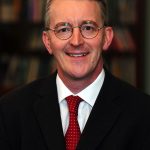
    Hilary Benn – 2022 Speech on a Strategy for International Development

    The speech made by Hilary Benn, the Labour MP for Leeds Central, in the House of Commons on 6 July 2022.

    I had the great privilege of serving for nearly four years as the International Development Secretary, and I worked with many people— including the right hon. Member for Sutton Coldfield (Mr Mitchell), who it is a great pleasure to follow because he was a terrific Development Secretary—who were passionate about the betterment of human kind. I was able to work with some absolutely wonderful, determined and passionate civil servants at DFID. I must be frank that it was a job that changed the way in which I think about the world, see it and seek to understand it.

    We meet here today to look at the wreckage that has resulted from the Government’s reversal of many things that were achieved by the creation of DFID, under Governments of both parties, and I for one am greatly saddened. I think the Prime Minister’s decision to abolish DFID, to break his word and to cut the aid budget was a terrible mistake. It has had material consequences for girls’ education, safe motherhood and access to contraception, as well as for children’s education. The precious opportunity that going to school gives us opens a window on the world and gives us the knowledge, confidence and aspiration to make our way in our lives.

    Many of DFID’s programmes, which were funded by the generosity of the British taxpayer, have had to cope with the consequence of sudden cuts. To take one example, UK aid to the Democratic Republic of the Congo has been cut by about 60%. Picking up the point just made by the right hon. Gentleman, that is a country where 27 million people are experiencing, to use the jargon, acute food insecurity. The funding cut from girls’ education—how on earth did that happen?—has now been restored this year, following the Foreign Secretary’s appearance before the International Development Committee, but it will only be the same in cash terms as it was in 2019, so it will in fact be a real-terms reduction.

    The process of making those cuts has had a huge impact on our relationship with partner countries, multilateral institutions, non-governmental organisations and other aid organisations. It is a terrible self-inflicted wound that is not just about the money, because Britain had a reputation in the world of development. We had respect, we were listened to and we had great influence in debates about peace and security. I do not wish to appear to be dwelling on glories of the past and I recognise that times change—I will come in a moment to the challenges facing the world—but when we undermine our role as a world leader in development, it is really important that we are honest about what has been lost.

    I have read the Government’s new strategy for international development, which was published in May. It talks about providing a “better offer”—whatever that is—and “honest and reliable investment” as if the cuts to our development budget had happened in a completely parallel universe. Whatever else might be said about what has occurred, what Ministers have done has shown that we are not a reliable partner. So, when Samantha Power, the administrator of the United States Agency for International Development wants to pick up the phone to talk to Britain, who does she ring in the FCDO? What does that mean for our relationship with other countries? The right hon. Gentleman and I, and others in the Chamber who served in DFID, know that building consistent relationships with other people and creating trust is essential if we are to solve problems, and trust can easily be lost, as the Prime Minister is in the process of finding out.

    I am afraid it is the casualness with which that happened that angers me more than anything else. I was sitting in the Chamber when the Prime Minister stood at the Dispatch Box and uttered the words that DFID was like

    “some giant cashpoint in the sky.”—[Official Report, 16 June 2020; Vol. 677, c. 670.]

    The right hon. Gentleman winces, and rightly so. I listened to that and thought, “This man clearly has no understanding whatsoever of what DFID is and what it has achieved.” While all that has been happening, not a single other G7 country has cut its aid budget—not one—even though they face the same pressures from covid and from the international economic situation and rising prices. Indeed, France and Germany are moving further towards 0.7%. Notwithstanding the rather clever tests that the former Chancellor set on when we will return to 0.7%, I am not sure whether we will see that any time soon.

    Having said all of that—and feeling slightly better for having done so—I will address the rest of my remarks to the challenges that confront the world, because that is what we will have to address with the resources now available to the FCDO. The events of the last decade have reminded us of a very important truth. We may think that we have overcome the crises of the past, we may hope that they may never be repeated and we may believe that, because things are as they are today, they will ever be thus, but, sadly, that is not true. The global crash of 2008-09 was the worst since the crash and subsequent depression of the 1930s. The collapse of the Soviet Union was not the end of history; it was a semicolon, as the terrible war in Ukraine is currently demonstrating.

    We have achieved incredible things with the gifts that the earth gives us. Look around at every single thing that human beings have built, created or made, from computers to skyscrapers and from vaccines to placing a rover on the surface of the planet Mars: every single one of them has come from things that are either on the earth or lie beneath it. That shows the extraordinary capacity of human beings to interact with what we have and to build and create. What we have done—the development that we have wrought in our own country and in others—would astonish our forebears and ancestors, but, if we thought that the process could be never-ending and that we could continue without consequence, the crisis in the natural world and the climate crisis have taught us that that is not the case, either.

    I make that argument not to depress colleagues. On the contrary, I believe that we can overcome those challenges and build something better precisely because human beings have shown their ability to achieve extraordinary things, but we need the process of politics, international relationships, persuasion, encouragement, leadership, ideas, innovation and a lot of determination to be able to do that. When I look at my constituency in Leeds, I see big differences in life expectancy, health, wealth, opportunity and income between those who have and those who do not. The absolute poverty is, of course, very different to that which we are discussing in our debate today, but the challenge to overcome it is exactly the same. We face it as a country and we face it as a world.

    I look also at the consequences of the threats to peace and security and how war causes millions to flee. We know that most people will seek to find somewhere safe. Although a lot of them will dream of being able to return home, sometimes that will not be possible. In our human response to those who seek shelter, wherever that happens in the world, we always need to ask ourselves one really important question. If it was us, how would we like to be treated, to be welcomed? When I read that some people who are seeking asylum in this country may have ankle tags fitted, or that some people who are seeking asylum in this country may be put on a plane to a country 5,000 miles away where they know no one and do not speak the language, I think that that, too, is a mistake.

    Layla Moran

    Does the right hon. Gentleman agree that the answer is not to detain them indefinitely in places like Campsfield House, which closed under this Government in 2018 but which they intend to reopen? That would be a retrograde step and shows that their plans are simply not working. It is the wrong approach and it should not reopen.

    Hilary Benn

    The right approach is to consider an asylum application and to make a swift decision. As the right hon. Member for Sutton Coldfield pointed out, the large majority of those seeking to come to the country are found to have a perfectly valid claim for asylum.

    If we do not meet the challenges of war, insecurity, economic development, climate change and damage to the natural world, then people will not stay in the place where they were born and raised. They will do what human beings have done since the dawn of time, which is to move. When the history of this century is written, I think there will be a really big chapter on global migration. Whether it is fleeing in search of food or a better life, getting away from war and persecution, or moving because it has stopped raining where they were living—I have met people who have done precisely that—people will move. All these issues are interconnected—all of them. They cannot be dealt with separately. So, when we argue that Britain should have a strong voice in the world on all these matters, we are making the argument not just because it is morally right but because it is in our self-interest.

    There are those, particularly populists, who seek to pretend otherwise. These are the people who pursue narrow nationalism and seek to gain power by sowing division. All I say to them is that if they think we can shut the doors, close the curtains, get into bed, pull up the bed covers and hope that the rest of the world and the rest of the future will go away, they are profoundly mistaken. There are no fences strong enough and no walls high enough that will resist an onward tide of human beings who are on the move. I say that, because the very condition of humankind at the beginning of the 21st century is defined by our interdependence. We depend one upon another. We share a very small and very fragile planet, and we have to co-operate and work together to succeed.

    I am not arguing for a separate approach to development, because from my experience I regard security, foreign policy, defence, trade and responding to humanitarian catastrophes as part of a continuum—and of course, development is not something that we bring like some benevolent former colonial power to the partner countries with which we work. Development is something that people, communities, societies and countries do for themselves, and our job is to assist them in that process. If a Government want to get all their children into school but do not have the cash to make it possible, then of course they welcome help from countries like ours to employ the teachers, build the schools, buy the textbooks and put in the desks. We know from our experience—this is another truth—that, in 1,000 years of history, we have made just about every mistake that is possible. I sometimes felt slightly embarrassed about talking to Ministers from developing countries, because I was conscious of that history, and I would say, “I don’t want it to take you as long as it took us to progress from where we were to where we are today”.

    We have learned that we can make progress through a process of political, social and economic development, which has transformed the lives of our citizens. We know what the essential building blocks are: peace; good health; the right to go to school; the rule of law; intolerance of corruption; trade; economic opportunity and justice; and sustainability when it comes to the natural world and the climate. All those can help to enable people to improve their lives.

    In a world where there is so much change and uncertainty, where what we rely on today may not be relied on tomorrow, it is really important that Britain is seen as a reliable, trusted, consistent and honest partner. I am afraid that the events of the past two years, which are reflected in the estimates before the House, have done that aim great harm. That is why I look forward to the day when that harm is undone.

  • Andrew Mitchell – 2022 Speech on a Strategy for International Development

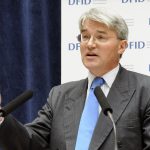
    Andrew Mitchell – 2022 Speech on a Strategy for International Development

    The speech made by Andrew Mitchell, the Conservative MP for Sutton Coldfield, in the House of Commons on 6 July 2022.

    It is wonderful not to be on a four-minute time limit for a debate as important as this. I draw the House’s attention to my interests as set out in the Register of Members’ Financial Interests.

    The Foreign Secretary has inherited a complete mess on development, and I have great sympathy for her in trying to bring some order to things. We are, of course, still spending a very substantial sum on ODA as part of our development budget. However, that sum has reduced from 0.7% to 0.5%, and I want to say a word or two about that.

    If someone was looking for the least good time to reduce this expenditure, they would definitely have chosen the date and the day upon which the Prime Minister made that decision. It was in the foothills of Britain chairing the G7 and at the time of an international global pandemic. Development leadership was really needed, and Britain was in a position to provide it. Britain was acknowledged around the world as an international development superpower and was really in a position to move the dial on these things. But what happened? The Prime Minister reduced ODA from 0.7% to 0.5%, at the very time when British leadership was really needed. Of course, the Prime Minister had also dismantled the Department for International Development, and I will come on to that in a moment, but the point I am seeking to make is that, at a time when Britain could have given real leadership—in one of the few areas where it is acknowledged, post empire, that we are a superpower and have real leadership and skills to impart—the money was reduced.

    Following the pandemic, we see the scourge of famine affecting parts of our world such as the horn of Africa and all the way down the rest of the eastern side of Africa. The right hon. Member for Leeds Central (Hilary Benn), who is a former Secretary of State for International Development, will remember the acute leadership that DFID gave, leading other countries to stop famines and starvation in the horn of Africa. That skill has never been more needed than it is today, as we stand before a real threat to people’s lives and livelihoods, but Britain is not in a position to give that leadership.

    I will make two further points on the money. I do not think I will carry the Chair of the Select Committee with me here, although I pay tribute to her leadership of her Committee and the very good work that the Committee is doing, but my advice to the Foreign Secretary, given the complete mess on Britain’s development policy, was to find the money from the multilateral programmes and not from the bilateral programmes. If she is forced to make that decision, a decision she should never have had to make, it is clearly right to take the money from the multilateral programmes, for the same reason that Bonnie and Clyde robbed banks: that is where the money is.

    The big multilateral programmes such as the World Bank are where the money is, and the Foreign Secretary is therefore in my view right to take it from there, but that is not a decision she should have had to make.

    Liam Byrne rose—

    Mr Mitchell

    The effects of taking money from the World Bank are very severe, as I suspect my friend the right hon. Member for Birmingham, Hodge Hill (Liam Byrne) is about to make clear.

    Liam Byrne

    I am grateful to the right hon. Gentleman, my neighbour, but I disagree with him on this point. With the International Monetary Fund, for example, where we have collectively issued $650 billion of special drawing rights, it would have been sensible for the UK to have stepped up and provided some leadership, sharing a much bigger fraction of the £19 billion we have been given. That would have encouraged the rest of the G7 to follow suit, and the G7 is about one third of the SDR issuance.

    Mr Mitchell

    On that point I completely agree with the right hon. Gentleman. Although I do not want to put words into the Minister’s mouth, I suspect that the Foreign Office wanted to do precisely as the right hon. Gentleman has described, but the Treasury made it extremely difficult. My point is that the savage cuts made to the bilateral programmes, where food was literally removed from the plates of starving children in Yemen, show why, in the end, if the Foreign Secretary is forced to make such decisions, she is right to take the money out of the multilateral programme.

    While I am on the subject, Britain has had a leadership role within the Global Fund, along with the Americans. After 2010, we made a number of substantive changes to make the Global Fund better. It is extremely good spending, for reasons that the Minister will be well aware of, and I urge the Government to ensure that we are as generous as possible on the replenishment of the fund, not least because the Americans have made it clear that they will be even more generous than they are already being if other countries put their money where their mouth is. There is a real incentive of getting far more bang for the British taxpayer’s buck in helping with the replenishment of the Global Fund.

    My other point about the money, and again I hope the Chair of the Select Committee will forgive me for making it, is that I do not believe it is sensible to go in one year from 0.5% to 0.7%. The Chancellor has already committed to bringing back the 0.7% in two years’ time. The year before that, he should go to 0.6%. I say that for two reasons.

    There is quite a lot of money involved, and although there is no doubt we could spend it well through the multilateral system, I do not think the British taxpayer would believe that such a big uplift in one year could guarantee that the money was really well spent, and I do not want to test their patience on this. I want to make sure that we can look the British taxpayer in the eye and say that, for every pound of their hard-earned money that we spend on international development, we are delivering 100p of value on the ground. I urge Treasury Ministers to consider bringing back the 0.6% next year and the 0.7% the year after, and not doing it in one lump, which I believe is the current plan.

    Jim Shannon (Strangford) (DUP)

    I commend the right hon. Gentleman on the book he wrote, which I remember reading about two months ago. In that book, he referred to the role he previously held in the then Department for International Development, and from what he said it was clear to me that the benefits of the money the United Kingdom spends are not just marked in financial terms, but in terms of the effect on people across the countries it helps. Does he agree that for those reasons, the good that it does is much more important than the money itself?

    Mr Mitchell

    My hon. Friend—he is my hon. Friend—is absolutely right in what he says, and it is very good of him to make mention of my book, “Beyond a Fringe: Tales from a Reformed Establishment Lackey”, which is still available in bookshops. I am very grateful indeed to him for drawing the House’s attention to that. I should say that the Minister, who has a starring role in my book, understands these issues, and I absolve her of all blame for any of the criticism I am making because she inherited much of this situation and was not responsible for it.

    The real problem, which is even worse than breaking our promise on the money, is the vaporisation of DFID. I think the abolition of DFID is now acknowledged in almost every corner as an absolute disaster because it has cut at a stroke the expertise assembled by Britain. The international community used to come to Britain to come to DFID, and to our universities with their programmes that were so closely entwined with DFID, to see how to drive forward the efforts in their part of the world to degrade and try to eliminate grinding international poverty. Most importantly, the top 100 people who were responsible for driving forward the Government’s agenda in DFID have gone. Of course they have, because they have been headhunted by the international system, whether in New York, Geneva or the charitable sector. They have gone because they see a Government who do not recognise or appreciate that extraordinary skill that existed in DFID. The Government are now faced with a large budget but a diminishing level of expertise.

    It is even worse than that, because the Prime Minister decided that we should not revert to what Mrs Thatcher so rightly had—the Overseas Development Administration as a Department within the Foreign Office that Tony Blair subsequently took into DFID. The Prime Minister does not want an ODA in the Foreign Office because he knows that if it was there, another Administration after him could immediately re-set up, or try to re-set up, DFID, and he wants development done on a geographical basis. That is the destruction of a real hub and driver of UK leadership, influence, expertise and knowledge. All that has now gone.

    All international development spending is about Britain’s national interest. It is spent largely in areas where we have a historical connection. When I was DFID Secretary, the Foreign Office always had a view, which we always accepted, about where was the best place in which British influence through development could and should be exerted. The aim of international development policy, which Britain drove forward so successfully under both political parties for so very many years, was to build safer and more prosperous communities overseas. It was to make sure that we helped countries, through partnership, to deal with conflicts—to stop conflicts starting, or, once a conflict had started, to eliminate it and reconcile people who had been torn apart by it, and then to build prosperity and help to promote economic activity to ensure that people had the tools to lift themselves out of poverty. It was hugely in our national interest to pursue those policies because it made us safer in Britain and more prosperous as well. The world is a small place and we are all increasingly dependent on each other. That is an eternal truth.

    Furthermore, building stronger and safer societies over there helps to stop the high level of migration, which is now being fuelled by starvation and famine, climate change emergencies, and the ease of travel. The whole burden of British development policy was to try to help to resolve that by building those safer and more prosperous societies overseas.

    Layla Moran (Oxford West and Abingdon) (LD)

    The right hon. Gentleman is making an incredibly powerful speech. Does he agree that there is a direct link between the poor people coming across on boats that this Government are now intent on rounding up and putting in detention centres, until legal challenge is stopped, to send them off to Rwanda, and the aid that we are no longer giving to the country they have come from, thus forcing them in that direction? If we want to stop people making those dangerous journeys, is not the best investment we can make to help them to do what they want to do, which is to stay where they were born and where they can be prosperous?

    Mr Mitchell

    The hon. Lady has said more eloquently than me precisely why this is such an important aspect of British policy and also why it is strongly approved of by the Daily Mail and the right, which is because it helps achieve the aim of mitigating and addressing flows of migration and refugees. That brings me to my next point, of which again the Chair of the Select Committee may not approve. I am not opposed to sending people who have been processed here, and who are not eligible for asylum here, to Rwanda, if it is prepared to take them, which it is. I know Rwanda very well. I was there recently for the Commonwealth Heads of Government meeting, participating in an investment conference. It is a wonderful place, and I have no objection in principle to us sending people there, once they have been processed here, if Rwandans are prepared to take them.

    However, there are two problems with the current policy. One is that it will not work, and the second is that it is extraordinarily expensive. In this business, there is no alternative but to put in the work, to do the hard yards and to recognise that we have to process far more quickly and effectively people who are coming to our shores, many of whom are fleeing persecution in great jeopardy. We need to hear their cases and process them.

    Secondly, we need to open up lawful, legal and safe routes. At the moment, those legal and safe routes do not exist. They exist for Ukrainians, and they did exist for Afghanis—and some time ago for Syrians—but for others they do not. Some 87% of the people who come to our shores come from just four countries, and we should remember that 75% of them end up being found eligible to stay in the country. We need these proper legal routes, we need to process in the right way and we need to restore the relationship with France.

    The relationship with France, as anyone who has engaged with the French Government in any way in recent weeks and months will know, is appalling and needs to be restored. There are huge reservoirs of knowledge in this country about France and of good will with senior French politicians. Politicians on both sides of the channel know each other well, and the relationship has never been worse than it is today. It urgently needs to be restored if we are to address the issues that exist in the channel. They are issues of life and death and of order, and we cannot address them properly if we are at loggerheads with a country 22 miles away across the channel.

    The final thing that we have to do if we are to resolve these issues is renegotiate the 1951 Geneva convention on refugees, which was set up largely by British effort. It was British officials who helped corral all the different parties to accept this international convention, but it was made at a time when travel was not as easy as today. The situation has completely changed. If we are to resolve this problem, which will get worse because of climate change migration, we need to understand that the rich world has to play its part if it expects the poor world to comply. That is a real job of work.

    On 25 July, just under a year ago, I had this precise conversation with the Prime Minister, who described the analysis as excellent, but nothing has been done in the past year to give some extra strength and a boost to the international system to do something about it. That is my objection to the Rwanda plan. It is not that I am seduced by the relevant lobby; my objection is one of severe practicality and cost, and the plan just will not work.

    Having broken our promise on the budget and having effectively abolished the Department, we are now left with a big budget being spent in ways that are determined by the Foreign Office. I remind the House that it was a law of Whitehall that while the Foreign Office did prose, the Department for International Development did money. Whenever Tony Blair and David Cameron went to an international conference where money was being discussed, they always took a senior DFID official, because DFID, as even the Treasury would admit, was extremely good at money and running money.

    Frankly, the idea of these brilliant diplomats who prosecute British diplomacy so well being responsible for and running multimillion-pound development programmes should give the taxpayer the heebie-jeebies. What will happen is this: the Daily Mail will discover examples of Foreign Office misspending of the ODA budget, and it will rightly pick up on them. It will say, “If Britain cannot honour its pledge to the taxpayer of value for money, and if it spends money badly in this way, why do we have this budget at all? Why don’t we spend all the money on our schools and hospitals here?” The argument will be made for abolishing the budget altogether, and if it is made on the back of misspending, it will be heard by our constituents.

    The Independent Commission for Aid Impact is the watchdog that reports on international development—rightly, to the Select Committee and not to Ministers who can sweep inconvenient truths under the carpet. It draws its power from the legislature and is an important new part of the Government’s architecture. Officials hate it because, of course, it can look at what they are doing and expose them. It is the taxpayer’s friend, it reports to Parliament, and Ministers have the benefit of its work, attention and rigour. It is a vital tool of making policy, so I urge the Minister, who understands such things, to become its strong supporter.

    Sarah Champion

    I pay tribute to the right hon. Gentleman for the formation of the ICAI, which absolutely does its job of scrutinising where the money goes. Does he share my concern that, at the moment, its future budget has not been signed off and it looks like its funding will be reduced, which means that its ability to scrutinise will be reduced as well?

    Mr Mitchell

    Of course, all the officials in the Foreign Office will want to reduce ICAI expenditure—first because they will have perfectly respectable arguments for where else the money could be spent, and secondly because they know that the way to emasculate it is to cut its expenditure. That will mean that it cannot investigate without fear and favour on behalf of the taxpayer who, as I say, is the main beneficiary. I agree with the hon. Lady and very much hope that her voice will be heard.

    I will end on the subject of China, which seems to bring the whole argument together. In 2009, the Conservative Opposition decided that all development money for China would end. We did that because China has roared out of poverty; if we look at what China and India have done for poverty alleviation, we see that the results are sensationally good. China has done so much to tackle poverty and its GDP is bigger than ours, so there was clearly no case for expecting the British taxpayer to pay any money at all for development in China. I was sent by David Cameron to inform Madam Fu, the Chinese ambassador, of the decision that if we were elected and had the privilege of forming a Government, there would be no more ODA spend to China. She gave me a tremendous ticking off, but the Chinese accepted it.

    When we went into government in 2010, the first thing I did when I had the privilege and honour of going into my new DFID office was to say, “No more ODA money for China. That was our commitment at the election to our constituents, and unless it’s legally due now, there’s to be no more ODA spend in China.” Basically, since that day, DFID—when it was DFID—has not spent money in China. There were long-tail projects that it could not end, but apart from that, it did not spend any more.

    Significant money continues to be spent in China, however, by the Foreign Office, and it is not really development money. Providing that money is, the Foreign Office thinks, the best way to suck up to the Chinese Government, but it is not spent sensibly. Between 2009 and 2011, in the incoming years of the Conservative Government, the expenditure was reduced from £49 million to £15 million. Between 2014 and 2019, however, that ODA expenditure—taxpayers’ money—on the development budget in China rose from £23 million to £68 million. That was the highest figure, but I understand that it was £64 million in 2020. What on earth are the Government doing spending ODA money in China? We promised the electorate that we would not do it. DFID did not do it. It is not a development priority, there is no case for it and it should be stopped.

    The second thing I ask of the Minister—the first was her trenchant support for the ICAI—is to commit to the House that there will be full transparency on ODA money that is spent in China. How much is it, and on what is it being spent? There is a suggestion that some of this money has been spent on prison reform in China. If that is the case, then for reasons that everyone will understand, it is an absolute disgrace. I hope the Minister will reassure us that, if that was happening, it is not happening any more and it will not happen again.

    There has been further disingenuity, I would say, about spending in China, with the former Foreign Secretary announcing he was reducing it by 95%. That prompts the question of what it was doing being spent in the first place, but I suspect that figure is 95% of what the Foreign Office was spending and does not include what was being spent by the Department for Business, Energy and Industrial Strategy. I end on this point: I am pretty sure that the money spent by BEIS has been tied aid. As the House will know, it is absolutely not allowed to spend money on tied aid—we are subject to numerous conventions we have signed not to do so—and I think it may even be against the law.

    My point is that, because we no longer have the rigour and expertise of a separate Government Department that ensures this money is well spent, delivers results and gives value for money both to our partners on the ground and to the British taxpayer—we have lost that—we now have the very unrigorous and uncertain system of controls that previously led to the Pergau dam issue. We do not have the controls we had in the past, and the reputation of Foreign Office Ministers, the Foreign Office and the Government are very much at risk as a result.

  • Sarah Champion – 2022 Speech on a Strategy for International Development

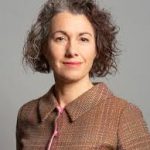
    Sarah Champion – 2022 Speech on a Strategy for International Development

    The speech made by Sarah Champion, the Chair of the International Development Committee, in the House of Commons on 6 July 2022.

    Thank you, Madam Deputy Speaker. It is always a pleasure to serve under your guidance. I also wish to thank the Backbench Business Committee for granting this debate on the spending of the Foreign, Commonwealth and Development Office on the strategy for international development.

    A year ago, I stood in this Chamber to open an estimates day debate on the FCDO’s main estimate. At that point, the Department had recently changed the format of its spending plans, which made scrutiny incredibly difficult. I wish to take this opportunity to thank FCDO officials who have worked with House of Commons staff over the past year to restore and improve the quality of information available in the estimate, allowing my Committee and Members to fulfil their crucial role in holding the Government to account for how they spend their aid.

    Much has changed since I made that speech last year, but one in 10 people around the world are still living in extreme poverty. That simply cannot be right. Today, I wish to reflect on the enormous potential that lies within the poorest communities in the world and on how the UK Government’s aid spending should seek to develop that potential, transforming lives and creating a fairer, more inclusive world for all.

    In the past few weeks, we have finally seen the Government release their new international development strategy. Combined with this main estimate, the approach signals a new era in how the UK spends its development funding, but I am simply not convinced that this approach will help the very poorest people in the world. It is clear that the Government’s priorities are increasingly about trade, security and creating British jobs, but the legally mandated objective of UK aid spending is to reduce poverty. That must remain front and centre.

    The Government’s plans described a more hard-nosed, investment-driven approach to UK official development assistance. Capital investment expenditure—spending that is used, for example, on infrastructure projects—has increased by 49% compared with the last financial year, but relative day-to-day spending, from which traditional aid programmes would typically be funded, has increased by only 8.5%.

    Investment partnerships are becoming a more dominant feature of UK aid. British International Investment will receive a further £200 million in capital from the FCDO, and the amount of funding channelled through BII is set to increase dramatically over the next two years. Economic and investment-led development certainly has a place in any coherent development strategy, but it tends to benefit those who are engaged, or are able to engage, with the formal labour market. I am not convinced that this approach will help the poorest and most marginalised groups around the world. I am just not convinced that it will help them to achieve their potential or create long-lasting development in their communities.

    Putting all of the UK’s development eggs in the economic basket will mean that swathes of people are left behind: disabled people, minorities, and women and girls. How does the FCDO’s approach help them to reach their potential and enrich their communities? I have no doubt that UK investments can fund and support some truly transformative projects. However, we need to get the basics right first, otherwise how will those projects succeed?

    Investing in new roads does not help a girl who cannot access clean water. A new telecoms network is not much use to a boy who cannot get vital vaccines. We need basic support in place first, before those investments can succeed. Get the foundations right, and then development will flourish. Under DFID, it was clear how UK aid was working towards the attainment of the UN sustainable development goals—the map to lifting people out of poverty and keeping them out of it—but this strategy barely refers to the SDGs.

    It is hard to know whether we are on the right path to development without the map that the SDGs provide. With the integration of development and wider foreign policy objectives, helping the poor increasingly seems to be seen as a by-product of British foreign policy, rather than an end in itself. In fact, this Government strategy has no qualms about UK aid being “overtly geopolitical”. The strategy seeks to actively draw lower income countries away from the influence of authoritarian regimes, and to promote freedom and democracy around the world.

    However, what about the communities living in countries that are not a pressing priority for achieving a foreign policy aim, or whose Governments do not share UK objectives? Are we leaving those communities behind? What happens to their potential? In my Committee’s work, we have heard that different types of development problems require different approaches. Sometimes spending through bilateral programmes is effective, and sometimes putting funds through multilaterals—such as Gavi, the Vaccine Alliance, or the World Food Programme—is more effective. We need to use the right tools for the job.

    The UK is stepping back from its commitment to multilateral co-operation and placing more emphasis on bilateral spending. The Foreign Secretary told my Committee that, in 2022-23, £3.7 billion of UK aid funding will be spent through multilaterals. By 2024-25, it will be £2.4 billion—a 35% reduction in just two years. The UK’s contribution to major multilateral institutions means that we generate goodwill and we also have a huge influence over the way global institutions spend tens of billions of dollars each year.

    Our multilateral investments are also a lever in investments from elsewhere, meaning that they have a multiplier effect, but the UK will be reducing its contribution to the World Bank by an astonishing 54%. If the UK is looking to increase its influence on the global stage, it seems counter-intuitive to step away from that leadership role.

    Liam Byrne (Birmingham, Hodge Hill) (Lab)

    I am grateful to the Chair of the Select Committee, who is making a brilliant speech. Does she agree that it is in Britain’s interests to use multilateral institutions, rather than to simply donate bilaterally, because that multiplies the impact that we can have?

    Sarah Champion

    My right hon. Friend is absolutely correct. At a time of such international uncertainty, a policy of giving away influence and friendships that have taken decades, if not centuries, to build up seems a very strange way to further the interests of this country, let alone the poorest in the world.

    Gareth Thomas (Harrow West) (Lab/Co-op)

    My hon. Friend is making a very good speech, and I strongly agree with her point about multilateralism. May I take her back to a debate she initiated in Westminster Hall on the plight of the Palestinians and the role of the United Nations Relief and Works Agency—a crucial part of the multilateral system that does so much to support Palestinians in the worst conditions in Gaza, the west bank and elsewhere in the middle east? I am sure my hon. Friend agrees that it would be good to hear from the Minister how the UNRWA pledging conference went—the Minister was good enough to reference the conference in her response to the debate last week—as well as what Britain’s contribution was and why no Minister from the UK attended.

    Sarah Champion

    I second everything my hon. Friend has said. We have a number of significant pledges that are coming up or being processed—I am thinking, for example, of the Global Fund to Fight AIDS, Tuberculosis and Malaria. It would be so short-sighted to step away from investments that we have been making for so long, when we are at a real crisis point on many issues, whether that is solving the problem of malaria or HIV or just maintaining what we have already built up. So I completely support what my hon. Friend has said.

    The Government are blunting a key tool in the development toolbox by not continuing their support of multilaterals. Let us remember that they have chosen to cap the aid budget at 0.5% of gross national income. We face an unprecedented set of crises around the world—the war in Ukraine, hunger in the horn of Africa and the devastating impacts of climate change—so we must spend every penny of the budget in the most effective way possible. Sadly, I am not convinced that the direction we are taking with this spending allows us to do that.

    There is enormous potential in the poorest communities around the world, and UK aid can empower people to help themselves, creating long-term, sustainable economies, but we need to help lift people out of poverty first and make those transformations permanent.

  • Priti Patel – 2022 Comments on Her Meeting with Rwandan Minister Dr Vincent Biruta

    Priti Patel – 2022 Comments on Her Meeting with Rwandan Minister Dr Vincent Biruta

    The comments made by Priti Patel, the Home Secretary, on 18 May 2022.

    I am proud of the partnership agreed between our two countries, which aims to break the people smugglers’ business model and prevent further loss of life in the English Channel, while ensuring protection for the genuinely vulnerable.

    We are pushing ahead with delivering this world-leading plan which epitomises the kind of international approach that is required to tackle an international challenge like the migration crisis.

    I look forward to meeting UNHCR representatives with Minister Biruta this week, as we continue the vital conversation on illegal migration and the importance of global cooperation.

  • Liz Truss – 2022 Statement on the Government’s International Development Strategy

    Liz Truss – 2022 Statement on the Government’s International Development Strategy

    The statement made by Liz Truss, the Foreign Secretary, in the House of Commons on 16 May 2022.

    Today we have laid out our vision for the future of UK international development. Development will be at the heart of the UK’s foreign policy, which uses all the levers available—including development, diplomacy, investment, trade, defence and intelligence—to deliver on our foreign policy objectives.

    The strategy will help address increasing global challenges, delivering investment, supporting women and girls, getting humanitarian assistance to those who need it most, and continuing our work on climate change, nature and global health.

    The strategy, which builds on a proud record of global leadership on development, will challenge dependency on malign actors, offering choice and bringing more countries into the orbit of free-market economies.

    We will use British international investment and other tools to provide honest and reliable finance to help low and middle-income countries take control of their futures, giving them an alternative so they are not burdened with unsustainable debt with strings attached. This approach will help deliver the clean green initiative, supporting countries to grow their economies sustainably.

    The strategy will rebalance the aid budget towards bilateral programmes. This will give the Government greater control over how money is spent, allowing a focus on priorities and improving lives around the world.

    The international development strategy sets out four priorities where the UK can meet the needs of partner countries around the world:

    Delivering honest, reliable investment through British investment partnerships, building on the UK’s financial expertise and the strengths of the City of London, and delivering the Prime Minister’s vision for the clean green initiative—supporting countries to grow their economies sustainably.

    Providing women and girls with the freedom they need to succeed. We intend to restore the bilateral budget to help unlock their potential, educate girls, support their empowerment and protect them against violence.

    Stepping-up our life-saving humanitarian work to prevent the worst forms of human suffering around the world. We will prioritise humanitarian funding levels at around £3 billion over the next three years, to remain a leader in crisis response.

    Taking forward our work on climate change, nature and global health. We are putting the commitments of our presidency of G7 and COP26, and our covid-19 response, at the core of our international development offer.

    Our new approach will:

    Spend more on country and bilateral programmes rather than through multilateral organisations, empowering the UK to deliver more aid directly to where it is needed. By 2025, the FCDO intends to spend around three quarters of its aid budget allocated at the 2021 spending review bilaterally.

    Use world-class British expertise to support partner countries by providing advice, exchanging lessons and evidence of what works, and building partnerships across Government, research, business and civil society.

    Cut back red tape and excessive bureaucracy around delivering aid and give ambassadors and high commissioners greater authority to get programmes delivering on the ground quickly.

    Sustain our commitment to Africa and ensure our development programmes in the Indo Pacific remain a critical part of our ambition to increase our focus on the region.

    This strategy sets the direction for all of the UK’s development work. The FCDO will oversee cross-Government efforts to deliver the strategy and draw upon the expertise of the private sector, civil society and academia to advise and challenge us on implementation.

  • Liz Truss – 2022 Comments on Government’s New International Development Strategy

    Liz Truss – 2022 Comments on Government’s New International Development Strategy

    The comments made by Liz Truss, the Foreign Secretary, on 16 May 2022.

    In an increasingly geopolitical world, we must use development as a key part of our foreign policy. Malign actors treat economics and development as a means of control, using patronage, investment and debt as a form of economic coercion and political power. We won’t mirror their malign tactics, but we will match them in our resolve to provide an alternative.

    The new strategy, launched today, will ensure that our international development work brings benefit across the globe and here at home. Our strategy will deepen economic, security and development ties globally, while delivering jobs and growth in both the UK and partner countries.

  • Gordon Brown – 2005 Speech at DfID/UNDP Seminar

    Gordon Brown – 2005 Speech at DfID/UNDP Seminar

    The speech made by Gordon Brown, the then Chancellor of the Exchequer, at Lancaster House in London on 26 January 2005.

    Let me first of all thank you for giving me the chance to speak to this gathering of men and women concerned about international development in advance of the first G7 Finance Ministers meeting of 2005. And as we prepare at the same time for the report of the Commission for Africa which will inform our discussions at G7 and G8 let me also thank UNDP and Mark Malloch Brown in particular for their leadership on development – and I welcome the recent challenging Sachs Report setting out practical proposals to achieve the Millennium Development Goals.

    Tomorrow we recall the sixtieth anniversary of the terrible events of the Holocaust.

    Let us remember how out of the chaos and tragedies of the 1940s was born the United Nations to embody our aspirations and hopes for a better world.

    And let me also thank all churches, faith groups, non-governmental organisations, all those concerned with development represented here, for your visionary, often pioneering, work. In his book ‘The Power of Myth’ Joseph Campbell described a hero as someone who have given their life to something bigger than themselves. So I want to honour you and members of your organisations as our modern heroes: fighting for great causes, standing for the highest ideals, often working in difficult conditions and bearing huge burdens and bringing the greatest of hope to those in the greatest of needs. And I congratulate you for coming together in the unique global coalition – Making Poverty History.

    I believe that this year – already a testing time for the international community – is a year of great challenge but also a year of great opportunity and – potentially – a year of destiny: for I believe that in this year we, the international community, can agree a plan for a new deal between developed and developing countries as bold and as generous as the Marshall Plan of the 1940s.

    And my purpose in speaking to you this morning is to set out detailed proposals in advance of the G7 Finance Ministers, the first of four G7 Finance Ministers meetings this year, the first to prepare for the G8 summit to be chaired by Tony Blair at Gleneagles this summer, the first when funding for work on HIV/AIDS, malaria and building trade capacity will join debt relief and funding for development on the agenda of a G7 Finance Ministers summit.

    2005 is important not simply because British chairmanship of the G7 and G8 will lead us forward to the vitally important September UN Millennium Summit where we must discuss the progress, or lack of progress, in meeting the Millennium Development Goals.

    2005 is also the twentieth anniversary of Live Aid, for millions of people the first time they were confronted by the reality of famine and death in Africa.

    And I believe that already this year the response to the tsunami – the modern world’s greatest natural disaster – has demonstrated to us all the willingness of the British people and other peoples to come to the aid of fellow human beings who suffer.

    Indeed, far from there being compassion fatigue, perhaps for the first time millions more people are understanding just how closely and irrevocably bound together are the fortunes of the richest persons in the richest country to the fate of the poorest persons in the poorest country of the world. Events which bind the world together are drawing them to the conclusion that even strangers who may never meet and may never know each other at first hand are neighbours brought together by shared needs, mutual interests, common purposes and our linked destinies, As Martin Luther King put it, increasingly we can see ourselves as each strands in an inescapable network of mutuality, together woven into a single garment of destiny.

    But it is not just enlightened self interest that is encouraging people to be concerned about the needs of the needy and the suffering of the sick, but a moral sense that we all share that leads us to conclude that when some are poor all are impoverished, when some are deprived our whole society is diminished, when some are hurt the whole society shares that suffering. That we are part of one moral universe and wherever and whenever there is poverty, deprivation and need it is our duty to act.

    And I am convinced that millions of people in Britain and in every continent who have given more generously than ever before in the aftermath of the tsunami now yearn for that unprecedented demonstration of generosity to be given enduring purpose – as Make Poverty History argues – with a new deal for all developing countries that will address the underlying causes of their poverty, their illiteracy and their disease.

    So in pursuit of this Tony Blair who set up and chairs the Commission for Africa will give a major speech at Davos on these very issues and our International Development Secretary Hilary Benn – who has played such a big part working with NGOs, organising emergency aid and visiting South East Asia in the response to the tsunami – has this morning announced a major new initiative on education funding. Indeed because the first millennium development target – gender equality for boys and girls in education – due to be met in 2005 – is not likely to be met, the United Kingdom will provide by 2008 over £1.4 billion for education with a particular focus on the education of girls. And our aim is that the 105 million children, 60 million girls, who do not go to school today will be able to go to school.

    No statistics however depressing can prepare you for the hopelessness and human loss that lies behind the numbers but I saw too amidst terrible suffering hope, optimism and a determination especially among mothers to see things change.

    From the suffering in Africa I witnessed and the potential in Africa I could glimpse it is our duty to act and to act urgently.

    In Tanzania I saw 8, 9, 10, 11 year old children begging to continue in school – but denied the chance because their parents could not pay the fees.

    In Mozambique young mothers desperate for their children to go to school waving their pay cheques of £5 a week – and raising their hands as one to complain angrily that they cannot even begin to afford the fees.

    In Kenya children chanting free education – but secondary education forever beyond their grasp.

    Yet surely it is our belief that every child is precious

    Every child is unique

    Every child is very special

    Every child deserves our support

    No child should be left out

    Every child matters

    Every child counts

    You cannot blame a child for her poverty

    You cannot hold a child responsible for her deprivation.

    You cannot condemn a child for no fault of her own.

    You cannot consider a child, however sick, as of no consequence… and dismiss her as unproductive or uneconomic.

    But that is what we allow to happen.

    But our great obligation as adults is to the child, especially the most vulnerable.

    And in turn children have a right to expect adults to take care of them.

    It is because every child counts that the potential of every child should be the foundation of our policies internationally and nationally.

    And just like the draft report of the Commission for Africa – and we look forward to the Commission’s final report – our agenda for the G7 is founded on the realisation that despite the promise of every world leader, every government, every international authority that by 2015 we would achieve primary education for all, a two thirds fall in infant mortality and a halving of global poverty, at best on present progress in sub Saharan Africa:

    primary education for all will be delivered not as the Millennium Development Goals solemnly promised in 2015 but 2130 – that is 115 years late;

    the halving of poverty not as the richest countries promised by 2-0-1-5 but by 2-1-5-0 – that is 135 years late;

    and the elimination of avoidable infant deaths not as we the richest nations promised by 2015 but by 2165 – that is 150 years late.

    Africans know that it is often necessary to be patient but the whole world should now know that 150 years is too long to ask peoples to wait for justice.

    And I say to this audience: justice promised will forever be justice denied until we remove from this generation the burden of debts incurred by past generations.

    Justice promised will forever be justice denied unless we remove trade barriers that undermined economic empowerment.

    Justice promised will forever be justice denied unless there is a plan for Africa and all poorest countries as bold as the Marshall Plan of the 1940s, releasing the resources we need to match reform with finance to tackle illiteracy, disease and poverty.

    So the first essential element of a 2005 development plan for a new deal is that we take the final historic step in delivering full debt relief for the debt burdened countries with a new agreement on multilateral debt relief that will enable billions to be reallocated to education and health in the poorest countries.

    I have seen what has been achieved because of debt relief so far.

    Because of debt relief in Tanzania 31,000 new classrooms have been built, 18,000 new teachers recruited and the goal of primary education for all will be achieved by the end of 2005.

    Because of debt relief in Mozambique half a million children are now being vaccinated against tetanus, whooping cough and diphtheria.

    But when many developing countries are still choosing between servicing their debts and making the investments in health, education and infrastructure that would allow them to achieve the Millennium Development Goals, we know we must do more.

    Up to 80 per cent of the historic debt of some of the poorest countries is now owed to international institutions and I have set out detailed proposals to use IMF gold to write off debt owed to the IMF; to ask World Bank shareholders to take over the debts owed by up to 70 of the poorest countries to them; and having signed long term agreements already with Tanzania, Mozambique and then with other countries, we – Britain – have announced that from now until 2015 we will take responsibility for our share – 10 per cent – of the World Bank debts —- making this offer not just to the 37 heavily indebted poor countries but to all low income countries, as long as they can ensure debt relief is used for poverty reduction.

    We make this offer unilaterally but we are now asking other countries to join us contributing in this way or to a World Bank trust fund.

    And I also ask the European Union which deserves credit for more than 1.5 billion euros of debt relief so far to match that generosity with deeper multilateral debt relief.

    Alongside more debt relief, 2005 is the opportunity that may not easily return if missed to agree a progressive approach to trade.

    We all know the damage that rich countries protectionism has done to the poorest and our proposals mean Europe and the richest countries must agree to open our markets, remove trade-distorting subsidies and in particular, do more to urgently tackle the scandal and waste of the Common Agricultural Policy. We must also amend the Rules of Origin requirements – requirements which instead of promoting fair trade have become a barrier to fair trade – and agree new simple Rules of Origin coordinated across continents. And I call on the EU in its work on Economic Partnership Agreements to take a non-mercantilist approach and put development first so that poor countries are able to sequence their trade reform within their poverty reduction strategies and participate on equal terms in the international economy.

    But – as I have heard from every African President, Prime Minister, Finance Minister and Trade Minister I have met – although trade justice matters so too does making sure developing countries have the additional resources they need to take advantage of trading and investment opportunities – and to prevent their most vulnerable people from falling further into poverty as they become integrated into the global economy.

    It is not enough to say ‘you’re on your own, simply compete’.

    We have to say ‘we will help you build the capacity you need to trade’.

    Not just opening the door but helping you gain the strength to cross the threshold.

    Infrastructure is key.

    Even today for 12 African countries less than 10 per cent of their roads are paved.

    Telecommunication costs are such that calls from the poorest countries to the USA are five times the costs of calls from a developed country.

    While water and sanitation underpin health and development, even today 40 billion working hours in Africa each year are used up to collect water.

    And while tariff costs are often highlighted, it is actually transport costs that often constitute a bigger burden of the cost of exporting. With freight and insurance costs representing 15 per cent of the total value of African exports it is difficult for them to be competitive.

    So we must also provide developing countries with the additional resources they need to build physical infrastructure – road, rail, electricity, telecommunications – institutional capacity – from legal and financial systems to basic property rights – and, of course, investment in human capital to enable growth, investment, trade and therefore poverty reduction.

    We support the proposals put forward by the Africa Commission on infrastructure:

    a fund to support infrastructure priorities;

    loan finance for small and medium sized businesses and for micro-credit;

    a science and technology and tertiary education plan;

    and a plan for rural development, irrigation, research, encouragement of local markets, land reform and environmental improvement.

    And at its very core this economic development plan demands that all of us, rich and poor countries alike, be fully transparent in our dealings, unapologetically address corruption, be truly accountable, show where the money goes. And the way to achieve this is for all of us to put transparency and the best governance into practice by all of us, rich countries and poor together, opening our books – with, in particular, a new honesty amongst the richest countries about the levels of developed country protectionism and of tied aid. So I repeat: we will open our books, all countries must also open their books.

    But to progress what voices all over Africa demand on debt and trade cannot happen unless there we take a third step — a substantial increase in resources for development, to tackle illiteracy, disease and deprivation.

    Making better use of existing aid – reordering priorities, untying aid and pooling funds internationally to release additional funds for the poorest countries – is essential to achieve both value for money and the improved outcomes we seek. But we must recognise that while ten years ago aid to Africa was $33 per person, today it has not risen but fallen to just $27 so we are a long way short of the predictable, regular financing necessary to make the difference that is needed.

    While the Marshall Plan transferred 1 per cent of richest country’s national income to the poorest, our proposal is for each of the richest countries to reach 0.7 per cent of national income in long-term and predictable aid for investment. I congratulate Par Nuder and the Swedish Government for their leadership – having already reached 0.7 – and I urge all countries to join us in becoming countries which have either already reached 0.7 or have set a timetable towards it.

    We are of course prepared to consider all proposals for raising international finance including international taxes and are happy to do so in detail. But I believe that even as we do so we should also agree to create now, this year, on the road to 0.7 per cent, an International Finance Facility (IFF) that each year from 2005 to 2015 generates $50 billion a year more of resources — the quickest, most effective way of guaranteeing long-term, stable, predictable funding.

    The IFF is founded upon long-term, binding donor commitments from the richest countries like ourselves.

    It builds upon the additional $16 billion already pledged at Monterrey.

    And on the basis of these commitments and more it leverages in additional money from the international capital markets to raise the amount of development aid for the years to 2015.

    I welcome President Chirac’s proposals today to raise additional international finance and his initiative on international taxation to back and complement the IFF. And I thank him for his support for immediate implementation of the IFF.

    With one bold stroke: doubling development aid to halve poverty.

    $50 billion more in aid a year each year for the poorest countries.

    Our fourth objective made possible by the International Finance Facility is to provide the $6 billion more a year needed to fund primary education free of charge – ensuring the 105 million children today and every day denied schooling can learn with classrooms, teachers and books. And with the IFF we can ensure all developing countries have the increased, predictable, up front funding they need to abolish user fees and enable more effective teacher recruitment and training, greater provision of teaching and learning materials, improvements to school buildings and sanitation facilities, and special help to get girls into education.

    Our fifth objective for which there is a detailed implementation plan drawn up by and coordinated by the Department of International Development is that the IFF provide the proper funds that would allow us to build health care systems, match the medical breakthroughs now being achieved in developing a preventive vaccine for malaria by the farsightedness of an advance purchase scheme that could prevent the loss of more than 1 million lives a year because of this dread disease, and tackle HIV/AIDS with the first comprehensive plan from prevention to cure and care.

    AIDS is not a curse that we must deny said Nelson Mandela, it is a disease that can be defeated and the way forward on HIV/AIDS cannot involve one initiative in isolation but requires a comprehensive strategy:

    a global advance purchasing scheme to ensure that vaccines go into commercial production and are available at affordable prices;
    prevention, treatment, and care for all those who need it including increased and more predictable funding for the Global Fund to Fight AIDS, TB and Malaria;

    the development of essential healthcare systems with well-trained staff and equipment, and the abolition of health user fees for basic health services;

    a global anti-poverty strategy – in particular funding the development of education and sanitation systems which can reduce the chance of infection and help sick people stay healthy longer.

    And because only £400 million a year is spent on research for a preventive HIV/AIDS vaccine and because the challenge is to internationalise HIV/AIDS research, coordinating it worldwide, sharing information globally, more widely and more rapidly, with resources directed to the top scientific priorities, the G7 will – for the first time – discuss a joint UK-Italian paper on financing a worldwide infrastructure for sharing and coordinating research in AIDS and then for encouraging the development of viable drugs, vaccines and other technologies such as microbiocides.

    And let me give you a glimpse into what is possible by applying the principles of the International Finance Facility to the work of the Global Alliance for Vaccines and Immunisation (GAVI).

    Over the last five years GAVI have immunised 50 million children round the world – the most successful global immunisation programme in history.

    So Hilary Benn and I welcome the announcement made yesterday by both the Gates Foundation and the Norwegian Government for an additional $1 billion for GAVI to spend on immunisation over the next 10 years.

    GAVI have, together with the UK, France and the Gates Foundation, developed a proposal to apply the principles of the IFF to the immunisation sector — with donors making long term commitments that can be leveraged up via the international capital markets in order to frontload the funding available to tackle disease.

    On behalf of the United Kingdom the International Development Minister Hilary Benn will announce today that we propose to make a substantial contribution for 15 years to this new financing facility for immunisation of $1.8 billion.

    We are urging other donors to also contribute. And if, by these means, GAVI could increase the funding for its immunisation programme by an additional $4 billion over the next ten years, it would be possible to save the lives of an additional 5 million people between now and 2015 and a further 5 million lives after 2015.

    If this is what we can achieve by applying the principles of the IFF with one fund and one initiative think what we can achieve not just in health but in education and economic development.

    So the aim of the International Finance Facility is to bridge the gap between promises and reality.

    Between hopes raised and hopes dashed.

    Between an opportunity seized and an opportunity squandered.

    It is about action to right wrongs this year, now, urgently. No longer evading, no longer procrastinating, no more excuses, not an idea that will take years to implement but one which can move forward immediately.

    I welcome the support given to the IFF by almost fifty countries. And in the forthcoming G7/8 discussions we will ask all countries to join those who have already given their backing to support and sign up to the IFF — and we will be setting out a framework within which we can implement it.

    It is because I believe the need for action is urgent that we must act now.

    I saw in Africa – more clearly than anything else:

    a healthcare system in crisis;

    and education in crisis too;

    and the terrible human cost of these failures.

    We take it for granted that education and health are universal and free. But the people of Africa are doubly disadvantaged for instead of a free education and free health service African countries increasingly charge for secondary schooling and charge even for the most basic of medical drugs and fees for visits to doctors.

    And just as I have seen in the countries I visited displays of real anger at charges in education so too I have seen real anger at charges for health care.

    Just as millions of school age children who have hopes and aspirations for themselves and their country are deprived of their potential, so too millions of people who are sick or injured or simply frail are deprived of the life saving health care they urgently need.

    Yet when Kenya made education free over 1 million more children turned up for school. When Uganda made education free numbers in school rose from 2.6 million to 6.5 million in three years. When Malawi introduced free primary education there was an immediate jump in enrolments of 50 per cent – an increase of more than 1 million children going to school. And when South Africa and Uganda abolished health users fees the poor started to appear in our hospitals and surgeries for treatment.

    What I want for my child, I want for all children and there is a strong case for children and families not just in some developing countries but in all developing countries enjoying basic health care services free at the point of need based on need not ability to pay. And there is a strong case for recognising that to develop the potential of not just some of our children but all our children, education should be universal and free and so send a message that the best way you can defeat poverty is through free education and free health care available to all.

    Indeed I believe that the response to the tsunami showed what the debate this year on a new deal for developing countries will show: that, as Rabbi Jonathan Sacks has written, we cannot feast while other starve, we cannot be well while other languish in sickness or disease, we are not truly free when others are in servitude. More than that, as he writes, societies achieve true and enduring greatness not because of the way they help the strong but because of the way they come to the aid of the weak, not by how they acclaim those who have power but by their concern for the powerless – and not by how they reward the wealthy but by the care they show for the poor, and the compassion they show to the vulnerable.

    And this is what happened in 2000 when first hundreds, then thousands, then millions of people first in one country then in one continent, then in all countries, and in all continents came together to demand an end to the injustice of unpayable debt and in doing so changed the world. And we can do this again. For I believe support for a year of change is growing wider and deeper with already in ‘Making Poverty History’ more than a hundred aid, development, and trade organisations and anti poverty organisations coming together in demonstrations, campaigns, petitions – in challenging Government to make poverty the issue of the year.

    And so when people ask whether we can make a difference this year, when they say that our proposals are too difficult, we should reply:

    doubters thought the original plans for the World Bank were the work of dreamers;

    doubters thought that the Marshall Plan unattainable;

    doubters thought apartheid would last for ever and Nelson Mandela would never be released;

    and just as in 1997 doubters thought debt relief an impossible hope, doubters even in the last year thought no more countries would sign up

    to a timetable for 0.7 per cent in overseas development aid and yet in that year alone five countries have done so.

    And so next week in this very building I will start my discussions with my G7 colleagues about debt relief, 0.7, the International Finance Facility and funding for trade capacity, education and health.

    A few months ago I quoted a century old phrase saying ‘the arc of the moral universe is long but it does bend towards justice’.

    This was not an appeal to some iron law of history but to remind people in the words of a US President that ‘the history of free peoples is never written by chance but by choice’ – ‘that it is by our own actions that people of compassion and goodwill can and do change the world for good’.

    And I believe that:

    with our determination not diminished but intensified;

    with the scale of the challenge revealed;

    with the clamour of public opinion calling for action now – resonating here in Britain and reverberating across all countries; and

    with a determination among world leaders to be bold;

    the arc of the moral universe while indeed long will bend towards justice in the months and years to come.

    To remind you of Seamus Heaney’s poetry about Nelson Mandela’s release:

    ‘A further shore is reachable from here…
    Once in a lifetime justice can rise up
    And hope and history rhyme’

    That is our task, our challenge, our opportunity.
  • James Cleverly – 2022 Statement on the Humanitarian Situation in Afghanistan

    James Cleverly – 2022 Statement on the Humanitarian Situation in Afghanistan

    The statement made by James Cleverly, the Minister for Europe and North America, in the House of Commons on 28 April 2022.

    Afghanistan’s humanitarian crisis remains severe. This is despite the massive response mounted since August 2021 preventing the UN and aid agencies’ worst fears from being realised over the winter. Afghanistan faces acute hunger, over 6 million people have been internally displaced and millions of children are out of school. The UK continues to be at the forefront of the humanitarian response in Afghanistan. It remains a priority for the Prime Minister, Foreign Secretary and Ministers of State.

    We have delivered on the Prime Minister’s commitment to double assistance for Afghanistan in 2021-22, delivering humanitarian assistance to over 6.1 million people. Working with aid agencies, we disbursed £286 million, including £17 million for support to Afghan refugees in the region. A full breakdown appears in the annexes attached. All our humanitarian assistance is going to UN agencies and other experienced international partners.

    On 11 January 2022, the UN launched an appeal for $4.4 billion for 2022, the largest humanitarian appeal on record, reflecting the magnitude of the humanitarian challenge ahead. The UK was at the forefront in responding to this and on 31 March, alongside Qatar, Germany, and the UN Office of Co-ordination of Humanitarian Affairs, the UK co-hosted the 2022 Afghanistan Pledging Conference, where $2.4 billion was pledged.

    On 30 March, the Foreign Secretary announced the UK pledge of £286 million for 2022-2023, the second highest commitment to the humanitarian response plan for Afghanistan to date. This commitment reflects the UK’s enduring commitment to the people of Afghanistan.

    HMG officials continue to press the Taliban to respond to international concerns, including the protection of human rights, and especially the rights of women and girls. We regularly make it clear to the Taliban that the provision of humanitarian assistance requires, among other things, a lack of interference with humanitarian operations, unconditional access for female aid workers, and the full access of women and girls to services.

    We have also worked with the World Bank, United Nations, and United States of America to find solutions which will allow international NGOs to access currency in Afghanistan. In January we successfully worked with the Asian Development Bank to make $405 million available and on 1 March the World Bank Board agreed to make the remaining $1 billion in the Afghanistan reconstruction trust fund available for health, education, livelihoods, and food security.

    The UK also played a key role in pressing for a resolution establishing a humanitarian exception under the UN Afghanistan sanctions regime. In line with UN Security Council 2615 the UK has passed legislation to provide an exception from the assets freeze against listed members of the Taliban solely for the provision of humanitarian assistance and other activities to support basic needs. This will save lives and reduce the impediments faced by humanitarian agencies in reaching those most in need.

    On 17 March, the UK supported a UNSC resolution renewing the mandate of the United Nations Mission in Afghanistan (UNAMA). This provided UNAMA with a robust and flexible mandate to facilitate humanitarian aid delivery, engagement with the Taliban, human rights monitoring and reporting, and a strengthened focus on gender mainstreaming throughout UN activities.

    In addition to providing humanitarian assistance, we are also looking to the medium and longer term. The provision of basic services, such as health, education and livelihoods, remains critical to prevent a worsening of the humanitarian crisis. We continue to explore solutions for their delivery and support payment of front-line delivery workers, with support to any service predicated on access to that service by all.

    The Foreign Secretary committed to putting women and girls at the heart of the UK’s response to Afghanistan. The Taliban have imposed unacceptable restrictions on women’s ability to move around freely, to work, and to access education. Despite statements that schools would open for all students, the Taliban rescinded this commitment and announced on 23 March that all girls’ schools from 6th grade upwards will remain closed until further notice. The UK, alongside international partners, have called on them to reverse this decision.

    There are increasing restrictions on freedom of expression including media censorship and harassment of journalists. Members of religious and ethnic minority groups and LGBT+ continue to be attacked and to suffer discrimination. We are working with aid agencies to prioritise those most at risk, including households headed by women and people with disabilities, and ensure that marginalised groups have equal, safe and dignified access to assistance and services.

    Ministers and officials continue to engage with a wide range of Afghans, including representatives from civil society, religious and ethnic minorities and women activists. Lord Ahmad regularly meets with prominent Afghan women to hear their concerns and consult on the UK’s approach to Afghanistan, most recently on 24 March when he held a round-table event with Afghan female leaders.

    There is regular parliamentary engagement on the humanitarian situation in Afghanistan, including the recent meeting of the All-Party Parliamentary Group on Afghanistan on 21 March. Lord Ahmad briefed Parliamentarians ahead of the UN Afghanistan Pledging Conference on 22 March.

    The attachment “Afghanistan – Humanitarian Situation” pdf can be viewed online at: http://www.parliament.uk/business/publications/written-questions-answers-statements/written-statement/Commons/2022-04-28/HCWS799/.