Category: Health

  • Sajid Javid – 2022 Comments on Men’s Mental Health Problems

    Sajid Javid – 2022 Comments on Men’s Mental Health Problems

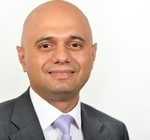
    The comments made by Sajid Javid, the Secretary of State for Health and Social Care, on 24 June 2022.

    We must treat suicides with the same urgency that we treat any other major killer.

    I’m determined to make a difference on this issue and one of the ways we’ll do this is by publishing a new 10-year suicide prevention plan.

    This is something that is deeply personal to me – there are too many families that are left incomplete, and too much potential has gone unfulfilled.

    The Online Safety Bill gives us a once in a generation opportunity to tackle this issue. I will also work jointly across government to look at both upcoming and current legislation to make sure it meets the rapidly evolving challenges that we face.

    Because when it comes to the encouragement of suicide we are currently relying on legislation that was primarily created long before the digital age.

    I want to hear views from far and wide about how to shape this work and the roundtable that I chaired here earlier this morning was so illuminating.

    I heard heart-breaking tales of love and loss but also inspirational stories of the work being done to divert people from this painful path, including of course here at Papyrus.

    I am determined to make a difference on this issue.

  • Sajid Javid – 2022 Statement on UK Life Sciences

    Sajid Javid – 2022 Statement on UK Life Sciences

    The statement made by Sajid Javid, the Secretary of State for Health and Social Care, in the House of Commons on 22 June 2022.

    The life sciences have played an essential role in helping us to learn to live with covid-19. The UK’s natural strengths, and our world-beating vaccine programme, have allowed us to lead the way in this. As we learn the lessons of covid-19, it is essential that we take steps to further strengthen UK life sciences and our resilience against both future threats and a possible future resurgence in covid-19.

    To date over £380 million has been invested to secure and scale up the UK’s vaccine manufacturing capabilities and we have ambitious plans to invest more alongside industry to further our domestic vaccine resilience. As announced in the spending review in October 2021, the Government have now made available £9.6 billion for key covid-19 programmes and related health spending and continues to work closely with industry to ensure our life sciences sector thrives.

    Looking to the future, we are determined to take action to secure further investment into the UK’s thriving life science industry and cement our position as a science superpower. To that end, the Government have agreed a detailed heads of terms with Moderna to create a strategic partnership over the next decade. A binding contract will be negotiated with Moderna over the coming weeks and, subject to approval of a full business case, will be in place by early Autumn. The proposed partnership, led by the vaccine taskforce, will strengthen domestic mRNA capability and better equip the UK to respond to covid-19 and future health emergencies.

    Moderna would establish their global research & development centre in the UK as part of an R&D strategic partnership, siting R&D capability onshore, with academic and wider vaccine ecosystem engagement, including extensive use of the clinical trials network in the UK. Their facilities would support vaccines not just against covid-19 but other diseases such as flu and RSV. The industry-leading, future-proof design of the plant will permit the addition of capability to manufacture a wide range of medicines and will be a massive boost to the UK’s R&D capability. The site will also allow the UK to be better prepared in the event of future health emergencies. The project, which will provide an important boost to the local economy and to the country’s life sciences sector, was developed with the support and collaboration of the vaccine taskforce and will be a key investment to bring novel technologies and pandemic resilience onshore in the UK.

    A consistent and resilient supply of covid-19 vaccines will be critical in protecting against a possible future resurgence in covid-19, ensuring jabs are provided in time to protect those who are most vulnerable to serious covid-19. That is why one of the objectives given to the vaccine taskforce was to strengthen the UK’s onshoring capacity and capability in vaccine development, manufacturing and the supply chain to provide resilience for future pandemics.

    Moderna has demonstrated expertise in mRNA development and has offered a strategic partnership with Her Majesty’s Government under which it would invest in a new state of the art manufacturing facility in the UK for the production of respiratory vaccines. This would be capable of accelerating production, with UK priority access, in the event of a future health emergency.

  • Sajid Javid – 2022 Statement on Monkeypox

    Sajid Javid – 2022 Statement on Monkeypox

    The statement made by Sajid Javid, the Secretary of State for Health and Social Care, in the House of Commons on 22 June 2022.

    The United Kingdom Health Security Agency (UKHSA) yesterday published its updated vaccination strategy in response to the current monkeypox outbreak.

    Based on the currently available vaccine supply, UKHSA recommends that the available doses of the vaccine should be used for a selective vaccine strategy with the aim of interrupting transmission in the subset of individuals at increased risk. This approach is supported by the Joint Committee on Vaccination and Immunisation (JCVI).

    Although anyone can contract monkeypox, data from the latest outbreak shows higher levels of transmission within, but not exclusive to, the social networks of gay, bisexual, and other men who have sex with men (GBMSM). Therefore, the updated strategy recommends that vaccination should be offered as soon as feasible to GBMSM at highest risk. Targeted pre-exposure vaccination is also recommended for others, including healthcare workers who are at high risk of exposure.

    In view of the current epidemiology and vaccine supply available, wider vaccination in low-risk GBMSM individuals or the general population is not advised at this time.

    NHS England is due to set out details on how eligible people can get vaccinated shortly.

    To see the full updated strategy, which includes details of the recommendations for both pre and post-exposure vaccination, please visit: https://www.gov.uk/guidance/monkeypox-outbreak-vaccination-

  • Maria Caulfield – 2022 Speech on Access to GP Services

    Maria Caulfield – 2022 Speech on Access to GP Services

    The speech made by Maria Caulfield, the Parliamentary Under-Secretary of State for Health and Social Care, in the House of Commons on 21 June 2022.

    It is a pleasure to close this debate after a wide range of speeches. First, I will put my hands up and acknowledge that there are challenges and difficulties in primary care and dentistry. We heard that from Members from Scotland, Northern Ireland and Wales, which shows that all the devolved areas of healthcare are facing exactly the same challenges.

    I start by thanking all those in primary care and dentistry for going above and beyond, and not just during the covid pandemic but as we are coming out of it, whether that was dentists providing urgent treatment under difficult infection control measures, or GPs delivering millions of vaccinations while continuing to see patients. We are now seeing not only the routine number of patients we would usually see, but the two years’ worth of patients who stayed at home and protected the NHS, as we asked them to do.

    Despite the Opposition’s protests, we are making progress and record numbers of patients are being seen—higher than ever before. We are seeing 1.3 million patients per working day in primary care. That is a 44% increase since last year, and 63% of those are seen face to face. As my hon. Friend the Member for Wantage (David Johnston) said, that is 2 million more face-to-face appointments than this time last year.

    There are record numbers of GPs, despite what Opposition Members have said—nearly 36,000 full-time equivalents, which is 1,400 more than in March 2019. We are going further, with 4,000 more trainees taking up GP training this year, providing more GPs for the future. We have delivered 30 million extra GP appointments, as part of our manifesto commitment to deliver 50 million more GP appointments. As an indication of the scale of the record numbers of patients coming through the system, we are seeing 11,000 cancer referrals a day, which is a record high.

    How are we supporting GPs? We had the £250 million winter access fund, which helped deliver a cloud-based telephony system that some practices took up, which is transforming how patients can get through to their practices. If practices did not take up that offer, NHS England is rolling out the system across the country, so I urge them to look into it because it delivers better capacity, allowing patients to get through to make their appointments. It bought extra hours to pay for staff to do more shifts and see more patients, and it paid for more physical space in practices.

    We have delivered 13,000 of the additional 26,000 roles pledged in our manifesto—paramedics, practice nurses, primary care pharmacists, physios and OTs working in primary care. We are tackling the bureaucracy that GPs face, and laid a statutory instrument to address fit notes to allow professionals other than GPs to return people to work. We have developed the pharmacy consultation system, whereby 111 or GP receptionists can refer people directly to a pharmacy for first-line care. We are developing a renewed GP contract, opening up access at weekends and in the evening. We are expanding community pharmacy with our work on Pharmacy First to deal with minor ailments, blood pressure checks and discharge medicine services.

    We are also tackling the infrastructure problem through the Levelling-up and Regeneration Bill whereby health and local government will work hand in hand to tackle the issues my hon. Friend the Member for North East Bedfordshire (Richard Fuller) raised. We are also delivering—

    Daisy Cooper

    Will the Minister give way?

    Maria Caulfield

    No, I will not.

    We are also delivering zero tolerance to abuse through the Police, Crime, Sentencing and Courts Act 2022. Labour talk the talk, but it was those of us on the Government Benches who voted to double the maximum sentence for those who abuse our emergency care workers. Labour actually voted against giving the Bill a Third Reading. That tells us all we need to know.

    With the time I have left—

    Holly Lynch

    Will the Minister give way?

    Maria Caulfield

    I will not give way. Members did not—

    Hon. Members

    Give way!

    Madam Deputy Speaker (Dame Eleanor Laing)

    Order. If the Minister is not giving way, she is not giving way.

    Hon. Members

    Frit!

    Maria Caulfield

    I am not frit, but I am conscious that another debate follows this one. I did not want to play politics, but if Opposition Members want to, I will give them politics.

    The Labour party is against everything and for nothing. We have not had one suggestion from Labour or the Lib Dems. They are full of complaints without a single solution. We know that the shadow Secretary of State was busy over the weekend deleting his past misdemeanours, but he cannot delete Labour’s misdemeanours with the NHS. As Davina McCall would say, let’s have a look at their best bits. There are the PFI contracts that they mysteriously introduced—£1.4 billion a year is still going to private investors because of the deals made under a Labour Government. Full Fact confirmed that £57 billion will be spent in total on those PFI deals.

    Moving on to the 2004 GP contract negotiations, evening and weekend cover was taken away, handed to primary care trusts and given to private companies. Changes to the law in 2007, voted for by Labour Members, allowed bigger businesses to buy up GP practices, resulting in the evidence we saw on “Panorama” last week. The top hit is the 2006 Labour dental contract—

    Wes Streeting

    Oh, here we go.

    Maria Caulfield

    The hon. Gentleman may say, “Here we go,” but Opposition Members acknowledged this afternoon that the Labour contract was causing the problems. We are getting on with dealing with that.

    My hon. Friend the Member for Waveney (Peter Aldous) asked what progress is being made. We put the negotiations to the BDA on 24 March and made a final offer—[Interruption.] They don’t want to listen, Madam Deputy Speaker; they don’t care. We put the final offer to the BDA on 20 May, and we are waiting to hear back. We are reforming the dental contract, which perversely disincentivises dentists to take on NHS work.

    To correct the hon. Member for Portsmouth South (Stephen Morgan), he did not host that dental summit; it was my right hon. Friend the Member for Portsmouth North (Penny Mordaunt), who invited me. The summit came up with a solution, and I am meeting her team so that we can work on that and take it forward.

    In addition to the dental contract, we are reforming how we take on dentists from overseas. We consulted the GDC, which recently ran a consultation, and we will be laying legislation to give it powers to allow dentists to come here more easily—[Interruption.]

    Madam Deputy Speaker

    Order. I can hear what Members are saying, and it is just not right. It is simply rude when we are supposed to be listening to the Minister.

    Lloyd Russell-Moyle (Brighton, Kemptown) (Lab/Co-op)

    And I think she could do better.

    Madam Deputy Speaker

    Order. You are not saying anything while you are sitting down—nothing! I call the Minister.

    Maria Caulfield

    Thank you, Madam Deputy Speaker. Labour Members do not want to hear about the work that the Government have been doing. They are just too busy criticising.

    My hon. Friend the Member for Sleaford and North Hykeham (Dr Johnson) also mentioned the work that we are doing on centres for dental development. We are already working in places such as Cornwall to start training more dentists in those areas. In Norfolk and Norwich, we have met representatives from the university. The meeting was led by local MPs who brought people together to set up centres. We have also been working in Lincolnshire as well.

    We are empowering the dental workforce by changing and upskilling dental technicians, dental nurses, and dental assistants to be able to take on more work. We are also tackling the issue of clawback.

    You would think, Madam Deputy Speaker, that this is just an issue in England. If we look at Labour-run Wales, we find that the Community Health Councils have acknowledged that Wales is also facing a crisis of access to GPs, and that patients are waiting more than an hour to get through on the phone only to find that there are no appointments left.

    The number of dental practices in Wales has fallen—from 1,500 in 2019 to 1,389 last year. In the past year alone in Wales, there was a 71% drop in courses of dental treatment. Why is that happening under a Labour Government? [Interruption.] I have given the answer. Opposition Members are too busy talking, Madam Deputy Speaker. They do not want to hear the answers.

    Opposition parties need to be honest with the public. Whether we are talking about Scotland, Wales or Northern Ireland, we are all facing the same challenges. [Interruption.] No! There is a Labour-run Government in Wales and an SNP Government in Scotland. [Interruption.] The Opposition continue to play politics, but we are getting on with the business of reforming and making those changes. They have no solutions, no answers and no ideas. It is this Government who are delivering the changes. We are being honest with the British public that we will face challenges, but we are making the changes to improve access to both dental and primary care services.

  • Feryal Clark – 2022 Speech on Access to GP Services

    Feryal Clark – 2022 Speech on Access to GP Services

    The speech made by Feryal Clark, the Labour MP for Enfield North, in the House of Commons on 21 June 2022.

    I thank Members from across the House for their contributions this afternoon. I want to praise some of the powerful contributions we have heard during the debate.

    My hon. Friend the Member for Sheffield Central (Paul Blomfield) raised the absolutely ridiculously long waiting lists for NHS dentists in his constituency. It is worrying to hear that pregnant constituents cannot even register with a GP, let alone see one. Shockingly, he mentioned the children in his constituency, one of whom has had to wait 35 months to see an orthodontist. He rightly pointed out the issues with the dentist contract, which is disincentivising dentists to take on NHS patients, and reminded us of the last Labour Government’s commitment to reforming it.

    We heard from the hon. Member for Waveney (Peter Aldous), who set out the NHS dentistry crisis in his constituency. He rightly set out that many dentists are simply not drawing down on the £50 million Government funding that the Minister says is being used. He set out, in comments I really welcome, the issue of our crumbling primary care assets. I thank him for raising the issue of the NHS app and I could not agree with him more. When are the Government going to move the app into the 21st century? Finally, he mentioned that patient choice is really important. I welcome those comments.

    We then heard from my hon. Friend the Member for Lancaster and Fleetwood (Cat Smith), who mentioned the huge number of constituents who are frustrated with their current lack of access to primary care. She mentioned her constituent Dr Mark Spencer, who set up Healthier Fleetwood to tackle health inequalities. I, too, send my thanks to him. She also mentioned that demand is not being met in primary care, and she rightly mentioned the Government’s financial illiteracy, with patients being forced to go to A&E instead of having their demand met in primary care.

    On dentistry, my hon. Friend set out how children in her constituency cannot access NHS dentists and the shocking experience of constituents who are resorting to DIY dentistry, as was raised by many hon. Members. She rightly set out that the Government are getting it very wrong. She also set out the Government’s shocking record on GP recruitment and the exodus of NHS dentists. Most shockingly, she mentioned the number of children aged zero to 10 years old who are admitted to hospital for tooth extractions in her constituency in just one year: 30 in Lancaster and 40 in Wyre, of whom 30 were aged five or younger. If that is not a wake-up call for the Minister, I do not know what is.

    So many shocking incidents and examples—too many to mention—were raised today, and I thank all hon. Members for sharing their constituents’ experiences. Primary care is in crisis—I know it, Members across the House know it, and the public know it—but the Government continue to bury their head in the sand.

    As we have heard from right hon. and hon. Members, our postbags are packed with letters from constituents who are desperate for someone to listen to them. There is the person who cannot get an appointment to be prescribed the medicine they need to manage their chronic pain. There is the person with MS who cannot get an appointment to be referred to a specialist whom they desperately need to see. There are the patients in Wakefield, where every day a child under 11 is taken to A&E for tooth extraction because they cannot see an NHS dentist.

    We have heard Ministers come to the Dispatch Box time and time again to lay the blame of primary care’s problems at the door of the pandemic. No doubt, it has had an impact, and we should pay tribute to our amazing NHS staff who have done admirably in the face of an immense challenge, but blaming everything on the pandemic will no longer cut it.

    Going into the pandemic, the Government’s preparations were “wanting and inadequate”—not my words, but those of the Culture Secretary. When the argument is not even washing with the Cabinet, how does the Minister expect the public to believe it? After a decade of Tory mismanagement, we went into the pandemic with record waiting lists and staff shortages of 100,000. It is not just that the Tories did not fix the roof when the sun was shining; they dismantled the roof and removed the floorboards. The impact of that became plain for all to see.

    The Government promised to recruit an additional 6,000 GPs by 2025, yet we now have more than 1,500 fewer full-time equivalent GPs than when records began in 2015—that was in the Minister’s response to one of her colleagues in April. Given that we have heard from the Royal College of General Practitioners that the average cost of GP appointments is £40 and that an A&E visit is £359, that is not just an access problem but financially untenable. Even the Secretary of State admitted that the target is beyond reach. With a fifth of GP practices having closed or merged since NHS England was formed in 2013, the pattern is becoming clear. The Government have been completely incapable of delivering for more than a decade, creating not a covid backlog but a Conservative backlog.

    On dentistry, the situation is a national scandal. Over a third of adults and half of children do not have access to an NHS dentist and, with paying to go private simply not an option for most, we have children being admitted to A&E for tooth extraction on a daily basis and others choosing to take matters into their own hands with DIY dentistry, as we have heard from hon. Members on both sides of the House. In Wakefield, as of 2020, almost a quarter of children have tooth decay before the age of three—double the national average of 11%. How on earth can that be tolerated in 21st-century Britain? Thanks to this Government’s complete inability to come up with a solution, we are not just facing a return to Dickensian Britain; we are already there.

    I am sure that the Minister, when she responds, will roll out her usual line about the crux of the issue being the 2006 dental contract, and how this is all Labour’s fault. I am sorry, but after 12 years of Tory Government that simply will not wash. The issue of access is only getting worse, with figures obtained by the British Dental Association showing an overall drop of 22% in the number of patients seen by NHS dentists in England from March to April. In the Minister’s own constituency the figures was 34%. How can she expect dentists across England to have confidence in her when she clearly does not even have the confidence of those in her own patch? If that is not evidence that dentists are leaving the NHS or cutting their commitment, having no confidence that her promised reforms will ever be delivered, then what is? If her idea of tackling the problem is to run scared from even talking to dentists at a conference, then there really is no hope.

    This must change. We need a Government who listen. We need a Government who act. Quite frankly, we need a Government who care. This Government have run out of road, have no ideas left and are holding our country back. A Labour Government will give our NHS the staff, equipment and modern technology it needs to deliver for patients. It is time for the Conservative party to move out of the way and let us get on with the job.

  • Mary Kelly Foy – 2022 Speech on Access to GP Services

    Mary Kelly Foy – 2022 Speech on Access to GP Services

    The speech made by Mary Kelly Foy, the Labour MP for the City of Durham, in the House of Commons on 21 June 2022.

    There are many issues that my constituents are experiencing when trying to access GP services, but I will focus my remarks on the crisis affecting dentistry across England and the impact that is having on people in Durham. I want to start by paying tribute to the dentists, dental nurses and other key workers in practices in County Durham and across the country.

    Sadly, despite the brilliant work of dental workers, NHS dentistry is on the brink of collapse. Whether in Bowburn, Brandon or Pity Me, my constituents are struggling to access the dental services they need and deserve. Four in five people who contact Healthwatch say they have found it tough to access timely dental care, while tooth decay, as we have already heard, is currently the most common reason for hospital admissions among young children. In County Durham, 245 children under the age of 10 were admitted to hospital for tooth extraction between 2020 and 2021. Thousands of children are currently in pain, distracted as they learn, in pain as they eat and struggling to sleep because they cannot access vital treatment. Let that sink in.

    Why is it so difficult to access NHS dental appointments? Because dentists are being driven away from NHS dental services en masse. A recent poll of dentists in England found that 45% had reduced their NHS commitment since the start of the pandemic, while 75% were likely to reduce their NHS commitment in the next 12 months. Alongside that, an alarming 87% of dentists say they have experienced symptoms of stress, burnout or other mental health problems in the past year. In total, 3,000 dentists have moved away from NHS work completely since the start of the pandemic.

    As the British Dental Association has said,

    “This is how NHS dentistry will die”.

    The warning is not sensationalist; it is the reality that dentists and their patients in Durham are facing. This crisis is entirely avoidable. It is certainly not the fault of our rail workers striking today, as the Secretary of State would like us to believe—utterly disgraceful. What planet is he on when he talks about record funding? That is certainly not the case for NHS dentistry, which has faced cuts unparalleled to the rest of NHS services. In real terms, the Government’s net spend on general dental practice in England was slashed by over a quarter between 2010 and 2020, while the Government’s £50 million injection into dentistry will fund less than 1% of the appointments we have lost since March. In fact, the British Dental Association estimates that it would take £880 million a year to restore dental budgets back to the level when Labour left office.

    Let us be clear: these issues will hit the poorest in our society the hardest. For many, the fees for private dental treatment are simply unaffordable. As one desperate constituent put it to me, “I can’t afford private treatment, so what on earth am I supposed to do?” There will be terrifying delays for children, adults and the poorest among those in County Durham, and I am sure across the whole country. Children in deprived areas are already three times more likely to have hospital extractions, while oral cancer, which kills more people than car accidents in the UK, is significantly more likely to affect those in our poorest communities. Dentists are frequently the first to spot health problems. Without access to regular appointments, our least well-off constituents will continue to be more likely to develop serious health problems than the wealthiest in society.

    I take this opportunity to remind the Minister that it is the Government’s job to reduce health inequalities, not widen them. As elected representatives, we are responsible for protecting and improving access to key public services for our constituents. It is time the Government stopped treating dentistry as an afterthought and urgently took action to widen NHS dentistry. For my constituents in Durham, this crisis in healthcare is very much at the forefront of their minds.

  • Holly Lynch – 2022 Speech on Access to GP Services

    Holly Lynch – 2022 Speech on Access to GP Services

    The speech made by Holly Lynch, the Labour MP for Halifax, in the House of Commons on 21 June 2022.

    In the time that I have this afternoon, I will focus on the incredible difficulties my constituents have had in accessing NHS dentistry. As others have said, the pandemic has intensified problems in our dental healthcare system, but the architecture for those problems was in place long before the pandemic. We have heard from the British Dental Association that more than 43 million dental appointments were lost between April 2020 and April 2022, including more than 13 million appointments for children.

    Helen Hunter, chief executive of Healthwatch Calderdale, which serves my constituency, has argued that the pandemic has made

    “a significant problem even worse”.

    At a national level, dentistry is now the No. 1 issue raised with Healthwatch. Almost 80% of people who get in contact with the organisation say that they find it difficult to access dental care, with the General Dental Council saying that almost a quarter of the population—24%—report having experienced dental pain in the last 12 months.

    Healthwatch Calderdale has been relentless in its campaigning on this issue. In August last year, it contacted every dental practice across Calderdale to establish whether it was willing to accept new NHS patients, whether it would register a child and whether it was offering routine appointments. Every dental practice told Healthwatch that it could not currently register a new NHS patient of any age. When neighbouring Healthwatch Kirklees did the same, it had the same outcome.

    As others have said, having people get in touch with us, as MPs, because they cannot find a dentist is one of the most difficult issues that we are asked to contend with from a local casework perspective. As things stand, there is simply nothing we can do to help people. We speak to the CCG, we call the dentists, we speak to NHS England and we write to Ministers, but the capacity is not there because the system is so broken, and no amount of pleading from local MPs can fix it for someone in need.

    One constituent rang more than 30 dental practices, each of which told them that it was not accepting new NHS patients. My constituent could find no available practices in Halifax and none across Calder Valley. There was not even a dental practice available in Huddersfield or Bradford. We have already heard a passionate argument from my neighbour, my hon. Friend the Member for Bradford East (Imran Hussain). People are encouraged to look further afield, but those practices are overwhelmed with their local demand, so going further afield does not solve the problem. When we have made representations on behalf of patients in Halifax, we have been advised to search for practices in Leeds, Barnsley and Wakefield. Members can imagine making that kind of journey to get to a dentist. Parents of children, for example, are asked to book appointments that do not impact on the school day. For them to be asked to travel 20 miles to try to speculatively get an appointment is just not good enough.

    I recently met Rachel Dilley, chief operating officer of Town Hall Dental, which has dental practices in Calderdale, to gain a better understanding of the problems that they are experiencing. Town Hall Dental has had to set up a charity alongside its private and NHS work to help to fund dental treatment, check-ups and the vital oral cancer checks that dentists undertake. That is all necessary, but it goes underfunded. I commend Town Hall Dental for its charitable and fundraising work, but that should not be necessary.

    In my desperation to get Government to act, I started a petition on my website for constituents, calling on the Government to improve NHS dental care provision in Halifax, so that residents can access care easily and locally. The petition has more than 500 signatories, and I will be presenting it in the Chamber in the days to come.

    One local parent said to me:

    “I have been making weekly phone calls to all Calderdale dentists in an attempt to (at the very least) get my children into a dentist as I value oral health greatly. However, I am yet to be successful in my goal which is becoming quite time consuming, as I now have a three year old daughter that has never even visited a dentist and 4 other children who have been without a check up in 5 years. That is half a decade with zero dental care.”

    Another constituent got in touch to tell me that, since they had had no luck finding a nearby practice that would take NHS patients, they were forced to make a five-hour round trip to the Berkshire dentist that they had been registered with prior to moving to Halifax.

    Such long waiting periods are also undermining what is functioning within the system. One constituent had to wait five years just for braces. When they finally got their braces, the orthodontist informed my constituent that they would need four teeth taken out. Having tried everywhere to find a dentist, my constituent told me,

    “if I don’t find one, I won’t be able to keep my braces on.”

    It is just madness. Another of my constituents, who was already dealing with mental health challenges, had been in pain and needed urgent medical treatment. Her friend got in touch to tell me that she was sent to A&E and advised she needed to see a dentist. She ended up seeing an NHS dentist in Elland for treatment, but they would not see her on the NHS and told her she had to pay for private treatment. Her friend could not believe that that could be allowed to happen, saying:

    “How can this be the case when a young lady with mental health issues and no savings, in a medical emergency, needs to seek help from me, her friend to pay for urgent dental treatment”?

    During the pandemic, I organised a roundtable discussion with local dentists, who shared with me the perverse ways in which NHS contracts are broken down into units of dental activity. The UDA system is just not functioning. If we needed any further confirmation, data from the BDA reveals that around 3,000 dentists in England have stopped providing NHS services since the start of the pandemic. Perhaps even more worryingly, for every dentist leaving the NHS entirely, 10 are reducing their NHS commitment by 25% on average. A BDA survey from May 2022 shows that 75% of dentists plan to reduce the amount of NHS work they do next year, with almost half planning to change career, seek early retirement or enter fully private practice.

    That is where the current, broken contract system has got us. I urge the Minister, if she believes in being able to see a dentist on the NHS, to scrap the current system, start again and find a way to make the contracts work. One third of people see a dentist privately, but 71% of those people say they do not do so through choice. As the cost of living crisis continues to affect families, more and more people will be priced out of private treatment by inflation and rising bills and living costs.

    My hon. Friend the Member for Washington and Sunderland West (Mrs Hodgson) earlier described this as an existential crisis, and it very much is. I say to the Minister, “Please, please fix it.”

  • Margaret Greenwood – 2022 Speech on Access to GP Services

    Margaret Greenwood – 2022 Speech on Access to GP Services

    The speech made by Margaret Greenwood, the Labour MP for Wirral West, in the House of Commons on 21 June 2022.

    People are struggling to get GP and dentist appointments, and this is a crisis of the Government’s own making. In their 2019 manifesto, the Conservatives promised 6,000 more GPs in England by 2025 but, in his evidence to the Health and Social Care Committee last November, the Secretary of State said when asked about this target:

    “I am not going to pretend that we are on track when clearly we are not.”

    Dr Richard Vautrey, chair of the BMA’s GP committee, said at the time:

    “The bottom line is we are haemorrhaging doctors in general practice. While more younger doctors may be choosing to enter general practice, even more experienced GPs are leaving the profession or reducing their hours to manage unsustainable workloads.”

    Recent statistics show there are now fewer than 6,500 GP practices in England, compared with more than 8,000 in April 2013. As of April 2022, there were the equivalent of 1,622 fewer fully qualified, full-time GPs in England than in 2015. All this has happened on the Conservatives’ watch.

    The lack of access to GPs has implications for patient safety. We know early diagnosis is important, but it cannot happen if people cannot see a doctor. People who cannot get an appointment, or who face long waits to get one, are at risk of not getting the referral they need, which can lead to health problems down the line. Those who are able to get an appointment but are seen by a GP who is suffering stress and burnout due to the pressures of the job are also put at increased risk.

    A poll of nearly 1,400 GPs by Rebuild General Practice in March found that 86% of those surveyed say they do not have enough time with patients, and it found that GPs are seeing, on average, 46 patients a day. This is a matter of great concern, as the safe maximum number of daily appointments, as recommended by the BMA, is 25. Doctors are seeing nearly twice the safe maximum number, which is bad for patients and unfair on very hard-working GPs.

    People in Wirral West tell me they have ended up going to A&E because they cannot get an appointment with their GP, which puts more pressure on an already stretched A&E. A recent study by the Royal College of Emergency Medicine showed that, in 2021, an average of 1,047 people a day were waiting more than 12 hours in A&E from their time of arrival, which is wholly unacceptable. People need to be able to access GP services when they need them, both for their own health and to keep the pressure off A&E.

    The Conservatives are overseeing an exodus of dentists from the NHS, which is forcing people to choose between paying to go private and going without dental care at all. Research by the British Dental Association shows that around 3,000 dentists in England have stopped providing NHS services since the start of the coronavirus pandemic, and that for every dentist quitting the NHS entirely, 10 are reducing their NHS commitment. It also shows that 43 million NHS dental appointments have been lost since the start of the pandemic, which is equivalent to well over a year’s worth of NHS dentistry in pre-covid times. This enormous backlog continues to grow.

    The British Dental Association is clear:

    “NHS dentistry is facing an existential threat and patients face a growing crisis in access, with the service hanging by a thread.’

    A constituent, a dentist in Wirral, has told me that people from Manchester and Lancashire are calling the practice to ask if they can register. The Government have told me that there are no geographical restrictions on the practice a patient may attend, which completely misses the point. Services should be available locally. Who wants to travel for an hour, two hours or longer when they are in desperate pain and need to see a dentist urgently?

    Shockingly, 50 children in Wirral under the age of 11 were admitted to hospital for tooth extraction last year. That is bad enough, but the figure is much higher in many parts the country. The Conservatives’ failure to fix this crisis is putting the oral health of children at increased risk. No child should have to end up in hospital because they are unable to get the dental treatment they need.

    The Government need to come forward urgently with a plan to fix the crisis in GP access and dentistry. Failure to do so has serious and painful implications for patients.

  • Imran Hussain – 2022 Speech on Access to GP Services

    Imran Hussain – 2022 Speech on Access to GP Services

    The speech made by Imran Hussain, the Labour MP for Bradford East, in the House of Commons on 21 June 2022.

    For many people living in Bradford, being unable to get an appointment with their GP for days or weeks, or being unable to see an NHS dentist at all, is one of the most depressing issues they face—if not the most depressing. Although such a scandal in our healthcare system is of course unacceptable anywhere, the harm that it is causing in Bradford, where we face especially stark health inequalities and where people are dying a decade earlier and facing a higher rate of preventable diseases, is particularly damaging.

    It seems that the Government either do not understand or just do not care. Earlier, the Secretary of State opened for the Government. According to him, we have had record levels of investment, the Government are now planning many initiatives, and any concerns were entirely a result of the two years of covid. Of course, everybody in this Chamber would accept that the NHS, GPs, dentists and all the health services faced pressures during covid. I do not think anyone is denying that. The Secretary of State said to the shadow Minister, “You supported us during that period”. Of course we did. We were a responsible Opposition and of course we ensured that any pressures during a very difficult period could be alleviated. But to say that the issues have suddenly resulted from that period is simply untrue, and Ministers know that it is untrue.

    The second assertion—those who were in the Chamber will recall that I pressed the Secretary of State about his record investment in the NHS—was that of course there was record investment, but let us look at that investment. Let me go to my district, to Bradford, and see the record investment that Ministers and the Secretary of State want to boast about. Frankly, they live in some parallel universe, because we do not see the effect that they come here and tell us about. In Bradford, one of the most deprived districts—more than 50% of the deprivation in my constituency is in all the top 10 deprivation indices—child poverty is now at a record high because of those on the Government Benches. Nearly 50% of children in my constituency today live in poverty because of the draconian, ideological cuts made by this Government over the past decade. I have said this in the Chamber many times: people who live in the inner cities are likely to live 10 years less than if they live in the leafy suburbs, which are far more affluent and, frankly, get more investment.

    What does the record investment that the Secretary of State and Ministers tell us about equate to in Bradford terms? They tell us that, on average, we will get £4 per patient more than the rest of the country, even though we have the levels of deprivation, poverty and health inequalities that I have gone through. But actually the situation is worse, because even that £4 of investment that they tell us we are getting is fudged figures and smoke figures, because in real terms, if inflation was to be counted, we are getting £3 million less than we had before this Government came to power. On average, we have more than 2,800 patients per GP, whereas the national average is 2,100 patients per GP. If anywhere should be seeing this record investment, it should be in places such as Bradford, but are we seeing it? How does that equate? The hon. Member for St Albans (Daisy Cooper), who is no longer in her place, talked about the stark reality on the ground. This is why I say that Ministers are living in a parallel universe, because the stark reality on the ground is not as they see it. Most people simply cannot get GP appointments. People start ringing first thing in the morning and are on hold for hours on end. Many people will then have to wait until the next day. Getting through to a GP practice on the phone takes days on end.

    Sarah Owen (Luton North) (Lab)

    When the Minister comes to her feet, I am sure she will say that X number of people have been able to access a GP, but have they been able to access their own GP? We have heard time and time again from health professionals how important continuity of care is. Does my hon. Friend agree that this is not just about seeing any old GP—it is about someone seeing their own GP?

    Imran Hussain

    I absolutely agree with my hon. Friend, who makes the point that I was coming on to raise. Her Luton constituency is not dissimilar to mine. With a single GP having 2,800 patients, it is obvious why those patients are not getting to see their GP. I could spend a long time in this Chamber going through constituency cases that I have recently dealt with. Indeed, I have done that in the past and those cases are on the record. Let me cite just one case today. An elderly lady in her 90s had to go to hospital and was then told to go to see her GP. Her son tried day after day to make a simple GP appointment for her. She had multiple health needs. My office had to intervene and even we were unable to secure a GP appointment for her. People are having to go through this ping-pong of not getting a GP appointment and then going to A&E as they have nowhere else to turn.

    I am grateful because I did ask the Health Secretary about Bradford and urgent treatment centres, and he did favourably say that he would arrange a meeting with the Minister for Health, the hon. Member for Charnwood (Edward Argar), who joins us now, at precisely the right time. I look forward to that meeting because that is a way through and I am grateful for that offer. But the reality remains that the Government’s promise—or the points the Secretary of State made earlier today—is not apparent on the streets. People continue to suffer, they cannot get GP appointments and they have nowhere else to turn. That point has been made eloquently by a number of Members.

    At least, after days and weeks of trying, people are able to get an appointment with a GP. Many Members have talking about issues with joining an NHS dentist. There is more chance of finding gold bricks on the street, or of finding the parallel universe that Government Ministers live in, than there is of getting on to the list of an NHS dentist. People simply cannot get NHS dentists, and we have heard accounts today of how they are being forced to carry out DIY operations at home, without anaesthetic or any medical care—I have come across such cases in my own constituency—because they have no other option. Frankly, as the fifth largest and richest economy in the world, it is shameful that people are having to resort to DIY treatment at home. Again, that is happening on this Government’s watch.

    I have been in this place since 2015, and every time we have a debate about NHS dentists or GPs, Tory Members refer back to the Labour Government of 12 years ago. I remember that when I was growing up, under a Thatcher Government, GP practices were back-to-back houses on terraced rows without adequate facilities. The last Labour Government brought in record investment, gave us state-of-the-art health centres, and reduced health inequalities and child poverty. That was all under a Labour Government, but Tory Members cannot pretend that the Labour Government of 12 years ago are somehow responsible for the issues we face today. The Whips are not in their place, but I say to the Tory Whips, “Please do your Members justice and remove that line from the long-standing script you have for them”, because it is becoming embarrassing when Tory Members stand up and say, “12 years ago, there was a Labour Government, so it must be all their fault.” They can use that line for a year or two, but unfortunately, in nobody’s world can they use it for 12 years. Tory Members need to start understanding that.

    Can we expect any more from this Government? This is a Government who believe people choose to be poor—they have said so in this very House and on TV. This is a Government who believe people should work extra hours and do more, and that those who are forced into poverty are not forced, but have chosen poverty. The reality is that this is a Government who could not care less about people in Bradford who continue to suffer. [Interruption.] The Minister chunters from the Front Bench; she will have time to address those points when she responds.

    Maria Caulfield

    I would be interested to hear the hon. Gentleman’s opinion on the position in Wales, which was set out in the Secretary of State’s opening remarks. Wales faces exactly the same pressures, and its waiting times are actually worse than England’s. What is the hon. Gentleman’s reason for why the Welsh Labour Government are in exactly the same position as this Government?

    Imran Hussain

    Again, the first defence is “Labour 12 years ago”; the second defence is “Labour in Wales”. The point about Labour in Wales has already been appropriately addressed, but the Minister’s job is to address those issues in England. Rather than address those issues, she thinks that saying “What about Labour in Wales?” somehow provides a cover, an umbrella, and a defence against the incompetence that exist across our health sector. That does not wash with the British public, because they have not been asleep for the past 12 years. They have noted the devastation that the Tory Government have caused in our communities, and the back-door privatisation and ideological agenda they have brought to our health service. I have said it before, and I will say it again: people will repay them with interest at the ballot box.

  • Rebecca Long-Bailey – 2022 Speech on Access to GP Services

    Rebecca Long-Bailey – 2022 Speech on Access to GP Services

    The speech made by Rebecca Long-Bailey, the Labour MP for Salford and Eccles, in the House of Commons on 21 June 2022.

    According to the Association of Dental Groups, only a third of adults and half of children in England have access to an NHS dentist. As we have heard, the top reason for children being admitted to hospital is tooth extraction. It is 2022, not 1922. Back in 1947, when the NHS and NHS dental services were brought about by the then Labour Government, many of us naively thought that they would be around for ever, that we would always be able to access those services when we needed them. Unfortunately, we now see the return to the poverty-linked ill health that we saw in the 1940s.

    As MPs, we hear heartbreaking stories. There was the Salford man with a badly infected tooth who could barely afford to live, let alone pay for private dental treatment. He could not find an NHS dentist who would take him on. He said to me that, had it not been for the fact that he was on anticoagulants, he would have pulled his own teeth out with a pair of pliers. There was the Salford woman with countless abscesses all over her jaw, and no money to go private. She was in acute pain and putting her life at risk from a spreading infection. She had been trying to get on an NHS waiting list for a dentist for over five years. There was also the Salford mother living on the breadline, yet forced to borrow and scrape together the money to go private. She told me that she had to pay £100 just to get on a dentist’s list. There are thousands of stories like this.

    Recently, I asked the Government what data they held on the number of people trying to access an NHS dentist in Salford, such as the stories I had heard from my constituents. The Government confirmed that they held no data for my constituency or even across Greater Manchester. Frankly, that is staggering.

    So what is at the heart of the decline of NHS dentistry? The British Dental Association details that chronic underfunding and the current NHS dental contract are to blame for long-standing problems with burnout, recruitment and retention in NHS dental services.

    On funding, in real terms, net Government spend on general dental practice in England was cut by over a quarter between 2010 and 2020. The £50 million that the Government have announced—as we have already heard today, it is difficult to access that at the best of times—will not even touch the sides given the amount of funding cut from NHS dentistry.

    On the contract, the system in effect sets quotas for the number of patients a dentist can see on the NHS and caps the number of dental procedures they can perform in any given year. If a dentist delivers more than they have been commissioned to—say, to try to help a desperate patient in need of urgent care—that dentist is in effect punished. Not only are they not remunerated for the extra work done, but they have to bear the cost themselves of any materials used, laboratory work and other overheads.

    It is no wonder that morale among NHS dentists is now at an all-time low, and we are facing an exodus of dentists from the NHS. We are seeing NHS dentistry deserts popping up all over the country, where constituents such as mine in Salford can only dream of trying to get on an NHS dentist’s patient list. Around 3,000 dentists in England have stopped providing NHS services since the start of the pandemic. Staggeringly, for every dentist quitting the NHS entirely, 10 are reducing their NHS commitment by 25% on average, and 75%—75%—of dentists plan to reduce the amount of NHS work they do next year.

    It is clear that we face a dental crisis and that the Government must urgently address it. There are a number of actions that I hope the Minister will take. First, they must reform the NHS dental contract with a decisive break from units of dental activity, a greater focus on prevention and the removal of perverse incentives.

    Secondly, the Government must provide adequate levels of protected NHS dental funding to ensure investment in new and existing NHS dental services, and they must guarantee the long-term sustainability of NHS dentistry for all who need it.

    Thirdly, NHS dentistry must be given the status it deserves. That means sitting right at the heart of local NHS commissioning, rather than being treated as an afterthought—a luxury service, as it were, which is how many seem to perceive it.

    Finally, the Government must build and properly fund historic public health commitments to prevention. As we have heard—from Conservative Members, actually—this is a crisis in NHS dentistry, but many of the factors that contribute to this crisis are directly related to poverty, people’s diets and the amount of money they have to spend as a family on oral health and hygiene.

    We are in the midst of a cost of living crisis as well as a dental crisis, and the Government need to be doing far more to support families to make sure that they have enough to live on and a decent range of food that provides them with the nutrition they need in order to have healthy teeth. We naively thought that poverty-related ill health, rotting teeth and gum disease had been consigned to the history books when NHS dentistry was established in 1948, but this Government wind the clock back day after day and those afflictions are now back with a vengeance. NHS dentistry hangs by a thread. The Government have a moral duty to stop the rot today because rotting teeth come from a rotting Government. I hope that the Minister will change my mind.