Category: Health

  • Will Quince – 2022 Statement on the Genome UK Implementation in England

    Will Quince – 2022 Statement on the Genome UK Implementation in England

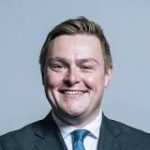
    The statement made by Will Quince, the Minister of State at the Department for Health and Social Care, in the House of Commons on 13 December 2022.

    This is a joint statement with the Secretary of State for Business, Energy and Industrial Strategy.

    In 2020, the Government published Genome UK, the UK’s genomic healthcare strategy, setting out a vision to create the most advanced genomic healthcare system in the world, underpinned by the latest scientific advances, to deliver better health outcomes at lower costs. The strategy made 45 commitments to be delivered over 10 years to achieve this vision. Delivering this vision will help people to live longer, healthier lives, reduce the burden of illness on the NHS and make the UK a world leader in data-driven healthcare research and innovation.

    I am delighted to inform the House that we are today publishing the “Genome UK—England Implementation Plan 2022 to 2025”, which sets out how we will further progress delivery of Genome UK in England during the current spending review period, taking us to the halfway mark of our ambitious 10-year strategy. In order to allow us to reflect advances in this fast-moving field, we have adopted a phased approach to implementing the strategy, with implementation plans published in line with spending review periods.

    This publication follows the previous “Genome UK: 2021 to 2022 Implementation Plan” in May 2021, and “Genome UK: shared commitments for UK-wide implementation 2022 to 2025” in March 2022. Through extensive collaboration with partners across the genomics community we have set out our priority actions, showcasing the outstanding research and policy work that will take place across England to develop, evaluate and implement new genomic technologies across the health and care system and life sciences sector. As part of this, I am pleased to announce:

    The £105 million of Government funding for a landmark research programme, led by Genomics England in partnership with the NHS, to study the effectiveness of using whole genome sequencing to speed up diagnosis and treatment of rare genetic diseases in newborn babies, potentially leading to life-saving interventions for thousands of babies.

    The £22 million of Government funding for Genomics England to tackle health inequalities in genomic medicine through tailored sequencing of 15,000 to 25,000 participants from diverse backgrounds by 2024-25, as well as extensive community engagement work to build trusting relationships with traditionally excluded groups of people.

    The £26 million of Government funding for an innovative cancer programme, led by Genomics England in partnership with NHS England and the National Pathology Imaging Co-operative, to evaluate cutting-edge genomic sequencing technology and use artificial intelligence to analyse genomic data alongside digital histopathology and radiology images to improve the accuracy and speed of diagnosis for cancer patients.

    Up to £25 million Medical Research Council-led funding for a four-year functional genomics initiative, working across UK Research and Innovation and other stakeholders to establish an industry-partnered world-class offer on functional genomics, building on already existing infrastructure and UK research expertise.

    These are just a few of the many actions that are set out in the implementation plan, which also covers how we will engage with patients and the public; develop the genomics workforce; support industrial growth and explore a possible UK model for how to apply ethical standards in genomic healthcare and research.

    Together, these actions will pave the way to bringing improved approaches to disease prevention, diagnosis, and treatment to people and patients, transforming healthcare and improving the health of the nation. Through these actions we will also increase private sector investment, by ensuring that the UK is the best location globally to conduct genomic research and grow new genomic healthcare companies.

    Patients and the diverse UK population are at the heart of our journey to the world’s most advanced genomic healthcare system. Equally, this vision cannot be achieved without the support our talented healthcare workforce. I therefore want to emphasise that open engagement with the public, patients and workforce will continue to be central in the delivery of our 10-year vision.

    This implementation plan has been agreed with the Genome UK Implementation Co-ordination Group and the National Genomics Board, which are made up of senior life sciences stakeholders and delivery partners from across the NHS, the charity sector, research, and industry. The devolved Governments will be publishing their own implementation plans, to ensure that genomic healthcare is able to flourish across the UK. Over the next three years we will continue to work with our partners, including the devolved Governments, via the Genome UK Implementation Co-ordination Group and the National Genomics Board, to ensure that we can continue to create the most advanced genomic healthcare system in the world.

  • Helen Whately – 2022 Speech on Moles and Skin Tags – Testing for Cancer

    Helen Whately – 2022 Speech on Moles and Skin Tags – Testing for Cancer

    The speech made by Helen Whately, the Minister of State at the Department for Health and Social Care, in the House of Commons on 12 December 2022.

    I commend my hon. Friend the Member for Isle of Wight (Bob Seely) for securing this debate, and on telling us Zoe’s story so powerfully. It is a truly heartbreaking story of a young mum of just 26 with so much life ahead of her. It was harder still to hear because Zoe did the right thing and asked her GP about her mole, yet her skin cancer was not diagnosed until so late that she died just 55 days later. I pay tribute to Zoe’s family, including her mum, Eileen, who have campaigned to stop other people going through what they have gone through, and to Zoe herself. When I looked earlier this evening, more than 34,000 people had signed the petition.

    Like Zoe’s family, as cancer Minister I want to stop people going through what they have been through. I want us to get better at preventing, diagnosing and treating cancer. Although we cannot remove the risk of skin cancer in its entirety, we can raise awareness of the things that increase the risk and help people take steps to protect themselves. Most skin cancers are caused by exposure to the sun. Getting sunburnt increases the risk—especially getting sunburnt as a child—as does using sunbeds. Those who have fair skin are at greater risk. As my hon. Friend told us, the lovely sunshine of the island he represents has its downsides, as does the healthy outdoor life that he describes.

    As well as raising awareness of risks, we need to raise awareness of early signs and symptoms, and then what to do. We in Government are doing that. For instance, the NHS “Help Us, Help You” campaign has used TV advertising, social media and regional press to get the message out to people to get worrying signs checked out. We know that some people delay getting a check. That campaign has particularly sought to overcome those fears. If you are worried, it is always better to get checked out. Most people will get the all-clear, but the sooner you get a check, the better, because an early diagnosis improves the chances of successful treatment.

    I know that Zoe did the right thing and asked her GP, which brings me to the importance of accurate diagnosis. For Zoe’s specific case there has been a full investigation locally, and I know the findings have been acted on. Specifically, teledermatology is now offered by all GPs on the Isle of Wight, and is increasingly available across the NHS. It involves a specialist medical photographer taking a detailed photograph of a skin lesion to check it for signs of cancer. That is a step on the path to more tests to confirm whether someone has cancer or is given the all-clear that no further tests are needed.

    On the role of teledermatology, almost £1.5 million of our elective recovery funding has been allocated to seven cancer alliances to pilot self-referral for cancer symptoms, including skin cancer symptoms. I heard my hon. Friend’s argument for Zoe’s law to require all moles or skin tags removed to be tested for melanoma. I also heard him saying that he was not expecting an answer here and now, which I appreciate. I can assure him that I will take his argument away, look into it and then write to him with a full response on his proposal. I will also take away the suggestion from him and from other hon. Members about looking at the broader education of other people who might be able to spot something that might be an early sign of skin cancer. I recognise that people may not be able to see their back or the back of their head, for instance. Indeed, there may be opportunities to look at wider education. For sure, raising awareness overall of skin cancers and of what a person should do if they have a sign or a symptom will indeed mean that more people will know what to look out for.

    Jim Shannon

    I commend the Minister for her very positive answer and for what she said in relation to the nine centres across the United Kingdom, which is where the hotspots are. In an intervention on the hon. Member for Isle of Wight (Bob Seely), I referred to a pilot scheme in my trust area, the South Eastern Health And Social Care Trust, which seems to be having some good results. I always believe that the exchange of ideas is good for us all. It helps us to see what is being done here and it might help the Minister to know what we are doing back home.

    Helen Whately

    I thank the hon. Member for his intervention. I will look into the scheme in his area that he mentioned. One of the good things about the NHS is that all sorts of fantastic things are going on in pockets across the United Kingdom. One of the best things that we can do is find out what is working somewhere, and then spread that best practice more widely, so, indeed, I will look into what he suggests.

    We are now seeing the most incredible advances in how we diagnose cancer as well as how we treat it. An example of this is the NHS-Galleri trial, which looks for blood markers to identify cancer risk. It can identify signs of more than 50 cancers and the trial has 140,000 participants. We should in no way limit our sights as to what can be achieved in the here and now. The crucial thing here and now is early diagnosis, which much improves the prospects for successful treatment. Zoe’s family wants those who do have cancer to get an early diagnosis so that they have the chance to survive and live their lives as, sadly, Zoe did not. That is something that I want, too. I want fewer people to get cancer, those who do have cancer to be diagnosed earlier, and, in turn, to be treated successfully so that they can live their lives to the full.

  • Bob Seely – 2022 Speech on Moles and Skin Tags – Testing for Cancer

    Bob Seely – 2022 Speech on Moles and Skin Tags – Testing for Cancer

    The speech made by Bob Seely, the Conservative MP for the Isle of Wight, in the House of Commons on 12 December 2022.

    I am delighted to initiate this debate on melanoma in memory of my constituent Zoe Panayi, after whom “Zoe’s law” is named.

    Zoe died of skin cancer in May 2020 at the age of just 26, after having an unusual mole removed at a private beauty clinic. She had trained to become a carer before finding a rewarding role as an assistant to the radiography and CT department at St Mary’s Hospital in Newport, in my constituency. She was the mother of two boys, Theo-Jay and Tobias.

    On the night of 3 April 2020, Zoe went home from work feeling poorly. By 11.30 pm she had been admitted back to St Mary’s hospital, where she worked, and it was then discovered that she was in the late stages of cancer. Biopsy results four days later found that the melanoma, which had started in a mole on her back, had spread to her lymph nodes, liver, bone marrow, pelvis, and spleen. Very sadly, after the biopsy Zoe survived for just 55 days.

    Over the course of the two years prior to her death, Zoe had raised numerous concerns with GPs about the unusual mole on her back. She had been told on multiple occasions that there was nothing to be concerned about, and after being advised to see a beauty clinic to have the mole removed, staff again raised no concerns about the removal of the mole. Tragically, it was later found that the act of removing the mole probably caused the cancer to grow and spread more rapidly. Zoe’s family, and especially her mum, Eileen Punter, to whom I pay tribute in this debate, have campaigned tirelessly since then to raise awareness of melanoma cancer and to ensure that others do not have to go through the same pain. I will make two suggestions to the Minister in the course of this speech.

    By way of background, malignant melanoma is the fifth most commonly diagnosed cancer in the UK, and there are thought to be some 111,000 people living with malignant melanomas in this country. Approximately 16,700 cases are diagnosed every year, and about 2,300 people die every year from this cancer. This should not be the case, because the good news is that since the 1970s, the five-year survival rate for cancers of this type has increased from 52% to about 90%—nine out of 10— especially if they are caught early.

    Chris Bryant (Rhondda) (Lab)

    I congratulate the hon. Gentleman on raising this subject. As he knows, I had a stage 3 melanoma and I was told that I would have a 40% chance of living a year, but the science has moved on dramatically in the nearly four years since then. My biggest anxiety is that we do not have enough histopathologists and pathologists, and that people are getting their results slowly. There are also not enough dermatologists in the country, and lots of GPs are simply not trained in recognising potentially malignant melanomas fast enough. Do we not need to do far more to ensure that this cancer is fully understood, because it can kill, and to ensure that we have enough staff in the NHS to be able to treat it?

    Bob Seely

    I thank the hon. Gentleman for his intervention. I am going to follow up on several of those points, but I am delighted to see that he is one of the many people who have survived a malignant melanoma.

    If Zoe’s mole had been diagnosed early—especially at stage 1 or 2, and possibly even at stage 3—she may have well survived. Just before I come to some of those suggestions, I must point out that these melanomas are a specific concern on the Isle of Wight, because we have one of the highest rates of skin cancer.

    Jim Shannon (Strangford) (DUP)

    I commend the hon. Gentleman for his assiduous attention to his constituents and to the family who have been bereaved. By his words today, we all recognise that he is deeply concerned and compassionate, and we thank him for that.

    May I gently tell the hon. Gentleman—perhaps the Minister might take note of this as well—that in Northern Ireland a new mole mapping and melanoma service has been introduced in my local South Eastern Health and Social Care Trust? It is a nurse-led, two-year pilot project that offers an advanced mole mapping technique for specific patients identified by the clinical team as being at higher risk of developing melanoma skin cancer. I suggest that that should be a standard for everyone not just in my trust area but everywhere else, so that we do not have a postcode lottery. Would the hon. Gentleman be interested in that pilot scheme? If so, maybe the Minister will take note.

    Bob Seely

    I thank the hon. Gentleman for yet another excellent intervention, and I completely agree. In fact, I will come to those points now.

    The Isle of Wight is a specific hotspot for skin cancer. I think it has the worst skin cancer rates in the United Kingdom, primarily as a result of certain factors. First, we still have a very white population, and the paler your skin, the more likely you are to develop melanomas. Secondly, we have an ageing population, and melanomas are cumulative. Thirdly, we have a very outdoors lifestyle on the Island, with golf, sailing, a lot of community activity and a lot of gardening. For the Isle of Wight’s retirement community especially, to be out in the sun aged 60 or 70 doing activities such as sailing, which is very harsh on the skin because of the interaction of sun and water, encourages melanomas. Fortunately, we have one of the best dermatology centres in Britain at Newport’s Lighthouse clinic, and I thank its doctors and staff for doing an excellent job. I have been there myself in the past couple of years, and I know what a great job they do.

    In the NHS long-term plan, the Government committed that the proportion of cancers diagnosed at stages 1 or 2 will rise from about half to three quarters of all cancer patients, meaning that some 55,000 more people a year should survive cancer for at least five years after diagnosis.

    Pilot schemes in various parts of the country are trying to improve the diagnosis of skin cancers and melanomas. One option to improve this still further is what, on the Island, we call Zoe’s law, but it would effectively be a change of practice within the NHS. Eileen, Zoe’s mum, and her family are doing it in memory of Zoe, and it would require all moles and skin tags removed from the body to be tested for melanoma. I am not expecting an off-the-cuff answer from the Minister on this point, but I would very much like her to write to me so that I can pass on her comments to Eileen and the rest of Zoe’s family. If that cannot be done now, I would like to know why not.

    I would also like to know what more could be done in future, because thousands of people are needlessly dying every year. Skin cancers kill more slowly than many other cancers and are certainly more treatable than cancers such as lung cancer and pancreatic cancer. Eileen said Zoe thought of everyone before herself. When Zoe was dying, she said, “The most important thing is that other people do not have to go through this”—she left two young kids.

    The idea of testing all removed moles and skin tags is potentially very popular, and a petition started by the family has now reached some 35,000 signatures. Tanya Bleiker, the previous president of the British Association of Dermatologists, recommended that all skin lesions, even if removed for cosmetic reasons, as Zoe’s was, should be sent for histopathological testing to confirm that they are benign—the hon. Member for Rhondda (Chris Bryant) also made that recommendation—because they might be deep rooted in the skin. Mr Ashton, one of our consultant dermatologists on the Isle of Wight, explained to me on Friday that innocent-looking moles can sometimes be the most deadly. They might look benign on the surface, but underneath they are malignant and hide melanoma.

    I urge the Government to set out further plans on raising awareness of moles, as this is relatively easy to do. If I understand correctly, including this in nurse training and general practitioner training, especially in sunnier parts of the country along the south coast—places like Cornwall, Devon, the Isle of Wight and Hampshire—could be exceptionally valuable.

    Chris Bryant

    No one can see the back of their own head, but their hairdresser can, and quite often they are the person who can spot a melanoma.

    Bob Seely

    The hon. Gentleman reminds me of what Mr Ashton was telling me on Friday, because it is not only hairdressers but dentists. Dentists spend a lot of time looking at people’s faces, so they could potentially help to spot these things, too. Eileen, Zoe’s mum, spends a lot of her time trying to get this education process going, as she does not want other families to suffer as her family have.

    At stage 1, a small and localised melanoma has a 97% five-year survival rate, which is extraordinarily high. By contrast, the five-year survival rate for a stage 2 melanoma is 76%, and it is 58% for a stage 3 melanoma, as the hon. Member for Rhondda had. By the time a cancer has spread from the skin to the lymph nodes, the bone marrow and other parts of the body, the five-year survival rate is only 15%. Sadly, Zoe was one of those who did not survive, because despite her worry, her visits to the GP and the fact that she had it removed, that cancer had been spreading all the time in her body.

    I respectfully ask the Minister to write to me on the potential for 100% testing of moles for melanoma, cancer and whether they require further treatment. If there were such testing, some of the 2,341 people who died of the disease last year might have survived, including my constituent Zoe.

    I pay tribute again to Zoe’s family, especially her mum for all the great work that she is doing. I ask the Minister to respond not only on the issue of testing for melanomas but on broader education for GPs, hairdressers, dentists and nurses, so that they are better able to spot cancerous moles before they spread.

  • Chris Bryant – 2022 Comments on the Government’s Preparations for Industrial Action in the NHS

    Chris Bryant – 2022 Comments on the Government’s Preparations for Industrial Action in the NHS

    The comments made by Chris Bryant, the Labour MP for Rhondda, in the House of Commons on 12 December 2022.

    Chris Bryant (Rhondda) (Lab)

    I think the Minister knows that there is no clinician in the land who really wants to go on strike. Many clinicians feel that the crisis has been coming for a long time because of the issues around morale and lack of workforce, which I have asked the Minister about on many occasions. He keeps saying that the workforce plan is imminent, but that will not solve the immediate problems.

    One nurse said to me the other day that what worries her most is that at any one time, several hundred thousand people in the country are waiting for their test results, particularly in relation to cancer. How will the Minister ensure that people get their cancer results in time to meet all the other cancer plan deadlines?

    Will Quince

    I thank the hon. Gentleman for his question; I know that he has a particular interest in the matter. We are looking to ensure that as many NHS services as possible continue during strike days. On his broader point about pay settlements, the average pay settlements in the private sector are within the range of 4% to 6%.

    Chris Bryant

    Not in the NHS.

    Will Quince

    Within the private sector it is 4% to 6%. The uplifts strike a careful balance in recognising the huge importance of public sector workers while minimising inflationary pressures and, of course, having an eye on managing the country’s debt.

  • Margaret Greenwood – 2022 Speech on the Government’s Preparations for Industrial Action in the NHS

    Margaret Greenwood – 2022 Speech on the Government’s Preparations for Industrial Action in the NHS

    The speech made by Margaret Greenwood, the Labour MP for Wirral West, in the House of Commons on 12 December 2022.

    These strikes are not just about pay levels; they are also about patient safety. NHS workers care deeply about their patients, and I stand in solidarity with them. Members of the Royal College of Nursing have told me how stressed and burned out they are because they do not have enough colleagues to work alongside them. That is dangerous and extremely unfair on both patients and staff, and it is the result of the failure of consecutive Conservative Governments to provide enough resources and training places and to carry out the necessary workforce planning. The Minister mentions the independent pay review body, but he knows full well that there is a role for Government in ending this dispute. Will his Government get around the table with the unions and avert the strike action?

    Will Quince

    The hon. Lady is right that this issue is about more than just pay. That is what the unions are telling us. It is about things such as staffing levels and working conditions. If that is indeed the case, let me repeat: my door is always open, and I would be happy, as would the Secretary of State, to discuss those issues with the unions at any point they would like.

  • Steven Bonnar – 2022 Speech on the Government’s Preparations for Industrial Action in the NHS

    Steven Bonnar – 2022 Speech on the Government’s Preparations for Industrial Action in the NHS

    The speech made by Steven Bonnar, the SNP MP for Coatbridge, Chryston and Bellshill, in the House of Commons on 12 December 2022.

    Scotland’s First Minister has managed in one day to do what the Tory Government could not—agree with the nursing unions to call off strikes planned for this month. NHS workers are the backbone of these countries. If they do not work, the country does not work, and if the country is not working, it is broken. Britain is broken, is it not? And Brexit has broken Britain, has it not? The Tories will not negotiate and the Labour Opposition spokesperson has branded the British Medical Association as “hostile”, while in Scotland the strikes are off, and they are off permanently. An offer of 7.5% has been negotiated and agreed, with an 11.24% pay rise for the lowest paid across the board in NHS Scotland. Why are the UK Government refusing to give public servants a decent pay increase when they have all the financial power to do so?

    Will Quince

    I thank the hon. Gentleman for his question. My understanding is that the industrial action in Scotland has been suspended, not cancelled, as the hon. Gentleman suggested. The Scottish Government have made a considerably higher offer, partly because a politician has got involved in pay negotiations, directly in contrast to the independent pay review body, and it will be interesting to see whether the First Minister of Scotland is going to do this every single year and go against the recommendations of their pay review body.

    Would the hon. Gentleman like to confirm—I appreciate he cannot do it now—whether the Scottish Government have also looked at things such as leave and working times? I think it is important to stress that every 1% increase for the “Agenda for Change” workforce equates to about £750 million. That is £750 million that will come out of the NHS budget and that we will not be able to spend on things such as tackling the elective backlog, which is so important to people up and down the country.

  • Steve Brine – 2022 Speech on the Government’s Preparations for Industrial Action in the NHS

    Steve Brine – 2022 Speech on the Government’s Preparations for Industrial Action in the NHS

    The speech made by Steve Brine, the Conservative MP for Winchester, in the House of Commons on 12 December 2022.

    With your indulgence, Mr Speaker, may I send our heartfelt sympathies to the parents of the little boys who have lost their lives in the west midlands overnight and say thank you to the emergency service workers, many of whom will have been from the NHS? I am sure they have done their best for those they pulled out and those they were unable to save.

    The Minister is right that we have an independent pay review process, but it seems that we are coming to an interesting junction point: either we believe in an independent pay review process, or we do not. We cannot be in a situation where everything is agreed until it is simply not, and then Ministers are negotiating pay. That is not what Ministers do.

    I am glad the Minister mentioned patients them at the end of his remarks. We must keep them as our focus. I have more information about my train services over the next few weeks than I do about health services. Is the Minister satisfied that patients have enough information about what is being affected and when, and how much it will impact on the backlog? I suspect none of this will help the workload pressures that are impacting our NHS.

    Will Quince

    I thank my hon. Friend for his question, and I echo his comments on the tragic events in Solihull, the boys who lost their lives and the heroic actions of those in the emergency services.

    My hon. Friend is also right to say that we have an independent pay review body, and we either agree and accept that that is the process, or we do not.

    On advice to the public, my hon. Friend is right that we have more to do in this space. Derogations are still being worked through with both individual unions and trusts. Patients should continue to call 999 as normal if it is an emergency and someone is seriously ill or injured. If they do not have life-threatening conditions, they should use NHS 111. Ambulances will still be responding to 999 calls. If patients have appointments, they should please turn up unless advised not to do so. He is right to make the point about communications, and I will be ramping this up when we know more about derogations.

  • Wes Streeting – 2022 Speech on the Government’s Preparations for Industrial Action in the NHS

    Wes Streeting – 2022 Speech on the Government’s Preparations for Industrial Action in the NHS

    The speech made by Wes Streeting, the Shadow Health Secretary, in the House of Commons on 12 December 2022.

    Thank you, Mr Speaker, for granting this urgent question. The power to stop these strikes likes squarely with the Government and the Secretary of State. The Royal College of Nursing and Unison have said that they will call off strikes this week if the Government are willing to negotiate with them seriously on pay. That reasonable offer of compromise is surely too good to refuse, so what on earth are the Government playing at? After 12 years of Conservative government, patients can no longer get seen on time and staff have been pushed to breaking point—and the Government cannot even be bothered to try to negotiate to prevent strikes from going ahead, at the worst possible time for patients and the NHS. The Government should ask themselves why, under a Conservative Government, nurses feel they have to take industrial action for the first time in more than 100 years and why ambulance workers are set to follow them for the first time since 1989.

    It should be obvious by now what the Conservative agenda is. The Government know that patients are going to suffer this winter and they have no plan to fix the problems of their own making, so instead of taking responsibility for their failure they want to use nurses and paramedics as scapegoats to avoid the blame. It is a disgusting plan, it is a dangerous plan, and it is a plan that will not work. The public know that the power to stop these strikes is in the Government’s hands. If they fail to act now, patients will never forgive them.

    How many operations have already been cancelled? How does the Minister expect those on the waiting list to feel if their operations are cancelled because of the Government’s gross negligence? Can he tell patients which services will be impacted if these strikes go ahead? Is the Secretary of State not embarrassed at Cobra today, asking the Army to come in to clean up the Government’s mess?

    Even at this last minute, it is not too late to prevent strikes from going ahead. Perhaps the Minister can tell us whether the meeting with the RCN later today will involve discussions on pay. And if not, why not? Because that is all it takes: just a few minutes or a few hours of talk can avoid strike action. Why will they not do it?

    Will Quince

    The fact is that Labour is all over the place when it comes to strikes. They criticise Ministers while admitting that the unions’ pay demands are unaffordable. The hon. Gentleman and his party leader are too tied to their union paymasters to be on the side of patients. He knows that we have an independent pay review body, and is important that both sides respect that independent body. We accepted the independent body’s recommendations for this year’s increase in full, meaning that over 1 million NHS staff have been given at least a £1,400 increase in their pay. That is on top of a 3% pay rise last year at a time when pay was frozen across the wider public sector. The RCN, one of the unions taking action, is asking for an increase that is 5% above the retail prices index. Based on latest figures, that is an increase of 19.2%, or the equivalent of 6.5% of the NHS budget. To meet such demands, we would have to take money away from clearing the elective backlog that the hon. Gentleman referred to, something no responsible Government would wish to do.

    Throughout this period, we have always sought to have a balanced process. Those in the private sector will not be getting a 19% uplift, and there is a clear need to be fair to the wider economy. We have to avoid inflationary pressures that would make us all poorer in the end.

    We will continue to listen to colleagues’ concerns, not just about pay but many other issues affecting the working lives of those in the NHS. We will work with them to make improvements in a range of areas, from working conditions to patient safety, because we believe there is so much that we can agree on. Strike action is in no one’s best interest. We will keep working so that the NHS continues to be there for those who need it most.

  • Will Quince – 2022 Statement on Preparations for Industrial Action in the NHS

    Will Quince – 2022 Statement on Preparations for Industrial Action in the NHS

    The statement made by Will Quince, the Minister of State at the Department for Health and Social Care, in the House of Commons on 12 December 2022.

    I am grateful to the hon. Member for his question, which I am taking on behalf of the Department as the Secretary of State is attending a Cobra meeting on contingency planning for industrial action in the NHS. He also came before the House on the subject twice last week: at departmental questions and for the Opposition day debate.

    We are all hugely grateful for the hard work and dedication of NHS staff, so we deeply regret that some union members have voted for industrial action. Our priority must be to keep patients safe. That begins with keeping the door open. The Secretary of State wrote to the Royal College of Nursing on Saturday asking for further discussions as a matter of urgency. At the same time, we are working with the NHS to minimise the disruption to patients if the strikes do go ahead. We are engaged with providers, professional bodies and trade unions to agree safe levels of cover should any action take place.

    In addition, this afternoon, Ministers—including the Secretary of State—are attending a Cobra meeting focused on our contingency plans. Our plans draw on extra support from a range of places, including service personnel and the private sector. While we aim to minimise disruption, with the NHS already under significant pressure from the covid pandemic and winter pressures, we remain deeply concerned about the risk that strikes pose to patients.

    I want to be clear that, even at this moment of uncertainty, people must keep coming forward to get the care that they need. People should continue to use NHS 111 if they need medical help and dial 999 in the event of an emergency. For more routine treatment, hospitals will do everything they can to ensure that planned procedures go ahead, but it is inevitable that any strike would mean some patients would have their treatment delayed. People will be contacted if their appointments need to be changed.

    It is our hope that patients can be spared from unnecessary and unjustified strikes. Industrial action is in no one’s best interests, especially in this difficult winter. We have had constructive meetings with the leadership of several unions, including the RCN, Unison, Unite and the GMB, and we look forward to further discussions to find a way forward together that is in the best interests of the patients we all serve.

  • Neil O’Brien – 2022 Statement on Delaying Advertising Restrictions on Food

    Neil O’Brien – 2022 Statement on Delaying Advertising Restrictions on Food

    The statement made by Neil O’Brien, the Parliamentary Under-Secretary of State for Health and Social Care, in the House of Commons on 9 December 2022.

    The Government are delaying the implementation of the introduction of further advertising restrictions on TV and online for less healthy food and drink products until 1 October 2025.

    Due to a delay to Royal Assent of the Health and Care Act 2022, and recognition that industry needs more time to prepare for the restrictions, in May 2022, Government announced a year delay to the implementation of these restrictions to 1 January 2024.

    However feedback from industry and the regulators is now clear that there is insufficient time to prepare for implementation on the previously announced date of 1 January 2024.

    This is because ahead of implementation there are a number of steps that need to be taken including: a Government consultation on draft regulations that are required to set out the details of the advertising restrictions, such as the definition of product categories in scope of the advertising restrictions and the definition of the exemptions for small and medium enterprises, audio only content and services connected to regulated radio; the subsequent making of such regulations; a consultation from the statutory regulator (Ofcom) on the designation of a frontline regulator; the possible designation of a frontline regulator by Ofcom; and publication of guidance to support business compliance with advertising restrictions, following consultation on such guidance from the frontline regulator.

    Through discussions with key stakeholders it is clear that this process cannot be delivered by January 2024.

    We have listened carefully to the concerns raised by advertisers, broadcasters and regulators about the importance of having sufficient time with these documents to fully prepare and restructure their advertising. We also recognise that businesses need time to reformulate their products. This is why we have decided to delay implementation of this policy until 1 October 2025.

    Parliament included a power in the Health and Care Act to delay implementation of the advertising restrictions if necessary. We will be utilising this power to amend the date of implementation for the advertising restrictions by secondary legislation, which we are laying today.

    To illustrate our commitment to this policy, we are also launching a consultation on the definitions included in secondary legislation, to provide detail to that included in the Health and Care Act. This consultation will run for 16 weeks, until 31 March 2023.

    This consultation will not be inviting opinions on the policy or looking to deviate from anything announced in the consultation response in June 2021—it will be to confirm the clarity of the definitions used and that the text in the secondary legislation is fit for purpose.

    Addressing obesity remains a priority for the Government. Having a fit and healthy population is essential for a thriving economy and we remain committed to helping people live healthier lives.

    New regulations on out of home calorie labelling for food sold in large businesses including restaurants, cafes and takeaways came into force in April 2022 and restrictions on the promotion by location of products high in fat, salt or sugar came into force in October 2022.