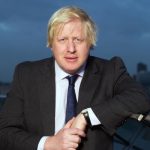
The statement made by Boris Johnson, the Prime Minister, in the House of Commons on 6 September 2021.
With permission, Mr Speaker, I will update the House on the situation in Afghanistan and our enduring effort to provide sanctuary for those to whom we owe so much.
Since the House last met, our armed forces, diplomats and civil servants have completed the biggest and fastest emergency evacuation in recent history, overcoming every possible challenge in the most harrowing conditions, bringing 15,000 people to safety in the UK and helping 36 other countries to airlift their own nationals. They faced the pressure of a remorseless deadline and witnessed a contemptible terrorist attack at the very gates of the airport, with two British nationals and 13 of our American allies among the dead. But they kept going, and in the space of a fortnight they evacuated our own nationals alongside Afghan friends of this country who guided, translated and served with our soldiers and officials, proving their courage and loyalty beyond doubt, sometimes in the heat of battle.
The whole House will join me in commending the courage and ingenuity of everyone involved in the Kabul airlift, one of the most spectacular operations in our country’s post-war military history. This feat exemplified the spirit of all 150,000 British servicemen and women who deployed in Afghanistan over the last two decades, of whom 457 laid down their lives and many others suffered trauma and injury. Thanks to their efforts, no terrorist attack against this country or any of our western allies has been launched from Afghanistan for 20 years. They fulfilled the first duty of the British armed forces: to keep our people safe. They and their families should take pride in everything they did.
Just as they kept us safe, so we shall do right by our veterans. In addition to the extra £3 million that we have invested in mental health support through NHS Op Courage, we are providing another £5 million to assist the military charities that do such magnificent work, with the aim of ensuring that no veteran’s request for help will go unanswered. The evacuation, Op Pitting, will now give way to Operation Warm Welcome, with an equal effort to help our Afghan friends to begin their new lives here in the United Kingdom, and recognising the strength of feeling across the House about the plight of individual Afghans.
Years before this episode, we began to fulfil our obligation to those Afghans who had helped us, bringing 1,400 to the UK. Then, in April this year, we expanded our efforts by opening the Afghan relocations and assistance policy. Even before the onset of Operation Pitting, we had brought around 2,000 to the UK between June and August—and our obligation lives on. Let me say to anyone to whom we have made commitments and who is currently in Afghanistan: we are working urgently with our friends in the region to secure safe passage and, as soon as routes are available, we will do everything possible to help you to reach safety.
Over and above this effort, the UK is formally launching a separate resettlement programme, providing a safe and legal route for up to 20,000 Afghans in the region over the coming years, with 5,000 in the first year. We are upholding Britain’s finest tradition of welcoming those in need. I emphasise that under this scheme we will of course work with the United Nations and aid agencies to identify those whom we should help, as we have done in respect of those who fled the war in Syria, but we will also include Afghans who have contributed to civil society or who face a particular risk from the Taliban, for example because of their role in standing up for democracy and human rights or because of their gender, sexuality or religion. All who come to our country through this safe and legal route will receive not a five-year visa, but indefinite leave to remain.
Our support will include free English courses for adults, and 300 university scholarships. We will shortly be writing to local authorities and the devolved Administrations with details of funding for extra school places and long-term accommodation across the UK. I am grateful for everything that they are doing, and, of course, for the work of the Under-Secretary of State for the Home Department, my hon. Friend the Member for Louth and Horncastle (Victoria Atkins), who is the Minister for Afghan resettlement. I am delighted—but not surprised—that across our country, people have been fundraising for our Afghan friends, and we have received numerous offers of help from charities and ordinary families alike. Anyone who wishes to join that effort can do so through gov.uk.
Our first duty is the security of the United Kingdom, and if the new regime in Kabul wants international recognition and access to the billions of dollars currently frozen in overseas accounts, we and our friends will hold them to their agreement to prevent Afghanistan from ever again becoming an incubator for terrorism. We will insist on safe passage for anyone who wishes to leave, and respect for the rights of women and girls. Our aim is to rally the strongest international consensus behind those principles, so that as far as possible the world speaks to the Taliban with one voice. To that end, I called an emergency meeting of the G7 leaders which made these aims the basis of our common approach, and the UK helped to secure a UN Resolution, passed by the Security Council last week, making the same demands. Later this month, at the UN General Assembly in New York, I will work with UN Secretary-General Guterres and other leaders to widen that consensus still further. We will judge the Taliban by their actions, not their words, and will use every economic, political and diplomatic lever to protect our own countries from harm and to help the Afghan people. We have already doubled the UK’s humanitarian and development assistance to £286 million this year, including funds to help people in the region.
On Saturday, we shall mark the 20th anniversary of the reason why we went into Afghanistan in the first place: the terrorist attacks on the United States which claimed 2,977 lives, including those of 67 Britons. If anyone is still tempted to say that we have achieved nothing in that country in 20 years, tell them that our armed forces and those of our allies enabled 3.6 million girls to go to school; tell them that this country and the western world were protected from al-Qaeda in Afghanistan throughout that period; and tell them that we have just mounted the biggest humanitarian airlift in recent history. Eight times, the Royal Air Force rescued more than 400 people on board a single plane—the most who have ever travelled on an RAF aircraft in its 103-year history—helping thousands of people in fear for their lives, helping thousands to whom this country owes so much, and thereby revealing the fundamental values of the United Kingdom.
There are very few countries that have the military capability to do what we have just done, and fewer still who would have felt the moral imperative to act in the same way. We can be proud of our armed forces for everything they have achieved, and for the legacy they leave behind. What they did was in the best traditions of this country. I commend this statement to the House.
Keir Starmer
I thank the Prime Minister for the advance copy of his statement.
The heroes on the ground in Operation Pitting are the best of us: the ambassador stayed to process every case that he could, paratroopers lifted people from the crush, Afghan soldiers continued to serve alongside us to the end, and thousands of others risked their lives to help others to escape. They faced deadly violence and deliberately-engineered chaos with courage, calm and determination. Thanks to their remarkable efforts, thousands were evacuated, British nationals have returned safely to their families and Afghan friends are starting a new life here in Britain. Speaking directly to those who served in Operation Pitting, I say thank you: your service deserves recognition and honour and I hope that the Prime Minister will accept Labour’s proposal to scrap the 30-day continuous service rule so that medals can be awarded for your bravery.
The entire Army, our armed forces and veterans deserve proper support for mental health. The new funding announced today is welcome, but it is unlikely to be enough. Previous funding was described as “scandalous” by the Select Committee, and the Office for Veterans’ Affairs is still being cut. All those involved deserved political leadership equal to their service, but they were let down. They were let down on strategy. The Prime Minister underestimated the strength of the Taliban. Despite intelligence warnings that “rapid Taliban advances” could lead to the collapse of the Afghan security forces, a return to power of the Taliban and our embassy shutting down amid reduced security, the Government continued to act on the assumption that there was no path to military victory for the Taliban. Complacent and wrong.
Those involved were also let down by a lack of planning. Eighteen months passed between the Doha agreement and the fall of Kabul, yet as the Prime Minister now concedes, only 2,000 of the 8,000 people eligible for the Afghan relocations and assistance policy—ARAP—scheme have been brought to Britain. A strategic review was published to much fanfare, but it did not mention the Taliban, NATO withdrawal or the Doha agreement. And the Prime Minister convened a G7 meeting on Afghanistan only after Kabul was lost.
Because of this lack of leadership, the Government have left behind many to whom we owe so much. In the last few weeks, MPs have had thousands of desperate calls from people trying to get to safety. Many remain in danger, including the Afghan guards who protected the British embassy. In my constituency—I am not alone; Members across the House will have had this—cases involve Afghans who applied for the ARAP scheme weeks and sometimes months ago and who were clearly eligible but were not processed quickly enough by this Government and did not make it to the planes. The stress levels for them and their families, and for all our teams and caseworkers, has been palpable in the last few weeks and months. A familiar and desperate story to many on both sides of the House.
The Government do not even know how many UK nationals and Afghans eligible under the ARAP scheme have been left behind to the cruelty of the Taliban. A national disgrace. Even if they could identify who they had left behind, the Government do not have a plan to get everybody out. Kabul airport remains closed to international flights, safe passage has not been created to Afghanistan’s neighbours and, whatever the Prime Minister says today, there is no international agreement on the resettlement of Afghan refugees. We have a Prime Minister incapable of international leadership, just when we need it most. [Interruption.] I know that that is uncomfortable. The terrible attacks from ISIS-K highlight the new security threat, and the Government must act quickly to co-ordinate international partners to ensure that the Afghan Government’s collapse does not lead to a vacuum for terrorists to fill. There is also a desperate need for humanitarian support. A return to 2019 levels of aid spending is necessary, and where is the plan to ensure that it does not fall into the wrong hands?
To those who have managed to escape Afghanistan and have arrived here in the UK, we say welcome: I know that you will give much to this country as you make it your new home. All you need is help and support. I am pleased that indefinite leave to remain will now be granted to all those who arrive by safe and legal routes. Local authorities across the country are trying to play their part, but they have been in the dark as to how many people they will be asked to support and what resources they will have to do so. We will look at the letter to which the Prime Minister referred and examine the details.
History will tell the tale of Operation Pitting as one of immense bravery. We are proud of all those who contributed. Their story is made even more remarkable by the fact that, while they were saving lives, our political leadership was missing in action.
The Prime Minister
The right hon. and learned Gentleman did not put many questions to me. He made the general assertion that the Government had not been focusing on Afghanistan but, as far as I can remember, he did not even bother to turn up to the first of my three statements on Afghanistan in the House this year—I do not know where he was—such was his instinct and such was his understanding of the importance of the issue.
Actually, the right hon. and learned Gentleman’s figures are quite wrong. Before April we helped 1,400 people to safety from Afghanistan and, under the ARAP scheme, between then and 14 August we helped a further 2,000. As he knows very well, between 14 and 28 August this country performed an absolutely astonishing feat, and of course we will do everything we can to help those who wish to have safe passage out of Afghanistan. That is why we will continue, with our international friends and partners, to apply whatever pressure we can on the Taliban, economic and diplomatic, to ensure they comply, as they have said they will.
The right hon. and learned Gentleman should, in all candour, acknowledge the immensity of the achievement of this country’s armed forces in, for months, planning and preparing for Operation Pitting and then, contrary to what he just said, extracting almost double the number they originally prepared to extract. It was a quite astonishing military and logistical feat.
One thing I welcome is the right hon. and learned Gentleman’s congratulations to the armed forces for what they did.
Mr Tobias Ellwood (Bournemouth East) (Con)
Veterans and families, and indeed the wider public, are asking what it was all for. Afghanistan is back in the hands of a dictatorship, terrorism is once again allowed to thrive, the people of Afghanistan now face humanitarian disaster and, more worryingly, the limits of UK and western influence have been exposed. With America now adopting a more isolationist foreign policy, we have passed the high water mark of western liberalism that began after the second world war. This is a dangerous geopolitical turning point.
Does the Prime Minister agree there is now a void of leadership in the west and NATO? If Britain wants to fill that void, as we should, it will require a complete overhaul of Whitehall to upgrade our strategic thinking, our foreign policy output and our ability to lead.
The Prime Minister
My right hon. Friend deserves to be listened to with great respect on Afghanistan. From his service, he understands these issues deeply, but I must tell him that people listening to this debate across the country could be forgiven for not recognising that this country ceased military operations in Afghanistan in 2014. What we are doing now is making sure that we work with our friends and partners around the world to prevent Afghanistan from relapsing into a breeding ground for terror, to make sure that we use all the levers that we can to ensure that the rights of women and girls are respected, and to make sure that everybody who wants safe passage out of Afghanistan is allowed it. That is what we are going to do, and we will continue to show leadership in the G7, the P5, NATO and all the other forums in which this country leads the west.
Ian Blackford (Ross, Skye and Lochaber) (SNP)
May I thank all those who assisted in the evacuation from Afghanistan over the past few weeks? May I also thank the Prime Minister for the advance copy of his statement? Normally we have a Cabinet Minister sent to the House to cover for the Prime Minister, but today we have before us the Prime Minister desperately trying to cover for a Foreign Secretary who should have been sacked weeks ago. In Committee last week, the Foreign Secretary failed to answer even basic questions from my hon. Friend the Member for Glasgow South (Stewart Malcolm McDonald). I genuinely hope that the Prime Minister is better prepared today.
There is barely an MP in this House who has not submitted urgent and sensitive information to the Foreign Office on UK and Afghan nationals desperate to find safe passage away from the Taliban. It is a disgrace that most of these urgent queries have been left unresolved and unanswered. It is a disgrace not for us, but for all those who have been left behind—UK and Afghan nationals who are now fearful and, in many cases, in hiding. Thousands of desperate people—people we have a debt of responsibility to—have been left with no clarity, no answers and no help. So let me ask the Prime Minister: what assessment has been made of the number of UK nationals left in Afghanistan, and what plans are there to assist them? How many Afghans who qualify under the ARAP scheme as interpreters or in other groups have been left behind? Will the Prime Minister apologise to those who have been left behind, left high and dry—those the UK has a responsibility to?
Last night, in correspondence from Lord Ahmad, the Government gave the excuse that delays in evacuating all those with rights were because the Foreign Office had received more correspondence than during covid. But there is a fundamental difference: no one knew that covid was coming. The Government had 18 months to prepare an exit strategy in Afghanistan. So can the Prime Minister give a firm deadline for when the massive backlog of applications will be processed and provide a new target date for when safe passage will be offered to those UK and Afghan citizens?
When Parliament was recalled, the Prime Minister publicly agreed to hold a four-nations summit on the UK’s responsibility to welcome refugees here. May I ask him to give us the date when that summit will take place? Finally, with all the talk of a Cabinet reshuffle, can the Prime Minister guarantee that the Foreign Secretary will finally be sacked in any reshuffle—or does he intend to reward incompetence?
The Prime Minister
I am always happy to meet representatives of the Scottish Government and other devolved Administrations, of course.
The right hon. Gentleman asked some specific questions about the handling of requests from those still in Afghanistan and those who have been interceding on their behalf. I can tell him that by close of play today every single one of the emails from colleagues around this House will be answered—thousands and thousands have already been done. As for the question of how many ARAP candidates are remaining, I can tell him that the total number is 311, of whom 192 responded to the calls that were put out. I repeat that we will do absolutely everything we can to ensure that those people get the safe passage that they deserve, using the levers that I have described. But the contrast should be readily apparent to everybody in this country with the huge number—15,000 people—we were able to help just in the course of those few days in August. I think people will understand that it was a very considerable effort by our armed forces.
Mr Speaker
Just to help the House, let me say that we will be running this until around 4.45 pm. Not everybody is going to get in and people will be disappointed, but we are going to do our best, so let us help each other.
Mrs Theresa May (Maidenhead) (Con)
I join my right hon. Friend in commending all those involved with the Afghanistan airlift and all those of our armed forces who served in Afghanistan, 457 of whom, sadly, as we know, paid the ultimate sacrifice. We should all be proud of their achievements. Does he agree that as a result of NATO forces withdrawing from Afghanistan, the terrorist threat has increased? Will he confirm that all those involved in counter-terrorism work here in the UK will be given the necessary support to ensure that they can keep us safe?
The Prime Minister
I thank my right hon. Friend for her question. I know how much work she has done in her career to protect this country and to counter terrorism. As yet, we have no direct information on any increase in the threat, but I assure my right hon. Friend and the House that every effort will be made to make sure that our counter-terrorist agents have the resources they need to keep us safe.
Janet Daby (Lewisham East) (Lab)
I have received hundreds of emails about Afghanistan from constituents, and I have British national constituents—a husband and his pregnant wife—in Afghanistan. What discussions have the Government had with Afghanistan’s neighbours about keeping borders open for those at risk under the Taliban and supporting refugees?
The Prime Minister
I am sure that many colleagues in the House will ask similar questions. My right hon. Friend the Foreign Secretary has been talking to the Government in Pakistan and other regional countries about what we can do to assist them, as I have described. As the hon. Lady knows, in addition to the ARAP programme we have the Afghan settlement programme, which will run up to 20,000 over the next few years.
Tom Tugendhat (Tonbridge and Malling) (Con)
First, I pay tribute to the Prime Minister for his increased funding for mental health care for veterans. I am sure he will keep that sum under review, in case it should need to rise.
Will the Prime Minister draw on the lesson that he has already learned from the appointment of the Under-Secretary of State for the Home Department, my hon. Friend the Member for Louth and Horncastle (Victoria Atkins), as a single point of contact in the UK, and seek to have a single point of contact for those in Afghanistan who may need to access either the route to exit or support from Her Majesty’s Government?
The Prime Minister
My hon. Friend knows whereof he speaks. I have met people who have come from Afghanistan only recently who have helped us greatly in the past 20 years. As the House will understand, the key issues for them are where they are going to send their children to school and whether they can access the housing they need. I thank my right hon. Friend the Secretary of State for Housing, Communities and Local Government for what he is doing. My hon. Friend is quite right that the Under-Secretary of State for the Home Department, my hon. Friend the Member for Louth and Horncastle, is the single point of contact on which people should focus.
Ed Davey (Kingston and Surbiton) (LD)
We all saw the horrific carnage outside Kabul airport, where more than 180 people were killed. I join the Prime Minister in remembering all those victims, not least the two British nationals and the child of a British national. That airport atrocity was the work of the terrorist organisation ISIS-K. Everyone agrees that we must now work to prevent ISIS-K from becoming a threat to the British people, yet under this Prime Minister’s watch he has not only failed to agree a co-ordinated international strategy to take on ISIS-K but failed even to proscribe ISIS-K as a terrorist organisation, unlike other Five Eyes countries. Will the Prime Minister explain these failures on national security?
The Prime Minister
I am afraid the right hon. Gentleman is in error. ISIS-K—ISIS Khorasan Province—is a subset of Daesh. It is part of Daesh. As he knows very well, one of the bitter ironies of the situation is that the Taliban themselves are no friends to ISIS-K, and whatever Government there is in Kabul will need help to fight them.
Jacob Young (Redcar) (Con)
We are proving our immense generosity by supporting those in dire need in Afghanistan with safe passage to the UK, but our ability to do so is strained by the continuing uncontrolled illegal migration across the English channel. What more can the Government do to prevent it?
The Prime Minister
My hon. Friend is completely right. The issue is that, very sadly, our friends across the channel in France are faced with a very difficult problem: large numbers of people who want to come to this country. We are doing everything we can to encourage the French to do the necessary and impede their passage. My right hon. Friend the Home Secretary is working round the clock to ensure that we not only encourage the French to stiffen their sinews and stop people making the journey but use every possible tactic available to us.
John McDonnell (Hayes and Harlington) (Lab)
May I raise a constituency matter with the Prime Minister? More than 800 local Afghani families have contacted me about their concerns over their relatives in Afghanistan. The thousands who are coming to this country are largely coming in through Heathrow and being quarantined in about seven hotels in my constituency. There is real anxiety, given the performance in the past on asylum seekers in hotels in my constituency, that those people could be trapped in those hotels for quite a long time to come. I would like the Prime Minister to arrange a meeting with myself and the relevant Minister or officials to discuss the plan to support those families—like everybody else, I welcome them, as do those in my community—but also the long-term relocation plan to make sure that they have all that they need to settle here for the future.
The Prime Minister
The right hon. Gentleman is right to draw attention to the issue. Some councils have responded magnificently, notably in the east midlands and elsewhere. I know that my right hon. Friend the Secretary of State for Housing, Communities and Local Government is putting substantial funding in place, but if the right hon. Gentleman wants a further meeting, I have no doubt that the relevant Minister will be only too happy to oblige.
Siobhan Baillie (Stroud) (Con)
I am working with incredible Stroud constituents who are dedicating their time to helping Afghan families under threat. These people are in hiding. The Taliban have been going door to door looking for them. Border options are dangerous and constantly changing. They are absolutely terrified. Will the Prime Minister help me to show those families that they should not lose hope and help us as MPs to provide timely and credible information about safe passage options?
The Prime Minister
Yes, of course. My hon. Friend is entirely right in what she says. That is why we are going to continue to put all the pressure that we can on the Taliban to ensure safe passage for the groups that I have described. We are joined in that by friends and partners around the world.
Yvette Cooper (Normanton, Pontefract and Castleford) (Lab)
May I join the tributes to our armed forces who have worked so hard?
There are still people being persecuted and hunted by the Taliban because they worked for the UK Government, but through contractors, not as direct employees. They have not had replies to their ARAP applications and the rumour circulating is that they may have to wait for the resettlement scheme, but also that many of the places on the resettlement scheme have already been allocated and that the scheme is almost full. Can the Prime Minister clarify the situation for those people, tell us whether some of the resettlement scheme places have been pre-allocated and if so how many, and say what will be done for those contractors as well as direct employees, to whom we owe an obligation?
The Prime Minister
The right hon. Lady raises an important question. I can tell her that the ARAP places have not been transferred and that they continue to be valid—people on the ARAP scheme continue to be eligible. Nor is it correct to say that the initial budget of 5,000 for the resettlement scheme has already been filled. That is not correct either.
Dr Julian Lewis (New Forest East) (Con)
The Council for At-Risk Academics has been rescuing scholars in danger from oppressive regimes since the Nazi period in 1933. The Home Office has been sent a list of 12 such scholars, some of whom are in hiding in Afghanistan and some in hiding in Pakistan for lack of documentation. Will the Home Office make their case a priority because in them lies any hope for the future of Afghanistan?
The Prime Minister
Yes, there are many difficult cases, but I thank my right hon. Friend for drawing attention to those particular individuals who are at risk. I will ensure that the relevant Foreign Office Minister is in touch with him about the specific cases that he raises.
Rachael Maskell (York Central) (Lab/Co-op)
We know that the humanitarian crisis in Afghanistan and the region is growing by the hour. A famine is expected and of course it will be difficult to get aid through. So what specific steps has the Prime Minister taken already to ensure that the famine is averted, but also that the region receives the international development aid that it requires to avert a further crisis?
The Prime Minister
Immediately that the crisis broke, I spoke to UN Secretary-General António Guterres about what the UN should be doing and what the UK was going to do to support. As the hon. Member knows, the UN continues to be in-country in Afghanistan and we have doubled our humanitarian support. We will be working with friends and partners at the UN General Assembly and beyond to ensure that we tackle the humanitarian crisis as well.
Mr Andrew Mitchell (Sutton Coldfield) (Con)
Certainly the last months have seen the shattering of many illusions. Does my right hon. Friend agree that, if we are tonight to help the people of Afghanistan, millions of whom are out in the open and will not be fed, we need to ensure that the whole international community focuses on doing so through the mechanism of the United Nations and probably through the traditional mechanism of a regional contact group, and that Britain—through its experience on these matters, its membership of the UN Security Council and its G7 chairmanship—is now in a pivotal position to help the people I mentioned?
The Prime Minister
My right hon. Friend is completely right to raise the contact group in addition to the other forums that I have described, and to pay particular note of the role of the UN; my right hon. Friend the Foreign Secretary has just talked to Jean Arnault, the UN Secretary-General’s special representative to Afghanistan. The contact group is a vital part of the way in which we should co-ordinate our efforts.
Patricia Gibson (North Ayrshire and Arran) (SNP)
Some 80% of the world’s heroin and opium supply originates in Afghanistan, providing the Taliban with more than half their income and causing untold misery across the world. What steps is the Prime Minister taking in partnership with UK allies to prevent the Taliban and the organised criminal gangs with which they work from flooding our communities with yet more heroin, given that they are now in control in Afghanistan and have fewer impediments than ever to growing more opium?
The Prime Minister
Sadly, the rate of production and export of opium from Afghanistan has been increasing in recent years. I think that the global output is actually now even higher than the figure the hon. Lady suggests. What is needed, of course, is to insist that the Taliban stop this and do not allow Afghanistan to continue to be a narco-state, but the way to fight heroin consumption in this country is to have a strong crime-fighting institution such as the National Crime Agency, and I was privileged to see the United Kingdom’s crime fighters doing fantastic work near Glasgow.
Steve Double (St Austell and Newquay) (Con)
The Prime Minister will be aware that, as a result of the NATO withdrawal from Afghanistan, there is great concern that the terrorist threat to this country has increased. Can he reassure the people of this country that we maintain not only the military capability, but the political will, to take whatever action is necessary against groups such as ISIS-K in order to keep this country safe?
The Prime Minister
My hon. Friend makes an extremely important point. It is a question that a lot of people will have formed in their minds and which my right hon. Friend the Defence Secretary has answered before; of course we keep those options on the table and of course the Taliban are aware of that.
Dame Meg Hillier (Hackney South and Shoreditch) (Lab/Co-op)
There are many barriers facing people who are already in the immigration system. One is that some, including constituents of mine, have spouses and children whose original documents are with the Home Office and they only have photocopies. Another, of course, is the English language test. Are the Prime Minister and the Home Secretary proposing any movement on those issues in order to support people, particularly those already in the system, to get here as quickly as possible?
The Prime Minister
The hon. Lady should know that, of course, we try to help people coming from Afghanistan in the most expeditious way possible. This country cannot be faulted for the generosity of our offer on the resettlement programme and it certainly cannot be faulted for the sheer number of people we have already moved to this country.
Mark Logan (Bolton North East) (Con)
I welcome the Prime Minister’s statement. Aside from the G7 and traditional partners to which the Prime Minister referred, what role does he envisage Pakistan, Uzbekistan and in particular China playing in the geopolitics of the region of central Asia in the months and years ahead?
The Prime Minister
My hon. Friend asks a very important question. I think the answer is that it is in the interests of every single one of the countries that he has mentioned to ensure that Afghanistan does not relapse into being a breeding ground for terror. That is not in China’s interests, in Uzbekistan’s interests or in Russia’s interests. Russia has abundant experience of the risks of Afghanistan. That is why it is so important that we work with friends and partners around the world—and, indeed, those who are not ordinarily classified as our friends—to achieve a common perspective on the pressure that we have got to apply to the Taliban.
Helen Hayes (Dulwich and West Norwood) (Lab)
Many of my constituents have family members in Afghanistan who could be eligible for asylum in the UK under more than one route—for example, by ARAP, under the Foreign Office special cases criteria, or under family reunion. Yet there is currently no co-ordination between Departments. My constituents are being passed from pillar to post. ARAP is refusing cases where there may be an alternative route, and the Foreign Secretary and the Home Secretary are not replying to their emails. When will the Prime Minister sort out this lack of co-ordination across his Government?
The Prime Minister
I must reject that in the strongest possible terms. The House has paid tribute, quite rightly, to the work of the armed services over the last few weeks and months, but it should also pay tribute to the Foreign, Commonwealth and Development Office’s rapid reaction team who went to Afghanistan, and to the Border Force officials who went out there, who worked hand in glove to help thousands of people come to this country in safety.
Mr Mark Harper (Forest of Dean) (Con)
In terms of protecting our country now that the risk from terrorists has undoubtedly increased, what is the Prime Minister’s assessment not just of the Taliban’s willingness to deal with terrorists operating in Afghanistan, but of their capability to deal with that terrorist threat, given what we saw from ISIS-K just a week or so ago?
The Prime Minister
My right hon. Friend is right to draw attention to the risks that the Taliban are themselves running, because they now possess the government of Afghanistan and it is their responsibility. They clearly face that threat from IS-K and indeed potentially other groups. Of course they will do everything, I imagine, to protect the public, but in the end we have to face the reality that the Taliban have now got the problem. We will do everything we can, of course, to ensure that we guard against future outbreaks of terrorism from that country, but it is in the interests of the new Government of Afghanistan to crack down on terrorism as much as anybody else.
Liz Saville Roberts (Dwyfor Meirionnydd) (PC)
Under the Nationality and Borders Bill, an Afghan woman who flees with her children and arrives in Britain by an irregular route will not be welcomed; she will be criminalised. Wales has declared our role in the world to be as a nation of sanctuary. Will the Prime Minister withdraw the Bill to enable us to fulfil our ambition and to make that warm welcome he spoke about?
The Prime Minister
No, I cannot accept what the right hon. Lady has said, because this country has been extremely generous—more generous than most countries around the world—not just in bringing people immediately from Afghanistan but in setting out a safe and legal route for 20,000 more to come. That is a big number and the route for those people is clear.
Danny Kruger (Devizes) (Con)
I am very pleased to hear about Operation Warm Welcome. Wiltshire, my county, is home to many thousands of British soldiers who have served with Afghan colleagues over the past 20 years. I hope the Prime Minister will join me in congratulating Wiltshire Council and the communities of Wiltshire, including the military communities, for the welcome that they are offering to the refugees. Will he assure the House that councils across the country will get the resources they need to support those evacuees?
The Prime Minister
Yes. I thank my hon. Friend. Of course I congratulate Wiltshire Council on what it is doing, as I congratulate all councils that are stepping up to the plate and helping Afghans to settle and to integrate at this time. I can tell him that Wiltshire Council and all other councils involved will get the support and funding they need.
Richard Burgon (Leeds East) (Lab)
Like other Members, my constituency office and I have been doing everything we can to help constituents trapped in Afghanistan and to help their relatives who need to get out urgently, but it is clear that the Government are failing to do all they can to help these vulnerable people and are disgracefully putting even more people’s lives at risk. More widely, President Biden has called for an end to
“an era of major military operations to remake other countries”.
Given the huge loss of life in the disastrous and tragic wars in Iraq, Afghanistan, Libya and elsewhere, is it not time that we do the same?
The Prime Minister
As I have just reminded the House, the UK ended its military operation in Afghanistan in 2014.
Anthony Mangnall (Totnes) (Con)
Can I ask the Prime Minister what engagement he and the Foreign Secretary have had with non-governmental organisations, which are the only western organisations that are still on the ground in Afghanistan, and what steps he will take to protect them? Can I also ask what parameters need to be met to see the embassy reopened? The British diplomatic network is one of the finest in the world—that is surely the way to be able to help those who have been left behind.
The Prime Minister
My hon. Friend is entirely right to draw attention to the incredible work done by aid agencies and by NGOs. It is precisely to support those fantastic agencies that we have doubled our humanitarian aid to Afghanistan and the region to £286 million this year.
Dan Jarvis (Barnsley Central) (Lab)
Later today, I will be reunited with an Afghan special forces commander whom I had the privilege of serving alongside. He is mightily relieved to be here, but understandably deeply concerned about the hundreds of his men and their family members who, although approved for relocation to the UK, were left behind. What can I tell him is being done to ensure that those who are in limbo are afforded safe passage, protection and unimpeded access to the UK?
The Prime Minister
I pay tribute to the service of the hon. Gentleman and, in addition, to the service of the Afghan special forces. He is absolutely right to draw attention to what they did. I believe that the 333—the Triples—were incredibly important. We will do whatever we can, as I have said, to ensure that those who have not yet come out do get the safe passage they need.
Johnny Mercer (Plymouth, Moor View) (Con)
The Prime Minister just said from the Dispatch Box that no veterans’ call for help will go unanswered, and I totally support that ambition. In fact, that was a central aim with the establishment of the Office for Veterans’ Affairs when he started it, but he and I know that he has consistently failed to take the measures required to make that a reality for veterans in communities like mine. What is he going to do differently to make veterans feel this has changed, rather than just reading about it in the newspapers or hearing about it from Westminster?
The Prime Minister
I thank my hon. Friend for the work he did as Minister for veterans’ affairs and for his service in Afghanistan. I believe that he gravely underestimates what this country has done. Just today, on veterans’ mental health, the House will have heard the further support we are offering. This is a Government who are absolutely determined to support our veterans, and that is why we passed the Overseas Operations (Service Personnel and Veterans) Act 2021 and will continue to take steps to protect the veterans of this country.
Abena Oppong-Asare (Erith and Thamesmead) (Lab)
I have cases involving more than 300 people who are still stranded in Afghanistan, and despite raising every case with the Foreign, Commonwealth and Development Office and the Home Office, I have yet to receive a substantial response—not one. My constituents are desperate for information on how to travel to third countries and when the full resettlement scheme will be launched. Will the Prime Minister meet me to discuss these urgent cases, and promise that every email will receive a proper response from the relevant Department?
The Prime Minister
I thank the hon. Lady. I expect that she speaks for many colleagues around the House who, like me, will have received messages from those who wish to leave Afghanistan. I repeat what I said earlier: every single email from colleagues is being responded to by close of play today.
Mr Peter Bone (Wellingborough) (Con)
Like many Members, I have had emails from Afghans in this country worried about their people back in Afghanistan. The Home Office and the Foreign Office have managed to get some of those people relocated, but I had the extraordinary situation where I had a very detailed email about Afghans who were being persecuted and who had worked for the British. It was very detailed and they produced all the documentation. The following day, my constituent wrote to me and said, “I am really sorry. It is a complete lie. These people are Taliban, and I cannot go through with this masquerade.” I just wonder whether we should be on guard against getting such people into this country.
The Prime Minister
I am sure that my hon. Friend, like many in the House, will be relieved to know that from the very beginning of Operation Pitting, the ARAP scheme and all the subsequent schemes we have put in place, the very highest possible security checks have been instituted to make sure that people are who they say they are and that we receive to this country the people who genuinely deserve to come here.
Stephen Farry (North Down) (Alliance)
Will the Prime Minister clarify the situation that applies to Afghans who were in our asylum system in this country prior to the fall of Kabul? Will they too be given indefinite leave to remain? Surely there are no circumstances in which they will be forced to return of Afghanistan.
The Prime Minister
I am grateful to the hon. Member, who raises an important point. Many of those individuals will already be going through procedures in the courts, and we cannot interrupt them, so they will go on.
Mr David Davis (Haltemprice and Howden) (Con)
The whole House agreed with the Prime Minister when he celebrated the heroism of our troops, but that simply served to crystallise that this was not so much a defeat as a capitulation: an abandonment by the west of both people and principle. Does the Prime Minister believe that Tony Blair was right this morning when he said that western leadership was “naive” to believe that countries could be remade, or was it that our remaking of Afghanistan needed to last longer?
The Prime Minister
If Tony Blair was saying that it was naive to believe that countries could be remade and he was thinking of some of the things that he supported, I think he was spot on.
Tony Lloyd (Rochdale) (Lab)
The Prime Minister will know that after the calamitous collapse of the Government in Kabul and the disorderly retreat by western powers, there was rejoicing in parts of Mozambique, across the Sahel and, of course, in Somalia. Those are countries in which we have an interest because, if nothing else, they can be a source of terrorism here. What messages is he prepared to give about the UK working with partners to guarantee a proper, measured response that ensures we are not at risk of terrorism?
The Prime Minister
The hon. Gentleman is focusing on exactly the right question and the right response from the western world and, indeed, the global community. We need to work together to ensure that, as far as we possibly can, we condition the new Government and new authorities in Kabul to understand that Afghanistan cannot slide back into being a cesspit of terror. That is our effort today.
Richard Drax (South Dorset) (Con)
Many lessons will have been learned and relearned from Afghanistan—not least the need for boots on the ground. With the US becoming more isolated, will my right hon. Friend look again at the disastrous plan to reduce the Army by 10,000?
The Prime Minister
The Government are proud of what we have done since we came in to increase the size of our defence commitments by the biggest amount since the end of the cold war. On the hon. Gentleman’s point about Afghanistan, the reality is that even when there were 130,000 western troops in the country, it was not possible to subjugate the Taliban, and I am afraid that we are living with the lessons of that today.
Caroline Lucas (Brighton, Pavilion) (Green)
Last Friday, a young Afghan constituent told me through tears how his father—a British citizen—was turned away from the Baron hotel in Kabul on 28 August. He was trying to evacuate his other children, but he was refused permission to take two of them out of the country because they were aged 18 and 19. Can the Prime Minister imagine the pain of that family separation? All of them have stayed in Kabul, at huge risk to themselves. Will he look again at the family reunification rules and finally make it possible for families to stay together and not to have to face such a terrible choice?
The Prime Minister
The whole House will be full of sympathy to the family the hon. Member describes and the heartbreak they must have felt. I am sure there are many such cases in Kabul right now, but I think the record of this country in receiving people and being prepared to receive people in the future is very good. I ask her please to write to me or to the Home Secretary directly on the case of that particular family she is talking about.
Caroline Nokes (Romsey and Southampton North) (Con)
Many constituents have understandably been in touch, desperately worried about family members in Afghanistan. They want to find out whether the Afghan citizens’ resettlement scheme will be an application or an allocation process, when it will open and what that process will look like.
The Prime Minister
I thank my right hon. Friend. We will be making sure that there is a process by which people can apply, but there is clearly a ceiling in the first year of 5,000 and then it goes up to 20,000 over the next few years.
Joanna Cherry (Edinburgh South West) (SNP)
Christians in Afghanistan are one of the many minorities facing persecution, and many have been forced to flee their homes. A church community in my constituency is working around the clock to support several Christian families to flee to Pakistan and to seek asylum at the embassy of a safe third country. They are not looking for asylum in the UK, but to get to Pakistan. What particular support will the right hon. Gentleman’s Government offer vulnerable Christians such as those whom the community in my constituency are working with, and to which Department should I direct my entreaties in the hope of actually getting an answer?
The Prime Minister
I thank the church community the hon. and learned Member describes for the work they are doing. On moving people to Pakistan, the Government are helping by increasing the funding available, much of which obviously already goes to Pakistan, and that is the purpose of the increase in the aid budget this year.
Dr Liam Fox (North Somerset) (Con)
Even if we believe that the whole Afghanistan withdrawal was a US-made policy that was ill judged and poorly executed, can I ask my right hon. Friend to reject those voices calling for the United Kingdom to pull back from the United States and seek alternative alliances elsewhere? Surely the right response is to stick closely to our US friends, and to remind them that in an era of globalisation our economic and security interests will be threatened beyond our borders, that the United States is a force for good in the world, and that greater isolationism can only put us all in greater danger.
The Prime Minister
We helped 36 countries to repatriate their nationals or those they had helped, but we could not have done it had it not been for the bravery of the US military and the commitment of the US military, and I passionately agree with what my right hon. Friend has just said about the fundamental importance of our alliance with the United States of America.
Imran Hussain (Bradford East) (Lab)
The Government leaving vulnerable Afghans and British nationals behind is unforgivable, but what is completely and utterly reprehensible is that the families of two of my constituents, including a seven-month-old child, were forcibly removed from flights and thrown out of Kabul airport on to the streets, the scene of the horrific suicide bombing hours before. I am absolutely furious, and I want to ask the Prime Minister how on earth this potentially fatal decision was allowed to happen, even after I had raised these matters with the Ministers sitting to his left and his right. How many others were ejected from the airport into harm’s way, and just what does he have to say to the families that the Government have now put in grave danger?
The Prime Minister
I thank the hon. Member very much for raising the case. I have to tell him that I am told we have no evidence of anybody being pulled off flights, but obviously I would ask him to raise the particular cases directly with my right hon. Friends beside me. But I can tell him that I think, when he looks at the overall record of the UK moving people out of Kabul and across the whole of Afghanistan, it was an astonishing feat.
Sir Iain Duncan Smith (Chingford and Woodford Green) (Con)
I thank my right hon. Friend for his statement. Has he noticed that the Chinese Government, since our departure from Afghanistan, have used Afghanistan to up their threats on Taiwan, with hundreds of overflights threatening the Taiwanese and telling them that, when the war comes, the US will not be there to support them? Could my right hon. Friend take this opportunity, from the Dispatch Box, to say to the Taiwanese and others that we fully support their right to democracy and self-determination and we will be there to support them no matter what the Chinese say, and could we persuade the Americans to do the same?
The Prime Minister
I thank my right hon. Friend and am of course aware of the continuing issues between the People’s Republic of China and Taiwan. Indeed, I discussed that recently with the President of the United States, and it is one of the reasons why it is vital that this country continues to insist on the primacy of our relationship with the United States. The situation in Taiwan will continue to be difficult, and the only way forward is to continue to support American global leadership, and that is what we will do.
Rosie Duffield (Canterbury) (Lab)
As the Prime Minister knows, non-governmental organisations such as the excellent Kent Refugee Action Network provide vital support to those fleeing conflict—and, as he mentioned, that is via fundraising—but does he also acknowledge that the state has a duty of care regarding the mental health of traumatised refugees, including children? If he does, how can he assure the House that this will be possible given that the current average waiting time for young people to access a basic mental health assessment is two to three years?
The Prime Minister
The Government are absolutely determined to look after people coming from Afghanistan, and in particular to look after their mental health and address the trauma they might have suffered, and that is why we are investing massively in the services provided not just by the Ministry of Housing, Communities and Local Government but local government across the board.
Miss Sarah Dines (Derbyshire Dales) (Con)
What extra funds will be made available for local schools and councils like the Derbyshire Dales District Council, which urgently want to help but want to make sure that additional funds are available?
The Prime Minister
I thank my hon. Friend and Derbyshire Dales District Council for stepping up. We will of course make sure that the funds are available, and she should make representations to the Under-Secretary of State for the Home Department, my hon. Friend the Member for Louth and Horncastle (Victoria Atkins).
Chris Law (Dundee West) (SNP)
The Prime Minister’s handling of the planned departure from Afghanistan is, for those of us who are old enough to remember, akin to one of the farcical characters in “Carry on up the Khyber”. The Foreign Secretary was on a beach as the Taliban advanced on Kabul, unknown numbers of British nationals remain left behind, and the Taliban, and most probably ISIS, have been allowed to plunder military hardware and intelligence. Does the Prime Minister accept any personal responsibility for the mess left in Afghanistan, and does he agree that any notion of global Britain is in complete crisis?
The Prime Minister
No, and the hon. Gentleman is wrong in every respect, including what he says about military hardware because that was decommissioned.
Rehman Chishti (Gillingham and Rainham) (Con)
The Prime Minister has said that we should judge the Taliban by their actions not their words. The Taliban in Afghanistan have said that they will confine themselves to operating within the rules of Islam. As somebody who comes from a Muslim background and whose father is an imam, and whose grandfather and uncles were imams, I am not an expert on Islam but have a good understanding of the faith. One way forward for the Prime Minister and Government might be this: the Prime Minister might use his kind offices to ask the Organisation of Islamic Cooperation, with 57 member states, to request that Al-Azhar, a leading Islamic school of thought, set out what Islam means for women and religious minorities, as that might give us a way to judge what the Taliban are doing and what Islam stands for.
The Prime Minister
My hon. Friend makes an interesting suggestion and I encourage it to be taken up. We need to ensure that the elements of the Taliban who are different, as I believe they are, from the Taliban of 1996-9 are encouraged and that we put the maximum pressure on them not to allow the more retrograde elements to have the upper hand. That is what this Government and others around the world are going to do.
Hilary Benn (Leeds Central) (Lab)
Many communities, the city of Leeds included, have always given a very warm welcome to refugees, but we know that the poorest parts of our country have consistently taken a much higher proportion of refugees and asylum seekers than the wealthier areas. Does the Prime Minister think that is fair, and if not, what does he intend to do about it?
The Prime Minister
I believe the whole country should pull together and everybody should step up to the plate. I know that there are councils across the country that will want to help and are helping. I thank the people of Leeds very much for what they have done, both now and historically, and I hope that councils around the UK will follow their example.
Sir Bernard Jenkin (Harwich and North Essex) (Con)
I thank my right hon. Friend for his statement, in which he referred to the fact that Saturday is the 20th anniversary of 9/11. Given that public confidence in the Government’s strategic thinking has taken quite a bashing from this episode, is it not now time for a cold, hard, strategic look at how well we have done over the last 20 years—what has gone well, the mistakes we have made, what we have learned and what should be done to implement those lessons? Will he undertake to ensure that that reflection takes place?
The Prime Minister
I think the best I can do is direct my hon. Friend once again to the integrated review, which I know that he has studied and I believe is now more relevant than ever.
Jim Shannon (Strangford) (DUP)
I thank the Prime Minister for his statement. Is he aware that there is a desire in industry to help provide refugees with housing and jobs? Two firms in my constituency, Willowbrook Foods and Mash Direct, are keen and willing to give jobs to the Afghans, and also have access to private housing. Goodness always shines through, and we should always remember that. What steps can the Prime Minister take, via the Treasury, to help the system incentivise firms that want to help those who served alongside British forces and whose lives are at risk for their commitment to freedom and democracy in Afghanistan?
The Prime Minister
The hon. Gentleman makes an incredibly important point. The labour market is full of vacancies at the moment, and there are obviously opportunities for hard-working people of talent and energy to come and make their lives across the whole of the UK. We will help them with training, with the English language and, as I have been saying, with what else they need.
Julie Marson (Hertford and Stortford) (Con)
In stark contrast with the Leader of the Opposition, whose definition of leadership seems to be silence followed by 20:20 hindsight, I commend the Prime Minister for his leadership in this crisis. I ask him to continue that, on behalf of the UK and the G7, for women and girls in Afghanistan—both for their education and their wider participation in Afghan society.
The Prime Minister
I thank my hon. Friend. The UK is pulling together with our German friends, our Italian friends, our French friends, our American friends—all our G7 colleagues and others—to forge a collective global view, as far as we possibly can, about how to deal with the new regime in Kabul. It is by working together that we will get the best results. The UK, as the whole House knows, is in pole position in all the key institutions, and we will continue to exercise that role.
Jeremy Corbyn (Islington North) (Ind)
I realise that the Government’s focus at the moment is on refugees and dealing with the immediate crisis, but does the Prime Minister not think that, with tens of thousands of Afghan dead, thousands of American dead and hundreds of British dead, it is time for a full inquiry into the whole process that led us into Afghanistan and the whole notion of a foreign policy in which we intervene all over the world, and that we should start to re-examine our place and our role in this world?
The Prime Minister
The right hon. Gentleman knows, because he has heard me say it before, that there was a full review after the end of the military operation in 2014—a review of what it achieved and of the legacy of those brave British men and women who served in Afghanistan. I think that was the right thing to do. As for the rest, I do not know whether he has read the integrated review from cover to cover, but I direct him to it.
Andrew Bridgen (North West Leicestershire) (Con)
Following our ignominious withdrawal from Afghanistan, where we were effectively dragged out on the coat-tails of our more powerful American allies, the world has changed and become a more dangerous place. Will my right hon. Friend share with the House his latest assessment of the so-called special relationship? Is it not time for another defence review?
The Prime Minister
I thank my hon. Friend, whose trenchant views I often agree with, but I think in this case the special relationship—at Carbis Bay I called it the irreplaceable or the indestructible relationship; I cannot remember exactly what phrase I used—is a basic geopolitical fact. On the special relationship rests much of the security of the last 100 years. It will continue to be of cardinal importance to this country. That is a fact that is as understood in Washington as it is in this country.
Peter Kyle (Hove) (Lab)
The Prime Minister has turned his back on the EU, and Washington has turned its back on him. Since he stood on a platform of global Britain, can he tell us where Britain has more influence than we did before he became Prime Minister?
The Prime Minister
Virtually everywhere is the answer to that. [Interruption.] We have our own sanctions policy. We have been able to set up new embassies and legations around the world. We are opening up in the south Pacific and in Africa. We are doing free trade deals; I think a total of 63 so far. Who knows—there may even be another one this week.
Saqib Bhatti (Meriden) (Con)
As the Prime Minister will be aware, the majority of people who came to this country from Afghanistan came via Birmingham airport in my constituency. Will my right hon. Friend join me in commending the team at Birmingham airport, Solihull Council and third sector organisations such as Entraide at Three Trees Community Centre, who have welcomed nearly 1,000 people a day, sometimes including many, many children and young babies?
The Prime Minister
Yes. I had the opportunity to thank the troops the other day, but I want to thank everybody who has been involved: Border Force officials and everybody in the councils who has been on the frontline dealing with this crisis. They have done it with exceptional humanity and compassion.
Chris Bryant (Rhondda) (Lab)
I have sent 143 cases of Afghans who are connected to my constituency to the Foreign Secretary, the Defence Secretary and the Home Secretary—all three of them, because there are three different channels. May I urge the Prime Minister to reflect on the idea, suggested by countless colleagues on the Opposition Benches, that there should be a single triage point, a single person who deals with all these cases? Since I sent in those names, one has been shot, one has been raped and one has been tortured. People are desperate to try to get the best result for these people. I am sure that Ministers want to help, but at the moment it feels as if the left hand does not know what the right hand is doing.
The Prime Minister
I am sure that the whole House sympathises very much with what has happened to those individuals in Afghanistan that the hon. Gentleman describes. We are doing our level best to help people as fast as we can. I want the Government to focus on helping people with a single point of contact. That is why the Under-Secretary of State for the Home Department, my hon. Friend the Member for Louth and Horncastle (Victoria Atkins) is the person in question.
Chris Clarkson (Heywood and Middleton) (Con)
The men and women who serve in our armed forces are remarkable and make huge sacrifices, both personally and in their careers. Can my right hon. Friend the Prime Minister confirm that they will get the very best support and care when they return home, so that they know this nation is grateful for what they have done?
The Prime Minister
Yes. It is absolutely vital that those who have given so much and have served so bravely in Afghanistan, and indeed their families, should receive the lifelong support they deserve—and they will.
Jessica Morden (Newport East) (Lab)
My office and I have been trying for several years, through the Home Office, to reunite various Afghan interpreters who settled in Newport with their wives and families. Just hours before the withdrawal, their paperwork came through but they were not able to get through the crowds to flights. We understand that they are not eligible for ARAP. Does that mean that they are included in the resettlement scheme, and what happens now, given that the principle of them joining their husbands has been agreed?
The Prime Minister
I am very grateful to the hon. Lady. I am very sorry to hear what happened at Hamid Karzai International airport. I hope they will be successful under the resettlement scheme. If she would be kind enough to send details through to the Home Secretary, I would be very grateful.
James Sunderland (Bracknell) (Con)
It is very easy to apportion blame with the benefit of hindsight, but this is a really complex environment and the current situation is as much a failure of leadership in Afghanistan as anything else. While we may not want to engage with the Taliban, does the Prime Minister agree that we have no choice but to do so, perhaps with a forward presence in Kabul in the same way as our Chinese and Russian adversaries?
The Prime Minister
My hon. Friend is very wise in what he says. I believe that it is inevitable for us to engage with the Taliban. Indeed, we have been: at the airport, British troops were working directly with their Taliban counterparts to ensure that the operation went through. That was an inevitability. We will of course look at further co-operation, but as I said to the House, we will judge the new regime in Kabul not by what they say, but by what they do.
Mr Pat McFadden (Wolverhampton South East) (Lab)
Our troops did a great job at Kabul airport, but the events of recent weeks have exposed the limitations of our ability to act outwith the umbrella of the United States, even if we wanted to choose a different path. What is the Prime Minister’s response to the exposure of those limitations?
The Prime Minister
I do not agree with what the right hon. Gentleman said. The particular case of Afghanistan was one in which America was very much engaged because of 9/11. It was America that supplied 98% of the air power—98% of the munitions dropped were from the US. It was overwhelmingly a US-led mission, but that does not mean that the UK cannot and will not co-operate with other friends and partners around the world. That is what we are going to continue to do.
James Gray (North Wiltshire) (Con)
On 167 occasions, all told, I stood with the people of what is now Royal Wootton Bassett to see 345 of our comrades repatriated to this country. On no occasion did I hear anybody say, “Why?” Nobody ever said, “These lives were wasted.” Nobody was ever ashamed of what had happened. On the contrary, they were proud of the fact that these young people had given their lives for the service of their country, for the benefit of the people of Afghanistan and for the security of the world. Does the Prime Minister not agree that that should now be the litmus test of how we judge what is happening in Afghanistan? We should be proud of all we have done.
The Prime Minister
I thank my hon. Friend; I believe he speaks for millions of people—quiet people—up and down this country.
Ms Diane Abbott (Hackney North and Stoke Newington) (Lab)
The Prime Minister will be aware that the entire House is united in offering our respect and congratulations to the people at the grassroots who made the evacuation of British passport holders and Afghans possible in recent weeks, but he must also be aware of how difficult it has been to get responses from Government Departments on behalf of our constituents who are terrified for their relatives and want to arrange safe passage for them. Will the Government give the House an undertaking that they will make sure that the relevant Departments have the resources and the people so that we can communicate with our constituents and give them some news at least?
The Prime Minister
I thank the right hon. Lady. She is repeating a point that has been made across the House by many colleagues this afternoon. The work so far has been extraordinary. I pay tribute to the speed with which British officials have done their best to respond, and every email, as I said, will be answered by tonight.