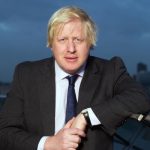
The speech made by Boris Johnson, the Prime Minister, on 19 February 2022.
Ambassador Ischinger, Your Excellencies, Ladies and Gentlemen, it’s great to be here once again, after an absence of I think five years, at this very important security conference, which has helped to make this city a symbol of the unity of the West, of the strength of the Atlantic alliance and the vision of a Europe whole and free.
And at this moment of extreme danger for the world, it has seldom been more vital to preserve our unity and resolve, and that was the theme of my discussion last night with fellow leaders, including President Biden, President Macron, Chancellor Scholz and Prime Minister Draghi, as well as the leaders of NATO and the EU.
And as I said to President Putin during our last conversation, we in the UK still hope that diplomacy and dialogue may yet succeed.
But we also have to be unflinchingly honest about the situation today.
When over 130,000 Russian troops are gathering on the borders of Ukraine, and when more than 100 battalion tactical groups threaten that European country.
We must be united against that threat because we should be in no doubt what is at stake here.
If Ukraine is invaded and if Ukraine is overwhelmed, we will witness the destruction of a democratic state, a country that has been free for a generation, with a proud history of elections.
And every time that Western ministers have visited Kyiv, we’ve assured the people of Ukraine and their leaders that we stand four-square behind their sovereignty and independence.
How hollow, how meaningless, how insulting those words would seem if – at the very moment when their sovereignty and independence is imperilled – we simply look away.
If Ukraine is invaded the shock will echo around the world and those echoes will be heard in East Asia and they will be heard in Taiwan.
When I spoke to the Prime Ministers of Japan and Australia this week, they left me in no doubt that the economic and political shocks would be felt on the far side of the world.
So let me be clear about the risk.
The risk now is that people will draw the conclusion that aggression pays and that might is right.
So we should not underestimate the gravity of this moment and what is at stake.
As I speak to you today, we do not fully know what President Putin intends but the omens are grim and that is why we must stand strong together.
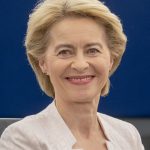
The UK has worked with the European Union and the United States to put together the toughest and strongest package of sanctions, and I spoke recently to President Ursula von der Leyen to discuss the measures prepared by the EU, in the closest coordination with our own.
And if Russia invades its neighbour, we will sanction Russian individuals and companies of strategic importance to the Russian state; and we will make it impossible for them to raise finance on the London capital markets; and we will open up the matryoshka dolls of Russian-owned companies and Russian-owned entities to find the ultimate beneficiaries within.
And if President Putin believes that by these actions he can drive NATO back or intimidate NATO, he will find that the opposite is the case.
Already the UK and our allies are strengthening the defences of the eastern flank of NATO.
We are increasing the British contribution to Exercise COLD RESPONSE by sending our newest aircraft carrier, HMS Prince of Wales, and 3 Commando Brigade.
We are doubling our presence in Estonia to nearly 2,000 troops; we have increased our presence in Poland to 600 troops by sending 350 Marines from 45 Commando; we have increased our presence in the skies over south-eastern Europe with another six Typhoons based in Cyprus; we are sending warships to the eastern Mediterranean and the Black Sea; and I have placed another 1,000 troops on stand-by to respond to any humanitarian emergency, which we all fear is increasingly likely.
And while the most alarming and visible threat is the massing of Russian land forces on Ukraine’s borders, look at the naval build-up in the Black Sea, which threatens to blockade Ukraine; look at the massive cyber attacks and the incoming tide of disinformation.
This crisis extends into every domain, which is why the UK is providing NATO with more land, sea and air forces, and it is because we feared a crisis like this, that we were already engaged in the biggest increase in defence investment for a generation, spread across conventional capabilities and the new technologies that are ever more important to our collective defence.
And I’m proud to say that since Russia invaded Ukraine for the first time and annexed Crimea in 2014, we have been helping Ukraine, training 22,000 troops and, in recent months, in response to the threat, we have been among the nations to send defensive weaponry in the form of 2,000 anti-tank missiles.
I’m glad that we have been joined in this by the United States, by Poland and by our Baltic allies, and that many other nations and the EU have, like the UK, helped to strengthen Ukraine’s economy.
Britain will always stand up for freedom and democracy around the world, and when we say that our commitment to European security is immovable and unconditional, our deeds show that we mean our words.
We are making the biggest contribution to NATO of any European ally because we understand the importance of collective security, and just as our European friends stood by us after the Russian state used a chemical weapon in Salisbury, so Britain will stand by you.
But we must accept that even these measures by the UK and our allies: draconian sanctions, rinsing out dirty money, the intensification of NATO’s defences, fortifying our Ukrainian friends, they may not be enough to deter Russian aggression.
It is therefore vital that we learn the lessons of 2014.
Whatever happens in the next few days and weeks, we cannot allow European countries to be blackmailed by Russia, we cannot allow the threat of Russian aggression to change the security architecture of Europe, we cannot permit a new Yalta or a new division of our continent into spheres of influence.
We must now wean ourselves off dependence on Putin’s oil and gas.
I understand the costs and complexities of this effort and the fact this is easier said than done, so I am grateful for Chancellor Scholz’s assurances about Nord Stream 2, but the lessons of the last few years, and of Gazprom’s obvious manipulation of European gas supply, cannot be ignored.
We must ensure that by making full use of alternative suppliers and technology, we make Russia’s threats redundant.
That will be the work of the months and years to come, as well as the necessary and overdue steps that we in the UK must take to protect our own financial system.
And now we need to prepare ourselves for the Russian playbook of deception that governs every operation of this kind.
There will be a cascade of false claims about Ukraine, intended to spread confusion almost for its own sake,
and even now there are plans being laid for staged events, spinning a web of falsehoods designed to present any Russian attack as a response to provocation.
We’ve already witnessed a fake military withdrawal, combined with staged incidents that could provide a pretext for military action.
We knew this was coming, we’ve seen it before – and no-one should be fooled.
And we have to steel ourselves for the possibility of a protracted crisis, with Russia maintaining the pressure and searching for weaknesses over an extended period, and we must together refuse to be worn down.
What Europe needs is strategic endurance, and we should focus our energies on preserving our unity and on deepening trans-Atlantic cooperation.
But for that to work, we must also be prepared to devote the necessary resources to carry a greater share of the burden of preserving our continent’s security, and to demonstrate that we are in it for the long haul.
For now, we should continue to do everything we can to pursue the path of peace and dialogue.
There is a way forward, if President Putin is minded to take it: there is a discussion to be had about the threats that he claims to see because in reality as we all know, those threats are an illusion.
They are the product of the Kremlin’s chronic but misguided view of NATO as a supposedly encircling and intimidating alliance.
This is not NATO’s function: NATO is a peaceful and defensive alliance and we are willing to work with President Putin to demonstrate that point and to give him the reassurances that he may need.
We could point out that until he invaded Ukraine for the first time in 2014, NATO did not permanently station any troops anywhere east of Germany and it was as recently as 2017 that the US, the UK and other NATO allies established the “enhanced forward presence” to protect Poland and the Baltic states.
Even then, the total deployment of fewer than 5,000 troops posed no conceivable threat to Russia, and it is only in the last few weeks, in response to the current crisis, that we have dispatched reinforcements, though still in numbers that constitute no possible threat.
Until 2014, European allies were cutting their defence budgets and shrinking their armed forces, perhaps faster than was safe or wise.
And to the extent that this has changed it is because of the actions of President Putin and the tension he has created.
If NATO forces are now closer to Russia’s border, it is in response to his decisions and the justified concerns they have provoked among our allies.
And there are many things said about what may or may not have been said in the closed-door meetings of three decades ago, as the Berlin wall fell and Germany reunited.
But there is no doubt that we all agreed legal obligations to protect the security of every country in Europe.
And what happened in those amazing years was the dissolution of the Iron Curtain and the fulfilment of the vision of a Europe whole and free, it was one of the most incredible moments of my lifetime.
As nations at the heart of our continent regained their liberty, and their sovereign right to control their own destiny and seek their own alliances.
We will not abandon the hope and impulse of that era, made possible by the courage of millions of ordinary Europeans.
That is why NATO opened its doors to 14 states after 1999, and we cannot allow our open door to be slammed shut.
But if dialogue fails and if Russia chooses to use violence against an innocent and peaceful population in Ukraine, and to disregard the norms of civilised behaviour between states, and to disregard the Charter of the United Nations, then we at this conference should be in no doubt that it is in our collective interest that Russia should ultimately fail and be seen to fail.
I believe that in preparing to invade Ukraine, a proud country whose armed forces now exceed 200,000 personnel, considerably more expert in combat today than in 2014, President Putin and his circle are gravely miscalculating.
I fear that a lightning war would be followed by a long and hideous period of reprisals and revenge and insurgency, and Russian parents would mourn the loss of young Russian soldiers, who in their way are every bit as innocent as the Ukrainians now bracing themselves for attack.
And if Ukraine is overrun by brute force, I fail to see how a country encompassing nearly a quarter of a million square miles – the biggest nation in Europe apart from Russia itself could then be held down and subjugated forever.
After a generation of freedom, we’re now staring at a generation of bloodshed and misery.
I believe that Russia would have absolutely nothing to gain from this catastrophic venture and everything to lose, and while there is still time, I urge the Kremlin to de-escalate, to disengage its forces from the frontier and to renew our dialogue.
Every nation at this conference shares a vision of a secure and prosperous Europe of sovereign states, deciding their own destiny and living without fear or threat.
And that vision of course extends to Russia, a nation whose cultural patrimony we revere, and whose sacrifice in the struggle against fascism was immeasurable.
Russia has as much right as any other country to live in peace and security, and we should never cease to emphasise that Russia has nothing to fear from our vision, which threatens and marginalises no-one.
And as we come together in unity and resolve, we must also show wisdom and moderation, because it is precisely by that unity that we show today that we have the best chance even now, at this 11th hour, of averting disaster and ensuring that good sense can still prevail.
And it is that message of unity that we must send from this conference today.