Category: Foreign Affairs

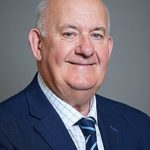
  • Willie Hay – 2022 Speech on British Passports for Irish who have Lived in Northern Ireland (Baron Hay of Ballyore)

    Willie Hay – 2022 Speech on British Passports for Irish who have Lived in Northern Ireland (Baron Hay of Ballyore)

    The speech made by Willie Hay, Baron Hay of Ballyore, in the House of Lords on 26 October 2022.

    To ask His Majesty’s Government what plans they have, if any, to grant an automatic right to a British Passport to people born in the Republic of Ireland who have lived in Northern Ireland for 50 years or more.

    My Lords, I welcome the Minister to the Dispatch Box and I wish him well in his new role. I am grateful to have the opportunity to hold this debate in your Lordships’ House. This is a very personal issue to me and to many out there who believe that this is a serious anomaly that needs to be addressed.

    I will give a brief history of how we got here. When the Irish Republic—previously known as the Irish Free State—left the Commonwealth in 1949, the British Government at the time allowed those who had been born in the Republic and had moved to Northern Ireland or elsewhere in the United Kingdom prior to that date to retain their British citizenship. That all changed after 1949: for people born in the Republic of Ireland after 1949, that right was taken away from them. Since 1949, many individuals who have lived here in the United Kingdom for many years, voted in UK elections and paid their taxes have found themselves disadvantaged by a bureaucratic and lengthy process.

    Indeed, instead of an application fee of £100, there is a large fee to apply for citizenship of around £1,300. These costs put many people off. There is also a requirement for Irish citizens who have been resident here in the UK for many years then to pass a Life in the UK Test. This is a discriminatory process for those who have been living and working in Northern Ireland, in the United Kingdom, for years, who find when they go to apply for British citizenship that they have many hurdles to clear that simply do not exist for others. They look around and see that many with no prior connection to the United Kingdom or Ireland find the process of applying for a British passport much quicker and far less hassle. Those Irish-born citizens who have lived, worked and voted in Northern Ireland and paid their taxes for many years—for many decades in some cases—have every right to British citizenship, to be an equal part of this United Kingdom and to hold a British passport. I question the very logic of this process. It impacts many thousands of people, and I question the hurdles that have been introduced.

    One point worth noting is that last February, the Court of Appeal found that similar fees of £1,000 for children to register as British citizens were unlawful and must be reconsidered by the Home Office. The current application process can be an increasingly long and frustrating one for many. It is especially challenging for those from lower-income backgrounds.

    The process of British citizenship applications can take six months, but usually it takes much longer. It has several steps and can be a major hurdle to people who genuinely want to apply for British citizenship. As part of the process, applicants are required to pay £350 simply for the privilege of a decisions report, where somebody will tell them whether they can apply and whether they qualify for British citizenship. That will cost £350, whether it is a “yes” or a “no” answer. In many instances, another frustration exists whereby even if registered as a British citizen and successful, this does not automatically entitle an individual to a British passport; it entitles them only to apply for a British passport.

    This is an insensitive situation for those who have paid taxes and national insurance contributions here for many years. Present census figures indicate that it affects approximately 40,000 people living in Northern Ireland, and this number is growing year on year. This is a huge number of people who cannot avail themselves of a British passport without navigating a long and winding process. It is quite clear that barriers exist in their route to citizenship.

    Of course, this is against the backdrop of a process that has been simplified in respect of Irish passport applications for people living in Northern Ireland. The Irish Government reviewed the whole process of application in 2011 and came up with a simple way of applying for an Irish passport for those living on the island of Ireland. If you apply for an Irish passport, the application is around €80 in total. Anyone born or living in Northern Ireland, or anyone who has a parent or grandparent living on the island of Ireland, is automatically entitled to apply for Irish citizenship. They have thrown the net so wide. Applicants do not need to have been born on the island of Ireland if their father, mother or a grandparent was born there; they are entitled to an Irish passport and Irish citizenship. It is a simple and quick process. When you apply for an Irish passport, you can trace the whole process, and online applications are completed in approximately 20 working days. This is a sharp contrast to the long and costly process that some Irish-born people living in Northern Ireland face when applying for British citizenship.

    There are ways to remove the financial and bureaucratic barriers in relation to this, if the will exists from government and the Home Office. There is a solution; a modest change in current practice could affect that group of 40,000 people. This is a sensitive matter that affects many and requires only a slight adjustment to be resolved. If an individual born in the Irish Republic after 1949 can prove that they have been living in Northern Ireland for between five and 10 years, have been working, voting and paying taxes and national insurance contributions, and are genuinely a part of that community, surely there ought to be a practical, sensible, streamlined way forward in this process.

    I welcome the report published by the Northern Ireland Affairs Committee in the other place last year and concur with its recommendations that these fees and this cumbersome process should be abolished. That committee has unionist, Conservative, Labour, Alliance and SDLP members, so there is unanimity in trying to resolve this issue not only in this House— I hope—but in the other.

    The great irony is that when we hear people in the media and Members of this House and the other House talk about the Belfast agreement, they often say “parity of esteem”: two communities working together and recognising whether someone is Irish, British or both. The extraordinary situation I have outlined today goes directly against the grain of the Belfast agreement. Let us not forget that the agreement is held up because it recognises the birthright of people living in Northern Ireland to identify themselves and be accepted as Irish, British or both. We are talking about people living in Northern Ireland for 30, 40 or 50 years, who were born five miles across the border in the Republic but have lived in Northern Ireland for virtually all their lives. To date, there has been a reluctance by government to act in relation to this. I welcome the opportunity to have this debate and trust that noble Lords will concur that this is an unfair process that could be remedied with minimal change.

    A number of Members in the other place agree with the recommendations that the lengthy process required and the payment of associated fees should be waived in the applications of long-term residents of Northern Ireland who were born in the Republic of Ireland and wish to access their British identity by holding a British passport. Other representations have been made to the Home Office in respect of this issue, which goes back as far as 2004 or 2005, when it was raised in the House of Commons by my colleague Gregory Campbell. For whatever reason, the Government have refused to address it.

    There should be real parity of esteem for people living in Northern Ireland who were born in the Republic. That is not the case. For many decades, the Government have failed to consider the history of the personal ties of thousands of people in this unique situation. This issue unites all backgrounds and traditions in Northern Ireland. That does not happen often, but on this issue, it is the case. I hope today’s debate will move us some way towards finally bringing a resolution.

    Does the Minister agree that this issue must be addressed? Will he commit seriously to doing so? It directly affects a large number of taxpaying residents in our United Kingdom. It is so bad in Northern Ireland at the minute that the number of people applying for British passports has dropped by 30%, while the number applying for Irish passports has gone up by 27%.
  • James Cleverly – 2022 Statement on Terrorist Attack in Mogadishu

    James Cleverly – 2022 Statement on Terrorist Attack in Mogadishu

    The statement made by James Cleverly, the Foreign Secretary, on 30 October 2022.

    I condemn in the strongest possible terms yesterday’s cowardly and horrific attack in Mogadishu. My thoughts are with the families and friends of those who were tragically killed and hurt. We continue to stand with the government and people of Somalia in their fight against terrorism. The UK condemns terrorism in all its forms.

  • Jane Hutt – 2022 Statement on Ukraine

    Jane Hutt – 2022 Statement on Ukraine

    The statement made by Jane Hutt, the Minister for Social Justice in the Welsh Government, on 25 October 2022.

    Diolch yn fawr, Llywydd. Thank you for providing an opportunity for me to give an update to Members about our ongoing work to support people from Ukraine seeking sanctuary in Wales. When I last updated you in September, Wales had welcomed just over 5,600 Ukrainians in Wales under the Homes for Ukraine scheme, including under our supersponsor route.

    Arrivals have continued, but at a much slower pace in recent weeks. Just under 6,000 Ukrainians sponsored by the Welsh Government and Welsh households had arrived in Wales by 18 October, and there have been additional arrivals under the Ukraine family scheme, but we are not given that data by the UK Government. More than 8,300 visas have now been granted to people from the Ukraine who have sponsors in Wales, so we can expect the number of arrivals to continue to grow steadily in the coming weeks, and we are mindful that events in Ukraine can have a direct impact on the number of Ukrainians who may arrive in Wales. We deplore the latest attempts by Putin to try to break the will of the Ukrainian people. We are continuing to work with the Home Office to ascertain the likelihood of the additional 1,600 individuals we have sponsored arriving in Wales, so that we can properly plan for providing accommodation and wraparound support.

    In recent weeks, we have been considering the offer that we make to Ukrainians who we support in our accommodation under the supersponsor route. I and other Ministerial colleagues have visited many of our accommodation sites and received feedback directly from Ukrainian guests and the dedicated staff who are helping us to provide assistance. We want to help people to transition from a supportive welcome to active integration as quickly as possible.

    We believe that we can enhance personal independence and support people to move on to the next stage of their lives in Wales by revisiting our wraparound support offer. We will be aligning our initial accommodation offer much more closely to the support that would be received in other forms of temporary accommodation, and this will encourage guests to contribute to costs via earnings or universal credit wherever possible, after an initial short period. I have also engaged with my Scottish Government counterpart, Minister Neil Gray MSP, and I understand that they will be taking a very similar approach, as we learn from each others’ experiences in our response as supersponsors.

    Our supersponsor route is a key part of Wales’s response to the Europe-wide humanitarian crisis. We must ensure that we are steadfast in our commitment to supporting Ukraine and displaced Ukrainians living in Wales, despite the increased cost pressures we’re all experiencing. The support we provide here will have an impact on the family and friends still defending Ukraine. The changes we make will carefully balance helping people to be more independent, to move on to alternative accommodation more quickly, and to ensure that we have the finances we need to fulfil our commitment to the Ukrainians we have sponsored.

    As well as my visits to welcome centres, I recently attended the Ukraine arts festival and the new Cardiff Ukraine centre. In each case, I have been struck by the desire and ability of Ukrainians, with a wide range of skills and experience, to integrate and join the workforce as quickly as possible. Many Ukrainians are already working, including a sizable proportion of those in our initial accommodation.

    We need to be conscious that initial accommodation should be a short-term provision, with our guests supported to move on to longer term accommodation as soon as practicable. We understand that our welcome centres, which are funded by the Welsh Government, are of a good quality—and we are proud of that—but they are not a long-term option for people, not least because roots cannot be properly established in communities in such temporary accommodation.

    Last time I updated you, I remarked upon the good working relationship we had with the previous UK Minister for Refugees, Lord Harrington, and my hopes for a similar relationship with his successor. I am sorry to have to report that we have had no engagement from UK Ministers on these issues since Lord Harrington’s resignation.

    But we are at a critical juncture in the UK Government Homes for Ukraine scheme. Welsh households who signed up as sponsors are at, or near, the six-month hosting milestone that represents the commitment they made to their guests at the point of application. These households have done an inspiring thing and embodied the nation of sanctuary vision in its truest sense. We know many did not plan to continue beyond six months, but we urge as many hosts as possible to consider hosting for a longer period if at all possible. Where that isn’t possible, we thank you for everything you have done for your guests and for us as a nation. For those that can continue, we have funded Housing Justice Cymru to provide advice, training, peer support and mediation services for hosts in Wales. More information can be found by calling 01654 550 550 or emailing UkraineHostSupport@housingjustice.org.uk.

    We know that hosts in Wales are struggling with cost-of-living pressures, and this is a major factor in deciding if they can continue. This is why I wrote to UK Ministers, with my Scottish ministerial counterpart, to urge a quick decision on increasing the ‘thank you’ host payment to at least £500 per month from the current level of £350. We are still waiting for an update on this. We do need an urgent decision to avert a wave of homelessness presentations as we move into November, and I again call upon the UK Government to act on this, as well as providing financial certainty for year 2 of the programme, supporting the unfunded ESOL provision and ensuring funding parity across the three Ukraine visa schemes.

    We are now communicating regularly with hosts and Ukrainian guests, with a monthly newsletter being sent from the Welsh Government, and we’ll build upon this with additional information sessions and participation opportunities. Alongside our funded third sector partners, we recently held an open information session, which I was glad to see around 180 people attended to hear more about our work; we are mobilising a Ukraine peer support group through Displaced People in Action; and we’ll also soon survey our Ukrainian guests to better understand their unmet skills and employment needs. Ukrainians are clearly integrating very well indeed, but we will continue to consider any action we can take to make this as effective and supportive as possible. Diolch.

  • James Cleverly – 2022 Statement at the UN Security Council Counter-Terrorism Committee Meeting

    James Cleverly – 2022 Statement at the UN Security Council Counter-Terrorism Committee Meeting

    The statement made by James Cleverly, the Foreign Secretary, on 29 October 2022.

    Madame Chairman, your Excellencies, Ladies and Gentlemen,

    May I start by thanking India, our hosts, and Dr. Jaishankar for his key note speech.

    You are right that countries must do more nationally and internationally to counter the threat of terrorism. The UN and an effective CTC, both have a significant role to play in this endeavour.

    Just outside my office in London is an elegant memorial to those to those who were killed in the Bali bombing of 2002. 202 victims that came from more than 20 countries, including 23 from the UK.

    When terrorists struck London in 2005, one of the 52 people they murdered was 37 year old Neetu Jain, a biochemist graduate, who was born in Delhi.

    And the victims of the 2008 Mumbai attacks, who we honoured yesterday, came from every continent.

    Terrorism is a global problem, and a global threat, so I am incredibly grateful for Foreign Minister Jaishankar for using India’s Security Council Presidency to focus on this crucial issue, and advance his 8 point plan.

    The UK’s partnership with India is hugely important to me. And I’m pleased to be taking forward our CT cooperation this weekend. But let me now turn to the technological advances which offer terrorists new opportunities that we must counteract.

    Within the space of just two decades, terrorists have gone from circulating crackly voice recordings from the depths of Tora Bora, to global online recruitment and incitement campaigns, to live-stream attacks. And online incitement and racialisation of vulnerable people in far off countries, who have then gone on to use simple rental vans as weapons of terror. So we must continue to work together to fight terrorist ideologies online.

    In 2015 we set up the Counter Daesh Communication Cell in London, in partnership with the United States of America and the Government of the United Arab Emirates. Together we have worked with governments, civil society and communities to challenge Daesh’s narrative.

    We are also working with the G7 and Global Internet Forum to counter terrorism. And we continue to press tech companies, amongst whom are some of the internet’s biggest players, to crack down ever harder on extremist online content.

    Technologies that advance the online world also powers the real world. But both are open to exploitation. Tech designed with the best intentions can be repurposed for the worst of aims.

    From a garden – our Ambassador’s Garden – in Abu Dhabi, in January of this year, I saw the UAE’s Air Defence System interdict Houthi missiles. And only a few weeks earlier, drones had killed three people in Abu Dhabi. Drones are being used currently to target critical national infrastructure and civilian targets in Russia’s brutal invasion of Ukraine. So from the UAE to Ukraine, unmanned aerial systems from relatively cheap and unsophisticated, to those with military specifications, are used to inflict terror, death and destruction.

    This is why we have sanctioned three Iranian military commanders and one Iranian company involved in the supply of drones and why we must also do more to stop these technologies getting into terrorists’ hands.

    In 2019 the UK government launched our Counter-Unmanned Aircraft Strategy and we are funding new counter-drone technologies.

    And we are working through the Global Counter Terrorism Forum, to ensure we all do more to stop terrorists from misusing drones.

    The internet has also given terrorists groups murky new routes to conceal their finances and sustain their activities. We work with industry and international partners to understand and disrupt terrorist finances, including in Somalia and North Africa. We have made tackling illicit finance a core pillar of our cooperation with international partners like the UAE. And we look forward to India’s ‘No Money For Terrorism Conference’ in November.

    This is vital work. The threat from terrorism has not gone away. We know that a repressive response will only exacerbate the problem.

    And if we are to keep our people safe, we must comply with human rights, and we must continue to work together, and with industry, and all parts of our communities, to discredit the narratives of hate.

    To counter radicalisation. To infiltrate networks. To foil plots. And to starve terrorists of the finances and emerging technologies that they would use to do us harm.

  • Rishi Sunak – 2022 Comments on Phone Call with Justin Trudeau

    Rishi Sunak – 2022 Comments on Phone Call with Justin Trudeau

    The comments made by Rishi Sunak, the Prime Minister, on 27 October 2022.

    Great call with Justin Trudeau. As close friends and free market democracies the UK and Canada have a vital role in promoting economic growth and stability, as well as ensuring Ukraine is supported unequivocally.

  • Greg Hands – 2022 Statement on the UK-India Trade Deal

    Greg Hands – 2022 Statement on the UK-India Trade Deal

    The statement made by Greg Hands, the Minister for Trade Policy, in the House of Commons on 26 October 2022.

    First, let me say that it is good to be back at the Department for International Trade.

    India is, of course, an economic superpower, projected to be the world’s third largest economy by 2050. Improving access to this dynamic market will provide huge opportunities for UK business, building on a trading relationship worth more than £24 billion in 2021. That is why we are negotiating an ambitious free trade agreement that works for both countries. We have already closed the majority of chapters and look forward to the next round of talks shortly.

    A strong free trade agreement can strengthen the economic links between the UK and India, boosting the UK economy by more than £3 billion by 2035, helping families and communities. An FTA can cut red tape, making it cheaper for UK companies to sell into India’s dynamic market, helping drive growth and support jobs across every nation and region of the UK. Greater access could help UK businesses reach more than a billion more consumers, including India’s growing middle class, which is estimated to reach a quarter of a billion by 2050, and give them a competitive edge over other countries that do not have a deal with India. An FTA with India supports the Government’s growth strategy, by taking advantage of the UK’s status as an independent trading nation championing free trade that benefits the whole of the UK. We remain clear that we are working towards the best deal for both sides and will not sign until we have a deal that is fair, reciprocal and, ultimately, in the best interests of the British people and the UK economy.

  • Bambos Charalambous – 2022 Speech on the Situation in Iran

    Bambos Charalambous – 2022 Speech on the Situation in Iran

    The speech made by Bambos Charalambous, the Shadow Minister for the Middle East and North Africa, in the House of Commons on 25 October 2022.

    For the past six weeks, Iran has seen huge protests following the death of Mahsa Amini at the hands of its brutal morality police. Ms Amini was violently beaten following her arrest for breaching strict hijab rules.

    Iranians in huge numbers have bravely said that they will accept this no longer. Women and girls are putting their lives on the line to lead a mass movement calling for nothing more than basic human rights and civil liberties. Braving severe state repression, hundreds of thousands of Iranians have joined protests. Over 12,500 have been arrested and, sadly, over 250 people have died at the hands of the security forces. Britain must support all those who stand up for basic freedoms, including freedom of conscience and religion and the freedom to live one’s life as one chooses.

    It is clear that the Iranian regime is restricting information in an attempt to quash the protests. Internet access has been periodically blocked in the country, meaning that details of human rights abuses cannot be shared and protesters cannot organise. Freedom of information is integral to the success of any political movement. The UK must and can play a strong role in supporting an independent press in Iran. Reporters Without Borders has declared Iran one of the worst countries in the world for press freedom: journalists routinely face harassment, detention and threats to their family. What are the UK Government doing to encourage press freedom in Iran? What pressure is the UK putting on Iran to support fundamental human rights and freedom of speech?

    The UK can and should lead calls for the UN Human Rights Council to urgently establish an international investigative and accountability mechanism to collect, consolidate, preserve and analyse evidence of the most serious crimes in Iran under international law. Can the Minister assure me that the UK will do so?

    Gillian Keegan

    There is much that we all agree on in this House, from our condemnation of what is happening in Iran to the actions we take and how we work with others. We are looking at all options to hold Iran to account for its human rights violations, and we are active participants at the UN Human Rights Council. On press freedom, last week we joined a statement of the Media Freedom Coalition condemning Iran’s repression of journalists. We will continue to do so, working with other countries and other groups to call out Iran, as well as taking firm steps, as I laid out in my statement.

  • Rishi Sunak – 2022 Comments on Phone Call with Anthony Albanese

    Rishi Sunak – 2022 Comments on Phone Call with Anthony Albanese

    The comments made by Rishi Sunak, the Prime Minister, on 27 October 2022.

    Great call with Australian PM Anthony Albanese this morning.

    Geography is no barrier to the deep ties of friendship our countries share, as we work together to strengthen our common security, boost trade and support Ukraine.

    Looking forward to meeting Anthony at the G20 next month.

  • Gillian Keegan – 2022 Statement on the Situation in Iran

    Gillian Keegan – 2022 Statement on the Situation in Iran

    The statement made by Gillian Keegan, the then Parliamentary Under-Secretary of State for Foreign, Commonwealth and Development Affairs, in the House of Commons on 26 October 2022.

    We have all been in awe of the bravery of the Iranian people since the death of Mahsa Amini over five weeks ago. The Iranian people have taken to the streets to express in no uncertain terms that the sustained repression of their rights by the Iranian regime must end. Women should no longer face detention and violence for what they wear or how they behave in public. The Iranian regime’s use of live ammunition and birdshot against protestors is barbaric. There have been reports of at least 23 children having died and non-governmental organisations suggest over 200 deaths during the protests.

    Mass arrests of protestors and the restriction of internet access are sadly typical of this oppressive regime’s flagrant disregard for human rights. These are not the actions of a Government listening to the legitimate demands of their people for greater respect for their rights. It can be no surprise that the Iranian people have had enough. This year, 2022, has seen a sharp increase in the use of the death penalty, a sustained attack on the rights of women, intensified persecution of the Baha’i, and greater repression of freedom of expression and speech online.

    The UK has been robust in joining the international community’s response to holding Iran accountable for its human rights violations. The Foreign Secretary summoned the most senior Iranian official in the UK on Monday 3 October to express our concern at the treatment of protesters. On Monday 10 October, the UK imposed sanctions on Iran’s so-called morality police and seven individuals responsible for serious human rights violations in Iran.

    The UK has consistently raised the situation in Iran in the United Nations Human Rights Council and through other multilateral fora. On 13 October, the UK issued a joint statement with European partners condemning the death of Mahsa Amini and calling on Iran to stop the violence and listen to the concern of its people. On 20 October, the UK joined 33 other members of the Freedom Online Coalition in issuing a joint statement condemning internet shutdowns in Iran.

    We continue to work with our international partners to explore all options for addressing Iran’s human rights violations. Through the UK’s action on sanctions and robust statements with international partners, we have sent a clear message. The Iranian authorities will be held accountable for their repression of women and girls and for the shocking violence that they have inflicted on the Iranian people.

    Bob Blackman

    Thank you for granting this urgent question, Mr Speaker, and I thank the Minister for her answer. I also thank the Foreign Secretary for his letter yesterday advising me that I have been sanctioned by the Iranian regime.

    Since the brutal murder of Mahsa Jina Amini by the morality police, there has been a nationwide uprising in Iran. Contrary to what the Minister advised, the National Council of Resistance of Iran advised that more than 400 mainly female protesters have been murdered and that more than 20,000 have been arrested over the past 39 days of nationwide protests. Does my hon. Friend agree that we must issue the strongest condemnation of those killings and mass arrests? In order to do so, is it not right that we recall our ambassador from Tehran and even consider closing our embassy in Iran, to demonstrate that this is unacceptable?

    Does the Minister also agree that we need to recognise the Iranian’s people right to self-defence and resistance in the face of the deadly crackdown, which particularly targets women and their right to establish a democratic republic? I note the sanctions that have been issued by our Government against particular individuals in Iran, but does she not agree that now would be completely the wrong time to renew the JCPOA—joint comprehensive plan of action—agreement and give Iran the capability to establish nuclear weapons? Does she also agree that it is now time to proscribe the Islamic Revolutionary Guard Corps and—I say this to the Secretary of State—its assets in the UK?

    Gillian Keegan

    I thank my hon. Friend, and I probably ought to congratulate him on being sanctioned—that shows all the efforts that he and many colleagues in the House have made to call out the regime and the terrible actions that are taking place in Iran. The death of Mahsa Amini is a shocking reminder of the repression that women in Iran face.

    We condemn the Iranian authorities and have taken very strong action. We condemn the crackdown on protesters, journalists and internet freedom. The use of violence in response to the expression of fundamental rights by women, or any other members of Iranian society, is wholly unjustifiable. We will continue to work, including with our international partners, to explore all options for addressing Iran’s human rights violations. However, as my hon. Friend knows, we will never be able to comment on possible future actions, sanctions or designations.

  • James Cleverly – 2022 Comments on Sanctions Against Iran

    James Cleverly – 2022 Comments on Sanctions Against Iran

    The comments made by James Cleverly, the Foreign Secretary, on 20 October 2022.

    Later today I will be announcing further sanctions in response to Iran’s supply of drones for use in attacking civilian targets and critical infrastructure in Ukraine. Iran cannot be allowed to violate UN resolutions.