Category: Foreign Affairs

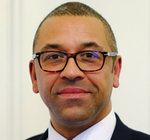
  • James Cleverly – 2022 Comments on Chinese Consulate-General in Manchester

    James Cleverly – 2022 Comments on Chinese Consulate-General in Manchester

    The comments made by James Cleverly, the Foreign Secretary, on 18 October 2022.

    I’ve ordered the summoning of the Chinese Chargé d’Affaires to demand an explanation for the shocking scenes outside the Chinese Consulate-General in Manchester on Sunday.

    Peaceful protest is a fundamental right in the UK and the Chinese Government must respect that.

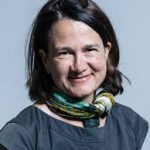
  • Catherine West – 2022 Speech on the Chinese Consulate and Attack on Hong Kong Protesters

    Catherine West – 2022 Speech on the Chinese Consulate and Attack on Hong Kong Protesters

    The speech made by Catherine West, the Labour MP for Hornsey and Wood Green, in the House of Commons on 18 October 2022.

    I am so pleased that there is consensus across this House that freedom of expression is an important principle which we hold dear in our democracy, and it is testament to our freedoms that on countless occasions in recent years protesters have been able to express their views, whether on China, Russia, Myanmar or countless other countries.

    What we saw at the weekend in Manchester was, as the Mayor of Manchester has said, a sharp departure from this established pillar of our liberal democracy. The sight of suspected Chinese consular officials destroying posters, using violence and intimidation, and dragging a protester into the grounds of the consulate and assaulting him is deeply shocking. We all want to be clear that that behaviour is not and never will be acceptable and deserves condemnation in the strongest possible terms. We simply cannot tolerate the type of action we have seen. The principle of free expression is so important, as is the protection of Hong Kongers and others who have fled Beijing’s repression, although I note with irony that later today we will be debating a Government Bill that discusses some of the same themes.

    Labour has been consistently warning about the need to protect newly arrived Hong Kong people. May I press the Minister on what exactly will happen to consular officials who have been properly identified as involved in this incident? Can this House expect that they will be expelled from the UK?

    What discussions has the Minister had with the Home Office and Levelling Up Secretaries on a proper plan for robust and extensive support for Hong Kong people across the country to ensure that they are protected and supported in the face of ongoing surveillance and oppression? What steps will he take to ensure that the sanctity of our freedoms—specifically, the freedom of expression—is protected outside all foreign embassies and consulate grounds in the UK to avoid a repeat of this shocking behaviour? Mr Speaker, as you said yesterday, the Hong Kong community in the UK is watching, and actions must match words.

    Jesse Norman

    I thank the hon. Lady for her questions. She asked about the treatment of consular officials. Of course, I would wish to be able to give the House details of my personal views on these matters, but the fact of the matter is that we are in a process of law. I would expect that process to be diligently and effectively carried out, but, for reasons that she will understand, I cannot comment on it.

    As regards the treatment of Hong Kong visitors and arrivals to this country under the new scheme, my colleagues in the Home Office and the Levelling Up Department have taken great measures to put in place a welcome set of arrangements for them and to manage the processing in an effective and timely way. I am pleased that we have done that because we need to support Hong Kong in all the ways that I am sure she would welcome.

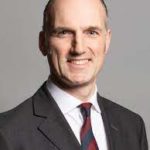
  • Jesse Norman – 2022 Statement on the Chinese Consulate and Attack on Hong Kong Protesters

    Jesse Norman – 2022 Statement on the Chinese Consulate and Attack on Hong Kong Protesters

    The statement made by Jesse Norman, the Minister for the Americas and Overseas Territories, in the House of Commons on 18 October 2022.

    Top of the morning to you, Mr Speaker, and thank you very much indeed for allowing us to have this urgent question on a topic of enormous importance. May I start by recognising, thanking and welcoming my hon. Friend to her position as Chair of the Foreign Affairs Committee?

    As the House will know, His Majesty’s Government are extremely concerned at the apparent scenes of violence at the consulate of the People’s Republic of China in Manchester on Sunday afternoon. Greater Manchester police had been pre-notified of the demonstration and intervened to restore order; we are grateful to them for their action. I understand that Greater Manchester police have launched an investigation to establish the facts of the incident.

    The Foreign Secretary has issued a summons to the Chinese chargé d’affaires at the Chinese embassy in London to express His Majesty’s Government’s deep concern at the incident and to demand an explanation for the actions of the consulate staff. It would be inappropriate to go into further detail until the investigation has concluded, but let me be clear that, as this House has always recognised, peaceful protest is a fundamental part of British society and our way of life. All those on our soil have the right to express their views peacefully without fear of violence. FCDO officials expressed that clearly to the Chinese embassy yesterday. We will continue to work with the Home Office and Greater Manchester police colleagues to decide on appropriate next steps.

    Alicia Kearns

    Thank you, Mr Speaker, for granting this UQ and for the personal interest you have taken in this over the last few days.

    On Sunday, peaceful protesters gathered outside the Chinese consulate to campaign for human rights in Hong Kong. What we saw was the Chinese consul-general then ripping down posters during a peaceful protest. There soon followed grievous bodily harm against Hong Kongers, one of whom was hospitalised for taking part in that peaceful protest. Some were then dragged on to consulate territory for a further beating by officials who have been recognised to be members of the Chinese Communist party. We cannot allow the CCP to import its beating of protesters and silencing of free speech, and its utter failure time and again to allow protest on British soil.

    This is a chilling escalation. We have seen continued persecution of the Uyghur, Tibetans, Hong Kongers and all those who come to our country to seek refuge. What took place on Sunday suggests they cannot seek refuge here and have their voices heard, and our job is to make sure their voices are not silenced.

    I am grateful to the Minister for confirming that the ambassador has been summoned. I am surprised the meeting has not taken place so far. Will he please confirm when it will be taking place and that he will update the House thereafter? Will he also confirm that any Chinese official involved in the beatings will be prosecuted and that, if they cannot be prosecuted, they will be expelled from this country within the week, and what the Government are doing to protect protests? That is a fundamental right and we must uphold it at home if we are to have any chance of upholding it abroad.

    Jesse Norman

    I thank my hon. Friend for her question. On the point of the summons, my understanding is that the chargé d’affaires will meet with officials this afternoon, there having already been an informal exchange of concern between the two sides. My hon. Friend will know that, precisely because of the belief in this House in the rule of law, it is up to our independent police and Crown Prosecution Service to decide first on the facts of the matter and then on whether a prosecution should be brought. But, like her, I witnessed what took place in the video on Sunday and I am sure every Member of this House feels the same level of concern as she does.

  • Leo Docherty – 2022 Statement on the Treaty on the Non-Proliferation of Nuclear Weapons Review Conference

    Leo Docherty – 2022 Statement on the Treaty on the Non-Proliferation of Nuclear Weapons Review Conference

    The statement made by Leo Docherty, the Minister of State for the Foreign, Commonwealth and Development Office in the House of Commons on 12 October 2022.

    The House may welcome an update regarding the 10th treaty on the non-proliferation of nuclear weapons review conference, which was held at the United Nations in New York from 1 to 26 August. The conference reviewed progress and sought to reach consensus on future actions under the treaty’s three pillars: disarmament, non-proliferation and peaceful uses of nuclear technology. While the conference was unable to achieve its overall goal of a consensus outcome document owing to Russian actions, it advanced discussion on each of the treaty’s three pillars, and agreed to establish a working group on further strengthening the review process of the treaty, open to all states parties.

    We were deeply disappointed that, despite the progress made in many areas, Russia blocked the adoption of a consensus outcome document over references to Ukraine, in order to defend its unprovoked, illegal war on Ukraine. Russia’s betrayal of the security assurances it gave through the Budapest memorandum when Ukraine joined the treaty, and its responsibility for the unfolding situation at the Zaporizhzhia nuclear power plant, were both referenced obliquely in the President’s consolidated text. Russia’s aggression poses grave challenges to the international nuclear security architecture. The UK, and many other states, raised these concerns consistently throughout the conference, and the UK issued a joint statement with 56 countries explaining how Russia’s aggression and behaviour in Ukraine impacted the treaty.

    The UK played an active role both in the preparation for the conference and at the conference itself. As part of its preparations, the UK published a revised national report setting out the action being taken to support the treaty and fulfil the UK’s commitments across all three pillars of the treaty. At the start of the conference, former Minister of State at the Foreign, Commonwealth and Development Office, Graham Stuart MP, set out the UK’s approach and progress against the treaty’s objectives, and led a side event on the UK’s national report. The UK’s positive agenda for the conference focused on our track record on disarmament, including reductions in stockpiles and delivery systems and thought-leadership on risk reduction, verification and transparency. The UK also highlighted our leadership in establishing the “Sustained Dialogue on Peaceful Uses”, a new effort to increase access to the benefits of peaceful nuclear technologies for development, including through meeting the UN sustainable development goals. We engaged constructively in the negotiations throughout, seeking to reach agreement and to make progress across all three pillars of the treaty.

    The lack of a consensus outcome neither undermines the treaty nor changes states’ obligations. Of the nine previous review conferences, which have taken place almost every five years since the treaty came into force in 1970, only three have adopted a comprehensive final document by consensus. Throughout, the treaty has remained vitally important for the UK and for the international community as a whole, playing an unparalleled role in curtailing the nuclear arms race and keeping the world safe. The action plan adopted at the 2010 conference remains valid as a comprehensive road map for all states party to the treaty to follow to take forward action on disarmament, non-proliferation and peaceful use of nuclear technology, as do the consensus outcomes from 2000 and 1995. The UK will continue to work closely with our partners to strengthen the treaty and make progress against this roadmap, while also building on the successes of this conference.

    In particular, we look forward to contributing to the working group on strengthening the review process and we will continue to work with Norway on our initiative to clarify and apply the principle of irreversibility. We will also be launching, with the United States and 30 other partners who have joined so far, the sustained dialogue on expanding access to the peaceful uses of nuclear technologies.

    The UK’s commitment to the treaty and to fulfilling our obligations, including under article VI on disarmament, remains undiminished. As a nuclear weapon state that takes our responsibilities seriously and an original party to the treaty, the UK remains committed to creating the conditions for a world without nuclear weapons. We have approximately halved our nuclear stockpile since the cold war peak and we continue to drive research and discussion on risk reduction, verification and transparency. We remain committed to working internationally to reduce the risk of nuclear conflict and enhance mutual trust and security. The UK will continue to play its part in bringing about a safer world for all and achieving the long-term goal of a world without nuclear weapons.

    The treaty is and will remain the fundamental cornerstone of the nuclear non-proliferation regime and is the irreplaceable foundation and framework for our common efforts on advancing nuclear disarmament and the peaceful uses of nuclear technology. The conference decided to hold the 11th review conference in 2026 in New York, with preparatory committees to take place in 2023 in Vienna, 2024 in Geneva and 2025 in New York. The UK will continue to work alongside the international community at all of these meetings to strengthen the regime and to promote international stability, peace and security and will keep Parliament updated.

  • James Cleverly – 2022 Statement on the UN General Assembly Vote on Ukraine

    James Cleverly – 2022 Statement on the UN General Assembly Vote on Ukraine

    The statement made by James Cleverly, the Foreign Secretary, on 12 October 2022.

    Today’s UN General Assembly vote is a powerful demonstration of the international community’s widespread condemnation of Russia’s outrageous, illegal attempts to annex the Ukrainian regions of Donetsk, Luhansk, Kherson and Zaporizhzhia.

    This is an important show of international unity against an aggressor that seeks to destabilise the international norms that protect us all. In the face of President Putin’s unprovoked aggression, 143 nations across the globe have come together in defence of the UN Charter and in solidarity with Ukraine.

    The vote is indisputable evidence of what we have known for some time – Putin stands alone on the international stage and his actions are driving his country further into self-inflicted isolation.

  • Bambos Charalambous – 2022 Speech on the Death of Mahsa Amini

    Bambos Charalambous – 2022 Speech on the Death of Mahsa Amini

    The speech made by Bambos Charalambous, the Shadow Foreign Office Minister, in the House of Commons on 11 October 2022.

    Like many Members of this House, I have been heartened to see the bravery of the protesters in Iran in the past few weeks, and particularly the women and girls who are spearheading these protests. Iran has a young population—a population which is clamouring for change against an oppressive regime that aims to restrict the liberty and vitality of its people

    The Opposition stand in solidarity with those protesting for an end to state violence from the morality police, and in solidarity with the friends and family of Mahsa Amini and all those who have been killed or injured in the protests. These protests are about more than compulsory hijab; they are about ordinary Iranian people’s demands for fundamental freedoms to live their lives as they choose.

    We are seeing a flourishing of Iranian civil society, and the UK must support it. While I am pleased that the Government have increased the sanctions on Iran following the Labour party’s calls for them to do so, the UK must do more to support Iranian civil society and independent journalism. BBC Persian Radio, despite being illegal, is accessed by millions of Iranians, but the BBC has announced that it will be closed down.

    May I ask the Minister what the Government are doing to support access to independent news in Iran?

    If the current regime in Iran ends, the UK Government will need to be ready to work with Iranian partners. The UK, today, should be building links with progressive forces within Iran, supporting all those who speak up for human rights. Will the Minister tell us how the UK intends to build relationships with Iranian civil society? There is a sense that change is coming, and we need to be on the right side of history.

    Gillian Keegan

    I thank the hon. Gentleman for his comments, and agree very much with his sentiments. BBC Persian is a legitimate journalistic organisation with editorial independence from the UK Government, and we condemn some of the things that have been happening in relation to the persecution of its employees and ex-employees and members of their families. It is very important that those people continue their work, and we are of course continuing to support the BBC and the BBC World Service in that regard.

    We are very concerned about Iran’s human rights record. We raise the issue of human rights at all appropriate levels of the Iranian Government and at all appropriate opportunities—at all levels, at all times—and we will continue to take action with the international community to press Iran to improve its poor record, for instance through the Human Rights Council in Geneva and the United Nations General Assembly in New York. Iran’s record has been of serious concern to the UK for a long time, and we will continue to work with the Iranian Government and others at all levels.

  • Gillian Keegan – 2022 Statement on the Death of Mahsa Amini

    Gillian Keegan – 2022 Statement on the Death of Mahsa Amini

    The statement made by Gillian Keegan, the Parliamentary Under-Secretary of State for Foreign, Commonwealth and Development Affairs, in the House of Commons on 11 October 2022.

    The death of Mahsa Amini in Iran was a shocking reminder of the repression faced by women in Iran. The protests across the country that have followed show us that the Iranian people are not satisfied with the path that their Government have taken.

    I commend the bravery of ordinary Iranians seeking to exercise their right to peaceful assembly and freedom of expression in the face of appalling police violence. We condemn the Iranian authorities’ crackdown on protesters, journalists and internet freedom: the use of violence in response to the expression of fundamental rights by women or any other members of Iranian society is wholly unjustifiable.

    Yesterday, on 10 October, we announced sanctions on senior security and political figures in Iran and the so-called morality police. We have sanctioned the morality police in their entirety, as well as their chief, Mohammed Rostami Cheshmeh Gachi, and the head of the Tehran division, Haj Ahmed Mirzaei. For decades, the morality police have used the threat of detention and violence to control what Iranian women wear and how they behave in public.

    The UK is also imposing sanctions on five leading political and security officials in Iran for committing serious human rights violations in suppressing fuel protests in Iran in 2019. The UK maintains sanctions designations against a further 78 individuals and one entity under our Iran human rights sanctions regime. In all, there are more than 200 sanctions designations in place against Iran, including in relation to human rights, nuclear proliferation and terrorism.

    Theresa Villiers

    These protests show that there are thousands of women in Iran who are not prepared to put up with violent human rights abuses. Will the UK Government stand with those brave women as they call for justice, for freedom and for democracy? Will Ministers meet opposition groups? Will they ban the Islamic Revolutionary Guard Corps? Will they rule out sanctions relief under the joint comprehensive plan of action process?

    Gillian Keegan

    As the Foreign Secretary has said, the protests send a clear message that Iranian people are not satisfied with the path that their Government have taken; Iranian leaders must now listen. Of course, we stand by those people: the use of violence in response to the expression of fundamental rights by women or any other members of Iranian society is wholly unjustifiable. We continue to keep everything under review, and the UK has called for a full and transparent investigation into the shocking death of Mahsa Amini.

  • Vicky Ford – 2022 Speech on Blasphemy Laws and Allegations in Commonwealth Countries

    Vicky Ford – 2022 Speech on Blasphemy Laws and Allegations in Commonwealth Countries

    The speech made by Vicky Ford, the Minister for Development, in Westminster Hall on 11 October 2022.

    It is, as ever, a pleasure to serve under your chairmanship, Sir Charles. I join others in expressing how grateful I am to the hon. Member for Strangford (Jim Shannon) for securing this debate and for all he does with the all-party parliamentary group for international freedom of religion or belief. I thank all hon. Members for their insightful contributions. I will try to cover a number of the points they raised.

    Let me begin by underlining the Government’s deep concern that the use of blasphemy laws undermines the right to freedom of religion or belief, the right to freedom of expression, and often the right to gender equality as well. My remarks today will cover the broad spectrum of the UK’s work on freedom of religion or belief, of which our work to tackle the misuse of blasphemy laws is an important part.

    Freedom of religion or belief is the right of every person to hold any faith or belief, or none at all, and the freedom to change if they choose. It is the very foundation of a free and open society. People should not live in fear of persecution for what they hold in their hearts or how they choose to express it. For these reasons, the UK Government remain committed to defending freedom of religion or belief for all. Promoting these rights is one of the UK’s long-standing human rights priorities.

    The use of blasphemy laws that undermine human rights, including freedom of religion or belief and freedom of expression, is deeply concerning. The laws generally limit freedom of expression and are compatible with international human rights law in only very narrow circumstances. The Government regularly apply diplomatic pressure on countries that misuse blasphemy laws, often through private lobbying as that can be the most effective way to resolve a sensitive case or bring about longer-term change.

    Hon. Members have drawn particular attention to the Commonwealth. We are proud to be part of the Commonwealth alliance, which is united behind the shared values of sovereignty, democracy and human rights. In June this year, member states reiterated those values at the Commonwealth Heads of Government meeting in Kigali, where they

    “noted that freedom of religion or belief are cornerstones of democratic societies.”

    However, despite the agreed values, there remain counties where a person may be imprisoned, fined or even sentenced to death for leaving a religion or expressing a dissenting opinion about a religion.

    As a matter of principle, this Government oppose the death penalty in all circumstances. Our position is well known to Commonwealth members, including Brunei, Malaysia, Maldives, Nigeria and Pakistan. We do not shy away from challenging those who we believe are not meeting their obligations, whether publicly or, when we believe it is most effective, in private.

    Hon. Members spoke about Pakistan and Nigeria, so I will turn to those two countries. In Pakistan, we strongly oppose the use of blasphemy laws against both Muslims and non-Muslims. In June, Lord Ahmad impressed upon Pakistan’s Minister of Foreign Affairs the need to uphold freedom of religion or belief. The British high commissioner regularly lobbies the Pakistani authorities to guarantee the rights of all people, particularly the most vulnerable, including women, minorities and children. We strongly condemn forced marriage and forced conversion of Hindu, Christian and Sikh women and girls, which is an important part of our engagement with the Government. Forcing women and girls into marriage is a serious abuse of women’s rights that often robs them of the right to choose their own future.

    A number of hon. Members mentioned the Ahmadiyya Muslims. We remain very concerned about the reports of discrimination and violence against religious communities in Pakistan, including the Ahmadiyya Muslim community. We continue to urge the Government of Pakistan, at senior levels, to guarantee the fundamental rights of their citizens, regardless of their belief. Some individual cases have been mentioned, particularly that of Tahir Naseem. We strongly condemn the shocking murder of Mr Naseem while he was on trial for blasphemy in 2020, and we are very clear that the perpetrators of such crimes must be brought to justice.

    In Nigeria, the right to freedom of thought, conscience, religion and expression is enshrined in the constitution, but blasphemy is still a punishable offence under both secular and sharia law. The murder of Deborah Samuel in Sokoto state in May, following an allegation of blasphemy, was a barbaric and heinous act. I expressed my condemnation in public at the time and urged the relevant authorities to ensure that the perpetrators faced justice in line with the law. I again condemn that attack today and again urge that the perpetrators face justice. Hon. Members may be interested to know that when the Sultan of Sokoto came here to the ministerial conference on freedom of religion or belief in July, he pointed to good inter-faith relations in Sokoto between Muslims and Christians, but he also underlined the point that the action was criminal and has no religious legitimacy.

    Jim Shannon

    I thank the Minister for her strong response on blasphemy laws, which I expected. In relation to wee Deborah Samuel, there is a strong evidential base—it is available in some media, and many people have it. Has it been reinforced to the Nigerian Government that that evidential base, which we believe to be emphatic, could be used to try people not just for some minor crimes, but for murder?

    Vicky Ford

    The hon. Member makes a strong point. As I said just now, the sultan of the area condemned that act as criminal. We condemn all violence against civilians in Nigeria. Christians have been victims of violence, but civilians of all faiths—including many Muslims—have also suffered devastating harm at the hands of extremist groups.

    Mubarak Bala was, as Members have mentioned, arrested in 2020 for alleged blasphemy and has been sentenced to 24 years in prison. I have raised this case personally with the Nigerian Foreign Minister, to whom I have stressed that defending freedom of religion or belief—including non-belief—is a human rights priority. We are following Mr Bala’s case closely, and last week officials from our high commission in Abuja again raised his case with the National Human Rights Commission of Nigeria.

    I know that hon. Members have a keen interest in our broader work on such issues, so I will highlight three pieces of work. First, we are collaborating with and influencing international partners because we know that we cannot bring positive change alone. In March last year, we joined Australia and 50 other countries in a statement condemning the existence of the death penalty as a punishment for blasphemy. In July this year, we hosted the international ministerial conference on freedom of religion or belief here in London. I thank in particular my hon. Friend the Member for Congleton (Fiona Bruce) for the huge amount of work she did for that conference, which brought together more than 100 faith and belief leaders and human rights actors, and, I believe, delegations from 100 different Governments, including from around the Commonwealth. The sessions provided opportunities for participants to delve into the challenges created by blasphemy laws and their impact on freedom of expression and freedom of religion or belief.

    Secondly, we are actively working with multilateral organisations such as the International Religious Freedom or Belief Alliance, which is chaired very ably by my hon. Friend the Member for Congleton.

    Thirdly, we are working with the G7 and the United Nations to ensure that states uphold their human rights obligations. Just over a fortnight ago, for example, my noble Friend Lord Ahmad spoke at the United Nations urging the international community to call out Iran for systematically targeting members of minority communities, to press Afghanistan to protect minorities who are targeted for their beliefs, to challenge the discriminatory provisions in Myanmar’s citizenship laws, and to hold China to account for its egregious human rights violations in Xinjiang.

    Finally, we are working hard to bring diplomacy and development together on these issues. During the international ministerial conference, my noble Friend Lord Ahmad announced that the UK will extend the hand of partnership to countries that are prepared to take action on their freedom of religion or belief challenges, including by helping with funding or expertise to implement legislative changes. A number of Members, including the hon. Member for Strangford, mentioned the need to make legislative changes in some areas. We are also working with Advocates for International Development, a UK-based non-governmental organisation, to match experts from across the UK with requests from willing Governments about implementing changes in blasphemy laws and access to justice, gender equality, health and education.

    This is a complex area, but change is needed. The Government have a firm belief that no one should suffer because of what they believe or how they express their beliefs.

    Brendan O’Hara

    Before the Minister sits down, will she say a few words about what the Government have done to advocate on Mubarak Bala’s behalf directly with the Nigerian Government? When is the last time the Government spoke to the Nigerians about Mubarak?

    Vicky Ford

    As I said, I have raised the case directly with the Nigerian Foreign Minister, and officials from our high commission in Abuja again raised it with the National Human Rights Commission last week. We will continue to raise it, and I will certainly let the Foreign Minister know that the case of Mubarak Bala has been raised by Members of all parties. I thank them for their support on this journey.

  • Fabian Hamilton – 2022 Speech on Blasphemy Laws and Allegations in Commonwealth Countries

    Fabian Hamilton – 2022 Speech on Blasphemy Laws and Allegations in Commonwealth Countries

    The speech made by Fabian Hamilton, the Labour MP for Leeds North East, in Westminster Hall on 11 October 2022.

    It is a pleasure to serve under your chairship, Sir Charles, in the first debate after the conference recess. I thank my friend, the hon. Member for Strangford (Jim Shannon), for securing this debate. His work on the issue is hugely appreciated by Members from all parts of the House. I also thank my friend, the hon. Member for Congleton (Fiona Bruce), who is a known champion for freedom of religion and belief. I am glad that the conference that she and many others organised earlier this year was such a great success, with 88 Governments sending representatives. That is a tribute to her work and that of the hon. Gentleman.

    The hon. Gentleman opened the debate by saying that Commonwealth countries are some of the worst offenders when it comes to blasphemy laws, and that a higher proportion of them impose the death penalty for blasphemy. That should be a source of some shame to the Commonwealth. He mentioned exceptions, and I am glad that he pointed out St Lucia, which is a Caribbean island with blasphemy laws that are not enforced. Why does it need them in the first place? That is the question we should be asking.

    The hon. Gentleman pointed out that the central issue is the misuse and abuse of these laws, rather than the laws themselves. That was a very important point. He told us that it had been demonstrated clearly that blasphemy laws were being wrongly applied, for example in Pakistan, where they have often been weaponised. Every speaker today has given examples of that.

    The SNP spokesperson, the hon. Member for Argyll and Bute (Brendan O’Hara), rightly said that the blanket repeal of those laws may well have unintended consequences, such as the vandalism of minority places of worship. As the hon. Member for Strangford said, blasphemy laws can be and have been used to try to drive out religious minorities, and should not be used as an excuse for ditching the rule of law and ruling by mob. He concluded with something that I thought rang true for all of us, and with his permission, it is a phrase that I will quote again and again. He said that we need to “deepen our respect for difference” and that, eventually, eradicating blasphemy laws will be part of that. That is a great phrase.

    We heard that the hon. Member for Congleton is worried that rights to freedom of religion and belief are still curtailed by blasphemy laws in many Commonwealth countries. There are 12 countries that still retain the death penalty for blasphemy. She mentioned Nigeria in particular, as every speaker in this debate has done. Nine states there use sharia law, which seems to invalidate the constitution and the rights it confers on citizens. She quoted many appalling examples of the abuse of blasphemy laws in Nigeria. They are contrary to the constitution of the country, which prohibits a state religion.

    Freedom of religion or belief includes the fundamental right to be a non-believer. It is vital that those freedoms are protected everywhere, and that the United Kingdom uses its position to put diplomatic pressure on countries that retain such oppressive blasphemy laws. As we have heard, 79 countries in the world have laws banning blasphemy, and 26 of those are Commonwealth states; that is 46% of the 56 Commonwealth members. New Zealand and Malta repealed their blasphemy laws, but only in the last six years, which is surprising.

    The main countries enforcing blasphemy laws are Bangladesh, Brunei, Nigeria and Pakistan. In countries such as Pakistan, authorities use such laws to target religious minorities and Muslim sects that are not officially respected or tolerated. Even when blasphemy laws are enforced weakly, if at all, they none the less

    “in both theory and practice, harm individuals and societies”,

    according to the US State Department in 2017. They are wrong in principle, and they are open to abuse. The enforcement of blasphemy laws varies significantly between countries, but the fact that they are still on the books in so many places should be a cause for concern for all of us in this House.

    Let me quote article 18 of the universal declaration of human rights. I am sure we all know it, but it is helpful to reinforce it and remember what it says:

    “Everyone has the right to freedom of thought, conscience and religion; this right includes freedom to change his religion or belief, and freedom, either alone or in community with others and in public or private, to manifest his religion or belief in teaching, practice, worship and observance.”

    Although it is important to oppose the restriction of the freedom of expression everywhere, the UK must focus its diplomatic pressure on those Commonwealth member states that allow violence against religious minorities and atheists on the grounds of blasphemy. One example that many speakers mentioned is Pakistan, which often punishes blasphemy by death. As we know, its blasphemy laws mainly target the country’s Ahmadiyya Muslim and Christian communities, but the extrajudicial killings of those who are deemed blasphemous are particularly worrying. Far more must be done to tone down the rhetoric and ensure that any accusations are treated sensibly and in accordance with the law, as we would expect in any free society that follows the rule of law.

    Let us remind ourselves of what the US State Department said in 2018:

    “Among the range of universal, interdependent human rights, the freedom to follow one’s conscience in matters of religion or belief is essential to human dignity and human flourishing”.

    As we have heard, many incidents illustrate the kind of extrajudicial violence that those accused of blasphemy often face. I shall remind hon. Members again of Tahir Naseem, who was shot dead in court in 2020 after being accused of blasphemy. As the SNP spokesperson, the hon. Member for Argyll and Bute, said, in 2011 the governor of Pakistan’s Punjab province, Salman Taseer, and the country’s religious minorities Minister, Shahbaz Bhatti, were also killed after calling for reform of the blasphemy law. They were only calling for reform, and yet they were murdered.

    As we heard, another recent case of the disturbing use of blasphemy laws is that of Mubarak Bala, the president of the Humanist Association of Nigeria. As the SNP spokesperson said, Mr Bala was sentenced to 24 years in prison in connection with a number of social media posts, some of which were deemed blasphemous. I am delighted to hear that, as part of the delegation that went to Nigeria, the hon. Members for Argyll and Bute and for Strangford met the family and promised to do all they could to see the sentenced cancelled. Before being sentenced, Mr Bala had been held without charge for 462 days, and he was denied access to a legal team and medical care for five months. That is completely unacceptable. It does not matter what the allegation is: it is unacceptable to treat anybody who has been accused in that way.

    Blasphemy laws are not just an issue for other Commonwealth countries; they have a direct impact here in the United Kingdom. The use of violence legitimised by the accusation of blasphemy contributed to the murder of Asad Shah, an Ahmadiyya Muslim, in Glasgow in 2016—a case that shocked all of us. I remember hearing the news and being lobbied by the Ahmadiyya community in my own constituency. The killer said that his reason was that Shah had made blasphemous statements. It is also in our country’s interest to do everything that we can to bring these repressive laws to an end in all Commonwealth countries. Will the Minister therefore tell us what discussions she has had with our Commonwealth partners on the use of blasphemy laws, and whether she has taken any diplomatic steps to urge those countries to remove them? Will she also tell us the Government’s view on the use—sometimes described as “misuse”—of blasphemy laws, and will she review the Government’s position on that term?

    We live in a completely globalised world, and we should protect the rights of all who choose to have faith or not. The diversity of our Commonwealth friends and allies is what makes our partnership thrive. It is vital that the UK does all it can to urge countries still employing blasphemy laws to begin to drop them and finally to eradicate them.

    Last week I had the opportunity to visit Morocco as an officer of the all-party parliamentary group and in my role as shadow Minister for peace and disarmament. Morocco is a very interesting country, although I know it is not in the Commonwealth. My late father lived in Tangier as a child, and my late uncle—who was Jewish as well—was the mayor of Tangier in the 1940s, during the second world war. Morocco is a country that tolerates freedom of religion and belief and has demonstrated that very clearly. Indeed, we visited St Andrew’s church in Tangier, which was given by the sultan in the late 1880s to Queen Victoria. It is a magnificent church, decorated in the Islamic style, with contributions made by the local mosque and synagogue. It was a great feeling being there.

    We also had the privilege of meeting an organisation called the Rabita Mohammadia of the Ulemas. The name did not mean much to me, but, literally translated, it means “the league of scholars”—the league of Islamic scholars, of course. It was reconstituted, having lain dormant for many years, by the current monarch, King Mohammed VI. I do not think I have ever heard an Islamic scholar speak as clearly and openly about what Islam means, not just to him and all the worshippers and adherents throughout the world, but for Christianity and Judaism. Indeed, he mentioned Hinduism, Buddhism and Sikhism as well. It actually means freedom for all those who believe in the human spirit and in faith in God or someone above and beyond their own selves.

    This man that we met in the most extraordinary premises in Rabat was a really serious scholar, who talked in philosophical terms that I do not think I have ever had the privilege to hear. I wanted to share that with Members today, because sometimes we believe that it is only Islam that is so extreme. To hear scholars like that in a country where the King has a really important place in the ummah of Islam worldwide gives one faith again in goodness and humanity, that the human spirit will conquer all in the end, and that we will be able to achieve the freedom of religious belief that we all aspire to.

  • Brendan O’Hara – 2022 Speech on Blasphemy Laws and Allegations in Commonwealth Countries

    Brendan O’Hara – 2022 Speech on Blasphemy Laws and Allegations in Commonwealth Countries

    The speech made by Brendan O’Hara, the SNP MP for Argyll and Bute, in Westminster Hall on 11 October 2022.

    Thank you, Sir Charles. It is a pleasure to see you in the Chair for this morning’s debate, and I thank the hon. Member for Strangford (Jim Shannon) for securing it. I agree with him that it will come as a surprise to many people in the UK that 79 countries across the world still have blasphemy laws on their statute books, and that 26 of those are members of the Commonwealth; that is almost half of the membership. As we have heard, where blasphemy laws are in place, they are all too often used to target religious or non-religious minority groups. They are also commonly used to discriminate against ethnic minorities, to facilitate land seizures, or as a convenient way to settle personal disputes. Blasphemy laws are also often used as an excuse to legitimise extrajudicial violence, particularly when someone accused of blasphemy is acquitted through the courts or the police choose not to file charges. In those cases, blasphemy laws have given a cloak of legitimacy to the mob, which has used them as a green light or a call to arms to take matters into its own hands when it feels the judicial process is not delivering the answer it wants.

    We have seen far too many cases of mob violence against individuals or minority communities, including, as we have heard from the hon. Members for Congleton (Fiona Bruce) and for Strangford, the case of young Deborah Samuel in Sokoto in Nigeria in May. Because of comments she made on a student WhatsApp group, Deborah was declared a blasphemer. She was brutally beaten and stoned before being burned in a pile of tyres, while others recorded the whole sickening event on their mobile phones. Despite that evidence going viral around the world, only two students have been arrested for Deborah’s death, and they have been charged not with murder but with criminal conspiracy and disturbing the peace. It is an indication of the degree of support they enjoy that, following their arrest, the mob turned out again to demand their release from custody. Sadly, history tells us not to expect too much in the way of justice for Deborah, because the culture of impunity that usually accompanies such crimes will likely mean that the perpetrators of this awful murder face few or no consequences for their actions.

    As the hon. Member for Strangford said, two weeks after Deborah’s murder we were in Nigeria. We spoke to religious groups, secular groups, charities, non-governmental organisations and regional and federal Government. Nigeria is a deeply religious country that, in numerical terms, is almost evenly split between Christians and Muslims, but there are also those who follow traditional African religions and those who have no religious faith—humanists. In a country so divided along religious lines, Nigeria’s humanists need someone to defend their corner, particularly after the jailing of Mubarak Bala, the president of the Humanist Association of Nigeria, who was imprisoned for 24 years for blasphemy on his Facebook page. It is a remarkable and totally unjustifiable punishment for something that most of us would not even recognise as a crime or offence. Some of our delegation spent time with Mubarak’s wife and young child while we were in Abuja, and we promised them we would raise Mubarak’s case and the length of his sentence at every opportunity in this place. I would appreciate it if the Minister updated us with the latest from the Foreign, Commonwealth and Development Office, and told us what it is doing to help secure the release of Mubarak Bala.

    As we have heard from the hon. Members for Congleton and for Strangford, Nigeria is not the only senior member of the Commonwealth where blasphemy laws are being used, or where even the accusation of blasphemy can be fatal; the picture is similarly bleak in Pakistan. I am pleased that the hon. Member for Congleton raised the case of the American citizen Tahir Naseem, who in 2020 was shot dead inside a courtroom while standing trial for blasphemy. Tahir was from the Ahmadiyya Muslim community, the only religious community to be explicitly targeted by Pakistan’s laws on the grounds of its faith. Over the years, its members have been relentlessly harassed, denied their civil rights, murdered and officially declared non-Muslim. The murder of Tahir brought thousands out on to the street, not in protest but in support of his murderer, a teenager who had somehow managed to get a loaded gun through three separate security checks before shooting Tahir multiple times. Tahir was a US citizen, and the State Department was unequivocal in its condemnation, saying that he

    “had been lured to Pakistan from his home in Illinois by individuals who then used Pakistan’s blasphemy laws to entrap him.”

    As we have heard, arguably the most high profile case in recent years has been that of Asia Bibi, the Christian woman who in 2010 was arrested and given a death sentence following a dispute with her neighbour who claimed that she had insulted the Prophet. It took eight years for the Supreme Court to acquit her because of lack of evidence, but even then her family were forced into hiding, and a cleric put a bounty of half a million rupees on her head for anyone who would kill her. The Asia Bibi case shone a light on Pakistan’s blasphemy laws, but rather than opening up the debate on their use and purpose, those who dared to question their very existence were themselves deemed guilty of blasphemy, and Salman Taseer, the governor of Punjab province, and the country’s religious Minister, Shahbaz Bhatti, were both murdered after calling for blasphemy law reform in 2011.

    The stark reality is that, as Omar Waraich, head of south Asia at Amnesty International, pointed out, in blasphemy cases in Pakistan

    “an accusation becomes a death sentence, whether carried out by the state or by mobs of vigilantes.”

    The hon. Member for Strangford was therefore absolutely right to question how the continued existence and widespread use of blasphemy laws in so many Commonwealth countries can sit in an organisation whose own core values and principles say that it is there to support

    “tolerance, respect, understanding, moderation and religious freedom”.

    That blasphemy laws still exist in almost half the countries of the Commonwealth is of huge concern, but the manner in which they are being used as a tool of repression is deeply alarming, whether that is through the courts or the unofficial green light to the mob.

    Jim Shannon

    One of the problems, which the hon. Gentleman clearly referred to, is the fact that lawyers and even judges are often frightened to accept blasphemy cases. At the highest level of the law of the land, people are afraid. Does he agree?

    Brendan O’Hara

    There is ample evidence that lawyers and judges are intimidated by the rule of the mob. We have to be part of addressing that to find a solution. I have great sympathy for the argument that we should press for immediate abolition, but the reality on the ground is much more complex and nuanced. Like so much across the Commonwealth, blasphemy legislation is a direct product of British colonialism, because we put much of the blasphemy legislation in place many years ago. The legal precedent for blasphemy laws originated here. At the time it was thought convenient to put a range of other legislation in there, too, meaning that all too often blasphemy covers much more than what we would consider to be blaspheming. Rather than reaching for the wrecking ball, perhaps we have to use diplomacy, international law and solidarity with these persecuted people to bring about positive change. That should start with the Minister calling on all Commonwealth countries who currently have people imprisoned for blasphemy to release them immediately, starting with Mubarak Bala.

    The UK must play its part in offering asylum to the people, and their families, who have been accused of blasphemy and who are at grave risk of extrajudicial violence. The UK should encourage countries as they move to repeal, and we must ensure that they start to decouple all offences that are not blasphemous but that have historically been covered by blasphemy legislation. The UK should condemn unreservedly any legal system in which individuals can be accused, arrested, convicted or demonised on little or no evidence where it is clear that a personal vendetta is a motivating factor. As we work towards the eventual abandonment of all blasphemy legislation across the Commonwealth, the UK has to insist that, as an absolute minimum, no one can be convicted of blasphemy unless there is intent to cause offence, or insult can be proven, because right now people are being convicted of so-called crimes that they were totally unaware they had even committed.

    The widespread use of blasphemy laws and the awful human cost that that brings with it can have no place in an organisation that claims to have the promotion of

    “tolerance, respect, understanding, moderation and religious freedom”

    as its core values. While I share the desire to see these laws abolished immediately, given the complexity of the situation, getting rid of them can be best achieved by supporting, pressuring, cajoling, incentivising and calling out regimes that use blasphemy laws in this way.