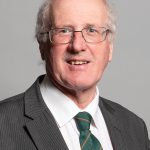
The speech made by John Howell, the Conservative MP for Henley, in Westminster Hall, House of Commons on 16 November 2022.
I beg to move,
That this House has considered the West Balkans and the Council of Europe.
It is a pleasure to serve under your chairmanship, Ms Nokes, and a great pleasure to move the motion. I want to begin by saying that I have recently returned from a visit to Bosnia-Herzegovina, where I observed the presidential and parliamentary elections on behalf of the Council of Europe. It left me with a deep impression of a troubled state where nothing gets done. I will come back to that in due course.
First, I wish to thank three people: George Papandreou, the former Prime Minister of Greece, who has produced a solid paper on the Europeanisation of the western Balkans. I am grateful for his sharing of the information that he collected, even though his paper remains too European Union-centric in its overall thrust. The second person I want to thank is Sandy Moss, our permanent representative in Strasbourg. Thirdly, I thank the Parliamentary Assembly of the Council of Europe secretariat in London, which does so much for us, and particularly the work of Nick Wright, its leader who is with us today.
The western Balkans covers a number of countries, including Albania, Bosnia- Herzegovina, North Macedonia, Serbia and Kosovo. Most of those countries are members of the Council of Europe and have also applied to join the EU.
Margaret Ferrier (Rutherglen and Hamilton West) (Ind)
I know the hon. Gentleman is a member of PACE and I thank him for the updates on his work there. Does he agree that the Council of Europe has a key role to play in normalising bilateral relations in dispute resolution in the region?
John Howell
I thank the hon. Lady very much for her question. That is a large part of what my speech is about. The Council of Europe has a pivotal role in the area in being able to take forward the sort of agenda that she has outlined. I am grateful to her for raising that.
The granting of candidate status to Moldova and Ukraine has not gone down well with the western Balkans states. We can all understand why. It has been seen for what it is: a political act that has left the western Balkans high and dry. It is seen as being driven by political expediency in view of the dreadful war in Ukraine. It has left a growing disenchantment with membership of the EU and with the EU itself, which will do nothing to increase peace in the region or provide stability, despite the agreed commitment to the shared values of human rights, democracy and the rule of law—the three principal values of the Council of Europe. That should have given the Council of Europe the inside track in working with the western Balkans to establish those values as the norm.
Despite calls over the years for the Council to take the initiative in the region, very little has been done. I will return to that. A catalysing activity for the region is the war in Ukraine. The influence of Russia in the region is enormous. As a starter, it has big strategic influence in energy, banking and real estate. Some of the countries support the sanctions that have been imposed on Russia. Albania, Kosovo, Montenegro and North Macedonia have done so. Bosnia-Herzegovina and Serbia have not. Serbia has signed a new three-year gas contract with Russia. We should note, too, that Russia is Serbia’s biggest supplier of arms—all sobering thoughts in a European context. The influence of Russia can therefore be seen to be felt very widely across the whole region.
In addition, two other players have a key role. Turkey’s activities have by and large been benign and focused on enhancing co-operation.
Dr Rupa Huq (Ealing Central and Acton) (Ind)
The hon. Gentleman is making an excellent and timely speech, and I praise his stewardship in leading parliamentarians on the Council of Europe. His mention of Turkey reminded me that there are elections in that country next year. Does he agree that the Organisation for Security and Co-operation in Europe also does sterling democracy-extending work in the Balkans and more widely in election monitoring? He mentioned Bosnia—he and I were observing the elections in Sarajevo last month—but such work extends to America, where I was election observing. The organisation also had border scrutineers in Ukraine during the lead-up to war. Does he further agree that its work has been vital?
John Howell
I thank the hon. Lady for her comments, and it was a great pleasure to see her in Bosnia-Herzegovina where she was representing the OSCE. That was very much a joint mission to observe the elections, and I agree that the OSCE has a lot to offer, but today I shall concentrate on the relationship with the Council of Europe and what the Council can do, which perhaps has a longer-lasting effect in the region.
Turkey can play a role for good in the region and it has done much good work, but the second country that has a role to play there is Iran, whose activities cannot be described as beneficial. Iran, for example, is widely believed to be behind the attempted vote rigging that occurred in Bosnia-Herzegovina when the hon. Lady and I were there observing the recent elections. That vote rigging attempt was stopped, but it showed what Iran can do.
What can the Council of Europe do in the western Balkans? One of the key elements on which the Council should be concentrating is the rule of law, which is a principle that embeds all others. Furthermore, there are two broad areas where the Council has the edge over the EU, the first of which is developing and enhancing civil society across the region.
Without civil society, there can be no enduring and fundamental championing of the rule of law. We need a civil society that can be taken seriously and not just be one of those complainers. It needs to be active in promoting aspects of society such as good human rights. That is just the sort of area that the Council is trying to establish in Russia, although it faces great difficulties, but it should be much easier to achieve that in the western Balkans. That means programmes providing assistance and watertight governance, and ensuring that the systems—the Governments—accept the role that civil society can play.
Secondly, there is the broad area of concentrating on bringing the systems used by Governments more in line with the rule of law across Europe. Where are the extensive training programmes for the judiciary and its independence? I am aware of the Regional Rule of Law Forum for South East Europe, hosted by the AIRE—Advice on Individual Rights in Europe—Centre and Civil Rights Defenders, which has brought together some of the judges of the Court of Human Rights and the Venice Commission to establish best practice, but we need much more of that.
Where is the work with the Administrations to enable them to be willing to invite civil society into the reform process? Where is the work to increase the political will to do something about these issues, which will either increase democracy or provide a conflict with it that needs to be resolved? Where, too, is the ancillary but essential work of ensuring that the media are free?
Those are activities in which the EU is not, I am afraid, 100% active, but where the Council of Europe should be and could be. That requires a Council of Europe secretary-general who is prepared to roll up her sleeves and get out into the countries to sort out those programmes. Sadly, that is one component of the Council that is currently lacking. Instead, it has put three countries —Albania, Bosnia-Herzegovina, and Serbia—under monitoring procedures by the Parliamentary Assembly of the Council of Europe, while Montenegro and Macedonia have just come out of monitoring.
Margaret Ferrier
The hon. Gentleman mentioned that he recently observed elections in Bosnia and spoke at the Council of Europe about the aftermath of the Dayton agreement. Does he feel that the worsening situation in Bosnia-Herzegovina can be remedied?
John Howell
The hon. Lady seems to have read my speech, because she is anticipating some of the points that I will make later. I made that point at the Council of Europe and I am happy to make it later if she does not mind waiting a few more minutes until I get to that part of my speech.
Kosovo has been caught up in internal Council of Europe committee meetings and wrangling for a long time. Monitoring can play a great part in helping countries move forward with their reforms, including established countries such as France, the Netherlands and even the UK—I am the monitoring rapporteur for Turkey—but the amount that can be done through monitoring, as opposed to active programmes, is limited. It is not a big stick to tell the countries what they have done wrong; it is much more about bringing PACE’s substantial resources to bear to help the country put right weaknesses that might have occurred in its human rights, rule of law or democracy.
How, for example, does PACE monitoring deal with political instability? If anyone thinks that political instability does not arise in that region, they should just look at two countries. We as a delegation are actively helping Kosovo to overcome the difficulties that it faces and become a full member of the Council of Europe, against Serbia’s objections which, of course, are backed by Russia.
Bosnia-Herzegovina contains Srebrenica—the site of a massacre of more than 8,000 Bosniak Muslim men and boys, which has been classed in the international courts as genocide. It might be thought that there is little to argue about, but Serbs do not accept that it was genocide, and Bosnia-Herzegovina has a mixed population.
Reconciliation, which is crucial for peace and security, requires an end to conflicting narratives about the past and a more vigorous prosecution of war crimes. That too is where civil society and the Council of Europe can play a key role. The council must not allow such disputes to fester while we put programmes in place, and we need good conflict resolution activity. If I were secretary-general of PACE—this is not a bid for election, although I am happy to entertain offers—I would seek to develop that area. It requires people with special skill and faith that the countries can come right.
The hon. Member for Ealing Central and Acton (Dr Huq) will agree that the general elections we observed in Bosnia and Herzegovina were generally well run and free. The polling booths, although sometimes a little eccentric—one was in someone’s front room—were generally well run. The only incident, to which I have already referred, occurred when those running a polling station turned up to open it with bags of polling forms that had already been completed.
A major problem, however, was that only three or four people were allowed in the polling booths at any one time. The queues stretched right out into the open air at times, because it took an average of 30 minutes for someone to vote because there were four very large, folded voting papers to read before they could identify their preferred candidates. It took that time to manage the paperwork. That is largely a result of the solution produced by the Dayton accord, which created an unsustainable constitutional system for the country. Sure, people were no longer voting with a gun pointed at them, but that cannot be the answer for the future. It cannot go on like that. Having three Presidents means that nothing ever gets decided. With a strong Muslim community, the country is divided into separate constitutional entities, all of which are threatening—at one time or another—to resign the country, such as the Republika Srpska. The high representative has already said that the country is
“facing the greatest existential threat of the post-war period”,
and its links with Russia are strong. It is a crazy and unsustainable situation. I congratulate Bosnia-Herzegovina on setting up such a large election-monitoring activity with both the OSCE and the Council of Europe, and other western organisations.
I have mentioned Kosovo. We as a delegation are actively supporting Kosovo, and have already offered to help it to become a full member of the Council of Europe. It can take its seats, but not vote, thanks to the work that we as a delegation did to encourage that as the first step for membership. I understand that our enthusiasm for Kosovo is the position of the UK Government as well.
It is difficult to comment on Albania without a comment on its Prime Minister. I have met Edi Rama, and did not find him to be the most conducive man for accepting the activities of the Council of Europe. We are aware of the number of Albanians, certainly the number of Albanian single men, who are coming across the channel, but Albania needs to make lots of progress on reforms to the judiciary and against corruption.
The big problem with Serbia is normalising its relationship with Kosovo and aligning its foreign policy away from Russia to a western, normal perspective. These both mean a lot of work, and a great deal of rethinking. It is interesting that the EU sees the help of the Council of Europe as crucial for enlarging the EU to include the western Balkans. It is essential for the UK too, but we should not try to do it alone at this stage. The UK should use my delegation to put pressure on the Council of Europe to take a more active role in the region and step up to the plate. It is not a question of money either; the Council of Europe Development Bank is able to help with the investment. We need a strategic approach, looking at the region as a whole. The question of migrants is a big factor in this, but we must move away from the narrow confines of nationalism and xenophobia, and the Council of Europe can play a major role in that.