Category: Foreign Affairs

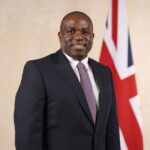
  • David Lammy – 2024 Statement on the Ten-year Anniversary of Downing of Malaysia Airlines Flight MH17

    David Lammy – 2024 Statement on the Ten-year Anniversary of Downing of Malaysia Airlines Flight MH17

    The statement made by David Lammy, the Foreign Secretary, on 17 July 2024.

    On the tenth anniversary of the downing of Malaysia Airlines flight MH17, a passenger plane travelling between Amsterdam and Kuala Lumpur, my thoughts remain with the families and friends of all those who died. 298 innocent people, including 10 British nationals, lost their lives that day – future dreams and ambitions suddenly destroyed.

    A decade on from that dreadful day, the devastating impact of this tragedy is still felt by thousands around the world, as they continue to mourn their loved ones. I remain grateful to the Joint Investigation Team for their efforts to uncover the truth. The conviction of 3 individuals in relation to the downing of MH17 was an important step in securing justice for the families of the victims.

    All States have a responsibility to cooperate in full with efforts to establish accountability, truth and justice for the families. We deeply regret the Russian Federation’s decision to withdraw unilaterally from ICAO proceedings on MH17 and we continue to call on Russia to cooperate in full with efforts to establish accountability so that justice can be fully delivered.

  • Joe Biden – 2024 Statement on Not Standing for Re-Election as President

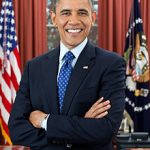
    Joe Biden – 2024 Statement on Not Standing for Re-Election as President

    The statement made by Joe Biden, the President of the United States, on 21 July 2024.

    My Fellow Americans,

    Over the past three and a half years, we have made great progress as a Nation.

    Today, America has the strongest economy in the world. We’ve made historic investments in rebuilding our Nation, in lowering prescription drug costs for seniors, and in expanding affordable health care to a record number of Americans. We’ve provided critically needed care to a million veterans exposed to toxic substances. Passed the first gun safety law in 30 years.

    Appointed the first African American woman to the Supreme Court. And passed the most significant climate legislation in the history of the world. America has never been better positioned to lead than we are today.

    I know none of this could have been done without you, the American people. Together, we overcame a once in a century pandemic and the worst economic crisis since the Great Depression. We’ve protected and preserved our Democracy. And we’ve revitalized and strengthened our alliances around the world.

    It has been the greatest honor of my life to serve as your President. And while it has been my intention to seek reelection, I believe it is in the best interest of my party and the country for me to stand down and to focus solely on fulfilling my duties as President for the remainder of my term.

    I will speak to the Nation later this week in more detail about my decision.

    For now, let me express my deepest gratitude to all those who have worked so hard to see me reelected. I want to thank Vice President Kamala Harris for being an extraordinary partner in all this work. And let me express my heartfelt appreciation to the American people for the faith and trust you have placed in me.

    I believe today what I always have: that there is nothing America can’t do – when we do it together. We just have to remember we are the United States of America.

  • Lee Pitcher – 2024 Maiden Speech on Foreign Affairs and Defence

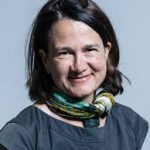
    Lee Pitcher – 2024 Maiden Speech on Foreign Affairs and Defence

    The maiden speech made by Lee Pitcher, the Labour MP for Doncaster East and the Isle of Axholme, in the House of Commons on 18 July 2024.

    I thank the hon. Member for Oxford West and Abingdon (Layla Moran).

    Like many of us, I found myself standing on the Terrace here in Parliament on my first day, with my back to the stunning Palace of Westminster and the splendour of Big Ben, and the London Eye majestically circling with the buzz, excitement and energy of the visitors here in this great capital city. There I was, looking out across the very still River Thames towards the east end of London, home to the world’s greatest football team, West Ham United, who, I remind everyone, did bring home some European silverware quite recently. But in truth, I was not thinking about the London Stadium at the time; I was looking towards the place where I was born and spent my early years.

    I recalled the 14-year-old in his first year of his GCSEs who slept on a double mattress on the floor, alone with just his mum and his sister; a little lad who had nothing left to his name and who was regularly bullied at school for the length of his trousers. I can tell the House that there is nothing more stark, more devastating and more heartbreaking than seeing your mum’s face—a very proud lady whose primary focus in life was to look after her babies—as she found herself working tirelessly but still losing the home that we lived in. Those times were rough, but I was so fortunate to have the very best and most inspiring women role models around me: my mum and my sister. They showed me that strength of character, resilience, and the importance of kindness regardless of the situation is what will carry you through.

    At that time, what we had were many friends and families in the community who rallied round to give us support and a roof over our heads. That told me that there were people out there who cared—people who would give you hope, and hope is what we needed. That experience absolutely changed my life and set a direction of travel for me to work hard, to do well and to never ever want to see anyone in that position again. And here I am today on 18 July, my 47th birthday—[Hon. Members: “Hear, hear.”] Thank you! I stand here in the shadows of the greats in this country that I love with my every being, having been given the chance to make sure I deliver that promise to myself and to my constituents that my situation will never happen to another child.

    Today is a super special day, as was 5 July, when I became first ever Member of Parliament for Doncaster East and the Isle of Axholme. Let me take this opportunity to acknowledge the hard work of Andrew Percy, who residents spoke of so fondly on the doorstep as a great constituency MP, and of Nick Fletcher in Don Valley, whose work promoting mental health in men is very dear to my heart, having lost a cousin a few years ago. Nick also campaigned for Doncaster airport, which is a key priority of mine too. I will not stop working closely with the Mayor of Doncaster, the South Yorkshire Mayor, officers and others to see planes flying over the skies of Doncaster again.

    It really isn’t hard to see why we all cared so much for my beautiful constituency, and I will tell you a little bit about why I adore it. Thirty years ago I met my best friend, my wife, who is from the constituency. She introduced me to Yorkshire, and I fell in love with the place in the same way that I fell in love with her at 18 years of age. She has been by my side ever since. Doncaster East and the Isle of Axholme is my home. My family have grown up in the constituency, my children have gone to school there and, alongside work, I have volunteered with wonderful organisations.

    There are many unsung heroes in the area who, over many, many years, have given back to our community. I have seen the work of great places such as the Doncaster Lions, whose motto could not align any more to our own values: “We serve”. They tirelessly walk the streets at Christmas every single year with Santa and his sleigh to bring smiles to children who otherwise would not be able to afford to go and see him in his grotto. I also have first-hand experience of the impact of Thorne’s local community radio station, TMCR, which brings a ray of sunshine through music to residents across the airwaves, easing loneliness and creating a sense of family. As a school governor at Travis St Lawrence school for several years, I have seen how the monumental effort of staff and teachers gives children the very best start in life.

    Community spirit can be found in every single pocket of the new constituency, from the urban, proud former mining areas and charming towns of Doncaster East, to the fertile, agricultural farming areas, quaint towns and villages of the Isle of Axholme in north Lincolnshire, through to the thriving local independent businesses and attractions, such as Yorkshire wildlife park—I give a big shout out to Rocco the baby rhino who I met last weekend. Like Rocco, I see what I have in Doncaster East and the Isle of Axholme as something rare and special that must be looked after, because mine is an area where heritage and tradition have shaped the towns and villages. I am keen to ensure that the unique identities of the different areas are respected, embraced and enjoyed for generations to come.

    The Isle of Axholme was once an inland island, surrounded by streams, rivers and meres until it was drained in the 1600s. It has amazing historic architecture—you really need to come and see it—such as Normanby Hall and the Old Rectory in Epworth, which was home to John Wesley, the founder of Methodism. It is also home to the Haxey hood. Has anyone heard of that? It is a tradition that dates back to the 14th century. Lady de Mowbray was riding towards Westwoodside, when her silk hat flew off her head in the wind and 13 local farmworkers ran after it. Eventually, one of them caught it but was too shy to give it back. He handed it to another gentleman who passed it back to her. The whole thing caused such amusement that she dedicated 13 acres of land so that it could be re-enacted every single year. So I say why don’t we, after Prime Minister’s questions, get together in a rugby scrum, as they do every year, and see if we can push the hood back to where it needs to be!

    We also have Keadby, home to the power stations; the Stainforth and Keadby canal; Crowle, with its quaint square and Gothic revival market hall; and lovely rural villages such as Luddington, Ealand, West Butterwick, Garthorpe and Fockerby. In Eastoft, I recently met a couple of farmers who told me that we have the best growing land in the world. Doncaster East comprises wonderful market towns such as Bawtry, a 12th century port, and Thorne, mentioned in the Domesday Book; mining settlements such as Dunscroft, Moorends and Rossington; Hatfield, the place where Northumbrian King Edwin was killed in the battle of Hatfield Chase; Woodhouse, the birthplace of Corporal William J Harper, a local hero who won a Victoria Cross in world war two; and Dunsville, Lindholme, Bessacarr, Branton, Finningley, Austerfield and Auckley, which all have their own enticing charm.

    For all the greatness in my home constituency, my team and I have real challenges ahead. The King’s Speech paves the way for policies and legislation to facilitate change in a lot of areas. For the mum who came to the constituency pregnant five years ago and still has not got her child an NHS dental appointment, I say that there are 700,000 new appointments to come. For the dad I spoke to while he was getting his children ready to visit their grandma—his wife was upstairs in bed; she had had a delay in her chemotherapy treatment and wanted to not see that happen to others because of the anxiety it caused—I say that there will be 40,000 new appointments per week and a huge reduction in NHS waiting times. For the grandad who endured young adults trying to break into his home repeatedly—pretty much every day—and threatening him with knives, I say that there will be 13,000 more police officers.

    For the children I spoke to at the New College hustings, who wanted new industries and new jobs to excite them, I say that there will be a clean energy company, with science, technology, engineering and maths jobs for a future generation. For the parent with the child with special educational needs who got no mental health support or diagnosis for several years, I say that there is a commitment to massively increase mental health provision. For the school leaver who can never envisage having a home for the future or the ability to buy one, I say that there is a commitment to jobs and a commitment to build 1.5 million homes. For my mum, waiting for a bus that is delayed or never turns up, I say that powers will be devolved to regional mayors to take buses back into public control. For the children who go to school hungry and do not have clothes on their backs—there are plenty in my constituency, where the relative poverty rate is 19.7%, according to the House of Commons Library—I say that there are breakfast clubs for all. Energy costs will be reduced by GB Energy, there will be economic stability and growth as a result of projects such as a national wealth fund, and planning reform will create roles and jobs.

    What I do from now on will require personal, role-model, visionary leadership, but it will also require a team effort. When I started my career as a sewer baiter, lifting manholes and putting down bait to kill rats, I was given some advice by the CEO of a company, who said, “Lee, to be successful you need to build the best team around you, and to do that you need to focus on brains. Do not focus on race, religion, age or sexual preference; focus on getting the best brains around you, and you will be successful.” Over the years, I have learned about the need to supplement that with passion in the heart, for those with the right passion and the right brains are bound to be successful.

    I will work tirelessly across the private, public and voluntary sectors, with my wonderful volunteering team and with residents, to bring a better today and an even better tomorrow for Doncaster East and the Isle of Axholme. No family should do go to bed at night and have nightmares about what tomorrow might bring; they should sleep well, dream big, and wake up to opportunities galore. I do not underestimate the challenge that lies ahead, but I can tell the House that that 14-year-old without a home never did so either, and let me bear witness to that as I stand here today. I say to every single resident of Doncaster East and the Isle of Axholme, “Thank you for putting your trust in me. I am your voice here in Westminster, I am your voice in the constituency, and together we will make a difference.”

  • Layla Moran – 2024 Speech on Foreign Affairs and Defence

    Layla Moran – 2024 Speech on Foreign Affairs and Defence

    The speech made by Layla Moran, the Liberal Democrat MP for Oxford West and Abingdon, in the House of Commons on 18 July 2024.

    May I start by warmly congratulating the new the hon. Member for Ealing Southall (Deirdre Costigan)? For a time I lived in Acton, close to her constituency, and when she spoke about the diversity and warmth of the area, I certainly recognised that. I have no doubt that she will be an enormous asset to this place. Many congratulations, and welcome.

    I also welcome the Secretary of State for Defence and his team to their places, and the Foreign Secretary and his team to theirs. They include my fellow Oxford MP, the Minister of State, Foreign, Commonwealth and Development Office, the right hon. Member for Oxford East (Anneliese Dodds); it is wonderful to see her there. I also welcome the shadow Defence Secretary, the hon. Member for South Suffolk (James Cartlidge), and, in particular, the shadow Foreign Secretary, the right hon. Member for Sutton Coldfield (Mr Mitchell), whose promotion I hope we can all agree is long overdue.

    Under boundary changes, Oxford West and Abingdon has taken in Dalton barracks and Shippon, so I am now also the MP for a number of armed forces families. I pay tribute to them, and to all our armed forces and their families who so willingly give their lives over to service to this country.

    I am very pleased that foreign affairs and defence has been chosen as the theme for the second day of the debate. We are living in a world that feels so much less stable and less secure than it has ever felt, certainly in my lifetime. Only a few days ago, we saw the horrific attempted assassination of an American presidential candidate; Putin continues to wage war in Ukraine; Xi Jinping continues his muscular foreign policy aims, threatening Taiwan and continuing to oppress people in Hong Kong and Xinjiang; and as has been mentioned, a rising tide of populism is sweeping across Europe.

    The Liberal Democrats support many of the priorities set out in the King’s Speech. Support for NATO, support for Ukraine and resetting our relationship with the European Union are all vital to achieving security and stability. We aim to work constructively with anyone in government who seeks to return Britain to its position as a leading light on the international stage, in particular in the area of development, on which I associate my remarks with those of the shadow Foreign Secretary. We agree that there is a huge opportunity. We want a return to spending 0.7% on development, and we think that a new Department is the way to ensure the muscle that is needed to give that oomph. Nevertheless, we wish all the Ministers well in their endeavour to find a place for development in the Foreign Office.

    I was especially pleased to hear mention of the middle east and the two-state solution. For reasons that I am sure are obvious, that is what I will focus my remarks on. It has been nearly 300 days since the horrific Hamas attack on 7 October. Since then, hostages have still not returned home. The death toll in Gaza has reached 38,000. The vast majority of the dead are women and children. There are, of course, thousands more under the rubble who are left out of the statistics. Scientists fear that the death toll will soar. A letter in the medical journal The Lancet predicted that if we take into account indirect casualties of war—people who die of malnutrition, a lack of medication and unsanitary living conditions—the total number of deaths could climb as high as 186,000.

    The children of Gaza have suffered the unimaginable. Alexandra Saieh, the head of humanitarian policy and advocacy at Save the Children International, said:

    “They are being dismembered. They have been burnt alive in tents. They have been killed due to crashing apartment building blocks. They have been also killed by preventable diseases and illnesses and denied medical assistance. Children in Gaza are just suffering horrifically.”

    In the first three months of this conflict alone, 1,000 children had one or both legs amputated; that meant more than 10 children lost one or both legs every single day. We need that immediate ceasefire. We needed it six months ago.

    There is only one way to end the killing, to get those hostages safely home and to get that humanitarian aid in. None of that can happen until the ceasefire is achieved, but we must also understand that a ceasefire is not enough for peace. Peace is not just the absence of war. It is hope that is shared—hope for a future in which Palestinians and Israelis live in security and dignity. That is what we mean by a two-state solution. That is the real prize.

    I have been relieved to be a Liberal Democrat during the last few months. In all seriousness, when my family were under siege in that church in Gaza, the professional and the personal collided completely. I got the devastating news in November that I had lost a family member; my cousins texted me to tell me, and all they asked for was that ceasefire. That is what the Liberal Democrats have consistently argued for, because when it comes to foreign policy, we ground our approach in liberal principles of human rights and the international rules-based order.

    Jeremy Corbyn

    I congratulate the hon. Member on a powerful speech. I agree with her call for an immediate ceasefire. Does she believe that we should also halt arms supplies to Israel, which are being used to bomb Gaza and make us and the United States complicit in the killing of so many people in Gaza?

    Layla Moran

    I thank the right hon. Member for his intervention. I will come to exactly those points and will expand on them.

    An approach based on the international rules-based order and humanitarian law led to our being on the right side of the argument on apartheid in South Africa, on Hong Kong, and indeed on the war in Iraq. It guides our approach now. I am pleased—delighted, even—that the Government have included reference to the all-important two-state solution in the King’s Speech, and I am very much heartened by the their change in tone. But words are meaningless without concrete action. It is vital that we start to think about what we need to do the day after that ceasefire is secured, because at some point it will be—we all know that. Hamas are extremes in this debate, but so is Netanyahu. Neither wants peace. It is in neither of their interests. It is the framing of one versus the other that has proved to be so insidious in this debate.

    There are plenty of voices in Israel, Palestine and beyond who are partners in peace and are actively calling for it. Protest in Israel is growing, with demonstrations held in Jerusalem and Tel Aviv, clamouring for a deal to be done to bring those hostages home. They often link that to a ceasefire, and the release of Palestinian political prisoners such as Marwan Barghouti. That wider movement for peace is growing.

    I want to tell the House about two friends of mine, Maoz and Magen Inon. They lost their parents on 7 October when Hamas targeted their house with a close-range missile. I have been twice to Netiv HaAsara—once before and once since—and I saw their house and their burnt out car. It was heartbreaking. But rather than turn to hatred, they chose instead to spend their whole lives talking about peace, because they do not want this to happen to anyone else’s family. There is only one way to guarantee that: peace and a shared future. In them and in all those Israeli peace activists—a growing movement—I see that shared future.

    This Chamber and this Government need to understand that people like Maoz and Magen are embers in a nascent fire. They need the oxygen of political support to survive and grow. The same is true for Palestinian peace activists Hamze and Ahmed, who I recently shared a panel with—all of us children of the Nakba, but all of us willing to devote our futures to stopping the endless taking of lives to avenge a past we no longer want to keep resurrecting over and over again. These are the voices that deserve to be amplified, and this is the kind of rhetoric that I hope we can all follow—bringing people together, not seeking to divide. I say that with some disappointment, because in the remarks of the Leader of the Opposition in response to the King’s Speech yesterday, he did not mention Palestine at all, only Israel. We cannot do that. We must understand that we cannot have security and freedom for Israel without security and freedom for Palestine. That is why the mention of the two-state solution is so vital.

    Let us start with the basics: a two-state solution needs two states. That is why we must recognise the state of Palestine, along 1967 borders, immediately without preconditions. I have laid a Bill in every parliamentary Session since I was elected, and I will do so again. Some 140 countries have already taken this step, including Ireland, Spain and Norway just this May. If the UK were to join them, it would send a powerful message to the Israeli Government that we are serious about two states—something that Netanyahu has rejected. It would also send a message to the Palestinian people, who are desperate for hope that the international community—in particular the UK with our long-standing historical obligations to the region—will help them achieve that future.

    Many will say—and they are right—that recognition is not enough. One of the biggest barriers to peace are the illegal Israeli settlements in the west bank. In 2024, Israel illegally seized 23.7 sq km of Palestinian land in the occupied west bank. That is more than all the land it has taken over the past 20 years combined. These settlements are illegal under international law. They exacerbate tension and they undermine the viability of that previous two-state solution. We have called for individual violent settlers who breach international law to be sanctioned. I was pleased that the then Conservative Government took some small steps and sanctioned individual settlers, but I urge the Government to go further. The Liberal Democrats have called for sanctions to include Ministers Ben-Gvir and Smotrich, and the connected entities that provide support or enable those extremist individuals. Since 2021, we have also called for the UK to ban trade with illegal settlements, because if they are illegal under international law, we should put a firm marker in the sand.

    To come to the point made by the right hon. Member for Islington North (Jeremy Corbyn), the trade of British weapons needs to be handled with great care. Our policy is not to single out Israel—that is important. Our policy is built on ensuring that no British-made arms are sold to any countries that are in potential breach of human rights law. That is why we believe that we should look at our arms export trade with Israel. Despite repeated calls, the Government never released their own legal advice on potential breaches of international law in this conflict, but given that there is a case to answer at the ICJ and the ICC, the British public deserve to know whether the Government are breaching their own arms export regime. The Foreign Secretary, when he was shadow Foreign Secretary, asked for that legal advice to be released; I am curious to see whether he will make good on that promise.

    While we are on the subject of courts, it is vital that the UK Government give their full-throated support to the ICC and the ICJ in their investigations and judgments. The UK Government must support them and their processes and outcomes without fear or favour. That goes beyond this conflict, as there are international ramifications if we undermine those courts that are the bedrock of our international rules-based order. When in government, the Conservatives undermined those processes, but I had hoped for better from Labour, and I still do. In January, the now Foreign Secretary said that his party believed that if an arrest warrant were issued for Netanyahu, they would honour it. Since then, Karim Khan at the ICC has issued one for Hamas leaders and Netanyahu, but we understand from the media that the block by the UK, which should be removed, may have remained in place. It would helpful for the Foreign Secretary to come to the House and explain the position.

    Imran Hussain (Bradford East) (Lab)

    As ever, the hon. Lady is a powerful advocate on injustices all over the world. The particular point she raises on the international rules-based order is very powerful. It and the international legal system must provide equal protection to all people, and they must be free from double standards. The minute those two things do not apply, the very nature of the rules-based order is under threat.

    Layla Moran

    I could not agree more. It has really concerned me how people perceive a double standard between what is happening in this conflict and what is happening between Ukraine and Russia. They are very different conflicts. As politicians, we have to bolster that international rules-based order so that people have faith that injustices anywhere in the world will be put through a proper process and determined. I am afraid to say that we are at risk—not just this country but the US—of undermining that system. I urge the Government to take a different approach.

    I will simply end by saying that I urge the Government to go further and faster on a two-state solution. I would love to see a plan for what they mean by leading. I would offer my services with pleasure, because we need that two-state solution, with Israelis and Palestinians living side by side in dignity and security. It is going to take much more than a change in tone to get there. It is vital to what we need to achieve peace, not just in Israel-Palestine but in the middle east and the region as a whole.

  • Deirdre Costigan – 2024 Maiden Speech on Foreign Affairs and Defence

    Deirdre Costigan – 2024 Maiden Speech on Foreign Affairs and Defence

    The maiden speech made by Deirdre Costigan, the Labour MP for Ealing Southall, in the House of Commons on 18 July 2024.

    Thank you, Madam Deputy Speaker, for allowing me to make my maiden remarks on this historic King’s Speech, which puts into concrete action the first steps of this Labour Government of national renewal. I thank the right hon. Member for Sutton Coldfield (Mr Mitchell) for their wide-ranging remarks.

    As the new Member for Ealing Southall, I stand in the shadow of Virendra Sharma, who was our MP for 17 years. With more than 50 years of public service in total, including as a local councillor and mayor of Ealing, Virendra is a towering figure in west London politics. Always dressed impeccably in a suit, and sometimessporting sunglasses, he often has the air of a mafia don, until he gives you that wonderful Sharma smile. Virendra is well known for his work on global maternal health. He has been a tireless defender of human rights and of the underdog all his political life. I thank him personally for his support and wisdom, and I pay tribute to his wife Nirmala and all the family for their years of service to Ealing Southall.

    The House can probably tell from my still-intact Dublin accent that I was not born here. I came to this country in the 1990s to finish my education, but like so many Irish people before me, I fell in love with the diversity of this country, and I never went back. That is the story of my constituency, Ealing Southall, where 53% of people were, like me, born abroad. Whether from India, Pakistan, Somalia, Sri Lanka, Afghanistan, Ireland or so many other places, we all came here for a better life, but we did not always find it easy to achieve that better life. Many of my constituents have faced barriers in the workplace and on the streets, but they have always stood up to them.

    Ealing Southall has a strong tradition of anti-racism, and of trade unionism. In the 1960s, low-paid exploited Punjabi workers at the Woolf rubber factory joined the Transport and General Workers’ Union and famously took seven weeks’ successful strike action, despite attempts by management to create sectarian division. In the 1970s, residents took to the streets of Southall to defend it from the far right in the aftermath of the racist murder of Gurdip Singh Chaggar.

    Until my election, I worked for the country’s biggest and of course best trade union, Unison. Starting as a shop steward, I went on to become national officer for disability equality. I intend to continue Ealing Southall’s proud tradition of trade unionism and fighting for workers’ rights, so I welcome Labour’s new deal for working people, and the much-needed laws that we will bring forward to ensure that black, Asian and disabled workers have the right to equal pay.

    I am enormously thankful to the people of Ealing Southall for placing their trust in me. Since the creation of the seat, Labour has won 23 times in a row, but this is the first time in 23 elections that Ealing Southall will be represented by a woman. I intend to support this Labour Government’s plans to create flexible workplaces that fit with women’s lives. Ealing Southall is home to a dizzying array of places of worship, and I was delighted to visit Shree Ram mandir, Shri Guru Ravidass gurdwara, Baitul Mukarram mosque and Christ the Redeemer church during my campaign. I know that for many of us coming to this country from abroad, it was the mandirs, the gurdwaras, the mosques and the churches that provided the help and support that we needed to settle into a new country. I will always support all the diverse communities in Ealing Southall.

    I am lucky to have not one but three town centres in Ealing Southall. West Ealing, Hanwell, and Southall are all filled with shops, bars and cafés. Southall is a busy shopping hub for wedding finery, famous the world over, but local businesses are not as busy as they once were, which is why they strongly back Labour’s plans to review business rates and stamp out late payments to help revitalise our high streets.

    Fly-tipping is a blight on town centres across London. I commend the work of the amazing LAGER Can litter picking volunteers who do so much to keep Ealing clean. As the former deputy leader of Ealing council, I hope to work with our new Labour Government to find ways of giving councils more powers to levy and enforce fines that will act as a real deterrent against that criminal behaviour.

    Ealing hospital sits in the centre of my constituency, but it is badly in need of love. Ten years ago, I had a stroke while I was—of all places—at the Labour party conference. I recovered, but I am sad to say that I did miss the leader’s speech of my right hon. Friend the Member for Doncaster North (Edward Miliband) that year as a result. I am afraid to say that I missed his statement this morning as well, having unexpectedly been encouraged, shall we say, to make my maiden speech.

    When I had my stroke, the care that I received from an Irish neurologist working for NHS North West London was fantastic, so I applaud the investment that Labour is making in reducing NHS waiting lists and doubling scanners for quicker diagnoses. I am not sure that I would be here today if it was not for our NHS. We must again ensure that it is the best health service in the world.

    Finally, until recently, I was Ealing’s cabinet member for climate action. I know that many people in my constituency worry about air pollution, nature breakdown and flood risk. I am excited about Labour’s plan to set up Great British Energy, a clean new energy company that should cut carbon emissions, create jobs and help reduce household bills.

    Ealing Southall has always been a place that has welcomed new arrivals. I thank this House for channelling the spirit of Ealing Southall today by similarly welcoming my arrival. I look forward to serving all my constituents, and I will start by backing the much-needed change that they voted for that is set out in the King’s Speech.

  • Andrew Mitchell – 2024 Speech on Foreign Affairs and Defence

    Andrew Mitchell – 2024 Speech on Foreign Affairs and Defence

    The speech made by Andrew Mitchell, the Shadow Foreign Secretary, in the House of Commons on 18 July 2024.

    Thank you, Madam Deputy Speaker, and welcome to the Chair.

    May I warmly congratulate the Defence Secretary on his new role, and strongly endorse the comments he made about Britain’s armed forces? My own regiment has recently been on the frontline in Estonia, and I want to strongly endorse the words he used. I also endorse the advice he gave to new Members sitting on these green Benches. I first sat on these green Benches—on the Government side—37 years ago, and I strongly agree with what he said. I feel that sense of honour and privilege every day in this House.

    I had hoped to start by welcoming the Foreign Secretary to his place. I wanted to wish him well in discharging the immense responsibilities of the office he now holds. I have to say that I was dismayed to hear the Foreign Secretary answer questions on the “Today” programme this morning that should more properly have been answered in this House—a view that I believe Mr Speaker shares. Nevertheless, I have no doubt that the Foreign Secretary will be very well served by the outstanding civil servants at the Foreign Office. I want to express my gratitude to our ambassadors and high commissioners around the world. On overseas visits throughout my tenure, I was superbly served and looked after. I also want to thank the outstanding young officials who worked in my private office.

    I should like to pay a special tribute to my noble Friend Lord Cameron of Chipping Norton. He demonstrated clear strategic thinking about how British foreign policy needed to adapt to the world as it is today and injected real energy into British diplomacy. I hope the whole House will acknowledge that to persuade a former Prime Minister to serve as Foreign Secretary was a real benefit to our country. It was also a pleasure to serve alongside the former Members for Berwick-upon-Tweed and Macclesfield, who I am very sorry are no longer sitting alongside me on the Front Bench. They were both superb Ministers, who worked diligently at the Foreign Office.

    I cannot recall a more perilous period in international affairs. I entered the House of Commons just two years before the momentous fall of the Berlin wall, which precipitated the demise of the Soviet Union and the consequent end of the cold war. It is difficult to overstate, having lived with the terrifying spectre of nuclear confrontation, the collective relief we all felt. Yet the world is once again in the grip of a galloping escalation of tensions and dangers, where the international institutions created on the heels of the second world war to defend our values and protect mankind are being undermined, the narrow nationalism that so disfigured our continent is once again rearing its destructive head, and despots and dictators increasingly ride roughshod over democratic freedoms and the rules-based order.

    Putin’s brutal and illegal invasion of Ukraine has brought war once again to the European continent. The Israel-Gaza conflict is devastating and risks regional conflagration. Poverty and debt stalk the global south. Yet covid taught us that no one is safe until we are all safe, while climate change is the greatest existential threat of our time. Never have we faced dangers so grave when our fates are so closely entwined. So at the very time when we need an international rules-based order to tackle these common threats—climate change, migration, terror and pandemics—we are more fragmented than ever. Divisions are hardening and debate is coarsening.

    Liam Byrne (Birmingham Hodge Hill and Solihull North) (Lab)

    I am very grateful to the right hon. Member, my constituency neighbour, for giving way and I am delighted to see him in his place—on the Opposition side of the Chamber. Can I take it from his remarks that he subscribes to the view that we need not only a rules-based order, but a rights-based order? Here in our country, and indeed in Europe, the framework for those rights is the European convention on human rights. Are we to take it from his remarks that it is the policy of His Majesty’s loyal Opposition that we should remain a member of the ECHR?

    Mr Mitchell

    That is certainly the policy of the Opposition, and I hope it is common across the House that we should remain part of the European convention.

    I was talking about divisions hardening and debate coarsening. Public discourse is increasingly vitriolic, be it in pursuit of single issue causes or broader agendas, from the left or the right, or driven by motives that may or may not be religious and may or may not be well-intentioned. The challenge this presents to British foreign policy is immense, but Britain has punched above its weight precisely because of our leadership role in the international system.

    As His Majesty’s Opposition, our role is to hold the Government to account, but also to give the strongest possible support where we can. I hope that we can work constructively, as our two parties have done hitherto. In opposition, we will continue to make the case that Britain must be a force for good, that it is outward-looking and global in perspective, that we stand up for internationalism and co-operation, that we stand against populism and isolationism, and that we stand with the world’s poorest and most vulnerable. I am very proud of the Conservative party’s record in government on all those fronts. We stood firmly behind Ukraine, and we worked day and night with international partners to maximise the flow of humanitarian aid into Gaza, while supporting negotiations to secure the release of the Israeli hostages. We produced a groundbreaking White Paper on international development, which drew in the support of all political parties in tackling global poverty in a complex geopolitical environment.

    Dr Luke Evans (Hinckley and Bosworth) (Con)

    I am grateful to the shadow Foreign Secretary for his comments. One duty of the Opposition is to point out blind spots. We are talking about security, but one thing that was not mentioned in the King’s Speech was food security. For a rural community like mine, which has an 85% agricultural base, food security is really important. We have seen the attacks on Ukraine and the grain coming out of it. What can my right hon. Friend do in opposition to hold the Government to account to ensure we have food security on these isles?

    Mr Mitchell

    My hon. Friend is quite right about the importance of food security. He will remember that the then Prime Minister launched the global food security summit last November in Britain. Food security is an issue not just for us but, as my hon. Friend rightly says, all around the world, and we will continue to press the Government to take it as seriously as we did.

    I would like to expand on some themes that I anticipate will remain dominant over the course of this Parliament. First, I turn to Ukraine. Britain’s work in supporting Ukraine is a shining example of cross-party co-operation. I pay tribute to the Labour party for the constructive approach it demonstrated while in opposition. The Government can rely on us to continue in that spirit, because the struggle in Ukraine is an existential issue. Let no one believe that Putin will stop at Ukraine if he is victorious in this struggle. Our support for Ukraine in the face of Putin’s brutality remains unwavering, and I know that the Government’s position is the same. We welcome the Government keeping in place the commitment we made to spend at least £3 billion a year on military support for Ukraine for as long as is necessary.

    In government, we were also a leading advocate for sanctioned Russian assets being used to support Ukraine and for ensuring that Russia pays for the destruction it has caused. I urge the new Government to push the international community to coalesce around the most ambitious solution possible to achieve those important aims. We on the Opposition Benches welcome the declaration agreed at the NATO summit in Washington last week—to which the Defence Secretary referred—which committed to support Ukraine

    “on its irreversible path to full Euro-Atlantic integration, including NATO membership.”

    It is right that the Government also committed to this in the Gracious Speech.

    In relation to the middle east. we want to see the conflict in Gaza come to a sustainable end as quickly as possible. Our view remains that a negotiated pause in the fighting is the best way to secure the release of the hostages, enable a significant scaling up of much-needed humanitarian aid, and help bring about the conditions that will allow for a permanent end to hostilities. That is the plan that Britain championed in New York, and which secured the consent of the international community at the UN. There is a deal on the table to achieve those goals, backed by Israel, the United States and the United Nations Security Council. The onus is now on Hamas to accept it and bring to an end the suffering of the Palestinian people and the hostages, who remain in such awful jeopardy.

    The Government must build on our hard work to see aid reach those in Gaza who desperately need it. The Conservative Government trebled their aid commitment in the last financial year and did everything possible to get more aid into Gaza by land, sea and air. Israel has committed to increasing the amount of aid reaching Gaza, and the Government of Israel must be held to account for delivering on their promises.

    I want to signal a note of caution, which links to my comments earlier about composure. I am acutely aware of the very strong feelings that the conflict in Gaza has elicited. It is probably the most polarising foreign policy issue of our time, which has played out on the streets of our country, on our university campuses and in our politics, even forming the entire basis for some candidates in the general election, who are now with us in the House of Commons.

    We must remember that this remains an incredibly complex issue. The questions and challenges around resolving the current conflict and achieving the two-state solution that we all want to see are profoundly difficult. We have a responsibility to set a sensible and respectful tone in the many debates we will continue to have, and to make clear that there is no room in our democracy for threats of violence and intimidation. We require serious solutions and long-term measured policies, not performative politics or short-term symbolic proclamations. We should certainly recognise the state of Palestine, but it must be at the right time, as part of an overall solution. To do so prematurely could send a signal that terror pays. I urge the Government to resist the siren calls of those who wish to demonise the state of Israel, and who draw a moral equivalence between the Hamas leadership and the democratically elected Government of Israel in a bid to isolate and delegitimise it.

    While we are all appalled at the dreadful loss of life in Gaza, we must never forget the horror unleashed by Hamas on Israel on 7 October—the deadliest terrorist attack in Israel’s history, to which the Defence Secretary rightly referred. The Conservative party stands four-square behind Israel’s right to defend itself—but it must be in accordance with international humanitarian law. We must not lose sight of the fact that this is, at its heart, a tale of two just causes, of two peoples’ legitimate aspirations for national sovereignty, security and dignity.

    There are other crises around the world that must also preoccupy the Government. I refer particularly to the crisis that has engulfed Sudan—now the worst displacement of people anywhere in the world. We are seeing clear evidence of ethnic cleansing once again in Darfur. We urge the Government to continue our efforts to pressure the warring parties in Sudan to cease hostilities, and to push hard for humanitarian support to reach those desperate people, including those I saw on the border with Chad earlier this year.

    The Government must also continue to hold to account the regimes around the world committing appalling acts, whether that is Iran, Myanmar, North Korea or Russia, where we must push for the immediate release of Vladimir Kara-Murza. Finally, I know that the Foreign Secretary will want to work closely with the Governments of Gibraltar and Spain, and take a hands-on approach to securing a good deal for the Rock’s future prosperity. We will also be following closely the very important negotiations over the future of Diego Garcia.

    I turn briefly and directly to the Gracious Speech. In spite of their legitimate desire for yet another defence review, I think the Government have made a mistake in not honouring immediately our commitment to increase defence spending to 2.5% of GDP by 2030. My hon. Friend the Member for South Suffolk (James Cartlidge), the shadow Defence Secretary, will say more about the matter later, but I would say now that this gives the wrong signal to our allies and adversaries about our determination to confront the multitude of dangers the world faces. In 2014, the Conservative Government made the commitment to spend 2% of GDP on defence. The UK led the way and many NATO allies have followed, and we have now led the way with our commitment to move to 2.5% of GDP by 2030. The Government should be in no doubt, either, that we will place under the microscope any decisions that they may make on our nuclear deterrent.

    On the subject of Europe, we welcome the closest possible partnership with our friends and neighbours, subject to respecting the results of the referendum and the will of our constituents over Brexit. Today’s most important summit at Blenheim, served up oven-ready by my right hon. Friend the former Prime Minister, is a chance to underline the effective way in which the UK has worked with our European partners in response to the invasion of Ukraine and shown that, although we are outside the EU, we can indeed work together effectively.

    The upcoming Commonwealth Heads of Government meeting, which I am delighted was referenced in the Gracious Speech, will be an opportunity to show real ambition for the Commonwealth. In government, we offered strong support for Samoa’s hosting of CHOGM and its desire to use this platform to enhance Commonwealth countries’ resilience to global challenges. I urge the new Government to continue working closely with Samoa to make the most of this CHOGM and to mobilise action across the Commonwealth, including to boost trade and investment and enhance access to climate finance.

    I wish to conclude by addressing an issue that is very close to my heart and the hearts of many others across the House, but which in many ways links all these themes together. I was privileged to return to government as the Minister for international development, a brief I held previously in 2010 as Secretary of State. For many in their darkest moments after flood, earthquake and disaster, Britain has been a beacon of hope and light. Now, 70 million people are falling back into poverty, millions of girls are out of school, famines stalk the lands of east Africa and children are starving to death. The anger and frustration of the global south is palpable. I made no secret of my dismay that the overseas aid budget was cut and that the Department for International Development was merged into the Foreign Office. My job as Deputy Foreign Secretary was to look forward, to try to make the merger work after a tumultuous start and to set out a pathway to return to 0.7%.

    However, development is about much more than money. Our recent White Paper crafted new approaches that reflect the changing world around us. We formulated creative ways of mobilising new and additional funds to ensure that the sustainable development goals can get back on track. I am proud of the leadership that our former Prime Minister has shown on the green climate fund and the Global Fund, where Britain was right at the forefront of ensuring that those funds improved and were fully replenished. I hope that the new Government will do the same with the International Development Association World Bank replenishment and with Gavi.

    We made the case that international development must be owned by the British people. I submit that that is not a Conservative, Labour or Liberal policy but a British policy, and we must all unite behind the goal of bringing the British people behind the agenda set out so clearly in the White Paper. All British development money is spent in our national interest, because it helps heal the grotesque discrepancies of opportunity and wealth that disfigure our world. We will continue to stand up for the world’s poorest and most vulnerable, calling for the continued reform of the international financial system to free up funding for climate finance, debt relief and achieving the SDGs. We will continue to stand up for women and girls with the same vigour that we exhibited in government, whether in relation to female genital mutilation, women’s rights or LGBTQ rights, and we will press for a bolstering of the coping mechanisms of countries on the frontline of climate shocks.

    Finally, we will be keeping a close eye on whether the “D” in FCDO falls silent once more. Development is only as effective as the structures and expertise behind it. I tried hard in office to strengthen the development silo in the Foreign Office, with some, but frankly not enough success. I stress in the strongest terms that development cannot be a sideshow, as people’s lives depend upon it, but the Foreign Office system is built around diplomacy, with a panoply of resources focused on the Foreign Secretary’s priorities. I hope that the Government keep that in mind. Development deserves the attention and energy afforded to diplomacy. With the right strategic adjustments, development and diplomacy could make for a mighty partnership, but it will require proactive leadership. If, despite best efforts, that cannot be achieved under the merger—that will become clearer sooner rather than later during this Parliament—I will urge the Government to move swiftly and decisively to plan B.

    It is easy to despair at the state of the world, so I hope to end on a more sanguine note. I am long enough in the tooth to have lived through the ebbs and flows of different eras, conflicts and crises. I have witnessed the worst in humanity, but also the best. I have learned that the bleakest moments offer the greatest opportunities. However, history teaches us that most things do not come to an end, but are brought to an end. We have the power to change things for the better and to build a safer and more prosperous world, but we cannot do it alone. Only international co-operation can deliver the progress we seek. I sincerely hope that the new Government will succeed. The future of us all depends on that success.

  • John Healey – 2024 Statement on Foreign Affairs and Defence

    John Healey – 2024 Statement on Foreign Affairs and Defence

    The statement made by John Healey, the Secretary of State for Defence, in the House of Commons on 18 July 2024.

    May I say how great it is to see you in the Chair for this debate, albeit in a temporary role? And may I say, through you, that the Foreign Secretary wanted to be here for the debate, but he and the Prime Minister are hosting the leaders of over 40 European countries at the European Political Community meeting at Blenheim palace today—it is an important day for our country. He will look forward to following the debate as soon as he returns.

    I congratulate all 315 re-elected and returning Members of this House, and welcome in particular all Members who were elected for the first time. Savour that special feeling when you first walk into this Chamber and sit on these green Benches. Remember it; respect it. Our constituents have given each of us their confidence; they have given us the mandate to serve them and the country.

    Two week ago, I stood at my local constituency election count in a sports hall in Rotherham. It is the honour of my life to stand at this Dispatch Box today as the Defence Secretary—as part of the new Government at the start of this new era for Britain. The last time that I spoke at this Dispatch Box was a week before the election in 2010, as a housing Minister dealing with planning reform. Even then, I warned that

    “there are fundamental flaws in the Conservatives’ proposed planning regime”.

    However, my main argument on that day focused on accountability. I said:

    “accountability is a central tenet”—[Official Report, 29 March 2010; Vol. 503, c. 611.]

    of public life, serious decisions and good government. Having re-entered Government, I feel that just as fiercely as I did 14 years ago. What we do, what we say and how we conduct ourselves in Government matters. We must always be accountable in this House, to the public and to Parliament. By doing that, we will help to regain trust in Government and return politics to public service.

    I pay tribute to my predecessors, Grant Shapps and Ben Wallace, whom I shadowed for over four years from the Opposition Benches. The House will now miss them both in differing ways. They served as Defence Secretaries during what the Chief of the Defence Staff has described as the most extraordinary time for defence in his career. That responsibility now passes to me. I am grateful to have the support of such a stand-out ministerial team: the Minister for Defence Procurement and Industry, my right hon. Friend the Member for Liverpool Garston (Maria Eagle); the Minister for the Armed Forces, my hon. Friend the Member for Plymouth Sutton and Devonport (Luke Pollard); the Minister for Veterans and People, my hon. Friend the Member for Birmingham Selly Oak (Al Carns); and Lord Coaker in the other place.

    The first duty of any Government is to defend the country and keep our citizens safe. That is why I pay tribute, on behalf of the House, to the men and women who serve in Britain’s armed forces, many of whom are overseas on deployment right now. They are rightly respected worldwide for their bravery and their professionalism. We thank them for what they do to keep us all safe, as we thank those out of uniform in UK defence. They will have this new Government’s fullest support to do their job in defending this country

    That is why at the NATO summit in Washington last week, the Prime Minister confirmed the Government’s unshakeable commitment to NATO, and our total commitment to spending 2.5% of GDP on defence. It is why the Prime Minister launched this week a first-of-its-kind strategic defence review. And it is why we announced in the King’s Speech legislation to create a new armed forces commissioner to improve service life.

    bI wish the right hon. Gentleman, who was a committed parliamentarian in his shadow role, all the best in his new role, to which he brings great depth and seriousness. He has just described the strategic review and outlined the ambition to get to 2.5% of GDP. If that strategic review recommends more than 2.5%, will the Government still enact it in full?

    John Healey

    We have launched the strategic defence review, which was a manifesto commitment. It will be conducted within the framework set out in our manifesto, with the determination to complete it within the first year and to raise defence spending to 2.5% of GDP as soon as we can. The country has not spent at that level since I last stood at the Dispatch Box back in 2010 under the then Labour Government.

    I welcome to their roles the new shadow Defence Secretary, the hon. Member for South Suffolk (James Cartlidge), and the Liberal Democrat spokesperson on defence, the hon. Member for Honiton and Sidmouth (Richard Foord), who cannot be here for the debate—the hon. Member for Caithness, Sutherland and Easter Ross (Jamie Stone) is ably standing in for him, and we look forward to hearing what he has to say. I also welcome the SNP spokesperson on defence, the hon. Member for Angus and Perthshire Glens (Dave Doogan). As Defence Secretary, I want to take the politics out of national security. I say to the House: I will always look to work with you—putting country first, party second. I have offered the shadow Defence Secretary access to intelligence briefings, and will do so for other relevant Members. The new strategic defence review will brief and welcome submissions from other parties across this House.

    I want us to forge a British defence strategy for the future, not just a defence strategy for the new Labour Government. No party has a monopoly on defence or on pride in our military. We in the Labour party have deep roots in defending this country. Throughout the last century, it was working men and women who served, and sometimes died, on the frontline fighting for Britain. It was Labour that established NATO and the nuclear deterrent. As his Majesty the King said yesterday, our commitment to both is “unshakeable.” We are a party with deep pride in forging international law and security: the Geneva conventions, the universal declaration of human rights, the nuclear non-proliferation treaty and the comprehensive nuclear-test-ban treaty were all signed by Labour Prime Ministers. We are a party with deep respect for the serving men and women of our armed forces. Theirs is the ultimate public service: they defend the country and are essential to our resilience at home. I know they will inspire me in the weeks, months and years ahead in this job.

    As the former Prime Minister, the right hon. Member for Richmond and Northallerton (Rishi Sunak), said yesterday in the debate on the Address:

    “Every month in my previous job, I became more concerned about the threats to our country’s security.”—[Official Report, 17 July 2024; Vol. 752, c. 51.]

    We know that these are serious times, with war in Europe, conflict in the middle east, growing Russian aggression and increasing global threats. We know, too, that there are serious problems. It was Ben Wallace who said to me in this Chamber last year that our armed forces had been “hollowed out and underfunded” over the past 14 years. Morale is at record lows, alongside dreadful military housing and a defence procurement system that the Public Accounts Committee has described as “broken” and wasting taxpayers’ money.

    Less than two weeks into this Government, we now see that those problems are much worse than we thought. Just today, new official figures that we have been able to release as scheduled show that forces families’ satisfaction has fallen to the lowest level ever reported. We cannot solve those problems all at once, but we are determined to fix them.

    Mr Tanmanjeet Singh Dhesi (Slough) (Lab)

    My right hon. Friend is right to say that NATO is the cornerstone of our defence policy. We must also strengthen our role in the NATO Parliamentary Assembly, but would he elaborate on how we will be extending our support and solidarity to Ukraine as it faces Russian aggression?

    John Healey

    My hon. Friend has served with distinction in the NATO Parliamentary Assembly, a body that draws together well-informed, committed Members from all parties in this House. It is an important civilian bulwark in the NATO military alliance, and I thank him for that service. He intervened on me just as I was about to move to the topic of Ukraine, so I ask him to bear with me for two or three minutes; if I have not answered his questions by then, I would welcome another intervention.

    On Ukraine, I have been proud of UK leadership—proud that the UK and this House are united on Ukraine, because the defence of the UK starts in Ukraine. Ukraine is my first priority, and on my second day in this job, I was in Odessa. I spent the afternoon with President Zelensky and his team. We held our bilateral talks, we celebrated Ukraine’s navy day, and we also toured a military hospital, talking with injured Ukrainian servicemen. The Ukrainians, military and civilians alike, are fighting with huge courage. They have regained vast territory that was taken by Putin at first, and as a country without a navy, they have driven Russia’s fleet out of the western Black sea. They have opened up grain corridors and are now able to export almost as much as they did before Putin’s full-scale invasion in February 2022. However, Russia is far from a spent force, and if Putin wins, he will not stop at Ukraine.

    In opposition, we gave the Government our fullest support for all the military aid this country gave to Ukraine, and I trust this Opposition will do the same. The UK is united for Ukraine, and I want to work together to ensure we remain united for Ukraine. The Government are now stepping up support: with President Zelensky, I was able to say that we will speed up the delivery of the military aid already pledged. We will step up support through a new package of more ammunition, more anti-armour missiles, more de-mining vehicles and more artillery guns. At the NATO summit in Washington last week, the Prime Minister went further, confirming £3 billion a year to help Ukraine for as long as it takes.

    This King’s Speech shows the Government getting on with the job, just as we have in the first fortnight, with urgency and purpose. The Prime Minister, the Foreign Secretary and I have all spoken with our counterparts from across the world. At the NATO 75 summit, we met leaders of all 32 NATO nations—it was a NATO summit bigger, stronger and more united than ever. At that summit, the Prime Minister and Chancellor Scholz of Germany announced an new

    “firm commitment to strike a deep UK-Germany defence agreement…without delay”,

    a first step towards resetting Britain’s relationships with European allies. Last weekend, I hosted the Deputy Prime Minister and Defence Minister of Australia at Sheffield Forgemasters, then at Wentworth Woodhouse in Rotherham, where I reaffirmed our commitment to AUKUS and to our Indo-Pacific partners. I have also had the privilege of meeting outstanding personnel in these first less than two weeks, including personnel at the permanent joint headquarters, RAF Northolt and NATO maritime command, alongside top-class civilian officials in the Ministry of Defence and other Government Departments.

    This week, the Foreign Secretary went to the middle east, pursuing our push for peace and an immediate ceasefire, and the Prime Minister launched the strategic defence review headed by Lord Robertson, General Barrons and Dr Fiona Hill. That review will be carried out at pace, ensure that we have a NATO-first defence strategy, and put people at the heart of Britain’s defence plans. I thank the reviewers for the work they will do in the weeks and months ahead. To end where I started, Britain is today hosting the European Political Community—a 47-strong grouping of European leaders—at Blenheim palace, discussing Russian aggression, European security and counter-migration action.

    Mr Dhesi

    Will my right hon. Friend give way on that point?

    John Healey

    I obviously did not answer my hon. Friend’s questions on Ukraine earlier on. I give way again.

    Mr Dhesi

    I thank my right hon. Friend for allowing me to intervene once again—he is being very generous with his time. He slightly touched on this point, but does he agree that the level of death and destruction and the loss of innocent lives in Gaza are intolerable, and that we must work to have an immediate ceasefire, an immediate release of hostages and urgent humanitarian aid into Gaza? Will my right hon. Friend outline what His Majesty’s Government are doing to bring that into effect?

    John Healey

    My hon. Friend is right: the scale of the conflict and, in particular, the deaths that we see in Gaza are not just intolerable, but agonising. When we think back, the terrorist attack launched on Israel in October was deeply shocking as well. I am proud that it was the Labour party that led the debate in Parliament in February, when this House agreed to push for an immediate ceasefire. I am proud of the way that we have led arguments for that ceasefire, but also of the way we worked in private in opposition—work that we are now picking up in government. My hon. Friend may not have heard me say this, but the Foreign Secretary has already been to the middle east to pursue what the Prime Minister, when he was Leader of the Opposition, declared at the end of October in a speech at Chatham House: that if we got into government, we would help lead a new push for peace. In the first fortnight, that is exactly what we have been doing.

    Jeremy Corbyn (Islington North) (Ind)

    I congratulate the Secretary of State on the appointment he has received; I know it is a position he has sought, and I wish him well. The conflict that is going on and the bombing in Gaza have already resulted in 40,000 deaths. Are the Government serious in pushing Israel to take part in an immediate ceasefire? Are they also prepared to suspend or stop all arms sales to Israel in order to save further lives?

    The Secretary of State also made a point in his speech about the need to adhere to international law. There are international court judgments at the International Court of Justice and the International Criminal Court; are the Government going to support those judgments and ensure that they are carried out, whatever the political consequences? They require action to be taken internationally to bring a halt to this appalling conflict. Forty thousand are already dead, and the occupation continues. Surely there must be a way forward that stops the loss of life.

    John Healey

    The right hon. Member is no longer a member of the Labour party, but I know that he watches what we do and say very closely. He will know that from the outset, we have argued that international humanitarian law must apply in this conflict, and must apply equally to both sides. The answer to his first question is yes: this Government are serious about pursuing an immediate ceasefire, which is why the Foreign Secretary has already been out to Israel to press that case.

    On the question of arms sales to Israel, on the Foreign Secretary’s first day in post, through the established system that we use, he commissioned the British Government’s most up-to-date assessment of the degree to which any of our UK arms export licences may be facilitating a serious risk of a breach of international law. He has said clearly that he wants that process to be as swift and transparent as possible, and he is looking hard at exactly that issue. I hope that underlines the simple answer to the right hon. Member’s first question: yes, this Government are serious about a ceasefire, and about the application of international humanitarian law without fear or favour.

    Jim Shannon (Strangford) (DUP)

    First, I commend the Secretary of State for the role he played in opposition and the role he now plays in government. I think that each of us, on hearing the words of the Secretary of State, will be inspired and feel more confident about road forward. When it comes to the middle east, we are all aware of the influence of the Islamic Revolutionary Guard Corps in Iran, and we are aware of the axis of evil of Iran, North Korea, Russia and China. We are also aware that the IRGC supplies ammunition, finance and personnel to the Houthis in Yemen, Hamas in Gaza, Hezbollah in Lebanon and terrorist groups right across Syria. When it comes to addressing that group and what it does across the world, can the Secretary of State today give the House an assurance that it is a priority for this Government to proscribe the IRGC and put it out of action?

    John Healey

    I can tell the hon. Gentleman that we are looking really hard, as he and this House would expect, at the growing threats that Iran poses not just as a state, but through its proxies and its growing alliances with other hostile nations. In many ways, he helps me supply an answer to a question that I have sometimes been asked over the last two days, which is: why have another strategic defence review now? The simple answer is exactly that: the threats are increasing and changing, the nature of warfare is changing and the growing importance of our alliances is becoming clearer. It is for that reason, a year after the last Government’s defence review, that this is imperative. We will pursue this properly and do it at pace, because that is what we need to do both to respond to the growing and changing threats we face and to take the decisions we must take on the capabilities we need to defend the country.

    I will wind up now so that other Members from all sides can speak. We were elected on a manifesto promising change. After less than two weeks, I hope that the House and the public see that the work of that change has begun to strengthen the foundations of this new mission-driven Government in making Britain better defended and making Britain democracy’s most reliable ally. The Prime Minister said in his speech in this House yesterday:

    “This Government have been elected to deliver nothing less than national renewal…and start the work of rebuilding our country—a determined rebuilding, a patient rebuilding, a calm rebuilding.”—[Official Report, 17 July 2024; Vol. 752, c. 54-55.]

    That is the task he has set me to lead with my Defence team, but there is so much more to do. I want defence to be central not just to the future security of Britain, but to the country’s success in this new era, bringing greater economic growth and wealth across the UK, reconnecting Britain in the world and forging a new partnership for Britain between Government, business and workers with their trade unions. Together we will make Britain more secure at home and strong abroad.

  • Keir Starmer – 2024 Speech at the NATO Summit Press Conference

    Keir Starmer – 2024 Speech at the NATO Summit Press Conference

    The speech made by Keir Starmer, the Prime Minister, on 12 July 2024.

    Good evening thank you for being here, I really appreciate it. This is of course my first week as Prime Minister…

    But I’ve come here to Washington, three and half thousand miles from home…

    For a very simple reason.

    Because every policy we have in pursuit of our missions…

    Everything we’re going to do to improve people’s lives…

    All that we hold dear…

    Depends on our security.

    That is our first priority…

    It is always our first priority…

    I made that crystal clear to the British people in our campaign…

    And so I also came to this summit with a clear message.

    A message of enduring and unwavering commitment…

    To the NATO alliance.

    To Ukraine.

    To the collective security of our country, our continent, and our allies around the world.

    I’m proud to represent a party that was instrumental in creating NATO 75 years ago.

    It was Labour Prime Minister, Clement Attlee…

    And a Labour Foreign Secretary, Ernie Bevin…

    Who fought so hard to make this a reality.

    This is our history – and we’re proud of it…

    And I am determined to take that pride forward into the future.

    So have no doubt – we will match our words with action.

    We live in a new and dangerous era…

    One defined by volatility and insecurity.

    We face the generational threat of Russia…

    Aided by the likes of North Korea and Iran.

    Conflicts – rage across the Middle East and North Africa.

    The challenge of China.

    Terrorism.

    And international institutions, that should be at the heart of the response…

    Are being undermined.

    Our collective reaction to this moment, will shape the world for decades to come.

    So we must stand up for our interests.

    But we must also stand up for our values.

    Because it was that insight…

    That unity of interests and values…

    That guided Attlee and Truman in creating NATO 75 years ago.

    We must mobilise what Bevin called…

    Our “collective moral and material force.”

    Because our values are not a point of weakness, as Putin may think…

    They are the source of our strength.

    NATO has become the most successful alliance in history…

    Precisely because democracy, freedom and the rule of law…

    were hardwired into the NATO Charter.

    And that is the legacy we inherit today…

    An inheritance not just of an institution…

    But of a duty and of service.

    And it is our duty now…

    To take these fundamental principles…

    And adapt them to meet the test of our times.

    That starts in Ukraine.

    Together with our allies today…

    We have reaffirmed our unshakeable support…

    For Ukraine’s ultimate victory.

    Our determination – to deliver justice for the awful crimes that Russia has committed.

    You will have all seen the scenes this week in Kyiv…

    Russia using some of the deadliest weapons in its arsenal…

    On innocent children.

    Striking a hospital.

    When I went to Kyiv, I saw for myself the devastation and inhumanity of Russian aggression.

    I went to Bucha, just outside Kyiv and spoke to some of the people there

    who described to me and pointed to me on the road

    Where they had picked up the bodies of their friends

    their family members

    who had been killed, many of them handcuffed

    And had to transport them to find graves for them

    It’s In shopping trollies, they told me, that is the only way they could move those bodies

    And that had a profound effect on me as they dug those graves – mass graves – of people who had been shot and left on their own.

    The alternative to Ukraine’s victory is unthinkable.

    Not only an afront to our values…

    A green light to aggressors everywhere.

    And the fate of Ukraine is a cause that unites Britain.

    And that is why we will deliver…

    £3 billion worth of support to Ukraine each year… for as long as it takes.

    We will speed up our delivery of military aid.

    And together with our NATO allies…

    We have pledged €40 billion of support to Ukraine every year…

    We’ve established a new body to coordinate that support…

    Agreed to ramp up industrial production…

    And confirmed Ukraine’s irreversible path to full NATO membership.

    As I told President Zelensky today…

    NATO will be stronger with Ukraine as a member.

    And because of the generational threat from Russia, that demands a generational response…

    So we will increase NATO’s focus on future threats around the world…

    With Britain playing its full role.

    We will continue to put our armed forces at NATO’s disposal…

    Maintain our presence in Estonia and Poland…

    Lead the land arm of the Allied Response Force this year…

    And maintain and modernise our nuclear deterrent.

    Today, this alliance is stronger than ever.

    23 members are now spending 2% of their GDP on defence.

    But in light of the grave threats to our security, we must go further.

    So we will conduct a Strategic Defence Review…

    To strengthen our armed forces…

    And protect our national security.

    And we will set out a clear path to spending 2.5% of our GDP on defence.

    And I say with candour to all our allies…

    We must understand that this is now essential.

    This is a defensive alliance.

    We do not seek conflict.

    But we know that the best way to avoid it is to prepare for it…

    And to lead.

    Britain belongs on the world stage…

    So I am determined…

    To reset our relationship with Europe…

    Return to leadership on climate change…

    And engage more deeply with the global south.

    Because whether the challenges we face are military…

    Or global challenges like climate change, cyber and energy security…

    We will meet them head on.

    Stand – shoulder-to-shoulder with our friends and allies.

    Because history shows – we are stronger when we do.

    This morning I laid a wreath…

    At the Tomb of the Unknown Solider at Arlington Cemetery.

    It was an incredibly moving moment, just being there, seeing the very, very many graves

    And that wreath laying

    To honour the sacrifice made by so many Americans…

    Side by side with British troops…

    In defence of our freedom.

    It is a reminder of our unbreakable bond with the United States.

    A bond which I reaffirmed here with President Biden.

    And a reminder…

    That we must honour the service and sacrifice of our veterans…

    With the decisions that we take today.

    So we meet this moment with a new resolve…

    Determined to renew Britain’s place on the world stage…

    Proud of what we have to offer…

    Confident, not just in the value of our strength…

    But in the strength of our values.

    Britain was at the heart of creating NATO 75 years ago.

    And our commitment remains unshakeable…

    The foundation of our security and prosperity for many years to come.

    Thank you.

  • David Lammy – 2024 Speech on Reconnecting Britain for our Security and Prosperity

    David Lammy – 2024 Speech on Reconnecting Britain for our Security and Prosperity

    The speech made by David Lammy, the Foreign Secretary, on 5 July 2024.

    It is the honour of my life to stand before you as Foreign Secretary. A descendant of enslaved people. A black, working class, man from Tottenham. A community which has never produced a Foreign Secretary before.

    This speaks to what a modern, multicultural Britain can be. Proudly internationalist. Determined to deliver for working people. And committed to building a better future for us all.

    Britain has enormous potential. But the world faces huge challenges. More countries engaged in conflict than at any time since World War II.  Rapidly changing technology. And a climate emergency.

    This government will reconnect Britain for our security and prosperity at home. What happens here in the Foreign, Commonwealth & Development Office is essential. Diplomacy matters.

    We will begin with a reset with Europe, on climate and with the global South.  And a gear-shift when it comes to delivering on European security, global security and British growth.

    My story is a story of progress. Progress won by all those who fought for a better future.

    Together, let us fight for a better future once again. Change begins now.

  • Foreign Office : Locations Abroad

    Foreign Office : Locations Abroad

    A list of the overseas locations operated by the Foreign Office as of 19 June 2024.

    General/geographic grouping Country/Territory Post Location (name) Type of Post

    Africa Angola Luanda British Embassy
    Africa Botswana Gaborone British High Commission
    Africa Burundi Bujumbura British Embassy Office
    Africa Cameroon Yaounde British High Commission
    Africa Chad N�Djamena British Embassy
    Africa Democratic Republic of the Congo Kinshasa British Embassy
    Africa Democratic Republic of the Congo Goma British Embassy Office
    Africa Djibouti Djibouti British Embassy
    Africa Eritrea Asmara British Embassy
    Africa Eswatini Mbabane British High Commission
    Africa Ethiopia Addis Ababa British Embassy
    Africa The Gambia Banjul British High Commission
    Africa Ghana Accra British High Commission
    Africa Guinea Conakry British Embassy
    Africa Ivory Coast Abidjan British Embassy
    Africa Kenya Nairobi British High Commission
    Africa Lesotho Maseru British High Commission
    Africa Liberia Monrovia British Embassy
    Africa Madagascar Antananarivo British Embassy
    Africa Malawi Lilongwe British High Commission
    Africa Mali Bamako British Embassy
    Africa Mauritius Port Louis British High Commission
    Africa Mozambique Maputo British High Commission
    Africa Namibia Windhoek British High Commission
    Africa Niger Niamey British Embassy
    Africa Nigeria Abuja British High Commission
    Africa Nigeria Lagos British Deputy High Commission
    Africa Nigeria Port Harcourt British Liaison Office
    Africa Nigeria Kaduna British Liaison Office
    Africa Nigeria Enugu British Office
    Africa Nigeria Kano British Office
    Africa Rwanda Kigali British High Commission
    Africa Senegal Dakar British Embassy
    Africa Seychelles Victoria British High Commission
    Africa Sierra Leone Freetown British High Commission
    Africa Somalia Mogadishu British Embassy
    Africa Somalia Hargeysa British Office
    Africa South Africa Cape Town British Consulate General
    Africa South Africa Johannesburg British Trade Office
    Africa South Africa Pretoria British High Commission
    Africa South Sudan Juba British Embassy
    Africa Sudan Khartoum British Embassy
    Africa Uganda Kampala British High Commission
    Africa Tanzania Dar Es Salaam British High Commission
    Africa Tanzania Dodoma British High Commission Office
    Africa Zambia Lusaka British High Commission
    Africa Zimbabwe Harare British Embassy
    Americas Antigua and Barbuda St.John’s British High Commission
    Americas Argentina Buenos Aires British Embassy
    Americas Barbados Bridgetown British High Commission
    Americas Belize Belmopan British High Commission
    Americas Bolivia La Paz British Embassy
    Americas Brazil Recife British Consulate General
    Americas Brazil Sao Paulo British Consulate General
    Americas Brazil Rio De Janeiro British Consulate General
    Americas Brazil Belo Horizonte British Consulate General
    Americas Brazil Brasilia British Embassy
    Americas Canada Calgary British Consulate General
    Americas Canada Vancouver British Consulate General
    Americas Canada Montreal British Consulate General
    Americas Canada Ottawa British High Commission
    Americas Canada Toronto British Consulate General
    Americas Chile Santiago British Embassy
    Americas Colombia British Embassy
    Americas Costa Rica San Jose British Embassy
    Americas Cuba Havana British Embassy
    Americas Dominican Republic Santo Domingo British Embassy
    Americas Ecuador Quito British Embassy
    Americas El Salvador San Salvador British Embassy
    Americas Grenada St.George’s British High Commission
    Americas Guatemala Guatemala City British Embassy
    Americas Guyana Georgetown British High Commission
    Americas Haiti Port au Prince British Embassy
    Americas Jamaica Kingston British High Commission
    Americas Mexico Mexico City British Embassy
    Americas Mexico Cancun British Consulate General
    Americas Mexico Guadalajara British Trade Office
    Americas Mexico Monterrey British Trade Office
    Americas Panama Panama City British Embassy
    Americas Paraguay Asunci�n British Embassy
    Americas Peru Lima British Embassy
    Americas St. Vincent & Grenadines Kingstown British High Commission
    Americas Saint Lucia Castries British High Commission
    Americas The Bahamas Nassau British High Commission
    Americas Trinidad and Tobago Port of Spain British High Commission
    Americas United States Seattle British Government Office
    Americas United States Boston British Consulate General
    Americas United States Chicago British Consulate General
    Americas United States New York British Consulate General
    Americas United States Denver British Office
    Americas United States Washington British Embassy
    Americas United States San Francisco British Consulate General
    Americas United States Los Angeles British Consulate General
    Americas United States Atlanta British Consulate General
    Americas United States Houston British Consulate General
    Americas United States Miami British Consulate General
    Americas United States Orlando British Office
    Americas United States Minneapolis UK Government Office (DIT)
    Americas United States Raleigh UK Government Office (DIT)
    Americas United States San Diego UK Government Office (DIT)
    Americas Uruguay Montevideo British Embassy
    Americas Venezuela Caracas British Embassy
    AsiaPacific Australia Melbourne British Consulate General
    AsiaPacific Australia Canberra British High Commission
    AsiaPacific Australia Sydney British Consulate General
    AsiaPacific Australia Perth British Consulate
    AsiaPacific Australia Brisbane British Consulate
    AsiaPacific Brunei Darussalam Bandar Seri Begawan British High Commission
    AsiaPacific Cambodia Phnom Penh British Embassy
    AsiaPacific China Beijing British Embassy
    AsiaPacific China Shanghai British Consulate General
    AsiaPacific China Chongqing British Consulate General
    AsiaPacific China Guangzhou British Consulate General
    AsiaPacific China Hong Kong SAR British Consulate General
    AsiaPacific China Wuhan British Consulate General
    AsiaPacific Democratic People’s Republic of Korea Pyongyang British Embassy
    AsiaPacific Fiji Suva British High Commission
    AsiaPacific Indonesia Jakarta British Embassy
    AsiaPacific Indonesia Bali British Honorary Consulate
    AsiaPacific Japan Tokyo British Embassy
    AsiaPacific Japan Osaka British Consulate General
    AsiaPacific Laos Vientiane British Embassy
    AsiaPacific Malaysia Kuala Lumpur British High Commission
    AsiaPacific Mongolia Ulaanbaatar British Embassy
    AsiaPacific Myanmar (Burma) Yangon British Embassy
    AsiaPacific New Zealand Wellington British High Commission
    AsiaPacific New Zealand Auckland British Consulate General
    AsiaPacific Papua New Guinea Port Moresby British High Commission
    AsiaPacific Philippines Manila British Embassy
    AsiaPacific Samoa Apia British High Commission
    AsiaPacific Singapore Singapore British High Commission
    AsiaPacific Solomon Islands Honiara British High Commission
    AsiaPacific South Korea Seoul British Embassy
    AsiaPacific Taiwan Taipei British Trade & Cultural Office
    AsiaPacific Thailand Bangkok British Embassy
    AsiaPacific Tonga Nuku’alofa British High Commission
    AsiaPacific Vanuatu Port Vila British High Commission
    AsiaPacific Vietnam Hanoi British Embassy
    AsiaPacific Vietnam Ho Chi Minh City British Consulate General
    Eastern Europe & Central Asia Armenia Yerevan British Embassy
    Eastern Europe & Central Asia Azerbaijan Baku British Embassy
    Eastern Europe & Central Asia Belarus Minsk British Embassy
    Eastern Europe & Central Asia Georgia Tbilisi British Embassy
    Eastern Europe & Central Asia Kazakhstan Astana British Embassy
    Eastern Europe & Central Asia Kazakhstan Almaty British Trade Office
    Eastern Europe & Central Asia Kyrgyzstan Bishkek British Embassy
    Eastern Europe & Central Asia Moldova Chisinau British Embassy
    Eastern Europe & Central Asia Russia Yekaterinburg British Consulate General
    Eastern Europe & Central Asia Russia Moscow British Embassy
    Eastern Europe & Central Asia Tajikistan Dushanbe British Embassy
    Eastern Europe & Central Asia Turkmenistan Ashgabat British Embassy
    Eastern Europe & Central Asia Ukraine Kyiv British Embassy
    Eastern Europe & Central Asia Uzbekistan Tashkent British Embassy
    Europe Albania Tirana British Embassy
    Europe Austria Vienna British Embassy
    Europe Belgium Brussels British Embassy
    Europe Bosnia and Herzegovina Banja Luka British Embassy Office
    Europe Bosnia and Herzegovina Sarajevo British Embassy
    Europe Bulgaria Sofia British Embassy
    Europe Croatia Zagreb British Embassy
    Europe Croatia Split British Consulate
    Europe Cyprus Nicosia British High Commission
    Europe Czech Republic Prague British Embassy
    Europe Denmark Copenhagen British Embassy
    Europe Estonia Tallinn British Embassy
    Europe Finland Helsinki British Embassy
    Europe France Paris British Embassy
    Europe France Lyon British Trade and Investment Office
    Europe France Bordeaux British Consulate
    Europe France Marseille British Consulate
    Europe Germany Berlin British Embassy
    Europe Germany Dusseldorf British Consulate General
    Europe Germany Munich British Consulate General
    Europe Greece Corfu British Vice Consulate
    Europe Greece Athens British Embassy
    Europe Greece Zakynthos British Vice Consulate
    Europe Greece Rhodes British Vice Consulate
    Europe Greece Heraklion, Crete British Vice Consulate
    Europe Holy See Vatican City British Embassy
    Europe Hungary Budapest British Embassy
    Europe Iceland Reykjavik British Embassy
    Europe Ireland Dublin British Embassy
    Europe Italy Milan British Consulate General
    Europe Italy Rome British Embassy
    Europe Kosovo Pristina British Embassy
    Europe Latvia Riga British Embassy
    Europe Lithuania Vilnius British Embassy
    Europe Luxembourg Luxembourg British Embassy
    Europe Malta Valletta British High Commission
    Europe Montenegro Podgorica British Embassy
    Europe Netherlands The Hague British Embassy
    Europe North Macedonia Skopje British Embassy
    Europe Norway Oslo British Embassy
    Europe Poland Warsaw British Embassy
    Europe Portugal Lisbon British Embassy
    Europe Portugal Portimao British Consulate
    Europe Romania Bucharest British Embassy
    Europe Serbia Belgrade British Embassy
    Europe Slovakia Bratislava British Embassy
    Europe Slovenia Ljubljana British Embassy
    Europe Spain Bilbao British Consulate
    Europe Spain Barcelona British Consulate General
    Europe Spain Madrid British Embassy
    Europe Spain Palma British Consulate
    Europe Spain Ibiza British Consulate
    Europe Spain Alicante British Consulate
    Europe Spain Malaga British Consulate
    Europe Spain Santa Cruz de Tenerife British Consulate
    Europe Spain Las Palmas British Consulate
    Europe Sweden Stockholm British Embassy
    Europe Switzerland Bern British Embassy
    Europe Turkey Istanbul British Consulate General
    Europe Turkey Ankara British Embassy
    Europe Turkey Izmir British Consulate
    Europe Turkey Antalya British Consulate
    Europe Turkey Fethiye British Honorary Consulate
    Europe Turkey Marmaris British Honorary Consulate
    Middle East & North Africa Algeria Algiers British Embassy
    Middle East & North Africa Bahrain Manama/Bahrain British Embassy
    Middle East & North Africa Egypt Cairo British Embassy
    Middle East & North Africa Iran Tehran British Embassy
    Middle East & North Africa Iraq Erbil British Consulate General
    Middle East & North Africa Iraq Baghdad British Embassy
    Middle East & North Africa Israel Tel Aviv British Embassy
    Middle East & North Africa Jordan Amman British Embassy
    Middle East & North Africa Kuwait Kuwait British Embassy
    Middle East & North Africa Lebanon Beirut British Embassy
    Middle East & North Africa Libya Tripoli British Embassy
    Middle East & North Africa Mauritania Nouakchott British Embassy
    Middle East & North Africa Morocco Rabat British Embassy
    Middle East & North Africa Morocco Casablanca British Consulate General
    Middle East & North Africa Occupied Palestinian Territories Jerusalem British Consulate General
    Middle East & North Africa Occupied Palestinian Territories Gaza British Information Services Office
    Middle East & North Africa Oman Muscat British Embassy
    Middle East & North Africa Qatar Doha British Embassy
    Middle East & North Africa Saudi Arabia Riyadh British Embassy
    Middle East & North Africa Saudi Arabia Jeddah British Consulate General
    Middle East & North Africa Syria Damascus British Embassy
    Middle East & North Africa Tunisia Tunis British Embassy
    Middle East & North Africa United Arab Emirates Dubai British Embassy
    Middle East & North Africa United Arab Emirates Abu Dhabi British Embassy
    Middle East & North Africa Yemen Sana’a British Embassy
    Multilateral Austria UK Delegation to the Organisation for Security and Cooperation in Europe, Vienna International Organisation Delegation
    Multilateral Austria UK Mission to the United Nations, Vienna International Organisation Delegation
    Multilateral Belgium UK Joint Delegation to NATO, Brussels International Organisation Delegation
    Multilateral Belgium UK Mission to the European Union, Brussels International Organisation Delegation
    Multilateral France UK Delegation to the Organisation for Economic Cooperation & Development, Paris International Organisation Delegation
    Multilateral France UK Delegation to Council of Europe, Strasbourg International Organisation Delegation
    Multilateral Indonesia UK Mission to the Association of Southeast Asian Nations, Jakarta International Organisation Delegation
    Multilateral Italy UK Permanent Representation to the United Nations Agencies for Food and Agriculture, Rome International Organisation Delegation
    Multilateral Switzerland UK Mission to the United Nations, Geneva International Organisation Delegation
    Multilateral Switzerland UK Permanent Representation to the Conference on Disarmament, Geneva International Organisation Delegation
    Multilateral United States UK Mission to the United Nations, New York International Organisation Delegation
    Overseas Territory Anguilla Anguilla Governor
    Overseas Territory Ascension Island Ascension Island Administrator
    Overseas Territory Bermuda Bermuda Governor
    Overseas Territory British Virgin Islands British Virgin Islands Governor
    Overseas Territory Cayman Islands Cayman Islands Governor
    Overseas Territory Falkland Islands Falkland Islands Governor
    Overseas Territory Gibraltar Gibraltar Governor
    Overseas Territory Montserrat Montserrat Governor
    Overseas Territory Pitcairn Islands Pitcairn Islands Administrator
    Overseas Territory Saint Helena Saint Helena Governor
    Overseas Territory Tristan Da Cunha Tristan Da Cunha Administrator
    Overseas Territory Turks and Caicos Islands Turks and Caicos Islands Governor
    South Asia & Afghanistan Afghanistan Kabul British Embassy
    South Asia & Afghanistan Bangladesh Dhaka British High Commission
    South Asia & Afghanistan India New Delhi British High Commission
    South Asia & Afghanistan India Kolkata British Deputy High Commission
    South Asia & Afghanistan India Mumbai British Deputy High Commission
    South Asia & Afghanistan India Pune British Trade Office
    South Asia & Afghanistan India Hyderabad British Deputy High Commission
    South Asia & Afghanistan India Goa British Nationals Assistance Office
    South Asia & Afghanistan India Chennai British Deputy High Commission
    South Asia & Afghanistan India Bengaluru British Deputy High Commission
    South Asia & Afghanistan India Chandigarh British Deputy High Commission
    South Asia and Afghanistan Maldives British High Commission
    South Asia & Afghanistan Nepal Kathmandu British Embassy
    South Asia & Afghanistan Pakistan Islamabad British High Commission
    South Asia & Afghanistan Pakistan Lahore British Trade Office
    South Asia & Afghanistan Pakistan Karachi British Deputy High Commission
    South Asia & Afghanistan Sri Lanka Colombo British High Commission
    South Asia and Afghanistan India Ahmedabad British Deputy High Commission