Category: European Union

  • Volodymyr Zelenskyy – 2022 Statement to European Council after Ukraine Given Candidate Membership

    Volodymyr Zelenskyy – 2022 Statement to European Council after Ukraine Given Candidate Membership

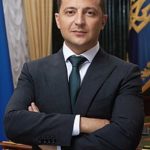
    The statement made by Volodymyr Zelenskyy, the President of Ukraine, on 23 June 2022.

    Greetings to all our friends, all leaders-friends of Ukraine!

    Greetings to all who support freedom!

    That is how I began my address to the European Council on March 24, three months ago, when I urged you to support us.

    And that’s quite a path we have come in these three months! All of us together: Ukraine, your states and the European Union as a whole.

    This path is not politics. I believe this is what will always be the starting point of Europe’s new history. Europe without division. Europe without “gray” zones. Europe that is truly united and that knows how to defend itself, its values, its future.

    Today you have adopted one of the most important decisions for Ukraine in all 30 years of independence of our state.

    However, I believe this decision is not only for Ukraine. This is the biggest step towards strengthening Europe that could be taken right now, in our time and in such difficult conditions, when the Russian war is testing our ability to preserve freedom and unity.

    On the fifth day of Russia’s full-scale war against Ukraine, we applied to join the European Union. We provided extremely fast and high-quality answers to the questionnaire we received from the European Commission.

    And here is the desired result today. Today, I would like to reaffirm that Ukraine is capable of becoming a full-fledged member of the European Union.

    Then, three months ago, I addressed each country of the European Union and indicated at what stage we were, as I thought, in our relations. And today I would like to tell each and every one of you personally what our people feel, and in the same order as it was then.

    Lithuania stands for us. Thank you, Mr. President! Gitanas, you know how grateful Ukraine is to your people and to you personally.

    Latvia stands for us. Thank you, Mr. Prime Minister! I believe that together we will be able to strengthen the international legal order.

    Estonia stands for us. Thank you, Mrs. Prime Minister Kallas! By helping one, we help everyone. Estonia has done a lot.

    Poland stands for us. Thank you, Mr. Prime Minister! Your state, your people, your President – all of you on this path to Europe are truly brothers with us.

    France stands for us. Thank you, Emmanuel! You can be sure that with Ukraine, Europe will really be able to be among the global leaders in the XXI century.

    Slovenia stands for us. Thank you, Mr. Prime Minister! I am grateful for the unwavering protection of the common European cause.

    Slovakia stands for us. Thank you, Mr. Prime Minister! We have to continue to protect each other, it makes us really strong.

    The Czech Republic stands for us. Thank you, Mr. Prime Minister! I believe that we will also be together on the path to Ukraine’s full membership in the EU.

    Romania stands for us. Thank you, Mr. President! Klaus, our cooperation in the region and in European structures can indeed become one of the foundations of global stability.

    Bulgaria stands for us. Thank you, Mr. Prime Minister! Thank you for choosing the side of good in the confrontation that began on February 24 without hesitation. We know it’s not easy for you.

    Greece stands for us. Thank you, Mr. Prime Minister! And I’m personally thankful to the Greek people, your country, which I really love.

    Germany stands for us. Thank you, Olaf! Thank you for your support at a crucial moment.

    Portugal stands for us. Thank you, Mr. Prime Minister! Your country knows our people well. And I am sure that we will only increase positive ties between us.

    Croatia stands for us. Thank you, Mr. Prime Minister! And thank you for the help with the experience we use to protect our freedom.

    Sweden stands for us. Thank you, Mrs. Prime Minister! Blue and yellow truly always stand together!

    Finland stands for us. Thank you, Mrs. Prime Minister! Your willingness to resist aggression is simply amazing!

    The Netherlands stands for us. Thank you, Mr. Prime Minister! You can be sure that your choice of Ukraine will definitely strengthen our common European freedom, the rule of law and our unity in diversity.

    Malta stands for us. Thank you, Mr. Prime Minister! The voice of your island makes the European community complete.

    Denmark stands for us. Thank you, Mrs. Prime Minister! Be sure that the protection of European values will only increase with Ukraine.

    Luxembourg stands for us. Thank you, Mr. Prime Minister! We truly understand each other, and your energy inspires us to future victories.

    Cyprus stands for us. Thank you, Mr. President! Thank you for the choice in favor of our people and our values.

    Italy stands for us. Thank you very much, Mr. Prime Minister! Thank you for your strength, for your perseverance. Thank you for proving that the principles of decent people are truly the foundation of Europe.

    Spain stands for us. Thank you, Mr. Prime Minister! I believe that we can significantly strengthen our relations.

    Belgium stands for us. Thank you, Mr. Prime Minister! We hope that after our victory we will be able to see each other often in Brussels on common European affairs.

    Austria stands for us. Thank you, Mr. Chancellor! I am convinced that we will be able to make Europe even safer and historically the most stable.

    Ireland stands for us. Thank you, Mr. Prime Minister! This is a historic rapprochement of our nations. Your personal leadership is truly impressive.

    Hungary stands for us. Thank you, Mr. Prime Minister, thank you, Viktor, together we are capable of much more than alone!

    Mrs. President of the European Parliament Roberta Metsola! We are grateful to you personally and grateful to the European Parliament! You were the first to support Ukraine’s candidate status the day after our application.

    Mr. President of the European Council, dear Charles, Mrs. President of the European Commission, dear Ursula, I am grateful to you both for the leadership that has led us all to this day. I am grateful for the sincere help, for the faith in Ukraine, in Ukrainians, in all of us.

    I have always said that we, Ukrainians, believe in the European Union. Although we remained formally outside the European Union, our country probably had the largest number of flags of a united Europe.

    They were in the hands of our people during the revolutions. They have been in the hands of our people in the trenches since 2014. I believe that the flag of the European Union will be in every Ukrainian city that we have yet to liberate from the occupation of the Russian Federation.

    Ukrainian and European flags will also be together when we will be rebuilding our state after this war together.

    And today in the framework of our joint meeting – the summit of all European leaders, I would like to express special gratitude to our heroes – each and everyone who defends the independence of Ukraine with weapons in their hands, defends the freedom of Europe.

    Thank you! Thank you for making possible a new history of Ukraine, a new history of Europe – even stronger, even freer.

    Thank you all so much!

    Glory to Ukraine!

  • Keir Starmer – 2022 Key Note Speech on Brexit

    Keir Starmer – 2022 Key Note Speech on Brexit

    The speech made by Keir Starmer, the Leader of the Opposition, on 4 July 2022.

    Thank you.

    It’s a real privilege to be here tonight.

    We are here to mark the 26th birthday of the CER.

    In that time, the world has changed beyond recognition and so has your work.

    For many 1996 was a time of optimism. From the Baltic shipyards of Poland to the villages of southern Bulgaria, tens of millions of people who had laboured under the yoke of tyranny were looking forward to a European future.

    Barriers were coming down; economies were beginning to thrive.

    Mobile phones were becoming commonplace, personal computers were switched on to the internet – that concept we were beginning to understand in 1996. And those new technologies were connecting the world at a stroke.

    The totemic battles of the previous generation were being wrapped up.

    The Cold War was over. Apartheid had been ended. Peace was coming to Northern Ireland.

    Here in Britain, a deeply unpopular Conservative Prime Minister found himself mired in sleaze, weakened by his failures and a slave to the right wing of his party.

    So whilst much has change, not everything has changed…

    Then, just as now the Labour Party had put itself in position to be the next government staking out the centre ground, and building plans to take the country forward to a new era.

    The big difference, I think, with 1996, is that we have lost that sense of optimism.

    After a decade of low growth under the Tories. Taxes are rising and inflation is rampant and doing huge damage to households and businesses.

    In 2022, Britain is stuck.

    Stuck with an economy where wages have flatlined and household bills are going through the roof.

    Stuck with broken public services that no longer work for those that they serve.

    Stuck in queues for passports or driving licences.

    Stuck waiting for delayed trains and buses.

    Stuck on hold as we try to get a doctor’s appointment.

    Britain is also stuck with a government that has no plan.

    One that was elected on a promise to get Brexit done but has now decided to re-open those old divisions, in order to ensure Britain remains stuck with this failed Prime Minister.

    While the Conservatives are flailing around, Labour has been claiming the centre ground of British politics once again.

    Not a mushy place of compromise but a place driven by purpose, a place driven by optimism.

    Our driving mission is to get Britain’s economy growing again so we can ensure the people and the places who for too long have lost out are once again revitalised and re-energised.

    I am going to be saying a lot about that in the coming weeks and months.

    But the first step in doing so, is to ensure Britain thrives in its new role in the world by ensuring we Make Brexit Work.

    There are some who say “we don’t need to make Brexit work – we need to reverse it.”

    I couldn’t disagree more.

    Because you cannot move forward or grow the country or deliver change or win back the trust of those who have lost faith in politics, if you’re constantly focused on the arguments of the past.

    We cannot afford to look back over our shoulder because all the time we are doing that we are missing what is ahead of us.

    So let me be very clear.

    Under Labour, Britain will not go back into the EU.

    We will not be joining the single market or the customs union.

    Now, I know some people don’t want to hear that, but it is my job to be frank and to be honest – and you will always get that with me.

    The reason I say this is simple.

    Nothing about revisiting those rows will help stimulate growth or bring down food prices or help British business thrive in the modern world.

    It would simply be a recipe for more division, it would distract us from taking on the challenges facing people and it would ensure Britain remained stuck for another decade.

    Under Labour, that simply will not happen.

    What you will get under Labour is a plan.

    One that will deliver on the opportunities Britain has, to sort out the poor deal Boris Johnson signed, and end the Brexit divisions once and for all.

    It is a proper plan to Make Brexit Work.

    Now, I know I’d never be allowed to take this stage without telling you what that plan looks like, so let me set out for you how it works.

    The first step is clear and obvious.

    We have to sort out the Northern Ireland Protocol.

    If you’re going to Make Brexit Work, that has to be the starting point.

    Just a few weeks ago, I had the great pleasure of being in Dublin and in Belfast, where I worked for many years.

    I was struck by the fact that businesses there are clear – they can make the Protocol work.

    The solutions are there, the desire is there. What is lacking is trust.

    That crucial ingredient that has always characterised progress in relations between our islands. That has been eroded by this government.

    Labour will change that.

    We will be the honest broker our countries need; we will get the protocol working and we will make it the springboard to securing a better deal for the British people.

    As well as building trust, Labour would eliminate most border checks created by the Tory Brexit deal with a new veterinary agreement for agri-products between the UK and EU.

    And we will work with business to put in place a better scheme to allow low-risk goods to enter Northern Ireland without unnecessary checks.

    The second step we would take is to tear down unnecessary barriers.

    Of course we recognise, outside of the Single Market and a Customs Union we will not be able to deliver complete frictionless trade with the EU.

    But there are things we can do to make trade easier.

    Labour would extend that new veterinary agreement to cover all the UK, seeking to build on agreements and mechanisms already in place between the EU and other countries – benefiting our exporters at a stroke.

    There was a story on the news the other day about a ‘wet wipe island’ that has formed in the Thames. Made of fat and oil and household rubbish one metre deep and the size of two tennis courts. It is blocking the flow of the river and changing the shape of the riverbed.

    You couldn’t imagine a better metaphor for the Tory Brexit deal.

    They have created a hulking ‘fatberg’ of red tape and bureaucracy.

    One that is hampering the flow of British business.

    We will break that barrier down, remove that fatberg – unclog the arteries of our economy and allow trade to flourish once more.

    The third step will be to support Britain’s world-leading industries.

    That means mutual recognition of professional qualifications ensuring our services can compete and restoring access to funding and vital research programmes.

    Step four would be to ensure we keep Britain safe.

    For too long, the Government has been blasé about European security.

    The actions of (Vladimir) Putin must jolt us back into reality.

    Because in the modern world if one of us is not safe then none of us are safe.

    Strengthening security cooperation with our friends and allies is vital.

    I know from first-hand experience during my time as Director of Public Prosecutions that we cannot take risks with terrorism, organised crime and people trafficking.

    That’s why Labour will seek new security arrangements to defend our borders, and why we will share data, intelligence, and best practice. And it’s why we will set up joint intelligence working here and in Europe.

    The final part of our plan will be to invest in Britain.

    The lesson of the last decade is that if we are to achieve economic growth and see the benefits flowing to every part of our country, we cannot be bystanders.

    The Tory plan as set out by Jacob Rees-Mogg is about cutting standards, regulations, and protections before stepping back and gawping at the power of the market.

    This will not work.

    It is a sure-fire way for Britain to lose the global race for jobs and for trade.

    It will exacerbate the problems we already face; it will not deliver on the promise of Brexit.

    Labour’s plan is very different.

    We will work hand-in-hand with business to bring the good, clean jobs of the future to our shores, harnessing the power of government, alongside the ingenuity of our brilliant private sector.

    Together, we will open up new markets and create new opportunities.

    The government have missed Brexit opportunities time and time again.

    It beggars belief that during a cost-of-living crisis they haven’t cut VAT on energy bills.

    Labour will be sharper than this.

    We will use our flexibility outside of the EU to ensure British regulation is adapted to suit British needs.

    That is Labour’s plan to Make Brexit Work.

    It is a plan that puts the divisions of the past behind us and seizes on the challenges and opportunities of the future.

    It is a plan that that helps everyone from exporters to musicians – to thrive.

    It’s a plan to reverse the Tory spiral of low-growth and high-tax.

    A plan that puts Britain in the best place to compete on the global stage.

    A plan that will help us achieve our central mission of delivering economic growth to Britain and spreading it throughout the country.

    But there is something even more crucial than that.

    In 2016, the British people voted for change.

    The very narrow question that was on the ballot paper – leaving or remaining in the EU – is now in the past.

    But the hope that underpinned that vote – the desire for a better, fairer future for our country is no closer to being delivered.

    We will not return to freedom of movement to create short term fixes, instead we will invest in our people and our places, and deliver on the promise our country has.

    If we are to restore faith in politics as a force for good, we must now get on with delivering on that promise.

    The Tories have no idea how to do it.

    Labour does. Labour has a plan.

    And this plan, a plan to Make Brexit Work is the first stage of delivering on that change and delivering a better future for our country.

  • Brandon Lewis – 2022 Speech on the Northern Ireland Protocol Bill

    Brandon Lewis – 2022 Speech on the Northern Ireland Protocol Bill

    The speech made by Brandon Lewis, the Secretary of State for Northern Ireland, in the House of Commons on 27 June 2022.

    I thank all Members who have spoken on Second Reading. I will attempt to respond to as many of the points raised as possible, perhaps leaving out the choice of sandwich that the hon. Member for Hove (Peter Kyle) has been talking about this evening and in various interviews. There have been a huge number of thoughtful and insightful speeches and a wide range of views have been expressed across this House. That shows the interest and the support, certainly from the Conservative Benches, for ensuring a resolution to the issues affecting the people of Northern Ireland.

    The Northern Ireland protocol, while agreed with the best of intentions, is causing practical problems for people and businesses in Northern Ireland, including trade disruption and diversion, significant costs and bureaucracy for traders. It cannot be right that it is easier to send goods from Great Yarmouth to Glasgow than to Belfast—still a part, and an important part, of the United Kingdom. Everybody in the United Kingdom should be able to access products and goods in the same way.

    Political life in Northern Ireland is, as it has been, built on compromise and power sharing between communities, as the hon. Member for North Antrim (Ian Paisley) outlined, but the protocol does not have the support of all communities in Northern Ireland. As a result, we are seeing both political and social stress in Northern Ireland, including the lack of functioning of both the Northern Ireland Executive and the Northern Ireland Assembly, as rightly outlined by my right hon. and learned Friend the Member for South Swindon (Sir Robert Buckland).

    It is clear that the protocol has become a major political problem, and it is putting a strain on the delicate balance inherent within the Belfast/Good Friday agreement. It is worth noting, and it might be forgotten from what some Opposition Members have said today, that all party leaders in Northern Ireland, at some stage or another over the past few months, have been clear that there is a need to change the Northern Ireland protocol. This legislation is about preserving the wider social and political stability in Northern Ireland, finding a more stable and sustainable solution, and ensuring that the frictions faced by businesses and consumers in Northern Ireland on goods coming from the rest of the United Kingdom are removed.

    It remains the preference of the UK Government to achieve these benefits through negotiations. These are negotiations that have been conducted by the Foreign Secretary and predecessors over the past 18 months. The lack of flexibility that we have seen from the EU, as rightly outlined by my hon. Friend the Member for Newcastle-under-Lyme (Aaron Bell), has led us to the point where it is right that we make a decision about taking forward a solution that works for the people of the United Kingdom and, within the United Kingdom, the people of Northern Ireland.

    This Bill will enable us to implement a successful negotiated settlement as well. It is important to recognise that that will require a significant change in approach from the EU Commission, as a number of hon. Friends have outlined. I am afraid that that change has not yet been forthcoming. The scale of problems and the depth of feelings aroused by the protocol unfortunately, if anything, have been exacerbated, rather than eased by the current EU approach—whether it was through triggering article 16 over crucial vaccine supplies to Northern Ireland in January 2021, launching infraction proceedings following emergency easements to ensure the movement of food and parcels to Northern Ireland in March 2021, or repeatedly failing to show pragmatic flexibility in more than 300 hours of negotiations over the past nine months and continuing to insist on processes that would add to, rather than remove, the burdens currently felt by businesses moving goods to Northern Ireland.

    John Redwood

    Has my right hon. Friend noticed how Labour always takes the side of the EU, even when, as in this case, the EU is damaging the Good Friday agreement and diverting trade expressly against the legal provisions of the protocol?

    Brandon Lewis

    My right hon. Friend makes a fair point. He will know from attending oral questions to the Northern Ireland Office that I have regularly had to listen to the hon. Member for Hove at the Dispatch Box taking the side of the EU—but then, the hon. Member wants to rejoin the EU, so I suppose we should not be surprised.

    We should also be clear about the reality, when we hear about the flexibility of the European Union and the offer it has made, based on its October offer. That would be a backwards step from the current situation, which is already not working for businesses and people in Northern Ireland.

    Sir Robert Goodwill (Scarborough and Whitby) (Con)

    Does my right hon. Friend agree that if the Scottish nationalist party tonight votes against this great piece of legislation, it will be voting to continue the situation whereby Scottish seed potatoes—the best-quality and the healthiest seed potatoes in the world—will be banned from export to Northern Ireland?

    Brandon Lewis

    My right hon. Friend is renowned for always speaking good sense, as he did in that intervention. I can go further; I was given an example not too long ago about the frustration of people in Northern Ireland at not being able to secure a supply of trees from Great Britain to plant in the Queen’s canopy to mark the platinum jubilee, because of the threat to the single market. The last time I saw trees uproot and walk across a border was in “Game of Thrones”—I happily commend the “Game of Thrones” studio tour to everybody in this Chamber when they visit Northern Ireland—but that is not a real threat to the EU single market.

    The lack of progress and the subsequent failure of the Northern Ireland power-sharing arrangements is exactly why we as a Government must be prepared to act in the best interests of Northern Ireland and for the stability and delivery of the Belfast/Good Friday agreement.

    Karin Smyth

    The Secretary of State talks about the movement of goods. When I was shadow Northern Ireland Minister, I repeatedly asked him, in the run-up to the final decisions, why he did not prepare British businesses better for the agreement he had made. He consistently said, “There is unfettered access, always, both ways.” Why were British businesses not prepared for the deal he agreed?

    Brandon Lewis

    We have delivered unfettered access from Northern Ireland to Great Britain. I appreciate that hon. Lady is talking about where we do have real challenges, with goods moving from Great Britain to Northern Ireland. There were flexibilities and vagueness, and some areas of the protocol, in terms of implementation, were not resolved. That was why we had the grace periods, why we had to extend the grace periods and why we now have the standstill. That is exactly why the EU’s offer, which it pretends provides flexibility, is a backwards step from where we are today; and it is why nobody in this House should accept it unless they are determined to do damage to Northern Ireland.

    This legislation will fix the practical problems that the protocol has created in Northern Ireland. It will enable us to avoid a hard border, protect the integrity of the United Kingdom and safeguard the EU single market. The right hon. Member for Tottenham (Mr Lammy) spoke at some length—more than half an hour—in his opening remarks, and yet in the totality of those remarks we heard no plan, no proposal and no alternative from the Labour party, just words. The same goes for the hon. Member for Hove.

    There were two interesting points, however. The right hon. Member for Tottenham raised Magna Carta to show the importance of treaties. He is right that Magna Carta is an important piece of our history, but he may want to recall that there were 63 clauses in it, and treaties evolve; that is why only four of them remain in place today. He also outlined, and I quote:

    “In our discussions, the DUP had consistently said that it wanted a negotiated settlement”.

    I gently say to him that that seemed to be a surprise to all the DUP Members, so he learned something else—[Interruption.] He talks from a sedentary position, but he might want to check Hansard.

    As I say, what we have heard is an outline of noise without any real proposals or any alternative. Many hon. Members, however, have raised important points around the question of legality, particularly my right hon. Friend the Member for Maidenhead (Mrs May) and my hon. Friends the Members for Bromley and Chislehurst (Sir Robert Neill) and for North Dorset (Simon Hoare). I can assure the House that this Bill is not just necessary, but lawful. Proceeding with this Bill is legal in international law and in support of our prior obligations to the Belfast/Good Friday agreement. The protocol is undermining all three strands of the Belfast/Good Friday agreement, as the right hon. Member for Lagan Valley (Sir Jeffrey M. Donaldson) well outlined, and the institutions that underpin it. It is the Government’s assessment that this Bill is currently the only way to provide the means to alleviate the socio-political conditions while continuing to support the protocol’s overall objectives of including and supporting north-south trade and co-operation, in the interests of both the EU and the UK, by ensuring that we protect its single market while protecting the UK’s internal market. These are all aspects of the Belfast/Good Friday agreement.

    We recognise that necessity can only exceptionally be invoked in lawfully justified non-performance of international obligations, as was covered very eloquently by my right hon. and learned Friend the Member for South Swindon. This is a genuinely exceptional situation. It is only in the challenging, complex and unique circumstances in Northern Ireland that the Government have decided to bring forth this Bill. It has always been this Government’s position that should the operation of the protocol or withdrawal agreement be deemed to undermine the Belfast/Good Friday agreement, this would take precedence as the prior commitment under international law. That was outlined back in March 2019 by the then Attorney General and the then Secretary of State for the Department for Exiting the European Union. That was not just the understanding of the UK Government; it was the basis on which the protocol was agreed by both parties. The text of the protocol itself is clear that the Belfast/Good Friday agreement should be protected in all its parts. We should all take note of the important and powerful words of Lord Trimble, an architect of the Good Friday agreement.

    Many colleagues have raised article 16. We have always reserved the right to take safeguarding measures under article 16 and have made the case that since the summer of last year, the threshold had been met. This Bill is the most effective, efficient and sustainable way to address the far-reaching problems that have arisen as a result of the application of the protocol. Article 16 in itself does not solve the problems in the way this Bill will. It is not only temporary but starts another process.

    Hon. Members such as my right hon. and learned Friend the Member for South Swindon and my hon. Friend the Member for Stone (Sir William Cash) talked about the Northern Ireland Executive and Assembly. We have been clear with all parties in Northern Ireland that we do need to see, and I want to see, the Executive back up and running to deliver for the people of Northern Ireland. That has to be a priority for all of us. We want to see that Assembly and Executive as soon as possible. The people of Northern Ireland deserve a stable and accountable devolved Government who deliver on the issues that matter most to them. It is clear from comments today that this Bill is a key component that will see the Northern Ireland Executive and Assembly return, as we heard from the right hon. Members for East Antrim (Sammy Wilson) and for Lagan Valley. I think we can all welcome those comments. This Bill builds on that work. That is what I have heard in the conversations I have had in meeting all party leaders who want to see Stormont return.

    The New Decade, New Approach agreement restored the devolved institutions after a three-year impasse, and we all need to work together to uphold the stability that it provided. We as a Government have a strong record in making sure that the institutions are up and running after too many years of hiatus. The New Decade, New Approach agreement, as set out in legislation, provides for a period of up to 24 weeks for Northern Ireland’s political representatives to restore functioning devolved institutions. I expect the parties to make full use of this time to engage with one another in earnest to restore fully functioning devolved institutions and to develop a programme of government that I have written to all the party leaders to encourage work on.

    We do have a role on the international stage. The UK has shown what it stands for in the world, not just with rhetoric but with actions, through our extensive support of Ukraine, our unprecedented offer to those fleeing political instability in Hong Kong, and our leadership of international institutions that is demonstrated again this week at the G7 and NATO summits. We have led the way on climate change, as in so many other areas. That is why it is important, and we are focused on ensuring, that we are acting within the bounds of international law. Indeed, we have repeatedly emphasised that it is only the rare, exceptional circumstances in Northern Ireland that make this intervention necessary.

    Stephen Kinnock

    In a tweet that the Secretary of State issued on 1 January 2021, he said:

    “There is no ‘Irish Sea Border’. As we have seen today, the…preparations the Govt and businesses have taken to prepare for the end of the Transition Period are keeping goods flowing freely around the country, including between GB and NI.”

    Can he explain how that tweet is compatible with this Bill?

    Brandon Lewis

    Absolutely, and I appreciate the opportunity that the hon. Gentleman gives me to talk about what I said back in January. This highlights exactly the behaviour we expected from the European Union around inflexibility in implementing the protocol. What we have seen since has reinforced that point, and that lack of flexibility and lack of understanding of the nuances of Northern Ireland have led us where we are today. [Interruption.] I gently say to him, while he chunters from a sedentary position, that if he looks at the decisions we took last year to ensure that goods could continue to flow to Northern Ireland, he will see that we took them under criticism from the EU, but they have been vital to ensuring stability in Northern Ireland and access to at least those products that are flown overseas, as international partners have recognised.

    The EU has recognised that there are problems with the Northern Ireland protocol; it is just not willing to show the flexibility that is needed to resolve those issues. We are clear that we will ensure that we protect the EU single market, a tiny proportion of which could be deemed to be at theoretical risk. That is why it is important that we get the balance right.

    Ian Paisley

    Can the Secretary of State use this opportunity to confirm something, because there will be businesses listening to his every word? In fact, he is probably box office tonight in Northern Ireland among many businesses. In relation to clauses 4 to 13 of the Bill, can he confirm that goods entering what is called the green channel—going from GB to Northern Ireland—will be treated in exactly the same manner as goods travelling from England to Scotland, or from England to Wales?

    Brandon Lewis

    The hon. Gentleman makes an important point, and it is absolutely our determination that the Bill will ensure a good, flexible free flow of products from Great Britain to Northern Ireland, in the same way that they would move from Great Yarmouth to Carlisle, Birmingham or London. That is what we want to deliver.

    One of the reasons we have taken what colleagues refer to as the Henry VIII powers is to ensure that we work with business to make sure that those regulations deliver that free-flowing, flexible process without the bureaucracy that is deterring businesses from accessing Northern Ireland.

    Sir Jeffrey M. Donaldson

    The Secretary of State refers to an important point, namely the regulations that this Bill will make it possible to introduce. Clause 1 is clear that nothing in this Bill should harm the Act of Union. Will he confirm that the regulations that will be brought forward from this Bill will not do anything to harm the Act of Union?

    Brandon Lewis

    Absolutely, and that is why it was important to have that in the Bill—the right hon. Gentleman is absolutely right. Let us be clear: for just under a quarter of a century, the Belfast/Good Friday agreement has been the foundation of peace, stability and political progress in Northern Ireland. All three strands of the agreement are under threat, as we stand here today, and that is a direct result of the protocol. This Bill is the route to a solution. It is legal, it is necessary and it is right for the United Kingdom. Most importantly, it is not just right for the whole UK; it is right for the people and businesses of Northern Ireland. It creates the environment to facilitate the return of a fully functioning Executive.

    While the Opposition have voiced criticisms, they have proposed no alternatives. We are taking the decision to act to protect the hard-won gains of the peace process in Northern Ireland. We owe it to the people of Northern Ireland to fix the problems, and that is why, as Secretary of State for Northern Ireland, I commend this Bill to the House.

  • Peter Kyle – 2022 Speech on the Northern Ireland Protocol Bill

    Peter Kyle – 2022 Speech on the Northern Ireland Protocol Bill

    The speech made by Peter Kyle, the Labour MP for Hove, in the House of Commons on 27 June 2022.

    I want to begin with an apology to the victims of crimes committed during the troubles in Northern Ireland; they were expecting the Committee stage of the Northern Ireland Troubles (Legacy and Reconciliation) Bill today. Several had booked and paid for their plane and train tickets, so their money has now been wasted. For the Government, changing the parliamentary timetable might be trivial, but for victims and their families, such behaviour only adds to the pain and frustration of decades of hurt. And it exposes the truth—that Northern Ireland and its unique sensitivities are not taken seriously by this Government.

    As the right hon. Member for Maidenhead (Mrs May) said, if time were truly important, as the Government’s legal argument of necessity implies, this Bill would have been introduced as emergency legislation, or at least rushed through. There is only one real necessity in this Bill, at this time, and that is to try to distract from the catastrophic performance at the ballot box last week, and to fire the starting gun for the Foreign Secretary’s leadership bid. Once again, the Tories’ civil war is infecting our politics. Once again, Northern Ireland is paying the price. This House deserves better. Northern Ireland deserves better. Victims of the troubles certainly deserve better.

    The Government claim to be acting on behalf of communities in Northern Ireland by tearing up the protocol, yet in the very same week they are simultaneously ignoring the opposition from all Northern Ireland communities, because opposition to their Bill to deal with the murders and acts of terror during the troubles is universal. Every party from every community opposes it, yet the Government plough on. They are picking and choosing parts of the Belfast/Good Friday agreement according to whatever their political needs are in any particular moment.

    For example, one justification for tearing up the Government’s Brexit deal is the loss of community support for the protocol. This totally ignores one essential fact: the Government never had it to start with. The DUP and Unionists have been very consistent from the very beginning when it comes to the protocol: they opposed it. When Ministers were drafting and negotiating the protocol, the consent of the Unionists was never sought and never given. As the right hon. Member for North Thanet (Sir Roger Gale) said, they even voted against it in this House. How can it now be claimed to have disappeared? It was never there to begin with.

    In fact, when the Prime Minister presented the protocol to Parliament in 2019, he said in response to Lord Dodds that

    “the people of this country have taken a great decision embracing the entire four nations of this country, by a simple majority vote that went 52:48 and which we are honouring now.”

    He went on:

    “I think that principle should be applied elsewhere, and I see no reason why it should not be applied in Northern Ireland as well. It is fully compatible with the Good Friday agreement.”—[Official Report, 19 October 2019; Vol. 666, c. 581.]

    That was the Prime Minister speaking here, to this House, on 19 October 2019. We now have an entire Bill that reveals that the Prime Minister was not truthful with the House as he tried to sell the protocol.

    Let us turn to another promise made and broken by this Government. Page 5 of the Tory manifesto could not be clearer. It says: “No…renegotiations.” So when the Foreign Secretary says, as she did at the Dispatch Box earlier, that the EU not agreeing “to change the text of the protocol” is her basis for this Bill, it exposes yet another broken manifesto promise. Fourteen million voters who believed that promise have been betrayed.

    All this is perfectly in line with the Government’s approach to Northern Ireland: they pick and choose issues depending on whether they serve whatever grievance they happen to have and be peddling at any moment in time. Their approach is reckless and neglectful. When the politics of Northern Ireland demand sustained, diligent support, the Government look the other way. When the Northern Ireland Executive collapsed in February, the Prime Minister did not visit Stormont to fulfil the vital role of honest broker to help the parties to find a way forward. He did make it to Saudi Arabia, India and the United Arab Emirates. Five months later, and only when the challenges in Stormont became unignorable, he found time for a fleeting visit.

    The biggest challenge facing Northern Ireland is not the protocol; it is this neglectful Government. All parties in Northern Ireland want to see progress on the protocol. We on the Labour Benches have called for the EU and the Government to get back around the negotiating table. There are large areas of common ground that show that successful negotiation is possible, as my right hon. Friend the Member for Leeds Central (Hilary Benn) outlined eloquently. The UK, the EU and all parties in Northern Ireland have identified areas of improvement, and many of them clearly overlap. This appears to be the only negotiation in history that has failed because everyone agrees. We have consistently said that the EU must show more flexibility over Northern Ireland, but the way to unlock it is by engaging and negotiating—the very things that Britain used to be good at.

    The overwhelming number of issues raised in the Bill are negotiable, with statecraft, diligence and graft. Take the veterinary agreement that New Zealand negotiated and signed with the EU. There were no rows, no psycho drama and no lawbreaking legislation. They just sat around the table and put in the hard work. With statecraft, diligence and graft, it is possible to reach an agreement on outstanding issues with the protocol. A veterinary agreement and a data sharing deal would remove the need for the vast majority of remaining checks. That is what this ultimately comes down to: identifying those remaining products that face undue red tape in their journey to Northern Ireland. With Britain’s great history of instigating, supporting and delivering global historic agreements, is it not reasonable to expect our Government to just get on and deliver it?

    That is why we oppose the Bill. It takes us further away from the negotiated progress that is the only way forward. It is worth putting the scale of the current Tory incompetence in perspective. The previous generation, including John Major and Tony Blair, negotiated a framework that delivered peace in Northern Ireland. This lot cannot even negotiate a prawn sandwich across the Irish sea.

  • Jim Shannon – 2022 Speech on the Northern Ireland Protocol Bill

    Jim Shannon – 2022 Speech on the Northern Ireland Protocol Bill

    The speech made by Jim Shannon, the DUP MP for Strangford, in the House of Commons on 27 June 2022.

    It is a pleasure to speak in this House on any occasion, and it is an even bigger pleasure to speak on this issue of tremendous importance to everyone across Northern Ireland and, indeed, across the whole United Kingdom of Great Britain and Northern Ireland. We have heard some fantastic speeches, and I thank all those who have contributed positively.

    It is not a secret that I am very pleased to be the MP for Strangford, and it is probably one of the highlights of my life. It is always a pleasure to reflect my constituents’ views in this Chamber, and the majority of them are very clear in their opposition to the border down the Irish sea and the restrictions it imposes. Ninety-nine per cent. of businesses in my constituency have expressed concern.

    I think the hon. Member for North Down (Stephen Farry) said businesses are doing well. My constituency is not far away from his, but he is in a different world. I do not understand what he is on about. At last week’s Northern Ireland questions, the Secretary of State said 200 businesses have stopped trading between the United Kingdom and Northern Ireland. Well, at least 200 businesses in my area alone are not trading today, so I suspect the number is greater.

    If farmers take their cattle to Carlisle market and they do not sell, they have to pay to put them in quarantine for six weeks before they can take the cattle home, all because of the problems with the protocol. My fishermen in Portavogie—I also represent the fishermen in Ardglass and Kilkeel because their MP does not come to this place, but that is up to him, although he will speak in Parliament Square—face extra tariffs, bureaucracy and red tape. For them and for the engineering works, the car salesmen and the nurseries, the protocol is not working. People do not buy seeds from nurseries in Great Britain any more, as a packet of seeds that cost £2 now costs £16. Those are examples of what my constituents face each and every day.

    Some Members tell us this only affects Unionists. No, it does not. Nationalists have come to me who feel afraid to voice complaints to their MP due to the fear of reprisals. I speak with confidence when I say that Northern Ireland, as a whole, needs this Bill not simply for its cultural identity, which is imperative, but for the financial viability of small businesses due to the EU’s vindictive approach to VAT and state aid. This affects not only those who are designated as Unionists but those who are designated as nationalists, too. It affects everyone in the Province, and it affects their pocket.

    As a boy, I recall Prime Minister Margaret Thatcher telling us that Northern Ireland is “as British as Finchley.” With the border down the Irish sea, it is clear to me that we are not as British as Finchley, but I want to be because I am very proud of my British heritage. I am very proud to have served in the British Army for 14 and a half years. I am very proud to be British and from Northern Ireland. I love to tell everybody that I am a Member of this Parliament. I love to tell people that I am from the United Kingdom of Great Britain and Northern Ireland, because it means something to me. It means something to every one of us sitting here, and it means so much that we want to have this Northern Ireland protocol brought forward in a way that can make us as British as you are. That is what I and my colleagues want to be, and we need this Northern Ireland Protocol Bill to make that happen.

    Delegates from other EU countries have shown an absolutely disgraceful disregard to the Unionist people of the Province. Boy, do they stink to the high heavens, and I say that without any doubt. If they are sitting and listening in Brussels, I tell them again that they stink to the high heavens. The quicker we are away from those ones, the better.

    This is a very simple issue that has been misunderstood, and clarity is needed as a matter of urgency. The protocol stops tax and VAT aid. It hampers small businesses from accessing their No. 1 market, makes Northern Ireland—my country—a third country and undermines the Belfast agreement. For the good of nationalists, Unionists and republicans—there are some here—the protocol must come to an end and we must allow common sense, common decency and common respect to be the bill of the day.

    As I said on the day we received prenotification of this, I am very pleased to see the changes relating to the Court of Justice of the European Union. I welcome them because they remove the direct jurisdiction of the Court of Justice over this place. It should be this place that makes decisions on behalf of the people of Strangford, Upper Bann, Lagan Valley, East Belfast and every other constituency. It should not be Brussels or the European Court of Justice, so I am very pleased to see that change. I have told the Foreign Secretary in the past—I think it was last September—that my hon. Friend the Member for North Antrim (Ian Paisley) asks questions about east-west and I ask questions about the European Court of Justice. I am very pleased to see the changes proposed by the Bill. That is very positive.

    Believe it or not, but from dog biscuits to daffodils, from picture frames to potato bread, from engine parts to eggs, and from artificial flowers to antibiotics, the EU has had ample opportunity to change its approach and allow trade to continue unhampered. The EU is like a giant sponge: it wants to take everything from you, but it does not want to give you anything. Tonight, we are asking for the EU sponge to be lifted off our back and for us to be given the same opportunities as the rest of the United Kingdom.

    For us, it is about making sure that the EU knows our place. It is past time to stop begging it and asking it to act like the sovereign state that we are. It is up to us to take back control of British produce and British protocol on behalf of British people. The Northern Ireland protocol has had a detrimental effect on people, from the working poor to wealthy business owners, and tonight we have the opportunity to make the necessary changes.

    I love this United Kingdom of Great Britain and Northern Ireland. That is no secret. It a pleasure and a privilege for me to be here. I am proud to have the Union flag flying above my house. I am proud to have the Ulster flag flying. I am proud to have the Queen’s platinum jubilee flag flying as well. That is what I am. I want to be as British as everybody else. Do the right thing for us.

  • Carla Lockhart – 2022 Speech on the Northern Ireland Protocol Bill

    Carla Lockhart – 2022 Speech on the Northern Ireland Protocol Bill

    The speech made by Carla Lockhart, the DUP MP for Upper Bann, in the House of Commons on 27 June 2022.

    I welcome this Bill and its Second Reading in this House today. I also welcome the fact that the Government now recognise the significant problems caused by the protocol and the damage it is doing to political stability, to community relations, to vast swathes of our economy in Northern Ireland and indeed to businesses in GB. The Bill is a recognition of, and an appropriate response to, the unreasonableness that is intrinsic within the protocol and the fact that, despite protracted engagement with the EU, the only thing more unreasonable than the protocol itself is the EU’s attitude. Its obstinate approach to those intent on finding common-sense solutions that will undo the damage we are seeing in Northern Ireland is what brings us here today. Those solutions, with good will on all sides, can work for everyone. That is what my party desires: solutions that work for, and can be supported by, everyone.

    I know that there are Members in this House who will rail against this legislation today, and we have heard some of them already. It is worth reminding the House that some of those are the same voices that have called for the rigorous implementation of the protocol but, having begrudgingly realised at least some of the issues with the protocol, they now say that the way to deal with the protocol is through negotiation, and no reasonable person is opposed to negotiation. Might I suggest, however, that they listen to Maroš Šefčovič, who holds some form of demigod status in the eyes of the SDLP and Alliance? He has stated adamantly that renegotiating the protocol is unrealistic.

    While those who oppose this Bill deal with the unrealistic, my party and now the Government are dealing with the real problems caused by the protocol: the huge administrative burden and associated costs foisted on businesses because of the sea border; the increase in transport costs that is making bringing goods to Northern Ireland more expensive; the banning of items being imported into Northern Ireland from other parts of the United Kingdom; and the constitutional change for which there is no consent. It is time for other parties to wake up. I commend the many Members right across the House who have spoken in support of this Bill today. The transfer window is open: Members can switch from team EU to team Northern Ireland, and it is time they joined those of us whose intent is to resolve these issues for the betterment of our economy. Also of fundamental importance is the urgent need to restore the principle of consensus that has been so fundamental to our political process.

    This House has heard in many debates on the withdrawal agreement and the protocol that the Belfast agreement must be protected, and Members on both sides of the House need to ask themselves whether they really mean that. If they do, they will recognise that consensus is the cornerstone of our political process. We need to get back to consensual progress, as the reality is that no Unionist elected to this place or the Northern Ireland Assembly—not one—accepts the protocol. That ought to be of concern to all who value the progress made in Northern Ireland, so I make a sincere appeal to the Members and parties who have met Unionist opposition to the protocol with ridicule, sneering and ignorant dismissal to ask themselves whether they share that desire to get us back on track to consensual progress, and to stop the slide into division and the destruction of what we have achieved.

    I urge the Government to stay on course and to ensure this Bill passes with haste and without amendments designed only to undo the proposed solutions contained within. We need to get Northern Ireland back on track, and I urge colleagues to back the Bill and help to do just that.

  • Stephen Kinnock – 2022 Speech on the Northern Ireland Protocol Bill

    Stephen Kinnock – 2022 Speech on the Northern Ireland Protocol Bill

    The speech made by Stephen Kinnock, the Labour MP for Aberavon, in the House of Commons on 27 June 2022.

    It is a pleasure to follow the hon. Member for North Antrim (Ian Paisley).

    As a patriot, I find that many things make me proud to be British, but perhaps what makes me proudest of all is that so many people and so many Governments across the world see Britain as a law-abiding country that plays by the rules; as a country that is a consistent, reliable and trustworthy international partner; as a country that treats its allies with respect and always defends the rules-based international order; as a country that acts in good faith and has a sense of fair play hardwired into its DNA; and as a country that is capable of tremendous feats of statecraft such as the Good Friday agreement—one of the proudest achievements of any Labour Government. Yet here we are this evening, debating a Bill that takes a unilateral wrecking ball to an international treaty that the Prime Minister himself signed and described as “an excellent deal” just 30 months ago.

    Let us be clear: this Bill fundamentally undermines our reputation as a nation that upholds the rule of law. This really matters, because geography is destiny. Whether the Conservative party likes it or not, what happens on the European continent is of pivotal importance to Britain’s security and prosperity. When Europe thrives, we thrive; when Europe slumps, we slump; and when Europe fights, we fight.

    Matt Rodda (Reading East) (Lab)

    My hon. Friend is making an excellent speech, and, obviously, speaks on the basis of great experience internationally. I presume that he is about to refer to the events in Ukraine. Does he agree that not only is the Ukraine war a very pressing issue on which we need to co-operate fully, but there are many other international crises with which we are currently dealing as a country—including the climate emergency—and that it is therefore vital for us to work in partnership with our colleagues?

    Stephen Kinnock

    My hon. Friend makes an excellent point. He understands that foreign policy begins at home, and that if you do not have your own house in order, your ability to project influence, to build alliances and to speak with moral authority is fundamentally undermined.

    From trade to diplomacy, from defeating Putin’s barbarism to tackling the climate emergency, and from scientific co-operation to responding to the rise of an increasingly authoritarian China, our democratic partners and allies across the channel should always be at the heart of our foreign policy. However, instead of recognising that basic reality, Ministers are stuck in what my right hon. Friend the Member for Tottenham (Mr Lammy), the shadow Foreign Secretary, has called

    “a fever dream of 2016”.

    Rather than seeking constructive solutions, they pick fights with our closest neighbours and introduce this deeply destructive Bill, which is a clear breach of international law, and which is designed solely to inflame tensions and chase Daily Mail headlines.

    With inflation soaring, with the country facing a cost of living crisis, with war on the European continent, this is the worst possible time for the Bill to arrive; so why are the Government doing it? Who in their right mind would seek to sow division when, now more than ever, we need to be standing shoulder to shoulder with our European friends and partners? The explanation is clear. The Prime Minister has made a calculation, and, as usual, his calculation has nothing to do with the national interest and everything to do with saving his own skin. The Prime Minister knows that it is the European Research Group and its fellow travellers who are calling the shots, and he knows that he must have their support if he is to continue to squat in Downing Street. Just like his two predecessors, he has found that his fate now lies in the hands of the ERG, and just like his two predecessors, he seems foolishly to believe that he can appease the members of the ERG by throwing them some red meat from time to time.

    It really is extraordinary that Conservative Prime Minister after Conservative Prime Minister has failed to learn a simple lesson of 21st-century British politics, which is that you can never satisfy the members of the ERG. No matter how much red meat you throw to them, their hunger will never be sated: they will always come back for more. Right now they are once again at the height of their powers, because the outcome of the no confidence vote has maximised their leverage and given them a Prime Minister who, when they order him to jump, responds by asking, “How high?” Not only that; it has given them a Foreign Secretary whose leadership ambitions depend on their support.

    So the planets have aligned for the ERG—but for our country, not so much. Out there in the real world, the impacts of the Prime Minister’s botched Brexit deal are being felt by working families and businesses across the country. Our exporters are suffocating under mountains of red tape, import frictions are driving inflation up, and next year we are forecast to have the lowest growth of any country in the G20, apart from Russia. The fact is that the Conservatives are unable to point to a single net economic benefit of the disastrously bad deal that they negotiated—not one.

    Indeed, when the Minister for Brexit Opportunities and Government Efficiency was asked to name a single benefit of the Prime Minister’s botched deal, the only thing he could come up with was the fact that the road signs in the Dartford tunnel could be changed from metres to yards. You could not make it up, Madam Deputy Speaker. It is almost as absurd as the apparent legal basis for this Bill, which we are told is the doctrine of necessity, which requires “grave and imminent peril”. But if the peril is so imminent, why have the Government chosen a route that will involve months of passage through Parliament? We know the answer to that question too, because the only thing that is in grave and imminent peril is the Prime Minister’s job.

    The fact that the Prime Minister’s botched Brexit deal is so clearly failing to deliver any of the economic benefits that were promised is bad news not only for the jobs and livelihoods of the British people but for our relations with the European Union and our international reputation more broadly. The more obvious it becomes that the deal is fundamentally flawed and failing, the more the Prime Minister and others who heralded it as a triumph when they signed it will start looking for scapegoats, pointing fingers and lashing out. They will blame the EU. They will blame those who voted remain. They will blame the civil service and they will blame the judges. In short, they will create a smokescreen of sob stories and grievances, which they hope will obscure their own profound incompetence. They will use the passage of this Bill and other ruses such as the Bill of Rights and the Rwanda plan to whinge and rant about the saboteurs and the conspirators, because they will always try to play the victim card. They will never stand up and take responsibility, and there is nothing patriotic about that.

    To sum up, the purpose of this Bill is not constructive; it is deliberately destructive. It is not seeking to solve a problem; it is seeking to fuel grievance and shirk responsibility. It is not diplomacy or statecraft; it is a piece of reputation-trashing vandalism, and this House should treat it with the contempt that it deserves.

  • David Simmonds – 2022 Speech on the Northern Ireland Protocol Bill

    David Simmonds – 2022 Speech on the Northern Ireland Protocol Bill

    The speech made by David Simmonds, the Conservative MP for Ruislip, Northwood and Pinner, in the House of Commons on 27 June 2022.

    I was struck by the comments of the hon. Member for Bristol South (Karin Smyth) about how, when we in this place debate issues relating to Ireland, we often do not pay sufficient respect and attention to the complex politics of Northern Ireland. It is good that there has been a thorough airing of different perspectives in the debate; it has certainly illuminated my thinking.

    When we consider that Ireland remains the fourth largest destination for UK exports and the 10th largest source of imports into the United Kingdom; and that, for Northern Ireland, 40% of goods exports go to Ireland and 36% of imports come across from Ireland, it is clear that this is an important economic relationship. It is an important relationship in the context of addressing the cost of living and other things that we know are important from debates in the House.

    I am persuaded, as my hon. Friend the Member for Newcastle-under-Lyme (Aaron Bell) outlined, that although we have many concerns about elements of the Bill, it is right to give the Government the benefit of the doubt and to create the space for a negotiation that, as we have heard, is happening in good faith, with a view to seeking an agreement to address these issues, while recognising that, if that goes wrong, we need the ability to protect our position in due course.

    Ruislip, Northwood and Pinner is a long way from Northern Ireland, but Northern Ireland is of enormous interest to my constituents, because my constituency has a very large number of small and medium-sized exporters and importers. I have heard from many of those businesses directly, including at constituency surgeries, that the issues that arise in this debate on Northern Ireland, and issues of international trade more generally, are incredibly important to them.

    Let me highlight an exciting judgment of the European Court of Justice, C-213/19, in respect of legal action taken against the United Kingdom for long-term, persistent failure to undertake proper border controls while we were a member of the European Union. By “long-term”, I mean that the failure goes back to at least 2005, so Governments of all parties have a degree of responsibility for this matter. Clearly, when we in this House talk about green and red lanes, or any other part of the United Kingdom’s international trading arrangements, it is important that we demonstrate that we have effective customs, and border controls in which people can have confidence. My small and medium-sized importers and exporters do not wish to be undercut by fake imported goods that are brought into the United Kingdom, which was for some time notorious among EU member states for failing to undertake this work properly, as the judgment highlights. We need to take that seriously.

    On our attitude to international law, I agree with my hon. Friend the Member for Aberconwy (Robin Millar) that it is not fair to draw a comparison with what is being said about the likes of Vladimir Putin. However, I recently visited the European Court of Justice in Strasbourg, where I heard about those who are charged with enforcing its judgments, many of which are about commercial disputes, property assets, and the ability of families to enforce their right to family life. I certainly heard that when it comes to enforcing judgments in countries where Governments are disinclined to follow the law, there is always a degree of pushback from the diplomats representing those countries, who say, “If a founding father state of the European convention on human rights says that it disagrees with those laws, why should we follow them?” That has an impact on my constituents, and on all our constituents. We need to demonstrate that we remain absolutely committed to upholding the highest standards of the rule of law.

    As we debate these issues, it is important to remain focused on the benefits that we expect future arrangements to bring to the people of Northern Ireland, which is part of our United Kingdom. Many Members have referred to the latest release from the Office for National Statistics, which suggests that London, where my constituency is, has had 2.3% GDP growth—a strong rebound from covid. The part of the United Kingdom with the second highest growth was Northern Ireland, with 1.4% GDP growth. It has been helpful to hear from Members on the Opposition Benches about some of the nuances of that—about what it means for services versus goods, and how that affects the communities of Northern Ireland, because we need to get this right.

    The complexity of the issue is demonstrated by a point made at the Dispatch Box at the very start of the debate: we must make sure that the benefits of our decisions extend to all parts of the United Kingdom. Let me give the example of the removal of VAT from environmentally friendly green energy products. On 7 December 2021, the Economic and Financial Affairs Council decided to enable the removal of VAT from all those products. About four months later, the same decision, which I very much support, was taken here and presented to this House. The benefit of it has been felt across England, Wales and Scotland, but we are told that it is not possible for Northern Ireland to have that benefit.

    When Ministers sum up, I ask them to explain why that is, given that the measure is also allowed under EU rules, and was allowed there before it was introduced here. Why have we not been able to ensure that people in Northern Ireland can benefit from the investment that the measure would prompt? It would ensure that homes and businesses enjoyed the highest standards of environmental friendliness.

    I will finish as I started. I will give the Government the benefit of the doubt this evening; as the Bill goes through the House, there will be an opportunity to explore many of the issues that I and others have raised. It is important to demonstrate that we are taking these issues extremely seriously, and demonstrate to our biggest trading partner the European Union and our people in our United Kingdom that we are determined to negotiate in good faith and reach agreement together.

  • Martin Docherty-Hughes – 2022 Speech on the Northern Ireland Protocol Bill

    Martin Docherty-Hughes – 2022 Speech on the Northern Ireland Protocol Bill

    The speech made by Martin Docherty-Hughes, the SNP MP for West Dunbartonshire, in the House of Commons on 27 June 2022.

    It is always good to follow the right hon. Member for South West Wiltshire (Dr Murrison), even though I am going to profoundly disagree with him.

    It is interesting that we now have a tantalising real-time example of what happens when a part of the UK is able to diverge from the current UK economic model. It turns out that not simply accepting lower growth than south-east England in perpetuity in exchange for a guaranteed lump sum can actually be quite beneficial, and so of course the UK Government want to put an end to it.

    It is important, however, to take a historical view of where we are. It behoves the British Government to remember their history, for their predecessors have been here quite a few times before. The end of the seven years war in 1763—a few folk here now might have been around back then—was a catastrophic success for a newly fledged Great Britain. As a result of victory over the perfidious Europeans, it gained supremacy over the North American continent and possessions elsewhere. Let me quote from Pulitzer prize-winning Professor Alan Taylor’s history of the American revolution, here quoting Henry Ellis, a colonial Governor:

    “What did Britain gain by the most glorious and successful war on which she ever engaged? A height of glory which excited the envy of the surrounding nations…an extent of empire we were equally unable to maintain, defend or govern”.

    Taylor adds:

    “Because of that triumph, the empire would reap a revolution in British America”.

    As we stand here in these sunlit Brexit uplands, we must also consider the price that this modern-day facsimile of Georgian Britain would have us pay for attaining their own heights of glory. Even then, the idea that this place—this legislature—should be supreme above all others led them to make similar mistakes.

    The contradictions of British North America were slightly different from those we face today. In short, while the colonialists liked to distinguish themselves from their French and Spanish rivals as more democratic because they had a form of self-rule—let us not call it devolution—we now know that that was somewhat erroneous, as that self-rule was very much restricted to Protestant landowners. While that made the ruling of the original 13 colonies relatively straightforward, the newly won possessions in New France did not fit that model, so this Parliament decided to pass the Quebec Act, which did not go down too well with the puritans in New England or elsewhere.

    The vastly expanded sphere of influence was also much more expensive to maintain. Therefore, despite the warnings that this would not be appreciated, taxes were levied for the first time on colonial possessions, first through the Sugar Act 1764 and then the Currency Act 1764 and the Stamp Act 1765. All the time, the consequences for those who were subjected to the legislation were ignored, and that slowly drove a wedge between England’s interests and those of its periphery. [Interruption.] Perhaps Ministers should listen. We know what happened next.

    I take us on that American detour because we live in hope that Ministers will reflect on how their wonderful wheeze, designed to reassert the primacy of this Parliament, will not work in places where people look to legislatures that are closer to them.

    Sir Jeffrey M. Donaldson

    Will the hon. Member give way?

    Martin Docherty-Hughes

    I will not, I am afraid, as I want to make some progress. Quite simply, be we in the 18th century or the 21st century, introducing legislation that damages the economic self-interest of those on the periphery to benefit those in the core will never end well, especially when, as in this case, it satisfies the desires solely of the parliamentary sovereigntist-fetishists, who do not represent any real majority, even in the core.

    Let me conclude with a quote from Edmund Burke, who was not only the father of conservatism but an Irishman and a Unionist to boot. Many will remember how in “Reflections on the Revolution in France” he said:

    “People will not look forward to posterity, who never look backwards to their ancestors. Besides, the people of England well know that the idea of inheritance furnishes a sure principle of conservation, and a sure principle of transmission”.

    But I think more pertinent to our discussions is what comes a few paragraphs later, where he said:

    “The institutions of policy, the goods of fortune, the gifts of providence are handed down to us, and from us, in the same course and order.”

    How providential it is, then, that this Conservative and Unionist Government’s blessed inheritance, and this state’s institutions of policy, are to repeat the same mistakes that have always been made. It is shame for the people of Northern Ireland that the economic and political damage of the Bill is to be visited on them in such a manner.

  • Andrew Murrison – 2022 Speech on the Northern Ireland Protocol Bill

    Andrew Murrison – 2022 Speech on the Northern Ireland Protocol Bill

    The speech made by Andrew Murrison, the Conservative MP for South West Wiltshire, in the House of Commons on 27 June 2022.

    It is always a great pleasure to follow the hon. Member for Bristol South (Karin Smyth), although I profoundly disagree with the implication that those of us who decided Britain’s place in the world was best served by leaving the European Union view the EU—let alone the Republic of Ireland, for goodness’ sake—as “the enemy”, to use her words. Clearly, that is not the case.

    My right hon. Friend the Secretary of State, who is winding up, will be spoilt for choice when it comes to commenting on speeches. If I may say so, however, in a brief period of time the right hon. Member for Lagan Valley (Sir Jeffrey M. Donaldson) pretty much nailed it with his assertion in an intervention on the hon. Member for North Down (Stephen Farry). The status quo is clearly not compatible with the Good Friday agreement and the Acts of Union, and the doctrine of necessity certainly applies in this case.

    It is remarkable, is it not, that the protocol’s supporters appear to be the opposition parties, while those who drafted it and are trying to change it sit on the Conservative Benches? I also enjoyed the remarks of one or two Opposition Members who appeared trenchantly to support the other place in the hope that it will defenestrate this Bill, which I sincerely hope it fails to do. That said, though I welcome this Bill, I hope it will be improved in Committee and in the other place, and in particular that some of the swingeing powers that it gives Ministers will be clipped.

    I have to say to Ministers, while assuring them of my support this evening, that I remain somewhat bewildered by their refusal to consider in a meaningful way triggering article 16. That is already available to them, and nobody has marshalled a creditable argument—certainly not one that satisfies me—that it could not or should not be done. The grounds for triggering article 16 are clearly there, in that we do not have anything approaching proper governance in Northern Ireland—not at all. Despite the May elections, the Assembly has failed to assemble and the institutions are not working.

    Surely to goodness, those are grounds—the strongest grounds possible—for triggering article 16. They are far stronger, I must say, than the grounds chosen by the President of the European Commission early in 2021 to trigger this thing, albeit very briefly and ignominiously, on the grounds of trying to prevent vaccines from transiting from the Republic of Ireland to Northern Ireland.

    Sir Robert Neill

    My right hon. Friend makes a very important point. Does he agree that, from a legal perspective, if article 16 were to be triggered, at least we would be able to argue that we had used all means available to us under the protocol, as is necessary to meet the necessity test—in other words, that the state has exhausted all the options open to it before it acts unilaterally? That is exactly the value of using article 16.

    Dr Murrison

    I absolutely agree with that. It is argued—of course it is—that triggering article 16 is meant to be temporary. Those of us who have been around a bit realise that temporary very often turns into something far more permanent. However, that would certainly be a reasonable first step in dealing with this situation, which pretty much all of us—apart from the SDLP—agree is unsatisfactory. I am still unsure, despite the earlier remarks of my right hon. Friend the Foreign Secretary, why the Government are not doing that. The Secretary of State, when he winds up, may like to address that.

    I would also like to know where in this legislation there is a threat to the single market. Trade between Northern Ireland and the Republic of Ireland is pretty much a rounding error—a point that has been made by others. Companies such as Sainsbury’s do not exist in the Republic of Ireland, so goods going to Sainsbury’s in Northern Ireland from GB cannot possibly land up on Sainsbury’s shelves in the Republic, because there are none. There are more checks on this border than on the border with Chile, and checks for what? It is not clear to me why we need checks at this point in time, since we have an agreement on tariffs and we have standards and regulations that have not yet had the opportunity to diverge.

    Many contributors today have talked about the doctrine of necessity, but what they have not mentioned is that there is a second part to that doctrine; it is a lesser part, but it is germane nevertheless. It does not deal with grave or imminent peril; it allows parties to rescind an obligation if to do so would not

    “seriously impair an essential interest of the states towards which the obligation exists or of the international community as a whole.”

    Where in this Bill, and where, indeed, in triggering article 16, would the threat to the single market come from? Indeed, I would argue, as Ministers certainly have, that the Bill is helpful in many respects to the single market, and it certainly is to the internal market.

    So why is the EU doing all this? Why is it not giving Mr Šefčovič the powers he needs in order to negotiate properly with, first, Lord Frost and, secondly, the Foreign Secretary? We can all suggest geopolitical reasons for not doing that, and of course some member states are perfectly happy, for their own benefit, with the status quo. The Republic of Ireland is probably rather enjoying the current export opportunities as a result of Northern Ireland being unable to get what it needs from GB. But we have to hope that the EU, even at this stage, will recognise the damage this is doing to the Good Friday agreement and the prospects of ongoing peace and harmony in Northern Ireland, and that it will, even at this late stage, consider the interests of the people of Northern Ireland first, in which case this Bill will not be needed.

    The Government, in my view, signed the Northern Ireland protocol in good faith. They were entitled to receive the same back from the EU, but after 18 months it is plain as a pikestaff that that reciprocation has not happened. It is not as if there are not technical solutions to the current problems. I wrote about this in my report when I chaired the Northern Ireland Affairs Committee. It distresses me that, all this time later, nothing appears to have been done about the recommendations that I made, and that others have made subsequently, to deal with this perfectly elegantly. Of course, things may very well get worse, with the SPS offset through the movement assistance scheme likely to be viewed as ultra vires by the European Court of Justice, and the prospect of energy VAT—I hope very much that it will be reduced in GB—not being reduced in Northern Ireland, completely contrary to the Good Friday agreement and the Acts of Union.

    The right hon. Member for Leeds Central (Hilary Benn), who is no longer in his place, said that the EU “needs to move”. It does, but it will not; I hope this legislation gets it moving.