Category: Environment

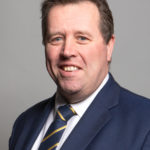
  • Mark Spencer – 2023 Statement on Fisheries Management

    Mark Spencer – 2023 Statement on Fisheries Management

    The statement made by Mark Spencer, the Minister for Food, Farming and Fisheries, in the House of Commons on 17 July 2023.

    Today the UK Government are publishing a number of consultations and consultation responses, and announcing funding to use post-Brexit freedoms to support a thriving fishing sector.

    Seizing the opportunities of being an independent coastal state, the UK is introducing a world class system of fisheries management which draws on the best available science and the expertise of our fishermen and anglers to ensure that our fish stocks are healthy and sustainable long into the future.

    The UK has some of the finest fish stocks in the world. Healthy fish stocks are a vital resource, providing livelihoods, enjoyment, and prosperity to our coastal communities. Since we left the EU, the UK Government have taken important steps for our fishing industry, anglers and marine environment.

    As an independent coastal state, we negotiated significant uplifts in fishing opportunities for UK vessels, valued at around £101 million this year. We are investing in the long-term future of the UK fisheries sector through our £100 million UK Seafood Fund, to drive innovation, support job creation, and boost seafood exports to new markets. We introduced the first Fisheries Act for nearly thirty years and published the Joint Fisheries Statement.

    In replacing the Common Fisheries Policy with our own domestic policy, we aim to maximise our newfound freedoms to introduce a world class fisheries management system.

    Today we take another step in that journey, unveiling proposals for a reform package that will transform how we manage our fisheries. Ensuring a thriving, sustainable industry and healthy marine environment for future generations. These reforms play a crucial role in achieving the goals in our Environmental Improvement Plan and the UK Government Food Strategy as well as levelling up some of our much-loved coastal towns and communities.

    This new system will be underpinned by Fisheries Management Plans—blueprints for how best to manage fish stocks—with the first six published today, including bass, king scallops, crab and lobster.

    Based on the best available science and experience from fishermen and anglers, FMPs assess the fish stocks, and set out actions to manage them sustainably. The first six draft FMPs and associated environmental reports are being published today for consultation.

    We are also consulting on a range of other important changes. These include:

    Expanding the use of remote electronic monitoring (REM) in English waters.

    Introducing a new approach to managing discards in England.

    Establishing a licensed recreational bluefin tuna fishery.

    Permanently lifting the quota cap on licences for small vessels in English waters.

    We are also awarding £45.6 million to modernise and improve infrastructure across the seafood sector, helping to support around 1,500 jobs and ensure we are using the best science, research, and technology in fisheries management as part of our £100 million UK Seafood Fund.

    Finally, we are publishing a response to our consultation on flyseining measures in English waters, noting we will change legislation to make squid fishing more sustainable and will take forward other measures through the FMPs. We will also publish the summary of responses to our consultation on spatial management measures for sandeels. A clear majority of respondents supported a proposal of a full closure of sandeel fishing in English waters of the North Sea.

    This package marks a clear departure from the Common Fisheries Policy and will deliver our ambition to build a modern, resilient and profitable fishing industry underpinned by sustainable fish stocks and a healthy marine environment.

  • Therese Coffey – 2023 Speech on the 25 Year Environment Plan

    Therese Coffey – 2023 Speech on the 25 Year Environment Plan

    The speech made by Therese Coffey, the Environment Secretary, at the Mappin Pavilion at ZSL on 19 July 2023.

    Well, I should say thank you very much, first of all, Matthew for allowing us to be here. I’m also very grateful to the Prime Minister. I think people try and say that the Prime Minister is not interested in nature, far from it. He’s very interested in our environment. I remember when I was first in Defra as an environment minister and he was in local government, we worked together on the litter strategy, we talked about how these sorts of things affect people’s lives, about how they respect their local environment, and extending that, of course, through his support for all our things like the development of the Local Nature Recovery Strategies, as well as representing one of our most rural constituencies in the country. I think it’s critical to remind ourselves of what he did say in Egypt last year, when he talked about tackling climate – that you can only tackle climate if you also help restore nature.

    So I want to assure everybody here, that this is very much still the government’s environmental improvement plan, and that we continue to go from strength to strength I believe in that regard. If I think back just over six months ago, back in chilly January, it was sunny, the sun came out to greet us at the inspiring Camley Street Natural Park in the heart of London, just down the road as I launched that plan. Here we are today in the middle of one of the most splendid parts of our capital of our country. And as Matthew has pointed out, this isn’t just a place to come and see. It’s a place that is constantly thinking about nature around the world. And that is why the extent of what Defra does – in partnership here in the United Kingdom, across Europe and indeed around the world – is really important for our global future.

    Defra is at the heart of what we are trying to do and I think what is really important, it’s our Defra family, but also today, here we’ve got a really wide range of people, people who care about birds, people who are dealing with farms, people who are looking after other aspects of wildlife. And they all are part of this tapestry, this picture, this plan to make sure that we as a Conservative government leave the environment in a better state than we inherited it. I’ve been Member of Parliament for thirteen years now and this is my second time in Defra. I’ve said this before, but my years as a member of parliament for Suffolk Coastal felt like the perfect apprenticeship for being a Defra minister, because the part of the world that I’m blessed to represent is rightly famous for its farming, and for its precious habitats on land and offshore. My love for coastal and blue habitats is something that continues to grow. And coming back into parliament, I’m really keen to push all the work that we’re doing with the blue planet fund and indeed what we can do domestically.

    I think we’ve shown that in a number of ways already, by designating formally our first three highly protected marine areas which is going to be good for the conservation of fish but it’s also great for what we can do in terms of protecting a precious environment. That’s where we see the interplay between nature, our seagrass, protection of seahorses, marine conservation zones, and how that all helps in protecting our planet. Anyone who knows me knows that I’m mad for mangroves, but sadly we just simply cannot have any in this country. But I’m happy to support them around the world. Indeed, one of the things that I’ve been particularly working on recently is and what more we can do to stimulate our salt marsh, which is our version of mangroves. And I hope that we can continue to develop that. Since 2016, I guess I got my first taste. Within a month, I think I was off to the CITES conference in Johannesburg, and then going to Kruger seeing the different things of what we were doing in terms of that element. This is also an important element of how the Environmental Improvement Plan must play a part in preserving nature, but also working with people and communities in order to make sure that they work together. That’s been the beauty of it.

    We need to go even further in how our Environmental Land Management Schemes are working together, working with local communities working with our farmers, who I call the original Friends of the Earth, in order to make sure that we have that interplay. You can see that here in the UK, but also it’s absolutely critical in what we do in many of our international programmes. So tackling illegal wildlife trade around the world was one of my priorities then and making progress on clean air. Using precious finite natural resources more sustainably and designing waste out of our systems, tackling flooding and so much more. Of course, we set out our vision on the 25 Year Environment Plan for that plan for a quarter century, and we are publishing the last of our progress report specifically on that plan today. Now in one of my first speeches as Environment Secretary, I said, I was determined that nature would no longer be the Cinderella of the story any longer in terms of our broader elements and what we’re trying to do to save our planet, because it’s never been clearer that we do rely on nature for everything – for our economic prosperity, our food security, and wellbeing. And nature is at the core of our communities which is why we are committed to leaving it in a better state. I think it’s fair to say when I came into the department, it felt like I had a tough hand and people might remember I was told when I would walk in, you’re going to break the law on Monday by not having these targets ready. It’s great to see Dame Glenys here, by the way. But nevertheless, it was a department that was really fighting hard to deliver multiple elements of what we were trying to do to improve the environment, as well as those legal deadlines. But we had those legal deadlines and we met the one for the Environmental Improvement Plan, thanks to the three massive pieces of legislation that we introduced in the years after Brexit.

    These were the Agriculture Act, the Fisheries Act, and of course, the absolutely world leading Environment Act. But we should all rightly be proud of what the United Kingdom has delivered in the last six months since we published our Environmental Improvement Plan, working closely with many of you as our delivery partners, and I know that you want to do more, and I want you to do more. I want us to do that in a collaborative way. But also look at what we’ve achieved since over perhaps a decade. If I think that plastic packaging recycling is up by nearly twenty percentage points in a decade, annual sales of single use plastic carrier bags down by 1.62 billion since 2016. That’s a reduction of 77% and counting, with more bans on the most littered single use items coming later this year. And on air quality, we should also recognise we’ve seen real improvements, including a 73% fall in sulphur dioxide emissions since 2010 and our new plan sets out the next phase of action right across pollutants. We’ve enhanced over ten thousand miles of rivers in the last seven years with much loved species like seals returning to our estuaries. There’s less cadmium and mercury in the water environment. Phosphorus is down 80% and ammonia by 85% in our rivers, compared to 1990 when water companies were privatised. The biggest environmental infrastructure investment from the water sector ever will now help us target action for protected nature sites as part of the new Plan for Water, which is designed to make polluters pay to sort out their mess, and have the clean and plentiful water that we need for people, for farmers and wildlife alike. That’s why we’ve created and restored over a quarter of a million hectares of priority habitats since 2010. That’s an area the size of Dorset, and 28% of the UK now designated as protected areas.

    But even beyond protected sites, we’re investing £268 million to create and restore habitats in the last financial year. We’ve also made a positive boost for nature mandatory for all new developments as we build homes across the country. Now in the last planting season alone, we’ve put well over three thousand hectares under canopy. That’s a new record and I understand it is about four million new trees, up 40% on the previous year. We will also extend the public forest estate providing even more woodland and it’s great to see William Worsley here today as well.

    So a few weeks ago, I was delighted to announce the new £25 million Species Survival Fund to support thousands more wonderful species, water voles, lapwings all the like by creating connecting and restoring habitats like grasslands, woodlands and wetlands, and the 48 local authorities are being funded to work closely with local communities, landowners and experts and those recovery strategies will map out the areas where our efforts can achieve the greatest impact. Already our schemes supported more than 450 species backed by a five fold increase to £10 million a year for Natural England’s dedicated programme. So with our new duty on public authorities to help conserve and enhance biodiversity, for the first time nature is now absolutely embedded in the heart of decisions that government will take. That is there for the long haul and it is guided by the Environmental principles that we have set out.

    As I say, this is thinking about what we’re doing at home but of course our role is around the world as well. So whether it’s our world renowned Darwin Programmes that have been supporting species and communities, pangolins, snow leopards, St. Helena’s rare Cloud Forest, to some of the most important seabird colonies in the world on Gulf Island. We’ve been doing that across 140 countries since 1992. And our £100 million Biodiverse Landscapes Funds is working on some of the world’s most important biomes from the Lower Mekong to the mighty Kavango Zambezi where five countries are working together across the River Basin. We created over one hundred marine protected areas in the last decade and taking us to 178 MPAs, covering 40% of English waters. And I’ve already mentioned the three new highly protected marine areas. Alongside the brilliant blue belts that protect an area of ocean greater than India over the UK overseas territories, from the South Sandwich Islands to Tristan da Cunha. We’re pouring that expertise and experience into the Blue Planet Fund, including support for the vast trans boundary collaboration, protecting over 500 square kilometres of the eastern tropical Pacific. That first made headlines in Glasgow at COP26. That was thanks to a historic collaboration between Colombia, Ecuador, Panama and Costa Rica.

    And having led the UK delegation to the conference in Montreal, where our brilliant UK team helped to get a new global nature agreement over the line, we continue to co-lead. And that is a critical way of making sure that this isn’t just about the north, telling the global south how to protect nature when they’ve got a lot more of it than we have. This is about supporting the global ambitions of coalition committed to making sure we secure the action and the finance needed to bring it to life, to bring it to life around the world. Whether that was our global summit at Lancaster house, the very kind reception undertaken by the King at Buckingham Palace. Engagement with the financial sector, we had various receptions at Number 10 and in the city, and launching with our French friends, a new initiative on high integrity, biodiversity credit markets in the recent summit that President Macron hosted. Frankly, I challenge you to find a comparable country anywhere in the world that has done as much as we have domestically and internationally.

    One of the things that I’m really clear on is that we need to make sure that we continue that activity. Of course, other people’s minds might turn to the election next year, but we’ve got to keep our eye on the prize and what we can do for the long term. That is why our 25 Year Environmental Plan that we’ve updated is absolutely critical to that. As I said, we talked about biodiversity net gain, that should be in place by November, so that every development puts 10% back more into nature.

    Now, one of the things that Defra ministers have been doing a lot of very recently is not necessarily going to zoos, or some of the other activities. But actually we’ve been going around the country to our agriculture shows. And while Trudy, Rebecca and I have just had a little bit of a treat, seeing mummy sloth with a little baby sloth. Or indeed seeing the Sumatran tigers and our other ministers, Lord Benyon and Minister Spencer are undertaking parliamentary activity so they’re mad jealous of our experience. But we have been going around the country and speaking to farmers, because I’m very conscious that the change of the transition that we are seeing with Environmental Land Management schemes is a big one. And it needs to succeed. And of course, farmers will listen to other farmers. That’s why it’s great. Three of our ministers are farmers, and the other two of us we represent very rural constituencies. We know these communities, we know the decisions that they’re considering.

    That is why it’s important that we continue to listen to the people who look after 70% of our land in this country, and why we work with them to make it work. Because if we don’t then nature will lose out and we cannot afford for that to happen. Going to Groundswell it used to be like the Woodstock or the Glastonbury of farming, it’s now gone very mainstream, but that’s great because we want what we do to be mainstream, and we will want to bring more farmers with us as we go. I can assure you will like Countryside Stewardship Plus when we put out the details later this year, and a further round of landscape recovery as well as more grants and partnerships, getting cutting edge kit out of labs and into the fields where farmers can really put it to the test.

    But their bottom line will always be about producing food. It’s critical that the health and welfare of the animals they tender is top notch and also for the natural environment on which they depend, as well as us too. We will continue. we are undertaking all the work necessary to bring in our due diligence obligations on forest risk commodities, protecting global forests, we will publish the map and the framework about our 30 by 30 commitment. And we will continue to say more about what we’re going to do to restore our vital blue habitats. I’ve already said that I’m passionate about aspects of this, I’m going to do G20 next week in India, in Chennai, and will continue to promote this as being absolutely critical. And I think I’ve got the treat of going to the world’s second largest mangrove forest. I can’t tell you how excited I am. But we need to keep that journey going and that’s why we’ll go to UNGA, we will go to COP28, we’re getting the global environment assembly, we’re seeing the launch next month as well of the fund to accompany the CBD. And we will continue to not just think about the world but to deliver our Environmental Improvement Plan, to deliver the plan for water, and we will not let up on those who harm our environments, who pollute. And we’re relentless in driving improved performance from water companies. Because I expect this better, the public expects better.

    While there are many other things I could list, and I’m sure Matthew will give me a list of the things that I haven’t mentioned, one of the things I’m also want to stress is that I will ensure we invest properly in science, and research and evidence that is absolutely vital, to make sure that we continue to understand the measures that we do and the impact that they have. This isn’t about trying to fiddle around with the numbers. This is about making sure future generations have an environment, thinking of our climate changing right around us. Forty plus degrees only 100 miles away in France, while we’ve got rain in July. But nevertheless, it’s why we have to adapt. It’s why we have to be agile. It’s why nature itself adapts. And that’s why we need to continue to make sure we have our focus on this precious Earth. This precious planet. And it’s great we’ve got precious people here who are going to help us deliver. Thank you very much.

  • Therese Coffey – 2023 Statement on Canal & River Trust – Future Funding

    Therese Coffey – 2023 Statement on Canal & River Trust – Future Funding

    The statement made by Therese Coffey, the Secretary of State for Environment, Food and Rural Affairs on 10 July 2023.

    Today, I am notifying Parliament of our intention to provide additional grant funding from 2027 to the Canal & River Trust. The trust is a charity responsible for 2,000 miles of waterways and associated historic industrial infrastructure in England and Wales. The trust is responsible for maintaining navigability and safety of its waterways including reservoirs, embankments and other infrastructure.

    An open and well-maintained Canal & River Trust inland waterways network delivers broad benefits aligned to our nation’s priorities. In January 2023 the Government published our ambitious environmental improvement plan (EIP). The Government recognise that the Canal & River Trust has an important role to play in contributing to the EIP, alongside other Government priorities.

    Since it was first created in 2012, as a private charity independent of Government, we have been very clear that the trust would have to increasingly move towards alternative sources of funding. We have been discussing this with the charity for some time and have been offering support on how it can increase income from other sources, alongside continued Government funding, which countless charities across the country do very effectively.

    While there is no obligation for Government to fund the Canal & River Trust beyond 2027 I can confirm that, subject to certain conditions being met, Government will offer a new long-term funding package of over £400 million to the trust. To date we have awarded it £550 million funding and, with this further commitment, are now supporting the trust with a further total £590 million between now and 2037—a significant sum of money and a sign of the importance that we place on our inland waterways.

    I look forward to continued enjoyment of our local waterways.

  • Therese Coffey – 2023 Speech at the Countryside Future Conference

    Therese Coffey – 2023 Speech at the Countryside Future Conference

    The speech made by Therese Coffey, the Secretary of State for Environment, Food and Rural Affairs at Hatfield House on 6 June 2023.

    Thank you very much Nick and I really appreciate that warm welcome. It is true I have come from Cabinet this morning. But I want to start by saying a huge thank you to the Countryside Alliance Foundation organising committee for today’s event. I know many people have made a contribution today, indeed everyone who’s given up their time to participate in this important discussion on the future of our countryside. And also particularly in this great estate – thanks to Lord and Lady Salisbury in particular – which as we already know has played such an important role in many chapters of our national history.

    The countryside is the bedrock of our own story, rightly famous around the world for its beauty. And absolutely at the heart it is a part of what makes our country such a great place to live. It has nourished generations of painters, poets, authors, composers, who brought the countryside and nature to life, whether that’s Elgar, Beatrix Potter, Gainsborough, Jane Austen, I can even add Clarkson’s Farm which has opened up the world of agriculture to a new audience who may be connecting for the very first time on what a challenging and rewarding life being a farmer is. And from the patchwork quilt of fields, hedgerows and the dry stone walls that characterise our landscapes to the woodlands that have kept watch for generations and the ancient stone circles that still keep us guessing about how they got there, we are so fortunate that we have these wonderful touchstones of our shared heritage to hand. Our countryside makes up over 90% of our land. This is a living, breathing, vibrant place that adds so much to the health and happiness of millions every year and over £250 billion to our economy in England alone – thanks to the hard work and dedication of the nearly 10 million people who are proud to call this home.

    Just a few weeks ago, I was delighted to present the Countryside Alliance awards – the rural Oscars as they’re known – to several brilliant businesses from across the United Kingdom, who’ve been chosen from over 15,000 entries. It was a joyful, brilliant celebration of a thriving, vibrant countryside that we all know, that we all love, that we all cherish, and that we want to continue to prosper.

    Now I know how government has already helped businesses – rural business rate relief, financial support to keep things like the network of rural post offices open. We’re continuing to do so. We’ve got £3.2 billion a year supporting farmers, £2.6 billion in the Shared Prosperity Fund and indeed the extra £110 million of the Rural England Prosperity Fund that we are deploying. And that’s just to name a few of the initiatives that we’ve undertaken. This morning, sitting around the cabinet table, we were discussing these important rural matters, and most of the cabinet ministers represent rural areas. My team of Defra ministers certainly do. And we know why people love living and working in the countryside. We live and work there ourselves. We know the potential, but we also know the challenges that our rural communities can and do face. As a government, we have established the rural proofing policy so that every department has to consider policy through the rural lens. And that’s why also we started presenting the annual rural report, the next version of which will be published later this year.

    To complement that today, and because of that potential we know exists, I’m pleased that the government is publishing Unleashing Rural Opportunity, which outlines some of the work we’ve already done and some new initiatives to help – to help grow the economy, to help increase connectivity, to help introduce affordable housing, and to help strengthen our rural communities.

    Securing a fine and prosperous future for our countryside is not a niche concern. Far from it. It is a national priority. As Secretary of State for Rural Affairs, I make my pledge to you, indeed to people living and working in the countryside, that we will always champion the countryside and cherish rural ways of life. Those of us with mud on our boots, we may roll our eyes when we hear newcomers to the village complain of the clanging of the church bell or the smell from the spreading of manure. But we also know that with time comes a really growing understanding that these are the things that make the countryside so special, and that we take them for granted at our peril. So I am delighted – as we think about the next generation in particular – we’ve recruited none other than Shaun the Sheep to help us promote respect for the countryside through the Countryside Code.

    And it is that respect for the hard work it takes to keep the countryside beautiful and healthy, that respect for the countryside and for the people living and working in it, that I really want to reinforce today. Those of us who are fortunate enough to live and work in the countryside know the many benefits that spending time in the great outdoors can bring to our lives. Indeed we made a pledge in our Environmental Improvement Plan to provide access to green or blue spaces within 15 minutes from everyone’s home.

    We have over 140,000 miles of public rights of way in England and Wales alone and we are extending the deadline to 2031 to register more. When complete next year we will have the longest coastal path in the world, the recently rechristened King Charles III Coast Path, and that level of access is extraordinary. But I do believe that access needs to be carefully managed, carefully respected, to protect our ground-nesting birds, to keep dogs on leads to stop sheep worrying, and to allow farmers to farm. Which is why we, the Conservative government, will absolutely not be establishing a right to roam but we are reinforcing respect for rural communities.

    Now I think we’ve made a lot of progress in supporting rural communities to prosper since 2010. We actually see very high rates of employment in the countryside. But it can hide pockets of poverty too and in particular on low pay, where there are some of the lowest salaries in the country – the council that’s represented by the Prime Minister has the third lowest median salary in the country. That is a challenge undoubtedly. And we are reviewing how we measure deprivation in rural areas so that the interests of rural communities are better represented in future policy.

    We want everyone in rural areas to be living long and fulfilling lives with the sustained improvements to living standards and their wider well-being we all want to see, beyond what just the natural green of the countryside provides – so providing the tools and resources they need to actually shape their future and to be part of decisions that affect their lives as we work together to make the most of the countryside for everything we want to achieve. And of course that includes our farmers. I’m not intending to dwell on farmers today but they are a core part of our countryside. I’ve spoken about this at length in recent months and indeed, their dedication makes everything possible. I call them the original friends of the earth – they are certainly the custodians of our countryside. This was reinforced I hope when the Prime Minister made clear how important they are at the Food Summit that we hosted in Number 10 just a few weeks ago. And as I pointed out, our rural reporting is now an annual fixture. So combining the best of the rural resourcefulness that many of us enjoy, the stewardship, the husbandry, we do need to make sure that we future-proof our rural ways of life.

    And some of this work needs to be undertaken and is being undertaken on a massive scale, including the £2.4 billion flowing into the rural economy through supporting sustainable and productive farm businesses in England alone. Yet, just as a host of small challenges compound one another in the unique context of the countryside, we need to have smaller targeted solutions and initiatives come together and make a real difference for the people who need them the most and expand the horizons of what rural life can be. I think in particular, when I think about the different ways that we can do that, it is about making sure that we are unlocking growth and unleashing that rural potential. And there are certain ways that we can try and make sure that happens.

    So we have digital connectivity. You should be able to run a financial services company or an architectural practice at the top of remote valley just as well as you can in a town. And that in turn will help us create more of the jobs we need in the countryside, as well as making it easier to give young people the wider educational and vocational opportunities they need to take them up, close to where they live, paying more rather than having to factor in an expensive commute into their working day. I’m determined that we would keep at it and, as I pointed out already, whether that’s business rate relief that we have, support for schools, investment in post offices, making sure that people can access the services that they need. So in terms of setting out our initiatives, we’ve got four themes where we’re talking about how we can grow the economy.

    But to do that, we also want to make sure that we are improving that connectivity, and not just mobile phone but indeed broadband, and also reinforcing what it is about when we live in homes that are the affordable homes that many of our younger people especially need, rather than having an exodus to the cities and then coming back later in life. But critically we also need to reinforce our communities and back the proven resilience, resourcefulness and agility that rural communities and rural businesses provide. So in terms of supporting growth in the rural economy, we will press on with making sure that we try to improve, as part of the levelling up agenda, supporting jobs, supporting education. whether that’s traditional rural strengths like farming, forestry, tourism, to make sure that we’re also capturing ventures into green industries and biotechnology, improving their skills, getting more people into better paying jobs, and just making things easier for people to do that.

    We’re investing £10 million through the new Rural England Prosperity Fund, and we’re going to be helping those who have furthest to travel to college each day by increasing our funding for bursaries for 16 to 19-year-olds by 10% for the next year. In terms of transport and connectivity, getting to work is absolutely key and we should just accept that most people in the countryside do and will continue to drive. But quite rightly, we know that people want to be able to travel by buses too, particularly as people get older in life. But it can be astonishingly expensive. And that’s why I was delighted that we’re extending the £2 bus fare cap until the end of October, and then we’ll go up to £2.50 until November 2024. And I know it’s helping a lot of rural people already. If I think about a trip from Kendal to Lancaster, it normally costs £15.

    People are already saving that money now with the £2 cap and I can see the difference it makes in my own constituency as well. So overall, we’ll see over £3 million in government investment to better protect our services into 2025 and keep travel affordable alongside the wider £1 billion being spent to improve the reliability, frequency and cost of buses. We’re also consulting on ways to better reflect the cost of operating rural bus services in subsidy payments to try and keep those fares low and the service levels high. So we want to protect vital rural routes. But even with the best will in the world, many people will know we can’t get a service everywhere, which is why we’ll be investing in more demand-responsive options as well.

    The Department for Transport will be publishing later this year the Rural Transport Strategy and that will provide guidance for local authorities to use new technologies to improve access to services, tackle isolation and increase access to jobs and services in rural and remote areas. I was very pleased that we did issue a call for evidence last year on driving licences. Anybody here who got their driving licence before 1997? So most people in the room but actually not all. And if you did that there was a European regulation, which Britain fought hard for at the time, that meant you were able to keep your driving licence rights which actually involved being able to drive up to a seven-and-a-half tonne lorry – but also critically, and this is why it matters to me so much, a D1 licence and that is basically where you can drive community mini buses. And I see it quite regularly in my own constituency that you see charities investing money in people, about £2,500 to £3,000, to get their licence. I’m pleased to say that in the summary of the call for evidence that’s been published today, 73% of those who responded would like to reinstate those rights, particularly for mini buses.

    Digital connectivity is now mission critical. And things have moved faster than any of us could have imagined. 75% of UK premises can now access gigabit-capable broadband. That’s up from 6% just at the beginning of 2019. And over 730,000 premises have already been upgraded in hard-to-reach rural areas as part of our five-day enhanced project in gigabit investment. And so by December 2025 we will have provided over 1.5 million premises with access to gigabit broadband, with fibre being laid up and down country. I remember it’s not that long ago, probably a decade ago, when we talked about Universal Service Obligation. That was when we were going to excitedly give everybody access to 10 megabits and now we’re talking about a gigabit and we will continue to invest in that as well – an £8 million grant scheme to improve satellite connectivity for those really hard-to-reach places, up to 35,000 homes in the remotest parts of the country, as well as tripling the value of vouchers available under the gigabit broadband voucher scheme.

    So that will mean we’re investing over £1 billion in the shared rural network alongside industry to get 4G coverage and to get more people onto gigabit, and indeed we are planning through our Wireless Infrastructure Strategy to boost it by £40 million. There are a number of trials we are doing in the remote islands of the Shetlands or deep valleys and the new £7 million fund will help to see how we can bring together satellite wireless and internet connectivity. I believe that will help tourism businesses, it help farmers to access lightning speeds and reliable connectivity for the first time. I am delighted that Simon Fell is going to be our rural connectivity champion, and that will encourage innovation investment and advanced wireless technologies in rural areas.

    We also want to make sure that people can get a home. The affordability of homes is really challenging. That includes making it easier for farmers to convert their disused farm buildings. We’re also funding a new team of rural housing enablers right across England to support new schemes and boost the supply of new affordable housing to rent for rural communities as well.

    You already know some of the challenges that we have on second homes. That’s why local authorities will have the power to charge up to double the council tax on second homes, to help them to manage the impact that they can have on rural communities. And we’ll be consulting on the tools needed to address concerns about the proliferation of short-term lets. I know that we’ve already supplied quite a lot of money, particularly for those areas with high proportions of second homes, to build new homes. I had the pleasure of opening a suite of those in Southwold in my own constituency. But it is critical that people do not feel that they have to leave the communities in which they have been brought up and want to stay within.

    I think also one of the things that doesn’t really get registered very often is crime. And we know that crime is generally lower in rural areas. But it’s also worryingly concerning around things like agricultural theft, in terms of equipment. These drills are not cheap to replace. These tractors are not cheap to replace. But they are being stolen and that’s why the establishment of the new National Rural Crime Unit with targeted funding, I believe, will do a lot to bring together best practice, but also a laser-like focus on making sure that it’s not just about fly-tipping, which is a blight, but also how this is impacting the incomes and the prosperity of the people who are the very custodians our countryside and put the food on our plate.

    One of the things I am conscious about is that we want to see improve our access to things like health, the new dental plan. I’m expecting more work to be coming through on specifically on how we support rural communities. Coming back to the villages, the hamlets, the market towns, quite a lot of this is about is ‘the pub the hub?’ or ‘is the village hall the hub?’. As far as I’m concerned, it could be both and anything – anything that brings people together, brings communities together to enjoy that way of life, to be the volunteers, not just listening to The Archers every night – but so they can have it happening in their own homes, in their own communities.

    We need to make sure that we tackle that rural isolation, that we support the different elements that make people feel special. It’s why we’re forming a new Public Library Strategy for England in 2024. We’re giving some funding to ACRE and its network of member organisations to help more people to volunteer and tackle loneliness. But also that’s why we continue to invest in things through the assets of community value. I think the Prime Minister referred in cabinet this morning to the pub that he helped reopen when the community had bought it. For locals, like with the Racehorse in Westhall in my constituency, just under £100,000 was the key bit in there helping them buy and keep their pub open.

    And indeed we want to make sure that village halls endure, which is why we created a fund especially in celebration of Her Majesty’s Platinum Jubilee. And indeed I was in Herefordshire just a few days ago, where they were showing me how the support has made all the difference to making sure that their community hub is absolutely there.

    Let’s be clear, our countryside needs to be living, working, vibrant and thriving. That’s why I believe there are still many opportunities to really unleash its potential. That’s why today, I am publishing Unleashing Rural Opportunity, and it’s why I’m excited for now and generations to come to be the Secretary of State of Defra, to be the person that bangs the table with my fellow cabinet ministers to make sure the countryside is not only respected, but cherished, valued, considered and continues to prosper for generations to come. Thank you very much.

  • Caroline Lucas – 2023 Statement Confirming Standing Down at General Election

    Caroline Lucas – 2023 Statement Confirming Standing Down at General Election

    The statement made by Caroline Lucas, the Green Party MP for Brighton Pavilion, on 8 June 2023.

    Dear Brighton Pavilion residents and friends,

    When I first stood to be your Member of Parliament back in 2010, I knew I was asking a lot of you. It was the closest election for a generation, in the midst of the worst recession since the war, and after people’s faith in politics had been trampled into the mud of the expenses scandal. Not the best time to come to people and ask them to take a risk and put their trust in a new kind of politics.

    But on the day of the General Election in 2010, 16,238 people in Brighton did exactly that – and with the election of Britain’s first ever Green MP, together we made history. It has been the privilege of my life to serve this extraordinary constituency and community, both those who voted for me, and those who did not, ever since – and to see my majority increase at each of the subsequent three General Elections.

    And when I think back over the past 13 years, my strongest emotion is deep gratitude. Thank you so much to all those who put your faith in me and put the politics of hope above the politics of fear. To every person who has stopped me on the bus and in the street to ask how I am and to share your personal stories, and who has offered encouragement as I have stood up in parliament to champion your concerns and to hold this government to account, thank you.

    I love this city and its people, and I know how incredibly blessed I’ve been to have been given the opportunity to represent you, and to work alongside you. I have always prided myself on being, first and foremost, a good constituency MP. The people who have come to me in my regular surgeries are often desperate, feeling like they have nowhere else to turn – they’re looking for care and compassion not the tangled bureaucratic web that passes for a safety net, and that all too often just causes confusion and complication. I’ve done everything possible to help wherever I can and always worked to ensure that people feel heard, that their concerns matter, and that they are not alone.

    But the intensity of these constituency commitments, together with the particular responsibilities of being my Party’s sole MP, mean that, ironically, I’ve not been able to focus as much as I would like on the existential challenges that drive me – the Nature and Climate emergencies. I have always been a different kind of politician – as those who witnessed my arrest, court case and acquittal over peaceful protest at the fracking site in Balcombe nearly ten years ago will recall. And the truth is, as these threats to our precious planet become ever more urgent, I have struggled to spend the time I want on these accelerating crises. I have therefore decided not to stand again as your MP at the next election.

    The reason I came into politics was to change things. Thirteen years ago it’s inconceivable that Parliament would have declared a climate emergency. And I’ve put issues like a universal basic income and a legal right to access nature on the political agenda; secured the first Parliamentary debate in a generation on drug law reform; and thanks to my work in Parliament, a Natural History GCSE will soon be on the syllabus. I have said the previously unsayable, only to see it become part of the mainstream, on coal, on the myth that endless economic growth makes us happier, on a Green New Deal.

    My determination to trying to make change is stronger than ever. I look forward to having the time to explore ever more imaginative and creative ways of helping to make a liveable future a reality. Watch this space!

    My heart will always be in this most special city, and with the inspiring communities and individuals I’ve been privileged to get to know. On election night 2010, I pledged that I would do my very best to do you proud. I can only hope that – whether you voted for me or not – you will judge that that is what I have done.

    With love and gratitude,

    Caroline Lucas.

  • Jim McMahon – 2023 Speech on Water Quality and Sewage Discharge

    Jim McMahon – 2023 Speech on Water Quality and Sewage Discharge

    The speech made by Jim McMahon, the Labour MP for Oldham West and Royton, in the House of Commons on 25 April 2023.

    I beg to move,

    That this House calls on the Government to set a target for the reduction of sewage discharges, to provide for financial penalties in relation to sewage discharges and breaches of monitoring requirements, and to carry out an impact assessment of sewage discharges; and makes provision as set out in this Order:

    (1) On Tuesday 2 May 2023:

    (a) Standing Order No. 14(1) (which provides that government business shall have precedence at every sitting save as provided in that Order) shall not apply;

    (b) any proceedings governed by this Order may be proceeded with until any hour, though opposed, and shall not be interrupted;

    (c) the Speaker may not propose the question on the previous question, and may not put any question under Standing Order No. 36 (Closure of debate) or Standing Order No. 163 (Motion to sit in private);

    (d) at 6.00pm, the Speaker shall interrupt any business prior to the business governed by this Order and call the Member for Oldham West and Royton or another Member on his behalf to move the motion that the Water Quality (Sewage Discharge) Bill be now read a second time as if it were an order of the House;

    (e) in respect of that Bill, notices of Amendments, new clauses and new Schedules to be moved in Committee may be accepted by the Clerks at the Table before the Bill has been read a second time.

    (f) any proceedings interrupted or superseded by this Order may be resumed or (as the case may be) entered upon and proceeded with after the moment of interruption.

    (2) The provisions of paragraphs (3) to (18) of this Order shall apply to and in connection with the proceedings on the Water Quality (Sewage Discharge) Bill in the present Session of Parliament.

    Timetable for the Bill on Tuesday 2 May 2023

    (3) (a) Proceedings on Second Reading and in Committee of the whole House, any proceedings on Consideration and proceedings up to and including Third Reading shall be taken at the sitting on Tuesday 2 May 2023 in accordance with this Order.

    (b) Proceedings on Second Reading shall be brought to a conclusion (so far as not previously concluded) at 8.00pm.

    (c) Proceedings in Committee of the whole House, any proceedings on Consideration and proceedings up to and including Third Reading shall be brought to a conclusion (so far as not previously concluded) at 10.00pm.

    Timing of proceedings and Questions to be put on Tuesday 2 May 2023

    (4) When the Bill has been read a second time: (a) it shall, notwithstanding Standing Order No. 63 (committal of Bills not subject to a programme order), stand committed to a Committee of the whole House without any Question being put; (b) the Speaker shall leave the Chair whether or not notice of an Instruction has been given.

    (5) (a) On the conclusion of proceedings in Committee of the whole House, the Chairman shall report the Bill to the House without putting any Question.

    (b) If the Bill is reported with amendments, the House shall proceed to consider the Bill as amended without any Question being put.

    (6) For the purpose of bringing any proceedings to a conclusion in accordance with paragraph (3), the Chairman or Speaker shall forthwith put the following Questions in the same order as they would fall to be put if this Order did not apply—

    (a) any Question already proposed from the Chair;

    (b) any Question necessary to bring to a decision a Question so proposed;

    (c) the Question on any amendment, new clause or new schedule selected by The Chairman or Speaker for separate decision;

    (d) the Question on any amendment moved or motion made by a designated Member;

    (e) any other Question necessary for the disposal of the business to be concluded; and shall not put any other Questions, other than the Question on any motion described in paragraph (15) of this Order.

    (7) On a Motion made for a new clause or a new Schedule, the Chairman or Speaker shall put only the Question that the clause or Schedule be added to the Bill.

    Consideration of Lords Amendments and Messages on a subsequent day

    (8) If on any future sitting day any message on the Bill (other than a message that the House of Lords agrees with the Bill without amendment or agrees with any message from this House) is expected from the House of Lords, this House shall not adjourn until that message has been received and any proceedings under paragraph (9) have been concluded.

    (9) On any day on which such a message is received, if a designated Member indicates to the Speaker an intention to proceed to consider that message—

    (a) notwithstanding Standing Order No. 14(1) any Lords Amendments to the Bill or any further Message from the Lords on the Bill may be considered forthwith without any Question being put; and any proceedings interrupted for that purpose shall be suspended accordingly;

    (b) proceedings on consideration of Lords Amendments or on any further Message from the Lords shall (so far as not previously concluded) be brought to a conclusion one hour after their commencement; and any proceedings suspended under subparagraph (a) shall thereupon be resumed;

    (c) the Speaker may not propose the question on the previous question, and may not put any question under Standing Order No. 36 (Closure of debate) or Standing Order No. 163 (Motion to sit in private) in the course of those proceedings.

    (10) Paragraphs (2) to (7) of Standing Order No. 83F (Programme Orders: conclusion of proceedings on consideration of Lords amendments) apply for the purposes of bringing any proceedings on consideration of Lords Amendments to a conclusion as if:

    (a) any reference to a Minister of the Crown were a reference to a designated Member;

    (b) after paragraph (4)(a) there is inserted—

    “(aa) the question on any amendment or motion selected by the Speaker for separate decision;”.

    (11) Paragraphs (2) to (5) of Standing Order No. 83G (Programme Orders: conclusion of proceedings on further messages from the Lords) apply for the purposes of bringing any proceedings on consideration of a Lords Message to a conclusion as if any reference to a Minister of the Crown were a reference to a designated Member.

    Reasons Committee

    (12) Paragraphs (2) to (6) of Standing Order No. 83H (Programme Orders: reasons committee) apply in relation to any committee to be appointed to draw up reasons after proceedings have been brought to a conclusion in accordance with this Order as if any reference to a Minister of the Crown were a reference to a designated Member.

    (13) Standing Order No. 82 (Business Committee) shall not apply in relation to any proceedings on the Bill to which this Order applies.

    (14) (a) No Motion shall be made, except by a designated Member, to alter the order in which any proceedings on the Bill are taken, to recommit the Bill or to vary or supplement the provisions of this Order.

    (b) No notice shall be required of such a Motion.

    (c) Such a Motion may be considered forthwith without any Question being put; and any proceedings interrupted for that purpose shall be suspended accordingly.

    (d) The Question on such a Motion shall be put forthwith; and any proceedings suspended under sub-paragraph (c) shall thereupon be resumed.

    (e) Standing Order No. 15(1) (Exempted business) shall apply to proceedings on such a Motion.

    (15) (a) No dilatory Motion shall be made in relation to proceedings on the Bill to which this Order applies except by a designated Member.

    (b) The Question on any such Motion shall be put forthwith.

    (16) Proceedings to which this Order applies shall not be interrupted under any Standing Order relating to the sittings of the House.

    (17) No private business may be considered at any sitting to which the provisions of this Order apply.

    (18) (a) The start of any debate under Standing Order No. 24 (Emergency debates) to be held on a day on which proceedings to which this Order applies are to take place shall be postponed until the conclusion of any proceedings to which this Order applies.

    (b) Standing Order 15 In line 4 (1) (Exempted business) shall apply in respect of any such debate.

    (19) In this Order, “a designated Member” means—

    (a) the Member for Oldham West and Royton; and

    (b) any other Member acting on behalf of the Member for Oldham West and Royton.

    (20) This Order shall be a Standing Order of the House.

    The motion would allow for parliamentary time on Tuesday 2 May to progress Labour’s Bill, the Water Quality (Sewage Discharge) Bill, which would finally see an end to the Tory sewage scandal. The reason we are here today is that the country we love, and the quality of life for millions of working people, is being treated with utter contempt: dumped on with raw human sewage; dumped on on an industrial scale; dumped on with at least 1.5 million sewage dumps last year alone; and dumped on for a total of 11 million running hours. That is a sewage dump every two and a half minutes. Just in the course of this debate, 70 sewage dumps will take place in the country, in the places where people have invested everything they have, where they have put down their roots and where they have invested the most precious of things—their families and shared futures. Those sewage dumps are going into the seas where people swim, the canals alongside which people take their dogs for a walk and the very beaches where our children build sandcastles.

    Stephen Crabb (Preseli Pembrokeshire) (Con) rose—

    Alun Cairns (Vale of Glamorgan) (Con) rose—

    Jim McMahon

    I will make some progress and take some interventions later—[Interruption.] Hang on; your moment will come.

    It goes to our leisure and beauty spots. Businesses rely on tourists coming with confidence.

    It is clear that the Tories either do not know, or do not care about the human impact of the Tory sewage scandal. This affects every stretch of our coastline across the country, and it shows the contempt that the Tories have for our seaside towns, from Hartlepool to Hastings, from Bournemouth to Falmouth, from Camborne to Blackpool, and everywhere in between. Beyond the coast, our national parks and areas of outstanding natural beauty, which are home to our stunning lakes, and our rivers, the arteries of our nation, are being sullied by the Tory sewage scandal.

    Alun Cairns rose—

    Kelly Tolhurst (Rochester and Strood) (Con) rose—

    Mr Speaker

    Order. May I say to the hon. Lady and the right hon. Gentleman that, yes, the hon. Member has to give way, but you cannot permanently be stood there until somebody—[Interruption.] You do not need to give me any indications. I am telling you what the rules are and the rules will be applied. Secretary of State.

    Jim McMahon

    Thank you, Mr Speaker—we’ve 12 months yet. I will take interventions once I have made progress on this section. Hon. Members should not worry; their opportunity to defend the last 13 years in government will come—they should not worry too much about that.

    At its heart, this speaks to whether families should have the right to live a decent and fulfilled life. People look to our seas, lakes and rivers for quality of life. They are the very places where people live, work and holiday together, and where families create memories, forge bonds and strengthen relationships by enjoying the beauty that our country has to offer. More than just the daily grind of work, it is about who we are and it is those moments together that make life worth living. But the truth is that the Tories are turning our green land into an open sewer.

    Kelly Tolhurst

    I thank the hon. Gentleman for giving way, but I would like him to outline when he or the Labour party realised that sewage was being put into rivers and seas. When was the Labour party made aware of that originally?

    Jim McMahon

    I welcome that intervention. I would also welcome an explanation to the hon. Lady’s constituents as to why there have been 200 sewage incidents in her own backyard. That is why her constituents send her here—to ensure that their interests are put right—[Interruption.] I will come on to Labour’s record, but I warn Government Members that it may not paint the last 13 years in a good light.

    Several hon. Members rose—

    Jim McMahon

    I will make some progress.

    This is an environmental hazard, a health hazard and an economic hazard. The full scale of the billions of pounds that the Tory sewage scandal is costing our businesses and local economies is still not fully known. Why? Because the Government will not undertake an economic assessment of the impact of sewage dumping. What do they have to hide? [Interruption.] Members will like this bit—hang on. While the Secretary of State has been on taxpayer-funded jollies to Brazil, Canada, Egypt, France, Japan, Panama and the US, as shadow Environment Secretary, I have travelled to every corner of the country to hear first-hand about the impact of the Tory sewage scandal. While she has been in duty free, I have been here on duty—that’s the difference—[Interruption.] There’s more, hold on. You’re in for a bumpy ride. The next three hours will not be like first class, I can tell you that much.

    I have met businesses that have been forced to pull down the shutters when sewage alerts drive people away from beaches. I have met people in Hastings who are suffering the effects of having contracted hepatitis and Weil’s disease just because they encountered sewage in the open waters. I have met community groups such as that self-organising, fundraising and monitoring the water quality in the River Kent. They are saying to the Government that enough is enough. I heard the same things in Oxford and when I met Surfers Against Sewage in Cornwall.

    Sally-Ann Hart (Hastings and Rye) (Con)

    On a point of order, Mr Speaker. The hon. Member said that he came to visit Hastings and spoke to people—he never informed me of his visit to Hastings.

    Mr Speaker

    That is not a point of order, but I would say to the hon. Lady that, if somebody has been to her constituency, it is absolutely correct that Members should give notice to the MP whose constituency they are visiting. I do not care which side of the House Members sit on. You must do the right thing and let a Member know that you are entering their constituency.

    Jim McMahon

    I am very happy to look into that point. As a matter of course, we always ensure when visiting the constituents of Conservative MPs that as a matter of respect we inform the local MP. I would love nothing more than for a Conservative MP to attend those visits and explain their voting record to their constituents. I know that Helena Dollimore, the Labour and Co-operative candidate, was very much made aware, so I will follow that up and ensure, if it did happen, that it does not happen again.

    Earlier this week, I met environmental groups from across the country to hear about the impact that the Tory sewage scandal is having on their communities. They stand proud of their communities, but they are equally angry, and they are right to be angry. Only this weekend, we celebrated St George’s Day and spoke about what makes England so special, and what makes it a green and pleasant land. For example, the brilliant Lake Windermere, England largest lake, formed 13,000 years ago from the melting ice, is a world heritage site and attracts 16 million visitors every year. What William Wordsworth once described as:

    “A universe of Nature’s fairest forms”

    is now dying at the hands of this complicit Government. One member from the Save Windermere campaign told us that, due to the constant pollution, a whole five-mile stretch of the lake has been turned bright green because of excessive pollutants being dumped in it. Even the glorious Lake Windermere is not off bounds.

    The fantastic coastline of Cornwall draws in millions of visitors and is a magnet for surfers—surfers who face the prospect of becoming ill simply by going out in the water. There are campaigners for the River Ilkley, in self-styled God’s own country, Yorkshire.

    Several hon. Members rose—

    Jim McMahon

    I will take an intervention shortly from the Opposition Benches.

    Mr Speaker, do you know that raw human sewage is even being discharged moments away from these very Houses of Parliament? Members should think about that when they go to vote. There is no place exempt from the Tory sewage scandal—and what a metaphor for the last 13 years of a Tory Government.

    Mike Amesbury (Weaver Vale) (Lab)

    I thank my hon. Friend for giving way. My constituency is named after the River Weaver, which is at the heart of our community. We have the River Mersey as well. Some 19,000 hours’ worth of raw sewage has been discharged into those rivers. I thank the shadow Secretary of State for giving the whole House the opportunity to stand up for our local rivers, waterways and beaches. I encourage Members from across the House to join us in voting for the motion today.

    Jim McMahon

    That is exactly what this debate is about: MPs who care about the places they represent standing up for what is right, instead of making excuses for 13 failed years in government. That is exactly why Members are sent to this House, and others could take note.

    What we have seen is that there is no respect for our country, there is no respect for our values, there is no respect for our history and there is no respect for our future. What is more, there is no respect for the working people who make this country what it is.

    What was the Secretary of State’s response when this issue was first raised? First, she told Parliament that meeting water companies was not her priority, passing the buck to her junior Minister; then she broke the Government’s own legal deadline for publishing water quality targets; and then she announced, repeatedly, that she would kick the can down the road on cleaning up our waterways. Since then, we have had three panic-stricken announcements of the Secretary of State’s so-called plan, each one nothing new but a copy and paste of what went before. We know the Tories do not have a plan. At best, they have a recycled press release. That is the difference. I give way to the Chair of the Environment, Food and Rural Affairs Committee.

    Sir Robert Goodwill (Scarborough and Whitby) (Con)

    I do not think anyone would argue that we do not need to invest more in better water quality. More parts of the country need to see schemes such as the new water treatment works in Scarborough and the 4 million litre storm water tank, also in Scarborough. What we need to debate is timescale and affordability. Does the hon. Member think that it is slightly ironic that, when even the most modest prediction is that his proposals would put £1,000 on the average water bill, the second debate this afternoon is on the cost of living increases?

    Jim McMahon

    Honestly, I am staggered. I say that with respect to the Chair of the EFRA Committee. Our figures are based on the Government’s figures, and I am happy to put them in the House of Commons Library. DEFRA’s own figures put a cost on Labour’s plan and, let me tell him, the lowest estimate is 10% of what has been taken out in dividends. Those are not our figures; they are the Government’s own figures. If the Environment Secretary has not read her own assessment of ending the Tory sewage scandal, it will be in the Library at the end of the debate; Members can read it for themselves. This is her day job, right? She is meant to understand the data her Department produces and form a plan behind that. I am sorry that my expectations were obviously too high. [Interruption.] Members will enjoy the next bit.

    Let us not forget the Environment Secretary’s first spell in DEFRA. In her three years as water Minister, she slashed the Environment Agency’s enforcement budget. Its ability to tackle pollution at source was cut by a third, resources to hold water companies to account were snatched away and there was literally the opening of the floodgates that allowed sewage dumping to take place. What have been the consequences? There has been a doubling of sewage discharges: a total of 321 years’ worth of sewage dumping, all on her watch and straight to her door. She said that getting a grip of the sewage scandal was not a priority, but something for other people to sort out. What she really meant was that it was not politically advisable, because her own record spoke for itself. I have a simple question: how can she defend the interests of the country when so implicated in destroying it? The public are not stupid. They see this issue for exactly what it is: the Tory sewage scandal.

    Kelly Tolhurst

    Will the hon. Gentleman give way?

    Jim McMahon

    I have already given way once. Let me make some progress.

    Last week, Labour published analysis of Environment Agency and Top of the Poops data which showed that in 2022, Tory Ministers—this is the Cabinet, the highest seat in government—allowed 7,500 days’ worth of raw human sewage to be dumped in their constituencies. The data showed that there is a sewage dump taking place every 22 minutes in their own backyard. That Tory Cabinet Ministers are willing to allow that to happen to their own constituents really speaks volumes. In Suffolk Coastal, a constituency that may be familiar to the Environment Secretary, there were 426 sewage dumps last year. In the Chancellor’s constituency, there were 242. In the Prime Minister’s Richmond, Yorks constituency—proof that this goes all the way to the top—there were 3,500 sewage dumps.

    Cherilyn Mackrory (Truro and Falmouth) (Con)

    I thank the hon. Gentleman for giving way. Will he acknowledge that the only reason he is able to reel off those statistics is because the Conservative Government have ensured that we now have 91% monitoring, soon to be 100%, across the country? Will he also acknowledge that that has only happened under a Conservative Government and that the last Labour Government did absolutely nothing?

    Jim McMahon

    I am not one to offer advice to those on the Government Benches, but I will just say this to eager Back Benchers bobbing for their Whips: they might want to check their constituency’s data before getting up to defend the Government’s record. [Interruption.]

    Mr Speaker

    Mr Seely, you are trying to catch my eye, but you will not do it by chuntering from that position.

    Jim McMahon

    Thank you, Mr Speaker. The hon. Lady will know that her own constituency has had nearly 2,000 sewage dumps. If she wants to defend that record to her constituents, then so be it—fine. But if she does not want to remind her constituents, I can guarantee this: the Labour candidate will. That is what this debate is about and why Members are so exercised, let us be honest. Are Members exercised because our rivers, lakes and seas are being dumped on, or are they exercised because they have now realised that they might have to face the consequences of that dumping? That is what the excitement is about.

    Several hon. Members rose—

    Jim McMahon

    I am going to make some progress.

    The Government will blame everybody: the Victorians, devolved Administrations, home drainage, housebuilders, people flushing items down the loo. Now, it is true that this issue has to be faced on multiple fronts, but there is one common theme that has run throughout the Secretary of State’s period in office. What is it? They never take responsibility; it is always somebody else’s fault; it is never at the door of the Government. Let me be clear: the levers of power were always there to be pulled. The truth is that the Government did not even lift a finger to try and that is why we are in this situation today.

    Conor McGinn (St Helens North) (Ind)

    One hundred years ago in St Helens we had chemical factories, coalmines, glassworks and no environmental regulations, but with 835 sanctioned spills in 2022, pollution in our rivers and waterways is arguably worse now than it was then. Does my hon. Friend share the frustrations of the volunteers who look after the Sankey canal and valley, and engage in activities such as litter picks, that no matter how much rubbish they get from the towpath, there is 10 times more going into the canal itself?

    Jim McMahon

    That is a really good point. Many people think that this must be an issue that affects our seas and our national parks, but it goes to every community. For those who live in an urban community, the stream or canal network near their home is being dumped on. For many communities that is all they have. That is their bridge to nature, and it is being treated with such disrespect by the Government in a way that cannot carry on.

    I want to return to the issue of levers of power, because quite a lot of what I hear is that the scale of the challenge is overwhelming and that to face it is far too great a mountain to climb. Economic regulation of the water industry in both England and in Wales has always been controlled by the Tories here for the last 13 years, treating England and Wales as an open sewer. That lever could have been pulled to improve water performance, holding water companies to account and resourcing the work needed to combat sewage pollution in England. [Interruption.] I hear the Environment Secretary chuntering; hopefully, she will address that.

    To be absolutely clear about where power sits in our democracy and where Government responsibility sits when it comes to water: first, economic regulation—the levers of power, the purse strings—are not devolved at all.

    Alun Cairns

    On a point of order, Mr Speaker. I seek your guidance. The shadow Secretary of State may have inadvertently misled the House. He said moments ago that water and environmental policy were reserved, but they are devolved. I suspect that he might be embarrassed that the Welsh Government have not acted—

    Mr Speaker

    Order. You will leave—

    Alun Cairns

    He is seeking to obfuscate responsibility—

    Mr Speaker

    Order. I have told you before, Mr Cairns, that when I stand up, I expect you to sit down. When I start to speak, I do not expect you to carry on speaking. Mr Cairns, you have been pushing your luck for quite a few weeks, and I am serious. I hope that in future you will take notice, because we will make sure that you do. I do not want to get to that point, but you are pushing me towards it. I am not responsible for what the shadow Secretary of State says. He has heard your point—although it was not a point of order—and I will leave it to him.

    Jim McMahon

    I am not sure whether Parliament can do some sort of induction for Conservative Members on how Parliament works and where power sits, but the House of Commons Library is very good at providing briefings for MPs. To be clear, the economic regulator Ofwat reports solely to the Environment Secretary for the UK. That is a matter of fact. It is not devolved; it is for the UK. The economic levers of power have allowed £72 billion of shareholder dividends to go out the door on one side, while England and Wales have been turned into an open sewer on the other. That goes right to the door of the Secretary of State.

    I credit the Welsh Labour Government for their record of leading on nature and the environment. Like me, they say that whether in England or in Wales, every part of the land that we care about and love, where working people have a right to a decent life, should be kept in good check and with the respect that it deserves.

    Several hon. Members rose—

    Jim McMahon

    I will make some progress.

    Conservative MPs should see this as a second chance, which everyone deserves. Let us take our mind back to the first chance, which was the passage of the Environment Act 2021, and an amendment that Labour backed that would have introduced a legal obligation to bring down sewage dumping progressively. It was blocked by Conservative MPs, who voted against it. It fell at the first test, but we believe in second chances. Today provides that second chance to right that wrong and to get behind Labour’s plan to clean up the Tory sewage scandal.

    Let me come to Labour’s record, because the Conservatives would have us believe that the scale of dumping was inevitable, that there is nothing we can do about it, and that there is no alternative or somehow it has always been terrible. That is not what the evidence says. The last Labour Government had a proud record of delivering improvements in water quality. Shortly after the Labour party left office, the Environment Agency—in the Secretary of State’s own Department—reported that our rivers were cleaner than at any time since before the industrial revolution. In fact, in 2002, the then Environment Minister—the former Member for Oldham West and Royton, as it happens—celebrated how clean the water was when he took to it in Blackpool, with cameras looking on, to celebrate the proud moment that it met bathing water quality status. I would not think that the Environment Secretary would have the confidence to go swimming on the shores of Blackpool today, since over the past year there have been 22 incidents—62 hours—of raw human sewage being dumped in those waters, straight into the Irish sea.

    We have shown that Labour will clean up the Tory sewage scandal—we have done it before, and we can do it again. In the absence of any leadership from the Government, Labour is stepping up. Today, there is finally something worth getting behind, after waiting 13 lost years—a whole generation of opportunity taken away.

    Let me address cost. We are in the middle of a Tory cost of living crisis. Households are being hammered, and at every angle it seems that things are getting worse, not better. People see that when they go to the supermarket for their shop—again, a risible failing by the Secretary of State responsible for food, who does not think it is her job to have a roundtable with the food industry—and straight through to energy bills and mortgages. People are feeling the pinch. In their water bills, people are already paying for a service. Sewage treatment is itemised in every one of our bills but is not being delivered. Instead, the Tories are allowing water companies to cut corners and to dump sewage untreated.

    Paul Holmes (Eastleigh) (Con)

    Will the shadow Secretary of State give way?

    Jim McMahon

    Let me make this point, because it ties in with following the money and tracking back to the impact. The storm overflow data, which water companies themselves provide to the Government, tells us that not a single one of the dumping incidents from last year was a result of exceptional circumstances. They were not down to rainfall or storms—the water companies and the Government say so. It is about a lack of treatment and investment. [Interruption.] I hope that the hon. Member for Eastleigh (Paul Holmes) can learn to be quiet without the attention. That is basic good sense.

    We need to address the issue of who pays. We believe that the polluter should pay. At the same time, water companies have walked away with £72 billion in dividends, and water bosses have enjoyed payments and bonuses of millions of pounds, even after sewage dumping had been identified. The Bill is about fixing those loopholes that allow poor practice and corner cutting, to ensure that the Government and the water companies together are acting in the public interest. It is not right that working people are paying for the privilege of having raw human sewage dumped in their communities.

    Paul Holmes rose—

    Jim McMahon

    I will give way to the hon. Gentleman, as he has been persistent.

    Paul Holmes

    I note that the shadow Secretary of State’s paragraph on the Labour record was very short—perhaps because under the Labour Government 7% of sewage discharges were monitored, whereas now that is 91%, with an ambition of 100% through the legislation that the Secretary of State has laid out. Why can the shadow Secretary of State not stand at the Dispatch Box and welcome that, and accept that his party did nothing about this issue in its time in government?

    Jim McMahon

    I am not sure that was worth waiting for. The hon. Gentleman was so persistent that I thought a gem would come to advance the debate, but the House was left wanting, yet again. I am proud of Labour’s record. We went from industrial pollution affecting our rivers and canals to the cleanest water since before the industrial revolution. That progress and legacy should have been built on, but they have been trashed. We have gone backwards, not forwards.

    We need to change the culture in water companies and demand change, by setting down legally binding targets and enforcing straightforward penalties for failure. The Bill protects bill payers in law—no ifs, not buts. The cost must and will be borne by water companies and their shareholders, protected in the Bill in black and white. That is the basis of our motion, and it is what Members on all sides of the House will vote for later—not a fabricated version of reality that does not hold up to the evidence; no more jam tomorrow, asking people to wait until 2050 at the earliest to see an end to the sewage scandal; in black and white, a plan finally to end the scandal.

    Let me outline what the Bill does, before I close and allow other Members to speak. It will deliver mandatory monitoring on all sewage outlets and a standing charge on water companies that fail.

    Kelly Tolhurst

    Done.

    Jim McMahon

    One minute. That will mean that where a discharge station is not in place or is not working, the water companies will pay a standing charge, assuming that sewage is being discharged. Automatic fines for discharges will end the idea that people have to go through a costly and protracted investigation and prosecution to hold water companies to account. Water companies will pay on day one, the second that sewage is discharged. Legally binding targets will end the sewage discharge scandal by 2030. We will give power to the regulators and require them to properly enforce the rules. Critically, and in black and white, we will ensure that the plan is funded by eroding shareholders’ dividends, not putting further pressure on householders by adding to customers’ bills.

    Let me be clear: any Tory abstentions or any votes against the motion or the current Bill are yet another green light to continue the Tory sewage scandal.

    Anthony Mangnall (Totnes) (Con)

    The hon. Gentleman has made the fatal error of thinking that we are supporting the water companies, when we are holding them to account. That is exactly why we have threatened them with unlimited fines; exactly why Ofwat has passed new rules to restrict dividend payments; and exactly why we now have the most stringent measures on water companies in Europe. What did the Labour party do, because it did not hold water companies to account?

    Jim McMahon

    The hon. Gentleman is definitely currying favour with the Conservative Whips Office, and I give him credit for energetically reading out the Whips’ top lines—[Interruption.]

    The hon. Member for Hastings and Rye (Sally-Ann Hart) said earlier that her office was not informed about our visit to her constituency, when we met our fantastic candidate, Helena Dollimore. I have been handed a copy of an email that proves not only that her office was informed of the visit, but that that email was acknowledged by her office.

    Mr Speaker

    Does the hon. Member wish to respond to that point?

    Sally-Ann Hart indicated dissent.

    Mr Speaker

    Okay. Carry on.

    Jim McMahon

    I will come straight to the point: had the Conservative Government, in their 13 years in office, treated this issue with the importance that is needed and dealt with the water companies—

    Anthony Mangnall

    Will the hon. Gentleman answer my question now?

    Jim McMahon

    The hon. Gentleman can answer this question for his constituents: over the last 13 years, why has an average of £1.8 billion every year been taken in shareholder dividends and not invested in water infrastructure? That is a record. [Interruption.] I do not care what the Whips Office has briefed; I care about the evidence. That is what every debate in the House should be based on. I respectfully ask him to go away and test the evidence, rather than reading the top line.

    Several hon. Members rose—

    Jim McMahon

    A lot of Members have put in to speak in the debate and they have a right to be heard, so I will bring my remarks to a close.

    This plan is the first step in Labour’s reform of the water industry and will work towards building a better Britain. After 13 years, the Tories have run out of road, run out of ideas and run out of time. Labour is ambitious for Britain and for working people. That starts with treating the country, working people and local businesses with the respect that they deserve.

  • Therese Coffey – 2023 Speech on the Plan for Water

    Therese Coffey – 2023 Speech on the Plan for Water

    The speech made by Therese Coffey, the Secretary of State for Environment, Food and Rural Affairs, at London Wetland Centre on 4 April 2023.

    Thank you, Rebecca. And it is great to be back here.

    Sarah, thank you very much for letting us use this spectacular site. As Rebecca said we were here five years ago for the launch of the 25-Year Environment Plan. And as Rebecca pointed out, that partnership has been ongoing and I am delighted that it was Rebecca of course, who pushed the Environment Bill through Parliament that has led to many of the outcomes that we are seeking to make sure we can deploy today.

    I am delighted to be launching our Plan for Water – our comprehensive and integrated plan to deliver clean and plentiful supply of water for people, businesses and for nature.

    It’s built on a catchment-based approach to managing water including with nature-based solutions, and we will coordinate community by community on how to tackle pollution from every source, to have unlimited penalties on polluters, reinvesting those proceeds into local water restoration projects and to make sure we have sufficient supply for us at home, for businesses, for food security and for nature.

    I have lived near rivers, near water, pretty much all of my life, from the Test to the Trent, from the Mersey to the Minsmere; and many others in between.

    Every river, every stream has its own sense of magic, with its own special history, its own sense of life changing right throughout the day as that movement of water is critical for the very essence of life itself for us and for nature, and it has long been the lifeblood of our economy for centuries.

    The Test, probably the most famous chalk stream in the world, filled with trout, the gravel bed glistening, wildlife and anglers in harmony – though the fish get a bit of a raw deal if the anglers are in luck.

    Or the magnificent Mersey – once the extremely murky Mersey – which had its raw sewage pipes spewing out, but they were removed and the river was transformed thanks to the Mersey Basin campaign, a long term campaign. We now see it resplendent with its rich maritime history and the river still being a key economic lifeline for Liverpool

    I could go on, especially as now MP for Suffolk Coastal, which is full of rivers and creeks, my constituency stretches from the Orwell river in the south right up to the Hundred, each with their own tales of yesteryear and being at the heart of the economy and nature today.

    I have long been motivated by making sure that we do have clean and plentiful water, and access to that at home and abroad, critical to the health and wellbeing of everyone and every element of wildlife on this planet.

    Before becoming an MP, I was a volunteer speaker for Water Aid driven by my desire very much for everyone in this planet to have access to safe, clean water.

    That is why I am proud of our government’s work right around the world on delivering clean, safe, water for people and for food production, especially in this time of accelerated climate change where we are seeing desertification on a mass scale.

    And we are seeing increasingly those problems at home too.

    Last summer we hadreally significant drought, and parts of the country are still considered to be in drought, and we were reminded how precious and finite water really is.

    One reason we tend to take water for granted when we turn on our taps is our Victorian water system. It has transformed our health, landscapes, our coastlines for the better, for generations, taking care of our needs in ways that millions of people around the world still lack.

    Yet, the pressures have increased dramatically – both on the supply of water and our Victorian sewage network creaking with the increase in pollution.

    Just like many other countries, we are now facing the challenges of securing clean and plentiful water for the long term.

    We have growing demand on supply, when we already supply 14 billion litres per day, we have been told we need to plan for 4 billion litres per day more by 2050.

    When climate change is bringing hotter summers, and wetter, stormier winters.

    So, making sure we have a clean and plentiful supply of water is critical for people for business, for nature, and food security.

    We do need to take care of water and our Plan is designed to do just that, building on the significant investment and action already undertaken.

    Last year, I was pleased that over 72% of our bathing waters in England were classified as ‘excellent’, that’s up from 51% in 2010.

    We have much loved species like seahorses, otters and seals returning to our rivers and estuaries.

    We have taken on the micro and single-use plastics that wreak such havoc on our wildlife.

    We introduced Farming Rules for Water to tackle pollution.

    We designated marine conservation zones – our own Blue Belt – and are now designating highly protected marine areas.

    However, we still have the scourge of sewage pollution that needs solving once and for all.

    It was Richard Benyon, the Water Minister in 2013, who instructed water companies to monitor storm overflows.

    Previous governments had not even thought to do this.

    And as the lid has been lifted, their significant over-use has been gradually unveiled.

    As we dialled up the monitoring, the public has been rightly horrified by how frequently they are now being used.

    I agree it is completely unacceptable.

    So, as well as leaning on water companies to scale up investment, we are tightening regulation and toughening up enforcement.

    And that is why now is the right time for our new comprehensive Plan for Water

    • Working systematically at a local level across catchments
    • Tackling all sources of pollution and improving quality
    • Penalising polluters
    • Managing supply and demand for water, for our homes, for businesses and for food security

    The scale, the detail and the deliverability of this Plan I think puts it in a different league to anything we have ever done before – and I believe that will make all the difference.

    Collaboration and coordination, community by community, catchment by catchment, is critical to improving our water – both on pollution and supply – and we will support that with targeted funding.

    Backed by government, strengthening our regulators, supporting our communities, I will make delivery of this plan as straightforward as I possibly can.

    There will be nowhere to hide for those who continue to pollute our rivers, with support for those who want to do the right thing, with the system by default expected to say yes to help deliver those improvements.

    We all agree pollution is simply not acceptable.

    So, we will penalise polluters, making it easier for regulators to do that job, we will get farmers the kit and support they need to manage the slurry and reduce the run-off, and we will tackle every other source of pollution head on – including run-off from our roads, banning those wet wipes that have plastic in them. It’s great that some retailers have already got the message from previous signals and we are going to complete the job by delivering the regulation.

    And I want to work with industry to have cheap, effective filters to stop microplastics leaving our washing machines – that’s a long running campaign by the Women’s Institute which I fully expect industry to deliver.

    And we will also be banning chemicals that hang around in our rivers forever doing untold damage.

    But, clearly, the penalties that have been deployed so far – even though we have now seen the largest, over £90 million, deployed recently – they have not been a sufficient deterrent for poor performance – so, I am going to make those penalties unlimited.

    And with establishing a Water Restoration Fund reinvesting those penalties into local projects to help repair the damage, we will target efforts where they are needed most urgently, where we can achieve greatest impact – that’s on protected sites, chalk streams, peatlands, wetlands, we are going to tackle pollution, and support wildlife.

    And, we will seek to use technology and innovation as allies in solving the quality and supply challenges that we face.

    Now you may think I have spoken about pollution and sewage enough.

    But we do need to keep talking about sewage and how to tackle it.

    Our combined sewer network is about sixty-two-thousand-miles long – that’s enough stretch around the world two-and-a-half times, with over 15,000 storm overflows.

    And while about 30% of pipes have been renewed since 1990, the scale and complexity of what we need to achieve is absolutely extraordinary.

    We have already created the Storm Overflow Reduction Plan which will require the biggest ever investment in water infrastructure of an estimated £56 billion.

    We announced this week the speeding up of spending from water companies on storm overflows and other schemes, with an additional £1.6 billion in the next two years, bringing forward projects, fixing problems with major new projects in Lake Windermere, the River Wharfe, Falmouth, Sidmouth, and Drake Reservoir in Warwickshire so we will see more improvement, faster.

    I recently re-visited the Thames Tideway Tunnel scheme. Can you believe it was initiated a decade ago, that planning consent went in in February 2013, construction started in 2016, and it will still take till 2025 to complete at an estimated cost of over £4 billion.

    But it is expected to reduce storm overflows by at least 94% a year – I would like it to be 100% – but it is just one part of the jigsaw needed.

    And while London and the Thames may have space for its new super sewer, wider upgrades to the sewer network could mean years of costly disruptive works in our streets – and without careful management that could put hundreds of pounds on people’s bills.

    Because the truth is that however much we all want to see this fixed yesterday, never mind today, there is no way that we can stop pollution overnight.

    If there were, I would do it just as quickly – without hesitation.

    And anyone who tells you that they can – or indeed get £56 billion of capital investment out the door and into the necessary improvements to fix everything within the next seven years – they are either detached from reality or being definitively dishonest with the public.

    And I can, I am and I will use the full force of my powers to make sure that we tackle pollution as quickly as possible.

    We were the first government to introduce new legal targets on water companies.

    Our Environment Act requires water companies to publish information on overflows in real time, within in the hour, as well as to reduce them progressively.

    Last summer, we published our plan for the toughest crackdown yet.

    And I said recently that if we can go faster in our timelines, we will.

    In February, I made it clear to water companies that they must set out exactly what they will do to clean up the mess – with the action plans on individual storm overflows due on my desk by the summer.

    We will have a systematic approach and greater level of detail than ever before.

    And let’s be clear.

    The real challenge we face is pollution.

    The source of it and the treatment of it.

    And frankly we are all fed up. I was particularly horrified last week that one of the water companies seemingly did not know the reason for a single one of their overflows being triggered. That is absolutely shocking and reinforced the need for the detailed action plans.

    So, I want to be unequivocal.

    Water companies need to clean up their act.

    Water companies must cover the costs.

    And it is up to water companies to make sure they direct any profits they make from bill-payers’ hard-earned money into improvements.

    I am not here to be an apologist for the water companies.

    Far from it.

    They are already subject to a criminal investigation.

    But that level of investigation can be time-consuming.

    So, we asked Ofwat and the EA what they needed to make improvements and what more they needed to tackle pollution in their role as the regulators – and we included the opportunities for those powers in the Environment Act and those tools are now being used to take on the fight against polluters.

    So, as well as leaning on water companies to scale up investment, we are tightening regulation and toughening up enforcement.

    We have already increased funding for the Environment Agency to increase enforcement, and now, through Ofwat, we are linking dividends to environmental improvement, to performance, and making sure shareholders cough up to cover bonuses at any company that fails to perform – because it can never be right for customers to be forced to foot the bill to reward those continue to pollute.

    We are giving the Environment Agency the power to issue unlimited penalties for a wider range of offences without going through the courts.

    That will happen by the end of this year – so polluters, you have been warned, you have to pay up, and pronto.

    And in tackling pollution, we want to improve the ecological and chemical status of our waterbodies across the country.

    But again this will take some time.

    The impact of chemicals and mines long since banned or abandoned will take decades to break down – that is not my opinion, that is the scientific reality.

    But as part of the process of formulating our new Plan for Water, I asked our scientists to help me understand why there is such a challenge when it comes to achieving Good Ecological Status in our waterbodies – and again we have been going to a level of detail, picking out is it the fish, is it the PH, is it different elements?

    because frankly, I don’t think it is for a lack of effort. Indeed there has been quite a lot of investment going in.

    But I have to say it turns out that achieving the gold standard for ecological status would mean taking us back to the natural state of our rivers from the year 1840.

    That is neither practical nor desirable in many circumstances.

    We are not going to take London back to a time before the Embankment was built, or remove the Thames Barrier – indeed we will need another before the end of the century – no one is contemplating dismantling half of Sheffield to let the River Don run free, but without that, it will never be scored as being ‘excellent’, even though salmon have returned to that part of the river Don for the first time in 200 years.

    However, I do want to see systemic improvement, I want to see it delivered and it will be delivered through our catchment-based approach, with an action plan for every water body.

    Of course that will involve tackling other sources of pollution.

    While we crack down on the big polluters and make them pay, we will back those trying to make sure that they do the right thing and bring up their baseline, so we are tripling the money to help farmers manage slurry to £34 million, there will be another round of funding to help them store more water on their land, and more investment in the tech they need, so we support the sustainable food production that underpins long-term food security.

    We are also doubling funding to £15 million, to cover all farmland in England under the Catchment Sensitive Farming programme.

    We have seen groups of farms, businesses, and local councils working together and they have already leveraged in an additional £45 million from wider sources, so we want to back their ambition in tackling pollution.

    Now while I said we can never stop talking about sewage and what we are going to do about it, I do want to turn to supply.

    We are building on this – from making sure water companies have proper plans to improve our resilience to drought and flooding, to requiring them to invest billions of pounds in improvements, and in new large-scale water infrastructure – including transfers, recycling, and reservoirs.

    We are publishing our National Policy Statement on Water Resources, which should streamline and speed up our planning processes, so we can build the infrastructure we need more quickly, and make sure our water system is fit for the future, bringing planning for flooding and water together – clearly investing more in improvements, more quickly is front and centre to this plan.

    As well as setting an ambitious target for water companies to cut leakage in half, with financial penalties for those who fail to make timely progress, we are helping the water companies in some ways though by making sustainable drainage systems mandatory for new housing from next year.

    The savviest developers have already discovered the magical powers of sustainable drainage – in many places they are known as a pond – the rain gardens – that help our sewer networks and provide a boost for biodiversity as well.

    I have already mentioned food security and I am really concerned about the supply of water for food security.

    I recognise we need to stop over-abstracting where it harms nature, we do need to make sure we have sufficient water for food production.

    I see that very much in my role as an MP in Suffolk. Indeed challenges on abstraction has been pretty much the most critical issue there for my farmers since day one of being an MP.

    Using water and careful irrigation techniques for many years, I recognise though that still the pressures are growing.

    That is why the last time I was in Defra, I tried to bring people together to find a solution.

    And I am pleased they did.

    The result was the Felixstowe Hydrocycle and even now that is helping farmers make the most of precious freshwater to sustain their crops in the thirsty, sandy Suffolk soils, where both food crops and nature are desperate for clean water.

    And I am pleased it restored nature too.

    The salt marsh is recovering.

    The extent of creatures there has grown – I have never seen so many swans in one place.

    For me, the Felixstowe Hydrocycle is a blue print, not just of the technology but of the partnership approach that made it happen.

    And we need that can do attitude replicated in other parts of the country where water supply is under stress. We will also be working with the Department for Levelling Up, Housing and Communities to see what we can do to try to make it easier for farmers to have on-site reservoirs as well, recognising that they want the chance to try to store some water in the winter time.

    Ladies and gentlemen, friends, I know a lot of people have put a lot of effort into making this come together today.

    And I believe in setting out our comprehensive Plan for Water.

    We recognise we have an interconnected system. We recognise we have a problem.

    And in this plan we are setting out what we believe government, regulators, and water companies can do – to make sure standards and performance keep improving, as well as anticipating and preparing for further challenges ahead.

    We are facing into this problem.

    No one is shying away from it, because the public rightly expects nothing less – and I have to say to the public I am on your side, and fighting your corner.

    Millions of us are already doing our bit on a daily basis at home, being careful with water, so my priority is making sure the water companies and regulators step up and do their bit too, so we make real progress on your priorities. And if we all pull in the same direction – in a sustained, national effort on a scale never undertaken before – we can do it.

    So, my hope is that this ambitious, credible, deliverable Plan that I am proud to publish today helps us come together to address the issues we all care so much about, and get the job done,

    So we can secure the clean and plentiful water we need, now and for generations to come.

  • Jim McMahon – 2023 Speech on Food Price Inflation

    Jim McMahon – 2023 Speech on Food Price Inflation

    The speech made by Jim McMahon, the Labour MP for Oldham West and Royton, in the House of Commons on 23 March 2023.

    I thank the Minister of State for his response, but this is a cost of living crisis driven in large part by the cost of food, so where is the Secretary of State? She seems to spend more time in the departure lounge than in her own Department at times. Mr Speaker, I feel like I am shadowing a shadow. Where is the Secretary of State on the most important issue at this point in her brief?

    Once again, we are in the midst of a cost of living crisis, in which food inflation is playing a large part. If inflation overall is not curbed, the danger is that that will have an impact on the ability of people to pay their mortgages and we could see further interest rate rises as a result. There are serious questions about the Government’s approach to the cost of food and our food security. Some producers are reducing production and some are exiting completely. There are now 7,000 fewer food producers in agriculture than in 2019. Food inflation is up 18.2%, which is the highest in 45 years, and import costs to February are up 12.7%. The Minister knows—he is in the business—that those import costs today will be felt for months to come.

    There has been warning after warning. Thanks to you, Mr Speaker, this is the second urgent question on food security, but where are the Government on farming payments, on labour shortages, on energy costs, on the costs of feed and fertiliser and on the impact of avian flu? Last time the Secretary of State was here, her advice to the nation was a call to arms to go out and buy turnips —those were her words of wisdom. That just does not wash. When will the Government realise that this is a crisis of their making and they need to take action now?

    Mark Spencer

    I thank the hon. Gentleman for his comments and statements—there were not many questions in there. I can tell him that the Government wholly recognise the challenge that inflation brings to the economy. That is why the Chancellor of the Exchequer has set out a number of measures to curb inflation and to manage the economy in a way that he will struggle to understand.

    I would also say that huge pressures in the global economy, following Putin’s invasion of Ukraine on the back of a global pandemic, are being felt all around the world. Global energy prices have driven huge spikes, for example in the cost of fertiliser, which the hon. Gentleman mentioned: ammonium nitrate went from circa £250 a tonne to in excess of £1,000 a tonne for a short period. The good news is that global gas prices are easing back and coming back under control into a more affordable price range. That will take time to feed through to some of the cost pressures that are being put on our primary producers, but the Government are continuing to talk—[Interruption.] From a sedentary position, the hon. Gentleman mentions labour. That is why the Government increased the number of seasonal agricultural worker visas to 45,000.

    Jim McMahon

    We need 90,000.

    Mark Spencer

    So the hon. Gentleman says, but there are an extra 10,000 visas available should the industry request it and require it. That request has not come to the Government, because we still have enough people in the supply chain with the 45,000 visas that are available. We continue to work and co-operate with retailers, processors and the food sector on continuing to supply good-quality food to our consumers.

  • Mark Spencer – 2023 Statement on Food Price Inflation

    Mark Spencer – 2023 Statement on Food Price Inflation

    The statement made by Mark Spencer, the Minister for Food, Farming and Fisheries, in the House of Commons on 23 March 2023.

    I will respond on behalf of the Secretary of State. I draw attention to my declaration in the Register of Members’ Financial Interests.

    We recognise that food prices have gone up. The recent increase in food price inflation was driven by upward price movements in eight of the 11 food categories. The three most significant price increases since February 2022 are oils and fats, at 32.1%; milk, cheese and eggs, at 30.8%; and non-classified food products, at 28.9%. While recent unseasonable weather in Morocco has also created some temporary supply disruption to fruit and vegetables, domestic retailers have held prices comparatively low compared with the rest of Europe, where increased demand led to some cases of 300% rises in the price of some vegetables.

    A number of media outlets have reported that the recent shortage of some salad and vegetables has been the driver for the increase in food inflation in February, but that is not the case. The overall inflation rate increases have been caused by several factors. There are other categories where price increases have been greater than that of vegetables over the past year.

    These high overall inflation rates are driven by high utility prices and pressures on global supply chains that are being felt across Europe and beyond. Commentators expect the rate of inflation both across the economy and for food and drink to be near its peak. The Government have put in place a number of measures to support households with prices, including committing £37 billion to support households with the cost of living; £1 billion of that has already gone towards help with the cost of household essentials.

    Looking forward to April, the Government will be uprating benefit rates and state pensions by 10.1%. The benefit cap levels will also be increasing by the same amount in order to increase the number of households that can benefit from those uprating decisions. In addition, for 2023-24, households on eligible means-tested benefits will get up to £900 in cost of living payments. That will be split into three payments of around £300 each across the 2023-24 financial year. A separate £300 payment will be made to pensioner households on top of their winter fuel payments, and individuals in receipt of eligible disability benefits will receive a £150 payment.

    Free school meal eligibility is being permanently extended to children from all families with no recourse to public funds. The Government have extended free school meals to more groups of children than any other Government over the past half century. We remain committed to ensuring that the most disadvantaged children continue to be supported.

    We are also working closely with retailers to explore the range of measures they can take to ensure the availability and affordability of food, so while we recognise that this is a challenging time for consumers, we are taking a large number of steps to support people with the cost of living and I have great faith in the food supply chain, which has proven itself to be extremely resilient over the past few years.

  • Alan Lovell – 2023 Speech at the Worshipful Company of Water Conservators

    Alan Lovell – 2023 Speech at the Worshipful Company of Water Conservators

    The speech made by Alan Lovell, the Chair of the Environment Agency, at the Worshipful Company of Water Conservators on 22 March 2023.

    The biggest challenge of our era is climate change. How people experience the physical impacts largely depends on how well we manage we manage water. That means:

    • In flood – when there is too much water
    • In drought – when there is not enough
    • And when water is polluted.

    Of these three, I am most concerned about water resources. But to grip the existential risk of supply and demand we will need to ask the public to do two things:

    • Save water, and
    • Pay more for it.

    Getting people to make these changes means we must also discuss water quality – because we cannot ask for public cooperation unless the water sector can prove it is cleaning up its act.

    The Environment Agency’s National Framework for Water Resources showed that by 2050: the amount of water available in England could be reduced by 10 to 15 percent, and some rivers could have between 50 and 80 percent less water during the summer.

    Climate change and population growth mean the need for significant action grows every year. This risk is more acute in some areas than others: the South-East is already the driest part of the country. As more people choose to move there, we face difficult questions about the distribution of national resources.

    2022 was the warmest year on record. During the 40-degree heatwave, demand for water increased by up to 50 percent and this led to short-term supply issues. If significant action is not prioritised, by 2050 around 4,000 million extra litres of water will be needed every day.

    There are reasons to be optimistic. Since the early 2000s, Statutory Water Resources Management plans have helped us save over 300 million litres a day, despite seeing population rise by over 6.5 million during that time.

    Also, water companies’ Water Resources Management Plans show ambitions to maintain supplies in extreme 1 in 500-year drought events by 2040. This is before the need for emergency measures such as rota cuts or standpipes.

    I am also grateful for the water companies’ collaboration with the Environment Agency as part of the National Drought Group. But the pace of change now requires much more significant long-term investment to increase supply and reduce demand.

    Everyone has a role: water companies, government, farmers, regulators, and the public. All must work together.

    Water companies must:

    1. Invest in capacity

    The last reservoir opened in England, Carsington in Derbyshire, was in 1991 and the next one, Havant Thicket, isn’t planned to open until 2029. I grant that some others have been expanded in the meanwhile, but nevertheless this 38-year gap has left us more exposed to heatwaves and population growth. We also need to invest in transfers of water between regions of the country.

    I’m glad that the Environment Agency is part of the Regulators’ Alliance for Progressing Infrastructure Development, set up in 2019, to improve regulation and help the sector respond to long term water resources challenges.

    I am delighted that the draft plans for expenditure in AMP8 are significantly more ambitious in terms of the action and ambition required. I am aware that there are challenges around supply chains. We will work together with government and the sector to find solutions, but I am clear that the need for significantly more investment is pressing and absolutely necessary.

    1. Accelerate action to reduce leakage

    Water companies in England lost an average of 2,923.8 million litres of water a day in 2021-22, over a trillion litres over the year. Sorting this involves better management, preventative engineering, and the increased use of technology to spot leaks faster.

    1. Regain the public’s trust.

    We need people to change their habits. This is notoriously difficult.

    The government is clear that if we want to ask the public to act, water companies must first get a grip on leakage. But, to meet future resource pressures, people need to reduce their water use by 33 litres a day – from 143 litres per day to 110.

    England’s population is forecast to be around 67 million by 2050. 67 million people reducing average water usage down to 110 litres per person per day would save approximately 2,211 million litres of water per day. Roughly half of the 4,000 mega litres needed by 2050.

    Water companies can help by imposing hosepipe bans earlier in hot, dry years. It’s essential that people reduce their water use and make water efficient decisions. Hosepipe bans make savings and also alert more people to the fact that water is a limited and precious commodity.

    Water companies can also make metering, preferably smart-metering, compulsory where possible. Metering is proven to make people pay more attention to the amount of water they use. In the Environmental Improvement Plan the government has committed to increased smart metering for households and businesses through accelerated investment between 2020 and 2030. At the same time, families must be protected from unexpectedly large increases in bills.

    The government also has a key role to play and has committed that it will promote using water wisely with mandatory water efficiency labelling of products like dishwashers and showers.

    People could be encouraged to harvest rainfall. For individuals this could mean having a water butt in the garden or improving drainage. Last summer supplies of water butts in Cornwall ran out in days after South West Water made the excellent move of offering free water butts.

    For farmers, it means improving farming practices, including irrigation and, where appropriate, building more on-site reservoirs. As we look to increase resilience, nature-based solutions can help deliver wider benefits across catchments. Farmers have a big role in delivering this. The wider agri-food industry should do more to help farmers with on-site expenditure for the types of behaviours their customers would like to see.

    Regulators must also improve.

    Ofwat can allow bill increases, while ensuring the economically vulnerable are shielded from the cost-of-living crisis with strong social tariff protection. But bill increases are necessary for the infrastructure we need.

    Yesterday’s announcement that Ofwat will now require companies to take account of environmental performance when deciding whether to pay dividends is also a good step.

    The Environment Agency should be much clearer about how we are managing abstraction to balance multiple, current needs with the protection of nature. We also need to modernise regulation and, where appropriate, carry a big stick.

    We will continue to pursue large criminal fines in the courts. We are also very encouraged by possible changes affecting our ability to levy penalties, as opposed to fines set by the courts. This would bring us more in line with the penalties which Ofwat can impose and include a massive increase from the current level of £250,000 as well as hypothecating the proceeds – as indicated by the Chancellor.

    Our largest ever criminal regulatory investigation is currently underway. We are seeking to determine the extent of any non-compliance of environmental permit conditions. All wastewater treatment works are in scope and more than 2,200 sites are being scrutinised. But water companies don’t need to wait for us to conclude this investigation. They need to sort this now.

    The biggest challenge facing the water environment today is supply and demand, but without public action to save water and pay more for it, we are all lost at sea. Restoring trust is vital. Water companies can rebuild trust. To do so they must:

    1. Stop defending the indefensible
    2. Start fixing the problems (for one: resolve leakage)
    3. Be transparent
    4. Be much more careful with executive salaries and bonusses
    5. Improve compliance.

    For the Environment Agency’s part, as a regulator we will be fair and recognise good performance. I commit to personally celebrating good work when I see it, including in the next Environmental Performance Assessment.

    Today, the political will exists to implement change. We must capitalise on this moment to drive action that will better protect England’s water resources. The water sector must prove to the public that it is up to the considerable challenges ahead.