Category: Environment

  • Alok Sharma – 2020 Speech at UN Climate Change Dialogues

    Alok Sharma – 2020 Speech at UN Climate Change Dialogues

    The speech made by Alok Sharma, the Secretary of State for Business, Energy and Industrial Strategy, on 4 December 2020.

    Greetings to everyone on this event and thank you so much for dialling in. Many of you will be dialling in from places where it is late in the day or really very early. So, thank you so much for your commitment, we really are incredibly grateful.

    At the opening of the Climate Change Dialogues last Monday, I made the point that, despite the great difficulties we have faced this year, it is absolutely vital that we that maintain momentum on climate action.

    Over the past months I’ve spoken to very many colleagues across the world and individual governments,

    I have spoken at almost 50 events virtually. And whilst we’ve all acknowledged the need to do as much as we can to support our populations, protect jobs, protect livelihoods, in terms of our individual countries, it is also the case that climate change hasn’t taken time off. The clock is still ticking and those two hands on the face of the clock are getting closer to midnight.

    So, it is important that we keep encouraging ambition across the world. Archie talked about some of the areas that we are looking for leaders to come forward at the Climate Ambition Summit on 12 December. What we want to do is to encourage that ambition on mitigation, on adaptation and support.

    So that we are in prime position to realise the full potential of the Paris Agreement in Glasgow next year. We absolutely owe that not just to our generation but actually generations to come in the future.

    All of you are vital, you’re absolutely integral to that. That is how we’re going to make progress at COP26. And I’ve said this before but I want to repeat this point – the UK and our friends in Italy may have the presidency of COP but success at COP is going to belong to each and every one of us as individuals and as countries.

    It’s only by working together that we will succeed in tackling climate change.

    Whether that’s in Governments, regions, cities, indigenous peoples, business, civil society, and or as individuals, it is going to be vital that we all play our part.

    That is why events like this Open Dialogue are so important. Bringing together representatives from a whole range of constituencies.

    And it is also why our COP26 campaigns are bringing people together to focus on these five critical areas: clean energy, clean transport, adaption and resilience, nature based solutions, and finance, which ties the whole thing together.

    I’d like to speak for one moment directly to all our representatives from observer organisations.

    The reality is reaching net zero and building our resilience will only be achieved through this joint effort.

    And for this, you are absolutely vital. You are vital for helping to raise awareness, for generating support, and asking us to do more.

    And very rightly you encourage us to go further.

    And help to create the conditions for the Parties to raise their ambition around the negotiating table.

    We saw this in Paris in 2015.

    And we continue to see this drive for us to go further today as well.

    For me what is really important is that you are working on the ground. You are building that resilience you are helping us reduce emissions.

    You are creating the changes we need.

    Whether that is indigenous leaders applying their knowledge to protect our biodiversity and ecosystems.

    Or indeed, International Trade Union Confederation’s campaign to climate-proof work and jobs.

    Or the advocacy we have seen from YOUNGO members around the world.

    Your role within the official UNFCCC process is equally important. It really matters, and it really matters to me on a personal level.

    And I want to thank the nine UNFCCC constituency groups for the leadership they have shown.

    As you know, we are committed to a comprehensive agreement in Glasgow.

    One that covers each of the key issues.

    And, really importantly, any agreement has to be informed by the voices that have too often been marginalised. I make this point again and again in public and private.

    By representing those voices. And by contributing your expertise and support. You strengthen our work.

    Whether that’s the Women’s Environment and Development Organisation. Supporting equal participation in UN climate negotiations. Through the Women Delegates Fund.

    Or indeed, the expertise of the Women and Gender Constituency. Which, at COP25, informed the renewed Gender Action Plan, placing gender equality at the heart of climate action.

    This is again a really important thing we need to keep pressing on.

    The UK has committed to implementing the Plan. And I urge all Parties to do the same.

    I am very much committed to working with observers to make COP26 a success.

    I’ve had quite a few engagements over the past few months and will absolutely be ramping up the engagement in the year coming up to COP26.

    That is why I spoke at the Local Governments for Sustainability’s event in October. And it was about encouraging climate ambition among city leaders.

    And supported Indigenous People’s Day in August. To emphasise how important Indigenous People’s knowledge and experiences are in tackling the climate crisis that we all face.

    I know our Italian partners are working closely with YOUNGO too. Preparing for Youth COP, and hosting the Youth4Climate series. And I was very pleased to join one other their webinars recently.

    It’s also really good to see the Research and Independent NGOs working closely with our COP26 universities network. Ensuring the academic sector, which is so important, and universities play a role in delivering a successful COP.

    And of course, universities are part of the Race to Zero campaign as well.

    So I am really looking forward to hearing from you in today’s discussion on the vital issue of the green recovery.

    Urging countries to build back better in response to the coronavirus pandemic is absolutely central to the UK’s COP26 presidency.

    But we really have to do this in a way that involves the whole of society. We have to excite everyone across the world and ensure that COP26 really has meaning for them.

    Just as our work to reduce emissions and build resilience, we must take all interests into account.

    That means bringing in the voices of civil society, young people, Indigenous Peoples, businesses and others in government decision-making.

    And here, non-state actors can help.

    So I urge all parties to look at how you can work more closely with observer groups and non-state actors. To increase ambition in your countries in a way that is fair to all.

    And I am keen to hear examples of successful initiatives from both Parties and Observers today.

    By listening to each other, learning from each other, and working together, we can boost ambition, take action, and strengthen this process. All of this will help pave the way for a successful COP26.

    Thank you so much for being with us today.

  • Rebecca Pow – 2020 Comments on Solway Firth and Seabirds

    Rebecca Pow – 2020 Comments on Solway Firth and Seabirds

    The comments made by Rebecca Pow, the Environment Minister, on 3 December 2020.

    The UK seabird population is of global importance with the UK holding more than a quarter of Europe’s breeding seabirds. This addition to England’s vital MPA network is a significant step forward in our ongoing commitment to protect and improve the resilience of our marine environment and its precious wildlife.

    Together with the development of our Seabird Conservation Strategy, we will help the coastal environment to recover and thrive for future generations to enjoy.

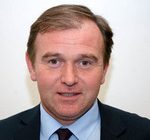
  • George Eustice – 2020 Speech to the Oxford Farming Conference

    George Eustice – 2020 Speech to the Oxford Farming Conference

    The speech made by George Eustice, the Secretary of State for the Environment, Food and Rural Affairs, on 30 November 2020.

    It is a real privilege to be here today to launch our Agricultural Transition Plan.

    I’d like to begin by thanking the Oxford Farming Conference for hosting this event. Of course, we all look forward to the time to when we will have turned the corner of this pandemic and can return to meeting again properly, but for now let me start by taking this opportunity to thank all those of you who working in our food supply chain to keep the nation fed. The response of the sector has been phenomenal and has been a timely reminder of the critical importance of domestic food production to our food security as a nation.

    My family have farmed in West Cornwall for six generations. The names of fields were passed from one generation to the next. Like all farmers, we knew our land and so I understand the responsibility that farmers feel to the hard work of previous generations and also their commitment to the future.

    So as we contemplate the biggest change in agricultural policy in half a century, we need to design a policy that is not only right for those who are the custodians of our countryside today but which is also right for those who follow in their footsteps tomorrow. Those who we’ve yet to meet. Those perhaps who yearn to go into farming but cannot currently get access to land; the farm managers who want to set out on their own; maybe those who left the family farm twenty years ago but wish they could find a way to return.

    So, today we are publishing further details of our approach to changing the way we reward and incentivise farmers.

    We will remove the arbitrary area-based subsidies on land ownership or tenure and replace them with new payments and new incentives to reward farmers for farming more sustainably, creating space for nature on their land, enhancing animal welfare and delivering, of course, the other objectives set out in the Agriculture Act 2020.

    We will remove the old style, top down rules and draconian penalties of the EU era starting with important changes next year that will substantially reduce guidance that farmers need to follow.

    This of course is a moment of great change, where, for the first time in fifty years, we have a chance to do things differently. So, we should not waste that opportunity. We should think through from first principles what a coherent policy actually looks like, and then chart an orderly course towards it.

    There is no doubt that the intensification of agriculture since the 1960s has taken its toll on wildlife and on nature. So, to address this, we need to rediscover some of the agronomic techniques that my Great Grandfather might have deployed, but then fuse these with the best precision technology and the best plant science available to us today.

    The centre piece of our future policy will be made up of three component parts.

    Firstly, the Sustainable Farming Incentive will pay farmers who are in receipt of BPS for actions that they take to manage their land in an environmentally sustainable way.

    Secondly, the Local Nature Recovery will pay for actions that support local nature recovery and deliver local environmental priorities. This scheme will also encourage collaboration, helping farmers work together to improve their local environment.

    Finally, Landscape Recovery will support the delivery of landscape and ecosystem recovery through long-term, land use change projects. They will help us to meet our targets; to plant 30,000 hectares of new woodland each year by 2025, to create and restore some of our peatlands, to protect 30% of land by 2030, to reach net zero by 2050.

    We know that this marks a significant change and I’m also very conscious of the fact that for many farm enterprises, they are dependent on the area subsidy payments to generate a profit. And that without it some might assume they would not be profitable, but that is why we have created a seven-year transition period. We want this to be an evolution, not an overnight revolution. That means making year-on-year progressive reductions to the legacy direct payment scheme, while simultaneously making year-on-year increases to the money available to support the replacement.

    Between 2021 and 2024, we will help farmers prepare to take part in our Environmental Land Management offer.

    This will include expanding the Countryside Stewardship scheme and opening a new Sustainable Farming Incentive, which will be open to every farmer from 2022 onwards.

    We will also continue to develop pilots for Environmental Land Management.

    We will also increase the amount of funding available for environmental and animal welfare improvements in each year of the early transition, using funding released from Direct Payments as we move towards the roll out of the three components under Environmental Land Management, which will then take effect in full from 2024.

    We recognise that there is a problem with poor profitability in agriculture, but the premise behind our new policy is to tackle the causes of that poor profitability, rather than masking it with a subsidy payment.

    So our new financial incentives for sustainable farming and nature recovery will be set at a rate to incentivise widespread participation and will give consideration to natural capital principles so that in some areas we will go beyond the income foregone methodology of the past.

    To support farmers in reducing their costs and improving their profitability, there will be new grants to invest in new equipment to reduce costs.

    There will be exit schemes to help those who want to retire or leave the industry to do so with dignity, and there will be grants to create new opportunities and support for new entrants coming into the industry.

    We will also provide grants for farmer-led Research and Development, and for the use of innovative new techniques led by farmers and growers.

    I would like to say a bit more about what the early part of the transition is going to look like.

    Next year, we will begin to reduce Direct Payments, improve how existing schemes and regulations operate, and offer grants to help farmers invest in environmental and productivity improvements.

    Reductions in Direct Payments will begin at 5% for most farmers.

    Enforcement will be more proportionate – with written communications rather than financial penalties and the approach taken to inspections will be overhauled.

    We will continue our programme of tests and trials and start a new National Pilot for Environmental Land Management.

    And our future agricultural policy will be designed with farmers, for farmers, so that it works in fields and on farms, not just on paper. I know that we haven’t always got it right in the past. I know that administrative processes have caused problems. I want farmers to trust our reforms. And we want to work with you all to get this right.

    In 2022 and 2023, we will reduce spend on Direct Payments by around 15% in each of those years.

    We will start to roll out some of the core elements of the Environmental Land Management. The Sustainable Farming Incentive will support sustainable approaches to farm husbandry that help the environment that might include, promoting integrated pest management, actions to improve soil health or catchment sensitive farming.

    We will make more funding available within the legacy Countryside Stewardship Scheme. We will offer a slurry investment scheme, to help reduce pollution, take us close to net zero and help us leave the environment in a better state than we found it.

    There will be standalone projects to support tree planting, peatland restoration and nature recovery.

    We will be launching a new-industry-led R&D scheme to invest in innovation and to benefit farmers.

    We will also, as I said, offer an exit support scheme – to help farmers who want to retire to do so with dignity and to help new entrants into the industry. We will be consulting further on these scheme designs in the new year.

    We will begin rolling out of the full three components of our Environmental Land Management in late 2024. By the end of 2024, the legacy Basic Payment Scheme probably will have been reduced by about 50%.

    We then intend to delink Direct Payments, and the bureaucracy of the cross-compliance regime will be a thing of the past.

    By 2027, we want to see a reformed agriculture sector. We want farmers to manage their whole business in a way that delivers profitable food production and the recovery of nature, combining the best modern technology with the rediscovery of the traditional art of good farm husbandry.

    We want farmers to be able to access public money to help them tackle climate change and support the environment and animal welfare on the land they manage and to help their businesses become more productive and sustainable.

    We want to support confidence in UK food internationally, prevent environmental harm and protect biosecurity and animal welfare.

    In conclusion, rather than the prescriptive, top down rules of the EU era, we want to support the choices that farmers and land managers take on their holdings, and we will work with them to refine and develop the schemes we bring forward. If we all work together to get this right, then I believe a decade from now the rest of the world will be coming here to see how it’s done.

  • Alexander Stafford – 2020 Speech on Hydrogen Transport

    Alexander Stafford – 2020 Speech on Hydrogen Transport

    The speech made by Alexander Stafford, the Conservative MP for the Rother Valley, in the House of Commons on 26 November 2020.

    I refer the House to my entry in the Register of Members’ Financial Interests. It is a tremendous privilege to have secured today’s debate on the use of hydrogen transport. It is such thrilling news because, unbelievably, this is the first dedicated debate on hydrogen to take place in the UK Parliament. We can all agree that it is long overdue.

    It is now clear that hydrogen will be a critical component of our energy and transport policy as we strive to achieve net zero by 2050. We can no longer afford to sit on our hands. At present, 34% of all UK carbon emissions come from transport. This is a colossal statistic. If we do not prioritise decarbonising our transport sector, we simply will not meet our net zero target.

    I welcome the work that the Minister and the Government have done and will continue to do to ensure that hydrogen is so high up the Government’s agenda. Indeed, the Government have signalled their intent regarding hydrogen in their 10-point plan for a green industrial revolution announced just last week. The Minister has confirmed that the Government will produce an economy-wide hydrogen strategy for the UK, which we understand is planned to be published in February. I look forward to the promised creation of a hydrogen transport hub, the all-hydrogen bus town scheme and implementation of the aforementioned 10-point plan, which includes policies for hydrogen use and production.

    Members will be well versed in my advocacy for hydrogen in this House. I serve as a vice-chair of the all-party group on hydrogen and I champion hydrogen technology consistently in my speeches and articles on levelling up and our green recovery. My commitment to this exciting technology stems from my life prior to entering Parliament. Before I was elected to represent the people of Rother Valley, I worked on environmental issues at the World Wildlife Fund before focusing on the UK’s global transition to a green future at Shell. It was then that I realised we need a multi-pronged approach to low-carbon transport.

    Despite what some may tell us, there is no silver bullet or panacea to help us to achieve our aims. This is why, alongside other solutions such as electric vehicles, biofuels and carbon capture and storage, we must ensure that we are at the forefront of the hydrogen industry, both in its use and in its production. We must steal a march on international competitors, cornering the market for UK plc and cementing our place as the world leader in hydrogen transport. I like to describe this as a win-win situation, because a strong UK hydrogen industry will create thousands of jobs across the country, cut carbon emissions dramatically and boost our post-covid and post-Brexit economy.

    What exactly is hydrogen and how does it work? In layman’s terms, hydrogen is a gas that can combust in a way that produces no greenhouse gas emissions. Hydrogen can be produced by a number of methods. The most exciting of these creations is green hydrogen, which is made by electrolysis, using renewable electricity from solar and wind power. While we develop our infrastructure for green hydrogen, we can create blue hydrogen, too, which is made by reforming methane, where the carbon dioxide generated can be captured and stored.

    I must address the excitement around electric vehicles, and it certainly is a wonderful technology. However, it is not the sole solution to decarbonising transport, and it has significant shortcomings that need to be addressed. It is estimated that it will cost £16.7 billion to get the UK’s public charging network ready for mass EV market. This would require 507 new charge points to be installed every single day from now until 2035. Furthermore, there is no recognised figure for how much it will cost to upgrade the grid, but industry figures suggest that it will require hundreds of billions of pounds.

    Moreover, we must mention the need to import battery technology from the People’s Republic of China, a country that owns 73% of the world’s battery supply, often made with electricity from coal-powered stations. Ultimately of more concern is EVs’ unsuitability for heavier vehicles, such as HGVs, and longer-distance journeys, and I will cover that shortly. Hydrogen fuel cell electric vehicles, on the other hand, offer flexibility and freedom. Hydrogen vehicles do not produce any greenhouse gases from their tailpipe. The only emission is water vapour. If the hydrogen used by the vehicle is made with renewable sources of electricity or with the help of carbon capture and storage, the process of driving a hydrogen vehicle is nearly free of CO2 emissions, as well as other particulate matter.

    In hydrogen vehicles, energy is stored as compressed hydrogen fuel. This means that hydrogen fuel cell electric vehicles can drive up to 700 km without refuelling and, just like a conventional car, they take only a few minutes to refuel. This is likely to see the deployment of hydrogen in cars and vans that travel large distances or for heavy utilisation, which battery EVs are unsuitable for.

    I am excited about the prospects for hydrogen transport beyond cars. This is where hydrogen technology really comes into its own. A hydrogen fuel cell offers cleaner options for parts of the transport sector, particularly in larger vehicles that are less suited to electrification and where consumers demand rapid refuelling. The high energy density of hydrogen means that it is expected to be the dominant choice for HGVs, buses, shipping and rail, as well as its potential use in aviation.

    Hydrogen buses show particular promise, and we are fortunate in Britain to boast the expertise of Wrightbus. It is currently building 3,000 hydrogen buses in the UK for use across the country by 2024, which is the equivalent of taking 107,000 cars off the road.

    Stephen Flynn (Aberdeen South) (SNP)

    I apologise for missing the start of the hon. Member’s speech on an incredibly important matter. He has touched on hydrogen buses, and in Aberdeen, the city I represent, hydrogen buses have been rolled out in great numbers over recent years. Does he agree with me that what we need to see is a greater expansion of hydrogen buses not just in Aberdeen, but across Scotland and the entire UK?

    Alexander Stafford

    I thank the hon. Member for that point, and I could not agree more. I was talking to the Under-Secretary of State for Scotland, my hon. Friend the Member for Banff and Buchan (David Duguid), about it recently, and it was exactly that point he highlighted.

    That is exactly why, in February, when the Government announced 4,000 zero emission buses, I believe they should have been announced as hydrogen buses, because the economies of scale involved will revolutionise the transport sector. It is of paramount importance that we achieve cost parity between a hydrogen bus and a diesel bus, and at the moment such parity is predicted to happen this decade, but we would rather have that sooner than later, and if those 4,000 buses were hydrogen buses, I am told that the scales involved would mean parity with diesel buses.

    In addition, it is essential that we reform the bus service operators grant to focus only on green fuels such as hydrogen, as we currently spend £600 million per year incentivising the running of diesel buses. Taking this decision would not cost the taxpayer a penny. We must also reform the renewable transport fuel obligation. A simple amendment to this would allow any existing renewable energy resource to be used, and again it would not cost the taxpayer any money. This would significantly increase private investment and stimulate the creation of new jobs in the production of green hydrogen for transport.

    The HGV sector is the highest emitting of all commercial road transport with regards to absolute CO2 emissions. The majority of commercial vehicles in this category are still powered by diesel, and electrification, as I have mentioned, is not suitable for such heavy long-distance vehicles. Hydrogen-fuelled HGVs had been found to be a more cost-effective option in terms of the infrastructure costs, with a cumulative capital expenditure cost of £3.4 billion in 2016, compared with £21.3 billion for battery electric vehicles—so a lot cheaper. Hydrogen HGVs have already been trialled in the US and parts of Europe, and they are likely to be widely available in the 2020s.

    On our railways, a hydrogen-powered train from the University of Birmingham recently travelled on Britain’s rail network for the first time. We are looking to lead the world in rolling out more hydrogen trains. In the aerospace sector, British company ZeroAvia has conducted the world’s first hydrogen-powered flight, over Bedfordshire, and in 2021 Aeristech will provide a fuel compressor that will make it possible to deliver the power output needed for even the heaviest industries and vehicles, such as aeroplanes. In shipping, UK shipbuilders are already working on cutting-edge zero-emission ferries, and we must increase our international co-operation on hydrogen to achieve the decarbonisation of routes globally.

    Beyond transport, hydrogen can also be used to decarbonise home heating, given that home heating currently amounts to about 20% of national emissions. The UK is leading the way once again, with HyDeploy conducting the world’s first trial of a 20% hydrogen blend in the gas grid, H21 and H100 leading groundbreaking tests of 100% hydrogen in the gas grid, and Worcester Bosch and Baxi producing the world’s first hydrogen-ready boilers, so we are already developing this technology in this country.

    UK innovation in hydrogen is further advanced by Johnson Matthey’s role as one of the global leaders in fuel cell development and components in transport. In fact, its technology ends up in roughly a third of fuel cells globally. I stress to the Government that this is an opportunity for us to corner the hydrogen market in the way that China has dominated the battery market. We can take a world lead on this, and we should—we have the right situation.

    Another great British company is ITM Power, based in South Yorkshire, next to my constituency. It is involved in most hydrogen transport products in the UK, and it has indicated that it wishes to open a large hydrogen refuelling station and a network across the country. We must ensure that we have a strong domestic programme to support this, particularly in the bus and HGV sectors. If we act with pace and ambition, with collaboration between industry and Government, we can utilise our natural resources, technological know-how and innovative entrepreneurial spirit to spend taxpayers’ money more efficiently than our competitors and stimulate much greater private investment, economic growth and carbon reductions than any other country on the planet.

    I have four policy asks of the Minister. The first is to set ambitious targets for the mass commercialisation of hydrogen technology. Hydrogen technologies across all categories have been used extensively in real-world situations across the world for many years. The opportunity now exists to set targets for mass deployment and commercialisation of these technologies across the UK over the coming decade, as other countries have already started doing. For example, Japan is aiming for 200,000 hydrogen fuel cell vehicles on the road by 2025 and 800,000 by 2030. It is also aiming for 1,200 hydrogen buses by 2030. South Korea is aiming for 100,000 hydrogen fuel cell vehicles on the roads by 2025 and 60,000 hydrogen buses by 2040. The world is waking up to hydrogen, and so should we.

    The second request is to stimulate supply and demand in parallel. We can steal a march over other countries by setting inspirational, investment-stimulating goals for the production of hydrogen and do so in a manner that maximises the UK’s natural resources, academic skills, world-leading manufacturing and experienced workforce. The Prime Minister has set a target for a minimum of 5 GW of hydrogen production by 2030. Let us set ambitious demand-side targets for buses, trains and cars to ensure that we make full use of that.

    The third ask is to focus initially on regional clusters—for example, in Rother Valley. The UK’s hydrogen economy must be built up step by step, and we cannot make this transition instantly. The Government should focus initially on regional clusters that are most suited to hydrogen production and usage and on technologies that can be implemented quickly, scaled up effectively and suit the local skills, geography and decarbonisation priorities. The announcement of a hydrogen transport hub in Teesside is welcome, and I hope that we will see more hydrogen hubs pop up soon—across the north but also in Scotland, Northern Ireland and Wales.

    The fourth ask is to ensure that relevant Government Departments work collaboratively. Hydrogen policy covers many different Departments. It requires strong local leadership from metro Mayors, council leaders and local enterprise partnerships to be delivered. All the devolved Administrations are developing their own hydrogen strategies.

    Stephen Flynn

    I appreciate the hon. Member giving way again; he is being very generous. I am listening closely to his four points. I may have missed it, but I am not sure whether he mentioned his preference for green or blue hydrogen, and I would be grateful if he expanded on whether he feels that green hydrogen is ultimately the goal that we all seek to achieve.

    Alexander Stafford

    I believe the hon. Member missed the earlier part of the debate, when I touched on green and blue hydrogen. We all want green hydrogen eventually, but it is blue to start off with, with carbon capture and storage.

    I urge the Government to bring forward another world first: a hydrogen political working group consisting of representatives from the UK Government, devolved Administration Ministers, Mayors and council leaders. This group can ensure that hydrogen policy across the UK is co-ordinated and implemented at pace.

    We must act quickly and decisively to avoid being left behind by international competitors. In the past few months, Germany has committed €9 billion to hydrogen, and France and Portugal have committed €7 billion. The European Union is planning hundreds of billions of euros in investment in hydrogen technology. Australia, China, South Korea, Japan, Canada, Norway, Chile and many other countries around the world see hydrogen as critical to their immediate economic growth and long-term net zero goals. The UK must make its move now if we are to pip those countries at the post. They have announced this money. Let us get the money on the ground first and develop it.

    Overall, about 20 countries that collectively represent about 70% of global GDP have announced a hydrogen strategy or a road map as a key pillar of their decarbonisation ambitions. We have only to look to the race for dominance in the battery industry to see why we cannot allow ourselves to fall behind today. For instance, today there are 136 battery mega-factory plants in operation or being planned. Some 101 of those are in China, and eight are in the USA. China is opening almost one new mega-factory every single week. The UK has well and truly lost out in the battery industry, but we are still in the race for hydrogen, and we can still win.

    It is apparent why so many countries are clamouring to pursue a hydrogen transport agenda. The global hydrogen economy is set to be worth $2.5 trillion and create 30 million jobs by 2050. The economic benefits for the UK are huge, especially for industrial areas, such as my constituency of Rother Valley. Here in the UK, the Hydrogen Task Force believes that hydrogen can add £18 billion in gross value added by 2035 and support 75,000 additional jobs. More immediately, businesses have told the Treasury that it has £3 billion-worth of shovel-ready private investment awaiting the right policy frameworks and commitment from the Government.

    That is fantastic news for constituencies in the northern powerhouse and the devolved nations. The Zero Carbon Humber project is a fantastic example of the potential of so-called hydrogen hubs, which I envisage in areas such as the Rother Valley and across the red wall. The Humber is the largest carbon-emitting industry cluster in the UK, and like South Yorkshire, much of the Humber’s economy is built on manufacturing, engineering and the energy sector. A partnership of 12 major organisations and a bid to the Department for Business, Energy and Industrial Strategy has resulted in the creation of an ambitious project to make the Humber the world’s first net zero carbon industrial cluster, supporting new industry and encouraging factories.

    Addressing jobs first and foremost, the potential for a hydrogen revolution in South Yorkshire to rival the coal industry is immensely exciting. We have already made great strides in establishing ourselves as a national hub for the production of green hydrogen. Rother Valley’s manufacturing expertise remains second to none, and our ambition and drive are matchless. It is those skills that we hope to redeploy in the green revolution, and as such there is no better place to serve as the hub of the hydrogen industry.

    For instance, I have been supporting the upcoming opening of the world’s largest electrolyser factory, operated by ITM and located in Meadowhall, Sheffield, which is on the border of my constituency. Hydrogen storage cylinders are also manufactured nearby. Rotherham, part of which is in my constituency, is home to England’s most northerly hydrogen refuelling station. The region has an onshore wind sector with the potential to expand. It is key to the production of green hydrogen, and our local city of Sheffield has two major district heat networks. Recently, I met the University of Sheffield’s Advanced Manufacturing Research Centre, which is a world-leading hub of research and innovation in technologies such as hydrogen.

    However, that is only the beginning. As we attract more investment and the local hydrogen industry grows, more companies will want to take advantage of our infrastructure, creating manufacturing jobs, graduate jobs and supply chain jobs alike. In turn, South Yorkshire stands to reap high economic returns that will rejuvenate the local economy. Indeed, I intend to turn Rother Valley into Britain’s hydrogen valley.

    I conclude my speech by emphasising the importance of using hydrogen as one part of our carbon-free transport future. No one technology alone is the answer, because each option is at a different stage of development and the economics of each are different depending on the mode of transport. The case for hydrogen is irrefutable, particularly for heavy duty, long-distance vehicles such as heavy goods vehicles and buses. Decarbonising those modes of transport is vital to meeting our net zero targets.

    A world-leading hydrogen industry will boost the local and national economy, providing an uplift in these challenging times, and bolster UK plc as we export our expertise and technology around the world. The UK has all the tools required for leading the hydrogen revolution. We must ensure that we seize the moment and take our rightful place as the capital of hydrogen transport. I look forward to working with the Minister and the Government as we march towards a cleaner, greener hydrogen future for all parts of the United Kingdom.

  • Alok Sharma – 2020 Speech at Opening of the UN Climate Change Dialogues

    Alok Sharma – 2020 Speech at Opening of the UN Climate Change Dialogues

    The speech made by Alok Sharma, the Secretary of State for Business, Energy and Industrial Strategy, on 23 November 2020.

    It’s a pleasure to open the UNFCCC Climate Change Dialogues today, alongside my fellow Presiding Officers, Carolina, Marianne and Tosi. As well of course as the UN Deputy Secretary General Amina Mohammed, and the UNFCCC Executive Secretary, Patricia Espinosa.

    I thank them for their work in organising this event.

    2020 has been a hugely challenging year for everyone.

    And when I spoke at the June Momentum, I said climate action could not be postponed.

    And as incoming COP President, I’m fully committed to working with my fellow Presiding Officers, parties, and stakeholders to keep driving ambition and action on climate change.

    This remains the case today.

    The urgency of the climate crisis demands nothing less.

    That is why all of us on this panel have arranged a series of events to maintain momentum.

    To advance the multilateral process.

    And to drive real-world change.

    Earlier this month, our High-Level Champions Nigel Topping and Gonzalo Muñoz held the Race to Zero Dialogues.

    To build support for decarbonisation amongst cities, amongst regions, amongst businesses.

    And today, we are opening the Climate Change Dialogues.

    We want to make progress on vital negotiating issues.

    On 12 December, we have the Climate Ambition Summit 2020.

    This is co-hosted by the UK COP26 Presidency, the UN and France, in partnership with Chile and Italy.

    And this Summit will provide a platform for leaders to come forward with announcements under the three pillars of the Paris Agreement: mitigation; adaptation; and support.

    Specifically, we are calling for:

    New, more ambitious Nationally Determined Contributions;

    Long-Term Strategies setting out a pathway to net zero emissions;

    Climate finance commitments to support the most vulnerable;

    And crucially, ambitious adaptation plans and underlying policies.

    Ahead of COP26, we as Presiding Officers will host more discussions to build on the progress made at these Dialogues.

    So that we are in the best possible position to unleash the full potential of the Paris Agreement when we meet in Glasgow next year.

    As you know, we are committed to working with all of you to agree a comprehensive, negotiated outcome that leaves no issue behind.

    And we absolutely recognise – as we have always done – that if we are to succeed, parties must lead the process.

    And non-state actors must be involved. Particularly those whose voices are often marginalised.

    That is why we have consulted with all negotiating groups ahead of these Dialogues.

    It is why they have been designed them to suit multiple time zones.

    And why observers are heavily involved.

    Proceedings will be broadcast around the world.

    And their format balances concerns about negotiating virtually with the need to keep these conversations going, which is of course so vital.

    These Dialogues can help to put us in the best position to negotiate in Bonn, and the of course in Glasgow.

    We will use the Dialogues to fulfil vital mandates.

    To improve our understanding of each party’s position and the issues that need to be resolved.

    And to help us to identify what can be done during next year to help secure a comprehensive agreement at COP26.

    The UK has worked closely with Chile, the UNFCCC Subsidiary Bodies, and the Secretariat to design the events for the next fortnight.

    The Presidencies are convening events on finance, adaptation, loss and damage, NDC preparation and gender, alongside the Open Dialogue and the Pre-2020 Roundtable.

    And we will continue to work together, with all parties and stakeholders, over the next twelve months.

    So that next year, when the world comes together and meets in Glasgow, we can fulfil the full potential of the Paris Agreement.

  • Alok Sharma – 2020 Speech on Climate Action

    Alok Sharma – 2020 Speech on Climate Action

    The speech made by Alok Sharma, the Secretary of State for Business, Energy and Industrial Strategy, on 19 November 2020.

    It is a pleasure to join you today.

    And to participate in the opening of Mock COP.

    I want to thank everyone who has worked so hard to deliver this event.

    And I applaud your dedication and commitment to tackling climate change.

    Across the world, young people are leading the charge on climate action.

    We see this, in projects like the Resilient40.

    Which is amplifying the voices of over 60 youth leaders, from 29 African countries in vital climate change discussions.

    Or indeed the Resolution Project, which supports student entrepreneurs with over 300 social ventures in more than 80 countries.

    From recycling solutions in Ethiopia.

    To water management in Brazil.

    And household biogas generation in Nepal.

    Young people are on the frontline of global climate action.

    And this is absolutely vital.

    For the future of our planet.

    And for the success of COP26 next November.

    The gravity and urgency of the situation we face demands that COP26 marks the moment

    when the world unites together behind a fair, resilient and zero emissions future.

    And that means governments committing to ambitious emission reduction targets, and adaptation plans.

    It means donor countries living up to their obligations.

    And fulfilling the commitments that they have made to the global South to put $100 billion a year into international climate finance.

    And it means listening to diverse voices in the negotiations.

    So that we are ensuring the interests of young people, as well as Civil Society as a whole, are heard loud and clear.

    From both the global South and North.

    To achieve this, I have been clear that we want civil society groups to be at the heart of both our preparations for COP, and the summit itself.

    That is why I met with young people and civil society organisations on a visit to the UN in New York earlier in the year.

    And I commit to meeting groups which comprise young people and civil society in every country that I visit going forward.

    It is also why we have established the COP26 Civil Society and Youth advisory council.

    Where young activists, NGOs, indigenous peoples and faith groups are very much part of our conversations in planning COP26.

    We are also supporting our COP partners, Italy.

    Both in their preparations for the Pre-COP and of course the Youth Event next September.

    And in the launch of their Youth4Climate series.

    Helping to support and amplify the work of young climate activists.

    Because such activism plays a really vital role.

    Although the commitments required in the Paris Agreement need to be made by national governments, success will belong to each and every one of us.

    Reaching net zero will only be achieved through a joint effort.

    And for this civil society is absolutely vital.

    You are vital in pushing all of us to go further: governments and regions; businesses and cities; schools and universities.

    By raising awareness, generating support, and asking us to do more.

    That is one of the great benefits of this Mock COP.

    It will show governments and organisations around the world the appetite that exists for ambitious climate action from young people.

    So I will finish with this ask: keep up that momentum.

    Keep showing us what is possible.

    And keep advocating for climate action in your home countries.

    Because if you do, the job of negotiators, who are urging countries around the world to make more ambitious commitments, becomes much easier.

    As does the work of the Race to Zero campaign.

    Which is encouraging non-state actors, such as businesses, cities, regions and universities around the world to commit to net zero as soon as possible.

    And if we work together in this way, I believe COP26 will mark the moment when the potential of the Paris Agreement is fulfilled.

    Thank you.

  • Boris Johnson – 2020 Article in Financial Times on Green Jobs

    Boris Johnson – 2020 Article in Financial Times on Green Jobs

    The article by Boris Johnson, the Prime Minister, in the Financial Times on 18 November 2020.

    Slowly but surely humanity is taking the upper hand in the fight against the virus. We have not won yet. There are still hard weeks and months to come. But with better drugs, testing and a range of vaccines, we know in our hearts that next year we will succeed.

    We will use science to rout the virus, and we must use the same extraordinary powers of invention to repair the economic damage from Covid-19, and to build back better.

    Now is the time to plan for a green recovery with high-skilled jobs that give people the satisfaction of knowing they are helping make the country cleaner, greener and more beautiful.

    Imagine Britain, when a Green Industrial Revolution has helped to level up the country. You cook breakfast using hydrogen power before getting in your electric car, having charged it overnight from batteries made in the Midlands. Around you the air is cleaner; trucks, trains, ships and planes run on hydrogen or synthetic fuel.

    British towns and regions — Teeside, Port Talbot, Merseyside and Mansfield — are now synonymous with green technology and jobs. This is where Britain’s ability to make hydrogen and capture carbon pioneered the decarbonisation of transport, industry and power.

    My 10 point plan to get there will mobilise £12bn of government investment, and potentially three times as much from the private sector, to create and support up to 250,000 green jobs.

    There will be electric vehicle technicians in the Midlands, construction and installation workers in the North East and Wales, specialists in advanced fuels in the North West, agroforestry practitioners in Scotland, and grid system installers everywhere. And we will help people train for these new green jobs through our Lifetime Skills Guarantee.

    This 10 point plan will turn the UK into the world’s number one centre for green technology and finance, creating the foundations for decades of economic growth.

    One — we will make the UK the Saudi Arabia of wind with enough offshore capacity to power every home by 2030.

    Two — we will turn water into energy with up to £500m of investment in hydrogen.

    Three — we will take forward our plans for new nuclear power, from large scale to small and advanced modular reactors.

    Four — we’ll invest more than £2.8bn in electric vehicles, lacing the land with charging points and creating long-lasting batteries in UK gigafactories. This will allow us to end the sale of new petrol and diesel cars and vans in 2030. However, we will allow the sale of hybrid cars and vans that can drive a significant distance with no carbon coming out of the tailpipe until 2035.

    Five — we will have cleaner public transport, including thousands of green buses and hundreds of miles of new cycle lanes.

    Six — we will strive to repeat the feat of Jack Alcock and Teddie Brown, who achieved the first nonstop transatlantic flight a century ago, with a zero emission plane. And we will do the same with ships.

    Seven — we will invest £1bn next year to make homes, schools and hospitals greener, and energy bills lower.

    Eight — we will establish a new world-leading industry in carbon capture and storage, backed by £1bn of government investment for clusters across the North, Wales and Scotland.

    Nine — we will harness nature’s ability to absorb carbon by planting 30,000 hectares of trees every year by 2025 and rewilding 30,000 football pitches worth of countryside.

    And ten, our £1bn energy innovation fund will help commercialise new low-carbon technologies, like the world’s first liquid air battery being developed in Trafford, and we will make the City of London the global centre for green finance through our sovereign bond, carbon offsets markets and disclosure requirements.

    This plan can be a global template for delivering net zero emissions in ways that creates jobs and preserve our lifestyles.

    On Wednesday I will meet UK businesses to discuss their contribution. We plan to provide clear timetables for the clean energy we will procure, details of the regulations we will change, and the carbon prices that we will put on emissions.

    I will establish Task Force Net Zero committed to reaching net zero by 2050, and through next year’s COP26 summit we will urge countries and companies around the world to join us in delivering net zero globally.

    Green and growth can go hand-in-hand. So let us meet the most enduring threat to our planet with one of the most innovative and ambitious programmes of job-creation we have known.

  • Boris Johnson – 2020 Comments on Government’s 25 Year Environment Plan

    Boris Johnson – 2020 Comments on Government’s 25 Year Environment Plan

    The comments made by Boris Johnson, the Prime Minister, on 14 November 2020.

    As we build back greener we’re taking new steps to expand and enhance our landscapes – creating and retaining thousands of green jobs in the process which will be crucial to my Ten Point Plan for delivering a green recovery.

    Britain’s iconic landscapes are part of the fabric of our national identity – sustaining our communities, driving local economies and inspiring people across the ages. That’s why with the natural world under threat, it’s more important than ever that we act now to enhance our natural environment and protect our precious wildlife and biodiversity.

  • George Eustice – 2020 Comments on Government’s 25 Year Environment Plan

    George Eustice – 2020 Comments on Government’s 25 Year Environment Plan

    The comments made by George Eustice, the Secretary of State for Environment, Food and Rural Affairs, on 14 November 2020.

    As we build back greener from the coronavirus pandemic, we are committed to shaping a cleaner and more resilient society to protect and restore our natural environment and diverse ecosystems.

    Today’s announcement illustrates how we are leading the world in protecting the natural environment and combating climate change.

    By starting the process for designating more of our beautiful and iconic landscapes as National Parks and AONBs, and through the new Landscape Recovery projects, we will help expand and protect precious wildlife habitats and, vitally, increase people’s access to our treasured landscapes.

  • Rebecca Pow – 2020 Comments on Green Solutions

    Rebecca Pow – 2020 Comments on Green Solutions

    The comments made by Rebecca Pow, the Environment Minister, on 11 November 2020.

    Creating a more circular economy for our waste and resources lies at the heart of this government’s transformative agenda for the environment, and we are committed to going further and faster to reduce, reuse and recycle more of our resources – with strong measures to enable this coming forward in our landmark Environment Bill.

    These new research centres will play a vital part in creating a cleaner and more sustainable economy, and help us to better protect the environment for the next generation.