Category: Environment

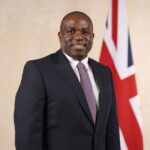
  • Steve Reed – 2025 Speech at the 2025 Oxford Farming Conference

    Steve Reed – 2025 Speech at the 2025 Oxford Farming Conference

    The speech made by Steve Reed, the Secretary of State for Environment, Food and Rural Affairs, on 9 January 2025.

    Thank you for hosting me here today.

    A lot has changed since the first Oxford Farming Conference in 1936.

    In the early twentieth century, facing an explosion in population growth, Britain faced food shortages. But farmers collaborated with scientists and yields increased. During the Second World War, food from our farmers sustained the war effort. In the following decades, armed with new technologies, farming became more productive than ever before. In just a few generations, many parts of the sector adopted automation and precision farming. And embraced technology and innovation – from robotic milking to genetic breeding.

    Faced with global supply shocks during the Covid pandemic and the Ukraine War, farmers grew the food that kept us fed. The sector has continually evolved and changed, to make sure one thing remained constant: through thick and thin, farmers have produced the food that feeds the nation. In the spirit of the examination halls where we are today, year upon year, farmers have passed the test.

    Thank you for that.

    Today, we stand on the edge of an unprecedented global transition. Food security is national security but we face new challenges. Leaving the European Union was undoubtedly the biggest change for British farming for generations, moving away from the Basic Payment Scheme that simply paid you for the land you farmed, to our Environmental Land Management Schemes that pay for actions that support sustainable food production. We’re experiencing more frequent and severe flooding and droughts as the climate changes, affecting yields and, vitally, your profits. We’re seeing increasing pressures and competing demands on our land. Geopolitical events such as Russia’s illegal invasion of Ukraine are damaging global supply chains, causing costs of fertilisers and energy bills to soar.

    Yesterday I visited D’Oyleys farm, just outside Oxford. Fi and Phil are two of many farmers around the country already transforming their business to meet future challenges.They are embracing sustainable and regenerative farming practices. They are one of almost 50 farms working together to restore freshwater and floodplains across the Ock and Thames catchment. They have a Saturday farm shop and a wild camping business. They are producing food, supported by nature and new sources of income. We want to make it easier for all farmers to meet the demands of the transition and run successful businesses. But what I’m hearing from so many of you is that the turmoil of recent years has made farming incredibly tough.

    When farmers came to protest in Westminster last year, it wasn’t just about tax. Too many rural communities feel misunderstood, neglected and disrespected by politicians over many, many years. Farms are battling volatile input costs and tight margins. Imbalances in the supply chain are preventing fair returns for the food farmers produce. A shortage of skilled workers is putting the brakes on growing farm businesses. Farmers spend long hours in the fields, followed by an evening of paperwork. There are growing concerns about more extreme weather. The promised continuing access to European markets after Brexit was broken. Other trade deals have undercut British farmers. The straws are piling up and up – and the camel’s back is close to breaking.

    The last few months in particular have not been easy. You’ve heard it before, but the £22 billion pound black hole left by the Conservatives was bigger than anybody could have expected. The previous Government is being investigated by the Independent Office for Budget Responsibility – which they set up – for covering up the true state of public finances. Our planning in opposition was done without knowledge of a hidden financial black hole greater than the cost of the entire police service in England and Wales. It meant we had to take immediate tough decisions across the economy to balance the books, including on APR. We were shocked by the size of the black hole we were left to fill. I’m sorry if some of the action we took shocked you in return. But stable finances are the foundation of the economic growth needed to get the economy growing again after it flat-lined through a decade of chaos.

    Looking to the future, I will be frank about what’s coming down the line, delivering the news, good and bad, as and when it comes. I want our farming sector to succeed. I want it to be sustainable – financially and environmentally.  I know we can only get there by working together in partnership. I am a politician, not a farmer. My job is to listen to your expertise and use my role in Government to support you.

    During my time as a politician – including as a council leader – I have taken on the issues that matter to people and found a solution by working together with people on the front line. I listened to them, then acted with them. Like reversing a rising tide of knife crime. Turning round the council’s children’s services from one of the worst to the best-rated in the country. Bringing in investment to regenerate once-declining neighbourhoods. It’s an approach based on working together that I’m offering to you. I can’t control the weather, pandemics or how other countries act. But I will ensure the Government is there with you to face those challenges. That requires a clear end goal.

    The last Government talked about transition – but never said what farmers were transitioning to. Today I’ll set that straight. Our farming roadmap will be the most forward-looking plan for farming in our country’s history; the blueprint that will make farming and food production sustainable and profitable for the decades to come. It will be built on our vision for the future of the farming sector. A vision that depends on three strands. First, a farming sector that has food production at its core. Second, a sector where farm businesses can diversify their income to make a fair profit and remain viable in challenging times.Third, a sector that recognises restoring nature is not in competition with sustainable food production, but is essential to it. It is only through pursuing all three that we will achieve long-term food security. That is our destination.

    Taking the first strand, the primary purpose of farming has – and always will be – to produce the food that feeds the nation. Whitehall too often loses sight of that fact. This Labour Government is putting food production back on the agenda. For generations, farmers have produced the food we love from the family favourites at the dinner table to world-renowned British classics. A resilient food system relies on domestic production.

    At the NFU conference last year, the previous Prime Minister declared ‘farmers are not in it for the money’, words repeated by the Shadow Environment Secretary. They misunderstand that farms are businesses that deserve to thrive. Of course, farmers feel great pride in producing the food on our shelves and stewarding our beautiful countryside. Farming is in their blood. But farming is not some sort of hobby project. The food and farming sector employs over 4 million people, providing jobs in every corner of the UK. If we are serious that ‘food security is national security’, farming must be recognised as a serious business that needs to turn a decent profit.

    Right now, too many farmers don’t make enough money for the food they produce. People feel we’re becoming too reliant on imports. Climate change and external shocks will keep challenging the sector. We’re offering a New Deal for Farmers to help address this.

    Our manifesto committed to use the Government’s own purchasing power to back British produce, with an ambition for 50% of food in hospitals, army bases and prisons to be local or produced to high environmental standards. For the first time, Government will now monitor where food bought by the public sector comes from, the critical first step in helping the public estate buy more British food, and ensuring farmers get a fairer share of the £5 billion pounds a year spent on public-sector catering contracts.

    Our New Deal will tear down the barriers to trade with a new veterinary agreement with the EU to get food exports moving again.  We will expand global trade opportunities, like increasing access for UK pork exports to China worth an additional £80 million pounds a year. And uphold and protect our high environmental and animal welfare standards in future trade deals.  Risks and rewards are not spread evenly across the food chain. We will act on supply-chain fairness so food producers and growers aren’t forced to accept unfair contracts. We will introduce new rules for the pig sector this Spring to ensure contracts clearly set out expectations and only allow changes if agreed by all parties. Regulations for the milk sector are in place, those for eggs and fresh produce will follow, and we’re working with all sectors to intervene where needed to guarantee fairness.

    Technology and innovation are vital for farmers to produce food sustainably – and profitably – into the future. Through the Farming Innovation Programme, a farm in Kent is collaborating with the University of Greenwich and a Cambridge manufacturer to mount transparent solar panels on soft fruit polytunnels. Researchers in Lancaster, North Wales and London are developing a system that distinguishes and counts insects to help farmers manage pests. In Torquay and York, researchers are using sensors and AI to capture data on pollinators in the field and create land strategies that could improve crop yields.

    We need to make it easier for farmers to take part in research and benefit from agri-tech, so that it is directed at the problems farmers face. The latest part of our Farming Innovation Programme, the ADOPT fund, will launch in the Spring. It will fund farmer-led trials to bridge the gap between new technologies and their real-world application. Some of those who worked with us to develop ADOPT are here today – your input is invaluable and a testament to what can be achieved through genuine co-design. Precision breeding offers huge potential to transform the plant breeding sector in England, enabling innovative products to be commercialised in years instead of decades.

    I can today confirm we will introduce secondary legislation to Parliament by the end of March, unlocking new precision breeding technology that will allow farmers to grow crops that are more nutritious, resistant to pests and disease, resilient to climate change and benefit the environment.

    As we’re seeing right now, flooding is becoming increasingly frequent, and can leave farmland under water for months on end, impacting crops and yields. We have paid out £60 million pounds to help farmers affected by unprecedented flooding last year, and are delivering a refreshed approach to bolster England’s resilience to flooding and protect crops in the ground. We’re investing £2.4 billion pounds to build and maintain flood defences, with a further £50 million pounds for internal drainage boards; our Floods Resilience Taskforce will ensure better coordination between government and frontline agencies; and we’re reviewing the existing flood funding formula to speed up new flood schemes and make sure funding goes where it’s most needed.

    To make the most of new business opportunities and produce the food we need for long-term food security, farmers need to be able to be able to weather these storms of the future. Not only more severe and frequent flooding and droughts caused by climate change, but strains on our water supply, pressures on land use, changes to our ecosystems, and rising geopolitical tensions creating an unpredictable global economy. Food production will always be the primary purpose of the farming sector.

    But for all farm businesses – tenants, uplands and others – to stay viable in an increasingly uncertain world, and make sure you can keep producing the food we need, you must be able to profit from other activities. This is the second strand of our vision. We will introduce reforms to support all farmers to innovate and diversify their businesses. Building business resilience so you can plan for the future, even if there’s a bad harvest or disease outbreak.

    The Government will get Britain building again with the biggest planning reform in a generation. I am working with the Deputy Prime Minister to ensure farmers and rural businesses benefit from that.

    In Spring we will consult on national planning reforms to make it quicker for farmers to build farm buildings, barns and other infrastructure they need to boost their food production. And we will shortly begin a series of planning roundtables with the sector.

    Planning rules have got in the way for too long. We will speed up the system so you can grow and diversify your business. Like chicken producers who want a larger shed to boost the amount of food they produce. Or vegetable growers who want to upgrade or expand greenhouses, polytunnels, packhouses or other facilities so they can become more productive.

    We will ensure permitted development rights work for farms so they can convert larger barns into a farm shop, a holiday let, or sports facility. And we will support farms to reduce water and air pollution, through improved slurry stores or anaerobic digesters that can lower business costs and increase resilience, or build small reservoirs to provide an extra water supply for crop irrigation.

    Working with the Department for Energy Security and Net Zero, we want to make it easier for farm businesses to connect to the energy grid. Whether a solar panel or wind turbine, small scale energy offers farmers the chance to diversify their income and reduce their bills. But too many farm businesses and rural communities are waiting too long for a grid connection. We are working with Ofgem to dismantle the queue so we can free up capacity for electricity generation in rural areas.

    We have updated the National Planning Policy Framework so applications for renewable or low carbon energy are more likely to be approved.And our Onshore Wind Taskforce is tackling barriers to small scale renewable energy on farms. These reforms will enable more farm businesses and rural communities to connect to the grid from their own electricity generation, so you can sell surplus energy and diversify your income.

    For farmers to invest confidently in measures that will make their business more resilient, you need to operate under clear and fair expectations. Just like any other business.  Currently many farmers are looking after their soil or cleaning up water, then look over the hedge and see others not upholding their side of the bargain.

    Regulation as it stands is holding farm businesses back. In our latest farm opinion tracker, only 28% of farmers fully understood the purpose of regulations that applied to their farm. That’s no surprise, there are over 150 pieces of legislation covering animal health and welfare and environment regulations alone.

    We need to move away from a patchwork of regulations to a coherent system that is less time-consuming and easier to understand. That allows farmers to focus on growing their business, rather than what forms they have to fill in. In some instances this means rules may have to change – and where that’s needed, I’ll ensure there’s time to adapt. It requires Defra keeping our side of the bargain too – and we are reviewing our own regulations and how we apply them, to ensure they’re fit for purpose.

    The third strand of our vision is nature. Restoring nature is vital to food production, not in competition with it.

    Healthy soils rich in nutrients and organic matter, abundant pollinators and clean water are essential for sustainable food production. They are the foundations farm businesses rely on to produce high crop yields and turn over a profit.

    Without nature, we cannot have long-term food security. That’s why we’re investing in the biggest ever budget for sustainable food production in our country’s history, with a total of £5 billion pounds over the next two years, to help all farmers – tenants, commoners and landowners – transition to more nature-friendly farming methods.

    More than half of farmers are now signed up to our farming schemes. Under the Sustainable Farming Incentive, almost 2 million acres of arable land will be farmed without insecticides, 700 thousand acres of low-input grassland will be managed sustainably, and 75,000 kilometres of hedgerows will be managed to support nature.

    Through our Upland Farmers and Tenancy forums , we’re working in partnership with the sector to design solutions to the specific challenges they face.

    Looking forward, we will work with all of you across our schemes to evaluate what’s worked, what hasn’t, and make improvements. I know you need our help to move off old Higher Level Stewardship schemes into Higher Tier. We’re making changes and getting more farmers into Higher Tier than ever. But the pace is lower than your ambitions and I am pushing to increase that.

    A cast-iron commitment to food production, more resilient farm businesses, and nature as the foundation. These are the elements that will underpin our farming roadmap as we work towards a more sustainable sector with food production at the centre. It will not tell farmers what to do. It will be led by farmers. It will involve Government and farmers working together to find answers to the challenges we face. It will support farm businesses to succeed.

    The road map won’t exist in isolation. We will deliver a land use framework that protects food security, working for farm businesses and for nature. It will also be part of a wider reform of the whole food system, with a food strategy encompassing economic growth, food security, public health and the environment.

    We will work in partnership with farmers, growers, manufacturers, processors, supermarkets, and all those across a fairer supply chain, to shape a long-term plan for the future of farming.

    Farms deserve to be successful, profitable businesses. The prize is long-term food security, resilient farm businesses, healthy ecosystems, beautiful countryside, and nutritious food on our plates.

    We will work in partnership to achieve our vision for the farming sector. A sector with food production at its core. Where farm businesses can diversify their income to make a fair profit and remain viable in challenging times. And which recognises restoring nature is not in competition with sustainable food production, but is essential to it.

    Change is coming. It won’t always be easy but it brings real opportunity. There’s a place for every farmer in that future. Farmers will lead us along the road that gets us there.

    Let’s seize this opportunity together and give farming back its future.

  • Keir Starmer – 2024 Statement at COP29

    Keir Starmer – 2024 Statement at COP29

    The statement made by Keir Starmer, the Prime Minister, on 12 November 2024.

    The United Kingdom is determined to stand alongside those countries on the frontline of the climate crisis today…

    And to seize the opportunities of tomorrow.

    Because action on climate now is the route towards economic growth…

    Energy security…

    Better jobs….

    And national security in the long term.

    To deliver on the Paris Agreement…

    And keep 1.5 degrees within reach.

    In the first 100 days of my government…

    We launched Great British Energy – to create clean British power…

    We created a National Wealth Fund – to invest in the green industries and jobs of the future…

    We scrapped the ban on onshore wind…

    Committed to no new North Sea oil and gas licences….

    And closed the UK’s final coal power plant at the end of September – becoming the first G7 economy to phase out coal power.

    In line with the international agreement at COP28 to transition from fossil fuels…

    and the UK’s ambitious goal to be the first major economy to deliver clean power by 2030.

    Today I can confirm – three months ahead of deadline…

    The UK’s 2035 international target –

    Our nationally determined contribution –

    to reduce all greenhouse gas emissions by at least 81% on 1990 levels….

    Aligned with 1.5 degrees.

    And we urge all Parties –

    To come forward with ambitious targets of their own…

    As we all agreed at the last COP.

    We will work in partnership…

    to support other countries to develop their own commitments…

    And transition through our forthcoming Global Clean Power Alliance –

    And finance will be its first focus.

    We will honour the commitment made by the previous government…

    to provide £11.6 billion in of climate finance between April 2021 and March 2026….

    But we must use public finance as a multiplier…

    To unlock much more private investment…

    And reform our international financial institutions.

    Today we launch the new CIF Capital Market Mechanism, listed on the London Stock Exchange…

    With the potential to mobilise up to $75 billion…

    in additional climate capital for developing countries over the next decade.

    Putting the UK’s role as a global financial centre…

    at the service of driving the green finance and green energy transitions.

    Climate action is at the heart of this government’s mission for the protection and prosperity of Britain and the world.

    Writ large across our domestic and international priorities…

    We are taking the urgent action needed – to protect our planet and its people.

  • David Lammy – 2024 Kew Lecture on Climate Change

    David Lammy – 2024 Kew Lecture on Climate Change

    The speech made by David Lammy, the Foreign Secretary, at Kew Gardens in London on 17 September 2024.

    Thank you Kew Gardens, for hosting my first set piece speech as Foreign Secretary.

    Just after hosting the Colombian President of this year’s Nature COP in Cali this morning.

    Conflicts in Ukraine and the Middle East have dominated my time in office so far. But I was very clear in Opposition that, in this job, I would focus on the most profound and universal source of global disorder – the climate and nature emergency.

    Over my political career, it has become clearer to me how this crisis defines our time. As a young backbencher, I admired Robin Cook making climate a geopolitical issue for the first time – he was a pioneer, ahead of his time.

    Four years ago, I spoke about the essential link between climate justice and racial justice. And as Shadow Foreign Secretary, I set out how our response to this crisis both can create unparalleled economic opportunities and is the central geopolitical challenge of our age.

    Time and again, it is the most vulnerable who bear the brunt of this crisis. From Ella Kissi-Debrah – a nine-year-old Londoner killed, in part, by unlawful levels of air pollution near her home, to communities in the Caribbean, whose leaders tell me they feel neglected, as they struggle with stronger, more frequent tropical storms caused by a crisis not of their making.

    So our goal is progressive – a liveable planet for all, now and in the future.

    But we need a hard-headed, realist approach towards using all levers at our disposal, from the diplomatic to the financial.

    And I say to you now: these are not contradictions. Because nothing could be more central to the UK’s national interest than delivering global progress on arresting rising temperatures.

    My argument to you today, is that demands for action from the world’s most vulnerable and the requirements for delivering security for British citizens, are fundamentally aligned. And this is because this crisis is not some discrete policy area, divorced from geopolitics and insecurity.

    The threat may not feel as urgent as a terrorist or an imperialist autocrat. But it is more fundamental. It is systemic. It’s pervasive. And accelerating towards us at pace.

    Look around the world. Countries are scrambling to secure critical minerals, just as great powers once raced to control oil – we cannot let this become a source of conflict.

    In the Arctic and Antarctic, global warming is driving geopolitical competition over the resources lying beneath the ice. And in the Amazon, there have been the worst droughts ever recorded, partly as a result of deforestation. In the Caribbean, I saw on day one in this job the devastation caused by Hurricane Beryl – the earliest-forming Category 5 hurricane on record. And in places like the Sahel, South Sudan and Syria, rising temperatures are making water and productive land even scarcer.

    These are not random events delivered from the heavens. They are failures of politics, of regulation, and of international cooperation. These failures pour fuel onto existing conflicts and regional rivalries, driving extremism, displacing communities and increasing humanitarian need. And it would be a further failure of imagination to hope that they will stay far from our shores. That we can keep them away.

    Let’s take migration. We are already seeing that climate change is uprooting communities across the world. And by 2050, the World Bank’s worst-case estimate is that climate change could drive 200 million people to leave their homes.

    Or we could take health. The World Health Organisation says climate change is now the biggest threat to human health.

    We saw in the pandemic how quickly an infectious disease could spread from animals to humans, and then from a city the other side of the world to here in Britain. This becomes only more likely as the climate and nature crisis grows. And this crisis threatens the things we take most for granted, from the food that we eat to the air that we breathe.

    But despite all of this, there remains a tendency for climate and nature policy to end up siloed. Too often, it has felt the preserve of experts and campaigners. Fluent in the sometimes impenetrable dialect of COPs. But distant from others working on foreign policy and on national security. And that has to change.

    Don’t get me wrong – we absolutely need campaigners like those in this room, or experts like those working here at Kew. And I am grateful to them all.

    But today, I am committing to you that while I am Foreign Secretary, action on the climate and nature crisis will be central to all that the Foreign Office does.

    This is critical given the scale of the threat, but also the scale of the opportunity. The chance to achieve clean and secure energy, lower bills and drive growth for the UK, and to preserve the natural world around us, on which all prosperity ultimately depends.

    The truth is that in the last few years, something went badly wrong in our national debate on climate change and net zero. I take no pleasure in saying that.

    That’s why the Prime Minister is resetting Britain’s approach to climate and nature, putting it at the centre of our cross Government missions, approaching 100 days in office and we can already see the difference which this has made.

    We have seen with the Inflation Reduction Act in the United States, the Green Deal, in the European Union, and the accelerating transition in China, foreign policy, economic and industrial policy becoming increasingly intertwined.

    That is why the Prime Minister is resetting Britain’s approach to climate and nature, putting it at the centre of our cross-Government missions.

    Approaching 100 days in office now, you can already see the difference this has made. Lifting the de facto ban on onshore wind in England. Pledging to end new oil and gas licenses while guaranteeing a fair transition in the North Sea. Switching on Great British Energy to crowd investment into clean power projects. Launching a rapid review of the Environmental Improvement Plan, for completion before the end of this year, so that we can clean our rivers, plant millions more trees, improve our air quality and halt the decline in species. And with over 90% of the UK’s biodiversity within our Overseas Territories, looking to expand the Blue Belt programme to increase marine protection.

    This domestic programme is not just essential to our economy, but to restoring our international credibility. We are bringing an end to our climate diplomacy of being “Do as I say, not as I do”. But this domestic ambition on its own is not enough.

    That’s why this issue has been on the agenda for nearly every meeting that I’ve had with another Minister in my early weeks, from our closest friends in the G7, to the world’s biggest emitter but largest renewables producer in China, to India, and to members of ASEAN, with whom I announced a new joint Green Transition Fund in the first few weeks in office.

    With Ed Miliband and Steve Reed leading COP negotiations on climate and nature, we have a pair of experienced, determined negotiators. And with Anneliese Dodds as Minister for Development, we will be a united Government team, all drawing on the FCDO’s diplomatic and development heft to push for the ambition needed to keep 1.5 degrees alive.

    To drive forward this cross-Government reset even further, I am announcing today that we will appoint new UK Special Representatives for Climate Change and Nature. These will support me, together with Ed Miliband and Steve Reed respectively, as we reboot internationally, showing that whether you are from the Global North or the Global South, we want to forge genuine partnerships, to tackle this crisis together.

    And I want this diplomatic effort focused particularly on three priorities.

    First, we will build a Global Clean Power Alliance.

    This Government has set a landmark goal – to be the first major economy to deliver clean power by 2030. We will leverage that ambition to build an Alliance committed to accelerating the clean energy transition. And today we are firing the starting gun on forming this new coalition.

    The International Energy Agency forecasts consumption not just of oil, but of all fossil fuels, will peak this decade. We are rapidly discovering new, more efficient ways to reduce emissions. Global investment in clean energy is now almost double the investment in fossil fuels.

    But while some countries are moving ahead in this transition, many are getting left behind.

    Without clean power, it will be impossible to decarbonise vast sectors of the economy, such as transport. We therefore need to accelerate the rollout of renewables across the globe in a way that this Government is doing at home.

    Now, of course there are different obstacles for different countries. But despite several other valuable initiatives pushing forward the energy transition, there is no equivalent grouping of countries at the vanguard of the transition, reaching across the Global North and the Global South together, dedicated to overcoming these barriers.

    So the Alliance needs to focus on scaling up global investment. Emerging market and developing economies outside China account for just fifteen per cent of global clean energy investment. The cost of capital in the Global South is often triple that in the Global North. And almost 700 million people have no access to electricity at all.

    We must unlock global finance on a far, far, larger scale, so we can back ambitious plans from those moving away from fossil fuels – as Anneliese Dodds has just been doing in Jakarta, discussing Indonesia’s Just Energy Transition Partnership, and close the clean power gap by helping more countries to leapfrog fossil fuels to renewable power systems.

    The Alliance should also focus on diversifying the production and supply of critical minerals. Copper and cobalt. Lithium and nickel. The lifeblood of the new economy. We need to bring these commodities to market faster. While avoiding the mistakes of the past, by helping developing countries to secure the economic benefits while promoting the highest environmental standards for mineral extraction.

    The Alliance could inject impetus into expanding grids and storage as well. The IEA assesses that the world needs to add or refurbish the equivalent of the entire existing grid by 2040.

    And we are working on a global energy storage pledge at COP29. We have to plug the gaps in meeting these targets.

    Finally, the Alliance can increase deployment of innovative clean energy. There is huge demand for affordable clean technologies from green hydrogen to sustainable cooking and cooling. And we have got to progress commercialisation of the tech with the greatest potential.

    And we will take a phased and inclusive approach to building the Alliance, listening to those leading the way on clean power and those who share our ambitions.

    But the shared goal is clear – making Net Zero Power a reality, everywhere.

    Second, we must unlock much, much more climate and nature finance. This is critical to my progressive realist approach to the crisis.

    Tackling this crisis requires global consensus – that is the principle at the heart of the COP process. And we can only reach a consensus by heeding others’ concerns as well as our own. As I know all too well, countries of the Global South suffered great injustices in the past.

    But I have heard repeatedly our partners’ frustrations at the unfairness of the global system today – particularly how difficult it is for them to get international climate finance.

    As my good friend Mia Mottley argues so powerfully, the problem is systemic.

    For example, Africa is on the climate frontline. Natural disasters alone have affected 400 million Africans this century. Yet Africa receives just over three per cent of climate finance flows. And debt servicing alone averages ten per cent of Africa’s GDP.

    Change is critical. There is no pathway to countries’ development aspirations without climate resilience, action on the nature crisis and access to clean energy, and no pathway to a sustainable future without development that leaves no one behind.

    The agreement on loss and damage at the last COP was an inspiring example of what the world can achieve by working together. That was the same spirit in which developed countries committed in 2009 to 100 billion dollars a year in international climate finance.

    Ahead of the Spending Review, we are carefully reviewing our plans to do so. And at the same time, we are pushing for an ambitious new climate finance goal focused on developing countries at COP29 in November.

    Because that is the right thing to do. But, especially in times of fiscal constraint, we need to become more creative in unlocking private sector flows for the green transition, and especially adaptation, across the Global South.

    London is the leading green global financial centre. And I have been delighted to learn how UK experts have been developing more effective financing models. For example, Britain helped establish the Caribbean Catastrophe Risk Insurance Facility back in 2007, the first such fund that pays out after a specific trigger such as earthquakes or tropical cyclones.

    And after Hurricane Beryl, it once again proved its worth, paying out over 76 million dollars as the region began to rebuild.

    I am determined to restore Britain’s reputation for commitment and innovation in the world of development finance. This starts with the multilateral development banks.

    And that’s why, subject to reforms, we support a capital increase for the IBRD, the world’s largest development bank and a key source of climate finance.

    And that’s why next month I will lay before Parliament a UK guarantee for the Asian Development Bank, which will unlock over 1.2 billion dollars in climate finance from the Bank for developing countries in the region.

    But impact is not simply a question of more creativity. To tackle systemic problems, we also need to reform the system itself.

    So, for example, we are co-chairing with the Dominican Republic the Green Climate Fund this year and driving forward reforms to speed up developing countries’ access to it.

    But I have also heard our partners calling for international tax rules to work better for developing countries, for unsustainable debt to be tackled more rapidly, and for obstacles that inhibit the flow of private capital to be addressed.

    My ambition here is clear: for the UK to lead the G7 debate on international institutional reform.

    Third, we must not just halt, but reverse the decline in global biodiversity.

    Sometimes we become numb to the scale of the nature crisis. One million species facing extinction, including one third of both marine mammals and coral reefs. And wildlife populations fallen by 69 per cent since 1970, mostly due to a staggering 83 per cent collapse in freshwater species.

    Biodiversity loss is as much of a threat as changes to our climate. And with nature loss undermining progress towards the Sustainable Development Goals, action on nature is also pivotal to genuine partnerships with the Global South.

    We need to bolster the global effort to protect at least thirty per cent of the planet’s land and ocean by 2030. So we are completely committed to ratifying the High Seas Treaty, and to securing agreement on a Plastics Treaty. And here I pay tribute to a predecessor Zac Goldsmith.

    And I have been looking hard at the successes of our development programmes on nature. One programme has mobilised well over a billion pounds to protect and restore forests across nearly 9 million hectares of land. And in the future we plan to expand this programme in the Congo Basin rainforest, the second largest on the planet.

    Some of our funding has also been used for incredible research. Few would believe that, thanks to the FCDO, a South African business is trialling new biodegradable nets that, if lost, leave no toxins or micro-plastics behind. I want many many more examples like this.

    The FCDO spends around five per cent of its development budget on research. And I am announcing today that we are starting to develop a new programme of research into nature and water specifically with over one hundred researchers and officials having just met in Kenya to begin this agenda.

    I am also looking at how we deliver our development programmes on the ground.

    Indigenous communities particularly are important in this regard – like the incredible female sustainable business owners I met in the Amazon last year – are nature’s best custodians.

    Nature has been declining 30 per cent less, and 30 per cent more slowly, in indigenous lands than in the world as a whole. Evidence shows that putting local communities at the centre of decision-making leads to better outcomes for the natural world.

    This is the model of development that I believe in. The modernised approach to development this Government will be implementing. The spirit of partnership, not paternalism, in action.

    For me this is deeply personal. Far from here, in Guyana’s rainforests, lies Sophia PointI established this small conservation centre five years ago, with my wife, in one of the last unspoilt biodiversity hotspots in the world.

    And it was fascinating last week to discuss it with Sir David Attenborough last week and hear his reminiscences of visiting those same rainforests as a young man.

    I told Sir David that his first book, Zoo Quest to Guiana, came out 1956, the year my father emigrated to Britain.

    In fact my Father used to bring me to Kew Gardens. I mean, I look back, he’s now not alive so I can’t ask him, but I now realise he brought me here to somehow be in touch with Guyana and those rainforests.

    And we discussed how Sir David’s work and that of Sophia Point is rooted in a concept common to the indigenous people of that part of South America and many farmers and others in Britain and around the globe.

    Stewardship of the natural world.

    That we have both an interest and a responsibility to maintain a liveable planet for ourselves and future generations.

    That is our goal. Ultimately, there will be no global stability, without climate stability.

    And there will be no climate stability, without a more equal partnership between the Global North and the Global South.

    For Britain to play its part, we must reset here at home, and reconnect abroad. That is what this Government will deliver. So that, together, we can build a better future for all.

  • Ed Miliband – 2024 Speech at the Energy UK Conference

    Ed Miliband – 2024 Speech at the Energy UK Conference

    The speech made by Ed Miliband, the Secretary of State for Energy Security and Net Zero, at One Great George Street, London on 17 September 2024.

    Thank you, Emma [Pinchbeck] for that incredibly kind introduction and for your thought leadership and public advocacy.

    And thank you to Energy UK for hosting this important conference.

    I wanted first to thank all of the companies gathered here for the work you do for our country.

    [political content removed] it is an absolute privilege for me to have the chance to work with you in government.

    Now unusually for a cabinet minister, as you know, I’m in a job I’ve done before.

    It’s a rare privilege to go back to a job you first did 16 years ago and seek to learn from experience and maybe even do it better.

    I would recommend it if you’re thinking about it.

    The more serious reason for mentioning my previous role is back in 2008, a few months into my role, I gave a speech about the strategic framework that would underpin our approach. That’s what I want to do again today 16 years on, including specifically by reflecting on what has changed since then to learn lessons for the future.

    In my experience, this strategic framework really matters for government because it sets out the direction of travel providing a clear routemap for business and a plan for the country.

    First, this is my argument today, back in 2008, debates were shaped by the energy trilemma – the trade-offs between affordability, security and sustainability.

    The trilemma helped promote the idea that while fossil fuels might not offer sustainability, they did offer security and affordability to the country.

    Our mission today is shaped by the reality that, for Britain, this old paradigm has disintegrated.

    The experience of the last 2 and a half years has shown us that fossil fuels simply cannot provide us with the security, or indeed the affordability, we need – quite the opposite.

    Second part of my case is that the trilemma has been replaced by a clean energy imperative: the drive to clean energy is right not just on grounds of climate, which we all knew back then, but also energy security and affordability.

    As the Climate Change Committee puts it very well, “British-based renewable energy is the cheapest and fastest way to reduce vulnerability to volatile global fossil fuel markets.”

    The lesson for this government is that we must build a new era of greater energy independence on the foundation of clean energy.

    Third part of my remarks is about proceeding from that is strategic framework as a government, the context is that, compared to 2008, it is much clearer how enormous the challenge of the energy transition is, but it’s also clearer the opportunities that there are for job creation and growth.

    So I will come, at the end, to reflect on our approach for the government to the task ahead and how we can work with business to meet it.

    First part of my remarks is with what Britain has been through in the last 2 and a half years:

    The worst cost of living crisis in a generation, driven by the unprecedented energy shock that followed Putin’s invasion of Ukraine.

    It has been a disaster for business, family finances, the economy and the public finances – and it still casts a long shadow.

    Typical energy bills nearly doubled in the space of a year.

    Millions struggled with fuel poverty and many still face enormous debts.

    Inflation soared and growth sputtered.

    And the government was forced to spend the eye watering sum of £94 billion to support households with the cost of living, almost as much as our defence budget over the entire period.

    And the crisis isn’t over.

    Bills will rise again next month due to the latest gyrations of global gas prices.

    Now it’s our view as a government that no country should experience a crisis of the scale, the one we have been through, with such devastating effects, and simply carry on as it did before.

    We must learn the lessons.

    And the central lesson of the crisis for Britain is that we paid a heavy price because of our exposure to fossil fuels.

    Yes Britain has made progress on the rollout of renewables, but we still depend on gas to generate more than a third of our electricity and to heat more than four out of five of our homes.

    The decline of North Sea production since the 2000s now means more than half of that gas comes from abroad.

    But what matters even more, and this is the critical point, is that whether the gas comes from the North Sea or is imported, it is sold at the same price on the international market.

    Britain is a price-taker not a price-maker.

    So every therm of gas we bought, wherever it came from, shot up in price in response to Putin’s invasion of Ukraine.

    This is the fundamental point not understood in policy debates.

    And so as long as we are dependent on fossil fuels, no matter where they come from, we will be stuck on the rollercoaster of volatile international markets.

    We simply won’t have control over our energy bills and any politician that pretends we will is trying to fool you, because these markets are in the grip of dictators and petrostates.

    What’s more, we know that from Russia’s war in Ukraine to conflict in the Middle East, we live in an age of heightened geopolitical risk.

    So Britain remains exposed to another surge in prices and indeed the Office for Budget Responsibility has warned about this and the potential cost to billpayers and taxpayers.

    Dependence on fossil fuels leaves us deeply vulnerable as a country.

    The government’s view is we cannot go on like this.

    The second part of my case is that in place of the trilemma, there is now a clean energy imperative: the answers to security, and affordability, as well as sustainability, all now point in the direction of investing in clean energy at speed and scale.

    The sustainability case is clear because we know it is the use of fossil fuels that is driving the climate crisis.

    But the security case too is stark—and I think has been too often underplayed.

    It has been put well by my Irish counterpart Eamon Ryan who I met last week, who rightly says: “No one has ever weaponised access to the sun or the wind.”

    Homegrown clean energy from renewables and nuclear offers us a security that fossil fuels simply cannot provide.

    The energy is produced here, consumed here and is not subject to the same volatility of international markets.

    And it is on affordability that the most transformative development of recent years has taken place: the dramatic drop in the price of renewables.

    This is a genuinely transformative change since I was Energy Secretary in the 2000s. Since 2015 alone, despite recent global cost pressures, the price of both onshore wind and solar has still fallen by more than a third.

    The price of offshore wind has halved.

    And the price of batteries has fallen by more than two-thirds.

    This means, on the basis of the prices in our recent auction, renewables are the cheapest form of power to build and operate. I could not have said that back in 2008.

    And the price of fixed offshore wind in the auction was around 5 to 7 times lower than the price of electricity, driven by the price of gas, at the peak of the energy crisis.

    Cheap, clean renewables offer us price stability that fossil fuels simply cannot provide.

    That means that if we are serious about energy security, family security, economic security and national security, we need the greater energy independence that only clean energy can give us.

    Of course, there will be a transition that will take time, and oil and gas, including from the North Sea, will continue to play an important role in our economy for decades to come.

    This is the crucial point, what our whole mandate is about for clean power by 2030…

    But the lesson I draw is that the faster we go, the more secure we become.

    Every wind turbine we put up, every solar panel we install, every piece of grid we construct helps protect families from future energy shocks.

    This is an argument that we need to have as a country – what Emma said is right – because the converse is also true.

    Every wind turbine we block, every solar farm we reject, every piece of grid we fail to build makes us less secure and more exposed.

    Previous governments have ducked and dithered and delayed these difficult decisions, and here is the thing: it is the poorest in our society who have paid the price.

    My message today is we will take on the blockers, the delayers, the obstructionists, because the clean energy sprint is the economic justice, energy security and national security fight of our time.

    And that’s why, and I couldn’t have said this in 2008, one of the Prime Minister’s 5 driving missions is to make Britain a clean energy superpower:

    Delivering clean power by 2030. And accelerating to net zero across the economy.

    Driving to homegrown clean energy not just in the power sector but when it comes to how we heat our homes, fuel our transport and power our industry.

    And I just want to say to this audience – it’s really important that the mission driven government approach means that this is a whole of government mission, led from the top by the Prime Minister and the Chancellor and indeed championed by the Foreign Secretary, who is giving a speech later on today about his commitment to tackling the climate crisis.

    This then is the strategic paradigm for policy under this government.

    The good news is that the clean energy imperative that I described, in particular the fall in the costs of renewables, has accelerated how quickly we can make the transition compared to what we imagined back in 2008.

    It is important to say this: the world has consistently outperformed projections for the global deployment of renewables, an illustration of our ability – time and time again – to do more than we think is possible, mission impossible.

    But it’s also true to say that much else that we have learnt since then suggests the challenge is greater.

    Of course, we knew in 2008 that we faced the task of transforming our economy more profoundly than at any time in more than 200 years.

    But the task is now more urgent, and the stakes higher.

    Climate change is no longer a future threat but a present-day reality.

    And the world is way off track from where we need to be to keep global warming to 1.5 degrees.

    Indeed the prospects are truly frightening.

    And for Britain of course, in 2008 we were aiming for an 80% reduction in emissions by 2050. That was one of the changes that I made when I became Secretary of State.

    Since 2019, it’s been net zero.

    At the same time it’s clearer the challenges are greater, so the opportunities are more clearly greater too.

    This is a chance to create hundreds of thousands of good jobs and drive investment into all parts of the UK.

    That is why our clean energy mission is at the heart of our growth mission.

    And we have huge strengths to draw on.

    Our status as an island nation, with our unrivalled potential for offshore wind.

    The unique geology of the North Sea, which has capacity to store 200 years of our carbon emissions.

    The rooftops of our great towns, villages and cities to harness the sun.

    Britain’s considerable nuclear expertise and our skilled workforce who have a huge role to play in powering our clean energy future, with a new generation of nuclear, such as Sizewell C and SMRs.

    And significant opportunities in hydrogen, tidal and other technologies.

    These are exciting possibilities.

    With Britain’s dynamic businesses, world-leading universities, and our skilled scientists, technicians and engineers.

    I genuinely say we should be incredibly optimistic about what we can do together for our country.

    This is much more at the centre of our economic strategy than it was then.

    We need to face facts, however.

    Britain is not on course to meet the challenges or maximise the opportunities.

    The Climate Change Committee progress report published 2 weeks after we came to office said we were way off track to meet our 2030 Nationally Determined Contribution: with just one-third of the emissions reductions required backed by credible plans.

    And I’m afraid, this is something we need to work on together, Britain has underdelivered on promises of clean energy jobs.

    Germany has almost twice as many renewable jobs per capita as Britain.

    Sweden almost 3 times as many.

    Denmark almost 4 times as many.

    As other countries race ahead to lead in the industries of the future, Britain must not be left behind.

    This government was elected to both rise to the challenges more effectively and seize the opportunities more effectively too.

    And that’s what I want to focus on in the last part of my remarks.

    And I want to say something about how the role of government can contribute: as architect of the clean energy system, as the driver of the dynamism and as the guarantor of fairness in the transition.

    First, on government as architect, 5 days into my job, I appointed Chris Stark, formerly of the Climate Change Committee, to head up 2030 Mission Control in my department.

    Mission Control is about a new way of working, bringing together the relevant players across government and industry to plan and deliver.

    The task I have given Chris is to set out a plan for 2030 clean power, at least cost to billpayers and taxpayers, maximising the economic opportunities for Britain.

    I genuinely believe the absence of a plan is one of the reasons for our inheritance and why our country has been left so exposed.

    Of course, the energy transition is fraught with uncertainty but unless there is a line of sight for businesses and investors, you just won’t have the confidence to invest the hundreds of billions that Emma talked about in her speech.

    So as a first step, Chris and I have asked the Electricity System Operator, the NESO, to provide advice on the pathway to 2030 clean power, including where infrastructure should be sited, to maximise speed and minimise costs.

    Their expert advice will inform our 2030 plan.

    Second, having a plan is merely the first step because the next test is whether you are willing to make the decisions to meet it.

    For too long, investment in clean energy has been held back by inertia across the board: on planning, grid, supply chains and skills—and because of the failures of government.

    I guess I should say here, to some businesses in the room, on the basis of past experience, the state as driver of dynamism might sound like an oxymoron.

    You might indeed laugh.

    We intend to try and shatter your disillusion.

    In 2 months or so, we’ve already lifted the onshore wind ban.

    Consented nearly 2GW of nationally significant solar.

    And delivered the most successful renewables auction in British history.

    I want to give you another concrete example of mission-driven government in action. I want you to think of your frustrations.

    For 15 years, offshore wind has been plagued by a long-running dispute over defence radar.

    A week before the AR6 auction, I was warned that unless we resolved the funding of this radar it could drive up auction prices, leading to higher costs for consumers.

    Working with the Treasury and the Ministry of Defence we resolved the auction issue and reassured developers.

    That was mission drive government in action. That was us armed with the Prime Minister’s commitment and mission to work with the rest of government.

    We won’t always get it right but this a sign of how we intend to proceed.

    This is a government in a hurry to deliver our mandate from the British people.

    Third, if the transition is to succeed, government must act as a guarantor of fairness.

    As somebody who believes this country suffers from deep injustice, I am determined that we do not go from an unequal, unfair, high carbon Britain to an unequal, unfair clean energy Britain.

    We must, in this transition, tackle fuel poverty, create good jobs, clean up our air, improve access to nature and quality of life.

    And I passionately believe we can.

    Our Warm Homes Plan will fund energy efficiency and clean heating to upgrade homes and cut fuel poverty.

    Great British Energy’s Local Power Plan will deliver the biggest expansion of support for community-owned energy in British history and ensure benefits flow directly to local communities, part of our commitment that where communities host clean energy infrastructure, they should benefit from it.

    We will also stand up for billpayers by reforming Ofgem to make it a strong consumer champion.

    And this winter we are committed to working with suppliers, and across government to help those who are vulnerable.

    And this role for government, in guaranteeing fairness, applies as much to workers.

    I know from my own constituency, a former mining community, that for decades the demand for good jobs has not sufficiently been met.

    We have the greatest opportunity in a generation to meet this demand and I am determined we will.

    Great British Energy will work with business to invest in frontier technologies to help us lead as a country.

    Our National Wealth Fund will strengthen our supply chains.

    The British Jobs Bonus will help reward those who invest in our industrial heartlands and coastal communities.

    And we are determined to ensure a fair transition for every industry, including our North Sea communities.

    Our North Sea workers have huge talents which can continue to serve us in oil and gas as well as industries like CCUS, renewables and hydrogen.

    And we need your help to undertake this transition in the right way.

    Understanding your responsibility to build the supply chains for new industries in Britain because we do care where things are made.

    Embracing the voice of workers and a role for trade unions as fossil fuel industries have traditionally done.

    And acting together with us to ensure no worker, no community is left behind.

    People will judge us on whether this transition delivers fairness, and rightly so.

    To sum up our approach working with you: government as architect, driver of dynamism and guarantor of fairness, working in the closest partnership with business to make this transition a success.

    Let me end my remarks where I began.

    It’s an absolutely enormous privilege to be working with business and indeed civil society on the most important challenges facing our country and our world.

    I confess I am at one and the same time energised by the task and also conscious of the deep responsibility it carries.

    We know the stakes of action versus inaction.

    We know we can only deliver energy security, lower bills and good jobs for today’s generations if we become a clean energy superpower.

    And we can only deliver climate security for future generations, including Emma’s daughter, by showing global climate leadership, built on the power of our example. That is the summary of what this government is setting about doing.

    And when the Prime Minister talks about mission-driven government, this is what he means.

    The people in this room are what he means.

    Working together with government for:

    Energy independence.

    Lower bills.

    Good jobs.

    And a healthy environment we can pass on to future generations.

    I have absolute faith that together we can do great things for our country and our world.

    I am still in politics because of how much I care about this fight.

    And I look forward to working with you all in the months and years ahead.

  • Daniel Zeichner – 2024 Speech at the NFU Summer Reception

    Daniel Zeichner – 2024 Speech at the NFU Summer Reception

    The speech made by Daniel Zeichner, the Farming Minister, in the Attlee and Reid Room in the House of Lords on 18 July 2024.

    Thank you so much, Tom, thank you for that very, very kind introduction. Ministers often say they are really pleased to be here. I think you will understand I’m really, really pleased to be here.

    And let’s start by thanking you Tom, David, Rachel, Abby and Aled for the advice and help you have given me in learning this brief over the last four or five years. I suppose I’m in a slightly fortunate position in the sense of having done the shadow brief for four and a half years. I’ve always said, I was always finding out how much I didn’t know. And now I’m in the department, that’s really quite clear. It’s a learning process but you and all your staff have been hugely supportive in providing support for me.

    Can I just start by saying that the Secretary State would have loved to have been here today. He’s actually visiting one of our key facilities in terms of protecting our biosecurity, which I think you will be pleased to hear. He sends his very best wishes and we were delighted to first meet Rachel at the Great Yorkshire Show last week. We wanted to send a very clear message in our first few days. And I listened very closely to the wise words of Lord Carrington and your wise words, Tom. And let me say, absolutely at the outset, I recognise the pressures that so many people are under – very much echoing your points. The climate issues, which have led to flooding in an unprecedented way, is a real challenge. The threat of disease, which we know is all too real. And of course, the cost pressures. And we know that, put together, they’re putting a huge toll on people’s mental health. And let’s be frank, uncertainty. Uncertainty about policy direction and change – all of which contributes to making life really, really hard.

    Now, some of those things are big things that we must address but the policy uncertainty, it is my responsibilities to address. So, I keep coming back and I will keep coming back to the key point the Prime Minister has been making. That it’s about public service, it’s about stability. And this job isn’t actually about us. It’s about you and the people you represent. For a long period of time now, my boss, Steve Reed, the Secretary of State, has been saying “we’re not going to upset the apple cart”. I always thought it’s a slightly interesting phrase really; I’m not sure there are that many apple carts anymore. All those Australian Pink Lady apples, I doubt they come by apple cart.

    But the point is an important one, we absolutely recognise the need for stability. I’d also say that in terms of public service, I look around and I see some familiar colleagues from the last Parliament. And I say, welcome back to all of those. But I also see many, many new people, and a really warm welcome to all the new colleagues. Let me make an offer to all of you.

    In the last Parliament, I think it’s fair to say that some of us enjoyed many a happy day in Westminster Hall or at Defra questions on a Thursday morning. Sometimes it was a slightly small, select band. But I think we always tried to work in in a friendly, positive and collegiate way. And it’s true that some of the big characters have left. Jim Shannon is still here and I’m sure he’ll be making his voice heard. But what I want to say is, I will try and make sure that the debates will continue to be conducted in a spirited, collaborative manner. And I’ll try and work it out in a cross-party way wherever I can because these challenges are bigger than just one particular party or one particular government.

    I’m going to say a little bit about where the current government is coming from. You’ve heard the words: food security is national security. This is absolutely at the centre of Labour’s mission to grow the economy and actually underpins the agendas of multiple government departments and constituencies. So, food security is a shared mission of this government. Absolutely, we share it with you. And to get there, we’ve pledged a number of things and this will be familiar to many from the manifesto.

    We’re absolutely determined to boost rural economic growth and enhance Britain’s food security with a new deal for farmers. We really, really want to seek a new veterinary agreement with the EU to get our food exports moving and absolutely want to make sure that farmers aren’t undercut by low welfare and low standards in trade deals. We want to cut people’s energy bills by switching on GB Energy. We absolutely want to speed up the planning decisions to allow farmers to rapidly plug renewable energy into the grid.

    Whenever I’ve gone around – I’ve done many, many visits over the last couple of years – I’ve always been shocked by crime. It’s a horrible thing. It’s unsettling. In some cases, it’s more than unsettling. It’s downright vicious. I’m talking about people which are not easily intimidated. But some of the stuff people face is really horrible. So, we’re absolutely committed to the first ever cross-government rural crime strategy. Of course, this will cover agricultural theft, fly-tipping and livestock worrying but also that personal sense of people feeling anxious.

    More positively, we want to empower agricultural businesses to upskill the workforce through a reformed apprenticeship levy. Going back to my earlier point, we want to tackle mental health and loneliness, with a mental health hub in every rural community and 8500 more mental health professionals.

    Let me go back to the point about stability and continuity. That’s one of the ironies of the election campaign – the change was the change to stability. And I think that’s an absolutely key point. It’s what many of you need most of all because remember, you are businesses. You’ve got to be able to run effective businesses. And every sector, it’s the same – business needs stability. So, that will be our goal. So, when people have asked me about whether we’re committed to the ongoing transition to the environmental land management schemes – absolutely, we are committed. Of course, there will be tweaks, changes; it’s been an iterative process so far and that will continue to be the case. But we’re absolutely committed to working with you to make sure that this system works for farmers and delivers both food security and also provides the protections we need for our environment.

    And let me conclude on one of the most difficult issues which you raised with me the other day, Tom. We are determined to eradicate bovine TB. The goal is 2038. That’s quite a long time away. But we’re absolutely determined to do it. It’s a complicated issue. Everybody knows that. We absolutely believe we can do a lot through biosecurity, herd management, and speeding up the development of a vaccine that works with an effective test and all the things that need to come in terms of trade and so on. And I know the culling debate is a really, really hard one. Very, very contentious. Huge passion on both sides of the argument. But let me tell you, the Secretary of State has been clear: the current round of licences will be honoured. I absolutely believe we’re only going to eradicate bovine TB by working closely and constructively together to use all the science and everything that we’ve got to beat it. We are going to beat it. I tell you, I’ve already said to the department, that is my top priority. So, you have my assurance.

    In conclusion, we’re committed to supporting farmers and rural communities to boost Britain’s food security, protect and enhance the environment and grow the rural economy. We absolutely want to increase confidence and build trust between farmers and government. And I so look forward to working with you, Tom, and everyone else here throughout this Parliament to deliver the practical policies that are needed to achieve that mission. Thank you very much.

  • Steve Reed – 2024 Statement on Water Sector Reform – First Steps

    Steve Reed – 2024 Statement on Water Sector Reform – First Steps

    The statement made by Steve Reed, the Secretary of State for Environment, Food and Rural Affairs, in the House of Commons on 18 July 2024.

    The new Government will never look the other way while water companies pump record levels of sewage into our rivers, lakes and seas. That is why we have outlined our immediate measures to begin the work to clean up our waterways.

    First steps to clean up our rivers, lakes and seas

    The Government have announced a series of initial steps towards ending the crisis in the water sector.

    The new measures represent a step change to ensure the water industry cuts sewage dumping and attracts major private-sector investment to upgrade infrastructure while prioritising the interests of customers and the environment. The initial measures include:

    Securing agreement from Ofwat that funding for vital infrastructure investment is ringfenced and can only be spent on upgrades benefiting customers and the environment. Ofwat will also ensure that when money for investment is not spent, companies refund customers, with money never allowed to be diverted for bonuses, dividends or salary increases.

    Water companies will place customers and the environment at the heart of their objectives by changing their articles of association—the rules governing each company —to make the interests of customers and the environment a primary objective.

    Consumers will gain new powers to hold water company bosses to account through powerful new customer panels. For the first time in history, customers will have the power to summon board members and hold water executives to account.

    Strengthening protection and compensation for households and businesses when their basic water services are affected. Subject to consultation, the amount of compensation customers are legally entitled to when key standards are not met will more than double. The payments will also be triggered by a wider set of circumstances including boil water notices.

    Water (Special Measures) Bill

    Yesterday, the Government went further in the King’s Speech announcing the intention to introduce a new Bill to put water companies under special measures to strengthen regulation as a first step to clean up our rivers, lakes and seas.

    The Water (Special Measures) Bill will:

    Strengthen regulation to make water company executives criminally liable for severe failure.

    Give the water regulator new powers to ban the payment of bonuses if environmental standards are not met.

    Boost accountability for water executives through a new code of conduct for water companies, so customers can summon board members and hold executives to account.

    Introduce new powers to bring automatic and severe fines.

    Require water companies to install real-time monitors at every sewage outlet with data independently scrutinised by the water regulators.

    These measures will strengthen the enforcement regime and make clear that the new Government will not tolerate poor performance across the water sector.

    The Government will outline further legislation to fundamentally transform and reset our water industry and restore our rivers, lakes and seas to good health.

  • Steve Barclay – 2024 Speech at the Farmers Weekly Transition Live Event

    Steve Barclay – 2024 Speech at the Farmers Weekly Transition Live Event

    The speech made by Steve Barclay, the Environment Secretary, on 9 May 2024.

    Well, thanks very much. Good afternoon, and it’s great to organise this on home turf, as a Cambridgeshire MP. I’m very conscious we meet on a beautiful day. The sun is shining, the ice cream van has arrived outside.

    But I think what’s very much on many minds at the moment is the extremely challenging wet weather that we have seen in recent months.

    Just to put that in a bit of context, we’ve seen 60% above average rainfall, if you take that compared to say a decade ago, this is the second wettest winter that we have on record and therefore what’s very much shaping my, Mark Spencer and the ministerial team in Defra is a recognition of just how challenging that landscape is.

    And so, whilst I think the focus from Farmers Weekly and today’s event is absolutely right on transition and how we build that sustainable agriculture, a lot of those benefits are for the longer term.

    By their nature, where you do environmental schemes, where you do nature recovery schemes they have a long lead time. If you’re looking at things like soil quality. If you’re looking at improving our number of pollinators. These are long term transitions, and I’m very acutely aware of the immediate challenges that I’m sure are in the minds of many in the room given the flooding just near me in Lincolnshire that we have seen

    So, I just wanted to start by addressing that. And there’s a number of things that we’re doing.

    So firstly, we moved quickly in response with the Farming Recovery Fund, getting that announcement out quickly. That gave us grants of up to £25,000 for uninsured losses. We listened actively to the feedback on things like 150 metre rule, so we got that changed. We responded with announcements such as the Prime Minister at the NFU conference, with the £75 million in grants for drainage boards.

    As someone who represents a farming constituency in Northeast Cambridgeshire in the middle of the Fens, I’m acutely aware having been a constituency MP for the last 14 years of just how central drainage boards are in certain parts of the country, and so £75 million targeted at infrastructure modernisation, which needs to happen.

    There are longer term things we’re doing. So, we’ve doubled the flood defences – £5.6bn over 6 years which is broadly double what it was in the previous six years. That has protected over 900,000 acres of farmland. But again, we can see with the winter we’ve had, just how challenging that is for many other areas still. So, there’s a lot that we’re doing, but within that, clearly there are still current pressures. And the first thing I really wanted to say to this farming audience is we are very much actively listening and reviewing what we can do in our response to that. And I will come on to that.

    We’ve got the Farm to Fork Summit chaired by the Prime Minister next week, which is part of us looking and engaging with farming leaders in terms of recognising those very real current challenges and certainly for my part being in the cabinet, and also as a constituency MP, I’m very clear that those changes are all too real.

    And so, on that point, firstly just to say that we will provide flexibility and delegations in our agri-environment schemes. So, we’re looking at in the context of SFI… farmers that have been unable to carry out their scheme requirements due to wet weather will not miss out and can still receive payments. So, we will set out more details of that at the Farm to Fork Summit.

    Also, I plan to extend the Farming Recovery Fund to support farmers significantly impacted by water on their land this winter, and it’s important we do take time to get this right. So, our systems are ready, and we are directing support to where it is needed most. But that is why we are talking to stakeholders and we will provide more details on that, hopefully later this month. But we very much recognise that there is an issue that we need to engage on.

    As part of that, a huge credit to Farmers Weekly for the role that it has played both in helping inform, helping communicate the issues around the transition that we’re seeing in agriculture at the moment, keeping farmers abreast of those developments and also for the focus of today’s discussion, which I think is extremely well timed and is all part of us ensuring that we have a successful transition in terms of building greater profitability on farms, but also greater resilience.

    And as I come on to some of the immediate things that we’re doing, I wanted just to put that in a bit of longer-term context.

    So, within the November 2020 Agricultural Transition Plan, the focus in that was about sustainability in our food production. That was a central theme of our plan and I think we should be candid with each other about the previous situation we had.

    The EU scheme saw 50% of the money going to 10% of the farmers. It was a bureaucratic scheme; it wasn’t the scheme that drove environmental improvements. It wasn’t the scheme that was bespoke to our national needs. By its nature, it was a scheme that looked to many others. And so, the opportunity we have through this transition is to really target our support in ways that boost both the environment but specifically boost food production and food security.

    And as Minnette Batters said at the NFU conference, they are two sides of the same coin. Often, it’s almost portrayed as two rival camps. The environment over here, and food production over there.

    But when it comes to things like our soil quality, actually targeting our environmental support in ways that enhance our food production is all part of that long term transition and building a more resilient and sustainable agricultural sector. For my part, since arriving in my post in November, what I’ve tried to do is re-emphasise our productivity grants more specifically to food production and food security.

    And there’s a number of reasons for that. When I was in the Treasury, I was acutely aware that food security is national security, value for money at a time when national crisis changes.  And therefore, I think it is important we focus on food security.

    But one of the impediments, there is a tendency sometimes in government to think the announcement of a grant is the delivery. And what I noticed on the food production side was often we were announcing grants where the upper limit was 40% for logical reasons. On behalf of the taxpayer, you want to ensure there is value for money. Therefore, if the farm gets the benefit, you do not want the taxpayer to pay the whole amount, so we were contributing up to 40%. But because of the volatility within farming, and because of some of the constraints and access to capital, quite often those grants were not being taken out, they were not being as effective as they needed to be.

    And if you look in contrast to our environmental grants we offered up to 100% because from a tax point of view, there was an environmental benefit.

    My key shift that I’ve tried to deliver as Secretary of State is to sort of reemphasise our environmental grants much more on to things that are both good for the environment using less pesticide but also good for food production lowering more costs.

    To give you an example, because I think sometimes in politics people come out with phrases and you think well where is the evidence? Where is the proof? Show me an example.

    If I take the River Wye. Quite often, people would respond to that by saying there is too much chicken production. There is too much chicken litter producing phosphate into our rivers. We need to reduce the amount of farming that happens.

    My approach is to target our environmental grants with 35 million targeted to support anaerobic digestion on the Wye. So then that chicken litter can be burnt, producing energy, producing fertiliser if you separate it out of phosphate. So actually, you safeguard your chicken production, but you do so in a way that is good for the environment and as a result  we can offer 70% as a contribution, not 40%.

    What we are doing is taking those environmental schemes and looking at how we focus them in ways that better align with my priority of food production and food security.

    And that isn’t by lowering environmental standards but by dealing with our waste, enhancing our water quality, dealing with our soil quality, dealing with our pollinators. These are ways we can enhance the environment, but we can also do that in a way that is good for our food security.

    And then looking to do that much more through the farming community because I’m also acutely aware that 72% of our land is farmland and I again as a constituency MP have always felt very strongly with my engagement with my farmers that no one cares more about  passing on their land to the next generation, who cares about the nature on their farm than the people who are actually out there farming it! That is why I’m very keen that with these environmental schemes that we are trusting our farmers, we’re looking at our ALB relationship with our farmers. We trust them, we direct the grants, we look at the access to capital constraint and we do that in a way that supports food production. but also brings benefits from an environmental point of view. And that’s a key sort of reengineering that we have done.

    And first of all, a statistic that you won’t often hear. That actually we are making progress on that. The Sustainable Farming Incentive now has over 20,000 successful applications. What you don’t always hear is it is the most successful scheme that Defra has ever done. It’s had more participation than any other scheme that the department has run.

    That’s not to say that as part of this transition that there aren’t things we won’t tweak along the way. Through the work that Janet Hughes and the team, a lot of tweaks have been done about how we sort of refocus some of those payments but that is something that we’re extremely keen to do is to ensure the take up of actions continues where we can see that there is progress being made.

    And again perhaps as a proof of point on that, that is why at the Oxford Farming Conference we increased the average payment under SFI by 10%, that is why we added 50 additional actions. We have actions on moorland and grassland, we have actions, having spoken to Kate Rock, in fact when I was in No.10, I helped commission the Rock Review, recognising that it wasn’t working for tenant farmers as it should so bringing it from the seven years to the three years in terms of the length of agreements, looking at the outcome of the Rock Review.

    Another bit of feedback from sessions like this I got was the risk of people taking from and out of production entirely to go into environmental schemes. Now, to be frank, the data didn’t really support that so when I got that message at many sessions from people I go back to my department and say that this is a big concern. But they say “don’t worry about it minister the data doesn’t support this”, but the perception was clearly there.

    In response to that we put in the 25% cap so that we don’t see that distorting effect where if there is a concern that people have of too much farmland is being taken out because there’s less volatility with some of the environmental schemes then we get a better balance.

    And again that’s sort of for the environment too because often putting in 100% of land into these schemes was not in itself an environmental solution either. Again, that’s an example of coming to sessions like this feeding back, coming forward putting that 25% limit on, so that if there is a risk of that, that people are concerned about then, we’re ensuring that that does not happen.

    Moving forward, the other thing that has often been raised with me is around the red tape. If you’ve been out on the farm all day, having to come and do a load of forms, so again, we’re looking at working with the sector on how we streamline, how we simplify, so a single application process for SFI and Countryside Stewardship Mid Tier is one of the things we’re keen to introduce.

    We’re looking at how we improve the guidance. We’re looking at how we change the culture within the arms-length bodies from one where I feel in the past there’s been almost an air of suspicion, to one which should be based more on trust.

    To give you a practical example of that, I’ve said there should be no unannounced farm inspections. There should be 48 hours notice, because the purpose should be to advise and help people do the right thing, not to try and go there and catch someone out who’s busy trying to juggle lots of other things as well. We’re looking at how we create a more engaged, supportive environment.

    And then there are the mental health challenges and the pressure, particularly from the wet weather, that many people have been feeling. How do we ensure that those arms-length bodies are thinking about the pressures that people are under and having an approach that is supportive rather than one that is trying to catch people out? That’s been a key issue that we’re trying to address.

    Sometimes I come to these sessions and people ask about the next generation and how can we make farming attractive to the next generation.

    Our focus there is particularly around £427 million in grants that the Prime Minister announced at the NFU Conference around automation. That is good for productivity. It’s good for our resilience. It also changes some of the opportunities and employment opportunities that are within the rural economy in a way that is very attractive to future generations.

    You can drive farm productivity to reduce our import costs to better manage our water, to reduce our energy costs or our solar battery grants, on-farm reservoirs, our slurry grants, our investment in sprayers and equipment. These are all things that build a more resilient more productive sector and that’s what the £427 million in grants is focused on.

    And then finally, while to me there’s much more we can and should be doing on automation (and an area like pack houses is one that we’re going to particularly focus on) there is a recognition that there are limits to what can be done with automation, there’s certain parts of agriculture where that is less ready-to-go than others.

    Today we’re announcing our response to John Shropshire’s report – John being very highly respected farmer just down the road – so we recognise that automation is not a quick fix, but we will be extending the seasonal worker visa schemes of 43,000.

    Making the commitment for the next five years in terms of the 43,000 for horticulture, 2,000 for poultry to ensure that businesses in the supply chain have the workforce they need to succeed in this transition.

    But what we’re also then doing is looking at how automation can then play into that and we’re going to start, as I say, looking at what support we can do through areas like packhouses.

    And then the final thing I really wanted to emphasise is I’m very keen that we use our freedoms in ways that support the agricultural sector, so let me give you a couple of quick examples.

    First through our legislation, had we been in the EU, we would not be able to deliver the gene-editing legislation that is a huge opportunity to develop more disease resistant drought resistant crops, which again is good for the environment: it needs less spraying. That is something we’ve passed legislation on that is a key opportunity we should embrace.

    We have control now over our public sector procurement in a way that we didn’t before when we were subject to EU procurement rules.

    We’ve got the Quince Review looking at how we better utilise that spend in our hospitals, our schools, our armed forces to better reflect the high quality of being British produce, so the Quince Review is looking at that. Mark Spencer, who will be known to many in the room, is a farmer himself. As farming Minister, he’s working through the supply chains, looking at the balance in terms of the supermarkets, where there are often concerns raised, and Mark is working through that.

    We also have a rapid review of labelling, but there’s a concern about empowering the consumer, and I don’t believe it’s empowering the consumer if they buy British bacon thinking it’s being reared here when actually it’s being reared overseas but packaged in England but it’s not actually British, so we’re looking at our labelling and how we strengthen that.

    In conclusion, a lot of the benefits in terms of the environment and nature take time and that is the very element of transition.

    But it gives us a huge opportunity to design what works for us. I think in designing things that are good for the environment and meet our legislative commitments, we can do that in ways that boost yield and better farm water management. Look at our unit costs, look at our automation, look at how we use our common sense with procurement and labelling, and in terms of our supply chain and our sales. And we can do that in a way that boosts profitability and ultimately creates a sector that is attractive for the next generation to come into.

    That all requires us all to navigate, in the short term, the wet weather and other challenges.

    The Farm to Fork Summit next week, which is now an annual event, or the commitment to the Food Security Index that the Prime Minister has made, hopefully gives you an indication that we are keen to work with you.

    You’re managing that short term, but within a clear plan that we have for the longer-term transition in a way that is good for food security but is also good for the environment.

  • Rishi Sunak – 2024 Speech to the NFU Annual Conference

    Rishi Sunak – 2024 Speech to the NFU Annual Conference

    The speech made by Rishi Sunak, the Prime Minister, on 20 February 2024.

    I know, Minette, this is your last conference as NFU President – so I actually wanted to start by first paying a brief tribute to you.

    During a momentous period, you’ve been a formidable champion of our farmers – always fair, always thoughtful, and always forceful. If you asked some of my ministers down they’d probably say very forceful.

    But I know everyone will want to join me in once again paying a special tribute and a thanks to Minette for everything she’s done.

    Nine years ago, I gave my maiden speech in the House of Commons.

    I pledged that day to be a champion of agriculture, the countryside and all of my hard-working rural constituents.

    It’s farmers who feed us.

    Farmers who embody those British values of strength, resilience, warmth and independence.

    I see that in North Yorkshire – and across the country – week in and week out.

    I’ve been to the auction marts.

    I’ve walked the fields up and down Swaledale and Wensleydale.

    Enjoyed our high-quality British meat – which let me tell you we’ll continue supporting people to eat.

    I’ve visited upland farms, hill farms, arable and livestock farms.

    I even tried my hand at milking once – not very successfully I must say.

    But I see first hand the long hours that you work, the weather that you contend with, the family businesses you support, the communities you build…

    …the beautiful countryside, the pastures, the hedgerows, the fields, that would not be the same without you.

    You do it not for praise, or high reward…

    …but to put food on our tables…

    …to maintain a tradition and a way of life…

    … and to steward our landscape.

    It’s part of who we are.

    And we don’t celebrate you enough.

    And so, on behalf of the nation, I just wanted to say: thank you.

    Biggest change in a generation

    Now while the importance of farmers will never change – farming is going through its biggest change in a generation.

    And as you do so, this government will be by your side.

    You’ve been dealing with soaring global prices in things like fuel and fertiliser.

    So we’ve been working hard to get inflation down – from 11% last year to 4% now.

    And we’re increasing payments in our farming schemes by an average of 10 per cent.

    You’re dealing with climate change and extreme weather too.

    Devastating flooding has damaged crops…

    …delayed planting…

    … and has taken a huge toll on our farming communities.

    That’s why we quickly set out our flooding support…

    … and why we’re going faster than almost anyone else in the world to tackle climate change, even as we reduce the burdens on families.

    You’re also at the forefront of innovation – from gene editing to boost resilience to disease, to automation to harvest crops.

    And while thanks to you we enjoy good quality food all year round…

    … global events – including Russia’s invasion of Ukraine – have put food security back at the top of the agenda.

    We’ll never take our food security for granted.

    We’ve got a plan to support British farming – and we’re going further again, today, in three specific areas.

    First, we’re investing in farming.

    We promised that across this parliament, every penny of the £2.4 billion annual farming budget would be spent on you.

    And we will absolutely meet that promise.

    I know that the transition from the Common Agricultural Policy has been frustrating.

    It’s taken time.

    And I appreciate the perception that we didn’t always get the balance exactly right.

    But I still believe the vision is the right one.

    CAP disproportionately rewarded the largest landowners and held back smaller farmers.

    It did little for food productivity or the environment.

    It was far, far too bureaucratic.

    Just remember – we used to argue about whether a cauliflower and a cabbage were the same crop…

    … and you could be fined thousands for a gateway being too wide, or a buffer strip too narrow.

    So it’s right that our new system invests in the foundations of food security – from healthy soils to clean water.

    [Please note: Political content redacted here]

    And today we want to go further to support you.

    So we’re announcing new steps to make our support schemes more generous and easier to use.

    Take the Management Payment.

    It’s working, with many farmers – small farmers especially – signing up.

    So I can announce today that we’re going to double that payment to £2,000…

    … with thousands of farmers receiving that money this Spring.

    We’re also launching the biggest ever package of grants this year…

    … to boost productivity and resilience, which will total £220 million.

    Increasing the Improving Farming Productivity scheme to invest in things like robotics and barn-top solar.

    We’re opening a new round of the Farming Equipment and Technology fund too, worth £70m.

    Second, as farming changes, how we work with you in government must change too.

    The services we provide must be shaped around your needs.

    And we’ve got to build a culture that’s based on trust.

    As President Eisenhower said: “You know, farming looks mighty easy when your plow is a pencil, and you’re a thousand miles from a corn field.”

    So we’re changing the culture.

    That means trust, support, co-operation…

    It means delivering on our promise to cut planning red tape that’s stopping you from diversifying.

    In April, for instance, we’ll lay legislation so you can create bigger farm shops or outdoor sports venues.

    And it means more funding for grassroots mental health support…

    …because we know what a tough job farming is.

    Thirdly, we’re strengthening support for your primary role…

    …to produce the nation’s food.

    Food security is a vital part of our national security.

    And recent years have brought home the truth of that.

    Putin set off not just an energy price bomb…

    …but a food price bomb, too.

    And as Minette has so powerfully reminded us time after time…

    …in an age of climate change and instability…

    …global food production will become increasingly volatile…

    …so it’s important to strengthen food security here at home.

    Our Agriculture Act introduced a three-yearly report to monitor food security.

    But given how much has happened in the last three years, it’s clear that we need to go further.

    So today, I can announce we’ll step up our monitoring with a new annual Food Security Index, which we expect to be UK-wide.

    And yes Minette, we’ll make this statutory when parliamentary time allows.

    We’ll publish the first draft at the Farm to Fork Summit this spring.

    And I’m also delighted to say those Summits will become an annual event.

    One way to improve food security is to stop millions of tonnes of good, fresh farm food from going to waste…

    … just because of its shape or size.

    So we’ll also provide funding today, £15m, to redirect that surplus into the hands of those who need it.

    Conclusion

    So in conclusion, supporting farmers, changing our approach, and strengthening food security – that’s our plan.

    And you can trust us to deliver – because… we already are.

    You said you wanted a fair price for your products…

    …tomorrow we’re laying new regulations for the dairy sector, and we’re launching a review of the poultry sector.

    You asked for fair treatment in our trade deals…

    …so we’re standing up for our farmers in those negotiations – whether it’s with Canada or anybody else.

    You asked for a fairer, more supportive regulatory system…

    … and we’ve reformed our approach, cutting penalties for minor issues, already down by 40%.

    But more than this, you can trust us because I know how important my neighbours, our farmers, all of you, truly are.

    You help support millions of jobs…

    …add billions to our economy…

    … shape the landscape…

    … but most of all, you produce the food we need –

    …food that is some of the best and highest quality anywhere in the world.

    And that’s why I say to all of you and to Britain’s farmers…

    … just as I did in my first days in Parliament:

    I’ve got your back.

    Thank you very much.

  • Steve Barclay – 2024 Speech at the Oxford Farming Conference

    Steve Barclay – 2024 Speech at the Oxford Farming Conference

    The speech made by Steve Barclay, the Secretary of State for Environment, Food and Rural Affairs on 4 January 2024.

    Well, Happy New Year, everyone. Thank you, Christopher, for that kind introduction. I’m delighted to be invited to join you here in Oxford today. And as someone who represents a farming constituency in a major centre for sugar beet growing in the Cambridgeshire Fens, I’m also acutely aware at this particular time of the impact that flooding on farmland is having.

    Indeed, my constituency has given me a strong sense of how fundamental farming is to our economy and to the environment. And in my new role as Secretary of State, I relish the opportunity of ensuring farming and food security is at the heart of government policy.

    Because as COVID-19 and the effects of climate change have illustrated, and indeed Tom Bradshaw just made this point on the panel, food security is fundamental to our wider national security. British farmers already produce, as colleagues in the room will already know, about 60% of the food that we eat, and I recognise and support your desire to do more. And indeed, since my first week in the job I’ve been out and about on your farms listening to how I can best support you.

    Based on what I’ve heard, I want to bring a clearer focus on enabling food production in our environmental land management schemes, because food production can and should go hand in hand with preserving the diversity and abundance of nature.

    So today, as well as updating on prices in our environmental land management schemes with an average 10% uplift to unlock more money for these schemes; and giving more choice about what you can do with more SFI actions made available to better reflect the full spectrum of farming interests; I also want to build more trust between us. Because the feedback I have received suggests too often farmers feel the regulatory bodies start from a position of suspicion rather than one of trust.

    Firstly, I want to respond to the important feedback many of you have provided to make sure it better pays to run a farming business by making the biggest upgrade to our farming scheme since Brexit gave us the freedom to redesign how we support agriculture. So today I’m delighted to announce new improvements to our incentives. We will pay you more for taking part in our environmental and management schemes. On average, this is an increase in rates by 10%, making it more attractive for you to get involved.

    Those already in schemes will automatically benefit from this uplift. And in addition, if you have a plan to pull things together in a way that makes a significant difference, you will be paid a premium for that as well. And further details are being published today. We’ll also introduce more schemes to support environmental action that underpins profits for food production by supporting SFI actions that promote healthy soil, increased pollinators and precision farming.

    We are making SFI simpler, including more suitable for tenant farms, with three year agreements taking on board the recommendations from Baroness rock. We have been consistently clear as a government that we will not compromise on food safety. British farmers are rightly proud of producing food that meets and often exceeds our world leading animal welfare and environmental standards. And British consumers want to buy this top-quality food. But too often products produced to lower welfare standards overseas aren’t clearly labelled to differentiate them. This is why I’m pleased to announce that we will rapidly consult on clearer labelling so we can tackle the unfairness created by misleading labelling and protect farmers and consumers.

    This will explore how we can better highlight imports that do not meet UK welfare standards, improve how origin information is given online, and look at how we can do even more to ensure promotional activity such as Union Jack labels on supermarket displays matches the products on the shelf. For example, this rapid consultation will address concerns such as the pork reared to lower welfare standards overseas, which is then processed in the UK and presented in supermarkets to shoppers as British. And this will include bringing lightly processed meats into the same level of labelling as unprocessed pork, and beef.

    We will also explore whether existing country of origin labelling rules can be strengthened by mandating how and where origin information is displayed. For example, on the front of packs, meaning farmers are fairly rewarded for meeting and often exceeding high UK welfare standards. And indeed, this reflects the lessons from labelling on eggs, where informed consumer choice has driven changes in consumer purchasing with the number of free-range eggs more than doubling. The hard work and dedication of farmers, fishers and food producers makes this country competitive globally – the English sparkling wine, the Scottish smoked salmon and whiskey, the Welsh lamb, the Northern Ireland beef. And it all gets a massive vote of confidence from consumers around the world to the tune, in fact, of around 24 billion in exports for the British economy.

    So, I am delighted that from the start of this year all geographical indication products made and sold in Great Britain will be using our UK GI logo, which protects the geographical names of food and drink. UK producers will also be able to use this logo on products sold abroad, which will help even more of your product stand out from the crowd both at home and overseas.

    And we have also recruited agri-food attaches linked to our embassy network to open up more markets in line with the commitments we gave at the farm to fork Summit. These attaches have already opened up new markets such as poultry to Tunisia and pork to Chile. I also want the public sector to procure more high quality, sustainable food produced by you, and Parliament has in fact recently passed legislation following our exit from the European Union which enables a greater emphasis on the public benefits of this public sector procurement.

    We will also update the government buying standards for food and catering to emphasise the importance of buying food with high environmental and welfare standards, which will play to the strengths of our food producers. Now, improving productivity is also key to boosting food production. And we have world leading agri-tech innovators here in the UK. Having listened to farmers, I am keen to focus more on technology that can be bought now as opposed to prioritising early stage research. Later this month, I will be inviting farmers to apply for share of an initial £15 million for innovations, like robotic mechanical weeding technology, that can be implemented right away. And more grants will be launched this year to help you grow more, sell more and make your businesses more sustainable and resilient for the future.

    Now I know that even with these grants, some farmers still find it hard to find the capital to make use of the grants that are available. So we will also look at ways to make them even easier to access. And to attract the ambitious and diverse future workforce that we need we will continue to support the Institute for Agriculture and Horticulture. And this is all part of how we are ensuring we meet our commitment to invest every pound of the full farming budget.

    Next, I want to give farming businesses more choice. So today I’m pleased to announce around 50 new actions are being added to our environmental land management schemes, many of which support food production, for farmers to choose what is right for them whether you farm on grassland, moorland, or riverbanks, making it easier for our support to fit into your business plans. These new actions embrace innovations from soil health to precision farming, to robotics. And they also recognise that there is scope to streamline the application process for schemes. And we have already started to put that into practice. So now you can apply for the sustainable farming incentive and the countryside stewardship mid tier together through one single application, meaning you’ll have the same actions and can have the same ambition just with less paperwork. And I’m keen to work with you to streamline paperwork further. Part of offering more choice is also about improving permitted development rights. And that’s why I’m working with government colleagues following the recent consultation and exploring how we can reduce the barriers faced by farm development projects that have become all too familiar in the conversations I’ve been having with farmers.

    What I’ve also heard frequently from farmers is that you feel the starting point for too many interactions with regulatory bodies is one way you are treated with suspicion and not trust. In my experience, no one cares more about the land, the nature around them, or the passing of their farm to future generations in good health than the farmers who are the custodians of that land. So the relationship from government and regulatory bodies should better reflect this. As Secretary of State I have asked officials to work as a priority with the Rural Payments Agency, Natural England, the Forestry Commission and the Environment Agency to review the interactions between you and their staff. As the report a few weeks ago from David Fursdon showed regarding Natural England, there are lessons to be learned in the relationship with those who manage and care for the land which I am keen to ensure are heeded.

    Lastly, in respect of TB, I want to recognise the terrible toll this takes on those who raise cattle. In contrast to Wales, our policy in England has worked in reducing cases and we remain focused on eradication. Informed by the science and the advice from the Chief Veterinary Officer, our approach has included culling options, and we will continue with that going forward.

    So to conclude, I recognise for a successful farming sector, we need to support food production and improve farm productivity. That is why today I’m increasing the SFI payment rates on average by 10%, expanding the SFI actions and committing to build on the streamlining of applications. I look forward to working with you on a rapid consultation on labelling to better reflect the high standards of British farmers and empower consumers, leverage public sector procurement and expand our export potential. And I want to ensure government and regulatory bodies are more responsive to your diverse needs. Reflecting that you are the custodians of the land that you care for. More money, more choice, more trust. That is my approach to putting farmers at the heart of government policy, working with you to promote food production as part of a shared commitment. to economic growth. Thank you very much.

  • Steve Barclay – 2023 Speech at the Country Land and Business Association’s Rural Business Conference

    Steve Barclay – 2023 Speech at the Country Land and Business Association’s Rural Business Conference

    The speech made by Steve Barclay, the Secretary of State for Environment, Food and Rural Affairs, on 30 November 2023.

    Thank you, Jonathan.

    It was great to meet with you and with Victoria in my first few days in post and as you just referenced I’m also really pleased to be able to join for my first speech as Secretary of State, here for the CLA Conference.

    As a rural MP, as someone who lives with his family in the countryside, I know and appreciated, first hand how important our countryside is and I’m delighted to champion the countryside and what it contributes to our country and our way of life.

    And I know in representing rural communities the CLA brings over 100 years of experience, collective expertise, the sort of first-hand knowledge you don’t acquire behind a Whitehall desk. And I want to listen and learn from that experience as we work together to exercise the greater freedom that we have in setting policy for rural areas.

    And in particular to empower more, and to burden less, when it comes to running your businesses and taking care of the land.

    Now, first and foremost when I think about rural communities I think of the essential importance of keeping people fed. And the resilience and food security that we saw was so essential during the Covid pandemic.

    Farming contributes a whopping £127 billion to the economy. But the importance of farming isn’t just about its economic value, it’s at the heart of meeting our ambitions in terms of targets to tackle climate change, and in terms of making and securing nature and how it can thrive.

    Now we have many commitments in our National Food Strategy to produce at least 60% of the food we consume, and this was backed up by the Farm to Fork Summit that was held in Downing Street in May after which we published our action plan.

    And indeed we are investing £2.4 billion a year in England, in the farming sector, with a commitment to maintaining total level of support and helping farmers to be profitable whilst also producing food sustainably and protecting the countryside that we treasure.

    We’re taking action on things that I know matter to you, such as supporting small abattoirs. And I can confirm that we will be launching our £4 million fund by the end of the year, and we will be working with you to increase fairness in the supply chain.

    And we have consulted on updating buying standards for public sector food as well, so farmers who are part of our Environmental Land Management schemes should be well placed to benefit from any change that we may announce in the coming months.

    And I have always been clear that we need to protect our farmers.

    Indeed as Health Secretary, I blocked a proposal which was to allow schools to impose a vegetarian diet, because to me food is a key part and a valuable sector within the economy, but it is also an important part of our diet too.

    So as Health Secretary I blocked the proposals which would have allowed the imposition of that in certain schools.

    Now fundamentally, I want the way we produce food to be sustainable for people and for the planet.

    And as we leave behind the EU’s bureaucratic Common Agricultural Policy, we must continue to make the most of our new found freedoms and to work with farmers – including many in this room – to design and refine new flexible and accessible Environmental Land Management schemes, focusing on Countryside Stewardship and the Sustainable Farming Incentive.

    We are accepting applications for the expanded and improved Sustainable Farming Incentive with 3,000 now submitted, nearly 2,150 offers now issued and counting, 1,700 now accepted and 800 of you already cracking on.

    And at Back British Farming Day, we announced that advanced payments of a quarter of the first year’s SFI will be made and indeed have been making their way to bank accounts in October and November, and more will be going out in December too.

    We have already extended accessibility to ELMs for tenant farmers and we will continue to work with tenant farmers and land owners to identify and remove barriers so that you can work together effectively.

    That includes allowing farming to continue on historic sites as it has indeed for centuries.

    And I am delighted to say that an increasing number of farmers are now taking part in our Environmental Land Management schemes, with 32,000 Countryside Stewardship agreements successfully in place across England this year – that is a 94% increase since 2020, and over 6,000 applications have indeed been received this year.

    I want to confirm that SFI will not be capped, and there is something for everyone – so I encourage all of you to take a look, and apply, if indeed you haven’t already done so.

    And as these schemes grow, the sector will be increasingly well-placed to benefit from private investment in everything from woodland creation to peatland restoration as we work to reach our target of stimulating at least £500 million of private sector investment into nature recovery in England. That is each year by 2027, with the aim to rise to at least £1bn each year by 2030.

    And I know that the CLA and many of your members are right at the forefront of this as well.

    The first two rounds of our Investment Readiness Fund have provided grants of up to £100,000 each, to get 86 nature projects across England to the point that they are ready to attract private capital.

    It is great that farmers are at the heart of around a quarter of those.

    Today, I am delighted to launch a third round, that will make a further £5 million available, specifically to support the efforts of farmers and rural businesses, with individual grants of up to £100,000 that will help you to attract investment from the private sector.

    Applying for one of those grants or schemes does not disbar you from the others – far from it. And our hope is that that they will be mutually reinforcing, as you choose what works best for your business.

    Today, I want to say a bit more on how we are investing in modern farming techniques, infrastructure, and innovation – alongside support for further research and development.

    Now this makes a difference to the productivity, to resilience, and in particular to the sustainability of businesses.

    And when I visited the robotics firm Muddy Machines last week, they showed how the talent of our brightest scientists can unlock a new generation of automation.

    Where there are barriers stopping game-changing innovations from getting out of labs and onto farms, whether it’s needless regulation or slow grant applications, tearing down those barriers down will be at the heart of my approach.

    This year, we are investing over £168 million through 16 grant funds.

    As of this summer, we have committed over £123 million of funding to industry-led research and development for agricultural and horticulture.

    And today, I am delighted to announce a further £45 million of funding for farming innovation.

    That includes £30 million to help farmers invest in robotics and automation to make processes like harvesting and milking more efficient, and for the first time, roof-top solar equipment to help improve the sustainability and resilience of your energy supply, and storage to help keep slurry out of our watercourses and bring down emissions.

    And this follows our announcement of up to £30 million investment for the Genetic Improvement Network at the Farm to Fork summit, building indeed on the £8 million invested over the last five years and the passing of the Genetic Technology Precision Breeding Act.

    And watch this space for more in 2024 when we will want to see applications for a share of further funding, specifically for testing and trialling the new technology and techniques that we want to see adopted at pace onto farms.

    All of this will help us make careers in the sector more promising for the next generation who need to be trained up now, it will help maintain our world-leading animal welfare standards, it will strengthen our rural economy, and it will improve our global competitiveness as well.

    And it’s not just farming that makes a massive difference to our shared prosperity. I know that the rural economy is about so much more than farms – it’s about tourism, hospitality, rural manufacturing, and of course the food sector as a whole.

    From Scottish salmon and whiskey, to Welsh Lamb, to Northern Ireland beef, to English sparkling wine. Indeed when I was Chief Secretary, I sent an instruction to our embassies that they will serve English sparkling wine not French champagne.

    Because British food and drink gets a massive vote of confidence from consumers around the world – with exports bringing £24 billion to the British economy, and counting.

    We have had success stories in opening up new markets including securing access for British lamb to the US.

    And following our commitments at the Farm to Fork Summit, we are appointing an additional five agri-food attachés to boost the UK’s agri-food exports, bringing the total number of to 16 – with new posts to help unlock key markets in northern Europe, southern Europe, Australia/New Zealand, South Korea, and Africa.

    They have all just been back to the UK to make sure they are up to speed with the latest plans, and we hope to see progress in the metrics by which we measure export sales in coming months and also to help more rural businesses as they make the leap into exporting.

    So in conclusion, I just want to say firstly how incredibly impressed I am by the passion and innovation showcased here – and that I will be saying more about the countryside in the months ahead.

    I will continue to come and see, as I have already been doing, farms and businesses and to listen to you as we refine our schemes, and to seek to make your lives easier.

    My pledge to you is that this government will always back British farmers who produce some of the highest quality food in the world, who contribute billions to our economy, and to whom we all owe a debt of gratitude for taking care of the countryside that they do.

    So we are forging ahead with our new farming schemes.

    And in everything we do, our aim is back a profitable and sustainable food and farming sector that supports all that you do, now and for future generations.

    So, thank you for all that you do, and let us continue to work together. Let’s adopt innovation at pace, lets ensure we back British farmers.

    Thank you.