Category: Environment

  • Grant Shapps – 2022 Statement on Shale Gas Exploration

    Grant Shapps – 2022 Statement on Shale Gas Exploration

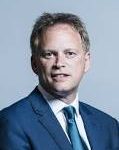
    The statement made by Grant Shapps, the Secretary of State for Business, Energy and Industrial Strategy, in the House of Commons on 27 October 2022.

    As the Prime Minister set out when entering office, and in the House yesterday, the Government support the core ambitions set out in the 2019 manifesto. The Government will therefore revert to a precautionary approach and only support shale gas exploration if it can be done in a way that is sustainable and protects local communities. We will be led by the evidence on whether this form of exploration can be done in a way which acceptably manages the risk to local communities.

    In the November 2019 manifesto, the Government confirmed a moratorium on shale gas exploration in England with immediate effect. Having listened to local communities and assessed the state of the science we ruled out changes to the planning system. As set out in the manifesto, we will not support shale extraction unless the science shows categorically that it can be done safely.

    In line with the British Geological Survey report on the scientific advances in hydraulic fracturing since 2019, forecasting the occurrence of large earthquakes and their expected magnitude owing to shale gas extraction remains a challenge with significant uncertainty.

    The Government are confirming today that we will again take a presumption against issuing any further hydraulic fracturing consents. This position, an effective moratorium, will be maintained until compelling new evidence is provided which addresses the concerns around the prediction and management of induced seismicity. This is in line with the commitment made in the 2019 Conservative manifesto.

    While future applications for hydraulic fracturing consent will be considered on their own merits by the Secretary of State, in accordance with the law, shale gas developers should take the Government’s position into account when considering new developments.

  • Siobhan Baillie – 2022 Comments on the Fracking Vote

    Siobhan Baillie – 2022 Comments on the Fracking Vote

    The comments made by Siobhan Baillie, the Conservative MP for Stroud, on Twitter on 20 October 2022.

    Environmental issues are hugely important to my constituents. I abstained on the vote last night, knowing the potential consequences. For those asking whether I am still a Conservative MP – I don’t know but I hope so.

  • Nick Thomas-Symonds – 2022 Comments on Fracking Vote

    Nick Thomas-Symonds – 2022 Comments on Fracking Vote

    The comments made by Nick Thomas-Symonds, the Labour MP for Torfaen, on Twitter on 19 October 2022.

    The Prime Minister has chosen to make tonight’s fracking vote a Vote of Confidence.

    I have voted against fracking – confirming I have NO confidence in this shambolic, embarrassing Conservative Government.

  • George Freeman – 2022 Comments on Fracking Vote

    George Freeman – 2022 Comments on Fracking Vote

    The comments made by George Freeman, the Conservative MP for Mid Norfolk, on Twitter on 19 October 2022.

    To be clear on fracking. I remain:

    100% committed to our 2019 Manifesto on which I was elected

    100% committed to AONB protections

    reassured by clear Minister commitment that fracking will only happen w local consent and a vote in House.

    So no need to lose the Whip tonight.

  • Chris Skidmore – 2022 Statement Confirming Vote Against Fracking

    Chris Skidmore – 2022 Statement Confirming Vote Against Fracking

    The statement made by Chris Skidmore, the Conservative MP for Kingswood, on 19 October 2022.

    As the former Energy Minister who signed Net Zero into law, for the sake of our environment and climate, I cannot personally vote tonight to support fracking and undermine the pledges I made at the 2019 General Election.

    I am prepared to face the consequences of my decision.

  • Selaine Saxby – 2022 Speech on Floating Offshore Wind Projects

    Selaine Saxby – 2022 Speech on Floating Offshore Wind Projects

    The speech made by Selaine Saxby, the Conservative MP for North Devon, in the House of Commons on 18 October 2022.

    It is a pleasure to serve under your chairmanship, Sir Christopher. I thank my right hon. Friend the Member for Preseli Pembrokeshire (Stephen Crabb) for securing this important debate. I will reinforce and reiterate much of what he and the hon. Member for Aberavon (Stephen Kinnock) said.

    I set up the all-party parliamentary group for the Celtic sea because the opportunities presented by the Celtic sea were apparent, but there was a disjointed approach, which many of my Welsh colleagues have discussed. I was concerned that we might miss out on the opportunity altogether in North Devon, and I am delighted that my hon. Friend the Member for Truro and Falmouth (Cherilyn Mackrory) is here to put in a case for the south-west of England. If we are to deliver these projects, we need a strategic approach that takes into account all the ports, skills and opportunities right the way around the Celtic sea. This is a national and international opportunity, and I am delighted to have the support of the Celtic sea APPG secretariat here today. We have been working hard to drive forward the issue, and we now have a Celtic Sea Developers Alliance. We have now established that the wind blows the opposite way in the Celtic sea, so we are delighted to have an opportunity, alongside our Scottish counterparts, to work across the whole country to see how we can deliver these projects.

    On the strategy, like others I am concerned about the UK supply chain, because pretty much everything that is planned is coming in internationally. We are not realising the economic benefits that these enormous turbines present. I have seen the work going on in Blyth, and it is clear to me that my beautiful constituency is probably not best placed to develop a big port. However, we are the closest port to the development sites, and yet I cannot see anything local that is developing the kind of maintenance system that we need to service the 250 floating offshore wind turbines that are coming at us in the next five to 10 years.

    In addition, as has been said, our ports are not ready. Much as it is lovely to hear everyone bid for projects for their ports, it would make much more sense to have a strategy that delivers the floating offshore wind manufacturing investment scheme—FLOWMIS—and liaises between the ports. Competition is great and drives innovation, but we need a decision so that we do not have three or four ports building exactly the same thing, none of them terribly well. We need to say, “This one can maintain and this one will build blades,” so that strategically we take the opportunity that we are presented with.

    That is no better demonstrated than when it comes to cables, which are a particular bugbear of mine, given what has happened on the east coast with fixed offshore wind. Now that we understand that blue carbon is released every time we disturb the ocean floor, why on earth are we not insisting that cable corridors be put in at the start of the projects so that we can connect to the grid—I will come to the problems there—and damage the floor only once? When assessing the bids, we need to consider the full environmental impact, because we tend to look just at the benefits of delivering the wind power from the turbines without considering the international components—how far they have come, how they were made and what happened to the carbon in their production—let alone the damage to the floor.

    I want to highlight some of the very small development sites, which I am sure were designed to deliver great opportunities and develop scientific insights. I have a small one in my North Devon constituency that can go into a small substation, but because there is no cable corridor connecting to the main grid, its cables go across four highly designated beaches, straight through my biosphere, and disturb all my sites of special scientific interest.

    Mr Alistair Carmichael (Orkney and Shetland) (LD)

    I am grateful to the hon. Lady for allowing me to intervene because she hits on an important point: the lack of co-operation and strategy. It is not just about cable corridors, important though they are. It is also about how floating offshore wind and, perhaps later, tidal stream generation sit with other users of the seabed. Fishermen in my constituency, and I do not doubt in hers, are already concerned about spatial squeeze. It should not be a barrier; it would be an unnecessary conflict if we do not take the opportunity now to do something meaningful, and hold the ring around the different people who want to use the sea and the seabed.

    Selaine Saxby

    I thank the right hon. Gentleman for his intervention—I agree entirely. I am also grateful for the work of the Crown Estate in trying to tackle some of these matters. We need to take a far broader strategic approach when it comes to the ocean floor.

    Once we have got things into a cable, hopefully in a corridor, and have connected into the grid, the grid is perhaps able to take 30 kW out of the Celtic sea, but is that the full potential? What work is being done to upgrade that grid? Why have we got small substations, such as the development site at Yelland, when potentially it could go into the main national grid? Alternatively, if Yelland is to become a proper substation, can we have a proper cable corridor, so that it has to go through our precious beaches only once?

    I hope that as we move forward we can look at the full environmental impact, and properly cost some of those points into the next round of contracts for difference. It is important to recognise that it is not always about price. As touched on by my right hon. Friend the Member for Preseli Pembrokeshire, other factors could be considered when awarding the contracts.

    My other big concern is skills. We do not have anyone to do any jobs in North Devon right now, to be honest. I would like to see skills incorporated in the contract for difference, and that we reward developers who are prepared to invest in science, technology, engineering and maths facilities along our ports, right around the Celtic sea, so that all of us along those patches are able to develop the next generation of engineers.

    On strike price, I would highlight concern in the industry that the price was too low in the contract for difference auction round 4, because it took into account some of the infrastructure that was already present. That is not a true reflection of where the price would be moving forward. I urge the Minister, as we look to take advantage, please can we consider some of the other elements that have been discussed today, such as the supply chain, environment and skills, and not just price, as we look to develop contract auction round 5?

    We have the world’s largest pipeline and target for the sector, and there is long-term confidence in the UK. However, it is critical that that next auction round—AR5—demonstrates that we also have the right market conditions, or we could fail to realise the investment opportunities already displayed, and see it move to more competitive markets, which will have knock-on effects for subsequent auction rounds for contracts for difference.

    Although I love the fact that my APPG has been able to drive some change. As a former maths teacher and not an engineer, I do not think I am best placed to drive this forward. I very much hope we shall see some big strategic interventions to achieve the potential of the Celtic sea.

  • Ed Miliband – 2022 Comments on Fracking

    Ed Miliband – 2022 Comments on Fracking

    The comments made by Ed Miliband, the Shadow Business Secretary, on 18 October 2022.

    Labour will ban fracking for good. The Conservatives are u-turning on their manifesto and seeking to impose fracking on communities across the country.

  • Stephen Kinnock – 2022 Speech on Floating Offshore Wind Projects

    Stephen Kinnock – 2022 Speech on Floating Offshore Wind Projects

    The speech made by Stephen Kinnock, the Labour MP for Aberavon, in the House of Commons on 18 October 2022.

    I congratulate the right hon. Member for Preseli Pembrokeshire (Stephen Crabb) on securing this vital debate.

    If the last 12 months have taught us anything, it is that if we are to better protect ourselves from rocketing energy costs, as a country we must become more resilient and less exposed to fluctuating global energy prices. The good news is that the UK is well placed to do that, but we need a UK Government who will grasp the nettle and realise our potential.

    A Labour Government will turn the UK into a green growth superpower through our green prosperity plan, by creating GB Energy, a new publicly owned clean energy generation company that will harness the power of the UK’s sun, wind and waves. We will establish the UK as a clean energy superpower, delivering a zero-carbon electricity system by 2030 and guaranteeing long-term energy security. It is only through a publicly owned company that we can ensure that communities and people across the country feel the benefits of the power created on our own shores through cheaper bills, good local jobs and putting money back into the public purse.

    To achieve clean power by 2030, we will need to quadruple offshore wind. Floating offshore wind will be crucial in helping us achieve that goal. The Celtic sea will be a vital next step in that journey. The deployment of 24 GW of floating offshore wind in the Celtic sea presents a major opportunity to establish manufacturing and logistical support in south Wales. Port Talbot is ideally placed to be the hub for that activity, and a catalyst for the growth of FLOW in the region. Unlocking the Celtic sea’s potential requires ports that are capable of constructing foundation substructures, component storage and turbine integration, and continuous maintenance of those turbines.

    Port Talbot’s deep sea harbour, with the land around it fully available for development, makes it the only port with capacity to combine FLOW fabrication, assembly, staging and flotation. The harbour is sheltered from high winds by a natural bay, and the space, size and water depth means that it can easily accommodate the substructure construction for the largest turbines in sufficient quantity to meet long-term Celtic sea demand.

    Port Talbot also has the key infrastructure to support that groundbreaking technology. We are centrally located and have excellent transport links, with easy access to the M4 and the rail network. We also have world-class steelworks and the existing manufacturing supply chains, which bring with them the vital workforce skills and labour pool, including port workers, heavy industry workers, and maintenance and servicing workers, to support the quality manufacturing and assembly jobs essential for FLOW to become a reality.

    Local businesses already in the manufacturing supply chains are keen to bring their transferable skills to the table and be part of this new, cutting-edge technology. Such is the scale of the FLOW project that there is significant potential to attract new industries in the supply chain, to create thousands of skilled jobs and to open up a world of opportunity for my Aberavon communities and those well beyond.

    In short, Port Talbot has the capacity to deliver this scale of growth. It is a daunting project, but we have the basic infrastructure right there; it just needs to be mobilised. We have the critical mass and established manufacturing base needed to make a success of this future industry, but it is not just Port Talbot that would benefit. The benefits would be felt right across south Wales and beyond. The Swansea Bay economy has the ability both to absorb the initial demand and to translate it into new economic activity, and the sheer scale of what we are talking about would require additional resources to support Port Talbot, with the ports of Swansea and, as the right hon. Member for Preseli Pembrokeshire so eloquently pointed out, Milford Haven having the capacity to carry out vital supporting activities right through the supply chain, including integration, maintenance, and assembly of mooring and cabling components. This has to be a team effort if it is going to work.

    A south Wales freeport centred around Port Talbot and Milford Haven has huge potential to support FLOW manufacturing, assembly, installation and associated supply chains, and those opportunities can be distributed between the ports of Port Talbot and Milford Haven, which complement each other and offer the prospect of establishing the energy and manufacturing coast in south Wales at the necessary scale. Freeport status for Port Talbot and Milford Haven would help to create an environment to attract inward investment for the manufacturing of components for FLOW and the development of wider industrial manufacturing. The proposed new port infrastructure at Port Talbot will be an attractive site for the co-location of manufacturing for offshore wind components, improving the logistics of the supply chain. Port Talbot will also offer access to new export markets as well as the industrialised economy of south Wales.

    The ability to offer the benefits of freeport status for development land in close proximity to the newly constructed port infrastructure will provide significant advantages for potential investors seeking to establish new manufacturing capacity in the UK, but also across Europe. I have had extensive discussions with Associated British Ports, which stands ready to invest over £500 million in new and upgraded infrastructure to enable the manufacturing, assembly and launch of floating foundation substructures and the import, storage and integration of wind turbine components in Port Talbot. These plans would be transformative for my Aberavon constituency and the surrounding area, but support from the UK Government will be a crucial precondition for drawing in private sector investment so that the FLOW project can get off the ground. FLOWMIS co-funding would demonstrate the UK Government’s clear long-term commitment to developing the site and the sector, giving confidence to allow investors and other funding providers to back the project and unlock sizeable private sector investment potential.

    There is no time to waste. As the right hon. Member for Preseli Pembrokeshire pointed out, other European countries, such as Ireland, France, Spain and Portugal, are also looking at investing in FLOW, so we must act now if we are to secure first mover advantage. We missed the boat with onshore and offshore wind in the past; other countries stole a march on us, and now they benefit from energy produced here. The largest onshore wind farm, which also happens to be in my Aberavon constituency, is paying for schools and hospitals in Stockholm. The Chinese Communist party has a stake in our nuclear industry, and millions pay their bills to an energy company that is owned in France. Such countries, rather than the local communities where the energy is actually being generated, also benefit from the manufacturing jobs that go with these industries. It is simply scandalous, which is why I am lobbying the Crown Estate to ensure that when it grants the lease for the Celtic sea, local benefits are maximised and we grasp the opportunity to build a homegrown manufacturing base to underpin these local industries. The manufacturing supply chain must stay in south Wales.

    Worryingly, the Crown Estate’s announcement last week on the seabed licences lacked detail on the supply chain and the local content commitment that developers will have to give when bidding for seabed licences for FLOW development in the Celtic sea, and I urge the Minister to raise the issue with the Crown Estate as a matter of urgency. Under the current criteria, there is a real risk that the opportunity will yet again be missed to maximise prospects for local jobs and supply chains. The Crown Estate must therefore provide more detail on the local content commitment that developers will have to give as part of the bidding process.

    The future of our country is in our air, sea and skies, and mother nature has truly given us a gift in Wales. We were the cradle of the first industrial revolution, and now Wales can be the cradle of the green industrial revolution, with Port Talbot at the forefront. Investing in Port Talbot as the hub for this game-changing form of renewable energy would turn south Wales into a green power superpower in the generation of renewable energy. I therefore urge the UK Government and all other key stakeholders to come together to ensure we grasp this opportunity with both hands.

  • Stephen Crabb – 2022 Speech on Floating Offshore Wind Projects

    Stephen Crabb – 2022 Speech on Floating Offshore Wind Projects

    The speech made by Stephen Crabb, the Conservative MP for Preseli Pembrokeshire, in the House of Commons on 18 October 2022.

    I beg to move,

    That this House has considered delivery of floating offshore wind projects.

    It is a pleasure to serve under your chairmanship, Sir Christopher, and I am grateful to have secured time for a debate on the delivery of floating offshore wind power, which is one of the most interesting and exciting energy developments in play. It is good to see colleagues from across the United Kingdom and I look forward to hearing their contributions. I put on record my thanks to RenewableUK, the Crown Estate and many of the developers for reaching out ahead of the debate to provide briefing and insight.

    This is a timely moment to discuss the role of floating offshore wind in the UK’s energy mix and to consider what further steps the Government need to take to facilitate the emergence of that new industry. The twin challenges of net zero and energy security mean that the strategic imperative around this home-grown clean energy solution is becoming ever stronger.

    Floating offshore wind—or FLOW, to use the shorthand—harnesses the power of wind by using turbines based on floating structures rather than fixed. It offers an opportunity to deploy enormous turbines in larger, deeper, more exposed offshore areas where the overall wind potential is higher and therefore more energy can be generated.

    There is a high level of expectation that floating wind is going to become an increasingly important part of our energy mix. The Government have set a target of 5 GW of FLOW to be installed by 2030, and Offshore Renewable Energy Catapult estimates that we could have up to 95 GW of floating wind in UK waters by 2050. At that point, the majority of the wind turbines in UK waters would be floating, not fixed to the seabed as they are today.

    The UK is already home to the largest floating wind farm in the world—Kincardine, off the coast of Aberdeen in the North sea—which is using the highest-capacity turbines ever installed on floating platforms. The success of Kincardine should give both industry and Government confidence that the technology works and is scalable, and that it can be replicated elsewhere.

    Floating wind will be critical to achieving the Government’s energy security targets, and if we do not choose to industrialise FLOW we will have to generate at least 15 GW of power by 2035 using other means. Indeed, it is difficult to see how the overall expansion of offshore wind envisioned by the Government’s targets would be technically possible without doing floating wind in a very big way. That industrialisation of floating offshore wind will create the pathway for cost reduction, as has been proven with fixed-bottom offshore wind.

    Floating wind offers a huge opportunity for the world to harness offshore wind power, not just those limited regions with shallow sandbanks close to shore. Globally, the UK Government have set the most ambitious targets for developing floating offshore wind, but other countries are catching up fast. Spain has announced a target of 1 GW to 3 GW of FLOW by 2030. Similarly, France, Norway, Japan, Ireland and parts of the United States have set clear and ambitious targets. The world will therefore develop floating wind for sure. The UK is well positioned as the leading marketplace for investors, but if those targets are not followed through, I fear that the UK is likely to be left behind as other countries move to seize on the new technology.

    Along with parts of the North sea, the Celtic sea—located off the coasts of south-west Wales, Devon, Cornwall and southern Ireland—is one of those areas with the greatest potential to deploy FLOW. It is attracting enormous interest from developers and investors, and I am delighted that my hon. Friend the Member for North Devon (Selaine Saxby), chair of the all-party parliamentary group for the Celtic sea, is here today. I look forward to hearing her remarks.

    Floating offshore wind in the Celtic sea represents a multibillion pound economic development and investment opportunity for Wales, the south-west of England and the whole UK. The area has excellent wind resource infrastructure and local industry for potential supply chain development. The Crown Estate’s Celtic sea leasing programme aims to deliver 4 GW of new floating offshore wind by 2035. It could provide power for almost 4 million homes, and the project will kick start an innovative new industry in the area, with the Celtic sea assessed to have the economic potential to accommodate up to an additional 20 GW by 2045. Just last week, the Crown Estate announced that it is seeking to accelerate the leasing process for that first stage of development, recognising the importance of bringing floating wind onstream as soon as possible, and will be looking to launch the tender process in the middle of next year.

    For us in west Wales—I represent a Welsh constituency —floating offshore wind represents a hugely exciting and valuable prospect. It is another stage in the evolution of Milford Haven port in my constituency. Shared with my right hon. Friend the Member for Carmarthen West and South Pembrokeshire (Simon Hart), Milford Haven is one of the UK’s most important energy ports, beginning in the late 18th century when whale oil was imported for use in streetlamps. The late 20th century brought oil refining and trade in petroleum products, and the early 2000s brought liquefied natural gas imports. Strategically, Milford Haven plays an incredibly important role in our energy mix, and I believe that the coming decades at Milford Haven will be about floating offshore wind and hydrogen.

    Early analysis by Cardiff Business School suggests that floating offshore wind, hydrogen and sustainable fuels investment could add an additional 3,000 Welsh jobs to the 5,000 already supported by the Milford Haven waterway. Floating offshore wind will facilitate the transition to a vital new green energy era, supporting the continued evolution of that major hub for another 50 years. On the Milford Haven waterway, we already have a number of very active projects: we have Blue Gem Wind, a joint venture between Simply Blue and TotalEnergies, which is looking to establish the first demonstrator projects in the Celtic sea. We have DP Energy, a joint venture involving EDF, and RWE—which has a major gas-fired power station on the Milford Haven waterway—is looking at floating offshore wind opportunities, in conjunction with exploring the possibilities of producing hydrogen and moving its entire operation in Pembrokeshire to a lower carbon future.

    Simon Hart (Carmarthen West and South Pembrokeshire) (Con)

    Does my right hon. Friend agree that the much-rumoured and long-awaited freeport status for places such as Milford Haven—even in conjunction with Neath Port Talbot or similar—would accelerate all of the exciting initiatives he has referred to?

    Stephen Crabb

    I will mention freeport opportunities a bit later, but my right hon. Friend is exactly right. So often when people talk about freeports, it is in the context of an answer looking for a question; what we have in Milford Haven—together with Port Talbot, I might say—is a solution. It is something that will help facilitate a new industry, and if we can use the freeport process to help support that—I am looking towards the Minister—then that would be excellent indeed.

    Stephen Kinnock (Aberavon) (Lab)

    The right hon. Gentleman is making an excellent speech, and I congratulate him on securing the debate. Building on his point about freeports, one of the key advantages of our freeport bid is that it is in synergy with the floating offshore wind opportunity. That will deliver a huge amount of added value through the manufacturing opportunities and long-term sustainable job opportunities that will come out of it, so the freeport offer is a strategic offer, not just transactional.

    Stephen Crabb

    As is typical, the hon. Member has gone right to the heart of the matter. Floating offshore wind is going to happen in a big way in UK waters— I absolutely believe that. The challenge that we need to get our heads around is how much real economic value and content can be captured and secured for the UK. The hon. Gentleman is exactly right that a collaborative bid between Port Talbot and the port of Milford Haven provides a potential framework to allow that industrialisation and capturing of domestic content to happen.

    FLOW presents an important economic opportunity for the whole of the UK—for ports, industry and energy infrastructure, and by driving up investment and regional and national growth, as well as increasing the numbers of skilled jobs and career opportunities. The levelling-up opportunities are enormous: tens of thousands of people are already working in the offshore wind industry and supply chain in places such as Hull and Hartlepool. That is the kind of domestic content and supply chain opportunity that we want to deliver for Wales and the whole of the Celtic sea region. With large-scale projects in the Celtic sea perhaps five to 10 years away, there is an opportunity now for the development of the appropriate infrastructure and supply chain capability, which will deliver significant local opportunities in the region and, in turn, drive regional economic growth.

    While we are talking about Port Talbot, I should say that I was excited to see RWE recently announce a new partnership with Tata Steel in the constituency of the hon. Member for Aberavon (Stephen Kinnock). That will explore how steel manufactured in south Wales could be used for floating wind projects, which is exactly the kind of innovative thinking that we need to achieve everything to which we aspire.

    I hope to have outlined the scale of the vision and opportunity in front of us. It is ambitious and exciting, and in my view it is achievable. There is enormous private sector interest. However, along with the scale of the opportunity, there is an enormous delivery challenge. Ensuring that we have the appropriate offshore and onshore capabilities to deliver this is a big and complicated challenge. The 5 GW by 2030 target is ambitious. The industry is confident that it can respond to the challenge, but it will require a lot of work. Think about the sheer scale of what we are talking about: hundreds and hundreds of enormous new turbines being manufactured and towed out to sea. We have also to think about all of the onshore infrastructure around the turbine: the port infrastructure, new grid capacity, new grid connections, all the supply chain work that we have talked about, the financial architecture around it—contracts for difference—and, of course, the planning regimes in which the projects operate.

    Projects cannot happen without the underpinning physical infrastructure—grid and ports—and the right policy architecture. Creating the right frameworks will require a lot of collaboration between the public and private sectors.

    Stephen Kinnock

    The right hon. Gentleman is absolutely right about all of the wraparound and complexity. One thing he may have mentioned—I may have missed it—is maintenance and servicing. Once the structures are in place, they require regular maintenance and servicing, which in itself is a huge employment-generating opportunity.

    Stephen Crabb

    The hon. Gentleman is exactly right about the operations and maintenance role. That is not just a job creator; they are valuable jobs. There is real economic value in those support services.

    I come back to the delivery challenges around this big, complicated opportunity. The first challenge relates to leadership and co-ordination. As with the early development of fixed-bottom offshore wind, the support of the UK Government will be crucial in driving forward the political, regulatory and financial support frameworks that are needed to maximise the flow opportunities. I welcome recent positive statements by the Government, but there needs to be much more visible engagement from Ministers when it comes specifically to the Celtic sea opportunity. I have been impressed by the leadership that the Crown Estate has shown, and the work that it is doing to create robust frameworks around the tender process and environmental protections. However, there is a role for UK Government, over and above what the Crown Estate is doing, to push forward the Celtic sea programme. That role starts with setting credible, ambitious targets. We are in a relatively strong position when it comes to the UK’s clear pipeline of offshore projects, which is backed up by a firm commitment from Government. That is critical in increasing investor confidence in the UK market, but Ministers should be going further, perhaps by setting supplementary, longer-term targets to strengthen signals to investors and developers. Ministers should be clear about the UK’s intentions to scale up the sector rapidly in the coming 10 years.

    The next area of challenge is getting the right financial architecture in place: a market environment that encourages price competition and industrial development. The contracts for difference have been incredibly effective at reducing the costs of renewable energy projects by reducing wholesale price risk, but the weakness of the structure of the CfD auction scheme is that it considers only the price of projects, and not wider industrial and economic considerations or future cost reductions. The Government should look to reform the CfD system to create a premium or incentive that recognises projects that make substantial commitments to industrial and economic development in the UK and to innovation in the UK. The aim of these reforms should be focused on fostering a market environment in which investment, innovation and economies of scale are incentivised. Consideration should also be given to what form of support can be provided to combined FLOW and hydrogen production projects, which cannot really be assessed alongside conventional FLOW from a cost perspective. I mentioned the work that RWE is doing in Pembroke, looking at the role of floating offshore wind to support hydrogen development, and there probably needs to be a different way of looking at that in terms of price support.

    At the heart of the infrastructure challenge are ports. Floating offshore wind will require a lot of port infrastructure. No port close to the Celtic sea is currently ready to handle the key activities for deploying floating offshore wind, but we have a window of opportunity now to address this and ensure that the economic value of deploying these vast structures can be captured for the UK. The FLOWMIS—floating offshore wind manufacturing investment scheme—funding that the Government are making available will help. As far as I am aware, the Government have not yet announced how that money will be used, but a good chunk, if not the lion’s share, should be devoted to supporting the development of the Celtic sea industry.

    Given the targets that we are looking to achieve and the scale of activity that will be required, there will be enormous opportunities for all ports across south-west England, Wales and Northern Ireland. There is a clear starting point, and we have already discussed it: the ports of Milford Haven and Port Talbot. Independent reports from the likes of ORE Catapult and FLOW developers have identified Pembroke Dock in the port of Milford Haven and Associated British Ports at Port Talbot as potential anchor ports for floating offshore wind. However, without collaboration and significant investment at both ports over the next decade, the vast majority of the potential £4 billion of benefits could simply go overseas. A combined, dual port solution, with close proximity to the Celtic arrays, has enormous potential to accelerate the deployment of floating offshore wind and increase prospects for UK Government generation goals.

    Stephen Kinnock

    The right hon. Gentleman is being very generous in giving way, and I thank him for that. He is right that port infrastructure is vital, but another key part of our infrastructure is the national grid. Does he agree that there are real concerns about the capability of the national grid to deliver the power that we need from offshore wind, and that the UK Government need to get round the table with National Grid and Ofgem to make that happen?

    Stephen Crabb

    I swear I have not shared a copy of my speech with the hon. Gentleman, but he anticipates the next section extremely well. I will just finish this point about the freeport bid. I am not expecting the Minister to comment—it is a live bidding process—but as I said on the Floor of the House yesterday in Levelling Up, Housing and Communities questions, I hope that Ministers will look closely at what is coming forward from Milford Haven, Pembroke Dock within that port, ABP at Port Talbot and the two relevant local authorities, because it is genuinely exciting and represents something different. We should not get hung up on freeport labels; it is about doing something innovative and collaborative that can help to unleash the full economic potential of this opportunity.

    Let me get on to grids, before I bring my remarks to a close. The hon. Member for Aberavon (Stephen Kinnock) is exactly right: potentially even more challenging than delivering port upgrades is achieving a serious step change in the way we increase grid capacity and make available new grid connections here in the UK. The planning and consenting processes are ridiculously slow and difficult—they are not fit for purpose. We on the Welsh Affairs Committee in recent months have been taking evidence on the grid infrastructure in Wales. Our report on that will be coming out soon, so I will not pre-empt that. I was pleased in the evidence we took to hear about steps that are being taken by Government to reduce the offshore wind consenting times, but the truth is that we need to see far more urgent action from Government to address grid capacity. The danger is that developers will increase their capabilities and be able to construct and deploy large-scale renewable energy infrastructure way ahead of the planning process, and that cannot be acceptable. We need more anticipatory investment so that new grid networks are built in time for those major new sources of generation and for demand. We could talk about other planning challenges: in the Welsh context, we have the devolved body Natural Resources Wales. Developers are concerned that Natural Resources Wales should be fully equipped to be able to handle the volume and complexity of the planning jobs that they will be asked to do, to assess the impact on seabeds and things like that.

    Floating offshore wind represents a major, exciting opportunity for the UK to tackle a number of critical issues: wholesale prices, energy security, job generation, levelling up and net zero. It is an exciting package. Floating offshore wind presents a compelling answer to all those challenges. The key challenges for us to consider are the risks and potential difficulties around delivery, and achieving the scale of offshore and onshore capabilities and systems that will be required just a few years from now. I look forward to hearing from colleagues and the Minister.

  • Chris Grayling – 2022 Speech on Financial Investment and Deforestation

    Chris Grayling – 2022 Speech on Financial Investment and Deforestation

    The speech made by Chris Grayling, the Conservative MP for Epsom and Ewell, in the House of Commons on 17 October 2022.

    I beg to move,

    That leave be given to bring in a Bill to require banks and investment institutions regulated in the UK to verify and certify that they do not provide any form of financial or investment support to businesses which derive income from forest risk commodities, or that relevant local laws were complied with in relation to such commodities; and for connected purposes.

    Deforestation around the world is a critical issue for the future of our natural world and our planet. The loss of forest cover has made climate change worse, has pushed millions of species closer to extinction and continues to cause real damage to ecosystems. The threat to the three biggest forest areas, in the Amazon, the Congo basin and south-east Asia, is particularly acute, and I am very proud that the United Kingdom has taken such a lead in the Congo in particular to try to halt deforestation and protect the key habitats there. I know that Members on both sides of the House share my concern about the conduct of the Brazilian Government over deforestation in the Amazon, and I will continue to use opportunities in the House to push for change there, regardless of who wins power at the elections later this month.

    The deforestation threats that remain around the world overwhelmingly result from commercial pressures driven by agriculture. Forests are being cut down to make way for palm oil plantations, for soya production or for cattle ranches. In some places, including Costa Rica and Gabon, Governments have put a brake on deforestation, which is hugely welcome, but in too many places illegal deforestation is still destroying the natural world.

    I am proud that this country has been at the forefront of creating legislative frameworks to help to address the commercial exploitation of forest-risk products. The Environment Act 2021 creates the first real framework to require UK businesses to know where their supplies are coming from and whether they come from areas affected by illegal deforestation, although I would say to Ministers that they need to move faster in putting the necessary regulations in place to back up the Act. What we have done should make it much harder for UK retailers to end up selling products from areas where illegal deforestation has taken place, but more needs to be done and that is what this Bill seeks to achieve. Solving the problem of illegal deforestation is not just about identifying where agricultural products originate from, or the sustainability, or otherwise, of supplies of commodities such as timber; it is vital to follow the money as well and that is where we need another round of change.

    We should all be proud that the UK has one of the tiny number of major financial centres around the world. The City of London is probably the most important part of our economy today, generating profits that bring taxes to the Exchequer and help to pay for things such as the NHS. But the City is also a place where deals are done that affect countries around the world, so it is a place where corporate responsibility is of exceptional importance. I want the City to provide financial resource and advice to investment projects and to corporations around the world—that is a given, and the City does a good job of it. In doing so, however, the institutions offering those services from the UK also need to be mindful of the impact the finance they provide has on the communities, countries and environments they work with. Although the clearance of an area of rainforest is often carried out at a local level by people creating a new farmland area, rather than by big corporations, it is the corporations that then arrive to buy the products of that illegal land clearance.

    The Government are rightly requiring retailers to know where products such as soy and palm oil come from, and that they do not sell products that are sourced from illegally deforested areas, but it has to be right that the financial institutions that bankroll those big corporations also apply a similar standard to the investments that they make, to the banking services that they supply, and to the shares that they purchase.

    Over the past couple of years, the Government’s global resource initiative taskforce has looked carefully at this issue and I commend the Ministers involved in setting up that initiative. However, it found that the UK finance sector lends and invests, directly and indirectly, in forest product supply chains where issues genuinely exist. Although it found that there is no overall figure for the UK finance sector’s exposure to forest-risk ventures, it clearly identified that the financial support and investment being provided to companies, sectors and financial institutions with high deforestation risk amounts to hundreds of billions of pounds. It also found that, although a handful of the biggest institutions internationally are working to try to address the issue, the majority of financial institutions have not taken steps to actively assess or manage deforestation risks.

    The majority of institutions do not have deforestation policies. Many of these are headquartered in the UK. Many others also operate local branches in the City of London.

    Barry Gardiner (Brent North) (Lab)

    Will the right hon. Member give way?

    Chris Grayling

    If I am allowed to. Am I? No.

    Madam Deputy Speaker (Dame Eleanor Laing)

    Order. This is a ten-minute rule Bill.

    Chris Grayling

    Madam Deputy Speaker, I know how passionately the hon. Member for Brent North (Barry Gardiner) feels about this issue. I am glad to number him among the Bill’s sponsors.

    Even where the head office team in an institution are working to try to change their approach, all too often decisions are being taken in a branch elsewhere by local teams that end up having the opposite effect. Whether through bond sales, banking services, investment funds or any other route, the reality is that the finance sector globally—this includes some institutions in London—is backing big international corporations that are still doing business directly or indirectly with those cutting down the rainforests. My Bill would change that. It would require financial institutions to include forest risk in the due diligence they do before making any investment or providing any banking service.

    We are moving to require retailers to know whether the products that they sell contain forest-risk products from areas of illegal deforestation, and I want to see the investment community required to do the same. I know that regulation and deregulation in the City is a live topic at the moment, and I share the ambition to see the removal of unnecessary red tape that is imposed on our financial services. All too often, regulation ticks a box but does not actually make a difference. However, I do not think that regulation around deforestation is an example of that; it is not the same thing.

    It is vital to all of us that we halt the loss of our natural habitats. We cannot afford to see the continuing loss of biodiversity in the Amazon or elsewhere, and the reality is that our financial services sector—whether it intends to or not—is financing those who make illegal deforestation possible. Businesses involved in financing projects around the world already do due diligence to work out financial viability and test risks. The Bill would not impose an extra process on them but simply add something to what they already do. That could make a massive difference. It is essential if we are to step up our combat against deforestation.

    We face a problem around the world that is disastrous for all of us. It must stop. My Bill would make it much more difficult for financial institutions to provide the support that is enabling illegal deforestation to take place in too many parts of the world. I commend it to the House.

    Question put and agreed to.

    Ordered,

    That Chris Grayling, Andrew Selous, Jim Shannon, Chris Bryant, Wera Hobhouse and Barry Gardiner present the Bill.

    Chris Grayling accordingly presented the Bill.