Category: Energy

  • Robin Walker – 2022 Speech on Energy Price Capping

    Robin Walker – 2022 Speech on Energy Price Capping

    The speech made by Robin Walker, the Conservative MP for Worcester, in the House of Commons on 8 September 2022.

    I welcome the Prime Minister and indeed all her colleagues to their places on the Front Bench, and the rapid action that has been announced today. I wanted to see action for consumers in my constituency, but also for businesses, charities and the public sector, and I am delighted to hear all of that included in today’s statement. Over the summer, I have heard from hundreds of constituents about their concerns—people who are vulnerable, the elderly, students and people with illnesses and disabilities—about how they will not be able to turn down their heating in the upcoming winter. The action that has been announced today will be extremely welcome in all of those quarters, and the fact that there is a two-year cap in place is particularly welcome in my constituency.

    I have also been hearing from businesses, and I have been very concerned about some of the costs facing pubs, hospitality businesses and manufacturers in my constituency. Indeed, as long ago as last year, I wrote to the then Business Secretary—now the Chancellor—about high-energy manufacturers such as aluminium extrusion businesses Superform and Aeromet in my constituency and about some of our largest manufacturers such as Worcester Bosch and Mazak in relation to the impact of energy costs on them, so I am delighted that today’s announcement also means help for businesses with energy. Of course, that help for businesses with energy is also, in the long term, help for consumers.

    I look forward to hearing more about the urgent work going on to support the hospitality sector, which is so important in all our constituencies, and even retailers have been affected by these issues. Toys & Games of Worcester, a wonderful independent retailer in my constituency, expects its energy bills to go up by as much as 400% later this year. Following today’s intervention, I hope that will no longer happen and that that business can continue to thrive.

    As a former schools Minister, I am delighted to hear of the help for schools. It is vital that we help them to address the challenges they face with energy pressures. On that front, the intervention is important, as it is for charities. In the last week I have visited my wonderful hospice in Worcester, St Richard’s, and this week I will be visiting the children’s hospice, which were both concerned about the impact of energy bills. We have seen correct interventions in all those spaces.

    There is much to welcome in this statement: the new energy supply taskforce; speeding up the deployment of clean technologies, including, crucially, hydrogen; the reduction in inflation by up to five percentage points, and the new Bank of England scheme to support liquidity in the wholesale market; and the review to ensure that net zero can be met in a way that supports business and is pro-growth, which I am delighted to hear is taking place under my right hon. Friend—and sometime lookalike—the Member for Kingswood (Chris Skidmore). I welcome the statement, and I want to make sure that we go further. In particular, I urge Ministers to consider the opportunities provided by hydrogen in helping to ensure that gas central heating continues to be delivered to our constituents’ homes in a clean, low-cost and energy-efficient way.

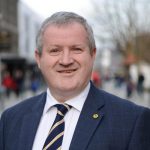
  • Ian Blackford – 2022 Speech on Energy Price Capping

    Ian Blackford – 2022 Speech on Energy Price Capping

    The speech made by Ian Blackford, the Leader of the SNP at Westminster, in the House of Commons on 8 September 2022.

    It is a pleasure to follow the former Prime Minister, the right hon. Member for Maidenhead (Mrs May). If I may briefly reflect back on the way she behaved when she was Prime Minister, I have to say that she showed courtesy to Opposition leaders, whether it was the then leader of the Labour party or ourselves as the third party. If I may gently say so to the Prime Minister, some of the protocols to make sure that we have advance sight of statements, and indeed are aware of when the Prime Minister will be coming to the Chamber to speak, are important—I do not know whether she was listening to any of that, but it would be helpful if it could be passed on.

    At the start of the year we were faced with an energy crisis. By the summer it was an emergency. Right now, today, we are at the precipice of a humanitarian disaster, because it is no longer a question of whether to heat or eat when many households can no longer afford to do either.

    Patricia Gibson

    Will my right hon. Friend give way?

    Ian Blackford

    Let me make some progress and then I will.

    This cost crisis puts livelihoods and lives at risk. All the while, as this disaster deepened, all summer the Tories spent all their time desperately fighting among themselves, and the public were left desperately waiting for a real cost of living plan. We finally—finally—have a plan today, but I fear that when the public absorb the details, it will fall far short of the help we need.

    We have heard today that the green levies are being scrapped. That is of deep concern to those of us on these Benches, particularly given that the green levies fund the warm home discount scheme and, of course, energy-efficiency measures for low-income households. I ask the Government to make sure that that support will remain in place for those who need it. But the sheer scale of the soaring energy bills meant that there was never any question but that households and businesses would not be able to pay the cost of energy bills. They were, and they are, unaffordable. If these prices were not frozen, the bills simply could not have been paid, so freezing prices was not really a choice. It is the only political option.

    When the current price cap stands at £2,000, with a 54% increase since spring, and when many people are already unable to pay, setting the cap at £2,500 is not an actual freeze. We know, too, that businesses, especially SMEs, are facing even sharper cost increases than households, and an avalanche of insolvencies and redundancies is forecast. Many businesses simply could not have afforded to stay open.

    Jamie Stone (Caithness, Sutherland and Easter Ross) (LD)

    I thank the right hon. Gentleman for giving way. Reids bakery in my constituency, which supplies biscuits to the four corners of the world, is in danger of going bust by Christmas. May I appeal to the Government, in a spirit of inclusivity, to please look at the letter that I have been sent by Reids bakery and see what could be tailored to help a vital business in a remote part of the UK?

    Ian Blackford

    I agree with my hon. Friend and neighbouring MP. Indeed, over the course of the last few weeks I have visited businesses in Ayrshire with my hon. Friend the Member for Kilmarnock and Loudoun (Alan Brown). We visited another bakery, Brownings, and met with the industry body. It is clear that bakers in particular are facing real struggles with the rise of energy and other costs. It is critical that the Government give the details of what they are intending in order to support businesses.

    Steve McCabe (Birmingham, Selly Oak) (Lab) rose—

    Ian Blackford

    I will take one more intervention.

    Steve McCabe

    I am grateful to the right hon. Gentleman. On the question of the cap, the Prime Minister indicated that one of her reviews will be of regulation. Does the right hon. Gentleman think it is time to take a serious look at the operations of Ofgem and how much support it is giving as a regulator to consumers, whether domestic consumers or businesses?

    Ian Blackford

    I think it is fair to say that the current regime is not fit for purpose, which is why we are in this situation today, so an urgent review of that is absolutely required.

    Let me make some progress. Good, profitable businesses seeing a tsunami of cost increases, with energy costs at its core, are quite simply facing a fight for survival. It is clear that today’s plan does not go nearly far enough to mitigate the expected cost increase facing employers. The UK Government need to grasp the scale of this emergency.

    Mr Speaker

    Order. I wish to say something about the announcement that has just been made about Her Majesty. I know that I speak on behalf of the entire House when I say that we send our best wishes to Her Majesty the Queen, and that she and the royal family are in our thoughts and prayers at this moment. I am not going to take any contributions on this now; if there is anything else, we will update the House accordingly.

    Ian Blackford

    Thank you, Mr Speaker. Let me say, I am sure on behalf of all colleagues, that we are saddened to hear the announcement that has been made. The thoughts and prayers of us all will be with Her Majesty the Queen and indeed with the royal family.

    In reality, the one big political question—the real question—was how today’s plan would be paid for and who would pay for it. Ever since the new Prime Minister took office, we have been waiting for these answers, but after all the waiting it could not be any clearer. She set it out very brazenly: the Prime Minister’s plan means that the public pay. She has made the political choice to tax families instead of companies—to put profit over people. Instead of a windfall tax, she has chosen a new Tory tax: the Truss tax—the Truss tax that means that, in the months and years ahead, households and businesses will be punished with higher bills, higher interest rates and higher mortgage costs. A Truss tax means cuts to the vital public services that people rely on and that are used to support the most vulnerable. A Truss tax means a threat to the Scottish budget, which the Scottish Government are using to protect our population and shield workers and public services as best they can.

    Jacob Young

    I am grateful to the right hon. Gentleman for giving way. He seems to be making an argument for a windfall tax on the oil and gas companies. They already pay 65% on their profits. Given that the Leader of the Opposition was not able to answer this question, what would he rather see that tax set at?

    Ian Blackford

    I am grateful for that intervention. If the hon. Member just bears with me, I will come to that specific point, but the issue of who pays is important, because there is no—[Interruption.] Well, actually I will do, and the right hon. and learned Member for North East Hertfordshire (Sir Oliver Heald) might actually show some respect, if he does not mind. At the end of the day, oil and gas producers are making windfall profits. Our constituents, and his constituents, are suffering. It is right that we look at the contribution that those making windfall profits will make, and I will come to that.

    Barry Gardiner rose—

    Chris Law (Dundee West) (SNP) rose—

    Ian Blackford

    I am going to make a little progress, because I am conscious that others want to get in.

    The frightening thing is that the new Prime Minister made that choice on day one in the job. On day one, we saw the pound slip to a low not seen since the Thatcher years, knocked by the UK’s worsening economic outlook. Her first major decision as Prime Minister will prioritise big business profits over family budgets, and we can already predict that the Truss tax, which will be paid for by households for years to come, will be her enduring legacy. It will eat away at household budgets long after she and her party have been voted out of office. If day one was that bad, we cannot blame people for fearing that the worst is yet to come.

    The decision not to bring in an additional windfall tax is the biggest and worst political choice in the plan. Let us look at Shell and BP as an example. I want corporates to be profitable and to be able to invest to create jobs and to finance a green transition, but there is a difference between a fair profit and an excess windfall or excess profit. Shell’s first half profits were up by 177% to $25.2 billion. It made excess profits to such an extent that it bought back shares worth $8.5 billion and declared that it would buy back a further $6 billion of shares between July and September. If we want an example of where excess profit is, it is there. In total, that means that $14.5 billion of excess profits will not be invested in green energy projects—money that has been generated from the high energy prices that our constituents and our businesses have to pay. That is the reality.

    BP’s quarter 2 profits were up from $3.1 billion to $9.2 billion, and there is a share buyback for this quarter of $3.5 billion. It will frankly disgust our constituents that that money is being given back to shareholders when people simply cannot afford to put their heating on. They are global corporates, but we can and should fairly tax their UK activities, so why on earth is the Prime Minister failing to bring in a fair windfall tax? Why will ordinary people across these islands ultimately have to foot these bills? Why does her plan not address that real issue?

    This energy plan is defined not only by the choice to make the public pay, instead of the excess profits of massive corporations, but by its glaring omissions. There is no proper plan to help those who are already struggling. Support needs to be targeted to low-income households and those negatively affected by spiralling costs, such as unpaid carers, larger households and disabled people.

    In Scotland, we are already prioritising support to the most vulnerable. The Scottish Government are doing what they can by freezing rents, banning evictions, freezing train fares and expanding free school meals to primary 6 and primary 7. That is a Government acting with compassion.

    Chris Law

    I thank my right hon. Friend for making the most valid point that for generations to come, working people across these islands will be paying for this borrowing for excess greed. The UN Secretary General has described it as utterly “grotesque” and “immoral” to be making excess profits on the back of fossil fuels. What I have heard from the Government is more of the same. My question is whether the Government have, despite their ideology that profits must be made regardless, put any conditions on those excess profits and on what those companies will do to invest in a rapid transition to save future generations from the climate catastrophe.

    Ian Blackford

    My hon. Friend is absolutely right. In that context, we are doing what we can with the devolved powers that we have.

    I say to the Government that one thing we have done is to introduce the game-changing Scottish child payment, which will increase to £25 a week and lift 50,000 children in Scotland out of poverty.

    Several hon. Members rose—

    Ian Blackford

    I need to make progress.

    We are all too aware, however, that that is nowhere near enough to mitigate the effects of the crisis, because most of the key economic levers lie here in Westminster. If the new Prime Minister is serious about helping everyone through the winter, she should at least lift universal credit by £25 a week. Although I welcome her remarks about those who are off grid, we must be given clarity about support for those across swathes of rural Scotland who rely on oil heating and are not subject to the price cap.

    Clarity is also needed for those who have accepted fixed-term contracts at a higher rate in a bid to weather the storm. They must be allowed to switch to benefit from the support that has been put in place. Crucially, vital support for the most vulnerable must go hand in hand with the UK Government increasing the budgets of the devolved Administrations, or granting them greater powers to borrow, so that they can do more to help all public service workers and the most vulnerable.

    Barry Gardiner

    I am grateful to the right hon. Gentleman, who is making a broad and apposite speech. He was challenged on the rate of tax that he believes is appropriate, but he will know that prior to the introduction of the windfall tax, the UK had the lowest tax rate of any oil and gas producer in the world. He was challenged on 65%, which is actually 6% below the average of all producers in the world. If he were prepared to go to the global average, it would still mean that relief could be given to taxpayers in this country.

    Ian Blackford

    The hon. Gentleman’s intervention makes an awful lot of sense. We should reflect on the fact that oil and gas companies are making additional profits not because they are improving their businesses or investing, but simply because oil and gas prices are higher. It is right in that context that our consumers and businesses are compensated. Why on earth are we sitting back and allowing the oil and gas companies to engage in billions and billions of dollars of share buybacks?

    Several hon. Members rose—

    Ian Blackford

    I will make progress, because I am conscious of time and those who want to speak.

    I will briefly deal with another prominent point in the Prime Minister’s speech. She blames the cost of living crisis on the war in Ukraine and I believe that that is worth expanding on. Of course, there is no doubt that what has happened in Ukraine has played a major role in spiralling wholesale prices, and we have rightly come together across the Chamber in condemnation of Putin’s horrific war and his actions to thwart European energy supplies. I look forward to continuing to work with the new Government in a spirit of consensus on this issue. We all stand together against Putin’s horrible actions and the war in Ukraine.

    As we have rightly helped Ukraine, however, we must also help citizens at home. Indeed, we owe it to them to do so; I hope that the Prime Minister will reach consensus with me on that point. Where we divide is my belief that we must recognise that other countries in Europe, which are far more reliant on Russian gas than the UK, have weathered the economic storm far better than the United Kingdom. We must therefore recognise the UK Government’s role in creating the circumstances for the crisis. Shameful mismanagement by successive Tory Governments, topped by a Tory Brexit, means that the UK has the highest inflation in the G7 and the lowest growth in the G20, and that we are marching headlong into a recession. UK household electricity prices have surged ahead of those of our European peers, and the UK is now in a deeper state of crisis than most, because of the damaging choices that have been made.

    Patricia Gibson

    For my constituents in North Ayrshire and Arran, who live in difficulty, the most important aspect of today’s announcement is that they were waiting to hear of help with their fuel bills, but they were instead told that their fuel bills will rise. They will be bitterly disappointed by that. Nothing has been offered to them today. Does my right hon. Friend agree with their disappointment?

    Ian Blackford

    Yes, I do. We need to reflect that energy bills are rising in an energy-rich Scotland. The damage done by the UK Government’s choices—choices that have been imposed on us—make the choice about Scotland’s future ever clearer. Scotland is energy rich, so we simply should not be facing an energy emergency. It may surprise some in this House, but Scotland produces six times more gas than we consume and almost 100% of our entire electricity production comes from renewables. That is not attention-seeking, I would say to the Prime Minister; these are the facts. Scotland has the energy, but we just simply do not have the powers. We are stuck in a UK market that prices our electricity on the basis of the price of wholesale gas, and the power to change the system lies with Westminster.

    Carol Monaghan

    My right hon. Friend will also know that, although we are producing almost 100% of our energy from renewable sources, the grid connection charge—£7.36 per megawatt-hour compared with 40p per megawatt-hour in England—does not help further investment. We need these grid connection charges to be reduced, because my constituents want to know, when they can see wind turbines outside their windows, why their prices are going up.

    Ian Blackford

    Again, my hon. Friend makes a very important point. We are being ripped off on Scotland’s ability to deliver green renewable energy, but it is even worse than that. For those of us who live in the north of Scotland, because we have a regional distribution market, we pay a premium for the electricity that is sent south and then have to pay the highest prices to get it back. That is the cost to people in Scotland of Westminster’s control of our energy market.

    What is needed—this is most crucial of all, and it is glaringly lacking in this energy plan—is a fundamental overhaul of the energy market to break the link between the cost of gas and the price of renewable and low-carbon electricity. The reality is that an independent and energy-rich Scotland with the normal powers to act in our own interests could have cushioned our economy from this cost of living crisis. Through independence, Scotland could use our energy well for the benefit of our people, so for households and businesses in Scotland the cost of living crisis is literally the cost of living with Westminster. It is a cost we can no longer afford and it is a price we are no longer willing to pay. It is why Scotland’s people will choose independence.
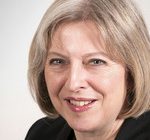
  • Theresa May – 2022 Speech on Energy Price Capping

    Theresa May – 2022 Speech on Energy Price Capping

    The speech made by Theresa May, the former Conservative Prime Minister, in the House of Commons on 8 September 2022.

    I refer the House to my entry in the Register of Members’ Financial Interests.

    I congratulate my right hon. Friend the Prime Minister on acting so swiftly to bring forward a package of support for people with their energy bills. There is no doubt, as every Member of this House knows, that that is a matter of real concern for people in my constituency and every other constituency, who have been worried about how they will heat their homes, and businesses that have been worried about how they can continue to operate.

    I also welcome the fact that my right hon. Friend has coupled action on energy bills with action on energy security. The vicious further invasion of Ukraine by Russia has indeed shown the necessity of our having our own energy security, although it makes sense anyway. We have made important progress on that over recent years; I refer, of course, to the investment in Hinkley Point C, and I again welcome the commitment that my right hon. Friend and the Government have made to continuing that support for nuclear energy. As I pointed out in my intervention—

    Alan Brown

    Will the right hon. Lady give way?

    Mrs May

    Just wait a second—or perhaps more than one second. As I pointed out in my intervention on the right hon. Leader of the Opposition, and as was emphasised by the excellent intervention by my right hon. Friend the Member for Forest of Dean (Mr Harper), in 13 years of Government, whatever the then leader of the Labour party might have said, they did not build any new nuclear capability.

    Alan Brown

    Hinkley Point C will be at least four years late, possibly five. It is nearly 50% over budget and EDF has an eye-watering 35-year contract for a strike rate at £92.50 per MW, compared with roughly £40 per MW for just 15 years in onshore and offshore wind. The right hon. Lady should have scrapped Hinkley Point C when she had the chance, should she not?

    Mrs May

    It is high time that Scottish nationalists came up with some practical solutions to these issues, rather than rejecting everything the Government suggests.

    Ian Blackford (Ross, Skye and Lochaber) (SNP)

    We are all trying to find energy security, so I say to the former Prime Minister and to the Government Front Bench that we should be prioritising tidal. There is an excellent Royal Society report from last year that indicates that we can get 11.5 GW. I ask the Government to enhance the ringfenced pot from £20 million to £50 million; they will get the baseload they need, and they will not need nuclear energy.

    Mrs May

    This is rather strange point in my political career, because I agree with the right hon. Gentleman on the importance of tidal. When I was Prime Minister I looked very closely, over a significant period of time, at proposals for the Severn estuary in particular. Unfortunately, at that time the price that would have had to be guaranteed in relation to the cost to the consumer was too high. Of course, looking at it today, it could be a very different picture.

    My right hon. Friend the Prime Minister outlined a number of steps the Government are taking, and I look forward to seeing the full details of those. However, I suggest there are some other measures that would both address energy prices and energy security while capitalising on our high-growth tech sectors, and help us to meet our domestic and international climate change obligations. There are measures that will save people money that will also help to save the planet.

    The UK has already shown that we do not have to choose between low emissions and economic growth. We can have both. To achieve net zero we will need to remove the country’s dependence on fossil fuels. My right hon. Friend announced a net zero review; perhaps when he sums up this debate the Secretary of State could indicate how that net zero review will fit in with the net zero strategy that the Government published in advance of COP26, and which many are already working on.

    While my right hon. Friend the Prime Minister has acted swiftly and correctly to help people over these difficult times, it makes sense to accelerate our transition to a low-carbon energy system. That can be done by speeding up the roll-out of low-cost, home-grown renewable technologies.

    Kevin Brennan

    The former Prime Minister says that the Government have acted correctly, but the Government’s case is that energy prices are going up because of the war in Ukraine. Therefore, those profits are being earned because of the war in Ukraine. Why is it right to prioritise war profiteering and instead have a stealth tax on households?

    Mrs May

    What is right is to provide support for households who are worried about their energy bills, and that is exactly what the Government are doing.

    Of course, if we are going to increase our use of renewables, it is important that the price people pay for their electricity reflects the cost of that production and not the cost of gas. I welcome the fact that my right hon. Friend—

    Mr Alistair Carmichael (Orkney and Shetland) (LD) rose—

    Richard Graham (Gloucester) (Con) rose—

    Mrs May

    I am going to make some progress. I am pleased that my right hon. Friend the Prime Minister has indicated that she will take action in relation to that particular matter, but getting full benefit from that does mean upgrading the UK’s power grid infrastructure. Alongside that, we need to improve the energy efficiency of homes, which would not only reduce demand for energy, saving people money, but is an element that would help to save the planet. We need to consider rolling out a significant home insulation programme.

    Chris Bryant rose—

    Mrs May

    I will give way first to my hon. Friend the Member for Gloucester (Richard Graham), and then to the hon. Member for Rhondda (Chris Bryant).

    Richard Graham

    My right hon. Friend’s Government did indeed look very closely at the prospect of a tidal lagoon off Swansea bay. It is quite correct, as she says, that at the time it was too expensive—although the price now looks relatively attractive. Does she agree that the real opportunity now, which the current Chancellor was very supportive of when he was at BEIS, is for marine energy to come from tidal stream? The new renewable auction is supporting that, but there is much more that can be done, especially if we can affect the planning regulations around the pipeline of opportunity. Does she agree that there is more this Government could do on that?

    Mrs May

    I absolutely agree with my hon. Friend. I welcome every opportunity to increase the diversity of our supply of energy, and looking at these new opportunities is absolutely a way to do that.

    Chris Bryant

    I am grateful to the right hon. Lady for giving way. I completely support the tidal lagoon in Swansea and hope that is now a real possibility for us—I hope the Prime Minister would accept that—and I agree with the right hon. Lady about insulation. I think I understood the Prime Minister to say earlier that there would be protection for public services for just six months. Many local authorities, hospitals and schools are facing dramatically increased bills already. Are they not going to need more support than just six months?

    Mrs May

    I think the public sector will be very pleased to hear that the Government have taken their concerns on board and are providing support for them.

    There is another step that the Government need to take: they should look at building regulations. We are still building homes with gas boilers. Does it not make sense to change the regulations? Those gas homes will have to be retrofitted in just a few years’ time, so surely it is more cost-effective to take action now.

    Alberto Costa

    I am very—

    Mr Speaker

    Order. The hon. Gentleman has had one intervention. What I am bothered about is that there are a lot of people who want to get in. I do not want to stifle the debate, but I do want to make sure that everybody gets a voice.

    Mrs May

    I apologise, Mr Speaker, for being generous in taking interventions.

    The Government are also key to driving greater private sector investment in low-carbon solutions, for instance by de-risking investment in early-stage technologies—we have already heard about some early-stage technologies—and emerging sectors such as hydrogen production. Greater investor certainty cuts the cost of new technology, drives innovation, creates jobs and boosts economic growth. The Government’s unequivocal support for this agenda would be a positive signal not just for our green tech industry, but for the ambition of the UK economy more broadly.

    Patricia Gibson (North Ayrshire and Arran) (SNP) rose—

    Carol Monaghan (Glasgow North West) (SNP) rose—

    Mrs May

    I am just about to finish.

    People need help with their bills today, and that is what the Government are providing. But Britain led the world through the industrial revolution. If we grasp the opportunity now, we can lead the world in a cleaner, greener form of growth.

  • Keir Starmer – 2022 Speech on Energy Price Capping

    Keir Starmer – 2022 Speech on Energy Price Capping

    The speech made by Keir Starmer, the Leader of the Opposition, on 8 September 2022.

    I thank the Prime Minister for advance sight of her opening speech.

    We are in the middle of a national emergency. People are really scared, families do not know if they can warm their homes this winter and businesses ask if they can keep the lights on. That is why the Labour party spent the summer fighting for a price freeze, so that no household would pay a penny more on their bills. When we called for it, many people said we were wrong. They pretended that this crisis was something that just affected the poorest, as if working families on average wages could easily shoulder astronomical bills. They dismissed our call for support as “handouts”. But those objections could never last; the Prime Minister had no choice. No Government can stand by while millions of families fall into poverty, while businesses shut their doors and while the economy falls to ruin. So I am pleased that there is action today and that the principle of a price limit has been accepted, but under our plan there will be not a penny more on bills; under this plan, there will be a price rise.

    Several hon. Members rose—

    Keir Starmer

    I will just make some progress and then I will give way.

    This support does not come cheap. The real question before the House today—the real question the Government face; the political question—is who is going to pay. The Treasury estimates that energy producers could make £170 billion in unexpected windfall profits over the next two years. Let me repeat that: £170 billion in unexpected windfall profits over the next two years.

    Several hon. Members rose—

    Keir Starmer

    I will give way in just a moment.

    The head of BP has called this crisis “a cash machine” for his company. Households are on the other end of that cash machine—their bills are funding these eye-watering profits. That is why we have been calling for a windfall tax since January, and it is why we want to see the windfall tax expanded now, but the Prime Minister is opposed to windfall taxes. She wants to leave these vast profits on the table, with one clear and obvious consequence: the bill will be picked up by working people. She claims that a windfall tax will deter investment. That is ridiculous. These vast profits are not the reward for careful planning. They are the unexpected windfall from Putin’s barbarity in Ukraine. There is no reason why taxing them would affect investment in the future.

    Do not just take my word for it. Asked which investment BP would cancel if there were a windfall tax, the chief executive said, “None”—his word, not mine. The Prime Minister’s only argument against the windfall tax falls apart at first inspection, laying bare the fact that she is simply driven by dogma, and it is working people who will pay for that dogma.

    Jacob Young (Redcar) (Con)

    Does the right hon. and learned Gentleman accept that this Government have already introduced a windfall tax, and energy companies today are paying 65% on their profits? What would he rather see that tax set at?

    Keir Starmer

    We are talking about what happens this winter and next. If the hon. Gentleman does not understand—[Interruption.] I will tell him something. Every pound the Prime Minister’s Government refuse to raise in windfall taxes, which is leaving billions on the table, is an extra pound of borrowing. That is the simple, straightforward argument. Every pound that she leaves on the table is an extra pound of borrowing, loading the burden of the cost of living crisis onto working people who will have to pay back for years to come.

    Barry Gardiner (Brent North) (Lab)

    The Prime Minister has been careful to frame her guarantee in terms of her refusal to tax, but will she not have a problem explaining to the British people how a levy on their bills in the future to repay the borrowing is not actually a tax?

    Keir Starmer

    This is the basic political divide. The Government want to protect the excess profits of the oil and gas and energy groups; we want to protect working people.

    Mr Perkins

    This Saturday, I and many members of Chesterfield Labour party will be out meeting voters in Chesterfield. If any of those voters have not been paying attention this week, they might still say, “You’re all the same.” But is it not absolutely clear now that there is a clear divide? When I knock on doors, every voter will know that political parties have a choice. The Government have chosen to be on the side of the energy generators; we have chosen to be on the side of bill payers.

    Keir Starmer

    I would be absolutely amazed if Government Members have not picked that up. Ask voters whether they think it is fair that they pick up the bill, rather than those companies that made profits they did not expect to make. There is only one answer to that question. It is a very simple question of whose side are you on.

    I am afraid this is not a one-off. Not only is the Prime Minister refusing to extend the windfall tax; she is choosing to cut corporation tax—an extra £17 billion in tax cuts for companies that are already doing well. That means handing a tax cut to the water companies polluting our beaches, handing tax cuts to the banks and handing a tax cut to Amazon. She is making that choice, even though households and public services need every penny they can get. Working people are paying for the cost of living crisis, stroke victims are waiting an hour for an ambulance and criminals walk the streets with impunity. It is the wrong choice for working people; it is the wrong choice for Britain.

    Mr Dhesi

    The Government appear to have decided to deal with this energy crisis on the backs of ordinary hard-working Brits, and to load huge levels of debt on to future generations, rather than properly taxing the billions of pounds of excess profits of the energy companies. Why are the Government on the side of big corporate rather than ordinary hard-working Brits? Is it because the Prime Minister is a former employee of Shell and is therefore on the side of oil and gas companies instead of protecting ordinary working British people?

    Keir Starmer

    I am grateful for that intervention. It comes down to this basic point. All hon. Members recognise that profits are needed for investment in all businesses, but in this case these are profits that the companies did not expect to make. When the chief executive of BP says that the windfall tax would not deter any investment, it is a bit rich for Government Members to say that he is completely wrong. He is the chief executive of BP. He has made his case and it is the complete opposite of the case the Prime Minister is trying to make.

    The immediate cause of this energy crisis is Putin’s grotesque invasion of Ukraine. We stand united in our support for Ukraine. If we are to defend democracy, defeat imperialism and preserve security on our continent, Putin’s aggression must fail. Whatever our political differences, the Prime Minister will always have my full support in that common endeavour. But we must ask ourselves why we are so exposed to changes in the international price of oil and gas. Why are we so at the mercy of dictators able to pull the plug on wells and shut down pipelines? Why is there such a fundamental flaw in our national security?

    Several hon. Members rose—

    Keir Starmer

    I will make my argument and then I will give way.

    It is about a failure to prepare, a failure to increase our energy independence and a failure to rapidly decrease our reliance on fossil fuels. The Conservatives banned onshore wind in 2015, and that cost us clean energy capacity equivalent to all our Russian gas imports in recent years—a policy disaster. The Prime Minister has been consistently opposed to solar power, the cheapest form of energy we have, and she has been consistently wrong. It is not just what the Prime Minister said in the heat of her leadership campaign this summer. When she was Environment Secretary, the Government slashed solar subsidies and the market crashed.

    Alex Chalk (Cheltenham) (Con)

    The Leader of the Opposition is being completely misleading, if I may say so. It is under this Government that the United Kingdom has the second highest offshore wind generation capacity of anywhere in the world. How is that created? It is through investment by companies, and this Government will allow for that to happen.

    Keir Starmer

    I take it from that intervention that the hon. and learned Gentleman does not quarrel with me that the ban on onshore wind since 2015 has been a policy disaster, along with the opposition to solar power.

    Mrs Theresa May (Maidenhead) (Con) rose—

    Keir Starmer

    I will of course take the former Prime Minister’s intervention.

    Mrs May

    I am grateful to the right hon. Gentleman for giving way. He is talking about lack of preparation for the United Kingdom’s energy security. If Labour is so worried about that, why did it not build any new nuclear capacity?

    Keir Starmer

    I am grateful for that intervention and I will deal with it in full, because it is a very important point. Nuclear is vital to our future, and a new generation of power plants should have been built by now. Yesterday, the Prime Minister desperately tried to blame Labour, and that intervention goes to that point. I remember the exchange across the Dispatch Box in 2006 when Prime Minister Blair said that he was pro-nuclear, and the Leader of the Opposition, David Cameron, did not know where to look. If Members have not seen the clip, they should have a look. The uncomfortable truth for Members opposite is that the last Labour Government gave the go-ahead for new nuclear sites in 2009. In the 13 long years since then, not one has been completed.

    Mr Mark Harper (Forest of Dean) (Con)

    Tony Blair may have said that he was pro-nuclear, but he did not actually build any nuclear power stations.

    On the windfall tax and the £170 billion that the Leader of the Opposition mentioned, it is my understanding that most of that is not profits of UK companies but from energy supplied to the UK, and it is not within our ability to tax it. We already have a windfall tax that taxes those profits at 65%. How high does he think a windfall tax should go?

    Keir Starmer

    What was the Conservative party’s position on nuclear when David Cameron was asked the question in 2006? He did not have a position on it. I think the right hon. Gentleman is wrong about the £170 billion. If there is any doubt, I invite the Treasury to disclose the documents so that we can all evaluate them.

    Chris Bryant (Rhondda) (Lab)

    Is not the bigger point that there is a simple choice about how to pay for this? It either all goes on borrowing, ordinary families and the never-never, or at least some of it is paid for by a windfall tax on unearned and unexpected income which Putin has put into the pockets of Shell and BP. That is the fundamental choice.

    Keir Starmer

    That is the fundamental choice and the fundamental divide in the House. Let the Conservatives defend their position of protecting those excess profits, and we will defend our position of standing up for working people.

    Several hon. Members rose—

    Keir Starmer

    I will make some progress: I have taken a lot of interventions.

    Let me turn to home insulation, which reduces energy consumption like nothing else. We have the draughtiest homes in Europe. The last Labour Government set about fixing that. Then the Conservative party said, “cut the green crap”, and the whole project all but collapsed. Installation rates fell by 92%—utterly short-sighted, and costing millions of households £1,000 a year on their energy bills right now.

    The Prime Minister is right to recognise that immediate support needs to be combined with longer term action. Fracking and a dash for gas in the North sea will not cut bills, nor strengthen our energy security, but they will drive a coach and horses through our efforts to fight the looming climate crisis. The Prime Minister should listen to her Chancellor, who is sitting next to her. What did he have to say on fracking just a few months ago? I see him leaning forward. This is a long quote, and I have tried to cut it down, but every sentence is worth repeating.

    “Those calling for its return misunderstand the situation we find ourselves in…if we lifted the fracking moratorium, it would take up to a decade to extract sufficient volumes—and it would come at a high cost for communities and our precious countryside.”

    Those are his words. I will go on, because this is so good. He said, just a few months ago:

    “Second, no amount of shale gas from hundreds of wells dotted across rural England would be enough to lower the European price any time soon.”

    He went on:

    “And with the best will in the world, private companies are not going to sell the shale gas they produce to UK consumers below the market price. They are not charities”.

    Spot on, Chancellor.

    What did the Chancellor have to say about North sea gas at the same time? He said that,

    “additional North Sea production won’t materially affect the wholesale price”.

    Indeed, earlier this year his previous Department helpfully put out a series of Government myth-busting documents. Here is one of them—Chancellor, your document:

    “MYTH: Extracting more North Sea gas lowers prices.”

    Answer:

    “FACT: UK production isn’t large enough to materially impact the global price of gas”.

    I have a copy for the Prime Minister.

    We do need to carefully manage our existing resources in the North sea, and the industry has an important role to play in our future as we transition to a different form of energy, but doubling down on fossil fuels is a ludicrous answer to a fossil fuel crisis. If all countries took the approach advocated by the Prime Minister’s new Energy Secretary of squeezing “every last drop” out of their fossil fuel reserves, global temperatures would rise by a catastrophic 3°. That would be devastating for our planet and for future generations, and it is totally unnecessary.

    Dame Andrea Leadsom (South Northamptonshire) (Con) rose—

    Keir Starmer

    I am going to make some progress, because other speakers need to get in.

    New wind and solar power are now nine times cheaper—nine times cheaper! We need a clean energy sprint, urgently accelerating the rollout of offshore wind, onshore wind, solar, nuclear, hydrogen, and tidal. Last year, I set out a new national mission to insulate 19 million homes and cut bills for good. If the Government had taken me up on that challenge, 2 million homes would already be insulated by this winter.

    Britain needs a fresh start. We need a Government who will never leave working people to pick up the tab for excess profits in the energy industry. We need a Government who plan for the long term rather than leaving us badly exposed to the whims of dictators, and we need a Government who will drive us forward to energy independence rather than doubling down on fossil fuels. The change we need is not the fourth Tory Prime Minister in six years; it is a Labour Government.

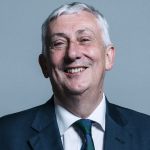
  • Lindsay Hoyle – 2022 Statement on Personal Conduct of Liz Truss

    Lindsay Hoyle – 2022 Statement on Personal Conduct of Liz Truss

    The statement made by Lindsay Hoyle, the Speaker of the House of Commons, on 8 September 2022, before the start of the statement on energy made by Liz Truss.

    Before we start the debate, I want to put on record that I am very disappointed that a written ministerial statement that is relevant to it has only just been made available, in the last five minutes. Such statements should be made available, whenever possible, at 9.30 am. When they are relevant to a debate, as is the case today, it is doubly important for them to be available in good time. I am sorry that this has happened. I consider it to be discourteous to the House, and I hope that is not the way the new Government intend to treat the House. Rather than judging it to be deliberate, I will put it down to bad management or incompetence.

    We now come to the general debate on UK energy costs. Before I call the Prime Minister to open the debate—[Interruption.] This is not the day for that, given the way the House has been treated. I am defending Back Benchers and I expect a little more decorum from you.

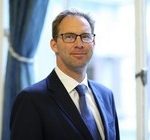
  • Tobias Ellwood – 2022 Statement on Government Funding for Small Modular Reactors

    Tobias Ellwood – 2022 Statement on Government Funding for Small Modular Reactors

    The statement made by Tobias Ellwood, the Independent MP for Bournemouth East, in the House of Commons on 7 September 2022.

    Thank you very much, Mr Deputy Speaker, for chairing this timely debate on modular nuclear reactors in the United Kingdom. Until recently, we took our dependence on electricity generation for granted. Policy has rightly been influenced by our ambitions to reduce our carbon footprint, arguably faster than many other developing and developed nations, but we may have been a little complacent over the past few years in regard to the security of energy supply.

    Our world is getting more dangerous, not less. The war in Ukraine has been a massive reality check, exposing how reliant we are on—and therefore how vulnerable we are to—access to international energy markets to keep our lights on. We require imports of gas, oil and coal to fuel our power stations. All too regularly, we have to import electricity from the continent through the interconnectors when we cannot generate enough power ourselves.

    The security situation in eastern Europe is clearly complicating matters. Putin is weaponising Russia’s distribution of oil and gas, causing large-scale economic harm across Europe. The cost of living crisis here has many components, but arguably a major contributor is the spike in global energy prices and the volatility in the energy markets. All this requires a sense of urgency in finding short and long-term solutions. We expect that tomorrow the Government will spell out their support to get us through the crisis. There is much speculation that energy bills may be frozen, helping us to get through a very difficult winter, but we also require a longer-term strategy to become far more energy self-sufficient as we enter a decade in which global security is on the decline.

    Jim Shannon (Strangford) (DUP)

    I congratulate the right hon. Member on securing the debate. Does he agree that the use of small modular reactors, in conjunction with nuclear energy, gives more solid certainty about sustained energy, particularly in relation to my constituency of Strangford in Northern Ireland? Northern Ireland has no nuclear production, so it is essential for the type of energy to which he refers to be UK-wide. It is needed across the whole United Kingdom of Great Britain and Northern Ireland.

    Mr Ellwood

    I agree. I welcome the Government’s action to bolster our energy resilience: finally increasing UK gas storage capacity, investing in better insulation for our homes, growing the contribution of wind and solar to our energy mix, and of course investing in new nuclear. As the Government’s energy and security strategy sets out, Britain will accelerate new nuclear, including modular reactors, which will form a key part of the energy mix.

    Jamie Stone (Caithness, Sutherland and Easter Ross) (LD)

    Will the right hon. Member give way?

    Mr Ellwood

    I will make some progress, if I may.

    We have Hinkley Point and Sizewell C coming online, adding 3,000 MW to the grid, but it will be a full decade before they start to add their power. We do not have the luxury of waiting that long. Energy consumption here and across the world will only increase as we move towards a cleaner fossil-free environment, especially across Africa, as economies and industries grow, placing ever greater demands on the ability to generate power.

    Liz Saville Roberts (Dwyfor Meirionnydd) (PC)

    Will the right hon. Member give way?

    Mr Ellwood

    I will make a little more progress and then give way. I know that this is an important debate.

    That last point brings me to the subject that we are discussing today: Britain’s development of modular nuclear reactors. The concept is not new; Rolls-Royce has been building small reactors to power our Royal Navy submarines for decades, so one would think the UK well placed to be the first nation to have one up and running.

    The benefits are very clear, and I am sure that the list will be added to in this debate. Each single reactor from Rolls-Royce generates approximately 470 MW of energy, enough to power 1 million homes. They cost only £2.2 billion each, versus the £20 billion that their bigger brothers cost. Once the first five reactors are built, the concept can be proven and we can start looking at exports. The export market for Rolls-Royce is worth £54 billion to the UK. This will not only help the UK, but help other nations to address their crippling energy prices and meet their COP26 targets.

    Liz Saville Roberts

    Trawsfynydd, in Meirionnydd, is entirely publicly owned, and is a nuclear-licensed site. As such, it offers an unparalleled opportunity for the fastest deployment of SMR technology at any UK site. The Nuclear Decommissioning Authority and the Welsh development company Cwmni Egino are working together on proposals for siting, and hopes are high that construction will begin in 2027. That is where the timing is so critical. I am sure that the right hon. Gentleman will agree that Cwmni Egino’s development model provides a blueprint, which could be used not just in Wales but beyond, for the alacrity of development that we are all seeking.

    Mr Ellwood

    I am grateful for that intervention, which confirms that there is a desire to see these reactors built here in the UK. Initially they will all be built in a single factory, which, once it is up and running, will be able to build the components in months rather than decades. Just about all the moving parts are in place to make this happen: the design, the support from the Department for Business, Energy and Industrial Strategy—represented by the Minister who will respond to this debate—the initial development costs, the private sector investment and interest, and the factory in Derby that has been earmarked, along with potential sites across the country. We would be creating 40,000 jobs and £50 billion of investment, and offering a revolution in clean energy supply.

    So what is the problem? If we have a workable design, a genuine solution to help resolve this energy challenge, a Government Department saying all the right things and offering support, and backing from the private sector, why did I need to bring this issue to the Floor of the House? The answer is very simple. The Rolls-Royce design is now stuck between the development and delivery phases, and that delay means that the built-in advantage that Rolls-Royce has—its experience of procuring nuclear reactors for the Royal Navy—is being lost because of unnecessary delays and bureaucracy. Obviously all nuclear reactors are complex and there should be no short cuts to their procurement, but this is not about design approval; it is about the political will. The Government need to formally agree to commission those first five reactors here in the UK. That would allow Rolls-Royce to secure the funds to build the factory, and thus allow more reactor orders to be honoured.

    Jamie Stone

    Dounreay, in my constituency, was the site of the very first nuclear reactor built in the United Kingdom. The site is licensed, it has a very skilled workforce today, and it has huge local support. Does the right hon. Member agree that it should be considered as a site for one of these new reactors?

    Mr Ellwood

    I would love to be the one who gifts these locations, and I would be grateful—I am sure the Minister is hearing this—if those five locations then received potential building permissions, but we need first to cut through the red tape that is stuck in the Government. I stress that the problem is not the Department represented here today; it is, I am afraid, the Treasury.

    Virginia Crosbie (Ynys Môn) (Con)

    As chair of the all-party parliamentary group on small modular reactors, I thank my right hon. Friend for allowing me to intervene in this important debate.

    Rolls-Royce SMR has secured funding of £210 million from UK Research and Innovation, and a further £280 million from private investors. We now need to move to the next stage, which is all about deployment. We need to agree with the UK Government on plans for siting and funding. Manufacturing plants have been earmarked for Rolls-Royce SMR across the UK, including Deeside, which will benefit north Wales and my constituents in particular. Does my right hon. Friend agree that the next stage is important because it will unlock more private sector investment and result in new factories and more high-skill jobs in the UK during this Parliament?

    Mr Ellwood

    I am grateful to my hon. Friend for her intervention, and I commend her work in chairing the all-party parliamentary group. I hope that her comments will fall on the welcome ears of the Minister, who is soon to get to his feet.

    My plea to the Minister is simple. I ask him please to recognise that the scale of the energy crisis we face necessitates a leaning into this project to secure the greater political alignment that would allow funding models to be completed during this Parliament. That is entirely possible.

    Europe is once again at war, and it is time for us to move to a warlike footing if we are to reduce our dependence on overseas power sources which are exposed to volatile international prices and, indeed, adversarial interference which we cannot control. We can enjoy greater energy self-sufficiency with cheaper bills by generating cheap, clean, reliable power within our borders. We have the know-how, we have the desire, we have the industrial advantage; I simply ask the Minister for the political will to make it happen.

  • Graham Stuart – 2022 Speech on Government Funding for Small Modular Reactors

    Graham Stuart – 2022 Speech on Government Funding for Small Modular Reactors

    The speech made by Graham Stuart, the Minister for Climate, in the House of Commons on 7 September 2022.

    Thank you, Mr Deputy Speaker.

    I want to begin by congratulating my right hon. Friend the Member for Bournemouth East (Mr Ellwood) on securing this important debate and speaking so passionately about the benefits that can come from this fascinating development of a UK capability in nuclear power. Tonight’s debate gives us the opportunity to build on the discussion on small modular reactors and energy security in the UK convened by my hon. Friend the Member for Ynys Môn (Virginia Crosbie) in January this year.

    As Climate Minister I am proud to support not only the Government funding but the private investment that we are sometimes seeing facilitated by that Government funding in the nuclear sector. As my right hon. Friend the Member for Bournemouth East has said, the global energy crisis created by Russia’s invasion of Ukraine underlines our resolve to develop new nuclear capacity in order to boost our energy security. I am sure that all of us who take an interest in this will have been gladdened by the fact that there is such strong support for that across the House this evening.

    As we make strides towards delivering net zero, the demands on our electricity system will increase. Electricity will be increasingly important, potentially providing around half of final energy demand as its use for heat and transport increases. That would require a fourfold increase in clean electricity generation, with the decarbonisation of electricity underpinning the delivery of that overall net zero target. Our analysis shows that all low-cost, low-emission solutions that will take us to this net zero-compliant electricity system are likely to require a combination of new nuclear, combined cycle gas turbines and carbon capture, utilisation and storage, in addition to growing levels of renewables. It is a complex piece, but we need all the bits to come together to meet the challenges that my right hon. Friend has set out.

    Nuclear power is important for the UK’s energy security. As the world has emerged from covid-19, global demand for energy has risen significantly, and this has been exacerbated by Putin’s malign invasion of Ukraine. But secure, clean and affordable energy for the long term depends on the transformation of our energy system, and that means more home-grown energy from increasingly diverse sources in order to reduce our dependency on imported fossil fuels and our exposure to the high and volatile prices in international markets that we can see today.

    Hon. Members will be aware that in April 2022 we announced the British energy security strategy. This set out our ambition to deploy up to 24 GW of civil nuclear power by 2050, which will meet around 25% of our projected 2050 electricity demand. New nuclear generating capacity is an important part of our plans to ensure greater energy resilience as well as having a crucial role to play in net zero. I am delighted that the British energy security strategy set out the Government’s intention to take a large-scale new project to final investment decision during this Parliament, and that two projects will reach that point in the next Parliament, subject to the necessary approvals.

    I remind Members that SMRs will play an important part, as well as those larger nuclear installations, and will be a critical part of delivering new nuclear for the UK. They offer the opportunity for flexible deployment options—we have already heard various bids to host them—and could bring regional and socioeconomic benefits, including the creation of high-value manufacturing and engineering jobs on site and on the site of manufacture.

    In November last year, as my right hon. Friend has said, we announced £210 million in match funding for Rolls-Royce SMR Ltd to develop the design for one of the world’s first small modular reactors. Funding for this project was predicated on Rolls-Royce matching the Government’s contribution with private investment, which has been found, giving the design the capability of being deployed in the UK by the early 2030s, if not before. The Government funding for Rolls-Royce is part of the advanced nuclear fund, which is a significant Government commitment of up to £385 million, both to develop domestic SMR design and to demonstrate the viability of innovative advanced modular reactors by the early 2030s.

    In addition to investment in SMRs, the Government plan to invest in the AMR research, development and demonstration programme, which, as I say, should get something going by the early ’30s. It is focused on high-temperature gas reactors for low-carbon electricity generation and would allow the production of very high-temperature heat that could be used, for instance, for the increasingly efficient production of low-carbon hydrogen, to help to decarbonise industrial process heat, or even for synthetic fuel production.

    I am pleased to remind Members that we launched the future nuclear enabling fund, or FNEF—I have realised, on my first day, that BEIS is full of acronyms galore—on 2 September 2022. The FNEF—they are never terribly well crafted—is a £120 million fund announced in the Government’s “Net Zero Strategy: Build Back Greener” in 2021. It aims to help mature potential nuclear projects ahead of any Government process to select future projects. We expect to make awards from the fund at the end of this year or at the start of 2023.

    Alongside the launch of the FNEF, we are setting up Great British Nuclear, a body to enable nuclear projects and get us on a pathway to meeting our ambitions for new nuclear, with the aim of ensuring the kind of rapidity that my right hon. Friend is right to press for from Ministers such as me. We intend to initiate a selection process in 2023, with the intention that we will enter into negotiations with the most credible projects to enable a potential Government award of support as soon as possible.

    I was pleased that Parliament backed the Nuclear Energy (Financing) Act 2022, which was granted Royal Assent in March and established a new regulated asset base—or RAB—funding model for all new nuclear projects.

    Mr Ellwood

    I hope my hon. Friend will forgive me for not having congratulated him on securing his new position. He is a round peg in a round hole; I know how passionate he is about the environment. Will he join me in paying tribute to my right hon. Friend the Member for Spelthorne (Kwasi Kwarteng), who was previously in charge at BEIS? He is now in the Treasury and therefore perfectly placed to advance this idea. During the war there was an effort to create munitions, and we leant into that project because there was a necessity, and during covid there was a necessity to create personal protective equipment. Does my hon. Friend agree that there is now a necessity for us to lean into this idea and expedite it—within the safety parameters—to make sure that we can become more energy resilient?

    Graham Stuart

    I thank my right hon. Friend, and I am happy to do that. He will forgive me, perhaps on this one day only, for not leaning in to chastise any other Department or the Government in general on day one, self-confident though I always try to be. If we look at what we have done, we see that we have reduced our emissions by more than any other major industrialised nation, and offshore wind has been a triumph.

    I am looking forward to learning more about the detail of these programmes, but I have no doubt that with the right will and the proper prompting by colleagues from across the House we can ensure that we move with the speed necessary. We need to, because as he rightly says, we are not alone in pursuing and seeing this opportunity, and there have been instances in the past when this country has been in a position to lead and has not moved quickly enough, and multibillion-dollar opportunities—let us call them that—have ended up going elsewhere.

    I am determined that we shall not only deliver on our green obligations in this country, but build our industrial capability so that even the most sceptical person comes on board as we say, “Look, we are not just dealing with climate and not just cleaning up our domestic situation. We are developing major industrial capability so that we can sell that to the rest of the world, help it with the net zero challenge, and also produce jobs and prosperity here.” It is not a hairshirt that we want; we want to get the policy right so that we are part of a global solution, and to do so in a way that boosts jobs and prosperity and carries the support of everyone, regardless of their views on climate-related matters.

    We believe that the RAB could cut the costs of financing these projects, enabling companies to finance new ones and ending our reliance on overseas developers for finance, resulting in savings for consumers. On day one, I can reassure my right hon. Friend that a lot of work is going into making sure not only that we can move at pace, but that we do so with the most solid base possible.

    We fully support the development of small modular reactors and the exciting opportunities that they can offer the UK in energy security and reaching net zero. We have demonstrated our intent to build new nuclear capacity in the UK over the past year, and we have made the decisions that we believe will provide the confidence needed for investors and businesses to get behind it. From the energy White Paper to our landmark British energy security strategy to funding for small modular reactors and the future nuclear enabling fund, I hope we have shown our dedication to energy security, net zero and nuclear. I thank my right hon. Friend and other colleagues once again.

  • Liz Truss – 2022 Speech on the Energy Policy Debate

    Liz Truss – 2022 Speech on the Energy Policy Debate

    The speech made by Liz Truss, the Prime Minister, in the House of Commons on 8 September 2022.

    Mr Speaker, I beg to move the motion.

    Earlier this week I promised I would deal with the soaring energy prices faced by families and businesses across the UK.

    And today I am delivering on that promise.

    This Government is moving immediately to introduce a new Energy Price Guarantee that will give people certainty on energy bills.

    It will curb inflation and boost growth.

    This Guarantee – which includes a temporary suspension of green levies – means that from 1st October a typical household will pay no more than £2,500 per year for each of the next two years, while we get the energy market back on track.

    This will save a typical household £1,000 a year. It comes in addition to the £400 Energy Bills Support Scheme.

    This Guarantee supersedes the Ofgem price cap, and has been agreed with energy retailers.

    We will deliver this by securing the wholesale price for energy, while putting in place long-term measures to secure future supplies at more affordable rates.

    We are supporting this country through this winter and next, and tackling the root cause of high prices, so we are never in this position again.

    For those using heating oil, living in park homes or those on heat networks, we will set up a fund so that all UK consumers can benefit from equivalent support.

    We will also support all businesses, charities and public sector organisations with their energy costs this winter – offering an equivalent guarantee for 6 months.

    After those 6 months we will provide further support to vulnerable sectors, such as hospitality, including our local pubs.

    My Rt Hon Friend the Business Secretary will work with businesses to review where this should be targeted to make sure those most in need get support. This review will be concluded within 3 months, giving businesses certainty.

    In the meantime, companies with the wherewithal need to be looking for ways they can improve energy efficiency and increase direct energy generation

    We will be bringing forward emergency legislation to deliver this policy. And my Rt Hon Friend the Chancellor of the Exchequer will set out the expected costs as part of his fiscal statement later this month.

    I can tell the House today that we will not be giving in to calls for this to be funded through a windfall tax.

    That would undermine the national interest by discouraging the very investment we need to secure home-grown energy supplies. You can’t tax your way to growth.

    Instead, we are taking an approach which is pro-growth, pro-business and pro the investment we need for energy security.

    This is the moment to be bold. We are facing a global energy crisis and there are no ‘cost-free’ options.

    There will be a cost to this intervention. However we are also acting immediately to defray the cost of this intervention in three ways.

    Firstly, by ramping up supply.

    Following on from the successful vaccine taskforce, we have created a new Energy Supply Taskforce under the leadership of Maddy McTernan.

    They are already negotiating new long term energy contracts with domestic and international gas suppliers to immediately bring down the cost of this intervention.

    We are also accelerating all sources of domestic energy, including North Sea oil and gas production.

    We will be launching a new licensing round, which we expect to lead to over 100 new licences being awarded.

    And we will speed up our deployment of all clean and renewable technologies including hydrogen, solar, carbon capture and storage, and wind… where we are already the world leader in offshore generation.

    Renewable and nuclear generators will move onto Contracts for Difference to end the situation where electricity prices are set by the marginal price of gas.

    This will mean generators are receiving a fair price, reflecting their cost of production, further bringing down the cost of this intervention.

    Secondly, today’s action will deliver substantial benefits to our economy, boosting growth which increases tax receipts and gives certainty to business.

    This intervention is expected to curb inflation by up to 5 percentage points, bringing a reduction in the cost of servicing government debt.

    Thirdly, this morning, together with the Bank of England, we will set up a new scheme, worth up to £40 billion, to ensure that firms operating in wholesale energy markets have the liquidity they need to manage price volatility.

    This will stabilise the market and decrease the likelihood that energy retailers need our support, like they did last Winter.

    By increasing supply, boosting the economy and increasing liquidity in the market we will significantly reduce the cost to government of this intervention.

    As well as dealing with the immediate situation we face, we are also dealing with the root causes.

    Energy policy over the past decades has not focused enough on securing supply.

    There’s no better example than nuclear, where the UK has not built a single new nuclear reactor in 25 years.

    It’s not just about supply. The regulatory structures have failed, exposing the problems of having a price cap applied to the retail but not the wholesale market.

    All of this has left us vulnerable to volatile global markets and malign actors in an increasingly geopolitical world.

    That is why Putin is exploiting by weaponising energy supplies as part of his illegal war on Ukraine.

    So as well as the action we are taking today on bills, we will use the next 2 years to make sure that the United Kingdom is never in this situation again.

    I will be launching two reviews.

    Firstly, a review of energy regulation to fix the underlying problems. We want a new approach which will address supply and affordability for the long term.

    Secondly, we will conduct a review to ensure we deliver net zero by 2050 in a way that is pro-business and pro-growth. This review will be led by my Rt Hon Friend the member for Kingswood.

    We are delivering a stable environment that gives investors the confidence to back gas as part of our transition to net zero.

    We will end the moratorium on extracting our huge reserves of shale, which could get gas flowing in as soon as six months, where there is local support.

    We will launch Great British Nuclear later this month – putting us on the path to deliver up to a quarter of our electricity generation with nuclear by 2050.

    As a result of these steps on shale and nuclear and the acceleration of renewables, I am today setting a new ambition for our country.

    Far from being dependent on the global energy market and the actions of malign actors, we will make sure the UK a net energy exporter by 2040.

    And my Rt Hon Friend the Business Secretary will set out a plan in the next two months to make sure we achieve this.

    I know businesses and families are very concerned about how they will get through this winter.

    That’s why I felt it was important to act urgently to provide immediate help and support, as well as setting out our plan about how we are going to secure the UK’s future supplies.

    This is part of my vision for rebuilding our economy.

    Secure energy supply is vital to growth and prosperity. Yet it has been ignored for too long.

    I will end the UK’s short-termist approach to energy security and supply once and for all.

    That is what I promised on the steps of Downing Street.

    Today we are acting decisively to deliver that pledge.

    This will help us build a stronger, more resilient and more secure United Kingdom.

    I commend this motion to the House.

  • Liz Truss – 2022 Comments on the Energy Price Guarantee

    Liz Truss – 2022 Comments on the Energy Price Guarantee

    The comments made by Liz Truss, the Prime Minister, on 8 September 2022.

    Decades of short-term thinking on energy has failed to focus enough on securing supply – with Russia’s war in Ukraine exposing the flaws in our energy security and driving bills higher. I’m ending this once and for all.

    I’m acting immediately so people and businesses are supported over the next two years, with a new Energy Price Guarantee, and tackling the root cause of the issues by boosting domestic energy supply.

    Extraordinary challenges call for extraordinary measures, ensuring that the United Kingdom is never in this situation again.

  • Committee on Fuel Poverty – 2022 Letter to Liz Truss

    Committee on Fuel Poverty – 2022 Letter to Liz Truss

    The letter sent by the Committee on Fuel Poverty to Liz Truss on 2 September 2022.

    (in .pdf format)