Category: Energy

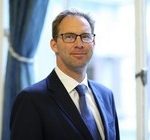
  • Tobias Ellwood – 2022 Statement on Government Funding for Small Modular Reactors

    Tobias Ellwood – 2022 Statement on Government Funding for Small Modular Reactors

    The statement made by Tobias Ellwood, the Independent MP for Bournemouth East, in the House of Commons on 7 September 2022.

    Thank you very much, Mr Deputy Speaker, for chairing this timely debate on modular nuclear reactors in the United Kingdom. Until recently, we took our dependence on electricity generation for granted. Policy has rightly been influenced by our ambitions to reduce our carbon footprint, arguably faster than many other developing and developed nations, but we may have been a little complacent over the past few years in regard to the security of energy supply.

    Our world is getting more dangerous, not less. The war in Ukraine has been a massive reality check, exposing how reliant we are on—and therefore how vulnerable we are to—access to international energy markets to keep our lights on. We require imports of gas, oil and coal to fuel our power stations. All too regularly, we have to import electricity from the continent through the interconnectors when we cannot generate enough power ourselves.

    The security situation in eastern Europe is clearly complicating matters. Putin is weaponising Russia’s distribution of oil and gas, causing large-scale economic harm across Europe. The cost of living crisis here has many components, but arguably a major contributor is the spike in global energy prices and the volatility in the energy markets. All this requires a sense of urgency in finding short and long-term solutions. We expect that tomorrow the Government will spell out their support to get us through the crisis. There is much speculation that energy bills may be frozen, helping us to get through a very difficult winter, but we also require a longer-term strategy to become far more energy self-sufficient as we enter a decade in which global security is on the decline.

    Jim Shannon (Strangford) (DUP)

    I congratulate the right hon. Member on securing the debate. Does he agree that the use of small modular reactors, in conjunction with nuclear energy, gives more solid certainty about sustained energy, particularly in relation to my constituency of Strangford in Northern Ireland? Northern Ireland has no nuclear production, so it is essential for the type of energy to which he refers to be UK-wide. It is needed across the whole United Kingdom of Great Britain and Northern Ireland.

    Mr Ellwood

    I agree. I welcome the Government’s action to bolster our energy resilience: finally increasing UK gas storage capacity, investing in better insulation for our homes, growing the contribution of wind and solar to our energy mix, and of course investing in new nuclear. As the Government’s energy and security strategy sets out, Britain will accelerate new nuclear, including modular reactors, which will form a key part of the energy mix.

    Jamie Stone (Caithness, Sutherland and Easter Ross) (LD)

    Will the right hon. Member give way?

    Mr Ellwood

    I will make some progress, if I may.

    We have Hinkley Point and Sizewell C coming online, adding 3,000 MW to the grid, but it will be a full decade before they start to add their power. We do not have the luxury of waiting that long. Energy consumption here and across the world will only increase as we move towards a cleaner fossil-free environment, especially across Africa, as economies and industries grow, placing ever greater demands on the ability to generate power.

    Liz Saville Roberts (Dwyfor Meirionnydd) (PC)

    Will the right hon. Member give way?

    Mr Ellwood

    I will make a little more progress and then give way. I know that this is an important debate.

    That last point brings me to the subject that we are discussing today: Britain’s development of modular nuclear reactors. The concept is not new; Rolls-Royce has been building small reactors to power our Royal Navy submarines for decades, so one would think the UK well placed to be the first nation to have one up and running.

    The benefits are very clear, and I am sure that the list will be added to in this debate. Each single reactor from Rolls-Royce generates approximately 470 MW of energy, enough to power 1 million homes. They cost only £2.2 billion each, versus the £20 billion that their bigger brothers cost. Once the first five reactors are built, the concept can be proven and we can start looking at exports. The export market for Rolls-Royce is worth £54 billion to the UK. This will not only help the UK, but help other nations to address their crippling energy prices and meet their COP26 targets.

    Liz Saville Roberts

    Trawsfynydd, in Meirionnydd, is entirely publicly owned, and is a nuclear-licensed site. As such, it offers an unparalleled opportunity for the fastest deployment of SMR technology at any UK site. The Nuclear Decommissioning Authority and the Welsh development company Cwmni Egino are working together on proposals for siting, and hopes are high that construction will begin in 2027. That is where the timing is so critical. I am sure that the right hon. Gentleman will agree that Cwmni Egino’s development model provides a blueprint, which could be used not just in Wales but beyond, for the alacrity of development that we are all seeking.

    Mr Ellwood

    I am grateful for that intervention, which confirms that there is a desire to see these reactors built here in the UK. Initially they will all be built in a single factory, which, once it is up and running, will be able to build the components in months rather than decades. Just about all the moving parts are in place to make this happen: the design, the support from the Department for Business, Energy and Industrial Strategy—represented by the Minister who will respond to this debate—the initial development costs, the private sector investment and interest, and the factory in Derby that has been earmarked, along with potential sites across the country. We would be creating 40,000 jobs and £50 billion of investment, and offering a revolution in clean energy supply.

    So what is the problem? If we have a workable design, a genuine solution to help resolve this energy challenge, a Government Department saying all the right things and offering support, and backing from the private sector, why did I need to bring this issue to the Floor of the House? The answer is very simple. The Rolls-Royce design is now stuck between the development and delivery phases, and that delay means that the built-in advantage that Rolls-Royce has—its experience of procuring nuclear reactors for the Royal Navy—is being lost because of unnecessary delays and bureaucracy. Obviously all nuclear reactors are complex and there should be no short cuts to their procurement, but this is not about design approval; it is about the political will. The Government need to formally agree to commission those first five reactors here in the UK. That would allow Rolls-Royce to secure the funds to build the factory, and thus allow more reactor orders to be honoured.

    Jamie Stone

    Dounreay, in my constituency, was the site of the very first nuclear reactor built in the United Kingdom. The site is licensed, it has a very skilled workforce today, and it has huge local support. Does the right hon. Member agree that it should be considered as a site for one of these new reactors?

    Mr Ellwood

    I would love to be the one who gifts these locations, and I would be grateful—I am sure the Minister is hearing this—if those five locations then received potential building permissions, but we need first to cut through the red tape that is stuck in the Government. I stress that the problem is not the Department represented here today; it is, I am afraid, the Treasury.

    Virginia Crosbie (Ynys Môn) (Con)

    As chair of the all-party parliamentary group on small modular reactors, I thank my right hon. Friend for allowing me to intervene in this important debate.

    Rolls-Royce SMR has secured funding of £210 million from UK Research and Innovation, and a further £280 million from private investors. We now need to move to the next stage, which is all about deployment. We need to agree with the UK Government on plans for siting and funding. Manufacturing plants have been earmarked for Rolls-Royce SMR across the UK, including Deeside, which will benefit north Wales and my constituents in particular. Does my right hon. Friend agree that the next stage is important because it will unlock more private sector investment and result in new factories and more high-skill jobs in the UK during this Parliament?

    Mr Ellwood

    I am grateful to my hon. Friend for her intervention, and I commend her work in chairing the all-party parliamentary group. I hope that her comments will fall on the welcome ears of the Minister, who is soon to get to his feet.

    My plea to the Minister is simple. I ask him please to recognise that the scale of the energy crisis we face necessitates a leaning into this project to secure the greater political alignment that would allow funding models to be completed during this Parliament. That is entirely possible.

    Europe is once again at war, and it is time for us to move to a warlike footing if we are to reduce our dependence on overseas power sources which are exposed to volatile international prices and, indeed, adversarial interference which we cannot control. We can enjoy greater energy self-sufficiency with cheaper bills by generating cheap, clean, reliable power within our borders. We have the know-how, we have the desire, we have the industrial advantage; I simply ask the Minister for the political will to make it happen.

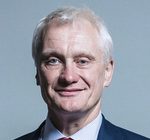
  • Graham Stuart – 2022 Speech on Government Funding for Small Modular Reactors

    Graham Stuart – 2022 Speech on Government Funding for Small Modular Reactors

    The speech made by Graham Stuart, the Minister for Climate, in the House of Commons on 7 September 2022.

    Thank you, Mr Deputy Speaker.

    I want to begin by congratulating my right hon. Friend the Member for Bournemouth East (Mr Ellwood) on securing this important debate and speaking so passionately about the benefits that can come from this fascinating development of a UK capability in nuclear power. Tonight’s debate gives us the opportunity to build on the discussion on small modular reactors and energy security in the UK convened by my hon. Friend the Member for Ynys Môn (Virginia Crosbie) in January this year.

    As Climate Minister I am proud to support not only the Government funding but the private investment that we are sometimes seeing facilitated by that Government funding in the nuclear sector. As my right hon. Friend the Member for Bournemouth East has said, the global energy crisis created by Russia’s invasion of Ukraine underlines our resolve to develop new nuclear capacity in order to boost our energy security. I am sure that all of us who take an interest in this will have been gladdened by the fact that there is such strong support for that across the House this evening.

    As we make strides towards delivering net zero, the demands on our electricity system will increase. Electricity will be increasingly important, potentially providing around half of final energy demand as its use for heat and transport increases. That would require a fourfold increase in clean electricity generation, with the decarbonisation of electricity underpinning the delivery of that overall net zero target. Our analysis shows that all low-cost, low-emission solutions that will take us to this net zero-compliant electricity system are likely to require a combination of new nuclear, combined cycle gas turbines and carbon capture, utilisation and storage, in addition to growing levels of renewables. It is a complex piece, but we need all the bits to come together to meet the challenges that my right hon. Friend has set out.

    Nuclear power is important for the UK’s energy security. As the world has emerged from covid-19, global demand for energy has risen significantly, and this has been exacerbated by Putin’s malign invasion of Ukraine. But secure, clean and affordable energy for the long term depends on the transformation of our energy system, and that means more home-grown energy from increasingly diverse sources in order to reduce our dependency on imported fossil fuels and our exposure to the high and volatile prices in international markets that we can see today.

    Hon. Members will be aware that in April 2022 we announced the British energy security strategy. This set out our ambition to deploy up to 24 GW of civil nuclear power by 2050, which will meet around 25% of our projected 2050 electricity demand. New nuclear generating capacity is an important part of our plans to ensure greater energy resilience as well as having a crucial role to play in net zero. I am delighted that the British energy security strategy set out the Government’s intention to take a large-scale new project to final investment decision during this Parliament, and that two projects will reach that point in the next Parliament, subject to the necessary approvals.

    I remind Members that SMRs will play an important part, as well as those larger nuclear installations, and will be a critical part of delivering new nuclear for the UK. They offer the opportunity for flexible deployment options—we have already heard various bids to host them—and could bring regional and socioeconomic benefits, including the creation of high-value manufacturing and engineering jobs on site and on the site of manufacture.

    In November last year, as my right hon. Friend has said, we announced £210 million in match funding for Rolls-Royce SMR Ltd to develop the design for one of the world’s first small modular reactors. Funding for this project was predicated on Rolls-Royce matching the Government’s contribution with private investment, which has been found, giving the design the capability of being deployed in the UK by the early 2030s, if not before. The Government funding for Rolls-Royce is part of the advanced nuclear fund, which is a significant Government commitment of up to £385 million, both to develop domestic SMR design and to demonstrate the viability of innovative advanced modular reactors by the early 2030s.

    In addition to investment in SMRs, the Government plan to invest in the AMR research, development and demonstration programme, which, as I say, should get something going by the early ’30s. It is focused on high-temperature gas reactors for low-carbon electricity generation and would allow the production of very high-temperature heat that could be used, for instance, for the increasingly efficient production of low-carbon hydrogen, to help to decarbonise industrial process heat, or even for synthetic fuel production.

    I am pleased to remind Members that we launched the future nuclear enabling fund, or FNEF—I have realised, on my first day, that BEIS is full of acronyms galore—on 2 September 2022. The FNEF—they are never terribly well crafted—is a £120 million fund announced in the Government’s “Net Zero Strategy: Build Back Greener” in 2021. It aims to help mature potential nuclear projects ahead of any Government process to select future projects. We expect to make awards from the fund at the end of this year or at the start of 2023.

    Alongside the launch of the FNEF, we are setting up Great British Nuclear, a body to enable nuclear projects and get us on a pathway to meeting our ambitions for new nuclear, with the aim of ensuring the kind of rapidity that my right hon. Friend is right to press for from Ministers such as me. We intend to initiate a selection process in 2023, with the intention that we will enter into negotiations with the most credible projects to enable a potential Government award of support as soon as possible.

    I was pleased that Parliament backed the Nuclear Energy (Financing) Act 2022, which was granted Royal Assent in March and established a new regulated asset base—or RAB—funding model for all new nuclear projects.

    Mr Ellwood

    I hope my hon. Friend will forgive me for not having congratulated him on securing his new position. He is a round peg in a round hole; I know how passionate he is about the environment. Will he join me in paying tribute to my right hon. Friend the Member for Spelthorne (Kwasi Kwarteng), who was previously in charge at BEIS? He is now in the Treasury and therefore perfectly placed to advance this idea. During the war there was an effort to create munitions, and we leant into that project because there was a necessity, and during covid there was a necessity to create personal protective equipment. Does my hon. Friend agree that there is now a necessity for us to lean into this idea and expedite it—within the safety parameters—to make sure that we can become more energy resilient?

    Graham Stuart

    I thank my right hon. Friend, and I am happy to do that. He will forgive me, perhaps on this one day only, for not leaning in to chastise any other Department or the Government in general on day one, self-confident though I always try to be. If we look at what we have done, we see that we have reduced our emissions by more than any other major industrialised nation, and offshore wind has been a triumph.

    I am looking forward to learning more about the detail of these programmes, but I have no doubt that with the right will and the proper prompting by colleagues from across the House we can ensure that we move with the speed necessary. We need to, because as he rightly says, we are not alone in pursuing and seeing this opportunity, and there have been instances in the past when this country has been in a position to lead and has not moved quickly enough, and multibillion-dollar opportunities—let us call them that—have ended up going elsewhere.

    I am determined that we shall not only deliver on our green obligations in this country, but build our industrial capability so that even the most sceptical person comes on board as we say, “Look, we are not just dealing with climate and not just cleaning up our domestic situation. We are developing major industrial capability so that we can sell that to the rest of the world, help it with the net zero challenge, and also produce jobs and prosperity here.” It is not a hairshirt that we want; we want to get the policy right so that we are part of a global solution, and to do so in a way that boosts jobs and prosperity and carries the support of everyone, regardless of their views on climate-related matters.

    We believe that the RAB could cut the costs of financing these projects, enabling companies to finance new ones and ending our reliance on overseas developers for finance, resulting in savings for consumers. On day one, I can reassure my right hon. Friend that a lot of work is going into making sure not only that we can move at pace, but that we do so with the most solid base possible.

    We fully support the development of small modular reactors and the exciting opportunities that they can offer the UK in energy security and reaching net zero. We have demonstrated our intent to build new nuclear capacity in the UK over the past year, and we have made the decisions that we believe will provide the confidence needed for investors and businesses to get behind it. From the energy White Paper to our landmark British energy security strategy to funding for small modular reactors and the future nuclear enabling fund, I hope we have shown our dedication to energy security, net zero and nuclear. I thank my right hon. Friend and other colleagues once again.

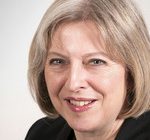
  • Liz Truss – 2022 Speech on the Energy Policy Debate

    Liz Truss – 2022 Speech on the Energy Policy Debate

    The speech made by Liz Truss, the Prime Minister, in the House of Commons on 8 September 2022.

    Mr Speaker, I beg to move the motion.

    Earlier this week I promised I would deal with the soaring energy prices faced by families and businesses across the UK.

    And today I am delivering on that promise.

    This Government is moving immediately to introduce a new Energy Price Guarantee that will give people certainty on energy bills.

    It will curb inflation and boost growth.

    This Guarantee – which includes a temporary suspension of green levies – means that from 1st October a typical household will pay no more than £2,500 per year for each of the next two years, while we get the energy market back on track.

    This will save a typical household £1,000 a year. It comes in addition to the £400 Energy Bills Support Scheme.

    This Guarantee supersedes the Ofgem price cap, and has been agreed with energy retailers.

    We will deliver this by securing the wholesale price for energy, while putting in place long-term measures to secure future supplies at more affordable rates.

    We are supporting this country through this winter and next, and tackling the root cause of high prices, so we are never in this position again.

    For those using heating oil, living in park homes or those on heat networks, we will set up a fund so that all UK consumers can benefit from equivalent support.

    We will also support all businesses, charities and public sector organisations with their energy costs this winter – offering an equivalent guarantee for 6 months.

    After those 6 months we will provide further support to vulnerable sectors, such as hospitality, including our local pubs.

    My Rt Hon Friend the Business Secretary will work with businesses to review where this should be targeted to make sure those most in need get support. This review will be concluded within 3 months, giving businesses certainty.

    In the meantime, companies with the wherewithal need to be looking for ways they can improve energy efficiency and increase direct energy generation

    We will be bringing forward emergency legislation to deliver this policy. And my Rt Hon Friend the Chancellor of the Exchequer will set out the expected costs as part of his fiscal statement later this month.

    I can tell the House today that we will not be giving in to calls for this to be funded through a windfall tax.

    That would undermine the national interest by discouraging the very investment we need to secure home-grown energy supplies. You can’t tax your way to growth.

    Instead, we are taking an approach which is pro-growth, pro-business and pro the investment we need for energy security.

    This is the moment to be bold. We are facing a global energy crisis and there are no ‘cost-free’ options.

    There will be a cost to this intervention. However we are also acting immediately to defray the cost of this intervention in three ways.

    Firstly, by ramping up supply.

    Following on from the successful vaccine taskforce, we have created a new Energy Supply Taskforce under the leadership of Maddy McTernan.

    They are already negotiating new long term energy contracts with domestic and international gas suppliers to immediately bring down the cost of this intervention.

    We are also accelerating all sources of domestic energy, including North Sea oil and gas production.

    We will be launching a new licensing round, which we expect to lead to over 100 new licences being awarded.

    And we will speed up our deployment of all clean and renewable technologies including hydrogen, solar, carbon capture and storage, and wind… where we are already the world leader in offshore generation.

    Renewable and nuclear generators will move onto Contracts for Difference to end the situation where electricity prices are set by the marginal price of gas.

    This will mean generators are receiving a fair price, reflecting their cost of production, further bringing down the cost of this intervention.

    Secondly, today’s action will deliver substantial benefits to our economy, boosting growth which increases tax receipts and gives certainty to business.

    This intervention is expected to curb inflation by up to 5 percentage points, bringing a reduction in the cost of servicing government debt.

    Thirdly, this morning, together with the Bank of England, we will set up a new scheme, worth up to £40 billion, to ensure that firms operating in wholesale energy markets have the liquidity they need to manage price volatility.

    This will stabilise the market and decrease the likelihood that energy retailers need our support, like they did last Winter.

    By increasing supply, boosting the economy and increasing liquidity in the market we will significantly reduce the cost to government of this intervention.

    As well as dealing with the immediate situation we face, we are also dealing with the root causes.

    Energy policy over the past decades has not focused enough on securing supply.

    There’s no better example than nuclear, where the UK has not built a single new nuclear reactor in 25 years.

    It’s not just about supply. The regulatory structures have failed, exposing the problems of having a price cap applied to the retail but not the wholesale market.

    All of this has left us vulnerable to volatile global markets and malign actors in an increasingly geopolitical world.

    That is why Putin is exploiting by weaponising energy supplies as part of his illegal war on Ukraine.

    So as well as the action we are taking today on bills, we will use the next 2 years to make sure that the United Kingdom is never in this situation again.

    I will be launching two reviews.

    Firstly, a review of energy regulation to fix the underlying problems. We want a new approach which will address supply and affordability for the long term.

    Secondly, we will conduct a review to ensure we deliver net zero by 2050 in a way that is pro-business and pro-growth. This review will be led by my Rt Hon Friend the member for Kingswood.

    We are delivering a stable environment that gives investors the confidence to back gas as part of our transition to net zero.

    We will end the moratorium on extracting our huge reserves of shale, which could get gas flowing in as soon as six months, where there is local support.

    We will launch Great British Nuclear later this month – putting us on the path to deliver up to a quarter of our electricity generation with nuclear by 2050.

    As a result of these steps on shale and nuclear and the acceleration of renewables, I am today setting a new ambition for our country.

    Far from being dependent on the global energy market and the actions of malign actors, we will make sure the UK a net energy exporter by 2040.

    And my Rt Hon Friend the Business Secretary will set out a plan in the next two months to make sure we achieve this.

    I know businesses and families are very concerned about how they will get through this winter.

    That’s why I felt it was important to act urgently to provide immediate help and support, as well as setting out our plan about how we are going to secure the UK’s future supplies.

    This is part of my vision for rebuilding our economy.

    Secure energy supply is vital to growth and prosperity. Yet it has been ignored for too long.

    I will end the UK’s short-termist approach to energy security and supply once and for all.

    That is what I promised on the steps of Downing Street.

    Today we are acting decisively to deliver that pledge.

    This will help us build a stronger, more resilient and more secure United Kingdom.

    I commend this motion to the House.

  • Liz Truss – 2022 Comments on the Energy Price Guarantee

    Liz Truss – 2022 Comments on the Energy Price Guarantee

    The comments made by Liz Truss, the Prime Minister, on 8 September 2022.

    Decades of short-term thinking on energy has failed to focus enough on securing supply – with Russia’s war in Ukraine exposing the flaws in our energy security and driving bills higher. I’m ending this once and for all.

    I’m acting immediately so people and businesses are supported over the next two years, with a new Energy Price Guarantee, and tackling the root cause of the issues by boosting domestic energy supply.

    Extraordinary challenges call for extraordinary measures, ensuring that the United Kingdom is never in this situation again.

  • Committee on Fuel Poverty – 2022 Letter to Liz Truss

    Committee on Fuel Poverty – 2022 Letter to Liz Truss

    The letter sent by the Committee on Fuel Poverty to Liz Truss on 2 September 2022.

    (in .pdf format)

  • Committee on Fuel Poverty – 2022 Letter to Rishi Sunak

    Committee on Fuel Poverty – 2022 Letter to Rishi Sunak

    The letter sent by the Committee on Fuel Poverty to Rishi Sunak on 2 September 2022.

    (in .pdf format)

  • Boris Johnson – 2022 Speech on Energy

    Boris Johnson – 2022 Speech on Energy

    The speech made by Boris Johnson, the Prime Minister, on 1 September 2022.

    Good afternoon everybody

    Thank you for coming today, thank you for coming everybody to Sizewell

    It’s wonderful to be here and to see this astonishing plant and to meet the staff and some of the young people who are going to be working here, already are working here..

    Now, when I was a child, I had a wonderful book – a much thumbed ladybird book called the story of nuclear power,

    It was published in 1972

    And I used to go through it again and again

    and I was enthralled to read how scientists split the atom here in the UK for the first time

    and they did it at the Cavendish laboratories in Cambridge

    and I noted that the world’s first civilian nuclear reactor, the first civilian nuclear power station was at Calder Hall in Cumbria, now of course Sellafield

    and I look back at the optimism in every page of that book and what has happened since
    and at the short-termism of successive British governments

    at their failure to do justice to our pioneering nuclear history
    their abject failure to think of the needs of future generations

    above all the families that are today struggling with the cost of energy in this country

    I feel like one of those beautifully drawn illustrations of what happens in a nuclear pile when the graphite rods are taken out at the wrong moment

    My blood starts to boil and steam comes out of my ears and I think I’m going to melt down

    And I asked myself the question: What happened to us?

    When Sizewell was opened in 1966 it was the eighth reactor that this country had built in just 7 years

    Why have we never got back to that kind of rhythm? Have we lost the gumption and the dynamism of our parents and grandparents

    but it gets worse

    When Sizewell B -fantastic white dome – was completed in 1995 it was the 5th reactor in 7 years

    1995 – an era that was technologically so primitive that people used things called carphones and went down to blockbusters to rent VHS videos

    Think of the colossal technical progress in other areas – and contrast the paralysis in nuclear energy

    how many new nuclear power stations have we built in the 27 years since?

    How many have been connected to the grid?

    How many slices of bread could we toast with the additional nuclear power we have created?

    how many washing machines could we power?

    How many families have been helped with extra nuclear energy?

    The answer is, none, zero, zilch

    The French, they have loads of nuclear power stations already, they’ve built four more since 1995– bringing their total reactor fleet up to about 56, the Indians have added about 12 and the Chinese have built more than 50 additional nuclear reactions since 1995!

    and you know why we have failed? It’s not even as though we have some cultural aversion to nuclear power

    I just met those nice protestors outside – it wasn’t some atomkraft nein danke – they seem to be objecting to the disruption to the roads, it’s pure nimbyism out there

    I will diagnose the problem

    It’s called myopia. It’s called short-termism

    It’s a chronic case of politicians not being able to see beyond the political cycle

    Tell that to British businesses and industries that are desperately short of affordable and reliable electricity

    tell that to the families struggling with the cost of heat and light this winter

    It is because of that kind of myopia that here in the country that first split the atom we have only 15 per cent of our electricity from nuclear – and it is falling

    whereas in France it is at 70 per cent

    and we ask ourselves why France is more self reliant than we are when it comes to energy

    why they have found it relatively easier to hold down their costs

    and yes nuclear always looks – when you begin, it always looks relatively expensive to build and to run

    but look at what is happening today, look at the results of Putin’s war

    it is certainly cheap by comparison with hydrocarbons today

    in fact if Hinkley Point C were already running already this year

    it’s been delayed for ages and ages of course

    it would be cutting fuel bills by £3 bn

    I’ll say that again – if Hinkley Point C were running now, it would be cutting fuel bills by £3 bn

    So you have to look ahead
    And you have to beware of the false economy

    If you have an old kettle that takes ages to boil, it may cost you £20 to replace it

    But if you get a new one you will save ten pounds a year every year on your electricity bill

    I remember when the government finally did the deal on Hinkley C– in fact by then I was already sitting in the cabinet

    and I remember some people protesting that the strike price of £92.50 per kilowatt hour was very, very expensive

    it doesn’t look so expensive today

    that is why we must pull our national finger out and get on with Sizewell C

    That is why we are putting up to £700 m into the deal

    Just part of the £1.7bn of Government funding available for developing a large-scale nuclear project to final investment stage in this Parliament,

    and in the course of the next few weeks I am absolutely confident that it will get over the line.

    and we will get it over the line because it would be madness not to

    This project will create tens of thousands of jobs, but it will also power 6m homes – that is roughly a fifth of all the homes in the UK

    So it will help to fix the energy needs not just of this generation but of the next

    a baby born this year will be getting energy from Sizewell C long, long after she retires

    and this new reactor is just a part of our Great British nuclear campaign

    we will build a reactor a year again

    we will build them across the country, at least eight of them, large ones and small modular reactors

    and of course they are not the entire solution to our energy needs – far from it

    yes we are increasing our own domestic hydrocarbons

    we’ve got more gas out of the north sea this year than last year, considerably more, 26% more

    we are putting a big bet on hydrogen and on carbon capture and storage

    and because of the activism of the government we are now racing to our target – and we will hit it – of 50 GW of offshore wind by 2030

    this is a huge amount, it’s probably half the electricity needs of the country from offshore wind

    I’ll tell everybody who thinks hydrocarbons are the only answer and we should get fracking and all that

    that offshore wind is now the cheapest form of electricity in this country
    offshore wind is nine times cheaper than gas because of the insanity of what Putin has done

    and that’s why it makes sense for us to become more self-reliant

    and of course it is entirely clean and green

    so renewables are not only helping us to defeat climate change

    they are also helping to keep bills lower than they would otherwise be in this crisis

    what Putin has done is to launch a kind of kamikaze attack on the world economy

    He doesn’t care how much pain Russia suffers

    He believes that ultimately we will flinch, that western politicians do not have the stomach for the fight

    He believes that we will give up on Ukraine, give in to his aggression and go back to mainlining his hydrocarbons

    And I have to tell you he is wrong

    He is wrong about his assumptions about the British people

    I think he is wrong about other European governments too by the way

    I talked to Olaf Sholz last night and it is absolutely clear that Germany is resolute in moving away from dependence on Russian

    And Putin in this strategy is going to fail

    So we are helping people now with the cost of living and of course there will be more cash to come in the months ahead

    Substantial sums – that’s absolutely clear

    But now even more important our British energy security strategy of Great British nuclear is rectifying the chronic mistakes of the past

    taking the long term decisions that this country needs
    and I would say frankly folks over the last 3 years this government has done some very difficult things

    we have done some of the hardest tasks that you can set politicians

    we fixed our relations with the European Union

    we settled that argument pretty conclusively

    we got brexit done and took back control of our law-making even though we knew it would not be easy

    we opened up our economy post covid faster than any other major country because of the speed of our vaccine rollout

    we led the whole of Europe in helping the Ukrainians and in standing up to Putin and seeing the wisdom from the start in arming them and assisting them

    and at every stage of the last three years – and I hope I can say this given this will be one of my last speeches in this office

    at every stage what we have tried to do is put in the things that this country will need for the long term

    to try to look at what future generations will need for their prosperity, their productivity and for their quality of life and to reduce the cost of living as well

    so whether that’s gigabit broadband gone up from 7% penetration to 70% of premises now

    three new high speed rail lines

    investing massively in this country’s ability to make its own vaccines

    fixing social care

    coming up with a solution for that problem

    I think it would be fair to say this government has not shirked the big decisions

    we have raised our eyes, we’ve looked to the horizon

    and I just say whoever follows me next week I know that they will do the same

    No more national myopia

    No more short termism

    let’s think about our future, let’s think about our kids and grandchildren, about the next generation

    with the prophetic candour and clarity of someone about to hand over the torch of office

    I say go nuclear and go large and go with Sizewell C.

  • Sadiq Khan – 2022 Comments on the Energy Price Cap

    Sadiq Khan – 2022 Comments on the Energy Price Cap

    The comments made by Sadiq Khan, the Mayor of London, on 26 August 2022.

    Ofgem’s announcement that the energy price cap will rise to £3549 in October confirms what many of us have long feared. Despite repeated warnings, the Government has consistently failed to intervene and Ministers must act now to prevent this cost of living crisis becoming a national disaster.

    Without Government support, some Londoners will not only be forced to choose between heating or eating but could struggle to do either. The Government must immediately freeze bills and introduce a Lifeline Tariff to ensure the most vulnerable people in our city receive a basic amount of free energy every day.

    Through transformative initiatives like my Warmer Homes scheme I’m committed to doing all I can to support Londoners through this deepening crisis but, with energy prices soaring and more families struggling to make ends meet, this Government needs to step up and take urgent action now.

  • Caoimhe Archibald – 2022 Comments on the Global Energy Crisis and Stormont

    Caoimhe Archibald – 2022 Comments on the Global Energy Crisis and Stormont

    The comments made by Caoimhe Archibald, the Sinn Fein MLA for East Londonderry, on 24 August 2022.

    There are hundreds of millions of pounds locked in a Stormont bank account that can help ease the pressures people are facing, but it cannot be spent because of the DUP’s cruel block on an Executive being formed.

    The DUP’s refusal to form a government has also created uncertainty on the roll out of the £400 payment to support every household in the north.

    So rather than looking for others to blame for their failures, the economy minister should tell his party to stop punishing ordinary workers and families and form a government now. That is the easiest way to get money into pockets.

    As we face an increasingly bleak winter, people rightly want ministers around the table and working together to help workers, families and businesses who are struggling to pay their bills and keep their shutters up.

    Sinn Féin is ready to form an Executive today, to work with others, and put money in people’s pockets to tackle the cost-of-living emergency. That’s our focus.

  • Sadiq Khan – 2022 Comments on Londoners Facing Fuel Poverty

    Sadiq Khan – 2022 Comments on Londoners Facing Fuel Poverty

    The comments made by Sadiq Khan, the Mayor of London, on 17 August 2022.

    Many Londoners don’t know how they are going to keep warm this winter. Some don’t know how they will feed their children. This is a crisis and the Government needs to get serious. That is why I am calling on Ministers to convene Cobra, act on calls to stop energy bills from rising and for the introduction of an emergency Lifeline Tariff to ensure the most vulnerable Londoners are able to access basic energy use this winter. I am determined to deliver net zero in a way that helps Londoners manage these costs increases but I can’t do it alone.

    “We’re now suffering the consequences of a decade of Government inaction on energy efficiency. The Government must match my pace and ambition and support plans like my own that would save lives this winter.