Category: Energy

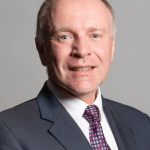
  • Marco Longhi – 2022 Speech on Energy Price Capping

    Marco Longhi – 2022 Speech on Energy Price Capping

    The speech made by Marco Longhi, the Conservative MP for Dudley North, in the House of Commons on 8 September 2022.

    May I, too, send my deepest thoughts and good wishes to Her Majesty the Queen and her family? I am sure that the people of Dudley North will want to send theirs as well.

    We know that too many people have borne the brunt of covid in recent times, and that too many are bearing the brunt of the cost of living crisis in which we now find ourselves. Some of them say to me, “Marco, what are you doing to help us? I am going to have to choose whether to turn on my hot water or feed my children.” As for local businesses, a local business owner contacted me this week saying they are having such extreme difficulties with energy prices that they feel they have no choice but to streamline staff in order to continue trading and paying their bills.

    No one should ever find themselves in a position in which they have to make such choices, whether they are a business or a household. Ordinary hard-working people should not be suffering with anxiety about how they will make ends meet this winter. Like our new Prime Minister, I want to ensure that my constituents—indeed, all our constituents—have the support they need and have certainty for the months ahead. I am therefore pleased that the Prime Minister is taking immediate action to provide support and peace of mind for so many.

    Madam Deputy Speaker, the words that I would like to use to describe Vladimir Putin are not appropriate for the polite company of the House, but it is because of him that we are having this debate. Of course, covid did play a large part in the cost of living crisis, but it is Putin’s bully-boy tactics that are cutting off Europe’s energy supply and plunging us into the freezing waters that we are facing. Putin does not care whether Jenny in Gornal can feed her children and get them to school. Putin does not care whether Dorothy in Sedgley can heat her home in her old age. Putin does not care whether John in Dudley has to close his business and lay off all his staff because he cannot pay his energy bill and continue to employ them. Putin just does not care—but I do, and I know that all of us here do.

    Winter is coming and we know what could come with it, but it does not need to be an inevitability, and now, thanks to our new Prime Minister, it will not be. The long-term plan to strengthen and secure Britain’s energy supplies, reopening the North sea, opening up fracking and investing in nuclear, will ensure that our children and grandchildren do not face these issues as they reach our grand old ages. The new support being pledged today goes a long way to reassure individuals, families and our local businesses. Our new Prime Minister is on our side, not just in the short term but in the long term.

  • Imran Hussain – 2022 Speech on Energy Price Capping

    Imran Hussain – 2022 Speech on Energy Price Capping

    The speech made by Imran Hussain, the Labour MP for Bradford East, in the House of Commons on 8 September 2022.

    We must not forget that for months this Tory Government saw the oncoming tidal wave of rising energy bills this winter, but chose to do nothing about it. For months they callously and deliberately left people in limbo, creating unimaginable uncertainty for those who face colossal energy bills this Christmas, and for months they let fear spread among those preparing to make a desperate choice between heating their homes or putting food on the table. What is worse, however, is that for months the current Prime Minister, who was a Minister in this Government for a decade, was content to go along with this grossly negligent plan of inaction, wasting valuable time when we could have been protecting people.

    Today we heard the Prime Minister, at the Dispatch Box, refer a number of times to “immediate” and “urgent” support. That is disingenuous, frankly. The Prime Minister cannot suddenly pretend that she entered the Government just today. She has been a senior Minister in previous Governments for the last decade, and she could have taken action—along with the previous Government—months ago, rather than putting people through this uncertainty.

    As is customary among Conservative Members, there have been a number of instances of smoke and mirrors. We have heard numerous references to a price freeze, but it is simply not true that prices are being frozen. As has been pointed out by other Members, what we are seeing is a rise of at least £500 in the price that people are currently paying, and a rise of hundreds of pounds more in the price that they were paying originally—hundreds of pounds more than my constituents can afford to pay.

    There has also been silence from the Prime Minister on who will actually pay for this. What is crystal clear—the Prime Minister has spelled it out—is that those who will not pay for it are the corporate oil and gas barons who have made a profit of £170 billion. In this, her first week as Prime Minister, she has made her direction of travel absolutely clear: she will go on driving a wedge between those who continue to become wealthier and those who continue to suffer poverty, and she will always side with the big corporations rather than with ordinary working people.

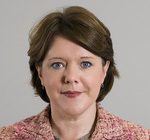
  • Maria Miller – 2022 Speech on Energy Price Capping

    Maria Miller – 2022 Speech on Energy Price Capping

    The speech made by Maria Miller, the Conservative MP for Basingstoke, in the House of Commons on 8 September 2022.

    Following Mr Speaker’s announcement, I join other hon. Members in passing on my warmest wishes, on behalf of the people of Basingstoke, to Her Majesty the Queen and her family.

    I warmly welcome the rapid action that the Government and the Prime Minister have taken since the new Government’s formation earlier this week—not only the short-term support that has been announced today, but the focus on long-term solutions to the problems we face. Clearly the energy price guarantee will provide enormous certainty and reassurance to many, many families, including those who have contacted me over the summer months.

    I think that, following what some Members have said today, the Government will want to take some time to ensure that there is clarity about how the new energy price guarantee will sit alongside the existing energy bills support scheme, which will already be providing a great deal of support for many of the vulnerable groups to which Members across the House have referred. Both schemes will ensure that people have the support and certainty that they need in these difficult times.

    Following representations that I have received from people who live in park homes and are on heat networks or who, like many of my constituents, use heating oil, I was especially pleased to hear that they would receive support. However, may I echo the comments of my right hon. Friend the Member for Forest of Dean (Mr Harper) and suggest that it would be useful to know exactly how that support will come into play?

    I was extremely pleased to hear from the Prime Minister about the support for businesses, charities and public services, which will be equivalent to the support for residential properties for six months, although, again, it would be helpful to understand quickly how that might work in practice. Charities, in particular, will be planning up to 12 months ahead for how their operations will work. Many of them operate in community centres and village halls, providing childcare facilities that are essential for our residents.

    Finally, may I take this opportunity to broaden the debate by encouraging the Government to bear in mind industries that have been hit by the increase in gas prices? I am thinking particularly about the fertiliser industry. As you will know, Madam Deputy Speaker, gas is used to create fertiliser, which is why it is relevant to the debate. The scaling back of production throughout Europe means that many farmers, particularly those in my constituency—I met some of them on Friday—are sowing seed for harvesting next year without knowing whether fertiliser will be available. Perhaps the Government could make an early statement on how we will provide surety of supply, given the impact of gas prices on their production.

    We are in a difficult situation, and I am pleased that the Government have acted so speedily.

  • Stephen Flynn – 2022 Speech on Energy Price Capping

    Stephen Flynn – 2022 Speech on Energy Price Capping

    The speech made by Stephen Flynn, the SNP MP for Aberdeen South, in the House of Commons on 8 September 2022.

    I paid particular attention to the very small note that came out from the Secretary of State for Business, Energy and Industrial Strategy earlier, especially the line that says:

    “This will save the typical household £1000 a year.”

    One thousand pounds a year? It is almost as if the cap that is being put in place at £2,500 a year is not double what energy prices were just last summer. It is almost as if the Government do not understand the sheer scale of the financial problems facing households right across the country. It is not just about energy prices. Inflation is at a 40-year high, interest rates are at a 30-year high and wages are at a 20-year low, yet we are being told that we should be happy about energy bills being frozen at £2,500 per year. It is absurd.

    Obviously it is not just households that will struggle, but businesses. A number of businesses have been spoken about today, and I have spent most of the summer getting emails from businesses that are being utterly crippled by the costs in front of them. Up to now, the Government have not even lifted a finger, and what they are proposing will not go far enough. Businesses will continue to close because of energy prices.

    This whole debate really frustrates me for a particular reason, which is that I happen to represent a constituency famed for oil and gas production. Somewhat ironically, it was the Unionist parties in this Chamber that told us in 2014 that oil and gas were running out, yet now they tell us that 100 additional new licences will be given out. Barring that irony, however, is it not absurd that energy-rich Scotland, which produces six times more gas than we use, is even having to face an energy prices crisis? Gas makes up just 14.4% of our electricity production, yet the price of that gas dictates all.

    The fact that the vast majority of our electricity comes from low-carbon sources means absolutely nothing. The fact that it comes primarily from renewables means absolutely nothing when it comes to the costs being imposed on the people of Scotland by this UK Government and the continued failure of their energy policy. If the UK Government want to do just one thing, here is a suggestion for the new Secretary of State: will this Government finally decouple renewables from gas prices? That would make a huge difference, and it would not cost a single penny.

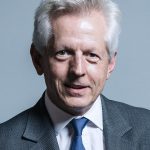
  • Richard Graham – 2022 Speech on Energy Price Capping

    Richard Graham – 2022 Speech on Energy Price Capping

    The speech made by Richard Graham, the Conservative MP for Gloucester, in the House of Commons on 8 September 2022.

    I join all colleagues, here and not here, and everyone in Gloucester in sending the warmest wishes of support to Her Majesty the Queen and to members of the royal family.

    Today’s announcement, which was made within 48 hours of the new Government being formed—no small achievement—will bring huge certainty and reassurance to residents in my constituency and elsewhere, to those living in park homes, to charities and to those across the public sector, as well as to the small businesses in particular that are already suffering. It is critical, because it puts a cap on the maximum average energy bill. The crucial word is “maximum” because, as my right hon. Friend the Member for South Northamptonshire (Dame Andrea Leadsom) said, there are huge advantages in a programme of advice and best practice being led by the Government and helping us all to reduce our energy consumption. Schools, for example, could hugely benefit from solar panels that could sell all the energy generated during the long summer holidays into the grid, thereby bringing their annual bills down considerably.

    There are lots of good things to welcome in today’s announcement, but there are a few things in particular that I would like to raise with Ministers. First, the green levies that will now be temporarily suspended have already been committed elsewhere. Who is going to pay for them now? Presumably it is the taxpayer in general.

    Secondly, the national insurance contribution increase was predicted to raise £36 billion over three years for health and care budgets. How will that be delivered now? The task before our new Secretary of State for Health and Social Care is big on generating better outcomes, but reducing the inputs will surely make that harder.

    Thirdly, there is the contribution of energy companies. We have heard a lot today, quite rightly, about how they are already paying some 66% tax in real terms. None the less, there is a huge difference between profits, which are good, and war profiteering, which is bad. The new Secretary of State for Business, Energy and Industrial Strategy could shed light on how the energy companies are to contribute to this national challenge.

    The hon. Member for Vauxhall (Florence Eshalomi) said that the rules on fracking would be completely ripped up. I do not think that that is the case, because the crucial barrier is local support, which has been conspicuously absent so far. I doubt that we will see any real change in practice.

    There is one last thing to add. A lot has been said about the welcome commitment from this Government to nuclear and renewables,

    “to embrace diverse sources of energy.”

    May I encourage the new Secretary of State to follow the great example of his predecessor in supporting marine energy?

  • Geraint Davies – 2022 Speech on Energy Price Capping

    Geraint Davies – 2022 Speech on Energy Price Capping

    The speech made by Geraint Davies, the Labour MP for Swansea West, in the House of Commons on 8 September 2022.

    When people talk about famines, they think of food shortages, but in fact famines are a combination of higher prices and lower wages. We are approaching famine conditions in Britain because after 12 years of UK austerity, with cuts in services, frozen wages and the devaluation of the pound, our people are much weaker facing the tsunami of price rises that we have seen from Putin’s brutal war.

    The response from the oil companies, of course, is that their operating costs are just the same but their prices go up. They make windfall profits. They have picked the pockets of British people, and we demand our money back. There is a sort of windfall tax at the moment; as has been said, it should be continued at international rates so that people do not face yet another £500 coming out of their household budgets. Millions of people are in desperate poverty and simply cannot afford that.

    The Prime Minister rightly talks about growth, but what she needs to remember is that the OECD has found that there is less growth if there is greater inequality. At the same time, she talks about giving back national insurance so the bottom 10% get an extra £7.60 and the top 10% get £1,800. In other words, she will increase inequality by putting more burdens on households, giving the rich more in tax giveaways, including national insurance, and not taxing the excess and unjustified profits of big corporations.

    The OECD has also found that growth is very much linked to the education of the poorest. The Government’s ambition is simply to get education spending up to 2010 levels by 2024, but they will not even achieve that because of inflation. Coretta King famously said that poverty is a child without an education. We have seen education standards falling throughout the pandemic, particularly for the poorest, so we need to invest. Meanwhile, the Government are provoking a trade war with the EU over the protocol, Bank of England rates are likely to go up, and they are provoking strikes with the trade union movement.

    What we want is growth. What we saw with the Labour party in the 10 years to 2008 was 40% growth in the economy that allowed us to double investment in education and in health. Had trend growth continued at Labour Government levels, the average income in Britain would have been £10,000 higher, so there would have been more resilience to the external shocks of the pandemic and the energy crisis. We need to think about that, and we need to invest in hydrogen instead of fracking and in renewables instead of more and more oil.

  • Dean Russell – 2022 Speech on Energy Price Capping

    Dean Russell – 2022 Speech on Energy Price Capping

    The speech made by Dean Russell, the Conservative MP for Watford, in the House of Commons on 8 September 2022.

    Given the announcement earlier, I also send my best wishes and the best wishes of all those across Watford to Her Majesty the Queen.

    The announcement on energy costs today was very important. Over the summer, I spent lots of time volunteering with organisations, from the citizens advice bureau to working in the British Heart Foundation shop, and I heard at first hand about the challenges and fears that people have about the fuel crisis and their bills. We heard today about a significant package that will not only help people immediately, but deal with the long-term challenges, and we are making sure that the proposals work economically. As we all know, windfall taxes are a one-off—potentially a two-off, if we can call them that. However, once we get to the third or fourth try, they will not work, so we need something that works immediately and in the long term and which puts us on a competitive footing around the world.

    We heard an important point about the fact that, by 2040, we want to be a net energy exporter. That means many things, including not just, importantly, our fuel security, but investment in jobs, investment in education, investment in skills and investment in business to make sure that we look ahead to the long term, so that we are not in this situation again—we do not want to be—and to help other countries around the world not to be in this position again.

    I will make a final point, because I am conscious that you would like short speeches, Madam Deputy Speaker—and if anything, I am short. I studied physics at university—I am probably one of the few MPs who studied nuclear physics as part of my course, not that I was that great at it—and I think that the talk of moving forward with nuclear is so important. There has been a negative image of nuclear over many decades. The opportunity to have small modular reactors across the country that enable us to have safe, green energy that entire communities can rely on is essential. That is also about an infrastructure of skills and education.

    I massively welcome this package and think it is the right one. There is more to do, of course—as always—but I welcome this debate. We can be certain of one thing, which we need to say to all our residents who are fearful of what may come: this will support them in the short term. Although people may disagree about the long-term approach, this will support them now and in winter and they should feel reassured that they are going to be okay.


  • Liz Saville Roberts – 2022 Speech on Energy Price Capping

    Liz Saville Roberts – 2022 Speech on Energy Price Capping

    The speech made by Liz Saville Roberts, the Plaid Cymru MP for Dwyfor Meirionnydd, in the House of Commons on 8 September 2022.

    Diolch yn fawr, Ddirprwy Lefarydd. Hoffwn ddanfon dymuniadau gorau i’w Mawrhydu’r Frenhines. I, too, would like to send my best wishes to Her Majesty the Queen.

    Today’s announcement shows beyond doubt whose side the new Prime Minister is on. She is prepared to force taxpayers to carry the burden of borrowing billions of pounds to subsidise the shareholders of energy companies that are profiting from Putin’s war. It is shocking that she cannot even tell us how much that burden will cost today. I urge her to think again. Make energy companies pay their fair share. The global energy norm of energy profit taxation is 70%. Norway stands at 78%. Why does the population of the UK have to suffer the combined yokes of higher taxes, worse public services and falling real wages while private profit is protected under her premiership?

    We should use that money to return the energy price cap to the pre-April level of £1,277 a year and extend that cap to small businesses and charities. People are struggling now. Even at current prices, 180,000 households in Wales are forced to struggle even to afford items such as heating, food and toiletries. Bills of £2,500 are unaffordable for many, many people.

    Anything short of £1,277 as a cap will fail to meet the scale of the crisis that we face. It will require the Prime Minister’s Government—this is important—to introduce additional packages of support for vulnerable households, including doubling the £650 cost of living payment and revising the eligibility criteria to include those on disability benefits who are currently excluded from support. That will cost us more in future if we do not deal with what is genuinely facing us. Instead of pursuing fantasy economics of rampant deregulation and tax cuts for the rich, the Prime Minister must also prioritise a reduction in energy demand and investment in low-carbon sources. That is the only way to bring down energy bills in the medium and long term.

    Let me be clear and simple. It is time to unchain Wales’s renewable and low-carbon energy potential by vastly improving our grid capacity; bringing forward small modular reactors at Trawsfynydd in my constituency, Wylfa and other places; empowering the Welsh Government to deliver large-scale, transformative infrastructure projects, such as tidal lagoons; devolving management of the Crown Estate to Wales; and enabling community energy schemes to realise their full potential by selling their power directly to local customers. For us in Wales, it is clear that, in the long term, to fix this crisis for good, we must place our energy system and its huge potential in the hands of the people of Wales, for the benefit of the people of Wales.


  • Claire Coutinho – 2022 Speech on Energy Price Capping

    Claire Coutinho – 2022 Speech on Energy Price Capping

    The speech made by Claire Coutinho, the Conservative MP for East Surrey, in the House of Commons on 8 September 2022.

    All summer, like many Members, I have been hearing from households, businesses, schools and other public sector organisations and community centres that have been worried about their energy bills going up fivefold, in many cases. I therefore warmly welcome the speed and ambition of the package, which will bring much certainty to businesses and peace of mind to households and others.

    I welcome the fact that we were clear about the discretionary funding that will be provided for users of heating oil, of which I have many in my constituency. I also welcome the reform of the electricity pricing market, so that non-gas power producers are more fairly priced, which will lower the cost for many users. The clarity that has been provided for those who are switching contracts and will not face exit penalties will, again, be very positive for many.

    Instinctively, I would have preferred a targeted support programme. However, from the work that I have been doing over the past 12 months and longer in the Treasury on the cost of living, I will say that there are challenges with that approach. We know where all the people are who use energy and who are on benefits, but we do not know much about middle-income people. We tried, through a council tax band approach, to target this a bit more, but it is imperfect, so I think the universal approach that has been adopted is right, because we cannot let middle-income households go to the wall. The truth is that when energy prices are going up by so much, there are many people outside the benefit system who may be on £30,000 or £40,000 who would be struggling hugely without this programme.

    We cannot deny, however, that there are problems when price signals are distorted through price controls. I was therefore very pleased to hear the Prime Minister talk about energy efficiency and energy security and supply, which will be critical if we get through this period.

    I want to come back to the windfall tax and the £170 billion that Opposition Members have mentioned multiple times They know that those profits are not being made here and are not taxable. I know they know that because they set out their plans a week ago and they wanted to recoup only £8 billion from the oil and gas companies. If they truly thought that £170 billion was up for grabs—we know how much they love grabbing profits—why did they not set out £20 billion, £30 billion, £50 billion or even £100 billion? It is because they know that that is not possible. Actually, we did introduce an increase in their taxes. Oil and gas companies are paying not the 19% corporation tax that other companies pay, or even the 40% that they pay normally, but 65%. Two thirds of their profits are coming into the tax system. If they can invest as much of the rest of it as possible, that is what we will need for long-term solutions to protect our households, businesses, schools, charities and more.

  • Lloyd Russell-Moyle – 2022 Speech on Energy Price Capping

    Lloyd Russell-Moyle – 2022 Speech on Energy Price Capping

    The speech made by Lloyd Russell-Moyle, the Labour MP for Brighton Kemptown, in the House of Commons on 8 September 2022.

    Some of the announcements are welcome, particularly the focus on people who are not on the grid. I would like to highlight to the Government Front Benchers—I hope they will go away and seek more clarity on this—the people who resell energy. They are often landlords in blocks who buy the energy on the commercial market and resell it to their tenants. The Government have never explicitly mentioned that. They have talked about heat networks, which is if the landlord is running a boiler, but not about landlords they are supplying the electricity directly to a flat. Those meters are not on the official meter grid and they will not even be eligible for the £400 support from the Government unless action is taken. There needs to be some urgent action to ensure that landlords can purchase at fair prices and that they pass them on. At the moment, the landlord has to pass the cost on at the purchase price. I am not saying that landlords are gouging, but there is a problem that the purchase price is a commercial price, not a residential price. I hope the Government will come back with clarity on that.

    The reality is that this package is still a £500 increase on what energy bills are today. This is not a reduction; it is an increase. It did not need to be like this. We could have regulated the wholesale market price, and the Government could have stepped in and offered loans to energy companies to bridge the gap for the gas they are importing.

    That could have been the offer, with the debt put on the energy companies and not the state, but that is not what has been put forward. The Government could have fixed energy prices at what they are today and made interventions, but we have not seen that either. Therefore, there are real difficulties relating to who pays. Does this come from the profits of the companies or is it done on the backs of the people? I am afraid that the wrong choice has been made, because future generations, and even this generation in future years, will pay for this policy. That does not seem right.

    Improvements of efficiencies were mentioned slightly but not enough. We need a house-to-house, street-by-street approach to insulation—as my constituency neighbour, the hon. Member for Brighton, Pavilion (Caroline Lucas), has called for—to get this right. Leaving it to the market does not work. We will not get the efficiencies of scale. Labour has put forward a plan to start that process, but even more ambition is needed.

    We also need to look at the production of wind energy not just offshore, but onshore, and having solar panels on our roofs. At the moment, the solar panel feed-in tariff is less than the cost of buying energy directly from the market. That does not work; we need to reverse it. We need to give people the incentive to pay into the grid at a fair market price—

    Madam Deputy Speaker (Dame Rosie Winterton)

    Order.