Category: Energy

  • Jacob Rees-Mogg – 2022 Statement on the Energy Prices Bill

    Jacob Rees-Mogg – 2022 Statement on the Energy Prices Bill

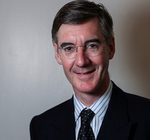
    The statement made by Jacob Rees-Mogg, the Secretary of State for Business, Energy and Industrial Strategy, in the House of Commons on 17 October 2022.

    I beg to move, That the Bill be now read a Second time.

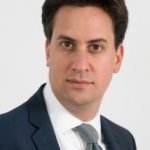
    I am glad that the House has agreed to the amended allocation of time motion—otherwise, I would have been in danger of filibustering my own motion. I am sure that hon. Members across the House agree with me about the urgency of this legislation. Nevertheless, I thank hon. Members for the speed with which the Bill is being considered. In particular, I thank Members of His Majesty’s official Opposition, and especially the right hon. Member for Doncaster North (Edward Miliband), for their constructive engagement.

    The world is facing a global energy crisis, which has been exacerbated by Russia’s illegal invasion of Ukraine. The soaring cost of energy means that families and businesses across the United Kingdom are facing rising energy bills this winter. On 8 September, the Prime Minister announced an unprecedented package of assistance, which will support households, businesses, charities and public sector organisations across the UK with the increasing cost of energy. This decisive action will help deal with the rising cost of energy while reducing inflation and supporting economic growth. The Bill puts the assistance announced by the Prime Minister on a secure legislative footing. The legislation is crucial to providing immediate support to people and businesses.

    The domestic scheme, the energy price guarantee that was announced, is already up and running. The Bill prioritises the legislative underpinnings of that scheme. The energy price guarantee will provide support to the end of March 2023 that will be equivalent to an annual bill of £2,500 for the typical household. The average unit price for dual-fuel customers on standard variable tariffs subject to Ofgem’s price cap paying by direct debit will be limited to 34p per kWh for electricity and 10.3p per kWh for gas, inclusive of VAT, from 1 October. It is important to emphasise that per-unit use.

    Jonathan Edwards (Carmarthen East and Dinefwr) (Ind)

    The Secretary of State will be aware that, in constituencies such as mine, a large number of homes are off the gas grid. The Government have come up with an alternative fuel payment of about £100 for those homes, but oil prices have nearly doubled. I know that changes to the whole policy have been announced by the Chancellor today, but will he commit to equivalent support for those off the gas grid?

    Mr Rees-Mogg

    I will come to that, but the intention is that the support should be equivalent to that for people on the grid.

    Alan Brown (Kilmarnock and Loudoun) (SNP)

    Talking about an average household bill of £2,500, the Prime Minister said that the measures would stop people paying £6,000 on average, but the explanatory notes to the Bill estimate that the measures will save people from bills reaching £4,200. Given that the support will end in April, what can people who, after April, will not be receiving any support expect to pay for an average household bill?

    Mr Rees-Mogg

    The Bill is setting the immediate support, which will run until April. The Government are reviewing how to ensure that support is more targeted in future, but there is no question that there will be support, and the Bill provides the powers for that. It is important to emphasise that bills will still depend on usage. That is why I am grateful for the work of my hon. Friend the Member for Hexham (Guy Opperman), who has emphasised the advantages of a prudent use of energy benefiting all users.

    Anna McMorrin (Cardiff North) (Lab)

    The Secretary of State talks about energy usage and families not having bills of more than £2,500, but bills for large families with high usage will be far, far more. How can families have certainty? If the Government will not have a communications campaign on reducing energy usage—they have said that they are against that on principle—how do we get that message across to people up and down the country?

    Mr Rees-Mogg

    What we are doing is making it clear that it will depend on usage and that the figures are average figures. The £2,500, therefore, is for an average family and, obviously, not necessarily for all families. Larger families will have particular pressures, but I am coming on to the other support that remains which will help families. The price per unit of electricity and gas is part of the package, but it is of course combined, and we recognise the difficulties that families and businesses will face with higher prices.

    Jim Shannon (Strangford) (DUP)

    I thank the Secretary of State for bringing forward the proposals he is outlining. I am very concerned for those I refer to as the working poor, and I know the Secretary of State is as well. With the cumulative money that people have to pay, the working poor, in my opinion, seem to be the ones who are losing out. Can he give us some reassurance that that will not be the case?

    Mr Rees-Mogg

    Yes, I think I can give the hon. Gentleman the assurance he is asking for. That is why the scheme is as broad as it is. The effect of the price rises we were in danger of seeing was so great that it would have affected people who were not on benefits. They would have found that they were in fuel poverty without this assistance. That is why it is so encompassing. The support is being provided at the point in the year when 60% of consumption takes place.

    The energy price guarantee comes in addition to the £400 of support provided by the energy bills support scheme for Great Britain, announced earlier this year.

    Sammy Wilson (East Antrim) (DUP) rose—

    Mr Rees-Mogg

    I see the right hon. Gentleman is about to intervene. I will just say one thing, because I am coming on to a point about Northern Ireland on the energy bills support scheme. It will be extended to Northern Ireland to provide domestic consumers with the equivalent level of support being provided to households in Great Britain. This is very much a Unionist package.

    Sammy Wilson

    First of all, I give our thanks to the Secretary of State for the diligent way he has sought to address the problems in Northern Ireland. He points out that the package is coming at the point of the year where energy consumption is at its highest. In Northern Ireland, because of the difficulties of one electricity company, it may well be that the whole scheme will be held up until it is ready to give a discount on bills. Can he give us an assurance that, since 60% of consumers are with companies that could do it tomorrow, there will be no delay in waiting for the slowest to catch up before the benefits are made available?

    Mr Rees-Mogg

    The point of the Bill is to bring in support from 1 October. It has already been done in GB for domestic users and it will be retrospective for Northern Ireland. That is what the Bill is trying to achieve.

    John Redwood (Wokingham) (Con)

    The way out of this problem is far more domestic capacity, so that there is a bigger supply in due course. That requires investment. Can my right hon. Friend reassure us that although there will be temporary subsidies, price controls and surrogate windfall taxes, sufficient incentives and signals will be sent to industry that we really do need the investment and that it will be worthwhile?

    Mr Rees-Mogg

    Yes, indeed. This is a temporary measure. The legislation runs out; there are various sunset clauses that will affect it. We need more of our own supply. Some will be renewable, and some will be oil and gas. We need to ensure that cheap energy flows in this country for the good of the economy.

    The legislation will enable the Government to provide support to consumers across the UK who are not on the main gas grid. This will benefit consumers who use alternative fuels to heat their homes, such as heating oil, as well as those who live on heat networks. Eligible households will receive a £100 payment this winter through alternative fuel payment powers, which are introduced under the Bill. The Government will be setting out the support available for non-domestic consumers on the same basis.

    The important point on the £100 payment is that it is designed with reference to changes in the price of heating oil from September 2021 to September 2022 and aims to provide support which is equivalent to that received by people who heat their homes using mains gas. I know right hon. and hon. Members are interested in how those figures have been calculated, so I will place more information in the House of Commons Library detailing the basis of our calculation.

    In addition, measures in the Bill will extend the energy bills support scheme to UK households that would otherwise miss out on the automatic £400 payment as they do not have a domestic electricity contract. That may be because they receive their energy through an intermediary with a commercial connection, or because they are otherwise off the electricity grid. The Bill will also ensure that in cases where intermediaries receive support from the schemes, they are required to pass it on to the end users as appropriate.

    For example, the legislation will provide powers so that landlords are required to pass on support to tenants. His Majesty’s Government are taking action to provide equivalent support to heat network customers. This includes measures that will ensure heat network suppliers pass on the support they receive to their customers. In addition, the Bill provides for the appointment of an alternative dispute resolution body, which will handle complaints raised by consumers against their heat network if it has not passed through the benefit.

    Let me turn to non-domestic schemes. As well as helping households, the Government are taking action to provide support to businesses, charities and public sector organisations through the energy bill relief scheme. We will provide support to non-domestic consumers as soon as possible to help businesses and other organisations with their energy bills this winter. The Bill is vital for the implementation of the scheme, which will provide a price reduction to ensure businesses are protected from excessively high bills. Initially, the price reduction will run for six months, covering energy use from 1 October. After three months, the Government will publish a review, which will consider how best to offer further support. It will focus in particular on non-domestic energy users who are most at risk to energy price increases. Additional support for those deemed eligible will begin immediately after the initial six-month support scheme.

    In addition to those unprecedented support schemes, the Bill will contain measures that will allow us to protect consumers from paying excessively high prices for low-carbon electricity. The provisions will limit the effect of soaring global gas prices by breaking the link between gas prices and lower cost renewables. This will help to ease the pressure on consumer bills in the short term, while ensuring energy firms are not unduly gaining from the energy crisis. In addition, the Bill will enable the Government to offer a contract for difference to existing generators not already covered by the Government’s contract for difference scheme. This voluntary contract would grant generators longer-term revenue certainty and safeguard consumers from further price rises.

    Taken as a whole, the Bill will ensure that families, businesses, charities, schools, hospitals, care homes and all users of energy, receive the urgent support they require owing to the rising costs of global energy prices. In addition, the legislation takes important steps to decouple the link between high gas and electricity prices, which will ensure consumers pay a fair price for their energy. I hope that Members, right hon. and hon. Members alike, will agree that this is a vital and timely piece of legislation.

    Caroline Lucas (Brighton, Pavilion) (Green)

    Will the Secretary of State give way?

    Mr Rees-Mogg

    I am within a moment of finishing, and I had better finish because time is so short.

    This is a crucial package of measures that meets the challenges posed by sky-high global energy prices and Russia’s illegal invasion of Ukraine. Without the launch of the schemes I have outlined, many individuals and businesses would be left facing growing financial turmoil in the face of increasing energy costs. Now is the time to act and the Bill delivers the support that is required. I therefore commend the Bill to the House.

  • Jeremy Hunt – 2022 Statement on Energy Markets Finance Scheme Contingent Liability

    Jeremy Hunt – 2022 Statement on Energy Markets Finance Scheme Contingent Liability

    The statement made by Jeremy Hunt, the Chancellor of the Exchequer, in the House of Commons on 17 October 2022.

    It is normal practice when a Government Department proposes to undertake a contingent liability in excess of £300,000, and for which there is no statutory authority, for the Minister concerned:

    To present a departmental minute to Parliament, giving particulars of the liability created and explaining the circumstances; and

    To refrain from incurring the liability until 14 parliamentary sitting days after the issue of the minute, except in cases of special urgency.

    I am writing to notify Parliament of a contingent liability that HM Treasury intends to create related to the energy markets finance scheme (EMFS) which is being delivered with the Bank of England and opens for applications today. This is a case of special urgency in which this liability will be incurred within 14 days of this minute being issued due to the extraordinary volatility of the energy market and need to deliver this scheme. The Treasury notified the Treasury Select Committee and Public Accounts Committee of this contingent liability when the then Chancellor confirmed this scheme as part of the growth plan on 23 September 2022. In parallel to laying a departmental minute, the Treasury has also written to these Committees to provide them with further details of the contingent liability.

    As set out to Parliament in the plan for growth on 23 September 2022, the EMFS provides a 100% guarantee to commercial banks to provide additional lending to energy firms. This guarantee is provided by the Bank of England, which is in turn indemnified by HM Treasury. The scheme provides a backstop for energy firms facing large and unexpected margin calls due to price volatility in energy markets, ensuring they can continue to operate and manage risk in a cost-effective way and eventually reduce costs for businesses and consumers.

    Margin calls can be large, with reports of them reaching multiple billions of pounds in some extreme cases. The facility will only support additional lending beyond what is commercially available to meet large margin calls. There is no cap on the facilities provided to firms due to the varying requirements of each firm, but a total size of the guarantee will be set for each firm as a part of the application process. Therefore, the total liability will depend on the take-up of the scheme and the specific circumstances of each applicant. However, any support provided will be on terms designed to protect the taxpayer.

    The guarantees may only be provided to firms playing a material role in UK energy markets and they will need to evidence their exposure to margin calls. Firms will also have to comply with other eligibility criteria, including being UK based/having a UK presence, facing short-term liquidity requirements and being otherwise of sound financial health. When using the scheme, firms will also have to comply with a set of policy conditions, such as restrictions on the use of funds, executive pay, and capital distributions.

    It is our intention that the EMFS is a scheme of last resort, to be used after existing commercial financing options are exhausted. This is reflected in the penal interest rate of the facilities, which will be significantly above market rate. As is standard practice for commercial lenders, an arrangement fee and commitment fee will be charged to firms, as well as an interest rate on drawn funds. Commercial banks delivering the scheme will not generate a commercial return which corresponds to remuneration for risk, given the Bank of England will wholly guarantee loans—but they will be allowed a commercial margin for admin costs incurred. The remainder of the proceeds of fees and interest on loans will flow back to the Exchequer.

    The Government will only face losses from the scheme if the lending is not repaid. To reduce the risk of this happening, a rigorous application process has been set up. Firms will have to meet a minimum credit rating threshold of BB—and applications will be assessed initially by the Bank of England and then by an advisory committee (AC), which will make a recommendation for the Chancellor to decide whether to approve or reject an application. The scheme will therefore have a robust assessment of default risk and solvency, with due diligence provided by external and expert advisers.

    The tenor of each facility agreement will last up to 12 months.

    HM Treasury, supported by UK Government Investments, will be responsible for the management and monitoring of the scheme once launched. The Bank will report regularly on the progress of the scheme, as set out in its market notice. If the liability is called, provision for any payment will be sought through the normal supply procedure.

    A departmental minute has been laid before the House of Commons.

  • Jacob Rees-Mogg – 2022 Comments on the New Energy Prices Bill

    Jacob Rees-Mogg – 2022 Comments on the New Energy Prices Bill

    The comments made by Jacob Rees-Mogg, the Secretary of State for Business, Energy and Industrial Strategy, on 11 October 2022.

    Businesses and consumers across the UK should pay a fair price for energy. With prices spiralling as a result of Putin’s abhorrent invasion of Ukraine, the government is taking swift and decisive action.

    We have been working with low-carbon generators to find a solution that will ensure consumers are not paying significantly more for electricity generated from renewables and nuclear.

    That is why we have stepped in today with exceptional powers that will not only ensure vital support reaches households and businesses this winter but will transform the United Kingdom into a nation that offers secure, affordable and fairly-priced home-grown energy for all.

  • Ed Miliband – 2022 Comments on Closing Gas Storage

    Ed Miliband – 2022 Comments on Closing Gas Storage

    The comments made by Ed Miliband, the Shadow Energy Minister, on Twitter on 10 October 2022.

    The Conservatives’ decision to close our largest gas storage facility in 2017 is yet another way in which they have left us exposed, along with blocking onshore wind + solar, and cutting energy efficiency And now they won’t even give proper information about cutting bills

  • Liz Truss – 2022 Statement on Energy

    Liz Truss – 2022 Statement on Energy

    The statement made by Liz Truss, the Prime Minister, on Twitter on 7 October 2022.

    We have taken decisive action to support households and businesses with their energy costs – and we’re working to make sure the United Kingdom is never in this position again by tackling the root cause of the energy crisis.

    That means producing more energy here at home.

    To secure our long-term energy supply and reduce reliance on authoritarian regimes, we’re accelerating our domestic energy production, including launching a new North Sea Oil & Gas licensing round.

    We’re also speeding up deployment of renewables including hydrogen, solar & wind.

    Yesterday I held discussions with our allies on progressing Sizewell C and building more nuclear power stations.

    We’re also working to get better prices for people now – our Energy Supply Taskforce is negotiating new long-term agreements with gas suppliers.

    Together, we will get through this winter, grow our economy and secure our energy independence for the future.

  • Graham Stuart – 2022 Statement on the UK’s Updated 2030 Nationally Determined Contribution

    Graham Stuart – 2022 Statement on the UK’s Updated 2030 Nationally Determined Contribution

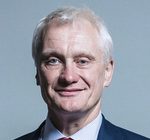
    The statement made by Graham Stuart, the Minister for Climate, in the House of Commons on 22 September 2022.

    The Glasgow climate pact, agreed by almost 200 countries at COP26 in November 2021, recognised the need for accelerated action to limit global warming to 1.5° C above pre-industrial temperatures. It called for all countries to “revisit and strengthen the 2030 targets in their Nationally Determined Contributions (NDCs) as necessary to align with the Paris Agreement temperature goal by the end of 2022, taking into account different national circumstances”.

    During its COP presidency, the UK has been working with partner countries, non-state actors and civil society to encourage countries, particularly major emitters, to respond to this call. And the UK has shown leadership by revisiting its own NDC to ensure it remains a fair and ambitious contribution to global action on climate change. The latest science from the Intergovernmental Panel on Climate Change—IPCC—published earlier this year highlighted the closing window for action to keep 1.5° C in reach and made clear the urgency of delivering on the Glasgow climate pact.

    In revisiting the UK NDC, the Government considered a range of factors including the latest available science, expectations in the Paris agreement and the Glasgow climate pact, the UK’s existing 2050 net zero commitment, and energy security, as well as advice and evidence from the Climate Change Committee and other independent commentators.

    The UK has strengthened its NDC by making the following updates to the accompanying information to facilitate clarity, transparency and understanding—ICTU—in line with international best practice and the Paris agreement rulebook:

    clarified how the target—which remains a commitment to reduce all greenhouse gas emissions by at least 68% by 2030 on 1990 levels—aligns with the Paris Agreement temperature goal;

    explained more fully how the UK will deliver the NDC by 2030;

    updated on the progress made in expanding the territorial scope of the NDC to include the UK’s Crown Dependencies and Overseas Territories; and included more, detail on levelling up, gender, green skills, public engagement, Just Transition and how the UK is supporting other countries with delivery of their NDCs.

    The UK’s NDC requires the fastest rate of reduction in greenhouse gases between 1990 and 2030 of any major economy and is on a trajectory to net zero by 2050. The Government are committed to net zero by 2050 and looks forward to the review led by Chris Skidmore to ensure that it is delivered in a way that is pro-business and pro-growth.

    Since submitting the NDC in December 2020, the UK has published a range of sectoral strategies and plans and has signed up to numerous pledges and actions to deliver on the 2030 target. The Prime Minister has also announced an ambitious package of measures to tackle soaring energy prices and ensure the UK’s energy security, following Putin’s illegal invasion of Ukraine.

    The UK will submit its updated NDC to the UNFCCC in time for the deadline for inputs to the NDC synthesis report, 23 September 2022, and will lay a copy in the House at the same time.

  • Jacob Rees-Mogg – 2022 Speech to the IAEA 66th General Conference

    Jacob Rees-Mogg – 2022 Speech to the IAEA 66th General Conference

    The speech made by Jacob Rees-Mogg, the Secretary of State for Business, Energy and Industrial Strategy, to the IAEA 66th General Conference in Vienna on 26 September 2022.

    Mr President,

    Congratulations on your appointment as President of this Conference.

    It is an honour to be here today, and I would like to express His Majesty’s Government’s gratitude for the phenomenal work of the Director General and the Secretariat over the last year. Their commitment, resilience, and professionalism in responding to threats to the security and stability of our world has shown, once again, the value of the Agency to the global community.

    Mr President, The United Kingdom firmly believes that the peaceful uses of nuclear technologies are essential to resolving some of the most pressing challenges of our time. First, this means boosting our energy security through safe and secure nuclear power to address climate change and food insecurity.

    Yet we cannot ignore those who threaten this vision. The United Kingdom continues to condemn the Russian Federation’s unlawful invasion of Ukraine and its reckless actions against nuclear facilities, including at the Zaporizhzhia Nuclear Power plant. Russia’s wicked actions threaten the safety of millions and undermine the use of nuclear technology. The United Kingdom supports the IAEA’s work to ensure the safety and security of nuclear facilities in Ukraine, including at the Zaporizhzhia Nuclear Power plant. However, we are clear that the only way to resolve the nuclear safety issues in Ukraine is for the Russian Federation to end its unprovoked invasion, and unconditionally withdraw all its troops and personnel from Ukraine’s nuclear facilities and its internationally recognised borders.

    While Russia acted alone to block consensus at the recent Nuclear Non-Proliferation Treaty Review Conference, the United Kingdom will play its part to advance our commitments under the NPT. This includes the Sustained Dialogue on Peaceful Uses, where we – alongside 30 other partners – aim to continue expanding access to nuclear technologies, to allow more countries to benefit from them, through medical, environmental and energy applications.

    It is also deeply concerning, Mr President, that Iran has chosen not to seize the critical diplomatic opportunity to restore the JCPoA and instead continues to escalate its nuclear programme. The JCPoA cannot in any way be used to release Iran from its legally binding safeguards obligations that are essential to the non-proliferation regime and international security. The only way the issues can be resolved is through Iran providing technically credible explanations to the Agency’s outstanding questions.

    Mr President, despite these threats to the global non-proliferation architecture, we must not lose sight of the opportunities of advanced nuclear technologies. That is why, earlier this year, the British Energy Security Strategy set out our intention to boost deployment of civil nuclear up to 24GW by 2050, including through the development of Small Modular Reactors. Meanwhile, we are improving our plans for decommissioning and developing a geological disposal facility to dispose of our most hazardous radioactive waste safely and securely.

    We are also leading global efforts to make Fusion Energy a reality. By investing in the best research, we plan to build a prototype fusion power plant that will put energy on the grid by 2040 – demonstrating Fusion Energy’s commercial viability.

    Furthermore, Mr President, it is more important than ever to have resilient international supply chains for uranium and nuclear fuel. The United Kingdom has many decades of experience of making fuel for our own reactors and for export to the rest of the world. We will continue to build on this, ensuring that our supply chains and capabilities are ready to help fuel this energy secure future.

    We must also recognise, Mr President, that challenges from the COVID-19 pandemic to Russia’s illegal war in Ukraine have highlighted the importance of working together to strengthen our nuclear safety, security and safeguards frameworks.

    The Agency can count on His Majesty’s Government’s full support in its efforts to strengthen these systems, including through our cooperation with the US and Australia on AUKUS naval nuclear propulsion. We are working closely with the IAEA to ensure that the precedent set by Australia’s acquisition of submarines strengthens the global non-proliferation regime. As our leaders said in last week’s statement, the AUKUS partners are fully committed to establishing an approach that meets the highest non-proliferation standards. We welcome Director General Grossi’s report to the September IAEA Board of Governors meeting on this issue, in which the Director General reported his satisfaction with our engagement.

    We also remain committed to working with Contracting Parties to strengthen IAEA Conventions, particularly through the valuable Peer Review processes, and maintaining robust emergency response arrangements.

    An effective and robust safeguards system remains an essential enabler for the peaceful uses of nuclear. We urge those countries that have not yet done so to ratify Comprehensive Safeguards Agreements and Additional Protocols. Only fully implemented and ratified agreements, matched with high security standards for nuclear material and sites will deserve the public’s confidence in nuclear technologies and provide the assurance that they are safe, secure and safeguarded.

    I would also like, Mr President, to applaud the IAEA’s significant contribution to science and research and the Director General’s unwavering commitment to nuclear for development. I am happy to pledge £3.4 million to the Technical Cooperation Fund.

    The technologies under development today are needed to solve the most pressing global development challenges of our time, and it is our responsibility to deliver these to those who need it most.

    Finally, let me emphasise Mr President, the UK will continue to give the Secretariat, and the Director General, our wholehearted support.

    Thank you very much.

  • Jacob Rees-Mogg – 2022 Statement on Energy [September 2022]

    Jacob Rees-Mogg – 2022 Statement on Energy [September 2022]

    The statement made by Jacob Rees-Mogg, the Secretary of State for Business, Energy and Industrial Strategy, in the House of Commons on 22 September 2022.

    Following the Prime Minister’s announcement on 8 September, yesterday, the Government published further details of the support we are offering to people and businesses in the face of soaring energy prices. This package of unprecedented assistance for the whole UK provides the certainty families and business owners need to help them manage their energy bills.

    Details of the energy price guarantee for domestic consumers and the energy bill relief scheme for business and non-domestic properties are available on gov.uk. The Chancellor of the Exchequer will set out more details of the costs of the Government’s support as part of his fiscal statement on 23 September.

    We have designed the schemes to be simple for energy consumers. Families and eligible businesses do not have to take action or apply for support, energy suppliers will automatically apply the appropriate reduction via their energy bill. Households will receive an equivalent level of financial support wherever they are in the UK. The same is true for businesses across the UK too.

    The energy price guarantee will ensure that a typical household in Great Britain pays an average £2,500 a year for their energy from 1 October 2022, for the next two years. Households in Northern Ireland will see equivalent benefits on the energy bills. On average usage, a household in Great Britain will save £1,000 a year. This is in addition to the already announced £400 energy bills support scheme for households across the UK. The most vulnerable UK households will also continue to receive £1,200 of support. For consumers in Great Britain who pay for their energy through a monthly, quarterly or other regular bill, the energy price guarantee will be applied when their bill is calculated. The guarantee limits the amount the bill payer can be charged per unit of gas or electricity, so the exact bill amount will continue to be influenced by how much energy is used.

    The energy bill relief scheme will provide protections for all businesses, voluntary sector and public sector organisations in Great Britain which face excessively high energy bills over the winter period, whether they are on existing fixed price contracts agreed on or after 1 April 2022, signing new fixed price contracts, variable or deemed tariffs or flexible purchase contracts. To administer support, the Government have set a supported wholesale price—expected to be £211 per MWh for electricity and £75 per MWh for gas, less than half the wholesale prices anticipated this winter—which is a discounted price per unit of gas and electricity. Suppliers will pass the reduction in the wholesale price through to their customers.

    The energy bill relief scheme will run initially for six months covering energy use from 1 October 2022 until 31 March 2023. There will be a review of the operation of the scheme, to be published in three months’ time. This review will consider how best to offer further support to customers who are the most vulnerable to energy price increases. These are likely to be those who are least able to adjust, for example by reducing energy usage or increasing energy efficiency.

    A similar scheme will be established in Northern Ireland, providing a comparable level of support. We intend to provide more information on the comparable support for non-domestic customers in Northern Ireland by the end of September.

    The scheme for domestic consumers will be different, because of the different way the electricity and gas market operates in Northern Ireland. But it will provide households with an equivalent level of support as for those in Great Britain. Households do not need to take any action to receive this support, although it may take a little longer than for Great Britain for relief to take effect. However, the savings will be applied to energy used from October onwards so that households get the same overall benefit as those in Great Britain. The energy price guarantee limits the amount you can be charged per unit of gas or electricity, so households’ exact bill will continue to be influenced by how much energy is used.

    Households in Northern Ireland will also receive the £400 discount on their bills through the Northern Ireland energy bills support scheme, which will offer the same level of support as for households in Great Britain. We aim to provide this £400 discount for Northern Ireland as soon as possible.

    A comparable scheme to the energy bill relief scheme will be in place for businesses and other non-domestic customers in Northern Ireland. This will follow a similar structure to the GB scheme. We intend to provide more information on the comparable support for non-domestic customers in Northern Ireland by the end of September.

    As the Prime Minister said on 8 September, the Government are bringing forward emergency legislation to underpin the delivery of our support package. We will introduce a Bill immediately after parliamentary recess. It will include measures for the GB energy price guarantee for domestic consumers and the energy bill relief scheme for businesses and non-domestic properties so all of GB receives equivalent support; and enable the delivery of comparable schemes in Northern Ireland. It will provide powers to enable low carbon generators to move on to fixed prices to end the situation where electricity prices are set by the marginal price of gas, ensuring consumers pay a fair price for their energy.

    Contingent liabilities

    I have laid before Parliament a departmental minute describing contingent liabilities arising from the energy price guarantee. It is normal practice when a Government Department proposes to undertake a contingent liability of £300,000 and above, for which there is no specific statutory authority, for the Department concerned to present Parliament with a minute giving particulars of the liability created and explaining the circumstances.

    I regret that because of the urgency of establishing this scheme before 1 October, I have not been able to follow the usual timelines for issuing notice at least 14 parliamentary sitting days before the liability begins to be incurred.

    The Treasury has approved the scheme in principle. I will continue to update Parliament on this scheme.

    New oil and gas licensing

    We are scaling up renewables, nuclear, and lower carbon energy sources, to boost Britain’s energy security in the long term, and reduce our exposure to high fossil fuel prices set by global markets outside our control. While we do this, there will continue to be ongoing demand for oil and gas over the coming years during this transition, with oil and gas needed to maintain the security of the UK’s energy supply. Making the most of our own domestic resources under the North sea will make us less dependent on foreign imports.

    In the light of Putin’s illegal invasion of Ukraine and weaponisation of energy, strengthening our energy security is an absolute priority, and—as the Prime Minister said—we are going to ensure the UK is a net energy exporter by 2040. To get there we will need to explore all avenues available to us through solar, wind, oil and gas production, so it’s right that we’ve lifted the pause to realise any potential sources of domestic gas.

    In 2021, it was decided that a climate compatibility checkpoint should be put in place, so that compatibility with the UK’s climate objectives is assessed as part of the decision on whether or not to endorse continued oil and gas licensing rounds.

    In December 2021, a consultation on the design of this checkpoint was launched, running until the end of February 2022. A large number of detailed and thoughtful responses were received. The HM Government response, which is being published today, engages with many of the arguments put forward, and sets out the Government position on these. HM Government has also designed a checkpoint which takes the responses to the consultation into account; a document setting out this design and the tests to be included in the checkpoint is also being published today.

    Having reviewed the results of these tests in the context of a 33rd licensing round, it has been decided that a 33rd licensing round is compatible with the UK’s climate objectives.

    The Government understand that the North Sea Transition Authority will shortly be launching a new licensing round for oil and gas exploration. This round could result in the award of more than 100 licences to developers, strengthening the UK’s vital offshore oil and gas sector, putting more UK gas on the grid for longer, and bolstering the future energy security of the UK.

    Shale gas extraction

    The current pause (moratorium) on shale gas extraction was put in place on the basis that HM Government would only support shale gas exploration if it could be done in a safe and sustainable way, and that it would be led by the science on whether this was possible. The stated policy aim was to minimise disturbance to those living and working nearby, and to prevent the risk of damage.

    Much has changed, however, since 2019.

    In April this year, HM Government commissioned the British Geological Survey to advise on the latest scientific evidence around shale gas extraction, to assess progress in the scientific understanding which underpins Government policy, and to allow Ministers to consider next steps. Having considered their advice carefully, HM Government are publishing this report today.

    The report makes clear that forecasting the occurrence of felt seismic events remains a scientific challenge for the geoscience community. It also makes clear that to improve our understanding we need more exploratory sites to gather the necessary data.

    Geomechanical modelling has been an important tool in the United States for this purpose, but requires accurate mapping of sub-surface faults, for which more data is required in the UK. There have only been three test wells which have been explored for shale gas in the UK to date.

    On the wider geopolitical stage, Putin’s invasion of Ukraine and the resulting restrictions on gas supply to Europe have impacted on global energy prices and the energy security of our neighbours and allies. This emphasises the need for “home grown” sources of energy to reduce our reliance on imports.

    The Government remain committed to net zero by 2050, but we have to get there, and to get there we are going to need oil and gas. And domestic sources of gas clearly have a lower climate impact than shipping liquified natural gas by tankers halfway across the world.

    Under these circumstances, HM Government consider it appropriate to pursue all means for increasing UK gas production, including shale gas extraction. The Government are therefore lifting the pause on shale gas extraction and will consider future applications for hydraulic fracturing consent with the domestic and global need for gas, and local support for developments, in mind.

    While HM Government will always try to limit disturbance to those living and working near to sites, tolerating a higher degree of risk and disturbance appears to us to be in the national interest given the circumstances described above. With this in mind, it is important that the policy relating to shale gas extraction reflects this. HM Government will be reviewing this aspect of shale gas policy as part of a wider reflection on how to better support the industry throughout the whole life cycle of the investment, from initial exploration to large-scale production and I will provide an update on this in due course.

    We will look to the North Sea Transition Authority and other licensing authorities to be proactive in extending existing consents and permissions where practicable, to support the development of energy resources in the national interest.

    It is clear that we need more exploratory sites in order to gather better data and improve the evidence base and we are aware that some developers are keen to assist with this process. We look forward to seeing these proposals in detail.

    Offshore energy strategic environmental assessment

    HM Government have completed an offshore energy strategic environmental assessment (OESEA) of a draft plan/programme to enable further offshore licensing/leasing for offshore marine renewables, including wind, wave and tidal energy, oil and gas, gas storage including carbon dioxide storage, and offshore production and transport of hydrogen.

    The renewable energy elements of the draft plan/programme cover the relevant parts of the UK exclusive economic zone and the territorial waters of England and Wales; for hydrocarbon gas storage it applies to UK waters, territorial sea and the relevant parts of the UK exclusive economic zone, and for carbon dioxide storage it applies to UK waters, the UK exclusive economic zone and relevant territorial sea, excluding the territorial sea in Scotland; for hydrocarbon exploration and production it applies to the UK territorial sea and the UK continental shelf; and for offshore production and transport of hydrogen it applies to UK waters.

    A public consultation on the OESEA4 environmental report was undertaken between 17 March 2022 and 27 May 2022. All comments received on the draft plan/ programme and the environmental report have been considered by HM Government and a HM Government response for OESEA4 has been prepared and will be placed on the gov.uk website. This summarises stakeholder comments and HM Government’s clarifications and responses to them. The environmental report and the comments received have informed the HM Government’s decision on whether to proceed with the draft plan/programme.

    HM Government have decided to adopt the draft plan/programme, with the area offered restricted spatially through the exclusion of certain areas together with a number of mitigation measures to prevent, reduce and offset significant adverse impacts on the environment and other users of the sea. On the basis of the evidence set out in the environmental report, which discussed the alternatives to the chosen approach, and the comments received during consultation, HM Government conclude that there are no overriding environmental considerations that would prevent the achievement of our draft plan/programme of offshore marine renewables leasing wind, wave and tidal technologies, offshore oil and gas licensing, offshore gas storage and carbon dioxide storage leasing/licensing, and offshore production and transport of hydrogen, provided appropriate mitigation measures are implemented along with future research. In all cases, the relevant competent authority should undertake any appropriate assessments prior to awarding licences or leases, where screening in accordance with the relevant conservation of habitats regulations shows this to be necessary.

    The plan/programme based on OESEA4 will have a lifespan of approximately four years. HM Government, therefore, commit to refreshing the OESEA in two to three years’ time to account for the higher ambitions relating to offshore wind and hydrogen in the BESS that are expected to be delivered in the period 2026-2030 and any additional changes to the energy policy context, technology, and understanding of the environmental baseline and effects assessment. The associated documents have been placed in the Libraries of both Houses.


  • Graham Stuart – 2022 Speech to the Call to Action Plenary, Global Clean Energy Action Forum

    Graham Stuart – 2022 Speech to the Call to Action Plenary, Global Clean Energy Action Forum

    The speech made by Graham Stuart, the Minister at the Department for Business, Energy and Industrial Strategy, in Pittsburgh, United States, on 22 September 2022.

    Good morning. It’s a pleasure to be here representing the United Kingdom.

    I want to thank our hosts for organising this important gathering – and Pittsburgh for welcoming us all.

    This city is a shining example of re-invention and innovation. We can all learn from its approach.

    Nearly a year ago at COP26 the then Prince of Wales, now our new King Charles III, implored the world to act – and act fast.

    Today, over 90% of global GDP is covered by some form of net zero target, up from just 30% when we first took on the COP Presidency.

    But targets are all well and good.

    The big question is how we deliver on them.

    The UK has always been a clean energy leader. We were among the first to make a legislative commitment to net-zero and I want to re-affirm my government’s commitment to deliver on that.

    We intend to get to carbon neutrality in the most efficient and business friendly way possible.

    Just recently the world’s largest offshore windfarm opened off the coast of Yorkshire, where my own constituency is.

    We’ve got the kit; we’ve got the capability.

    But we know that unilateral action is not enough. To meet our goals, we must harness the full power of collective action.

    That’s why, at COP26, 45 world leaders launched the Breakthrough Agenda. A commitment to strengthen international collaboration, so that clean technologies become the most affordable and attractive option in all regions by 2030.

    I am thrilled that this Agenda will continue under the Clean Energy Ministerial and Mission Innovation after COP27.

    And I want to thank the Breakthrough report authors for their clear analysis and firm recommendations for urgent coordinated international action.

    So how to respond?

    I’d like to pick out 4 key areas.

    Firstly, standards.

    Shared international standards, such as emission standards for clean hydrogen or steel or sustainability standards for battery supply chains, are vital for unlocking trade and investment.

    Secondly, market creation.

    Governments need to send clear policy signals and companies need to commit to procuring clean technologies to give suppliers the confidence to invest and scale production. We look forward to continuing this important work through the Industrial Deep Decarbonisation Initiative and First Movers Coalition.

    Thirdly, research, development and demonstration.

    We must coordinate our efforts to deliver transformational projects that showcase innovations, such as the 5 flagship projects under the Green Powered Future Mission.

    To signal our intent, I am pleased to announce a UK contribution of at least £1.5 billion to the US-led global Clean Energy Technologies Demonstration Challenge.

    Lastly, we must strengthen our collective offer of assistance to the Global South.

    By aligning, coordinating and reinforcing our assistance efforts, we can ensure clean technologies are affordable and accessible for all.

    So I want to invite every country here today to join me in responding to the recommendations in the Breakthrough Report by COP27.

    By doing so we can use the weight of collective action to accelerate a just and global transition for the benefit of everyone, driving jobs, growth and opportunity.

    The UK looks forward to working with you all to turn clean energy ambition into action.

  • Kwasi Kwarteng – 2022 Mini Budget Statement in the House of Commons

    Kwasi Kwarteng – 2022 Mini Budget Statement in the House of Commons

    The statement made by Kwasi Kwarteng, the Chancellor of the Exchequer, in the House of Commons on 23 September 2022.

    Mr Speaker,

    Let me start directly with the issue most worrying the British people – the cost of energy.

    People will have seen the horrors of Putin’s illegal invasion of Ukraine.

    They will have heard reports that their already-expensive energy bills could reach as high as £6,500 next year.

    Mr Speaker, we were never going to let this happen.

    The Prime Minister has acted with great speed to announce one of the most significant interventions the British state has ever made.

    People need to know that help is coming.

    And help is indeed coming.

    We are taking three steps to support families and businesses with the cost of energy.

    Firstly, to help households, the Energy Price Guarantee will limit the unit price that consumers pay for electricity and gas.

    This means that for the next two years, the typical annual household bill will be £2,500.

    For a typical household, that is a saving of at least £1,000 a year, based on current prices.

    We are continuing our existing plans to give all households £400 off bills this winter.

    So taken together, Mr Speaker, we are cutting everyone’s energy bills by an expected £1,400 this year.

    And millions of the most vulnerable households will receive additional payments, taking their total savings this year to £2,200.

    Secondly, as well as helping people, we need to support the businesses who employ them.

    The Energy Bill Relief Scheme will reduce wholesale gas and electricity prices for all UK businesses, charities, and the public sector like schools and hospitals.

    This will provide a price guarantee equivalent to the one provided for households, for all businesses across the country.

    Thirdly, energy prices are extremely volatile, erratically rising and falling every hour.

    This creates real risks to energy firms who are otherwise viable businesses.

    Those firms help supply the essential energy needed by households and businesses.

    So to support the market, we are announcing the Energy Markets Financing Scheme.

    Delivered with the Bank of England, this scheme will provide a 100% guarantee for commercial banks to offer emergency liquidity to energy traders.

    Mr Speaker,

    The consensus amongst independent forecasters is that the Government’s energy plan will reduce peak inflation by around 5 percentage points.

    It will reduce the cost of servicing index-linked government debt and lower wider cost of living pressures.

    And it will help millions of people and businesses right across the country with the cost of energy.

    Let no one doubt: during the worst energy crisis in generations, this Government is on the side of the British people.

    The Bank of England are taking further steps to control inflation, acting again only yesterday.

    I can assure the House, this Government considers the Bank of England’s independence to be sacrosanct.

    And we remain closely coordinated, with the Governor and myself speaking twice a week.

    But Mr Speaker,

    High energy costs are not the only challenge confronting this country.

    Growth is not as high as it should be.

    This has made it harder to pay for public services, requiring taxes to rise.

    In turn, higher taxes on capital and labour have lowered returns on investment and work, reducing economic incentives and hampering growth still further.

    This cycle has led to the tax burden being forecast to reach the highest levels since the late 1940s – before even Her Late Majesty acceded to the throne.

    We are determined to break that cycle.

    We need a new approach for a new era, focused on growth.

    Our aim, over the medium term, is to reach a trend rate of growth of 2.5%.

    And our plan is to expand the supply side of the economy through tax incentives and reform.

    That is how we will deliver higher wages, greater opportunities, and crucially, fund public services, now and into the future.

    That is how we will compete successfully with dynamic economies around the world.

    That is how we will turn the vicious cycle of stagnation into a virtuous cycle of growth.

    So as a Government, we will focus on growth – even where that means taking difficult decisions.

    None of this is going to happen overnight. But today we are publishing our Growth Plan that sets out a new approach for this new era, built around three central priorities:

    Reforming the supply-side of the economy.
    Maintaining responsible approach to public finances
    And cutting taxes to boost growth.
    Mr Speaker,

    The UK has the second-lowest debt to GDP ratio of any G7 country.

    In due course, we will publish a Medium-Term Fiscal Plan, setting out our responsible fiscal approach more fully.

    Including how we plan to reduce debt as a percentage of GDP over the medium term.

    And the OBR will publish a full economic and fiscal forecast before the end of the year, with a second to follow in the new year.

    Fiscal responsibility remains essential for economic confidence, and it is a path we remain committed to.

    Today we are publishing costings of all the measures the Government has taken.

    And those costings will be incorporated into the OBR’s forecast in the usual way.

    The House should note that the estimated costs of our energy plans are particularly uncertain, given volatile energy prices.

    But based on recent prices, the total cost of the energy package, for the six months from October, is expected to be around £60bn.

    We expect the cost to come down as we negotiate new, long term energy contracts with suppliers.

    And, in the context of a global energy crisis, it is entirely appropriate for the government to use our borrowing powers to fund temporary measures in order to support families and businesses.

    That’s what we did during the Covid-19 pandemic.

    A sizeable intervention was right then…and it is right now.

    The heavy price of inaction would have been far greater than the cost of these schemes.

    Mr Speaker,

    We are at the beginning of a new era.

    As we contemplate this new era, we recognise that there is huge potential in our country.

    We have unbounded entrepreneurial drive.

    We have highly skilled people.

    We have immense global presence in sectors like finance, life sciences, technology, and clean energy.

    But Mr Speaker, there are too many barriers for enterprise. We need a new approach to break them down. That means reforming the supply side of our economy.

    Over the coming weeks, my Cabinet colleagues will update the House on every aspect of our ambitious agenda.

    Those updates will cover: the planning system, business regulations, childcare, immigration, agricultural productivity, and digital infrastructure.

    And Mr Speaker, we start this work today.

    An essential foundation of growth is infrastructure.

    The roads, railways, and networks that carry people, goods, and information all over our country.

    Today, our planning system for major infrastructure is too slow and fragmented.

    The time it takes to get consent for nationally significant projects is getting slower, not quicker, while our international competitors forge ahead.

    We have to end this.

    We can announce that in the coming months, we will bring forward a new Bill to unpick the complex patchwork of planning restrictions and EU-derived laws that constrain our growth.

    We will streamline a whole host of assessments, appraisals, consultations, endless duplications, and regulations.

    We will also review the government’s business case process to speed up decision making.

    And today, we are publishing a list of infrastructure projects that will be prioritised for acceleration, in sectors like transport, energy, and telecoms.

    And, to increase housing supply and enable forthcoming planning reforms, we will also increase the disposal of surplus government land to build new homes.

    Mr Speaker, we are getting out of the way to get Britain building.

    Mr Speaker,

    One of the proudest achievements of our government is that unemployment is at the lowest level for nearly fifty years.

    But with more vacancies than unemployed people to fill them, we need to encourage people to join the labour market.

    We will make work pay by reducing people’s benefits if they don’t fulfil their job search commitments.

    We’ll provide extra support for unemployed over-50s.

    And we’ll ask around 120,000 more people on Universal Credit to take active steps to seek more and better paid work, or face having their benefits reduced.

    And, Mr Speaker,

    At such a critical time for our economy, it is simply unacceptable that strike action is disrupting so many lives.

    Other European countries have Minimum Service Levels to stop militant trade unions closing down transport networks during strikes.

    So we will do the same.

    And we will go further.

    We will legislate to require unions to put pay offers to a member vote, to ensure strikes can only be called once negotiations have genuinely broken down.

    Of course, Mr Speaker, to drive growth, we need new sources of capital investment.

    To this end, I can announce that we will accelerate reforms to the pension charge cap so that it will no longer apply to well-designed performance fees.

    This will unlock pension fund investment into UK assets and innovative, high growth businesses.

    It will benefit savers and increase growth.

    And, we will provide up to £500 million to support new innovative funds and attract billions of additional pounds into UK science and technology scale-ups.

    And Mr Speaker, this brings me to the cap on bankers’ bonuses.

    A strong UK economy has always depended on a strong financial services sector.

    We need global banks to create jobs here, invest here, and pay taxes here in London, not Paris, not Frankfurt, not New York.

    All the bonus cap did was to push up the basic salaries of bankers, or drive activity outside Europe.

    It never capped total remuneration, so let’s not sit here and pretend otherwise.

    So we’re going to get rid of it.

    And to reaffirm the UK’s status as the world’s financial services centre, I will set out an ambitious package of regulatory reforms later in the Autumn.

    But Mr Speaker,

    To support growth right across the country, we need to go further, with targeted action in local areas.

    So today, I can announce the creation of new investment zones.

    We will liberalise planning rules in specified agreed sites, releasing land and accelerating development.

    And we will cut taxes.

    For businesses in designated tax sites, for ten years, there will be:

    Accelerated tax reliefs for structures and buildings.

    And 100% tax relief on qualifying investments in plant and machinery.

    On purchases of land and buildings for commercial or new residential development, there will be no stamp duty to pay whatsoever.

    On newly occupied business premises, there will be no business rates to pay whatsoever.

    And if a business hires a new employee in the tax site, then on the first £50,000 they earn…

    …the employer will pay no National Insurance whatsoever.

    That is an unprecedented set of tax incentives for business to invest, to build, and to create jobs right across the country.

    I can confirm for the House that we’re in early discussions with nearly 40 places like Tees Valley, the West Midlands, Norfolk and the West of England to establish Investment Zones.

    And we’ll work with the devolved administrations and local partners to make sure Scotland, Wales and Northern Ireland will also benefit, if they are willing to do so.

    If we really want to level up, Mr Speaker – we have to unleash the power of the private sector.

    And now, Mr Speaker, we come to tax – central to solving the riddle of growth.

    The tax system is not simply about raising revenue for public services, vitally important though that is. Tax determines the incentives across our whole economy.

    And we believe that high taxes reduce incentives to work, they deter investment and they hinder enterprise.

    As the Prime Minister has said, we will review the tax system to make it simpler, more dynamic, and fairer for families.

    And we are taking that first step today.

    Mr Speaker,

    The interests of businesses are not separate from the interest of individuals and families.

    In fact, it is businesses that employ most people in this country.

    It is businesses that invest in the products and services we rely on.

    Every additional tax on business is ultimately passed through to families through higher prices, lower pay, or lower returns on savings.

    So I can therefore confirm that next year’s planned increase in Corporation Tax will be cancelled.

    The UK’s corporate tax rate will not rise to 25% – it will remain at 19%.

    We will have the lowest rate of Corporation Tax in the G20.

    This will plough almost £19bn a year back into the economy.

    That’s £19bn for businesses to reinvest, create jobs, raise wages, or pay the dividends that support our pensions.

    I’ve already taken steps elsewhere in this statement to support financial services, so the Bank Surcharge will remain at 8%.

    But, Mr Speaker, we will do more to encourage private investment.

    The Annual Investment Allowance, which gives 100% tax relief on investments in plant and machinery, will not fall to £200,000 as planned…

    It will remain at £1m.

    And it will do so permanently.

    Our duty is to make the UK one of the most competitive economies in the world – and we are delivering.

    And Mr Speaker,

    We want this country to be an entrepreneurial, share-owning democracy.

    The Enterprise Investment Scheme. The Venture Capital Trusts. We will extend them beyond 2025.

    The Seed Enterprise Investment Scheme. Company Share Option Plans. We will increase the limits to make them more generous.

    Crucial steps on the road to making this a nation of entrepreneurs.

    Mr Speaker,

    For the tax system to favour growth, it needs to be much simpler.

    I’m hugely grateful to the Office of Tax Simplification for everything they have achieved since 2010.

    But instead of a single arms-length body which is separate from the Treasury and HMRC, we need to embed tax simplification into the heart of Government.

    That is why I have decided to wind down the Office of Tax Simplification, and mandated every one of my tax officials to focus on simplifying our tax code.

    To achieve a simpler system, I will start by removing unnecessary costs for business.

    Firstly, we will automatically sunset EU regulations by December 2023, requiring departments to review, replace or repeal retained EU law.

    This will reduce burdens on business, improve growth, and restore the primacy of UK legislation.

    Mr Speaker, we can also simplify the IR35 rules – and we will.

    In practice, reforms to off-payroll working have added unnecessary complexity and cost for many businesses.

    So, as promised by My RHF the Prime Minister, we will repeal the 2017 and 2021 reforms.

    Of course, we will continue to keep compliance closely under review.

    Mr Speaker,

    Britain welcomes millions of tourists every year, and I want our high streets and airports, our ports and our shopping centres, to feel the economic benefit.

    So we have decided to introduce VAT-free shopping for overseas visitors.

    We will replace the old paper-based system with a modern, digital one.

    And this will be in place as soon as possible.

    This is a priority for our great British retailers – so it is our priority, too.

    Our drive to modernise also extends to alcohol duties.

    I have listened to industry concerns about the ongoing reforms.

    I will therefore introduce an 18-month transitional measure for wine duty.

    I will also extend draught relief to cover smaller kegs of 20 litres and above, to help smaller breweries.

    And, at this difficult time, we are not going to let alcohol duty rates rise in line with RPI.

    So I can announce that the planned increases in the duty rates for beer, for cider, for wine, and for spirits will all be cancelled.

    Now, Mr Speaker, we come to the question of personal taxation.

    It is an important principle that people should keep more of the money they earn. And it is good policy to boost the incentives for work and enterprise.

    Yesterday, we introduced a Bill that means the Health and Social Care Levy will not begin next year… it will be cancelled.

    The increase in Employer National Insurance Contributions and dividends tax… will be cancelled.

    And the interim increase in the National Insurance rate, brought in for this tax year…will be cancelled.

    And this cut will take effect from the earliest possible moment, November 6th.

    Reversing the Levy delivers a tax cut for 28 million people, worth, on average, £330 every year;

    A tax cut for nearly a million businesses;

    And I can confirm: the additional funding for the NHS and social care services will be maintained at the same level.

    Mr Speaker,

    I have another measure.

    Today’s statement is about growth.

    Home ownership is the most common route for people to own an asset, giving them a stake in the success of our economy and society.

    So to support growth, increase confidence, and help families aspiring to own their own home, I can announce that we are cutting stamp duty.

    In the current system, there is no stamp duty to pay on the first £125,000 of a property’s value.

    We are doubling that – to £250,000.

    First time buyers currently pay no stamp duty on the first £300,000.

    We’re increasing that threshold as well, to £425,000.

    And we’re going to increase the value of the property on which first time buyers can claim relief, from £500,000 to £625,000.

    The steps we’ve taken today mean 200,000 more people will be taken out of paying stamp duty altogether.

    This is a permanent cut to stamp duty, effective from today.

    And Mr Speaker,

    I have another measure.

    High tax rates damage Britain’s competitiveness.

    They reduce the incentive to work, invest, and start a business.

    And the higher the tax, the more ways people seek to avoid them, or work elsewhere or simply work less…

    …rather than putting their time and effort to more creative and productive ends.

    Take the additional rate of income tax.

    At 45%, it is currently higher than the headline top rate in G7 countries like the US and Italy.

    And it is higher even than social democracies like Norway.

    But I’m not going to cut the additional rate of tax today, Mr Speaker.

    I’m going to abolish it altogether.

    From April 2023, we will have a single higher rate of income tax of 40 per cent.

    This will simplify the tax system and make Britain more competitive.

    It will reward enterprise and work.

    It will incentivise growth.

    It will benefit the whole economy and whole country.

    And, Mr Speaker, after all, this only returns us to the same top rate we had for 20 years.

    And that’s not all.

    I can announce today that we will cut the basic rate of income tax to 19p in April 2023 – one year early.

    That means a tax cut for over 31 million people in just a few months’ time.

    This means we will have one of the most competitive and pro-growth income tax systems in the world.

    Mr Speaker,

    For too long in this country, we have indulged in a fight over redistribution.

    Now, we need to focus on growth, not just how we tax and spend.

    We won’t apologise for managing the economy in a way that increases prosperity and living standards.

    Our entire focus is on making Britain more globally competitive – not losing out to our competitors abroad.

    The Prime Minister promised that this would be a tax-cutting government.

    Today, we have cut stamp duty.

    We have allowed businesses to keep more of their own money to invest, to innovate, and to grow.

    We have cut income tax and national insurance for millions of workers.

    And we are securing our place in a fiercely competitive global economy…

    …with lower rates of corporation tax…

    …and lower rates of personal tax.

    We promised to prioritise growth.

    We promised a new approach for a new era.

    We promised, Mr Speaker, to release the enormous potential of this country.

    Our Growth Plan has delivered all those promises and more.

    And I commend it to the House.