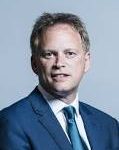
The speech made by Michael Gove, the then Secretary of State for Education, on 3 February 2014.
Thank you very much for that kind introduction.
It’s a pleasure to be here at the London Academy of Excellence – and to be able to congratulate the students and teachers of this superb new free school on their amazing successes.
This start-up – a genuinely independent school which is free to all, socially inclusive and academically excellent, drawing its students from one of the most disadvantaged boroughs in the country, but sending them to the best universities in the world – is a wonderful example of what’s changing in state education.
The pace of change in our education system recently has been fast – and the reaction at times furious.
I appreciate that since I became Education Secretary I have been asking a great deal – a very great deal – of those who work in our schools.
And today I want to thank them.
By pointing out quite how much they’ve done.
The people who work in our schools at the moment have, I think, made history.
History, as some may know, is one of my passions.
And it seems to me we are living through a historic period in state education.
One of my favourite history books is a classic work which analyses how a once apparently secure consensus can be overturned with amazing speed.
George Dangerfield’s ‘The Strange Death of Liberal England’ describes how the thought-world of Edwardian liberalism – which seemed to be intellectually all-conquering – collapsed, never to return, in a remarkably short space of time.
Dangerfield argued that the disruptive forces of the suffragette movement, the rising Labour party and unionist reaction together overturned a status quo which had seemed impregnable.
Modern opinion divides on whether Dangerfield’s analysis was correct in every regard. But no one denies the power of his argument, or indeed the amazing speed with which the assumptions underpinning Edwardian liberalism collapsed.
I think we need a new Dangerfield today to write about another long-held consensus that has – with remarkable rapidity – been completely overturned.
This modern Dangerfield needs to write about the strange death of the sink school – and the strangely overlooked transformation of English state education.
For decades, the dominant consensus has been that state education in England was barely satisfactory; it was – if I may quote a distinguished former civil servant – “bog standard”.
For many years commentators have lamented poor discipline, low standards, entrenched illiteracy, widespread innumeracy, the flight from rigour, the embrace of soft subjects, the collapse of faith in liberal learning and the erosion of excellence in science and technology.
The widespread view has been that the only way to get a really good education for your children was to escape – either into a better postcode, or into the private sector – both, of course, extorting a hefty toll from your pocket.
The renaissance of state education
But that pessimistic view is no longer tenable.
Because the facts show – beyond any reasonable doubt – that English state education is starting to show a sustained and significant improvement.
Fewer schools are failing.
This government has set tougher minimum standards for schools. We’ve made GCSEs more rigorous and insisted that every school ensure at least 40% of its students get at least 5 good GCSEs including English and maths, and keep up with expected progress measures.
And as we’ve made those minimum standards tougher, so the number of schools falling below them has dropped dramatically. In 2010, when we came to power, there were 407 secondary schools falling below the 40% mark. Last year the number was 195, and this year it’s fallen further to just 154.
Still too high, of course. No school should fall below the floor standard we’ve set.
But the progress made by Britain’s brilliant teachers has transformed the lives of thousands of children.
The number of pupils taught in underperforming secondary schools has fallen by almost 250,000 since 2010.
In the same period, more than 450 of the worst-performing primary schools have been taken over by experienced academy sponsors with a proven track record of success.
The academy programme – based on the work of Kenneth Baker – implemented by Tony Blair and Andrew Adonis – and massively expanded by Nick Clegg and David Cameron – is proving transformational.
Results show that sponsored academies are improving more quickly than other state-funded schools.
And that’s against a backdrop of teaching improving across the board.
Overall, Ofsted’s impartial inspectors report that schools improved faster last year than at any time in Ofsted’s history.
This is a significant achievement – making a huge impact on children’s lives, all over the country.
And the people we need to thank for this are the nation’s teachers.
The ‘Times Educational Supplement’ has – rightly – said that teaching is a more respected profession and a more attractive graduate destination than it has been for many years.
We have the best generation of teachers ever now working in English classrooms.
Education is now the most popular career destination for Oxford graduates. And the numbers entering teaching – at 14% of all graduates – are genuinely historic.
More of those training to join the profession have top-class degrees than ever before.
In 2010 to 2011, just 65% of postgraduates entering teacher training in England had a first or upper-second degree. 3 years on, it’s up to 74%.
And elite routes into teaching are expanding to meet this demand.
We are quadrupling the size of Teach First, and we’ve extended it into primary schools.
From this September, Teach First will send its brilliant, dedicated trainees from the best universities to schools in every region of the country – for the first time – reaching more children than ever before.
More great schools, and more talented teachers.
Teaching more rigorous subjects.
Our English Baccalaureate is a measurement of success in the essential academic subjects which give students the best possible start in life – English, maths, the sciences, languages, history and geography.
After just 3 years, the English Baccalaureate measure has helped to increase dramatically the number of students enjoying more rigorous courses.
Take languages. Between 2001 and 2011, the number of pupils at the end of key stage 4 sitting modern foreign language GCSEs dropped by more than 200,000.
In 2001, 79% of children in this country studied a modern foreign language at GCSE. In 2010, just 43% did – about half as many.
But now the decline has been reversed.
Pupils who sat their exams in summer 2013 were the first to make their GCSE choices since the English Baccalaureate was introduced, and the proportion taking a language GCSE has risen for the first time in over a decade.
In a year, the total number of entries increased by a fifth. French was up 19%, German up 10%; Spanish, up 31%.
And languages aren’t the only subjects enjoying a renaissance.
In total, in 2012, only 16% of pupils in state-funded schools achieved at least a C grade in each of the vital English Baccalaureate subjects – while 120 secondary schools across the country did not have even one pupil taking the English Baccalaureate.
One year on, the figures are significantly higher.
Seventy-two thousand more young people entered the EBacc in 2013 than in 2012 – an increase of almost 60%.
And when you look just at young people eligible for free school meals – the proportion taking the EBacc combination of subjects has more than doubled since 2011.
That adds up to thousands more pupils – including those from the poorest backgrounds – now studying the core academic subjects that universities and employers value; the subjects will help them get the jobs of the future.
Driven by 3 critical factors
These signs – more great schools, more great teachers, more pupils achieving great results – add up to one inescapable conclusion.
English state education is no longer ‘bog standard’ – but getting better and better.
When Channel 4 make documentaries about great comprehensives – academies – in Essex and Yorkshire, when BBC3 make heroes out of tough young teachers, when even Tatler publishes a guide to the best state schools – you know tectonic plates have started to shift.
The scale – and speed – of improvement has been dramatic. And should a modern Dangerfield attempt to analyse the reasons why the contemporary consensus on the weakness of state education has crumbled so quickly, I think he would identify three specific factors.
First – increased autonomy for schools, heads and teachers most of all, by giving every school in the country the chance to become an academy, with the same freedoms long enjoyed by private schools.
It’s a chance which thousands have seized.
In May 2010 just 6% of secondary schools were academies and no primaries.
Today 53% of secondary schools are academies and more than 1,700 primaries.
The second factor driving improvement?
More intelligent accountability.
We are blessed to have an outstanding chief inspector of schools in Sir Michael Wilshaw. From the moment of his appointment he has been setting higher standards. He has introduced an inspection framework shorn of politically correct peripherals and focused on teaching quality. He has fashioned a more professional inspectorate, with a growing number of serving school leaders taking over inspections. And he has demanded a move away from faddish attachments to outdated styles of teaching and a new emphasis that any style of teaching is welcome as long as students make progress
Alongside the superb leadership he has given, we have also reformed the league tables by which schools are judged and the qualifications which make them up.
We have got rid of modules in GCSEs, clamped down on the gaming of league tables through the use of multiple entry, and ensured proper marks are awarded for spelling, punctuation and grammar. Ofqual has cracked down on grade inflation and we’ve ensured vocational qualifications are – at last – as rigorous as academic courses.
More than that, we are ensuring that instead of just measuring the achievements of the tiny proportion of children on the C/D grade borderline, our new accountability system will value and reward the progress of every child – low attainers and high performers alike.
And the third critical factor driving change has been a relentless focus on driving up the quality of teaching.
New scholarships and bursaries worth up to £25,000 have helped attract top graduates into teaching. The Institute of Physics and the Royal Society of Chemistry have been supported to attract the best science graduates from elite universities into the classroom. Teacher training has been transformed under the outstanding leadership of an exceptional headteacher – Charlie Taylor. The School Direct programme he has launched enables prospective teachers to start their careers in our best schools and enables our best schools to hand-pick the most exceptional candidates. It’s heavily oversubscribed and those who’ve benefited from it are hugely enthusiastic.
School Direct also allows schools to shop around between universities for the best support for trainee teachers. That means universities have to shape their education departments to the practical needs of schools instead of the whims of ideologues. It also means that universities have to think hard about where they direct their research in education departments. Savvy schools are using School Direct to increasingly demand that universities conduct research which supports teachers’ professional development rather than satisfying academics’ pet passions.
Alongside the launch of School Direct we have also set up almost 350 teaching schools – schools which are outstanding in their quality of teaching and which support other schools to improve teacher training, professional development and classroom practice. And those brand-new teaching schools include schools from both the state and the independent fee-paying sector.
And above all – higher standards
These changes have already had a big impact. And they’re giving our children a better start in life.
But behind each of these changes is one simple belief.
It’s the belief in higher standards for all, no matter where they live or what their parents can (or can’t) afford.
It’s the belief that any child – and every child – can succeed.
It’s the belief that nothing is too good for the children of this country.
We need to secure our children’s future in an ever more competitive world.
We need to give parents the peace of mind of knowing their child will be safe and will succeed wherever they go to school.
And we need to ensure that our society becomes fairer, more progressive, more socially just. We need to make opportunity more equal.
This is the belief that is driving me, and all of us in this government, to celebrate our education system’s successes and to challenge its failures.
Because although it sounds so simple, this belief that every child should be expected to succeed is not yet the dominant consensus – not yet uncontroversial.
Some still argue that children in poor areas shouldn’t be expected to do well; shouldn’t be encouraged to aim high.
That’s why it is encouraging to see cross-party support for higher standards. Brave Labour MPs such as Ian Austin, Pat McFadden Graham Allen and Kate Hoey have challenged local authorities – which have been complicit in underperformance for years – to embrace reform.
Good people in local government are responding to the demand that we raise expectations. In Hammersmith and Fulham the council has helped establish great new free schools. In Darlington the local authority has energetically advanced the academies programme. In Northumberland the new Director of Children’s Services has told heads they’ve tolerated standards which are unacceptably low and she will introduce new county-wide tests for every student every year to drive improvement.
And ever higher ambitions
But there’s still more to do.
And just as we must be ambitious for every child; so too we must be more ambitious for the system as a whole.
I want to see state schools in England the best in the world.
State schools where the vast majority of pupils have the grades and the skills to apply to university, if they want to; where a state pupil being accepted to Oxbridge is not a cause for celebration, but a matter of course; where it is the norm for state pupils to enjoy brilliant extracurricular activities like sports, orchestras, cadets, choir, drama, debating, the Duke of Edinburgh scheme, and more.
All those things are par for the course in the private sector – why shouldn’t children in the state sector enjoy them?
We know England’s private schools are the best independent schools in the world. Why shouldn’t our state schools be the best state schools in the world?
My ambition for our education system is simple – when you visit a school in England, standards are so high all round that you should not be able to tell whether it’s in the state sector or a fee-paying independent.
The march of the independents
In the most recent PISA studies, England’s performance – overall – was pretty much exactly the same as the OECD average; lagging far behind the high performers at the top of the table.
Our 15-year-olds’ results in maths, for example, were around 3 years behind their peers in Shanghai.
But if you look just at England’s very best schools – whether independent or state – that gap disappears.
Our top schools are already performing just as well as Shanghai; just as well as the very best in the world.
The performance of these top-performing schools – both independent and state – must inspire all of us to do everything possible to raise the performance of the whole system.
I know that some critics will argue my expectations are too high.
They will point to the financial advantages many of the top private schools enjoy.
And money does matter.
Which is why we have protected schools spending; indeed, invested more in the poorest children through the pupil premium.
But more important than money is attitude – ambition, expectation – an ethos of excellence.
That’s what every school can have – and the best state schools already do.
Schools like Gordon’s state boarding school in Surrey, Holland Park school in West London, Sexeys in Bruton, in Somerset, Harris Academy Chafford Hundred, King Solomon Academy in Lisson Grove, the Hockerill Anglo-European College in Hertfordshire, Twyford Church of England School in Acton, Mossbourne Community Academy in Hackney – once condemned as ‘the worst school in Britain’ – now one of the best.
All of these – and many more – are state secondary schools every bit as good as excellent private schools. Which means they’re among the best secondary schools in the world.
And there are state primary schools every bit as ambitious, as supportive, as exciting, as the smartest of private prep schools.
Like, for example, Thomas Jones primary in West London – a school with a majority of children eligible for free school meals during the last 6 years, a majority coming from homes where English is not their first language – which is just as good (if not better) than the pre-eminent London prep – Wetherby school – just a mile or so away.
Under the changes we’re making, it’s becoming easier for state schools to match the offer from private schools.
Prep schools expect primary-age children from the age of 7 or 8 to be taught by subject specialists rather than generalists. I believe state schools should seek to match that. And I was delighted to be able to visit a primary free school in Chester this week which aims to do just that. And to help every primary reach that standard, we’re investing in a nationwide programme to train specialist maths teachers for our primaries.
Top private schools can recruit research scientists, academic experts or other people at the top of their career who want to switch to teaching – without forcing them to go back to the bottom of the ladder, start over at university and take out a student loan for a year’s study before they can benefit pupils.
Now, thanks to changes we’ve made to teacher training and recruitment, state schools can hire these outstanding people direct – and even poach great teachers from the private sector.
Instead of reinforcing the Berlin Wall between state and private, we should break it down.
Our academies and free schools programme is also starting to erode the boundaries between independent and state.
Many independent schools are already sponsoring or co-sponsoring state academies – sharing their expertise, spreading their excellence.
And in the last few years, 16 independent schools have even used our free schools and academies programmes to join the state sector – including, of course, Liverpool College, one of the 12 original members of the prestigious Headmasters’ and Headmistresses’ Conference.
Just last month, the godfather of the academies programme, Lord Andrew Adonis, predicted that up to 100 independent schools might do the same in the next 10 years.
This is hugely significant. Thanks to our reforms, private schools are opening their doors and their opportunities to more children than ever before.
And any change to our academy freedoms – in particular, to the freedoms we’ve given heads to recruit the best staff, just like independent schools do – would threaten those children’s futures; would threaten the teachers who have made these schools excellent; and would threaten any more great independent schools which had hoped to join the state sector – but would now be prevented.
At the heart of the success of the best independent schools – and the best state schools – is freedom for the headteacher.
That is why I believe the key to driving standards up further in the state sector is giving heads more power – freedom from bureaucracy, box-ticking and regulation – to make the changes needed to ensure children succeed.
One of the critical factors in the success of the best schools is the ability of the head to insist on – and enforce – exemplary behaviour. Not just compliance with basic rules but a positive pride in the school – with politeness and consideration for others becoming second nature.
Taking control of the classroom
I want to ensure that every head in the state sector has the ability to ensure children behave as impeccably as in the most successful state and private schools. That means giving heads the power to ensure there is exemplary behaviour – and giving teachers the power to keep control in the classroom and the playground.
Because without excellent behaviour, no child can learn – and a tiny minority of disruptive children can absorb almost all of teachers’ time and attention, in effect holding the education of the rest hostage.
So we have given teachers more freedoms to keep control in the classroom, and to discipline pupils for misbehaviour beyond the school gates.
Teachers’ powers to search pupils have been strengthened – not just for items that could be used to cause harm or break the law, but for items banned by the school rules – and schools are now free to impose same-day detentions as and when they think best.
Charlie Taylor – former headteacher of the Willows Special School in Hillingdon, where he achieved outstanding results with children with some of the most severe behavioural problems – joined us as a government adviser on behaviour, and developed a simple checklist to help schools tighten up their behaviour policies.
He’s now the head of the National College for Teaching and Leadership – making sure that the next generation of teachers put behaviour management right at the heart of their skills.
That emphasis on higher standards of behaviour has been reinforced by Ofsted. Sir Michael Wilshaw has made clear that poor behaviour which disrupts classroom learning will not be tolerated. Just on Friday, Ofsted confirmed that, from this month, they will start conducting no-notice monitoring inspections in schools where there are particular concerns about poor behaviour.
But there’s still more to do.
Teachers need confidence that they will be supported when they insist on good behaviour.
And heads need to know that we will give them every tool they need to enforce discipline.
So today, we are publishing an updated version of the department’s advice on behaviour policy – clarifying and explaining what schools can do, to give teachers more confidence in their own powers.
We make clear that teachers can deploy an escalating range of sanctions. Schools can insist on a detention, whether that’s at lunch break, after school, or at weekends. And they do not need to give parents notice.
They can ask students to do extra work, or to repeat unsatisfactory work; to write lines, or an extra essay.
They can remove responsibilities or privileges – like school trips, or the right to participate in a non-uniform day.
On top of these, we are today making clear that if a school wants to, they can ask pupils to carry out school service – whether that’s picking up litter, or washing graffiti off a wall, tidying a classroom, clearing up the dining hall.
We trust the professionalism of our teachers. So we’ve given them more powers, and more freedoms – the tools to keep control of their classrooms, and allow every student to learn in peace.
Aiming higher – in and beyond the classroom
Good behaviour will make sure that pupils can learn – but I also want higher academic ambition for what they learn.
We have already introduced a new national curriculum enshrining high expectations at every stage and in every subject – so that every child in the country can enjoy the sort of deep, broad, knowledge-rich, content-heavy education hitherto reserved only for a fortunate few.
But there’s still more to do.
The new GCSEs currently being developed will be more demanding, and more ambitious – asking pupils to read a wider range of literary texts in English, demonstrate extended writing in history, and show more advanced problem-solving in maths and science.
And we’re working with world-renowned, world-class Russell Group universities and Professor Mark Smith of Lancaster University to reform A levels – ensuring they provide students with the knowledge and skills they need for the demands of university study.
Some of the best-respected academics on the globe are also working with us to drive up standards, transform teaching and inspire students in secondary schools; helping more children from state schools and deprived backgrounds to overtake their privately educated peers and reach the best universities.
Like Professor Sir Tim Gowers – one of this country’s most recent Fields medallists – who is working with Mathematics in Education and Industry to develop entirely new courses for post-16 maths – teaching young people how to think mathematically and develop exactly the kind of problem-solving skills most valued by universities and employers. His courses will help exam boards develop new ‘core maths’ qualifications, aimed at those 16-year-olds who get at least a C at GCSE but don’t go on to study maths A level – those, in other words, whom the current system has left behind for far too long.
Alongside him, Professor Martin Hyland is heading up the Cambridge Maths Education Project – a brilliant programme bringing teaching materials developed by Cambridge’s world-famous maths faculty to ordinary schools, all over the country. Already described by schools as ‘transformative’, it’s designed to help A level students to strengthen and deepen their understanding of maths.
And they’re joined by Professor Mark Warner – famous for explaining the problem of the chain fountain – who is leading the Rutherford Schools Physics Project. He’s working within the A level physics curriculum to create extra support and resources aimed at science teachers in state schools to help students develop the skills and attitudes that physicists need. His materials will be delivered through a massive open online course, or MOOC, to reach as many schools as possible.
And I can announce today that their work will be complemented by Professor Christopher Pelling from Oxford University – who will be leading a brand-new project in collaboration with several universities to develop top-quality professional development for non-specialist teachers of classics in state schools. His work will help state school students compete on equal terms with privately educated students for university classics places.
Academics of this calibre are serious about the need to give state school students the extra level of stretch and challenge that privately educated students enjoy through extra coaching and preparation.
Their work will do far more to improve access to the best universities – by genuinely democratising knowledge and robustly supporting a more meritocratic system – than any other set of academic initiatives I know.
We are hugely grateful to them for their help in giving disadvantaged children a hand up.
Their work will help thousands of pupils from the state sector to secure the places at the top universities which they deserve.
But we don’t want just to raise the academic bar for students on their way to university. We want to help state school students at every stage of their education to make the most of all the many, many resources already used by the independent sector.
Privately educated children often benefit from rigorous testing of ability – and, crucially, knowledge – at regular points throughout their school career.
We have national curriculum tests at age 11 and GCSEs or their equivalents, of course, at 16.
But since key stage 3 tests for 14-year-olds were abolished in 2008, we have had no rigorous externally set and marked measures of progress for students in the first 5 years of secondary school.
It is often during this period that performance dips and students suffer.
I am open to arguments about how we can improve performance – and assessment – in this critical period.
But there is already one widely available, robust and effective test of knowledge for just this age group.
The Common Entrance test papers.
They are exams designed for 13-year-olds – they are used by private schools to ensure students are on track for later success. They are already available on the web, and are a fantastic resource.
So I want state schools to try out Common Entrance exams – giving them a chance to check how well they and their pupils are performing against some of the top schools around the world.
And for the same reason, we are supporting PISA’s plans to make their international tests available to English schools, so that our heads and teachers can, if they choose, check how well their pupils are performing compared to their peers – not just down the road – but on the other side of the globe, in Shanghai or Singapore.
Finally, the DNA of our best schools is made up of 2 strands. Excellence and rigour inside the classroom; and, just as important, a rich and rounded education beyond it.
I have never visited a school that excelled academically, which didn’t also excel in extracurricular activities.
As top heads and teachers already know, sports clubs, orchestras and choirs, school plays, cadets, debating competitions, all help to build character and instil grit, to give children’s talents an opportunity to grow and to allow them to discover new talents they never knew they had.
Which is why – just like independent schools – state schools need a longer school day.
We gave all academies and free schools the freedom to change and lengthen the school day and term; and we’re extending that freedom to every single state school.
And we have cut red tape to make it easier for schools to open longer and offer on-site childcare.
But we want to go further. So I would like to see state schools – just like independent schools – offer a school day 9 or 10 hours long – allowing time for structured homework sessions, prep, which will be particularly helpful for those children who come from homes where it’s difficult to secure the peace and quiet necessary for hard study. A longer school day will also make time for after-school sports matches, orchestra rehearsals, debating competitions, coding clubs, cadet training, Duke of Edinburgh award schemes and inspirational careers talks from outside visitors, just like in independent schools.
I will work with school leaders to put the steps in place to provide for these character-building activities. I am determined to ensure schools have access to the resources necessary to provide a more enriching day. I will – of course – consult across the state and independent sector to see how we can deliver as quickly as possible.
Conclusion
In the months ahead I hope to say more about how we can go further in helping the most disadvantaged, how we can do more to improve vocational education, how we can make a bigger difference in improving behaviour.
I also hope to say more about improving access to the best science education – especially for girls – improving access to work experience and getting more great teachers to work in our toughest schools.
But today all I want to add is a simple and heartfelt thank you to the nation’s teachers for transforming state education and the lives of our children immeasurably for the better.