Category: Education

  • Bridget Phillipson – 2022 Speech to Association of School and College Leaders Conference

    Bridget Phillipson – 2022 Speech to Association of School and College Leaders Conference

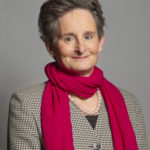
    The speech made by Bridget Phillipson, the Shadow Education Secretary, on 12 March 2022.

    Thank you to Pepe, Geoff, Julie and your team for making me feel so welcome today.

    Geoff, I know you have been a reassuring voice of calm and reason these last two years cutting through the chaos and providing invaluable support to school and college leaders in these difficult times.

    Your weekly bulletins have made life that bit smoother for headteachers and principals, during a period like no other and you have done so with a positivity that must have been severely tested.

    I look forward to working with you and ASCL in the coming months and years.

    When the story of this pandemic is written, NHS workers, and those who developed vaccines so fast, will deservedly get many of the accolades.

    But I believe alongside them there should be a proud place, for those who work in our schools and colleges – the headteachers, principals, senior leaders, teachers, lecturers, support staff.

    It is you who have kept young people going throughout extraordinary and difficult circumstances.

    – Who have helped with their wellbeing.

    – Stepped in when free school meals were not being paid.

    – Undertaken extra safeguarding checks for the children most at risk.

    – Moved lessons online.

    – Provided technology for those without.

    – Supported the most vulnerable.

    – Turned your schools into testing centres.

    – Coped with a never-ending exam fiasco.

    – Kept going when staff absences got above 10, 20, 30% – in some cases more.

    You have absorbed the stress of the community, comforted bereaved families, provided a safe space for reflection and through it all, given each teacher and each group of children the best chance of continuing to learn.

    You deserve our heartfelt thanks. You have been true heroes.

    Thank you.

    Sadly, your life has been made so much more difficult and more stressful, by having to deal with a chaotic patchwork of promises and guidance, often at the last minute, often too late to pre-empt every school and college in the country having to make up their own policies.

    When clear, focused, government leadership was needed in response to the pandemic there was a vacuum.

    No plan, no direction. No ambition.

    And when a clear, focused plan for recovery was needed – again, nothing.

    Sir Kevan Collins’ plan was rejected out of hand by a Chancellor who told us he had “maxed out” on support for our children, and education ministers who didn’t make the case for investment in our children’s future.

    Time and again, for this government, our children are an afterthought.

    So I take on my role at a time when we need to raise our sights as a country.

    Ambitious Leadership is the theme of this conference and now is the time for it.

    I know so many of you have reflected deeply on the last two years, and want something better for young people.

    If we are to come back stronger after the pandemic, then part of the renewal is to ask bigger and bolder questions.

    When forty percent of teachers leave the profession within four years, we need to ask how we can make this profession so rewarding and stimulating, that teachers want to stay.

    When take up of the creative arts has plummeted, we need to ask questions about the balance in the curriculum.

    When one in three children leave primary school below the standards we want them to reach in English and Maths, and a third leave school without vital qualifications, we need to ask how we redouble our efforts to ensure every child leaves education both ready for work and ready for life.

    When five years after leaving school, more than a quarter of disadvantaged children end up outside sustained education, employment or training, we need to ask why we don’t have a better model for tackling inequality and creating opportunity.

    The biggest question of all is how can we enable every young person to both achieve and to thrive.

    For me that’s about seeing every individual as both extraordinary and multi-dimensional – the capacity to inspire, collaborate, create, think, perform, talk, is the great wonder of humanity.

    We see that emerging in the early years classroom, captured in the early learning goals that span basic skills, understanding of the world, and social and emotional development.

    Yet as children grow up, that balance changes. School becomes more, not less, narrow.

    And that narrowing turns too many young people off learning – which is a problem for their future, and for all of our futures.

    We must retain the breadth of the early years throughout a child’s journey through education.

    Our world is increasingly polarised by seemingly binary choices. Debate quickly becomes dogmatic, along those fault lines.

    Education is no different.

    But I have no time for these false choices.

    I make no apology for being determined to see young people achieve academically, and just as important, I want them to thrive in life.

    Supporting children to develop the literacy and numeracy skills they need is central to education.

    And so is supporting them to become ambitious, creative, confident young people who enjoy music, arts, sport, and culture.

    As someone who loved studying history, I celebrate the incredible work of our teachers and lecturers who bring knowledge alive for the next generation.

    Knowledge is essential, but so is the ability to apply that rich knowledge to the real world, so young people learn communication, collaboration and problem solving skills, and understand the difference they can make.

    That is why Keir Starmer has announced Labour’s Council of Skills Advisors, to support us in ensuring every young person receives a rounded education that instils a love of learning while equipping them with the skills they need for work and for life.

    Because children need to achieve so they go on to succeed, and they also need to thrive as human beings so they can flourish as adults.

    We want children to be happy and to be successful.

    The increasingly narrow focus, often designed to hit what many feel to be arbitrary benchmarks, is not beneficial to young people, and not beneficial for our society or our country.

    We need to get behind you – the school leaders – who I know want to nurture creative subjects, enrichment opportunities and a rounded education, but often have to go against the grain of the accountability structures currently in place.

    That is why we must ensure that school improvement and school accountability work better together – with peer to peer learning in particular, recognised for its value, encouraged, and developed between schools and leaders.

    In a week that marks thirty years since Ofsted was created, we should remember the remarkable improvements in schools and colleges in that time.

    The “long tail of underachievement” we saw when inspections started has now largely gone.

    The fact that 85% of schools are good or outstanding, in Ofsted terms, is testimony to the huge efforts and hard work of school leaders and teachers across the country over these last three decades.

    Here in this room, you have put your shoulders to the wheel to achieve that, and I thank all of you.

    But I want to highlight too the political choices – the focus, the investment, the ambition, and the sense of priority and urgency – which the last Labour government made, after years of Conservative neglect, and which unlocked and enabled that achievement.

    So what next?

    Let me be clear. Labour believes that inspection has been part of that success.

    An independent schools inspectorate, with chief inspectors not beholden to ministers, unafraid to speak their minds, is a sign of a mature and confident education system.

    But to be supportive of Ofsted’s role, is not to believe it cannot be better.

    For one thing, it is hardly surprising if the Ofsted we need tomorrow is different from the Ofsted we needed 30 years ago.

    For another, the way inspections operate makes teachers, leaders and lecturers too often feel punished rather than supported.

    Getting the best out of people means respecting their professionalism, and supporting improvement, as well as challenging their performance.

    And of course, the way in which schools are funded, managed, and structured, has changed entirely in that time.

    Multi-academy trusts have become central to how many schools are run and how they perform, but inspection of them is missing.

    At the same time, and in too many cases, local authorities have responsibilities that matter, but without the powers to deliver.

    All of that has to change.

    Ofsted should be a critical friend to every good leader and every good teacher.

    The sort of friend who tells you the truth from which others might flinch.

    Yet Ofsted still operates in a way that is often too high stakes, and where the risks of a ‘bad’ inspection outweigh the rewards of a good one.

    A cat and mouse game between inspectors and schools, with no incentive to have an honest professional dialogue, to accept weakness and work to address it, are the unhelpful features of such an adversarial system.

    That should concern the government as much as it concerns schools.

    So change needs to happen.

    Labour is not in the business of disrupting good schools.

    We need a focus on supporting and improving struggling schools and spreading best practice.

    So the way we assess performance has to fit the educational landscape of today and tomorrow, not yesterday .

    We have to be clear what inspection is for:

    For children, to ensure they get the start they deserve, the chance to achieve and to thrive.

    For teachers, to learn and develop, ensuring they are supported to deliver those opportunities every child needs.

    For parents, so we have independent and trusted information about the performance of our child’s school.

    For the system as a whole, that responsibility sits at the right level, with multi-academy trusts properly accountable for the provision within schools.

    The triggers for intervention and the way the whole system operates need to be more in line with those purposes:

    – We need to see more of a focus on the schools that need support to improve.

    – We need inspections of every part of the school system that can be a locus for improvement and a force for change.

    – Inspections where the intensity of the experience is reasonable and proportionate.

    – That point teachers to the support they need to improve.

    – That consider the broad context for schools and recognise when progress is being made.

    – And we need assessments that celebrate what’s great as well as identify what’s not.

    I said that this is the year Ofsted turns thirty.

    It’s time for Ofsted to turn a corner.

    And we need wider change.

    Labour has already started to set out the direction in which we want to take our schools and our colleges.

    We have announced a National Excellence Programme for schools and we will pay for that by ending the tax exemptions for private schools.

    It will mean:

    – a teacher recruitment fund, to recruit and train over six and a half thousand new teachers, filling vacancies and skills gaps,

    – establishing an Excellence in Leadership programme, to support new headteachers throughout their first years on the job,

    – and a teacher development programme, to enable all leaders and teachers to access continuing professional development.

    Because we believe that investment in our young people, includes investing in you.

    And I have to say, the contrast with yesterday’s announcements from the Secretary of State is stark.

    So little to offer a profession that has given so much, and a generation that has lost so much.

    We see things very differently.

    We believe in supporting children’s recovery from the pandemic, because their future is going to be all of our futures.

    It matters for the children who have been deprived of opportunities during lockdown.

    And it matters for the country we want to build.

    The evidence is very clear about the longer-term damage that will be caused to our economy, to wider society, and to the opportunities and life chances of our young people, if we don’t invest now and get this right.

    That’s why this is such a priority for Labour.

    Labour’s Children’s Recovery Plan means small group tutoring, breakfast clubs and activities for every child, quality mental health support for children in every school, professional development for teachers, and targeted extra investment for those young people who struggled most with lockdown.

    The drumbeat of news about the failures of the government’s National Tutoring Programme shows all too clearly the perils of ministerial arrogance, of not bothering to listen to school leaders about what works.

    In this recovery, we also need to pay special attention to the early years.

    We knew this long before Covid but now we need to redouble our efforts.

    Children who joined reception classes in September will have lived more than half their lives under the pandemic.

    In many cases, they have not had the chance to explore, socialise, develop vital skills, in nurseries or play groups, all of which will matter right throughout school, and right throughout their lives.

    As we move on from the pandemic we need not just to get children’s recovery right, but to put education once more at the heart of our ambition for Britain.

    Because what’s clear is that for this government it isn’t there.

    You heard the paucity of their ambition yesterday.

    The Conservatives are failing a generation of our children, and they’re not even ashamed of it.

    Our future depends on unleashing the ingenuity, problem solving, community-building, ability of our people.

    The only way we will build the Britain we want to see, bringing opportunity to every corner of our country, is by harnessing the creativity, know-how, technology and innovation to create the high skilled jobs of the future.

    And to do that education has to be world class.

    Keir Starmer has staked out the three guiding principles of this national renewal: security, prosperity, and respect.

    Education is crucial to each.

    A good education, with strong foundations in the basics, provides the platform of security for young people.

    An education that fosters creative thinking, and ensures every child leaves education ready for work and ready for life, is the route for individuals and nations to become more prosperous.

    And respect is about how we respect the worth of every person – ensuring that whatever your background, whatever your needs, you are given the opportunity to think big, to spread your wings, to seize opportunities.

    Ultimately, education is about opportunity.

    So when Keir asked me to become shadow secretary of state for education, I was honoured and delighted.

    Because my own life has been a lesson in the power of education.

    My local state school in the North East completely transformed my life.

    My mam brought me up on her own, so times were often hard for her as a single parent in the 1980s.

    We didn’t always have it easy but in other ways I know I was lucky.

    I had a family where I was supported to read, where education was valued and encouraged, and I look back now and feel how fortunate I’ve been.

    I went to a school where my teachers were fiercely ambitious for me and my friends, because they believed in the value and worth of every single one of us.

    They had high expectations and saw no reason why either our ambition or our achievements should not meet them.

    So I was lucky. But life should not come down to luck.

    Too many children are held back by virtue of where they’re born, their circumstances and family background.

    My priority will be to see that change.

    Government should not temper, but match, the ambition of our young people.

    I will bring that sense of ambition and those expectations with me to government, to champion every child’s learning and wellbeing, delivering enriching childhoods, which support every young person to succeed.

    I want every child to benefit from a brilliant education which instils in them a love of learning carried throughout their life.

    Because when I meet parents and pupils, teachers, and lecturers headteachers, principals or employers there is a clear consensus about what needs to happen next.

    They all want us to be more ambitious.

    To offer young people a rounded education, one that develops all their human faculties – a rich mix of knowledge, skills and abilities – one that gives young people the chance to shape their life rather than having life done to them, one that delivers academic success alongside enriching experiences.

    It is that which will give every child the chances they deserve, and it is that which will make a world class education a reality.

    Thank you for all your extraordinary efforts over these last two turbulent years.

    I look forward to working with you all, to make the change we need, the reality we see.

    Thank you.

  • Nadhim Zahawi – 2022 Speech to the Association of School and College Leaders Conference

    Nadhim Zahawi – 2022 Speech to the Association of School and College Leaders Conference

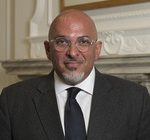
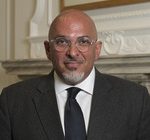
    The speech made by Nadhim Zahawi, the Secretary of State for Education, on 11 March 2022.

    Ladies and gentlemen, I am really pleased and honoured to be here for my first ASCL conference.

    I have been looking forward to being with you.

    As we gather today, the Ukrainian flag flies over the Department for Education. It does so because we stand shoulder to shoulder with all Ukrainians against the barbaric, criminal invasion of their sovereign, democratic country.

    For us in our country, it is almost impossible to imagine the horror they are going through, because we know that more unites us than separates us, and we are lucky to live in a safe, secure country where we resolve our differences through debate, discussion and of course through and the ballot box.

    We will continue to support Ukrainians in any way we can. I know schools and colleges are doing what they can to support their students make sense of what they are seeing on television.

    And we have a team that’s already making plans for a capacity of 100,000 Ukrainian children that will come in and take their places in our schools.

    To support schools’ efforts, I asked Oak National Academy to roll out an auto-translate function across all 10,000 of its online lessons. And I can share with you today that they have delivered on this, meaning Ukrainian children arriving in the UK can access education in their native language as they transition into life and safety here.

    In that same spirit of unity and support, after the two years we’ve just been through, I’d like to thank you on such a well-chosen and positive theme.

    I think all leaders should aim to be ambitious but there has never been a more critical time for leaders to make ambition really count.

    Actually, ambition is what gets me racing to the office in the morning …

    And before you say it, well there’s a surprise… he’s another politician…

    My ambition isn’t for me, but for every child, every teenager, every adult learner to get the absolute best chance to succeed in life.

    Which I know is exactly what you want for every child.

    So, with that in mind, as I speak to you, I want us to ask ourselves, why are we here today?

    Before I go any further, I just want to say thank you for the magnificent way you have responded to Covid – I know the past two years have been absolutely bruising.

    Now, typically when you hear from an Education Secretary, you might expect to hear about accomplishments in the sector – and certainly, in this room, there are enough accomplishments to fill the entirety of my speech.

    I will in a moment talk about what we have achieved together.

    But before I do that, I want to tell you why this is so important to me personally.

    I came here aged 11, unable to string a sentence of English together. I hid at the back of the class.

    Even the thought of going to school was a scary one.

    If my parents hadn’t had the wherewithal to push me to take advantage of the education this great country provides, I don’t know where I would have ended up.

    And if my teacher Bob Hiller hadn’t reminded me to funnel my – how should I put it – creative, disruptive energy into something good, I certainly wouldn’t be here today. Bob, wherever you are, thank you.

    Skills, schools, families. These are my priorities, and these are informed in many ways by my own life story.

    They are what made the difference to me and what I think can make a real difference in the lives of children across our country.

    Because there are children in our country, right now, who need the support that I needed.

    And those children will achieve incredible things if given that chance.

    Colleagues, we are going on a journey – I hope together – to do exactly that.

    The next chapter of this journey is the Schools White Paper.

    Since 2010 we have been on a mission to give every single child a great education, and I think we’ve made huge progress, but we have not yet achieved every goal that we need to.

    Too many children still do not get the start in life that will enable them to go on and fulfil their potential.

    Even before the Covid pandemic, about one in three primary school students did not reach expected standards in reading, writing and maths.

    And we all know that children who are on free-school meals or who have special educational needs are less likely to achieve the standards we want for them, and that gap widens as children get older, making it harder and harder for them to catch up…

    I know you’ll agree with me that this has to change. This is going to change.

    I want us to really come together… work together… so that we can work out how we are going to achieve this.

    The biggest asset we have in changing the lives of children for generations to come is the energy and expertise of our teachers, and of course the school and college leaders in this room and around the country.

    You can’t have a great education if you don’t have a great teacher.

    You will already know that I have set an ambitious target that 90% of children leaving primary school should meet the expected standards in literacy and numeracy, up from 65% today.

    Every child must be able to read, write and do basic maths fluently.

    They’re important in their own right, but also act as a door to other wonderful and joyful subjects that can inspire young minds as they make their way through school, college and beyond.

    Let me be clear: these are ambitions for the whole system. They are about making sure that we are ambitious for every child across our country.

    The White Paper sets out a plan to deliver on this strategy, and it is an achievable vision only because I know that in this room, we have the excellence and leadership to make it a reality.

    I know that investing in teachers and leaders – in you and your staff – is the single most important way to improve pupil outcomes.

    I am determined to make our system of training and support for teachers and school and college leaders world-class.

    We will deliver our promised 500,000 teacher training opportunities to make sure that every teacher, in every corner of our country, benefits from evidence-based professional development at every stage of their career.

    I am proud to be able to confirm today that more than 25,000 teachers and almost 23,000 mentors have taken part in our flagship Early Career Framework programmes this year.

    This is beyond even my most optimistic estimate, and, I think, testament to the support you as leaders are providing.

    But I also know that embedding this programme has been a huge undertaking for you and your colleagues, particularly mentors. We are listening to your feedback and we will be making improvements in areas that you have told us are causing real difficulties.

    And I want to keep working with you now and in the future to make sure we take forward this shared priority and to ensure that we achieve our shared goal of giving every early career teacher their entitlement to a high-quality, structured induction to the teaching profession.

    Building on this success, our golden thread of high-quality teacher development programmes includes a new Leading Literacy National Professional Qualification, available from this autumn.

    This will mean every school can have a trained literacy expert, driving higher standards of literacy teaching, kick-starting our 90% literacy mission.

    With this, as with the rest of the reformed suite of National Professional Qualifications, these will be freely available to all teachers and leaders in state-funded schools and colleges.

    What I ask, for those here or watching this speech, is that every leader here today walk away from this with a commitment to enrol their staff on a National Professional Qualification from the autumn.

    Alongside world-class training, we will also continue to invest in top graduates with generous bursaries and scholarships for those who choose to train to teach.

    And we will deliver on our manifesto commitment to the £30,000 starting salary.

    As an engineering graduate, I know the wonders of science and I want more children to be exposed to and inspired by science – not least to help save the planet.

    I want them to be taught by well-trained science teachers, equipped to give future generations of scientists the knowledge they need to tackle climate change, develop new vaccines and maintain our place as a scientific superpower.

    Through our Levelling Up Premium worth up to £3,000 tax-free for maths, physics, chemistry and computing teachers, we will retain more teachers in some of the most important subjects and of course in places where they are needed most.

    And because teaching is an increasingly global profession, I want to attract the very best teachers from across the world.

    That is why we will also introduce a new relocation premium to help with visas and other expenses for teachers and trainees moving here from abroad.

    But even this is not enough: I want our country to be known around the world as the place to train and practise teaching, rivalling the likes of Shanghai, Canada and of course Finland.

    But of course, great teachers need support.

    I want to empower teachers to focus on delivering the best possible lessons, and support schools by giving them access to resources and approaches that have proved their effectiveness.

    Oak National Academy has certainly been one of our great achievements.

    It was created by teachers, for teachers, and showed brilliantly what the profession was capable of in the hour of need.

    Over 500 teachers from over 50 schools, trusts and partners worked together, delivering over 140 million lessons during the pandemic.

    Building on this success, we will now establish Oak as a new arms-length curriculum body, working independently of government and collaboratively with the sector.

    Why is this important?

    The data backs up what you all know anecdotally: a recent survey showed 46% of primary teachers plan lessons from scratch. This is a drain on teachers’ time and I want to help fix that.

    Curriculum design is complex, and we want to share the very best practice so teachers can draw inspiration from examples of evidence based, carefully sequenced curriculum design.

    Instead of each teacher reinventing the wheel, they will be able to access content, for free, that continuously evolves and gets better and better on the back of feedback from teachers across the country – saving time and of course improving lessons immeasurably.

    Under the framework already provided by our excellent national curriculum, the curriculum body will lead the creation of curriculum maps and thousands of downloadable lessons and resources… and all freely available to all teachers, parents and children.

    These will help schools in a variety of ways depending on their needs. They will be also entirely optional and of course these materials will not be mandated by Ofsted.

    Teachers, who know their pupils best, can then adapt these, and the curriculum body will work closely with teachers to ensure it is meeting their needs, including those supporting children with additional needs.

    And the body will continue work with the Education Endowment Foundation – the EEF – to ensure its work is informed by the best available evidence and aligns with best practice.

    At the heart of this body will be collaboration and partnership, I am committed to building on the “by teachers, for teachers” approach that has been a key success factor for Oak National Academy.

    And with the same motivation to use evidence wherever we can, we will permanently put evidence at the heart of the teaching profession by re-endowing the EEF.

    As independent evidence guardians in the system, they will continue to generate and spread world-leading education evidence. The EEF will lead an ongoing cycle of reviews of the underpinning frameworks for teacher development at all levels to make sure they’re always based on “what works” to improve pupil outcomes.

    They will keep these frameworks updated in line with the best available evidence from this country and of course from abroad, giving an independent badge of assurance to our teacher development programmes… and all the while making sure teachers in England get the cutting-edge training they need to drive up standards.

    And we will continue to work with the EEF to scale up and spread effective teaching practice in literacy and numeracy to ensure pupils have the best chance of catching up following the pandemic.

    Colleagues, we must be sky-high in our ambitions for every pupil. If we don’t aim for excellence, we’re not going to achieve it by chance.

    I’ve listened to you, acted on your insight, and looked at the evidence across the whole educational landscape. And evidence shows that a family of schools that are tightly managed and well supported achieve the right outcomes for their students and deliver those important opportunities for staff.

    How? There are three things I want to highlight.

    A resilient profession… because high performing families of schools support leaders and give great opportunities to teachers for training and career progression.

    Collaboration… because schools can benefit from working together, creating opportunities to share resources and reduce workload, while reinvesting back into frontline teaching.

    And Freedom… because leaders spend less time worrying about managing facilities and more time making sure children learn and teachers teach.

    I’ve been clear before that I see this future as involving all schools being part of a strong trust – and I will say more about this in my White Paper.

    But I will say now that I underline the word strong because, and we mustn’t sugar coat this, some trusts are not high performing. The White Paper will set out how I plan to deal with that challenge as well.

    You are the future my friends, and you are going to produce other leaders of the future. We need you – I need you – on this journey.

    I know that everyone in this room will have an opinion on this – I’d expect nothing less, but I ask you to consider the data, the evidence, with an as open mind as possible.

    What I will pledge to you is that I will be guided by the data and the evidence.

    I want evidence to be our watchword, just as it was mine as vaccines Minister and continues to be now as Secretary of State for Education.

    In fact, following what the data tells me has shaped the new Schools White Paper.

    But that doesn’t mean I expect everyone to agree with me all the time. I am not afraid to disagree with you, and I know you – certainly Geoff – are not afraid to challenge me.

    What is important is that we follow what the evidence says. If we have a divergence of views on the evidence, then we will have a healthy debate and I will make my case as I am sure you will make yours.

    But no matter what, the priority must be working together.

    Because we can’t level up, we can’t deliver for children, if we don’t work together.

    Everything we are doing as a government comes back to one core mission and that is that we make life fairer for every child, in every school in our country.

    One of the most effective tools we have at our disposal to meet our ambition is targeted support.

    A huge part of that is tutoring, which I know will be going on in all of your schools right now.

    It’s important to step back and look at what we’ve achieved with the National Tutoring Programme.

    Tutoring used to be something only richer parents could afford.

    Thanks to the NTP, today it’s benefitting all children who need it, from Bristol to Blackpool and Newquay to Newcastle, helping them realise their potential.

    I am proud to be able to say that more than one million tutoring courses have been delivered since we rolled out this programme last year. ASCL, this is incredible.

    But there are still children who need this targeted tuition, and I know that many of you have had challenges with the programme. I have listened and I have heard you, and we are making improvements as I speak to you today.

    This includes the immediate transfer of up to £65 million into School Led Tutoring from the other two routes. It’s become clear to me that by far the most popular route is the one run by you – the school.

    I hope you will agree with me that what we are doing together on tutoring is an invaluable addition to our education system, and I am continuing to look at how we can make sure it is having as big an impact as we can make it.

    In addition to this, one of my priorities in the White Paper will be the schools and areas of the country most in need of support.

    Areas including County Durham, Cornwall and Hartlepool will get extra investment, to build strong trusts, enabling them to retain and recruit the best teachers and tackle those problems that have stopped them achieving what they should be achieving.

    I want to get this right, and I want you to have your say, so I will be announcing a consultation shortly on tackling school underperformance.

    Ahead of that, we must build on what we have already accomplished.

    We must make the most of the £7 billion increase in core spending 2024-25 – with an increase in real terms per pupil funding of 4% next year alone – really count.

    And, we cannot say we care about children’s education if we ignore those most in need. So, we must protect the pupil premium to support schools in improving outcomes for disadvantaged students.

    Because I have the same high ambitions for children with special educational needs and disabilities as I do for every child. And I know that they benefit from excellent teaching that allows them to fulfil their potential.

    I also know that headteachers are doing an incredible job at supporting children with SEND, and worked tirelessly to support them throughout the pandemic.

    So, before I come to a close, I want to say that the plans I am setting out today – for teacher development, for evidence-based practice, and for high quality curriculum – will all help to support children with SEND. But there is further to go.

    The forthcoming SEND Review will set our ambitious proposals for how we will deliver a system that ensures every child and young person gets the right support in the right place and at the right time.

    Geoff, I began by asking everyone why we are here today.

    I am here today to deliver on the promise in this room.

    I am here to embark on a journey together – one that means every single child and learner gets the start in life to be the best version of themselves….

    I couldn’t hope to deliver this vision if it wasn’t for you…

    Thank you.


  • Alex Burghart – 2022 Statement on the Level 2 and Below Qualifications Update

    Alex Burghart – 2022 Statement on the Level 2 and Below Qualifications Update

    The statement made by Alex Burghart, the Parliamentary Under-Secretary of State for Education, in the House of Commons on 2 March 2022.

    Consultation on level 2 and below qualifications

    I am pleased to announce the next stage of the review of post-16 qualifications in England. It is vital in a fast-moving and high-tech economy that education closes the gap between what people study and the needs of employers. Priorities change rapidly and we need an education system that is dynamic and forward looking. It must deliver the skills we will need in the future to strengthen the economy, not only as we emerge from the coronavirus pandemic but as we move forward in the 21st century.

    We set out our plans for the reform of level 3 qualifications in July 2021, and we are now consulting on proposals to reform level 2, level 1 and entry level qualifications. The current landscape at level 2 and below is complex, with over 8,000 qualifications approved for funding for students aged 16 and above. While many of these qualifications are likely to be excellent, it is not a consistent picture. It is hard to tell which ones are high quality and will lead to good outcomes. Improving the quality of qualifications at these levels will contribute to levelling up our country and building back better.

    We recognise the diversity of the cohort studying at level 2 and below. Individuals who take these qualifications will have very different backgrounds, achievements, needs, aspirations and motivations. They are also more likely to be taken post-16 by students from disadvantaged backgrounds or with special educational needs or disabilities. These students can have complex needs ranging from emotional, behavioural and mental health issues; physical disabilities; cognitive or developmental conditions; and others including hearing impairments and sensory issues. It is more vital than ever that these students can benefit from high-quality provision that provides the support they need to unlock their potential and benefit from great progression opportunities. Our proposed landscape will serve all students better.

    Our proposals aim to streamline and improve the quality of qualifications at level 2 and below for both 16 to 19-year-olds and adults. At the end of 2020, 21% of 16-year-olds were in full-time education studying at level 2 and below1. These qualifications are also important for adults, who in 2018-19 accounted for around 57% of ESFA-funded enrolments at these levels2. We want to ensure that all qualifications that receive public funding in future are high quality, have a clear purpose and will lead to strong progression outcomes, with every student having a range of options leading into either employment or further study—or, for a small minority of students, independent living.

    The proposals I am setting out today are open for consultation until 27 April. They have been developed following an extensive call for evidence which ran from November 2020 to February 2021. I am very grateful to those who engaged positively with, and responded to, this exercise.

    As previously set out, GCSEs, functional skills qualifications (FSQs) and essential digital skills qualifications (EDSQs) are not in scope for this consultation.

    Proposals—Level 2

    We propose that qualifications at level 2 should prepare students for further study or training at level 3 where possible, including T-Levels (through the T-Level transition programme), other level 3 technical qualifications and apprenticeships. With employers at the heart of their design and by aligning to employer-led standards, some level 2 qualifications will also provide a great opportunity to move directly into skilled jobs in some sectors.

    For 16 to 19-year-olds studying at level 2 who are aiming to get a job at level 2, we propose a two-year study programme to prepare them for the world of work.

    Proposals—Level 1 and below

    We propose the focus of study for most learners at level 1 and below should be progression to a qualification at level 2 or above that provides entry into a skilled occupation, or progression to a work-based pathway such as supported internships, traineeships and apprenticeships. Basic skills qualifications in English, maths and digital will continue to be vital for many of these students.

    Proposals—Personal, social and employability qualifications

    We recognise that some students will leave education with their highest achievement being level 1 or entry level, and for a small minority their main aim will be independent living. Personal, social and employability provision is an integral part of study for many of these students, and we propose to set national standards and core content for these qualifications to be designed against. Aligning these qualifications with national standards will ensure greater consistency and confidence in their quality. As part of the consultation, we are specifically seeking views from employers about the value and recognition of these qualifications.

    Consultation response on basic digital skills

    We consulted in the call for evidence on proposals to remove public funding approval from basic digital skills qualifications at level 2 (ICT user and ICT functional skills qualifications). We are publishing our response alongside the consultation, which confirms and sets out our decision to remove public funding approval from all level 2 ICT user qualifications and all level 2 ICT functional skills qualifications.

    I look forward to further engagement with the sector on these reforms. In response to this consultation, I will set out the next steps for implementing reforms at level 2 and below.

    Update on level 3 implementation

    In July 2021 we set out our plans for the reform of level 3 qualifications. In November, recognising the need to allow sufficient time for awarding organisations and providers to prepare, we announced an extra year for the reforms to be implemented. To support this, we are also moving the pathfinder for approving qualifications in the digital route into the first full cycle of approvals for other technical qualifications. The pathfinder would have seen the introduction of reformed qualifications in the digital route for 2024, ahead of our other reforms. These approvals processes will now be merged and first delivery of reformed qualifications will be from 2025.

    1 https://explore-education-statistics.service.gov.uk/data-tables/permalink/ac2c9345-145c-46d0-aabc-055e9f92936b

    2 https://assets.publishing.service.gov.uk/government/uploads/system/uploads/attachment_data/file/933584/Ad-hoc_3_Level_3_and_below_-_contextual_information.pdf

  • Nadhim Zahawi – 2022 Statement on Political Impartiality in Schools

    Nadhim Zahawi – 2022 Statement on Political Impartiality in Schools

    The statement made by Nadhim Zahawi, the Secretary of State for Education, in the House of Commons on 21 February 2022.

    Last week, the Department for Education published non-statutory guidance on schools’ legal duties on political impartiality, as set out in sections 406 and 407 of the Education Act 1996, part 2 of the schedule to the Education (Independent School Standards) Regulations 2014 and many academies’ funding agreements.

    These requirements have applied to schools for many years, and most schools are experienced in meeting them. However, the Government are aware that a number of recent issues have raised concerns and have made some teachers less confident to apply them in practice. Therefore, we have developed this guidance, working with the sector to ensure it is comprehensive and helpful.

    Teaching about complicated and sensitive political issues can be challenging, but it is important that teachers can cover the full range of political issues they need to with confidence. The guidance is clear that it is not seeking to limit the range of political issues and viewpoints schools can and do teach about.

    It is important that children are supported in their education to understand a range of perspectives and form their own views, without being unduly influenced by the personal views of those teaching.

    This is what helps children and young people go on to become active citizens who can engage in our democratic society and who have an understanding and respect for legitimate differences of opinion.

    This guidance will offer assurance to most schools that their legal duties in this area are being met without issue and help them continue their good work. For other schools the guidance should help them put in place the necessary processes to ensure adherence going forward.

    Importantly, this guidance should also help all parties—including parents, carers, and others—to understand how schools should go about meeting their legal duties, allowing issues around impartiality to be taken seriously and resolved calmly through dialogue.

  • Nadhim Zahawi – 2022 Statement on Education and Living With Covid-19

    Nadhim Zahawi – 2022 Statement on Education and Living With Covid-19

    The statement made by Nadhim Zahawi, the Secretary of State for Education, in the House of Commons on 21 February 2022.

    Today, I would like to set out what the Government’s ‘Living with covid-19’ strategy means for education and childcare settings. As we move towards the endemic stage of covid-19, it is right that we empower people to make sensible decisions and trust in our fellow Britons to be sensible and look out for each other.

    As of 21 February, all staff, students and pupils of secondary age and above in mainstream education and childcare settings are no longer advised to continue regular twice-weekly testing. This change is in line with the very latest public health advice, and because we now know that the risk of severe illness from covid-19 for most children, young people and fully vaccinated adults is much reduced.

    Staff and students of secondary age and above in SEND settings, Alternative Provision settings, and SEND units within mainstream settings or equivalent in FE colleges are advised to continue twice-weekly testing. Staff in residential units in Children’s Social Care (Open and Secure Children’s Homes) and children of secondary age and above in Open Children’s Homes are also advised to continue twice-weekly testing. Children and young people arriving in Secure Children’s Homes should test on arrival.

    The education testing delivery channels will remain open so that staff and students of secondary age and above can access tests if needed to respond to local public health advice, in particular in relation to outbreaks. Staff and students are also able to access test kits from their local pharmacy or via www.gov.uk.

    Mainstream settings will be advised to use any remaining stock of test kits to ensure access for students and their workforce in response to an outbreak if advised to do so by their local health protection teams.

    From 24 February, the Government will remove the legal requirement to self-isolate following a positive test. Adults and children who test positive will continue to be advised to stay at home and avoid contact with other people for at least five full days, and then to continue to follow the guidance until they have received two negative test results on consecutive days. In addition, the Government will:

    No longer ask fully vaccinated close contacts and those aged under 18 to test daily for seven days, and remove the legal requirement for close contacts who are not fully vaccinated to self-isolate.

    End self-isolation support payments and national funding for practical support, and the medicine delivery service will no longer be available.

    End routine contact tracing. Contacts will no longer be required to self-isolate or advised to take daily tests. Staff, children and young people should attend their education settings as usual. This includes staff who have been in close contact within their household, unless they are able to work from home.

    End the legal obligation for individuals to tell their employers when they are required to self- isolate.

    As part of the Government’s decision in January 2022 to move back to Plan A, face coverings are no longer recommended in classrooms, teaching spaces and communal areas. Directors of Public Health may recommend temporarily re-introducing precautionary measures such as face coverings or testing in individual settings or across an area, informing my Department of their intention to do so to ensure any extra measures are proportionate.

    We have now exceeded our public commitment to deliver 300,000 CO2 monitors, with over 360,000 monitors delivered in the autumn term. We are also making up to 9,000 air cleaning devices available to all of those settings that need them. Over 6,000 have already been successfully delivered to eligible settings; the majority of the remaining deliveries will be completed by the end of February. And we continue to share advice and best practice on how settings can ensure that their occupied spaces are adequately ventilated, including a short video clip we recently filmed with Professor Cath Noakes, Professor of Environmental Engineering for Buildings.

    From my previous role as vaccines Minister, overseeing one of the fastest roll outs in Europe, I know the importance of the vaccination programme in the fight against covid-19. Vaccinations remain our very best line of defence and I continue to encourage all eligible staff and students aged 12 and over to take up the offer of a vaccine to protect themselves and those around them. The recent extension of the programme to all five to 11-year-olds will enable all school-aged children to be vaccinated. The NHS will prepare to extend this non-urgent offer to all children during April so parents can, if they want, take up the offer to increase protection against potential future waves of covid-19 as we learn to live with this virus. This group will be offered two 10 microgram doses of the Pfizer vaccine eight weeks apart—a third of the amount used for adult vaccinations. The Government have also announced today that we have accepted the advice from the independent Joint Committee on Vaccination and Immunisation to offer, from spring, an additional covid-19 booster jab to people aged 75 years and over, residents in care homes for older adults, and people aged 12 years and over who are immunosuppressed.

    Vaccines are critical as a first line of defence, and antivirals now form a vital part of our approach as we learn to live with covid-19 by preventing the most vulnerable from being hospitalised. The Government have therefore agreed deals to secure a total of 4.98 million patient courses of oral antiviral treatments in our efforts to reduce the impact of covid-19 and the Omicron variant across the UK.

    While we make this shift to living with covid-19, we know that education and childcare settings may continue to experience workforce pressures. To help with this, the covid-19 workforce fund has now been extended, providing financial support to eligible schools and colleges for costs incurred due to staff absences from Monday 22 November 2021 until Friday 8 April 2022. The fund is available to support schools and colleges facing significant staffing and funding pressures in continuing to deliver high-quality face-to-face education to all pupils.

    Updated guidance for all education and childcare settings will be published in line with the implementation of the ‘Living with covid-19’ plan.

    Finally, I want to acknowledge the incredible efforts of the education and childcare settings who have continued to provide provision and support to children and young people throughout the pandemic.

  • Nadhim Zahawi – 2022 Comments on Education Investment Areas

    Nadhim Zahawi – 2022 Comments on Education Investment Areas

    The comments made by Nadhim Zahawi, the Secretary of State for Education, on 1 February 2022.

    The most valuable resource on the planet is the human resource. Investing in people to get on in life and receive the best possible education is core to the mission of this government, and we are determined to help people gain the knowledge and skills needed to unleash their potential.

    This white paper sets out our blueprint for putting skills, schools and families at the heart of levelling up. It focuses on putting great schools in every part of the country, training that sets you up for success in a high-skilled, well-paid career and ensuring no one misses out on opportunities simply because of where they live or their family background.

    Raising our expectations and aspirations for children, as well as creating a high-skilled workforce, will end the brain drain that sees too many people leaving communities in order to succeed. These plans will help create a level playing field and boost the economy, both locally and nationally.

  • Michelle Donelan – 2022 Statement on Student Loan Repayment Thresholds

    Michelle Donelan – 2022 Statement on Student Loan Repayment Thresholds

    The statement made by Michelle Donelan, the Minister for Higher and Further Education, in the House of Commons on 28 January 2022.

    I am announcing details of the repayment threshold and interest rate thresholds that will apply to post-2012 (plan 2) student loans, and the repayment threshold that will apply to postgraduate (plan 3) student loans, for financial year 2022-23.

    Plan 2 student loan repayment threshold

    I can confirm today that I intend to bring forward regulations that will keep the repayment threshold for plan 2 student loans—the income level above which post-2012 student loan borrowers are required to make repayments—at its current level for the financial year 2022-23. The threshold will be maintained at its financial year 2021-22 level of £27,295 per year, £2,274 a month, or £524 a week. The post-study interest rate thresholds that apply to plan 2 loans will also be kept at their current levels in accord. For financial year 2022-23, the lower interest rate threshold will remain at £27,295—to align with the repayment threshold—and the upper interest rate threshold will remain at £49,130.

    It is now more crucial than ever that higher education is underpinned by just and sustainable finance and funding arrangements, and that the system provides value for money for all of society at a time of rising costs. This Government have already confirmed that we will freeze maximum tuition fee caps again for the 2022-23 academic year, the fifth year in succession that we have held fee caps at current levels.

    The ongoing fee freeze is reducing the burden of debt on students and is helping to make higher education more affordable for them. However, the overall cost to taxpayers of the system is rising. Since 2018, the repayment threshold for plan 2 student loans has increased each April in line with changes in average earnings. If we do not keep the threshold at its current level, it would rise by a further 4.6% in April 2022.

    Maintaining the repayment threshold at its current level, alongside the ongoing freeze in fees, will help to ensure the sustainability of the student loan system, while keeping higher education open to everyone who has the ability and the ambition to benefit from it, including the most disadvantaged.

    We will also shortly set out further plans for addressing the student finance recommendations made by the independent panel that reported to the review of post-18 education and funding.

    Postgraduate (plan 3) student loan repayment threshold

    I can also confirm today that the repayment threshold for postgraduate student loans will remain at its current level of £21,000 per year, £1,750 a month or £404 a week for financial year 2022-23.

    Postgraduate loan outlay is forecast to increase in coming years, and 30% of borrowers holding a master’s loan (academic year 2020-21 entrants) are not expected to repay their loans in full. We must ensure that postgraduate loans remain sustainable and that is why we are also retaining the current repayment threshold for postgraduate loans.

  • Robin Walker – 2022 Comments on Modern Language GCSEs

    Robin Walker – 2022 Comments on Modern Language GCSEs

    The comments made by Robin Walker, the Schools Minister, on 14 January 2022.

    Studying languages opens up a world of new, exciting opportunities for people and is hugely important for a modern global economy.

    That’s why we want more young people to take up modern language GCSEs, and these evidence-based changes aim to do just that – making these qualifications more well-rounded and accessible, and helping more young people to enjoy learning languages.

  • Bridget Phillipson – 2022 Comments About 310,000 Children Being Out of School

    Bridget Phillipson – 2022 Comments About 310,000 Children Being Out of School

    The comments made by Bridget Phillipson, the Shadow Education Secretary, on 11 January 2022.

    Schools are facing a renewed wave of Covid chaos with staff and pupil absences rising sharply. Yet the government is still dragging its feet on the action needed to keep kids learning.

    Thousands of schools are lacking any ventilation support leaving children learning in freezing classrooms, Ministers are unable to say how many people have responded to their teacher volunteer drive and hundreds of thousands of secondary pupils haven’t had their first vaccine. It is incompetent, complacent, and inadequate.

    Ministers must now step-up to secure our children’s learning and their futures, with a serious plan to tackle workforce absences and ventilate schools to keep children learning together in class.

  • Bridget Phillipson – 2022 Comments on Ventilation in Schools

    Bridget Phillipson – 2022 Comments on Ventilation in Schools

    The comments made by Bridget Phillipson, the Shadow Education Secretary, on 5 January 2022.

    Vaccination, ventilation and testing are key to ensuring children and staff can continue to learn together in school, but Ministers are again falling short with a lack of tests, only half of eligible children vaccinated and just a fraction of the ventilation systems our schools need.

    Labour called for decisive action to be taken over the Christmas break to get these problems solved but the government has again failed to get ahead of the virus.

    We’ve got a new Education Secretary, a new team of government ministers, but our children are still being treated as an afterthought with chaotic, last-minute announcements hampering their education. It is incompetent, complacent, and inadequate.