Category: Economy

  • Jonathan Reynolds – 2020 Comments on Fall in Employment

    Jonathan Reynolds – 2020 Comments on Fall in Employment

    The comments made by Jonathan Reynolds, the Shadow Secretary for Work and Pensions, on 11 August 2020.

    Labour has repeatedly warned the Government their one size fits all approach will lead to job losses. These figures confirm what we feared – Britain is in the midst of a jobs crisis.

    It is extremely worrying that this increase in unemployment has hit older workers, the self-employed and part-time workers hardest.

    The Government must wake up to the scale of this crisis, and put an end to this jobs crisis and adopt a more flexible approach targeted at the sectors who need it most.

    Every job lost is a tragedy and we must do all we can to safeguard people’s livelihoods.

  • Jonathan Reynolds – 2020 Comments on Unemployment Risk

    Jonathan Reynolds – 2020 Comments on Unemployment Risk

    The comments made by Jonathan Reynolds, the Shadow Work and Pensions Secretary, on 10 August 2020.

    This research confirms what many businesses have been saying for months – the removal of government support while some businesses have yet to even open their doors again has created a jobs crisis.

    Every job lost is a tragedy. We know that unemployment scars employees, their families and their communities. The Government must act now to put an end to this jobs crisis.

    The Government’s one size fits all approach is clearly not working and they must now adopt a tailored approach, getting support to where it is needed to prevent even more redundancies.

  • Ed Balls – 2015 Comments on IFS and Conservative Spending Cuts

    Ed Balls – 2015 Comments on IFS and Conservative Spending Cuts

    The comments made by Ed Balls, the then Shadow Chancellor of the Exchequer, on 23 April 2015.

    The IFS has confirmed that the Tories are committed to the most extreme spending plans of any political party, with bigger cuts than any other advanced economy in the next three years.

    And the IFS condemns the Tories for being ‘misleading’ about their plans for cuts to public services. The truth the Tories won’t admit is their plans are so extreme they would end up cutting the NHS. Countries which have cut spending on this scale have cut their health service by an average of one per cent of GDP – the equivalent of £7 billion.

    The IFS also warns that Tory plans would mean radical changes to tax credits and child benefit. George Osborne must now come clean on his secret plans to take money away from millions of working families.

    With Labour’s plan the IFS confirms that both the deficit and national debt will fall and that we have given more detail on how we will achieve this.

    But the IFS’ numbers wrongly assume that Labour will get the current budget only into balance. Our manifesto pledge is to get the current budget not only into balance but into surplus as soon as possible in the next Parliament. How big that surplus will be, and how quickly we can achieve that in the next Parliament, will depend on what happens to wages and the economy.

    The Tories might be able to make the cuts but the last five years show they will fail to cut the deficit as they claim. They have borrowed £200 billion more than they planned because their failure to boost living standards has led to tax revenues falling short.

  • Anneliese Dodds – 2020 Comments on Bank of England Economic Outlook

    Anneliese Dodds – 2020 Comments on Bank of England Economic Outlook

    The comments made by Anneliese Dodds, the Shadow Chancellor of the Exchequer, on 6 August 2020.

    Today’s assessment by the Bank of England shows that this is a critical moment for our economy. A short-term, post-lockdown rise in spending sits alongside a much more uncertain long-term picture of very low levels of business investment and the prospect of a sharp rise in unemployment.

    The Government has still not got a grip on the health crisis and we won’t recover from this economic crisis until it does. That means fixing test, trace and isolate to give people the confidence they need to go back out and get spending again.

    And the Chancellor is still ploughing on with his one-size-fits-all approach to withdrawing income support, despite calls from businesses to think again. If he won’t, the recovery will be stopped in its tracks and the jobs crisis Britain faces will get much worse. It’s not too late to change course.

  • Patricia Hewitt – 1998 Speech on the Global Economy

    Patricia Hewitt – 1998 Speech on the Global Economy

    The text of the speech made by Patricia Hewitt, the then Economic Secretary to the Treasury, on 12 October 1998.

    Introduction

    1. Thank you for inviting me. The current turmoil in the global economy makes the timing of this conference pertinent.

    2. Today, I want to focus on the reform that is needed to respond to globalisation. Both in Europe and the rest of the world. I also want to raise the issue of free trade and capital controls.

    Global change and Europe’s response

    3. Today’s global economic problems are ones of the modern age. They could not have happened when finance was confined within sheltered and wholly national financial systems. These are new global problems which require new global solutions.

    4. Today, in an interdependent and instantaneous global marketplace, nations depend on investment flows from all over the world. And the punishment for getting things wrong can be immediate and severe. The premium everywhere is on monetary and fiscal stability.

    5. All countries will benefit from setting clear long-term policy objectives for monetary and fiscal stability that build confidence.

    6. But equally, in today’s deregulated, liberalised financial markets, governments can no longer try to deliver stability
    through the strict application of over-rigid monetary targets. Stability will come through setting out clear objectives for monetary policy, and having the openness and transparency necessary to give credibility to the process.

    7. There have been considerable advances in stability and prudence over recent years.

    8. Member states have taken the Maastricht process very seriously and this has not been easy.

    9. In the 1990s deficits, which were a high proportion of GDP right across Europe, have fallen very heavily, from a peak of around 6 per cent of GDP to around 2 1/2 per cent.

    10. Inflation, which has been very high in some countries over many decades is now very low, around 2 per cent compared to a 1990 peak of over 5 1/2 per cent.

    11. Of course there is room for more progress on debt, which remains around 72% of GDP. But overall these are big changes signalling big advances in stability and prudence – and these advances have also brought greater convergence.

    Structural reform

    12. Macroeconomic policy will not in itself guarantee the levels of employment and growth that we want to see for Europe and the rest of the world. It is on the supply side that the rate of sustainable non-inflationary growth that an economy can achieve is determined. Structural reforms are essential for any country to remain competitive in this global age.

    13. Reforms of labour, product and capital markets that are now being suggested represent a third way for Europe. A third way which combines our enduring commitment to social cohesion and social justice with a commitment that, through economic reform, we help to ensure that Europe enjoys the rewards of an efficient dynamic economy.

    14. Globalization brings big opportunities and significant economic and social benefits, but it brings risks and social costs too. The benefits are not evenly distributed. People must now respond more quickly to the uncertainty and unpredictability. Jobs may not last as long and skills may quickly become obsolete as technological change accelerates. This can be difficult for people to accept and those who are unable to adapt quickly can get stuck in a vicious circle of social exclusion. But we can be sure that the social costs of doing nothing of isolationism or of protectionism are far higher. Open international markets benefit us all.

    15. In Europe, the challenges may not appear so severe. The EU has some of the most efficient, competitive, and well- regulated markets in the world. But we must be frank. With the advent of the single currency from 1.1.99, prices will become more transparent, exchange rate uncertainty will be reduced, and competitive pressures will sharpen.  Less efficient industries will no longer be able to hide behind the fig-leaf of exchange rate uncertainty. If we want to make EMU a success, and if we want our economies to be able to deal satisfactorily with shocks, Europe’s governments must turn to the supply side, undertaking fundamental reform of labour markets, product markets and capital markets.

    16. It is vital that as Governments we take the actions that are needed to help tackle unemployment and raise employment. We need to combine making the structural reforms that are needed in our labour markets with measures to improve the employability of our workforces. We need, for example, to review our tax and benefit systems and make sure that they give the necessary incentives to make work pay and we need to ensure that our education systems are producing school leavers with the written, oral, numeracy and other basic skills that employers need and should expect.

    17. We have already made good progress. At both the EU level and individually within member states we are all doing this. With the Employment Chapter, Employment Guidelines and Employment Action Plans we have a new framework for policy and action at the European level. We have agreed employment guidelines with specific targets for action and each member state has produced Employment Action Plans showing what they are doing to implement. It is only by making the necessary reforms that we will tackle unemployment and raise living standards across the EU. But we have made good progress.

    18. But it is not only in the labour market that structural reform can yield significant results. In product markets, we must strive for a competition policy that creates more dynamic markets, is effective against those cartels and monopolies that hold new businesses and job creation back, and – in large areas where European-wide competition is still inadequate – pushes forward the frontiers of the single market. We must also work to increase competition internationally. So the era of anti-competitive policies is ending. The era of new pro-competitive policies and prosperity is beginning.

    19. In the financial markets, EU states have increasingly opened up to firms from other member states, widening the choice for consumers to let them widen portfolios and diversify risk. Many are working on far-reaching pension reforms which will significantly expand their capital markets. Regulatory and investor protection systems are being improved. But we know that there is much more to be done.

    20. More efficient equity markets have the potential to expand significantly, to the benefit of investment and jobs. The era of ignoring capital market reform is over. The era of pro-investment capital market reform has begun.

    21. There is also significant potential growth for venture capital markets. Britain’s venture capital market has been a significant creator of high quality jobs and companies. But it is much smaller than that of the USA. There is a new interest throughout Europe in examining how to enlist capital as a more effective route to job creation.

    Progress

    22. The EU has made significant progress in advancing the economic reform agenda. This year at Cardiff, Heads of Government agreed that Member States should each produce short annual reports on their product and capital markets, for discussion with their peers. And the Commission will produce a report too, for those common policies which impact on product and capital markets, such as competition and the Single Market.

    23. It will clearly take time to get results – there are no quick fixes with economic reform. But we should be encouraged. Economic reform has been recognised as the next big challenge for Europe in the globalised economy, and together Member States have set out an ambitious programme.

    Free trade

    24. Globalisation requires us to look beyond Europe. We remain committed to working with others to keep markets for trade and investment open while pushing for further and deeper liberalisation for the benefit of all.

    25. The gains from free trade are clear : better quality and more choice at lower prices. Efficient and innovative firms building a dynamic economy with rising growth productivity and living standards.

    26. But some fear free trade and globalisation leading to calls for protectionism. These pressures are increasing in the
    face of widening trade deficits with Asia. However, these fears are misplaced and must be resisted. The global economic crisis is causing painful adjustment – which is a necessary part of the cure for the crisis. We must not yield to the temptation to fall back on a protectionist response against cheaper imports. This is not an example of ‘unfair’ competition. Trade must be allowed to drive the restoration of global growth levels and re-integrate the countries in crisis back into the global economy. We have already pledged to guard against protectionism – but the surest way to fight protectionism is through further global trade liberalisation.

    27. The free trade message must be kept on the agenda – especially given the slowing of the growth of trade. This is why we are giving our full support to an early start to a millennium round of comprehensive liberalising trade negotiations at the WTO.

    28. The recent turbulence in world financial markets has led to some calls for capital controls. It is certainly clear that
    short-term capital flows can be destabilising and can disrupt markets when investors are insufficiently informed and when institutions lack credibility.

    29. But a retreat to capital controls is not the solution. This simply damages the prospects for stability and growth.

    30. So we favour an approach to capital account liberalisation which is bold in concept, but cautious in implementation. It has become clear that a host of preparatory reforms are needed before countries can fully benefit from integration into the world economy. Orderly liberalisation requires sound banking and financial systems and appropriate macroeconomic policies – consistent with the codes of good conduct we have proposed fiscal policy and monetary and financial policy.

    31. I hope that all in Europe can firmly back this consensus – both in encouraging properly sequenced liberalisation and in opposing unilateral actions taken as a substitute for necessary reform.

    Conclusion

    32. This programme of economic stability and structural reform will maximise our contribution to global stability and growth.

    33. We will have a Europe that builds on our long standing strengths of stability and cohesion as a continent but which makes reforms where necessary to compete more effectively globally.

    34. And it will mean we are better placed to steer a course of stability in an uncertain and unstable world.


  • Gordon Brown – 1998 Speech to the British Retail Consortium

    Gordon Brown – 1998 Speech to the British Retail Consortium

    Extracts from the speech made by Gordon Brown, the then Chancellor of the Exchequer, on 13 October 1998.

    Just as we must work with our international partners to secure global stability and growth, so we have been taking action at home to set in place a long-term and credible platform to achieve the stability that is an essential pre-condition for long-term investment, growth and jobs.

    It is in pursuit of our long-term goals – high and stable levels of growth and employment- and the rejection of the short-termism and stop-go policies that have undermined the UK economy in the past- that we have taken tough decisions.

    In the face of rising inflationary pressure and the large structural deficit we inherited, we made the Bank of England independent, the MPC raised interest rates and we tightened fiscal policy by 20 billion pounds last year, amounting to 3.5 per cent of GDP from financial year 1996-97 to financial year 1999-2000.

    There must be no return to the boom-bust we saw in the late 1980s and early 90s, when interest rates reached 15 per cent, 1 million manufacturing jobs were lost, nearly 170,000 businesses went under and thousands who faced mortgage misery and negative equity are even now not yet recovered from it.

    We are committed to steering a path of stability based on a stable monetary framework and sound public finances.

    And it is because of the reduction in borrowing and tough action on inflation, which has today seen us meet our inflation target for the second month in succession, that Britain is now better placed to steer a path of stability in these troubled times for the global economy.

    We have consistently taken a prudent and cautious approach to managing the public finances and we will continue to do so. Our projections have been based on cautious assumptions which have been audited by the independent national audit office and our plans have built in margins to cover uncertainties, including the risk of slower growth. We have worked within the previous government’s spending plans for the first two years and our careful plans mean that current spending is now set to grow in real terms by less over this parliament than the last.

    As I have said, slower world growth makes it inevitable that growth in Britain next year will be more moderate than previously expected.

    But because of the prudent approach we have followed, even with more moderate growth next year we remain on track to meet our strict fiscal rules over the economic cycle while maintaining our commitment to an additional 40 billion pounds for improvements in health and education.

  • Paul Scully – 2020 Comments on Small Business Support

    Paul Scully – 2020 Comments on Small Business Support

    Comments made by Paul Scully, the Small Business Minister, on 3 August 2020.

    I know from my own experience of running small businesses just how valuable the advice and experience of experts and peers can be when you are looking to grow your company.

    The strength of small businesses up and down the country will be vital as we begin to bounce back from coronavirus and re-build our economy. These schemes will help equip small business leaders with the leadership, resilience and problem-solving skills they need to grow their firms in the wake of this pandemic.

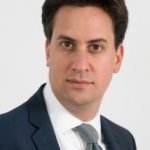
  • Ed Miliband – 2020 Comments on Furlough Support

    Ed Miliband – 2020 Comments on Furlough Support

    The comments made by Ed Miliband, the Shadow Secretary of State for Business, Energy and Industrial Strategy, on 31 July 2020.

    Many businesses still have little or no cash coming in, but are trying to do the right thing and save their employees’ jobs. They now face the stark choice of letting go of their staff or facing a hefty financial burden to keep them on.

    Businesses in vastly different sectors and circumstances should not be treated in this uniform way, and it is clearly unfair and illogical for those employers still locked down and unable to trade. Unless Ministers recognise the scale of the jobs crisis and change course they will force employers to make cuts, and be culpable for thousands of workers across the country losing their jobs and livelihoods.

    Labour is calling on the Government to end their damaging blanket approach to ending furlough support before it is too late, and to target support at the hardest hit sectors. This would encourage businesses to stick with workers and not make them redundant now, which is inevitable unless government changes course.

  • Lucy Powell – 2020 Comments on HSBC and DW Sports Job Losses

    Lucy Powell – 2020 Comments on HSBC and DW Sports Job Losses

    The text of the comments made by Lucy Powell, the Shadow Minister for Business and Consumers, on 3 August 2020.

    We are seeing a wave of job losses across the high street which is not just a tragedy for the individuals and families concerned but underlines the real challenges facing retail, hospitality and leisure in our towns and cities.

    With many businesses struggling, Boris Johnson’s jobs squeeze threatening those still on furlough in fully and partially shut down sectors, and the lack of support for areas facing local lockdowns, it’s vital that Ministers step up. That’s why Labour has called for a flexible furlough and a Hospitality and High Street Fightback Fund to support businesses and workers in areas and sectors in distress.

  • Lucy Powell – 2020 Comments on Hays Travel

    Lucy Powell – 2020 Comments on Hays Travel

    The comments made by Lucy Powell, the Shadow Minister for Business and Consumers, on 3 August 2020.

    It’s devastating to hear that Hays Travel is faced with having to make almost 900 employees redundant, months after stepping in to save the jobs of those impacted by the collapse of Thomas Cook.

    The government’s illogical decision to withdraw furlough support from businesses across the board, regardless of sector or circumstance, is putting so many jobs at risk.

    With forecasts of a 10% unemployment rate and regular mass redundancies, it is clear the government must urgently target support where it is needed and protect people’s livelihoods.