Category: Economy

  • Alister Jack – 2021 Comments on Scottish GDP Figures

    Alister Jack – 2021 Comments on Scottish GDP Figures

    The comments made by Alister Jack, the Secretary of State for Scotland, on 23 June 2021.

    The UK Government has taken swift and robust action to deal with the pandemic. We have supported more than 900,000 Scottish jobs, given thousands of businesses vital loans, and VAT cuts have kept firms in the hardest hit sectors afloat.

    On top of this direct support, the Scottish Government has received more than £14.5 billion in additional funding. And the successful UK-Government-funded vaccine programme is giving us optimism for the future.

    We are beginning to emerge from these uncertain times, and three consecutive months of growth is encouraging. But we know we still have a huge amount to do to recover our economy, and that families and businesses across Scotland still need our help.

    A strong and stable recovery is the UK Government’s sole priority. Growth deals across Scotland have seen investment of £1.5 billion and our new UK-wide funding programmes will benefit communities right across the UK.

  • Rishi Sunak – 2021 Statement on the UK Infrastructure Bank

    Rishi Sunak – 2021 Statement on the UK Infrastructure Bank

    The statement made by Rishi Sunak, the Chancellor of the Exchequer, in the House of Commons on 17 June 2021.

    The UK Infrastructure Bank has begun operating in an interim form and is open for business.

    The bank, owned and backed by the taxpayer, will support and enable private and public investment in infrastructure, with core objectives to help tackle climate change, particularly meeting our net zero emissions target by 2050, and to support regional and local economic growth. The Government and the bank have also set out the institution’s investment principles today which will guide how it delivers its objectives.

    HM Treasury and the UK Infrastructure Bank have entered into a keep well agreement to ensure that the bank has sufficient funds to be able to meet its payment obligations in full as they fall due.

    The UKIB will be headquartered in Leeds, and will operate across the whole of the UK, supporting projects in England, Scotland, Wales and Northern Ireland. Over the coming months, the bank will continue to build its capability and capacity as it establishes itself as an independent institution.

    The Government are also publishing the bank’s initial framework document, which sets out the institution’s relationship to the Government.

    A copy of the framework document, alongside an unexecuted copy of the “Keep Well Agreement”, which has information redacted on the basis that it contains either commercially sensitive or personal data, will be placed in the Library of the House.


  • Rachel Reeves – 2021 Speech on the State of the Economy

    Rachel Reeves – 2021 Speech on the State of the Economy

    The speech made by Rachel Reeves, the Shadow Chancellor of the Exchequer, on 16 June 2021.

    Five years ago, my friend and colleague Jo Cox was murdered. There is not a day goes by when I do not think of her, and I know that on both sides of the House she is missed dearly.

    All the way through this pandemic we have said that the economic and health responses must go together. That means keeping support in place for as long as the public health measures demand it. When the public health restrictions are extended, as they were by the Prime Minister on Monday, the economic support should be extended too; otherwise we risk falling at the final hurdle. Having spent billions of pounds supporting the economy, it would be tragic to see thousands of businesses go to the wall just because the Government withdrew support a few weeks too soon. We are not calling for forever support, but for economic support that matches the timetable for opening up that the Government have set. That is the right thing for business, for workers, and for our economy too.

    Let us be clear about why we are here today: the Government’s delay in putting India on to the red list has allowed a dangerous new variant to enter our country. That is why we have the highest covid infection rate per person across the whole of Europe—all because the Prime Minister wanted his VIP trip to India. It was vain and short-sighted and has been devastating for public health. As well as the health impact, our assessment, using Office for National Statistics data, tells us that the delay in reopening will cost the UK economy £4.7 billion. That is money that is not being spent in British businesses at a crucial time in our recovery. That £4.7 billion would have been used by businesses to pay commercial rents, to pay people’s wages, to invest, to take on new staff, and to pay taxes into the Treasury as well.

    Of course I welcome what the Chief Secretary has to say today on commercial evictions, but the truth is that if the Chancellor believed that this economic package was enough, he would be here announcing it himself. Whatever this is, it is not doing “whatever it takes” to support British businesses and our economy. Given that the Government have moved the goalposts, let me ask the Chief Secretary why Ministers have not delayed the employer contributions to furlough, due to start on 1 July. Employers are being asked to pay more when they cannot even properly open for business.

    The vast majority of the 1.8 million people still on furlough are in the very sectors most affected by the ongoing restrictions: hospitality, live events and travel. On 1 July, loans to those businesses start having to be repaid. The self-employed and those excluded from financial support will be worried about their futures. Grants are ending, business rate bills are arriving and furlough is tapering off—all immediately after the Government have announced an extension to restrictions. How on earth can the Treasury justify turning off support and sending businesses new tax bills when the Government are saying that those businesses cannot even open?

    On Monday, the Prime Minister told the country that we need to learn to live with the virus. Where is the much-needed plan that would enable us to do that? Where is the plan for greater ventilation in workplaces, including public buildings and schools? Where is the plan to shift contact tracing to a local level, where we know it works best—not in a centralised, Serco-led call centre? Where is the proper support for people needing to self-isolate? Those are all essential measures to save lives and livelihoods, and to avoid the stop-start approach that has characterised the Government’s response to the pandemic.

    Given the WhatsApp messages from the Prime Minister about his own Health Secretary that have been revealed today—Madam Deputy Speaker, I will use more diplomatic language than the Prime Minister could manage—how can we have confidence in Government Ministers when the Prime Minister thinks that the person in charge of the pandemic response is “hopeless”?

    Mr Toby Perkins (Chesterfield) (Lab)

    Not just “hopeless”.

    Rachel Reeves

    Not just “hopeless”. People have given up so much over the last year. We have pulled together and shown the best of our country. People have done everything that was asked of them and much, much more. We should not be in this position today. Businesses and workers do not deserve to have the rug pulled from under their feet at the eleventh hour. We want to see businesses make it through the pandemic and thrive again, because they are an important part of what makes our country so great and they are essential for our economic recovery. We need them and they need us today. That is why the economic support we have should match the health restrictions that are still in place, and that is what the Government have failed to deliver today.

  • Steve Barclay – 2021 Statement on the State of the Economy

    Steve Barclay – 2021 Statement on the State of the Economy

    The statement made by Steve Barclay, the Chief Secretary to the Treasury, on 16 June 2021.

    Before I make my statement, I add my appreciation to that of colleagues for Sir Roy Stone and the contribution he has made during his time in the House.

    There is little doubt that the four-week extension to restrictions announced on Monday will present additional challenges to thousands of people and businesses across the country. That is why at the Budget we went long and erred on the side of additional support. The package of support from my right hon. Friend the Chancellor was designed to accommodate short delays such as this. Indeed, he told the House at that time that we were

    “extending our support well beyond the end of the road map to accommodate even the most cautious view about the time that it might take to exit the restrictions.”—[Official Report, 3 March 2021; Vol. 690, c. 255.]

    Most of our economic support schemes do not end until September or after, providing crucial continuity and certainty for businesses and families—something that was welcomed by business leaders and sector leaders when it was announced. They praised the reassurance provided for the long term.

    Let me remind the House of the scale of support we have announced for British households and businesses over the past 15 months: £352 billion. We have protected jobs, with 11.5 million unique jobs supported by the furlough scheme, which will be in place until the end of September. At the Budget, we also extended the self-employment income support scheme, supporting nearly 3 million self-employed people and taking the total expected support offered through the scheme to nearly £3 billion.

    Businesses have been supported, too, with tax cuts, deferrals, loan schemes and cash grants worth over £100 billion. Our restart grants, worth up to £18,000 from April, have helped Britain’s businesses to get going, at a cost of £5 billion. Some £2.1 billion of discretionary grant funding has been provided for councils to help their local businesses. Last financial year, we provided an unprecedented 100% business rates holiday for all eligible businesses in the retail, hospitality and leisure centres—a tax cut worth £10 billion. This financial year, over 90% of these businesses will receive a 75% cut in their business rates bill across the year to March 2022, and we have extended the 5% reduced rate of VAT for a further six months. The loan guarantee schemes, including the bounce back loan scheme, have provided £70 billion of loans to 1.5 million companies.

    We have provided targeted sectoral support, too. At the Budget, for instance, we provided an additional £700 million to support local and national arts, culture and sports institutions as they reopen. That is on top of the £1.57 billion culture recovery fund, bringing our total support for sports and culture to more than £2 billion, with about £600 million yet to be distributed. It is businesses that will create jobs and grow the economy, and we have stood behind them since day one of this crisis.

    Just as we have supported jobs and businesses, so have we supported livelihoods too: the temporary £20 uplift to universal credit will continue until the end of September; we increased the national living wage to £8.91 from April and extended it to those over 23; we have increased the local housing allowance for housing benefit, meaning that more than 1.5 million households have benefited from an additional £600 a year, on average; and we provided a £670 million hardship fund to help more than 3 million people keep up with their council bills. This comprehensive package has helped to protect millions of jobs, businesses and livelihoods, and our plan is working. GDP is outperforming expectations: unemployment is forecast to be much lower than previously feared; consumer confidence has returned to pre-crisis levels; businesses insolvencies in 2020 were actually lower than in 2019; and signs in the labour market are encouraging, with 5.5 million fewer people on the furlough than in April 2020. In fact, figures released by Her Majesty’s Revenue and Customs just yesterday showed that the number of people employed has risen by more than 400,000 since November. Of course, covid has impacted different sectors in very different ways, and some particularly acutely, but it should be welcome news to everyone in this House that the early signs are of a recovery in our labour market.

    This plan has come at a cost, albeit one that has reduced economic scarring that would have been inflicted otherwise by covid. Last year saw the highest peacetime level of borrowing on record—£300 billion. We are forecast to borrow a further £234 billion this year and a further £107 billion next year, and at a higher level of debt the public finances are more vulnerable to changes in inflation and interest rates. Indeed, a sustained increase in inflation and interest rates of just 1% would increase debt interest level spending by more than £25 billion in 2025-26. As a result, at the next spending review, we will keep the public finances on a sustainable medium-term path, maintaining the trajectory established at the Budget, so that we have the resilience we need to respond to any future challenges.

    A huge and comprehensive economic shock has been met with a huge and comprehensive response—one that is working. I am pleased, however, to be able to make one further announcement today. Many businesses have accrued debts to landlords during the pandemic. Because of the threat that posed to jobs, we introduced protections to prevent the eviction of commercial tenants due to non-payment of rent. It is the Government’s firm position that landlords and their tenants should continue to resolve those debts through negotiations, and I welcome the various industry-led schemes already in place, and those being developed, to provide resolutions through arbitration. But in recognition of the importance of jobs in the many affected businesses at the heart of local communities, we launched a call for evidence in April on further actions to take to resolve those debts. As a result of that call for evidence, the Government now plan to introduce legislation to support the orderly resolution of these debts that have resulted from covid-19 business closures. We will introduce legislation in this parliamentary Session to establish a backstop so that where commercial negotiations between tenants and landlords are not successful, tenants and landlords go into binding arbitration. Until that legislation is on the statute book, existing measures will remain in place, including extending the current moratorium to protect commercial tenants from eviction to 25 March 2022.

    To be clear, all tenants should start to pay rent again in accordance with the terms of their lease, or as otherwise agreed with their landlord, as soon as restrictions are removed on their sector if they are not already doing so. We believe that that strikes the right balance between protecting landlords and supporting the businesses that are most in need. Based on the successful Australian approach, it sets out a long-term solution to the resolution of covid-19 rent, ensuring that many variable businesses can continue to operate and that debts accrued as a result of the pandemic are quickly resolved to mutual benefit. I thank those on both sides of the issue for their constructive engagement.

    Striking the right balance, just as we are doing with commercial rents, has been the key to our approach all along, and it will continue to shape our approach in the weeks ahead.

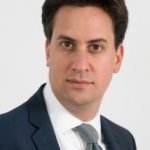
  • Ed Miliband – 2021 Comments on Economic Support for Businesses

    Ed Miliband – 2021 Comments on Economic Support for Businesses

    The comments made by Ed Miliband, the Shadow Business Secretary, on 10 June 2021.

    Businesses have operated under historic uncertainty during this crisis, worsened by details of economic support playing catch up with public health announcements.

    Now once again, businesses are in the dark, with a perfect storm of financial pinch points brewing and no reassurance from government that economic measures will remain in step with possible changes to the roadmap.

    It is right we remain guided by the science to tackle this virus, but businesses should absolutely not be paying the price for the Government’s poor handling of our borders and the new variant.

    We’ve got to back businesses on our high streets and safeguard the recovery of local economies. Businesses should not have to worry for even one day that economic support will be pulled away whilst restrictions remain in place.

  • Rachel Reeves – 2021 Comments on G7 Deal on Multinational Taxation

    Rachel Reeves – 2021 Comments on G7 Deal on Multinational Taxation

    The comments made by Rachel Reeves, the Shadow Chancellor of the Exchequer, on 5 June 2021.

    It’s encouraging to see these first moves towards a global pact on tax avoidance.

    But this government has spent the last few weeks actively watering down what was initially intended to be an ambitious 21% rate of global minimum corporate tax.

    That would have brought £131 million extra a week to Britain for our NHS and other public services, while also stopping our high streets being aggressively undercut.

    This government must now show leadership, push for a 21% rate in negotiations, and use the money to fund our schools and our NHS.

  • Rachel Reeves – 2021 Comments on Taxation of Multinationals

    Rachel Reeves – 2021 Comments on Taxation of Multinationals

    The comments made by Rachel Reeves, the Shadow Chancellor of the Exchequer, on 3 June 2021.

    This week is a chance for the Government to back British business and help our public services rebuild out of the pandemic.

    Boris Johnson is gifting the biggest multinationals £131 million a week. Labour says let’s fund our NHS instead.

    Now that we’re out of the EU we have even more reason to show global leadership in cracking down on tax avoidance.

    Yet this government seems set on weakening a deal that would bring billions back to Britain and stop our high streets being undercut by the likes of Amazon, Google and other big multinationals.

    If the Government is serious about seeing our high streets thrive, they must make sure the businesses on them – whether it’s on Armley Town Street in my constituency, or Market Square in the Chancellor’s – have a level playing field.

  • Rachel Reeves – 2021 Comments on Global Minimum Rate of Corporation Tax

    Rachel Reeves – 2021 Comments on Global Minimum Rate of Corporation Tax

    The comments made by Rachel Reeves, the Shadow Chancellor of the Exchequer, on 23 May 2021.

    The Conservatives have a choice: they can join Labour in tackling large-scale tax avoidance or they can allow billions of pounds to leave Britain.

    This global pact will bring in extra tax benefitting Britain, while stopping huge multinationals and online giants from undercutting our businesses.

    By making sure they pay their fair share in Britain, we can level the playing field for our brilliant businesses, and build an economic recovery with thriving industries, strong public services and good, secure jobs for all.

  • Rachel Reeves – 2021 Comments on CBI’s Seize the Moment Report

    Rachel Reeves – 2021 Comments on CBI’s Seize the Moment Report

    The comments made by Rachel Reeves, the Shadow Chancellor of the Exchequer, on 24 May 2021.

    British businesses played a crucial role during the pandemic, and they are vital as we shape a fair economic recovery, and look to create the decent jobs that help people and places prosper.

    Today’s report rightly underlines that we face a once-in-a-generation opportunity to shape the UK economy for a new future.

    Labour will work with businesses to unleash people’s potential and help tackle the shared challenges we face as a society.

  • Jesse Norman – 2021 Statement on E-Commerce and VAT Changes

    Jesse Norman – 2021 Statement on E-Commerce and VAT Changes

    The statement made by Jesse Norman, the Financial Secretary to the Treasury, in the House of Commons on 13 May 2021.

    The Government will be introducing changes to simplify the way VAT is administered for some goods sold between Northern Ireland and the EU, and some low-value imports into Northern Ireland from 1 July 2021 (otherwise known as e-commerce VAT changes). This mirrors an WSEU-wide reform, which the UK is implementing in Northern Ireland in line with the obligations set out under the Northern Ireland protocol, where EU VAT rules with respect to goods will continue to apply in Northern Ireland. However, Northern Ireland is, and will remain, part of the UK’s VAT system.

    The overall aim of the e-commerce VAT changes is to facilitate the declaration and payment of VAT for (a) sales of goods to consumers between Northern Ireland and the EU; and (b) low-value goods, where they are in consignments valued up to £135 (€150), supplied to consumers in Northern Ireland from non-EU countries, including from Great Britain. The changes will affect businesses and online marketplaces that are involved in these transactions. The consumer experience overall will not change.

    On 1 January 2021, the UK introduced a set of new VAT rules for the imports of low-value goods into Northern Ireland from outside the UK and the EU. The EU’s e-commerce reforms mirror many of those changes. Therefore, the Government consider that there will only be minimal changes for businesses selling imported goods to customers in Northern Ireland.

    From a UK perspective, the e-commerce changes mean that:

    A new single EU-wide distance selling threshold of £8,818 (€10,000) will be introduced for the sales of goods and services in the EU. The threshold will only apply to supplies of EU-located goods to and from Northern Ireland, which means that, EU suppliers who exceed the threshold will have to register for VAT in the United Kingdom if they wish to sell goods to consumers in Northern Ireland;

    Online marketplaces will be liable for collecting and accounting for VAT on goods supplied in Northern Ireland, under certain circumstances; and

    Low-value consignment relief, which relieves import VAT on consignments of goods of up to £15, will be removed fully in Northern Ireland and across the EU.

    Alongside these changes, two new IT systems will be introduced: one for accounting and collecting VAT on sales of goods between Northern Ireland and the EU—the one-stop shop; and the other for accounting and collecting VAT on imports of non-excise goods from non-EU countries, where they are in consignments that do not exceed £135 (€150) in value—the import one-stop shop. Both systems are designed to reduce burdens on business and facilitate the collection of VAT on sales of goods across Northern Ireland and the EU; and are optional for businesses and online marketplaces to use.

    The UK will be taking a phased approach to the introduction of these IT systems. HMRC have today published guidance on gov.uk setting out what this will mean for businesses. However, in many cases, if businesses and online marketplaces opt not to register to use these systems, there will be no change in how they declare and pay for VAT on their sales of goods to consumers in Northern Ireland and EU member states.

    The Government will legislate for these changes shortly.