Category: Economy

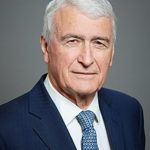
  • John Eatwell – 2022 Speech on the Growth Plan (Baron Eatwell)

    John Eatwell – 2022 Speech on the Growth Plan (Baron Eatwell)

    The speech made by John Eatwell, Baron Eatwell, in the House of Lords on 10 October 2022.

    My Lords, it was encouraging to hear the Prime Minister echo Keir Starmer’s conference speech, putting growth at the heart of the political agenda, but terribly discouraging that her policy for growth embodies the libertarian philosophy that she has soaked up at America’s libertarian think tanks.

    Her libertarian economics has already been tried. Donald Trump’s Tax Cuts and Jobs Act 2017 cut taxes—notably for the better off—and funded the cuts by borrowing in excess of $2 trillion, arguing that these measures would increase investment, growth and incomes, so that tax cuts could pay for themselves. Well, it did not work. Investment increased temporarily but then declined. Lower taxes produced a barely perceptible increase in growth of 0.1 of 1%, and there was no increase in incomes to pay for tax cuts. The American experience confirms that libertarian economics is bad for business. Consider the most commercially successful innovation of modern times: the iPhone. Every significant technical innovation with the iPhone was made in the public sector, from the touch screen to internal electronics.

    Growth demands innovation. Because returns are an unknowable future, innovative investment in new, untried technologies, or new products, accessing new markets, is always risky. That is why the state has such an important role to play, funding the risk-taking that markets cannot handle. When public bodies created the iPhone technologies, they were taking risks that the market would not.

    There remains Britain’s perennial problem of transforming invention into innovation into commercially viable products. Imitating best commercial practice in Europe and the US will help, but more is needed. We need to leapfrog our competitors by building a new financial and industrial system that faces up to competition today and beats the competition tomorrow. That is why Keir Starmer’s commitment to turn the UK into a green-growth superpower is so important. Britain has the science to produce green energy and to create the new technologies that will allow us to adapt to climate change. This is a challenge that cannot be met by shrinking the state. It requires a new entrepreneurial state underpinning the risks involved in providing the new goods and services that an overheating world will need.

    The Prime Minister’s diagnosis of the need for growth is correct but, instead of tackling the problem with modern economic medicine, she plans to bleed the patient. I understand that the Prime Minister read politics, philosophy and economics—PPE—at Oxford. It is evident that she read too many Ps and not enough E.

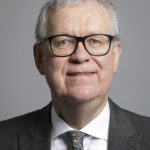
  • Michael Forsyth – 2022 Speech on the Growth Plan (Lord Forsyth of Drumlean)

    Michael Forsyth – 2022 Speech on the Growth Plan (Lord Forsyth of Drumlean)

    The speech made by Michael Forsyth, Lord Forsyth of Drumlean, in the House of Lords on 10 October 2022.

    My Lords, I must say, I agree with almost every word that the noble Lord said. Now that we have put Brexit behind us, I think we could form a good partnership.

    What a great Budget Statement it was in terms of content. IR35 was an all-party recommendation from the House of Lords Economic Affairs Committee. The energy cost programme is an open-ended cheque for two years to save people from stress and worry in their homes and businesses. It goes far further than anything that the Labour Party proposed—its meagre proposal was for six months—yet we hear little about it. The other day, Laura Kuenssberg moved a Minister on because he had mentioned it before. It is a huge commitment on the Government’s part. To argue that the proposal to cut the top rate of tax, which would have cost £2 billion, crashed the economy is grossly irresponsible.

    The noble Lord, Lord Bilimoria, is absolutely right that the presentation of the mini-Budget was perhaps not ideal—it certainly created a reaction—but it was the spark that lit the tinder box, the tinder box being the fact that we have been living on printed money for far too long. In 2020, through QE, we increased the government bonds owned by the Bank of England by £450 billion. That is how Rishi Sunak was able to fund all those Covid measures, from Eat Out to Help Out to the furlough scheme and all the rest.

    The truth of the matter—both opposition parties need to recognise this—is that the era of cheap money is over. In the United States, Jay Powell is absolutely determined to drive down inflation, and rightly so. He is doing it by putting interest rates up. Those people who think that the mini-Budget caused the collapse of the pound—that is, the reduction in the value of the pound versus that of the dollar—need to recognise that the Bank of England put interest rates up by 0.5% when the market was expecting 0.75%. When the Americans are committed to a severe programme of interest rate increases, any economics undergraduate will tell you that the exchange rate is determined by the relative interest rates. So the campaign being pushed by the Labour Party to try to present the Government as having created an economic crisis is stuff and nonsense. The duty on all of us—[Interruption.] No, I will not give way; I have only four minutes.

    Noble Lords

    Oh!

    Lord Forsyth of Drumlean (Con)

    Fine, I will give way.

    Lord Liddle (Lab)

    How does the noble Lord explain away the fact that the Government introduced the largest set of tax cuts and the biggest increase in the budget deficit since the time of Anthony Barber in 1972?

    Lord Forsyth of Drumlean (Con)

    How does the noble Lord explain away the fact that his Front Bench supported all of it, including the reductions in national insurance and the basic rate of income tax? They did not support the corporation tax cut but that is presumably because they do not recognise the importance of having investment in our country. Where does investment come from? It comes from retained profits after tax; that is how I would explain it. It is actually to the credit of the Opposition that they supported the populist things. But they concentrated on the cut to the top rate of tax, which the Government have since decided not to go ahead with.

    Inflation is the enemy. Jim Callaghan, a great Labour Prime Minister, warned us that

    “inflation is the father and mother of unemployment”.

    That is why the Government are determined to try to get growth, and why we need to recognise that continuing with QE on the present scale will result in inflation and a disaster for both unemployment and our country’s prosperity. The era of free money is over. We need to concentrate on wealth creation, not wealth consumption. We need to save every penny; we could start with our own front door in this place, which is costing £2.5 million. Use the candle ends. Look at programmes and decide on priorities. Personally, I think that increasing universal credit should be a priority. However, if that is to be funded, people must recognise that it will mean cuts elsewhere.

    So I say this: all support to the Prime Minister. Stop the personal attacks and look at the reality, because if we get this wrong people’s mortgages and costs will go through the roof—and they will not be able to blame the Government.

  • Karan Bilimoria – 2022 Speech on the Growth Plan (Baron Bilimoria)

    Karan Bilimoria – 2022 Speech on the Growth Plan (Baron Bilimoria)

    The speech made by Karan Bilimoria, Baron Bilimoria, in the House of Lords on 10 October 2022.

    My Lords, as the chancellor of the University of Birmingham, I had the privilege to know the right reverend Prelate, David Urquhart, the ninth Bishop of Birmingham. In 2006, when he took office—taking over, of course, from John Sentamu, who went on to become Archbishop of York and now sits with us on the Cross Benches as the noble and right reverend Lord, Lord Sentamu—in his first sermon, he took out a mallet hidden under his cloak and smashed a clay jar in front of the whole congregation. His message was to demonstrate the fragility of human life in the world as a gift from God.

    He has worked for the homeless. He has worked tirelessly for interfaith harmony. He has worked for the chamber of commerce, as somebody from a business background and with a business degree. He has been here in the House of Lords since 2010, and has been convenor since 2015. Note the word “convenor”. We on the Cross Benches do not have a leader, we have a convener, and the same goes for the Bishops. What a time, with the changes of Government and all the challenges. He is a knight of the Order of St Michael and St George.

    Seventy is far too young an age to retire: you have just reached the middle of middle age. The right reverend Prelate always signed off as David Birmingham. Well, David Birmingham, the University of Birmingham, the city of Birmingham and this House will miss you enormously. Thank you for all you have done for all of us, and we wish you every success in your continued great work.

    In February 2021, I said to the Chancellor at the time, Rishi Sunak, when I was president of the CBI, “Do not increase taxes. Increasing taxes will hamper the recovery and hamper growth.” What did he do? He kept putting taxes up, up and up, to the extent that they are the highest in 70 years.

    Before the financial crisis in 2008-09, we in this country had a growth rate of 2.5%. Since then, we have had a decade of no growth, low productivity and low inflation. What a state to be in. We had austerity. That achieved nothing. So the Government are absolutely right to target a growth rate of 2.5%. They are absolutely right to reverse the 2.5%—1.25% and 1.25%—national insurance: it is a tax on jobs. Even the Labour Party said it would not have done that. The Government are absolutely right not to increase corporation tax from 19% to 25%. They are absolutely right with investment zones. They are absolutely right with the reform to IR35.

    But—and there are “buts”—what about speeding up the move to alternative energy, such as small modular reactors? That is not being spoken about. What about investment: replacing the super-deduction of 130% that will go in April with a 100% write-off to encourage businesses to invest? What about labour shortages? We kept saying to the Government, “Activate the shortage occupation list.” Now the Government say they are going to do it. I ask the Government to confirm in their response that this will actually happen.

    Then there was 23 September. It is a great lesson in life that it is not just what you do but how you do it. As the former Chancellor, now the noble and learned Lord, Lord Clarke, said, it is the first time a budget has caused a crisis. So much of what was intended was right. To go back to 40% as the top rate of tax is absolutely the right thing to do in the long run, but perhaps not now. As we have heard time and again, not having an OBR report to back it up was not a good thing; I am glad it is happening on the 31st.

    People do not talk about the thresholds. The thresholds were frozen by Rishi Sunak and remain. That is the biggest tax increase happening in front of us now. Do the Government agree with it?

    I am sorry that I am overrunning, because of paying the wonderful tribute that I was privileged to pay, but I have two more points. First, I have made the point time and again that we as business are grateful for the £400 billion of support that the Government gave through the pandemic that saved our businesses, our economy and our citizens, but you cannot stop there. If you play a tennis stroke and hit the ball—the £400 billion—to get the ball over the net you must follow through, and the Government must be prepared to follow through. Our debt-to-GDP ratio is not that high; it is the second lowest in the G7. Japan’s is at 250%; America’s is at almost 150%. We need to invest in skills and education, we need to reform the apprenticeship levy.

    My final point is this. If the Government do not help now, SMEs, in particular, will not survive. They need help with business rates, with delaying their taxes and with cash flow. Hospitality needs a VAT reduction. If these measures are not taken, we will see businesses going bust. Defence expenditure needs to go up to 3% of GDP right now. On a positive note, when the Ukraine war ends, we will have boom time.

  • Caoimhe Archibald – 2022 Comments on Conservative Budget Plans

    Caoimhe Archibald – 2022 Comments on Conservative Budget Plans

    The comments made by Caoimhe Archibald, the Sinn Fein MLA, on 11 October 2022.

    The Tories reckless mini budget continues to wreak economic chaos and will hit workers, families and businesses by pushing up mortgages and hiking businesses borrowing costs.

    The incompetent approach of the Tory Chancellor has led to the Bank of England having to again intervene to buy up government bonds to protect pensions.

    There is no greater indication that your plan is a mess when even the IMF, who championed cruel austerity that decimated our public services, are criticising them for making attempts to drive down inflation more difficult.

    It’s time for Liz Truss and the Tory government to scrap this plan, end the shameless policy of lining the pockets of the rich and halt the attack on our public services.

    Instead, they should support workers, families and small businesses who are struggling and introduce a windfall tax to cut the eye-watering profits of the big energy corporations.

  • Nicholas Macpherson – 2022 Speech on the Growth Plan (Baron Macpherson of Earl’s Court)

    Nicholas Macpherson – 2022 Speech on the Growth Plan (Baron Macpherson of Earl’s Court)

    The speech made by Nicholas Macpherson, Baron Macpherson of Earl’s Court, in the House of Lords on 10 October 2022.

    My Lords, there are some sensible policies in the Government’s growth plan. A better functioning supply side will enable higher growth of the economy—although I have a word of warning. Every Chancellor I served as Permanent Secretary announced reforms to the planning system—some announced them once a year. Announcing reforms is the easy part; making them stick is much harder.

    I also congratulate the Chancellor on the senior team he announced today. I worked with James Bowler and Beth Russell over many years and under different Administrations. They are very able and represent all that is good in the Civil Service. Their appointment will be good for the Treasury’s credibility—and not before time, because credibility is hard won and easily lost, as the Chancellor has discovered in recent weeks.

    Sacking a respected Permanent Secretary on day one can just about be dismissed as a little local difficulty, but choosing to announce the biggest giveaway since Anthony Barber’s in 1972 without involving the Office for Budget Responsibility was an elementary error. We now know that the OBR offered to produce a fiscal forecast, but the Chancellor declined. Investors want to understand the consequences for the public finances of major announcements and the OBR has provided considerable reassurance since George Osborne set it up in 2010. Perhaps if the Chancellor had engaged with the OBR he might have had second thoughts about the scale of his tax cuts, because injecting £45 billion into an economy facing chronic labour shortages and the highest inflation rate in 30 years is a risky strategy.

    The Government are right to point out that the markets are fragile, but surely that is a time to move carefully. Bond yields had been rising since early summer but, as the markets began to digest the incoming Prime Minister’s programme, gilt yields rose faster in the UK than in the US and Europe. Again, that should have been a warning sign, but the Government chose to ignore it. The result is that the long-term cost of borrowing now stands at 4.7%—when I started writing these notes this morning, it stood at 4.3%. So the long-term yield is 210 basis points higher than at the beginning of August and, if sustained, will add over £40 billion to public spending in the long term.

    Moreover, as the Bank of England Deputy Governor, Sir Jon Cunliffe, set out in a letter to the chairman of the Treasury Committee last week, yields rose considerably in the days following the Chancellor’s statement and, as we now know, the Bank of England had to intervene to calm the markets. When it comes to future meetings of the MPC, the Bank will have little choice but to raise interest rates more than it otherwise would, not least to protect the value of sterling. This is already putting pressure on mortgage rates and risks more than offsetting any growth effect of the mini-Budget.

    It is not too late to put things right. I welcome the Chancellor’s announcement that he is bringing forward his Fiscal Statement to 31 October. This needs to include a credible plan to stabilise and then bring down debt as a share of the nation’s income. It needs to include credible public expenditure proposals. History suggests that writing in ever-bigger cuts to the benefits of poor people is simply not deliverable. If the Government cannot show how they will cut spending, they will need to revisit their tax proposals. This may be embarrassing but, unless the Government can restore economic credibility, the market response in the weeks ahead could be a whole lot worse than we have seen so far.

  • Richard Newby – 2022 Speech on the Growth Plan (Baron Newby)

    Richard Newby – 2022 Speech on the Growth Plan (Baron Newby)

    The speech made by Richard Newby, Baron Newby, in the House of Lords on 10 October 2022.

    My Lords, when Liz Truss was elected as Conservative Party leader a mere five weeks ago, she and her new Government faced two separate economic challenges. The first was how to respond to the dramatic impending rise in gas prices, due on 1 October. The second was how to put the country on a path to sustainable growth. The Government’s response to these challenges was to introduce the measures announced by the Chancellor on 23 September, which attempted to deal with them both in one fell swoop.

    On the first, dealing with the impending energy price rises, the Government have introduced an extensive package covering both individual households and businesses. In our view, it still suffers from a number of flaws. For example, we believe that the freeze should have been applied to April rather than October prices. The business support lasts only six months, leaving companies unsure what happens after that. Most importantly, it is not accompanied by a windfall tax on the energy producers, which could have helped mitigate the very substantial costs. However, at least the measures are timely, offer real relief and will protect the vast majority of people and businesses from at least some of these otherwise unbearable costs.

    All the remaining measures announced on 23 September seek to deal with the second challenge of promoting growth. Sadly, far from doing so, they have already precipitated an economic crisis, will leave many people worse off and will fail in their fundamental purpose. For a start, there was literally no reason to introduce these changes so precipitately, with no attempt to quantify their consequences and no explanation of how they were to be funded. As a result, the markets were alarmed, the Bank of England had to step in to prevent a pension fund collapse and interest rates, including mortgage rates, rose. Before looking at the broader consequences for the economy and the Government’s reputation, let us look at the individual measures announced on 23 September and see how they might help achieve the Government’s aim of promoting growth.

    I start with the £18 billion cut in corporation tax. In reality, this will do little or nothing to promote growth. If you look at corporation tax rates across the developed world, there is no correlation between them and long-term economic growth. Many of our European competitors have higher corporation tax rates and higher long-term growth. The business community itself has not been making the case that lower corporation tax rates in themselves mean higher investment and therefore growth.

    The best argument for the cuts to income tax and national insurance—other than a purely populist political one—is that they might help stave off the worst of a recession because they will help prop up consumer spending in the short term. That may be true, but it has nothing to do with promoting underlying growth. The reason is that, with almost full employment and in the absence of larger-scale immigration, the only way in which growth can be increased over the medium and long term is by improving productivity. Achieving this requires sustained increases in investment in people and equipment. Cuts in income tax and national insurance will simply not achieve this.

    As for the cut in stamp duty, this may mitigate the costs of buying a house, but it pales into insignificance compared to the increased mortgage costs which the Government’s actions have brought about. These so-far unfunded tax cuts will do absolutely nothing to resolve the UK’s problem with long-term growth.

    But what about the supply-side measures which the Government plan to introduce? As with the ill-fated proposed 45% tax rate cut, some simply appear to benefit those who need help least—for example, the proposal to end the cap on bankers’ bonuses. Some, such as the proposed investment zones, are highly unlikely to increase aggregate investment in the economy as a whole. Some, such as the intention to speed up planning and infrastructure projects, are so vague that they are, frankly, meaningless. Some, such as the proposals to curb the right to strike and to strengthen universal credit sanctions, simply look mean and vindictive. Whatever they are, they will not lead to a spurt in growth.

    So, if the Government’s package of tax and supply side measures look doomed to fail the growth test, what about their other consequences? Three in particular stand out. First, the manner in which they have been announced has completely spooked the markets, particularly the mortgage market. The number of mortgage products fell by over 40% because mortgage providers lost any sense of the future trajectory of interest rates. Those mortgages which are still available now cost on average about 1% more than before the Chancellor’s announcement. This is entirely down to the Government’s own Budget, before any further increases in interest rates by the Bank of England.

    Secondly, it is now clear that the Government plan to cut public expenditure to pay for their tax cuts. We do not yet know where these cuts will fall, but we do know that the impact of inflation on departments’ budgets already means that they will struggle to maintain services while providing fair wage increases. The idea which the hapless Chief Secretary seems to believe, that there is substantial fat to be cut, is laughably false. We wait with trepidation for a Halloween horror story to see where the cuts are going to fall.

    Thirdly, and most damaging to the Government, they have lost within days of their formation any shred of a reputation for economic competence. They are pursuing fiscal policies completely at odds with the monetary policy that the Bank of England is legally bound to pursue. They have bet the farm on a pro-growth strategy which no respectable economist believes will work, and they have already been forced into U-turns caused by a lack of support for their policies, even among their own MPs.

    Against all this, the Prime Minister simply labels all her critics as “anti-growth”. This is risibly untrue, so let me suggest as a starter a five-point plan which might actually do something to improve Britain’s growth prospects. First, given that the Government are in a big, big hole, they should stop digging—stop pushing ideological policies which will not promote growth but will undermine their credibility as a serious Government. There are many to choose from, but I suggest that they should stop their attacks on the healthier food agenda. Supporting buy-one-get-one-free offers clearly makes the Prime Minister feel better but will do serious damage to the fight against obesity, and the illness and therefore lack of productivity that ensue. The Government should think again.

    Secondly, the Government should start rebuilding economic ties to the EU. We know that Brexit will reduce GDP consistently unless things change. They should start by sorting out the Northern Ireland protocol but then move towards aligning with the single market. This will do more for growth than any number of third-order supply-side gimmicks.

    Thirdly, instead of prioritising fracking and North Sea oil permits, the Government should put their weight behind a green industrial revolution, including a massive programme of housing insulation. This will create jobs and growth and help mitigate the high energy costs now facing millions of households.

    Fourthly, the Government should invest in skills. Having a more productive workforce is the only way we can increase productivity and therefore growth, and spending more on apprenticeships, FE and lifetime learning is the only way we can achieve this.

    Fifthly, the Government should create a climate which encourages business investment. Investment in the UK has lagged that of France, Germany and the US for years. This is why they are much more productive and why household incomes there are now so much higher than here in the UK. Stability and consistency would improve the investment climate, but so too would a new industrial strategy which recognised where Britain’s economic strengths are and showed how the Government planned to support them.

    Setting the UK on a path to sustainable growth will not be easy, but it is possible. What is not possible is to do so with a Government who are driven by a simplistic, failed ideology, who have failed even the most basic tests of competence, and who the British people rightly think have to go.

  • Angela Smith – 2022 Speech on the Growth Plan (Baroness Smith of Basildon)

    Angela Smith – 2022 Speech on the Growth Plan (Baroness Smith of Basildon)

    The speech made by Angela Smith, Baroness Smith of Basildon, in the House of Lords on 10 October 2022.

    My Lords, first, I welcome the noble Baroness back to the Front Benches. Many of us were surprised when she was departed from them previously, and I welcome her to her new job. I note that her official title is Minister of State for Government Efficiency. I wish her well; she has never been one to shy away from a challenge, and she has a challenge in that one.

    We look forward very much to the maiden speech of the noble Baroness, Lady Gohir. I am convinced that she will make an important contribution to the work of the House, so I look forward to hearing her and welcome her to this place. It is with slightly less enthusiasm that I look forward to the valedictory speech of the right reverend Prelate. Personally and from these Benches, let me say to him that he has been an asset to the House. We have greatly welcomed his wisdom and wise counsel, and we are going to miss him. I thank him for all he has done and look forward to his speech with some regrets.

    We last met in this Chamber to pay tribute to and remember Her late Majesty Queen Elizabeth. We did so in a spirit of unity and common purpose. With a new monarch and a new Prime Minister, it is a time of significant change. At a time when we most needed stability, instead we had the most extraordinary non-Budget Budget that this country has seen for at least a generation. I listened with interest to the Minister’s speech, and I was surprised that there was no acknowledgement of the turmoil that this country has found itself in in the last couple of weeks since that Statement.

    On Friday 23 September, after this House had risen for the Conference Recess, the new Chancellor made his first Statement to House of Commons—and what a Statement it was. Then, and in the days that followed, Liz Truss and Kwasi Kwarteng set out the package, which ended any pretence of fiscal responsibility or levelling up—or indeed of understanding the pressures on families, individuals and businesses across the UK. The response of experts and the markets was one of incredulity. How could this happen? At a time of high interest rates, the great government plan was to borrow more to pay for tax cuts that would benefit those who had more than anyone else in the first place. There was no absolute cap on energy bills but instead a cap on the unit price, which will see some families still paying well over the £2,500 promised under Labour’s alternative plans. I see that the noble Lord, Lord Callanan, is responding, and I hope that he will address this in his response.

    Following the non-Budget Budget, the pound fell, the markets reacted to the lack of confidence in the Government, and the Bank of England had to step in with a £65 billion commitment to prop up the economy. It clearly did not help confidence in the UK that the Chancellor refused to publish information from the Office for Budget Responsibility. Given the unprecedented market reaction, the Prime Minister should have heeded calls from across the political spectrum to return to Parliament.

    A strong or weak economy is not an academic exercise. It is not just a way to gamble on the markets to see whether you can make any money—it is about people’s lives. When mortgage offers were withdrawn, hundreds of products were pulled only to be replaced with fewer and more expensive alternatives, and some saw their opportunity of owning their own home or keeping the home that they were in disappear overnight. That will also force up rents. The Prime Minister gave her so-called reassurances that they had borrowed money to try to help with energy costs, but so much of that will be swallowed up by increased housing costs, either in mortgage payments or rents. There was a real need and opportunity for the Government to respond and for ministerial accountability to Parliament. Instead, we had over a week of unhelpful distractions, mixed messages and Cabinet infighting.

    The media were briefed that the November “fiscal event” was being brought forward to October, but nobody thought at the time to tell the Chancellor. We now know that it will be the very last day of October. Two Cabinet Ministers joined Back-Bench colleagues in mounting what has been called a “pre-bellion” on the issue of uprating universal credit benefits by inflation. As the Prime Minister turned to BBC local radio to put her case, her lack of empathy as she appeared to be reading out “lines to take” on fuel bills cut little ice with listeners.

    This chaos has come at the worst possible time. Household budgets are under enormous pressure, hitting almost everyone with high petrol prices, spiralling food costs, supply issues and ever-increasing interest rates. Even those who previously felt relatively secure are now nervous for the future. The help with fuel bills will still leave many families paying far more than £2,500.

    It is an expensive package, funded by borrowing, so I fail to understand why—despite Labour’s pleas and some from the Government’s own side as well, and the welcome intervention of Shell’s CEO—the Prime Minister and the Chancellor are so set against taxing the billions of pounds in excess profits, preferring instead costly extra borrowing. It does not make economic sense. The mini-Budget damaged both the economy and confidence in the Government—

    Lord Forsyth of Drumlean (Con)

    Will the noble Baroness give way?

    Baroness Smith of Basildon (Lab)

    It is unusual, but to the noble Lord I will.

    Lord Forsyth of Drumlean (Con)

    These are unusual times. Does the noble Baroness accept that the Government’s package of support for people and businesses with their energy bills is far in excess of what the Labour Party was promising? Does she also accept that her proposed tax on the energy companies would have raised a trifling £8 billion compared with the costs of the scheme that has been put forward by the Government? Will she not welcome that?

    Baroness Smith of Basildon (Lab)

    I would welcome a fairer way. The key question is: who pays? The Government had a choice. They could have said that future taxpayers will pay—at a time when borrowing is higher than it has been for years—or they could have said that the energy companies should make a contribution to this. The £8 billion the noble Lord cites is wrong; it is at least £14 billion. I do not dispute the “generosity”—I use inverted commas—of the Government; this is an expensive package. The problem is that it will cost us for years to come and still means that many households will be paying over £2,500, which they cannot afford. The noble Lord makes a brave defence of the Government but it is not one that I can support.

    The Prime Minister, when talking about the economy, spoke about having an

    “iron grip on the nation’s finances”,

    but you do not do that by having a spending spree one day and then slashing your tax base the next. My noble friend Lord Tunnicliffe will talk about the gilt market in his closing remarks later, but the Government’s actions have raised the cost of borrowing at the worst possible time, leaving a bill for future generations. Yet Ministers want us to believe that this crisis is not of their making and that, somehow, the decisions taken in Downing Street are not responsible for these economic problems.

    There is no doubt that international issues have a domestic impact. If proof were ever needed that we are globally interconnected, the war in Ukraine is that proof. However, as with both Brexit and the Covid pandemic, it is not just about the issue but about how Governments respond at the time, as well as the long-term resilience planning to prepare for such events.

    The Prime Minister insists that this is all caused solely by the “global economic crisis” caused by Putin’s invasion of Ukraine. This House knows that supporting Ukraine involves sacrifices. We stand alongside the Ukrainian people and will continue to do so. Of course that conflict brings serious economic impacts, but it is also just plain wrong to insist that recent events are a direct result of it. Did the pound crash against the dollar because of the events in Ukraine? Did the war make UK gilt prices go up? Did Putin force banks to pull hundreds of mortgage deals from the market? No, no, no. These were immediate, emphatic and damning responses to the Government’s announcement.

    When we look at the timeline of what happened and when, we see that the market movements perfectly tracked announcements and media appearances by the Prime Minister and the Chancellor, including last week’s speeches in Birmingham. The Chancellor claimed that the economic chaos was partly the result of the additional “pressure” he experienced following the death of the Queen, as his Statement came just

    “four days after the funeral”.

    But he chose that date. I am sure that I was not alone in my exasperation at the economic turmoil being explained away as policies being badly communicated. That was not the issue. They were the wrong policies, and no amount of communication could disguise that.

    Some excuses were more imaginative than others. Though not a member of the Government, the noble Lord, Lord Hannan—he smiles at me; he probably knows what is coming next—tried his best to help. I look forward to his contribution later. He remarked that the real reason for the pound’s crash was really quite simple. It was not because of decisions taken in Downing Street. The pound’s value collapsed because “the markets are terrified” of Keir Starmer. This time, the party opposite was not blaming the last Labour Government; it was blaming the next one. It might be helpful to reflect that, on average, the last Labour Government achieved higher annual growth than we have seen over the past 12 years of a Conservative Government.

    The Prime Minister and Chancellor now claim to have listened. They say they have listened to the markets, to the public and to their own MPs. After nine days of digging in on the 45p income tax rate, Liz Truss finally announced, in a massive U-turn during the Conservative Party conference, that it would remain. However, most of the mini-budget still stands—but it is only Monday. It is currently still a package aimed at those in the top 5% of income, despite mainstream economic analysis and experience having shown time and time again that trickle-down economics simply does not work. The Government would do well to follow the advice of the noble and learned Lord, Lord Clarke of Nottingham, and others, and just start again. Or, if the Chancellor is convinced that he has, to borrow a phrase from Boris Johnson, “got the big calls right”, he should publish the OBR’s economic forecast. He should publish it today and in full.

    The OBR was set up by a Conservative Chancellor and its forecasts have become a key part of UK fiscal events. Mr Kwarteng says he recognises the OBR’s independence, but the facts speak for themselves: he muzzled it when it was most needed. And it is not just the OBR in the firing line. The former Bank of England Governor, Mark Carney, has accused Liz Truss of “undercutting” the country’s economic institutions and

    “working at some cross purposes with the Bank”.

    Of course, some have argued that this sorry saga might have been avoided had the Prime Minister not dismissed the Treasury’s Permanent Secretary in one of her first acts in office. Getting rid of a senior civil servant for personal or political reasons is a significant departure from our traditions of how to govern. As we see in this House—perhaps the noble Lord, Lord Forsyth, and I are a good example—we know how to disagree agreeably. Instead, in the words of the noble Lord, Lord Macpherson of Earls Court, the Prime Minister chose to fire the

    “only official with serious experience of crisis management and then precipitate a crisis a fortnight later.”

    I hope that the Government are not just going to listen to, and surround themselves with, those who will always agree, whatever the issue. That is no way to run an economy and no way to run a country.

    A strong economy is one in which a Government play their full part in supporting and unleashing the potential for growth. That sits alongside strong public services that enhance our social fabric and our economy. A first-rate health service and the best training and educational opportunities are not just items to be ticked off in the “Nice to have” category; they are essential for a modern economy. An incoming Labour Government will implement a genuine plan for growth, creating the biggest partnerships between businesses, government and communities that this country has ever seen. We will ensure greater fairness in the tax system and, by making us a global leader in green technologies, we will secure investment and resilience in our energy markets.

    It is not just in the green economy where we have to be ambitious. We will work together across manufacturing and service industries to find solutions to the ongoing skills crisis, to which this Government have no answer. We will also change how politics is conducted in this country, taking responsibility for our decisions and the consequences they have for people across the nation—because when we look at everything said by the Prime Minister, the Chancellor and the rest of the Cabinet last week, one word is conspicuous by its absence, and that word is “sorry.”

  • Lucy Neville-Rolfe – 2022 Speech on the Growth Plan (Baroness Neville-Rolfe)

    Lucy Neville-Rolfe – 2022 Speech on the Growth Plan (Baroness Neville-Rolfe)

    The speech made by Lucy Neville-Rolfe, Baroness Neville-Rolfe, in the House of Lords on 10 October 2022.

    My Lords, I start by welcoming the noble Baroness, Lady Gohir, to today’s debate. I very much look forward to hearing her maiden speech and to her future contributions. On a sad note, we are also hearing the valedictory speech from the right reverend Prelate the Bishop of Birmingham, who has provided so many mature, sensible and considered contributions to the House over the past 12 years.

    It is a great privilege to open the debate on the economy. When the new Prime Minister was forming her Administration, I was honoured to be offered the post of Minister of State in the Cabinet Office, in effect replacing my noble friend Lord True, now the Leader of the House. I take this opportunity to express my admiration for his brilliant eulogy to Her late Majesty. I was briefed that most Cabinet Office work was, in the main, worthy, so I anticipated a future dealing with the humdrum detail of government work—below the radar, as it were. In the event—it is sometimes surprising how things turn out—I first come before your Lordships to outline the Government’s economic growth plan.

    As the Prime Minister has made abundantly clear, growth is the core economic mission of this Government. With economic growth, everyone benefits. We cannot have, say, a strong NHS, good schools or effective defence without it. We have three priorities: cutting taxes to boost growth, reforming the supply side of the economy and maintaining a responsible approach to the public finances.

    I will come to the details of the plan shortly, but first I will touch briefly on another important recent development that is an integral part of our whole economic package: our action on energy bills. The Prime Minister rightly took action on this crisis facing households within 48 hours of taking office. The energy price guarantee will limit the unit price that consumers pay for electricity and gas, so that for the next two years the typical annual household bill will be £2,500, in contrast to the £6,000 or so that some predicted. Millions of the most vulnerable households will also receive additional payments.

    We are also helping businesses. The energy bill relief scheme, providing an equivalent guarantee to that for households, will reduce gas and electricity prices for all UK businesses, charities and the public sector, especially schools and hospitals. Finally, to support the market, we have announced the energy markets financing scheme, providing a 100% guarantee for commercial banks to offer emergency liquidity to energy firms in otherwise sound financial health that face high margin calls.

    While early estimates suggested that our package could have cost as much as £160 billion, more recent estimates are much lower. The key point is that we are giving relief and confidence to a large section of the British people, something that will particularly matter to those at the lower end of the scale. Significantly, the measures have been designed to provide an incentive for fuel economy. There is a reduction in cost per unit, not an overall cap, so that it encourages people and businesses to minimise their energy use. More importantly, without this package it would have been a very brutal winter for millions of households and small businesses.

    Our growth plan sets out our vision for a simpler, lower-tax economy. This Government believe that high taxes reduce the incentive to work, encourage tax evasion, deter investment and hinder enterprise. Hence we are cutting the basic rate of income tax to 19p in April 2023—that is, one year early—which will benefit virtually all taxpayers.

    Noble Lords will have heard that the abolition of the 45% band will no longer go ahead. The Prime Minister and Chancellor have accepted that it had become a distraction from our growth plan. I point out, however, that 40% was the top rate from the date of the Thatcher reforms and all through the Major, Blair, and most of the Brown eras. Also, the top rate is 40% in the Republic of Ireland and 39% in Norway.

    International competitiveness must remain a vital objective, so next year’s planned increase in corporation tax will be cancelled. That means that the rate will remain at 19%, the lowest in the G20, enhancing the attractiveness of the UK as a place to do business. We are also confirming that the annual investment allowance will be set permanently at £1 million, and we have introduced legislation to cancel the health and social care levy. Reversing the levy delivers a tax cut for 28 million people, worth on average £330 every year, and a tax cut for nearly a million businesses.

    Planned increases in the duty rates for beer, cider, wine and spirits will also be cancelled. In addition, we want to help families aspiring to buy a home of their own. We have therefore proposed a series of reductions in the thresholds for stamp duty land tax, which will assist buyers, particularly first-time buyers.

    Simplification is close to my heart. We are embedding tax simplification into the institutions of government and repealing recent changes to off-payroll working rules—the infamous IR35—which added complexity and cost for many businesses that engage contractors. I know that this will be particularly welcome to our Economic Affairs Committee.

    We are introducing a VAT-free shopping scheme. We want our high streets, airports, ports and shopping centres to feel the economic benefit of the millions of tourists who visit our wonderful country each year. While the Government believe in lowering taxes wherever possible, achieving growth will take more than that. With more vacancies than unemployed people to fill them, we need to encourage people to join the labour market—getting more people into work by, for example, incentivising those claiming universal credit to secure more or better-paid work. We will also legislate to ensure that strikes can be called only once negotiations have genuinely broken down.

    To drive growth, we need new sources of capital investment. We want to unlock billions of pounds to help British businesses—for example, in developing new technologies that can scale up. Hence we will reform the pensions cap and launch the long-term investment for technology and science fund.

    We need global banks to create jobs here, invest here and pay their taxes here in London, not in Paris or New York, so we are scrapping the cap on bankers’ bonuses. To reaffirm the UK’s status as the world’s financial services centre, we will set out a package of regulatory reforms in the coming months.

    We must also see our way to simplifying regulation and cutting red tape in key areas such as planning and procurement. The weight of complexity and compliance is absorbing precious resources and holding back productivity. I know from my time with the other noble Lords on our Built Environment Committee how important housing and infrastructure are to our growth and success. Sadly, our planning system for major infrastructure is too slow and fragmented. For that reason, we are accelerating infrastructure delivery in energy, road, rail and gigabit-capable broadband, with new legislation that will unpick the complex patchwork of planning restrictions and EU-derived laws that constrain our growth, and we are getting the housing market moving by promoting the disposal of surplus public sector land for housing.

    Finally, and of great significance across our country, we are creating a series of new investment zones. We will liberalise planning rules on agreed sites, releasing land and accelerating development. We are introducing an unprecedented set of tax and national insurance incentives for business to invest, build and create jobs in these zones.

    The steps that the Government are taking add up to a radical and concerted effort to boost growth. In the coming months we will continue to work to bring forward further measures, with announcements on agriculture, business regulation, childcare, immigration and digital infrastructure.

    Crucially, the Government understand that growth and sustainable finances must go hand in hand. I remind noble Lords that in 2021 the UK had the second lowest debt-to-GDP ratio of any G7 country, lower than Japan, Italy, France, Canada and the US. Even so, only continued fiscal discipline will provide the confidence and stability to underpin long-term growth.

    Accordingly, as announced this morning, on 31 October —three weeks from now—the Chancellor will publish a medium-term fiscal plan setting out our responsible fiscal approach and how we plan to reduce debt as a percentage of GDP over the medium term. Further, he has asked the OBR to set out a full economic and fiscal forecast soon, and he continues to work closely with the Governor of the Bank of England.

    In conclusion, I passionately want—we all want—our country to succeed and to live up to our past achievements. To achieve that, economic success is essential. To that end, we must get the economy growing again. We must do so while still dealing with the effects of the Covid pandemic and its impact on our public services. We are also rightly engaged in giving significant help to Ukraine—obviously at a cost. Success will not be easy.

    Today we are here to listen to views from across the House and look forward to engaging in a constructive debate—but, however one looks at matters, achieving economic growth is vital if we are to achieve our ambitions. We need to do things differently and better. That is what the growth plan is all about.

  • John Swinney – 2022 Comments on Scottish Budget Date Being 15 December

    John Swinney – 2022 Comments on Scottish Budget Date Being 15 December

    The comments made by John Swinney, the Deputy First Minister in Scotland, on 6 October 2022.

    There is no doubt that the challenges and obstacles of recent times have heavily impacted the way we live. Our continued recovery from the pandemic, the current cost of living crisis, the ongoing turmoil and uncertainty regarding the UK Government’s plans for its Autumn budget and Russia’s illegal war in Ukraine all have implications on the people of Scotland and our economy.

    We are not privy to discussions surrounding the UK Government’s ever changing Autumn budget plans, despite the clear and obvious impact this has on our ability to plan our 2023-24 Budget. The Scottish Budget will be informed by voices across Scotland to ensure we continue to deliver to build a fairer, greener and more prosperous country.

    I look forward to working with stakeholders and the Committee to ensure a Budget is delivered which puts the priorities of the Scottish people at the forefront and continues to strengthen our economy.

  • Kwasi Kwarteng – 2022 Statement on Appointment of James Bowler as Permanent Secretary

    Kwasi Kwarteng – 2022 Statement on Appointment of James Bowler as Permanent Secretary

    The statement made by Kwasi Kwarteng, the Chancellor of the Exchequer, on 10 October 2022.

    I’m delighted to welcome James [Bowler] back to the Treasury and Beth [Russell] and Cat [Little] into their new roles as Second Permanent Secretaries. James joined the Civil Service over 20 years ago and has enormous experience delivering across a range of Government departments. Beth and Cat bring experience and continuity and it’s fantastic to have them as part of the Treasury’s top team.

    James has a proven track record of delivery and strong leadership, both of which will be vital as we drive towards our mission of igniting growth and raising living standards for everyone across the UK.