Category: Economy

  • Kirsty Blackman – 2024 Speech on the Economy, Welfare and Public Services

    Kirsty Blackman – 2024 Speech on the Economy, Welfare and Public Services

    The speech made by Kirsty Blackman, the SNP MP for Aberdeen North, in the House of Commons on 22 July 2024.

    I congratulate all those who have made their maiden speeches today, particularly the hon. Member for Whitehaven and Workington (Josh MacAlister), who gave an excellent speech. As with many of the maiden speeches, now I really want to visit his constituency. It just sounds like an absolutely amazing place. I particularly congratulate all the new Members who have come from a council background. Being a local councillor sets them up fantastically for coming here. It means they are under no illusions about the hard work that is required to be put in for their constituents and the people who live in their area. Congratulations to all of them.

    I also congratulate the Chancellor on being the first female Chancellor. As the first woman in this place ever to lead on the economy, although I have been followed by a number since, I am incredibly glad to see one on the Government Benches. I hope that, as she said, her tenure lasts significantly longer than those of some of the Chancellors we have seen in recent times.

    Today’s debate is taglined “Economy, welfare and public services”. Apart from the maiden speeches, speeches focusing on anything other than economic growth have been fairly few and far between. I will not for one second deny that economic growth is important, but the whole point of it is what we then do with it. It is about what we do with the extra tax take generated from the growth we have created. There is no point in having growth for growth’s sake. There is no point in having economic growth, and no point in the Conservatives saying how fast the UK is growing compared with other countries in the G7, if the same handful of people are getting richer and richer and the vast majority of our constituents are struggling harder than they ever have before.

    We need to ensure that the economic growth and the increase in the tax take that the Labour party is hoping to deliver involves a benefit for all those who live in these islands and in our constituencies. It is massively disappointing to hear that the five pledges and priorities for the Labour party in government do not have eradicating child poverty at the heart of them. I am really glad the Government are bringing together a discussion taskforce to reduce child poverty, but today they could bring 300,000 children out of poverty and move 700,000 children into less deep poverty simply by scrapping the two-child cap.

    One of my previous colleagues in this place, Alison Thewliss, campaigned incredibly hard on the rape clause—everybody will know of the work she did on that. There are 3,000 women across these islands who are eligible for an exemption from the cap because they have applied under the rape clause. They have had to tell the Government they were raped in order to get an uplift in their benefits. That is horrific, and even if the Government are unwilling to move on the two-child cap they should be doing something about the rape clause and what people are having to prove in order to get the exemption.

    It would be very easy to increase growth, again overnight, by increasing migration. Migration to these islands increases the amount of growth. The economy would immediately have grown if the Prime Minister had gone to the summit with the EU leaders this week and said “Yes, free movement benefits us: it benefits our economy, benefits our society, benefits our young people, benefits our musicians, and benefits so many different groups and individuals. It benefits our culture; it makes this place a better place to live. Therefore we are signing up again to free movement.”

    We need only look at some of the past Budgets, such as a Budget George Osborne gave from the Dispatch Box, when it has said in the Red Book that increasing migration will increase the tax take because of the economic growth it will bring. My constituents and people across Scotland recognise that, and we will always argue for a better migration policy—and if the Government are not willing to do it for all of these islands, we will argue for one tailored specifically to Scotland so that we can make our own decisions that suit the needs of our communities and encourage that economic growth.

  • Josh MacAlister – 2024 Maiden Speech on the Economy, Welfare and Public Services

    Josh MacAlister – 2024 Maiden Speech on the Economy, Welfare and Public Services

    The maiden speech made by Josh MacAlister, the Labour MP for Whitehaven and Workington, in the House of Commons on 22 July 2024.

    Thank you, Mr Deputy Speaker. I pay tribute to the fantastic maiden speeches that we have heard from across the House this evening, including that of the hon. Member for Didcot and Wantage (Olly Glover); I am sure that the whole House is reassured to know that he is not an alien.

    The first and only time I entered this Chamber before being sworn in as a Member of Parliament was as a secondary school citizenship teacher, bringing dozens of teenagers here to see their Parliament. On that occasion, I was required to use my teacher voice a number of times, but that is not something I plan to make a habit of in this House.

    I begin by putting on record my thanks to my predecessor for the now abolished Copeland constituency, Trudy Harrison. We may disagree on matters of policy, but she has been unfailingly gracious to me and generous with her time, demonstrating the “country before party” approach that we can all learn so much from.

    I may be new to this House, but I am not new to pushing Governments to get things done, as Opposition Members will know only too well, and I have worked with a number of Education Secretaries over the years. I founded and led a national charity to get more people into fulfilling careers on the frontline of children’s social work to ensure that every vulnerable child has a champion fighting their corner. From that, I was asked by the last Government to chair a landmark independent review of the children’s social care system. That review found that the disadvantage faced by the care-experienced community in our country should be the civil rights issue of our time. Evidence of that disadvantage is found in worse education outcomes, worse health outcomes and shorter lives, but that disadvantage is fuelled by something that politicians often find too hard to discuss, and that MPs certainly find too hard to mention in this Chamber: the absence of love. I believe every child has the right to be loved, and we have the ability to build a care system that can provide that for them. I hope this Parliament will take up the challenge of addressing this moral outrage. The problem is huge, but the solutions are known, and with enough will, tens of thousands of lives can be transformed.

    It is a great honour and privilege to stand here as the first Member of Parliament for the new Whitehaven and Workington constituency. Whether it is the people of Whitehaven or the good people of Workington who are the jam eaters continues to be a source of fierce debate. Of course, I will remain neutral on that question, as I will on all rugby league-related matters.

    Nowhere is more blessed than my constituency, home to the highest peak and the deepest lake in England, with miles of beautiful coastline and the stunning western part of the Lake district, which has inspired millions. Let me here pay special tribute to our amazing mountain rescue volunteers, our Royal National Lifeboat Institution volunteers—just this week, it will be celebrating its 200th anniversary—and all those who give up their time to volunteer in search and rescue services. I have an interest to declare as a serving mountain rescue volunteer, and I will champion volunteer search and rescue services at every opportunity.

    Behind the doors of the towns and villages across my constituency, you will find the warmest and friendliest marras in the country, people forged by the drama and confidence of the surrounding landscape and people with humility, respect and determination at their core. These are people such as Gary McKee, who ran a marathon every day for a year to raise over £1 million for cancer support; those in the growing network of Andy’s man clubs in our community, tackling the crisis of male suicide that my area faces; and community leaders, such as Rachel Holliday of Calderwood House, giving people a route out of homelessness.

    Our area has also forged those who were not born West Cumbrian, but who made our corner of the world their home, including pioneers and entrepreneurs such as Frank Schon, later Baron Schon of Whitehaven. Frank was an Austrian refugee who fled the Nazis, was bombed out of London and was taken in by a kind Cumbrian farmer. He went on to set up and lead a global chemicals company based in Whitehaven, before later chairing Harold Wilson’s development corporation and going on to serve in the other place. Today, my community is home to dozens of Ukrainian families that could well have the next Frank Schon in them. I hope we can offer those who wish to stay a permanent home here in this country.

    Lord Schon is one famous example, but there are thousands of men and women like him—from Whitehaven to Workington, Gosforth to Egremont, Cleator Moor to Seascale and Flimby to Seaton in the north of the constituency—pioneers, entrepreneurs and grafters who have helped west Cumbria to lead the world. It is because of this graft that my constituency is home to the UK New Balance trainer factory—I am not wearing them right now—and the Iggesund paper mill, which has been experimenting with leading carbon capture technology. It is home to Forth Engineering and React Engineering, and hundreds of other businesses represented by Britain’s Energy Coast Business Cluster, from the coal and iron mines to the steelworks.

    Of course, there is the world’s first civil nuclear power station at the site now famously known as Sellafield, home to a world-leading decommissioning mission, which is stimulating innovation in robotics and AI. We led the world, and we can again. We have the people, the will, the determination and now, thankfully, the Government to do it. Our nuclear heritage and our skilled workforce mean we have what it takes to be the ideal location for the next generation of nuclear power. The Government are determined to make the most of new jobs in the energy transition, to reform our broken planning system and to decarbonise the grid, and these three things offer the opportunity for the people of Whitehaven and Workington to fly.

    A Labour Government with a proper industrial strategy and the right targeted investment could completely transform the economic geography of my community. These are decisions that need to be made to create the growth we have promised and to tackle the climate crisis our planet faces. I am determined to play my part to deliver this Labour Government’s mission and to ensure that west Cumbria feels the maximum possible benefit of the change we want to bring about for our country.

  • Olly Glover – 2024 Maiden Speech on the Economy, Welfare and Public Services

    Olly Glover – 2024 Maiden Speech on the Economy, Welfare and Public Services

    The maiden speech made by Olly Glover, the Liberal Democrat MP for Didcot and Wantage, in the House of Commons on 22 July 2024.

    Thank you, Mr Deputy Speaker, for the opportunity to give my maiden speech today. I aspire to match the eloquence of the previous speakers in this debate, including the hon. Member for South Antrim (Robin Swann), who gave the most recent maiden speech; his passion for his constituency is very clear.

    I start by paying tribute to my immediate predecessor, David Johnston. I admire the fact that Mr Johnston entered politics because of his passion for social mobility. I have met constituents who have been personally helped by him, and I aspire to follow his lead. I was pleased that the first email in my parliamentary mailbox came from Lord Ed Vaizey of Didcot, Member for the predecessor seat of Wantage between 2005 and 2019, offering his congratulations. That was a warm and encouraging gesture. I arrive in Parliament following a career on the railway, serving the public, and I hope to apply my knowledge and experience to working with others to advance both rail infrastructure and public services in my seat.

    The name of the new Didcot and Wantage constituency is an improvement on the previous name, Wantage, but remains imperfect. While Wantage and Didcot are the larger towns of the three in the seat, residents from Wallingford are aggrieved by their omission. Mr Deputy Speaker, I can assure you and this House that all three towns will have my attention and care. The same applies to the dozens of villages in the seat; I am fortunate enough to live in one of them, Milton. All our villages have a unique character and set of attractions. Pendon museum in Long Wittenham includes an homage in model railway form to the 1930s Vale of White Horse landscape, and there is also the ancient Uffington white horse and the beautiful chalk streams of the Letcombes. The constituency’s economy is diverse: we have the technology and science centres of Milton Park, Harwell campus and Culham near to farms that have been passed down through generations. Didcot hosts many industrial and business units, and residents benefit from the great western main line for fast commuting to and from London. Organisations such as Didcot TRAIN, the DAMASCUS youth project and Sustainable Wantage illustrate the strong culture of public service and volunteering.

    My constituents rightly have high expectations. During the election campaign, one of them highlighted the lack of biographical detail in a leaflet about me, and asked me whether I was a doctor, a surveyor, a banker, a teacher, or an alien from outer space. Despite my love of the voyages of the crew of the USS Enterprise, Mr Deputy Speaker, I can reassure you and everyone in this House that I am not an alien. Of course, my constituency contains many non-humans, albeit perhaps not aliens. Many a local party volunteer has come to tire of my frequent canvassing of cats as well as humans. On occasion, this has helped my cause: while I was in conversation with one voter, his cat, Matthew, intervened. Matthew took a strong liking to me, with a great deal of leg-rubbing, even sitting on my lap on the pavement. The voter, astonished, told me that Matthew hates nearly everyone, and that his favourable verdict on me would be taken into account.

    Turning to the subject of today’s debate, my constituency shares many of the same challenges as the wider country. Access to GP appointments is often difficult, particularly in Didcot, which continues to yearn for a new GP surgery in Great Western Park. NHS dentistry barely exists, and sewage dumping in our waterways is a great concern, as are proposals for a large reservoir near Steventon and the Hanneys. Many residents desire to walk and cycle more, but need pleasant and safe routes and paths in order to do so, and while the constituency benefits from fast railway connections, the reliability and capacity of the service provided can be somewhat patchy, and we continue to lack a railway station serving Grove and Wantage.

    Perhaps the greatest issue on constituents’ minds is the cost of housing and recent, very substantial increases in the numbers of houses. I commend the Government on their commitment to genuinely affordable housing, but ask them to bear in mind that residents would be more supportive of housing growth were the health, education, and transport facilities needed to support it delivered in parallel. I promise to work tirelessly for my constituents in the pursuit of progress on these issues, and thank them again for the opportunity to serve. It is a genuine honour to be stood here, and I look forward to working with Members from across the House to achieve those aims.

  • Chi Onwurah – 2024 Speech on the Economy, Welfare and Public Services

    Chi Onwurah – 2024 Speech on the Economy, Welfare and Public Services

    The speech made by Chi Onwurah, the Labour MP for Newcastle upon Tyne Central and West, in the House of Commons on 22 July 2024.

    I congratulate all the hon. Members who have made their maiden speeches on their passion and their commitment to their constituency, which has come across so well. Age does not wither, nor custom stale the privilege of being in this place, and I too want to thank my constituents, who have returned me to Parliament to represent them all and the wonderful city we call home.

    I spent 14 years on the Opposition Benches, standing up for my constituents against a Government who were bearing down on them. It is absolutely fantastic to speak from the Government Benches in support of a Government who will help and empower them. Some Conservative Members have been painting a rosy picture of our economic inheritance, but the message of working people in Newcastle upon Tyne Central and West was clear and consistent: “We need change.” It is not hard to see why. People are worse off; over a third of children in Newcastle upon Tyne Central and West live in poverty; and over 2,000 households in Newcastle are homeless. Those are just a few of the issues that my constituents face, so please, let us not pretend that we should be grateful to the last Government.

    But everything changed on 4 July. Indeed, as I was buying my fish supper last Friday at one of the excellent fishmongers in Grainger market—locally smoked cod, since you ask—they told me that on 5 July, sales of halibut soared. That is an expensive fish, so they took that as a sign of celebration, but also of optimism, hope, and confidence in a better future. There is nothing fishy there, because the Bills set out in the King’s Speech will give Newcastle our future back. Our destiny will be in our own hands, with the English devolution Bill and the better buses Bill giving local leaders such as our fantastic Mayor Kim McGuinness the powers needed to drive growth and prosperity locally. Our region’s immense potential in the green industries of the future will finally be unlocked through the national wealth fund and Great British Energy; planning reform will take the handbrake off building new homes and spaces for business, making us an even greater city with an economy that provides great jobs and good homes for all Geordies; and by expanding the rights of workers, tenants and minoritised groups, the Government will make sure that work pays and everyone in Newcastle enjoys their fair share of our national prosperity.

    Having worked around the world as an engineer, I have been proud to champion science and innovation in Newcastle and across the UK. I am now privileged to have both of Newcastle’s fantastic universities in our constituency, and our city is looking forward to building a proper industrial strategy once again—one that can boost our universities as drivers of inclusive economic growth. Unlocking private investment through measures such as the national wealth fund and the recently announced pensions review will super-charge spin-outs and start-ups in the north-east, and I believe that sites such as Helix—home to innovative businesses and entrepreneurs in cutting-edge industries—are a tantalising glimpse of the future of Newcastle.

    Technology has the power to make our constituents’ lives so much better, and measures such as planning reform will make that a reality. As an ex-shadow science Minister, I have spoken to Lord Vallance, as he begins his ministerial role, to offer my support, and to make the case for investment in regional research and development. I know that the Department for Science, Innovation and Technology team are already committed to opening up careers in science to everyone, getting money outside the golden triangle and connecting science to industrial strategy, healthcare and economic growth.

    As I have said, this Government inspire hope that has been lacking in Newcastle— that is, apart from on match days. That is why, as the MP for St James’ Park, I welcome the football governance Bill. From Mike Ashley to the Saudi Public Investment Fund takeover, football governance has been a thorn in our side, and Geordies around the world will welcome the safeguarding of our precious football club.

    My constituents sent me to this place because our party promised change.

  • Robin Swann – 2024 Maiden Speech on the Economy, Welfare and Public Services

    Robin Swann – 2024 Maiden Speech on the Economy, Welfare and Public Services

    The maiden speech made by Robin Swann, the Ulster Unionist Party MP for South Antrim, in the House of Commons on 22 July 2024.

    It is with honour and humility, and a sense of trepidation, that I rise to make my maiden speech. I think of those who have spoken here before and the gravity and seriousness of the issues that have been debated and discussed. I hope that this Parliament is no different in how it discharges its duties, and that we in this intake of new Members live up to those standards. I congratulate the many new Members on their maiden speeches, which have set a high bar.

    Like everyone else in this House, I wish to thank sincerely those who placed their faith and trust in me by electing me. I am indebted to the electorate of South Antrim for the support that I have received from across the entire community—indeed, entire communities—in my election to this place. I also thank the dedicated campaign team who supported me during what was an honourable campaign.

    I pay tribute to my predecessor, Mr Paul Girvan, not just for his tenure as a Member of this House, but for his time as a Member of the Northern Ireland Assembly and as a local councillor. South Antrim has moved between Paul’s party and my Ulster Unionist party on a number of occasions. With that, I carry the privilege and honour of returning the UUP to this place after a seven-year absence, and the charge and responsibility of bringing a moderate and reasoned Unionist voice from Northern Ireland, in my party’s tradition of working positively and constructively with all to achieve the best outcomes for all our people, and of working across this House to strengthen our Union and to deliver a Union for all.

    I turn now to my constituency of South Antrim. I want those here this evening to know what a fantastic part of our country it is. Like so many constituencies, it has a mix of main towns—Ballyclare and Antrim—and a range of what were once small villages but are growing into large villages, such as Toome, Doagh, Crumlin, Randalstown, Templepatrick, Ballynure and many more. Much of the constituency is a large and productive rural area, while part of the expanding urban area of Glengormley is merging with north Belfast in Mossley and Mallusk.

    South Antrim is home to industry, research and cutting-edge business in large and small employers. Indeed, I look forward to working with the Chancellor and her Government in further supporting those businesses through the Bills in the King’s Speech, and especially through the national wealth fund. South Antrim is the base of Belfast international airport, which I believe has a real opportunity if it gets its much-needed rail link and the further expansion of Aldergrove and our Royal Air Force base. That is why I believe that we also need a UK air transportation strategy, which I may raise later in the Adjournment debate—if the hon. Member for Strangford (Jim Shannon) will take an intervention from me!

    South Antrim’s agricultural sector is another pillar of our community and contributes significantly to our local economy. Our annual Antrim agricultural show celebrates that agricultural heritage by bringing together farmers, producers and visitors from across the country and showcasing the best of rural life and promoting a strong sense of community. It is on this Saturday at Shane’s castle, and I would encourage and welcome anyone who wants to attend.

    Lough Neagh—the largest freshwater lake in the British isles—is another jewel in South Antrim’s crown, but it is currently struggling because of neglect, like many of our waterways. However, the Stormont Executive’s new recovery programme is in place, and I hope that—with national support, given the need for action on our waterways—Lough Neagh will once more be a tourism and recreational attraction for visitors from far and wide.

    A number of issues debated over the past few days will have a direct impact on the people of South Antrim, Northern Ireland and the United Kingdom—none more so than the future and support that the Government will offer our national health service and those who rely on and work in it. The Government have the opportunity to reverse the past years of neglect. Health may be devolved, but that does not mean that we in this place can abdicate all responsibility for our national health service. We have the excellent Antrim area hospital in my constituency, but it needs resource and support to develop its potential. As a former Health Minister of Northern Ireland, I know that we have plans to deliver better services, but change needs recurrent resources, which have been lacking in recent years. I look forward to working with this Government to rebuild our national health service.

    I know that I am speaking to the converted on how great South Antrim is, because I have been overwhelmed by the number of Members from across the House who have approached me to tell me of a relative or friend who lives in my constituency. Indeed, I look forward to representing them and all my South Antrim constituents in this place.

  • Ruth Cadbury – 2024 Speech on the Economy, Welfare and Public Services

    Ruth Cadbury – 2024 Speech on the Economy, Welfare and Public Services

    The speech made by Ruth Cadbury, the Labour MP for Brentford and Isleworth, in the House of Commons on 22 July 2024.

    It is an honour to be re-elected for the fourth time to the redrawn seat of Brentford and Isleworth, and to follow such impressive maiden speeches, particularly that of my hon. Friend the Member for Cities of London and Westminster (Rachel Blake), in whose constituency we all work.

    After nine years sitting in Opposition it is a pleasure to be on the Government side of the Chamber and to support this Government’s legislative programme, which brings hope, opportunity and change for my constituents and for the country at last. I will focus my response to the King’s Speech on the Government’s ambitious proposals around transport policy—not only because it is an area I have long been involved with, having served on the Transport Committee for five years and chaired five all-party parliamentary groups on transport, but because transport was brought up regularly on the doorsteps in this last election.

    The theme of today’s debate is economy, welfare and public services. Effective transport policies are essential to the change we need to see in all three areas, as well as in addressing our climate crisis, so I am pleased to see the bold and ambitious plans set out by my right hon. Friend the Member for Sheffield Heeley (Louise Haigh) and her team to do just that. For access to work, education and health services, for supplying our manufacturing and retail sectors and for supporting our wellbeing and family life, decent transport choices are essential, and nowhere are they more needed than in the new communities that will be built, if the traffic on the roads to and around them is not to grind to a halt. Whether in city, town or countryside, we need the full range of transport options—ones that are affordable, accessible, efficient and environmentally sound.

    On buses, I am delighted that, through the better buses Bill, the Government will end the ideological and control-freakery policy of banning local authorities from running their own municipal bus companies. Such companies were killed off by the Thatcher Government in a bout of ideological rage, with only London retaining a regulated bus service. The rest of England should have what we have in London: regular day, evening and weekend services, simple fare structures, and high standards of safety, accessibility and passenger information. Those are being developed by the Mayor of Greater Manchester, Andy Burnham, and I look forward to seeing other local authorities—of all parties, I am sure—following his example.

    To be an alternative to driving, and for us to cut road congestion and pollution, rail travel must be reliable. I am therefore delighted to see Bills to create Great British Railways and to bring train operations into public ownership. That is essential for a simplified and unified rail system that focuses on improving passenger services while getting value for the taxpayer. Our constituents, and many Members of this House, have had terrible experiences of cancelled trains, or of sitting on the floor for hours despite booking a seat. We will now see a Government and a Department that do not use transport as a cudgel in our culture wars, or as a crude electoral hammer to override local authorities that want to introduce sensible measures to encourage cycling and walking.

    Transport is at the heart of the challenge of national renewal that we have set ourselves: kickstarting economic growth, boosting jobs and living standards, and building sufficient homes in sustainable communities. Of course there are challenges ahead—not least in further growing capacity in our overloaded rail network. I welcome the plan to improve east-west connectivity across the north of England, but funding further increases in rail capacity will unfortunately be financially unsustainable until we see the economic growth that the Chancellor is working on. Aviation expansion is acceptable only if it passes the four tests that we set ourselves in opposition: cutting carbon dioxide emissions, overcoming local environmental impacts, providing regional benefits across the UK, and deliverability. I know that the new Secretary of State and ministerial team will work across our travel and transport sectors to improve transport connections to the benefit of our country as a whole.

  • Mark Francois – 2024 Speech on the Economy, Welfare and Public Services

    Mark Francois – 2024 Speech on the Economy, Welfare and Public Services

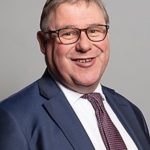
    The speech made by Mark Francois, the Conservative MP for Rayleigh and Wickford, in the House of Commons on 22 July 2024.

    Thank you, Mr Deputy Speaker, for kindly calling me to contribute to this important debate on the King’s Speech, after 11 very good maiden speeches and 11 very promising—even fabulous—starts to parliamentary careers. Those who have been in this House a little longer will know that our great friend the late Sir David Amess, whose plaque now rightfully hangs on the wall, had a great talent for managing to combine a very large number of topics into one speech. I lack Sir David’s skill, so I will seek to confine my remarks this evening to three topics, all development related.

    The first topic relates to an expansion in medical capacity for the NHS, and specifically to proposals to expand the Jones family practice in Hockley. I declare an interest: my wife Olivia has worked in the NHS for nearly 20 years. In essence, the plan is to expand the practice, with a first-floor extension to create eight new GP consulting rooms and additional training facilities. Rochford district council recently approved planning permission for the extension, and the senior partner, Professor Dr Mahmud, and his active practice management team are now seeking approval from local NHS bosses to support the scheme.

    It is my intention as the recently re-elected local MP—for which I am very grateful to my constituents—to lend weight to these positive proposals. They are designed not just to expand capacity, but hopefully to provide training places for graduates from the new medical school at Anglia Ruskin University in Chelmsford. For the record, I have also been working for some time to try to expand Riverside medical centre in Hullbridge, and I will be pursuing that with the NHS as well.

    Secondly, the town of Wickford has suffered a dearth of supermarket capacity in recent years. My constituents endured something of a perfect storm last year when the Aldi supermarket was closed, while at the same time the old Co-op nearby has effectively stood semi-derelict for three years. During that supermarket vacuum, my constituents were forced to fall back on the small Iceland in the high street and Wickford market.

    I was very pleased to reopen the enlarged Aldi last autumn, and it is now doing a brisk trade. However, the Co-op still remains undeveloped and, while boarded up, is occupying valuable spaces in the town’s principal car park. It is a long and complicated saga. Suffice it to say that the site was bought several years ago by a development company named Heriot, which originally came up with a plan in conjunction with the supermarket chain Morrisons to redevelop the store, with an underground car park and some flats above. I always had doubts about the commercial viability of those proposals, especially the underground car park, and the scheme collapsed some months ago.

    Nevertheless, Heriot is working on what might be called a plan B, and for some months has been in what it describes as “advanced talks” with another major supermarket chain. For commercial reasons Heriot asked me not to name the supermarket in this speech, something I have agreed to respect—although I have to say that the name of the company in question is now effectively an open secret, and was even being reported back to me on doorsteps by my Wickford constituents during the general election.

    I spoke to the directors of Heriot in advance of this debate, who assure me they are seeking to bring their commercial negotiations to a conclusion as soon as possible. They are well aware of my frustration at these three years of delay, which I conveyed to them again this morning, and they have asked me to relate that they realise that my Wickford constituents have already waited a long while for a new supermarket. That is an issue I campaigned on heavily at the general election, so I hope Heriot will be able to announce something definitive this summer. My message to Heriot is simple: “You have had more than enough time—get on with it.”

    Finally, over two decades I have seen examples of both good and bad development in my constituency. Young people cannot live at home with their parents into their 50s and 60s, so it must be possible to build some houses in a sustainable manner to meet the housing need. Crucially, however, the infrastructure required to accompany them has to be built first. To put it another way, from long experience, if development is to be successful—and it can be—as I said earlier, it has to be done with people, rather than to people. The proposals at a place called Dollymans Farm in my constituency, which I was re-elected with a mandate to oppose, are precisely the opposite of that. We all want to find somewhere suitable and appropriate for people to live, but we have to do that in the right way.

  • Rachel Blake – 2024 Maiden Speech on the Economy, Welfare and Public Services

    Rachel Blake – 2024 Maiden Speech on the Economy, Welfare and Public Services

    The maiden speech made by Rachel Blake, the Labour MP for the Cities of Westminster, in the House of Commons on 22 July 2024.

    Thank you, Mr Deputy Speaker, and I thank the hon. Member for Farnham and Bordon (Gregory Stafford) for describing his constituency so passionately. While we may strongly disagree on the need for growth and new development in this country, we may agree more on the future of our NHS, and I look forward to working together on that ambition.

    I am a proud Londoner, and like many Londoners I was not actually born here; I am delighted to share with you that I was born in Manchester and my family comes from Lancashire. In fact, for most of my childhood I was aware of only one football team—the Bolton Wanderers—but for the last 42 years London has been my home, and the chance to represent my home city is truly a special honour. I put on record my thanks to the residents of the Cities of London and Westminster for placing their trust in me as their representative.

    I start by thanking Nickie Aiken for her service. She is a pioneer, as the first woman to represent the Cities of London and Westminster, and is remembered fondly by many residents. She has shown me kindness and offered her advice, for which I am grateful. I know that here and across the constituency she will be remembered for her tireless work campaigning to regulate pedicabs, and her work to end the Vagrancy Act 1824 and deliver the Leasehold and Freehold Reform Act 2024. I also pay tribute to my good friend Karen Buck, who represented the St John’s Wood neighbourhood wards of Abbey Road and Regent’s Park, which joined the two Cities constituency in the recent boundary review. When walking through Westminster with Karen, it is hard to find anyone in her constituency who does not know her and has not been helped by her. Through her tireless casework for tens of thousands of constituents, and her Homes (Fitness for Human Habitation) Act 2018, Karen has made an outstanding contribution to lives in Westminster and beyond. She is a fearless representative and campaigner and a kind and wise friend. I am so grateful for her advice, and will do my very best to live up to her high standards.

    From 1977 to 2001, the two Cities were represented by Peter Brooke, who is remembered for his work as the Secretary of State for Northern Ireland, and later as the Secretary of State for National Heritage. Finally, I also remember J. S. Mill, who represented the City of Westminster from 1865 to 1868, and who in 1866 became the first person in the history of Parliament to call for women to be given the right to vote. I hope that he would be happy to see Nickie, Karen and I delivering on his pioneering work for equality here in the two Cities.

    Truly, when a woman is tired of London she is tired of life. The Cities of London and Westminster are home to great cultural institutions: the national gallery, the royal opera house, the commercial centres of Oxford Street and Edgware Road, innovative start-ups alongside major international corporations, the Government here in Westminster and Whitehall, the international financial centre of the City of London, the beautiful Hyde Park, Regent’s Park and St James’s Park alongside the residential squares of Belgravia and Marylebone, and yes, Buckingham Palace.

    Many Members will know the neighbourhoods of Soho, Fitzrovia and Covent Garden as places to spend a night out. In fact, tens of thousands of people live here. We have St Bartholomew’s, one of London’s oldest churches, Bevis Marks, the oldest practising synagogue in the UK, and London Central Mosque. Just minutes away from Parliament we have the Peabody estates of Westminster, the pioneering and beautifully designed Churchill Gardens and Lillington and Longmore estates, the architectural delights of the Barbican, Golden Lane and the historic communities of Petticoat Square and the Guinness estate in Portsoken ward.

    All those places are home to diverse communities living side by side, but also to inequality and injustice, and the struggle to find a stable, affordable and decent home is holding people in my constituency back from meeting their potential. That struggle is holding our city and our country back from meeting our potential. Tackling the housing crisis has brought me into politics, and this debate on the King’s Speech proposals for economic growth is an important time to highlight the situation that many of my constituents face. Nearly 20 years ago, I worked at the Treasury on the Barker review of planning. It is with sadness that I note that we are still not delivering the homes we need. I am determined that this Government will deliver on our promise to build more affordable homes.

    Ending no-fault evictions will bring certainty and security for the approximately 40% of households in the Cities of London and Westminster who are renting privately. Our cross-Government strategy will put Britain back on track to ending homelessness, rough sleeping and temporary accommodation, which have been rising here for years and are harming so many. I am grateful to organisations such as The Passage and The Connection here in the two Cities for doing so much to support vulnerable people. The Cities of London and Westminster has one of the highest proportions of leasehold homes in the country. Residential leasehold is trapping tenants with unaccountable landlords, and I am pleased the Government have pledged a leasehold and commonhold reform Bill.

    It is characteristic of such an international place that global patterns affect our local communities. The rise of short-term letting and the risk of dirty money in property are contributing to a loss of homes for Londoners, and as their representative here I am determined to tackle that. I will be standing up for our local hospital and St Mary’s in Paddington, and continuing our campaign to secure funding for the redevelopment of London’s major trauma centre.

    The story of the two Cities is one that is optimistic, outward-looking, hard-working and driven. I hope to continue to represent this place in that fashion. I am the first Labour and Co-operative Member of Parliament to ever represent this historic constituency, and I join colleagues in closing with a pledge to approach this new Parliament with a renewed commitment to respectful debate and disagreement. Elections are a time to make a choice. Now that a decision has been made, it is time to move forward with a relentless focus on public service and delivery.

  • Gregory Stafford – 2024 Maiden Speech on the Economy, Welfare and Public Services

    Gregory Stafford – 2024 Maiden Speech on the Economy, Welfare and Public Services

    The maiden speech made by Gregory Stafford, the Conservative MP for Fareham and Bordon, in the House of Commons on 22 July 2024.

    Thank you, Mr Deputy Speaker, for calling me to speak. I congratulate the hon. Member for Newton Aycliffe and Spennymoor (Alan Strickland) on his maiden speech. I do not think that we crossed over at university, but mutual friends tell me that he was an excellent president of the Oxford Student Union. We can tell that his debating skills were honed there, and we saw that in evidence this evening.

    I want to express my gratitude to the people of the new Farnham and Bordon constituency for placing their trust in me and for allowing me the honour to represent them here in Parliament. I feel that giving a maiden speech is a bit like giving a best man’s speech at a wedding, as you are surrounded by disapproving elderly relatives who are going to hang on every word, but I can assure you, Mr Deputy Speaker, that none of the jokes that I have made before in any best man’s speeches will be given in this House, especially as I know that my mother-in-law is watching on the Parliament channel.

    I also wish to thank my family—especially my wife, Caroline, and my daughters, Susannah and Lucy, who have put up with me a lot over the past year—for their patience and support, as well as my parents, James and Theresa.

    Other hon. Members have noted that they are not the first people in their family to be Members of Parliament. I am not even the first sibling to be a Member of Parliament. I pay tribute to my brother, Alexander, who served the people of the Rother Valley constituency so diligently in the previous Parliament.

    Apparently, it is also customary to express gratitude to our predecessors in the seat—a small political obituary, as it were. Fortunately, both my immediate predecessors, my right hon. Friends the Members for Godalming and Ash (Jeremy Hunt) and for East Hampshire (Damian Hinds), are still, as Members can see, very much in their political prime. None the less, I want to thank them for their generous support and advice since I was selected. They have both achieved amazing things for the constituents whom I have inherited. Campaigning was a sobering affair. On the doorsteps I was told: “Oh, we do like Jeremy”, or “Damian did such wonderful stuff for us”, or “You have very big shoes to fill”. To rub salt into the wound, the week before the election, the local paper ran a story on how much the people of Haslemere would miss the shadow Chancellor—believe me, I know my place.

    Speaking of predecessors, the predecessor of my right hon. Friend the Member for East Hampshire, Lord Arbuthnot, should be praised for his sterling work on the Horizonscandal and for bringing justice to the sub-postmasters so cruelly affected. I still hope that those who were responsible—by act or omission—are brought to justice.

    The newly created Farnham and Bordon is a county constituency crossing Surrey and Hampshire, making the life of a new Member of Parliament even more complex than it already is. More than that, the name, while referencing the two largest towns in each county, ignores the other towns of Haslemere and Liphook and the many villages that range between the larger population centres. Many argued for, and I supported, a less specific but more all-encompassing name for the constituency, such as the Wey Valley, taking its name from the beautiful River Wey that runs through it. Clearly they are not romantics in the Boundary Commission, so Farnham and Bordon stuck. The only saving grace is that its initials spell FAB, which sums up the area that I represent.

    This “FAB” constituency ranges from Farnham in the north to Haslemere and Liphook in the south, Whitehill and Bordon in the west, and the western villages of Surrey, such as Tilford, in the east. Bookended by the north and south downs, it is an area of outstanding beauty, with thriving market towns, pleasant villages, and a thriving sports and arts scene, including the prestigious University for the Creative Arts. It also has a significant military connection, most obviously in Bordon, which was home to the Royal Electrical and Mechanical Engineers until 2015 and is home to the Longmoor ranges, where Ukrainian troops are being trained. Military history is everywhere, from Amesbury school in Haslemere and Hindhead, where Montgomery lived during the war, to the Canadian war graves and memorial in Liphook, and the site of the first-ever two-minute silence in this country on Castle Street in Farnham. The residents of this new constituency are ever thankful for the role that our armed forces have played in keeping us safe.

    From Arthur Conan Doyle to Jonny Wilkinson, King John to Flora Thompson, and Graham Thorpe to the hon. Member for Boston and Skegness (Richard Tice), heroes and villains have been born, lived, worked and played in this fabulous constituency, but it is not the beautiful scenery, the historic gems, or the famous people who make this constituency the best in the country. It is not even the fact that my grandparents ran Stafford’s sweet shop in Haslemere for many years—what little boy would not want grandparents who ran a sweet shop? It is the current residents, businesses and community spirit that make FAB special, and a joy to represent. Every day there are local events, charitable occasions and community festivities to get involved with. Indeed, I doubt that anywhere else in this country can rival the number of duck races in the area.

    Following that Cook’s tour of the constituency, one might be forgiven for thinking that there are no issues to solve—a home counties garden of Eden. It of course cannot be denied that there are many areas of significant affluence, but it should not be concealed that there are areas of high deprivation, and I will champion their improvement. The constituency’s location is both a benefit and a curse. Within easy commuting distance of London, it provides a rural haven for those who wish to live outside but work in the city. That also makes it rich pickings for housing developers who look for any open space, green or otherwise, to build on. I am not against housing development—we need homes for our children and grandchildren—but we need the right homes in the right places, with the right tenure mix and with the supporting infrastructure.

    Conservative-run East Hampshire district council has done everything that it can to persuade the new Government to modify their housing targets to make them more appropriate for our area, including writing to the Deputy Prime Minister. I hope that she will respond positively. Indeed, if there is one issue that unites the whole of the new Farnham and Bordon constituency, it is that infrastructure has not kept pace with development. That is particularly acute in Bordon, where thousands of houses are going up without the supporting infrastructure. The GP surgeries, the NHS dentists, the schools, the roads and the leisure centres all need upgrading and expanding rapidly to meet that housing growth. We must not build more houses until infrastructure catches up. Otherwise we will be left with housing estates devoid of services, security and society. I am deeply concerned about the new Government’s plans on house building. Labour’s changes to planning, imposing top-down targets and removing the rights of local people to have their say on developments, is a retrograde step that has been met with anger from my constituents and resolute opposition from me.

    I mentioned the need for health services in our area. Having spent most of my career in healthcare, latterly working for seven years in the NHS, improving clinical services and patient outcomes, I know that both locally and nationally things need to change in the NHS. We need to have a grown-up and honest discussion with the public about how we are going to deliver, provide and fund the NHS and social care going forwards. For an ageing population with increasing healthcare needs and diminishing birth rates—that is, the people who are going to pay for the NHS—we need a cross-party discussion that brings all parties together to make long-term decisions on how we proceed with health and social care in this country. If I achieve nothing else in my time here, starting that conversation, and hopefully progressing it fruitfully, will be something to hope for.

    As a traditional, common-sense Conservative, I believe that we cannot pay for health and social care unless we have a strong economy. Despite a global pandemic, a war in the east of Europe and instability in the middle east, and regardless of the picture that the Government are trying to paint in their press releases, the most recent statistics show that the economy is turning around and is on an upward trajectory. I will oppose any measures by this Government, including the misguided nationalisation of industry and the socialist labour rules, that I believe will hamper or reverse that trend.

    Equally important is to safeguard ourselves from external threats. The rise of a resurgent Russia, China and North Korea is something that we should all be concerned about. I do not believe that it is hyperbole to say that we are in a pre-war era, and we need to ensure that our borders, skies and infrastructure, both physical and digital, are safe from threats. That is why I absolutely believe that we should move to 2.5% of GDP spent on defence immediately, and increase that to 3% when practical.

    In short, we must protect our economy, healthcare and national security to ensure the prosperity and safety of our country, but mindful that maiden speeches are not meant to be controversial, I shall leave it there and return briefly to the subject of my FAB constituency. In 1668, Samuel Pepys recorded that the people of Liphook were “good, honest people”. Given his own morals and motivations, I am not sure whether he meant that as a compliment, but I assure the House that it is as true now as it was then for the residents of Farnham, Bordon, Haslemere, Liphook and our surrounding villages, and I pledge to be a good, honest servant of them in this place.

  • Alan Strickland – 2024 Maiden Speech on the Economy, Welfare and Public Services

    Alan Strickland – 2024 Maiden Speech on the Economy, Welfare and Public Services

    The maiden speech made by Alan Strickland, the Labour MP for Newton Aycliffe and Spennymoor, in the House of Commons on 22 July 2024.

    I congratulate the hon. Member for West Suffolk (Nick Timothy) on his maiden speech, and all those who have spoken for the first time in the House today.

    It is an honour for me to make my maiden speech as the first Member of Parliament for the Newton Aycliffe and Spennymoor constituency. I pay tribute to those who came before me. The former Sedgefield constituency makes up the majority of the new seat. In addition, we have taken Spennymoor and Tudhoe wards from Bishop Auckland, and Coxhoe ward from City of Durham. I wish to put on record my thanks and pay tribute to Paul Howell and Dehenna Davison for their public service, and to my hon. Friend the Member for City of Durham (Mary Kelly Foy) for her continuing dedication to her constituents.

    Unlike some former Members of this House, I am not fluent in Latin, but I am assured that the motto of my hometown translates as “Not the Least, but the Greatest we seek.” This has not only served as a powerful statement of intent for the new town of Aycliffe since 1947, but captures the shared spirit of the towns and villages across this new constituency—varied in history, but united in a desire to get on, to do well, to strive for a better future. My own family’s story is testament to this spirit of aspiration that has long defined the working people of our country.

    Several generations ago, both sides of my family were drawn from mining villages across England to the Durham coalfields because of their reputation for good wages and reliable work. In turn, my grandparents moved from pit villages to Aycliffe new town, home for two years to the late Lord Beveridge, in search of modern housing and better jobs for their children. My parents’ generation then worked hard to give us the opportunities that they never had, including higher education, the chance to work across the country and across the world and personal freedoms to flourish. This ethos—that each generation raises the next, that background be no barrier, and that opportunity be distributed as widely as talent—is the driving force in families in my constituency and a lodestar for this Government.

    But making that a reality requires strong economic growth across our country. We must back the industries of the future, such as Hitachi Rail in my constituency, which manufactures world-class, green trains, and employs 700 highly skilled workers and another 1,500 in the supply chain. I thank a former Member of this House, Phil Wilson, for his tireless campaign, alongside The Northern Echo, which led to the plant being located in the area some years ago. I am also grateful for the public commitments made by my right hon. Friends the Prime Minister, the Chancellor and the Transport Secretary to support Hitachi’s future. I look forward to working with them to secure those jobs and expand high-tech manufacturing more widely. That includes the innovative work at Sedgefield’s NETPark. This Durham University spin-off hub develops innovative products in satellite technology, drug development and biological weapon detection, which are then exported around the globe. The creation of jobs in the industries of the future is particularly important in a constituency with former mining communities, where ongoing economic development is badly needed.

    I do not want the House to think that my constituency is all work and no play. We are famous for the Sedgefield ball game—a historic Shrove Tuesday tradition not for the faint-hearted. We are home to excellent football clubs, including Newton Aycliffe, where my parents served on the committee, and Spennymoor Town. Spennymoor itself typifies our rich cultural history, with a heritage trail dedicated to Norman Cornish, one of the pitmen painters, who learned his craft alongside his mining in the Spennymoor settlement.

    Some of the best brass bands in the country can also been found in the constituency. They not only keep alive the cultural traditions of our past, but provide excellent, high-quality music education for new generations of young people today. We are also home to incredible local produce, including artisan chocolate made in Coxhoe, and award-winning real ale brewed at the Surtees Arms in Ferryhill—I have personally quality-assured the latter on several occasions. On the topic of ale, my predecessor Tony Blair was noted for hosting world leaders in pubs across the constituency. I have yet to find a pub without a photo of the former Prime Minister and his closest NATO allies, but my diligent search continues.

    Finally, I am proud of our thriving community organisations. The Ladder Centre does invaluable work to support residents, and the Cornforth Partnership is a lifeline for those looking to get back into work. Just as Durham coal powered our economy in the past, so constituencies such as mine can power our modern economy, with high-tech, green manufacturing and research.

    Let me return to where I began—“Not the Least, but the Greatest we seek.” Mr Deputy Speaker, in this House, let us commit ourselves to seek the greatest—the very best—for our constituents, for our communities and for our great nation. I look forward to seeing the economic measures in the King’s Speech start to spread wealth, growth and opportunity to every corner of this United Kingdom, including the people of Newton Aycliffe and Spennymoor.