Category: Economy

  • Simon Wolfson – 2022 Speech on the Growth Plan (Baron Wolfson of Aspley Guise)

    Simon Wolfson – 2022 Speech on the Growth Plan (Baron Wolfson of Aspley Guise)

    The speech made by Simon Wolfson, Baron Wolfson of Aspley Guise, in the House of Lords on 10 October 2022.

    My Lords, I declare my interest as a serving chief executive of a FTSE 100 retail company, a post I have held for 21 years. Understandably, today’s debate has focused on recent government events and the mini-Budget, but it is important to stand back a little from that and reflect on the fact that the pound had devalued from $1.37 in just a year to $1.15 before the Chancellor spoke. Interest rates were rising and were always going to rise.

    Although the Government’s recent actions undoubtedly exacerbated the situation, it is important to remember that the cost of living crisis we are experiencing at the moment is rooted in a chronic shortage of goods, fuel and labour. It is essentially a supply-side problem. The pandemic paralysed the world’s manufacturing and disrupted global freight routes. The war in Ukraine piled energy price rises on top of what was already a fragile global economy. To get us through the pandemic it was quite right that we had borrow-and-spend remedies. They were not only desirable but essential to prevent economic collapse, and today they are essential to prevent people suffering too much from the energy crisis. However, demand measures can only target the symptoms of supply-side inflation: they cannot deliver a cure and there is always a price to pay.

    If we are to solve the cost of living crisis, it will require bold supply-side measures, and while I welcome the Government’s rhetoric on supply-side reform, I share the concerns of the noble Lord, Lord Newby, and many other noble Lords about the lack of detail. The noble Lord, Lord Kerr, and many others are right that tax cuts alone—although they are in my view welcome—are not going to stimulate growth. Fortunately, there are a number of very powerful measures that can make an enormous difference. Contrary to what I have heard some noble Lords say today, businesses are not in the habit of sitting back and relaxing and not bothering to invest. Believe it or not, we do not need a lot of encouragement, incentives or tax breaks to invest. What we really need is for Governments to stop preventing us investing.

    Here, the measures that the Government can adopt are numerous. There is the radical overhaul of our planning system. Here I share the cynicism of the noble Lord, Lord Macpherson, about government’s ability to deliver on this. There is no doubt that the delivery of the homes people want to live in in the places where they want to live and work can do more to stimulate growth in this country than any other measure alone.

    The intelligent relaxation of controls on economic migration, as pointed out by the noble Lords, Lord Shipley and Lord Birt, could do an enormous amount to stimulate the economy, perhaps, as I have suggested elsewhere, through a visa tax that would ensure that UK employers employ overseas workers only where there is really no UK alternative.

    Stemming the flow of new business regulation and quasi-regulation that wastes so much time and so much money for so little good would do an enormous amount to stimulate growth. Here I stress that I hope that the Government understand that it is stemming the flow of new regulation that will really make the difference; not some imaginary bonfire of existing regulation that we have already learned how to cope with. There is also the liberalisation of trade rules and the repeal of needless tariffs that do nothing to protect British industry.

    In addition to these essentially liberating measures, the Government can also save money. The cancellation of HS2 would reduce borrowing and release much-needed materials and skills back into the UK economy. With HS2 costs so much higher than appraised and the benefits so implausible in an online world, surely now it must go.

    Supply-side reforms are the key. They will accelerate long-term growth but will also do something else. A determined, reasonable, carefully thought through plan for supply-side reform will do much to restore market confidence in the United Kingdom. The markets will reward this country for the right steps as quickly as they punished us for the wrong measures that we took a few weeks ago.

  • Rebecca Evans – 2022 Comments on Impacts of Austerity on Wales

    Rebecca Evans – 2022 Comments on Impacts of Austerity on Wales

    The comments made by Rebecca Evans, the Welsh Minister for Finance and Local Government, on 25 October 2022.

    By announcing reckless uncosted tax cuts for the rich, the UK Government lost control of the economy. Now the new Chancellor wants us all to pay for its failures with deep spending cuts.

    We are facing a new damaging era of austerity, which would threaten jobs, businesses and public services.

    The Chancellor could protect public services by using his tax levers more fairly and increase investment to get the economy moving in the right direction. He could help people pay their bills by increasing benefits in line with inflation.

    As we look ahead to our Budget, we need the UK Government to take action to avoid the type of destructive austerity that will further damage our economy and the public services so many of us rely on.

  • Edward Argar – 2022 Speech on the Government’s “Plan for Growth”

    Edward Argar – 2022 Speech on the Government’s “Plan for Growth”

    The speech made by Edward Argar, the Chief Secretary to the Treasury, in the House of Commons on 19 October 2022.

    I think I last stood at this Dispatch Box about three months ago, so it is a privilege to close this debate on behalf of the Government. I welcome the kind words from the shadow Chief Secretary, the right hon. Member for Wolverhampton South East (Mr McFadden). I suspect, knowing him as I do, that he will be tough in his challenges, with, as we have seen, a suitably dry delivery and sense of humour, but I have huge respect for him, as he knows. I have yet to be treated to his singing voice—sadly, we were not just then—but on a future occasion he might be tempted.

    I thank all hon. and right hon. Members for their contributions. The debate has understandably invited the expression of strong views on the part of all Members who have spoken. That is because economic stability is not just about abstract numbers and graphs. As the shadow Chief Secretary knows, I am nothing if not a pragmatist. This is about our constituents, our families, our friends and our neighbours, and it matters. As the Chancellor set out to the House on Monday:

    “Behind the decisions we take and the issues on which we vote are jobs that families depend on, mortgages that have to be paid, savings for pensioners, and businesses investing for the future.”—[Official Report, 17 October 2022; Vol. 720, c. 395.]

    Sometimes those decisions are difficult or, indeed, very difficult, as the Chancellor acknowledged. We know we need to do more to give certainty to the markets about our fiscal plans, and we have. I am clear, as is my right hon. Friend the Chancellor and, indeed, the Prime Minister, that we need to prioritise the needs of the most vulnerable, and we will.

    We also know that the long-term economic wellbeing of this country relies on our achieving sustainable growth. In the coming weeks and months, responsibly and sustainably, we will continue that urgent mission. Indeed, the reason the United Kingdom has always succeeded is that, at big and difficult moments, we have taken tough decisions in the long-term interest of the country. When conditions allow, when it is consistent with sound public finances, we will seek to cut taxes to support further economic growth.

    I remind the House that, since 2010, the United Kingdom has seen the third highest real GDP growth rate in the G7, increasing by more than Germany, France, Japan and Italy. The UK is forecast to be the fastest growing economy in the G7 in 2022. We have a strong labour market with the lowest unemployment rate in almost 50 years, which gives genuine grounds for optimism about our long-term prospects for growth.

    Simon Hoare (North Dorset) (Con)

    I warmly welcome my right hon. Friend to his place. He has used the word “pragmatism.” The shadow Chief Secretary to the Treasury was on the money with regard to the folly of applying ideology when the circumstances do not allow it. Will my right hon. Friend, from the Dispatch Box, give both the country and the House confidence that good, old-fashioned Tory pragmatism and common sense—people can call it Treasury orthodoxy if they wish—are back at the helm?

    Edward Argar

    I have just set out where we are and what the Prime Minister and the Chancellor have said about the approach we are adopting. It is my firm belief, and the Chancellor’s firm belief, that we wish to be a tax-cutting Government, but that must be done from a basis of sustainability. When taxes are cut sustainably, we see behaviours change that help to generate investment and growth, which is what the Prime Minister and the Chancellor seek.

    Sir Stephen Timms

    Will the Minister give way?

    Edward Argar

    I will make some progress on the contributions made by hon. and right hon. Members. I will address the right hon. Gentleman’s contribution, and he may then want to come back to me.

    The concerns expressed by the SNP spokesman, the hon. Member for Inverness, Nairn, Badenoch and Strathspey (Drew Hendry), about economic turmoil are a little rich, given that his party seeks to impose the chaos, turmoil and economic cost of another referendum on Scotland, being unable to accept the democratic decision of the Scottish people in the last referendum.

    On the most vulnerable, I highlight to the hon. Gentleman and, indeed, other hon. and right hon. Members the £37 billion of support that has been made available across the United Kingdom to support people with the cost of living. The SNP’s prospectus, set out a few days ago, on what independence would mean is a recipe for chaos and turmoil for the people of Scotland.

    I am extremely pleased to see my hon. Friend the Member for Hazel Grove (Mr Wragg) in his place. I pay tribute to his courage in speaking out so openly about his own challenges and, in so doing, doing a huge service to many people up and down this country. He is a man of great integrity and great courage, and I pay tribute to him. Although I do not always agree with him, this Chamber is always wise to listen to him. He represents his constituents passionately and well in this place. He touched on a number of things, but he specifically mentioned institutions—as did the shadow Chief Secretary to the Treasury—including the Bank of England and the OBR. My hon. Friend knows me well and he knows that I have huge respect for both those bodies. Before I knew I would be occupying this place and that the right hon. Member for Wolverhampton South East would be my shadow, he and I were on television and I paid tribute to him for his role in a previous Labour Government for setting up the independence of the Bank of England, which I believe is important and needs to be respected.

    The right hon. Member for East Ham (Sir Stephen Timms) is a distinguished former Chief Secretary to the Treasury and he highlighted a number of things, particularly the benefits question and the uprating of benefits, as did the hon. Member for Richmond Park (Sarah Olney). They will know that there is an annual process by which that is done. That process requires the statistics that were made available for the first time today—the September statistics. It is extremely important that that process is followed and I do not intend from the Dispatch Box to pre-empt a process that should be followed properly.

    I listened carefully, as I always do, to the comments made by my hon. Friend the Member for St Austell and Newquay (Steve Double). He raised a particular point about stamp duty land tax thresholds and second homes. The increase in the SDLT threshold implemented on 23 September will remain, supporting first-time buyers and making home ownership more accessible. No one purchasing a second home or buy-to-let property will be taken out of paying SDLT entirely following the Government’s changes. The higher rate for additional dwellings introduced by the Government in April 2016 will continue to apply at 3% above the standard rate. I know that the Chancellor will have listened carefully to the points my hon. Friend made.

    The hon. Member for Liverpool, Wavertree (Paula Barker) raised a number of points, including one about the NHS and my right hon. Friend the Chancellor’s role in it. This Government have invested record amounts in our NHS; I was the Minister who took through, in early 2020, the legislation that increased by £33.9 billion the funding for the NHS. My party has a strong track record of funding our NHS.

    My hon. Friend the Member for Broadland (Jerome Mayhew) was right to highlight, as others have, the broader context in the global economy with which we are faced: the legacy of covid; and the challenges in Ukraine. During covid we did the right thing, supported by those on both sides of this House, to protect lives and livelihoods, but we should not pretend that that did not come at a significant cost.

    Sir Stephen Timms rose—

    Edward Argar

    I am very conscious that I have only about two minutes left and I would like to address the points made by a few other colleagues, including some on the right hon. Gentleman’s side of the House.

    The hon. Member for Weaver Vale (Mike Amesbury) knows that I am fond of him—I do not know whether that will harm my career or his—but I just highlight to him the challenges that have driven the headline inflation rates we are seeing, which are higher in the eurozone than here at the moment. These are not Government-driven; they are energy costs and supply-chain challenges. If he looks at the analysis by the Office for National Statistics of the figures, he will see that those rates are particularly driven by food costs and food supply chains. We also have to look more broadly at the geopolitical context.

    My hon. Friend the Member for South Suffolk (James Cartlidge) genuinely understands business and knows what it takes, and he highlighted the need to support the most vulnerable. That is something that my right hon. Friend the Chancellor has made clear will be at the forefront of his announcements. My hon. Friend also touched on the social care levy and the social care cap, and I know that he has views on it. I know that my right hon. Friend the Chancellor will have heard that, but I am afraid that my hon. Friend will have to wait until 31 October for announcements from the Chancellor, which I will not pre-empt.

    Significant contributions have been made by Members from both sides of this House. These are challenging times and the Government will take the difficult decisions necessary to ensure there is trust in our national finances.

    We will also remain completely committed to our mission to go for growth rooted in economic stability and confidence, but let us not forget that our economic foundations remain strong.

    We are a Government with a record of action: we acted to support families and businesses on energy costs, we have acted to bring stability, and we will act to grow the economy. As the Chancellor said to the House on Monday, despite all the adversity and challenges we face, there is enormous potential in this country. Our job, now and always, is to fulfil that potential.


  • Pat McFadden – 2022 Speech on the Government’s “Plan for Growth”

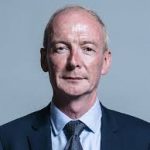
    Pat McFadden – 2022 Speech on the Government’s “Plan for Growth”

    The speech made by Pat McFadden, the Labour MP for Wolverhampton South East, in the House of Commons on 19 October 2022.

    I am pleased to conclude the debate on behalf of the Opposition. I welcome the new Chief Secretary to the Treasury to his position. His colleague the Exchequer Secretary is an old-timer: she has been in post for six weeks. No doubt she is sitting at the Treasury talking about the old times back in September.

    I thank all right hon. and hon. Members who have contributed to the debate. We have heard many powerful speeches about the impact of inflation and rising energy costs, the pressures on business, the UK’s international reputation and the impact of rising mortgage rates. If you will forgive me, however, Mr Deputy Speaker, I want to single out the speech of the hon. Member for Hazel Grove (Mr Wragg), who not only spoke about his own health issues, but added his voice to those of Conservative Members calling for the Prime Minister to go.

    This country has been through very significant economic damage in recent weeks: a run on the pound, a spike in gilt yields that has increased the cost of Government borrowing, emergency interventions from the Bank of England to prop up the country’s pension system, and a spike in mortgage rates that will add to the household costs of millions of people to years to come. All of it has been self-inflicted—not an act of God, not the result of global conditions, but the result of using the country for an ideological experiment. To deal with the argument that the Financial Secretary made at the beginning of the debate—essentially, that this is all global—I will quote from a letter from the Bank of England to the Treasury Committee. If any Conservative Member wants to intervene to say that any of it is wrong, they can be my guest.

    Immediately after the mini-Budget, there were two days with the biggest daily rises in gilt yields in 20 years. Over four days, the rise was twice as large as the biggest rise since 2000. The Bank of England says that

    “the scale and speed of repricing…far exceeded historical moves”.

    Following the mini-Budget, gilts moved more in one day than in 23 of the past 27 years. No such moves happened in gilts in dollars, euros or other major currencies. There were global factors before the mini-Budget, but as my hon. Friend the Member for Chesterfield (Mr Perkins) said, the global context was a reason not to act in such a rash manner, not a reason to behave with all the restraint of a couple of trigger-happy pyromaniacs.

    This crisis was not born of global conditions, but made in Downing Street. It has destroyed the Conservative party’s claims to be the party of economic competence and of sound money. The real-life impact of what the Government have done has been to place a Tory risk premium on the country’s borrowing costs and a Tory premium on people’s mortgage rates.

    James Cartlidge

    I asked the shadow Chancellor earlier whether it was correct that Labour’s intervention in energy support would be almost primarily funded by borrowing despite its pledges on the windfall tax. Is that correct?

    Mr McFadden

    We have never argued that there was no need for borrowing. The point we made was that much more of this could be funded by a windfall tax. If the hon. Gentleman thinks that that is some sort of revelation, I can only ask him where he has been living for the last few months.

    The Prime Minister and the Chancellor of September behaved like student pamphleteers. When the Prime Minister stood up at her conference and attacked

    “vested interests dressed up as think tanks”,

    it was an announcement worthy of the gold medal for lack of self-awareness, for never has there been a Government more symbolic of the failure of think-tanks on influential thinking than the one that she leads.

    The Prime Minister and her ideological soulmate got the keys to the Treasury Ferrari, took it for a joyride and then crashed it into a ditch. Now, belatedly, by commissioning the OBR report and singing the praises of an independent Bank of England after spending all the summer undermining it, they have signed themselves up for the speed awareness course; but it is too late, because people will continue to pay the price of what they have done.

    We have now had two fiscal events with no report from the OBR. This was not just about what was done, but about how it was done. The whole country is paying a price for the Conservative party’s contempt for the institutions that safeguard our economic credibility. And where does it all leave the Prime Minister? The mini-Budget was not a surprise to her; it was not imposed on her; she was 100% its co-author. It embodied her beliefs, her world view, the central core of the campaign on which she fought and won the leadership contest. Now everything she believes in has had to be burned in front of her to try to keep this zombie Government carrying on. This is not a case of “too far, too fast”, as she has claimed, or of a minor policy U-turn. It is a repudiation of everything that she stands for. It is a total and utter reversal.

    The one surviving policy that the Prime Minister keeps praying in aid, the energy price guarantee, is the one policy that she campaigned against throughout her leadership campaign, saying that she was opposed to handouts. The question now is, what is her premiership for? Is it for the policies that she really believes in—those in the mini-Budget, now rejected and lying in ashes—or is it for the revenge of the orthodoxy that she so disdains? Each dose of the medicine she takes entails embracing that which she has so publicly rejected. Her argument, in effect, is “Please keep me here so that I can be what I am not.”

    Mr Perkins

    Is not the truth that what the Prime Minister’s leadership is for is for the moment? She is here for a very short period, until the Tories can find an excuse to get rid of her.

    Mr McFadden

    My hon. Friend is right. In fact, the only discussion on the Conservative Benches is about how to do precisely that.

    We cannot believe anything the Prime Minister says. Only seven days ago, she stood at that Dispatch Box and promised there would be “absolutely” no spending cuts.

    Five days later, the new Chancellor—October’s Chancellor—told us that the cuts had to be eye-watering. Conservative Members know that this is an impossible basis for leadership, and that it leaves the Prime Minister in an untenable position. They are remembering the words of the song that was played at their party conference as she came on to the stage:

    “You’ve done me wrong, your time is up…there’s no way back…you’re movin’ on out”.

    Three cheers for M People: not just a great band, but one with the political foresight of Nostradamus.

    Now the new Chancellor has been sent down from the mountain, come among us, as he says, to restore confidence and stability—but who destroyed confidence in the UK? Who created the instability? Who fashioned the Tory risk premium?

    I am too polite to call it what they are calling it in the City, which is “the moron premium”. It was the new Chancellor’s own Government.

    Let us be clear: no one was talking about spending cuts before the mini-Budget of 23 September, so the cuts are a result of what the Government have done. There has been no emergency central bank intervention to rescue pensions in the United States, Germany or France. The global circumstances that the Government refer to were the reason not to take such reckless risks with the public finances.

    I have noticed one thing about the new Chancellor, though: he is not pretending that it is year zero. He is owning the record—all 12 years of it—and he now wants to implement a version of what was done after 2010. We have gone from an economic policy of having to borrow from communities such as mine in Wolverhampton South East to fund a tax cut for people earning over £150,000 to a policy of those communities having to pay for the chaos caused by the first policy.

    We can see what the plan is. Having crashed the economy and brought a new dimension of pity, bemusement and risk to the term “global Britain”, the Government now want the acid test to be support for their public expenditure cuts. They have already made people pay once for their mismanagement through higher mortgage rates. Now they want to make people pay twice through cuts to public services. It is the ultimate in governmental arrogance. They get to mess up the country through a giant ideological experiment and then ask everyone else to pay the price. That is not a political virility test; it is a candid admission of failure.

    The roots of that failure lie not just in one or two policy errors but in something deeper. They lie in the triumph of ideology over evidence. They lie in the view that all that is needed is blind faith—the test that someone is a true believer—and the view that anyone who questions or points out inconvenient truths is a doom-monger, part of the blob, and not a proper patriot. That destructive ideology has done great harm to our politics. It has reduced the Conservative party to its current abject state, and has served as the rationale for attacking one institution after another.

    Politics begins with wanting to change the world, but what have this Conservative Government been reduced to? Attacking tofu. What other forms of food will now be lined up in the culture war that is all that is left for them? The disaster of the past few months should result not just in a few policy U-turns, but in turning away from the politics that drove those decisions and has done such harm to the country. This country has great strengths: world-leading services, great high-value manufacturing, creative industries with global reach, some of the best universities in the world, and a fantastic workforce. It deserves much better than this Conservative Government.

  • Beth Winter – 2022 Speech on the Government’s “Plan for Growth”

    Beth Winter – 2022 Speech on the Government’s “Plan for Growth”

    The speech made by Beth Winter, the Labour MP for Cynon Valley, in the House of Commons on 19 October 2022.

    I rise to speak in favour of the motion tabled by my hon. Friend the Member for Leeds West (Rachel Reeves). As others have outlined, interest rates are rising while inflation is now in excess of 10%. Mortgages and rents are increasing as real incomes fall. Twelve years of austerity and the cost of living crisis are making life a misery for people in my communities.

    On top of that, the mini-Budget of the Chancellor’s predecessor has created long-term damage to the economy. Despite substantial U-turns in policy, energy producers and other monopolies continue to make huge windfall profits. There remains economic chaos, which the Government are struggling to control, but that chaos is because the Conservatives defend their and their allies’ incomes and their class interests. The mini-Budget that caused such chaos was a huge ideological experiment in tax handouts to the wealthy. That is why I support the motion and, in particular, believe that the economy must work for every single person in every part of the United Kingdom.

    The people of my Cynon Valley constituency and the people in Wales are going through a cost of living emergency. When I surveyed people in Cynon Valley, I found that nearly 90% of them felt worse off than they did 12 months previously; more than two thirds said that they will significantly cut down on heating; almost half said that they would not put the heating on at all; and the vast majority said that the situation was having a detrimental impact on their mental health.

    Behind those statistics are real people. Let me quote a couple of my constituents. One said:

    “Life genuinely doesn’t feel worth living any more. I feel guilty for bringing my children into this awful mess of a world.”

    Another, a disabled person, said:

    “I have no idea what I’m going to do—

    this—

    winter, something has to give.”

    Those are harrowing comments by constituents. That is the real-life impact of the cost of living emergency.

    The Chancellor is not interested in working on behalf of my constituents and 99% of the people living in this country. He has been clear that he is going to pursue yet another ideological austerity agenda. Cutting public spending is an attack on the living standards of working-class people.

    The people of Wales deserve better. We deserve fair funding and a needs-based funding formula. I commend the First Minister of Wales, Mark Drakeford, who yesterday passionately and rightly condemned Conservative cuts to the NHS in Wales. He has also made clear his backing and support for an inflation-proofed pay rise for public sector workers. Westminster—the Treasury—needs to ensure fair funding for Wales and not force my constituents further into poverty.

    The cost of living crisis is undoubtedly a political choice made by successive Conservative Governments here in Westminster. It is clear that the public cannot afford for this Conservative Government to remain in office, and as others said, we are ready for an election at any time. Right now, however, we also need urgent action to better distribute the enormous wealth in this country; we are the fifth richest nation in the world. To do that, we must also change the balance of power from the few to the many. We need to see an inflation-proofed rise in income. I still think that the Tory party’s position on pensions is at best unclear or confusing. Social security is now under threat from the Chancellor, who has refused to back a rise at today’s inflation rate, and we need to see inflation-proofed increases in pay. We also need to see a shift in the burden of taxation to those who can afford it: the wealthy, the banks, the monopolies making millions and billions in profit.

    The TUC congress is meeting this week. Yesterday, it agreed that it must

    “organise coordinated action over pay and terms and conditions…with all TUC unions”.

    I support that resolution, and yesterday I tabled an early-day motion about it.

    The people in Cynon Valley, in Wales and throughout the United Kingdom cannot and will not tolerate a further period of austerity based on unacceptable economic theories. We are mobilising to defeat the Tory agenda. Trade unions, local authorities, communities and constituents up and down the country are coming together in unity to campaign and care for one another. There is a better way. In this economic chaos, the Conservatives will continue to defend their own incomes and interests. Now we will defend ours. Diolch yn fawr.

  • Sam Tarry – 2022 Speech on the Government’s “Plan for Growth”

    Sam Tarry – 2022 Speech on the Government’s “Plan for Growth”

    The speech made by Sam Tarry, the Labour MP for Ilford South, in the House of Commons on 19 October 2022.

    It is a pleasure to follow my hon. Friend the Member for Reading East (Matt Rodda).

    Last month, the Government engaged in one of the worst acts of economic self-destruction in living memory. Overnight they plunged the pound to historic lows, mortgage interest rates skyrocketed out of control and six major pension funds faced total collapse. In just five weeks, they have imploded the economy, destroyed our global reputation further and thrown countless more families into debt and destitution. One former US Treasury Secretary even described it as one of the worst macroeconomic decisions ever taken, suggesting that

    “The U.K. is behaving a bit like an emerging market turning itself into a submerging market.”

    Research by the New Economics Foundation found that the trickle-down Budget pushed the income of the poorest 10% a further £900 under the cost of basic living supplies, while boosting the incomes of the richest by £5,000 above cost; a move totally divorced from reality. Now, with the damage already done, they have announced an embarrassing set of U-turns. They are already signalling a return to the savage and failed policies of austerity, which will decimate our infrastructure and public services, and make working people poorer the length and breadth of Britain.

    Despite all that, the Prime Minister and the former Chancellor were right about one thing: the economic policies of the past decade have utterly failed to address the biggest challenges faced in our society. Indeed, successive Tory Governments have overseen the worst growth in GDP per head since records began. According to figures by the ONS, the UK is the only G7 economy yet to recover to above its pre-pandemic levels. That is 12 years of stagnant wages that have resulted in what the TUC referred to as the worst pay crisis “since Napoleonic times,” with real incomes still well below 2010 levels at the time of the outgoing Labour Government.

    UK inflation is on course to rise to its highest peak in half a century and 45 million people are about to be plunged into full poverty. Many will struggle to put food on the table and keep the lights on this winter. Low-income households will see the gap between income and the cost of living increase by 40% next April, with three in four households unable to cover rising costs. People in Ilford have borne the brunt of this economic crisis. My inbox this week was full of desperate cries for help from constituents who have no idea how they are going to make it through another grim winter, with so many forced into debt and further below the poverty line.

    The Chancellor’s attempt to mend the damage done by his predecessor is nothing more than a return to the age of austerity that damaged our economy so deeply, instead of the strategic long-term investment that is so badly needed in the UK. Yet again, a Tory Chancellor has warned that “more difficult decisions” are yet to come to cope with the economic crisis that his own party has inflicted on the country. His new advisory panel is entirely made up of members of the financial sector, including former Chancellor George Osborne’s chief of staff, now a member of Blackrock, the designers of the LDI—liability driven investment—schemes that very nearly imploded the economy two weeks ago, as well as a representative from J.P. Morgan. That is hardly reflective of the needs and wants of the wider public. Where are the representatives of the rest of the economy, the TUC or the low-paid workers set to be hit the hardest?

    The Chancellor has unsurprisingly already told us that cuts to vital services are seemingly inevitable. Again, it looks like working people up and down the country are going to be asked to tighten their belts even further. Why do these “tough decisions” always seem to fall on working class people, when so many at the top have never had things so good? Indeed, energy giants are set to make up to £170 billion in excess profits during this crisis, while ordinary households struggle to pay the bills, and we may well be heading towards rolling blackouts. CEOs are now collecting an average of 109 times the pay of ordinary workers, with chief execs of the UK’s 100 biggest companies seeing their pay increase by a staggering 39%, well above pre-pandemic levels. Isn’t it about time that the very richest and their oligarch allies, who got us in this mess in the first place, shoulder some of the burden?

    Getting more cash in the hands of everyday people would lead to exactly the kind of high growth that the Government claim to want, with far better health and education outcomes as a result.

    Wages must rise, at the very least, in line with inflation across the board, and those bearing the brunt of the cost of living crisis need a pandemic-style bail-out for their energy bills. The IMF has suggested that it would cost about £30 billion to compensate the poorest 40% of households for price rises this year—still a fraction of furlough costs and £10 billion less then Shell and BP made in profit last year alone.

    The energy giants will continue to raise their mark-ups as long as they are allowed to do so, and they cannot be trusted to keep bills at affordable levels. It is high time that they are replaced by a single publicly owned energy company, run by workers and held to account by consumers. We need a genuinely transformative green new deal, working hand in hand with a coherent, progressive industrial strategy to rebalance the economy away from the City of London and create millions of high-skilled, well-paid, unionised jobs—forging a greener, more just society and putting Britain at the heart of the fight internationally against climate change.

  • Matt Rodda – 2022 Speech on the Government’s “Plan for Growth”

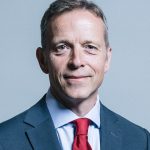
    Matt Rodda – 2022 Speech on the Government’s “Plan for Growth”

    The speech made by Matt Rodda, the Labour MP for Reading East, in the House of Commons on 19 October 2022.

    It is a pleasure to follow my hon. Friend the Member for Swansea West (Geraint Davies). I speak in support of the points made by the shadow Chancellor and a number of hon. Members from across the House. I will cover three brief points in the time available: reflect on the seriousness of the crisis of the past few weeks, which is unprecedented; consider the serious effects on families and pensioners across the country; and consider the pressing and serious problems facing businesses, whether large or small.

    To put the last few weeks into some sort of context, this truly is a crisis made in Downing Street and one that is absolutely dreadful for the country on so many levels. I am utterly staggered that a Prime Minister and Chancellor could have taken those steps, and I cannot understand why they made such serious mistakes.

    The unfunded, reckless tax cuts, leading to significant increases in mortgage costs and other business costs, are absolutely dreadful for the whole country. My feelings after these weeks, and at certain points during the journey that we have been on—the zig-zag of U-turns and mismanagement—is one of disbelief. I am sick and tired of waking up to the “Today” programme telling me of some dramatic change in Government policy leading to awful effects on the country. I am also fed up with the evening news reporting on the latest rumours and difficulties facing the Government. I would like to see a period of stability, as I think we all would. Certainly, our businesses would, and families and pensioners would.

    Moreover, this deeply saddens me, because the Government’s inept mismanagement has deeply damaged the country’s long-held reputation. It is dreadful that the then Chancellor was at the IMF in Washington at the very time when senior figures in the organisation were criticising British policy. We had the completely unprecedented experience of the US President commenting on UK economic policy and mismanagement by the Government, and the former Governor of the Bank of England criticising Government policy.

    I wish to move on from all that but, in the time I have, I will draw Members’ attention to the very real effects on working people who will now be paying the cost of this very serious crisis for months and years to come. I want to explain some of the work I have been doing in my constituency, which covers Reading and Woodley, and the visits I have made to local centres to see the effects for myself and to see quite how awful it has been.

    I am lucky to represent a relatively prosperous area in south-east England, but we have serious poverty which is being made dramatically worse. We have a large number of families and pensioners who are struggling and who are very concerned about mortgage and rental costs. I visited the Weller Centre in the last few days, which is a wonderful community centre in Caversham in my constituency. Amazing work is being done there to support people on so many different levels by a charity. It was worrying to see how many people are now having to rely on food banks. That has been a constant for some time, but it is getting much, much worse. In addition, to make things worse still, fewer supplies are now being donated because of the pressures on the retailers and households who have generously donated. As a result, the community fridge at the centre is not as full as it was. The boxes of fruit, vegetables, other produce and dry goods are not as full as they were and there are real impacts on people in desperate need. The centre is trying to provide cheap, hot food to pensioners—often things like baked potatoes and basic food—to help them to make ends meet. It also offers a warm bank.

    All that is to be commended, but that scale of support would not be needed were it not for the Government’s mismanagement. In Reading and Woodley town centres, and in other local centres across the constituency, we can see very clearly the effects of the Government’s mismanagement. Other colleagues have mentioned them, too. There are empty shops and business units because of the effects of that mismanagement. My area is a regional hub for business and shopping in the central belt of southern England, so it is disturbing to see that level of empty property.

    I strongly suspect that many small businesses—I have had businesses contact me—are having real worries about their energy bills. They are also concerned about the rising price of borrowing and other business costs. They are putting off vital investment and other vital decisions because of the Government’s mismanagement, and that has a real effect on employment and business growth across the country. It shows the scale of the Government’s mistakes.

    I found some solace—it is a salutary warning to Ministers—in the fact that business leaders are increasingly looking to the Labour party for leadership and to what I hope will be an incoming Labour Government in the not-too-distant future. I thought it particularly interesting that the CEO of Tesco praised Labour’s economic plan. In fact, I think he said that only Labour had an economic plan to take us out of current difficulties.

    To conclude, we have seen today that the Government have made serious mistakes that working people will be paying for, for months and years to come. There needs to be a completely new approach. We need, ultimately, a new Government to take things forward for this country.

  • Geraint Davies – 2022 Speech on the Government’s “Plan for Growth”

    Geraint Davies – 2022 Speech on the Government’s “Plan for Growth”

    The speech made by Geraint Davies, the Labour MP for Swansea West, in the House of Commons on 19 October 2022.

    The mini Budget has obviously been a complete disaster and catastrophe, and that is what the motion is about. There was the unfunded tax cuts for the rich—whether the 45p rate, bankers’ bonuses or corporation tax—and letting the fossil fuel companies with their excess profits off the hook. It was unfair and unforecasted, and it led to sterling going down, mortgages going up and debt costs going up—a complete disaster. When the Chancellor stands at the Dispatch Box and says, “Okay, it was all a mistake. We will reverse it. Don’t worry, we’ll grow the economy,” that is completely ludicrous.

    It is possible to grow the economy. Labour grew the economy by 40% in the 10 years to 2008 and used that to double investment in the health service and education and to lift a million children out of poverty and a million pensioners out of poverty. What have we seen in the last 12 years, since 2010? To start with, we had George Osborne’s austerity, where he said that he would sack half a million public servants. The response of the market was that consumer demand went down. We have also not seen any growth or any increases in pay, so the country and the economy had no resilience for the pandemic, wars or outside shocks.

    The truth is, as the Institute for Fiscal Studies said, had the trend rate of growth under Labour continued up to the pandemic, average wages in Britain would have been £10,000 higher, so people would have been stronger to take on the shocks that we have all suffered. That is because of the Tories. It was not all right before the mini Budget—it was already a disaster—and now this is a complete crisis caused by the Tories.

    Under Labour, in 2010, 26,000 people were using food banks. By 2021, the figure was 2.6 million—100 times the level—and now it is far worse. One in four children, and one in five households, are now in food poverty. What are the Government doing about it? Very little.

    In Wales, where there is a Labour Government, we have free breakfasts in schools and free lunches for which anyone can sign up, because we recognise, as Winston Churchill did, that the health of the nation is its most important asset and keeping people fed is critical. On Monday, the Financial Times said that for every £1 invested in the NHS, we get £4 back in growth. When I put that to the Chancellor, he completely misunderstood the point and started talking about tech businesses or something. This is about having a healthy nation that can work and proper jobs in the NHS.

    In 2014, in a massive study of many countries, the OECD found a direct relationship between inequality and growth: namely, where there is less inequality, there is higher growth. So if the country wants higher growth, why did we have a mini-Budget that was all about giving the super-rich more money and clobbering the poor? Why index benefits to wages instead of prices, which are rocketing? It is completely inept, completely unfair and completely immoral, and it is going on and on.

    The Government talk about productivity. We know from the Office for National Statistics that we would increase productivity if we had more people working online—in particular, older people with caring responsibilities who want a more flexible work-life balance—but we have a Secretary of State at the Department for Business, Energy and Industrial Strategy who, as I understand it, does not even have a computer and pooh-poohs the idea. He thinks, “You can’t be working if you’re at home.” It is completely inept.

    We should have equal wi-fi offered to everyone by providing wi-fi clouds in towns and on all our trains. When I commute back to Swansea, we are just wasting hours because there is no proper wi-fi. That is because it is not a public service and the private provider cannot be bothered to put it in. It is completely ridiculous.

    We know that austerity, which it has been promised that we will go back to, produced 300,000 excess deaths. We know that trade is down, largely because of a cocked-up Brexit. We know that Conservative MPs voted for the current Prime Minister, who endorsed the mini-Budget that has created an even worse catastrophe. We know that Tory MPs did not support the Chancellor, who is now getting us back to square one. The only reason why we have a certain stability in market confidence is because of knowledge from the polls that there is some prospect of a Labour Government in two years who will put us back on track. What we should do morally, economically and politically is give the people a choice—give them a general election now—so that we can sort out the economy and give power to a party that can and has delivered growth and which will deliver a better, stronger, fairer, greener Britain, and kick this lot out.

  • Janet Daby – 2022 Speech on the Government’s “Plan for Growth”

    Janet Daby – 2022 Speech on the Government’s “Plan for Growth”

    The speech made by Janet Daby, the Labour MP for Lewisham East, in the House of Commons on 19 October 2022.

    We have had more than 12 years of a failing Conservative Government, and I will outline some of those failures. There has been a drastic rise in food bank dependency, and the Government appear to think that is acceptable and should continue to exist in our society. I say no, that should not happen, and I know Labour Members agree with that. Child poverty is very prevalent. Children in my constituency are going hungry, some both in the mornings and at lunchtime because their parents do not have enough money to feed them breakfast and give them lunch. Universal credit does not go far enough, and the very least the Government could do is ensure that it increases in line with inflation. The Government have carried out cut after cut to our public services. Those cuts affect the quality of people’s lives every day, because services are no longer in existence, and charities do not have the support they need to carry out those vital services.

    While the roll-out of the vaccine is to be commended—let me say again how great the NHS was in rolling out that vaccine, as it continues to do, and acknowledge our key workers—even under the previous Prime Minister the economy was mismanaged. Many self-employed people were left to fend for themselves during the pandemic, and millions, even billions of pounds were written off by the Government. The UK has recovered more slowly than any other G7 country.

    For the recent Prime Minister and her Government it is even harder to know where to begin. In light of what is happening globally, the mini-Budget was supposed to help, but instead it was an act of economic self-sabotage. How on earth did the Prime Minister and her then Chancellor fail to see that large unfunded tax cuts would not work? What we saw was high inflation, the devaluing of the pound, pension funds plummeting and mortgage rates being hiked.

    The consequences of the crisis were made entirely in Downing Street. In years to come, the cost will be paid by millions of working people. The Prime Minister and the Chancellor have now admitted that the mini Budget caused mortgage rates to go up and borrowing costs to surge. Nearly 10,000 households in the borough of Lewisham will face higher mortgage rates in 2023, and the situation for renters is no better.

    Earlier this week, I raised the case of my constituent who was forced to leave an abusive marriage. She works and has children, and she could barely afford her private rent. She was already on universal credit. To make matters worse, her rent recently increased by £300. She simply cannot afford that. Other constituents are experiencing similar things. One shares a house and has since seen their rent rise by £600. They, too, cannot afford that. Are the Government saying that it is okay for people to fall into debt and that the everyday person has to accept the situation? It is not right.

    Many parents across the country are struggling to feed their children. In fact, 26% of households with children have experienced food insecurity in the past month. Instead of the Government focusing their efforts on helping struggling families, they have lifted the cap on bankers’ bonuses. How can the Conservatives say that theirs is a party of fiscal responsibility when they hold the management of the economy in scant regard?

    The Government have seen four Chancellors in the last 107 days. They need to stand aside. Labour will restore financial responsibility for the country with a serious plan for growth that puts people first. The next Labour Government will establish a great British energy company, because we are committed to lowering bills, protecting the environment and creating jobs. Labour will also introduce a new deal to boost job security, promote fairer pay and tackle the gender and ethnic minority pay gaps. The price of the Tory Government is already far too high to pay.

    The Prime Minister says that she is a democrat. If she is, it is vital that we have a general election now.

  • Tahir Ali – 2022 Speech on the Government’s “Plan for Growth”

    Tahir Ali – 2022 Speech on the Government’s “Plan for Growth”

    The speech made by Tahir Ali, the Labour MP for Birmingham Hall Green, in the House of Commons on 19 October 2022.

    Let me go back 12 years, to the start of 12 consecutive years of reckless Tory Government. Twelve years—consider that. It is an incredible, or rather a depressing, amount of time. What have they done with their time in charge? They have cut our public services, slashed our essential infrastructure and decimated our communities. They originally asked us to do that in the name of austerity, and said that we must all tighten our belts and pinch our pennies so that their rich mates could be bailed out. We paid for the mistakes of their friends in the financial sector at great cost, and now we see it all happening again. The Government’s economic plan has backfired on us all, sending the economy into freefall, and once again, they are asking people to pick up the tab.

    Inflation is sky high at 10.1%, and set to rise. Energy prices are through the roof. Rents are rising across the country, and property prices are unsustainable. Wages have been kept low, and benefits have been cut. People are struggling, and they are scared. Are they right to be worried? I am worried too. There is simply no way that people can thrive in these circumstances. In my constituency of Birmingham, Hall Green, we see the worst of Tory failures. Child poverty is at a staggering high of 52.9%, and for every 100,000 children in Birmingham, 4,500 require assistance from food banks to ensure that they are fed. Almost 10% of families in Birmingham, Hall Green receive support from universal credit, while Birmingham suffers from an unemployment rate of 11.4%. Average annual take-home salaries sit at just under £21,000. Those figures fall far short of national averages, and it is clear that enough is enough.

    The cause of these problems is clear: the cost of living is too high. This is a Tory-made crisis, made in Downing Street, but paid for by ordinary working people. Wages are low, and too much of our meagre pay cheques goes to pay the dividends and bonuses of big energy barons and the exorbitant rents of private landlords. Too much of our national infrastructure, such as the post and rail services, has been put into the hands of careless private owners who under-invest and push wages down—I know that all too well as a proud member of the Communication Workers Union who once worked for Royal Mail. Meanwhile, Royal Mail Group’s profits have risen to £758 million. Do they take us for fools? Do they think we will not notice that blatant rip-off of hard-working people? How is that just, how is it fair? Yet that is what workers face across the country. It is clear that this is not just an economic crisis; this is a moral crisis and a crisis of greed. The resources that we built together—the homes, the infrastructure, the profits—are being sold off for the benefit of the rich. The fruits of our collective labour are going to the select few, which the Tories are only too happy to accommodate.

    Dear, oh dear—where have we heard that before? Not so long ago it was mentioned when the Prime Minister went to see His Majesty the King. The economic mismanagement that we have seen play out in front of our eyes over the past few weeks has been nothing short of astounding. The disastrous mini-Budget pushed by the Prime Minister brought the country to the brink of collapse and left her leadership in tatters. Even with the U-turns, we are left with a Government who are clueless, out of touch, and intent on running our country into the ground. However, with all the U-turns and cock-ups there is a risk that we lose sight of the fundamental problems facing millions of people across the country—problems for which this Government still have no solutions.

    The new Chancellor may have bought back an ounce of credibility for this failing Government, but he does so at the expense of working people across the country. His agenda is clear: bankers get to keep their huge bonuses, while the support for people facing unprecedented energy bills is to be scaled back. No tax cuts, but the promise of yet another round of austerity that will hit the poorest the hardest. No announcement on whether universal credit will rise in line with inflation; no solution to low growth and low wages. The mini-Budget may have gone, but we are all left with the same old Tories and the dismal future they offer.