Category: Economy

  • Paul Holmes – 2022 Speech on the Finance Bill

    Paul Holmes – 2022 Speech on the Finance Bill

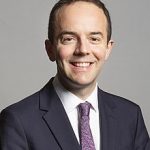
    The speech made by Paul Holmes, the Conservative MP for Eastleigh, in the House of Commons on 28 November 2022.

    Thank you for calling me so early in this debate, Madam Deputy Speaker—presumably the answer is that you are saving the worst for first.

    I rise to speak in favour of the Bill because in it we have the outlines of the clear steps necessary to ensure a solid financial footing and the path to growth in the medium term. I congratulate both of the Ministers on the Front Bench, my hon. Friends the Members for South Suffolk (James Cartlidge) and for Louth and Horncastle (Victoria Atkins), who are friends of mine. I am delighted to see them in their place, and I know they will take their roles seriously and deliver that much-needed economic growth.

    We have to remember the context in which we find ourselves and this Bill: not just the £400 billion that we have spent on support for businesses and people during the covid pandemic, but the terrible situation we see in Ukraine. Those are the reasons why the nation finds itself in this situation today, as do many nations across the globe. I think the Minister said that one third of the world economy will be in recession over the next year, and that includes the United Kingdom. We need to set out that context and those reasons why we have to take the tough, difficult but fair decisions outlined in the Bill.

    I remain convinced that the actions taken last week in the autumn statement and in this Bill put us on a path to growth and to a stable financial footing. I think that is what the public expect. When I go into my constituency every week and speak to people, they now want—dare I say it—boring leadership. They want us to have a stable and sound economic plan for the future, meaning that in the end they will have more money in their pockets and will know what this Government stand for. This Bill, the Minister and the Chancellor last week have all outlined that very clearly. As I say, that is what the public expect. They expect to be treated in a fair way, and this Bill outlines that fair way, with an equal base of spending cuts and tax rises.

    I want to focus on some specific things in the Bill that we can achieve because of the tax measures that we are outlining, and what they will deliver. Because of this Bill, the most vulnerable in society will be protected. The announcements made in this Bill and the autumn statement mean that welfare and social security will rise in line with inflation and pensioners will be protected by maintaining the triple lock. That is incredibly important to the 19,500 pensioners in my Eastleigh constituency, as is the £300 they will get this year to support them with the rising cost of energy.

    Particularly in areas such as Hampshire, we do not have particularly cash-rich pensioners; they may live in quite large houses in my constituency, but that does not mean they are cash rich. They have invested and saved and they have lived responsible lives. They are people who have paid into the system and deserve to get some stuff out of the system. That is why I am delighted that the Government are protecting the triple lock and have announced that extra support to pensioners, going some way to reassure them as they go through some of the challenges that we all face over the next year or so. We have also seen, through this Bill and the measures that the Minister has outlined, a total of £12 billion of support for the most vulnerable in our society. I am proud that the Conservative principle of protecting the most vulnerable is in full force.

    Added to that is the £7 billion being spent on health services. I am sorry to see the Labour party this evening speaking against a Government measure that will see unprecedented amounts of investment going into our national health service as we come out of the covid pandemic and with the backlogs we have. I never thought I would see the day when Labour Members would stand up in this Chamber and argue against record amounts of investment in the national health service, but they have done so. I hope their constituents will see that when they watch this speech—or when they watch this debate. They will not be watching this speech, but they might watch the debate.

    Crucially, we have also outlined £4 billion-worth of investment in our schools. When I went round my constituency during the covid pandemic, many students had missed out on vital schooling. The Government helped with that by putting in place measures such as remote learning, but we have to put in that investment to ensure that those students—often in some of the most deprived areas of my constituency, which does have areas of deprivation—are brought back up to the expected attainment levels.

    Again, I am sorry that Members across this House—not on the Conservative side; or not yet, anyway—have again spoken against measures that would see record amounts of investment in our public services. Over the next two years, there will be £11 billion more for schools and the NHS. We will tackle the post-covid backlog and deliver for the future of this country by bringing in measures that we so desperately need after the shock that our economy has gone through in the past few years. The Chancellor has firmly set out the actions necessary for reducing inflation. The Minister has—ably, if I may say so—outlined the measures that the Chancellor has taken. The shadow Minister, the hon. Member for Ealing North (James Murray), who I have a lot of time for—I used to work with him when he was London’s Deputy Mayor for Housing—refused to accept, or at least did not put the necessary emphasis on, the fact that the international crisis we are in has caused many countries and many of our neighbours to go through the same issues we are going through.

    The Chancellor has outlined measures to bring down inflation, including the £6 billion-worth of investment in capital spending for businesses, which is crucial. I do not expect you to remember this, Madam Deputy Speaker, but you were in the Chair when I made my maiden speech about the crucial investment needed in infrastructure across the United Kingdom. Investing in infrastructure across the United Kingdom means employing people, keeping businesses in work and bringing inflationary pressure down. That is why I am so pleased that the Chancellor outlined that last week, along with the measures in the Bill. The Government are protecting R&D spending and providing £14 billion of relief for small businesses by cutting the rates of tax that they have to pay.

    Labour criticised the lack of inclusion of the Office for Budget Responsibility in the financial measures that were taken a few months ago. The Government have now included an OBR outlook, which states that 1% will be added to our GDP over the next year. Now, Labour suddenly wants to say that the OBR is very important. I agree, but Labour cannot have it both ways by pooh-poohing the OBR’s findings—that this Budget will help to grow our GDP—and then not necessarily taking its advice as read as we go forward.

    Overall, the Bill is hard for now and takes some really tricky decisions, but I am convinced that it will deliver a stable economic outlook for everybody. I will go into a bit more detail on the measures that will reduce inflation. The Bill is split equally between tax rises and spending cuts. We are protecting and maintaining public spending for the next two years at the level set out in 2021, and then increasing spending by 1% in real terms every year until 2027-28. We have invested in our NHS and schools, which is, as I have said, important for the attainment and health outcomes of my Eastleigh constituents.

    In the difficult measures that we will go through over the next few months, we are, vitally, protecting people from the shock of their living costs and energy bills going up. That is the most crucial thing: this Government have stepped in. The Labour party might not want to recognise that billions of pounds were spent during the covid pandemic. That has to be paid back at some stage, but we are now spending billions of pounds to protect people from the shock of energy bills.

    I say again that I have a lot of respect for the shadow Minister, but I will not take lectures from him when he says that we are not taking the necessary action on nuclear or energy planning. It was his party that pre-emptively scrapped nuclear energy as an option for this country, which is partly why we are in the situation we find ourselves in today. I think he should go back and possibly rewrite his speech, and then come back and outline that his party is partly responsible for the crisis we are in.

    I know that Ministers will not have been immune to hearing the press and some colleagues saying that the Bill, and some of the measures that have been outlined this evening, are not Conservative enough. Despite what many colleagues on my side of the Chamber may think, I am a fiscal Conservative, but I have to disagree with some of those assertions. In the Chancellor’s statement and in the Bill, we have framed the narrative on four things that I think are important: protecting the vulnerable, investing in public services, fairness in the tax system and delivering growth in the economy.

    Standing here today, I am 100% fine with the measures outlined by this Conservative Government, because they are asking people with the broadest shoulders to pay the most, on a temporary basis, while we look after the most vulnerable in our society and target support during a troublesome time on people who genuinely need our help. If that means I am not a Conservative—I do not think it does, because the Budget and the measures are based on solid conservative principles—I am quite happy with that, but I think that this is a Conservative approach and one that we should be all proud of.

    As is usual in these debates, we have opposition from the Labour party. In my seat, I often contest Liberal Democrats, but there are no Lib Dem Members here to outline their lack of plan for the cost of living crisis—but there we go. I am massively in favour of what is set out in the Bill. I am grateful to the Minister for outlining the measures that he has taken, because I know that, over the medium term, we will have growth back in the economy and people will see and be grateful for the Government’s actions.

  • Alison Thewliss – 2022 Speech on the Finance Bill

    Alison Thewliss – 2022 Speech on the Finance Bill

    The speech made by Alison Thewliss, the SNP MP for Glasgow Central, in the House of Commons on 28 November 2022.

    It is a pleasure to follow the hon. Member for Amber Valley (Nigel Mills), who gave a characteristically thoughtful speech. How strange it is that we agree on so many things in this debate, and yet on so few other things. It would be nice if those on the Government Front Bench listened to some of the considered and sensible remarks from their colleagues.

    This Finance Bill really does illustrate that we are all having to pay more tax, because of the very misguided steps taken by the former Prime Minister and her Chancellor, who crashed the economy in 26 minutes, leaving us all £30 billion worse off. That will have an impact on this broken UK economy not just now, but for many years to come.

    Let me start with the energy profits levy. That additional tax on UK oil and gas profits will increase from 25% to 35% from 1 January 2023. As the hon. Member for Amber Valley observed, this is being extended until March 2028, which illustrates the extent of the mess into which the UK Government and their Chancellors have got themselves.

    We think that the Government should go in a slightly different direction. They should look beyond just a levy on energy profits. They might want to look at a windfall tax that includes share buybacks as well. That is something that Biden has done in the United States. That has had the effect of bringing more money into the American Treasury’s coffers—Canada is also doing this—and encouraging firms to put more money into research and development, into investing in their companies and into investing in the UK, rather than spending all their excess profits on share buybacks, That seems like an entirely sensible thing to do, given the state of the UK economy. This year, BP has earmarked £7.15 billion to buy back its own shares. The Treasury should look at what more can be done here.

    The reduction in the investment allowance is to be welcomed, but that it exists at all remains a barrier to decarbonisation. The allowance creates a perverse incentive for companies to favour new oil and gas exploration over renewables by effectively offering them a tax break for doing so. Shell paid zero windfall tax under the previous scheme, as it invested heavily in oil and drilling instead of filing profits to be taxed against. That is hardly worth a candle compared with the net zero commitments that the Government tried to make at COP26 last year.

    We are also concerned about the decision to impose a 45% tax on electricity generators as that can then undermine investment into renewables at the same time as allowing oil and gas companies to drill more. The chief operating officer of SSE has said that the company may have to “give up” on some of its plans when the tax comes into effect. He said:

    “It’s going to take money away from us…and we won’t have as much to invest.”

    The CEO of Renewable UK also said:

    “Any new tax should have focused on large, unexpected windfalls right across the energy sector, instead profits at fossil fuel plants are inexplicably exempted from the levy.”

    Scotland has a significant renewables sector. It has been a great success story. Anything that makes that sector less profitable and more uncertain is something that we are deeply worried about.

    The ordinary rate of income tax is now frozen until April 2028. Significant stealth taxes are coming in, as the Treasury stands to raise considerable revenue due to inflation. The Institute for Fiscal Studies has estimated that this could raise £30 billion by 2026 due to high inflation rates. It is unacceptable for this money to be raised by taxing those already struggling with spiralling living costs. Of the many options available to the Chancellor, it would have been better to tip the balance more in favour of those who can afford to contribute more, by which I mean greater taxes on wealth and income made from wealth, and also taxes on the non-doms, which could bring in £3.2 billion to the Treasury’s coffers. It is unacceptable that the Treasury would turn down the chance to bring in £3.2 billion and instead choose to freeze the thresholds, so that people on lower and middle incomes will receive less in their pay packet each month.

    AJ Bell has found that if allowances are frozen rather than linked to inflation, an average earner on a salary of £33,000 in 2021-22, before the income tax threshold freeze began, will end up paying £2,600 more in income tax if the policy is extended to 2027-28. Someone on £50,000 will pay an additional £6,570 in tax because the allowances are frozen rather than being linked to inflation. I ask Ministers to consider the fairness of those measures.

    Moving on to the research and development expenditure tax credit rate, the scheme has provided tax reliefs to companies subject to corporation tax that carry out eligible R&D activities. I appreciate what has been said about the efficacy of R&D tax credits and whether they are useful. I hope that topic will receive more consideration in the months and years ahead, because the UK tax code is full of different types of credits, tax breaks and incentives—or disincentives—and we need to properly understand how effective they are.

    Small and medium-sized enterprises provide around three fifths of the UK’s private sector jobs and have historically been drivers of innovation and growth. They are a significant part of solving the UK’s productivity puzzle. SMEs are less likely than larger companies to have access to formal credits to fund R&D, and in the wake of the pandemic and with recession forecast across the next year, it is more important than ever that SMEs are supported in driving growth and investing in research and development.

    It is quite perplexing the Chancellor has prioritised R&D in larger firms, which are more likely to invest their profits elsewhere or perhaps invest them in share buybacks further down the road. The Chancellor has said that the aim is to reduce fraud, but reducing the R&D expenditure credit for all SMEs in an attempt to prevent its being abused seems a bit like throwing the baby out with the bathwater. It is quite poor targeting to affect all SMEs rather than just those that might be abusing the system.

    The Federation of Small Businesses has said that the cut to R&D tax credits, which the Government presented as a way of tackling fraud, would “crush innovation and growth”, creating a “doom loop” that

    “makes a mockery of plans for growth.”

    The Minister should listen carefully to the FSB when it raises such concerns.

    The current situation is quite worrying and will have significant impacts on the Scottish budget. The Fraser of Allander Institute has said:

    “The lack of any real ability on the part of the Scottish government to be able to flex its budget within year in response to unanticipated shocks remains a real limitation of the existing fiscal settlement…a strong case can be made for enhancing the Scottish government’s ability to borrow and/or draw down resources from its Reserve.”

    It concludes that

    “this level of inflexibility does not seem tenable.”

    The Scottish Government face a £1.7 billion shortfall this year as a result of inflationary pressures, and that is just this year’s budget. John Swinney has gone back and tried to strip out anything he can from the Scottish budget to try and deal with the problem, but that shortfall remains. The Chancellor’s answer to that was £1.5 billion in Barnett consequentials over the next two years—nothing for this in-year shortfall and half of what we need across two years. That is not going to fix the pressures that the Scottish Government face. It is not going to fix the significant issues with pay deals that trade unions are legitimately asking for in Scotland to support their members. If the UK Government does not come up with that money, it will cause extreme difficulties for the Scottish Government’s ability to meet their expectations of what they want to do.

    What we are seeing from the UK Government is something of a doom loop. The OECD says that the UK will contract more than any other G7 country and that, of the G20, only Russia will fare worse than the UK. We see stagnant growth and no plans to get the economy back on track. The Chancellor and the Government want to bring forward plans to try to cut their way out of recession. That will not work. As the hon. Member for Amber Valley pointed out, consumers see that, and it affects both consumer and business confidence. Unless we hear a lot more about investment rather than cuts, this Government are going to sink the economy and take Scotland down with them.

  • Nigel Mills – 2022 Speech on the Finance Bill

    Nigel Mills – 2022 Speech on the Finance Bill

    The speech made by Nigel Mills, the Conservative MP for Amber Valley, in the House of Commons on 28 November 2022.

    It is a pleasure to speak so early in the debate. It is also a great pleasure to have a Finance Bill that is so short. I must have spoken on a dozen of them in my time in Parliament and to have one that has only 12 clauses is some sort of miracle. During this week, we have probably about as much time as we normally have for one of several hundred pages, so we can really scrutinise the 11 substantive clauses. Perhaps that is progress, compared with what we normally expect.

    I start by comparing this Finance Bill with ones we had at the start of the previous recession a decade and a half ago and ones we had at the start of previous measures to tackle a large budget deficit. If I recall rightly, the single biggest measure we had 14 years ago was a VAT reduction at the start of the recession, which cost something like £15 billion. I am not sure it had the effect we wanted. Interestingly, as we sadly slip into a recession, which we hope is shorter and shallower than that one, what we have not seen in this Finance Bill is any attempt to boost consumer confidence. We can argue that we tried that in September and it did not go so well, and probably the right thing here is to focus on how we reassure the markets that we can keep borrowing under control and therefore not risk a rise in interest rates.

    However, if this recession looks like it might be any longer or deeper than the Government’s forecasts, I urge them to think carefully about how we get consumer confidence to turn around. I fear that what we will see in the new year is a big retrenchment in people’s personal spending. We will spend the money for Christmas because we have to, but people will then take a very cautious approach in the early part of next year, knowing that energy bills will go up in April and that tax changes are around the corner. We would not want them to go too far and retrench too fast. So I hope the Government will think about the role that tax can play in turning the economy around if we need that next year.

    The other interesting comparison is with the approach George Osborne took in his Budgets in the first half of the last decade to introduce austerity to tackle the big public deficit we had. Let us look at what he prioritised. He had a VAT increase, which we are rightly not doing in this situation, but he increased the personal allowance and reduced corporation tax to try to put more money into people’s pockets from work and to encourage business investment in the UK. Interestingly, the Government are doing the complete opposite now. I am not sure whether we have worked out that that plan did not work, but there is evidence to suggest that the lower corporation tax rates we had for a decade did not achieve the additional investment that we wanted them to and we are probably better off sticking at about 25% than going lower.

    I am slightly intrigued. The great claim we made was that we were taking people out of the scope of income tax. We are now at great risk of putting them all back into the scope of it again. I accept the Minister’s point that the personal allowance by the end of this five-year period will still be £2,000 higher than it would have been by inflation, but I think that is not enough of an increase. I hope that the Government regard these personal allowance freezes for another five years to be a kind of last resort and if we get any improvement in the economic outlook they can be reversed. Especially at the lower end of the level, keeping people out of tax, letting them keep more of the income and making sure that work pays are strong arguments. Frankly, I am not absolutely sure why we need to legislate for personal allowances in five years’ time. We will have another five Finance Bills before we get to those and we could have brought those into law at any point. I accept that we want to give the market a clear steer that we are serious about closing the budget deficit. If we need those measures, fine, they are probably less bad than a rate increase, but what is the point of legislating for them in this situation?

    There is another contrast with what we have done on national insurance this year. We chose to—and I accepted the argument that we needed to—increase the headline rate of NI, but the compensation for that, when it became clear that that was a real problem at the start of the economic downturn, was to increase the personal allowance for NI—the starting point at which someone pays that tax. Yet now, rather than increasing the headline rate, we are effectively holding back the starting points of those taxes. So we have a tax on income and a tax on wages where we are taking one approach, and on the other tax we are doing something completely different.

    As we go forward from what I accept are emergency measures that we need to use to fill a hole, the Government need to have a clear strategy for what our tax system should look like. They should consider the things we are trying to tax and the things we are trying to incentivise. They should try to give people some long-term stability so that they can plan and understand and we can get the behavioural changes and incentives that we want, rather than having a clear direction one way, and then doing a U-turn and wondering why people do not do the things that we would really like them to do. Now we are through the real firefighting, I hope the Government can produce a strategy and plan for where they think the tax system should go, so that people can understand it and respond accordingly. I think that that is what we had under the Gauke doctrine in 2010. We need to revisit that, now we seem to have changed our mind on so many of those things.

    The bleakest bit of news in this Finance Bill was extending the windfall tax to 2028. I was hoping that the energy crisis might be over quite a bit before then and we would not need to have those measures in place. The fact we have done that suggests we are not expecting energy prices to come back down any time soon. Clearly, the windfall tax is the right thing to do. I have always taken the view that this is a level of profit that nobody could ever have thought they could get. These companies are earning it from extracting our natural resources; they are not their natural resources. We have given them permission to extract them, and they have rightly made some profit from doing so. However, we should limit that profit and accept that those are our resources and that we should take the right return from them, rather than the exploiter doing so, so I hugely welcome the introduction of the windfall tax.

    I am quite intrigued by the research and development stuff. It is right, even at the most difficult time, to say that we want to make sure that we are incentivising R&D. That is a sensible, long-term measure that shows some long-term planning. I remember being at work as a young accountant when R&D tax credits were introduced—in 2000 for small companies and in 2002 for large companies. The journey they have been on, with rates going up and down and approaches changing—above the line, below the line, cash incentives and all those things—makes me wonder whether, 22 years on, we are really sure that R&D tax credits are delivering the outcome that we want. I suspect that the speeches in the Finance Bill debates in 2000 were that these measures would make us a science superpower in the next generation. I think that we are still giving those speeches, and we have not quite got the superpower bit. I wonder whether the Government should stop at some point and ask whether those are working. I know that there is an ongoing review on combining the reliefs, but are they triggering the right thing?

    One piece of data that did worry me was that a disproportionate amount of those are claimed by companies in London and the south-east and they are not spread around the country in the way we would like. Is there a way we can use these tax measures to encourage that kind of investment and those kinds of skilled jobs in the regions of the UK, and not just focus them in the most prosperous parts?

    I have expressed the view previously to many Treasury Ministers that, outside the EU, the one thing that we can do is take a regional approach to certain taxation to encourage activity in different parts of the country that we do not need to encourage in London and the south-east. I urge the Treasury to look seriously at whether we could take a regional approach to some taxes so that we can get those differentiating incentives to move wealth outside London and the south-east. That would fit entirely with our levelling-up agenda, but we have not chosen yet to be that creative with our tax system.

    Given that we have plenty of time for detailed questions on clauses on Wednesday, I will just say that I accept the need for this Finance Bill. I will support all the measures in it and I will happily vote for it later. I will not be voting for the Opposition amendment, which I suspect will not come as a great shock. I think I support ending non-dom status, but we should have temporary residence relief. If somebody comes here on a secondment or for a short period, we should not try to force them to move all their tax affairs here. We should tax them on the income that they earn here. There would be a big disincentive and it would be out of step with other countries if we did not have a short period where somebody had that different situation to reflect the fact that they are not ordinarily resident here.

    The fact is that a person’s non-dom status depends on where their father was born. In theory, they can become a non-dom even if they have lived here all their life and never been resident anywhere else in the world. That shows how ludicrous those rules are. I urge the Government to look at modernising all our residence tests, including that on non-dom status. They are all far too complicated. We could have a far more effective system that works better and would achieve the advantages of attracting investment here. There is a real problem with just scrapping non-dom status; it may drive some people we do want here to leave. On balance, a change is better and we should continue with the direction of travel that we had a decade ago of restricting the time period. I think that we could restrict it with a more modern relief that would achieve what we want without having the big downsides.

    With that, I will happily support the Bill and oppose the amendment if there is a Division later.

  • James Murray – 2022 Speech on the Finance Bill

    James Murray – 2022 Speech on the Finance Bill

    The speech made by James Murray, the Labour MP for Ealing North, in the House of Commons on 28 November 2022.

    I beg to move an amendment, to leave out from “That” to the end of the Question and add:

    “this House declines to give a second reading to the Finance Bill because, notwithstanding the importance of increasing the energy (oil and gas) profits levy, it raises taxes on working people through its freeze of the personal allowance threshold; because it fails to take advantage of other sources of revenue, such as ending non-domiciled tax status and further reducing the tax allowances available to oil and gas companies; and because it derives from an Autumn Statement which fails to set out plans to arrest the 7 per cent fall in average living standards forecast over the next two years, and to grow the UK economy, including through replacing business rates, supporting start-ups, giving businesses the flexibility they need to upskill their workforce, investing in clean and renewable energy, insulating homes across the country, and creating jobs in the green industries of the future.”

    After 12 years of economic failure from the Conservatives and 12 weeks of economic chaos, we now have this Finance Bill from a party that is holding Britain back. It is a Bill from a party that has, of course, lost any claim that it might once have tried to lay to economic competence; but more than that, it is a Bill that shows a party making the wrong choices time and again, and a party with no plan to grow our economy and halt the decline in living standards.

    As people across the country know, the Conservatives’ economic failure is hitting households hard. We are living through the longest period of earnings stagnation for 150 years, with real wages lower this year than when the Tories came to power in 2010. Living standards are forecast to fall by 7% over the next two years—the biggest fall on record, taking incomes down to 2013 levels. No wonder the director of the Institute for Fiscal Studies described the forecast drop in disposable income as “simply staggering”. This will truly feel like a lost decade for people across the United Kingdom: a decade of low growth, with incomes now set to fall back to where they were a decade ago.

    I know that Conservative Members are desperate to make out that global factors are entirely to blame for the economic reality of today, but although no one denies the deep impact of covid and of Putin’s invasion of Ukraine, it is simply not credible—and it is frankly insulting—to pretend that the occupants of Downing Street, now and over the past 12 years, have had nothing to do with the mess that we face. It was decisions taken by the Conservatives in office that left us uniquely exposed to the inflationary shock of oil and gas prices rising—they took misguided and damaging decisions to shut down our gas storage, to stall on nuclear power and to ban renewable technologies such as onshore wind—and it was decisions taken by the Conservatives in office that have denied the UK the opportunity to grow our economy over the past 12 years as we could and should have done.

    Richard Fuller

    Will the hon. Gentleman please check his facts? If he looks at the period from 2010 to just before the covid pandemic and compares the UK’s average rate of growth with that of our OECD competitors, particularly the G7, he will find that the UK outstrips all of them bar the United States and Germany.

    James Murray

    I seem to be engaging more with the hon. Gentleman now that he is on the Back Benches than when he was briefly on the Front Bench. If he looks at the statistics, he will see that, over the last 12 years, the UK’s growth rate has been a third lower than the OECD average, and a third lower than it was during the previous Labour years. I will take no lessons from him or his colleagues on the need for economic growth.

    I take this opportunity to give the previous Chancellor, the right hon. Member for Spelthorne (Kwasi Kwarteng), some rare credit. At least he took responsibility for the mess he inherited from his colleagues when he confirmed that our economy is stuck in a “vicious cycle of stagnation.” On that point, he was absolutely right.

    Over the Conservatives’ 12 years in power, as I said to the hon. Member for North East Bedfordshire (Richard Fuller), the UK economy grew a third less than the OECD average and a third less than during the previous Labour years. What is more, we are now the only G7 economy that is still smaller than before the pandemic. Over the next two years, we are forecast to have the highest inflation in the G7 and the worst economic growth of any country in the G20 except Russia.

    What is more, we are the only country in the G7 whose governing party chose to inflict profound damage on its own economy. Although the Prime Minister and the Chancellor refuse to take responsibility, the British people can see through them and will hold them to account. What the British people want and need is a Government who will get on and do the right thing without having to be pushed, dragged and forced into doing so. That is one reason why people across the country have been so exasperated by the Government’s reluctance at every turn to implement a windfall tax on oil and gas producers’ huge profits this year.

    My right hon. Friend the Member for Leeds West (Rachel Reeves) first called on the Government to bring in a windfall tax in January. It took five months of pushing the Government along a painful journey to get them to act. In those months, Conservative Ministers tried to defend their position, saying that oil and gas producers were struggling. They said a windfall tax would be “un-Conservative”, and the current Prime Minister said it would be “silly” to use this money to offer people help with their energy bills. Conservative MPs voted against a windfall tax three times, and then, when they finally realised their position was untenable, they did a U-turn.

    Even then, having been dragged kicking and screaming into introducing a windfall tax, the current Prime Minister coupled it with a massive tax break for the oil and gas giants. This tax break will be given to the oil and gas giants for doing the things they were going to do anyway, which helps to explain why some of them have paid zero windfall tax in the UK this year, despite record global profits.

    Despite having another go at windfall tax legislation with this Bill, the massive tax break is still there. It is set at a level that will, to quote the explanatory notes,

    “maintain the overall cumulative value of relief”.

    This tax break leaves billions of pounds on the table. These profits—the windfalls of war—could go towards helping people facing the difficult months ahead. This tax break is set to cost the taxpayer £80 billion over five years. This tax break was brought in by decisions that this Prime Minister took when he was Chancellor, and it is staying thanks to the decisions of the Chancellor he appointed from No. 10. What clearer evidence could there be that, no matter which Conservative goes through the revolving door of Downing Street, it is all more of the same?

    All we get from the Conservatives is the same vicious cycle of stagnation. This doom loop has been dragging wages down, forcing taxes up and hitting public services, all of which come round again and keep economic growth low.

    Jonathan Edwards

    I agree with many of the hon. Gentleman’s points. Much of the narrative around the autumn statement and the Budget is about restoring market credibility after the implosion of the previous Administration. In reality, the one thing we could do to restore market credibility is to have a more sensible trading relationship with the European Union. There is no hope from the Government, but will the Labour party offer us that hope?

    James Murray

    Later in my speech I will talk about our plan for growth, which will involve fixing the holes in the Brexit deal with which the Conservatives left the European Union. Alongside other measures, it is important to make sure that the deal has a proper plan for growth that is sorely lacking from this Government.

    This Finance Bill is a bill in more ways than one, because as well as being legislation, it represents a bill landing on working people’s doormats. It is a bill that working people are being forced to pay for the Government’s failure. Working people are paying for the Tories’ decisions that, for the last 12 years, have held back the economy, and for the last 12 weeks have crashed it.

    This Bill freezes the income tax personal allowance, which will leave an average earner paying over £500 more income tax a year by 2027-28. In the autumn statement, the Government announced a council tax bombshell that will force a £100 tax rise on families in the average band D house from next April. As a result of all the tax measures announced in this Parliament, middle-income households will see their tax bill rise by £1,400. That is what it looks like when working people are made to pay the price.

    It is all the more galling for people to be asked to pay more when the Conservatives are so slapdash with public money. Today, new figures show that the current Prime Minister wasted a staggering £6.7 billion on covid payments to businesses and individuals that were fraudulent or mistakes. Despite wasting public money so carelessly, he is now happy to put up taxes on working people across the country.

    It could have been different had the Government made fairer choices. The Government could have chosen to close the unfair private equity loophole that gives hedge fund managers a tax break on their bonuses. They could have chosen to reverse their tax cut for banks. Perhaps they have forgotten what their position is, having voted for the cut at the start of the year, before U-turning on it a few months ago and then, more recently, U-turning again.

    The Government could have finally chosen to scrap non-dom tax status, an outdated and unfair tax break that costs the taxpayer £3.2 billion a year. A tax break for non-doms should have no place in the UK in 2022. As if evidence were needed that this tax break belongs in a different era, the law makes it clear that people can inherit non-dom status only from their father, unless their parents were unmarried. More fundamentally, this loophole ignores the principle of fairness that should be at the heart of our tax system. If a person makes Britain their home, they should pay their taxes here.

    There are theories going around about why the Government are so reluctant to modernise the tax system and abolish the non-dom tax break. Perhaps the Minister will be able to confirm at the end of the debate, or in writing afterwards, whether the Prime Minister has been consulted on the option of abolishing non-dom tax status. Perhaps he can confirm whether the option was ever considered. When the current Prime Minister was Chancellor, did he recuse himself from discussions on this matter? I see the Exchequer Secretary to the Treasury acknowledging my request, so I look forward to his response either later today or in due course.

    We know that the Conservatives’ choices on tax are deeply unfair, but we also know that the lack of economic growth is the deep root of the rising tax burden in the UK. Over the last 12 years, the UK economy has grown a third less than the OECD average and a third less than during the previous Labour years. We are now the only G7 economy that is still smaller than it was before the pandemic, and over the next two years we are forecast to have the lowest growth of any country in the G20 bar Russia.

    A plan for growth has been missing for a decade, and its absence is having a greater impact than ever. In its report this month, the OBR confirmed that measures announced at the autumn statement will make no difference to growth in the medium term. The CBI’s director general, Tony Danker, put it starkly following the autumn statement:

    “There was really nothing there that tells us that the economy is going to avoid another decade of low productivity and low growth”.

    We cannot afford another decade like the last. We cannot afford another decade of being held back, another decade of lost growth. That is why Labour’s plan is so crucial to raising wages and living standards, supporting and sustaining public services and driving business investment and job creation in the decade ahead.

    Karin Smyth (Bristol South) (Lab)

    My hon. Friend is making an excellent speech, in stark contrast to what we have heard from the Conservative party. It is about people, working people and building back better. Does he agree that, for the people, particularly young people, who lost out so much during covid and are now facing another decade of low growth, we are particularly disappointed about the lack of support for further education and colleges to support the skills agenda for both 16 to 18-year-olds and adults who desperately need retraining and skills? That is starkly absent from what we have heard from this Government.

    James Murray

    I thank my hon. Friend for her contribution. She is a great advocate for investment in skills training and making sure that young people have opportunities in the decade ahead, which they have been denied in the last decade under this Conservative Government. The points she makes fit well within a wider plan for growth, which is at the heart of what Labour Members are proposing and pushing the Government to adopt.

    That plan is wide ranging. It covers business rates being replaced with a fairer system that makes sure that high street businesses no longer have one hand tied behind their back. It relies on us implementing a modern industrial strategy to support an active partnership of government working hand in hand with businesses to succeed. Labour’s start-up reforms will help to make Britain the best place to start and grow a new business. Small businesses will benefit from our action on late payments and we will give businesses the flexibility they need to upskill their workforce. As I mentioned, we will fix holes in the Brexit deal so our businesses can export more abroad. Crucially, our green prosperity plan will create jobs across the country, from the plumbers and builders needed to insulate homes, to engineers and operators for nuclear and wind. We will invest in the industries of the future and the skills people need to be part of them. That is what a plan for growth should look like. As John Allan, the chair of Tesco, said recently, when it comes to growth, Labour are the

    “only…team on the field.”

    The truth is that the need for an effective plan for growth has exposed the emptiness and exhaustion of the Conservative party. All we have to show from 12 years of Cameron, May and Johnson is chronic economic stagnation.

    Madam Deputy Speaker (Dame Rosie Winterton)

    Order. The hon. Gentleman knows that he should not refer to existing colleagues by name.

    James Murray

    I apologise, Madam Deputy Speaker. All we have to show from those three former Conservative Prime Ministers in the last 12 years is chronic economic stagnation. This autumn, the Conservatives tried desperately to make their economic strategy work, but their decisions crashed the economy, imposed a Tory mortgage premium, put pensions in peril and trashed our reputation around the world. Now they are trying again. We face tax hikes on working people, the biggest drop in living standards on record and growth still languishing at the bottom of the league. It seems that Conservative MPs are beginning to realise they have come to the end of the road and their time is up. In a timely echo of the popular TV show, hon. Members from Bishop Auckland to South West Devon are declaring: “I’m a Tory, get me out of here.” It seems the Conservative party is finally beginning to realise what the rest of us already know: the Tories are out of time and out of ideas, and Britain would be better off if they were out of office.

    Our amendment makes it clear that, although Ministers have been dragged, kicking and screaming, into action on oil and gas giants’ windfall tax, this Finance Bill fundamentally fails the UK economy and comes from a Government holding the British people back. Be in no doubt: the mess we are in is the result of 12 years of Conservative economic failure. With this Bill, they are loading the cost of their failure on to working people. The Government still have no plan to grow the economy and to stop the fall in living standards that is filling people across the country with dread. We need a Government with a plan to get our economy out of this doom loop, to support businesses to grow and to raise living standards again. We simply cannot afford another decade of the Conservatives. Now is time for change, now is the time for them to get out of the way, now is the time to let Britain succeed.

  • James Cartlidge – 2022 Statement on the Finance Bill

    James Cartlidge – 2022 Statement on the Finance Bill

    The statement made by James Cartlidge, the Exchequer Secretary to the Treasury, in the House of Commons on 28 November 2022.

    I beg to move, That the Bill be now read a Second time.

    In the face of challenging global headwinds, my right hon. Friend the Chancellor of the Exchequer delivered an autumn statement that was honest about the difficult decisions this Government will need to take to tackle the cost of living crisis and rebuild our economy. We are not alone in dealing with economic problems. One third of the global economy is forecast to be in recession this year or next. At the same time, while inflation is high in the United Kingdom, it is notably higher in Germany, at 11.6%, in Italy, at 12.6%, and in the Netherlands, at 16.8%.

    It is our duty to curb rising prices, restore faith in our country’s economic credibility internationally and, ultimately, to deliver growth. The independent Bank of England is responsible for controlling inflation. However, as the Chancellor set out in the autumn statement, monetary and fiscal policy need to move in lockstep. That means, for the latter, taking a disciplined approach and giving the world confidence in our ability to pay our debts. We have been clear that we will be following two broad principles in this consolidation: first, we ask those with more to contribute more; and, secondly, we will avoid the tax rises that most damage growth. With just under half of the £55 billion consolidation coming from tax and just over half from spending, the autumn statement set out a balanced plan for stability.

    Today, we are debating a small number of the tax measures that were announced last week. In order to provide certainty to markets and help stabilise the public finances, we are taking forward important tax measures in this focused autumn Finance Bill, ahead of a fuller spring Finance Bill, which will follow the Budget early next year as usual.

    Sir William Cash (Stone) (Con)

    During the autumn statement, I raised the point about High Speed 2 with the Chancellor, and I also wrote to the Chief Secretary to the Treasury and, indeed, to the Chair of the Treasury Committee, my hon. Friend the Member for West Worcestershire (Harriett Baldwin). According to the Office for National Statistics yesterday, annual inflation in the infrastructure sector was 18.1% in September, which is 80% higher than the consumer prices index for the same month. How can the Government continue to bankroll phase 2 of the HS2 project at a cost of more than £40 billion when all the independent advice suggests that it will make rail services to the north-west worse than could be achieved with merely phase 1 and the Handsacre link? Could I also have a reply from the Chief Secretary to the letter I wrote to him?

    James Cartlidge

    I am grateful to my hon. Friend and will of course check with the Chief Secretary’s office; my officials will have heard the point he makes and will ensure he receives a response. On inflation in infrastructure costs, obviously that will apply across the board and cannot in itself be a reason to reconsider such fundamental investment. There are strong views on this project; from the Government’s point of view, it creates thousands of jobs and apprenticeships and builds much greater connectivity. But of course, as the Chief Secretary himself has been clear—I am sure he will emphasise this in the letter to my hon. Friend—we need to see discipline on cost control whatever is happening to wider macroeconomic factors.

    Turning to the substance of the Bill and the specific measures, I shall start with the energy profits levy. Since energy prices started to surge last year there have been calls for the Government to ensure that businesses that have made extraordinary profits during the rise in oil and gas prices contribute towards supporting households that are struggling with unprecedented cost of living pressures. This Bill takes steps to do exactly that by ensuring oil and gas companies experiencing extraordinary profits pay their fair share of tax. We are therefore taxing these higher profits, which are due not to changes in risk taking or innovation or efficiency, but as the specific result of surging global commodity prices driven in part by Russia’s illegal invasion of Ukraine.

    The measure increases the rate of the energy profits levy that was introduced in May by 10 percentage points to 35%. This will take effect from January next year, bringing the headline rate of tax for the sector to 75%, triple the rate of tax other companies will pay when the corporation tax rate increases to 25% from April next year or 30% for the largest companies. The Bill also extends the levy until 31 March 2028, but as the Government have made clear, it is important that such a tax does not deter investment at a time when shoring up the country’s energy security is vital.

    Paul Holmes (Eastleigh) (Con)

    I thank the Minister for outlining the detail on the energy profits levy. Does he agree that the measures he has announced will raise £52 billion over six years? Although in previous debates the Labour party has said that that does not go far enough, it is more than Labour’s proposed energy profits levy would raise.

    James Cartlidge

    My hon. Friend is extremely astute: he has noted the significant contribution these taxes will make to the Exchequer. As I have just said, although this generous allowance is to ensure that we still encourage investment at a time when energy security is critical and where the long-term solution is having secure energy in this country, he is right to highlight the revenue being raised. After all, it goes a long way to funding the support that our constituents are receiving. In fact, they are receiving it this very week: payments are going out to support people facing these very high energy bills. The energy support guarantee this winter will save a typical household £900. We are putting in place extensive support, and as my hon. Friend says, a significant amount of that revenue comes from this new tax.

    Putin’s barbaric illegal invasion of Ukraine and the utilisation of energy as a weapon of war has made it clear that we must become more energy self-sufficient. That is why this Bill also ensures that the levy retains its investment allowance at the current value, allowing companies to continue claiming around £91 for every £100 of investment. This investment will support the economy and jobs while helping to protect the UK’s future energy security, and in future the Government will separately legislate to increase the tax relief available for investments which reduce carbon emissions when producing oil and gas, supporting the industry’s transition to lower-carbon oil and gas production. Together these measures will raise close to £20 billion more from the levy over the next six years. As my hon. Friend said, that brings total levy revenues to more than £40 billion over the same period—of course he added on top of that the electricity generators levy, which we will be consulting on. The Government are also taking forward measures to tax the extraordinary returns of electricity generators, as I have just said, but we will do so in a future Finance Bill to ensure that we can engage with industry on these important plans.

    The autumn Finance Bill also introduces legislation to alter the rates of the R&D tax reliefs. Making those changes will help to reduce error and fraud in the system, ensuring that the taxpayer gets better value for money while continuing to support valuable research and development needed for long-term growth. Over the last 50 years, innovation has been responsible for about half of the UK’s productivity increases. That is an extremely important statistic. We all know the value of R&D to all of our constituencies—I look in particular at my hon. Friend the Member for South Cambridgeshire (Anthony Browne), who will know of its importance in our university cities and all of our key clusters. R&D is a key way of raising productivity, which is why we have protected our entire research budget and will increase public funding for R&D to £20 billion by 2024-25 as part of our mission to make the United Kingdom a science superpower. These measures are significant, but ultimately businesses will need to invest more in R&D. The UK’s R&D tax reliefs have an important role to play in doing that.

    Richard Fuller (North East Bedfordshire) (Con)

    The Government are absolutely right on this point. The objective of giving taxpayers’ money to companies for use through R&D tax credits is to focus on improving productivity. There were real concerns, particularly in the smaller business segment, that the scheme was not working correctly. One aspect of the scheme that caused some concern to small businesses was the time that it was taking for some credits to be paid out, but I think that is improving. Perhaps in summing up later, the Financial Secretary to the Treasury could point to what recent progress has been made on that.

    James Cartlidge

    I am grateful to my hon. Friend. Of course, he was in the Department and has a business background, so he knows the detail and the importance of R&D tax reliefs. I am sure that my hon. Friend the Financial Secretary to the Treasury will have a chance to look at that later. I believe that we will be having a meeting about a separate issue of concern—a certain railway project that matters to him—when we can also discuss these points.

    I turn to the specific detail. For expenditure on or after 1 April 2023, the research and development expenditure credit rate will increase from 13% to 20%. The small and medium-sized enterprise additional deduction will decrease from 130% to 86%, and the SME scheme credit rate will decrease from 14.5% to 10%. That reform will ensure that the taxpayer support is as effective as possible. It improves the competitiveness of the RDEC scheme and is a step towards a simplified RDEC-like scheme for all.

    That means that Government support for the reliefs will continue to rise in cost to the Exchequer—from £6.6 billion in 2021 to more than £9 billion in 2027-28—but in a way that ensures value for money. To be clear, the R&D reliefs will support £60 billion of business R&D in 2027-28, which is a 60% increase from £40 billion in 2020-21. The Government will consult on the design of a single scheme and, ahead of the spring Budget, work with industry to understand whether further support is necessary for R&D-intensive SMEs without significant change to the overall cost.

    Richard Foord (Tiverton and Honiton) (LD)

    It was indeed welcome to hear the Chancellor talking in the autumn statement about additional money for research and development, but what seemed to be lacking was investment in skills. He talked about skills only loosely, and actually there was not one mention of colleges. Will there be any additional money for colleges as a result of the Bill?

    James Cartlidge

    I am grateful to the hon. Gentleman. In raising education, I hope he will have noted and strongly welcomed the fact that, despite the tough fiscal situation, the Chancellor was able to find additional spending for education—indeed, £2.2 billion this year and next year for our schools. I hope he agrees that that is crucial.

    Richard Foord

    Colleges?

    James Cartlidge

    The hon. Gentleman is right to raise further education. We also announced in the statement that there will be a review by Michael Barber looking at the many positive initiatives that the Government have in place for training and increasing technical and vocational skills—T-levels, for example. We want to see maximum support for such schemes, so we will be reviewing them to ensure that we deliver them as effectively as possible. He makes an important point.

    I turn to the measures on personal taxation. We know that difficult decisions are needed to ensure that the tax system supports strong public finances. To begin with, we are asking those with the broadest shoulders to carry the most weight. The Government are therefore reducing the threshold at which the 45p rate becomes payable from £150,000 to £125,140.

    Clive Efford (Eltham) (Lab)

    What consideration have the Government given to taxation of those who benefited during covid? The National Audit Office states that the Government invested £368 billion in the economy through furlough and various other pieces of support, but the people who received that money passed it on. Far from trickling down, the money has trickled up. During covid, the number of billionaires and millionaires increased to record levels in the UK. They have clearly benefited extraordinarily well from Government investment. Why are we not following the money?

    James Cartlidge

    The hon. Gentleman makes an interesting point. I, for one, would never resent the fact that someone is successful in life, particularly because of starting a business, working hard, investing in this country and creating wealth. We should always celebrate that. He says, however, that the money and expenditure during covid did not trickle down. On the contrary, speaking from my experience out in my constituency, businesses still express to me their gratitude for the grants and loans, for the £400 billion of support that we put in place that helped to carry the country through the pandemic—

    Clive Efford rose—

    James Cartlidge

    I will finish this point; the hon. Gentleman is welcome to come back at me on it. He will recall the estimates at the start of the pandemic that unemployment would be 2 million higher than it turned out to be. That is an entire depression’s-worth of unemployment that we saved through our measures, and he should be grateful.

    Clive Efford

    I absolutely agree with everything that the Minister just said, but the truth is that the money paid to people in furlough and to small businesses was passed on. That money was used to repay loans, to pay rent and to pay the lease. People have paid their mortgages. The people who received that money at the end of the day were those who were already wealthy, as the figures show. We should follow the money. We should not squeeze those people until the pips squeak, but we should make them pay their fair share.

    James Cartlidge

    By any objective assessment, that enormous support helped our country through one of the toughest challenges that we have ever faced—the biggest crisis outside war in recent memory. We have, of course, moved straight into another one. Across the House, there is recognition that the £400 billion of extra support that we put in place has benefited the country.

    The hon. Gentleman talks about business costs. Of course, businesses had costs that we had to help them with, but to protect public health, steps were taken to close parts of the economy. We faced an extraordinary contraction. To avoid that, the Government had to step in and, in so doing, we lost 2 million jobs fewer than were predicted to go.

    Clive Efford

    Will the Minister give way?

    Jonathan Edwards (Carmarthen East and Dinefwr) (Ind)

    Will the Minister give way?

    James Cartlidge

    If the hon. Member for Eltham (Clive Efford) will forgive me, we have some interest from another part of the House, so will I take an intervention from Wales, from the hon. Member for Carmarthen East and Dinefwr (Jonathan Edwards).

    Jonathan Edwards

    I am grateful to the Minister. I welcome the announcement in the Bill that reduces the additional rate level to £125,000. The calculations I have seen show that somebody earning £150,000 will pay about 1% more in income tax, so this is definitely a step in the right direction. However, somebody earning £1.5 million will pay only 0.1% more as a result of the proposals. Does that not make the case for a further band to be created for those earning very high wages? My understanding, if my history lessons were correct, is that the Thatcher Government, for instance, had a 60% rate.

    James Cartlidge

    The hon. Gentleman makes an interesting suggestion. He will not be surprised to hear that I do not announce new tax bands from the Dispatch Box on Second Reading of a Finance Bill. I can confirm, however, that those earning £150,000 or more will pay just over £1,200 more in tax every year. That is the precise figure.

    For the final time, I give way to the hon. Member for Eltham.

    Clive Efford

    Any Government would have given the support that the Government gave at that time, so I accept everything that the Minister said about that, but where is the money now? There has been £368 billion paid into the economy. Who has it now? Who benefited from it? Should we not follow that money and make those with the broadest shoulders contribute?

    James Cartlidge

    The furlough scheme, on its own, protected 11.5 million jobs. Does the hon. Gentleman seriously think that the Government should expand some extraordinary array of resource to find out what those 11.5 million people did with the money that kept them in work when they could have been looking at unemployment, and we could have been facing the most staggering economic depression in our history? We avoided that and, instead, we reduced unemployment by 2 million more than was expected. We avoided that cut in jobs, which would have been absolutely devastating for communities across the country, and we should all be grateful.

    Richard Fuller rose—

    Paul Holmes rose—

    James Cartlidge

    I have already given way to both my hon. Friends, but I will go to Bedfordshire.

    Richard Fuller

    That is certainly the best place the Minister can go. He is always welcome in North East Bedfordshire.

    The Minister will remember that the additional rate of tax was introduced as a temporary measure by Gordon Brown. When the Conservatives came into government in coalition in 2010, we looked forward to its being scrapped—yet here we are today, proposing that more people on lower incomes, in nominal as well as real terms, be made to pay that additional rate of tax. With the basic allowance tapering off above £100,000, and with the introduction of this rate, does the Minister accept that people in this country who earn more than £100,000 now face effective tax rates of 60% or 50%?

    James Cartlidge

    As a Conservative who wants taxes to be lower, I do not stand here with any relish in putting forward a Finance Bill that will increase taxes. The Chancellor was very clear that we will have to pay more tax, but my hon. Friend understands the aggregate reason, I hope, which is the need for fiscal stability. The overall rate will have an impact of £1,200 a year, as I have said; I do not deny that it will be significantly impactful for our constituents. We want to cut taxes if we can, but before we do so we have to get on top of inflation.

    I give way to my hon. Friend the Member for Eastleigh (Paul Holmes).

    Paul Holmes

    I thank the Minister for giving way. It is a good job I can remember what I was about to say.

    The hon. Member for Eltham (Clive Efford) asked where the money has gone. The support that the Government have given has kept a lot of small businesses in business, as I know he recognises. Does the Minister agree that the money actually went to the medium-sized businesses that keep people in our constituencies employed and on the payroll? That is where the money went, thanks to the actions of this Government. Opposition Members should not pooh-pooh those actions, because they kept businesses going and people in work.

    James Cartlidge

    My hon. Friend is an absolute champion of small businesses and of businesses of all sizes in his constituency. We and our colleagues believe in free enterprise. We knew that the pandemic was an extraordinary situation in which, to keep businesses and free enterprise going, we had to step in an extraordinary way and be a force for maintaining aggregate demand and expenditure. My hon. Friend is absolutely right. What did those businesses do by staying in business? They maintained employment in our communities and maintained the services that they provide. We should all be proud of the extraordinary effort that was made.

    We have announced a reduction in the dividend allowance from £2,000 to £1,000 from April 2023 and to £500 from April 2024, as well as a reduction in the capital gains tax annual exempt amount from £12,300 to £6,000 from April 2023 and to £3,000 from April 2024. We have also announced that we are abolishing the annual uprating of the AEA with the consumer prices index and are fixing the CGT reporting proceeds limit at £50,000. The current high value of these allowances can mean that those with investment income and capital gains receive considerably more of their income tax-free than those with, for example, employment income only. Our approach makes the system fairer by bringing the treatment of investment income and capital gains closer in line with that of earned income, while still ensuring that individuals are not taxed on low levels of income or capital gains. Although the allowance will be reduced, individuals who receive a high proportion of their income via dividends will still benefit from lower rates of 8.75%, 33.75% and 39.35% for basic, higher and additional rate taxpayers respectively. These two measures will raise £1.2 billion a year from April 2025.

    We are maintaining the income tax personal allowance and the higher rate threshold at their current levels for longer than was previously planned. They will remain at £12,570 and £50,270 respectively for a further two years, until April 2028. This policy will have an impact on many of us, as I said to my hon. Friend the Member for North East Bedfordshire (Richard Fuller), but no one’s current pay packet will reduce as a result. By April 2028, the personal allowance, at £12,570, will still be more than £2,000 higher than if we had uprated it by inflation every financial year since 2010-11.

    I reiterate that these are not the kinds of decisions that any Government want to take, but they are decisions that a responsible Government facing these challenges must take. I remind the House that this Government raised the personal allowance by more than 40% in real terms since 2010, and that this year we implemented the largest ever increase to a personal tax starting threshold for national insurance contributions, meaning that they are some of the most generous personal tax allowances in the OECD. Changing the system to reduce the value of personal tax thresholds and allowances supports strong public finances. Even after these changes, as things stand, we will still have the most generous set of core tax-free personal allowances of any G7 country.

    Let me now turn to the subject of inheritance tax. As we announced in the autumn statement, the thresholds will continue at current levels in 2026-27 and 2027-28, two more years than previously announced. As a result, the nil-rate band will continue at £325,000, the residence nil-rate band will continue at £175,000, and the residence nil-rate band taper will continue to start at £2 million. That means that qualifying estates will still be able to pass on up to £500,000 tax-free, and the estates of surviving spouses and civil partners will still be able to pass on up to £1 million tax-free because any unused nil-rate bands are transferable. Current forecasts indicate that only 6% of estates are expected to have a liability in 2022-23, and that is forecast to rise to only 6.6% in 2027-28. In making changes to personal tax thresholds and allowances, the Government recognise that we are asking everyone to contribute more towards sustainable public finances, but—importantly—we are doing this in a fair way.

    I am almost there, Madam Deputy Speaker, but I will be assisted by an electric vehicle, because I am now moving on to that method of transport. Earlier this month I attended COP27, where I met international finance Ministry counterparts and reaffirmed the Treasury’s commitment to international action on net zero and climate-resilient development. The Government welcome the fact that the transition to electric vehicles continues apace, with the Office for Budget Responsibility forecasting that half of all new vehicles will be electric by 2025. Therefore, to ensure that all motorists start to make a fairer tax contribution, we have decided that from April 2025, electric cars, vans and motorcycles will no longer be exempt from vehicle excise duty. The motoring tax system will continue to provide generous incentives to support electric vehicle uptake, so the Government will maintain favourable first-year VED rates for electric vehicles, and will legislate for generous company car tax rates for electric vehicles and low-emission vehicles until 2027-28.

    These are difficult times, but that does not mean we will shy away from difficult decisions; it means we must confront them head-on. Today the Government are tacking forward specific tax measures in this Bill to help stabilise the public finances and provide certainty for markets. This is an important part of the Government’s broader commitments made in the autumn statement on fiscal sustainability, ensuring that we take a responsible approach to fiscal policy, tackling the scourge of inflation and working hand in hand with the independent Bank of England.

    We will do this fairly; we will give a safety net to our most vulnerable, we will invest for future generations, and we will ensure that we grow the economy and improve the lives of people in every part of the United Kingdom. The measures in this autumn Finance Bill are a key part of those plans, and I therefore commend it to the House.


  • Jeremy Hunt – 2022 Statement on the Bank of England Asset Purchase Facility

    Jeremy Hunt – 2022 Statement on the Bank of England Asset Purchase Facility

    The statement made by Jeremy Hunt, the Chancellor of the Exchequer, in the House of Commons on 23 November 2022.

    The Monetary Policy Committee of the Bank of England decided at its meeting ending on 3 February 2022 to reduce the stocks of UK Government bonds and sterling non-financial investment-grade corporate bonds held in the APF—asset purchase facility—by ceasing to reinvest maturing securities. The Bank ceased reinvestment of assets in this portfolio in February 2022 and has since commenced sales of corporate bonds on 28 September 2022, and sales of gilts acquired for monetary policy purposes on 1 November 2022.

    The then Chancellor agreed a joint approach with the Governor, in an exchange of letters on 3 February 2022, to reduce the maximum authorised size of the APF for asset purchases every six months, as the size of APF holdings reduces.

    On 4 November the Governor and I agreed to reduce the maximum size of the APF from £966 billion to £886 billion, to reflect the unused portion of the recent financial stability-related APF expansion. Since 5 May 2022, the total stock of assets held by the APF for monetary policy purposes has fallen from £866.6 billion to £851.6 billion. In line with the approach agreed with the Governor, the authorised maximum total size of the APF has therefore been reduced to £871 billion.

    The risk control framework previously agreed with the Bank will remain in place, and HM Treasury will continue to monitor risks to public funds from the APF through regular risk oversight meetings and enhanced information sharing with the Bank.

    There will continue to be an opportunity for HM Treasury to provide views to the MPC on the design of the schemes within the APF, as they affect the Government’s broader economic objectives and may pose risks to the Exchequer.

    The Government will continue to indemnify the Bank, the APF and its directors from any losses arising out of, or in connection with, the facility. If the liability is called, provision for any payment will be sought through the normal supply procedure.

    A full departmental minute has been laid in the House of Commons providing more detail on this contingent liability.

  • Alison Thewliss – 2022 Speech on Jeremy Hunt’s Financial Statement

    Alison Thewliss – 2022 Speech on Jeremy Hunt’s Financial Statement

    The speech made by Alison Thewliss, the SNP MP for Glasgow Central and Westminster spokesperson for the party on economic matters, in the House of Commons on 17 November 2022.

    The current Chancellor comes here today as the seventh Chancellor in seven years, and a mere 55 days after the last Chancellor came to this House to present his chaotic mini-Budget. His predecessor managed to crash the economy in 26 minutes; this Chancellor has spent the past 53 minutes trying to patch up those mistakes. The reality is that we will all be living with the disastrous consequences of Trussonomics for some time to come.

    The Chancellor has brought forward new targets because he is failing to meet the old ones. His difficult choices are of nothing compared with what many of our constituents face. The Tories spent the summer squabbling in a leadership contest when they should have been preparing for the difficult winter ahead. Now the UK is £30 billion worse off because of the incompetence of the Conservative party. Scotland is paying a heavy price indeed for being in this Union.

    The Tories are attempting to cut their way out of a recession. It will not work. Public sector workers deserve a proper pay rise to face the cost of living crisis that the Tories have created, and the Scottish Government do not have the same flexibility as this Chancellor to borrow or make changes in-year. Their existing budgets have already been squeezed and reprioritised and there is nothing left to cut.

    The Chancellor says Scotland will get £1.5 billion in Barnett consequentials, yet the Scottish Government’s budget is worth £1.7 billion less than when it was introduced last December. Scotland is being short-changed yet again. Will he listen carefully to what John Swinney has asked for and provide the funding Scotland deserves?

    The Chancellor is proposing fiscal tightening on a scale not seen since George Osborne—and we are still living with the real consequences of those poverty-inducing policies: the two-child limit, the rape clause, the brutal benefits sanctions. The Glasgow Centre for Population Health has been clear that the previous round of Tory austerity caused 330,000 excess deaths. More of the same from this Chancellor is a price society cannot afford.

    Restoring the triple lock and uprating benefits by inflation is not some victory to be celebrated. Barnardo’s has described it as a “minimum first step”. The rate of inflation announced by the Chancellor is not the actual rate of inflation now—nor, perhaps, will it be the rate of inflation by the time the measure comes into force. Again, the Government are not keeping step with the cost of living. Any compassionate Government with an ounce of humanity would not have to be dragged to make such a decision.

    The Chancellor talks about uprating the benefit cap—he should scrap the benefit cap. In Scotland, we have introduced the groundbreaking Scottish child payment and increased it to £25 per child per week, now up to the age of 16. There is no two-child limit in Scotland, because we value every child and want them all to have the best future. Will he commit to the same?

    The Chancellor mentioned nothing in his statement for those struggling on no recourse to public funds, and nothing either for asylum seekers trying to survive on just 40 quid a week. Will he increase that support or, better yet, allow them to work and to contribute, as so many want to do?

    Inflation is running at 11.1%, a 41-year high. For those in lower-income households, the Resolution Foundation says it runs at 12.5%, as more of their income goes on the essentials. The price of food is up 16.4% in a year, with basics such as bread, milk and pasta all increasing and squeezing household budgets. Combining that with the soaring cost of energy, households are finding it impossible to make ends meet.

    Cornwall Insight has estimated that the energy price cap next year may come in at an eye-watering £3,702. I appreciate what the Chancellor has said about energy support, but his energy support package must be wider and deeper. It must lift those who are stuck on prepayment meters and make sure they can turn the heating on. Will he listen to National Energy Action, which is calling for a targeted energy price guarantee, similar to a social tariff, set at £1,500 annually until October 2024?

    National Energy Action says that should be for all households on means-tested benefits and disability benefits, those in receipt of attendance allowance and carers allowance and those who are living on less than two thirds of the median household income, and it should be targeted to people living in areas of multiple deprivation. We all know that energy bills will not be reducing any time soon. The Chancellor must ensure that people get the help they need to stay safe and warm.

    Insulation schemes should have happened already. The UK Government cut back dramatically on schemes while the Scottish Government invested. More than 100,000 homes in Scotland have been made more energy efficient, while the UK Government have ignored the problem. Now they say, “Wait until 2025.” It is not even jam tomorrow; it is, “Huddle under a blanket for three years until we get to you.” It is absolutely ludicrous.

    Will the Chancellor consider not a rent cap, but a rent freeze to help renters, as the Scottish Government have done? For those struggling with their mortgages, will he do all he can to encourage banks to support their customers, and will he fix and expand the restrictive support for mortgage interest scheme, to make it more accessible to those who need it?

    There is little in this statement to give hope to businesses. Many that managed to survive the pandemic are now struggling to keep going. Increased labour and energy costs, supply chain difficulties and the crash in the pound have all made a difficult situation so much worse.

    I have raised many times in this place the impossibly high contracts that companies are having to sign for their energy bills right now, and the Chancellor was not at all clear how he expects them to keep going once the reprieve finishes in the spring. Companies cannot wait any longer for answers, because for too many it will be too much. We know insolvencies are already on the rise, and with companies going bust, rising unemployment will inevitably follow.

    We know that recession has a bigger impact on younger workers. When we look at the Chancellor’s statement, the minimum wage rates are still lagging behind for younger workers. They are being discriminated against on the basis of their age, and that continues to be unacceptable.

    There was also nothing in the Chancellor’s statement about carbon capture and storage in the north-east of Scotland. Why not? There was a 45% hike on electricity generators—more than on oil and gas—which will hammer Scotland’s renewables sector.

    I will give the Chancellor some opportunities to bring some cash into the UK Government’s coffers. The London School of Economics says that ending the non-dom status could bring in £3.2 billion of additional tax. Taxing dividends at the same rate as income from work would stand to raise more than £6 billion a year.

    For some time now, big companies have been engaging in significant share buybacks. Oil and gas, financial services and other companies are using share buybacks because their mega-profits are more than they know what to do with. Those profits are not being invested in new development; they are simply being creamed off. It is estimated that FTSE 100 firms are now due to return £55.5 billion to their shareholders via share buybacks this year.

    The Institute for Public Policy Research estimates that a one-off 25% windfall tax on share buybacks of FTSE-listed companies could raise £11 billion in a single year. Even if companies were discouraged from buying back shares under the scheme, it would lead to higher reinvestment in development rather than profits. Why would the Chancellor pass up such an economic opportunity?

    The Chancellor should also grow the tax base by increasing immigration and improving the lot of those who have already done us the significant honour of coming to live, work and study in our communities. We should thank them, not tell them they are not welcome. It is beyond time that the UK had a sensible, grown-up conversation about immigration. We on the SNP Benches are clear that immigration is an economic good. The OBR forecasts that higher net migration reduces pressures on Government debt over time. The Chancellor should consider that.

    Finally, I come to the policy that unites all the Unionist parties in this House: Brexit. The Tories, Labour, the Lib Dems—all Brexiteers now, fully committed to this futile project of deliberate self-destruction. Dr Swati Dhingra of the Bank of England’s Monetary Policy Committee told the Treasury Committee yesterday:

    “It’s undeniable now that we’re seeing a much bigger slowdown in trade in the UK”

    than in the rest of the world. Wages are lower, business investment is lower, and the UK is underperforming in both imports and exports. That political choice has brought us here today, to the Chancellor’s decisions, which will affect us all but will hit the least well off the very hardest.

    The economist Michael Saunders said this week:

    “If we hadn’t had Brexit, we probably wouldn’t be talking about an austerity budget”.

    Put that on the side of a bus.

    Scotland did not vote for this. We did not choose austerity and we did not choose Brexit. The OBR says that living standards are to fall by 7% over the next two years. It ought to be of no surprise to anybody that just shy of half of Scots think the UK will not exist in its current form in the next five years. This is a UK so weak that no one would wish to join it. Scotland cannot be forced to stay in broke, broken Brexit Britain.

  • Jeremy Corbyn – 2022 Comments on Jeremy Hunt’s Financial Statement

    Jeremy Corbyn – 2022 Comments on Jeremy Hunt’s Financial Statement

    The comments made by Jeremy Corbyn, the Leader of the Opposition, on Twitter on 17 November 2022.

    Jeremy Hunt’s attempt to justify the last wave of austerity is an insult to all those who lost their lives to 12 years of state-sanctioned cruelty.

    Even more insulting is that he expects us to simply lie down and accept it all over again.

    He’s got another thing coming.

  • Jeremy Hunt – 2022 Financial Statement in the House of Commons

    Jeremy Hunt – 2022 Financial Statement in the House of Commons

    The financial statement made by Jeremy Hunt, the Chancellor of the Exchequer, in the House of Commons on 16 November 2022.

    Introduction

    Mr Speaker,

    In the face of unprecedented global headwinds, families, pensioners, businesses, teachers, nurses and many others are worried about the future.

    So today we deliver a plan to tackle the cost-of-living crisis and rebuild our economy.

    Our priorities are stability, growth, and public services.

    We also protect the vulnerable because to be British is to be compassionate and this is a compassionate government.

    We are not alone facing these problems but today our plan reflects British values as we respond to an international crisis.

    We are honest about the challenges and fair in our solutions.

    Yes, we take difficult decisions to tackle inflation and keep mortgage rises down.

    But our plan also leads to a shallower downturn; lower energy bills; higher long-term growth; and a stronger NHS and education system.

    Stability

    Three priorities then today: stability, growth and public services.

    I start with stability.

    High inflation is the enemy of stability.

    It means higher mortgage rates, more expensive food and fuel bills, businesses failing and unemployment rising.

    It erodes savings, causes industrial unrest, and cuts funding for public services.

    It hurts the poorest the most and eats away at the trust upon which a strong society is built.

    The Office for Budget Responsibility confirms global factors are the primary cause of current inflation.

    Most countries are still dealing with the fallout from a once-in-a-century pandemic.

    The furlough scheme, the vaccine rollout, and the response of the NHS did our country proud – but they all have to be paid for.

    The lasting impact on supply chains has made goods more expensive and fueled inflation.

    This has been worsened by a Made in Russia energy crisis.

    Putin’s war in Ukraine has caused wholesale gas and electricity prices to rise to eight times their historic average.

    Inflation is high here – but higher in Germany, the Netherlands, and Italy.

    Interest rates have risen here – but faster in the US, Canada and New Zealand.

    Growth forecasts have fallen here – but fallen further in Germany.

    The International Monetary Fund expect one third of the world’s economy will be in recession this year or next.

    So the Bank of England, which has done an outstanding job since its independence, now has my wholehearted support in its mission to defeat inflation and I today confirm we will not change its remit.

    But we need fiscal and monetary policy to work together – and that means the government and the Bank working in lockstep.

    It means, in particular, giving the world confidence in our ability to pay our debts.

    British families make sacrifices every day to live within their means and so too must their government because the United Kingdom will always pay its way.

    I understand the motivation of my predecessor’s mini-budget and he was correct to identify growth as a priority.

    But unfunded tax cuts are as risky as unfunded spending which is why we reversed the planned measures quickly.

    As a result, government borrowing has fallen.

    The pound has strengthened.

    And the OBR says today that the lower interest rates generated by the government’s actions are already benefitting our economy and sound public finances.

    But credibility cannot be taken for granted and yesterday’s inflation figures show we must continue a relentless fight to bring it down, including a rock solid commitment to rebuild the public finances.

    Richard Hughes and his team at the OBR today lay out starkly the impact of global headwinds on the UK economy and I am enormously grateful to him and his team for their thorough work.

    The OBR forecast the UK’s inflation rate to be 9.1% this year and 7.4% next year.

    They confirm that our actions today help inflation to fall sharply from the middle of next year.

    They also judge that the UK, like other countries, is now in recession.

    Overall this year, the economy is still forecast to grow by 4.2%.

    GDP then falls in 2023 by 1.4%, before rising by 1.3%, 2.6%, and 2.7% in the following three years.

    The OBR says higher energy prices explain the majority of the downward revision in cumulative growth since March.

    They also expect a rise in unemployment from 3.6% today to 4.9% in 2024 before falling to 4.1%.

    Today’s decisions mean that over the next five years, borrowing is more than halved.

    This year, we are forecast to borrow 7.1% of GDP or £177 billion; next year, 5.5% of GDP or £140 billion; then by 2027-28, it falls to 2.4% of GDP or £69 billion.

    As a result, underlying debt as a percentage of GDP starts to fall from a peak of 97.6% of GDP in 2025-26 to 97.3% in 2027-28.

    I also confirm two new fiscal rules: the first is that underlying debt must fall as a percentage of GDP by the fifth year of a rolling five-year period.

    The second, that public sector borrowing, over the same period, must be below 3% of GDP.

    The plan I’m announcing today meets both rules.

    Today’s statement delivers a consolidation of £55 billion and means inflation and interest rates end up significantly lower.

    We achieve this in a balanced way.

    In the short term, as growth slows and unemployment rises, we will use fiscal policy to support the economy.

    The OBR confirm that because of our plans, the recession is shallower, and inflation is reduced. Unemployment is also lower with about 70,000 jobs protected as a result of our decisions today.

    Then, once growth returns, we increase the pace of consolidation to get debt falling.

    This further reduces the pressure on the Bank to raise interest rates because as Conservatives we do not leave our debts to the next generation.

    So, Mr Speaker, this is a balanced path to stability: tackling the inflation to reduce the cost of living and protect pensioner savings whilst supporting the economy on a path to sustainable growth.

    But it means taking difficult decisions.

    Anyone who says there are easy answers is not being straight with the British people: some argue for spending cuts, but that would not be compatible with high quality public services.

    Others say savings should be found by increasing taxes but Conservatives know that high tax economies damage enterprise and erode freedom.

    We want low taxes and sound money. But sound money has to come first because inflation eats away at the pound in people’s pockets even more insidiously than taxes.

    So, with just under half of the £55 billion consolidation coming from tax, and just over half from spending, this is a balanced plan for stability.

    Tax

    I turn first to our decisions on tax. I have tried to be fair by following two broad principles: firstly, we ask those with more to contribute more; and secondly, we avoid the tax rises that most damage growth.

    Although my decisions today do lead to a substantial tax increase, we have not raised headline rates of taxation, and tax as a percentage of GDP will increase by just 1% over the next five years.

    I start with personal taxes.

    Asking more from those who have more means that the first difficult decision I take on tax is to reduce the threshold at which the 45p rate becomes payable from £150,000 to £125,140.

    Those earning £150,000 or more will pay just over £1200 more in tax every year.

    We are also taking difficult decisions on tax-free allowances.

    I am maintaining at current levels the income tax personal allowance, higher rate threshold, main national insurance thresholds and the inheritance tax thresholds for a further two years taking us to April 2028.

    Even after that, we will still have the most generous set of tax-free allowances of any G7 country.

    I am also reforming allowances on unearned income.

    The dividend allowance will be cut from £2,000 to £1,000 next year and then to £500 from April 2024.

    The Annual Exempt Amount for capital gains tax will be cut from £12,300 to £6,000 next year and then to £3,000 from April 2024.

    These changes still leave us with more generous allowances overall than countries like Germany, Ireland, France, and Canada.

    And, because the OBR forecasts half of all new vehicles will be electric by 2025…

    …to make our motoring tax system fairer I have decided that from April 2025 electric vehicles will no longer be exempt from Vehicle Excise Duty.

    Company car tax rates will remain lower for electric vehicles and I have listened to industry bodies and will limit rate increases to 1ppt a year for three years from 2025.

    The OBR expects housing activity to slow over the next two years, so the stamp duty cuts announced in the mini-budget will remain in place but only until 31st March 2025.

    After that, I will sunset the measure, creating an incentive to support the housing market…

    …and all the jobs associated with it…

    …by boosting transactions during the period the economy most needs it.

    I now turn to business taxes.

    While I have decided to freeze the Employers NICs threshold until April 2028, we will retain the Employment Allowance at its new, higher level of £5,000. 40% of all businesses will still pay no NICs at all.

    The VAT registration threshold is already more than twice as high as the EU and OECD averages. I will maintain it at that level until March 2026.

    My RHF the PM successfully negotiated a landmark international tax deal to make sure multinational corporations – including big tech companies – pay the right tax in the countries where they operate.

    I will implement these reforms, making sure the UK gets our fair share.

    Alongside further measures to tackle tax avoidance and evasion, this will raise an additional £2.8 billion by 2027-28.

    I have also heard concerning reports of abuse and fraud in R&D tax relief for SMEs.

    So I have decided today to cut the deduction rate for the SME scheme to 86% and the credit rate to 10% but increase the rate of the separate R&D expenditure credit from 13% to 20%.

    Despite raising revenue, the OBR have confirmed that these measures have no detrimental impact on the level of R&D investment in the economy.

    Ahead of the next Budget, we will work with industry to understand what further support R&D intensive SMEs may require.

    Next, windfall taxes. I have no objection to windfall taxes if they are genuinely about windfall profits caused by unexpected increases in energy prices.

    But any such tax should be temporary, not deter investment and recognise the cyclical nature of energy businesses.

    Taking account of this, I have decided that from January 1st until March 2028 we will increase the Energy Profits Levy from 25% to 35%.

    The structure of our energy market also creates windfall profits for low-carbon electricity generation so, from January 1st, we have also decided to introduce a new, temporary 45% levy on electricity generators.

    Together these taxes raise £14 billion next year.

    Finally, I turn to business rates.

    It is an important principle that bills should accurately reflect market values so we will proceed with the revaluation of business properties from April 2023.

    But I will soften the blow on businesses with a nearly £14 billion tax cut over the next five years. Nearly two thirds of properties will not pay a penny more next year and thousands of pubs, restaurants and small high street shops will benefit.

    This will include a new government funded Transitional Relief scheme as called for by the CBI, the British Retail Consortium, the Federation of Small Businesses, and others, benefitting around 700,000 businesses.

    Our plan for the cost of living delivers lower inflation, lower mortgage rates, a shallower downturn, and lower unemployment.

    But it also involves public spending discipline, so I turn next to how we protect public services through a challenging period.

    Public Spending

    The Prime Minister’s vision for this country has at its heart a strong NHS and world-class education.

    We know that a strong economy depends on strong public services so will protect them as much as we can as we deliver our plan for stability and growth.

    We have to take difficult decisions on the public finances.

    So we are going to grow public spending – but we’re going to grow it more slowly than the growth of the economy.

    For the remaining two years of this Spending Review, we will protect the increases in departmental budgets we have already set out in cash terms.

    And we will then grow resource spending at 1% a year in real terms, in the three years that follow.

    Although departments will have to make efficiencies to deal with inflationary pressures in the next two years, this decision means overall spending in public services will continue to rise, in real terms, for the next five years.

    Before I turn to our plans for schools and the NHS, I start with two other areas of spending.

    DWP

    The Department for Work and Pensions has a critical role in supporting people into work.

    I am proud to live in a country with one of the most comprehensive safety nets anywhere in the world…

    …but also concerned that we have seen a sharp increase in economically inactive working age adults of 630,000 since the start of the pandemic.

    Employment levels have yet to return to pre-pandemic levels which is bad for businesses who cannot fill vacancies and bad for people missing out on the opportunity to do well for themselves and their families.

    So the PM has asked the Work and Pensions Secretary to thoroughly review issues holding back workforce participation due to conclude early in the new year.

    Alongside this, I am also committed to helping people already in-work to raise their incomes, progress in work, and become financially independent.

    That is why we will ask over 600,000 more people on Universal Credit to meet with a work coach so that they can get the support they need to increase their hours or earnings.

    I have also decided to move back the managed transition of people from Employment and Support Allowance onto Universal Credit to 2028…

    …and will invest an extra £280m in DWP to crack down on benefit fraud and error over the next two years.

    The Government’s review of the state pension age will be published in early 2023.

    Defence and international commitments

    Our security at home depends on our security overseas, so I turn next to defence and other international commitments.

    The privilege of being this country’s Foreign Secretary showed me first hand the enormous respect in which this country is held because the United Kingdom is and has always been a force for good in the world.

    Nothing sums that up more than the courage of our armed forces, men and women who risk their lives every day in defence of our territory and our belief in freedom.

    Alongside them, I salute the citizens of another country right on the frontline of that fight – the brave people of Ukraine.

    The United Kingdom has given them military support worth £2.3 billion since the start of Putin’s invasion…

    …the second highest contribution in the world after the United States…

    …which demonstrates that our commitment to democracy and open societies remains steadfast.

    In that context, the Prime Minister and I both recognise the need to increase defence spending.

    But before we make that commitment it is necessary to revise and update the Integrated Review, written as it was before the Ukraine invasion.

    I have asked for that vital work to be completed ahead of the next budget and today confirm we will continue to maintain the defence budget at least 2% of GDP to be consistent with our NATO commitment.

    Another important international commitment is to overseas aid.

    The OBR’s forecasts show a significant shock to public finances so it will not be possible to return to the 0.7% target until the fiscal situation allows.

    We remain fully committed to the target and the plans I have set out today assume that ODA spending will remain around 0.5% for the forecast period.

    As a percentage of GNI, we were the third highest donor in the G7 last year and I am proud that our aid commitment has saved thousands of lives around the world.

    I look forward to working closely with my RHF the Member for Sutton Coldfield, now rightly back in his place in Cabinet, to make sure we continue to play a leadership role in tackling global poverty.

    The United Kingdom has also been a global leader on climate change, cutting emissions by more than any other G20 country.

    But with the existential vulnerability we face now would be the wrong time to step back from our international climate responsibilities…

    …so I can confirm that despite the economic pressures we face, we remain fully committed to the historic Glasgow Climate Pact agreed at COP26 including a 68% reduction in our emissions by 2030.

    Education

    I turn to education. Being pro-education is being pro-growth.

    But providing our children with a good education is not just an economic mission, it’s a moral mission – one to which my RHF the Prime Minister has always been deeply committed.

    Thanks to the efforts of successive education ministers, particularly my RHFs from Surrey Heath and Bognor Regis, we have risen 9 places in the global league tables for maths and reading since 2015.

    I still, however, have concerns that not all school leavers get the skills they need for a modern economy.

    Our current Education Secretary left school at 16 to become an apprentice, and knows first hand why good skills matter.

    There are many important initiatives in place but as Chancellor I want to know the answer to one simple question: will every young person leave the education system with the skills they would get in Japan, Germany or Switzerland?

    So I have appointed Sir Michael Barber to advise me and my RHF the Education Secretary on the implementation of our skills reforms programme.

    But as we raise the skill levels of our school leavers, I want to ensure that even in an economic crisis, the improvement in school standards continues to accelerate.

    Some have suggested putting VAT on independent school fees as a way of increasing core funding for schools, which would raise around £1.7 billion.

    But according to certain estimates this would result in up to 90,000 children from the independent sector switching to state schools, giving with one hand and taking away with another.

    So instead of being ideological I am going to be practical.

    Because this government wants school standards continue to rise for every single child, we’re going to do more than protect the schools budget – we’re going to increase it.

    I can announce today that next year and the year after, we will invest an extra £2.3 billion per year in our schools.

    Our message to heads and teachers and classroom assistants today is thank you for your brilliant work, we need it to continue…

    …and in difficult economic circumstances, we are investing more in the public service that defines all of our futures.

    Health and Social care

    Mr Speaker, the service we depend on more than any other is the NHS.

    As a former Health Secretary, I know how hard people are working on the frontline and how much they are struggling after the pandemic.

    The biggest issues are workforce shortages and pressures in the social care sector so today I address them both.

    On staff shortages, the former Chair of the Health and Social Care Select Committee put forward the case for a long-term workforce plan.

    I have listened carefully to his proposals and believe they have merit.

    So the Department of Health and Social Care and the NHS will publish…

    …an independently-verified plan for the number of doctors, nurses and other professionals we will need in 5, 10 and 15 years’ time…

    …taking full account of the need for better retention and productivity improvements.

    I have also listened to extensive representations about the challenges facing the social care sector.

    It did a heroic job looking after children, disabled adults, and older people during the pandemic.

    Its 1.6 million employees work incredibly hard. But even outside the pandemic, the increasing number of over 80s is putting massive pressure on their services.

    I also heard the very real concerns from local authorities about their ability to deliver the Dilnot reforms immediately…

    …so will delay the implementation of this important reform for two years, allocating the funding to allow local authorities to provide more care packages.

    I also want the social care system to help free up some of the 13,500 hospital beds that are occupied by those who should be at home.

    I have therefore decided to allocate for adult social care additional grant funding of £1 billion next year and £1.7 billion the year after.

    Combined with the savings from the delayed Dilnot reforms and more council tax flexibilities, this means an increase in funding available for the social care sector of up to £2.8 billion next year and £4.7 billion the year after.

    How we look after our most vulnerable citizens is not just a practical issue but speaks to our values as a society…

    …so today’s increase in funding will allow the social care system to help deliver an estimated 200,000 more care packages over the next two years…

    …the biggest increase under any government of any colour in history.

    The NHS budget has been increased to record levels to deal with the pandemic and today I am asking it to join all public services in tackling waste and inefficiency.

    We want Scandinavian quality alongside Singaporean efficiency, both better outcomes for citizens and better value for taxpayers.

    That does not mean asking people on the frontline, often exhausted and burned out, to work harder, which would not be fair.

    But it does mean asking challenging questions about how to reform all our public services for the better.

    With respect to the NHS I have asked former Health Secretary and Chair of the Norfolk and Waveney Integrated Care System Patricia Hewitt…

    …to help me and the Health Secretary achieve that by advising us on how to make sure the new Integrated Care Boards operates efficiently with appropriate autonomy and accountability.

    I have also had discussions with NHS England about the inflationary pressures on their budget.

    I recognize that efficiency savings alone will not be enough to deliver the services we all need.

    So because of difficult decisions taken elsewhere today I will increase the NHS budget, in each of the next two years, by an extra £3.3 billion.

    The Chief Executive of the NHS, Amanda Pritchard, has said this should provide sufficient funding for the NHS to fulfil its key priorities and shows the government is serious about its commitment to prioritise the NHS.

    That is why today we commit to a record £8 billion package for our health and social care system – a government putting the NHS first.

    And, Mr Speaker, the NHS and schools in Scotland, Wales and Northern Ireland face equivalent pressures so the Barnett consequentials of today’s decisions mean…

    …an extra £1.5 billion for the Scottish Government; £1.2 billion for the Welsh Government, and £650m for the Northern Ireland Executive.

    Mr Speaker, our support for public services means that despite needing to find £55 billion in savings and tax rises, we are protecting the amount going into public services in real terms over the five-year period.

    But if we are going to sustain our public services and avoid a doom loop of ever higher taxes and ever lower dynamism, we need economic growth.

    So today I also outline our three priorities for growth.

    Growth

    Mr Speaker,

    You cannot borrow your way to growth. Sound money is the rock on which long term prosperity rests – but it is not enough on its own.

    Our plan is designed to build a high wage, high skill economy that leads to long-term prosperity. In his Mais lecture, My RHF friend the Prime Minister identified the keys to doing this – people, capital and ideas.

    Today’s increase in the education budget demonstrates our commitment to people and skills and I now outline three further growth priorities – energy, infrastructure and innovation.

    Energy

    Cheap, low carbon, reliable energy must sit at the heart of any modern economy.

    But Putin’s weaponisation of international gas prices has helped drive the cost of our national energy consumption right up.

    This year we will be spending an extra £150 billion on energy compared to pre-pandemic levels, equivalent to paying for an entire second NHS through our energy bills.

    In 2019, a third of global emissions came from the energy supply so unless we radically change our approach we will both bankrupt our economy and harm our planet.

    Over the long term, there is only one way to stop ourselves being at the mercy of international gas prices: energy independence combined with energy efficiency.

    Energy independence, so neither Putin or anyone else can use energy to blackmail us; and energy efficiency to reduce demand and climate impact as much as possible.

    Britain is a global leader in renewable energy.

    Last year nearly 40% of our electricity came from offshore wind, solar and other renewable sources.

    Since 2010, our renewable energy production grew faster than any other large country in Europe.

    We need to go further, with a major acceleration of home-grown technologies like offshore wind, carbon capture and storage, and, above all, nuclear.

    This will deliver new jobs, industries and export opportunities and secure the clean, affordable energy we need to power our future economy and reach Net Zero..

    So I can today announce that the government will proceed with the new plant at Sizewell C.

    Subject to final government approvals, the contracts for the initial investment will be signed with relevant parties, including EDF, in the coming weeks.

    This will create 10,000 highly skilled jobs and provide reliable, low-carbon, power to the equivalent of 6 million homes for over 50 years.

    Our £700 million investment is the first state backing for a nuclear project in over 30 years and represents the biggest step in our journey to energy independence.

    But energy efficiency is just as important.

    So today, we set our country a new ambition: by 2030, we want to reduce energy consumption from buildings and industry by 15%.

    Reducing demand by this much means, in today’s prices, a £28 billion saving from our national energy bill or £450 off the average household bill.

    This must be a shared mission with families and businesses playing their part – but so will the government.

    In this Parliament, we’re already planning to invest, in energy efficiency, a total of £6.6 billion.

    Today, I’m announcing new funding, from 2025, of a further £6 billion – doubling our annual investment to deliver this new national ambition.

    Our commitment to the British people is, over time, to remove this single biggest driver of inflation and volatility facing British businesses and consumers.

    My RHF the Business and Energy Secretary will publish further details on our energy independence plans and launch a new Energy Efficiency Taskforce shortly.

    Infrastructure

    Mr Speaker,

    If a modern economy needs secure, clean and affordable energy – it also needs good roads, rail, broadband and 5G infrastructure.

    Such connections allow wealth and opportunity to spread which is why infrastructure is our second growth priority.

    Thanks to decisions by this government, right now workers right across the country are building or maintaining thousands of miles of roads and railways; installing mobile masts and broadband cables to connect the remotest parts of rural Britain; building and repairing hospitals; and constructing new wind turbines in the North Sea.

    When looking for cuts, capital is sometimes seen as an easy option.

    But doing so limits not our budgets but our future.

    So today I can announce that I am not cutting a penny from our capital budgets in the next two years and maintaining them at that level in cash terms for the following three years.

    This means that although we are not growing our capital budget as planned, it will still increase from £63 billion four years ago to £114 billion next year and £115 billion the year after – and remain at that level..

    Smart countries build on their long-term commitments rather than discard them.

    So today I confirm that because of this decision, alongside Sizewell C, we will deliver the core Northern Powerhouse Rail. HS2 to Manchester. East West Rail. The new hospitals programme. And gigabit broadband rollout.

    All these and more will be funded as promised, with over £600 billion of investment over the next five years to connect our country and grow our economy.

    Our national mission is to level up economic opportunity across the country.

    And that too, needs investment in infrastructure.

    So I will proceed with round 2 of the levelling up fund, at least matching the £1.7 billion value of Round One.

    We will also drive growth across the UK by working with the Scottish Government on the feasibility study for the A75, supporting the Advanced Technology Research Centre in Wales, and funding a trade and investment event in Northern Ireland next year.

    But to unlock growth right across the country, we need to make it easier for local leaders to make things happen without banging on a Whitehall door.

    Our brilliant mayors have shown the power of civic entrepreneurship.

    But we need more of this inspirational local leadership.

    So today I can announce a new devolution deal that will bring an elected Mayor to Suffolk, and deals to bring Mayors to Cornwall, Norfolk and an area in the North-East to follow shortly.

    We are making progress towards trailblazer devolution deals with the Greater Manchester Combined Authority and West Midlands Combined Authority, and soon over half of England will be covered by devolution deals.

    Taken together, that £600 billion investment over the next five years means the largest investment in public works for forty years.

    Our children and grandchildren can be confident that this Conservative government is investing in their future.

    Innovation

    Energy and infrastructure…and now our third growth priority – innovation.

    We have a national genius for innovation.

    Britain is the land of Newton, Darwin, Fleming, Faraday, Franklin, Gilbert and Berners Lee.

    The home of three of the world’s top 10 universities.

    The country with the largest life sciences largest technology sectors in Europe.

    Thanks to successive Conservative governments, we remain a science superpower and I salute the work of former Chancellor George Osborne, my RHF from Tunbridge Wells and my HF the Science Minister and Member for Mid Norfolk for laying the vital foundations to make this possible.

    21st century economies will be defined by new developments in artificial intelligence, quantum technologies and robotics.

    But we need to be better at turning world class innovation into world class companies.

    So as a former entrepreneur, I had to get it in somewhere… I want to combine our technology and science brilliance with our formidable financial services to turn Britain into the world’s next Silicon Valley.

    We learned from the success of Nigel Lawson’s Big Bang in 1986 that smart regulatory reform can spur investment from all over the world.

    So today, using our Brexit freedoms, I confirm the next step in our supply side transformation.

    By the end of next year, we will decide and announce changes to EU regulations in our five growth industries: digital technology, life sciences, green industries, financial services and advanced manufacturing.

    And I have asked the Chief Scientific Adviser Sir Patrick Vallance who did such a brilliant job in the pandemic, to lead new work on how we should change regulation to better support safe and fast introduction of new emerging technologies.

    The second lesson of Nigel Lawson’s Big Bang is that the most important driver of global success is not tax subsidies but competition.

    So we will legislate to give the Digital Markets Unit new powers to challenge monopolies and increase the competitive pressure to innovate.

    To further spur competition, I have listened to requests from businesses and today I’m removing import tariffs on over 100 goods used by UK businesses in their production processes, from car seat parts to bicycle frames.

    I will also change our approach to investment zones which will now focus on leveraging our research strengths, to help build clusters for our new growth industries.

    My RHF the Levelling Up Secretary will work with Mayors, Devolved Administrations and local partners to achieve that with the first decisions announced ahead of the Spring budget.

    I have also heard some speculation that we might cut the research and development budget today.

    I believe that would be a profound mistake.

    In 2017, we announced a target to invest 2.4% of our GDP in R & D and the latest ONS data suggests the UK is close to meeting that target.

    I want to go further, so today I protect our entire research budget and confirm that we will increase public funding for R&D to £20 billion by 2024-5 as part of our mission to make the United Kingdom a science superpower.

    And finally Nigel Lawson’s Big Bang inspires us today – but nearly 40 years on we must stay true to its mission to make the UK the world’s most innovative and competitive global financial centre.

    So to further support investment across our economy, I can also announce we are publishing our decision on Solvency II, which will unlock tens of billions of pounds of investment for our growth-enhancing industries.

    Three priorities for growth, then. Energy security, investment in infrastructure and a plan to turn the United Kingdom into the world’s next Silicon Valley.

    Transforming British intellectual genius into British commercial success.

    But alongside British genius we must also remember another great national quality, British compassion.

    The final part of our plan protects the most vulnerable. It is to that I now turn.

    Protecting the Most Vulnerable

    Strong public finances are not just to make accountants happy.

    It is because we took difficult decisions in 2010 that we could afford record funding increases for the NHS, the landmark furlough scheme, and now the Energy Price Guarantee.

    Today the discipline we have shown means we can provide targeted support to help our most vulnerable citizens with the cost of living.

    Energy Support

    One of the biggest worries for families is energy bills, and I pay credit to my predecessor the Rt Hon Member for Spelthorne and the former Prime Minister the Rt Hon Member for South West Norfolk for their leadership in this area.

    This winter, we will stick with the plan to spend £55 billion to help households and businesses with their energy bills – one of the largest support plans in Europe.

    From April, we will continue the Energy Price Guarantee for a further 12 months at a higher level of £3000 per year for the average household.

    With prices forecast to remain elevated through next year, this will still mean an average of £500 support for every household in the country.

    At the same time, for the most vulnerable we will introduce additional cost of living payments next year, of £900 to households on means-tested benefits; £300 to pensioner households; and £150 for individuals on disability benefit.

    We will also provide an additional £1 billion of funding to enable a further twelve-month extension to the Household Support Fund, helping Local Authorities to assist those who might otherwise fall through the cracks.

    And for those households who use alternative fuels such as heating oil and LPG to heat their homes, I am today doubling the amount of support from £100 to £200, which will be delivered as soon as possible this winter.

    Before the end of this year, we will also bring forward a new targeted approach to support businesses from next April.

    Vulnerable people and pensioners

    I want to go further to support people most exposed to high inflation.

    Around four million families live in the social rented sector – almost one fifth of households in England.

    Their rents are set at one per cent above the September inflation rate which means that on current plans they are set to see rent hikes next year of up to 11%.

    For many, that would clearly be unaffordable so today I can announce that this government will cap the increase in social rents at a maximum of 7% in 2023-24.

    Compared to current plans, that is a saving for the average tenant of £200 next year.

    This government introduced the National Living Wage which has been a giant step to eliminating low pay.

    So today I am accepting the recommendation of the Low Pay Commission to increase it next year by 9.7%.

    That means, from April 2023, the hourly rate will be £10.42 which represents an annual pay rise worth over £1600 to a full-time worker.

    It is expected to benefit over two million of the lowest paid workers in the country and keeps us on track for our target to reach two thirds of median earnings by 2024.

    And it is the largest cash increase in the UK’s National Living Wage ever.

    Mr Speaker, there have also been some representations to keep the uplift to working age and disability benefits below the level of inflation given the financial constraints we face.

    But that would not be consistent with our commitment to protect the most vulnerable so today I also commit to uprate such benefits by inflation with an increase of 10.1%.

    That is an expensive commitment costing £11 billion.

    But it means 10 million working age families will see a much-needed increase next year.

    On average, a family on Universal Credit will benefit next year by around £600.

    And to increase the number of households who can benefit from this decision I will also exceptionally increase the benefit cap with inflation next year.

    Finally, Mr Speaker, I have talked a lot today about British values – of compassion, hard work, dignity, fairness.

    There is no more British value than our commitment to protect and honour those who built the country we live in.

    To support the poorest pensioners, I have decided to increase pension credit by 10.1% which is worth up to £1470 for a couple and £960 for a single pensioner in our most vulnerable households.

    But the cost of living crisis is harming not just poor pensioners but all pensioners so because we have taken difficult decisions elsewhere in this statement, I can today announce that we will fulfil our pledge to the country to protect the pensions Triple Lock.

    So, in April, the state pension will increase in line with inflation, an £870 increase which represents the biggest ever cash increase in the state pension.

    To the millions of pensioners who will benefit from this measure I say – now and always, this government is on your side.

    Conclusion

    Mr Speaker,

    There is a global energy crisis, a global inflation crisis and a global economic crisis.

    But the British people are tough, inventive and resourceful.

    We have risen to bigger challenges before.

    We aren’t immune to these headwinds but with this plan for stability, growth and public services, we will face into the storm.

    There may be a recession Made in Russia but there is a recovery Made in Britain.

    And we commitment to our plan today with British resilience and British compassion.

    Because of the difficult decisions we take in our plan…

    We strengthen our public finances…

    …bring down inflation.

    …and protect jobs.

    We build the first state backed nuclear power station for 30 years.

    And continue the biggest programme of capital investment for 40 years.

    We protect standards in schools.

    ….cut NHS waiting times.

    …fund social care.

    …cap energy bills.

    …support those on benefits.

    We protect workers with the biggest ever increase in the National Living Wage…

    …and our pensioners on the triple lock with the biggest ever increase in the state pension.

    It is a balanced plan for stability, a plan for growth and a plan for public services.

    It shows that you don’t need to choose either a strong economy or good public services…

    … I commend this statement to the House.

  • Jeremy Hunt – 2022 Autumn Financial Statement

    Jeremy Hunt – 2022 Autumn Financial Statement

    The full economic statement issued by HM Treasury on 17 November 2022.

    Autumn Statement (in .pdf format)