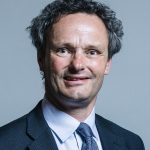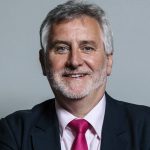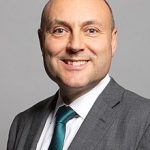
Category: Economy

  • James Sunderland – 2022 Speech on the Finance Bill

    James Sunderland – 2022 Speech on the Finance Bill

    The speech made by James Sunderland, the Conservative MP for Bracknell, in the House of Commons on 28 November 2022.

    As a dutiful Back Bencher, I answered the call of the Whips and wrote about an hour’s worth of speech, but with your blessing, Mr Deputy Speaker, I will restrict my remarks to about five minutes. I suspect that this is the Bill that none of us wanted, but as a pragmatic Conservative, I concede the fiscal imperative. Importantly, this is the right thing to do for the Conservative party, as the party of fiscal pragmatism, and for the country. I see the Bill as a short-term necessity and not for the long term. We need to put our country back on track and, essentially, steady the economic ship. Fiscal and economic security must be the foundation of all policy and I believe that the Bill provides that.

    I do not want to hark back to the ill-fated mini-Budget, but it recognised the basic premise that Governments do not create wealth—businesses and working people do. Therefore, we have to incentivise them to work harder and create more wealth, which, ultimately, represents economic growth. As a low-tax, low-state Conservative, I want to see a low-tax, low-state economy that attracts investment, incentivises growth, rewards workers so that they can keep most of what they earn and ensures that we all enjoy a meaningful standard of living through rising wages. I accept, however, that inflation, borrowing and debt are the elephants in the room.

    I wish to make a few points about the clauses. Clauses 1 to 3 relate to the Energy (Oil and Gas) Profits Levy Act 2022 and include an increase in the levy from 25% to 35%, which is the right thing to do. I would much rather, however, that oil companies pass on their profits to the consumer at the pump and not to their shareholders. That is an absolute no-brainer and I ask the Government to keep the pressure on the oil producers to ensure that the money goes where it needs to.

    Clause 5 and 6 are on income tax. I do not like the fact that the thresholds are being kept where they are. It is really important that, with rising wages, working people should keep more of what they earn, but I can live with the proposal for the reasons that have been outlined. The same principles also apply to the dividend rate and capital gains tax. We have to incentivise people to work harder, to save and to try to derive extra income from what they do. Again, I urge the Ministers to review those measures in due course, along with the income tax thresholds.

    I am a bit concerned about the vehicle excise duty. I completely understand why we may need to bring that in line with diesel and high-emission cars, but we need to incentivise the drive to net zero at the same time. Again, that measure is worthy of review in due course.

    Let me turn briefly to Bracknell, which I am very proud to serve. Bracknell is the silicon valley of the Thames Valley. We have 150 international companies with offices in Bracknell and a lot of small and medium-sized enterprises. Bracknell is the archetypal borough where people benefit from low taxes. In deference to my constituents—those who are working really hard to put food on the table—I urge the Government to make sure that the Bill is seen as a short-term, not a long-term measure.

    Lastly, I recognise the predicament in which we find ourselves. After all, the Government borrowed an additional £450 billion to look after people in the UK during the pandemic. That was to put food on the table and to support people, and it stands to reason that that money has to come back into the Treasury. However, with the Ministers in their place, I want to make an important macro point. As the Government of this country, we need a discussion about what the future holds for the UK. We are currently living beyond our means and writing cheques that we cannot cash, so we as a nation need a serious discussion about what we want in this country, for this country and for our people. What will we do in the future? I commend to the Treasury that we need a grand strategic intent that allows us to work out where we will go, because that will drive policy. I also want to see tax reduced at the earliest opportunity, not least to encourage growth and to ensure that the UK remains firmly competitive internationally. That, I am afraid, is a political imperative to ensure that the “Great” in Great Britain stays great.

  • Anthony Browne – 2022 Speech on the Finance Bill

    Anthony Browne – 2022 Speech on the Finance Bill

    The speech made by Anthony Browne, the Conservative MP for South Cambridgeshire, in the House of Commons on 28 November 2022.

    It is a pleasure to speak at the back end of the debate following so many fascinating contributions from the Government and Opposition Benches. I particularly enjoyed the comments from the shadow Minister, the hon. Member for Ealing North (James Murray), positioning Labour as the party of small business. I have long believed that that is true—the best way to create small businesses is to start with a big business and then elect a Labour Government.

    I support the Government overall and this well-crafted autumn statement. It balances the books in a way that bears down on inflation without harming growth, and it has been done in a fair way, as many hon. Members have said, helping households who are struggling. The energy price guarantee and the retention of the pensions triple lock are particularly welcome. I also welcome the extra money for health and education. Like my fellow Conservatives, I do not like the fact that taxes are going up to the highest level for 70 years, but I accept that that is necessary and that we must accept sound money before tax cuts.

    The main focus of my comments will be on an issue raised by several hon. Members: research and development. I very much welcome the fact that the Government are committing to £20 billion a year of public money for research and development, but my concern is about the changes to the R&D tax relief system. The Government have made major changes, with the system becoming more generous to big firms to make them more internationally competitive, but the rate of relief for small and medium-sized businesses effectively being cut in half, from 33% to 18.6%. It is a bit more complex than that, but that is the gist. Why are the Government doing that? As the Chancellor said in his autumn statement, it is to tackle fraud. Indeed, fraud is a problem—I have looked into that as chair of the Conservative Back-Bench Treasury committee —and we do need to tackle it. However, the trouble with this way of tackling research and development fraud is that it punishes legitimate research companies as much as fraudsters and chancers, lumping them all in together. There are better ways of doing that.

    I am talking about this because it is a particularly big issue in my constituency. South Cambridgeshire is the life sciences capital of Europe. I have literally hundreds of life science companies, from the global headquarters of AstraZeneca down to the newest start-ups. Almost every village has a science park packed full of life science companies. Those small start-ups are at the cutting edge of research and development in life sciences. More research and development in life sciences is now done in small businesses than by the big pharma companies. Without them, innovation would be very slow and the UK would lose its position as a life science superpower. We talk about becoming a life science superpower, but we are one already, and most of the rest of the world recognises that.

    It is in the nature of those small companies that they are research-heavy, but clinical trials mean that it could take 10 to 15 years to bring a product to market before they make any revenues. They are funded not by revenues from global sales of blockbuster drugs, like big pharma companies, but by investors who fund research for a decade or more before they have any chance of a return. Their financial models depend on the research and development tax credit regime, which is fundamental to them in leveraging funds from investors from around the world. It has been successful in making the UK an attractive place to do research.

    Jim Shannon (Strangford) (DUP)

    It is important to have research and development. It is also important that those companies can do their research on Parkinson’s, diabetes and heart disease, and all those things must have research and development investment. Does the hon. Member feel that the Government need to enhance that to their betterment and find cures for Parkinson’s, pancreatic cancer, diabetes and heart disease?

    Anthony Browne

    Absolutely. Many companies in my constituency and publicly funded institutes are doing research on those diseases. That is critical to people living healthy lives as well as to the economy, and the Government are absolutely right to support it.

    The sudden cutting in half of research and development tax relief is a major challenge to the life science companies in my constituency, which are shocked at what is proposed —seemingly out of the blue. Many, if not most of them, are suddenly having to rethink their research plans. They are in shock particularly because it was proposed at such short notice—it will come into effect next year—and without consultation. They are having to go to their investors now and say that they will no longer have the money they thought they would and that they will have to cut back research and jobs.

    Let me give the House a few examples of real companies in my constituency that I have been working with. PhoreMost combines artificial intelligence with drug research. I went to the opening of its laboratories in the village of Sawston. Neil Torbett, the chief executive officer, said:

    “The current R&D tax system has been instrumental in our growth as a Cambridge-based Biotech, which has grown to over 50 highly skilled staff, raised £45 million in investment and entered into multiple pharmaceutical industry partnerships. Receipts from R&D tax credits form a critical part of our funding equation, and the proposed SME R&D tax relief cut will materially adversely affect our future growth plans within the UK.”

    I opened the offices of bit.bio, another company in my constituency, which does the most amazing genetics research—I have mentioned it before. Mark Kotter, the chief executive officer, said:

    “The assistance at the current level is a cornerstone of our financial projections, which also help us to attract equity funding, and any reduction in the claimable amount will have a significant impact on our ability to invest and grow at the desired rate.

    As part of our forecast, we will be looking to increase our current headcount of 175 by approximately 30% in the next year, but quite simply this will not be possible if the tax relief changes announced in the Autumn Statement become reality.”

    I could give countless other examples. This is dramatically changing the prospects of life science research in Cambridge.

    I know that the Government want to champion life sciences as part of their ambition to ensure that we are a life sciences superpower. I have worked with the Government on that. Indeed, I welcomed the life sciences Minister—the Minister of State, Department of Health and Social Care, my hon. Friend the Member for Colchester (Will Quince)—to my constituency just last week. I know that they want to tackle fraud in the R&D tax credits regime. As a taxpayer, I very much want us to do that; it is a duty of Government to ensure that the taxpayers’ money is well spent. We share those dual objectives, but there are better ways to tackle fraud without harming research. We can throw out the dirty bathwater without throwing out the baby.

    Here are some suggestions. We can ban contingent fee—no-win, no-fee—tax agents. A whole industry of people are trying to make money out of encouraging other people to put in fraudulent tax credit claims. We could ban that. We should resource HMRC so that it can scrutinise the claims. Most claims are automated and there is no scrutiny of what is put in. That encourages and gives an easy ride to fraudsters.

    We can also limit claims for soft innovation—that is, technical maintenance and updates that would have been made anyway and which people would not normally think of as research and development. They should not be getting research and development tax relief in the first place. Lastly, to distinguish between the life science companies that we all want to encourage and the fraudsters and chancers, the Government could create an R&D tax regime for knowledge-intensive companies, which are already recognised in the tax codes; there would be no definitional issue, because those companies are already in the tax code. I am talking about companies with under 500 employees carrying out work to create intellectual property and expecting the majority of their business to come from that work within 10 years, or companies where more than 20% of employees are doing research roles requiring a master’s degree, a PhD or beyond.

    If the Government take those steps, they can promote research while tackling fraud. I urge them, on behalf of all the businesses in my constituency—dozens of which have been in contact—to delay the implementation of the change, consult the industry on it and to look at more specific ways to tackle fraud, so that we can distinguish between genuine research that we want to encourage and the fraudsters and chancers. Will the Financial Secretary or the Exchequer Secretary—I am not sure whether this applies to him or her—meet me and industry representatives urgently to talk about the impact of the changes in the regime on life sciences research in the UK? With that caveat—I realise that it is a big one for my constituency members—and assuming a positive answer, I support the Bill overall, and I commend it to the House.

  • Shaun Bailey – 2022 Speech on the Finance Bill

    Shaun Bailey – 2022 Speech on the Finance Bill

    The speech made by Shaun Bailey, the Conservative MP for West Bromwich West, in the House of Commons on 28 November 2022.

    I could say so much about what we are debating today that I do not know if I can contain myself. I am fortunate that procedurally there is no time limit for Finance Bills, so I could speak for hours about the Government’s proposals, but I will be as circumspect as possible. We have heard some fantastic contributions, including from my hon. Friend the Member for Eastleigh (Paul Holmes); I assure him I listened to his speech and it was a fantastic contribution.

    We have had the usual back and forth, with Labour playing the blame game while also failing to understand that when we spend £440 billion to keep the economy going—to keep people in work, to keep jobs, to keep people sustaining what they are doing—there is going to be a price to that, as there is from Putin’s illegal and aggressive invasion of Ukraine.

    We are facing some of the most difficult economic circumstances ever, and it is right that our tax measures have made those with the broadest shoulders carry the largest burden, because they know that is vital to ensure the longer-term recovery of our economy. In doing that, we strike a balance between making sure those people carry that burden and ensuring that the most vulnerable get the support they need.

    Hon. Friends have talked about the ways in which that has been achieved, including the £600 million investment in infrastructure. Some suggested that investment was not happening, but I can assure them that it is: my local authority and borough are being supported with £60 million of investment from the Government’s towns fund, with a further £20 million in levelling-up funding bid for at the moment, so we have absolutely seen support from this Government. Some 125 small and medium-sized manufacturing businesses in my constituency—or, as we say in the Black Country, metal bashers, because that is ultimately what we do —benefit from the infrastructure investment and R&D support.

    The protections to the triple lock were a dividing line. I point out to the Labour party that when it left power in 2010, we had some of the worst rates of pensioner poverty in Europe, yet Labour Members never talk about that, do they? They never mention that and they have never apologised for it. Under this Government, we have had the triple lock for pensioners—people who worked hard, contributed and have paid in for all their lives.

    I have a lot of respect and time for the hon. Member for Aberdeen North (Kirsty Blackman)—I have worked with her on a number of bits of legislation—and when I think of hard workers, I think of the people on the minimum wage in my local factories and those manning shops and working in retail, in unforgiving jobs. It is those people who have paid in their whole lives and want to see that return. Notwithstanding the points that she made about Scotland—I heard and understood them—investing in and safeguarding the triple lock is exactly what we need to do.

    I do not wish to repeat too many points made by hon. Members today—I am conscious that at this point in the debate there is a risk of doing that—but it has been vital that we strike a balance in this Finance Bill. That balance is about being fiscally prudent, as my right hon. Friend the Chancellor made clear, but not on the backs of the most vulnerable. It is also about ensuring that investment in good public services, which was at the heart of the Government’s promise and the contract we made three years ago, is maintained. We have safeguarded investment in levelling up, safeguarded investment in infrastructure, safeguarded and increased investment in education and safeguarded investment in the NHS to ensure that our public services are there. As far as I am concerned, if the Labour party thinks that is some sort of abhorrent thing to do, I do not know where its head is at. If it means that my constituents get the services that they want, pay for and rely on—that they can access a GP, get into a hospital and see their kids go through a decent education system—I will back that to the hilt, because ultimately I was put here to safeguard their public services. We know that we are in a tough situation, but my hon. Friends on the Treasury Bench have struck that balance. It is vital that, as we move forward, we continue to assess the situation.

    In finishing, I have a few asks, as I often do—I see my hon. Friend the Exchequer Secretary looking at me in anticipation. I was pleased to hear mootings of an industrial strategy. Those of us in the Black Country, where we are proud of our industrial heritage and our infrastructure, can be at the forefront of the new industrial revolution, particularly on the green agenda. I know that the Government are particularly concerned about energy security, and I am more than happy to meet my hon. Friend about that.

    My ask is that we ensure that areas where we have good industrial capacity are not forgotten. One point relayed to me is that there is sometimes a feeling that those who are not in financial services or a service industry are a bit left behind. I see my hon. Friend looking at me; it is vital that we have an industrial strategy focused on our manufacturing base—he and I have had discussions about that and are passionate about it—to ensure that good, strong manufacturing and engineering jobs can be part of our growth and recovery, particularly in the Black Country. We already have the infrastructure, so let us make the most of it.

    The Bill strikes the right balance by protecting public services and safeguarding the most vulnerable. As far as I am concerned, we are fulfilling the contract that we made with the people three years ago.

  • Clive Efford – 2022 Speech on the Finance Bill

    Clive Efford – 2022 Speech on the Finance Bill

    The speech made by Clive Efford, the Labour MP for Eltham, in the House of Commons on 28 November 2022.

    I was struck by a quote I read a while back of the head of the Institute for Public Policy Research centre for economic justice, as it sums up the problem we face as a country:

    “There is a massive structural flaw in the economy that whatever the economic shock the wealthier get wealthier. If we’re going to get the whole economy into recovery, and leave no one and nowhere behind, we need to change this. Societies that are so unequal are bad for everyone and policymakers need to address this dangerous gap, or risk people losing trust in our economy and democracy.”

    At the core of that problem is the way we treat wealth in our taxation system. In an earlier intervention on the Minister I mentioned that the National Audit Office says that the total the Government invested in the economy during covid was £368 billion, which is roughly equivalent to £5,600 per head. Whichever Government had been in office at the time would have done something similar; they would have introduced a furlough scheme and helped businesses. That happened under the last Labour Government when there were crises: we stepped in on foot and mouth and the banking crisis, so forms of assistance were put in place. I therefore accept the assistance that the Government put in place, and I am not arguing about it, but it is ridiculous for the Government to argue that that money was paid and is now in the bank accounts of the people who received money during furlough or of the businesses who received assistance. It was paid to those individuals and businesses and it was used, and it has therefore moved on in the economy. That is £368 billion that has gone into the economy, and my question is: where is it now?

    Most analyses of what happened in covid that are worth reading find that the wealthiest did extremely well during covid, so my question to the Government—and I would ask this of any Government—is this: what do we do about that? These people were already wealthy and now they are getting even more wealthy, which will drive the inequality the Government themselves say they want to deal with through levelling up.

    Matt Rodda (Reading East) (Lab)

    My hon. Friend is making an excellent speech. Is he, like me, thinking about all the people who wrongly profited from selling personal protective equipment to the Government and the lack of proper assessment of some of those offers of help and the lack of proper procurement processes being followed? Does he agree that many ordinary members of the public and NHS staff found that quite wrong?

    Clive Efford

    My hon. Friend’s intervention speaks for itself and I absolutely agree; that is an example of where this Government go wrong by treating the wealthy differently from others.

    During covid, the number of millionaires and billionaires grew; we have the highest number of billionaires ever in The Times rich list and their combined income during that period grew by one fifth. So we can clearly see that inequality has been turbocharged by the money the Government put into the economy. I do not criticise the Government for putting that money in, but I do ask: where is that money now, where are the people who have benefitted most from it, and should they not, with their broad shoulders, bear more of the burden?

    We have consistently had low growth over the last 12 years under Conservative Governments. The Resolution Foundation’s recent report “Stagnation Nation?” found that in each decade from the 1970s real wages rose by an average of 33% until 2007, but that that fell to below zero in the 2010s. So today average household incomes are 16% lower in the UK than in Germany and 9% lower than in France, having been higher than both in 2007. Under the Conservatives there has been a consistent shift of wealth from average household incomes to the wealthiest in the country. The policies they have pursued have been driving inequality, and my point is that until we reform how the taxation system deals with wealth we will not address that growing divide between those at the bottom and those at the top. This Finance Bill completely fails to address that problem.

  • Tom Hunt – 2022 Speech on the Finance Bill

    Tom Hunt – 2022 Speech on the Finance Bill

    The speech made by Tom Hunt, the Conservative MP for Ipswich, in the House of Commons on 28 November 2022.

    On the point that has just been made that those of us on the Conservative Benches have some kind of income threshold in mind when we talk about hard-working people, I can assure the hon. Member for Aberdeen North (Kirsty Blackman), who made the comment, that that certainly is not the case for me. When I think about hard-working people and hard-working constituents in my patch, I recognise that some of those on the lowest incomes are among the hardest working. They make the decision to get up in the morning, scrape the ice off their windscreen and go to work because they think that is the right thing to do, so that certainly is not my view, and I do not think it is the view of many of my colleagues either.

    On the point about Brexit, I think it is beyond the debate in this place, in that we have had Brexit and then afterwards we have had the pandemic and the biggest war in mainland Europe since the second world war. The reality is that it will be a long time before we can truly assess whether Brexit was the right thing to do and come to a conclusion. Coming to a conclusion two to three years after it has been delivered, given that we have just come through a pandemic and we are grappling with the biggest war in mainland Europe since the end of the second world war, is quite childish and not the right thing to do.

    I spoke last week about the fiscal statement, and I welcomed many of the measures. I welcomed the fact that universal credit has gone up in line with inflation, I welcomed the protection of the triple lock, and I welcomed the fact that the national living wage is going up. I also spoke about the international context in which this debate is happening, and the fact that when we look around the world, particularly at comparable countries, we see countries that are all grappling with levels of inflation that those countries have not seen for many decades. That is something we have to bear in mind, but at the same time I think we have to be open and honest about some of the mistakes that were made by the previous Administration.

    However, it is high time that the Opposition started dealing with what is in front of us, and by what is in front of us I mean the statement that was delivered only a few weeks ago. More often than not, I hear the Opposition engaging with the previous Administration, not the current Administration. The longer this current Administration get going with their package of reform, the harder that will be for the Opposition to do, because the current Prime Minister was of course the one who predicted many of the negative consequences of what the previous Administration did. When it comes to economic credibility, I say that the Prime Minister, in lockstep with the Chancellor, has by far and away the highest capital when it comes to these issues.

    I want to talk about two issues that I did not really talk about last week to do with the Finance Bill. The first is education. I do think it was an achievement: the Government had to make some incredibly difficult decisions to get our public finances on a surer footing, but, even despite that, they were able to bring forward £2 billion of extra funding in education for schools. This is something that I care passionately about. I would, however, say that I have been contacted by Suffolk New College, the principal further education college in Ipswich, which does fantastic work that not just our local area but the country will rely on to equip local people with the skills necessary to make a success of Sizewell C and also of the freeport at Felixstowe and Harwich. I would like to bring forward its request that the further education sector is considered for any potential underspend in the school system between the years 16 and 18. It is right that the Government highlight the importance of skills, apprenticeships and further education. Of course, we have an Education Secretary who was an apprentice herself, and I am confident that the Government will bring forward, in time, solutions to the way in which we fund our further education sector. I made a promise to Viv from Suffolk New College that I would make that point in this speech today, and I have just done so.

    I have spoken constantly since I was elected about the importance of special educational needs. I have also spoken about the fact that there are ways in which we can improve special educational needs provision, and it does not all involve more money and more spending. I have come up with ways in which that can happen by reforming the way Ofsted assesses schools, so that it is always an incentive for schools to prioritise first-rate special educational needs and disabilities provision, but a lot of it is to do with resources.

    Only recently, I was in the constituency of the Exchequer Secretary to the Treasury, my hon. Friend the Member for South Suffolk (James Cartlidge). He allowed me to step foot in his constituency. There is a part of his constituency that is essentially Ipswich—he is incredibly lucky to have a little bit of Ipswich in his constituency—and he allowed me to step foot in a very special school called the Bridge School. I went there to see a community café that has been opened by the Bridge School, and the whole purpose of that café is to increase the opportunities for the pupils at that school to interact with members of the community to build their confidence and their ability to integrate and play a positive role within their community.

    I went into the school afterwards, and I saw some fantastic best practice in supporting some of the most vulnerable young people. For example, it has an indoor swimming pool, and I saw the way that that was used. The reality is, though, that all of this costs money, and some of the most powerful interventions for the main special educational needs cost money. My argument would be that this is an investment; it is always an investment. Utilising the talent and the ability of young people with very special needs—neurodiverse thinkers—is an investment. When we look at some of the depressing statistics when it comes to how many people in the criminal justice system have special educational needs because they have not got the support they need, we know that investment is morally the right thing to do, but it is also the right thing to do from the point of view of the Exchequer. I would also say that at some point I would like to look at the way that Suffolk SEND in particular is funded, because I still think that, when we are compared to other areas, we do not get a fair deal in SEND funding.

    Secondly, I would like to talk about devolution. The Suffolk devolution package was announced as part of the fiscal statement, which has confirmed £480 million over a 30-year period. I think this is really good news, and what I quite like about the Suffolk devolution package is that it will not be creating a new tier of bureaucracy. I have intimate or a lot of experience of mayoral combined authorities—I worked at a mayoral combined authority in Cambridgeshire and Peterborough —and I have to say that the structure in place is not working. I think that plonking a new level of bureaucracy on top of an existing local government structure created unnecessary tensions, and having a way of delivering devolution that does not create another tier of bureaucracy, but actually devolves power and funding directly into the existing county council, is the right thing to do. It will save the Exchequer money, it will lead to better and more streamlined decision making, and it will avoid some of tensions and the conflicts that have come about as result of the devolution in Cambridgeshire and Peterborough, so I welcome that.

    I also welcome a key aspect: the devolution of the adult education budget. Adult education often does not get the attention it deserves in the educational sphere. I saw the way adult education was devolved in Cambridgeshire and Peterborough, when decision making was put into the hands of local politicians and local specialists, and the difference that can make. Money was directed into the areas where it could make the biggest difference, and I saw the transformative effect that that was having in the most deprived parts of Cambridgeshire and Peterborough.

    I think it is important, when we talk about the fiscal statement, that Suffolk was at the heart of it, and it was at the heart of it because of Sizewell C, which could potentially bring forward 10,000 new jobs. So we in Suffolk need the Government’s help to ensure we can step up for our education sector to get the high-skill people necessary to make a success of Sizewell C, which will have huge implications at national level. There is an opportunity therefore, and it is almost uncanny that we have the news about Sizewell C while at the same time we have the devolution of skills associated with Suffolk devolution, because by devolving those budgets and powers we are better able to deliver for the country the skills we need to make a success of Sizewell C.

    My final point on devolution is that, even with the steps we have made on devolution over the last decade or so, we remain one of the most centralised democracies in the world. Not all my colleagues are supporters of devolution, but I am; I think there is something to be said for the American expression, “Laboratories of democracy”. To have proper devolution, we must have an element of fiscal devolution; I know some in the Treasury would be cautious of this movement, but that should at some point be explored. Devolution can work, because ultimately it is about putting power closer to people, and in principle that is a good thing that no one can disagree with, but we need to do it in the right way.

    I have gone on for far longer than I anticipated—11 minutes in total; a precedent was set before my speech. I welcome the fiscal statement and the Finance Bill, which represents a fair and compassionate approach and which, even in the most challenging times, finds a way to invest in education, and that will always have my support.

  • Kirsty Blackman – 2022 Speech on the Finance Bill

    Kirsty Blackman – 2022 Speech on the Finance Bill

    The speech made by Kirsty Blackman, the SNP MP for Aberdeen North, in the House of Commons on 28 November 2022.

    We have Schrödinger’s Finance Bill. For a while, there was no Finance Bill. Then yes, there was going to be one. Then, no, there was not going to be one. Now, finally, we have come to the decision that the cat is alive and the Finance Bill is here before us.

    I am old enough to remember Philip Hammond standing up and being very clear that there would only be one fiscal event in a year, that we would move to having an autumn statement and that would be the fiscal event, and that the spring statement would only be a statement and an update. I would be the first to admit that this year has gone somewhat wrong, so there are some excuses for having a different scenario this year, but I am keen to know what the intention is. Do the Government intend to have one major fiscal event a year, or are they planning to have more than one? If we are going to have a spring statement next year that will, presumably, from what was said earlier, have a Finance Bill attached, will we also be having one in the autumn next year? Will we have an additional one in September that will crash the economy? One would hope not. It would be good to know what the plans are.

    We heard from the hon. Member for Warwick and Leamington (Matt Western), in quite a lot of detail, comparisons of the UK’s economy and economic state with that of many other countries. He laid out the figures nicely, which saves me from doing the same thing; I will not repeat what he said. What he said makes it clear that there is a unique issue here. Something is happening in the UK that is not happening in other places, apart from Russia, where there are sanctions, and it is understandable that the Russian economy is not in the best of states. What could possibly be happening to the UK economy? What is it—what uniquely is happening?

    I keep wondering what has happened to this Brexit bonus. If our economy is so much better as a result of Brexit—if that has massively helped our economy, and many Brexiteers have made it clear over many years how much of a good thing it would be for the UK economy —can the House imagine the state we would be in if Brexit had not happened? Can the House imagine how dreadful things would be if we had not seen this Brexit bonus, which has still left us somehow, unexplainably, in a worse economic condition than has happened with other countries? I am baffled by this scenario.

    We have been hit by a major number of issues. It is absolutely the case that the war in Europe—Putin’s illegal invasion—has had a major impact, and it has also had a major impact on other economies across the EU and the world. It has had an impact not just on energy prices, but on the price of food, for example. All those countries are seeing prices increase, yet none of them is struggling with growth in the way that the UK seems to be. None of them is seeing the level of recession predicted for here, and it is entirely down to Brexit and the decision-making processes of this UK Government. It is also down to the choices made earlier this year, which failed to take into account the scenario we are in. They failed to listen to the situation facing our constituents.

    It is all well and good for Government Members to stand up in the Chamber and talk about the importance of growth—I will not for one second deny that growth is important, but if growth means that rich people get richer and people in Aberdeen and our constituencies still cannot afford to buy rice and pasta, that growth is not worth it. It is not worth it to see people get unimaginable amounts of money. Some £29 million in profits from personal protective equipment is an unbelievable amount of money for somebody or a family to get. Most of my constituents and most people across the UK will never see anything like that money in their entire lifetimes, yet it seems to be acceptable to the Government—while the fact that my constituents and people in Aberdeen, across Scotland and across the UK cannot afford to pay for the very barest of necessities is not remarked upon, is not mentioned and does not seem to be happening.

    The Conservative Government keep talking about how much they care about vulnerable people—it has been mentioned a number of times—but that is not borne out and it is not what is happening on the ground. People’s lives are not being improved as a result of the decisions being made by those on the Government Benches. We are not seeing people better able to afford their energy bills; their energy bills are still significantly more than they were this time last year. The benefit cap still needs to grow massively to keep pace with its 2013 levels. The childcare allowance included within universal credit is at the same level it was when it was first introduced, when universal credit first started. It has never been increased. These are decisions that could be made that would make a difference to my constituents’ lives on a daily basis, but they are not being made.

    We will not get our way out of this with innovative jam. That is not how it will work. We need to ensure that those who need it most—the people who can afford the increases least—are the ones being targeted by Government support and receiving the funding to help them to afford the basic necessities: food, clothing for their children and energy to get them through this winter. That is why the decision-making processes of the Scottish Government have been the way that they have.

    As my hon. Friend the Member for Glasgow Central (Alison Thewliss) pointed out, the UK Government have talked about the additional money from Barnett consequentials, but that does not assist people this year, because of the constraints on the Scottish Parliament’s budget and because of the decisions taken by the UK Government. It will not help us to work on our second child poverty action plan, which we are now in the process of doing. We have put tackling child poverty at the forefront of what we are doing in Scotland. The eligibility of the Scottish child payment increased again the week before last, so more children in more families can get it than ever before.

    We in the Scottish Government are targeting our support there, because that is where we feel that we need to make the most difference. We need to ensure that children are not living in poverty or in cold homes that their parents cannot afford to heat. We need the UK Government to step up, and not in an empty way by saying that there is an extra £1.5 billion—I do not know—in Barnett consequentials over two years, because that is not helpful. We need the money now—my constituents need the money now—to afford to get through the winter.

    Another thing that has been mentioned is that hon. Members regularly use the term “hard-working people”, which is one of my biggest bugbears. When Conservative Members talk about hard-working people, they are talking about people earning £40,000 or £50,000 a year; they are not talking about people working in minimum-wage jobs. When they say that hard-working people have to pay higher taxes in Scotland than the rest of the UK, they are failing to recognise that we have an additional lower-rate tax band that means that people on the lowest incomes pay less in Scotland, and they are denying that people on the lowest incomes are hard-working people. It is the case, however, that a significant proportion of people on universal credit are in work. Just because someone is in receipt of social security does not mean that they are not hard working or that they are less deserving than people earning an awful lot of money from dividend incomes or other sorts of unearned income.

    Stats came out earlier this year about the level of sanctions on people receiving universal credit, which said that there had been a monthly increase in the total amount of reductions being levied—money taken back from individuals who are claiming universal credit. Right now, the Department for Work and Pensions should not be trying to increase the amount of money that it is clawing back from people in receipt of universal credit.

    We already have the issue that, when the DWP decides to make debt reductions from people’s universal credit payments, it does that not on the basis of whether those receiving universal credit can afford it, but on the basis of an arbitrary 25% threshold. As a result of DWP actions and the failures of the UK Government, we will have a situation where people cannot afford to heat their homes or feed their children purely because of the reductions that are being made to their income.

    I have harped on about immigration several times. A number of years ago—I am a veteran of many Finance Bills—the former Chancellor George Osborne stood up and spoke about public sector net debt. In fact, his Red Book that year talked about it specifically and made it clear that an increase in net migration to the UK reduces public sector net debt. By trying to do everything they can to reduce immigration, therefore, the UK Government increase public sector net debt.

    The UK Government could decide that one of the best ways to do something about the lack of growth and the amount of debt, about which they are concerned, would be to encourage people to come and live here, and to make that easier. Instead, my constituent is going to move away from the UK because he cannot get a visitor visa for his family to come and visit, so he is fed up and has had enough. As a software engineer, he is somebody who we need to have and whom we should be encouraging to stay; we should not be as obstructive as possible in our decisions.

    The UK Government have also failed to tackle—in fact, they have gone out of their way to oppose—our climate change ambitions and targets in this Finance Bill. We are looking at issues in relation to electric cars, as was mentioned earlier, and allowances for oil and gas companies to extract more oil and gas, rather than the allowances that could be given to companies to develop renewable electricity. The electricity generator levy is also being levied on people who are producing renewable energy, which is the kind of energy that we need. We cannot talk about COP only once a year when it is COP26 or COP27—it should be threaded through every single decision that we make.

    We have heard about R&D credits and tax reliefs, which I do not have a problem with in principle, although I am concerned that we need to see whether they work. I do have a problem, however, with how decisions are made to give people R&D tax credits. When the UK Government created the Advanced Research and Invention Agency, why did they refuse point blank any amendments that would have put tackling climate change at the heart of its decisions? We said that it should be climate neutral and that the Government could lead the way with a brand-new Government agency working on a net zero basis, but they refused. We said that they could convince or ask it to focus on innovations and inventions that tackle climate change, but they refused to do that, too.

    We need to see an actual effort made—actual things done and decisions taken—to ensure that we tackle climate change and meet our net zero ambitions. If we could meet our net zero ambitions even earlier than we have proposed, that would be the best thing for the planet, rather than trying to push things until the last possible moment. We cannot just ignore climate change and pretend that it is not happening—it is!—so it should be in every Government statement, and the Government should talk about the effect on climate change of every spend that they decide to make. The decisions in the Finance Bill take us backwards rather than forwards.

    The Scottish Government are supporting a just transition in Scotland with £500 million of funding to ensure that we move away from the reliance on fossil fuels that we absolutely have in the UK, particularly in Aberdeen, where there are a huge number of jobs in oil and gas. We need to support a transition that is just and fair for my constituents and for people across the UK. We need to ensure that people in oil and gas are given, or have the opportunity to move into, high-earning jobs in the new industries of the future that do not cause an increase in climate change.

    Austerity has been levied on the poorest people for years. Conservative Governments have consistently made decisions at the expense of our worst-off constituents. I have never been less optimistic about the future for the poorest people in the UK than now—not even through the Brexit process and decision-making. The Government have shown no willingness to understand the genuine dire straits that people are living in, to take action on that, and to prioritise the most vulnerable people—not just to say it, but to actually do it—by looking at the universal credit system and the decision-making process to ensure that people can afford rice and pasta, and to heat their homes. How is it that we have to be asking that in 2022? How is it that we have to be living in a situation where the next generation are currently set to be poorer than our generation? We have that lack of optimism, and this Conservative Government continue to hammer that home, rather than attempting in any way to make it better.

    That outlines very clearly the difference between the two Governments. The difference is that the Scottish Government are doing everything they can, with their very limited powers and limited ability to do anything in-year with their budgets, to try to make life better for those struggling the most, and this UK Government are continuing to refuse to do so.

  • Simon Baynes – 2022 Speech on the Finance Bill

    Simon Baynes – 2022 Speech on the Finance Bill

    The speech made by Simon Baynes, the Conservative MP for Clwyd South, in the House of Commons on 28 November 2022.

    The Government have made some tough but fair decisions to restore economic stability and tackle inflation. To achieve long-term, sustainable growth, we need to grip inflation, balance the books and get debt falling as a share of GDP. But even with the changes outlined in the autumn statement, which will take effect through this Finance Bill, the UK tax system remains competitive, with a lower tax burden than Germany’s, France’s and Italy’s and the lowest headline rate of corporation tax in the G7. Of course, the UK also has the lowest unemployment rate for almost 50 years.

    The hon. Member for Ealing North (James Murray) referred to the Office for Budget Responsibility, which expects the package to reduce peak inflation and unemployment. It also notes that GDP will be 1% higher due to these measures. The Bank of England expects the package to help tackle inflation and keep interest rates lower for borrowers and mortgage holders. All that is vital to ensure sustained public service support and investment in the years ahead, and it is on those two issues that I would like to focus my comments briefly this afternoon.

    On public services, the Chancellor’s proposals will increase taxpayer funding for the NHS and schools by an extra £11 billion over the next two years. Looking in more detail, the additional £7.7 billion for health and social care in the next two years means that, despite the challenging economic circumstances, the Government are providing £2 billion to £3 billion in additional funding for the NHS in each of the next two years to bring down ambulance waiting times, tackle the covid backlog and improve access to GPs. The Chancellor is also providing £2.8 billion next year and £4.7 billion the year after for adult social care, which will double the number of people leaving hospitals on time and into care by 2024, addressing unmet needs and boosting low pay in the sector. I call that a compassionate series of policies.

    I am pleased that the chief executive of NHS England has said that the extra funding that the Chancellor is making available for the NHS is

    “sufficient funding for the NHS to fulfil its key priorities”

    and

    “shows the government has been serious about its commitment to prioritise the NHS.”

    The £4 billion in additional funding for schools will increase the schools budget by £2 billion this year and £2 billion next year. That will mean that the Government have fulfilled their pledge to restore per-pupil funding to record levels, with real-terms per-pupil funding rising at least to 2010 levels, which is more than Labour has pledged to give schools.

    The Chancellor’s proposals maintain public capital investment at record levels, delivering more than £600 billion of investment over the next five years. Contrary to the remarks by the hon. Member for Leicester East (Claudia Webbe), the Government remain committed to key national infrastructure projects, such as high-speed rail, Northern Powerhouse Rail and Sizewell C. I am pleased that the £1.7 billion levelling-up fund is protected, particularly as I have seen in my own constituency of Clwyd South the unfolding benefits of our successful £13.3 million levelling-up fund bid; it is benefiting numerous projects along the Dee valley.

    The Finance Bill also ensures that research and development funding is protected and reformed. It reconfirms the Government’s ambitions on research and innovation by recommitting to increasing publicly funded research and development to £20 billion by 2024-25.

    Anna Firth (Southend West) (Con)

    Does my hon. Friend agree that every pound invested in the private sector in research and development returns 25% back every year forever, and that every pound spent by the Government on research and development is met by a 20% increase in research and development in the private sector? Does he agree that this is a down payment on high-paid jobs and growth for the future?

    Simon Baynes

    I could not agree more with my hon. Friend. Indeed, it goes to the point made by the hon. Member for Warwick and Leamington (Matt Western) about productivity. It is through such investments in research and development and supporting major capital projects that we can drive up productivity over the coming years.

    As a Welsh MP, I am particularly keen to strengthen the Union of the United Kingdom, and I welcome the £3.4 billion of additional funding for the devolved nations. There is an extra £1.5 billion for Scotland, £1.2 billion for Wales and £650 million for the Northern Ireland Executive. I am also pleased to see that the Government have announced funding for the feasibility study for the A75 in Scotland, the advanced technology research centre in Wales and a global trade and investment event in Northern Ireland. Making sure that the whole United Kingdom can grow and increase its productivity is a central theme of this Finance Bill and the autumn statement.

    In conclusion, the Bill has my full support. It shows that we do not have to choose between a strong economy or good public services—with a Conservative Government, you get both.

  • Matt Western – 2022 Speech on the Finance Bill

    Matt Western – 2022 Speech on the Finance Bill

    The speech made by Matt Western, the Labour MP for Warwick and Leamington, in the House of Commons on 28 November 2022.

    It is a pleasure to follow the hon. Member for Darlington (Peter Gibson).

    We have heard a great deal about the recent Budget—the last couple of Budgets, I suppose—and where we find ourselves, but we are not just talking about the events of recent weeks or what could be described as global headwinds. We have to understand what has been going on in the wider landscape—the energy price shocks suffered globally, the supply chain shortages and the rising global interest rates—but beyond what could be described as global factors, we have specificities: the factors that set the UK apart from other nations.

    I take on board a lot of the comments that have been from the Government Benches, but as the Institute for Fiscal Studies put it, it is clear that the UK is in a much worse position because of its economic own goals. We could talk about the impact of the bodged Brexit deal, which economic forecasters have shown has impacted our growth figure by 4.5%, or the shocking, catastrophic kamikaze Budget of 23 September, but we have suffered a decade of anaemic growth and now we are set for even weaker growth.

    As has been said, of course the pandemic impacted on our economic situation, as it has across the world—we need only look at what is happening in China right now and what will be happening to Chinese GDP as a result of all the measures there. However, we face even weaker growth than others. We will have the weakest growth out of all the major economic nations of the G7, and over the next two years we will have the lowest growth out of all 39 nations in the OECD, other than sanction-ridden Russia. In fact, the Office for Budget Responsibility predicts that over the forecast period growth is set to average just 1.4%, compared to an average of 2.7% that we enjoyed over 13 years under the last Labour Government.

    Last week, in its “Economic and fiscal outlook” report, the OBR confirmed that the autumn statement measures added nothing to growth in the medium term. Real wages are lower now than they were when the party opposite entered power in 2010. That is the harsh reality of what we are talking about. We can talk about all sorts of statistics in the abstract, but people will know just how hard this is already hurting and how hard it is going to get. I do not know whether any of us will be able to recall this, but the last time we had such a 12-year period of wage stagnation was back in the Napoleonic wars, which is a pretty damning indictment.

    This has real impacts for everybody in our society, and I will set out a few markers. My constituents, along with people across the country, will see a staggering 7% real-terms reduction in their income over the next two years, leaving the average worker £40 worse off. To give a different perspective, the Resolution Foundation said that compared with trends seen when Labour was in government, people will be £15,000 worse off, coupled with sky-high inflation that disproportionately falls on poorer households, as the hon. Member for Leicester East (Claudia Webbe) said. While food inflation has increased by 14% across the board, certain basic staple products have increased by as much as 60%, as I can see in the shops in my constituency of Warwick and Leamington.

    Businesses are also suffering. I appreciate that measures have been put in place, but the lack of business rate support is a glaring omission by this Government. One of the things that should be concerning them the most is the lack of business investment and the OBR forecast that we will now see business investment growing by 6.7% less over the coming years. That must give all of us concern for our long-term economic growth.

    Something else that should concern us is what has happened to the FTSE 100. Okay, it is just a bellwether indicator, but it is now smaller than the CAC 40 in Paris—the first time that Britain’s stock market has lost its position as the most highly valued in Europe. When we look back to 2016, we see the significant reversal of fortune: London was worth about $1.4 trillion more than Paris.

    Ten days ago, there was a political choice in respect of the Budget: stealth taxes on working people, or a fairer tax system. I fear that the Chancellor has gone in too hard on hard-working people when it comes to footing the bill. He claimed to be fair, but he has not been. The recent Bank of England monetary policy report spoke of the impact of UK-specific factors on borrowing costs. The Financial Times estimates at just under £17 billion the real-terms spending increase in the mini-Budget due to the increase in the gilt rate. This economic crisis was made in Downing Street and its cost is being put on the shoulders of working people: the tax burden is the highest since world war two.

    The Prime Minister’s decision to give oil and gas giants such large untargeted tax breaks has been surprising. It will cost the taxpayer £8 billion over the next five years. He and his Chancellor could have closed the tax loopholes, introduced VAT on private schools, tightened the energy profits levy, abolished non-dom status, launched a massive, much needed investment in skills and support for SMEs, and turned the UK into a green superpower. What we have instead are stealth taxes, which will take us backwards. I accept and agree with some of points made about corporation tax, particularly those of the hon. Member for Amber Valley (Nigel Mills). We saw a dreadful experiment under George Osborne that actually yielded very little for the UK but lost us a lot of tax take.

    Under clause 6, there are changes to income tax, and the concern is how those will affect a lot of earners across the UK. What analysis has been done on the upper decile, or the top 2% of taxpayers? How does the impact on them compare with that on the lowest decile of earners?

    As chair of the all-party parliamentary group on electric vehicles, I have a particular concern about clause 10, although I make these comments personally. The introduction of vehicle excise duty for zero-emission vehicles risks stalling the entire electric vehicle industry. We have already taken away consumer support, apart from some support for business users; we are the only major nation in Europe that does not provide such support for electric vehicles. There could be a real challenge as a result of the vehicle excise duty supplement, which will unduly penalise more expensive vehicle technologies when we should be ensuring that the sector expands and is successful. If we are to meet our net zero obligations, we have to persuade the consumer to come with us and increase the uptake in new electric vehicles.

    We needed a framework that would encourage consumers and businesses to buy electric vehicles and get the industry to invest in the infrastructure network of EV charging points. Like the industry, I am really concerned that the change will have a serious impact and that investment, including from vehicle manufacturers, will be lost.

    Labour’s plan would be to reboot the economy, to create the frameworks for businesses to operate within, to scrap business rates and to replace the apprenticeship levy with a skills and growth fund. We need to invest in skills and further and higher education, particularly to address the matter of productivity; it is disappointing that we did not hear about that from the Minister. Productivity is one of the greatest challenges for the UK, yet we have heard far too little over the last 12 years about how that will be addressed.

    I will not support Second Reading, although I will, of course, support the Labour amendment. The Bill raises taxes unfairly on working people and introduces what will essentially be a fiscal drag over the coming years. We should have started by going after the easy money—the tax status of non-doms and further reductions in the tax allowances available to oil and gas companies. We should have replaced business rates with something far more progressive that would help our local businesses and maintain and restore our town centres.

    Since 2016, 1.2 million zero-carbon homes could have been built; it would have meant zero heating bills for 1.2 million families. Sadly, the legislation got scrapped in 2011—just think of the impact that would have had on our energy demand and the relative prosperity of those households. Instead, we have austerity. Under Obama, the US had the American Recovery and Reinvestment Act 2009—and look at its trajectory since.

    I am afraid that this Finance Bill has sold the UK public and UK businesses short. We have had 12 years and the last 12 weeks—far too long. We need a Labour Government.

  • Peter Gibson – 2022 Speech on the Finance Bill

    Peter Gibson – 2022 Speech on the Finance Bill

    The speech made by Peter Gibson, the Conservative MP for Darlington, in the House of Commons on 28 November 2022.

    It is a pleasure to be called so early in the debate. At the outset, I want to put on record Darlington’s thanks for the £250 million that came to us during covid.

    In the autumn statement, we saw increased spending on education, health and social care; the largest ever increase in the living wage, to £10.42, putting us within pennies of our ambition to reach £10.50 in this Parliament; the triple lock guaranteed for pensioners; virtually all benefits, and the benefits cap, increased in line with inflation; and support for those struggling to meet energy costs. The autumn statement and the Bill continue our commitment to deliver for those on the lowest income.

    We all know that these are challenging times. We also know that inflation makes us all poorer. However, the challenges of inflation, energy prices and interest rates can all be tracked back to Putin’s illegal invasion of Ukraine. I know the Chancellor has had to make some difficult decisions, but I believe that he has been fair and done much to restore economic stability, while continuing to invest in vital services and infrastructure.

    Prior to being elected to this place I was an employer running a small business, and I know that businesses will warmly welcome the news in the autumn statement, particularly those on our high streets facing a much needed reduction in rateable value, and therefore a lower rates bill. That reduction would ordinarily be phased in over three years, so the fact that they will receive the benefit immediately is welcome indeed. That is something that I have been pushing for and that I was delighted to see. In addition, the current 50% discount available to hospitality and retail businesses will now be increased to a 75% reduction, with no impact on income for our local authorities. The Government really are on the side of small businesses.

    When the Chancellor comes to visit the Darlington economic campus, where my right hon. Friend the Prime Minister was working from on Friday—just as my hon. Friend the Exchequer Secretary to the Treasury did last week—I look forward to taking him to see some of our amazing local businesses, such Origins Home, Leggs Fashion and The Art Shop, and the transformation taking place in the Darlington yards thanks to investment from the towns fund.

    We all know that talent and ability are spread throughout the country, but opportunities have not been. The north-east has lagged behind for too long, under Governments of all colours, but this Government’s ambitious levelling-up agenda is already paying dividends to communities such as mine in Darlington. As such, I welcome the Chancellor’s commitment to infrastructure spending, with continued support for key infrastructure projects, and the protection of the £1.7 billion levelling-up fund. I am keeping my fingers crossed for the forthcoming announcement on levelling-up fund round 2, to which Darlington has submitted an excellent bid.

    In Darlington we are already ticking boxes on levelling up: £139 million at Bank Top station, delivering three extra platforms and improving regional connectivity; £35 million invested in our rail heritage quarter, delivering on our commitment to heritage and driving more visitors to Darlington; and £23.3 million invested in our town centre, seeing real change in the High Row yards, Northgate and Victoria Road. I could also point to investment in green technology at Cummins and investment in life sciences, so key to our vaccine success, at the Centre for Process Innovation, together with investment in Darlington College. It would be remiss of me to not mention the fantastic job opportunities afforded to local people through the creation of the northern economic campus, ensuring that people in Darlington can stay local but go far.

    Darlington said goodbye to its Labour council in 2019, ending a 28-year period of decline, and it is now going from strength to strength with the Conservatives at the helm, working hand in hand with our Tees Valley Mayor, Ben Houchen. However, the Chancellor knows that my council, the third smallest unitary in the country, faces economic challenges because of a funding formula that disadvantages areas like mine. That is long overdue for reform, and I hope that he will pay that issue close attention. I know that the Exchequer Secretary is making notes, so I hope he is listening too as he works on local government settlements.

    The cost of living support payments that have been distributed by the Government over the course of the last year and into this year have already totalled in excess of £39 million for the people of Darlington, and the announcements in the autumn statement amount to a further £18 million for them. At its heart, the autumn statement set out a compassionate plan, meeting the real challenges faced by our public services and the fears of people facing increased energy costs, and continues our commitment to our ambitious levelling-up agenda, including delivering real improvements on business rates for the nation’s high streets. This Finance Bill is good for the country and good for the people of Darlington.

  • Claudia Webbe – 2022 Speech on the Finance Bill

    Claudia Webbe – 2022 Speech on the Finance Bill

    The speech made by Claudia Webbe, the Independent MP for Leicester East, in the House of Commons on 28 November 2022.

    Contrary to what we have heard, the Bill is not about growth. It goes nowhere near what is needed. It is not fair, and it is not just.

    The median annual pay per person in my Leicester East constituency is, at £20,300, the lowest in the country according to the latest figures from His Majesty’s Revenue and Customs, which were published in April 2022. The national average for the same period was £31,461, meaning that the people of Leicester East are lagging £11,000 behind the national average, and are losing a third of their income to inequality. People in Leicester East are also paid less than the comparable figure for the east midlands region, which was £24,700. Child poverty in my constituency runs at a horrific 42%, perpetuating and deepening the disadvantages that our children already face. Furthermore, people in constituencies such as mine face a life expectancy 10 years shorter than that of the better-off.

    Ordinary people in this country are already struggling after a decade of ideological cuts and conscious cruelty by successive Conservative Governments. Now, their situation is being compounded. The reality is that we face the longest recession ever, coupled with skyrocketing costs of living. That crisis is driven by corporate greed and Government mismanagement, through which the biggest burdens—rampant inflation, soaring interest rates and public spending cuts—are placed on the shoulders of those least able to carry them.

    I do not think “cruelty” and “malice” are too strong a set of words for what is being done. What else should we call it when this Government have hunted for ways to make workers and communities pay for the so-called cost of living crisis, instead of getting the billionaires and millionaires, who have flourished and profited during the crisis, to pay up? The mere existence and normalisation of billionaires and millionaires in society and high office shows a broken political and economic system that can never work for everyone in society.

    In my Leicester East constituency, people are no longer able to make choices between eating or heating. That choice is no longer meaningful because they are destitute and relying on food banks and warm banks. They need help right now. In communities such as mine the lowest-paid workers are being punished by this Conservative Government. Workers are turning up to Victorian sweatshops and being sent home without work or pay, having been denied their rights. Their contracts are not worth the paper they are written on. My community has been at the epicentre of wage exploitation for decades. There is nothing in this Finance Bill to address that.

    The local authority in Leicester is already on its knees. It is still recovering from 12 years of austerity, which saw central Government grant funding cut from £289 million in 2010 to £171 million in 2019, with the shortfall in the current financial year expected to be around £50 million. The council has long since closed all its youth clubs, meaning that not only the people working in public services but the people using them suffer.

    The Finance Bill does nothing to address the fact that, according to the Office for Budget Responsibility, the Chancellor’s autumn statement means that household disposable income will fall by a further 7%. The Chancellor claims that his mission is to sort out the cost of living crisis, but in reality the Finance Bill is turning the screw on many of the poorest and most vulnerable. Wealth is not meaningfully taxed and fortunes are simply left sitting around idle, enabling a class of people who never have to work for a living to live off interest, rents and dividends now and for the next 1,000 years, while the poorest go under.

    This is not a plan for growth. The Office for Budget Responsibility does not forecast any growth for at least another half a decade. It predicts that the autumn statement will deliver economic stagnation, not growth. That means that, under this Government, wages and investment will suffer. In reality, the Chancellor has announced austerity 2.0, with real-terms cuts to public spending, cuts to international aid and cuts to capital spending on infrastructure—[Interruption.] Yes, cuts to capital spending on infrastructure. He is also freezing the threshold for paying income tax and national insurance. Thus, the Finance Bill increases taxes for people on low incomes, whose wages are already falling in real terms. This is a stealth tax in all but name, but the Chancellor has barely even bothered to disguise that fact.

    The autumn statement is austerity, and the Finance Bill is its delivery tool. It will cause substantial hardship and lengthen the recession, while protecting the wealth of the 1% and allowing corporations to get away with massive profits. At the same time, working people and the vulnerable will suffer.

    Uprating pensions and benefits by 10.1% in line with inflation for the first time since 2016, but not backdating that change, just scratches the surface and will not protect struggling families. The standard out-of-work benefit is now worth just 13% of the average weekly wage. The UK state pension lags far behind the average EU pension and is worth just a quarter of earnings, compared with 63% for the average EU pension.

    Where is the equality impact statement that should have been published alongside this Finance Bill or the autumn statement? That would have made clear the impact on low-income households and those from African, Asian, Caribbean and other racialised groups, as well as on women and disabled people.

    The autumn statement and this Finance Bill do nothing to address precarious and insecure work, zero-hours contracts, in-work poverty, high childcare costs or the rising cost of travel to work. The Government chose to force workers to meet work coaches to increase their hours or earnings, instead of tackling exploitative and scrupulous bosses, bringing rail and other public transport back into public ownership and ensuring that childcare is made affordable.

    Private rents are growing at their fastest rate. Families are being driven out and made homeless as landlords pursue ever higher rents and for less space. The autumn statement and the Finance Bill could have offered a ban on evictions and a freeze on rent increases. Instead they do nothing for the millions in privately rented accommodation.

    Meanwhile, fossil fuel firms can avoid paying most of any windfall tax by offsetting their investments in more oil and gas drilling. The Finance Bill is meaningless if we continue to subsidise and rely on fossil fuels. We need public ownership of energy to protect jobs, minimise prices and deliver a green, clean and sustainable future.

    The effects of the autumn statement have rightly been compared to boiling a frog slowly. However, in Leicester East and places with similar levels of deprivation, the water started deeper and hotter, and the Chancellor has lit a big fire. According to the United Nations, all of this could easily have been avoided.

    We need to see problems tackled at their root. We need public ownership of energy, transport and other vital services to keep costs under control and to ensure that profits are invested in improving those services and the fabric of our society. A complete reversal of cuts to local authority budgets is essential. Councils were long ago past the point where they could cope and maintain even essential services at the levels needed.

    The Chancellor needs to think again about his plans and about his evident lack of concern or compassion for those who are going under because of the political and ideological choices that Governments have made. We must challenge and change this unjust and unfair economic system, not just put a sticking plaster over it. We need a society that cares for all so that no one is left behind. We cannot be happy that the annual median income in my constituency is £20,300. The Finance Bill fails on all counts.