Category: Culture

  • Robert Neill – 2023 Speech on Funding and Support for Classical Music

    Robert Neill – 2023 Speech on Funding and Support for Classical Music

    The speech made by Sir Robert Neill, the Conservative MP for Bromley and Chislehurst, in the House of Commons on 29 March 2023.

    I only intervene briefly in this debate to repeat my congratulations to the hon. Member for Enfield, Southgate (Bambos Charalambous) on securing it, and to make a few quick points to the Minister to supplement those that he has already made.

    I declare my interest as chair of the all-party parliamentary group on opera, and I have performers in my family as well. It is precisely because of that connection that I have seen at first hand the effect that the cuts imposed by Arts Council England have had on people who are dedicated professionals and who contribute to the economy of this country in a significant manner. We should not forget the value of classical music to the arts offer of this country, but it also makes a massive change in enriching lives—be it teachers in schools enriching the lives of children—and in enriching communities through community choirs and concerts such as the Bromley festival of speech and music, of which I have the honour to be joint president with my wife, bringing folk together and using music to pull them together.

    However, all that needs an infrastructure and an ecosystem to support it, and some of that requires public support. By the nature of the profession, it cannot entirely operate from the ticket office. That is why the damage done by Arts Council England’s behaviour is so extreme and egregious. To cut the very companies that have done more to promote access to the arts is perverse in the extreme.

    English National Opera in particular performs in English—it is the only company that does—and it is more than willing to tour outside London, if given the chance, but it has not been. It has a more diverse audience and a more diverse workforce than any other company. It is much more user-friendly, if I can put it that way, to those who have not had an experience in classical music and the arts to get into. I have been to recent productions at the ENO. It has a much younger, more diverse and enthusiastic audience than might be seen in many other houses. Every one of its performances is selling at about 95% box office capacity.

    We have the perverse situation of the director of music, heaven forbid, for Arts Council England claiming that she did not believe there is any longer an audience for “grand opera”, whatever she meant by that. I always rather thought grand opera was in five acts by Giacomo Meyerbeer in Paris in the 1850s. It is not putting on La Bohème, Carmen or Akhnaten, a modern opera by Philip Glass that is sold out at the ENO. If the people who are supposed to be running the arts do not understand the art form themselves, where on earth are we going to get to?

    The behaviour of Arts Council England has left Ministers exposed to criticism, because although it is an arms-length body, ultimately the blame will fall on Government. It also demonstrates that there are serious questions about its current viability as the guardians of arts in England. Its mission statement, when it was created, was to spread excellence in the arts throughout the country and to make excellence more accessible. As I pointed out earlier, and as the hon. Member for Enfield, Southgate rightly said, its decisions have actually been the reverse. The former Secretary of State, my right hon. Friend the Member for Mid Bedfordshire (Ms Dorries), condemned the way Arts Council England carried out her ministerial instruction. Ministers can give strategic instruction to Arts Council England, although, of course, they do not get involved in individual funding decisions. I say to my hon. Friend the Minister: that which is instructed can also be uninstructed. There is no doubt that Ministers can set the tone in the way in which Arts Council England supports things.

    There is a way forward to save the ENO, with sensible compromise and a very modest injection of funds in the overall scheme of things, which will keep the company in being and enable it to continue to do good work. I hope the same will be done with such things as the Glyndebourne tour. It is bizarre that some of my friends in the corporate world—my corporate lawyer friends, dare I say it?—will be able to pay the prices to go to the Glyndebourne festival, where there is no cost to the public purse, but the public funding that enabled Glyndebourne to go out to non-traditional audiences in places such as the Marlowe Theatre in Canterbury, or to Northampton or to Norwich, is the very thing that has been cut. It is exactly the reverse of what was intended. An organisation that does that has to answer serious questions about both its competence and its processes.

    I hope the Minister will reflect on three points. First, Arts Council England announced it will have an independent review of its approach to opera and classical music. I think the Minister is entitled to say to it, as a matter of strategic importance, that that must be genuinely independent. At the moment, there is a real suggestion and concern that Arts Council England—its members have about 162 notes in their register of interests within the same sector—will be marking its own homework. There has to be a properly independent and rigorous review with the involvement of people—there are many of them in the UK—who are active professionals.

    Secondly, Arts Council England itself needs a review. It is due for a departmental review before too long anyway, as it is some time since its last one. It ought to look at its transparency and decision-making processes. The board papers are never published. The information available would never pass muster in a local authority or health service trust, for example. That must change and the review should look at that, as it should at the composition of the board and the recruitment of its executive team.

    Thirdly, if I might return to a separate matter, touring visas have been a real problem for many people. Now that we are in a much better position with the Windsor agreement and a better relationship with the European Union, there is the suggestion, which has been signed off as being entirely consistent with the trade and co-operation agreement by Sarah Lee KC, that we could have a bespoke visa-waiver agreement with the EU for touring artists for up to 90 days in a period of 180 days. That would be doable and we would not have to reopen the TCA. With the better atmosphere that the Prime Minister has now created, that would be a practical way forward.

    Those are sensible points that I hope the Minister will say she will take away and act on.

  • Bambos Charalambous – 2023 Speech on Funding and Support for Classical Music

    Bambos Charalambous – 2023 Speech on Funding and Support for Classical Music

    The speech made by Bambos Charalambous, the Labour MP for Enfield Southgate, in the House of Commons on 29 March 2023.

    I thank the many constituents who contacted me to ask for this debate. I also thank my hon. Friend the Member for Worsley and Eccles South (Barbara Keeley), who cannot speak in this debate owing to her Front-Bench role. I know that she, along with my hon. Friend the Member for Cardiff South and Penarth (Stephen Doughty), has been campaigning on behalf of the BBC orchestras and the BBC Singers.

    The subject of classical music is close to my heart, with a number of musicians living in my Enfield Southgate constituency. Classical music is a crucial part of the cultural infrastructure of London and the UK. Our orchestras are world renowned, as are our opera companies, chamber music groups and highly skilled freelance classical musicians. It is no coincidence that a large number of Hollywood and UK producers choose to have film and TV soundtracks recorded at Abbey Road Studios or AIR Studios in London. Producers choose to have recordings made in London because of the renowned ability of the UK’s classical musicians to sight-read brilliantly and accurately. Classically trained musicians are therefore at the forefront of one of the sectors that is currently driving economic growth in the UK, despite the low overall growth of the economy.

    The music sector adds significantly to the economy—£4 billion in 2021—and is part of our cultural backbone and national identity. Our classical music scene is rightly a source of pride here at home and a source of admiration abroad. Yet despite the UK’s international reputation in the field, we have recently seen several devastating funding decisions for the whole of the UK classical music ecosystem. It is important to stress that the classical music industry is indeed an ecosystem.

    In the UK, our highly trained classical musicians tend to move between freelance and employed roles in both commercial and less commercial employment. For instance, many forge their careers in orchestral positions before going freelance in the recording session world, or vice versa. Damage to one part of that infrastructure therefore damages all of it.

    Jim Shannon (Strangford) (DUP)

    I thank the hon. Gentleman for securing a debate on this massive issue. He is right about the creation of jobs in classical music. I make this point for those who are at a very early stage —those who are school-age and in education. Some people back home in my constituency of Strangford forged their opportunity through education. They had the chance to play classical instruments in their formative years, and tuition and instruments were available as well. Does the hon. Gentleman agree that we should think about those who, had they not had that opportunity at school and in education, would never have reached the pinnacle of achievement they have reached? We look to the Minister and the Department to ensure that young people have that opportunity and can thereby forge that classical route for the rest of their life and give enjoyment to everyone else.

    Bambos Charalambous

    The hon. Gentleman makes an excellent point. Music education should also be part of this conversation. It may be outside the scope of the Department for Culture, Media and Sport, but we need to make sure that young people have that musical education and also careers to go into. If we cut the orchestras, we cut the opportunities for people who pick up a musical instrument in school and want to progress in the field of music.

    The recent devastating decisions to which I just referred are, of course, those taken by bodies such as Arts Council England and the BBC. They are going to negatively affect the funding of the English National Opera, the Britten Sinfonia, the Welsh National Opera, Glyndebourne’s touring opera and, of course, all the BBC orchestras in England. In addition, decisions have been taken to reduce funding to established orchestras such as the London Symphony, the London Philharmonic and the Philharmonia.

    Thankfully, we heard last week that the BBC Singers have been given a temporary stay of execution, but this reversal came only after a huge public outcry, and the reversal itself calls into question how such decisions have been taken. More than 150,000 people have signed a petition condemning the cuts, and there have been open letters from appalled global leaders in classical music, including more than 800 composers and many choral groups.

    Sir Robert Neill (Bromley and Chislehurst) (Con)

    I warmly congratulate the hon. Gentleman on securing this debate. He and I were at a meeting yesterday with members of the company of the English National Opera. They are in the most precarious situation, because they simply do not know whether they will have sufficient work to keep their families in necessities after the end of this season. Does the hon. Gentleman agree that the behaviour of the Arts Council—the supposed promoter of excellence in the arts in England—has actually been the reverse of what is supposed to happen? By hitting companies such as the English National Opera, the most accessible of our opera companies, and touring companies such as Glyndebourne and the English tours of the Welsh National Opera, the Arts Council is reducing the spread of excellence in art to people outside London, rather than spreading it out. That is the exact reverse of what the previous Secretary of State, my right hon. Friend the Member for Mid Bedfordshire (Ms Dorries), told it to do. It makes no sense at all, does it?

    Bambos Charalambous

    The hon. Gentleman makes an excellent point. I will address that issue later, but it is true that the companies that have been cut do a lot of touring work and provide access to parts of the UK that would not necessarily be able to access orchestras or opera.

    It is important to note that the BBC Singers’ future still remains highly uncertain, with no plan outlined for their future security. Meanwhile, the BBC is still planning to cut the budgets of its concert, philharmonic and symphony orchestras by 20%. I know that the Minister will argue that the Government do not have direct responsibility for the cuts I am referring to, made as they are by both the BBC and Arts Council England, but let us be clear: the relationships that the Government have with those bodies have a profound influence on the decisions that are taken. It is the Government who set the political environment and the cultural zeitgeist in which decisions are taken. While it is right that the arm’s length bodies are operationally independent, it is also right that major decisions that impact on our cultural and artistic ecosystem can be challenged and questioned.

    In the case of the Arts Council England funding announcement for 2023 to 2026, the then Secretary of State, the right hon. Member for Mid Bedfordshire (Ms Dorries), set a directive that told the body where its funding should go. That brings into question the arm’s length principle on which Arts Council England was founded. There is a lack of transparency in how recent decisions at the BBC and the Arts Council have been reached. The Government can, if they choose, create an environment in which classical music is nurtured by the arm’s length bodies taking decisions on the ground, but sadly, what we see at the moment is the opposite. Therefore, I would be very interested to hear from the Minister how the Government plan to support our classical music infrastructure against the recent onslaught of damaging decisions.

    First, I want to speak in more detail about a couple of those decisions. Let us look at Arts Council England’s decision to cut the English National Opera’s annual grant of £12.6 million and replace it with £17 million over three years, with a stipulation that the ENO must move out of London. That decision was announced in November 2022, but in January of this year, Arts Council England announced a review of opera and musical theatre. That review is called “Let’s Create”, but some may think it would be better named “Let’s Destroy” following Arts Council England’s cuts to the ENO and other national portfolio organisations. What sort of chaotic organisation makes the decision to cut first and carry out a review later?

    Following a large public outcry and campaigns by the Musicians’ Union and Equity, it was announced in January that the national lottery would make an additional grant to the ENO of £11.46 million. That still represents a cut of 9%, and the uncertainty about the ENO’s future and its need to relocate has meant that productions for this year have been cancelled. Redundancies have also been made in the ENO Chorus, which is one of the most diverse choruses in Europe.

    Those decisions by Arts Council England appear to have been informed by the levelling-up agenda, plus the direct instruction of the then Secretary of State to move money away from London. However, the ENO has long been at the forefront of offering a commendable outreach programme to local communities and has a strong record of supplying free tickets to the young, as well as relaxed performances for those with sensory needs. Forcing the move of the ENO with the likely loss of its existing orchestra and technicians will not lead to levelling up, but to levelling down overall. The Government really need to step in to ensure that the cultural infrastructure of London is not damaged irrevocably by decisions such as this and the others I mentioned earlier. One area’s cultural offer should not be damaged in the name of another’s.

    That brings me to another set of worrying decisions: those taken at the BBC. Again, these have taken place within the cultural climate and overall policy agenda set by the Government. As I stated before, the BBC’s decision to take the axe to the BBC Singers appears to have been reversed for now, but how appalling it is to even contemplate dismantling one of the world’s most renowned ensembles in what will be its centenary year.

    Mr Jonathan Lord (Woking) (Con)

    Does the hon. Gentleman agree that the BBC needs to be very careful about the licence fee? My understanding is that we pay the licence fee so that the BBC can have top-notch news coverage and to support all of our most important cultural attributes as a nation, including classical music and opera. Is the BBC not treading on thin ice by taking these sorts of decisions? It is the breadth and depth of its cultural and news offering that makes the BBC what it is.

    Bambos Charalambous

    The hon. Gentleman is absolutely right: the BBC is a public broadcaster, and it therefore has a public duty to do things that are not available elsewhere. However, we have to look at that in the context of what the BBC has been forced to do. It, too, has had to make cuts because the licence fee has been frozen—something that I will come to later on in my speech. The hon. Gentleman is right, though, about the duty of the BBC to provide things that are not provided elsewhere, which I will also come to in a second.

    The most serious threat to the BBC orchestras remains, which is the proposed cut to 20% of orchestral jobs across the BBC’s English orchestras. It is important to note that these cuts come after more than a decade of successive Conservative Governments hammering the BBC’s funding. Ever since 2010, the BBC has faced repeated and deep real-terms spending cuts, and in 2022 the licence fee was frozen for two years. The BBC has said that that is expected to create a funding gap of about £400 million by 2027. That is the important context in which the BBC has taken these decisions. While it is right that the BBC is operationally independent, it is also right that major decisions that impact on our cultural and artistic ecosystem can be challenged and questioned. As a public service broadcaster, the BBC has a public duty of care to its orchestras and ensembles, and it also has a duty to provide excellent, accessible and inspiring content to the public.

    Make no mistake: the proposed 20% loss of jobs across the BBC’s English orchestras is devastating to our classical music infrastructure. The cuts are of course damaging to the highly skilled musicians who face losing their jobs, but they also have serious implications for the wider classical music industry. The BBC has often nurtured new orchestral talent with the career pathway it provides for orchestral players. The BBC is also the largest employer of musicians in the classical music workforce, which is generally insecure and freelance.

    Let us be clear about what these orchestras represent: the BBC Symphony Orchestra, BBC Concert Orchestra and BBC Philharmonic Orchestra are internationally renowned and made up of some of the world’s finest musicians. They are loved across the country for their touring role and for performing at the BBC Proms, including opening and closing the festival. My hon. Friend the Member for Worsley and Eccles South has rightly praised the importance of the BBC orchestras to the quality of the UK’s classical music output and the musicians’ ability to adapt rapidly to new commissions and audiences.

    The BBC also appears to be sending mixed messages; it says it is increasing investment in musical education, but it is cutting the jobs to which music students aspire. That makes no sense at all. Even the BBC’s own classical music review has said that the BBC performing groups play a vital role in the pipeline of new talent. These cuts therefore have huge negative implications for future generations of musicians and our wider musical infrastructure.

    The cuts also have negative implications for the cultural life of the regions. The BBC’s classical music review has found that the BBC orchestras perform in parts of the UK that would otherwise not be covered by major orchestras. The loss of a fifth of orchestral jobs in the BBC orchestras can therefore have only a negative impact on the cultural experiences of people living outside London or other main urban areas. Again, as with the cuts to the ENO and all the other institutions I named at the beginning, the BBC orchestral cuts threaten a levelling-down effect and a serious downgrading of the cultural life of the UK.

    Let us put all this into a wider financial context. As Charlotte Higgins of The Guardian pointed out last week, the BBC orchestras are being cut and the BBC Singers’ future made uncertain for the want of a reported £5 million saving to the BBC. Meanwhile, the Government are trying to claw back £122 million from PPE Medpro, the company recommended by Baroness Mone as a supplier of personal protective equipment to the NHS during the pandemic. The sums of investment needed to secure key parts of our classical music industry are therefore small when compared with the vast amounts wasted by this Government. It makes absolutely no economic or cultural sense to allow the devastation of our classical music industry when it can be supported for a fraction of what the Government have wasted on PPE contracts. We need to remember, as I stated earlier, that the music sector adds significantly to our economy; it was £4 billion in 2021.

    There are some other practical things that the Government could do right now to redress some of the damage done to the classical music industry. The following are just some suggestions, any of which would be a small step towards supporting our classical music infrastructure. For instance, VAT on live events, such as music and theatre events, could be reduced to bring the UK more in line with EU nations and to help to stimulate live music. The Government could look at measures such as reducing business rates on live music venues and studios. The classical music industry could be given help through extra support to venues, studios and music spaces hit by soaring energy bills. If they wanted to, the Government could create a new tax relief for the music industry, like those enjoyed by film and TV, to boost music production.

    Jamie Stone (Caithness, Sutherland and Easter Ross) (LD)

    The hon. Member is making a thoughtful speech, to say the least. There is an international dimension to this, taking forward his point. Last year, two Ukrainian players, Oleksii and Igor, came to perform in St Finbarr’s church in Dornoch in my constituency. That was an expression of determination that Ukraine would not be crushed and an opportunity for us to say, “We are with you, Ukraine.” The Government could look at that—perhaps they do already—and say, “Let us have more Ukrainian players. Let us use this as our soft power.” Music speaks to everyone. It is an international language, so there is a great opportunity here for us to do more and to stand with brave Ukraine.

    Bambos Charalambous

    The hon. Gentleman is absolutely right. Music is international and musicians perform internationally. The reputation that some of the orchestras and ensembles in the UK have is worldwide and they would of course show solidarity with the Ukrainians. We certainly welcome them here to hear them play and other orchestras playing abroad. That is one of the soft power things we can do. The reputation of the classical music world is first class across the world.

    Many classical musicians have felt a negative impact from Brexit, with touring opportunities lessened. The Government could set up a new music export office to drive British music exports and help future talents to grow their international audiences. Classical musicians have been hit by a squeeze on salaries, as well as the cost of living crisis and the terrible impact of covid. On top of this, classical musicians are unfairly deprived of income from streaming platforms. As my hon. Friend the Member for Cardiff West (Kevin Brennan) has argued, there is a dire need for equitable remuneration for musicians. At the moment, classical orchestral musicians see all the profits from their work on streaming platforms hoovered up by big corporate record companies and the platforms themselves. The Government could change the law in this regard so that classical musicians get a fair share of the proceeds from their work.

    There is therefore much the Government could do. The Government must support the call on the BBC to set the BBC Singers on a long-term footing as soon as possible and remove the threat to jobs in the BBC Philharmonic, Concert and Symphony orchestras. The Government should also closely examine the decisions by Arts Council England, and ensure the protection of the many fine classical music institutions that now face deep uncertainty. Future decisions must involve improved consultation with the musicians involved, and decisions should be more informed by classical music experts, musicians and our musical infrastructure. We know that investment made in the classical music industry will be repaid many times over by the economic and cultural contribution it makes. It is simply a false economy to stand back and allow the devastation of a classical music scene that contributes so much.

    It is time for the Government to step up to the challenge of protecting and promoting classical music in the UK. It is time for the Government to pick up the baton and change the tempo for the final movement of this discordant cacophony, and to stop the irreparable damage being done to some of the finest orchestras and ensembles. I look forward to the Minister’s response on all these matters.

  • George Foulkes – 2023 Letter to UEFA on Belarus Taking Part in 2024 Euros (Baron Foulkes of Cumnock)

    George Foulkes – 2023 Letter to UEFA on Belarus Taking Part in 2024 Euros (Baron Foulkes of Cumnock)

    The letter sent by George Foulkes, Baron Foulkes of Cumnock, to Aleksander Čeferin, the President of UEFA, on 15 February 2023.

    Dear Mr Čeferin,

    I very much appreciated your response to the PACE Resolution which I led, towards the end of 2021, titled “Football governance: business and values”. In that report we set out a strong case for refuting extravagant models such as the proposed European super league or a biennial, bloated world cup, and I was particularly heartened by your comments which reaffirmed UEFA’s commitment “to stand firmly united behind our values and solidarity-based model.”

    I believe this spirit of solidarity was, rightly, upheld when UEFA banned the Russian Federation from competing in or hosting UEFA competitions; however I am disappointed that this ban was not extended to the Football Federation of Belarus. I see that UEFA acknowledges the role that Belarus has played in facilitating Russia’s illegal invasion, but banning home games does not seem like an entirely adequate response.

    Belarus served as a base for Russia’s initial invasion of northern Ukraine last February. Since then, it has provided military stores and equipment to Russia, allowed mobilized Russian conscripts to train on its territory, and served as a launching point for missile attacks on Ukraine. It is hard to see how these actions do not merit an all-encompassing ban on participation.

    If UEFA is willing to prevent teams from Belarus and Ukraine from being drawn against each other in UEFA competitions, then surely the simplest way to ensure this is by banning Belarus from the upcoming qualifiers. I believe that the international community must stand united on these matters and therefore hope that UEFA will reconsider their position.

    Best wishes,

    George Foulkes

  • Matt Vickers – 2022 Parliamentary Question on Belarus and Russia Taking Part in Sporting Events

    Matt Vickers – 2022 Parliamentary Question on Belarus and Russia Taking Part in Sporting Events

    The parliamentary question asked by Matt Vickers, the Conservative MP for Stockton South, in the House of Commons on 24 March 2022.

    QUESTION

    To ask the Secretary of State for Digital, Culture, Media and Sport, what steps her Department is taking to help prevent Russia and Belarus participating in international sporting events.

    ANSWER BY NIGEL HUDDLESTON

    On Thursday 3 March, the Secretary of State and I convened a summit with 24 international ministerial counterparts – or senior representatives on their behalf – to discuss the Russian invasion of Ukraine and the response of international sport.

    The summit followed bilateral meetings that I held with counterparts from Canada, Poland and Germany.

    Following the international summit, a joint statement was signed by 37 nations and published on Tuesday 8 March, affirming the position outlined below:

    Russia and Belarus should not be permitted to host, bid for or be awarded any international sporting events.

    Individual athletes selected by Russia and Belarus, administrators and teams representing the Russian or Belarusian state should be banned from competing in other countries, including those representing bodies, cities or brands that are effectively representing Russia or Belarus, such as major football clubs.

    Wherever possible, appropriate actions should be taken to limit sponsorship and other financial support from entities with links to the Russian or Belarusian states.

  • Swiss Parliamentarians – 2023 Letter to UEFA on Belarus Playing in Euro 2024

    Swiss Parliamentarians – 2023 Letter to UEFA on Belarus Playing in Euro 2024

    The letter sent by 30 Swiss Parliamentarians to UEFA President Aleksander Čeferin on 18 March 2023. The letter has been translated from the original.

    Open letter to the UEFA President Mr Aleksander Čeferin

    Dear Mr Čeferin

    The Swiss men’s national team was placed in a qualifying group with the Belarus, together with Andorra, Israel, Kosovo and Romania, for the qualification for the 2024 European Championship.

    Following Russia’s war of aggression against Ukraine, UEFA expelled Russia of all competitions. However, UEFA only took punitive measures in half-heartedness against Belarus, despite Russia’s direct support for the regime of Belarusian dictator Alexander Lukashenko. Belarus will therefore have to play its matches of qualification for the Euro at home on neutral ground and without an audience.

    This choice of UEFA is in contradiction with the decision of the International Olympic Committee. The IOC has excluded both Russia and Belarus from the 2024 Olympic Games following the war of aggression against Ukraine. This decision therefore takes into account the fact that Belarus is an accomplice of Russia, because it provides Russia with a deployment area and bases for its attacks against neighbouring Ukraine. We support this clear position of the IOC and ask you to follow this example and to also exclude Belarus from all competitions by UEFA.

    Furthermore, according to reports from Belarusian and Swiss human rights organisations, more than 1,400 people are currently imprisoned in Belarus for political reasons. Among these political prisoners is Ales Bialiatski, a prominent Belarusian activist of Human Rights who was awarded the Nobel Peace Prize in 2022. He was sentenced on 3 March 2023 to a draconian prison sentence of 10 years.

    In its 2021 Human Rights Commitment, UEFA pledged to respect and promote human rights in all areas of football. In this regard, we expect UEFA to stop ignoring the detention of over 1,400 prisoners policies in Belarus and that it respects its self-imposed obligations in matters of human rights. UEFA must not turn a blind eye to the crimes of the regime of Lukashenko.

    We cannot silently accept that the Swiss national team faces, in a qualifying match for the Euro, the team of a country which is responsible for the most serious human rights violations and which supports the Russian war of aggression against Ukraine.

    We would like to urge you to immediately exclude Belarus from all UEFA competitions and in particular Euro 2024 football. The game Switzerland-Belarus scheduled for March 25, 2023 on Serbian soil should not take place while, in at the same time, more than 1,400 political prisoners are incarcerated in Belarus and that this country supports the war of aggression against Ukraine.

    Please accept, Madam, Sir, the expression of my distinguished sentiments

    Nicolas Walder, National Council, Geneva
    Fabian Molina, National Council, Zurich
    Katharina Prelicz-Huber, National Council, Zurich
    Christine Badertscher, National Council, Bern
    Christophe Clivaz, National Council, Valais
    Brigitte Crottaz, National Council, Vaud
    Laurence Fehlmann Rielle, National Council, Geneva
    Fabien Fivaz, National Council, Neuchâtel
    Claudia Friedl, National Council, St. Gallen
    Tamara Funiciello, National Council, Bern
    Corina Gredig, National Council, Zurich
    Nik Gugger, National Council, Zurich
    Barbara Gysi, National Council, St. Gallen
    Eva Herzog, Council of States, Basel-City
    Natalie Imboden, National Council, Bern
    Marc Jost, National Council, Bern
    Min Li Marti, National Council, Zurich
    Raphaël Mahaim, National Council, Vaud
    Lisa Mazzone, Council of States, Geneva
    Mattea Meyer, National Council, Zurich
    Martina Munz, National Council, Schaffhausen
    Valérie Piller Carrard, National Council, Friborg
    Stéfanie Prezioso, National Council, Geneva
    Jon Pult, National Council, Graubünden
    Franziska Ryser, National Council, St. Gallen
    Priska Seiler Graf, National Council, Zurich
    Lilian Studer, National Council, Aargau
    Cédric Wermuth, National Council, Aargau
    Felix Wettstein, National Council, Solothurn
    Céline Widmer, National Council, Zurich

  • Angela Rayner – 2023 Speech on Security of Government Devices and TikTok

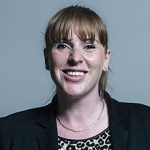
    Angela Rayner – 2023 Speech on Security of Government Devices and TikTok

    The speech made by Angela Rayner, the Deputy Leader of the Labour Party, in the House of Commons on 16 March 2023.

    I welcome the statement and thank the Minister for advance sight of it. But once again the Government are late to the game. In August last year, Parliament closed its TikTok account. As the Minister has just said, in December the US banned TikTok from official devices, and nearly a month ago the European Commission followed suit. On 28 February, however, the Secretary of State for Science, Innovation and Technology said that the app was a matter of “personal choice.” She said, “We have no evidence”, and that a ban would be “very forthright”.

    What has changed? Two weeks, two Ministers, two completely different policies later, and it is the same pattern over and over again: a Government behind the curve, with sticking-plaster solutions, forced to lurch into a U-turn at the last minute. We need a strong, clear- eyed and consistent approach—one that ensures that we can protect our national security and that puts us in a strong position to engage with states such as China where it is in our interest to do so, in areas such as climate change and trade.

    The Minister announced a restriction on official devices to a pre-approved list of third-party apps and a ban on TikTok. How does the ban on TikTok differ from it simply not being on that approved list? Why is the ban limited only to central Government Departments? How will it apply, for example, to devolved Governments or Parliaments? Can the Ministry of Defence, for example, keep its account?

    The Minister said that the TikTok ban is based on

    “a specific risk with Government devices”.

    Can he go a little further on that? What exactly is the specific risk and why does it apply only to official devices in central Government? Will the Minister tell us what advice has been issued to other Ministers, including those who already actively use TikTok? What criteria will be used for the list of pre-approved apps that he has announced today? Which apps will be included and which will not? On what grounds?

    Today’s announcement feels like closing the stable door after the horse has bolted. If the Minister was serious about overhauling security at the heart of Government, why was the review limited only to the use of third-party apps on Government devices? Why not carry out a root-and-branch review of the technology used by his colleagues? The reality is that this Government’s track record of upholding security at the heart of Government is appalling, from their chronic use of private emails to the hacking of the phone of the former Foreign Secretary, the right hon. Member for South West Norfolk (Elizabeth Truss). Will the Minister say whether there were any discussions during this process about Ministers’ use of private messaging, such as WhatsApp, and email? Will he confirm that he will make it a priority to make good on promises to update the guidance on the use of private emails by Ministers, which is now a decade old?

    In the Procurement Bill’s Second Reading debate, the Chair of the Foreign Affairs Committee, the hon. Member for Rutland and Melton (Alicia Kearns), described the Government’s approach to tracking down security threats in our supply chain as “relentless whack-a-mole”. She said we needed a more systematic and proactive approach to identifying risks in the UK’s supply chain, especially when it comes to goods and services bought with taxpayers’ money. I agree with her; does the Minister?

    If the Minister is truly serious about national security at the heart of Government, why did he vote against Labour’s amendments to the Procurement Bill that would have mandated that suppliers that pose a risk to the UK’s national security must be excluded from being granted taxpayers’ money? The Government have a duty to uphold the highest standards of security at the heart of Government. Today’s announcement is nothing but a temporary fix—a sticking plaster—while gaping holes remain in our national security. We must fix this problem; is the Minister committed to doing so?

    Oliver Dowden

    The right hon. Lady raised a large number of issues; I will try to address as many as I can and am happy to write to her on any that I do not cover.

    First, the Government’s overall approach to national security is set out in the integrated review refresh that was published at the beginning of the week. In respect of China specifically, it sets out a three-pronged approach of protect, align and engage; this element of our activity clearly relates to protect.

    The right hon. Lady asked why the decision has taken some time. We have always taken an evidence-based approach. I thought it was appropriate that we gather sufficient evidence and understand the nature of the problem. I did that in November. It is an appropriate way to deal with national security challenges and I will continue to take it.

    The right hon. Lady asked about the limited list. We already have an approved list of apps but it does not apply to every Government Department. We are now ensuring that it applies across all Government Departments. I do not believe there is a risk extant at the moment; this is about ensuring that we continue to guard against risk on an ongoing basis.

    The ban applies not just to central Government Departments but to all Government agencies, including arm’s length bodies. On the devolved Administrations, I have written to the leaders in Scotland and Wales and the appropriate officials in Northern Ireland.

    In respect of Ministers, they receive extensive advice when they take office and are expected to follow that with all the devices they use. In respect of private messaging, we are updating the guidance on non-corporate communications to ensure that we have a consistent approach across Government, but, again, I do not believe that we have serious concerns on that.

    Finally, on the right hon. Lady’s slightly overblown rhetorical point about Government taking action, I say gently to her that I have always been willing to take decisive action to protect national security. It is exactly the approach that I took in respect of banning Huawei from our 5G network before many of our allies did so. It is exactly the approach that I took within weeks of taking office in respect of Government surveillance devices on sensitive sites with Chinese technology on them. However, we must proceed with an evidence-based and proportionate approach. That is what will command public confidence and that is the approach that I am taking today.

  • Oliver Dowden – 2023 Statement on Security of Government Devices and TikTok

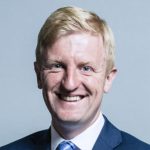
    Oliver Dowden – 2023 Statement on Security of Government Devices and TikTok

    The statement made by Oliver Dowden, the Chancellor of the Duchy of Lancaster, in the House of Commons on 16 March 2023.

    As this week’s integrated review refresh demonstrated, the Government are strongly committed to bolstering our national security to meet the challenges of both today and tomorrow. We take the security of Government devices very seriously, and we are constantly working to ensure that those devices remain as safe and secure as possible. As part of that effort, I recently commissioned a review by our cyber-security experts to assess the risks posed by certain third-party apps on Government devices and in particular the installation and use of TikTok. I know that there has been a lot of interest in this issue in the House, so I wanted to take this opportunity to update Members.

    The review has concluded and it is clear that there could be a risk around how sensitive Government data is accessed and used by certain platforms. As many colleagues will know, social media apps collect and store huge amounts of user data, including contacts, user content and geolocation data. On Government devices, that data can be sensitive, and so today we are strengthening the security of those devices in two key respects.

    First, we are moving to a system where Government devices will only be able to access third-party apps that are on a pre-approved list. This system is already in place across many Departments, and now it will be the rule across Government. Secondly, we are also going to ban the use of TikTok on Government devices. We will do so with immediate effect. This is a precautionary move—we know that there is already limited use of TikTok across Government—but it is also good cyber hygiene.

    Given the particular risk around Government devices that may contain sensitive information, it is both prudent and proportionate to restrict the use of certain apps, particularly when it comes to apps where a large amount of data can be stored and accessed. This ban applies to Government corporate devices within ministerial and non-ministerial departments, but it will not extend to personal devices for Government employees or Ministers or the general public. That is because, as I have outlined, this is a proportionate move based on a specific risk with Government devices. However, as is always the case, we advise individuals to practise caution online and to consider each social media platform’s data policies before downloading and using it. Of course, it is the case that Ministers receive regular security briefings and advice on protecting data on their personal devices and on mitigating cyber threats.

    We will also be putting in place specific, very limited exemptions for the use of TikTok on Government devices where it is required for operational reasons. Those exemptions will only be granted by security teams on a case-by-case basis, with ministerial clearance provided as appropriate. Overall, this approach aligns with action taken by allies, including the United States, Canada and the EU.

    Our security must always come first. Today we are strengthening that security in a prudent and proportionate way, and I commend this statement to the House.

  • Lucy Powell – 2023 Speech on BBC and the Government Role in Impartiality

    Lucy Powell – 2023 Speech on BBC and the Government Role in Impartiality

    The speech made by Lucy Powell, the Shadow Culture Secretary, in the House of Commons on 14 March 2023.

    This week’s whole sorry saga has raised serious questions about the Government’s role in upholding BBC impartiality. They have their fingerprints all over it. It is no wonder the Secretary of State has gone AWOL. First, it exposed how susceptible the BBC leadership is to Government pressure. After days of holding off, the BBC capitulated to a Tory cancel campaign, orchestrated by Ministers and Conservative Members with their friends in the press, and took Mr Lineker off air. These are the same voices, by the way, who claim to be the champions of free speech. What changed? Can the Minister tell us what contact she or any member of the Government had with any BBC executives or board members during this time? What does she think it looks like to the outside world when a much-loved sports presenter is taken off air for tweeting something that the Government do not like? It sounds more like Putin’s Russia to me.

    Secondly, the Government have seriously damaged the BBC’s reputation by appointing a chair who is embroiled in the personal finances of the Prime Minister who gave him the job. No doubt the Minister will tell the House that that is under investigation, but it is an investigation that I instigated, not her. Her boss is the only person with any power to fire the BBC chair. Does she agree that he is now completely unable to carry out his role of providing confidence, credibility and independence? What is she doing to put this right?

    Finally, the Government have pursued a deliberate strategy of undermining the BBC in order to keep it over a barrel to get themselves more favourable coverage. That was on full display overnight and I am sure it will be on full display here today. They threaten the licence fee, cut the BBC’s funding and undermine its credibility, all in pursuit of keeping their foot on the BBC’s throat. Will the Minister today finally call off the dogs behind her and stand up for the BBC’s independence from the Government?

    Julia Lopez

    I thank the hon. Lady for her spirited questions. I have watched her valiant attempts to kick this political football across the weekend and into this week. As Politico notes, we are now on Lineker day 8. She shouts about a political campaign to undermine the BBC that is akin to Putin’s Russia. She professes that she is the shield trying to protect the BBC from political interference, but all the while demanding that the PM gets more stuck in and telling the BBC that it is in the wrong. Forgive the bewildered licence fee payer for wondering why W1A and SW1A are still focusing on this individual case—one that the Government have consistently made clear is for the BBC to resolve internally, which we note it has now done.

    As the hon. Lady knows full well from the Secretary of State’s reply to her correspondence over the weekend, our Department regularly engages with the BBC on a range of issues. At no time have any of us as Ministers sought to influence the BBC’s decision on this case in any way. The events of last week are rightly a matter for the corporation’s determination, and we as a Government do not seek to interfere. I have not added, and do not intend to add, my views on this specific case in response to this urgent question. In response to assertions yesterday that he bowed to political pressure from the Government, the BBC director-general, Tim Davie, said:

    “That is a convenient narrative. It’s not true.”

    The hon. Lady has sought to make the BBC chairman, Richard Sharp, the ultimate arbiter of such matters. In fact, the BBC charter is clear that it is the director- general, as editor-in-chief of the BBC, not the chairman of the board, who has final responsibility for individual decisions on the BBC’s editorial matters. On the issue of Mr Sharp, she will be aware that previous Governments have appointed people to senior positions in the BBC who have declared political activity. That is not prohibited under the rules. Once appointed, however, all board members are required to adhere to the code of conduct for public body board members. She will know that there are separate independent inquiries into Mr Sharp’s appointment process, and they must be left to conclude. When it comes to the timetable of that, the Government are also awaiting the outcome, and it is right for the Office of the Commissioner for Public Appointments and the investigator that it has appointed to determine the timetable for that process, not the Government.

    The hon. Lady said that the Tory Government had long wanted to undermine the BBC. Not true. This is an organisation with a near-guaranteed licence fee income of £3.8 billion per annum until the next charter review in 2027. We back the BBC. We want it to survive as a thriving cultural, creative and democratic engine for many years to come. The Foreign, Commonwealth and Development Office announced just this week that it is giving an extra £20 million to support the BBC World Service over two years, building on the additional support that we gave it for its Ukraine and Russia reporting operations.

    The social compact that underpins the BBC’s funding arrangement depends fundamentally on the broadcaster maintaining the trust and confidence of viewers. The BBC’s currency in a world of misinformation and “shout the loudest” public discourse is truth, impartiality, accuracy and editorial integrity. It remains our priority as a Government to work with the regulator, Ofcom, to deliver an effective and proportionate framework that holds the BBC to account in its duties, including to impartiality. In May 2020 we launched the mid-term review, a key focus of which was impartiality, and we will assess Ofcom’s regulation in ensuring that the BBC meets the high standards that licence fee payers expect of it.

  • Julia Lopez – 2023 Statement on BBC and the Government Role in Impartiality

    Julia Lopez – 2023 Statement on BBC and the Government Role in Impartiality

    The statement made by Julia Lopez, the Minister of State at the Department for Culture, Media and Sport on 14 March 2023.

    The BBC is a world-class broadcaster, a creative engine and a cultural institution producing some of the best television and radio in the world. The impartiality of the BBC, as a publicly funded broadcaster, goes to the heart of the contract between the corporation and all the licence fee payers whom it serves. That is why the royal charter, which is the constitutional basis of the BBC—along with the underpinning framework agreement—enshrines the need for the BBC to be impartial in both its mission and its public purposes.

    The BBC’s mission and public purposes, as set out in the charter, require it to act in the public interest, serving all audiences through the provision of impartial, high-quality and distinctive output and services which inform, educate and entertain, helping people to understand and engage with the world around them. The BBC’s first public purpose is to provide duly accurate and impartial news and information to help people to understand and engage with the world around them. It must also represent and serve the diverse communities of all the United Kingdom’s nations and regions. Both the charter and the framework agreement also explicitly guarantee the independence of the BBC. As such, the Government have no say in the BBC’s operational or editorial day-to-day decisions or staffing matters, including as they relate to the application of the requirement for impartiality.

    The Government stand fully behind the requirements of the royal charter. We are clear that the BBC must truly reflect the nation and guard its impartiality in all of its output. The BBC’s director-general has repeatedly said that the corporation’s impartiality is a priority for him and must be protected. We welcome that the BBC accepted the findings and recommendations of the Serota review and is committed to reform through its 10-point impartiality and editorial standards action plan. It is Ofcom, established by the Government as the independent regulator of the BBC in 2017, that is responsible for holding broadcasters including the BBC to account on the impartiality of their news and current affairs coverage, against the broadcasting code under the Communications Act 2003.

    In November last year, Ofcom published its annual review of the BBC. It found the BBC’s impartiality to be a key area of concern among audiences and one where they consistently rate BBC news less favourably for trust and accuracy. Ofcom stated that addressing audience perceptions on this matter is challenging, and the regulator recognises that this is a complex area. It will continue to monitor the performance of the BBC and has urged the BBC not to lose momentum in its efforts to address this issue. It remains a priority for the Government to ensure that Ofcom delivers an effective and proportionate regulatory framework that holds the BBC to account while maintaining its creative freedom and operational independence.

    In May 2022, the Government launched the mid-term review. This is a new mechanism established by the current charter, focusing on the governance and regulatory arrangements for the BBC, given the reforms that were introduced when the charter was granted. One area of focus in the MTR is impartiality, and it will assess the efficacy of the governance mechanisms and Ofcom’s regulation in ensuring that the BBC meets the high standards that licence fee payers expect of it. It is also an important milestone in our road map for BBC reform, and work is well under way. The charter specifies that the review must take place between 2022 and 2024, and we will publish our findings and conclusions in due course.

    The BBC is respected globally. It reaches hundreds of millions of people across the world every week. No other country in the world has anything quite like it. We have been clear that the BBC must place a firm emphasis on accuracy, impartiality and diversity of opinion. It can never be the BBC’s role to judge, or appear to judge, the diverse values of the people from across the country it serves. In the era of fake news, public service broadcasting and a free press have never been more important, and the BBC has been and should be a beacon that sets standards to which others can aspire.

  • Lucy Frazer – 2023 Speech at the Gambling with Lives Annual Parliamentary Forum

    Lucy Frazer – 2023 Speech at the Gambling with Lives Annual Parliamentary Forum

    The speech made by Lucy Frazer, the Secretary of State for Culture, Media and Sport, on 1 March 2023.

    Culture Secretary speaks ahead of the publication of the gambling white paper.

    Good afternoon everyone,

    And I wanted to start by thanking Liz and Charles for inviting me to speak at this event and thank you very much for your very powerful speech.

    You have both been, as many of you have been in this room, tireless and devoted champions in this area, and I know Gambling with Lives does incredibly valuable work to support families in this room but also who are across the country.

    Shortly after I was appointed I read your response to the call for evidence and I was struck by the harrowing stories of people like Robert and Fred, whose lives were ruined by gambling, and as a mother I can’t begin to imagine the grief and sense of loss of all your families.

    And though I’ve only been Culture Secretary for three weeks, meeting all of you and hearing your experiences was one of the first things I wanted to do in this role.

    Because it’s so important to hear directly from families who have been touched by these issues, and I really value your input when looking at gambling reform.

    So thank you, Liz, thank you Charles, thank you everybody – and I’m really pleased that your hard work was honoured in the New Year Honours List.

    I have also read the House of Lords report on Gambling Harm Time for Action and I recently met with the lived experience advisory panel. I heard some really moving stories and I am struck by how diverse their experiences were.

    One person had lost over £1 million. Another never bet more than £1 on a spin.

    One young man had started gambling at the age of eleven. Many tried to self exclude but found the enticements drawing them back in just too difficult.

    I also wanted to say that I know it must be very frustrating to have yet another ministerial team leading the government’s work on gambling, and I know that you might be worried about further delays to the white paper.

    So let me reassure you that White Paper is an absolute priority for me, and for the Prime minister, and we are committed to publishing it soon.

    But I do want to give these issues justice and take some time to make sure that I do meet with you and others to really understand the issues. I am particularly conscious of the vulnerability of young people.

    And of course you know very well, gambling doesn’t just destroy the lives of the gamblers themselves, it has a devastating impact on their loved ones.

    The Review of the Gambling Act is an opportunity to make the changes we need, and to make sure we have the right protections in place for the digital age.

    Nearly every area of gambling policy is in scope, and I want to make sure your views are heard and reflected.

    I am also conscious there are a variety of views on the way forward.

    Of course, the White Paper when it is published will not be the last word on reform. I’m really keen to keep talking to you all, and to make sure we understand the drivers of gambling harm and how we can protect the public.

    So thank you so much for everything you’ve done so far.

    And for everything I’m sure you’ll continue to do in the months and years to come.