Category: Criminal Justice

  • Jonathan Gullis – 2022 Speech on the Unduly Lenient Sentence Scheme

    Jonathan Gullis – 2022 Speech on the Unduly Lenient Sentence Scheme

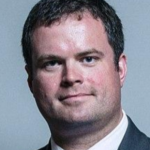
    The speech made by Jonathan Gullis, the Conservative MP for Stoke-on-Trent North, in the House of Commons on 23 November 2022.

    On 19 June 2021, the Stoke-on-Trent North, Kidsgrove and Talke community was rocked when it learned of the tragic death of six-year-old Sharlotte-Sky. Sharlotte was killed when John Owen hit her with his car on Endon Road in Norton Green on that fateful day. John Owen was twice over the drink-drive limit, had a series of drugs in his system, was using a mobile phone, had no seatbelt on, and was speeding. Sharlotte was on the pavement with her father, who was also struck. She was on the way to get some sweets for a girls’ night with her mother. This unforgivable and selfish act has taken away a precious young life, left a family broken and scarred a community. It was an event that shocked the entire city of Stoke-on-Trent, with hundreds of people lining the streets for Sharlotte’s funeral in an outpouring of profound grief.

    Since that horrific night, I have been working with Sharlotte’s brave and inspiring mother, Claire Reynolds—she is in the Public Gallery alongside Sharlotte’s grandfather —The Sentinel and her friends to get the justice they rightfully deserve. Before I speak about why I join Claire and the Stoke-on-Trent community in wanting Mr Owen’s sentence increased so that justice can rightfully be served, I want to take a moment to promote the idea of Sharlotte’s law.

    Mr Owen caused much distress by prolonging the investigation into Sharlotte’s death, to exploit, in my opinion, loopholes in our justice system. Mr Owen was in a coma when the investigation began, and the law brought about significant problems. Legally, blood samples can be taken without a suspect’s consent yet not subject to a test until consent is given. Therefore, in such situations, the investigation is delayed until consent is received. The current law addressing that is section 7A of the Road Traffic Act 1988. Subsection (4) outlines three criteria that must be met to test a blood sample, one of which is the person providing their consent.

    I understand from subsection (6) that

    “A person who…fails to give his permission for a laboratory test of a specimen of blood”

    without a reasonable excuse is, under section 7A,

    “guilty of an offence.”

    It therefore seems that consent is simply a formality. Effectively, anything other than providing permission would constitute an offence. The law protracted the investigation into Mr Owen and caused knock-on delays in moving the case forward. Claire has been so brave, sharing her struggles with not just me but the local press, too. She has been battling her own mental health problems that have no doubt been exacerbated by the delays and issues brought about by this law.

    It seems simple to me. If we are to free up police time and resources, testing blood samples should be happening regardless of consent, in order to get answers. If a suspect has nothing to fear, why would they object to testing? Claire is adamant and defiant that Sharlotte’s death and the torment her family went through will not be for nothing. She wants to see the consent law scrapped where loss of life has occurred due to a collision with a motor vehicle.

    Jim Shannon (Strangford) (DUP)

    I commend the hon. Gentleman for his assiduousness in looking after his constituents. He has done that since he first came to this place and he continues to do so. I fully and wholeheartedly support what he puts forward. When it comes to justice and victims, the victims should be the priority. Those who are guilty, even at an early stage, of not giving a blood sample should be advised that there is no other option—they must give it. Does he agree?

    Jonathan Gullis

    I thank my hon. Friend for his intervention. I could not agree with him more and I thank him for his kind words. I have rehearsed this speech a few times, hoping not to get teary. It is quite difficult. He is right that people should not fear the law if they have not done anything wrong. A six-year-old should not have lost her life. Worst of all, she should not have had her killer sentenced to only two and a half years in prison. That is not justice.

    I have pursued this disparity in the law with parliamentary colleagues and raised it in the House multiple times. I have met officials and made a submission to the Department for Transport’s call for evidence on drug driving. I am seeking support from Ministers to implement Sharlotte’s law. Obviously, I will cheekily use this opportunity to see if the Solicitor General, my hon. Friend the Member for Mid Dorset and North Poole (Michael Tomlinson), will add his name to that call.

    The main purpose for holding this debate today is to consider the unduly lenient sentence scheme. On 4 October 2022, John Owen was sentenced to six years and four months in prison, with the most shocking revelation being that Mr Owen would only spend two and a half years behind bars. Considering that Judge Glenn told Mr Owen that he was

    “an accident waiting to happen”,

    that rubs salt into the wounds of Sharlotte’s family. The whole north Staffordshire community, myself and most importantly Claire and Sharlotte’s family are rightly outraged at this insultingly lenient sentence, which means that John Owen will have served less time than the young life he has taken.

    With Claire’s support, I wrote to the Attorney General, who at the time was my right hon. and learned Friend the Member for Northampton North (Michael Ellis), to seek to have the sentence challenged as part of the unduly lenient sentence scheme. Regrettably, the initial response I received from the Solicitor General failed to answer some of the questions I raised about the insulting sentencing of John Owen. I therefore re-wrote to the now Attorney General, my right hon. Friend the Member for Banbury (Victoria Prentis), seeking clarification on several points.

    On researching sentences for deaths by dangerous driving, I uncovered that there are categories that judges use as a guideline to determine for how long an offender is sentenced. While Judge Glenn correctly placed Mr Owen in category 1, the highest and most serious category, it is incredibly disappointing that the sentence passed is at the lower end of the spectrum. Category 1 is anywhere between eight and 14 years. Judge Glenn sentenced Sharlotte’s killer to nine and a half years, before giving a third off to Mr Owen, who had, by some cold legal definition, given a guilty plea at the “earliest opportunity”. In reality, he had exhausted scapegoating the idea he was unfit to stand trial.

    After my meeting with the Solicitor General, it became clearer that the sentence could have been higher if the following “aggravating factors” had been involved: multiple deaths; if the vehicle was stolen; if the driver had a previous history of bad driving; or if the driver fled the scene. In Sharlotte’s case, none of those applies. However, if John Owen having been drinking and on drugs does not act as a severe aggravating factor, and display a complete disregard for others’ lives and a willingness selfishly to endanger life such that a six-year-old girl was killed as she walked along the pavement in her home village of Norton Green, victims like Claire will continue to be failed by our justice system.

    It is well documented from John Owen’s friends that he was drinking earlier on in the day and chose to get in the car, with complete contempt for life. That sheer selfishness should be an aggravating factor. It demonstrates that, despite his friends’ protests, he neglected the fact that he was not fit to drive and made an active choice to get behind the wheel. The devastating fact is that he simply did not care and then went on to kill a beautiful young girl.

    Jim Shannon

    It is fairly obvious to everyone in the House that this is a very difficult experience for the hon. Gentleman and for the family, who are in the Gallery. I suspect that he is seeking a change to ensure that the law is sufficient when it comes to a blood test. He referred to aggravation and how the person disregarded the family and their feelings. We in this House unite with our friend and colleague to fully support him and what he proposes. In particular, on behalf of the family, who are here, I salute him—well done.

    Jonathan Gullis

    I am very grateful to my hon. Friend. The impact of Sharlotte’s death is impossible to overestimate. I have already explained the deeply saddening impact that it has had on Sharlotte’s immediate family. However, it has also had a huge effect on the local community.

    The killing of an innocent child in such tragic circumstances comes with a set of exceptional impacts on the children around Sharlotte, which are unlikely to be felt in cases not involving the death of a child. Sharlotte’s classmates and children in the local community have been left with lasting effects, to the point where some have required specialist counselling and have been left scared to walk at the sides of busy roads. Sharlotte’s death will stay with these children long into adulthood, and I am staggered that that would not also have been considered as part of the sentencing.

    In addition, I raised the legal ambiguities surrounding John Owen’s guilty plea. Mr Owen pleaded guilty long after he killed Sharlotte, in May 2022, when the report came back and demonstrated overwhelming evidence against him, including that he was under the influence of alcohol and drugs. Mr Owen did not plead guilty until that report was produced; he could have done that far earlier. Legally, he pleaded guilty at the “earliest possible” moment, but given the lengthy delay and ample opportunity, I do not believe that that should entitle him to the whole one-third reduction in his sentence. I feel the law should consider that with more nuance. It is totally different to plead guilty as soon as possible compared with as soon as “legally possible”.

    By definition, the unduly lenient sentence scheme allows the Attorney General to refer a sentence to the Court of Appeal if it is too low. However, it appears that the scheme is practically useless if a case such as this one cannot be at least reviewed. The parameters to get a case reviewed by the Court of Appeal must be extraordinary. That, for me, brings into question the relevance of the scheme. I must ask: what is the point of it, considering that, as a Member of Parliament, I cannot help to get this truly harrowing miscarriage of justice at least appealed? Claire and I were no less than astonished by the Attorney General’s response, which ignored all my further questions. It feels as though the legal system did not care that a mother and a whole community felt completely let down by the law that is supposed to protect them.

    To touch on the local actions following Sharlotte’s death, those should serve as an example to the Attorney General about how things must be adapted in response to such an emotive case. Local ward councillors for the area, such as Councillor Dave Evans and Councillor Carl Edwards, have been pushing for traffic-calming measures on Endon Road for many years. It is tragic that it has taken the death of a six-year-old girl for there to be a signalised pedestrian crossing, intermittent speed humps and more markings, but it shows a fundamental recognition that changes were needed following this tragedy—a concept that I advise the Attorney General and the Government to think about. Councillors are also pushing for a weight limit on the road to stop the HGV rat run; I hope that Staffordshire County Council and Stoke-on-Trent City Council can work together to agree on that limit as soon as possible. I would like personally to thank Councillor Carl Edwards, Councillor Dave Evans, Norton Green Residents Association and the local community for their hard work in pushing for road safety in the area.

    I am grateful for the Solicitor General agreeing to meet me, following our correspondence, and pleased that our meeting was constructive. During the meeting, he and I discussed gross errors. In legal terms, a gross error is when a judge incorrectly misapplies the law, for example by placing a defendant in the wrong category. Understandably, the Solicitor General argued that the case could not be referred to the Court of Appeal because no gross error had been made. That effectively means that if a judge puts a defendant in the right category, there is no way to argue that the sentence is too lenient.

    I believe that that is far too simplistic. It fails to consider that a category 1 sentence can range from eight to 14 years—a substantial difference that would have had a huge impact on the perception of the case. If, for example, the case had been referred to the Court of Appeal and John Owen’s sentence had been extended to the maximum 14 years, it would be perceived to be far more rigorous. However, because the gross error clause only allows cases in the wrong category to be referred, we were unable to bring Sharlotte’s killer to the real justice that he deserves.

    It was a huge disappointment to hear that, especially considering that the Solicitor General and I both voted for the Police, Crime, Sentencing and Courts Act 2022, which takes a more robust approach to causing death by dangerous driving—indeed, it extends the maximum sentence way above 14 years. In my view, this sentence undermines the Act’s more rigorous stance on causing death by dangerous driving. Although I accept that that cannot be retrospectively applied to Mr Owen, it does not deter those who might think it sensible to get in their car under the influence of drugs and/or alcohol.

    The experience also raises obvious questions about the application of the new law by judges. If Judge Glenn arrived at this insulting sentence within the current parameters, I am not at all confident that a similar sentence would not be issued even under the changes that we have made in this House. I was hugely grateful to the Lord Chancellor for agreeing at Justice questions yesterday to meet Claire and me to discuss sentencing guidelines and try to ensure no other family feels let down by the justice system again.

    Ultimately, it is without question that the difficulties that Claire has had in bringing the killer of her six-year-old daughter to justice are wholly unacceptable. There are significant nuances in the law that allowed Mr Owen to prolong the case significantly, yet unnecessarily. That meant that the case dragged on for too long, which has had devastating consequences for Claire and her family. More importantly, it is still my view and that of the Stoke-on-Trent community that John Owen’s sentence is shockingly lenient, considering what he did. The law clearly works in favour of the killer, not the victim—that is the message that I am hearing in the streets of Stoke-on-Trent North, Kidsgrove and Talke. As I said, John Owen is likely to spend only two and a half years in prison. That is simply nowhere near enough time behind bars, considering the consequences of his selfishness.

    For all the nuanced, sophisticated legal arguments that the Solicitor General is forced to put forward, it is impossible to ignore the real consequences of what John Owen did on that day in June last year. After consuming far too much alcohol to drive, along with cocaine, he recklessly and selfishly decided that the law did not apply to him and got in his car. By taking that demonstrably thoughtless decision, he killed an innocent six-year-old girl. In my mind, that is one of the worst crimes imaginable.

    Over the past year, Claire’s courage in the face of unimaginable adversity has been humbling. She will not stop until the man who killed her daughter is punished properly for the abhorrent crime that he committed. I will join her in that fight, on every step of the way.

  • Bob Blackman – 2022 Parliamentary Question on Knife Crime

    Bob Blackman – 2022 Parliamentary Question on Knife Crime

    The parliamentary question asked by Bob Blackman, the Conservative MP for Harrow East, in the House of Commons on 14 November 2022.

    Bob Blackman (Harrow East) (Con)

    What steps she is taking to tackle knife crime and serious violence.

    The Minister for Crime, Policing and Fire (Chris Philp)

    The Government have taken a dual approach to tackling serious violence, combining tough enforcement with programmes steering people away from crime. Since 2019, we have invested £170 million in the areas most affected by violence to boost the police response, and we have invested a further £170 million in developing violence reduction units to tackle the root causes of violent crime. These programmes together have been assessed as preventing 49,000 violent offences in their first two years.

    Bob Blackman

    Harrow is, generally speaking, a safe borough in which to live, but we have seen an 18% increase in knife crime this year. There were 41 major incidents last month, and only last week there was a major incident in which three people were stabbed and put into hospital. Does my right hon. Friend agree that what is needed is not just extra police officers, but apprehending people who carry knives, punishing them by taking them to court and imprisoning them so they cannot cause damage to other people?

    Chris Philp

    I agree with my hon. Friend that a robust police response is essential, as is the courts making robust use of the two-strikes rule requiring a mandatory prison sentence on a second conviction for possessing a bladed article. Those are very important, and I am happy to look with him at how they are working and whether they need to be pushed a bit further. I am sorry to hear about the knife crime statistics in Harrow. Nationwide, knife crime, or knife-enabled crime, is down about 9% compared with pre-pandemic levels. If my hon. Friend feels that more needs to be done in his area, I would be happy to discuss it with him.

  • Chris Philp – 2022 Comments on the Impact of Policing the Just Stop Oil Protests

    Chris Philp – 2022 Comments on the Impact of Policing the Just Stop Oil Protests

    The comments made by Chris Philp, the Minister for Crime, Policing and Fire, in the House of Commons on 14 November 2022.

    I share the hon. Gentleman’s concern about the level of abstraction owing to the unjustified Just Stop Oil protests. In October and early November, about 11,000 Metropolitan police officer shifts were lost as a result of having to police those outrageous and unnecessary protests. That is a matter of concern, and that is why it is so important that we see an end to these protests as soon as possible.

  • Helen Hayes – 2022 Parliamentary Question on PCSOs

    Helen Hayes – 2022 Parliamentary Question on PCSOs

    The parliamentary question asked by Helen Hayes, the Labour MP for Dulwich and West Norwood, in the House of Commons on 14 November 2022.

    What assessment her Department has made of the effectiveness of police community support officers in tackling neighbourhood crime.

    The Minister for Crime, Policing and Fire (Chris Philp)

    The Government are determined to reduce neighbourhood crime, and I am pleased to report that, since 2019, neighbourhood crime has reduced by about 20%. It is up to chief constables to decide on the level of PCSOs that they choose to recruit, but as the House will be aware, we are in the process of hiring an extra 20,000 police officers, after which we will have a record number of uniformed officers serving.

    Helen Hayes

    Police community support officers have a vital role to play in tackling neighbourhood crime and building trust and confidence in policing at a community level, because they are often the most visible officers to our communities. Will the Minister therefore confirm how many fewer officers are assigned to neighbourhood roles in England and Wales today compared with 2010? How long does he expect it to take until police officer and staff numbers in neighbourhood roles reach the same number again?

    Chris Philp

    I can confirm that neighbourhood crime is about 20% lower than in 2019, as I said a moment ago. I can confirm that after the 20,000 officers have been recruited in April next year, we will have a record number of uniformed officers serving in this country. I can also confirm that the Metropolitan police area, which includes the hon. Lady’s constituency, the shadow Policing Minister’s constituency and my own, already has a record number of uniformed officers.

  • Jonathan Edwards – 2022 Parliamentary Question on Pay for New Police Officers

    Jonathan Edwards – 2022 Parliamentary Question on Pay for New Police Officers

    The parliamentary question asked by Jonathan Edwards, the Plaid Cymru MP for Carmarthen East and Dinefwr, in the House of Commons on 14 November 2022.

    What discussions she has had with (a) Cabinet colleagues and (b) relevant stakeholders on the adequacy of entry pay rates for new police officers.

    The Secretary of State for the Home Department (Suella Braverman)

    The independent Police Remuneration Review Body makes recommendations to the Government on the pay and allowances for police officers. In July, we announced that we had accepted the review body’s recommendation to award a consolidated increase of £1,900 at all pay points with effect from 1 September, targeted at the lowest-paid to provide an uplift of up to 8.8%.

    Jonathan Edwards

    Police officers inform me that they have faced a 20% real-terms pay cut over the past decade, and there seems to be a particular problem with new recruits. My local federation tells me that some of its officers are using food banks and that a potential new recruit decided to continue his career with a fast food chain because he had been offered a pay rise. Does the Secretary of State admit that pay and remuneration for police officers—professionals who put their lives in danger on our behalf—is a real problem?

    Suella Braverman

    The Government recognise that increases in the cost of living are having a significant impact on the lower-paid. In that context, and after careful consideration, we chose to accept in full the review body’s recommendations to award the consolidated increases that I mentioned. We want to ensure that there is support for our officers, who play a vital role in this country.

  • Iain Stewart – 2022 Parliamentary Question on Operation Deter

    Iain Stewart – 2022 Parliamentary Question on Operation Deter

    The parliamentary question asked by Iain Stewart, the Conservative MP for Milton Keynes South, in the House of Commons on 14 November 2022.

    What recent discussions she has had with the Chief Constable of Thames Valley Police on the effectiveness of Operation Deter.

    The Secretary of State for the Home Department (Suella Braverman)

    Before I answer, on behalf of the UK may I pass on my thoughts and prayers to all those affected by the terrible attack in Istanbul yesterday? I am sure that the whole House will join me, on behalf of the UK Government, in saying that the UK stands with Turkey in the fight against terrorism. We send our condolences to all those affected.

    Last month, I visited Thames Valley police to meet the chief constable, force leaders and student officers. A number of topics were discussed, including the delivery of Operation Deter. I am always keen to discuss interventions that the chief constable and local partners believe to be effective in reducing knife crime.

    Iain Stewart

    The police and crime commissioner for Thames Valley, Matthew Barber, introduced Operation Deter as a zero-tolerance approach to knife crime. It started in Milton Keynes and is now being rolled out in the force in other areas. It is already delivering some very encouraging signs in reducing knife crime. Will my right hon. Friend review it further and encourage other forces to replicate it in their areas?

    Suella Braverman

    I have met the excellent police and crime commissioner, to whom my hon. Friend refers, on two occasions now—perhaps more—and I really welcome all initiatives that show measurable impacts against violent crime. I am determined that interventions that are proven to work are delivered across our forces. I am also a big supporter of violence reduction units. I am very keen to look at the verified results of Operation Deter, alongside all innovative approaches. I am clear that all options should be explored and that we should support operations that work.

  • Jamie Greene – 2022 Statement on Arson Attack on Edinburgh War Memorial

    Jamie Greene – 2022 Statement on Arson Attack on Edinburgh War Memorial

    The statement made by Jamie Greene, the Conservative MSP for West Scotland, on Twitter on 14 November 2022.

    This is a disgusting and disrespectful attack on the war memorial at Edinburgh City Chambers – those responsible are the lowest of the low.

    If you have any information, please get in touch with the police on 101.

  • Nicola Sturgeon – 2022 Statement on Arson Attack on Edinburgh War Memorial

    Nicola Sturgeon – 2022 Statement on Arson Attack on Edinburgh War Memorial

    The statement made by Nicola Sturgeon, the Scottish First Minister, on Twitter on 14 November 2022.

    Utterly beyond comprehension that someone would vandalise a war memorial on Remembrance Day – sickening and disgraceful. I hope those responsible are identified and brought to justice.

  • Roz McCall – 2022 Statement on Arson Attack on Edinburgh War Memorial

    Roz McCall – 2022 Statement on Arson Attack on Edinburgh War Memorial

    The statement made by Roz McCall, the Conservative MSP for Mid Scotland and Fife, on Twitter on 14 November 2022.

    This is appalling and vile. I hope that the culprits are caught and made to face up to the disrespect they have shown to everyone who has served or lost a loved one due to conflict.

  • Meghan Gallacher – 2022 Statement on Arson Attack on Edinburgh War Memorial

    Meghan Gallacher – 2022 Statement on Arson Attack on Edinburgh War Memorial

    The statement made by Meghan Gallacher, the Deputy Leader of Scottish Conservatives, on Twitter on 14 November 2022.

    Disrespectful. Disgusting. Vile. Just a day after Remembrance Services took place and our country fell silent, Edinburgh City Chambers war memorial was set on fire. This is one of the many reasons I am bringing a Bill forward to better protect war memorials.