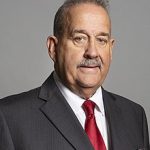
Category: Criminal Justice

  • Kate Osborne – 2023 Parliamentary Question on the Backlog of Criminal Court Cases

    Kate Osborne – 2023 Parliamentary Question on the Backlog of Criminal Court Cases

    The parliamentary question asked by Kate Osborne, the Labour MP for Jarrow, in the House of Commons on 10 January 2023.

    Kate Osborne (Jarrow) (Lab)

    What recent estimate he has made of the size of the backlog of criminal court cases in Jarrow constituency.

    Jess Phillips (Birmingham, Yardley) (Lab)

    What recent estimate he has made of the size of the backlog of criminal court cases in Birmingham Yardley constituency.

    Navendu Mishra (Stockport) (Lab)

    What recent estimate he has made of the size of the backlog of criminal court cases in Stockport constituency.

    The Parliamentary Under-Secretary of State for Justice (Mike Freer)

    The outstanding case load in the Crown court in Newcastle upon Tyne was 1,598 at the end of June 2022. In Birmingham, the outstanding case load in the Crown court was 1,748 and in Manchester, the outstanding case loads in the Crown courts were 1,271 and 1,259 at the end of June 2022. As I have said in previous answers, we are taking action across the criminal justice system to bring down the backlogs and improve waiting times for those who use our courts.

    Kate Osborne

    The Minister says that it is not a disaster, but the courts backlog has undeniably been made worse by the common platform system that Crown Prosecution Service members have been taking strike action over. It is a £300-million-plus IT scandal that has been dubbed “Horizon mark 2”; workers at my local court say that it is driving them to despair and judges have said that the system is not fit for purpose. Can the Minister confirm what cost-benefit analysis was done before making such drastic changes? What is being done to tackle the fundamental flaws in the system?

    Mike Freer

    First, I do not accept the characterisation of the common platform system. The hon. Lady forgets to mention the number of legacy systems that were on the verge of collapse, and they needed to be replaced. The members of staff I have spoken to accept that, while all IT roll-outs have teething problems, it is a worthwhile programme and will deliver benefits. If the hon. Lady would like to have the full implementation and benefits laid out in the business case, I will share what I can. On the ability to address the specific issues raised by members of staff, the programme team do on a regular basis engage with staff, and log all the issues and suggestions made by members of staff so that they can be resolved quickly.

    Mr Speaker

    I call the Chair of the Justice Committee.

    Sir Robert Neill (Bromley and Chislehurst) (Con)

    Every Crown court centre in the country is affected by backlogs, which are rising to crisis proportions once more. The Government rightly resolved the issue of the availability of defence counsel by increasing defence fees, but now the issue is the continued and repeated unavailability of prosecution counsel. Since our system requires equality of arms—barristers of equal seniority and ability to prosecute and defend—is it not important that the Secretary of State and his junior Minister support the Attorney General in getting increased funding from the Treasury for equivalent prosecution fees so that we have a joined-up system?

    Mike Freer

    My hon. Friend raises an incredibly important point, and I share his concern about ensuring that all elements of the criminal justice system, whether solicitors or barristers, are paid and rewarded appropriately for their efforts. There is a continuing debate about how we can invest in the whole criminal justice system so that it runs smoothly for all those involved, but especially for victims. I am very happy to discuss the details with my hon. Friend next week, I think, in the Justice Committee.

    Mr Speaker

    I call the shadow Minister.

    Afzal Khan (Manchester, Gorton) (Lab)

    While the Lord Chancellor is busy scrapping the Human Rights Act 1998, the criminal justice system is on its knees. The numbers of duty solicitors and criminal legal aid firms continue to fall at an alarming rate, yet the Government refuse to follow the recommendations of their own review of criminal legal aid, which has only worsened the courts backlog. What steps are being taken by the Government to improve staff recruitment and retention to ensure justice for victims and help reduce the courts backlog?

    Mike Freer

    I am very happy that the hon. Gentleman and I are meeting later today, when we can have a more detailed conversation, but the Bellamy report, which he alluded to, has been implemented. There are some elements we still want to work on to avoid any perverse incentives, but the investment this Government have made in the criminal justice system of £138 million will in our view bring the stability that he seeks.

  • Clive Efford – 2023 Parliamentary Question on Operation Safeguard

    Clive Efford – 2023 Parliamentary Question on Operation Safeguard

    The parliamentary question asked by Clive Efford, the Labour MP for Eltham, in the House of Commons on 10 January 2023.

    Clive Efford (Eltham) (Lab)

    For what reason he triggered Operation Safeguard in November 2022.

    Feryal Clark (Enfield North) (Lab)

    For what reason he triggered Operation Safeguard in November 2022.

    The Minister of State, Ministry of Justice (Damian Hinds)

    There was an unprecedented short-term rate of growth in the requirement for places in adult male prisons in October and November, and Operation Safeguard creates a contingency to maintain headroom should it be needed. Meanwhile, we press on with our programme of estate modernisation and expansion.

    Clive Efford

    I am grateful for that answer. The Prison Officers Association says that the lack of staff is exacerbating the crisis in prison places. The Police Federation says that Operation Safeguard puts its members and the public in danger. Napo says that there is a link between the lack of prison places and the workload crisis, which is leading to an increase in the number of recalls. If Operation Safeguard fails, where on earth will the Government go next?

    Damian Hinds

    As I said, Operation Safeguard is a contingency that provides additional headroom; we are not currently housing prisoners in cells as a result of Operation Safeguard. The hon. Gentleman is absolutely right to identify that physical capacity is one side of the coin and staffing is the other, which is why we are putting so much emphasis on recruitment and retention in the prison service.

    Feryal Clark

    Napo has said that the insufficient capacity to hold prisoners is directly linked to staffing and workload crises in probation, as my hon. Friend the Member for Eltham (Clive Efford) said. Does the Minister agree with Napo’s view that there is a workload crisis in probation services? If so, who caused it?

    Damian Hinds

    That is similar to the point of the hon. Member for Eltham (Clive Efford). Of course, all the services are linked, but as with the Prison Service—it is a fact across many different occupations in the public and private sector—there is a very tight labour market with high rates of employment and low rates of unemployment by historical standards. Recruitment is a challenge, but we are putting a huge emphasis on recruitment into the Prison Service and probation, which fundamentally drives workload. The other side of that is, as always, making sure that we retain staff.

    Mr Philip Hollobone (Kettering) (Con)

    I do not blame my right hon. Friend for triggering Operation Safeguard—in the circumstances, it was sensible—but he would not have needed to if the 12% of the prison population who are foreign national offenders had been imprisoned in their countries of origin. The top three groups are made up of 1,300 Albanians, 800 Polish nationals and 750 Romanians. Can we have more compulsory prisoner transfer agreements so that those people are sent to jail in their own countries?

    Damian Hinds

    My hon. Friend is correct that there are a large number of foreign national offenders in our prisons, and facilitating the movement back to their home country is important. We have had the prisoner transfer agreement with Albania since May 2022, and we are looking at more.

  • Emma Lewell-Buck – 2023 Parliamentary Question on Support for Victims

    Emma Lewell-Buck – 2023 Parliamentary Question on Support for Victims

    The parliamentary question asked by Emma Lewell-Buck, the Labour MP for South Shields, in the House of Commons on 10 January 2023.

    Mrs Emma Lewell-Buck (South Shields) (Lab)

    What steps he is taking to support victims in the criminal justice system.

    Stephen Morgan (Portsmouth South) (Lab)

    What steps he is taking to support victims in the criminal justice system.

    The Minister of State, Ministry of Justice (Edward Argar)

    In May, we published our landmark draft Victims Bill and a wider package of measures to improve victims’ experiences of the criminal justice system. The Bill will enshrine the overarching principles of the victims code in primary legislation, increase oversight of criminal justice agencies’ treatment of victims and enable improvements in the quality and consistency of victim support services. The Bill will be introduced as swiftly as parliamentary time allows. Alongside those measures, we are more than quadrupling the funding for victim and witness support services by 2024-25.

    Mrs Lewell-Buck

    The reality is that victims are not being supported. My constituent, Mr Singh, is subject to identity theft. He and his family have been held by Border Force, his immigration status is in jeopardy, his family are being placed in danger and his health records are in utter chaos. Various Ministers, Secretaries of State and one of our recent Prime Ministers have all promised action, yet not one of them has bothered to honour their word. Will anyone in this Government help Mr Singh?

    Edward Argar

    The hon. Lady and I have worked together on previous cases. While I suspect that some elements of what she is referring to come under other Departments, hence her involving the Prime Minister and others, I am happy to meet with her to see if there is something I can do to assist.

    Stephen Morgan

    Only 1.5% of recorded rapes result in a charge, compared with 5.4% of all other crimes. Does the Minister accept responsibility for this, and for so badly letting down victims?

    Edward Argar

    We all have a shared desire to improve victims’ experiences, particularly in cases of rape and serious sexual offences. The rape review action plan set out the steps we are taking, and we are seeing continued increases and improvement in respect of total police referrals, receipts for a charge, CPS charges and Crown court receipts. There is more still to do. We are ambitious to go further, but we are making good progress and we will continue to focus on this.

    Jonathan Gullis (Stoke-on-Trent North) (Con)

    I thank the Lord Chancellor for meeting with Claire, the mother of Sharlotte-Sky, before the Christmas recess to hear about the pain and anguish she has suffered through the criminal justice system in order to get justice for her daughter, who was tragically killed in Norton Green in 2021. As the Lord Chancellor heard, the problem with this case is around the taking and testing of blood when it comes to death by dangerous driving. Can we have a review to ensure that blood can be tested regardless of consent to speed up answers for victims and help police to find answers to those problems quicker?

    Edward Argar

    I apologise to my hon. Friend for not being able to attend that meeting as I was caught in another meeting. My right hon. Friend the Lord Chancellor has related that meeting to me, however, and I know that he and we reflect carefully on the points made in it.

  • James Sunderland – 2023 Parliamentary Question on the Backlog of Court Cases

    James Sunderland – 2023 Parliamentary Question on the Backlog of Court Cases

    The parliamentary question asked by James Sunderland, the Conservative MP for Bracknell, in the House of Commons on 10 January 2023.

    James Sunderland (Bracknell) (Con)

    What recent progress he has made on tackling the backlog of court cases.

    Peter Aldous (Waveney) (Con)

    What recent progress he has made on tackling the backlog of court cases.

    The Parliamentary Under-Secretary of State for Justice (Mike Freer)

    In the Crown court, the outstanding caseload has reduced from 60,400 in June 2021 to about 57,300 cases at the end of March 2022. However, the caseload has increased again, primarily due to the Criminal Bar Association action, which has now stabilised. We are taking action across the criminal justice system to bring down backlogs and improve waiting times for those who use our courts. That includes such things as increasing our judicial capacity and investing a significant amount of money across the criminal justice system.

    James Sunderland

    Could the Minister outline how he intends to reduce backlogs in the family court, in order to minimise the impact on families and children both in Bracknell and beyond?

    Mike Freer

    The issue of family courts is particularly pressing because of the impact on families and children. That is why we are investing a significant amount of funding by increasing the number of fee-paid judges, sitting days and judges who are able to sit, and we continue to invest significant sums in family mediation vouchers, to keep families and children out of the court system.

    Peter Aldous

    The backlog in court cases is causing enormous personal distress and anguish. My constituent originally in 2018 reported an historical rape. The trial has now been postponed four times and is currently scheduled for this June. I shall write to my hon. Friend providing full details of the situation, but can he leave no stone unturned in eliminating the backlog very quickly, as in such historical cases, justice delayed really can mean justice denied?

    Mike Freer

    My hon. Friend raises a very important point. While I cannot talk about a specific case, the allocation and listing of cases is a judicial responsibility, and I can reassure him that the judiciary continue to work to prioritise cases involving custody time limits, as well as those involving vulnerable complainants and witnesses, domestic abuse and serious sex cases. The judiciary are incredibly sensitive to the need to ensure that the most vulnerable complainants and victims get their day in court as fast as possible.

    Andy Slaughter (Hammersmith) (Lab)

    The civil legal aid review finally announced last week is an admission that cuts brought in by the Legal Aid, Sentencing and Punishment of Offenders Act 2012 have left the civil courts, which the Minister did not even mention, in a dysfunctional state, with a third of providers out of business and longer and longer delays in proceedings. The timetable for the review takes its implementation beyond the general election, which is another abdication of responsibility for the chaos in the courts that this Government have caused. Should they not bring forward either the review or the general election?

    Mike Freer

    I thank the hon. Gentleman for his comments. Reform of all parts of the justice system is a priority, but within the spending envelope that we are operating in, we have to spend the money where we can get the best return for our investment. If he has some serious options for how we could spend the money better, I am all ears.

    Dame Meg Hillier (Hackney South and Shoreditch) (Lab/Co-op)

    Like the hon. Member for Waveney (Peter Aldous), I have seen extraordinary situations with cases of serious sexual assault where the court case has been listed three years after the attack, in one case, with the victim saying, “I just want to give up and get on with my life.” This is a real challenge. Will the Minister outline what he is doing to get more judges in place, which is one of the brakes on this? When the Public Accounts Committee looked at this, we concluded on the evidence that, even with the interventions he has outlined, the Ministry will only be back on target from where it was with the backlog before covid by about 2024-25.

    Mike Freer

    The hon. Lady raises an important point. There are a variety of reasons why cases can be delayed. It is not just about the availability of the judiciary; sometimes it is the availability of defence and prosecution. There is a particular focus on trying to improve the number of cases that do not come forward because they are incomplete and not ready, and there is a massive campaign to improve the number of available sitting days and courts, but the most important thing is the massive recruitment of 1,000 judges for our criminal justice system.[Official Report, 11 January 2023, Vol. 725, c. 8MC.]

    Mr Speaker

    I call Sir Julian Lewis.

    Hon. Members

    Hear, hear!

    Sir Julian Lewis (New Forest East) (Con)

    Thank you, Mr Speaker; it is kind of colleagues to respond in that way.

    Some months ago, the Government took the welcome decision to raise the retirement age for justices of the peace from 70 to 75. However, the question of reinstatement for those previously caught by the 70 age limit has been left, I believe, to local regions, rather than a wider cohort being allowed to go back on the bench, even if they are willing to travel. Can more flexibility be put into this system, so that people can be reinstated under those circumstances?

    Mike Freer

    It is my understanding that this issue is subject to the oversight of the Lord Chancellor and the Lord Chief Justice. I understand that it is very firmly on their radar and that they will use their discretion as appropriate.

    Valerie Vaz (Walsall South) (Lab)

    Has the Minister seen the Law Society’s five-point plan to get rid of the backlog, including investing in buildings and staff and properly funding legal aid? If he has not, will he sit down with the Law Society? These people are at the heart of our justice system.

    Mike Freer

    I have seen the plan and I have sat down with the Law Society. The Lord Chancellor and I continue to have fruitful discussions to address the particular issues that the Law Society has raised.

    Mr Speaker

    We now come to the shadow Minister.

    Alex Cunningham (Stockton North) (Lab)

    It is always someone else’s fault. I have listened to the Minister trying to talk up progress, but both he and I know it is not good enough. I can understand the anxiety in Government over the failure to make any real impact—at the current rate of progress, the backlog will continue into the next Parliament, if not beyond. The Minister will agree that it is bad for victims, staff and defendants and, above all, is a failure of justice. What will he do to reassure our dedicated court staff that he will get the disastrous common platform IT system sorted out? Will he confirm how much extra taxpayers’ cash is being thrown at the system to get it right?

    Mike Freer

    I can reassure the hon. Gentleman that the common platform is not a disaster. In fact, I have taken a specific interest in ensuring the roll-out is appropriate and that users are actually engaged.

    Alex Cunningham

    Have you spoken to the staff?

    Mike Freer

    I have spoken to staff, who said that yes, there are teething problems—that has been admitted—but they are fully committed. They understand that the common platform is a good programme and will work. We are listening to the staff to make sure it works. [Interruption.] The hon. Gentleman shakes his head. If he wishes to revert to legacy systems that will collapse and make things even worse, he is welcome to make that argument.

  • Neil Hudson – 2023 Parliamentary Question on Sentencing and Rural Crime

    Neil Hudson – 2023 Parliamentary Question on Sentencing and Rural Crime

    The parliamentary question asked by Neil Hudson, the Conservative MP for Penrith and the Border, in the House of Commons on 10 January 2023.

    Dr Neil Hudson (Penrith and The Border) (Con)

    What discussions he has had with Cabinet colleagues on tackling rural crime.

    Daniel Kawczynski (Shrewsbury and Atcham) (Con)

    What recent discussions he has had with Cabinet colleagues on the effectiveness of sentencing policy in reducing levels of rural crime.

    The Minister of State, Ministry of Justice (Edward Argar)

    My right hon. Friend the Deputy Prime Minister has regular meetings with Cabinet colleagues and others to ensure a joined-up approach to tackling crime, including rural crime. Rural crime has a huge impact on those individuals and communities affected, which is why prevention, policing and prosecution are all vital to tackling rural crime, which remains a priority.

    Daniel Kawczynski

    I thank the Minister for that answer. I raise the question on behalf of Councillor Dan Morris and Stuart Jones, who are both farmers in my constituency. Does my hon. Friend agreed that rural crime is often linked to organised crime groups who target and exploit rural communities across a range of crime types, such as organised plant and livestock theft, burglary targeting firearms, fly-tipping and poaching? Sentencing needs to reflect the serious organised criminality involved in these offences.

    Edward Argar

    My hon. Friend highlights a number of crimes that particularly impact rural communities—crimes highlighted in the National Police Chiefs’ Council strategy on rural crime. It is important that the courts have appropriate sentences available to them. Although sentencing in individual cases is a matter for the judiciary, sentencing guidelines are clear that offending that involves a high degree of planning or that is committed for profit, as is often seen in organised crime, will attract tougher sentences.

    Dr Hudson

    Rural and wildlife crime sadly continues to affect our local communities, from theft of farm machinery, fly-tipping and vandalism to the distressing theft of animals and animal cruelty. These are just some of the issues facing rural areas. Cumbria has the excellent Cumbria farm watch and horse watch schemes—partnerships between people and Cumbria police. What reassurances can my hon. Friend give my constituents that the Government are supporting the police and communities in the fight against rural crime?

    Edward Argar

    My hon. Friend is right to highlight the work going on in Cumbria. I pay tribute to the work of the police and crime commissioner Peter McCall and Cumbria police to tackle rural crime through Operation Lantern. Alongside Government investment in 20,000 more police officers nationally, we are supporting the police through the Police, Crime, Sentencing and Courts Act 2022 by introducing new hare coursing offences and supporting the private Member’s Bill introduced by my hon. Friend the Member for Buckingham (Greg Smith) to prevent quad bike theft.

    Stephanie Peacock (Barnsley East) (Lab)

    Fly-tipping has doubled in Barnsley during the last year, costing the local council nearly £200,000 to deal with. What discussions has the Minister had with colleagues across Government to ensure that fines and sentences for fly-tipping are a strong enough deterrent?

    Edward Argar

    The hon. Lady is quite right to highlight a rural crime that blights both rural and urban communities, but predominantly rural communities including mine in Leicestershire. We have regular discussions with colleagues in both the Department for Environment, Food and Rural Affairs and the Department for Levelling Up, Housing and Communities about issues such as this. I am happy to meet her in due course if she wants to highlight any cases.

    Jim Shannon (Strangford) (DUP)

    I thank the Minister for his answer to those questions. Back home in Northern Ireland the Ulster Farmers Union, in which I declare an interest as a member, have regular meetings with the Police Service of Northern Ireland to put invisible markings on machinery and to have visibility on tractors. One of the big problems is machinery from Northern Ireland and from the UK mainland going down to the Republic of Ireland. Has the Minister had any opportunity to talk to the Garda Síochána to work across the border to ensure that those criminal gangs involved in machinery theft are curtailed?

    Edward Argar

    I have not had any direct discussions with the Garda on this matter, but in looking at the National Police Chiefs’ Council’s rural crime strategy I have seen the work being done in Northern Ireland to highlight exactly the issue that the hon. Gentleman raises—both marking and the challenges around farm machinery. If he wants to write to me with further details from his constituency perspective, I would be very happy to receive that.

  • Mark Fletcher – 2023 Parliamentary Question on Improving Support for Rape Victims

    Mark Fletcher – 2023 Parliamentary Question on Improving Support for Rape Victims

    The parliamentary question asked by Mark Fletcher, the Conservative MP for Bolsover, in the House of Commons on 10 January 2023.

    Mark Fletcher (Bolsover) (Con)

    What steps his Department is taking to improve support for rape victims in the criminal justice system.

    Robin Millar (Aberconwy) (Con)

    What steps his Department is taking to improve support for rape victims in the criminal justice system.

    The Lord Chancellor and Secretary of State for Justice (Dominic Raab)

    We have a comprehensive package of measures under way to improve support for victims of rape, and I can tell the House that in the last year, adult rape convictions rose by 65% over the previous year.

    Mark Fletcher

    I thank the Secretary of State for that answer. A constituent recently raised with me concerns about registered sex offenders being able to change their names while in prison, which causes immense concern to the families and loved ones of victims. What steps are being taken to ensure that, in such cases, offenders are not able to walk away from their crimes?

    Dominic Raab

    My hon. Friend is absolutely right. I can tell and reassure him that governors are under no obligation to accept requests for a change of name. Public safety is the most important consideration. When a change of name is recognised, probation records are updated, police are notified, and victims and others affected would also be notified.

    Robin Millar

    I welcome my right hon. Friend’s answer. In particular, I welcome the opening of a new rape crisis line offering essential support to victims. Does he agree that such a service should be made available across England and Wales, and will he ensure that it is promoted across England and Wales?

    Dominic Raab

    My hon. Friend is absolutely right and I thank him for raising that. It is critical for victims of rape across the United Kingdom. The new 24/7 support line is available to victims aged 16 or over in England and Wales. There is also a steering group, working with central Government and the Welsh Government, that has oversight of the service. I think it is a great example of what the UK Government are delivering for the people of Wales.

    Sarah Champion (Rotherham) (Lab)

    The independent inquiry in child sexual abuse highlighted how victims are repeatedly failed by inconsistent application of the victims code, demonstrating the desperate need for legislation. Will the Government listen to the inquiry and commission an inspection of compliance with the victims code in relation to victims and survivors of child sexual abuse? When will the victims Bill be introduced?

    Dominic Raab

    I thank the hon. Lady for raising that important point. She will know that the victims Bill has gone through pre-legislative scrutiny—I am poised to respond to the Chair of the Select Committee—and it will address all the issues that she raises. I hope that it will have the full-hearted, full-throated support of those on the Opposition Benches.

    Graham Stringer (Blackley and Broughton) (Lab)

    One of the better ways of supporting rape victims is to ensure that when the rapist comes up for parole, the families of victims and the victim themselves are informed that parole is being considered. In the case of Andrew Barlow—the so-called “Coronation Street rapist”, who was convicted of many rapes—that has not happened. The Parole Board is now recommending that he be released. What will the Secretary of State do to ensure that in such cases, the parole system works properly and effectively?

    Dominic Raab

    The hon. Gentleman is absolutely right to raise that case. That notification should happen. I will take this up and write to him afterwards. That support for victims right through the process, including for the parole of the perpetrator of such a serious offence, is important. I also gently say that I would welcome the support of the Opposition when we introduce our parole reforms so that we have stronger ministerial oversight of the release of the most dangerous offenders. The Opposition cannot keep talking tough while not supporting the action that we are putting through this House.

    Kit Malthouse (North West Hampshire) (Con)

    The significant rise in the number of rape convictions is extremely encouraging. As the Secretary of State will know, at the heart of that success, and indeed of support for rape victims, lies a new operating model: Operation Soteria. Can he update us on how many police forces and Crown Prosecution Service areas have now adopted that new operation, and when does he expect the 100% roll-out so that we can see that kind of rise across the whole country?

    Dominic Raab

    I have to start by paying tribute to my right hon. Friend for the exceptional job that he did working on this issue in the Home Office and the Ministry of Justice. The increase in rape convictions—we are restless to go further—is in no small part due to his efforts. I believe that Operation Soteria is ready for a June national implementation, and Ministers in the Home Office and the Ministry of Justice are liaising with all the outstanding police forces to make sure they are signed up. Again, I thank him and pay tribute to him for the work he did.

    Liz Saville Roberts (Dwyfor Meirionnydd) (PC)

    Rhianon Bragg was ambushed and held at gun point for eight hours by former partner Gareth Wyn Jones after years of physical and verbal abuse. He was imprisoned in August 2019. Rhianon and I called for his parole hearing to be held in public, but the Parole Board insisted that the perpetrators’ rights override those of the victim. In the meantime, appallingly, it turns out that Ministry of Justice staff sent a dossier containing intimate details about her, including a clinical psychologist’s letter, to her abuser in prison over 10 months ago. Does the Secretary of State consider that there should be circumstances in which a victim can appeal a Parole Board decision to hold hearings in private? Does he agree that this breach of GDPR means that it is in the public interest for decisions about Jones’s release to be held in public?

    Dominic Raab

    I thank the right hon. Lady for raising that very important and sensitive case with me. I cannot talk about the details, but I will write to her with the answers to the questions she has raised. All I would say more generally is that she will know that we had the first public parole hearing recently, which is part of the increase in transparency that I have introduced across the board, but in particular for parole hearings. We also have that extra check on the release of dangerous offenders, particularly murderers, rapists, terrorist offenders and child killers. I hope it will have her full support when we come forward with legislation to apply that ministerial veto.

    Mr Speaker

    I call the shadow Minister.

    Anna McMorrin (Cardiff North) (Lab)

    The Operation Soteria report on the handling of rape cases was quietly released just before Christmas. It reports of explicit victim blaming, botched investigations and serving officers claiming sexual offences should not be a priority, and those are just a few takeaways from its 191 pages. It is a dark stain on this Government. We still have no victims Bill and no Victims’ Commissioner, so what is the Secretary of State actually achieving in post?

    Dominic Raab

    I will tell the hon. Lady exactly what we are doing. We have introduced a 24/7 rape support line. We have rolled out Operation Soteria in the way that my right hon. Friend the Member for North West Hampshire (Kit Malthouse) mentioned. We have introduced section 28 pre-recorded victim evidence across all Crown courts in England and Wales. It is precisely because we are driving forward Operation Soteria and dealing with some of the challenges in the past, particularly between police and prosecutors, that we have seen a step change. What she does not refer to is the increase since 2019, with an almost doubling of the number of police cases referred to the CPS. She does not refer to the increase by two thirds in the number of adult rape cases charged by the CPS since 2019. She does not refer to the near doubling of the number of adult rape Crown court receipts. We are restless to go forward, but she should not downgrade the efforts we are making, because that can only deter more victims from coming forward, and I do not think that is what she wants.

    Mr Speaker

    I call the Scottish National party spokesperson.

    Stuart C. McDonald (Cumbernauld, Kilsyth and Kirkintilloch East) (SNP)

    I thank my predecessor, my hon. Friend the Member for Glasgow North East (Anne McLaughlin), for her fantastic work in this role, and in particular on the defence of human rights. On that theme, the former Victims’ Commissioner, Dame Vera Baird, recently highlighted the dangers of the Lord Chancellor’s so-called Bill of Rights, arguing that it would harm women,

    “affect victims of violence against women and girls and their ability to drive the police to do better”

    and

    “absolutely shatter any positive impact from the victims’ bill”.

    Will he now listen to victims and their representatives and abandon his plans, which undermine them?

    Dominic Raab

    That critique is total and utter nonsense. There is not a shred of substance to it. The Bill of Rights will actually help victims of crime, not least by enabling us to deport more foreign national offenders. I look forward to bringing the victims Bill forward and having support from all Members on the Opposition Benches.

    Stuart C. McDonald

    That answer completely misunderstands how important convention case law has been in helping to protect victims of violence against women and girls. Even worse, in various December appearances, neither the Secretary of State nor the Prime Minister could bring themselves to rule out complete withdrawal from the European convention altogether, which would be a disaster for victims. Is this a reflection of the political weakness at the heart of Government that his ex-colleague Claire Perry O’Neill alluded to in her article yesterday, or will he come to the Dispatch Box now and categorically rule out the appalling idea of withdrawal from the convention?

    Dominic Raab

    The hon. Gentleman will know that our plans for a Bill of Rights retain membership of the European convention, but we have said that withdrawal is not off the table forever and a day for the future, and that remains the Government’s position.

  • John Stonehouse – 1975 Parliamentary Question on Brixton Prison

    John Stonehouse – 1975 Parliamentary Question on Brixton Prison

    The parliamentary question asked by John Stonehouse, the then Labour MP for Walsall North, in the House of Commons on 11 November 1975.

    Mr. Stonehouse asked the Secretary of State for the Home Department if he will publish in the Official Report a schedule of deaths of prisoners in the 12 months to 31st October 1975 in Brixton Prison identifying prisoners by age only and specifying the cause of death in each case.

    Dr. Summerskill Five prisoners at Her Majesty’s Prison Brixton died in the 12 months to 31st October 1975. The particulars of four are given below. The fifth death occurred on 28th October last and an inquest has not yet been held.

    CAUSES OF DEATH, AND AGES OF DEATH OF PRISONERS WHO DIED AT HM PRISON BRIXTON, 1ST NOVEMBER 1974—31ST OCTOBER 1975

    Age | Cause

    23 | Natural causes—acute pneumonia and myocarditis.
    27 | Natural causes—status epilepticus.
    39 | Suicide—hanging.
    51 | Suicide—acute narcotic poisoning.

    Mr. Stonehouse asked the Secretary of State for the Home Department whether he has caused any internal inquiry into any death of a prisoner at Brixton Prison during the 12 months to 31st October 1975; and with what result.

    Dr. Summerskill No; all five deaths which have occurred in this period were however reported to the coroner.

    Mr. Stonehouse asked the Secretary of State for the Home Department how many foreign subjects were held in Brixton Prison on 1st September and 1st October, respectively; and for what alleged offences.

    Dr. Summerskill I regret that only an estimate of the number of foreign subjects held in Brixton prison is available. On 1st September and 1st October about 300 prisoners of foreign nationality were held there, of whom about 230 also held British citizenship. More detailed information, and information about alleged offences, could be obtained only by extensive inquiry and at disproportionate cost.

  • Sadiq Khan – 2022 Statement on Zara Aleena

    Sadiq Khan – 2022 Statement on Zara Aleena

    The statement made by Sadiq Khan, the Mayor of London, on 14 December 2022.

    Can I begin by expressing my deepest sympathies to Zara’s loved ones, by paying tribute to their strength and resolve, and by thanking her family for asking me to make this statement today.

    They have suffered a trauma no one should ever be forced to endure.

    How many of us can say that we too would’ve carried ourselves with the same grace and dignity in the face of such unbearable pain?

    Today, yet another violent man has been sentenced for the horrific killing of yet another innocent woman.

    Zara Aleena’s future was stolen by someone with no regard for her life or the laws of our land she spent her days working to uphold.

    We don’t know what motivated this terrible and senseless act of violence, but we know the cost:

    A young, bright woman’s hopes will never be realised.

    Her family and friends’ lives forever altered.

    And more and more women feeling less safe as they go about their daily lives.

    Zara’s loss is a tragedy in every sense.

    For her family, friends and community who are left bereft.

    And for our city, which is deprived of a talented and dedicated public servant.

    I’m acutely aware of the question being asked across our city right now…

    after Bibaa and Nicole…

    after Sarah…

    after Sabina…

    after Zara…

    and after the many other women whose lives have been brutally cut short at the hands of men…

    when is this going to end?

    There is an epidemic of violence against women and girls.

    In the UK, a man kills a woman every three days.

    As Mayor, I’m determined to break this sickening cycle of violence, condemnation and inaction.

    Because women don’t just deserve to be safe – they have the right to be safe.

    We’ve made tackling violence against women and girls a priority in London, with new initiatives and investment.

    But I know it isn’t enough… we wouldn’t be here if it was.

    Our city – and our society – must change.

    And I’m determined to work with partners to do everything we can to lead the way.

    My promise to Zara’s loved ones, to women and to all Londoners is that as Mayor, City Hall stands with you.

    And we will not rest until our city becomes a place where no woman or girl ever fears for their safety in their home or on our streets.

    Thank you.

  • Suella Braverman – 2022 Statement on Policing

    Suella Braverman – 2022 Statement on Policing

    The statement made by Suella Braverman, the Home Secretary, in the House of Commons on 19 December 2022.

    Police Uplift

    The police uplift programme continues to support forces with additional police officers, and we remain on track to recruit 20,000 additional officers by March 2023. Data published on 30 September 2022 shows that 15,343 additional officers have already been recruited, accounting for 77% of our target. There are now 11 forces with the highest number of officers they have ever had: Cheshire, Dyfed-Powys, Essex, Kent, City of London, the Metropolitan, Norfolk, Northamptonshire, South Wales, Suffolk, and Thames Valley.

    The police workforce is more representative than ever before. For the first time ever, there are over 50,000 female officers—50,364, as at 30 September 2022, which is 34.9% of all officers in post. There were 11,477 ethnic minority officers, as at 30 September 2022, which is 8.2% of all officers in post, the highest figures on record.

    Police Performance

    His Majesty’s inspectorate of constabulary, fire and rescue services continues to shine a light on force performance. Humberside received an excellent report from its latest inspection, with six “outstanding” grades. Humberside was awarded the “outstanding” grade for preventing crime, treatment of the public, protecting vulnerable people, managing offenders, developing a positive workplace and good use of resources. It received a further two “good” grades and one “adequate” grade.

    Greater Manchester Police has made great strides in getting the basics right. Under strong leadership, it is responding faster to emergency calls and halved the number of open investigations since 2021. HMICFRS removed GMP from its “engage” phase in October 2022. I am pleased to see GMP working so constructively with HMICFRS and others to act on its inspection findings. I encourage others to learn from its experience.

    Six police forces remain “engaged” by HMICFRS, and I expect all forces to make the necessary improvements and work towards restoring public trust and confidence in the police.

    Police Culture

    We recognise that police culture and standards need to improve to rebuild public trust and confidence. We are bringing forward part 2 of the Angiolini inquiry to focus on these issues and are reviewing the process of dismissals to ensure that policing can swiftly remove officers who fall well short of the standards expected of them.

    We have commissioned the National Police Chiefs’ Council to conduct a review of operational productivity in policing, led by Sir Stephen House. This will address issues that may affect the anticipated outcomes from our investment in policing.

    We believe that a policing career must be open to talented and committed people from across our communities, including those who do not have a degree or want one. That is why I have commissioned the College of Policing to develop options for a new non-degree entry route. The current transitional non-degree entry route will be kept open in the meantime.

    Reducing the Risk to Homeland Security

    The Home Office has continued to focus relentlessly on reducing risk across the full range of threats to our homeland security. In October, counter-terrorism police responded swiftly to an attack on a migration facility in Dover that was declared as terrorism.

    On 30 October we announced a refresh of the UK’s counter-terrorism strategy, CONTEST. This will ensure that we are able to best protect the public from the enduring threat of terrorism. The refresh will maintain clarity and consistency of purpose, and ensure that the necessary tools are in place to tackle terrorist hatred and violence.

    Our counter-terrorism system never stops learning. Volume 2 of the Manchester Arena inquiry was published on 3 November 2022. This covered the emergency services’ response on the night of the attack. The Government will respond fully when all three volumes have been published. However, we are already enhancing our response using the learning from the attacks—for example, in improving joint working between the emergency services—which will feed the refresh of CONTEST. We have also received the independent review of Prevent, which we will look to publish next year alongside His Majesty’s Government’s response. We will reflect the lessons and learning from the Shawcross review, along with those from the numerous inquests, inquiries and other reviews from recent years through the CONTEST refresh.

    I have today issued a further written ministerial statement providing an update on our progress on developing Martyn’s law—also known as the protect duty. This is a significant milestone in the development of this legislation—the first of its kind—which will keep people safe by scaling up preparedness for, and protection from, terrorist attacks. This legislation will be introduced as soon as parliamentary time allows. This is a recommendation in Volume 1 of the Manchester Arena inquiry. This duty has been tirelessly campaigned for by Figen Murray, who tragically lost her son Martyn in the Manchester Arena attack. I would like to pay tribute to her, alongside all other victims, survivors and those affected by these heinous events.

    Access to data is fundamental to the investigation and prosecution of serious crimes. The UK-US data access agreement entered into force on 5th October 2022. This world-first capability will fundamentally change the way we are able to fight serious crime across the UK, including terrorism, organised immigration crime and child abuse. The agreement permits certain UK public authorities to obtain data directly from US-based communications service providers. This will allow us to access vital data more quickly than ever before. Operational benefits are already being derived from the agreement.

    Earlier in the year, in response to Russia’s invasion of Ukraine, the Home Office delivered a transformative package of work through emergency legislation to strengthen financial sanctions legislation, creating new register of overseas entities and reforming unexplained wealth orders.

    We are building on that work through the Economic Crime and Corporate Transparency Bill, which was introduced in Parliament on 22 September 2022. This cracks down even further on kleptocrats, criminals and terrorists who abuse our open economy, and ensures that we drive out dirty money from the UK. It strengthens the UK’s reputation as a place where legitimate businesses can thrive and enhances our ability to tackle new and emerging threats such as the use of crypto-assets, ransomware and the growth of cyber-enabled fraud.

    The National Crime Agency’s Combatting Kleptocracy Cell is also delivering significant success, with nearly 100 disruptions against Putin-linked elites and their enablers. It has frozen over £18 billion-worth of assets in the UK. On 1 December 2022 it conducted a major operation to arrest a wealthy Russian businessman on suspicion of offences including money laundering, conspiracy to defraud the Home Office and conspiracy to commit perjury.

    The National Security Bill, which is now at its Committee stage in the House of Lords, represents a fundamental reform of our framework for tackling state threats. It includes a suite of new measures to tackle the full range of modern-day state threats, from sabotage and spying to foreign interference and economic espionage. It will ensure that our world-class law enforcement and intelligence agencies have the modern tools, powers and protections they need to counter those who seek to do the UK harm.

    The first meeting of the new Defending Democracy taskforce took place on 28 November 2022. The taskforce’s primary focus will be to protect the democratic integrity of the UK from threats of foreign interference. The taskforce will work across Government and with Parliament, the UK intelligence community, the devolved Administrations, local authorities and the private sector on the full range of threats facing our democratic institutions.

  • Suella Braverman – 2022 Statement on the Work of the Home Office

    Suella Braverman – 2022 Statement on the Work of the Home Office

    The statement made by Suella Braverman, the Home Secretary, in the House of Commons on 19 December 2022.

    Today I am updating Parliament on Home Office delivery since the previous written ministerial statement of 5 September 2022. In the face of an increasingly complex operational context, the Home Office continues to make a significant positive impact. We have faced substantial external pressures that have continued over the last three months, including the ongoing arrival of small boats and war in Ukraine. The Department remains committed to delivering better outcomes for the public and continues to work to deliver a safer, fairer and more prosperous United Kingdom.

    Following the sad death of Her Majesty Queen Elizabeth II, the Home Office successfully delivered departmental responsibilities and assurance of police and security plans for Operation London Bridge from 8 to 19 September. Keeping the capital safe during an event on this scale—the equivalent of 160 state visits within three days—was a major achievement. This was the largest no-notice policing operation of a generation, which included over 12,000 police officers deployed on the day of the state funeral.