Category: Coronavirus

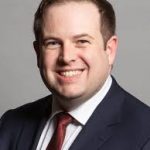
  • Stephen Doughty – 2020 Speech on Covid-19

    Stephen Doughty – 2020 Speech on Covid-19

    Below is the text of the speech made by Stephen Doughty, the Labour MP for Cardiff South and Penarth, in the House of Commons on 11 May 2020.

    May I first associate myself with the sincerely meant comments from those on both Front Benches about the devastating loss of life and about the incredible work of our NHS and social care workers?​

    I believe that we should take a precautionary approach given the evidence at the moment, and that the “stay at home” message being used by Wales, Northern Ireland and Scotland is the right one. It is a matter of deep regret to me that the Prime Minister has now confused that. If my Facebook Live sessions are anything to go by—I hold them every night with my constituents in Cardiff South and Penarth—the Prime Minister’s statement last night was about as clear as mud. It led to more questions than answers, and I fear it is going to lead to more infections and more anxiety.

    The Prime Minister today tried to brush off the concerns expressed by those in Wales as “hypothetical”. No, they are practical reality, and the concerns of my constituents and many others. Like many constituents across this country, mine are trying to do the right thing, and they need clarity, precision and detail, not bluff and bluster. They are asking questions. What if I live in Wales, but work in England or on both sides of the border? Can home moves go across the border? What about schools? They are hearing the message about 1 June, but that does not apply in Wales; schools are not going to reopen on 1 June. There are differences in the safety rules: in Wales, 2 metres in workplaces is in the regulations; in England, it is not. Many other outstanding questions are not being answered, such as whether furlough will be extended to fields that are shut down for longer, and indeed the question about support for new starters. We need co-operation between the nations, but that means Cobra meeting, and it means conversations between the Prime Minister and the First Ministers of the devolved nations. I understand that Cobra is now meeting just twice a month in its full format. Surely that is not good enough.

    I will now turn to a second major issue, borders and quarantine. I am afraid that yet again we have seen utter confusion from the Prime Minister, for future travellers, for airlines and for other transport providers. There is no clarity on when or how these measures are coming in or on the scientific basis for any of the specifics, such as the French exception, which seems to be easily circumvented. We need a workable practical plan if these measures are needed for public health, which I believe they are, but the big question is: why were they not introduced before? Home Office figures released to me and the Home Affairs Committee show that 18.1 million people entered this country between 1 January and 23 March, and I understand that more than 100,000 have entered the country since the lockdown was instituted on 23 March. Out of all those, just 273 individuals on four flights were subject to formal quarantine measures. Three of the flights were from Wuhan and one was from Tokyo and contained passengers from the Diamond Princess. So if these measures are important—and I believe they are—why are we waiting for them? Why have we not got a date for them to be introduced, and why were they not introduce before?

    We need to understand the scientific basis if we are to understand what has been going on and how these decisions were taken. We have received a letter today that has been published by the chief scientific adviser to the Home Office. It talks about a 0.5% prevalence in the population and about a one in 1,000 prevalence globally, but that simply does not add up. If there is a one in 1,000 prevalence globally, that means that 18,100 of the 18.1 million individuals who entered this country without ​so much as a whiff of hand sanitiser were potentially infected. We have only to look at the R rate, which the Prime Minister said potentially stood at 2.8 in April, to understand how many people they could have infected. This applies even to those transiting places such as Heathrow, where they will have encountered other passengers, border staff and others without PPE and without provisions.

    The chief scientific adviser to the Government, Sir Patrick Vallance, said on 5 May that

    “the UK got many, many different imports of the virus from many different places…So we see a big influx of cases, probably from Italy and Spain…in early March seeded right the way across the country.”

    So was it incompetence? Was it confusion? Was it a conscious decision? Or did we just give up? We need to understand how these decisions were taken, and on what scientific basis.

  • Steve Brine – 2020 Speech on Covid-19

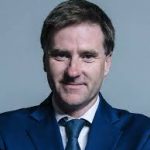
    Steve Brine – 2020 Speech on Covid-19

    Below is the text of the speech made by Steve Brine, the Conservative MP for Winchester, in the House of Commons on 11 May 2020.

    I want to make three brief points. First, I welcome the Prime Minister’s statements last night and here today. For me, this is about making a balanced assessment of risk and learning to live with risk while exercising our judgment and—as the Prime Minister put it very well—good, old-fashioned British common sense about how our actions could impact our society and, yes, the NHS.

    I have to say that I am saddened by the different emphasis from different parts of the UK overnight, but nations will exit lockdown at different speeds, as the infection rate varies. That is fine; it is called devolution. If we could not cope with difference within the United Kingdom, we should not have gone down the road of ​devolution in the first place. Having questions and stress testing a political decision is right. That is our job here on the Back Benches. Constantly picking for political advantage, and having what I suspect is a far worse argument in public than in private, is not.

    Secondly, on the help offered, there has been a herculean effort on behalf of the Government on the furlough scheme and the self-employed help scheme. I welcome the fact that the latter is there as a safety blanket for over 90% of self-employed workers. However, that is not the case for those new to self-employment. I have a constituent who was made redundant less than a year ago and who put all his redundancy money into his new business. He is a wealth creator, but he is not eligible. If people are earning over the £50,000 profit limit—not a huge amount of money in many parts of the country—they are not eligible. Equally, if someone is the director of a limited company, they are not eligible. I understand that it is difficult, and as I have said to the Chancellor in this House before, the answer may be inelegant, but there has to be an answer. Her Majesty’s Revenue and Customs is not averse to taking back what it thinks has been wrongly claimed. We need to get help to people now.

    On the furlough scheme, I have to say that if we are to avoid the cliff edge as it draws to the end of its natural life, in its original form anyway, flexibility has to be the key—flexibility on the percentage paid perhaps, but only if that goes hand in hand with flexibility on the “no work while furloughed” rule; and flexibility on sectors, too, if the Treasury goes down that route. For instance, a food manufacturer in my constituency whose principal customers are classed as hospitality would be stuck between a rock and a hard place if the furlough scheme were withdrawn for manufacturing only. Flexibility must surely see the furlough scheme extended to hospitality businesses and their suppliers in that example. The Prime Minister hinted today about a statement from the Chancellor tomorrow on the furlough scheme, and I will be listening carefully.

    Finally, the Royal Hampshire County Hospital is in my constituency, one of Florence Nightingale’s original hospitals, and I cannot praise it enough. The leadership, under Alex Whitfield, and staff there—many are my constituents—have just gone, as always, above and beyond. We, the local MPs, have a weekly call with the acute sector, primary care, the commissioners and the director of public health for Hampshire, and they keep us beautifully updated on the work that they are doing. The progress on delayed discharge in my hospital has been nothing short of remarkable. My trust is down to single figures on its delayed discharge numbers, and that is unheard of. Why? Because we have flattened the division between the decision making and the money trail within the NHS. We must not, we cannot go back: if it is to be health and social care, we cannot go back. On cancer, we must remember the people who have not presented to the NHS during this pause. We do not want to ditch the 75% ambition on cancer in the long-term plan.

  • Gill Furniss – 2020 Speech on Covid-19

    Gill Furniss – 2020 Speech on Covid-19

    Below is the text of the speech made by Gill Furniss, the Labour MP for Sheffield Brightside and Hillsborough, in the House of Commons on 11 May 2020.

    I start by paying tribute to all our key workers. They are the best of us, and I hope that we will repay their courage and dedication to our country.

    I have heard from parents and schools that they have experienced issues with the free school meal voucher scheme. Many either have not received those vouchers or have been unable to redeem them, despite the scheme having been launched more than six weeks ago. Edenred, the contractor, has processed just 20% of the £234 million budget of the scheme, which has only a few weeks left.​

    At Firth Park Academy, a secondary school in Sheffield, Brightside and Hillsborough, 488 students—almost 40% of all students—are eligible for the scheme. As of last week, none of those children had received or been able to redeem their vouchers. A primary school in my constituency has had similar issues. It waited such a long time for the vouchers to come through and was so concerned about pupil welfare that it spent £3,000 to secure vouchers itself.

    Schools have tried repeatedly to contract Edenred, with one even offering staff to help process applications. Schools Week reported that Edenred was aware of the vast scale of the task at hand when it tendered for the contract, making it more baffling that it was so unprepared. Urgent intervention is needed to address this gross injustice and ensure that none of those eligible for free school meals goes hungry any longer.

    I also want to highlight the challenges faced by women during and after the covid-19 outbreak. Women make up a huge proportion of those in care and nursing roles—those at the frontline of this crisis. We have seen that even as those women battle to provide care under the hardest circumstances, their pay is often among the lowest in society. I have also heard from many women who work in the childcare sector. They have become increasingly concerned about the future of their employment, particularly following the withdrawal of funding that was initially promised to childcare providers by the Government. That not only concerns those employed in that sector but adds to the pressure on key workers, who may now fear they will be left without childcare.

    Many care and childcare providers face bankruptcy as costs rise, leaving these women fearing for their own economic future. Assurances must be given that no woman should lose her job due to the covid-19 pandemic. The true impact of this crisis cannot be fully understood until the Government have undertaken a comprehensive gender impact assessment to ensure that women are not left behind as a result of the economic impact of the covid-19 outbreak.

    My constituent, Lisa Fish, is classed as a vulnerable person. Her family have taken all the steps to shield her from the virus. The Prime Minister’s statement last night offered them no clarity, but it did cause them extreme distress. It is essential that the Government make their intentions crystal clear so that the public fully understand what is expected of them and to ensure that we keep people safe. This virus is not of our making, but it is within our power to respond in a way that protects the most vulnerable in our society.

  • Julian Knight – 2020 Speech on Covid-19

    Julian Knight – 2020 Speech on Covid-19

    Below is the text of the speech made by Julian Knight, the Conservative MP for Solihull, in the House of Commons on 11 May 2020.

    The Government took decisive action to protect the public, but as we consider our phased exit from lockdown, we must also consider the impact on UK businesses and workers. Specifically, I would like to speak to the experiences of the digital, culture, media and sport sectors.

    The Department for Digital, Culture, Media and Sport accounts for less than 1% of Government spending, yet these sectors account for almost a quarter of the UK economy. Ensuring the integrity of the economy therefore means giving businesses in the DCMS sectors the support they need to deal with the challenges of covid-19. Whether in the arts, sports, media or tourism, these sectors punch well above their weight and enrich the lives of people in this country every single day. They are also the sectors that are disproportionately impacted by lockdown and social distancing measures.

    Heavily regulated industries, such as financial services these days, have much more interaction with Government and the Treasury than most businesses in the DCMS sectors. Ordinarily, that is an advantage. These businesses are often small, operating for the most part without Government intervention, and many survive on tight margins, with surprisingly complex and diverse operations. When it comes to knowing how to help them in troubled times, however, that poses a challenge, with what I have to say is a lack of comprehension on the part of the Treasury.​

    The Digital, Culture, Media and Sport Committee, which I chair, is currently conducting an inquiry into the impact of covid-19 on the DCMS space. Already we have seen that the Government support, although welcome, is not reaching some of the freelancers and organisations that are desperate for assistance. Too often they fall between the bureaucratic cracks riven by the Treasury, which is more used to dealing with banks than bands and with accountants rather than actors.

    Charities in particular are suffering. The best of British good will can be seen in our charitable sector and the more than 160,000 diverse charities across the country, which in normal times work to fundraise extensively. That is now largely impossible, and charities report that they are struggling. A shortfall of almost £4 billion over a quarter has been cited as the likely black hole that they face.

    The Government’s £750 million package for charities is helpful to those working on the covid frontline, but most charities, despite doing exceptionally valuable work, without which our communities would face significant struggles, are not working specifically on the covid frontline. They still have bills to pay and are facing the same collapsing revenues. Many still have statutory requirements to keep working. To further complicate matters, charities that have furloughed staff find that those staff are unable to volunteer for them, despite being able to volunteer for other charities. If furloughed staff could volunteer for their own organisations, with regulatory oversight, that would go a significant way towards ensuring the survival of many.

    For that reason, the DCMS Committee has been calling for a separate coronavirus job retention scheme to be established specifically to meet the needs of organisations and individuals in the charity and voluntary sectors, and that substantial notice be given on phasing out furloughing support to avoid a cliff edge, which is an issue for many other parts of the UK economy. The charitable sector has also called for a stabilisation fund to provide certainty to organisations at this unprecedented time, which we also support as a Committee. We ask that consideration be given to the sums that the sector says it needs and that further clarity be given about how the £750 million earmarked so far can actually be claimed.

    Charities help us and our communities when we need support. Without them, public services would be inundated. We must now support them in their hour of need, so that they can continue with their vital work.

  • Clive Efford – 2020 Speech on Covid-19

    Clive Efford – 2020 Speech on Covid-19

    Below is the text of the speech made by Clive Efford, the Labour MP for Eltham, in the House of Commons on 11 May 2020.

    This would be a difficult situation for any Government, but there are questions that must be answered and lessons that must be learned if we are to come out of lockdown safely. The large number of fatalities in this country was not inevitable. My heart goes out to those who have suffered a loss. The Government have made a religion of cuts and non-intervention, which led them to delay the decision to go into lockdown. Why did we ignore the warnings from other countries ahead of us in the epidemic? In Italy, lockdown began on 9 March; in Spain, it began on 15 March; in France, it began on 16 March. We finally entered lockdown on 23 March. Only Italy had more deaths at lockdown than the UK.

    The lack of urgency was repeated over PPE and testing. We hear of frontline staff terrified of going to work without appropriate PPE. As late as 13 March, covid-19 guidance for care homes was issued. It stated that facemasks do not need to be worn in residential settings, and stressed:

    “It remains very unlikely that people receiving care in a care home or the community will become infected.”

    That guidance was not changed until 2 April—10 days after lockdown. Why was it not changed earlier? How has it contributed to the epidemic in care homes?​

    There is a worldwide PPE shortage, yet we hear even now of companies in the UK offering to supply PPE and being ignored by the Government. Why did the Government not act earlier to set up a secure supply structure here at home?

    On testing, we have had announcement after announcement. On 18 March, the Prime Minister announced that we had a target of 25,000 tests per day. That was not reached for more than five weeks. On 25 March, he said that testing will “hopefully very soon” reach 250,000 per day. On 29 March, the Health Secretary tweeted, “We’ve reached 10,000,” but that was not correct. On 2 April, the Health Secretary announced that we will reach

    “100,000 tests per day by the end of this month.”

    That was achieved by sending 40,000 tests out in the post, and the 100,000 target has been missed every day since. This is more about media management than giving the public solid facts.

    This far into the crisis, why are we sending tests to the USA? Why have we ignored the laboratories around the country in hospitals, universities and the private sector, many of which said they were geared up to answer the call to help that never came? The Prime Minister has changed the message to be alert, but it is the Government who must stay alert. Without an effective and efficient tracking and tracing system, this is a reckless move. It has already caused confusion. People were given 12 hours’ notice to go back to work today, but the detailed guidance is not being published until today, with some further guidance due tomorrow.

    Too slow to lock down and secure the supply of PPE and testing; too rushed to end the lockdown in a coherent and planned way; the performance of the people has been superior to the Government’s. The Government must improve if we are to keep people safe as we come out of this crisis.

  • Desmond Swayne – 2020 Speech on Covid-19

    Desmond Swayne – 2020 Speech on Covid-19

    Below is the text of the speech made by Desmond Swayne, the Conservative MP for New Forest West, in the House of Commons on 11 May 2020.

    I do not set out to be a discordant voice, and I have at least some agreement with my right hon. Friend the Member for South West Surrey (Jeremy Hunt), but we are always told that the Government’s policy is a consequence of the best scientific advice. Well, the one thing the Government are certainly not short of—the one commodity not in short supply—is scientific advice. The question is: which are the siren voices? Which is the duff advice, and which is the best advice? I am not qualified to judge. I want an answer to a specific question: to what extent is the lockdown and this cautious plan for the lifting of it a consequence of advice from Professor Neil Ferguson and his modelling at Imperial College London? He has recently released the code for his modelling to very significant peer criticism. Again, I am not qualified to judge its robustness. What I can say as a layman, however, is that he has form. In the past, he has predicted the most blood-curdling of death tolls, which never materialised.

    There is no question but that the lockdown has inflicted significant additional damage to that which the pandemic has done to our economy. It will be costly and lasting. Whether it was done on the best advice, there is no question but that it was done for the best of motives—the motive of saving life—but the diminution of economic activity and employment itself takes a very heavy toll on life.

  • Jon Trickett – 2020 Speech on Covid-19

    Jon Trickett – 2020 Speech on Covid-19

    Below is the text of the speech made by Jon Trickett, the Labour MP for Hemsworth, in the House of Commons on 11 May 2020.

    It is a pleasure to follow such a powerful speech. I want to make two interconnected points. The first is that in post-industrial communities, such as the mining villages I represent, many former workers suffer from chronic underlying conditions—years of damaged lungs. They and their families are entitled to compensation for these industrial diseases, but the virus attacks older men with pre-existing conditions. If, sadly, tragedy then occurs, it is essential that medics ensure the death certificate records both the virus and the underlying industrial disease. The miners and the workers in similar heavy industries created the wealth of our country—we owe them.

    My second point is that covid has revealed how deeply divided our country has been and how damaging austerity was. It is clear that the people upon whom we depend the most, the nation’s heroes, its key workers, are those who suffered the most under austerity, yet they went to work every day, and still do, driven by selfless hard work and dedication, a sense of community and solidarity, and the ethos of care and responsibility. The average key worker is paid less in our country than other employees. I am thinking of the delivery drivers, posties, nurses, shopkeepers, teachers, lab technicians, food retailers, farmers, binmen, carers, police officers, doctors and all those others who have held our society together through this crisis. It is wrong that their incomes were held back, the services that they provide were cut and our social cohesion itself was damaged, leaving us exposed to risk from the pandemic. Yet when the crisis hit, they were there, without hesitation, ready for the challenge that the virus posed, just as the miners, steelworkers and shipbuilders were in another time.

    Working-class people emerge as the heroes in this crisis, although they are often poorly paid, with mortality rates among the highest. Let us remember that men in low-skilled jobs are four times more likely to die from the virus than those in professional occupations. People are already talking about finding an exit strategy from the lockdown, and we do need to lift our eyes to the horizon, but it is not acceptable—the Government appeared to envisage this yesterday—to drive poorer people back to work in conditions dictated purely by their employers, perhaps risking their health while their white-collar neighbours in more professional occupations remain at home safe. Workers need to get back to work, but they need unions, working alongside managers, to determine whether the workplace is safe enough before they go back.

    After the virus, we need a new economic and social settlement, one that puts health, not wealth, at the centre of our concerns and agrees that there should be no return to austerity. We need a rebuilt NHS, adequate care services, properly funded universal public services, fair wages and an end to grotesque inequality. The efforts of millions of people and the spirits of all those who fell during this crisis serving our country must hang over this House of Commons in quiet reproach for the shameless failures of the past decade. We must respond to their whispered demand for a better way, and we must resolve that their sacrifice will not have been for nothing.

  • Jeremy Hunt – 2020 Speech on Covid-19

    Jeremy Hunt – 2020 Speech on Covid-19

    Below is the text of the speech made by Jeremy Hunt, the Conservative MP for South West Surrey, in the House of Commons on 11 May 2020.

    I support the Government’s caution about lifting lockdown, and I commend the Prime Minister for being honest about the complex choices we face.

    I want to focus my comments on the quality of scientific advice received by Ministers. It is now clear that a major blind spot in the approach taken in Europe and America was our focus on pandemic flu rather than pandemic coronaviruses, such as SARS or MERS. Asian countries took a different path. As a result, Korea has had no more than nine deaths on any one day, Singapore is on just 20 deaths in total and Taiwan is on just seven.

    The failure to look at what those countries were doing at the outset will rank as one of the biggest failures of scientific advice to Ministers in our lifetimes. One can understand the reluctance to look at a totalitarian regime such as China, when it dangerously covered up the existence of the virus at the outset. But why, when the Scientific Advisory Group for Emergencies was modelling possible responses in January, did it look only at the extremes of total lockdown or mitigated herd immunity, rather than at the middle way of test, track and trace that was being pursued by the Asian democracies?

    That failure led directly to another, namely the advice to stop community testing on 12 March. That meant that we had no idea where the virus was, while countries such as Germany continued community testing and saved many lives as a result. A lack of interest in community testing led to another failure at the start of March. Even though infections were doubling every five days, SAGE advised Ministers against lockdown and advised them to continue with events such as the Cheltenham festival and the Liverpool champions league match. That meant that infections soon grew to a point where traditional contact tracing could not cope.

    Of course Ministers have to take responsibility for their decisions. They have a duty to challenge and probe any advice, but their decisions are shaped by that advice. In that context, it would be totally wrong to blame individuals. Sir Patrick Vallance and Professor Chris Whitty are outstanding scientists and any Government would be lucky to have their advice. At fault is a systemic failure caused by the secrecy that surrounds everything that SAGE does. Because its advice is not published, it cannot be subjected to scientific challenge. Nor is parliamentary scrutiny possible, even when a Government say they are following the science.

    Until last week, we were not even allowed to know who sat on SAGE. We used to have similar secrecy over the interest rate advice that was given to the Chancellor. In 1997, the Bank of England was made operationally independent, lines of accountability were clarified and advice was made transparent. Since then, inflation has not troubled the British economy. Had SAGE’s advice been published in January, an army of scientists from our universities could have challenged why test, track and trace was not being modelled. They could have demanded a ramp-up of testing and challenged the behavioural assumptions that delayed lockdown. We cannot know for certain, but the result may well have been better subsequent advice and many lives saved.

    British science is world-beating because we have always championed inventiveness and encouraged challenge, so let us sweep aside the secrecy that surrounds SAGE and publish what it recommends, including dissenting views. In that way, we will harness the robust exchange of ideas, which has always been one of our greatest national strengths, and, as the Prime Minister said yesterday, come out of this crisis wiser and stronger.

  • Philippa Whitford – 2020 Speech on Covid-19

    Philippa Whitford – 2020 Speech on Covid-19

    Below is the text of the speech made by Philippa Whitford, the SNP MP for Central Ayrshire, in the House of Commons on 11 May 2020.

    I would first like to express my sympathy for all those who have lost a loved one to covid during this epidemic, and to pay tribute to the millions of healthcare staff, key workers and volunteers who have shown that community spirit is alive and well.

    Unfortunately, the foundation of this crisis has been 10 years in the making. A decade of Government austerity has taken its toll on health and social care services in England and, through cuts to devolved budgets, right across the UK. The pandemic is unprecedented in our lifetimes and poses a real challenge for every single Government on the planet, but it has been No. 1 on the risk register in the UK for more than 10 years.

    In early February, the Government claimed to be fully prepared, yet more than three months on, they are still failing to supply sufficient PPE to protect their healthcare staff. Moreover, testing and contact tracing are still not fully up and running, yet they are lifting the current restrictions. In 2016, Exercise Cygnus highlighted the lack of PPE and ventilators, yet there has been a 40% reduction in the value of the stockpile. The management of it was outsourced to a private company, and we hear that 45% of items in the stockpile are out of date, including 80% of respirator masks. Last June, the new and emerging respiratory virus threats advisory group advised the Secretary of State for Health and Social Care to add gowns to the stockpile. Why was that not done? Is that why Public Health England guidelines, which were issued to all four nations, did not include gowns for staff in covid-positive wards outwith intensive care?

    Two hundred healthcare staff have died. We need to pay tribute to them, but it should not have happened. None of them were from intensive care units, the most dangerous setting, which shows that full PPE actually works. But now we hear that even ICU doctors in England report struggling to get gowns. There is no point in joining the Thursday clap for carers if you are not willing to protect staff. The excuse for the lack of gowns is that the stockpile was only planned for an influenza pandemic. This is a civil contingency measure, so why would you plan for only one virus? It is not as if this is the first coronavirus outbreak. We had the severe acute respiratory syndrome outbreak in 2002 and the middle east respiratory syndrome outbreak in 2014, and they were both much more lethal.

    The Prime Minister set five tests for easing lockdown. The Government clearly are not yet meeting No. 4. Scotland’s NHS has had central procurement and logistics for years and has its own stockpile, but the challenge for all Governments is achieving ongoing supply in the presence of high global demand. Yet the overseas offices of the Department for International Trade have apparently been advised not to assist the Scottish, Welsh or Northern Irish Governments in PPE procurement. Provision of PPE is a devolved responsibility. Why would the UK Government want to undermine those Governments’ efforts to protect the patients and staff in devolved health services?

    The Secretary of State for Health prides himself on having ramped up testing to 100,000 on 30 April, but that was only by counting 40,000 tests that were, as we say, “in the post”. I wonder if they are counted again when they come back in. The level, sadly, has not been maintained. One issue being reported is delays in getting results back. It is also the case that the result is not always reported back to the GP or the hospital if it is a staff member. It is not just about how many tests. The World Health Organisation advises that testing, contact tracing and isolation is critical to breaking the chains of infection and controlling the epidemic. Unfortunately, in February, that just was not in place and we ended up with the lockdown as an emergency measure because we could not identify who we should isolate.

    Understanding easing the lockdown involves difficult decisions, but we need to be aware that the virus has not changed. We hear all the time about the mystical R number guiding the way out of lockdown, but it is an estimate of how many people are infected by each person with the virus. It has three components: the ease of transmission from one person to another; how long a person is infectious; and how many contacts they have during that time. Ease of transmission is a balance between the infectiousness of the virus and the susceptibility of the population. Covid-19 is very infectious and, as a new virus, the population had no immunity. We can reduce transmission through the personal hygiene measures—I would just emphasise that that should include not shaking hands—but 50% of the spread is asymptomatic and that is the reason to advise the use of face coverings to reduce droplet spread from people without symptoms.

    The way to decrease susceptibility is with a vaccine, but that will take time. In early March, the Government seemed to get side-tracked over the idea of herd immunity. I was chair of the all-party group on vaccinations for all and I totally understand the aim of herd immunity, but it is usually achieved with an effective and safe vaccine, not by letting a dangerous disease just rip through the population, especially when we have no proof of how long any covid immunity would last. The duration of infectiousness is about five to seven days and we cannot change that, but one of the problems is that covid patients seem to become infectious about two days before symptoms.

    Finally, there is the number of contacts. That is the key thing we can manipulate in one of two ways: either by isolating everyone in a lockdown, which is a blunderbuss approach because we could not identify who we should be isolating; or by isolating just cases and their contacts, so they have no contact with others. That requires strong public health teams to provide testing, tracing and isolation of every single case to control the spread. That should be put in place during lockdown, while people have relatively few contacts, and before lifting restrictions.

    The Prime Minister set out a roadmap last night for easing lockdown in England if five tests are met. No. 3 is a sustained fall in new cases, but the UK is still hovering over 4,000 new cases a day, and that is just the ones that are proven by a test. No. 4 is the secure provision of testing and PPE, and neither of those criteria has been met. Telling people to go out to work is not a baby step, especially without clear workplace and transport safety measures—we only have to look at photographs of London transport this morning to see that. If the Prime Minister had wanted more people to leave home, I gently suggest that a “Stay apart” message might have been a bit more helpful. Crucially, local public health teams must be in place to monitor the impact of any changes so that they can spot early warning signs of a local outbreak and take action, and that is not the case.

    None of the devolved nations is ready to come out of lockdown. In Scotland, the number of cases is falling, but we do not consider it low enough to be sure that there is no risk of a rise in infections. I know that the political decisions on the next steps are difficult, and I do not underestimate the mental, social and economic impact of lockdown or the misery it is causing. However, a second surge of covid cases would lead to many more deaths and put us right back to square one.

  • Mel Stride – 2020 Speech on Covid-19

    Mel Stride – 2020 Speech on Covid-19

    Below is the text of the speech made by Mel Stride, the Conservative MP for Central Devon, in the House of Commons on 11 May 2020.

    Thank you Madam Deputy Speaker. May I begin by associating myself with the very poignant and moving remarks made by those on both Front Benches about those who have sadly lost their lives to this devastating virus, and with the appreciation that they showed to those who have helped so much and are on the frontline?

    I will address my remarks specifically to some of the economic issues around covid-19, not least the inevitable withdrawal of some of the Government’s support for businesses as we come out of lockdown. I do not say “inevitable” because the Government were not right to introduce the scheme in the first place—the Chancellor did entirely the right thing, and came in with the scale and pace to support business—but in the longer term, the amount of spend involved in such measures is simply unsustainable.

    For example, the furlough scheme is costing as much on an ongoing basis as the funding of the national health service. Before coronavirus, Governments agonised over whether we could spend another 1%, 2% or 3% on the national health service, but here we are spending the equivalent of 100% on furloughing 25% of all workers in the United Kingdom.

    I want to focus for a moment on how we might unwind the furlough scheme most productively and effectively. First, we should seek to taper it away, from 80% down to 60% and then to 40% and so on, to smooth our exit. Secondly, it is particularly important that employers should contribute to the cost of furlough beyond the end of June, because many of those with staff currently on furlough are not having to pay them and have no intention, in the medium term at least, of bringing them back in to their business. Thirdly, we need to encourage part-time working within the furlough scheme, where possible.

    Finally, the Chancellor should look very closely at targeting support, not just in respect of the furlough but in respect of the other support that the Government are providing. There are at least three categories of businesses in our economy at the moment. There are those that will survive without any additional support through this crisis. Indeed, there is a small minority of businesses whose business model has actually thrived under our current circumstances. They clearly do not warrant support. Secondly, there are companies that, in the medium term, can be bridged out of the current crisis, through the provision of support. That is where a particular focus must lie. Thirdly, there are those businesses whose business model is such that, under the new economy of social distancing and before a vaccine arrives, they are, sadly, going to struggle to survive even if they are given support. I urge the Chancellor to take the courageous and difficult decisions on targeting at business and sector level, to make sure that the Treasury’s finite resources are used productively to support jobs and the economy as we emerge on the other side.

    We also need to start talking about the plan beyond coronavirus, even though that may seem some way away. We need to talk about growth and how we are going to support consumer expenditure in particular, given that consumers do not feel like spending and may have increased their savings during this crisis. Temporary tax incentives, such as a time-limited VAT break, may be good in that regard. Finally, as I stick within my four minutes, business indebtedness will have increased. We need the Government to look at how some of that debt can be turned into equity, so that businesses can focus on investing and creating jobs.