Category: Attack on Ukraine

  • Ed Davey – 2022 Speech on Ukraine

    Ed Davey – 2022 Speech on Ukraine

    The speech made by Ed Davey, the Liberal Democrat MP for Kingston and Surbiton, in the House of Commons on 22 February 2022.

    It is time to start treating Russia like the rogue state it is. I strongly welcome the Prime Minister’s statement in this darkest of moments and recognise the Leader of the Opposition for his strong cross-party support. In that cross-party spirit, I urge the Prime Minister to go further today and commit to the following. First, freeze and begin seizing the assets of every single one of Putin’s cronies in the UK and expel these oligarchs from our country as part of a much stronger sanctions regime. Secondly, recognise the existential threat posed by Putin to our NATO allies by immediately cancelling his misguided decision to cut our armed forces by 10,000 troops. Thirdly, no longer tolerate international sporting or cultural events hosted in Russia. Will he confirm what I think he implied in answer to a previous question, that he will push for this year’s champions league final to be moved from St Petersburg? President Putin has made a terrible decision. Will the Prime Minister ensure that he pays a terrible price?

  • Ian Blackford – 2022 Speech on Ukraine

    Ian Blackford – 2022 Speech on Ukraine

    The speech made by Ian Blackford, the SNP Leader at Westminster, in the House of Commons on 22 February 2022.

    I thank the Prime Minister for advance sight of his statement and thank the National Security Adviser, who has briefed Opposition leaders.

    This is a dark day for the people of Ukraine and for people right across our European continent. Europe stands on the brink of war as a consequence of Russian aggression. It is a day that communities across Scotland, right across these islands and indeed across Europe desperately hoped would never come to pass. But although that sense of darkness defines today, how we now collectively respond will define the days to come.

    This Chamber has, especially during recent months, seen fierce debate and disagreements, but today it is important to say, in the face of Russian aggression against Ukraine, that in this House we all stand together: we stand together and stand with our partners across Europe and indeed across the globe. But more importantly, we stand with the Ukrainian people, who are now under assault. A European country—an ally—is under attack. We should be very clear about what is now happening: this is an illegal Russian occupation of Ukraine, just as it was in Crimea. Russia has effectively annexed another two Ukrainian regions in a blatant breach of international law. This effectively ends the Minsk process. It is a further violation of the sovereignty and territorial integrity of Ukraine. No one should even repeat the Russian lie that this is about peacekeeping; this is warmongering, plain and simple. President Putin must hear the call from here and elsewhere to draw back before any further escalation can take place.

    I and my party welcome the sanctions that are now being brought forward, but it is deeply regrettable that the delay has allowed many Russian individuals to shift dirty assets and money in the last number of weeks. However, may I ask the Prime Minister specifically if the Russian state and individuals will be immediately suspended from the SWIFT payments system? Just as economic sanctions against Russia are welcome, Ukraine needs immediate economic and indeed humanitarian support if required. When will economic and humanitarian support be enacted and what will it entail? Can the Prime Minister also confirm that there will be exemptions for partners of UK citizens residing in Ukraine to come to the UK? They need that certainty and they need it today.

    In the days ahead we can no doubt expect a barrage of disinformation from the Russian media and its proxies. So can the Prime Minister update us on how the United Kingdom Government intend to combat that threat? This is also the moment to end the complacency in implementing the Intelligence and Security Committee’s Russia report; will the Prime Minister now commit to its full implementation and update the House accordingly?

    Can I also ask the Prime Minister, after the UN Security Council’s brief meeting last night, when it will next meet and what co-ordination is happening across all international organisations to force President Putin to step back from the brink before it is too late?

    Finally, let President Putin hear loudly and clearly that he must now desist from this act of war, this attack on a sovereign nation. Let us all demonstrate that we stand with the people of Ukraine.

  • Keir Starmer – 2022 Speech on Ukraine

    Keir Starmer – 2022 Speech on Ukraine

    The speech made by Keir Starmer, the Leader of the Opposition, in the House of Commons on 22 February 2022.

    Yesterday was a dark day for Europe. The Russian President denied the right of a sovereign nation to exist, unilaterally recognising separatist movements that he sponsors and that seek to dismember Ukraine. Then, under the cover of darkness, he sent in troops to enforce his will. Putin appears determined to plunge Ukraine into a wider war. We must all stand firm in our support for Ukraine. We support the freedom of her people and their right to determine their own future without the gun of an imperialist held to their head.

    There can be no excuses for Russia’s actions. There is no justification for this aggression. A war in Ukraine will be bloody, it will cost lives, and history will rightly scorn Putin as the aggressor. Putin claims to fear NATO expansion, but Russia faces no conceivable threat from allied troops or from Ukraine. What he fears is openness and democracy. He knows that, given a choice, people will not choose to live under the rule of an erratic and violent authoritarian, so we must remain united and true to our values across this House and with our NATO allies. We must show Putin that we will not be divided.

    I welcome the sanctions introduced today and the international community’s efforts to unite with a collective response. However, we must be prepared to go further. I understand the tactic of holding back sanctions on Putin and his cronies to try to deter an invasion of the rest of Ukraine, but a threshold has already been breached. A sovereign nation has been invaded in a war of aggression based on lies and fabrication. If we do not respond with a full set of sanctions now, Putin will once again take away the message that the benefits of aggression outweigh the costs. We will work with the Prime Minister and our international allies to ensure that more sanctions are introduced.

    Russia should be excluded from financial mechanisms, such as SWIFT, and we should ban trading in Russian sovereign debt. Putin’s campaign of misinformation should be tackled. Russia Today should be prevented from broadcasting its propaganda around the world. We should work with our European allies to ensure that the Nord Stream 2 pipeline is cancelled. Whatever the sequencing of these sanctions, this will not be easy. Britain must work with our European allies to handle the disruption to the supply of energy and raw materials. We must defend ourselves and our allies against cyber-attacks. We must bring together the widest possible coalition of nations to condemn this action against a sovereign UN member state.

    Ukrainians are defending their own country and democracy in Europe. We must stand ready with more military support for Ukraine to defend itself, and we must stand ready to do more to reassure and reinforce NATO allies in eastern Europe, but we must also get our own house in order. The Prime Minister said that the lesson from Russia’s 2014 invasion of Donbas is that we cannot just let Vladimir Putin get away it, but until now we have. We have failed to stop the flow of illicit Russian finance into Britain. A cottage industry does the bidding of those linked to Putin, and Russian money has been allowed to influence our politics. We have to admit that mistakes have been made, and we have to rectify them.

    This must be a turning point. We need an end to oligarch impunity. We need to draw a line under Companies House providing easy cover for shell companies. We need to ensure that our anti-money-laundering laws are enforced. We need to crack down on spies, and we have to ensure that money is not pouring into UK politics from abroad.

    Russian aggression has now torn up the Minsk protocol and the Budapest memorandum, but even at this late hour we must pursue diplomatic routes to prevent further conflict, so can the Prime Minister tell us what international diplomatic efforts are going on and what role the UK will have in that process? We know Putin’s playbook. He seeks division; we must stay united. He believes the benefits of aggression outweigh the consequences, so we must take a stand, and he believes the west is too corrupted to do the right thing, so we must prove him wrong. I believe we can, and I offer the support of the Opposition in that vital endeavour.

  • Boris Johnson – 2022 Statement on Ukraine

    Boris Johnson – 2022 Statement on Ukraine

    The statement made by Boris Johnson, the Prime Minister, in the House of Commons on 22 February 2022.

    With permission, Mr Speaker, I will make a statement about the situation in Ukraine. Last night, President Putin flagrantly violated the Minsk peace agreements by recognising the supposed independence of the so-called people’s republics of Donetsk and Luhansk in eastern Ukraine. In a single inflammatory speech, he denied that Ukraine had any “tradition of genuine statehood”, claimed that it posed a

    “direct threat to the security of Russia”,

    and hurled numerous other false accusations and aspersions.

    Soon afterwards, the Kremlin announced that Russian troops would enter the breakaway regions under the guise of peacekeepers, and Russian tanks and armoured personnel carriers have since been spotted. The House should be in no doubt that the deployment of these forces in sovereign Ukrainian territory amounts to a renewed invasion of that country. By denying Ukraine’s legitimacy as a state and presenting its very existence as a mortal threat to Russia, Putin is establishing the pretext for a full-scale offensive.

    Hon. Members will struggle to contemplate how, in the year 2022, a national leader might calmly and deliberately plot the destruction of a peaceful neighbour, yet the evidence of his own words suggests that is exactly what President Putin is doing. I said on Saturday that his scheme to subvert and invade Ukraine was already in motion before our eyes. The events of the past 24 hours have, sadly, shown this to be true.

    We must now brace ourselves for the next possible stages of Putin’s plan: the violent subversion of areas of eastern Ukraine by Russian operatives and their hirelings, followed by a general offensive by the nearly 200,000 Russian troops gathered on the frontiers at peak readiness to attack. If the worst happens, a European nation of 44 million men, women and children would become the target of a full-scale war of aggression waged, without a shred of justification, for the absurd and even mystical reasons that Putin described last night. Unless the situation changes, the best efforts of the United States, Britain, France, Germany and other allies to avoid conflict through patient diplomacy may be in vain.

    From the beginning, we have tried our utmost—we have all tried—to find a peaceful way through this crisis. On 11 February, my right hon. Friend the Defence Secretary and the Chief of the Defence Staff, Admiral Radakin, paid the first joint visit to Moscow by the holders of their offices since Churchill, who was also Defence Minister at the time, travelled to Russia with General Alanbrooke in 1944. They held over three hours of frank discussions with the Russian Defence Minister, General Shoigu, and the chief of staff, General Gerasimov, demonstrating how seriously we take Russia’s security concerns, how much we respect her history and how hard we are prepared to work to ensure peaceful co-existence.

    My right hon. Friend the Foreign Secretary delivered the same messages when she met her Russian counterpart in Moscow on 10 February. I have spoken on a number of occasions to President Putin since this crisis began, as has President Biden, while President Macron and Chancellor Scholz have both visited Moscow. Together we have explored every avenue and given Putin every opportunity to pursue his aims by negotiation and diplomacy.

    I tell the House: we will not give up—we will continue to seek a diplomatic solution until the last possible moment—but we have to face the possibility that none of our messages has been heeded and that Putin is implacably determined to go further in subjugating and tormenting Ukraine. It is because we suspected as much that the UK and our allies repeatedly sounded the alarm about a possible new invasion, and we disclosed much of what we knew about Russia’s military build-up.

    Britain has done everything possible to help Ukraine to prepare for another onslaught: training 22,000 soldiers, supplying 2,000 anti-tank missiles, and providing £100 million for economic reform and energy independence. We will now guarantee up to $500 million of Development Bank financing. I travelled to Kyiv to meet President Zelensky on 1 February and I saw him again in Munich at the weekend. I spoke to him last night, soon after President Putin’s speech, and assured him—as I am sure the whole House would agree was the right thing to do—of Britain’s unwavering support for Ukraine’s sovereignty and territorial integrity.

    Now the UK and our allies will begin to impose the sanctions on Russia that we have already prepared, using the new and unprecedented powers granted by this House to sanction Russian individuals and entities of strategic importance to the Kremlin. Today the UK is sanctioning the following five Russian banks: Rossiya, IS Bank, Genbank, Promsvyazbank and the Black Sea bank. And we are sanctioning three very high net worth individuals: Gennady Timchenko, Boris Rotenberg and Igor Rotenberg. Any assets they hold in the UK will be frozen, the individuals concerned will be banned from travelling here, and we will prohibit all UK individuals and entities from having any dealings with them.

    This is the first tranche—the first barrage—of what we are prepared to do, and we hold further sanctions at readiness to be deployed alongside the United States and the European Union if the situation escalates still further. Last night, our diplomats joined an emergency meeting of the UN Security Council, and we will raise the situation in the Organisation for Security and Co-operation in Europe.

    Let me emphasise what I believe unites every member of this House with equal determination: the resolve of the United Kingdom to defend our NATO allies is absolute and immovable. We have already doubled the size of our deployment in Estonia, where the British Army leads NATO’s battlegroup, and when I met President Levits of Latvia and Prime Minister Kallas of Estonia in Munich on Saturday, I told them that we would be willing to send more British forces to help protect our allies if NATO makes such a request.

    We cannot tell what will happen in the days ahead, but we should steel ourselves for a protracted crisis. The United Kingdom will meet this challenge side by side with our allies, determined that we will not allow Putin to drag our continent back into a Hobbesian state of nature where aggression pays and might is right. It is precisely because the stakes are so high that Putin’s venture in Ukraine must ultimately fail—and must be seen to fail. That will require the perseverance, unity and resolve of the entire western alliance, and the UK will do everything possible to ensure that that unity is maintained.

    Now our thoughts should turn to our valiant Ukrainian friends, who threaten no one and who ask for nothing except to live in peace and freedom. We will keep faith with them in the critical days that lie ahead, and whatever happens, Britain will not waver in our resolve. I commend this statement to the House.
  • John Healey – 2022 Speech on Ukraine

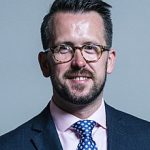
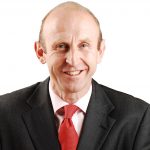
    John Healey – 2022 Speech on Ukraine

    The speech made by John Healey, the Shadow Secretary of State for Defence, in the House of Commons on 21 February 2022.

    The Defence Secretary has been busy in recent weeks, so I welcome his statement today and thank him for keeping the Opposition parties updated on Ukraine during these grave escalations of Russian military threats on the Ukrainian border.

    This is the most serious security crisis Europe has faced since the cold war. The Ukrainian people, citizens of a proud, independent and democratic country, face an unprecedented threat from, as the Secretary of State has said, two thirds of Russia’s entire forces now built up on its borders. There is unified UK political support for Ukraine’s sovereignty and its territorial integrity in the face of that continuing Russian aggression.

    The Government also have Labour’s full support in helping Ukraine to defend itself and in pursuing diplomacy, even at this eleventh hour and even though President Putin has proved more interested in disinformation than diplomacy. We also fully support moves to reinforce the security of NATO allies, as the Labour leader and I told the Secretary General at NATO headquarters earlier this month.

    President Putin wants to divide and weaken the west, to turn back the clock and re-establish Russian control over neighbouring countries. The real threat to President Putin and his Russian elites is Ukraine as a successful democracy, choosing for itself its trading and security links with the west. An attack on Ukraine is an attack on democracy.

    We welcome the message from Munich at the weekend that any invasion will be met with massive sanctions in a swift, unified western response. The European Union, of course, will lead on sanctions legislation for most European allies, especially to clamp down on finances or critical technologies for Russia. How is the UK co-ordinating with the European Commission and European Council? What meetings have UK Ministers had to discuss that co-ordination?

    The other message from Munich at the weekend was that allies stand ready for further talks. The Defence Secretary has said this afternoon:

    “I am pleased with the efforts being made by a range of European leaders, including President Macron”.

    What diplomatic initiatives is our UK Prime Minister taking, befitting Britain as a leading member of the NATO alliance and a permanent member of the United Nations Security Council? With the most serious tensions and developments in the Donbas, why did the UK Government remove UK staff from the OSCE monitoring mission there, when those from all other European countries have stayed to do a job that is more vital now than ever?

    The Defence Secretary said, rightly, that we continue to “support Ukrainian defensive efforts”, including with lethal aid. What more will he now do, with NATO, to help Ukraine defend itself? Can he speed up action via the Ukraine naval agreement? How feasible is a no-fly zone? What consideration will he give to support for Ukrainian resistance?

    We cannot stand up to Russian aggression abroad while accepting Russian corruption at home. For too long, Britain has been the destination for the dirty money that keeps Putin in power. Where is the economic crime Bill, which was promised by the Government and then pulled? Where is the comprehensive reform of Companies House? Where is the law to register foreign agents? Where is the registration of overseas entities Bill? Where is the replacement for the outdated Computer Misuse Act 1990? Where are the new rules on political donations? Why does the Government’s Elections Bill make these problems worse by enabling political donations from donors based overseas?

    Whether or not President Putin invades Ukraine, Russia’s long-running pattern of aggression demands a NATO response. Will the Secretary of State report from his meeting last week with NATO Defence Ministers on how the alliance’s overall posture is set to change? Will he explain what action could be taken to better co-ordinate NATO with the joint expeditionary force—for instance, creating a regional readiness force?

    Finally, does not Ukraine expose the flaws in the Government’s integrated review of last year, with its first focus on the Indo-Pacific and its plan to cut the British Army by another 10,000 soldiers? Will the Secretary of State now halt any further Army cuts, and restore the highest defence priority to Europe, the north Atlantic and the Arctic?

  • Ben Wallace – 2022 Statement on Ukraine

    Ben Wallace – 2022 Statement on Ukraine

    The statement made by Ben Wallace, the Secretary of State for Defence, in the House of Commons on 21 February 2022.

    With permission, Mr Speaker, I will update the House on the latest situation regarding Russia’s actions towards Ukraine. As I have already said, I apologise that the Opposition had such late sight of the statement.

    As of 09.00 hours today, there are now more than 110 battalion tactical groups massed around Ukraine’s borders with Russia and Belarus. In addition, in the Black Sea Fleet, there are two amphibious groups, nine cruise missile-equipped Russian ships and a further four cruise missile-capable vessels in the Caspian sea.

    In the last 48 hours, contrary to Kremlin assurances, we have seen a continued increase in troop numbers and a change in force disposition, moving from holding areas to potential launch locations. All the indicators point to increasing numbers and readiness of Russian forces, and, not surprisingly to many of us, the pledge to withdraw Russian troops from Belarus at the end of their joint military drills on 20 February was not carried out, and the exercise has now been extended until further notice.

    Complementing this troop build-up has been the proliferation of false flag operations, propaganda stunts, and Russian news outlets carrying fictitious allegations. These are not the actions of a Russian Government fulfilling their repeated declarations that they have no intention of invading Ukraine. In fact, over the last few weeks, we have seen the Russian “playbook” being implemented in a way that gives us strong cause for concern that President Putin is still committed to an invasion. I believe that he is in danger of setting himself on a tragic course of events, leading to a humanitarian crisis, instability, and widespread suffering—not just of Ukrainians, but of the Russian people.

    Like many of us, the Russians know the consequences of military interventions. The Soviet Union in Afghanistan and the first war in Chechnya are just two examples of where Russia saw too many young men returning home in zinc-lined coffins. The Government therefore urge President Putin—for the sake of his own people and even at this eleventh hour—to rule out the invasion of Ukraine and recommit to a diplomatic process for us to address the perceptions of the Kremlin.

    Over recent weeks, my right hon. Friend the Foreign Secretary and I have engaged numerous times with our international counterparts, including my own visit to Moscow to meet Defence Minister Shoigu and General Valery Gerasimov. We have made clear our determination to uphold the defensive principles of NATO and to defend the right of sovereign countries to make choices about their own security arrangements. As the Russian Government have signed up to, states have

    “an equal right to security. We reaffirm the inherent right of each and every participating state to be free to choose or change its security arrangements, including treaties of alliance.”

    That statement was signed by the Russians in 1975 in the Helsinki Final Act, in 1994 in the Budapest summit declaration, in 1999 at the Istanbul summit, and, most lately, in 2010 at the Astana summit. We urge Russia to stick to its commitments that it has openly made and signed up to over the years. My counterpart, Defence Minister Shoigu, repeated to me in person that Russia has no intention of invading Ukraine, but, while we take them at their word, we must judge them by their actions.

    At our meeting I also took the opportunity to address the proposals in Russia’s draft treaty, because, while this is not a return to normal UK-Russia relations, it is important that, as one of Europe’s biggest military powers, the UK maintains strong lines of communications with Russia in order to avoid miscalculation and the risk of inadvertent escalations. I also continue to speak regularly to my Ukrainian counterpart, Defence Minister Reznikov, as we continue to support the armed forces of Ukraine.

    Since 2015, the UK—alongside the likes of Sweden and Canada—has responded to Russia’s previous illegal occupation of Crimea with defence capacity building, including training and reform. As I announced to the House last month, we took the decision to also provide lethal aid to Ukraine. That now means that, alongside the United States, Canada, Estonia, Latvia, Lithuania and the Netherlands, the United Kingdom has not just spoken, but acted.

    I am pleased with the efforts being made by a range of European leaders, including President Macron, to find a way through. We must remain resolute in our commitment to NATO’s formal response to the Russian draft treaties, which all NATO members signed up to. Intimidation and aggression, however, must not be rewarded.

    We should be under no illusion: the Russian forces have now massed on Ukraine’s borders 65% of all their land combat power. The formations present and the action of the Russian state to date not only threaten the integrity of a sovereign state, but undermine international law and the democratic values in which all of us in Europe so strongly believe.

    The Foreign Office has now relocated the embassy further west in the country, and two weeks ago advised that all UK nationals should leave Ukraine via all means possible. The Ministry of Defence will continue to monitor Russian actions, support Ukrainian defensive efforts and contribute to NATO’s response measures. We continue to hope that President Putin will relent and pull back from an invasion, but we must prepare ourselves for the consequences if he does not. I will update the House, as I have done over the past few weeks, both in the Chamber and to colleagues online.

  • Ursula von der Leyen – 2022 Speech on Ukraine and Threat from Russia

    Ursula von der Leyen – 2022 Speech on Ukraine and Threat from Russia

    The speech made by Ursula von der Leyen, the President of the European Commission, on 16 February 2022.

    Thank you Madam President,

    Honourable Members,

    The very reason why our Union was created is to put an end to all European wars. So it is particularly painful for me to address you today, as we face the largest build-up of troops on European soil since the darkest days of the Cold War. The people of Ukraine are bravely trying to get on with their lives. But many of them keep emergency bags by their front doors, with basic clothes and important documents, in case they have to rush away from home. Others have stockpiled food cans to prepare for the worst. Some have even set up shelters in their basements. These are not stories from the 1940s. This is Europe in 2022. And this is happening because of a deliberate policy of the Russian leadership. Ukraine is a sovereign country. It is making choices about its own future. But the Kremlin does not like this, and so it threatens war. This is the essence of the current escalation. And despite the signs of hope we saw yesterday, this it is something we simply cannot accept.

    In the last seven years, Ukraine has suffered from the Kremlin’s constant aggression. But despite that heavy burden, Ukraine has come such a long way. It has taken important steps to fight corruption, rebuilt its infrastructure, created new jobs for its talented youth. Our Union has accompanied them, putting together the largest support package in our history. Of course, the people of Ukraine know that their democracy still has some flaws and issues to deal with. But Ukraine today is a stronger, freer and more sovereign country than in 2014. And this is precisely why the Kremlin is threatening it again.

    We stand firm with Ukraine. The idea that the Kremlin should decide what Ukrainians can or cannot desire – we simply cannot accept. The idea of spheres of influence are ghosts of the last century. This crisis is about Ukraine – and more. It is about what it means to be a sovereign, independent and free country in the 21st century. It is about everyone’s right to live free from fear. It is about every country’s right to determine its own future. And this is the message that our Union is passing to the Kremlin.

    Like everyone in this room, I truly hope that the Kremlin will decide not to unleash further violence in Europe. Yesterday, Russia was certainly sending conflicting signals. On the one hand, authorities announce Russian troop pullbacks. On the other hand, the Duma votes for the formal recognition of Donetsk and Luhansk as independent republics. Diplomacy has not yet spoken its last words. It is good to hear yesterday’s commitment to the Minsk Agreement. President Macron and Chancellor Scholz have travelled to Kyiv and Moscow. Several others are also speaking to both sides. I am constantly exchanging with all of them, as well as with President Biden, Prime Minister Trudeau and Prime Minister Johnson. The Transatlantic Community has for a long time not been so united. Let me just mention one recent episode.

    Earlier this month, Russian Foreign Minister Lavrov wrote 36 letters to each and every Member State of the European Union and NATO Ally, with a series of demands. He received two letters in return: One from Josep Borrell on behalf of the European Union, and one from Jens Stoltenberg on behalf of NATO. Once again, the Russian government tried to divide us. But their attempt failed. The European Union and its transatlantic partners are united in this crisis. And our call on Russia is crystal clear: do not choose war. A path of cooperation between us and Russia is still possible. But let us stay vigilant. Despite yesterday’s news, NATO has not yet seen signs of any Russian troop reduction. And should the Kremlin choose violence against Ukraine, our response will be strong and united. The European Commission and the EEAS have been working closely with all Member States to prepare a robust and comprehensive package of potential sanctions. And we have worked in close coordination with our friends in the US, the UK and Canada. Let me say that in these weeks we have built a unity of purpose that is truly remarkable, both within the EU and with our partners. In case of a Russian aggression, Europe’s reaction will be swift and robust. We are not just talking about freezing assets and banning travel for Russian individuals. Russia’s strategic interest is to diversify its one-sided economy and to close its current gaps. But for this, they need technologies in which we have a global leadership. High-tech components for which Russia is almost entirely dependent on us. Our sanctions can bite very hard, and the Kremlin knows this well.

    We are also ready in case that the Russian leadership decides to weaponise the energy issue. At a time of high demand, Gazprom is restricting its gas supplies to Europe. A ten-year low in storage, no sales on the spot market. This behaviour has already damaged Russia’s credibility as a reliable energy supplier. We are currently in talks with a number of countries that are ready to step up their exports of liquefied natural gas to the EU. This resulted in January in record deliveries of LNG gas – more than 120 vessels and 10 bcm of LNG. On top, since the annexation of Crimea, we have increased the number of LNG terminals. We have reinforced our pan-European pipeline and electricity interconnector network. And the good part is that these investments in infrastructure will in future be the backbone of green hydrogen supply. During the last weeks, we have looked into all possible disruption scenarios in case Russia decides to partially or completely disrupt gas supplies to the EU. And I can say that our models show that we are now rather on the safe in this winter. On top of this, we have also developed with Member States a new set of emergency measures, which we could trigger in case of complete disruptions. But one of the lessons we can already draw from this crisis is that we must diversify our energy sources, to get rid of the dependency of Russian gas, and heavily invest in renewable energy sources. They are clean and good for the planet, and they are home-grown and good for our independence.

    Honourable Members,

    This is a crisis that has been created by Moscow. We have not chosen confrontation, but we are prepared for it. We now have two distinct futures ahead of us. In one, the Kremlin decides to wage war against Ukraine, with massive human costs – something we thought we had left behind after the tragedies of the twentieth century. Moscow’s relations with us would be severely damaged. Tough sanctions would kick in, with dire consequences on the Russian economy and its prospect of modernisation. But another future is possible. A future in which Russia and Europe cooperate on their shared interests. A future where free countries work together in peace. A future of prosperity, built on the respect of the fundamental principles enshrined in the UN Charter, and in the European security architecture since the Helsinki Final Act. This is my aspiration. And I am sure the Russian people share this aspiration, too. It is now up to the Kremlin to decide. Whatever path they decide to take, we will stand our ground. Europe will be united, on the side of Ukraine, on the side of peace, on the side of Europe’s people.

    Long live Europe.