Category: Attack on Ukraine

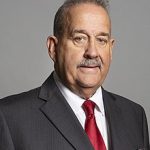
  • Mick Whitley – 2022 Speech on Ukraine

    Mick Whitley – 2022 Speech on Ukraine

    The speech made by Mick Whitley, the Labour MP for Birkenhead, in the House of Commons on 22 September 2022.

    I join previous speakers in applauding the heroism and sacrifice of Ukrainian forces, who, in just a few short weeks, have liberated vast swathes of territory previously occupied by Russia. We cannot yet comprehend the scale of the suffering that is taking place in Russian-occupied Ukraine, but the widespread reports of war crimes and crimes against humanity that are emerging from the liberated territories serve as a potent reminder of why Putin must not be allowed to succeed in this criminal endeavour.

    I also pay tribute to the immense bravery of the thousands of Russian citizens who took to the streets yesterday in protest of the partial mobilisation of the army reserves. They did so in the full knowledge that they were defying the decrees of a regime that tolerates no dissent, and I am sure that the thoughts of the whole House are with those who have been taken into custody.

    As a new and far more dangerous phase of the war begins, the UK must remain steadfast in its support for the struggle of the Ukrainian people, but as Putin once again forces the world to reckon with the spectre of nuclear war, we must also remain ever vigilant to the dangers of an escalation of the conflict. As President Biden told the UN General Assembly yesterday:

    “A nuclear war cannot be won and must never be fought.”

    While I welcome the Government’s continued commitment to providing military aid to Ukraine, I must tell Ministers that their responsibilities to the Ukrainian people extend far beyond the battlefield. In the early months and weeks of the war, the Government refused to follow the lead of our European friends and neighbours and waive visa requirements for refugees fleeing the onslaught. Now, Ukrainians who were promised safety and security in Britain face an uncertain future. Across the country as many as 50,000 Ukrainians could be homeless in the new year as a result of Ministers’ woeful failure to provide additional support or even the most basic clarity ahead of the ending of the initial six-month sponsorships.

    I have had the great privilege of meeting Ukrainian refugees who now live in my constituency, and meeting the families who have opened their homes and hearts to them. With the cost of living crisis hitting hard, I am afraid that many of those sponsorships will simply not be sustainable without additional support. Indeed, in some local authorities, fewer than a quarter of hosts are in a position to extend their guests’ stay beyond the first six months. Councils across the country are warning that the situation is reaching breaking point.

    This was an entirely foreseeable crisis, and it is, frankly, unforgiveable that Ministers have yet to come forward with a credible plan for what happens when a refugee’s initial six-month stay comes to an end. But it is not too late to act, so I urge the Government to take whatever steps are necessary to ensure that in situations where the relationship between hosts and guests remains viable, those sponsorships can continue. That must mean greatly increasing financial support for hosts, as Lord Harrington, the former refugees Minister, recommended last month. The Government must also acknowledge that community sponsorship was only ever intended as a short-term solution to an immediate crisis. To give Ukrainian refugees the longer-term support they need, we need to ensure that financial and logistical support is in place for the entirety of the three years for which they have received permission to stay.

    We also need to do more to support Ukrainian refugees in finding homes of their own. Far too many Ukrainian refugees have been left to fend for themselves in the cruel and uncaring world of the private rented sector. Too many landlords have been allowed to refuse Ukrainians tenancies simply because of where they have come from. Like millions of UK residents before them, refugees who have found work are finding that they simply cannot afford rip-off rents in the areas that they hope to call home. It is time for the Government to equip local authorities with the financial resources and powers that they need to act as guarantors for refugees who are searching for accommodation.

    Government Members speak regularly of the pride that they take in the support that the UK has offered Ukraine, as they have done today, but I warn them that their moral obligations will never be truly fulfilled until they can guarantee that not a single refugee is left without a home this winter.

  • Liam Fox – 2022 Speech on Ukraine

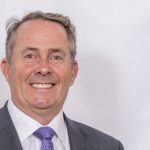
    Liam Fox – 2022 Speech on Ukraine

    The speech made by Liam Fox, the Conservative MP for North Somerset, in the House of Commons on 22 September 2022.

    A number of colleagues on both sides of the House have talked about the seven months of this conflict. In truth, it is part of a much longer strategic conflict between Putin and Ukraine. From 2007, when Putin set out his worldview at the Munich security conference, we have known roughly where he was likely to go. From his interference in Ukraine in 2004 through the 2008 invasion of Georgia and the illegal annexation of Crimea, it is all part of a continuum of behaviour that I am afraid we have for too long overlooked because it did not suit us to take a realistic view.

    This time, however, as the former Prime Minister, my right hon. Friend the Member for Uxbridge and South Ruislip (Boris Johnson), rightly said, Putin’s aims have completely, clearly and explicitly failed. Those aims, let us remember, were to remove President Zelensky, install a puppet Government, defeat the Ukrainian armed forces and effectively destroy Ukraine as a functioning state.

    As a consequence, Putin faces mounting criticism at home and abroad. Yesterday alone we saw 1,300 arrests in Moscow, and we should give our support to those willing to make that protest for their moral courage in doing so. We have even seen Moskovskij Komsomolets, the normally placid news outlet in Russia, criticising what it called the “underestimation of the enemy”, stating that Russia had suffered a defeat and was minimising losses by withdrawing—not the sort of comments we expect to see from that particular organ of the state.

    The criticism from outside has not been confined to the free world. Prime Minister Modi made clear last week to Putin that this

    “is not an era for war”.

    Even the Russians had to admit that the Chinese had disquiet about what was happening in Ukraine, and little wonder, because it has brought about a much more united west and a new focus on areas such as Taiwan, which the Chinese have certainly not welcomed.

    The net result all of that for Putin is that he is cornered, but that is by no means a cause for celebration in the west. As my hon. Friend the Member for Isle of Wight (Bob Seely) wrote this week in a very good article in The Spectator—I commend it to all Members—Putin makes threats to frighten us, but to minimise the chance of the use of a tactical or strategic nuclear weapon,

    “we need to assume that the threat is real”.

    It may be sabre-rattling, but it may not be. We have miscalculated with Putin before; we cannot afford to miscalculate again. He is a tyrant with a tyrant’s behaviour: paranoid, petulant and progressively more extreme. He will throw more and more Russian lives into the fire without hesitation, as so many of his predecessors did.

    Mr Djanogly

    On the question of calling up the reserves, does my right hon. Friend think that Putin may now be over-extending his support with the Russian people?

    Dr Fox

    He may be, but we would be foolish to assume so. Public opinion, even in places such as Russia, under a regime such as Putin’s, can turn. Yes, internal forces can produce a change in the personnel and the nature of a Government, but that can take a long time to happen—if ever—and we should not calculate based on that coming through, as many lives may be lost in the interim.

    As many Members have said, we must continue to support Ukraine, its Government and its people with moral and political support, as the Prime Minister set out in New York; to provide weapons to Ukraine, at whatever cost, as long as they are required; and to maintain our united front with other allied nations in the free world, especially in our efforts to stop Russia’s war machine being funded through the sale of fossil fuels.

    While we deal with the Ukraine war, we must continue to focus on other threats that are being posed around that region. We do not have the luxury in security and foreign policy to choose to focus on one conflict alone, and I will briefly point to two other conflicts. The first is in the Balkans, where Russia and China have been heavily arming Serbia, and where the very real threat of renewed conflict—with all the horrors of the ethnic wars that we saw there before—is something that we must be alive to. The second example is the involvement of Iran, which has supplied weapons, drones and political support to Russia at a time when few other countries have been willing to do so, and is trying to develop its own nuclear weapon. As we have discussed in the debate, we have seen what nuclear blackmail can look like. Does anyone seriously believe that the world would be a safer place were Iran to become a nuclear weapon state, or that, were Iran able to, it would disrupt fossil fuel supplies any less than Russia?

    The common thread running through much of this is that we have collectively allowed wishful thinking to replace critical analysis on far too many occasions. The safety of our world requires us to do much better in future.

  • Richard Foord – 2022 Speech on Ukraine

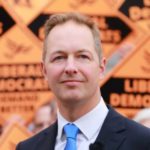
    Richard Foord – 2022 Speech on Ukraine

    The speech made by Richard Foord, the Liberal Democrat MP for Tiverton and Honiton, in the House of Commons on 9 September 2022.

    The Ukrainian, Leon Trotsky, said:

    “You may not be interested in war, but war is interested in you.”

    Leon Trotsky was previously a resident of Mykolaiv and Odessa. This phrase, uttered by Trotsky the communist revolutionary, has proven quite accurate for many people living in those parts of Ukraine in 2022.

    The Liberal Democrats must add to the chorus of condemnation in relation to Putin’s nuclear threats. President Joe Biden said, on the eve of the February invasion:

    “We have no intention of fighting Russia.”

    As Ukrainian courage and willingness to resist Russia’s occupation have grown, so has NATO’s willingness to supply materiel to Ukraine and so have Ukrainian ambitions grown in terms of how much of their country can be de-occupied.

    Putin claimed yesterday that, at the Istanbul talks in March this year, Ukraine’s representatives gave positive responses to Russia’s proposals. Putin claimed that a

    “peaceful settlement obviously did not suit the West, which is why, after certain compromises were coordinated, Kyiv was ordered to wreck all these agreements.”

    We in the UK should state plainly that Kyiv’s war aims are for Kyiv to formulate, independent of its friends and allies in the west.

    Some have said that, without NATO, Ukraine would not prosper militarily in the way that Ukraine appears to be doing, and that we in the west need to determine our own end state, our own strategy, and then influence the Ukrainians. I would counter that we must make it plain to Putin and the wider world that it is the Ukrainian Government who are making all the decisions.

    We need to be straightforward about the fallacy of Putin’s narrative that Kyiv is “receiving orders” from western advisers, as he puts it.

    Putin said yesterday:

    “Some irresponsible Western politicians are doing more than just speak about their plans to organize the delivery of long-range offensive weapons to Ukraine…Washington, London and Brussels are openly encouraging Kiev to move the hostilities to our territory.”

    I suggest that it would be simple for the Minister to correct that misinformation and to state that London has offered our allies in Kyiv no encouragement to strike Russia within its own borders. Rather, we should expose Putin’s rhetoric by stating categorically that the UK’s multiple-launch rocket system is supplied on condition that it is not used to strike anything within Russia’s internationally recognised borders.

    It was mentioned earlier that some of us on the all-party parliamentary group on Ukraine were hosted last week in Kyiv by Yalta European Strategy. I joined that APPG visit and, like the hon. Members for Cardiff South and Penarth (Stephen Doughty) and for Isle of Wight (Bob Seely), I was interviewed on Ukrainian television. I offered viewers of Priamyi TV reassurance that the change in the UK of both the Head of State and the Prime Minister within just a few days would not disrupt the support the UK gives to Ukraine.

    Political parties across this House have united in opposition to Putin’s brutal and illegal war of conquest. The Liberal Democrats will back the steps necessary to ensure that the light of freedom and democracy continues to burn in Kyiv. It was striking last week to look into the eyes of counterpart MPs from the Ukrainian Parliament, the Rada. Like others on the Ukraine APPG, I was struck by how fiercely independent those parliamentarians we met are—they would be unwilling to take orders from anyone, be it Russia, Europe or anywhere else.

    Some Members of this House may not be interested in war. Given that war risks being, as Trotsky said, interested in us, I urge those colleagues who do have some bearing on the situation to stand firm in the face of aggression and threats. Then we should hope that Ukraine shows magnanimity in its dealings with Russia, so that it may bring this sorry episode to a close.

  • Julian Lewis – 2022 Speech on Ukraine

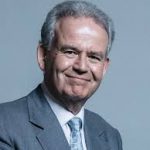
    Julian Lewis – 2022 Speech on Ukraine

    The speech made by Julian Lewis, the Conservative MP for New Forest East, in the House of Commons on 22 September 2022.

    I begin by congratulating the three Front-Bench spokesmen on the eloquence and unanimity that has been displayed. In studying the depravity of dictators, one quickly understands that cynicism has no limits and hypocrisy no boundaries. Putin likes to draw parallels with the second world war, and there are indeed parallels to be drawn. For example, the false flag operations go back to the very outbreak of that war. On 31 August 1939, Hitler would have had it that the war began because Poles attacked a radio station at Gleiwitz, on the east German border. They were in fact Nazis dressed up in Polish uniforms, and they even left the dead bodies of concentration camp victims as props in that scheme. It is a sign that Putin’s comparisons are insufficiently accurate or insufficiently free of hypocrisy that he does not recognise that what started that war was Stalin’s pact with the Nazis to divide up Poland between them.

    This is necessarily a short debate, which is just as well, because I side with those who do not think it is a very good idea for us to discuss military strategy in an ongoing campaign on the Floor of this House. What we can observe is that one complicating factor in a dictatorship such as Putin’s Russia is that there are no mechanisms whereby a leader who is unethical, irresponsible, incompetent and indeed murderous can constitutionally be removed. That has to be a factor in our considerations.

    If it were not too flippant, I would be tempted to remark that it is truly a sign of desperation and indeed substandard propaganda that a cheerleader for Putin yesterday threatened a nuclear strike on London if we continue to help Ukraine defend territory that is being illegally annexed. Given the extent of the property portfolios of so many of Putin’s oligarchs in the centre of this great city, they would, I think, have a word or two of objection to a Russian strategy of that sort.

    The beginning of the invasion left quite a few people thinking that resistance was unlikely to be successful. Indeed, it probably would not have been successful but for the supply of complex weapons systems that had taken place since the earlier invasion of Crimea. As a result, we have seen the Russians’ air arm neutralised, the Russian fleet’s major surface unit in the area sunk, tanks and other vehicles destroyed, and ground troops decimated. The only tactic that has been left to the Russian dictator has been the physical destruction—usually by long-range artillery—of territory that the Russians cannot take and hold.

    Bob Stewart (Beckenham) (Con)

    I totally agree with the comments of my right hon. Friend. I am sure this is happening, but combat supplies and spare parts need to be reinforced, because complex weapon systems go wrong and need to be repaired. While we are at it, as we come into winter, it would be good to provide the Ukrainian armed forces with simple little things such as face masks so they can go through the winter, because they probably do not have them.

    Dr Lewis

    Not for the first time, my right hon. and gallant Friend anticipates my next but one point. I will make the next point first, which is that, because the only tactic left is destruction, the area of doubt is how far Putin will go. Will he simply think that by escalating destruction, the Ukrainians will suddenly say, “We can’t take any more of this and we’re going to surrender”? Surely the events of the past months have shown that any such approach would be completely counterproductive. The more he behaves atrociously, the stronger the resistance will be and rightly so.

    My right hon. and gallant Friend referred to the supplies that we give. Of course it is greatly to the credit of the previous Government and, indeed, the previous Prime Minister, who spoke earlier in this debate, that we have given such substantial supplies, but in giving those supplies, we have seriously depleted our own stocks. What I need to hear from the Minister is that a full-scale effort is being made and will be increased to ensure that the more we give, the higher our rate of replacement will be, because an effort cannot be sustained if the people who are resisting run out of supplies.

    Finally, it would be remiss of me to conclude any debate about defence without making a reference to the need to reach 3% of GDP. We have made progress: we now have a pledge to reach 3% of GDP by 2030, but the situation in 2030 is a long way away—it is longer than the second world war, with which I began. We need to reach it sooner than that.

  • Stephen Kinnock – 2022 Speech on Ukraine

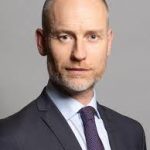
    Stephen Kinnock – 2022 Speech on Ukraine

    The speech made by Stephen Kinnock, the Labour MP for Aberavon, in the House of Commons on 22 September 2022.

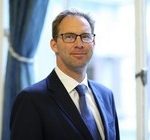
  • Tobias Ellwood – 2022 Speech on Ukraine

    Tobias Ellwood – 2022 Speech on Ukraine

    The speech made by Tobias Ellwood, the Independent MP for Bournemouth East, in the House of Commons on 22 September 2022.

    I also pay tribute to our armed forces, and their contribution to the incredible events that we saw play out on television over the past few days. It was no easy feat, and we can salute all our armed forces, but particularly those pallbearers who did such a magnificent job. I believe that a worthy way to immortalise Queen Elizabeth and what she did for our country as our longest-serving monarch would be to rename one of our bank holidays to Elizabeth day. That debate is for another day, but I hope we can return to it.

    It is an honour to follow the speech of my right hon. Friend the Member for Uxbridge and South Ruislip (Boris Johnson). He and I did not see eye to eye on everything, but in the case of Ukraine, I hope he recognises that I have always supported what he has done, and indeed, the nation can be proud of it. As I have seen on all my visits to Ukraine, the work Britain has done in stepping forward, more so than many other NATO nations, is recognised. Thanks are due to my right hon. Friend for leading that charge.

    I want to step back from what is happening in Ukraine for a second and look at the bigger picture. We must ask ourselves a fundamental question, one that I pose on a regular basis: is our world likely to become more or less dangerous over the next few years? I think the answer is very clear: it is the former. This is not just about Ukraine, but a worrying growth in authoritarianism versus democracy across the globe, and the emergence of a new alliance—one that is not so obvious yet—between Russia and China. They share a mutual disdain for not only our international rules-based order, but for the west and the United States in particular. They are challenging the status quo that we have enjoyed since the end of the cold war. We have enjoyed that relative peace for three decades, but we have become complacent in nurturing our democratic values, and authoritarian states are becoming bolder and more assertive in promoting their own agenda. Consequently, our world is becoming more siloed and more protectionist, and we have become more risk averse.

    Our actions now—what we do and how we handle Ukraine, given that the conflict is now moving into a darker chapter—will determine how the next decade plays out. China is watching our response carefully, given that it has its sights on Taiwan. Seven months on from Putin’s unprovoked invasion, the west is, I think, starting to wake up to the reality that state-on-state aggression is back, but our institutions built to constrain rogue actors are vulnerable, and new technology has given autocrats new forms of leverage. The art of conflict itself is consequently changing, with not just cyber-attacks, as mentioned already, but economic attacks, including the unprecedented use of international sanctions. All those things have global consequences for the way we do business.

    Mr Jonathan Djanogly (Huntingdon) (Con)

    Do we therefore need to look again at what constitutes going to war, not least because we can now destroy other societies without a single bullet being fired—through the use of cyber, for instance?

    Mr Ellwood

    This is moving into the area of Clausewitz and what exactly war is—whether it is simply the military on the battlefield, or the politics and the economics. We have not really woken up to that, but Putin is using politics and economics to harm the rest of Europe with oil and gas, as well as grain. There is an irony here: we will have a debate in this place tomorrow, as we absolutely should, about supporting people through the cost of energy crisis we are facing here, but many of our problems are actually in Europe. Sorting those out would be a huge step towards dealing with some of the local problems we are facing.

    We need to work more collectively and be less risk averse. We get spooked by some of the rhetoric that comes from Putin, and he has done it again by wanting to go down this avenue of using nuclear weapons. As has been touched on before, Russian doctrine includes the use of tactical nuclear weapons, and we need to understand that doctrine. The Minister refused to answer the question of my right hon. Friend the Member for Chingford and Woodford Green (Sir Iain Duncan Smith)—others are saying, “Quite right.”

    We need clarity on what our doctrine is because it needs to be confirmed with our allies as well. We could cross a threshold here and we would not necessarily know what to do. I am afraid that Putin has taken advantage of our risk-averseness and of the fact that we have put red lines in, such as over chemical weapons in Syria, and then not responded. People can shake their heads as much as they like. This is an awkward conversation that needs to be had as to what Britain, NATO and the United States will do if a low-yield tactical nuclear weapon is used in the Donbas region. I pose that as a question. We can take it behind the scenes and not discuss it, and then it will actually happen and we will look at each other and say, “What do we actually do?”

    Russia needs to know that we are willing to stand up to what Putin is doing, otherwise he will continue, as will other adversaries, to take advantage of our collective weakness. We have done well to provide the weapons systems to Ukraine to advance it in what it is doing. We now need to take it further and leverage that ability to push forward, as my right hon. Friend the Member for Uxbridge and South Ruislip said, to make sure that we can conclude what goes on in Ukraine. If we do not put out this fire in Ukraine, it will spread elsewhere.

  • Stewart McDonald – 2022 Speech on Ukraine

    Stewart McDonald – 2022 Speech on Ukraine

    The speech made by Stewart McDonald, the SNP MP for Glasgow South, in the House of Commons on 22 September 2022.

    I am grateful, Madam Deputy Speaker.

    I nodded along in agreement with much of what the former Prime Minister, the right hon. Member for Uxbridge and South Ruislip (Boris Johnson) said. I think it fair to say that when the February invasion took place, he and his Government, particularly the Defence Ministers on the Front Bench today, got the calls on Ukraine right. It is important to acknowledge that. Based on his remarks, I think he will do well in his new role as my warm-up act here in the Chamber.

    I pay tribute to the new Under-Secretary of State for Defence—the hon. Member for Wrexham (Sarah Atherton), who is not in her place right now—and congratulate those colleagues who have managed to stay in position amid the many changes. I also wish the right hon. Member for Tonbridge and Malling (Tom Tugendhat) well as the new Minister for Security. He was formerly the Chairman of the Foreign Affairs Committee, of which I am a member; I think we will be in for various auditions for his replacement as this afternoon’s debate goes on.

    Before I come to the crux of my remarks, I should also draw the attention of the House to my entry in the Register of Members’ Financial Interests.

    It was a pleasure, just two weeks ago, to be back in Ukraine and back in Kyiv—with some colleagues who I hope we shall hear from this afternoon—a country and a city that I have come to know and love over a few years now. On this occasion I was there to attend the annual YES—Yalta European Strategy—conference, which brings together civil society, political leaders, military leaders, academics, and others from around Europe to discuss Ukrainian and European security. There were many facets to the fascinating set of discussions that we had during the two days that our delegation spent there. It was also a real pleasure to meet members of Ukraine’s armed forces—who have so heroically not just fought for their country, but fought for what we all stand for and have cherished since 1945—and of course, the man himself, President Volodymyr Zelensky, who, as the former Prime Minister said, embodies everything that is noble in Europe right now.

    Here we are, seven months on from this wave of a war that started in 2014, in which we have witnessed a level of barbarism and butchery that few of us could have imagined. Hospitals, schools and people’s homes have been the targets. We have seen, in Bucha and also more recently, evidence of some of the most heinous war crimes imaginable.

    Wera Hobhouse

    I did not have the opportunity to ask the former Prime Minister about his commitment to treating sexual crimes as war crimes. Can we all, on both sides of the House—including the hon. Gentleman—come together in viewing sexual violence as a war crime like any other?

    Stewart Malcolm McDonald

    Yes, I think we can come together and agree on that. I am sure that other colleagues will want to discuss it in great detail.

    So here we are, seven months on from this invasion, and—as was mentioned by the former Prime Minister—much in the world has changed. Sweden and Finland have joined NATO, unity among western countries is something like never before, and, indeed, unity in this House is something like never before. In fact, we may have been only partly joking with our Ukrainian counterparts, during a recent visit, in saying that supporting Ukraine might well be the only issue that unites this House. Given the noises coming from the new Government, I suspect that that will be even more the case, but it is important for that unity to be maintained and developed in support of Ukraine.

    Back in February the German Federal Chancellor, Olaf Scholz, told us that not just his country but all of Europe was at a turning point: a Zeitenwende, as they say in Germany. Seven months on, however, it seems to me less like a turning point and more like Gramsci’s interregnum, in which the old is dying but the new cannot yet be born. At the moment, we are in a messy flux. While I think that the unity of purpose that we have is serving us well to get through the tumult that we are going through and Ukraine is going through, I also think that there is much in our own record—the record of all of us in the House and across the west—that we need to assess, going back, yes, to 2014, but also to 2008. I have to say to the former Prime Minister that we should consider the issue of how Russian money has been treated in this country.

    I think it takes a lot to admit it when one has got things wrong, and I think it only fair that we, as staunch partisans at times, give our opponents the space to make that admission. It is easier said than done, but if the new world that is incubating in the messy time in which we are currently living is to be born, that is the way in which I think we have to approach it.

    There is another important point to be made. As the winter bites and energy prices go through the roof, and as what in some quarters has been called “Ukraine fatigue” may start to settle in, there is a particular group of people in society of whom I think we should be mindful: those whom the Germans call the Putinversteher, the “Putin whisperers”, who would seek to apologise for, or contextualise, or somehow make excuses for Russian “legitimate” interests in Ukraine. They should be thoroughly ignored. Since the February invasion, they have, temporarily and rather embarrassingly, been silent, but they are undoubtedly starting to rear their heads again.

    Dame Nia Griffith (Llanelli) (Lab)

    Does the hon. Gentleman accept that many of those people are being fed by Putin’s cyber-warfare and that this country and our allies really need to invest in counter-offensive material?

    Stewart Malcolm McDonald

    Yes, I agree. The hon. Lady is absolutely spot on. One of the most insidious arguments from that particular group—and they can be found on the extreme left or the extreme right, in every country and in Parliaments, National Assemblies, the media, think-tanks and elsewhere—is that we should stop arming Ukraine. I am sure that I speak for everyone that I was in Ukraine with recently when I say that we could see and hear up close what a difference arming Ukraine is making.

    That support has to continue for three main reasons, which I will outline as briefly as possible. First, I do not believe that it is possible to negotiate with Vladimir Putin. We should look at his record not just in Ukraine right now but in Georgia and Syria. This is a Government who practise the famous double-tap strike, whereby the Russian armed forces hit an area, wait for the first responders to arrive and then hit it again. I do not think that it is possible to negotiate with a regime that carries itself in that way.

    The former Prime Minister is absolutely right to say—this is another important point—that anything we do going forward has to be on President Zelensky’s terms. Ukrainians do not want to negotiate with the regime in the Kremlin. We only have to look at the sheer joy on their faces when Ukrainian armed forces turn up in their towns and villages to liberate them and save them what has been experienced in Bucha, Mariupol and Kherson. The emotional scenes that we have seen and, I am sure, will continue to see tell us that we have got our support for Ukraine right. They should also put paid to the ideas of extremists—that is the only way to describe them—who would seek to divvy up Ukraine on a map. I would love to hear them tell me which towns they would like to see handed over to the Kremlin.

    When we were in Ukraine, we met a young 15-year-old guy and his father. I am sure that Members will have read about Andriy Pokrasa and his father. When Russians were surrounding his village, he had the bravery and ingenuity to launch his own drone into the air to take photographs of Russian positions and send them to the Ukrainian armed forces. Members can imagine what happened to those Russian positions soon afterwards. He is now back at school studying. It was an honour to meet him. I would love to see one of these armchair extremists tell him that he should instead have gone out and negotiated with the Russians at the end of his street. Imagine what would have happened had he been caught. They knew the danger, but still they did everything they could to defend not just their own hometown but their country as well.

    Lastly, the war is not just a war on territory. It is a war on values, liberalism, democracy, sovereignty and everything that we have cherished since 1945. I do not think that that is the kind of thing that can be negotiated away lightly. The Putin whisperers must be ignored. They must feel the complete contempt of those of us who want to see Ukraine win. The war could stop tomorrow if Russia stopped fighting, but if Ukraine stops fighting, the country will cease to exist. A Russian victory would be a disaster for everyone in Europe, and it is something that we should not even consider. Russian soldiers and now this latest group of conscripts will be fighting solely for their wages, while Ukrainian soldiers fight for their future and for ours. We all remain united in this House. Ukraine must win. We must continue to support them. And it is in that vein that I offer that support to the Government this afternoon.

  • Boris Johnson – 2022 Speech on Ukraine

    Boris Johnson – 2022 Speech on Ukraine

    The speech made by Boris Johnson, the former Prime Minister, in the House of Commons on 22 September 2022.

    It is now seven months since Vladimir Putin launched his vile, illegal and unprovoked war against an innocent European country. In those seven months, his actions have cost almost as many Russian casualties as were sustained in the whole 10-year Russian invasion and occupation of Afghanistan. If he continues at this rate, it will not be that long before Russian losses in Ukraine exceed American losses in the 20-year Vietnam conflict. And that is before we have counted the Ukrainian losses in the past seven months and the catastrophic suffering that Putin has inflicted on those people: the torture, systematic rape, mass murder and deliberate targeting time after time of apartment blocks, schools, kindergartens and hospitals.

    In all those seven months of horror that this modern Moloch has personally unleashed, he has not attained a single one of his objectives in a war that, let us not forget, was meant to be over in days. He has not overturned the Ukrainian Government or captured the capital city. He has not even secured the Donbas—far from it. Instead of coming to terms with the reality of his mistake—I mean his complete misunderstanding of what Ukraine is and what really motivates Ukrainians, which is a simple love of their country—he has decided to double down on disaster. He announced the mobilisation of 300,000 more young Russians, a move that has caused such panic among people about to be fed into the meat grinder of Putin’s warzone that yesterday, in a single day, the price of a one-way air ticket from Moscow to South Africa went up to $50,000.

    Those potential conscripts can see that what began as a war to rebuild the Soviet empire has collapsed into a shameful war to save Putin’s face. They have no desire to be sacrificed on the altar of his ego. At the same time, as Members from both Front Benches have pointed out, he is threatening to hold sham referendums in the territories he has occupied and then to defend those territories with every weapon, as he says, in his arsenal, in words that he hopes will make our flesh creep and weaken our resolve. He will fail in that pitiful bluster, because he can see and we can see that he is escalating his rhetoric not because he is strong, as has been said, but because he is weak. He is transparently a problem gambler who takes more risks not because he is winning but because he is now terrified of losing.

    Chris Bryant

    Putin did exactly the same, of course, in 2014. He held a fake referendum in Crimea and, unfortunately, the will of the west weakened. How do we make sure that people such as Orbán in Hungary and those who are preaching disinformation in Italy do not win the day and that we maintain the united strength of the west?

    Boris Johnson

    I thank the hon. Gentleman very much for his point and I will come directly to what happened in 2014 in just a minute. He should not underestimate the continued unity of the west. That is one of the signal achievements of Vladimir Putin in the past seven months: he has seen a more coherent and unified western alliance, and a stronger NATO perhaps, than at any time in the last 20 years.

    Dr Luke Evans

    Will my right hon. Friend give way?

    Boris Johnson

    If I may, I will just make some progress, Madam Deputy Speaker, as you wanted me to keep within 10 minutes. I will do my best.

    Thanks to the heroism of the Ukrainian armed forces, thanks in part to the weapons we are proud to be offering —I congratulate the Minister for the Armed Forces and Veterans, my right hon. Friend the Member for Wells (James Heappey) on his description of the work of the UK armed forces and the huge list of weapons we are sending—and thanks, too, to the inspirational leadership of Volodymyr Zelensky, the Russian forces have, in recent days, been expelled from large parts of the north-east of the country around Kharkiv. They are under increasing pressure in Kherson in the south. I have no doubt whatever that the Ukrainians will win, because in the end they have the inestimable moral and psychological advantage of fighting for their country in their country against an enemy that is increasingly demoralised and confused about what they are meant to be doing in that country and what they can hope to achieve.

    At this turning point in the war, it is more vital than ever that we have the strategic patience to hold our nerve and ensure that Ukrainians succeed in recapturing their territory right to the borders of 24 February and, if possible, to the pre-2014 boundaries, because that is what international law demands. The hon. Member for Rhondda (Chris Bryant) is correct: it was our collective failure to insist on upholding international law eight years ago that emboldened Putin to launch his disastrous invasion this year.

    If Putin is going to double down on his aggression, we must double down in our defence of the Ukrainians, and we must be prepared to give more military assistance and more economic support, so I welcome warmly the announcements from the Government this week. We must work with our friends and partners, as well as the Ukrainians, to ensure that we provide that country with the long-term assurance they need on their security and defence that we have failed so far to provide in the 31 years since independence.

    If anyone has proved the absolute necessity of those guarantees, it is Vladimir Putin and his war. We must close our ears in the months ahead to the absolute rubbish he talks. This is not some nuclear stand-off between NATO and Russia, as he seemed to pretend yesterday; this is a war of aggression by Russia against an innocent neighbour. We are helping with equipment and training, as we might help a neighbour to fight a fire when their house has been attacked by an arsonist. NATO is not engaged in a war against Russia. We are not engaged in a war against Russia, let alone against the Russian people.

    By the way, we are not concerned here with regime change in Moscow, as Vladimir Putin egocentrically likes to claim. Whatever politics may hold for Putin may be the subject of an interesting debate, but that is not the issue at stake. There is only one objective: the sovereignty, independence and freedom of the people of Ukraine. That is our objective and we must acknowledge that the months ahead will be tough for Ukraine, Britain and the world.

    For all the latest Ukrainian successes, Putin is still the possessor of almost 20% of Ukrainian territory and it may well be time-consuming and costly to winkle him out. I have no doubt that in the hard winter months ahead, with the price of energy continuing to inflict hardship on people in this country and around the world, there will continue to be some who draw the false conclusion that the Ukrainians must be encouraged to do a deal, to trade land for peace, to allow Russian gas to flow to Europe. Even if it were politically possible for Volodymyr Zelensky or any Ukrainian Government to do such a deal—which I very much doubt—there is absolutely no sign that Putin either wants such a compromise or can be trusted to deliver it, because he would continue to remain in position and could invade that country in the future.

    As I have told the House many times before, any such deal or compromise would send a signal around the world that violence does pay off, that might is right and that when the going gets tough, the great democracies will not have the stomach to stick up for freedom. That is why we have absolutely no choice but to stay the course and to stay resolute. We should be confident because, with every week that goes by, our position gets stronger and Putin’s position gets weaker.

    Although times are tough for families now, we should be in no doubt that this country has the economic muscle not just to help people with the costs of energy caused by Putin’s war, but to provide the long-term resilience of a secure and independent UK supply—including more nuclear, much more wind in the transitional period and more of our own hydrocarbons—to ensure that we are never again vulnerable to Putin’s energy blackmail.

    It is a measure of Vladimir Putin’s giant strategic failure that he has not only united the west against him—the strength of that unity is remarkable, and by the way he has encouraged two hitherto neutral countries, Sweden and Finland, to join the NATO alliance, which would have been unthinkable a year ago—but decisively alienated his most valuable western customers from his most important Russian exports, oil and gas, with incalculable consequences for his people’s economic future.

    Stephen Kinnock (Aberavon) (Lab)

    Further to the right hon. Gentleman’s point about economic resilience, does he think that enough was done during his time as Mayor of London, and indeed during his time in this place, to deal with the issue that London has become a laundromat for dirty Russian money? Does he think that there are lessons to be learned from that period that he can share with the House?

    Boris Johnson

    I think the whole House will agree that since the invasion on 24 February the UK has led the world in imposing sanctions on Russia and in mobilising diplomatic, political and military support for the Ukrainians. I think that most impartial observers around the world—and I meet a lot of them—believe that if it had not been for the actions of the UK Government, things might have been different. I am delighted to see this Administration continuing with the commitments that we began; the financial commitments in particular are extremely important.

    Wera Hobhouse (Bath) (LD)

    Will the right hon. Gentleman give way?

    Boris Johnson

    I am just about to conclude.

    If it were not for Putin’s inability to see what is really happening—if he were not locked, as it were, in a windowless dungeon surrounded by bodyguards, spies and sycophants in a sort of Lubyanka of the mind—he would see the tragedy that he has unleashed. He would withdraw from Ukraine before he is pushed out—and he is going to be pushed out.

    In the past seven months, the sufferings of Ukraine have moved the world; I know that they have moved everybody in this House and in this country. We grieve for the people of Ukraine, and we open our hearts to them as few other countries have done. We know that, thanks to their bravery and sacrifice, their day of freedom is coming. When that day comes, we will rejoice with Ukraine, and that rejoicing will echo around the world. Until that day comes, I am sure that this House and this country will stand in unshakeable support for the people of Ukraine.
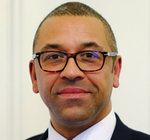
  • James Cleverly – 2022 Speech to UN Security Council Meeting on Ukraine

    James Cleverly – 2022 Speech to UN Security Council Meeting on Ukraine

    The speech made by James Cleverly, the Foreign Secretary, in New York on 22 September 2022.

    Madame President, Mr Secretary General, Mr Khan, Thank you.

    Seventy seven years ago, UN members agreed solemn principles in the UN Charter, vital for international peace and security. They undertook to refrain from the threat or the use of force against the territorial integrity, or political independence, of any state.

    Yet 7 months ago, President Putin invaded Ukraine illegally and without justification he ignored the resounding pleas for peace that I heard in this Council on 17 February.

    Since then, Ukrainians’ spirit of defiance, in defence of the protection of their country, continues to inspire free peoples and nations.

    Every day, the devastating consequences of Russia’s invasion become more clear. UN agencies have confirmed more than 14,000 civilian casualties so far – and the actual total likely to be much higher more than 17 million Ukrainians in humanitarian need; 7 million displaced within Ukraine and more than 7 million Ukrainian refugees in Europe.

    We see the mounting evidence of Russian atrocities against civilians. Including indiscriminate shelling and targeted attacks on over 200 medical facilities, and 40 educational institutions and horrific acts of sexual violence.

    We see from the reports of the Office of the High Commissioner for Human Rights that in parts of Ukraine currently under Russian control civilians are subjected to torture, arbitrary detention, and forced deportation to Russia. And we have seen more grisly discoveries in Izyum.

    It is not just Ukrainians who are the victims. President Putin’s war has spread hardship and food insecurity across the globe plunging millions of the world’s most vulnerable into hunger and famine.

    And once again, as we’ve seen here today, Russia has sought to deny responsibility. It has tried to lay the blame on those who have rightly imposed sanctions on President Putin’s regime in response to his illegal actions.

    To be clear we are not sanctioning food. It is Russia’s actions that are preventing food and fertiliser getting to developing countries. It is Russia’s tactics and bombs that are to blame for destroying Ukraine’s farms, infrastructure, and delaying its exports.

    I sat here in February, listening to the Russian representative assuring this Council that Russia had no intention of invading its neighbour. We now know that was a lie.

    And today I have listened to further instalments of Russia’s catalogues of distortions, dishonesty, and disinformation. He has left the Chamber. I am not surprised, I don’t think Mr Lavrov wants to hear the collective condemnation of this Council but we saw through him then and we saw through him today.

    We have information which means that we know that Russia is about to hold sham referenda on sovereign Ukrainian territory with no basis in law, under the threat of violence, after mass displacements of people in areas that voted overwhelmingly for Ukrainian independence. We know what Vladimir Putin is doing. He is planning to fabricate the outcome of those referenda. He is planning to use that to annex sovereign Ukrainian territory. And he is planning to use it as a further pretext to escalate his aggression. That is what he plans to do.

    And we call on all countries to reject this charade and refuse to recognise any results. We are used to seeing Russia’s lies and distortions.

    But let us listen to the testimony of Ukrainians who tell us about the reality of President Putin’s war.

    Dr Olena Yuzvak, her husband Oleh and their 22-year-old son Dmytro, were abducted by Russian forces from their home in Gostomel, near Bucha, in March. The soldiers shot Oleh twice in the legs, before they were all blindfolded and bundled into an armoured personnel carrier.

    I want you to hear Olena’s story in her own words:

    First, they took us to a bombed-out house. The Russian soldiers kept saying they were going to kill us. My husband was left for hours lying on the floor in a pool of blood. I don’t know why. We’d done nothing wrong. Then they took my son away from us. I don’t know where. I don’t know if we’ll ever see him again. I just want my boy back.

    Olena’s story, and those of many others, tell us the truth, the real truth.

    This is a war of annexation. A war of conquest. To which President Putin now wants to send even more of Russia’s young men and women, making peace even less likely.

    Mr Putin must understand the world the world is watching and we will not give up.

    As members of the Security Council, we must unequivocally reject Russia’s attempts to annex Ukraine’s territory. We must make clear to President Putin that his attack on the Ukrainian people must stop, that there can be no impunity for those perpetrating atrocities and that he must withdraw from Ukraine and restore regional and global stability.

    If he chose to, he could stop this war, a war which has done untold damage to the Ukrainian and the Russian peoples. His war is an assault on Ukraine, an assault on the UN Charter, and an assault on the international norms that protect us all.

    So we stand with our Ukrainian friends for as long as it takes. Because Ukraine’s fight for freedom, is the world’s fight for freedom. It is our fight for freedom. And if Ukraine’s sovereignty and territory are not respected, then no country is truly secure.

    These are the reasons why Ukraine can, and must win.

    Thank you.

  • Luke Pollard – 2022 Speech on Ukraine

    Luke Pollard – 2022 Speech on Ukraine

    The speech made by Luke Pollard, the Labour MP for Plymouth Sutton and Devonport, in the House of Commons on 22 September 2022.

    I start by welcoming the wonderful news of the release of British prisoners of war overnight. It is welcome that they are returning home, but we recognise the pain and hurt of all the families involved, because not everyone is returning safely.

    I also welcome the Minister’s new job in the Cabinet. Before the last reshuffle, the shadow Front Bench team said to the Front Bench team that we were hoping that he and the Defence Secretary would stay in their positions, and they have. I also welcome the new Minister, the Under-Secretary of State for Defence, the hon. Member for Wrexham (Sarah Atherton), to her place.

    Seven months on from Russia’s criminal invasion of Ukraine, we have reached a new and critical phase of the ongoing conflict. We should all be inspired by the remarkable resilience of the people of Ukraine, who have refused to bow to Russia’s oppression. I recognise the extraordinary Ukrainian counter-offensives that have taken place in recent weeks, which the Minister set out in such detail.

    Our argument has never been with the Russian people but with the dictator in the Kremlin. Overnight, we have seen brave Russian civilians stand up to the authoritarian state that curbs their freedom, restricts their voice and keeps the people in poverty while the oligarchs count their yachts and villas. Today, possibly thousands of Russian civilians are in jail, arrested simply for exercising their human right to protest. As we have stood with the Ukrainian people against aggression, I make special mention in the House of the courage of those protesters.

    The horrors of war that we have seen in the newly liberated areas remind us of the atrocities and the pain that many Ukrainians have suffered in the past weeks. I join the Minister in setting out a clear determination that those responsible must be prosecuted and brought to justice for the hideous war crimes that we are seeing unfolding.

    Dr Murrison

    It is welcome news that a load of generals and colonels have been sanctioned and placed in The Hague’s waiting room, as it were, but does the hon. Gentleman agree that we need to go much further down the food chain than that? Each and every one of the individuals involved in those atrocities needs to have their card marked. They have dishonoured the profession of bearing arms and need to be dealt with sooner or later.

    Luke Pollard

    I agree with the right hon. Gentleman. Anyone who perpetrates war crimes against civilians must know that, in the 21st century, they will be prosecuted and followed in the pursuit of justice from the day they commit that atrocity to the day they die. We must not leave any space, justification or excuse for war crimes— at all, anywhere, ever. That is a message that will be sent from hon. Members on both sides of the House to those people, regardless of rank, who have persecuted civilians and committed war crimes against them.

    Alicia Kearns

    One of my grave concerns is the prosecution of sexual violence in conflict. The issue is that, often, we cannot get the evidence, because by the time the prosecution has come—once the shame has been allowed to pass and there has been discussion—it is too late to collect that evidence. I would welcome the hon. Gentleman’s thoughts on a special tribunal formed to collect evidence and prosecute sexual crimes to ensure that, in all conflicts, evidence is collected at the start to ensure prosecutions at a later stage.

    Luke Pollard

    I am grateful for that intervention. The shadow Minister for Foreign and Commonwealth Affairs and International Development, my hon. Friend the Member for Cardiff South and Penarth (Stephen Doughty), and I were in Kosovo only a few months ago, where we witnessed the effects of the horrible sexual violence that was used as a weapon of war. The determination of the international community then was that it would never be repeated, but it has been in conflicts ever since. We need to make sure that not only is the evidence collected, but the victims are given the support that they will need, in many cases, for the rest of their lives. As we made it clear that killing civilians will not be countenanced, so we make it clear that using rape and sexual assault as a weapon of war will not be countenanced. We will come after those people as well.

    Bob Seely

    In the Syrian war, the Russians and their Syrian allies targeted hospitals as primary targets. Does the hon. Member agree it is regrettable that at the time we did not say and do more and that the international community did not say and do more to hold responsible those senior army officers who were responsible for the deliberate targeting of hospitals, which is one of the most basic breaches of the Geneva conventions?

    Luke Pollard

    I am grateful for the hon. Member’s intervention, and I do tend to agree with him. As a country, we need to take stock of the freedom that Putin has been given over many years—not just in Syria or parts of the countries bordering his country, but in Crimea—because the tactics the Russians are using in Ukraine now have been perfected over many years and the space the international community has given him to do that has encouraged the use of many of those tactics. We need to look carefully at how we stand up for such individuals in the future, but we will do that by standing firmly with the people of Ukraine at this time. I will make some progress before I give way again.

    It is clear that Vladimir Putin is a bully. His partial mobilisation announcements along with his sham referendums to illegally annex large swathes of Ukraine are shameless. They are a cynical attempt to justify a war that has gone badly wrong for Russia. We should view partial mobilisation as weakness—an attempt to hide the fact that, so far, Russian strategy has failed, weapons have failed, command and control has failed, and none of Russia’s war objectives has been met. Putin’s latest miscalculation will lead to more Russian families losing their sons, more Ukrainians being killed and more suffering. The mobilised forces sent to Ukraine will be on the receiving end of high-end western weaponry, and a determined and morally just Ukrainian military defending every inch of its country. In these circumstances, with the poorly equipped Russian conscripts facing cold weather, it is perhaps not surprising that we are seeing so many reports of desertion and troops being unwilling to fight. That means Putin will, I regret, resort to more and more fear to try to achieve his objectives.

    Richard Graham (Gloucester) (Con)

    I think the cross-party support we are hearing today for Ukraine and for the victims of murder and sexual violence sends a very powerful message. Does the hon. Member agree that the next challenge, even though it feels early to be thinking this yet, is to be preparing to win the peace? Quite often in the past, when we have left military successes—Iraq would be the outstanding example—we have not laid strong foundations to win the peace. Does he agree that we could use our soft power and places such as Wilton Park to hold conferences with the Ukrainians about what sort of democracy and peace we can help them create after this is all over.

    Luke Pollard

    I thank the hon. Gentleman for his intervention, and I agree with him that our commitment to the people of Ukraine has to be long term—ensuring not only that they win and Putin fails, but that they can rebuild a nation that is proudly sovereign, proudly independent, safe and secure, and able to stand tall on the international stage, which is precisely what Vladimir Putin would fear the most. That is what our commitment must be, and I share the hon. Gentleman’s view that that commitment and determination is cross-party—from every single party in this place.

    The actions and rhetoric we are seeing from Vladimir Putin are not new, sadly. I agree with the Minister when he says that Putin’s words on the use of nuclear weapons is sabre rattling, and it is a weakness of his argument that he is resorting to it. These are the actions of a desperate man clinging to power at the helm of a pariah state. His threats should not only be condemned by every party in our Parliament, as they are, but by every country—every peace-loving country—on this planet. His actions show how desperate he is, how weak he is and how much he has miscalculated, and those actions show that he must fail.

    We must not downplay the seriousness of the situation. People at home and abroad, having heard those words, are understandably worried about the gravity of the threats that have been made by Russia. In this House, however, we must be careful not to fan the flames of Putin’s information war of fake news. I think I speak for everyone in this place when I say that now is not the time for the UK to weaken or dilute our resolve for Ukraine, but to remember that at heart Putin is a bully and the only way of standing up to a bully is by making sure that we do so firmly and determinedly, and that such a commitment is long lasting.

    Chris Bryant (Rhondda) (Lab)

    I completely agree with what my hon. Friend is saying about Ukraine now, but we could have been saying it back in 2014. One problem is that we did not take this issue seriously enough in 2014, because that emboldened Putin and now we see what we see. I worry that sometimes we focus exclusively on things that Putin says about nuclear weapons, and not enough on the warfare in which he has already engaged with this country through cyber, targeting many Members of the House and the political establishment. Do we need to do far more to ensure that we are protecting ourselves?

    Luke Pollard

    I agree with my hon. Friend. His has been a siren voice that has been warning this House and the public about Putin’s actions for a great many years, and we must ensure that those lessons are learned. Putin has been telling the international community what he wants to do for many years, and he has been engaging in economic warfare, cyber-warfare, disinformation and political interference for many years. We need to strengthen all our fronts if we are to deter that type of behaviour, not only from Russia but from other states that wish to do us harm in the future.

    Alex Sobel (Leeds North West) (Lab/Co-op)

    To follow on from the point made by my hon. Friend the Member for Rhondda (Chris Bryant), my hon. Friend the Member for Plymouth, Sutton and Devonport (Luke Pollard) was with me in Kosovo a couple of months ago where we heard about a Russian disinformation, misinformation, and hacking centre that employs thousands of personnel in Serbia. Do we also need to take this fight to third countries that are facilitating Russian misinformation, disinformation and hacking, including in Ukraine, the Balkans, the Baltic states and around the world?

    Luke Pollard

    My hon. Friend is right. The cyber-campaigns against the west and against freedom and democracy are not contained only to bot factories in St Petersburg; they are deliberately being deployed around the world through, in many cases attempts of deniable cyber-warfare. We know that is coming, and we must ensure that we strengthen our own defences—political, military, economic and cyber—against that. At this very moment there are probably enormous numbers of posts on social media feeds across Britain that are seeking to spread misinformation. We must be alive to the reasons why they are there, to why Russia is investing in that capability, to what effect they are seeking to create in our society, and we must counter that. That is a job not only for ourselves, but we must also support our allies in doing so.

    We need a long-term joined-up strategy. We know that despite Putin’s strategic miscalculation, Russian aggression will continue. The Government have had Labour’s full backing to provide military support to Ukrainian troops, and they will continue to have that. We welcome the new Prime Minister’s confirmation that this year’s military funding for Ukraine will, as a minimum, be matched over the next year. However, we now need to set out a clear strategy for what military, economic and diplomatic support for Ukraine will be. In summer the Government said that they would set out a roadmap for that, and I would be grateful if, when he responds to the debate, the Minister said when he expects that to be published.

    Christine Jardine (Edinburgh West) (LD)

    Does the hon. Gentleman agree that one important aspect of that is that a great many other eastern European countries and former Soviet states along the Russian border have been carefully watching what happens in Ukraine with some trepidation? It is as important to have a long-term strategy for Ukraine as it is to reassure those countries of NATO’s commitment to their future.

    Luke Pollard

    I agree with the hon. Lady. Our commitment to our allies in eastern Europe must be concrete and long-term, and we must also consider the tactics and strategies used by Russia in Ukraine to update how we plan to defend and deter any aggression. We have seen with the development of pinpoint accuracy artillery fire and loitering munitions that some of the tactics we once thought we would deploy may need to be updated to ensure that we can deter any threat and, if a threat moves to actual military conflict, that we can win in those circumstances. I am grateful for the hon. Lady’s intervention.

    The strategy that I hope the Minister will outline should set up long-term, politically broad support for Ukraine in the future, because only a long-term strategy will reassure the Ukrainians, and also the British people, that we will stand unwaveringly with their country. It will also send a clear, unmistakable message to the Kremlin that Britain will continue to stand with Ukraine and our NATO allies for as long as it takes to see off Russian aggression, not just in Ukraine, but in the Baltic states, in Bosnia and Kosovo, in the Mediterranean and the middle east, in the north Atlantic and the high north, and on social media as well.

    That means that we need to look at the Prime Minister’s announcement in updating the integrated review. The Prime Minister’s commitment to match the funding for military assistance to Ukraine next year is welcome, but we are yet to see the action plan that will give us the detail. We need to see that in the context of the UK’s wider defence arrangements. A few weeks ago, the Leader of the Opposition and the shadow Defence Secretary visited the British Army’s outstanding training program for Ukrainian forces, meeting the brave Ukrainian troops who are by now on the frontline, fighting in the Donbas, having been armed with British skill on that training program. This is a vital training program for the Ukrainians, which should be expanded and extended throughout next year and beyond, if the Ukrainians need it, and should also include cold weather training.

    This week the Prime Minister also confirmed that the Government will update the integrated review of foreign and defence policy in response to the ongoing situation in Ukraine. I welcome this U-turn, which is good news. While Labour has been arguing for months for the need to update our defence plans, 20 of our NATO allies have already rebooted their defence plans and their spending since the invasion of Ukraine started in February. The decision that has now been taken should have been based on national security, not the Conservative leadership contest, but it is a welcome U-turn. Labour is ready to contribute and happy to support the Government in making sure that the next integrated review corrects the mistakes of the current one. However, if we want to pursue the persistent global engagement that was so present in the last integrated review, we must not cut 10,000 troops from our Army, and should look again at scrapping Hercules military transport planes, the plans to cut 10% of the reserves and our failure to have a war-fighting division able to be contributed to NATO until 2030.

    An updated integrated review must also make British industry and our peacetime defence procurement systems a major priority. We cannot support Ukraine in the long term or ensure our own UK security when, on day 211 of this conflict, the MOD has still not proved capable of signing the contract to produce replacement stocks for the highly valued NLAW—next generation light anti-tank weapon—missiles that the Ukrainians are using to defend against the Russians. I would be grateful if, in summing up, the Minister set out when the Government expect that contract to be signed and when those missiles will be delivered, because depleting our stockpile is not a good strategic answer.

    Wayne David

    I very much agree with my hon. Friend. Does he also agree that it is essential that, at this crucial time especially, the Government do not make snide remarks about our European partners? It is very important to have the maximum unity in opposing what Russia is doing in Ukraine.

    Luke Pollard

    Rebuilding our European relations is a key part of making any integrated foreign policy review work. Those of us on the Opposition Benches can say very clearly that our friends across the channel are our friends. They are not our foes—there is not a question mark about it—and we stand with them in the face of Russian aggression. This is not a political game to be played. When the Kremlin can find division between the allies of the west, it will exploit it. We must stand firmly with our allies against this.

    It would be remiss of me not to mention the armed forces’ incredible contribution on display last week during the late Queen’s state funeral. As a Plymouth MP, I am especially proud of the contribution of forces based across the south-west of England. I would like to put on record Labour’s thanks for the armed forces’ steadfast dedication to our country. They really have shown the best of Britain, and we are incredibly grateful for the part they played and continue to play in supporting Ukraine against Russian oppression. It was an honour to meet today, on a cross-party basis, some of the pallbearers who carried the Queen’s coffin.

    Finally, on the Labour Benches, we are taught, as part of the trade union movement, that unity is strength—that we stand together and we are not divided. I say to the Minister that this is now a cross-party sentiment in this place, because it is the strength of Westminster when the party that I represent, the party now in government and every other party stand together in the face of such aggression, and we will continue to do so until Ukraine is free.