Author: admin

  • Nicola Sturgeon – 2023 Resignation Statement

    Nicola Sturgeon – 2023 Resignation Statement

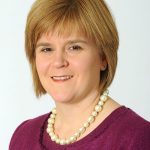
    The statement made by Nicola Sturgeon, the First Minister of Scotland and the Leader of the SNP, on 15 February 2023.

    Being First Minister of Scotland is in my – admittedly biased – opinion the best job in the world.

    It is a privilege beyond measure – one that has sustained and inspired me, in good times and through the toughest hours of my toughest days.

    I am proud to stand here as the first female, and longest serving, incumbent of this great office.

    And I am proud of what has been achieved in the years I’ve been in Bute House.

    However, since my first moments in the job, I have believed that part of serving well would be to know – almost instinctively – when the time is right to make way for someone else.

    And when that time comes, to have the courage to do so – even if, to many across the country, and in my party, it might feel too soon.

    In my head and my heart I know that time is now;

    That it is right for me, for my party, and for the country;

    And so today, I am announcing my intention to step down as First Minister and leader of my party.

    I have asked the National Secretary of the SNP to begin the process of electing a new party leader, and I will remain in office until my successor is in place.

    I know there will be some across the country who feel upset by this decision, and by the fact I am taking it now.

    Of course, to balance that, there will others who – how should I put this – will cope with the news just fine!

    Such is the beauty of democracy.

    But to those who do feel shocked, disappointed, perhaps even a bit angry with me, please know that, while hard – and be in no doubt, this is really hard for me – my decision comes from a place of duty and of love.

    Tough love perhaps – but love nevertheless, for my party and above all for the country.

    Let me set out – as best I can – my reasons.

    First, though I know it will be tempting, unavoidable perhaps, to see it as such, this decision is not simply a reaction to short term pressures.

    Of course, there are difficult issues confronting the government just now. But when is that ever not the case.

    I have spent almost three decades in front line politics – a decade and a half on the top or second top rung of government.

    When it comes to navigating choppy waters, resolving seemingly intractable issues, or soldiering on when walking away would be the simpler option, I have plenty experience to draw on.

    So if this was just a question of my ability – or my resilience – to get through the latest period of pressure, I would not be standing here today.

    But it is not.

    This decision comes from a deeper and longer term assessment.

    I know it might seem sudden but I have been wrestling with it – albeit with oscillating levels of intensity – for some weeks.

    Essentially, I have been trying to answer two questions.

    Is carrying on right for me?

    And – more importantly – is me carrying on right for the country, for my party and for the independence cause I have devoted my life to?

    I understand why some will automatically answer ‘yes’ to that second question.

    But in truth, I’ve been having to work harder in recent times to convince myself that the answer to either of them – when examined deeply – is ‘yes’.

    And I’ve reached the conclusion that it’s not.

    The questions are inextricably linked but let me take them in turn.

    I’ve been First Minister for over 8 years; and I was Deputy First Minister for the best part of 8 years before that.

    As I said earlier, these jobs are a privilege.

    But they are also – rightly – hard.

    And, especially in the case of First Minister, relentlessly so.

    Now to be clear, I am not expecting violins – but the fact is, I am a human being as well as a politician.

    When I entered government in 2007, my niece and youngest nephew were babies, just months old.

    As I step down, they are about to celebrate their 17th birthdays.

    Exactly the age to be horrified at the thought of your devoted auntie suddenly having more time for you.

    My point is this.

    Giving absolutely everything of yourself to this job is the only way to do it. The country deserves nothing less.

    But in truth that can only be done, by anyone, for so long. For me, it is now in danger of becoming too long.

    A First Minister is never off duty.

    Particularly in this day and age, there is virtually no privacy.

    Ordinary stuff that most people take for granted, like going for a coffee with friends or even for a walk on your own becomes very difficult.

    And the nature and form of modern political discourse means there is a much greater intensity – dare I say it, brutality – to life as a politician than in years gone by.

    All in all – and for a long time without it being apparent – it takes its toll, on you and on those around you.

    And if that is true in the best of times, it has been more so in recent years.

    Leading this country through the Covid pandemic is, by far, the toughest thing I’ve done.

    It may well be the toughest thing I ever do. I certainly hope so.

    Now, by no stretch of the imagination – to be clear – was my job the hardest in the country during that time.

    But the weight of responsibility was immense.

    And it’s only very recently, I think, that I’ve started to comprehend, let alone process, the physical and mental impact of it.

    So, what I am saying is this.

    If the only question was, can I battle on for another few months, then the answer is yes. Of course I can.

    But if the question is can I give this job everything it demands and deserves for another year, let alone for the remainder of this parliamentary term – give it every ounce of energy that it needs, in the way that I have strived to do every day for the past 8 years – the answer, honestly, is different.

    And as that is my conclusion – hard though it has been for me to reach it – then given the nature and scale of the challenges the country faces, I have a duty to say so now.

    I feel that duty, first and foremost, to our country – to ensure that it does have the energy of leadership it needs, not just today, but through the years that remain of this parliamentary term.

    And, right now in a very particular sense, I feel that duty to my party too.

    We are at a critical moment.

    The blocking of a referendum as the accepted, constitutional route to independence is a democratic outrage.

    But it puts the onus on us to decide how Scottish democracy will be protected and to ensure that the will of the Scottish people prevails.

    My preference of using the next Westminster election as a de facto referendum is well known.

    I’ve never pretended it is perfect – no second best option ever is – nor that there are no alternatives.

    That is why I have always been clear that the decision must be taken by the SNP collectively, not by me alone.

    But I know my party well enough to understand that my view as leader would carry enormous, probably decisive, weight when our conference meets next month.

    And I cannot – in good conscience – ask the party to choose an option based on my judgment whilst not being convinced that I would be there as leader to see it through.

    By making my decision clear now, I free the SNP to choose the path it believes to be the right one, without worrying about what it means for perceptions of my leadership, and in the knowledge that someone else will lead, successfully, along whatever path is chosen.

    There are two further reflections that have weighed in my decision – these, I suppose, are more about our political culture and the nature and impact of the dominance and longevity that comes from success in politics.

    The first, I hope my party will take heart from.

    One of the difficulties of coming to terms with this decision is that I am confident I can and would lead the SNP to further electoral success.

    Even in a time of challenge, we remain by far the most trusted party in Scotland.

    And while for every person in Scotland who ‘loves’ me, there is another who might not be quite so enthusiastic, the fact is we remain firmly on course to win the next election – while our opponents remain adrift.

    But the longer any leader is in office, the more opinions about them become fixed and hard to change. And that matters.

    Individual polls come and go, but I am firmly of the view that there is now majority support for independence.

    But that support needs to be solidified – and it needs to grow further if our independent Scotland is to have the best possible foundation.

    To achieve that we must reach across the divide in Scottish politics.

    And my judgment now is that a new leader would be better able to to this.

    Someone about whom the mind of almost everyone in the country is not already made up, for better or worse.

    Someone who is not subject to quite the same polarised opinions, fair or unfair, as I now am.

    The good news – as the country will now get to see more clearly perhaps – is that the SNP is full of talented individuals more than up to that task.

    My second reflection is related – and I think there is ample evidence of this in our current debates.

    I feel more each day just now that the fixed opinions people increasingly have about me – as I say, some fair, others little more than caricature – are becoming a barrier to reasoned debate.

    Statements and decisions that should not be controversial become so when it’s me making or taking them.

    Issues that are controversial end up almost irrationally so – and for the same reason.

    Too often I see issues presented and as a result viewed – not on their own merits – but through the prism of what I think and what people think about me.

    It has always been my belief that no one individual should be dominant in any system for too long.

    But while it’s easy to hold that view in the abstract as a leader, it is harder to live by it.

    With this decision, I am trying to do so.

    Indeed, if all parties were to take this opportunity to try to to de-polarise public debate just a bit;

    To focus more on issues than on personalities;

    And to reset the tone and tenor of our discourse;

    Then this decision – right for me and, I believe for my party and the country – might also prove to be good for our politics.

    I live in hope.

    Now, a couple of final points before I take a few questions.

    While I am stepping down from leadership, I am not planning to leave politics. There are many issues I care deeply about and hope to champion in future.

    One of these is The Promise – the national mission, so close to my heart, to improve the life chances of care experienced young people and ensure that they grow up nurtured and loved.

    My commitment to these young people will be lifelong.

    And, obviously, there is independence.

    Winning independence is cause I have dedicated a lifetime to. It is a cause I believe in with every fibre of my being.

    And it is a cause I am convinced is being won.

    I intend to be there – as it is won – every step of the way.

    Yesterday I attended the funeral of a dear friend and long standing independence activist, a wonderful man by the name of Allan Angus.

    It was actually during that service that I went from being 99% certain about this decision to 100% certain – though I know Allan would not be at all happy to have played any part in my departure.

    But his funeral reminded me that the cause of independence is so much bigger than any one individual; that all of us who believe in it contribute in different ways, at different stages of our lives.

    Since I was 16, I have contributed as an activist, a campaigner and a leader.

    And so now, as we look to what I firmly believe is the final stage in Scotland’s journey to independence – albeit a hard one – I hope to use all the experience and perspective I have gathered over these years to help get us there.

    Lastly, there will be time in the days to come for me – and others – to reflect on what has been achieved during my time as First Minister. I am sure there will be plenty of commentary on my mistakes too.

    I will have more to say before I demit office, but allow me some brief reflections now.

    Scotland is a changed country since 2014 – and in so many ways it is changed for the better.

    Young people from deprived backgrounds have never had a better chance of going to university than now.

    Our investment to double early learning and childcare is transforming opportunities for the youngest children. It is also enabling more women to return to work.

    The baby box is enshrining our aspiration that every child should have an equal start in life.

    Scotland is fairer today than it was in 2014. We have a more progressive approach to taxation and a new social security system, with the Scottish Child Payment at its heart.

    As the Institute for Fiscal Studies confirmed last week, the poorest families with children in Scotland are now £2000 better off as a result of our policies.

    For many – in this cost of living crisis – that will be the difference between food on the table and a warm home, or not.

    There are stronger protections for victims of domestic abuse, and Parliament will soon consider legislation to improve access to justice for victims of rape and sexual offences.

    To be clear, I will be the strongest possible backbench advocate for these reforms.

    We have also shown over these past few years what can be done with the full powers of a nation – creating new institutions that are part of the transition to becoming independent.

    New tax and social security agencies, a network of trade hubs across the world, and a state owned investment bank ready to help the country reap the industrial benefits of our vast renewable resources.

    There is so much that I am proud of.

    But there is always so much more to be done. I look forward to watching with pride as my successor picks up the baton.

    There will also be time in the days to come for me to say thank you to a very long list of people, without whom I wouldn’t have lasted a single day in this job, let alone 8 years.

    I won’t do so today – I might inadvertently forget someone or, perhaps more likely, start to cry.

    But there are a couple of exceptions.

    Firstly, my husband and family. Few people understand the price families of politicians pay for the jobs we choose to do. Mine have been my rock throughout.

    And, of course, the SNP.

    Since I was 16 years old, you have been my extended family. Thank you for the honour of being your leader.

    And I don’t know about you, but it seems to me that 8 emphatic election victories in 8 years ain’t a bad record together.

    Finally – and above all – the people of this beautiful, talented, diverse, at times disputatious, but always wonderful country.

    We faced the toughest of times together.

    I did everything I could to guide us through that time, often from my very familiar podium in St Andrews House.

    And in return I was sustained through that period by a wave of support from you that I will remember and value for the rest of my life.

    So to the people of Scotland – to all of the people of Scotland – whether you voted for me or not – please know that being your First Minister has been the privilege of my life.

    Nothing – absolutely nothing – I do in future will ever come close.

    Thank you from the bottom of my heart.
  • NEWS FROM 100 YEARS AGO : 15 February 1923

    NEWS FROM 100 YEARS AGO : 15 February 1923

    15 FEBRUARY 1923

    Three British sailors from HMS Dublin were attacked by a number of Portuguese men in Lourenço Marques, now Maputo, causing serious injury. A Portuguese senator managed to prevent further injury before police and more sailors came to the defence of the attacked men.

    The date of the Darlington by-election was set as 28 February 1923.

    The situation in the Ruhr Valley, occupied by French troops, worsened and tensions were inflamed across Germany about the actions taken by the French Government. Members of the French occupying army had been threatened and it was reported in the media that there was a growing danger to their lives as armed opposition increased.

  • ISSUE OF THE WEEK 4 : 1847 General Election

    ISSUE OF THE WEEK 4 : 1847 General Election


    The 1847 United Kingdom general election was held in July and August of that year, with the Whigs securing 292 seats, the Conservatives 325 and others 39 seats. The election was significant for the strong showing of the Irish Repeal Association, who won 36 seats, which advocated for the repeal of the Act of Union and Irish independence. Richard Dorset has written a book which details the results of the 1847 General Election constituency by constituency. We asked him a few questions about that election.

    Was the General Election in 1847 politically important?

    Inasmuch as John Russell continued as the Prime Minister, it didn’t ultimately become a landmark General Election which changed politics, but it was an important part of the free trade and protectionism debate. The free traders were broadly the candidates from the Peelites, Liberals, Whigs and Radicals. This was at a time when there was a growing movement amongst entrepreneurs and industrialists to reduce tariffs to allow them to export their goods abroad. The election led to a Government empowered to remove tariffs and that was seen in 1849 when the restricting Navigation Acts were repealed.

    Were there any election results that were significant?

    The most notable result is perhaps the election of Feargus O’Connor in the second seat at Nottingham, in what proved to be the only Chartist who was ever elected as an MP. There were high hopes for the party following this result, but they gained little over 10% of the vote at the next General Election in 1852. Nationally it was still early days for the political concepts called for by the Chartists and they were only able to field nine candidates.

    Also of note was the election of Lionel de Rothschild in the City of London as he was the first practicing Jew to win election to the House of Commons. This proved problematic for Parliament as Jews weren’t allowed at the time to serve as MPs, so John Russell led moves to create the Jews Relief Act to allow Rothschild to take his seat. The Lords resisted and it took until 1858 before change was approved and Rothschild was able to actually sit as an MP. This change also enabled Benjamin Disraeli to become Prime Minister for the first time in 1868.

    Was the famine in Ireland a major political issue in the country?

    Surprisingly not as large as might have been expected and there’s been some recent research which shows what a lost opportunity this was to tackle the Great Famine at an earlier point. It was notable that the Irish Repeal party led by John O’Connell (son of Daniel O’Connell) secured 36 seats, an increase of 16 from the 1841 General Election. But the political class at the time were generally wealthy and so they were lagging behind in representing the poorest in society who were suffering. The famine was to become important in the years after as demands for Irish independence started to grow.

    What were General Elections like at a constituency level?

    Raucous and this was in part because of the open nature of the election result as the secret ballot wasn’t introduced until 1872. That led to treating the voters with plenty of food and drink being supplied by those candidates who could afford it. The publication of electors and their votes cast led to corruption and also meant that there was no freedom of expression allowed. The problem of bribery was raised in the House of Lords in July 1847 by Henry Brougham who had previously served as the Lord High Chancellor. He wanted every newly elected MP to have to state on oath in Parliament that they had not bribed any voter, saying that no voter could hold their heads up in public if they were found to have lied about this.

    There was also frequent violence at a local level and the amount of free alcohol offered to treat voters also led to a relatively large number of disturbances during campaigning, public meetings and at the count itself. Deaths also weren’t unheard of and at the 1847 general election a young surgeon lost his life when a crowd got excited at the arrival of a beer wagon. There was another issue in Norwich when a group of navvies working on the rail network came to support Peto, himself an owner of the railways locally, and were attacked by residents in the city. The navvies found safety in a pub but the crowd tried to smash their way in and it was only calmed down following the arrival of the police.

    Was the 1847 election fought on the same boundaries as the previous election in 1841?

    Yes, although with the exception of the Sudbury constituency which had been disenfranchised in July 1844 following reports of corruption. The electors were moved into the Western Suffolk constituency, although a new Sudbury constituency was later created in 1885.

    Are you looking to write any further books?

    The current book is just a basic list of results from that election with details obtained from a number of different sources. I’m planning a longer book about the election which tells the story of numerous candidates and their experiences of politics in the 1840s. I’m also including details of many of the issues that occurred in constituencies, not least the violence and disruption that I’ve already mentioned.

  • Keir Starmer – 2023 Comments on Anti-Semitism

    Keir Starmer – 2023 Comments on Anti-Semitism

    The comments made by Sir Keir Starmer, the Leader of the Opposition, on social media on 15 February 2023.

    Antisemitism is an evil and no political party that cultivates it deserves to hold power.

    I am proud to lead a party and a team that is working tirelessly to root it out.

    I will not rest until the job of changing the Labour Party and our country for the better is complete.

  • Kirsten Oswald – 2023 Comments on the Resignation Announcement of Nicola Sturgeon

    Kirsten Oswald – 2023 Comments on the Resignation Announcement of Nicola Sturgeon

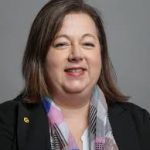
    The comments made by Kirsten Oswald, the SNP MP for East Renfrewshire, on Twitter on 15 February 2023.

    Nicola Sturgeon has been an outstanding leader for our country. We’ve been so fortunate to have someone with her talents at the helm. I am so sorry she is standing down.

  • Stewart McDonald – 2023 Comments on the Resignation Announcement of Nicola Sturgeon

    Stewart McDonald – 2023 Comments on the Resignation Announcement of Nicola Sturgeon

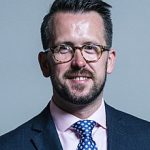
    The comments made by Stewart McDonald, the SNP MP for Glasgow South, on Twitter on 15 February 2023.

    Nicola Sturgeon is the finest public servant of the devolution age. Her public service, personal resilience and commitment to Scotland is unmatched, and she has served our party unlike anyone else. She will be an enormous loss as First Minister and SNP leader. Thank you!

  • PRESS RELEASE : NATO defence ministers to discuss accelerated support to Ukraine ahead of anniversary of Russia’s full-scale invasion [February 2023]

    PRESS RELEASE : NATO defence ministers to discuss accelerated support to Ukraine ahead of anniversary of Russia’s full-scale invasion [February 2023]

    The press release issued by the Foreign Office on 14 February 2023.

    The first meeting of NATO Defence Ministers in 2023 will focus on how to sustain and accelerate military support for Ukraine.

    The acceleration of military support to Ukraine will be the key focus of a meeting of NATO Defence Ministers in Brussels tomorrow (Weds).

    Defence Secretary Ben Wallace arrived in Brussels today for the first NATO Defence Ministers meeting of 2023. Ministers are expected to discuss how to sustain and accelerate support for Ukraine, drive NATO’s military transformation and modernisation, and Sweden and Finland’s accession to NATO.

    Today, the Defence Secretary had bilateral meetings with his Romanian and French counterparts as well as meeting his Ukrainian counterpart Oleksii Reznikov.

    The UK is committed to standing with Ukraine for as long as it takes. Alongside allies, we continue to provide training and equipment to the country, with the ability to surge that support should Ukraine come under threat. By making this commitment we will strengthen Ukraine’s position in negotiations, guard its long-term sovereignty and enable Ukraine to deter by denial.

    Defence Secretary Ben Wallace said:
    I am very pleased to be back at NATO to continue the vital work to support Ukraine, as well as meeting with my defence counterparts.

    Our important work is ongoing, the UK and our Allies will stand in solidarity with Ukraine for as long as it takes

    Defence Ministers from Germany, Canada, Lithuania, Latvia, Estonia and the UK will also review future cooperation on NATO’s enhanced Forward Presence in Eastern Europe. The UK leads the eFP battlegroup in Estonia, where 1,500 soldiers are currently on a major exercise, Exercise Winter Camp, with 40 main battle tanks and 100 armoured fighting vehicles from across three countries taking part.

    The meeting comes just days after President Zelenksyy made a historic visit to the UK to meet Prime Minister Rishi Sunak and see first-hand how the UK was supporting Ukraine through military training and lethal aid donations.

    As one of the leading contributors to NATO, the UK will take on leadership of NATO’s Very High Readiness Joint Task Force (VJTF) in January 2024, following on from the UK’s 12-month tenure leading NATO’s Maritime High Readiness Force last year.

    Today was also the 9th meeting of the Ukraine Defence Contact Group (UDCG), where partners reaffirmed their commitment to sustain support for Ukraine and uphold the national rules-based order.

    Together, the members of the UDCG have committed more than £40billion in military assistance to Ukraine. The UK provided more than £2.3billion worth of lethal aid to Ukraine in 2022, and the Prime Minister has committed to match or exceed the same level of funding in 2023.

  • PRESS RELEASE : Steps to prevent the worst consequences of climate change impacting future peace and security – UK Statement at the UN Security Council [February 2023]

    PRESS RELEASE : Steps to prevent the worst consequences of climate change impacting future peace and security – UK Statement at the UN Security Council [February 2023]

    The press release issued by the Foreign Office on 14 February 2023.

    Statement by Ambassador Barbara Woodward at the Security Council open debate on sea-level rise.

    Thank you President, and thank you for convening this important debate today. I join others in thanking all of our briefers today.

    As we’ve heard, continued sea level rise will increase the likelihood and magnitude of coastal flooding. This could lead to an increase in recognised drivers of insecurity, such as humanitarian disasters, population displacement and competition for natural resources.

    President, even if these impacts are not yet apparent at scale, this should not stop us from doing more to urgently limit global temperature rises to 1.5C above pre-industrial levels, to monitor and analyse these risks, anticipate and plan for them, and to prevent now the worst consequences of climate impacts on our security in the future.

    I offer three ways we can do this:

    Firstly, data and evidence gathering. This includes monitoring and analysis of conflict risks through a climate lens to better understand climate security risks at local and regional level. For this, we need to strengthen the capacity of the UN system to share and analyse information and integrate this into UN decision-making. The Council has a clear role in encouraging the UN system to consider and respond to the security implications of climate change.

    Secondly, we need cohesive strategies to mitigate and address climate-related risks to peace and security issues, in a coordinated way. The UN system is well-positioned to coordinate efforts on peacebuilding, climate action and building resilience. Again, this Council has a clear role in driving a more coherent UN response to these challenges.

    Thirdly, we need to build the resilience of coastal states. The UK Government has a number of programmes to strengthen resilience in developing countries against climate change, including the $600 million USD Blue Planet Fund, the $50 million USD Small Island Developing State Capacity and Resilience programme, as well as providing significant support through the Green Climate Fund.

    Finally, President, I note the concerns of some member states around the risk of maritime border disputes resulting from climate-induced sea level rises, and whether maritime baselines should therefore be fixed. The UK is considering this carefully. We remain open to pragmatic and creative solutions and will continue to engage other states and the International Law Commission on some of these complex legal issues arising from this.

    Thank you.

  • PRESS RELEASE : Rishi Sunak call with Prime Minister Jugnauth of Mauritius [February 2023]

    PRESS RELEASE : Rishi Sunak call with Prime Minister Jugnauth of Mauritius [February 2023]

    The press release issued by 10 Downing Street on 14 February 2023.

    Prime Minister Rishi Sunak spoke to the Prime Minister of Mauritius, Pravind Jugnauth, this morning.

    The leaders reflected on the strong and historic relationship between the UK and Mauritius, as close Commonwealth partners.

    The Prime Minister welcomed opportunities to work even more closely together, including on tackling regional and global security challenges and growing trade and investment.

    They also covered the ongoing negotiations on the exercise of sovereignty over the British Indian Ocean Territory / the Chagos Archipelago.

  • NEWS STORY : Nicola Sturgeon Resigns as Scottish First Minister

    NEWS STORY : Nicola Sturgeon Resigns as Scottish First Minister

    STORY

    Nicola Sturgeon, the Scottish First Minister, is expected to confirm her resignation at a press conference being held in Edinburgh today. She has held the role since November 2014 since she followed Alex Salmond following the independence referendum where the Scottish people voted to remain in the union. The SNP leader is yet to confirm a timetable for her standing down.

    RESOURCES

    Nicola Sturgeon’s Statement