Author: admin

  • PRESS RELEASE : Dame Julie Kenny DBE DL appointed Commissioner of Historic England [February 2023]

    PRESS RELEASE : Dame Julie Kenny DBE DL appointed Commissioner of Historic England [February 2023]

    The press release issued by the Department for Culture, Media and Sport on 27 February 2023.

    The Secretary of State has appointed Dame Julie Kenny as a Commissioner of Historic England for a term of four years from 1 February 2023 until 31 January 2027.

    Dame Julie Kenny

    Dame Julie Kenny is a successful South Yorkshire based entrepreneur. Following the sale in 2016 of award winning Pyronix Limited which she built from start up in 1986, Julie continues her involvement in serving business and local communities.

    Founding Chair of Wentworth Woodhouse Preservation Trust which is committed to securing a sustainable future for the largest restoration project in the Country. A true Levelling Up project in the North. Julie also Chairs Robson Handling Technology Limited, a NED of AES Engineering, Chair of Maltby Learning Trust, a multi-academy trust Chair of RISC and Joint Chair of SRGP, two national committees dealing with Security, Resilience and Growth for the Defence, Security and Tech UK Sector.

    Julie served as an Intervention Commissioner with Rotherham Metropolitan Borough Council between 2015 and 2018.

    Julie was honoured in Her Majesty the Queen’s Birthday Honours List in June 2019 with a Damehood for her work with heritage. Julie’s CBE in 2002 and Honorary Doctorate from Sheffield Hallam University in 2005 were conferred in recognition of her contribution to business in the region. Julie was awarded Freewoman of Rotherham in 2020.

    Julie has 3 grown-up children and had a successful career as a litigation lawyer in local authority and private practice before changing direction and founding Pyronix Limited.

    Remuneration and Governance Code

    Commissioners of Historic England are remunerated £4,113 per annum. This appointment has been made in accordance with the Cabinet Office’s Governance Code on Public Appointments. The appointments process is regulated by the Commissioner for Public Appointments. Under the Code, any significant political activity undertaken by an appointee in the last five years must be declared. This is defined as including holding office, public speaking, making a recordable donation, or candidature for election. Dame Julie Kenny has declared no such activity.

  • PRESS RELEASE : Name of new Yorkshire prison revealed [February 2023]

    PRESS RELEASE : Name of new Yorkshire prison revealed [February 2023]

    The press release issued by the Ministry of Justice on 27 February 2023.

    The name of the UK’s first all-electric prison has been revealed today by Prisons Minister Damian Hinds.

    • UK’s first all-electric prison named HMP Millsike by public
    • jail to create over 500 jobs in local community
    • naming marks latest milestone in government commitment to create 20,000 modern places

    The new prison – opening in 2025 – will hold nearly 1,500 prisoners who will spend their time behind bars learning the skills they need to find work on release as part of the government’s drive to cut reoffending and keep the public safe.

    HMP Millsike – situated on land opposite the existing HMP Full Sutton – has been named after Millsike Beck, a local river that runs adjacent to the new jail, firmly embedding the prison into its local community.

    The jail will be the first in the UK to run solely on electricity, with solar panels and heat pump technology meaning it will use approximately a quarter of the energy used to heat traditional Victorian prisons such as HMP Wormwood Scrubs.

    This will slash energy costs to taxpayers by over £1 million a year – ensuring the new prison protects both the public and the public purse.

    Prisons Minister, Damian Hinds, said:

    Naming this site puts us one step closer to our new prison playing its vital role in protecting the public and cutting crime.

    This is a vital advancement towards our goal of creating 20,000 modern, innovative places.

    The new infrastructure project is also playing an integral role in boosting the local economy – creating over 500 new jobs within the prison when completed, on top of hundreds more during construction.

    In addition, over 40 per cent of construction orders fall within 50 miles of the site – filling order books for local supply chain businesses.

    Construction firm Kier, leading the way on the building of the jail, is also employing approximately 50 ex-offenders – helping former prisoners turn their back on crime through meaningful work before the prison has even opened its doors.

    Today’s news follows hot on the heels of the opening of HMP Five Wells in Wellingborough, Britain’s first ‘smart’ prison which opened last year. Work is also nearing completion at HMP Fosse Way, the new 1,700-place prison set to open in Leicestershire this spring.

    The government has committed to creating 20,000 modern, innovative prison places that rehabilitate offenders and cut crime as part of its ambitious Prisons Strategy White Paper, published last year.

    Further information:

    • The name was agreed upon by the Deputy Prime Minister, who was presented with a shortlist decided by a panel made up of MOJ representatives and local residents.
    • The final shortlist of options was chosen following a 6 week consultation, which involved asking local residents to submit suggestions for what they thought the new prison should be called.
  • PRESS RELEASE : New transgender prisoner policy comes into force [February 2023]

    PRESS RELEASE : New transgender prisoner policy comes into force [February 2023]

    The press release issued by the Ministry of Justice on 27 February 2023.

    • updated framework in place from today (27 February 2023)
    • transgender women offenders no longer housed in women’s prisons if they have male genitalia or have committed sex crimes
    • new approach extended to include those who have committed violent crimes

    The Deputy Prime Minister has also announced measures will go one step further than previously set out – by extending the rules to cover transgender women who have been convicted of violent offences.

    The new guidance will apply regardless of whether transgender prisoners have a Gender Recognition Certificate, with exemptions only to be made in the most exceptional cases – and with the express approval of Ministers.

    The Deputy Prime Minister, Lord Chancellor and Justice Secretary, Dominic Raab, said:

    Safety has to come first in our prisons and this new policy sets out a clear, common-sense approach to the housing of transgender prisoners.

    With these sensible new measures in place, transgender offenders who have committed sexual or violent crimes or retain male genitalia will not serve their sentence in a women’s prison, unless explicitly approved at the highest level.

    Under the changes, transgender women who are sentenced to custody in the future will not be held in the general women’s estate if they retain male genitalia or have been convicted of a violent or sexual offence – unless in the most exceptional cases. Exemptions will be considered for those currently held in the women’s estate who are assessed as low-risk.

    At present more than 90% of transgender women are housed in men’s prisons and most do not request a move to the women’s estate. There is currently no obligation to place a transgender prisoner according to their preference, and where individuals are held is based purely on risk.  However, the government has decided to take this further step as an additional measure to protect women.

    Transgender women prisoners who cannot be safely housed in a men’s prison can be imprisoned in a specialist unit.

  • Andrew Mitchell – 2023 Statement on the Turkey and Syria Earthquakes

    Andrew Mitchell – 2023 Statement on the Turkey and Syria Earthquakes

    The statement made by Andrew Mitchell, the Minister of State at the Foreign Office, in the House of Commons on 1 March 2023.

    With permission, Madam Deputy Speaker, I will make a statement on the situation in Turkey and Syria. I know that the House will join me in offering sincere condolences to all those affected by the recent earthquakes.

    Last week when I visited Turkey, I witnessed at first hand the terrible scale of human suffering. I also had the opportunity to speak to Syrian partners and the United Nations about their work on the immediate response. I pay tribute to the hundreds of British personnel engaged in specialist health, humanitarian and rescue work in Syria and Turkey. I saw for myself the outstanding work that Britain is doing on the ground to save lives and support those who are suffering. Throughout these events and our responses, there has been excellent co-ordination across the Foreign Office, the Ministry of Defence and the Department of Health and Social Care.

    Today, the death toll across Turkey and Syria stands at more than 48,000, and at least 118,000 people have been injured. Approximately 25 million people have been affected, with homes, businesses and key infrastructure destroyed. The further earthquakes on 20 and 27 February, which have tragically led to additional deaths, show that the danger has not passed. In Syria, this disaster adds to years of turmoil inflicted by conflict, striking hardest in the very place that has borne the brunt of Assad’s war machine.

    I turn to the initial response. Turkey requested international support immediately after the earthquakes. The UK Government delivered aid as swiftly as possible, working closely with Turkey, the United Nations, international partners, non-governmental organisations and charities. That included deploying a 77-strong search and rescue team in Turkey, along with state-of-the-art heavy equipment. We also quickly announced £4.3 million in new support to Syria Civil Defence—the White Helmets—who have carried out search and rescue operations in 60 villages, helping thousands of civilians. The British Government rapidly engaged with the Turkish Government at the highest level, and the Foreign Secretary, my noble Friend Lord Ahmad and I immediately spoke to the senior UN humanitarian officials to ensure a rapid and co-ordinated response in Syria.

    As part of the immediate response, the Ministry of Defence and the Foreign Office set up a field hospital in Türkoğlu, including an emergency department and a 24/7 operating theatre. I saw for myself 150 UK-Med and Ministry of Defence personnel working side by side with Turkish medics to save lives. I was deeply impressed and moved during my visit by the lifesaving work that those teams are doing. Together, they have treated more than 5,000 patients so far.

    Meanwhile, the UK has delivered 465 tonnes of relief items to Turkey and Syria through civilian and Royal Air Force flights. That includes tents and thermal blankets for families made homeless in freezing conditions, as well as solar lanterns, water purification tablets and hygiene kits. On 15 February, we announced a further £25 million in funding to bolster our humanitarian response. That is supporting the work of the UN and aid agencies on the ground in Syria, helping communities ravaged by war, as well as by this natural disaster. It also continues to support the recovery effort in Turkey, led by its Government.

    Beyond our support to the White Helmets, UK-funded charities and NGOs in northern Syria have cared for the injured through mobile medical teams and health centres. The UN has distributed food and other essential items, to which the UK has contributed. Further assistance will be delivered in the coming days as part of the UN’s Syria cross-border humanitarian fund, to which the UK is one of the most significant donors. The fund has already allocated $50 million to scale up the response. There is a particular focus on displaced families, the elderly, women, children and people with disabilities.

    The UK has also supported and bolstered the response through our existing support to key multilateral organisations that are helping in Turkey and Syria. The UN’s global fund, Education Cannot Wait, announced a $7 million grant for Syrian children affected by the earthquake, and the Global Partnership for Education will provide $3.75 million to support the emergency education response. The UK is one of the most significant donors to both funds.

    We are also a long-standing partner and donor to the World Bank, which announced $1.7 billion to assist Turkey, and the United Nations central emergency response fund, which has released $50 million for the crisis. Most significantly, our constituents—the British public—have demonstrated extraordinary generosity through the Disasters Emergency Committee appeal, raising more than £100 million. That figure includes £5 million from the UK taxpayer in matched seed funding.

    His Majesty the King visited Turkish diaspora groups and members of the British Syrian community at Syria House, a donation point in Trafalgar Square, on 14 February. My right hon. Friend the Foreign Secretary visited Syria House on 16 February.

    It is clearly vital to ensure that humanitarian aid reaches those who need it as efficiently as possible in Syria. I will continue to engage with the United Nations to ensure maximum access for as long as is required. We welcome the accelerated pace of United Nations deliveries and are monitoring the situation closely in the Security Council in New York.

    The House will understand that the scale of this tragedy is immense. The UK will continue to stand in solidarity with Turkey and with the people of Syria during these most testing of times. I commend this statement to the House.

  • Robert Neill – 2023 Speech on the Independent Public Advocate

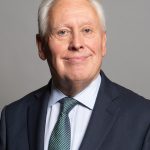
    Robert Neill – 2023 Speech on the Independent Public Advocate

    The speech made by Robert Neill, the Chair of the Justice Committee, in the House of Commons on 1 March 2023.

    I pay tribute to the right hon. Member for Garston and Halewood (Maria Eagle), a fellow member of the Justice Committee, for the work she has done, and to the former Prime Minister, my right hon. Friend the Member for Maidenhead (Mrs May).

    The former Prime Minister’s point about the risk of cover-ups by those in authority is an important one. That is why, while I very much welcome what the Secretary of State has said—it is an important step—I hope that when engaging on how best to refine and advance these proposals, he looks again at the Justice Committee’s recommendation that there should be an extension of legal aid availability. Although the situation has already improved, we should be extending non-means-tested legal aid to all cases where there are mass fatalities, or where public bodies are potentially at fault. It is not fair—there is no equality of arms—when those public bodies are represented by teams of lawyers, but the bereaved families have to rely on sometimes getting legal aid and sometimes not, or on pro bono representation. Equality of arms would surely mean representation as a matter of right in those cases.

    Dominic Raab

    I thank my hon. Friend, the Chair of the Select Committee. I think that this policy will create stronger advocacy on behalf of the bereaved, the victims and the families, and having panels with the right expertise, range and status will go a long way towards getting the answers.

    Again, I understand the point about compulsion of evidence. There is not a theological objection to it, certainly as far as I am concerned: it is a question of reconciling competing powers when an inquiry is set up. I will, of course, look at the Justice Committee’s report and recommendations on that issue. In general, of course, inquiries are not supposed to be adversarial, which is why the rules in relation to legal aid are as they are, but we will look at this and work with colleagues in all parts of the House as we introduce these important clauses.

  • NEWS STORY : Matt Hancock Says Leaking of His WhatsApp Messages is “Massive Betrayal”

    NEWS STORY : Matt Hancock Says Leaking of His WhatsApp Messages is “Massive Betrayal”

    STORY

    The leaking of over 100,000 WhatsApp messages sent by the former Health Secretary, Matt Hancock, during the COVID pandemic has caused controversy in the UK. Journalist Isabel Oakeshott who was working with Hancock on a book provided The Daily Telegraph with the messages which allegedly show that Hancock rejected testing advice on care homes and expressed concern that testing could get in the way of meeting his targets. The messages have also led to a war of words between Hancock and Oakeshott, with the former describing the leak as a “massive betrayal and breach of trust” and the journalist saying that she had received menacing messages from the former Health Secretary. The information watchdog has today also warned of the risks of ministers using platforms like WhatsApp.

    Hancock said in a statement:

    “There is absolutely no public interest case for this huge breach. All the materials for the book have already been made available to the inquiry, which is the right, and only, place for everything to be considered properly and the right lessons to be learned. As we have seen, releasing them in this way gives a partial, biased account to suit an anti-lockdown agenda”.

    Oakeshott said:

    “I’m a working journalist. They did not pay me for the messages, I’ve been helping the Daily Telegraph with the investigation, you’ll see that I’ve been writing stories for the Daily Telegraph”.

    RESOURCES

    Matt Hancock’s Statement on Leak

    EXTERNAL LINKS

    Daily Telegraph

  • Matt Hancock – 2023 Statement on Leaking of WhatsApp Messages

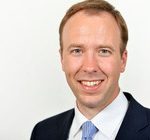
    Matt Hancock – 2023 Statement on Leaking of WhatsApp Messages

    The statement made by Matt Hancock on 2 March 2023.

    I am hugely disappointed and sad at the massive betrayal and breach of trust by Isabel Oakeshott. I am also sorry for the impact on the very many people – political colleagues, civil servants and friends – who worked hard with me to get through the pandemic and save lives.

    There is absolutely no public interest case for this huge breach. All the materials for the book have already been made available to the inquiry, which is the right, and only, place for everything to be considered properly and the right lessons to be learned. As we have seen, releasing them in this way gives a partial, biased account to suit an anti-lockdown agenda.

    Isabel and I had worked closely together for more than a year on my book, based on legal confidentiality and a process approved by the Cabinet Office. Isabel repeatedly reiterated the importance of trust throughout, and then broke that trust.

    Last night, I was accused of sending menacing messages to Isabel. This is also wrong. When I heard confused rumours of a publication late on Tuesday night, I called and messaged Isabel to ask her if she had ‘any clues’ about it, and got no response. When I then saw what she’d done, I messaged to say it was ‘a big mistake’. Nothing more.

    I will not be commenting further on any other stories or false allegations that Isabel will make. I will respond to the substance in the appropriate place, at the inquiry, so that we can properly learn all the lessons based on a full and objective understanding of what happened in the pandemic, and why.

  • Maria Eagle – 2023 Speech on the Independent Public Advocate

    Maria Eagle – 2023 Speech on the Independent Public Advocate

    The speech made by Maria Eagle, the Labour MP for Garston and Halewood, in the House of Commons on 1 March 2023.

    I welcome the fact that the Government want to legislate for a public advocate, five years after the consultation that they undertook closed, but I am very disappointed with the provisions as the Secretary of State has set them out. His proposed public advocate would not be independent, would not be a data controller, and would not be able to act only at the behest of families. It would be directed by the Secretary of State. It would not have the power to appoint independent panels such as the Hillsborough independent panel—but at a much earlier stage following a disaster than the 23 years it took us to get that report out—and it would not have the power to use transparency to get at the truth at an early stage and torpedo the cover-ups that public authorities set about undertaking in the aftermath of disasters. This must be something that the families themselves can initiate and use to get at the truth at an early stage.

    The public advocate having the power to compel—to produce documentation and shine the light of transparency on what public authorities have done in the immediate aftermath of a disaster—would stop cover-ups. It would mean people not still having to fight to get at the truth 34 years later. That prize is within our grasp if we set this up right, so does the Secretary of State accept that if he does not beef up his proposals significantly, he will be missing an important opportunity to stop things going wrong for families? For what it is worth, I am perfectly willing to indicate to him in detail quite how those proposals ought to be improved.

    Dominic Raab

    I thank the right hon. Lady for her question. She has worked tirelessly on this issue, and we have very good engagement on it; I am happy for that to continue. I take her point about the power of initiative. The families of the bereaved will have a power of initiative through consultation, but if there are conflicting views—something that I have seen before at first hand—the Government will have to reconcile those views in the last analysis.

    Secondly, on the point about data, I am happy to keep listening and working on this issue, but if we have an inquiry that has powers to compel evidence of its own, the problem will be how we reconcile those powers where they are competing in a process. But as I have said, it is important that we bring this policy forward. There will be full scrutiny of it, and as we develop the clauses, I am very happy to keep working with the right hon. Lady.

  • Theresa May – 2023 Speech on the Independent Public Advocate

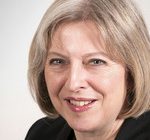
    Theresa May – 2023 Speech on the Independent Public Advocate

    The speech made by Theresa May, the former Prime Minister, in the House of Commons on 1 March 2023.

    I thank my right hon. Friend for bringing this statement to the House today and welcome the decision to introduce an independent public advocate, which was of course a commitment in our 2017 manifesto. However, as I am sure my right hon. Friend will understand, I want to ensure that this body will meet the ambition of the commitment that we made in that manifesto. I am happy to work with him to do that.

    For today, though, could my right hon. Friend please just go back to two particular issues? One is the question of whether the families, victims and survivors will be able themselves to initiate the independent public advocate, so that they are not relying on the Government to do that for them. Certainly, in the case of Hillsborough, it was the fact that the state and state authorities shut their doors to people that led to the 34 years’ wait for any answers for the families. Also, in line with that, will my right hon. Friend ensure that the IPA is able to compel the provision of information and evidence to the families? He is assuming that an inquiry will always take place, but that might not be the case. It is essential that the families have answers to their perfectly reasonable questions.

    Dominic Raab

    I thank my right hon. Friend and pay tribute again to her for her campaigning and advocacy on this issue. On the right of initiative, the Government will ultimately have to decide the shape of any IPA that is set up. The right of consultation is clearly set out, but of course, one of the challenges will be where different views are expressed as to how the IPA should be configured for a particular inquiry. Ultimately, where there are differences, the Government will have to try to reconcile those, so in committing to an IPA, I think it is right to allow the Government to engage and to allow the victims, the bereaved and the families the power of initiative to call for an IPA and make their representations, but to allow the Government to decide the precise configuration of that IPA.

    I listened very carefully to what my right hon. Friend said about the compulsion of evidence. As I said before, I am very happy to engage with her and with other hon. Members as this policy comes forward. I take her point that an inquiry may not be set up, but where one is set up, the piece that we need to reconcile is making sure that we do not have conflicting powers. But again, I am very happy to work with my right hon. Friend on the detail of this policy and, in due course, on the clauses.

  • NEWS FROM 100 YEARS AGO : 2 March 1923

    NEWS FROM 100 YEARS AGO : 2 March 1923

    2 MARCH 1923

    In a speech at Edinburgh University, the former Prime Minister David Lloyd George said that universities had played an essential part in the war and were the fourth arm of defence in a time of crisis.

    15,000 building trade operatives went on strike in the Eastern Counties over the subject of wages for painters.

    The French authorities in the occupied territories of the Ruhr Valley said that the proceeds of all consumption taxes on wines, cigars, cigarettes and manufactured tobacco would now go to them.

    Field Marshal Paul von Hindenburg, the future German President, said in a speech in Hanover that “we will never forget that we are all Germans and must do our duty, and if necessary fight even until the last flag is torn in pieces and the last sword blade shattered. Better to perish in honour than live in disgrace”,