Author: admin

  • NEWS FROM 100 YEARS AGO : 10 March 1923

    NEWS FROM 100 YEARS AGO : 10 March 1923

    10 MARCH 1923

    It was announced that the King and Queen would visit the Pope during their visit to Italy.

    Lady Astor proposed a Bill to the House of Commons which aimed to amend the licensing laws to prevent boys and girls from the environment of the public house. She stated that at the moment pubs could sell alcohol to those aged 14 and over and spirits to those 16 and over, with Astor wanting to increase the age to 18.

    A group of Labour MPs introduced a Bill into the House of Commons to nationalise the mines and minerals of the country.

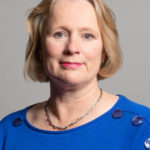
  • Vicky Ford – 2023 Speech on International Women’s Day

    Vicky Ford – 2023 Speech on International Women’s Day

    The speech made by Vicky Ford, the Conservative MP for Chelmsford, in the House of Commons on 9 March 2023.

    It is absolutely wonderful to be back in the House today—if I am a bit bleary, it is because I have just got off the all-night redeye and have had only a couple of hours’ sleep—and it was wonderful to be present at the annual conference of the Commission on the Status of Women, along with Members in all parts of the House, including my right hon. Friend the Member for Basingstoke (Dame Maria Miller), and to see much joy among so many thousands of women. This was the first time the commission had met in person for four years. There was a particularly moving moment yesterday when a very informal lunch was attended by a handful of British parliamentarians from both Houses, a Canadian senator, two young Mexican Members of Parliament, three Afghan women’s rights champions, and two Ukrainian MPs. Madam Deputy Speaker, the sisterhood is strong.

    There is so much that I want to say that I thought I would try to keep myself ordered by giving the House an A to Z, so here it is: some of it happy, and some of it sad.

    A is for Afghanistan, with 4 million girls not at school, women not allowed to work, and women subjected to public floggings, rape and torture. It is gender apartheid at its worst. As the Afghan women said to me yesterday, if an Afghan girl cannot go to school and an Afghan woman cannot leave her home, why can the Taliban send their daughters not just out of their homes but out of their country to go to school in other countries? What they ask of the UK Government is that we and our allies impose travel bans on the Taliban, and do more to sanction their assets.

    B is for a network of paths in Chelmsford called the “Bunny Walks”. It used to be overcrowded, overgrown, dark and dangerous—a no-go zone for women—but, thanks to the Government’s safer streets fund, it now has lights and CCTV, the undergrowth has been cut back, and it is being enjoyed by women and men and, indeed, people of all ages. I would encourage colleagues, if they have dangerous parts of their constituency, to look at the safer streets funding, because it makes a huge difference.

    C is for contraception. Some 257 million women want access to contraception, but cannot get it. If a woman cannot control her own body, she has no control over the rest of her life. Women’s rights to sexual health and reproductive services are being pushed back across the world. Yesterday I visited the United Nations Population Fund, which does amazing work to prevent maternal mortality and to ensure that women have access to contraception. That vital organisation would like to pass its thanks to the UK Government for our leadership in the support that we give it.

    D is for domestic abuse, the most hideous of crimes. But there is really good news from Essex, where reports of domestic abuse are down 8% this year. I thank Essex police, under the leadership of our police, fire and crime commissioner, Roger Hirst, for the huge focus they have put on tackling domestic abuse.

    E is for education. A child whose mother can read is 50% more likely to live beyond the age of five, 50% more likely to be immunised, and twice as likely to attend school as the child of a mother who cannot. I thank the Foreign, Commonwealth and Development Office for prioritising girls’ education in the women and girls strategy yesterday.

    Mrs Flick Drummond (Meon Valley) (Con)

    My right hon. Friend is making an excellent speech. Going back to Afghanistan, is it not very short-sighted of the Taliban not to educate girls, considering that an educated mother educates her children, and an educated child then contributes to a very productive society?

    Vicky Ford

    This is exactly the point. Educating girls creates benefits for the girls themselves and for the whole society—not just greater economic growth, through women being able to go out and work and create their own incomes, but societal benefits such as the health benefits I have just mentioned.

    F is for freedom. Last month I met a survivor of domestic abuse who had just escaped from her violent partner with her three children. As a Member of Parliament, I said to her, “Is there anything more that we could do for you?” She looked me in the eye and said, “No, Vicky —I’ve got everything. I’m free!”, with her arms in the air. May we have more of those free women.

    G is for girls. They are our future, but we should not think that the experiences they face today are the same as the experiences we had growing up. Adolescent girls are disproportionately negatively affected by online harassment. We need to listen to them, understand their experiences and let them inform us, especially as we seek to make laws and policies that affect them.

    H is for the hijab and headscarves, and for the brave women of Iran who are prepared to risk their own lives because they believe in the right to choose whether they should have to wear one.

    I is for impunity. Women as young as four and as old as their 80s have been raped by Russian soldiers in Ukraine—barbaric sexual violence committed by order of military commanders. We must hold the perpetrators to account, take them to court and break the cycle of impunity on conflict-related sexual violence.

    J is for Julia Jeapes, my association chairman. None of us would be here without the volunteers in our parties.

    K is for Kaja Kallas, the Prime Minister of Estonia. We need more strong women leaders in this world. K is also for Kenya, Somalia and Ethiopia, where the rains have just failed for the fifth season and more than 20 million people, mostly women and children, are living in extreme food insecurity.

    L is for levelling up, which is not just a north-south issue. In Mid Essex from 1 April women will have access to IVF on the NHS for the first time. I thank Health Ministers for ending the postcode lottery of health funding.

    M is for marriage; child marriage sometimes sounds as if it could be a romantic and beautiful thing, but it is so far from that. A child entering into marriage often faces rape and a life of slavery. I say thank you and congratulations to my hon. Friend the Member for Mid Derbyshire (Mrs Latham), and the noble Baroness Sugg in the other place on the work that they have done pulling through the Marriage and Civil Partnership (Minimum Age) Act 2022, to make sure that no person under the age of 18 can get married in this country.

    N is for numeracy. I am a mathematician; there are not many mathematicians in this place and certainly not many women mathematicians. We must end the stigma that suggests that girls do not do maths. I am celebrating the fact that year after year we see more and more girls doing maths A-levels; we should encourage them to continue to do more.

    O is for online safety. There are some excellent measures in the Online Safety Bill to protect women; the UN special rapporteur on violence against women and girls gave the UK a shout-out for our legislation in a meeting yesterday, particularly the measures to prevent deepfake porn videos.

    P is for pornography. We need to do much more to tackle the online pornography that our children are coming across and watching; often they just stumble across violent pornography, as a result of which, girls are increasingly being subjected to violent sex. I hope the Government will look favourably on the amendments that the noble Lord Bethell will be tabling to the Online Safety Bill in the other place.

    Q is for queens. I miss our late Queen deeply. As the Foreign Office Minister at the time, I had the honour of meeting foreign leaders as they came to sign the condolence books, and the deep grief amongst women leaders was huge. The late Queen wrapped her own arm around women leaders across the world, and I wish our new Queen all the best as she prepares for her coronation.

    R is for rape. The rate of prosecution for rape is on its way up, but it is still too low and the Government must keep focusing on it. S is for the abhorrent Stephen Bear, a violent, abusive, misogynistic man who has just been sent to jail for revenge pornography—and long may he stay there. So much praise must go to the brave Georgina Harrison, who was determined to see him stand trial for what he has done.

    T is for thank you. The late Madeleine Albright said there was a “special place in hell” for a woman who does not support other women, but I think there is a special place in heaven for men who put their own heads above the parapet to defend women’s rights. I thank the Father of the House in particular for being here today.

    U is for Ukraine and the women of Ukraine. Despite the rapes, despite the 6,000 children who have been abducted, despite the deaths of children, partners, sons and grandparents, the women of Ukraine continue to stand firm and brave and fight for their freedom. Their fight for freedom is the world’s fight for freedom and we will stand with them, not only on International Women’s Day, but every day for as long as this takes.

    V is for violence in politics. Online violence makes women MPs silence our voices and puts women off standing. Too many women in the UK face real threats to their safety. We must stop the hate speech and make it clear that violence will not be tolerated in our politics.

    W is for wonderful. We often complain about all the challenges women have, but we often forget to say that being a woman is wonderful and I would not have it any other way. X and Y are chromosomes and Zs are for sleep, so I thank hon. Members for listening and not falling asleep.

  • Diana Johnson – 2023 Speech on International Women’s Day

    Diana Johnson – 2023 Speech on International Women’s Day

    The speech made by Diana Johnson, the Labour MP for Kingston upon Hull North, in the House of Commons on 9 March 2023.

    I pay tribute to the right hon. Member for Basingstoke (Dame Maria Miller) for opening the debate and for all her work for women over the years. I share her comments about celebrating our wonderful women parliamentarians and all their achievements. It is very good to see you in the Chair this afternoon, Madam Deputy Speaker, and our excellent female Clerks at the Table, too.

    My hon. Friend the Member for Birmingham, Yardley (Jess Phillips) will read out the list of UK women killed this year, which is truly heartbreaking and a reminder of the dangers that women and girls face in our country. Three years ago, my constituent Libby Squire was on that list. She was a young woman studying at Hull University whose life was taken in 2019 by a predatory man who had been prowling the streets of Hull looking for a victim. But Libby’s murder was not an out-of-the-blue attack: in the 16 months before Libby’s rape and murder, the perpetrator had committed a string of sexually motivated offences, including indecent exposure, masturbating in public, spying on women through their windows and stealing sex toys and underwear.

    Very sadly, we know that the behaviour of men who expose themselves is devastatingly everyday, common and normalised. When I asked women MPs earlier this week about their experiences of men indecently exposing themselves, everyone had a story, whether it had happened outside their sixth-form college, on public transport or on the way to school. Just today I received a letter from an 80-year-old woman who recalls being a victim of indecent exposure when she was 18. She still lives, 62 years later, with the impact of that assault.

    We found out at Libby’s killer’s trial that many of his earlier crimes had not been reported to the police. Why was that? It was because victims often feel that they will not be taken seriously by the police and that reporting will not actually trigger any action. We know that these crimes are committed by predators and can be a precursor to more extreme violent behaviour. We ignore these warning signs—these red flags—at our peril.

    Earlier this week, Wayne Couzens was sentenced to 19 months for indecent exposure, having committed a string of non-contact sexual offences in the years before his arrest. One of those incidents, when he exposed himself to staff at a McDonalds drive-through, happened just days before he kidnapped, raped and murdered Sarah Everard. In handing down the sentence, Mrs Justice May reported that Wayne Couzens’s ability to commit these deeds with impunity only

    “strengthened…the dangerous belief in his invincibility”.

    Very sadly, as with Libby’s murderer, the offences escalated.

    A review of evidence from 2014 found that a quarter of men who exposed themselves went on to reoffend, with as many as 10% going on to commit serious sexual offences.

    Wera Hobhouse (Bath) (LD)

    Is it not true that most people underestimate what an assault on a woman is like? It is really only when it happens to you that you understand the impact. It is so important that we listen to the women who have been through an assault and understand the trauma that it has caused them.

    Dame Diana Johnson

    Absolutely. I am very grateful for that intervention. I think every woman in this Chamber or watching this debate will fully understand the impact that it can have.

    I return to the statistics. Since 2018, almost 250 men found guilty of indecent exposure have subsequently been found guilty of rape. Indecent exposure and non-contact sexual offences are gateway crimes that are still not taken seriously enough. In the years since her daughter’s murder, Libby’s mum, the formidable Lisa Squire, has fought to raise the importance of reporting these “low-level” sexual offences. She has been working with Humberside police on the Libby campaign to urge women always to report them to the police. Her call on women is, “These offences are not trivial. They are not harmless. If you are the victim, please report it to the police. It could save another woman’s life.” She has already managed, alongside Humberside police, to reach 17,000 young people in the Humberside area. She is also working with the Metropolitan police and Thames Valley police. I spoke to Lisa this morning; she is a formidable woman, and I have no doubt at all that we will see change because of the work that she is doing.

    Of course, reporting is not the only hurdle. This week, we heard from one of Couzens’s victims, who said in her impact statement:

    “Four months after you exposed yourself to me, you raped and murdered an innocent woman. There were opportunities to identify you and they were not taken. I did not feel that, when I reported your crime, it was taken as seriously as I felt that it should have been.”

    If women are to report crimes, they must have faith that they will be believed and respected, that action will be taken, and that, most importantly, the police themselves are not a danger.

    A recent analysis found that of the 10,000 indecent exposure cases logged by police in 2020, only 600 reached court. That is simply not enough. I have tabled amendments to Home Office Bills to try to tackle the issue, but sadly the Government did not accept them. I met Home Office Ministers, with Lisa Squire, to talk about what more the Government could do. As Chair of the Home Affairs Committee, I raised the issue directly with the previous Home Secretary, the right hon. Member for Witham (Priti Patel).

    I believe that the Government must do much more about tackling violence against women and girls. The Prime Minister declared this to be a national emergency back in November, but he did not make it one of his top five priorities. Why not make it the sixth priority? If this Government will not accept this as a national emergency, I hope that the next will. Indecent exposure is not a minor crime—we know that it is frequently a stepping stone to escalating violence against women by predatory men—and perpetrators, although pathetic, are not harmless; they are often very dangerous. We must take this issue far more seriously, doing so for Libby, for Sarah, and for all the women taken from us. Just like women down the years fighting for a cause—the suffragettes, the Bow match girls, the Ford Dagenham equal pay strikers, and Hull’s own headscarf revolutionaries—we will persevere and we will see change.

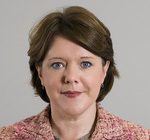
  • Maria Miller – 2023 Speech on International Women’s Day

    Maria Miller – 2023 Speech on International Women’s Day

    The speech made by Maria Miller, the Conservative MP for Basingstoke, in the House of Commons on 9 March 2023.

    I beg to move,

    That this House has considered International Women’s Day.

    May I say how great it is to see you in the Chair for this now annual event on the Floor of the House of Commons, Madam Deputy Speaker? I thank the Backbench Business Committee for granting us this time, and also members of the all-party parliamentary group on women in Parliament, who yet again proposed the debate.

    It is a great privilege to be able to open today’s debate. I will start by recognising the incredible achievements of every single female Member of Parliament in the House of Commons and every female parliamentarian, not just in this Chamber but at the other end as well. I have been fortunate to have so many women helping me throughout my life: family, friends, work colleagues and fellow parliamentarians. I would particularly like to say how inspired I am by my colleagues on both sides of the House—their tenacity, their ability to make change happen and their resilience, getting anything that gets in their way out of the way so that they can get things done. I salute them all for what they have already achieved, and for what they will go on to achieve in the future.

    I pay a particularly fond tribute to two women in my party: my right hon. Friends the Members for Epping Forest (Dame Eleanor Laing) and for Maidenhead (Mrs May). Both have gone out of their way to make sure that they encourage women in my party to be the best they can be. It would not be proper to not also remember the late Cheryll Gillan. [Hon. Members: “Hear, hear.”] On the Conservative side of the House, she was the mother of our party, and we miss her greatly. She was an amazing colleague.

    Siobhan Baillie (Stroud) (Con)

    My right hon. Friend the Member for Basingstoke (Dame Maria Miller) is one of my inspirations in this House, but I think it is really important that we are able to talk openly about how much respect we have for colleagues across the House. I can see a number of women on the Opposition Benches whose work I have followed, not only since I have been in this place, but before I became an MP. I remind everybody that, as much as we see the ding-dongs on the tellybox, a lot of us get on and are trying to make big changes here together.

    Dame Maria Miller

    That is an excellent friend— I mean that is an excellent comment from my hon. Friend, and she is absolutely right. I should at this stage point out that there are a couple of us on the Government Benches who have not slept overnight, so please forgive us, Madam Deputy Speaker, if we stumble over our words. [Interruption.] No, a lot tamer than that; we flew back on the red-eye from the United Nations Commission on the Status of Women.

    Hannah Bardell (Livingston) (SNP)

    I am moved to intervene because the right hon. Lady mentioned Cheryll Gillan. While there might have been many things we disagreed on, there were many things we did agree on. She did incredible work on autism and championing neurodiversity. Also, when I joined the Parliamentary Assembly of the Council of Europe, she was a very supportive member and helped to show me the way. She is much missed across all Benches.

    Dame Maria Miller

    I thank the hon. Lady for those kind comments. It demonstrates how we work together and have shared interests. Just to refer back to our venture to the United Nations Commission on the Status of Women earlier this week, I chaired a panel of young women, and they were asking about how we work together, and where the political divides were. I have to say that I used Jo Cox’s words that there is more that unites us than divides us. That is another thing I would like to remember fondly today.

    Having women in Parliament and in leadership really matters—we know that—because it changes the conversation, the discussion and, above all, the decisions that are made both here and in organisations across the country and around the world. To mark International Women’s Day, at the start of this week I led one of four delegations of UK parliamentarians to the UN Commission on the Status of Women. My delegation was from the all-party parliamentary group on United Nations women. We thank the Commonwealth Parliamentary Association for its support in helping that delegation happen.

    At the CSW in New York, thousands of women from around the world met to discuss the status of women, with four delegations from our Parliament. There were 18 hon. and right hon. Members and noble Members of the House of Lords at that global event. The event was at times harrowing, and I am sure that my right hon. Friend the Member for Chelmsford (Vicky Ford) will draw later on some of her work while she was there. It was harrowing in particular to hear directly from women from Afghanistan, Ukraine and other parts of the world, including Colombia and Mexico, about their own personal experiences, particularly around sexual harassment and worse. The Afghan women we heard from talked about the brutal beatings, the torture and worse, but they are still there, prepared to protest to regain the hard-won rights of the past two decades. We also heard from women in Iran living with a brutal regime. We must continue to play our part in this Parliament, as we have a proud tradition of doing, in keeping these women’s plight at the fore and ensuring that their need for support and change is never forgotten.

    Margaret Ferrier (Rutherglen and Hamilton West) (Ind)

    It has been difficult to watch as women’s rights have been stripped away in Afghanistan since the withdrawal of troops. Now, Afghan women who were divorced and able to escape abusive marriages under the previous Government have found those divorces nullified and found themselves at risk under adultery laws. Does the right hon. Member agree that the Government must pick up the pace with the Afghan citizens resettlement scheme to make sure we can offer sanctuary to those women?

    Dame Maria Miller

    In bringing this matter up, the hon. Lady is doing what we all must do, which is to raise these issues in public. That is what the Afghan women I met were pleading for—to make sure that their plight was not forgotten—and they were enormously grateful for hon. and right hon. Members raising these issues, so that not only does the world media not forget, but our colleagues on the Treasury Bench do not forget either.

    Jim Shannon (Strangford) (DUP)

    I commend the right hon. Lady for bringing this debate forward. Unfortunately, I have a meeting today so I cannot make a speech.

    This is not just about the politicians across the world; it is also about the likes of my mother, who is 91 years old —soon to be 92—and still gets up to make fresh scones, drives a car and looks after my brother, who is disabled. It is also about my wife who runs the home, volunteers at an animal shelter and cares for the grandchildren, giving childcare to help make ends meet. I am a grandfather of three beautiful and wonderfully sassy granddaughters, who I believe will change the world, and I am the proud employer of six fiercely strong, independent and intelligent women. My point is clear: does the right hon. Lady not agree that on this day, and indeed every day, we have much to be thankful for with all the women in our lives who have shaped us and who continue to shape our world and make it a better place?

    Dame Maria Miller

    I thank the hon. Gentleman for that intervention. He is always a great supporter of women. He raises an important issue, which is that women have many different roles in this country and in our national life, and we should celebrate all those roles in this debate. But, above all, we need to ensure that women have a choice as to what role they take on, and we should never allow barriers to get in the way of them succeeding and reaching their potential in life. I am sure his sassy granddaughters would agree with that.

    The Commission on the Status of Women, as well as being harrowing at times, was also enormously uplifting. It was empowering to hear from other female parliamentarians, NGO leaders and activists about how they are working and campaigning for change. I had the great pleasure of meeting the Speaker of the Belize Parliament, the honourable Valerie Woods, who is also deputy chair of Commonwealth Women Parliamentarians. The Inter-Parliamentary Union had many meetings at the CSW, which serves to remind us of the importance of organisations such as the Commonwealth Parliamentary Association and the IPU, in the light not only of our Parliament, but of Parliaments around the world. They are incredibly useful organisations for women to be able to drive change and learn from other Parliaments.

    As I said, the UK Parliament had four delegations—the biggest group ever to be at the CSW—demonstrating that the significance and importance of women’s rights among colleagues across the House has never been more heightened. At the UN this week, thousands of women from across the world saw laid bare the global erosion of women’s rights since the Beijing declaration was adopted in 1995: the reversal of Roe v. Wade; 4 million women and girls out of education in Afghanistan; women in Ukraine rendered victims of sexual violence at the hands of aggressors. Closer to home, two women are murdered by their partners each week in the UK—I am sure my hon. Friend the Member for Birmingham, Yardley (Jess Phillips) will be talking about that in her contribution to the debate.

    There is no doubt that in the UK over the past decade a huge amount of progress has been made. I pay tribute to the Minister for Women and her predecessors—of which I am one—for all they have done to ensure that we continue to see momentum in women’s rights. The Minister has done so much, particularly on women’s health, and I pay tribute to her work in that area. Although I will speak about some of the challenges that we have to face, and ways to address them, it is important to keep at the back of our minds that huge progress that we have made as women, and the huge contribution that women make to public life, making this place, and other places, better as a result.

    How do I know that this place is better for having women in it, and why it is important that we continue to push for more women to enter public office? True representation is the answer to that question. Representation—good, strong, diverse representation—is vital in political life because it encourages trust in political bodies. Engagement in democracy is stronger when people see themselves in their elected representatives. Representation tends also to result in diversity. That in turn results in a greater range of ideas, which for a deliberative system such as our democracy is hugely important to improve our decision making.

    In the business world, research by McKinsey found that, for every 10% increase in gender diversity in senior executive teams in the UK, earnings in that company before interest and tax rose by more than 3%. There is a dividend not just for commercial organisations, but for organisations such as ours in ensuring that that diversity is in place.

    Margaret Ferrier

    The right hon. Lady is generous in giving way. I was at a Balfour Aviation event last week, where it was pointed out that women remain significantly under-represented in more senior roles, with only 6% of pilots being women. The training is incredibly expensive and we have heard about the barriers to becoming a high earner that many women face. Does she agree that the Government could be providing more financial support aimed at encouraging women into industries such as aviation where they are under-represented?

    Dame Maria Miller

    The hon. Lady raises an important point about pilots. I know her point is slightly broader than that, but pilots face issues in staying qualified to fly, if they have children. That is one of the reasons— I met that sector of the industry a number of years ago—it sees such a haemorrhaging of women out of the industry. But she makes a broader point. Over the last decade and a half, we have made some important progress in getting in place the idea and notion that having more women in senior roles in organisations is important. On STEM—science, technology, engineering and maths— I actually think those on the Treasury Bench should be singing much louder than they do on their success in putting STEM first and foremost in young women’s minds. When we compare STEM graduates coming out of our universities now with the graduates who came out of our universities in 2010, there are now more women than men coming out with STEM degrees. We do not shout about that enough, but she is right that those women are still on a junior level. We need to ensure that the barriers have been removed so they do not, as we see in the case of pilots, end up having to move out of the industry because barriers are in the way. She makes an important point.

    As I say, in the business world, research from McKinsey found that gender diversity increases earnings and that companies in the top quartile for diversity outperform their industry mediums. McKinsey believes that that is because diverse companies are better able to win talent to improve customer understanding, employee satisfaction and decision making, leading to what it calls a virtuous circle.

    If diversity can improve our businesses, it can improve our Parliament, too. Where our performance metrics are not found on balance sheets, they are found in the decisions we make for the future of our country. Diversity and deliberative processes, by which I mean voices from more backgrounds bringing new ideas from different life experiences, are foundational to what we do here. The Center for Talent Innovation identified that 56% of leaders do not value ideas they do not personally see the need for. Given that we know that women have experiences of life that are very different from those of their male counterparts, we can see from that figure how important it is that we have more women not only in this Chamber but at the decision-making table of Government.

    What is the solution? We need diversity in leadership, and having women central in our debates adds legitimacy to our democratic process. It means that our work in scrutiny is done in a more rounded and full way, and policy can be made that more fully encompasses the needs and dreams of the people we serve. The UK electorate and all electorates are half women, so representing women’s voices here is directly important to at least half of our constituents. Gender equality in Parliament is all about democracy and improving our democracy. It is clear to see why it is important that we make an ever-increasing effort to ensure that diversity can thrive in this Parliament.

    Our Parliament has come a long way and we have a very reforming Speaker, who has put the role of parliamentarians front and centre in this place and picked up some of the issues that are incredibly important to women not only coming into Parliament but staying in Parliament. I am thinking particularly here about personal security. However, our Speaker has also inherited an enormous backlog of issues that have not been tackled for a variety of reasons in recent years. It is my belief that the House of Commons must continue to renew its energies in this area to ensure that it is not only the political parties that are working hard to get more women into the House of Commons, but the House of Commons itself that is appealing and is a place where people want to come and have a career. The women who have the capacity, the capabilities and perhaps even the personality to come into Parliament have a lot of choices and different ways they can use their lives. If we do not make sure that the people who have the best capacity are attracted to come to Parliament, as well as have a vocation, we are going to miss out on the brightest and the best, a phrase that is often mentioned to me by Ministers who are responsible when I talk about this issue.

    One of the ways we can ensure that we increase the appeal of our Parliament is through gender-sensitive audits, to ensure that we have an understanding of what makes our Parliament strong, and where we can improve it and make it more appealing for women. I pay tribute to the Inter-Parliamentary Union, which developed the concept of gender-sensitive Parliaments in 2010. Since then, multiple Parliaments around the world—including our own—have conducted gender-sensitive audits to see how they fare. That was developed further by the Commonwealth Parliamentary Association, which put together a toolkit to make it easier for all sorts of Parliaments to implement such an audit.

    Hannah Bardell

    Will the right hon. Lady give way?

    Dame Maria Miller

    Will the hon. Lady forgive me if I do not? I do not want to incur the wrath of Madam Deputy Speaker.

    The point of gender sensitivity is to create environments in which both men and women can operate equally. There are seven key aspects, which include: the numbers and positions of women; the legal and policy framework of the legislature; mainstreaming of gender equality; the culture, environment and policies of Parliament; the role of political parties; and the position of parliamentary staff. All those aspects can tell us a lot about how men and women are faring in their Parliaments. The House of Commons conducted a gender-sensitive audit in 2018, which was welcome, but that feels like a long time ago. Some colleagues were not even here. Our audit of how Parliament works for people today, not three or four years ago, should be foremost in our minds.

    It is clear that there is more to do. I refer to the Fawcett Society’s report “A House for Everyone: The Case for Modernising Parliament”, published in December, which I am sure colleagues are familiar with. It brought into focus the problems around retaining female parliamentarians, which I know concerns colleagues on both sides of the House. The number of women in Parliament taken as a snapshot is all well and good, but Fawcett’s work reveals that, because women face disproportionate challenges, they tend to stay in Parliament for one fewer term than men. That means that those women do not get the opportunity to reach the seniority or level of experience of their male counterparts.

    On what we do next, the all-party parliamentary group on women in Parliament will produce a workstream to ensure that we have a clear plan to get an equal Parliament by 2028, to coincide with the centenary of the Equal Franchise Act 1928. When that work plan is put into place, I hope that we can share it in Parliament through further debate.

    It is a great pleasure to open the debate. On behalf of those colleagues who are still at CSW in New York, I wish a happy International Women’s Day for yesterday to everyone in the Chamber and those who are watching at home. I encourage everyone to ensure that the legacy from our time in Parliament is encouraging and achieving the objective of having more women on the green Benches, to make this place a fairer and even stronger parliamentary democracy.

  • PRESS RELEASE : Prime Minister to assert staunch commitment to European security at UK-France Summit [March 2023]

    PRESS RELEASE : Prime Minister to assert staunch commitment to European security at UK-France Summit [March 2023]

    The press release issued by 10 Downing Street on 10 March 2023.

    Prime Minister Rishi Sunak and President Emmanuel Macron expected to agree new approaches to challenges including migration, energy security and the threat from Russia.

    • Prime Minister and President Macron expected to agree new approaches to challenges including migration, energy security and the threat from Russia
    • Demonstrating his commitment to Europe’s security, the PM will confirm the UK will host the fourth meeting of the European Political Community in 2024
    • The leaders will be joined at the UK-France Summit by Cabinet ministers including the Foreign, Defence and Home Secretaries

    The Prime Minister, President Macron and British and French Cabinet ministers will gather in Paris today for the UK-France Summit. Talks will focus on fortifying our partnership to tackle shared challenges including stopping small boats, securing our domestic energy supplies and protecting our people against the threat from Russia and elsewhere.

    At the first bilateral summit of British and French leaders since the coronavirus pandemic and Putin’s full-scale invasion of Ukraine, the Prime Minister and President Macron will discuss how to transform our deep and historic alliance so we are fully equipped to tackle the threats of the future.

    Over the past decade the UK and France have routinely been NATO’s first and second biggest European contributors. We are the only European allies to be permanent members of the UN Security Council and the only nuclear powers in the region. The UK and France therefore have a responsibility to work together to guarantee Europe’s security.

    Since 2010, the expansive defence partnership between the UK and France has been driven by the agreements made in the Lancaster House Treaties, treaties which established France as the UK’s closest defence and security partner other than the United States.

    Under the Lancaster House treaties the UK and France established the Combined Joint Expeditionary Force (CJEF), which sees more than 10,000 British and French personnel ready to deploy together in response to a crisis. The CJEF sits alongside the UK’s other alliances in Europe, including the Joint Expeditionary Force of northern European nations and NATO – all tangible demonstrations of the UK’s commitment to uphold the continent’s security and prosperity.

    The UK will further that commitment next year by hosting the fourth gathering of the European Political Community – a meeting of likeminded European leaders with shared values to coordinate on some of the most pressing geopolitical issues we face.

    The Prime Minister said:

    Our deep history, our proximity and our shared global outlook mean that a firm partnership between the UK and France is not just valuable, it is essential.

    From tackling the scourge of illegal migration to driving investment in one another’s economies the work we do together improves the lives of each and every person in our countries. Beyond that, the UK and France also have a privileged role as defenders of European and global security.

    As we face new and unprecedented threats, it is vital that we fortify the structures of our alliance so we are ready to take on the challenges of the future. That is what we will do at the UK-France Summit today.

    Russia’s actions pose the biggest threat to European, and global, security. The Prime Minister and President Macron will hold discussions today on strengthening NATO to protect our people as well as bolstering Ukraine’s self-defence, both now and in the long-term.

    As part of their talks, the Prime Minister and President Macron are expected to agree to further enhance UK-France military interoperability and industrial cooperation, including agreeing to scope the co-development of next-generation deep precision strike weaponry – the kind of long-range capability which NATO needs to protect against the growing threat from Russia.

    To support Ukraine in their struggle for their sovereignty, the Prime Minister and President Macron are also expected to agree to further coordinate both the supply of weapons to Ukraine and the training of Ukrainian Marines. The UK has already trained 11,000 troops since last summer, and we recently expanded our training to include Ukrainian pilots. Bolstering these efforts through further joint UK and French training could see thousands more Ukrainians brought to battlefield readiness.

    The Prime Minister and President Macron will also discuss the role that NATO members can play in providing Ukraine with the security assurances they need to defend themselves in the long-term.

    Beyond our immediate neighbourhood, the UK and France are also the European nations with the largest presence in the Indo-Pacific – a region crucial for our protection and prosperity, whose security is indivisible from that of Europe.

    The Prime Minister and President Macron will discuss how to combine our strengths in the area to ensure permanent presence of likeminded European partners. This includes establishing the backbone to a permanent European maritime presence in the Indo-Pacific through the sequencing of more persistent European carrier strike group presence – coordinating the deployment of France’s Charles de Gaulle aircraft carrier, and the UK’s Queen Elizabeth and Prince of Wales carriers.

    Alongside discussions on deepening the defence partnership between our countries, the leaders will also look at ways to transform our cooperation on issues including tackling illegal migration. This will build on the agreements made in 2022 to make the small boat route across the Channel unviable, save lives and dismantle organised crime groups while preventing illegal migration further upstream.

    Last year our partnership with the French stopped more than 30,500 illegal crossings – nearly twice as many as in 2022.

  • PRESS RELEASE : Statement of Endorsement – Ajay Banga [March 2023]

    PRESS RELEASE : Statement of Endorsement – Ajay Banga [March 2023]

    The press release issued by HM Treasury on 9 March 2023.

    The UK has announced its support of Ajay Banga for World Bank Group President.

    “The UK, a long-standing partner of the World Bank, has announced its support of Ajay Banga for World Bank Group President. Mr Banga brings decades of experience leading global organisations, and a strong track record in establishing private – public partnerships. He will bring energy to the World Bank Group as it steps up its effort to tackle global challenges from extreme poverty to climate change.

    “The Development Minister Andrew Mitchell and Chancellor of the Exchequer Jeremy Hunt met Mr Banga to discuss UK priorities for the World Bank and mobilising more resources, including from the private sector.
    “The UK has played a leading role in shaping the Bank since its inception, as the joint-fifth largest shareholder of the International Bank for Reconstruction and Development (IBRD) and the third largest contributor to the International Development Association (IDA). The Bank will be a close partner in delivering the three-pronged approach to international development set out by Andrew Mitchell.

    “Reflecting on Mr Banga’s recent visits to Côte d’Ivoire and Kenya, both of whom have since endorsed his candidacy, as well as the recent support of India, Andrew Mitchell reiterated the importance of engaging with, listening to, and delivering for all the countries that borrow from the World Bank and for the world’s poorest people – something that has always been a key priority of the UK.

    “With the publication of the UK’s Women and Girls Strategy, Minister Mitchell expressed his hope that Mr Banga will be a proud advocate for gender equality and the empowerment of all women and girls, helping secure sexual and reproductive health and rights in developing countries.”

  • PRESS RELEASE : United Kingdom helps freeze more than £48 billion in Russian assets [March 2023]

    PRESS RELEASE : United Kingdom helps freeze more than £48 billion in Russian assets [March 2023]

    The press release issued by the Home Office on 9 March 2023.

    The United Kingdom and its allies have re-affirmed their joint commitment to enforce sanctions on Russia.

    Since Putin’s invasion of Ukraine, the Russian Elites, Proxies and Oligarchs Taskforce (REPO) has worked across the globe to block or freeze more than £48 billion in Russian assets.

    The United Kingdom alone has frozen more than £18 billion in Russian assets.

    Security Minister Tom Tugendhat met with the Task Force on the morning of Thursday 9 March 2023.

    Speaking after the meeting, Minister Tugendhat said:

    The UK continues to play a leading role in holding Russia to account for its unprovoked war of aggression against Ukraine.

    Alongside our allies in the Russian Elites Proxies and Oligarchs Task Force we have blocked or frozen more than £48 billion worth of Russian assets, putting unprecedented financial pressure on Putin and his cronies.

    Together we stand united in defending global democracy and fighting against authoritarianism. There is more to come.

    Australia, Canada, France, Germany, Italy, Japan, the United States and the European Commission are all members of the taskforce, which was set up to exert unprecedented pressure on sanctioned Russians.

    At the meeting REPO members agreed a joint statement which sets out achievements to date and the ongoing international focus on enforcing sanctions on Russia.

    Members also released a global advisory, to assist banks and the private sector, on Russian sanctions evasion.

  • PRESS RELEASE : Transport Secretary sets out record investment plans for transport network [March 2023]

    PRESS RELEASE : Transport Secretary sets out record investment plans for transport network [March 2023]

    The press release issued by the Department for Transport on 9 March 2023.

    Over £40 billion will be invested in transformational transport schemes over the next 2 financial years across the country.

    • record £40 billion of capital investment confirmed over next 2 financial years, despite challenging economic circumstances
    • prioritising delivery of HS2 from Old Oak Common to Birmingham Curzon Street to ensure passenger benefits as soon as possible
    • responsible decisions taken on other transport schemes to help balance nation’s books and allow time for planning processes

    The Transport Secretary has today (9 March 2023) ensured record funding is invested in the country’s transport network, sustainably driving growth across the country while managing the pressures of inflation.

    As part of the government’s largest capital programme commitment ever, over £40 billion will be invested in transformational transport schemes over the next 2 financial years across the country, helping to level up local communities and deliver on one of the government’s 5 priorities to grow the economy.

    This includes a continued investment in delivering HS2, which will grow local economies, provide a green transport solution and train a skilled construction workforce, as well as almost £8 billion in investment over the next 2 years in major roads – the nation’s economic arteries, which support the bulk of passenger journeys.

    With over £20 billion spent on Phase One already, the government will prioritise delivering the opening stage of HS2, with the first high-speed rail services running between new stations at Old Oak Common in west London and Curzon Street in Birmingham by the early 2030s. This will be transformative for passengers and communities, ensuring that the earliest benefits of HS2 are retained – creating jobs, attracting investment and sparking housing and commercial regeneration along and beyond the route.

    The government also remains fully committed to delivering HS2 from Euston to Manchester. However, in recognition of inflationary pressures and to help balance the nation’s books, the next 2 years will be used to rephase construction and optimise future delivery of Phase 2a between Birmingham and Crewe so this is done in the most cost-effective way. This aims to deliver high-speed services to Crewe and the North West as soon as possible after accounting for the rephasing of construction.

    At the same time, the government will take the time to ensure an affordable and deliverable design at Euston, with a view to delivering the station alongside high-speed infrastructure to Manchester, while the High Speed Rail (Crewe-Manchester) Bill continues through Parliament.

    Work continues on progressing commitments made in the Integrated Rail Plan to develop HS2 East, the proposed route for HS2 services between the West and East Midlands, and to consider the most effective way to take HS2 trains to Leeds.

    Transport Secretary Mark Harper said:

    We know the power of transport as an engine for sustainable economic growth. That’s why – even in this tough economic climate – this government sees transport investment as a down payment on the country’s future and is committing £20 billion over each of the next 2 years to improve the UK’s transport network.

    But we can’t ignore the current realities. Putin’s war in Ukraine has hiked up inflation, sending supply chain costs rocketing. The responsible decisions I’ve outlined today will ensure we balance the budget at the same time as investing record sums in our transport network to help halve inflation, grow the economy and reduce debt.

    Despite the government’s record £40 billion investment, there are challenging economic headwinds following Russia’s illegal invasion of Ukraine and supply chain disruption as the global economy recovers from the pandemic, which have made project delivery difficult.

    This means the government has had to take tough decisions on what can be achieved within original timeframes.

    The A27 Arundel Bypass and A5036 Port of Liverpool Access in the Roads Investment Strategy (RIS 2) both face a range of challenges including environmental considerations and ongoing design changes, and so will be developed in RIS 3 (covering 2025-2030) to allow time to ensure stakeholders’ views are fully considered. The schemes earmarked for RIS3 (2025-30) will continue to be developed and considered for inclusion within RIS 4, which will run from 2030-2035. Given many of these schemes were previously expected towards the end of RIS 3, this extra time will help ensure better planned and efficient schemes can be deployed more effectively.

    As one of the largest planning applications ever, the Lower Thames Crossing, backed by £800 million to date, will also be slowed down by 2 years. This will allow more time to take into account stakeholder views and prepare an effective and deliverable plan, while helping to meet inflationary pressures and deliver the planning processes properly.

    The government is committed to supporting all forms of transport and is investing more than £3 billion into active travel up to 2025, despite the efficiency savings needed due to global financial pressures. This includes existing funding for active travel schemes such as through the City Region Sustainable Transport Settlements (CRSTS) and National Highways to level up access to active travel across the country. The department will invest at least £100 million across the remainder of the Spending Review period – for 2023/24 and 2024/25. This will be on top of an expected £850 million investment up to 2022/23.

  • PRESS RELEASE : NHS prescription charges from 1 April 2023 [March 2023]

    PRESS RELEASE : NHS prescription charges from 1 April 2023 [March 2023]

    The press release issued by the Department of Health and Social Care on 9 March 2023.

    The National Health Service (Charges for Drugs and Appliances) (Amendment) Regulations 2023 (‘the Amendment Regulations’) have today been laid before Parliament to increase certain National Health Service charges in England from 1 April 2023.

    We have applied an inflation rate of 3.21%. This year we have increased the prescription charge by 30 pence from £9.35 to £9.65 for each medicine or appliance dispensed. The cost of prescription pre-payment certificates (PPCs) will also be increased: 3-month PPC increases by £1 to £31.25 and 12-month PPC increases by £3.50 to £111.60. The recently introduced HRT PPC will cost £19.30.

    Charges for wigs and fabric supports will also be increased in line with the blended inflation rate, as described above. Details of the revised charges for 2023 to 2024 can be found below.

    Prescription charges

    • Single charge: £9.65
    • 3-month PPC: £31.25
    • 12-month PPC: £111.60
    • HRT PPC: £19.30

    Wigs and fabric supports

    • Surgical bra: £31.70
    • Abdominal or spinal support: £47.80
    • Stock modacrylic wig: £78.15
    • Partial human hair wig: £207.00
    • Full bespoke human hair wig: £302.70
  • PRESS RELEASE : The 10 INSTEX shareholder states have decided to liquidate INSTEX due to continued obstruction from Iran [March 2023]

    PRESS RELEASE : The 10 INSTEX shareholder states have decided to liquidate INSTEX due to continued obstruction from Iran [March 2023]

    The press release issued by the Foreign Office on 9 March 2023.

    The UK, France and Germany (the E3) have issued a joint statement announcing the liquidation of INSTEX.

    The E3 said:

    The INSTEX shareholders – Belgium, Denmark, Finland, France, Germany, the Netherlands, Norway, Spain, Sweden, and the UK – have decided to liquidate INSTEX.

    INSTEX was set up by France, Germany, and the United Kingdom in 2019 to facilitate legitimate trade between Europe and Iran, particularly in humanitarian goods.  Over the past 4 years, INSTEX has consistently tried to facilitate trade exchanges between Europe and Iran. There was a strong and sustained demand by European exporters to use the INSTEX mechanism, mainly from the humanitarian sector.

    For political reasons, Iran has systematically prevented INSTEX from fulfilling its mandate. Iran only agreed to a single transaction, in early 2020, for the export of medical goods from Europe to Iran. After that, Iran consistently and deliberately blocked other proposals for transactions between the United Kingdom, Norway, the European Union and Iran. This was born from a political determination to impede the use of INSTEX under any circumstance. Thus, the Iranian leadership has chosen to act against the interests of its people by refusing to cooperate on the export of medicine and other life-saving goods.

    In light of Iran’s persistent refusal to engage with the company, the INSTEX shareholders have reached the conclusion that there is no more ground for maintaining INSTEX operational. The INSTEX shareholders have voted in favour of the dissolution of INSTEX at the extraordinary general assembly of March 9th 2023. This decision is taken on its own merits for exclusively commercial reasons.