Author: admin

  • James Cleverly – 2023 Speech in Lagos

    James Cleverly – 2023 Speech in Lagos

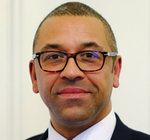
    The speech made by James Cleverly, the Foreign Secretary, in Lagos, Nigeria on 1 August 2023.

    I’m delighted to be here.

    All around us, Lagos is buzzing with activity and innovation. It’s global city of entrepreneurs and free market ventures. A thriving hub of science, technology and innovation. A pulsating, captivating metropolis – attracting investment from all corners of the globe.

    What better venue could there be to share the UK’s vision of our partnerships, not just with Nigeria, but with other African countries as well, a partnership we intend to endure for decades to come. The United Kingdom has long been a friend and partner of Nigeria – and other countries in Africa.

    As Foreign Secretary, I am proud of the UK’s ties to this continent. They are underpinned by our shared history, the diaspora communities in the UK and in African countries – as well as the countless professional connections across academia, business, defence and development. They are continually nourished by the precious bonds of friendship.

    Now, as the UK’s Foreign Secretary I’m not allowed to have a favourite continent. But if I did, it would be Africa. My mother was born here. I am proud of my Sierra Leonean roots. I’m also proud of the United Kingdom’s contribution to the history of this great continent.

    But I’m not here to talk about our shared history – fascinating a subject that it is, I am here to talk about the future. It was Ghana’s first president, Dr Kwame Nkrumah, who said that his country faces neither east nor west. It faces forward.

    That is very much my outlook too. It’s why I want to focus on our shared future in an era of geopolitical competition, demographic shifts, existential challenges and exciting new technologies as well.

    We are living through an era when the tectonic plates of world politics are shifting decisively. And a battle of ideas is taking place once again. This time, its focus is on the nature and the future of the international order.

    The UK’s position is clear. Respect for sovereignty, territorial integrity, self-determination and human rights must prevail. Alongside democracy, the rule of law, liberty and freedom.

    And I know that these are your values too. Which is why we welcome the strong and principled stance that the African Union and the Economic Community of West African States have taken on the defence of democratic values and the constitutional order in Niger.

    These are all values that we cherish, and they are values of the UN Charter. Alongside self-determination, territorial integrity and an end to all laws of conquest and annexation.

    Russia’s attack of Ukraine and invasion of that country, is an attack on our shared values. An attack on the UN Charter and an attack on the international order.

    But this month Russia has hit a new low. We are witnessing the grotesque spectacle of a G20 nation, deliberately burning food stocks whilst there are millions of people around the world struggling to eat.

    We live in a world of rapidly increasing transnational threats. Climate change is the most urgent and obvious example. We need strong multilateral institutions – particularly International Financial Institutions – that represent the world as it is today, economically, politically and demographically.

    This is not currently the case. The UK recognises that. And we want to work with African leaders in partnership to change it.

    We want and need a better-functioning International Financial System. We want and need permanent African representation on the UN Security Council. We want and need the African Union to become a member of the G20. Because we want and need the sheer demographic heft of African countries to be appropriately recognised in international organisations. So that we can shape the future of our world in partnership with African countries.

    Why? Because, by 2050, 2 billion people will live in Africa. Half will be under 25. Africa’s share of the world’s population is forecast to double from 18% to 37% by 2100. Whilst Europe’s is set to shrink from 10% to just 5%.

    The shift in world power that this represents has been evident for some time. And it is my goal as Foreign Secretary to ensure that our strategic approach reflects that.

    African countries will play a pivotal role in determining the future of the international order. That is why I’m here this week. To renew old friendships and to forge new ones.

    I want us to take forward a mutually beneficial agenda on trade, investment, climate action and reform of the international order. As a partner, and as a friend. Because partnership and friendship will help us reach the ambitious goals we have set ourselves.

    A prosperous, stable and secure Africa is what everyone wants, and what everybody needs. It’s good for the 1.5 billion people who live on this great continent. It’s also good for the UK. And it’s good for the world.

    Our approach in Africa will continue to be driven by the needs and perspectives of our partners across the continent. Be it development, security, sustainability or green and clean infrastructure, we are working shoulder to shoulder with our African partners – and we will continue to do so.

    Of course – there are many unknowns. We do not know when the next pandemic will strike. We cannot predict exactly when Ukraine will defeat this Russia’s invasion. We don’t know how the situation in Sudan or Niger will evolve. We have limited control over the pace of geopolitical change. And we cannot predict, with any great precision, the ultimate effects of climate change.

    But what we do have is the power to set direction and plan strategically, laying the foundations of resilience whilst working towards our mutual prosperity and security.

    That’s why partnership is so important. And it’s why we will continue to support African countries through urgent crises via our bilateral programmes, as we work in concert with organisations like the African Union and the Economic Community of West African States to enhance stability and security.

    It’s why we continue to support the African Continental Free Trade Area. Because by strengthening stability and security, we will improve lives in Africa and the UK simultaneously.

    But let me come back to our venue here today. Lagos represents Africa’s ever-growing confidence, it’s ever-growing economic strength and the immense future potential.

    Through trade, investment and the combined force of public investment and private capital, the UK wants to partner with you in reaching your full economic potential. Because when African countries are prosperous and stable, the UK benefits.

    The UK has been one of the biggest international investors in Africa. According to The United Nations Conference on Trade and Development, British companies collectively hold the largest stock of Foreign Direct Investment in African countries. Total trade in goods and services between the UK and Africa reached £44.7 billion in 2022 – an increase of 32.5% on the previous year.

    This is already an excellent foundation on which to build. But in the future, I want to do even more.

    Over half of British International Investment’s portfolio is in Africa. It committed nearly £700 million of investment in 2022 alone, and is set to become one of the largest climate investors in Africa by 2026.

    UK Export Finance has provided more than £3.5 billion for projects in Africa since 2020. And the City of London offers high-quality finance, investment opportunities and support in creating the right regulations for sustainable growth.

    In 2021 and 2022, African issuers raised £13 billion on the London Stock Exchange.

    Here in Nigeria, the UK’s Manufacturing Africa programme is supporting 22 manufacturing deals, worth $664 million, spanning electric vehicles, solar energy waste recycling – and much more. We strongly welcome President Tinubu’s economic reforms, including the removal of fuel subsidies and the unifying of exchange rates.

    And I was delighted to see that Ghana has adopted an ambitious economic reform programme to secure approval of their IMF programme. These decisions will encourage economic investment, and will help drive growth, and jobs.

    But sound macro-economic reforms at national level, no matter how inventive and bold, can only go so far. African countries need capital to drive investment, development and jobs.

    That’s why it’s imperative that International Financial Institutions accommodate our shared aspiration for a bigger, more responsive and fairer system. If multilateral development banks implement the recommendations of the G20’s independent Capital Adequacy Framework review, they will unlock hundreds of billions of dollars in development finance.

    The UK is taking a leading role on reform of International Financial Institutions. And we’re investing in the World Bank and the African Development Bank – which of course is majority African owned – so that they can finance infrastructure and support trade right across Africa.

    We support the aims of the Bridgetown Agenda. And I’m working with our partners to ensure that our aspiration is converted into action. It’s why we support the ‘Room to Run’ guarantee to the African Development Bank, which is expected to unlock up to $2 billion worth of new financing for projects across the continent.

    But the public sector alone cannot provide all the investment that is needed. Private capital is essential.

    That’s why the UK government is promoting private sector investment in Nigeria, and across the continent. And we will do our utmost to galvanise even more interest. I’ll come back to that in just a second.

    We will also continue to champion further multilateral reforms that will benefit Africa. Like the better and faster implementation of international tax rules that will stop revenues leaking from your national treasury. Or international rules for the governance of Artificial Intelligence and transformational technologies.

    Reform of international rules is not in the UK’s gift alone – no one country can bring about multilateral reform. But change is possible when we work in partnership on reforms that benefit not just African countries or the UK – but the whole world.

    A sustainable international order is in all our interests. It will make us safer. And it will drive future prosperity. Higher growth will bring more and better jobs as well as the revenue you need to update infrastructure and provide public services for all Nigerians.

    Whilst I’m on the subject of growth, let me say how strongly I believe that the inclusion of women is critical to all our economies. If women participated in labour markets on an equal footing with men, this could add $28 trillion, or 26%, to global GDP in 2025.

    Failure to take advantage of that statistic is wasteful beyond belief. That’s why British International Investment will ensure that at least 25% of their new investments focus on empowering women and girls’ and their economic development.

    And if we’re talking about future economic growth and our shared prosperity agenda, I have to say a word of praise for Nigeria. Your track record on tech is exceptional – indeed you received 44% of all international tech investment into Africa in 2021.

    And the UK is proud to be playing even a small part in your success. Our Digital Access Programme promotes connectivity and digital skills in Kenya, Nigeria and South Africa.

    This in turn stimulates innovation and sparks global development. And I’m also proud to announce a new £10 million partnership with Infacredit, which shares the risk in financing new infrastructure projects, and by doing so, leverages much more domestic private capital. That’s a great way of financing economic development, and we’re working to set up similar facilities in other African countries.

    But a real uplift in growth and prosperity cannot come without an increase in international trade. That’s why our Developing Countries Trading Scheme (DCTS) will extend tariff cuts to hundreds of more products exported from developing countries in Africa and elsewhere. This means that 98% of goods imported from Africa into the UK will enter duty free and new rules of origin will help the least developed economies integrate into global supply chains.

    Increased trade stimulates partnerships. And our collective power today – the power of African countries and the UK together – is founded on the quality and number of our partnerships. Only together can we adequately address shared challenges. Only together can we harness opportunities, and only together can we improve living standards.

    That’s why in April next year, we will be hosting the UK-African Investment Summit in London. This will be a milestone event and a further sign of the way we are stepping up our engagement and partnership with African countries.

    Our summit recognises the immense potential and opportunities for innovation across this continent for governments, businesses and for investors. And we want the summit’s outcome to be a new consensus across governments and the private sector that together we can deliver on inclusive growth, jobs, food security and the green economic transition.

    But you cannot have prosperity without security. Strengthening peace and security in Africa is therefore critical to unlocking our full joint potential.

    And it is also critical that we include women in peace processes so that they deliver better and longer lasting outcomes. Development gains and a fragile peace can be easily lost if large parts of a population are marginalised, or human rights are not respected.

    We will continue to focus on strengthening African countries’ resilience against threats, as well as addressing the drivers of conflict and instability. Strategic security and defence partnerships – like those we have with Nigeria, Ghana and Kenya – are a powerful means of achieving this goal.

    We support African countries in their ongoing fight to counter-terrorism. African leadership, with support from the UK and others, has eliminated piracy off the coast of Somalia – and dramatically curtailed piracy off the Gulf of Guinea. As a result, the whole world has benefited.

    But security and prosperity rely on scientific innovation. The UK government recognises the need for investment in science and technology. That’s why we plan to expand our science and technology partnerships. Building on the success of our Digital Access Programme, which promotes connectivity and digital skills in Kenya, Nigeria and South Africa.

    And we will work with our partners to commercialise scientific knowledge. Public-private partnerships and an open approach to science make the spread of innovation easier and the work of pioneers more accessible.

    Our spirit of partnership provides opportunities to collaborate and accelerates progress towards our shared objectives. I say again: when you benefit, we benefit. We are proud that there are already many strong examples of partnerships with the UK across this continent.

    My ambition is not just to emulate but to surpass those achievements. And to face our shared future with optimism. Let there be no doubt. When it comes to our partnerships, the best is yet to come.

    Thank you.

  • PRESS RELEASE : Sarah Breeden appointed as Deputy Governor of the Bank of England [August 2023]

    PRESS RELEASE : Sarah Breeden appointed as Deputy Governor of the Bank of England [August 2023]

    The press release issued by HM Treasury on 1 August 2023.

    Sarah will take up her role at the Bank on 1 November 2023, after the appointment was approved by His Majesty The King.

    The Chancellor has announced that Sarah Breeden will succeed Sir Jon Cunliffe as the next Deputy Governor for Financial Stability (DGFS) at the Bank of England.

    His Majesty The King has approved the appointment.

    Sarah will take up her role at the Bank on 1 November 2023 for a term lasting five years.

    The new Deputy Governor for Financial Stability will lead the Bank of England’s work on financial stability, will sit on the Financial Policy Committee (and chair it in the Governor’s absence) the Monetary Policy Committee and the Prudential Regulation Committee and play a key role in providing a link between financial stability and monetary policy.

    Sarah will also be a member of the Court of the Bank of England, Chair the Financial Market Infrastructure Board, and represent the Bank of England on a number of national and international bodies.

    Sarah will succeed Sir Jon Cunliffe, who has served since 2013.

    Jeremy Hunt, Chancellor of the Exchequer, said:

    “I am pleased to appoint Sarah Breeden as the next Deputy Governor of the Bank of England who brings extensive experience to the role including from her work as a member of the FPC and across monetary, economic and financial matters.

    “I want to thank Sir Jon Cunliffe for his decade of service as Deputy Governor of the Bank of England. Over the last 10 years, he has led the Bank’s work on delivering financial stability and has played a key role in ensuring Britain’s financial services are well placed to thrive in the future.”

    Andrew Bailey, Governor of the Bank of England, said:

    “I am delighted that Sarah has been appointed as DGFS. She will bring a wealth of financial and economic policy knowledge to the role, both domestically and internationally.”

    About the appointments

    The Bank of England is the central bank of the UK. It is governed by the board of directors known as the Court of Directors. Further information can be found at the Bank of England website.

    The Deputy Governor for Financial Stability is appointed by His Majesty the King, on the recommendation of the Prime Minister and the Chancellor of the Exchequer.

    The role is subject to pre-commencement scrutiny by the Treasury Select Committee.

    Public appointments are made on merit following a fair and open competition process.

    About Sarah Breeden

    Sarah is currently at the Bank of England, serving as Executive Director for Financial Stability Strategy and Risk and a member of the Financial Policy Committee (FPC). Prior to her current role, Sarah was the Executive Director responsible for supervising UK Deposit Takers, and before that was responsible for the supervision of the International banks. Sarah is also a trustee of the Education Endowment Foundation.

    Footnotes

    Following the principles in the Governance Code, there is a requirement for appointees’ political activity (if any is declared) to be made public. Sarah has confirmed she has not engaged in any political activity in the last five years.

  • PRESS RELEASE : Trade Update – UK-Gulf Cooperation Council FTA [August 2023]

    PRESS RELEASE : Trade Update – UK-Gulf Cooperation Council FTA [August 2023]

    The press release issued by the Department for Business and Trade on 1 August 2023.

    Statement on the fourth round of negotiations for a free trade agreement between the UK and the Gulf Cooperation Council.

    The fourth round of negotiations for a free trade agreement (FTA) between the UK and the Gulf Cooperation Council (GCC) took place between 17 and 28 July.

    The round was hosted in London and held in a hybrid fashion. A number of GCC negotiators travelled to London for in-person discussions with others attending virtually.

    Draft treaty text was advanced across the majority of chapters. Technical discussions were held across 23 policy areas over 44 sessions. Good progress was made and both sides remain committed to securing an ambitious, comprehensive and modern agreement fit for the 21st century.

    The GCC is equivalent to the UK’s 7th largest export market and total trade is worth £61.3 billion according to latest figures. An FTA will be a substantial economic opportunity and a significant moment in the UK-GCC relationship.

    Government analysis shows that, in the long run, a deal with the GCC is expected to increase trade by at least 16%.

    The fifth round of negotiations is expected to be hosted by the GCC later this year.

    His Majesty’s Government remains clear that any deal we sign will be in the best interests of the British people and the United Kingdom economy.

  • PRESS RELEASE : School children and hospital patients set for higher quality food under new government plans [August 2023]

    PRESS RELEASE : School children and hospital patients set for higher quality food under new government plans [August 2023]

    The press release issued by the Cabinet Office on 1 August 2023.

    A new agreement for procuring food and drink has been announced by the Crown Commercial Service.

    • Crown Commercial Service agreement will support food producers, including SMEs, in accessing public sector food contracts
    • Plans to drive up standards of food and drink available to the public sector including schoolchildren and hospital patients
    • Initial stages of the agreement are estimated to attract £100 million worth of spend

    New plans revealed today will help schools, hospitals and other organisations buy higher quality food and drink at better value for the taxpayer.

    A single online portal will make it easier for public sector customers and small businesses by offering a simplified route to markets – opening up access to a range of food and drink suppliers for the public sector.

    This has the added benefit of creating more choice for customers, while improving standards and providing better access to locally-sourced produce. Public sector procurement teams will also have the option to add their preferred SME suppliers to the agreement.

    All suppliers available through the portal will have to adhere to the updated Government Buying Standards for Food, which the Department for Environment, Food and Rural Affairs (DEFRA) are set to update in due course.

    Parliamentary Secretary for the Cabinet Office, Minister Alex Burghart, said:

    Delivering better value for the taxpayer and driving up food and drink standards are key priorities for government.

    This new system will deliver better quality food to our schoolchildren and care home residents, while creating a level playing field to help small businesses win more contracts from the public sector.

    The government’s ambition is to further embed Government Buying Standards (GBS) to food and catering served through all public sector organisations. The framework will increase compliance with the GBS further.

    This delivers a centralised option for purchasing food and drink and will be made available for the public sector across the UK. The agreement will enable public sector organisations to source healthy and high-quality produce in a consistent way – all their food and drink needs will be available in one place, providing a holistic approach to the ordering, fulfilment, consolidation and delivery of food produce.

    By harnessing the collective buying power of customers across the public sector, the agreement is expected to significantly reduce costs and therefore help combat food inflation.

    Crown Commercial Service (CCS), the UK’s largest public procurement organisation and part of the Cabinet Office, has worked with DEFRA to develop the new agreement. As part of that process, CCS has engaged extensively with SMEs to ensure the UK’s business community has directly fed into the plans.

    Mark Spencer, Food Minister, Department for Environment, Food and Rural Affairs said:

    The UK produces world leading quality food and drink, demonstrating excellence in animal welfare and sustainable production standards.

    This is an exciting opportunity for the public sector to lead by example, showcasing our great food and drink and supporting small businesses. We look forward to working with CCS on the agreement.

    Simon Tse, CEO of Crown Commercial Service said:

    We’re delighted to be working alongside Defra to introduce better quality, seasonal and nutritious food into schools, hospitals and prisons.

    As we continue to level up and grow the economy, this food solution will support public sector bodies in purchasing good quality food and help local and small businesses compete for public sector contracts for the first time, opening up economic opportunities across the country.

    Crown Commercial Service has engaged with food suppliers and industry bodies from across the UK to develop its procurement strategy for the new agreement, which is expected to be open for business in Spring 2024.

    The initial contract value is estimated to attract £100 million worth of spend over the 4 year contract period, which is a small proportion of the annual £2.1 billion public sector food spend. Public sector buyers are free to choose to buy from other buying organisations who provide food products through frameworks in a similar way.

  • PRESS RELEASE : Appointment of Lord-Lieutenant of Berkshire [August 2023]

    PRESS RELEASE : Appointment of Lord-Lieutenant of Berkshire [August 2023]

    The press release issued by 10 Downing Street on 1 August 2023.

    The King has been pleased to appoint Mr Andrew Try, DL, as His Majesty’s Lord-Lieutenant for the Royal County of Berkshire on the retirement of Mr James Puxley, CVO, on 23rd October 2023.

    Andrew Try is the founder and Managing Director of ComXo, which provides virtual personal assistance and other workplace services to large enterprise clients in the City of London; his company employs 110 people in Datchet. A sixth-generation Windsorian, his voluntary work has focused on serving the locality, including as Trustee of the Windsor Festival, the Windsor Learning Partnership Multi-Academy Trust and the Prince Philip Trust Fund; member of the board of the Friends of St George’s Chapel; chair of the Royal Windsor Rose and Horticultural Society; and governor of Clewer Green Primary School and Papplewick School, Ascot.

    Mr Try has two children and an adult stepson and lives in Windsor with their mother, Vicky.

  • NEWS STORY : Government Formally Acknowledges Act of Genocide Committed by Daesh Against Yazidis

    NEWS STORY : Government Formally Acknowledges Act of Genocide Committed by Daesh Against Yazidis

    STORY:

    The Government has formally acknowledged acts of genocide which were committed by Daesh against the Yazidis in 2014. The decision follows the judgement of a German court where a former Daesh fighter was found guilty of acts of genocide and crimes against humanity.

    Lord Ahmed, the Minister for the Middle East, said in a statement:

    “The Yazidi population suffered immensely at the hands of Daesh nine years ago and the repercussions are still felt to this day. Justice and accountability are key for those whose lives have been devastated. Today we have made the historic acknowledgement that acts of genocide were committed against the Yazidi people. This determination only strengthens our commitment to ensuring that they receive the compensation owed to them and are able to access meaningful justice.”

    RESOURCES:

    Government Press Release

  • PRESS RELEASE : Boost for broadband and 5G coverage revolution rollout as government explores plan to open £160 million satellites fund [August 2023]

    PRESS RELEASE : Boost for broadband and 5G coverage revolution rollout as government explores plan to open £160 million satellites fund [August 2023]

    The press release issued by the Department for Science, Innovation and Technology on 1 August 2023.

    A potential £160 million scheme to fund next generation of satellite communications development and boost UK’s leadership in ever-growing global satellite market.

    • The government is working to establish a potential £160 million scheme to fund next generation of satellite communications development and boost UK’s leadership in ever-growing global satellite market
    • satellites will be key to offering connectivity in remote and rural parts of UK, bridging the digital divide and levelling-up our country while growing the economy
    • Low Earth orbit (LEO) satellites more resilient and harder to disable and have ensured reliable connectivity for Ukraine in the face of Russia’s illegal invasion

    British innovators working to revolutionise 5G and broadband coverage for every corner of the UK could be in line to secure up to £160 million from a scheme to deliver the next generation of high-tech satellites, Science and Technology Secretary Michelle Donelan announced today.

    LEO satellites represent the next generation of space technology, offering unparalleled resilience and resistance to disabling attempts. Their vital importance was demonstrated during Russia’s illegal invasion of Ukraine, when they ensured continuous and reliable connectivity, even in the most challenging circumstances. The Connectivity in Low Earth Orbit scheme (CLEO) would build on our country’s established and growing satellites industry by providing UK researchers and businesses with critical support to drive the development of new constellations.

    This would include supporting smarter satellites with better hardware, using AI to make data delivery faster and connecting satellites together for improved connection – all creating interconnected networks serving billions worldwide. The proposed scheme would ensure UK businesses are supported in developing the next generation of low Earth orbit satellites, driving the UK’s thriving satellite industry towards global leadership.

    The development would mark the UK’s most significant ever investment in satellite communications, unleashing our country’s potential to become global giants of the satellite industry while creating hundreds of highly skilled jobs to boost the Prime Minister’s priority of growing our economy.

    This package would be complemented by a range of live 5G integration projects such as the 5G testing facility at ESCAT in Harwell, Oxfordshire, aiming to establish networks in underserved and remote areas, bringing high-speed internet and connections to every single part of the UK, while addressing a major priority to improve Future Telecoms, as laid out in the government’s Science and Technology Framework.

    Science, Innovation and Technology Secretary, Michelle Donelan, said:

    Tackling the digital divide is at the heart of empowering our citizens wherever they live, and by investing in the vital research and development that CLEO would facilitate, we can level up our country while growing the economy through high-quality jobs.

    This proposed record investment is also potentially a huge opportunity to harness our reputation as a world leader in innovation and R&D investment, supporting leading UK businesses to deliver the next generation of satellites and positioning the UK as true space superpower.

    To propel the UK’s capabilities and long-term ambitions in the space sector, the government is exploring grant funding of up to £100 million. The government is also exploring whether to support this grant funding with an additional £60 million from the European Space Agency’s (ESA) UK-backed Advanced Research in Telecommunications Systems (ARTES) programme, which supports UK industry in delivering commercial satellite communications infrastructure. The scheme would establish UK leadership in many critical areas for the next generation of LEO satellite communication technologies such as AI and machine learning.

    CLEO would aim to deliver the R&D needed to support the launch of hundreds of satellites into space, revolutionising the UK’s communication infrastructure and closing connectivity gaps.

    Harshbir Sangha, Missions and Capabilities Delivery Director at the UK Space Agency, said:

    Today’s announcement is a vital step towards the delivery of a key priority of the UK Space Agency – to maximise the potential of low Earth orbit and become a global leader in next generation satellite communications technologies by building our ability to service future high-volume constellations.

    Our intent is to catalyse investment, build on existing capabilities and meet the challenges associated with seizing a significant share of a fast-moving global market, by leveraging our growing national space programme and leading investments in commercial ESA programmes such as ARTES.

    This announcement follows the reintroduction of the government’s National Space Council, as part of the UK’s mission to become a true space superpower. Co-chaired by the Science and Defence Secretaries, the Council is responsible for coordinating government policy on space and ensuring that the UK is well-positioned to take advantage of the opportunities presented by the space sector to drive job creation and grow the economy, one of the Prime Minister’s 5 key priorities.

  • PRESS RELEASE : UK acknowledges acts of genocide committed by Daesh against Yazidis [August 2023]

    PRESS RELEASE : UK acknowledges acts of genocide committed by Daesh against Yazidis [August 2023]

    The press release issued by the Foreign Office on 1 August 2023.

    The UK has today formally acknowledged that acts of genocide were committed against the Yazidi people by Daesh in 2014.

    • Announcement comes ahead of events marking the nine year anniversary of atrocities committed by Daesh against the Yazidi people.
    • UK decision follows ruling by the German Federal Court of Justice which found a former Daesh fighter guilty of acts of genocide and crimes against humanity.
    • UK continues to play leading role in eradicating Daesh, including through rebuilding affected communities and tackling its poisoning propaganda.

    The UK has today formally acknowledged that acts of genocide were committed against the Yazidi people by Daesh in 2014.

    The Minister of State for the Middle East Lord Ahmad made the announcement ahead of events marking the nine-year anniversary of atrocities committed by Daesh against the Yazidi people.

    Minister of State for the Middle East, Lord Ahmad, said:

    The Yazidi population suffered immensely at the hands of Daesh nine years ago and the repercussions are still felt to this day. Justice and accountability are key for those whose lives have been devastated.

    Today we have made the historic acknowledgement that acts of genocide were committed against the Yazidi people. This determination only strengthens our commitment to ensuring that they receive the compensation owed to them and are able to access meaningful justice.

    The UK will continue to play a leading role in eradicating Daesh, including through rebuilding communities affected by its terrorism and leading global efforts against its poisonous propaganda.

    The UK’s position has always been that determinations of genocide should be made by competent courts, rather than by governments or non-judicial bodies. This determination has been made following the judgment of the German Federal Court of Justice earlier this year, where it found a former Daesh fighter guilty of acts of genocide and crimes against humanity committed in Iraq.

    The UK officially acknowledges five instances where genocide has occurred: the Holocaust, Rwanda, Srebrenica and acts of genocide in Cambodia and against the Yazidi people.

    During his visit to Iraq earlier this year, including to the Kurdistan region, Lord Ahmad also welcomed progress with the passage of the Yazidi Survivors Law, which will provide reparations to survivors. He underlined the UK’s commitment to helping Iraq fully implement the law and ensure that survivors receive full support and access to justice.

    A commemoration event – which is being held in Baghdad – has been organised by Yazidi civil society organisations and will welcome international stakeholders. The UK’s Ambassador to Iraq, Steve Hitchen, will attend and confirm the UK’s announcement.

    Further information:

    • On 30 November 2021, Frankfurt Higher Regional Court sentenced Taha Al-Jumailly, a former Daesh fighter, to life imprisonment for acts of genocide and crimes against humanity, for the enslavement and abuse of a Yazidi woman and her five-year-old daughter in 2015. On 17 January 2023, the Federal Court of Justice (BGH) upheld the Frankfurt ruling and rejected the Defendant’s appeal.
    • Though territorially defeated, the fact is that Daesh remains a serious threat in Iraq, Syria and elsewhere. The UK continues to support the work of the United Nations Investigative Team to Promote Accountability for Crimes Committed by Da’esh/ISIL (UNITAD) and international efforts to bring perpetrators of Daesh violence to justice.
  • NEWS FROM 100 YEARS AGO : 4 August 1923

    NEWS FROM 100 YEARS AGO : 4 August 1923

    4 AUGUST 1923

    The sudden death of US President Warren Harding was announced in the media.

    The official text of the French response to the British statement on German war reparations was published.

  • NEWS FROM 100 YEARS AGO : 3 August 1923

    NEWS FROM 100 YEARS AGO : 3 August 1923

    3 AUGUST 1923

    Stanley Baldwin, the Prime Minister, made a statement in the House of Commons with regards to the failure of the Allies to reach agreement on the matter of German war reparations.

    The Imperial Defence Committee published a report on the future of the Naval Air Army, also known as the Fleet Air Arm.

    Child welfare work in relation to infant mortality was discussed at the Congress of the Royal Sanitary Institution.