Author: admin

  • NEWS STORY : Liz Truss defends her Economic Record when Prime Minister

    NEWS STORY : Liz Truss defends her Economic Record when Prime Minister

    STORY

    In a speech at the Institute for Government the former Prime Minister Liz Truss defended her economic policies, although wasn’t drawn on why she sacked her Chancellor Kwasi Kwarteng who had started to implement them. Truss spoke about the UK’s long-term economic problems and gave her proposed solutions. She argued that the UK has a problem with economic growth and that the government needs to take action to address it. She proposes a three-pronged approach of tax cuts, supply-side reforms, and public spending restraint, arguing that these policies will lead to higher economic growth and investment. Truss said:

    “State spending now accounts for 46% of GDP, higher than it was in every year in Britain except for 1975 and up from 34.8% in the year 2000. No other European country has seen this level of growth in state spending, apart from Greece and Spain.”

    Truss blamed the political balance in the economy, despite the Conservative Government having been in power for 13 years, saying:

    “We’ve all got to admit that it’s the left that made the running. And we’ve seen that regardless of which government has been in power, from the energy price gap to the 2050 climate change target to the ESG agenda in companies. There’s been a cultural shift across both business and the public sector. Towards a lot more left wing policies. And despite the long record of failure of industrial policy, it’s back in vogue again, people are talking about it”.

    RESOURCES

    Liz Truss’s Speech

  • Liz Truss – 2023 Speech at the Institute for Government

    Liz Truss – 2023 Speech at the Institute for Government

    The speech made by Liz Truss, the former Prime Minister, in London on 18 September 2023.

    It’s great to be here at the Institute for Government today. I’m having a rather more relaxing September than I did last year. And you might well ask, Why am I back talking about the same topic? But it’s one year ago that I launched my government and our economic policy. And I’m speaking here today, not because I want to relive the events of last year. I certainly don’t. It’s not because I’m keen to be back in Downing Street. I’m certainly not. It’s because one year after saying that economic growth was the central issue for our country. Since then, we’ve heard a lot of people say that right across the political spectrum. That still is not agreement, or what has caused the problems of a lack of economic growth, but also what on earth we’re going to do about them.

    And I think these issues are only getting more urgent. The reality is that over time, we’re not bringing in as much money as a country. We have the highest debt interest payments in the developed world. And according to the Growth Commission, the average person in the UK is now £9,100 worse off than the average person in the United States.  I believe the reason that we have this problem is 25 years of economic consensus that has led to a period of stagnation and I believe that we need to shatter that economic consensus if we’re to avoid worse problems in the future.

    The fact is the British public know that the consensus isn’t working, Lord Ashcroft’s poll on the state we’re in released on 4th September. revealed that 72% of people in Britain agree that Britain is broken, people are getting poorer, nothing seems to work. We need big changes to the way the country is run, whichever party is a government. And yet despite the dissatisfaction the poll also reveals that people don’t agree on why we’ve got the problems and what the fundamental cause of the malaise in which we’re living is.

    Now there are some people who claim that this is a crisis of capitalism, that we’ve had too much free markets, but quite the opposite is true. The fact is that since Labour was elected in 1997, we have moved towards being a more corporatist social democracy than we were in the 70s, in the 80s and the 90s. State spending now accounts for 46% of GDP, higher than it was in every year in Britain except for 1975 and up from 34.8% in the year 2000. No other European country has seen this level of growth in state spending, apart from Greece and Spain.

    There’s also a growing burden of regulation. The cost of regulations introduced in 2022 alone is 10 billion pounds according to the government, and I believe that is an underestimate in the sectors that are key arteries of the economy, whether it’s energy, housing and banking, there is less competition or more government involvement than there was 25 years ago. The government still owns a 40% stake in NatWest. The cost of energy in Britain are twice what they are in the United States, and we have a severe shortage of housing.

    The cost of welfare and pensions has ballooned by 50% in real terms, since the turn of the millennium, and even on an income of 50,000 pounds, it’s still possible to claim Universal Credit. Our tax system has become more complicated, with many facing high marginal tax rates when they seek to earn more income. Somebody earning 100,000 pounds with a student loan faces a marginal tax rate of 71%. We’ve had cheap money for over a decade, with nearly 900 billion pounds pumped into the system by the Bank of England through quantitative easing in an era of the near zero interest rates, something that’s completely unprecedented in 300 years of UK central banking. So how on earth did we get to this situation? Well, my view is that after the successful monetary policy, and supply side reforms of the 1980s, and the winning of the Cold War by the West, we were all optimistic and upbeat about our future and we took our eye off the ball.

    Free market economists went off to lucrative jobs in the city, allowing academic institutions and think tanks to be captured by the left. Demand management crept back in alongside Neo-Keynesian dominated monetary policy. And we Conservatives allowed the debate to be framed and led by the left whether it was the anti capitalist arguments of the Occupy movement, whether it was the diversity policies, or whether it was the statist environmental solutions.

    We’ve all got to admit that it’s the left that made the running. And we’ve seen that regardless of which government has been in power, from the energy price gap to the 2050 climate change target to the ESG agenda in companies. There’s been a cultural shift across both business and the public sector. Towards a lot more left wing policies. And despite the long record of failure of industrial policy, it’s back in vogue again, people are talking about it. And at the heart of this was the basic belief by politicians that the good times would go on forever. The discussion was about sharing the proceeds of growth. It was about general well-being and happiness rather than GDP. The only question seemed to be how we will get to redistribute the pie. Not about growing the pie in the first place. But the problem is that 25 years later, we have seen a growing size and scope of the state. And that growing size and scope of the state has slowed down economic growth itself.

    Levels of tax and regulation, are now too high to generate the amount of economic activity we need to help people’s incomes get bigger and to fund government services and that means our economy is now stagnating people talk about the productivity puzzle, but it’s really not a puzzle.

    If there’s not enough incentive to go out and set up a business to take risks to compete, or even work. That’s a problem. People are delaying starting a family because housing is too expensive. And the cost of bringing up children is so high. Public Sector productivity is woeful, and millionaires are voting with their feet. The UK is third after Russia and China for the departure of high net worth individuals. And despite all of the evidence that these incentives have a major impact. There’s been a fatalistic consensus that these levels of growth in Britain are inevitable. And the economic models of the Treasury and the OBR reflect that they’re overly static and short term missed.

    They underestimate the effect the tax and regulation have on people’s behaviour. And they tend to focus on one or two or at most five years of the effects of policy. I call this approach abacus economics. The failure to factor in the dynamic effects of policy stalls out risks and problems for the future. So what we see is parts of the country that need investment don’t get it because the emphasis is on saving time or money now, rather than creating the conditions for growth in the future. We see energy projects being cancelled, because the costings are based on yesterday’s energy prices, not on future energy security. And the Treasury is always allergic to giving up its levers of control, and so objects to more local decision making a more low tax zones.

    This pattern of high spending, high tax and high regulation and low growth isn’t just taking place in the United Kingdom. It is taking place across Western Europe and across the United States, particularly the coastal states. And when we look at the counter examples of high growth in places like Poland, the Baltic states or Florida and Texas, they’re largely places with low regulation and low taxes in Poland Corporation taxes 19% and income taxes are extremely flat. And yet despite all this evidence, the global left wants to double down on this strategy for statism and in fact, they appear to be meeting at the moment in Canada.

    That is what Bidenomics is, it’s about injecting more top down subsidies, increasing debt and trying to reduce competition by levelling up taxes across the West. More regulation through the Environment Protection Agency amongst others. And to fund this federal spending is at 40% More than pre-COVID levels. And it’s set to go up even more this year. Soon the United States will be spending more money financing its debt than it spends on its entire defence budget.

    And Wall Street has just clocked on to this. Just recently they downgraded US debt which is meant to be the safest in the world. And despite the fact that it’s very clear that the West cargo on borrowing forever. The Labour Party have said that they want to copy and paste Biden’s policies onto the UK statute book. They’re calling their version of Biden’s policies. The green prosperity plan is not a green prosperity plan.

    It’s a green de-growth plan. And it’s just a new name for the failed subsidies and high taxes of the past. Real economic security would mean incentives. So oil and gas producers want to come to the North Sea. And so people want to invest in the United Kingdom. And above all, real security means controlling public spending.

    Now last autumn, I sought to take on this consensus and try and get the British economy on a better trajectory through a three pronged approach of targeted tax freezes and reductions, supply side reform and holding down public spending. It was clear that interest rates were going to go up and they would go up further. We’d had artificially low rates for too long, and they were rising across the world.

    Therefore, in order to dampen inflation, and stave off a recession, the only tool we had at our disposal was doing all we could to fix the supply side of the economy and increase our productive capacity. As far as I was concerned.

    This was an urgent task. And the growth plan which subsequently became known as the mini budget, sought to do this through targeted tax cuts supply side reform and spending restraint. I felt we needed to reform our tax system with mothers to make it more business friendly, and to make the UK a more attractive place to invest.

    We needed to reverse the impending hike in corporation tax. We needed to cut the top rate of income tax to show that Britain was open to talent reforming IR35 would cut red tape for small businesses and return to VAT free shopping would make our cities more attractive.

    Independent calculations suggested that cutting the higher rate of income tax and the tourist tax would have increased rather than decreased revenues within five years. Those are calculations by the CEBR. So when people describe my policies as unfunded tax cuts, that is not an accurate description. In fact, quite the opposite of being unfunded these tax cuts could have include increased funding for our public services. The OBR also say for the cost of freezing corporation tax was much less than the Treasury suggested. Their costing of the measures was £25 billion over five years, not £45 billion and regrettably, the static models used by the OBR failed to acknowledge this.

    The second part of the plan was supply side reform, with some of the biggest constraints to growth in the UK economy, being in energy housing and the labour market. On energy there was a risk of household bills going up to 6000 pounds due to decades of short term US energy policy that have failed to ensure our security. That’s what we introduced the energy price guarantee, while we work to open up fracking and the North Sea to make the UK energy independent.

    Again, including by abolishing the windfall tax, again due to static costing, the cost of this was vastly overestimated. It will actually cost 27 billion pounds, less than half the £55 billion forecast by the OBR in the autumn of 2022. On planning we instituted Canary Wharf style investment zones with planning freedoms and tax breaks for a decade that would help drive new jobs and opportunities in left behind areas. And we sought to make property ownership a reality for young people again, by reducing costs on developing the get passed on to renters and buyers. Whether it be through planning reform, reduced regulation, or speeding up planning decision. We also wanted to cut red tape on childcare to make it more affordable for families.

    The third part of the plan was about public spending restraint. Now we were deliberately careful about discussing public spending, given the very difficult politics of it. What I tried to do as prime minister was navigate between the economic reality and what realistically we could get support for in Parliament. Having been chief secretary I know it’s very difficult to cut spending in year and it’s often counterproductive. In the past, we’ve cut things like capital, and then it’s come back to bite us later. Therefore, what I tried to do was change the trajectory of spending by holding spending down now in an inflationary environment, not reopening.

    The Spending Review represents a tough approach. I also wanted as was widely publicised at the time to increase welfare benefits by wages, not prices. These two measures would have meant that compared to what we are spending now, we would have saved 35.5 billion over two years. 18.4 billion in 2023 24 and 17 billion in 2025. But even these modest savings did not command the support of the Conservative parliamentary party. And it’s a very serious issue for us who wants to see smaller government that currently making significant changes to spending simply doesn’t have enough political support.

    So those were the three key parts of the plan: targeted tax reductions, supply side reform and public spending restraint. Of course, the growth plan was a starting point, a signal of direction further changes were needed, given the scale of the challenge we face. CEBR analysis at the time suggests that if those policies have been kept in place, GDP growth would be 2% higher than otherwise by 2030. And investment would have been up 10% and could have been even stronger. These impacts are even greater in the long term. The 20 year GDP impact is normally three to four times bigger.

    I think we can see from the evidence on the ground, the impact the policies would have had. Investment would not have faltered in the North Sea were it not for the windfall tax. We would have got moving on fracking and lower energy bills would have been on the horizon. A more competitive rate of corporation tax would have persuaded the likes of AstraZeneca to locate in the UK and there would have been more duty free shoppers and a boom in the number of self employed.

    The policies are welcomed by business groups and voters like them as well. And since last year, virtually all of the policies in the mini budget have been called for 38 councils want to proceed with full fat investments aims, city firms are demanding more freedom to invest. Companies have called for lower corporation tax. There’s an entire campaign in the Daily Mail for tax free shopping and the self employed want IR35 reforms. So why didn’t it happen? Why didn’t these policies which people wanted and would have resulted in economic growth not happen? Well, the reality is it was the reaction. So although I did get rid of the health and social care levy a new tax which would have no doubt expanded over time.

    Unfortunately, most of the policies weren’t implemented. And they weren’t implemented because there was a reaction from the political and economic establishment, which fed into the markets, markets that were already destabilised by the Bank of England slowness. to hike interest rates and the failure to regulate LDIs. And I was effectively forced into a policy reversal under threat of a UK meltdown.

    Now some people say we were in too much of a rush. And it’s certainly true that I didn’t just try to fatten the pig on market day. I tried to rear the pig, fatten the pig and slaughter the pig on market day. I confess to that. But the reason we were in a rush is because voters had voted for change. They voted for change in 2016 and they voted for change again in 2019. And I wanted to deliver that change, and I knew we had limited time. I knew with the level of resistance or the lack of preparation, that things weren’t going to be perfect.

    However, given the situation the UK was in, it was important to take action and not to do nothing. Because I went into politics to get things done, not to do public relations. And to all the people who said that, if we’d spent more time rolling the pitch or we’d done things in a different way. Or we delayed things, we would have been able to deliver our programme. I asked them to look at what has happened since. By October the seventh through the OBR was already leaking their calculations that there was a 70 billion pound hole in the budget.

    These numbers of course subsequently proved wrong. But the leak would have made delivery of the corporation tax freeze untenable. And since last year, no major supply side reforms or tax cuts have been allowed to happen. Whether it’s on financial services, childcare planning, or on the environment. In fact, 150 Conservative MPs have written to the prime minister saying there should be no change in net zero legislation.

    So although there’s no doubt that the communication could have been better, and the operation better honed I think we all have to acknowledge in the room that this wasn’t just a process problem. There was unquestionably a reaction to the policies themselves. And the fact is that supply side economics and a belief that the size of the state needs to be reduced are ideas that no longer command widespread support and understanding. The anti-growth coalition is now a powerful force, comprising the economic and political elite, corporatist parts of the media, and even a section of the Conservative parliamentary party. The policies I advocate simply are not fashionable on the London dinner party circuit.

    In fact, what is interesting is when you look at the polling evidence, the people who want change and support these policies are less likely to be comfortably off in London and the Southeast. The law of Ashcroft poll shows very clearly, those who want to see lower taxes and smaller government and who are tougher on welfare tend to live in less affluent areas. Many of those are people who started voting Conservative in 2019. And, in addition to that, there are some of the policies I advocate that just don’t have very much public support at all. such as cutting the tax top tax rate, building more homes, of getting or getting rid of process when building infrastructure projects. But frankly, we need to find a way of doing these things. Otherwise, we’re not going to get the prosperity and the opportunity that people want.

    And we can see that policies I advocated working right now, in places like Texas, Florida and the Czech Republic. Even Germany, is now cutting corporate taxes and reducing regulation. If the situation was urgent last year, it’s even more urgent now. The UK is in a serious and precarious position and there is a real risk of a downward spiral. The national debt was £525 billion in 2005. By 2022, it had quintupled to £2.5 trillion, and it’s set to hit £3 trillion within three to four years.

    I believe we can get out of this. But the only way to get out of the debt spiral is to get a grip on public spending while implementing policies to grow the economy. I urge the government to be bold and to set out a clear vision of how the UK can get to sustained 3% annual growth within a decade. This should set out a clear tenure trajectory for reducing the size of the state as a proportion of our economy through a combination of growth and spending control. We should aim to get that ratio we achieved at the turn of the millennium. Before Blair and Brown turned on the spending taps and excess regulation made us uncompetitive and we need to give people hope that things can get better. We need to spell out what 3% growth would mean in terms of improved standard of living and opportunities for an average family. A new car or holiday abroad, more support for your children.

    And ministers need to go out and explain the why as well as the how we need to make the case for free market economics and omit the state has got too big, partly as a result of excess spending during COVID. We need to show an enterprise economy is good for everyone. Conservatives can’t just assume people have read Milton Friedman. We need to spell out our philosophy and that would contrast with Labour’s lack of ideas or force them to defend the stale economic consensus started under Blair and Brown.

    Now in order to deliver this, there’s going to be big change required. We need a new supply side revolution, the supply side revolution in the 1980s was all about taking a long productive industry and the unions, which held the whip hand over the elected government of today of the day. The supply side revolution now has to take on the burden of regulation and an overlarge over powerful bureaucracy which has the whip hand over the elected government. This supply side revolution has to encompass changes to tax regulation and the size of the state. The government needs to take on the OBR over the impact of tax policy, and we need to see much more sophisticated levels of analysis from the Treasury about long term economic growth. This needs a wide variety of thinkers, including monetarists and supply siders. We can’t afford to be uncompetitive internationally. We need corporation tax back at 19%. And we should also refuse to implement the OECD minimum tax agreement which I previously labelled a cartel of complacency.

    It won’t be implemented in the US and even if it was it would make the entire West uncompetitive. We also need to reduce marginal tax rates to make it worthwhile to work at every income level. Further changes like abolishing the tourist tax, abolishing the windfall tax and sorting out IR 35 needs to be made. We also need to get a grip on the ballooning welfare and pensions bill.

    This means slowing the rates of increased benefits and tougher work. Requirements. It means raising the retirement age further. And as a party we have to deal with a difficult issue of the increasing costs of pensions. The current trajectory is not sustainable. We need more competition and less corporatism in key sectors of the economy like energy and finance. I favour a single utilities regulator to get rid of the Balkanization and capture that we’ve seen under organisations like off water and OFGEM.

    The government needs to divest its shares in banks and withdraw from micromanagement in sectors like transport. And in the energy sector, we need to get on with fracking and abolish the windfall tax in the housing market that should be tax breaks in return for having new developments in homes in your area, a much simpler zoning process and speeded up infrastructure projects. That’s what the original investment zones I proposed are about we should diverge properly from the EU. So we can increase competitiveness in areas like financial services. And finally, we should as many other Western countries already doing delay implementing net-zero commitments such as the ban on new petrol and diesel vehicles from 2030. Other environmental regulations which are hiking the cost of living, like enforcing the replacement of gas and oil boilers should also be abandoned. Ladies and gentlemen, in conclusion, there is a growing consensus that we need to grow. But although people will the ends, they don’t necessarily will the means.

    In order to grow, we need to change and that starts with acknowledging that we have a problem. It means abandoning the stale economic consensus. It means politicians doing the right thing even if it’s unpopular. This will not be easy, but it will be worth doing. With determination to turn things around, we can make Britain grow again. Thank you.

  • NEWS FROM 100 YEARS AGO : 18 September 1923

    NEWS FROM 100 YEARS AGO : 18 September 1923

    18 SEPTEMBER 1923

    A typhoon in the Tottori area of Japan caused floods which killed over 5,000 people.

    Constitutional guarantees in Spain were suspended with the King signing a decree for the creation of National Guards. The Spanish constitution had been agreed in June 1876 following the restoration of the Monarchy.

    Twelve people were killed in food riots in Sorau (now Żary in Poland) in Germany.

  • NEWS FROM 100 YEARS AGO : 17 September 1923

    NEWS FROM 100 YEARS AGO : 17 September 1923

    17 SEPTEMBER 1923

    Raymond Poincaré, the Prime Minister of France, said in a speech that he would support Germany returning to the League of Nations when they had repaid their debts. He said that at this point the French and Germans would guarantee to protect each other from any external aggression.

    The death of Sir Walter Davidson, the Governor of New South Wales, was announced.

  • NEWS FROM 100 YEARS AGO : 16 September 1923

    NEWS FROM 100 YEARS AGO : 16 September 1923

    16 SEPTEMBER 1923

    The King of Spain called for calm following the removal of the democratically elected Government.

    Frank Briant, the MP for Lambeth North, criticised the railway industry saying that they had accumulated wealth from the Government during the First World War and amalgamation had meant that there was now less competition. He complained of frequently cancelled trains, large price increases and a reduction in the quality of the service provided.

  • PRESS RELEASE : UK joins top Gulf commerce ministers for trade talks in Oman [September 2023]

    PRESS RELEASE : UK joins top Gulf commerce ministers for trade talks in Oman [September 2023]

    The press release issued by the Department for Business and Trade on 15 September 2023.

    Minister Huddleston visits Oman to attend the Gulf Cooperation Council (GCC) Commerce Ministers’ summit.

    • Nigel Huddleston to become the first UK Minister to attend Gulf Cooperation Council (GCC) Commerce Ministers’ summit.
    • UK and GCC in talks on a Free Trade Agreement (FTA) which could increase trade by 16%.
    • Huddleston to use summit to discuss the FTA and help further trading relationship worth over £65 billion.

    Nigel Huddleston, UK Minister for International Trade, is in Oman today [13 September] to hold talks with top trade ministers from across the Gulf region.

    This is the first time a UK Minister has been invited in this capacity to attend the Gulf Cooperation Council (GCC) Commerce Ministers’ summit – part of a regular series attended by commerce ministers from all six GCC countries. The summit comes a year after the first round of talks on a UK-GCC Free Trade Agreement.

    UK Minister for International Trade Nigel Huddleston said:

    We already have powerful trade ties with the GCC, and I am pleased to be able to take this chance to further improve our relationship.

    We want a modern, comprehensive, and ambitious free trade deal that will promote innovation, encourage investment, and help develop the industries of the future.

    “There’s a great prize on offer here – the potential for what we can achieve together in the years and decades to come is huge.”

    The GCC is one the UK’s most important trading partners, with trade growing to £65.2 billion in 2022 – an increase of over 75% in current prices. Previous Government analysis shows that, in the long run, a deal with the GCC is expected to increase trade by 16%.

    A deal could increase UK businesses’ access to booming markets in the Gulf and will also make it easier for people across the GCC to access UK expertise in areas including life sciences, artificial intelligence and renewables.

    During the visit, the Minister will also tour the Port of Salalah, the biggest port in Oman, ranked the second most efficient container port in the world in 2021.

    Oliver Christian, the government’s new Trade Commissioner for the Middle East, will join Minister Huddleston for discussions.

  • PRESS RELEASE : International Day of Democracy 2023 – Global Partnership for Action on Gender-Based Online Harassment and Abuse, joint statement [September 2023]

    PRESS RELEASE : International Day of Democracy 2023 – Global Partnership for Action on Gender-Based Online Harassment and Abuse, joint statement [September 2023]

    The press release issued by the Foreign Office on 15 September 2023.

    Members of the Global Partnership for Action on Gender-Based Online Harassment and Abuse gave a statement on women’s and girls’ rights to participate in public life.

    Today, on International Day of Democracy 2023, the undersigned country members of the Global Partnership for Action on Gender-Based Online Harassment and Abuse call attention to the pressing need to protect and promote women’s and girls’ right to participate in public life.

    This is a pivotal year for the status of democracy globally with more than 100 countries scheduled to hold elections in the coming year. The active participation of all people, including women and girls in all their diversity, is essential for healthy and prosperous democracies. Yet women and girls engaged in public life are increasingly targeted by online threats and attacks, with insufficient avenues for response and redress. A global study* found that the majority of women parliamentarians surveyed had experienced psychological violence, primarily through social media, including threats of death, sexual violence, beatings or abductions. Some women face multiple and intersecting forms of discrimination, including on the basis of age, race, religion, ethnicity, disability, sexual orientation, or gender identity.

    Online threats to women and girls in public life have proliferated with the increased adoption of digital technologies and are likely to continue to grow with new and emerging technologies, including artificial intelligence, which has led to the rise of malicious deepfakes, non-consensual pornography, reinforced stereotyping and bias, and other harms. Multiple forms of technology-facilitated gender-based violence have been shown to prompt women’s self-censorship and disengagement from the public sphere and can occur alongside offline intimidation and violence.

    This undermines women’s ability to exercise their human rights and fundamental freedoms, including freedom of expression. Orchestrated, digital attacks deliberately use misogyny and disinformation to discredit, intimidate and silence women politicians, journalists, and activists. In addition to harming individual targets, these attacks are an affront to democracies globally. They should therefore be prioritised as an urgent concern given the serious threat they pose to inclusive, open societies. All people – including women and girls in all their diversity – should be able to speak out and actively participate in the public sphere without fear of harassment, discrimination, or violence. We must prevent and address technology-facilitated gender-based violence to safeguard the very well-being of our democracies and economies.

    We call upon states to join us in recognising the threat of technology-facilitated gender-based violence to democracies globally. We urge states and technology companies to take appropriate action to prevent and respond to this threat, support a Safety by Design approach to the development and deployment of platforms and technologies and defend women’s right to participate in public life freely, safely and without fear.

    Co-signatories and sponsoring country members of the Global Partnership:

    Australia: Minister for Communications, the Hon Michelle Rowland; Chile; Denmark: Minister for Development Cooperation and Global Climate Policy, Dan Jørgensen; Iceland: Minister for Foreign Affairs, Thórdís Kolbrún Reykfjörd Gylfadóttir; New Zealand: Minister for Women, Hon Jan Tinetti; Republic of Korea: Second Vice Minister of Foreign Affairs, Oh Youngju; Sweden: Minister for Foreign Affairs, Tobias Billström; United Kingdom: Minister of State for the Middle East, South Asia, Commonwealth, UN and the Prime Minister’s Special Representative on Preventing Sexual Violence in Conflict, Lord Tariq Ahmad of Wimbledon; United States of America.

    *Inter-Parliamentary Union (IPU) (2016). Sexism, harassment and violence against women parliamentarians. Geneva. Technology-Facilitated Gender-Based Violence: Preliminary Landscape Analysis (publishing.service.gov.uk) (PDF, 2.44MB) p.32

  • PRESS RELEASE : Welsh steel’s future secured as UK Government and Tata Steel announce Port Talbot green transition proposal [September 2023]

    PRESS RELEASE : Welsh steel’s future secured as UK Government and Tata Steel announce Port Talbot green transition proposal [September 2023]

    The press release issued by HM Treasury on 15 September 2023.

    The UK Government and Tata Steel agree on joint investment package to secure a sustainable future for steelmaking in Port Talbot.

    • UK Government agrees proposal with Tata Steel to invest in greener steelmaking at Port Talbot, protecting the future of steel production and skilled jobs in Wales.
    • Transformational investment – including one of the largest UK Government support packages in history – would modernise production with state-of-the-art Electric Arc Furnace steelmaking and reduce UK’s entire carbon emissions by around 1.5%.
    • Without substantial investment, Port Talbot would otherwise be at serious threat and Tata Steel’s operations in the UK employing 8,000 people would be at risk.
    • Significant investment alongside Celtic Freeport will drive long-term green growth and create skilled jobs in South Wales and UK economies.

    The UK Government and Tata Steel have today (15 September) agreed on a proposed joint investment package which will secure a sustainable future for steelmaking in Port Talbot, modernise production of greener steel and protect skilled jobs, subject to consultation and regulatory approvals.

    Tata Steel is expected to invest £1.25 billion, including a UK Government grant worth up to £500 million – one of the largest government support packages in history – in a new Electric Arc Furnace for greener steel production at Port Talbot, which is currently the UK’s largest single carbon emitter.

    This would replace the existing coal-powered blast furnaces – which are nearing the end of their effective life – and reduce the UK’s entire carbon emissions by around 1.5 percent as a result.

    Tata Steel UK employs over 8,000 people, including at Port Talbot, which would otherwise be under serious threat without substantial investment to guarantee its future. Tata Steel also supports around 12,500 further jobs in the upstream supply chain.

    Thanks to UK Government intervention, it is expected that the proposal announced today – which remains subject to information and consultation processes led by Tata Steel – has the potential to safeguard over 5,000 jobs across the UK.

    The UK Government would also ensure a broad range of support for any staff who are affected by the transition, working with the Welsh Government and Tata Steel to establish a dedicated transition board to support both affected employees and the local economy, with up to £100m funding.

    Business and Trade Secretary Kemi Badenoch said:

    The UK Government is backing our steel sector, and this proposal will secure a sustainable future for Welsh steel and is expected to save thousands of jobs in the long term.

    This is an historic package of support from the UK Government and will not only protect skilled jobs in Wales but also grow the UK economy, boost growth and help ensure a successful UK steel industry.

    Chancellor of the Exchequer Jeremy Hunt said:

    This proposal is a landmark moment for maintaining ongoing UK steel production – supporting sustainable economic growth, cutting emissions, and creating green jobs.

    It is right that we are ready to step in to protect this world class manufacturing industry and to support a green growth hub in South Wales.

    The landmark proposal announced today builds on other major investments in UK green technology by Tata Group, including the July announcement of a £4 billion battery gigafactory creating 4,000 direct jobs, and represents a major vote of confidence in the UK.

    Alongside the UK Government’s proposal for the Celtic Freeport – expected to create 16,000 jobs – and the land at Port Talbot which Tata expects to release for transfer or sale following the transition from blast furnaces, the investment could help unlock thousands of new local jobs and boost both the South Wales and wider UK economy.

    Subject to Tata Steel consultation processes, the UK Government estimates that the support package will also protect thousands of jobs in the wider UK steel supply chain.

    Welsh Secretary David TC Davies said:

    Steelmaking remains a vital part of the Welsh economy and this huge support package from the UK Government ensures that the industry now has a bright future to match its long and proud history in South Wales.

    We are investing in our steel industry as it makes the necessary transition to greener methods of production and are also putting support in place for the local workers affected by the changes.

    Tata Group Chairman N Chandrasekaran said:

    The agreement with the UK Government is a defining moment for the future of the Steel Industry and indeed the industrial value chain in the UK.  It has been an absolute pleasure to work with the His Majesty’s Government and the Prime Minister Rishi Sunak in developing the proposed transition pathway for the future for sustainable steelmaking in the UK.

    The proposed investment will preserve significant employment and presents a great opportunity for the development of a green technology-based industrial ecosystem in South Wales. We look forward to working with our stakeholders on these proposals in a responsible manner.

    The transition to sustainable steelmaking at Port Talbot is also expected to reduce the UK’s entire business and industry carbon emissions by 7 percent, Wales’s overall emissions by 22 percent and the Port Talbot site’s emissions by 85 percent.

  • PRESS RELEASE : ‘I commend their bravery’ – Foreign Secretary recognises bravery of Iranian people on anniversary of Mahsa Amini death [September 2023]

    PRESS RELEASE : ‘I commend their bravery’ – Foreign Secretary recognises bravery of Iranian people on anniversary of Mahsa Amini death [September 2023]

    The press release issued by the Foreign Office on 15 September 2023.

    The Foreign Secretary has commended the bravery of Iranian women a year on from Mahsa Amini’s death and announced coordinated sanctions on the regime.

    • Bravery of Iranian women commended by UK Foreign Secretary on anniversary of Mahsa Amini’s death as he underlines the UK’s commitment to standing with the Iranian people as they call for fundamental rights.
    • UK, US, Canada andAustralia  announce coordinated sanctions on Iranian officials to mark anniversary.
    • UK sanctions focus on senior decision makers responsible for enforcing Iran’s mandatory hijab law, including the Minister for Culture and Islamic Guidance, the Mayor of Tehran and the Iranian Police spokesperson.

    The Foreign Secretary has commended the bravery of the Iranian people a year on from the death of Mahsa Amini in the custody of the Morality Police.

    Marking the anniversary tomorrow, the UK, US, Canada and Australia have imposed coordinated sanctions on Iranian officials and entities.

    The UK’s sanctions focus on senior Iranian decision makers responsible for drafting and implementing Iran’s mandatory hijab legislation.

    Iran’s existing legislation prohibits women and girls from choosing what they wear, with punishments for refusing to wear a hijab including time in prison and severe fines.

    Foreign Secretary James Cleverly said:

    A year on from Mahsa Amini’s tragic death at the hands of Iran’s Morality Police, I commend the bravery of Iranian women as they continue to fight for fundamental freedoms.

    Today’s sanctions on those responsible for Iran’s oppressive laws send a clear message that the UK and our partners will continue to stand with Iranian women and call out the repression it is inflicting on its own people.

    Today’s sanctions include:

    • Mohammad Mehdi Esmaili – Minister of Culture and Islamic Guidance.
    • Mohammad Hashemi – Deputy Minister of Culture and Islamic Guidance.
    • Alireza Zakani – Mayor of Tehran.
    • Saeed Montazer Al-Mahdi – Iranian Police Spokesman.

    The Minister of Culture and Islamic Guidance is responsible for ensuring adherence to government dress codes within Iranian society. As examples, Esmaili declared that actresses who remove the hijab in public or social media can no longer continue their careers in acting, and that action would be taken against businesses whose female employees failed to adhere to mandatory hijab requirements.

    The Police Spokesperson Al-Mahdi threatened that the regime will ‘deal firmly’ with those women who removed their hijab, including for example by impounding the cars of women caught driving without hijab.

    The Morality Police’s activities reduced following the outbreak of protests after Mahsa Amini’s death and a raft of international sanctions, including by the UK, but earlier this year its forces have reappeared as part of a renewed crackdown on women in Iran. This has included specific punishments against women for failing to wear the hijab, including being prevented from using the Tehran Metro, and female actors banned from working by the Minister of Culture and Islamic Guidance.

    The UK has imposed sanctions on more than 350 Iranian officials and entities, including the Prosecutor General and the IRGC in its entirety, and announced its intention to create a new sanctions regime earlier this year to target decision makers in Iran for hostile activities in the UK and around the world. The UK has previously sanctioned the Supreme Council of the Cultural Revolution, responsible for women’s dress codes in Iran.

    Since Mahsa Amini’s death, the Iranian regime has been increasingly isolated by the international community, and faced growing sanctions’ pressure in response to serious human rights violations against its own people, and supply of UAV related technology to Russia for use in Ukraine. In December 2022, Iran was removed from the UN Commission on the Status of Women.

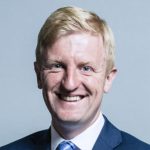
  • Oliver Dowden – 2023 Speech on the Strength of UK-Italy Relations

    Oliver Dowden – 2023 Speech on the Strength of UK-Italy Relations

    The speech made by Oliver Dowden, the Deputy Prime Minister, in Italy on 14 September 2023.

    Ladies and gentlemen, at the risk of derailing what The Economist has rightly called the ‘blossoming’ relationship between the United Kingdom and Italy, perhaps you’ll permit me to say:

    Vorrei ringraziare tutti voi di essere qui stasera, in questa bellissima citta, in questa antica e famosa universita.

    Grazie di cuore.

    Thank you to the Rector, for welcoming us to this fine seat of learning.

    Thank you Mayor, for your very warm welcome to your wonderful city, which is so beloved of my fellow Brits.

    Thank you to Lord Willetts and Carlo Calenda, for your leadership of Pontignano… and for all you do to nurture the close friendship between our nations.

    And thank you – above all – to all of you for being here.

    You all believe in the importance of this relationship between the United Kingdom and Italy.

    Important, not just because of our friendship, culture and our long shared history.

    But because you are strong believers in how much more we can achieve together as modern European nations facing the same challenges:

    from supporting Ukraine in its fight for freedom

    to confronting economic and energy security challenges

    to tackling illegal migration.

    And you know that to succeed, we must address them together.

    The number of my colleagues attending this conference demonstrates that this is certainly the view of the British Government.

    (Although it would perhaps be an exaggeration to say that they took a lot of persuading to come to Siena!).

    Their presence is a testament to the United Kingdom’s determination to drive forward a new strategic partnership between London and Rome.

    Now our topic for this year’s Pontignano is ‘Adapting to technological change’.

    But before I say a few words on that, let me take a step back and look at our relationship with Italy – to take stock, as diplomats like to say.

    A turning point.

    My counterpart, Antonio Tajani, said at the start of the year that relations between the UK and Italy were ‘at a turning point.’

    And he was right.

    Look at the situation that confronts us:

    war in Europe

    threats to our energy and our food supplies

    climate change

    irregular migration, across the Mediterranean and the Channel.

    And all of it underpinned by the onward march of technology.

    Set against that backdrop, it is surely no wonder that our two countries – sharing so many interests whose strengths complement each other in so many ways – should seize this moment to work more closely together.

    And that is exactly what we are doing.

    A longstanding friendship.

    We are, of course, building on a very strong foundation.

    The ties between our peoples go back centuries – indeed all the way back to ancient Rome and through the Renaissance.

    More recently – 80 years ago, British Forces landed at Salerno, as part of their central role in the liberation of this country.

    And next year we will mark the 80th anniversary of Anzio and Monte Cassino.

    Today, the bonds between us are thriving and vibrant.

    And there is also a mutual respect and affection between our peoples – epitomised in Italians’ moving reaction to the death of our late Queen a year ago.

    And your enthusiasm at the Coronation of King Charles III earlier this year.

    Indeed our new Monarch loves Italy, as he himself told an Italian television crew in the Mall the night before he was crowned.

    So there is a rich tapestry of ties between us. And that vibrant partnership is an invaluable source of strength, as we face together the most challenging set of circumstances in many decades.

    Until recently, perhaps the defining political moment of my generation was the 9th November 1989 – the date that the Berlin Wall came down and liberty rolled across our continent.

    Now a new date is inscribed in our memories.

    The 24th February 2022 – the date Russian tanks rolled into Ukraine and its missiles rained down on Ukrainian cities.

    The events of that day, and every day since, have reminded us of some old truths.

    The need for strong defence to deter war.

    The need to stand up to aggression today, or risk greater aggression tomorrow.

    The need for friends and allies to stick together and stand up for what we believe in.

    Every day since the invasion, that is exactly what the United Kingdom and Italy have done – as G7 partners and leading members of NATO.

    Let me pay tribute to Italy’s response.

    You have been at Kyiv’s side every step of the way.

    And I am proud of the role that Britain has played and will continue to play, for as long as it takes.

    If anyone doubted Britain’s enduring commitment to European security, you have your answer, not just in our words, but in our actions.

    And as we sit here tonight, in this cradle of European civilisation, let us spare a thought for the people of Ukraine, a fellow European country, who face another night in bomb shelters or on the front line.

    Forging a new relationship between the UK and Italy – real momentum…

    It is not just on Ukraine, however, that cooperation has been galvanised between our two countries.

    There is a real determination to make this relationship between Britain and Italy count for more, to be more than the sum of its parts.

    Take a look at the last nine months:

    In December our Prime Ministers signed – with their Japanese counterpart – the Global Combat Air Programme to build a new generation of combat aircraft together.

    In February, our Defence and Trade Secretaries signed agreements forging ever closer relations.

    And then in April, our Prime Minister was delighted to welcome PM Meloni to Downing Street where they signed an ambitious Memorandum of Understanding – covering issues from national security to cultural ties.

    The agreement also covered another subject on which our countries share the same challenge: illegal migration.

    This is a challenge that is political, societal, criminal.

    Our electorates demand that we deal with it, and we must.

    We both share the same sense of urgency – and albeit at different ends of Europe, we are facing the same phenomenon:

    Large numbers of arrivals by sea.

    Unscrupulous traffickers in human lives.

    The death traps into which they place innocent  women and children.

    The tragedies in the dark waters off the Channel,  off Lampedusa or the Calabrian coast.

    So we are significantly expanding our cooperation together.

    Working together in bodies such as the G7 and the Council of Europe.

    Adapting to technological change.

    In so doing, we will, of course, be taking advantage at every opportunity of new technologies – the theme of this Pontignano.

    I am delighted that British scientists will once again be able to collaborate with those in Italy and across Europe as part of the Horizon programme.

    And, as a Minister from the country that invented the steam engine, speaking in the land of Marconi, I know how well both our countries know the revolutionary power of technology.

    And the list of technologies that have fundamentally altered the course of human history is relatively short: fire, metals, the printing press, the combustion engine, electricity, fission, the internet.

    All of these tools have been bent to achieve a step-change in the pace of human progress.

    And now I believe that we are on the cusp of another such inflection point, one that has the potential to make the pace of progress supersonic:

    Artificial Intelligence, or more specifically, the advent of artificial general intelligence, represents, at once the most exciting and the most daunting challenge of our age.

    Exciting, because there is an opportunity, as our PM has put it, for human progress that could surpass the industrial revolution in both speed and depth.

    For game-changing innovations in all aspects of our lives:

    unthinkable advances in medicine

    cures for cancer and dementia

    growing crops to feed the world…

    or solving climate change.

    But also daunting.

    Not only will AI expedite and intensify the existing threat landscape,

    in Artificial General Intelligence, humans face the potential of a technology that surpasses both the capability of our collective endeavour, and the limits of our understanding.

    We have to accept that the answer to many of our questions about the AI frontier will be ‘we don’t yet know’.

    We do not yet know what these machines might be capable of.

    What we do know is that, to date, the limits of human progress have been capped by the sum of our collective intelligence.

    By adding to that sum with AI – at potentially dizzying scales – we will redraw the bounds of what we previously thought possible.

    But, as scary – and exciting – as that is,

    it should not be a barrier to our exploration.

    But it does mean that we need a new approach to regulation.

    One that iterates to build faith in the systems that will come to underpin so many aspects of our lives.

    This approach will involve active and ongoing collaboration between Governments, Al labs and academics, amongst others.

    Many organisations outside of national Governments, in particular private companies – including those in Italy – have been pivotal to the most recent advances in AI.

    I know that many such companies are taking part in Pontignano this year.

    And these collaborations will be crucial to ensure the safe and reliable development and deployment of frontier AI throughout the world.

    The United Kingdom is acutely aware of the importance of this moment – and of the need to act swiftly and with resolve.

    Domestically, the Prime Minister has asked me to chair a Resilience sub-committee of the National Security Council, which will be taking a methodical approach to assessing the risks of AI.

    And internationally, our forthcoming AI Summit at Bletchley Park in November will aim to agree how we can collaborate on frontier AI safety:

    to agree a shared assessment of the frontier risks

    as well as share some of the best examples from around the world of how AI is being used to improve lives.

    Already, the UK has been working with industry leaders such as Google DeepMind, OpenAI and Anthropic, who will give us unprecedented access to their products and models.

    So that we can mitigate against the risks, and take advantage of the opportunities.

    The importance of their cooperation cannot be overstated.

    We need them to ensure that our frontier systems are aligned with human objectives.

    And we need them to ensure that they are deployed safely,

    Because – ultimately – we need end users to have confidence in these transformative tools.

    The Summit is an important forum to begin to address these questions.

    But it is only one of the first steps in a very long journey.

    We look forward to working with our colleagues in the Italian Government and across the world.

    Together we have a huge stake – for our countries, as for the sake of humanity.

    So my message is a simple one: it is vital that we work together to make AI safe.

    I look forward to discussing this collaboration with you at this conference.

    And to our colleagues in the Italian Government.

    Let me say that the United Kingdom sees Italy as a crucial partner in helping us to achieve this goal.

    We look forward to working very closely with you on this, and on other shared priorities, from migration to economic security to climate, as you assume the Presidency of the G7 next year.

    So, there is plenty here for this year’s Pontignano to discuss.

    This medieval city is famed – not just for its beauty – but for its enduring identity, its spirit and its character through the centuries.

    Famous too for Lorenzetti’s 14th century frescos at the Palazzo Publicco – not far from here – depicting the tenets of good government, and the consequences of bad government.

    So this is an ideal and inspiring place for such discussions – a city which has long stood for humanity’s ability to solve apparently intractable problems.

    A city which centuries ago understood the importance of developing a legal and political framework by which society can be governed in the best interests of the wider community.

    I like to think that if Ambrogio Lorenzetti were here today, he might recognise some of the dilemmas modern democracies are wrestling with as we seek the right way forward.

    A few hundred metres from here, there is the famous pavement in the Duomo – the intricate work of artisans here in Siena many centuries ago.

    At the other end of Europe, in London, there is another pavement – the famous Cosmati pavement, laid by British and Italian craftsmen in Westminster Abbey in 1268.

    One of the earliest examples of what Britons and Italians can achieve together when they put their minds to it.

    It was on precisely that pavement, watched by the entire world, that our new Sovereign was crowned in May.

    Let that be the spirit in which we embark on this Pontignano, and usher in a new chapter of British-Italian endeavour for the good of both our nations, of Europe and for the good of the world.