Author: admin

  • PRESS RELEASE : Russia’s ongoing detention of OSCE officials is unacceptable – UK Statement to the OSCE [September 2023]

    PRESS RELEASE : Russia’s ongoing detention of OSCE officials is unacceptable – UK Statement to the OSCE [September 2023]

    The press release issued by the Foreign Office on 21 September 2023.

    Ambassador Neil Holland says that Russia must immediately free the OSCE Special Monitoring Mission staff who have been held captive for over 500 days.

    Thank you, Mr Chair. For over 500 days now, three OSCE Special Monitoring Mission (SMM) members have been wrongly held by the Russian authorities. This a flagrant injustice and a clear violation of their rights. We join our partners in strongly condemning Russia’s actions, and call for our OSCE colleagues’ release.

    There is absolutely no justification for their detention – they were simply performing their official duties, duties mandated by all participating States of the OSCE. As such, all of us here today, including Russia, have a responsibility for their safety and wellbeing. It is reprehensible that Russia would betray its own colleagues in such a way. The terrible suffering that they and their loved ones are enduring remains a constant concern to us. To this end, we thank the Secretary General and the Chair in Office for their continued engagement.

    And once more, we call for the immediate release of all SMM staff members. It is utterly shameful that Russia continues to detain them. They must be freed.

  • PRESS RELEASE : Russian aggression and isolation continues: UK Statement to the OSCE [September 2023]

    PRESS RELEASE : Russian aggression and isolation continues: UK Statement to the OSCE [September 2023]

    The press release issued by the Foreign Office on 21 September 2023.

    Ambassador Neil Holland says that Ukrainian civilians continue to suffer while Russia refuses to engage constructively on the world stage.

    Thank you, Mr Chair. We strongly condemn the huge wave of Russian missile attacks overnight. These strikes, which have hit cities across Ukraine, have already resulted in loss of life, and brought yet more suffering to Ukrainian civilians. These happened in the early hours of the UN International Day of Peace. Once more, Russia has shown it is willing to sink to any depths in its brutal war of aggression against Ukraine.

    Later during this Council we will discuss Russia’s detention of OSCE officials. I want that to be the focus of the UK contribution this week. But I would also like to recall the G7 Foreign Ministers statement last week on the sham elections Russia held on sovereign Ukrainian territory. This was a futile attempt to legitimatise Russia’s illegal presence in Ukraine and consolidate its control over the four oblasts it attempted to annex last year. Such actions will never be tolerated. The UK and its partners will never tire of calling out Russia’s violations of international law.

    On a more positive note, I wanted to note for the record how heartening it was to be in Prague last week to take part in the Economic and Environment Forum. It was telling that so many participating States gathered to talk about a set of issues that impact each and every one of us – and all of our citizens, whose interests we are meant to be representing here at the OSCE. Russia’s attempts to block this event were a shame. It seems as though the consensus that should exist among us around the environment and the climate in particular is yet another casualty of Russia’s illegal, unprovoked war. Thank you.

  • PRESS RELEASE : Thousands of low-cost training spaces available in boost to green jobs sector [September 2023]

    PRESS RELEASE : Thousands of low-cost training spaces available in boost to green jobs sector [September 2023]

    The press release issued by the Department for Energy Security and Net Zero on 21 September 2023.

    Thousands of new training places available for retrofitting, heat networks and heat pump installations.

    • Up to 8,000 people will be trained in retrofitting and installing insulation
    • A further 4,000 trainees will receive £500 discount on training to install and maintain heat networks
    • Launch of first-ever apprenticeship to train next generation of heat pump installers

    A new wave of low-carbon heating and insulation installers will be created through thousands of heavily discounted training spaces in a boost to the green jobs sector.

    From today (Thursday 21 September) up to 8,000 people – including current installers and those who are new to the industry – will be able to develop the skills and expert knowledge needed to retrofit homes and install insulation through a host of training providers thanks to the Home Decarbonisation Skills Training scheme.

    A further 4,000 people will also be able to get £500 towards training to install and maintain heat networks through the Heat Training Grant.

    And the Low Carbon Heating Technician Apprenticeship, the first of its kind, will provide people with the chance to learn how to install low-carbon heating systems on the job, supporting delivery of the expanded Boiler Upgrade Scheme which gives hard-working families the opportunity to make the switch away from fossil fuel heating.

    The schemes are aimed at creating a high-skilled workforce for now and the future, scaling-up energy efficiency and low-carbon heating installations and supporting the Prime Minister’s plan to reach net zero in a pragmatic and proportionate way, while delivering on his priority to grow the economy.

    This will help to generate hundreds of new green job opportunities, supporting the nation’s push for greater energy security and independence.

    The schemes announced today build on the £15 million provided since 2020 on skills training, which have delivered at least 16,000 opportunities in the energy efficiency, retrofit and low carbon heating sector.

    Lord Callanan, Minister for Energy Efficiency and Green Finance, said:

    The UK is a world leader when it comes to reducing carbon emissions, and we’re investing billions of pounds to help decarbonise the nation’s heating, saving homes and businesses energy and cutting bills.

    To do that we’re helping to improve the energy efficiency of homes and ensure they have access to cutting-edge low-carbon heating technologies such as heat pumps and heat networks.

    With consumer demand for these measures set to surge in the coming years, the funding announced today will help to create the skilled workforce that will be needed.

    Under the £8.85 million Home Decarbonisation Skills Training scheme, free or low-cost courses will be available through training providers, such as colleges and accreditation providers, across England.

    Training and support will be given to installers to help build the capacity of the supply chain and upskill individuals. This will include installer training that leads to a recognised qualification NVQ or equivalent, and short courses.

    Training, which will be delivered until 31 March 2024, will be focused on 2 packages.

    • Retrofit assessor and retrofit coordinator: provision and delivery of training to PAS 2035 standards
    • Insulation: provision and delivery of training to National Occupation Standards or higher in the installation of domestic insulation measures

    Under the £5 million Heat Training Grant, 5 new training providers – based across England – will help develop a new generation of heat network professionals by offering courses to upskill and teach them how to install and maintain them.

    They are:

    • Building Engineering Services Association (BESA) Academy
    • Sycous Limited
    • Chirpy Heating
    • Herts Energy Academy
    • Chartered Institute of Building Services Engineers (CIBSE)

    The scheme will provide £500 off the cost of training per person, which usually costs between £500 and £600 to complete – meaning all or most of the course cost will be covered by the government.

    Applicants simply sign up for the training through their chosen provider and confirm they are eligible for the grant. Thousands of trainees will receive the practical training needed for heat networks, including feasibility and design, construction, operation and maintenance. Courses will be available to trainees from October 2023 to April 2024.

    The Low Carbon Heating Technician apprenticeship will be available across England and has been designed by industry experts.

    It will allow new entrants into the heating sector to learn how to install low carbon heating technologies including heat pumps, and will offer sustainable long term career opportunities.

    Jennifer Coupland, chief executive of the Institute for Apprenticeships and Technical Education (IFATE), which designed the new training programme, said:

    Low carbon heating will be vital with supporting our nation’s drive to net zero by 2050. It’s no good making these leaps in technology if we don’t have thousands of people out there trained up to fit and maintain the pumps and other equipment.

    This apprenticeship will provide exciting opportunities for the next generation to establish themselves in a fast-growing sector and be available to people of all ages to upskill, so everyone reaps the career benefits and can play their part in making homes and the economy more sustainable.

    Ian Rippin, CEO of low-carbon standards body MCS, said:

    The launch of the UK’s first ever low-carbon heating technician apprenticeship marks a step towards a greener workforce for the future. Thousands more skilled and qualified installers will be needed to reach the nation’s net zero targets. Apprenticeships will form a vital part of achieving that goal and making the UK a world leader when it comes to green technology and jobs.

    The apprenticeship scheme will provide certainty to businesses who will know that their employees have the skills they need and that there is a pipeline of installers, helping to grow this vital part of the green economy.

    John Szymik, CEO of Octopus Energy Services, said:

    Heat pumps are like magic – they turn one unit of energy into four units of heat. People who switch from a gas boiler to a heat pump can not only reduce their energy bills, they also help wean the UK off gas.

    We’ve already invested over £50 million into the heat pump industry but we need an army of green workers to roll them out at scale. This apprenticeship scheme makes green jobs more accessible, helping to boost the UK economy while getting us closer to net zero.

  • PRESS RELEASE : John Procter reappointed as Chair of the Royal Armouries [September 2023]

    PRESS RELEASE : John Procter reappointed as Chair of the Royal Armouries [September 2023]

    The press release issued by the Department for Culture, Media and Sport on 21 September 2023.

    The Secretary of State has reappointed John Procter as Chair of the Royal Armouries for a second term of four years.

    John Procter

    Reappointed for a four year term commencing 02 November 2023.

    John Procter is an experienced and highly accomplished professional with a 30-year record of successful business leadership and public service. John is Managing Director of a national Optical business. He served with distinction as Chair of Leeds Grand Theatre,  a member of the Yorkshire Regional Arts Council for England (2008-2010) and a board member of Northern Ballet (since 2008).

    John was a Leeds City Councillor for 26 years, and as cabinet member for Culture, Leisure and Sport, led the development of the Leeds City Museum. He was a Member of The European Parliament representing the Yorkshire and Humber Region up to July 2019, serving as the U.K. Conservative Spokesman on Culture, Education and Sport.

    He is married with two children and has now retired from Politics. John became Chairman of the Royal Armouries in November 2019.

    Remuneration and Governance Code

    The Chair of the Royal Armouries is not remunerated. This appointment has been made in accordance with the Cabinet Office’s Governance Code on Public Appointments. The appointments process is regulated by the Commissioner for Public Appointments. Under the Code, any significant political activity undertaken by an appointee in the last five years must be declared. This is defined as including holding office, public speaking, making a recordable donation, or candidature for election. John Procter has declared he obtained office as a Member of the European Parliament, stepping down in July 2019 and previously canvassed on behalf of the Conservative Party. He has since retired from politics.

  • PRESS RELEASE : UK government support for developing countries to tackle climate change [September 2023]

    PRESS RELEASE : UK government support for developing countries to tackle climate change [September 2023]

    The press release issued by the Department for Energy Security and Net Zero on 21 September 2023.

    New £160 million funding to help reduce emissions and lower costs in developing countries.

    • Government announces £160 million of climate support for developing countries, at UN Climate Ambitions Summit in New York
    • Climate funding to support developing countries part of UK’s £11.6 billion International Climate Finance commitment

    The UK will stand as a key ally with developing countries in their efforts to cut emissions.

    The £160 million funding will support developing countries to speed up the development and deployment of new green technologies, which will reduce emissions and drive down costs.

    The new funding was announced by Energy Minister Graham Stuart at the UN Climate Ambitions Summit in New York, highlighting the UK’s leadership in tackling emissions and working to achieve net zero.

    The Energy Security Secretary Claire Coutinho will also join her French counterpart Agnes Pannier Runacher in Paris today (Thursday 21 September) for the Climate Mobilisation Forum, meeting leading businesses and philanthropists looking to invest in developing technologies while stressing the need for international cooperation to reduce global emissions.

    The funding package will support energy-intensive industries in developing and emerging economies to cut their emissions, with backing for measures ranging from deploying clean hydrogen-based fuels for steel production to the creation of biomass-powered refrigeration.

    Secretary of State for Energy Security and Net Zero Claire Coutinho said:

    I am proud that the UK is a key ally of developing countries and is supporting them to reduce emissions and develop clean energy.

    We in the UK only account for 1% of global emissions, so we must work together with other countries around the world if we are to achieve our ambition of Net Zero.

    Today’s funding will help decarbonise key industrial sectors in the developing world, support new industries and create long-term jobs.

    Energy Minister Graham Stuart said:

    The UK has cut its emissions by more than any other major economy since 1990 and, following COP26, will continue to spearhead international efforts to limit global warming and reach net zero.

    It is essential that developing countries are able to future-proof their industries too – and we will stand with them every step of the way in their industrial transformation.

    The funding is part of UK’s international efforts to help developing countries tackle climate change, including by pledging to spend £11.6 billion on international climate finance between 2021 to 2022 and 2025 to 2026.

    It follows the Prime Minister’s pledge of £1.62 billion towards the Global Climate Fund, at the G20 in India. That commitment is the UK’s biggest single financial contribution to helping the world’s most vulnerable people adapt to and mitigate the impact of climate change.

    The funding will be spread across 4 global programmes:

    • £100 million for the Mitigation Action Facility – working with the German government, this fund aims to support developing countries to reduce emissions by funding projects particularly focused on sectors including energy, industry and transport
    • £55 million for the Clean Energy Innovation Facility – this new funding will extend the Clean Energy Innovation Facility programme from 2024 to 2029, which provides grants to accelerate the development of innovative clean energy technologies in developing countries in areas such as industrial decarbonisation, and smart energy
    • £5.7 million for the Nationally Determined Contribution (NDC) Partnership – to support developing countries with technical assistance to implement their NDC: namely, their share of global emissions reductions to reduce global warming under the Paris Agreement
    • £750,000 for the Global Innovation Lab for Climate Finance – further funding for the Global Innovation Lab which supports green projects in developing countries, with this £750k ‘seed funding’ aiming to leverage further private investment. This new funding will focus on supporting projects to reduce emissions in Latin America & the Caribbean and protect forests

    Dr Lasse Ringius, Nepal Country Representative, the Global Green Growth Institute, said:

    The Global Green Growth Institute (GGGI) applauds the UK government’s renewed commitment to fund the Mitigation Action Facility. As an implementer of a current project and prospective applicant for further funding from the facility, we emphasise the need for a mid-term outlook on future call for projects, allowing us to collaborate with partner governments for new project development.

    We believe the Mitigation Action Facility uniquely combines technical expertise, financial support, and agile project execution, making it ideally suited to advance impactful climate mitigation initiatives globally.

    In addition to the funding announced yesterday, the UK also confirmed support for a new ‘Cement Breakthrough’, joining Canada. The Breakthrough aim to ensure near-zero emission cement is the preferred choice in global markets by 2030.

    Launched by world leaders at the COP26 talks in Glasgow, the Breakthrough Agenda is a UK-led international climate framework, to align global action and coordinate investment for deploying clean technologies in sectors including power, road transport, steel, hydrogen, and agriculture.

  • PRESS RELEASE : UK announces “transformational” support to boost global health at UNGA [September 2023]

    PRESS RELEASE : UK announces “transformational” support to boost global health at UNGA [September 2023]

    The press release issued by the Foreign Office on 21 September 2023.

    New UK funding will help achieve UN Sustainable Development Goals by boosting health security and improving health and wellbeing around the world.

    • new UK government funding will help tackle future pandemics, boost research into vaccines and reduce deaths from infectious diseases and end preventable deaths of mothers, new-borns and children
    • package shows commitment to helping achieve the UN’s Sustainable Development Goals, a set of key targets to make the world a better place by 2030
    • funding announced by UK delegation at United Nations in New York will support resilient and inclusive health systems and help to save lives

    The UK is investing in ground-breaking research and development programmes to tackle the world’s most pressing health challenges.

    International Development Minister Andrew Mitchell and Health Minister Will Quince announced at a series of health meetings at the UN General Assembly this week how UK scientific expertise will be harnessed to boost health security around the world.

    This includes up to £103.5 million for developing affordable new vaccines through the UK Vaccine Network and other health products and treatments which will halt the spread of infectious diseases, as well as programmes to protect women’s sexual and reproductive health and ultimately reduce preventable deaths.

    The UK is also supporting research and development into cutting-edge technology to respond quickly to disease outbreaks and improve the health of mothers, babies and children in low- and middle-income countries. Among other things this funding of £295 million will help develop new methods of administering drugs to help ensure life-saving care can reach the most remote-areas.

    A further £95 million will be allocated to the Tackling Deadly Diseases in Africa Programme II, which partners with Kenya, Ghana, Uganda, Malawi, Democratic Republic of Congo, World Health Organization and the Africa Centres for Disease Control and Prevention to help detect and tackle future epidemics, drug resistant infections and climate change.

    Minister for International Development, Andrew Mitchell said:

    The UK is committed to reinvigorating progress towards the Sustainable Development Goals. The UK’s significant support for global health announced at the UN General Assembly this week will be truly transformational in creating more resilient and inclusive health systems worldwide.

    Health Minister Will Quince said:

    This investment in global health research is vital for saving lives – both at home and abroad.

    Vaccines, drugs and diagnostics can help prevent outbreaks in the developing world, while also limiting spread and protecting populations at home.

    This UK Vaccine Network investment will help deliver effective and accessible vaccines for populations threatened by infectious diseases and cements the UK’s status as a leader in global health research.

    The third goal of the 17 UN Sustainable Development Goals was set up to “ensure healthy lives and promote well-being for all at all ages”.

    New research and development funding announced by the UK this week will help partners to prepare for, prevent and respond rapidly to disease outbreaks with pandemic potential, including Ebola.

    Investment in new vaccines, drugs, and diagnostics, as well as partnerships, will also allow us to accelerate the availability of a new vaccine or treatment the next time there is a pandemic.

    In addition, the UK will also provide £5 million of additional funding to the TB Alliance to support the development and testing of new or improved tuberculosis treatments, including for multi-drug resistant TB, that further reduce the time to cure TB.  This will bring our funding for the TB Alliance up to nearly £70 million since 2017.

    This week’s UK government health announcements build on our extensive track record of investing in health security through international development.  Since 2017, UK-supported efforts have resulted in over 30 new products coming to market, the distribution of more than 1 billion courses of malaria treatments helping to save an estimated 13 million lives, and the development of life-saving diagnostics for diseases like drug-resistant tuberculosis.

    Further information

    The UK’s health package includes:

    • up to £295 million of funding for health research and development partnerships, as part of our commitment to promoting open and collaborative science. This new package of R&D will bolster the world’s ability to respond swiftly and effectively to disease outbreaks, alongside a new research centre focused on the most dangerous infectious diseases. This will support the development of accessible and affordable new vaccines, drugs, medical devices, and diagnostics, and provide the evidence we need to reduce maternal, neonatal, and child mortality in low- and middle-income countries. This includes £80 million from FCDO to the Coalition for Epidemic Preparedness Innovations (CEPI), previously announced
    • £5 million of additional funding for the TB Alliance for 2023 to 2024
    • up to £103.5 million for the UK Vaccine Network (UKVN) Project to support critical research into combating infectious diseases that cause epidemics in developing countries, and ensure vaccines are accessible to everyone in need. UKVN funding was key for the foundational research and progression of the Oxford-AstraZeneca vaccine, the first in the world that was authorised for COVID-19
    • £95 million for a Tackling Deadly Diseases in Africa Programme II to partner with Kenya, Ghana, Uganda, Malawi and Democratic Republic of Congo and strengthen their ability to detect and tackle future epidemics, drug resistant infections and climate change
  • PRESS RELEASE : UK Trade Envoy visits Taiwan to strengthen trade and investment [September 2023]

    PRESS RELEASE : UK Trade Envoy visits Taiwan to strengthen trade and investment [September 2023]

    The press release issued by the Foreign Office on 21 September 2023.

    UK Trade Envoy, Lord Faulkner of Worcester, visits Taiwan to strengthen bilateral trade and investment.

    The UK Trade Envoy to Taiwan, Lord Faulkner of Worcester, will conduct a week-long visit in Taiwan to strengthen UK-Taiwan trade and investment relations and to deepen bilateral economic and cultural ties.

    In July, the UK and Taiwan started official talks on the new UK-Taiwan Enhanced Trade Partnership including energy & net-zero, digital trade and two-way investment. Both sides share the same goals of reaching net zero by 2050 and have been collaborating in renewable energy development and climate transition for almost 20 years. Lord Faulkner will lead 10 British renewable energy businesses to participate in the 18th UK-Taiwan Renewable Energy Conference to share UK best practice on offshore wind development (operations & maintenance and floating wind) and on emerging technologies (low carbon hydrogen, CCS & smart grid). He will share the UK renewable energy experience in Penghu and attend the UK-Taiwan Net Zero Academic Research Forum on 26 September, aiming to enhance the bilateral research collaboration on just and sustainable transition to net zero.

    During the visit, Lord Faulkner will meet with President Tsai Ing-wen on 25 September, discuss UK-Taiwan economic and trade collaboration with Economic Affairs Minister Mei-Hua Wang, celebrate the 40th anniversary of the UK Government’s Chevening scholarships with Taiwanese partners and Chevening alumni, and give the keynote address at the Better Business Awards ceremony hosted by the British Chamber of Commerce in Taipei.

    With his own career-long interest in transport and railways, Lord Faulkner will continue to support the UK’s links with Taiwan. He will visit the Sugar Railways at XiHu Cultural Park as well as National Taiwan Museum’s Railway Department Park during his visit. He will visit the construction site of Danjiang Bridge designed by the UK’s Zaha Hadid Architects.

    Lord Faulkner, UK Trade Envoy said ahead of his arrival:

    I am looking forward to visiting Taiwan again and contributing to deepening the UK-Taiwan partnership. Bilateral links have grown stronger and deeper since my last visit in 2018. Taiwan has moved from being the UK’s 8th to 5th largest trading partner in the APAC region. For the first half of this year, we saw the number of UK visitors to Taiwan top the European inbound visitors chart, and I am delighted to add myself to that number to build on the strong people-to-people links between the UK and Taiwan.

    Earlier this month, the first UK semiconductors business delegation with 19 innovative British businesses was showcased at 2023 SEMICON Taiwan, seeking trade and investment opportunities and R&D collaboration with Taiwan. Total trade in goods and services between the UK and Taiwan continues to grow with bilateral trade reaching £8.6 billion in 2022. UK exports of goods to Taiwan in 2022 increased by 18.2% compared to 2021.

    More information

    • Lord Faulkner was appointed the UK’s Trade Envoy to Taiwan in 2016. His last visit to Taiwan was in September 2018.
    • The UK Prime Minister’s Trade Envoys engage with their respective markets where substantial trade and investment opportunities have been identified by UK Government. They support the drive for economic growth by building on the UK’s existing relations with these markets. There are currently 36 Prime Minister Trade Envoys covering 66 markets. See more information at Prime Minister’s Trade Envoys.
    • UK-Taiwan Renewable Energy Conference is held annually. More details on the 18th UK-Taiwan Renewable Energy Conference.
    • The Chevening scholarship scheme has been offered to Taiwanese talents for more than 30 years. There are more than 240 Chevening alumni in Taiwan. More information about Chevening scholarship.
    • More information about the UK-Taiwan Net Zero Academic Research Forum.
    • More information on the Better Business Awards 2023.
    • According to Taiwan Tourism Administration, 44,872 UK visitors travelled to Taiwan by the end of July this year (from January to July 2023), the highest number among all European countries.
  • PRESS RELEASE : Children’s social care reform accelerates with more support for care leavers [September 2023]

    PRESS RELEASE : Children’s social care reform accelerates with more support for care leavers [September 2023]

    The press release issued by the Department for Education on 21 September 2023.

    27 new areas join the staying close programme, which provides significant extra support to help care leavers move to independent living up to the age of 21.

    Thousands more young people will soon receive additional crucial support when leaving care as today, 21 September 2023, the government announces 27 new local authorities to join the staying close programme.

    The staying close programme provides a package of continued support and guidance to young people leaving care. This includes ensuring they have accommodation, resources and practical and emotional help provided by a member of staff from their former children’s home, to help them thrive as independent adults.

    The 27 local authorities have been awarded £27 million to run the staying close programme, taking the programme to a total of 47 local authorities nationally, worth £53 million overall. This funding means more care leavers than ever before will have access to this support.

    To further demonstrate the government’s commitment to supporting the most vulnerable children, it has today launched a consultation, seeking feedback on the national advocacy standards and statutory guidance. The standards seek to improve advocacy provision for children in care and care leavers and address gaps and barriers to services, to ensure all voices are heard.

    The government also introduced a new standard on non-instructed advocacy for very young and non-verbal children and young people. These updates set expectations for what high quality advocacy provision should look like and place the voice of children and young people at the heart of the system.

    Today’s updates are part of the government’s continued work to improve children’s social care, as set out in the children’s social care strategy, stable homes, built on love. Backed by £200 million over the next 2 years, the ambitious and wide-ranging strategy will transform the current care system to focus on more early support for families, reducing the need for crisis response at a later stage.

    Children and Families Minister, David Johnston, said:

    We are making significant strides in our ambition to transform children’s social care services for some of our most vulnerable children and young people across the country.

    At the heart of today’s developments are the needs of children in care and care leavers. Our work on advocacy standards will make sure they’re listened to and supported, while the fantastic Staying Close programme is helping give them the tools they need to thrive as young adults.

    Today, the department has also published the government’s responses to 2 consultations: the first response on the overall strategy for transforming children’s social care, stable homes, built on love, and the second on the national framework and dashboard. The national framework, when published later this year, will clarify expectations and outcomes for what local authorities should achieve in children’s social care.

    Stable homes, built on love responds to recommendations made by 3 independent reviews:

    Stable homes, built on love set out how we will help families overcome challenges, keep children safe, and make sure children in care have stable loving homes, long-term loving relationships, and opportunities for a good life.

    The strategy outlines 6 pillars of support to achieve this, which includes bolstering family help, bettering multi-agency working, better supporting children in care and care leavers, and ensuring the children’s care system continuously learns and improves, making better use of evidence and data.

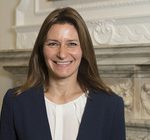
  • Lucy Frazer – 2023 Speech to the Royal Television Society

    Lucy Frazer – 2023 Speech to the Royal Television Society

    The speech made by Lucy Frazer, the Secretary of State for Culture, Media and Sport, in Cambridge on 20 September 2023.

    Good afternoon, thank you for the introduction Alex.

    I thought today, I might share a secret from my past.

    When I was about 7 I used to dream about creating and presenting my own TV show.

    After school I watched Tony Hart transform Morph on my screen and imagined my future on the TV.

    The fact that I was absolutely hopeless at art never appeared to me to be a barrier to my prospective career.

    And then, one day, I nearly got my breakthrough.

    When I was about 8 I attended a dance class (and i was just as bad at dance as I was art) and the whole class auditioned to be in a TV advert.

    Unbelievably I reached the final round.

    And my glamorous future flashed in front of me.

    But that inevitable tap on the shoulder asking me to leave the stage quickly ended my not yet burgeoning career.

    And my dreams of the starry world of film and TV came to a crashing end when I started my law degree.

    And I know that millions of people across the country, young and old, share that dream about being involved in what is one of our most exciting and glamorous industries.

    And where better a place to have that ambition?

    Here in the UK, our TV is genuinely world leading.

    And it has been world-leading for years – from the days of four to five channels, to the current all-you-can-eat world of television we’re in now.

    Today, in 2023, we produce the best of the best.

    Many of the most celebrated shows of this golden era have been made here in the UK, written here in the UK, and shot here in the UK.

    Shows like Sex Education, The Crown and Luther that have become huge hits not just in this country, but all over the world.

    And with imitation being the sincerest form of flattery, many of our great TV shows and formats have spawned remakes all over the world – from Love Island and The Office to Bake Off and Ghosts.

    You have created a great environment for our TV excellence.

    One which discovers and nurtures outstanding talent.

    One where creativity is given licence to flourish, every day.

    Everyone should take a quick look at IMDb’s top 100 TV shows voted for by users, 26 were first shown on British screens.

    British-produced shows like Peaky Blinders, Chernobyl and David Attenborough’s nature documentaries all featured in the top 10.

    Our PSBs have been able to bring the same levels of creativity to their programming as streaming services backed by some of the biggest businesses in the world.

    You see in countless programmes from Happy Valley and Unforgotten to Taskmaster and Derry Girls.

    Meanwhile companies like Netflix continue to underline the dominance of our TV and film industry in Europe.

    Spending $6 billion making TV shows and films in Britain over the past 4 years.

    Investment that has given us zeitgeist-defining shows from The Crown and Top Boy to The Tinder Swindler

    But despite all this excellence, it would be foolish to ignore the enormous challenges that you all face in remaining competitive.

    I know that the ongoing strikes in the US are having a significant impact on many working in the industry in the UK.

    The government is committed to our film and high-end TV sector, and we want to ensure that it’s in the best possible position to bounce back once the US strikes are resolved.

    At the same time, we know that new technologies are, and will continue to drive changes in users’ habits and impact the market landscape.

    You only need to look at a handful of Ofcom’s figures to appreciate the seismic scale of change.

    They show the number of TV programmes pulling in 4 million or more viewers has halved since 2014.

    They show live programmes, like news shows or soaps, are seeing steep declines in viewer numbers across the board.

    They show that TikTok, for the second year in a row, was the fastest-growing source of news in the UK.

    We know that Artificial Intelligence is already beginning to transform the way we create and consume media and content.

    The Government has an interest in this – because your success is success for our economy, with the jobs and growth you support – and your success is also success for our society, because the content you create helps to entertain, challenge, console, educate.

    So it is our job, in Government, to support you to ensure in this changing landscape, we protect, preserve and enhance the existing ecosystem that you have all created here in the UK.

    And so I see my role as three fold.

    First, Maximising the potential of the creative industries including TV, helping you to grow your revenues, invest and spur growth across the UK.

    Secondly, giving you the support you need to navigate this changing world,

    And thirdly, ensuring that at all times that we champion media freedoms.

    Today’s theme in this conference is about choice.

    I see choice as opportunity.

    I want to talk about these three priorities within this context, to enable you seize the opportunities that are available.

    And I want to expand on those three roles.

    So first, potential.

    Since I was appointed as your Culture Secretary 7 months ago I have sought to maximise the potential of the creative industries, which includes TV.

    In February I worked with the Chancellor to ensure we not only continue the High-End TV tax relief and other creative tax reliefs, but actually increase them, in the form of the new Audio-Visual Expenditure Credit (AVEC).

    And, in June, I published our Sector Vision – which is a collaboration with the industry – in particular the Creative Industries Council.

    This vision set out our ambition for the creative industries as a whole.

    An ambition to grow the sector by £50 billion, create a million new jobs and a pipeline of talent, all by 2030.

    And I am now working with the industry to deliver on that commitment.

    Through the funding of Creative Industries Clusters across the country like TV in Leeds, gaming in Dundee and Bristol.

    Backing innovation in the TV industry – with funding for collaborations like the one between we’ve just announced between the National Television and Film School, Royal Holloway University of London and Pinewood for the development of green screens.

    And investing in developing the pipeline of talent, with approval for BRIT School North in Bradford in August, to help us bring through the next Tom Holland or the next Amy Winehouse.

    These are just three examples of how we are investing over £300 million since the last Spending Review.

    And they build on years of support by the Government.

    Building on the tax reliefs that support and incentivise culturally British production, like the high end TV tax relief and the audio visual and cultural reliefs.

    Direct funding through initiatives like the Global Screen Fund.

    As well as the significant support we gave throughout Covid through the £1.5 billion Culture Recovery Fund and the hugely successful Film and TV Restart Scheme that supported more than 100,000 jobs for cast and crew on more than 1,000 productions.

    I am proud that the Government has, for years, recognised the importance of our TV industry.

    Secondly as I highlighted we need to make sure you have the framework in which to remain globally competitive in this changing world.

    That is why we’re bringing forward the Media Bill, which we have already drafted and consulted on.

    This Bill updates the system in which public service broadcasters operate, future proofs it and levels the playing field.

    It ensures that we sustain both public service broadcasters and the radio sector.

    It does this by making sure public service broadcasters’ apps like BBC iPlayer and ITV X, as well as STV Player in Scotland, the Channel 4 app, My5 and S4C’s Clic in Wales are always easy to find and watch, whether you’re on a smart TV or using a streaming stick.

    The way we’ve approached this Bill has been in a consultative fashion, but I do recognise some concerns remain, including about extending content regulation to video on demand services.

    But what we are saying is this – is that when you are watching TV, the same rules that apply to a new Channel 4 series or a new Sky documentary should be the ones applied across the board.

    The Bill is about ensuring we have the right playing field in place for all parts of the TV ecosystem to thrive.

    This is part of our work to help bring TV into the digital age but we recognise there is more to do.

    Because we recognise that internet provided TV is growing,

    74% of homes now have a smart TV connected to the internet.

    And this has spawned hundreds of new, mostly internet-based TV channels which have created yet another innovative way for audiences to enjoy their favourite shows.

    But while this shift is an exciting one, it’s our job to look at those channels that fall outside our existing regulations and to make sure people are not left behind by this move to digital.

    That’s why we are going to consult on whether we need to extend regulation to these unregulated channels and Electronic Programme Guides. And if so, how?

    And, my starting point in looking at this will always be that any change to regulations must strike a balance between protecting people – particularly the young and vulnerable while protecting freedom of speech, and not unduly burdening the TV industry.

    I know that this challenge of the move to internet TV is something that you are thinking about with the announcement of Freely earlier this week.

    As we focus on the future, our attention must also be on making sure people are not left behind.

    Because new ways of consuming TV should not come at the expense of those who still enjoy terrestrial television.

    Free to view television is a vitally important part of our television landscape, and this Government wants to encourage the sector to keep embracing innovation and technological development, but we’re not going to pull the rug from under the devoted audiences of Freeview channels.

    We want terrestrial television to remain accessible for the foreseeable future.

    At the same time, we really want to build a clear picture of what the future of TV looks like.

    So today I can confirm that we’re launching a new programme of work on the Future of TV distribution, alongside a call for evidence from Ofcom – which it will publish later in the autumn.

    My department will undertake a six-month research project, looking at changing viewing habits and technologies that will impact how shows are brought to our screen, both now, and in the decades to come – acknowledging always the importance of access.

    I recognise that the future of TV is not just about pipes and wires, the way it appears on our screens, and how people access it.

    We are also working within my department, with industry and with Ofcom to consider the impact of specific new technologies like AI and to shape an evidence base that can guide future policymaking.

    It is our job to ensure we strike the right balance between supporting innovation and protecting rights holders.

    As part of that, we’re engaging closely with the Intellectual Property Office and the Department for Science, Innovation and Technology to ensure we strike that right balance.

    While it’s clear that AI is a rapidly developing technology, I want to assure you all that one of my priorities is to make sure we protect and maintain the integrity of our high quality news output.

    In the coming weeks, we’ll be growing that evidence base with a number of roundtables on AI to discuss what it means for our media and for our creative industries.

    And finally, why this is all so important, and that’s because your work retains and enhances our media freedom.

    TV is an enormous industry. Together with film it brings in more than £18 billion for the UK economy and supports almost 300,000 jobs across the UK.

    It’s an industry that is there to entertain and inform.

    But it is also so much more than that.

    A television industry which is able to broadcast, to produce and distribute fearless truth telling in its news, uncomfortable issues in its documentaries, or produce dramas that highlight challenging real life issues.

    Is one that reveals behind it a strong democracy that is the mark of a free country.

    We all know the playbook in countries that are not free.

    The first thing a dictator does is take control of the airwaves.

    Because these leaders know that if you succeed in stifling universal debate, you can control the narrative.

    That is why you’re all so important to our present, and to our future.

    Media freedom is central to our values as a country, and to mine as your Culture Secretary.

    And that is partly why I’ve always enjoyed watching the political dramas that you make – whether that is House of Cards, the Politicians Wife, Road Kill, The Diplomat – A Very British Scandal.

    They are all so brilliant.

    And I don’t even mind that all these programmes often have as their theme a Tory politician, always unscrupulous, who inevitably ends up booted out of office, in prison or dead.

    Because that is one of the things that makes our country great.

    The freedom you have to make programmes.

    I should say that I have noticed in most of these there is a female heroine, often political (sometimes a lawyer), who always outwits the men.

    Which is probably the real reason I have enjoyed them all.

    Now, before I close, I do want to address the serious allegations that came to light over the weekend concerning Russell Brand.

    Those allegations are deeply shocking and it’s right that the police are encouraging anyone who believes they may have been a victim of a sexual offence to come forward.

    It’s also right that organisations involved in his employment conduct transparent investigations into whether complaints were made or concerns raised – and what action, if any, was taken.

    The nature of these allegations means it would be inappropriate to comment further at this stage, but I do want to briefly touch on the wider culture within our film and TV industry.

    This is an industry that young people – like 7 year old me – grow up dreaming of working in.

    One where the sky’s the limit for talent.

    It is incumbent on all of us to make sure that this industry is synonymous with talent, opportunity and inclusivity – not the scandals of MeToo.

    TV studios, production facilities and offices need to be places where people feel safe.

    Places where working cultures are responsible and accountable, and do not allow for possible abuses of power.

    Places where everyone feels able to speak up, no matter how junior, and where leaders never turn a blind eye.

    I would urge all of you, as leaders in your industry, to look hard at the cultures and processes in your own organisations and lead change, if change is needed.

    But I’d like to finish properly by thanking you all for the work you’ve done, to build not just a world class TV industry, but a world-leading one.

    It is a testament to your talent, your ingenuity, and your commitment.

    The Prime Minister and Chancellor have identified the creative industries as one of the 5 priority sectors of growth which we will focus on as a government.

    And you’re an essential part of that.

    We want to work with you not just to retain our position but to build on it.

    And I as your Culture Secretary promise to be your champion in Government to support you to maximise your potential and thrive in this changing landscape.

    And I look forward to doing that with you in the months and years ahead.

    Thank you.

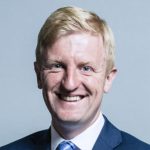
  • Oliver Dowden – 2023 Speech at the United Nations Security Council

    Oliver Dowden – 2023 Speech at the United Nations Security Council

    The speech made by Oliver Dowden, the Deputy Prime Minister, in New York, the United States, on 20 September 2023.

    Thank you, President.

    I am proud to sit here today in solidarity with President Zelenskyy. He and the Ukrainian people have met Russia’s invasion of their country with bravery, and with courage. I pay tribute to their fortitude.

    Ukraine’s fight against Russian aggression is not only a fight for freedom, it is also a fight for the principles upon which the United Nations itself is based, principles underpinned by our Charter which says that all States’ sovereignty is equal, that territorial integrity is inviolable, that disputes should be settled peacefully and that we must protect those things together.

    When Russia’s tanks rolled into Ukraine they trampled over every one of those principles. They have done so ever since. Every missile, every bomb, every false arrest, every piece of propaganda has been a flagrant assault, not only on freedom, but on our multilateral rules-based system.

    If we allow Russia to lay waste to what we have built here, the risks to world order, the risks to us all, are grave.

    For over a year and a half, Ukraine has been suffering the terrible consequences of Russia’s war of choice. We must never forget the human cost. 9,500 people killed. 17,000 people injured. Reports of 500,000 military casualties on both sides.

    Russia has callously targeted schools, hospitals, even playgrounds. Ukrainians have been tortured, they have been raped. Men, women, and thousands of children have been forcibly deported from their homes.

    And the devastation flows beyond Ukraine’s borders. Thanks to their destruction of thousands of tonnes of grain, the hungry and malnourished people of the developing world are Russia’s victims too. That is why the United Kingdom will contribute a further £3 million to the World Food Programme to continue President Zelenskyy’s ‘Grain from Ukraine’ initiative.

    Of course, the only end to this widespread suffering is through a just and lasting peace. Ukraine has demonstrated their commitment to peace time again and again including in Copenhagen and Jeddah this summer. But they have also shown on the battlefield this summer that they are capable of restoring the sovereignty and territorial integrity that must be the foundations of any peace.

    Ukraine’s counter-offensive has put Russia under pressure. In total, Ukraine has regained 50 per cent of the territory seized since the war began and in Kharkiv and Kherson, the yellow and blue flag flies high once again. That flag flies throughout the rest of the world, reflecting the solidarity we feel to Ukraine. Yet we might wonder what difference does this support make when Russia seems so impervious to UN demands?

    When it seeks to fuel its aims with arms from sanctioned states such as Iran and the DPRK and when it conducts sham elections in Ukraine’s sovereign territory? The truth is this: Russia knows the power of collective action because it tries so hard to weaken and divide the international community.

    So, just as we need to confront our biggest challenges on global poverty, on climate change, on artificial intelligence collectively, we need effective multilateralism to achieve resolution. To seek justice for the many, many victims. To rebuild ruined cities and create new opportunities. To get grain exports flowing again. To help put Ukraine back on the path to prosperity. To secure peace.

    And that is what we shall do, together.

    Thank you, Mr President.