Author: admin

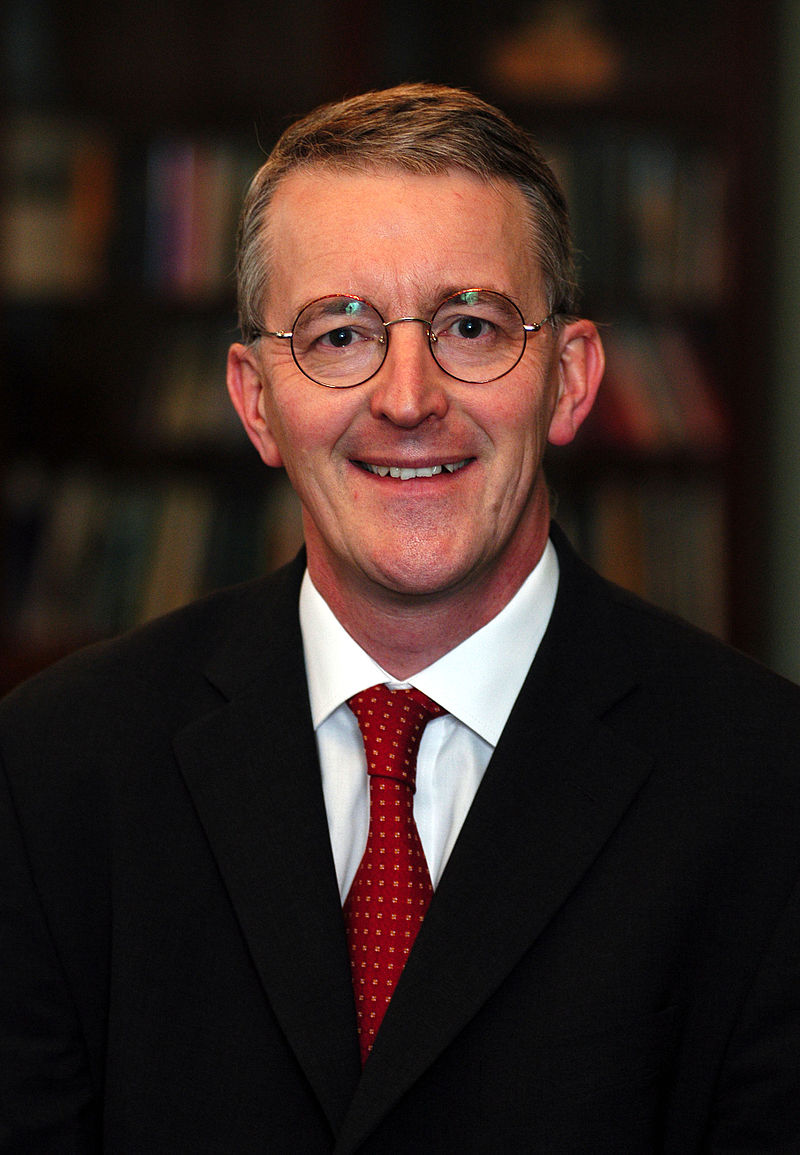
  • Hilary Benn – 2019 Speech on Brexit

    Below is the text of the speech made by Hilary Benn, the Labour MP for Leeds Central, in the House of Commons on 27 March 2019.

    Is there not something really quite liberating about the debate we are having? The normal atmosphere and structure, with propositions from one side or the other, have all disappeared as the House of Commons has taken control of this really important discussion about how we are going to take our country forward. Another striking thing is that every single Member who has spoken in support of a proposition has not sought to rubbish the other propositions; they have put their case in an effort to win support from across the House. If that is not confirmation of the wisdom of the House’s having taken control—I do not like that phrase because I think it is the House doing its job—to allow us to do that, I do not know what is.

    I will make two points. First, I will vote for the customs union motion moved by the Father of the House, which everyone in the Chamber knows is an essential building block to make any progress towards achieving the two objectives set by the Prime Minister: keeping an open border and at the same time keeping friction-free trade moving to oil the wheels of our industry. I will also vote for the common market 2.0 proposal, although, like many others, I note the difference between, on the one hand, a customs union and, on the other, a customs arrangement. It is a compromise proposal, but I will support it.

    I will also vote for the confirmatory referendum. I thought we heard an absolutely outstanding speech from my right hon. Friend the Member for Derby South (Margaret Beckett). I will vote for it as someone who, for a long time, has not argued for a people’s vote, but I want to explain why I have come to the conclusion that a confirmatory referendum is the only way forward. In essence, it is because things have changed. The proposition put before the British people by the leave campaign during the referendum—that one did not ​have to choose between our sovereignty, on the one hand, and the economic health of the country on the other—has proven to be false.

    David Tredinnick

    Will the right hon. Gentleman give way?

    Hilary Benn

    I will not because many people want to speak. I hope the hon. Gentleman will forgive me.

    The anger expressed by some Members towards the Prime Minister’s deal is in part revealing. The truth is that there is a choice to be made. The suggestion that we could have all the things that we wanted without anything that we did not has proven not to be the case. If things have changed, should we not therefore ask the people?

    Secondly, the Government changed their mind originally on whether the House would have a meaningful vote. The Government said at one point that there would be an enormous row about the structure of the negotiations and then changed their mind and accepted the way in which the European Union wanted to conduct them. The Government have come back once already, and may well this week come back again, in an attempt to persuade us to change our minds about the withdrawal agreement and the political declaration. The first holder of the post of Secretary of State for Exiting the European Union changed his mind about supporting the deal. There are reports that the hon. Member for North East Somerset (Mr Rees-Mogg) may be in the process of changing his mind as well. The Prime Minister said 108 times that we would definitely leave on 29 March, but she changed her mind and we are not.

    Why is it that the only people in this debate apparently not allowed to be asked whether they have changed their minds are the British people? How can that be democratic? If Members agree that it is not, I hope very much that they will vote for motion (M) tonight.

  • James Brokenshire – 2019 Statement on the Thames Estuary 2050 Growth Commission

    Below is the text of the statement made by James Brokenshire, the Secretary of State for Housing, Communities and Local Government, in the House of Commons on 25 March 2019.

    At autumn Budget 2016, the Government asked the Thames Estuary 2050 Growth Commission to develop an ambitious vision and delivery plan for North Kent, South Essex and East London up to 2050. In June 2018, the commission, led originally by Lord Heseltine and concluded by Sir John Armitt, announced their vision for the estuary. I sincerely ​thank Sir John and all the members of the commission for their expertise and scrutiny across the duration of the commission.

    Comparable in scale to the midlands engine, northern powerhouse and Oxford-Cambridge arc, the Thames estuary has the potential to deliver growth to support the success of the whole of the UK economy. The Commission envisioned that by 2050 the

    Thames estuary will be a tapestry of productive places along a global river. The estuary will create 1.3 million new jobs and generate £190 billion additional gross value added.

    The Thames estuary has long been a gateway to the wider UK economy but there remain pockets of entrenched deprivation within the region. And this area is not yet fully delivering on its great potential.

    I welcome the vision for growth that the commission has set out. I am pleased to announce further commitments from this Government to support the delivery of the commission’s vision, including: £1 million to support a new Thames estuary growth board; appointing a Cabinet-level ministerial champion; £4.85 million to support local partners to develop low-cost proposals for enhancing transport services between Abbey Wood and Ebbsfleet, subject to suitable housing ambition; exploring the potential for at least two new locally-led development corporations; launching a strategic communications campaign to promote the Thames estuary as a great place to live, work and do business; funding for the creation of masterplans and feasibility studies on key sites in the Thames estuary creative production corridor; and bringing together relevant authorities to collaborate on the Thames estuary 2100 plan, to make sure that growth in the estuary is sustainable and resilient. My full response is available: www.gov.uk.

    Our response to the Thames Estuary 2050 Growth Commission marks this Government’s commitment to this important area of the country. The Thames estuary has great potential to provide well-balanced, inclusive economic growth and will remain vital for the UK economy following Brexit.

  • James Brokenshire – 2019 Statement on the Rough Sleeping Initiative

    Below is the text of the statement made by James Brokenshire, the Secretary of State for Housing, Communities and Local Government, in the House of Commons on 25 March 2019.

    I am today announcing the allocation of a further £46 million rough sleeping initiative funding to support those sleeping rough and those at risk of sleeping rough in 246 local authorities.

    This funding provides continuity from the £30 million fund for 2018-19, which was aimed at an initial 83 local authorities with the highest levels of rough sleeping in 2017.

    The 2018 annual rough sleeping statistics showed a decrease of 639 or 19% in numbers of rough sleepers across these areas. While the programme is still in its infancy, the figures continue to demonstrate that the rough sleeping initiative has had a significant impact on the number of people sleeping rough and is working. Therefore, we are providing a further £34 million to these 83 areas in 2019-20.​
    I want to go further, and so launched a bidding round in December 2018 for those areas not in the initial 83 and I am pleased to announce that I will be providing an additional £12 million to a further 163 local authorities in 2019-20. This will continue to build on the work we have done so far to make sure we continue to support more people off the streets and into safe and secure accommodation.

    This funding will provide for over 750 new staff focused on rough sleeping. This will include more outreach workers to engage with people on the streets, specialist mental health and substance misuse workers and dedicated co-ordinators to drive efforts to reduce rough sleeping in their areas. It will also provide for over 2,650 new bed spaces including both emergency, temporary and settled accommodation. The breadth of this funding will provide coverage of 75% of local authorities across England.

    The rough sleeping initiative team, made up of expert advisers with knowledge and experience in areas such as mental health, specialist housing, substance misuse and criminal justice will continue to work closely with local areas to implement the plans and to monitor their progress.​
    I have deposited a full list of the individual amounts allocated to the 246 local authorities in the House Library.

    I am confident this package of support will achieve substantial results across England. It will also build upon the work we have already undertaken. This work includes publishing our cross-Government rough sleeping strategy which sets out an ambitious £100 million package to help people who sleep rough now and puts in place the structures that will end rough sleeping once and for all, piloting the housing first approach, which has an internationally proven evidence base for effectiveness, in Greater Manchester, Liverpool city region and the west midlands, allocating over £1.2 billion in order to prevent homelessness and rough sleeping, including more upfront funding so local authorities can proactively tackle homelessness pressures in their areas, and, additionally, the introduction of the Homelessness Reduction Act which means that more people now get the help they need and at an earlier stage so preventing homelessness from occurring in the first place.

  • Liz Truss – 2019 Statement on the Convergence Programme

    Liz Truss

    Below is the text of the statement made by Liz Truss, the Chief Secretary to the Treasury, in the House of Commons on 25 March 2019.

    Article 121 of the treaty on the functioning of the European Union (TFEU) requires the UK to send an annual convergence programme to the European Commission reporting upon its fiscal situation and policies. The United Kingdom will continue to apply the acquis so long as it remains a member state and, as set out in the withdrawal agreement, for the duration of the implementation period, if the withdrawal agreement is ratified by both the UK and EU.

    The UK’s convergence programme will be sent to the European Commission by 30 April. This deadline was set in accordance with the European semester timetable for both convergence and national reform programmes.

    Section 5 of the European Communities (Amendment) Act 1993 requires that the content of the convergence programme must be drawn from an assessment of the UK’s economic and budgetary position which has been presented to Parliament by the Government for its approval. This assessment is based on the autumn Budget 2018 report and the most recent Office for Budget Responsibility’s “Economic and Fiscal Outlook” and it is this content, not the convergence programme itself, which requires the approval of the House for the purposes of the Act.

    Article 121, along with article 126 of the TFEU, is the legal basis for the stability and growth pact, which is the co-ordination mechanism for EU fiscal policies and requires member states to avoid excessive Government deficits. Although the UK participates in the stability and growth pact, by virtue of its protocol to the treaty opting out of the euro, it is only required to “endeavour to avoid” excessive deficits. Unlike the euro area member states, the UK is not subject to sanctions at any stage of the European semester process.

    Subject to the progress of parliamentary business, debates will be held soon in both the House of Commons and the House of Lords, in order for both Houses to approve this assessment before the convergence programme is sent to the Commission. I will deposit a copy of a document to inform these debates in the Libraries of both Houses and copies will be available through the Vote Office and Printed Paper Office in advance of the debates.

    The UK’s convergence programme will be available electronically via HM Treasury’s website prior to it being sent to the European Commission.

  • Margaret Beckett – 2019 Speech on Brexit

    Below is the text of the speech made by Margaret Beckett, the Labour MP for Derby South, in the House of Commons on 27 March 2019.

    Negotiations succeed when no one gets everything they want but everyone gets something they want, and I hope that is the spirit in which we can approach today’s proceedings. This consultative process is too little and too late, but it is a lot better than carrying on as we were. We all owe a debt of gratitude to hon. and right hon. Members on both sides of the House who have striven to find proposals that could command wider support so that, finally, some alternative ideas are before the House, and I very much hope some common ground can be identified.

    There is one vital thing that all these varied proposals have in common: not one of them reflects what the British people were told were the prospects before them when they cast their votes in 2016, and nor does the Prime Minister’s package, although that is not on the Order Paper. These differences from what was said to be on offer are substantial. The one key element that figures in each and every one of the proposed alternatives is the matter of sovereignty. It is key because all these proposals, including the Prime Minister’s, would mean that we follow EU laws and regulations without having any real say in their content.

    In 1975, during the first referendum on our links with Europe, I campaigned against continuing those links, mainly because of the diminution of sovereignty they implied, but at least then we were not forfeiting sovereignty but sharing it. Today’s proposals mean we stand to lose our voice, our vote and our veto. Successive British Governments have used voice, vote and, occasionally, veto to considerable effect. We already have special deals all over the place. We do not have to be in the euro and we do not have to be a member of the borderless Schengen area. And we have helped to shape agreements within the EU and, as an EU member, across the world.

    School students across the world recently went on to the streets to campaign against the threat to life on this planet, including the threat to the continued existence of the human race. Within the EU, the UK has played a substantial role over the years, under successive Governments, in pursuing these issues, and it was experiencing the influence that we could and did wield internationally in this sphere that finally and wholeheartedly convinced me of the value of our EU membership.

    The Prime Minister’s deal and the various alternatives, one and all, surrender that shared sovereignty. They would make us rule takers without being, as we have been, influential rule makers. It is clear that many who voted leave have accepted the possible economic damage, of which they have been warned, as a price they are prepared to pay for the return of sovereignty, and I honour them for that stance, but sovereignty is not returning. In fact, we are sacrificing sovereignty for the sake of saying we are no longer a member of the EU. I recognise that such a deal may be all that is on offer, but to me it is inconceivable that its acceptance should be solely a matter for Members of this House. I genuinely have no idea what view the British people might take of these various compromises, and certainly many, including in this House, vehemently oppose their even being asked.​

    Ever since the day of the second referendum result in 2016, a deluge of not only warnings but threats has come from those who take that view, forecasting unrest, civil disorder, greater division and a dramatic further reduction in the public’s trust in politics. But I invite colleagues who determinedly resist a confirmatory vote to look starkly at the full implications of what they are saying. They are willing, some are determined, to vote to terminate our membership of the European Union even if it may now be against the wishes of the majority of the British people. Consider the possible consequences for trust in politics or for social peace if this House forces an outcome on the people of this country that they no longer desire—that really would be the undemocratic, establishment stitch-up of all time.

    We have all heard people say that the deals now available are worse than the one we now have as EU members, and some still say that, nevertheless, they still wish to leave. My mother would have called that cutting off your nose to spite your face, but if that is still the view of the majority, so be it. But how, in all conscience, can we alone in this House force through such a decision on their behalf without allowing them any say as to whether that is still their view?

    David Tredinnick (Bosworth) (Con)

    Will the right hon. Lady give way?

    Margaret Beckett

    I am sorry, but I do not have time.

    As with the Good Friday agreement, whatever emerges from these complex negotiations, the outcome should go back to the people for confirmation. The people started this process. They set a desired goal. It has proved far more difficult and tortuous than predicted, but we will now soon have a potential outcome. It is the people who should choose whether, on the terms now on offer, they still wish to proceed. Theirs should be the final decision on this, which is the first stage only of our withdrawal from the EU. With a clear conscience, I can look my constituents in the eye and tell them that that is the outcome that this House has secured. The European Union needs reform. Britain could play a key role in shaping it or we can just walk away and live with the consequences. But it is the British people who should now decide what comes next.

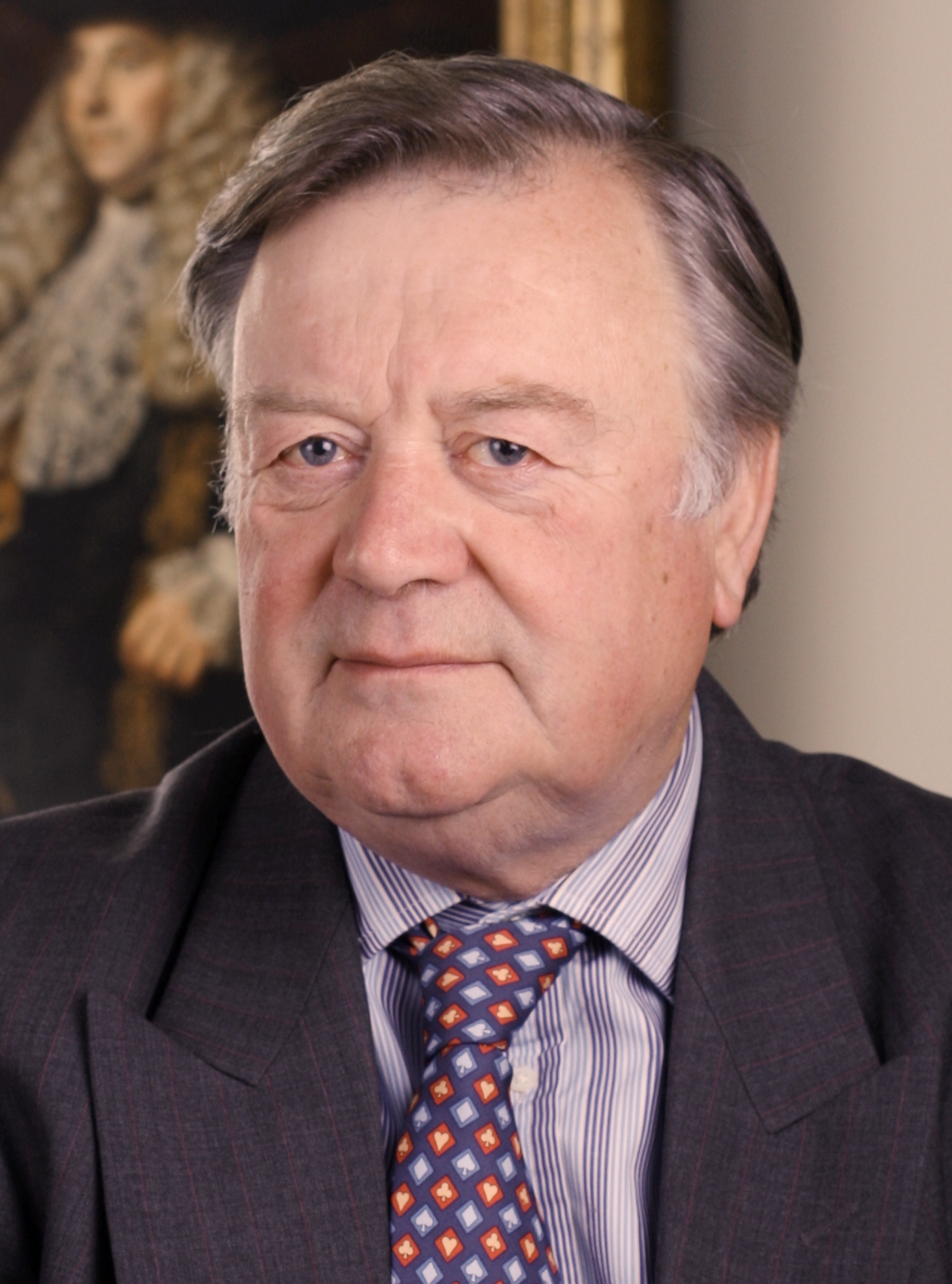
  • Kenneth Clarke – 2019 Speech on Brexit

    Below is the text of the speech made by Ken Clarke, the Conservative MP for Rushcliffe, in the House of Commons on 27 March 2019.

    join those who have congratulated my right hon. Friend the Member for West Dorset (Sir Oliver Letwin) on giving us this opportunity. At last we are seeing, as we go along, that the House is moving into a mood where it is going to be possible to end the catastrophic shambles of the last six months. We are beginning to talk about actually being able to take decisions founded on some sort of cross-party consensus and some search for a majority that can be sustained through the difficult and long negotiations that will be required to reach agreement on our final relations with the European Union. It seems to me that it is up to the House to respond to that properly and deal with this procedure, with a willingness to compromise with one another and move towards some eventual binding recommendation to the Government about the way in which things should be conducted in future. I shall certainly approach this in that way.​

    My right hon. Friend has also helped the Government, although they are bitterly resistant to what he has done, raising absurd constitutional arguments, which are complete fiction and which they could have remedied easily if they had put down their own proposals for having indicative votes, as they told us that they were going to two days ago. This hair-splitting thing about it being the Government who should table business motions, and not Back Benchers, is a completely piffling irrelevance. He has actually helped them considerably: I have never seen the right-wing members of the European Research Group more apparently panicked by the way the House as a whole is moving. They are demonstrably in a minority, their dreams of a no-deal departure are fading, and despite their frequent meetings with the Prime Minister and their gliding into Chequers at the weekend, they are beginning to peel off one by one, having first rebuffed it.

    I congratulate those who put this process together and those Ministers who resigned to get this pressure going and bring us nearer to reality, and I will turn now to the substance of how I am going to vote. As I have said, I will vote not for my first preference—I will when it occurs—but for that which I can live with. Unfortunately, I think we are doomed to leave the European Union within the next two or three years. My duty now is to exercise my own judgment as to what is in the national interest, will minimise the damaging consequences and will perhaps save some of the better features for future generations.

    As I have said before, the obvious compromise is, unfortunately, to give up the political European Union and leave the political institution and remain in the common market, as the public still call it—the customs union and the single market—thereby avoiding problems at the borders and for business, ensuring the smooth running of trade, and so on.

    Angus Brendan MacNeil rose—

    Mr Clarke

    I am sorry, but I cannot give way. I would like to—I have been collaborating with the hon. Gentleman—but I must take notice of time.

    Under such a compromise, we would continue to enjoy the economic advantages of being in the biggest and most prosperous international free trade area in the world and begin to reconcile the 52% with the 48%. Most sensible members of the public, however passionate their views, be they remain or leave, could see the sense in coming together around such a compromise. It was the main Eurosceptic demand 20 years ago: leave the EU but not the common market. If we solved that, we could begin to repair the dreadful political mood in the country.

    I will vote for revoke whenever it appears, because that is my personal preference, but that is self-indulgence, and I will support—[Laughter.] If we get a majority, I will be delighted.

    Angus Brendan MacNeil rose—

    Mr Clarke

    I will not give way to my fellow collaborator on revoking.

    I will support common market 2.0 and anything that resembles it, though I will not dwell on it further, as I have already dealt with it. I come then to my motion (J). ​As I have already indicated, it is not my first preference—the two I have already named are my preferences—but it is tabled to maximise support in the House so that we can move on Monday towards our really taking control and actually putting the Government, though they do not accept it, in a much stronger position than they are today when it comes to the future negotiations.

    Motion (J) advocates a customs union only—a permanent customs union, I point out to the hon. Member for Leicester West (Liz Kendall), who intervened earlier on this point—and would keep the minimum needed for frictionless trade and an open border in Ireland. We would also need some understanding or moves on regulatory convergence, but that does not need to be dealt with at this stage. If we start with the premise that we will be permanently in a customs union, it would bring greater clarity to the next stage—the really important stage—of the negotiations. I think that every other EU member state would be ready to accede to that, and it would improve the climate of the negotiations.

    The motion is designed to appeal in particular to Labour Members who are demanding it and to my more cautious right hon. and hon. Friends in the Conservative party. Those who have hang-ups about rule-making and use medieval language about vassal states and all the rest of it are talking about the single market. Motion (J) does not include the single market. The customs union guarantees a reasonably frictionless relationship and the possibility of completely open trade in the future, and leaves all the other things to be decided in the negotiations.

    Greg Hands

    Will my right hon. and learned Friend give way?

    Mr Clarke

    No, I will not.

    That is the basis on which I tabled motion (J), and I commend it to the House. Members may prefer a different motion; I shall vote for several. I think that we should all vote for as many of the motions as we can, and then we will see which is the strongest. We will not be dismissed by the more fervent members of the Government saying that they have all been defeated, and none of them secured an individual majority. On Monday, we could move on to how we sift them out.

    Above all, for Labour Members this will, I hope, pave the way for allowing the withdrawal agreement to go through, because their main argument is not about the contents of the withdrawal agreement but about the “blind Brexit” that worries them so much. Even in motion (J)—if we cannot get a stronger one—there is not a blind Brexit any more. Labour Members could at least abstain, so that we could secure the withdrawal agreement and then move on to what really matters—the serious long-term negotiations on the big issues, which we shall have to handle much better than we are doing now.

    My last word is this. If we fail, and if we are faced in a fortnight’s time with no deal, I think the feeling in the House is so strongly against that outcome that we must all vote to revoke at that stage. A great many members of the public will probably think that we have got ourselves into such a mess that it might have been sensible to do that anyway. We should stop now, sort out what we are doing, and perhaps start again if the House is still enthusiastic about leaving. However, I ​hope we can avoid that conclusion by demonstrating that Parliament is capable of orderly debate, reasonable conclusions, and contributing to the better governance of this country as part of this process—including, I hope, my motion (J).

  • Theresa May – 2019 Offer of Resignation

    Below is the text of the speech made by Theresa May, the Prime Minister, at a meeting of Conservative MPs on 27 March 2019.

    This has been a testing time for our country and our party. We’re nearly there. We’re almost ready to start a new chapter and build that brighter future.

    But before we can do that, we have to finish the job in hand. As I say, I don’t tour the bars and engage in the gossip – but I do make time to speak to colleagues, and I have a great team in the Whips’ Office. I also have two excellent PPSs (parliamentary private secretaries).

    And I have heard very clearly the mood of the parliamentary party. I know there is a desire for a new approach – and new leadership – in the second phase of the Brexit negotiations and I won’t stand in the way of that.

    I know some people are worried that if you vote for the Withdrawal Agreement, I will take that as a mandate to rush on into phase two without the debate we need to have. I won’t – I hear what you are saying.

    But we need to get the deal through and deliver Brexit.

    I am prepared to leave this job earlier than I intended in order to do what is right for our country and our party.

    I ask everyone in this room to back the deal so we can complete our historic duty – to deliver on the decision of the British people and leave the European Union with a smooth and orderly exit.

  • Theresa May – 2019 Statement in the Commons on the European Council

    Below is the text of the statement made by Theresa May, the Prime Minister, in the House of Commons on 25 March 2019.

    With permission, Mr Speaker, I would like to make a Statement on last week’s European Council.

    Before the Council, I wrote to President Tusk to seek formal approval for the legally-binding assurances on the Northern Ireland backstop and Alternative Arrangements agreed in Strasbourg on 11th March. I reported your Statement, Mr Speaker, which made clear that for a further Meaningful Vote to take place, the deal would have to be “fundamentally different – not different in terms of wording, but different in terms of substance.”

    I explained that, as a result, some Honourable and Right Honourable Members were seeking further changes to the Withdrawal Agreement.

    And I requested a short extension to the Article 50 process to 30th June. I regret having to do so. I wanted to deliver Brexit on 29th March. But I am conscious of my duties as Prime Minister to all parts of our United Kingdom and of the damage to that Union leaving without a deal could do when one part of it is without devolved government and unable therefore to prepare properly.

    The Council formally endorsed the legal Instrument relating to the Withdrawal Agreement and the Joint Statement supplementing the Political Declaration.

    This should increase the confidence of the House that the backstop is unlikely ever to be used, and would only be temporary if it is.

    But the Council also reiterated, once again, its longstanding position that there could be no reopening of the Withdrawal Agreement.

    So however the House decides to proceed this week, everyone should be absolutely clear that changing the Withdrawal Agreement is simply not an option.

    Turning to extending Article 50, this has always required the unanimous agreement of the other 27 Member States.

    As I have made clear before, it was never guaranteed that the EU would agree to an extension – or the terms on which we requested it.

    And they did not.

    Instead the Council agreed that if the House approves the Withdrawal Agreement this week, our departure will be extended to 11pm on 22nd May.

    This will allow time for Parliament to pass the Withdrawal Agreement Bill, which is legally necessary for the deal to be ratified.

    But if the House does not approve the Withdrawal Agreement this week, our departure will instead be extended only to 11pm on 12th April.

    At this point we would either leave with No Deal, or we would “indicate a way forward before this date for consideration by the European Council”.

    If this involved a further extension, it would certainly mean participation in the European Parliamentary elections.

    The Council’s Conclusions were subsequently turned into a legal Decision, with which the UK agreed, and which came into force last Friday.

    So while the Government has today laid a Statutory Instrument, which will be debated later this week, to reflect this in our own domestic legislation, the date for our departure from the EU has now changed in international law.

    Were the House not to pass the Statutory Instrument, it would cause legal confusion and damaging uncertainty, but it would not have any effect on the date of our exit.

    Mr Speaker, I continue to believe that the right path forward is for the United Kingdom to leave the EU as soon as possible with a deal, now on 22nd May.

    But it is with great regret that I have had to conclude that as things stand, there is still not sufficient support in the House to bring back the deal for a third Meaningful Vote.

    I continue to have discussions with colleagues across the House to build support, so that we can bring the vote forward this week, and guarantee Brexit.

    If we cannot, the Government made a commitment that we would work across the House to find a majority on a way forward.

    The amendment in the name of my Right Honourable Friend the Member for West Dorset seeks to provide for this process by taking control of the Order Paper. I continue to believe doing so would be an unwelcome precedent to set, which would overturn the balance of our democratic institutions.

    So the Government will oppose this amendment this evening, but in order to fulfil our commitments to this House would seek to provide government time in order for this process to proceed.

    It would be for this House to put forward options for consideration, and to determine the procedure by which they wished to do so.

    I must confess that I am sceptical about such a process of indicative votes.

    When we have tried this kind of thing in the past, it has produced contradictory outcomes or no outcome at all. There is a further risk when it comes to Brexit, as the UK is only one half of the equation and the votes could lead to an outcome that is unnegotiable with the EU.

    No Government could give a blank cheque to commit to an outcome without knowing what it is.

    So I cannot commit the Government to delivering the outcome of any votes held by this house. But I do commit to engaging constructively with this process.

    There are many different views on the way forward, but I want to explain the options as I understand them.

    The default outcome continues to be to leave with No Deal.

    But this house has previously expressed its opposition to that path, and may very well do so again this week.

    The alternative is to pursue a different form of Brexit or a Second Referendum.

    But the bottom line remains, if the House does not approve the Withdrawal Agreement this week, and is not prepared to countenance leaving without a deal we will have to seek a longer extension. This would entail the UK having to hold European Elections. And it would mean that we will not have been able to guarantee Brexit.

    These are now choices the House will have the opportunity to express its view on.

    Mr Speaker, this is the first chance I have had to address the House since my remarks last Wednesday evening.

    I expressed my frustration with our collective failure to take a decision, but I know that many Members across this House are frustrated too.

    We all have difficult jobs to do.

    People on all sides of the debate hold passionate views and I respect those differences.

    I would also like to thank all of those colleagues that have supported the deal so far, and those that have taken the time to meet with me to discuss their concerns.

    I hope we can all agree, we are now at the moment of decision.

    And in doing so we must confront the reality of the hard choices before us.

    Unless this House agrees to it, No Deal will not happen.

    No Brexit must not happen.

    And a slow Brexit which extends Article 50 beyond 22nd May, forces the British people to take part in European Elections and gives up control of any of our borders, laws, money or trade is not a Brexit that will bring the British people together.

    I know that the Deal I have put forward is a compromise. It seeks to deliver on the referendum and retain trust in our democracy, while also respecting the concerns of those who voted to remain.

    But if this House can back it, we could be out of the European Union in less than two months.

    There would no further extensions, no threat to Brexit and no risk of a No Deal.

    That I believe is the way to deliver the Brexit the British people voted for.

    And I commend this Statement to the House.

  • Theresa May – 2019 Statement at European Council

    Below is the text of the statement made by Theresa May, the Prime Minister, at the European Council meeting held on 21 March 2019.

    I have just met with Donald Tusk following the EU Council’s discussion on the UK’s request for the approval of the Strasbourg supplementary documents and for a short extension to the Article 50 process.

    Firstly I welcome the Council’s approval of the legally-binding assurances in relation to the Northern Ireland backstop which I negotiated with President Juncker last week.

    This should give extra assurance to Parliament that, in the unlikely event the backstop is ever used, it will only be temporary; and that the UK and the EU will begin work immediately to replace the backstop with alternative arrangements by the end of December 2020.

    After a lengthy discussion, the council today also agreed, subject to a successful vote next week, that in order to provide time for the UK Parliament to agree and ratify a Brexit deal, the date of our departure will now be extended to 22 May.

    If Parliament does not agree a deal next week, the EU Council will extend Article 50 until 12 April. At this point we would either leave with no deal, or put forward an alternative plan.

    If this involved a further extension it would mean participation in the European Parliamentary elections.

    As I have said previously, I believe strongly that it would be wrong to ask people in the UK to participate in these elections three years after voting to leave the EU.

    What the decision today underlines is the importance of the House of Commons passing a Brexit deal next week so that we can bring an end to the uncertainty and leave in a smooth and orderly manner.

    Tomorrow morning, I will be returning to the UK and working hard to build support for getting the deal through.

    I know MPs on all sides of the debate have passionate views, and I respect those different positions.

    Last night I expressed my frustration. I know that MPs are frustrated too. They have difficult jobs to do.

    I hope we can all agree, we are now at the moment of decision.

    I will make every effort to ensure that we are able to leave with a deal and move our country forward.

  • Penny Mordaunt – 2019 Statement on Cyclone Idai

    Below is the text of the statement made by Penny Mordaunt, the Secretary of State for International Development, in the House of Commons on 26 March 2019.

    Cyclone Idai, one of the most severe cyclones ever to hit southern Africa, has devastated parts of Mozambique, Malawi and Zimbabwe, including many areas that were already affected by severe flooding. The UN estimates that over 2.6 million people have been affected across the three countries. The majority of them are in Mozambique—the country hardest hit by the disaster—where approximately 129,000 people are sheltering in accommodation centres, and where the UN estimates that 1.85 million people are in need of assistance. In Malawi, 87,000 people have been displaced. In Zimbabwe, initial UN figures estimate that 80,000 people have lost their homes entirely. On 25 March, the UN launched a $281.7 million funding appeal for the response in Mozambique.​

    The UK Government have made £22 million in aid available for the response to date, which is being led by the Governments of the affected countries and the UN. Some £18 million of this is in direct support to the response in the three affected countries and up to £4 million will be used to match the public’s generous contributions to the disaster emergency committee’s cyclone Idai appeal.

    In expectation of the extreme weather, DFID-funded partner organisations pre-positioned essential supplies such as hygiene kits and medical supplies. UK aid funding is being used to send life-saving relief supplies and equipment, including 7,550 shelter kits and 100 family tents which are now in use in Mozambique. Following an assessment of need, further supplies are being flown into Mozambique on a charter aircraft from Doncaster Sheffield airport and an RAF A400M Atlas aircraft, which arrived in Mozambique on 26 March.

    UK aid is also supporting the World Food Programme (WFP) to feed 400,000 people in the immediate aftermath of the cyclone through the distribution of emergency food and food vouchers. DFID has deployed 12 humanitarian experts to Mozambique, where they are assisting with the co-ordination of the international response. In addition, specialists in food security, nutrition, and water, sanitation, and hygiene from DFID’s Mozambique office are travelling to the affected area. A five-person UK medical assessment and co-ordination team also arrived in Mozambique on 25 March. The team will conduct a scoping visit to Beira and Chimoio this week to assess how the UK can assist in supporting emergency medical and health needs in affected areas. Four further logisticians, in addition to the three already on the ground, are due to arrive in Mozambique on 27 March, and DFID have contracted two airport handling operations experts to provide training to staff at Beira airport.

    In Malawi, the UK’s package of emergency support is funding shelter, food assistance, health, and water, sanitation and hygiene (WASH). These will be delivered through the World Food Programme, UNICEF, and the Red Cross. The funding will target the most affected areas of Phalombe, Nsanje, and Chikwawa. Some 65,000 people will be provided with emergency shelter, 150,000 people will receive food assistance for two months, 250,000 people will be provided with WASH support and 130,000 people will be helped to access health services.

    In Zimbabwe, UK aid funding has been provided for health, WASH, and child protection assistance in the worst-affected areas, including Chimanimani. DFID is also supporting the immediate provision of emergency latrines and sanitation equipment. DFID is working with leading flooding experts at the Universities of Bristol and Reading, as well as the European centre for medium-range weather forecasts, to forecast how the extent and impact of the floods might change up to 10 days in advance. With more heavy rains forecast over the coming days, and bad weather and access already posing challenges for those on the ground, this allows aid workers to plan ahead and prioritise their resources.

    The UK is currently the largest bilateral donor to the response. The UN has allocated $20 million in funding from its central emergency response fund (CERF), to which the UK was the largest donor last year. In addition, the European Commission is providing €3.5 million in support, and a number of other donors have also made ​contributions. I am in touch with international counterparts to encourage others to contribute and ensure that sufficient funding is made available. Last week, I spoke with both Sir Mark Lowcock, the UN’s emergency relief co-ordinator, and Dr Tedros Adhanom Gebreyesus of the World Health Organisation and called on them to ensure that the UN mobilises quickly and effectively. Along with the Minister of State for Africa, I will be speaking with other senior figures and ministers from other donor countries in the coming days to encourage them to contribute to the international response.

    Her Majesty the Queen, the Prince of Wales, and I have written to the Heads of State and Foreign Ministers of the affected countries to express condolences and to offer our support and expertise in disaster response.

    The UK’s response to the cyclone is a whole-of-government effort both in the affected countries and in the UK. My Department has the overall lead on the response, with support from the Foreign and Commonwealth Office, the Cabinet Office, the Ministry of Defence, the Department for Health and Social Care, and Public Health England. The Foreign and Commonwealth Office has provided consular assistance to the small number of British nationals in the affected area and has updated its travel advice to advise against all but essential travel to the affected areas in Mozambique. We continue to monitor the situation closely and stand ready to deploy further support should it be required.