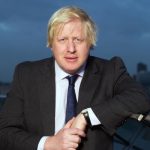
The speech made by Liz Truss, the Secretary of State for International Trade, at TheCityUK Conference on 16 November 2020.
Good afternoon everybody. It’s a great pleasure to be here at TheCityUK conference today to talk about how we can make the UK a hub for digital and services in trade.
Now we all recognise Covid is a very difficult time, not just for Britain but right all around the world. But the way we are going to recover from this crisis is through trade.
And what is particularly important is trade in services, and trade in digital. We have seen how over the course of the pandemic there has been an acceleration of the use of technology, and of course Britain is incredibly well placed to benefit from the future growth in areas like digital, services, and technology.
From robotics to fintechs, to computer games, to green finance, we are the second largest exporter in the world, totalling £318bn, and we export nearly as many services from Scotland and the North West of England as the entirety of France does.
We are the top FDI destination in Europe, with more investment in technology than Germany and France put together, totalling more than £10bn. Our computer games industry is growing faster than ever, and in terms of “tech unicorns,” billion-dollar tech companies, we have more than any other country apart from the United States and China. Fintechs firms like Revolut, Monzo and Transferwise, so we really are leaders in the area of services and technology.
What I think we can do with our own independent trading policy is we can help shape the future of the global rules in areas like digital, in areas like services, that haven’t seen the level of reform that they need to at the World Trade Organisation.
We can work with like-minded partners, other countries that believe in free enterprise, democracy, and the global rules-based system, to actually promote those new areas like digital and data trade.
We are prioritising our services in digital industry, alongside our other key interests like advanced manufacturing, and like the food and drink industry.
In all of the trade negotiations we are currently engaged in we are looking for advanced services chapters with our negotiating partners in areas like data and digital, in areas like financial services, mutual recognition of professional qualifications, and mobility.
Because we know that all of those specific chapters, specific areas, deliver real benefits not just for London and the South East, but right across the United Kingdom.
We also have just announced our new Office for Investment, bringing together a crack team across Government, under the leadership of Lord Gerry Grimstone, which will deal with the bureaucratic barriers that investors face when they’re seeking to invest in the United Kingdom.
We are also boosting our exports in areas like digital and services, we have just launched for example a digital and trade network across Asia Pacific to support companies out in that region, with people on the ground that understand the details of those businesses. And what is really important is that as we negotiate these new trade deals, we are drawing on the strong expertise of the industry that we have in the country.
So this is why we’ve established new Trade Advisory Groups, and on them sit organisations like CityUK, and other professional services, financial services, and legal services organisations – making sure that as we negotiate the deals we are getting the specific advice, the technical advice, that is going to give us the best possible deal for the United Kingdom.
We also make sure that leading professional service providers sit on our Strategic Trade Advisory Group, like KPMG. And we have also got the Board of Trade, which leads on our broader trade strategy and new ideas. We have got the founder and Chief Executive of Starling Bank, Anne Boden, on the Board of Trade, as well as the Lord Mayor of the City of London, because our trade policy is designed to benefit businesses across the UK. We can only make sure that it does that if we are involving and engaging you as we work on these trade negotiations.
We do see an opportunity to lead the world in areas like digital and data trade, and services trade.
Next year we will have the Presidency of the G7, and trade will be one of the key issues we are discussing. We will be looking at green trade; we will be looking at trade against pandemics; we will be looking at reforming the WTO to update the rules for the modern age; and we will also be looking at digital and data trade. And again, we will be involving organisations like TheCityUK in the work we’re doing to promote those initiatives.
We launched the UK Global Tariff earlier this year, it is a simpler lower tariff than the common external tariff. What it also does is reduce tariffs on a hundred green products, an idea we are very keen to promote across the world to encourage other countries to adopt it.
Because as we seek to move forward on the green agenda, as we are hosting COP26 next year, the UK has already become the first country in the world to make robust environmental disclosure standards mandatory, and we are doubling our international climate finance to £11.6bn.
We believe that through a combination of technology, of trade, and of working together with other nations we can make a real difference.
And in terms of our broader trade agenda, we have put in our manifesto our ambition to get 80% of the UK’s trade covered by Free Trade Agreements within three years. We want to build a cat’s cradle of trade deals across the Atlantic and Pacific, with the United Kingdom at its heart.
Now this isn’t a typical cat’s cradle, we want one that’s supercharged by fibre optic cables and satellites, and we want it focused on our strengths which, alongside food and drink and advanced manufacturing, are digital and services.
Miles very kindly mentioned the Japan deal that we have recently struck. This deal is important because it shows the type of trade policy that the United Kingdom wants to have post EU as an independent trading nation.
It goes further than the existing deal in areas like digital and data, anti-data localisation, protecting the free-flow of data, but also protecting things like source code and net neutrality.
It goes further in terms of professional services, of mobility of professionals between the United Kingdom and Japan.
It goes further in areas like intellectual property protection, and it goes further in areas like protection of Geographical Indicators.
What it does is allows greater innovation, it allows greater trade, particularly in technology. But it also makes sure that our financial services trade is underpinned by regulatory dialogue and again underpinned by advanced data and digital agreement.
Our services are our biggest export to Japan, accounting for 51% of trade. I was very pleased that TheCityUK concluded that it raises the bar for trade agreements in services. I mentioned the temporary movement of high skilled professionals, but what we’ve also achieved in the Japan deal is measures affecting the supply of services, including technical standards and making sure they’re administered in a reasonable, objective, and impartial manner.
It also paves the way for us to explore mutual recognition of professional qualifications, and British providers stand to benefit from most rules Japan may liberalise, such as the Foreign Lawyers Act. I believe that these provisions show the UK’s commitment to a liberal and transparent trading environment.
And what we secured in the Japan deal is only the start. We are also in negotiations with the United States, we recently completed round 5. Again we are looking for an ambitious financial services chapter, with high regulatory standards and the agreement to facilitate cross border flows.
Of course, we are working with both parties in the United States, there is a consensus that a trade deal with the United Kingdom is a good thing, and we are determined to make further progress.
We are also working with our close allies, Australia and New Zealand, on gold standard deals that would go further in areas like services, in areas like digital data, and in areas like investment. And these agreements are important in themselves, for the economic benefit they bring, but they’re also important because they provide a bridge towards the Trans-Pacific Partnership.
The Trans-Pacific Partnership is a very exciting agreement because it contains some very high-quality services chapters that will be of huge benefit to the United Kingdom.
British companies have been doing £111bn worth of trade with members of this free trade zone, and we can do even more as a full member of the organisation. It would give us unprecedented and deep access to over 40% of the world’s Gross Domestic Product, which equates to over £27tn. And if you add the EU to that number, that’s £40tn.
What I think is interesting about CPTPP is the ability to have a single set of rules operating across that area, which not only benefit our businesses, but also help to set the global environment in a world where the WTO hasn’t significantly updated its rule on some of these issues since 1995.
We are also doing further work alongside Trans-Pacific Partnership accession with countries like India and Brazil to remove market access barriers in areas in both goods and services.
One thing I did want to mention is the importance of digital and data and services in trade, and the fact we think it’s not fully being taken into account in the economic models we do at the moment. So this is where we have commissioned Tony Venables of Oxford University to look at the benefits in particular of digital and data, and services, chapters on trade agreements.
A recent study of USMCA suggested that digital and data chapter actually had more effect on the economy than any other part of that agreement, and we suspect that’s the case for deals like Japan and the Trans-Pacific Partnership, and we want to get more evidence about the specific benefits that digital and data provide.
It has been great to have the opportunity to talk to TheCityUK about our ambitious plans to create a cat’s cradle of trade deals across the world, with advanced services and digital chapters.
We believe that we can open up new opportunities to businesses abroad and attract more investment across our country.
We have unparalleled opportunities ahead because we are prepared to be innovative, we are prepared to look at new ideas, we are open to these advanced digital and data agreements. And we believe that this can benefit domestic industry in the United Kingdom, but also attract more investment overseas.
I think this year, of all years, we have seen that our services and digital and data trade is a key for the future prosperity of the United Kingdom. At the Department for International Trade we are absolutely determined to make sure that we continue to deliver on that, that we continue to open up new opportunities, and we continue to work with this industry that is so vital for the whole United Kingdom.
Thank you.